The Future of Pharmacy Benefits with Zach Zeller
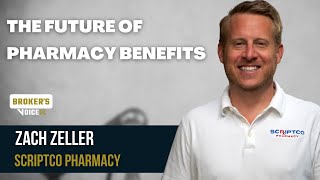
This YouTube interview (May 24, 2023) features Zach Zeller (co-founder of Script Company) describing ScriptCo's evolution from retail pharmacies into a membership-based mail-order pharmacy selling drugs at cost (0% markup) funded by membership fees. ScriptCo (founded Sept 2019) operates in 48 states + DC (excluding Montana and Tennessee for operational/regulatory reasons) and claims a 4.9-star Google rating. ScriptCo is moving from a B2C membership base (~1,500 year-one; ~3,000 current; projected >5,000 soon) into the B2B market for self-funded employers. They report a repricing analysis across 11 plans/26,000 lives showing savings of about $250 per belly button per year after expenses. Employer pricing options: $3–$5 per member per month (PMPM) or $10 per utilizing member per month; contracts include a 60-day out and risk-free first 90 days. Technical onboarding accepts 834 EDI or CSV eligibility files; prescriptions accepted via eScribe (~94%), fax, phone, or mailed. Product roadmap: costing tools in ~60 days, formulary tooling in ~90 days, and longer-term intent to launch their own PBM.
Questions this video answers
September 2019.
Montana and Tennessee (operates in 48 states + DC).
Either $3–$5 per member per month (PMPM) or $10 per utilizing member per month.
Approximately $250 per member per year (across analysis of 11 plans / 26,000 lives).
4.9 out of 5.
Chapters
Hey. Hey. Welcome back to the Broker's Voice. I am excited for today's topic because anytime I have something that's timely that I think you need to hear about right now, it is always a good episode. And I've actually had this gentleman on before about five, six months ago, and I'm excited to have him back. So. Zach Zeller, co founder of Script Company. Welcome to the Broker's Voice again.
Thanks, Andy. Yeah, I love this show. Appreciate you having me on again.
No, it's. I wanted to have you back on for, for one very important reason. When I had you on the show, I think it was In November of 22, it was more of an introduction of who the heck Script company is. But now it's go time. Right. Is based on where you guys are as far as rolling out. It is. Parts of your program are here, the rest of it's coming very soon. And I wanted you back on to basically open this conversation up to, to the health insurance broker market because you guys are here and it's time for advisors and employers to utilize what you guys have. But before we get there for the, for the people who did not watch the episode six months ago, give us a little backstory of who Script company is and how was it founded.
Yeah, yeah, happy to do that. I met my co founder Mark McCormick many moons ago in the operating room. We used to sell, sell implants to orthopedic surgeons and you're in the OR for immediate technical assistance. And long story short, we hit it off, left the or, started some traditional retail based pharmacies that operated in the PBM space, obviously. And through owning and operating those pharmacies, we stumbled upon what is script code a day. And what we found was almost 80% of the time the copay was far exceeding the actual cost of the drug. And then when you factor in PBM fees and all the other things, it was like, man, there's a much better way to do this. For 90% of the drugs that are dispensed, which are called generics, which we're all intimately familiar with, right? And so we spun all those pharmacies off in early 19 and opened Script Company in September of 19. And ScriptCo's business model, Simple. We offer every drug in existence with the exception of controlled substances at cost. 0 markup, 0 margin in the medication for us. Our only margin comes from a membership fee. And we're in 48 states plus DC. We're short Montana and Tennessee today, but everything's done in house at Scriptco Pharmacy. Pharmacy technicians, pharmacists, customer service, everything's under one roof to just nail that user experience. Which is why we feel mail order pharmacy has never taken off.
It's the, the curiosity in me says like, okay, out of all of this, what, what has caused the states of Montana and Tennessee to, to continue to, I don't want to say disallow, but, but how has it not been allowed in those states yet?
It's, yeah, it's not that we're not allowed. It's that we don't want to pay Montana the $30,000 fee that's required for Montana for a million lives. And then Mark has actually been to meet with the state board of pharmacy in Tennessee twice to get some laws changed around robotic fulfillment from 1999, I think it was. So you can imagine how robotic fulfillment's changed since then.
Oh, absolutely. So talk to us a little bit. You know, pharmacy has become, I hate to use this word, but it's kind of become a cliche thing in the health insurance industry in the last five years. A lot of advisors talk about it. Now another phrase you'll hear accompany it often is low hanging fruit. Right. It's, it's an easy place advisors can go to help employers save money, which is always good. But now there's just so many solutions out there that say they do the same thing. Right. Where do you think Script, Script company is going to fit a very unique niche in this market, we'll call it watered down market of so many pharmacy solutions.
Yeah, I think our biggest value prop number one is we offer every drug with the exception of controlled substances. So that's a, that's a big thing. There's a lot of solutions that, that don't necessarily have a full breadth of offering, number one. Number two, I think user experience is the most critical piece beyond cost.
Cost is just to get you a seat at the table and then user experience is to keep you at the table. And Mark McCormick, my co founder, is an incredible operator and he's just nailed the user experience side of the house. And you can go look at our Google reviews and I think that tells you everything you need to know. We're 4.9 stars out of five and you cannot delete a bad review. There ain't nothing you can do about it. Somebody puts a bad review up, guess what? That bubba is sticking. And so we haven't been able to find another pharmacy with 4.9 Google reviews, period. And so I think that really speaks to the two things that ScriptCo, you know, is Outstanding in which is access and user experience.
Yeah. A business partner of mine said it. Well, there's two types of businesses today. Those that have gotten a bad review and those that will get a bad review. They're, they're gonna come no matter what.
And, and you know, from a standpoint of credibility, I already like that you, I already liked you guys when I met you because you are a UT, former UT Longhorn track star and your partner is a first round draft pick of St. Louis Cardinals.
That's right.
So you know, right there with me you've got credibility. Two former college and pro athletes. So well, talk about you said something at the beginning that, that piqued my interest which I do believe gives you a little bit of differentiators. The whole membership based. Right. I think at one time script code was a B2C play where an individual consumer could become a member of script code to get their pharmacy their prescription drugs at, at whole, you know, at, at the base cost at wholesale cost. How is, how are you guys now starting to transcend into the business to business space? Because this is what I want health insurance advisors to hear.
Yeah. So we were on the Today show nationally and, and after that ran we had a handful of self funded employer plans say hey, can we send you our claim data and you can tell us if we're getting a good deal or not. And it was there that we were like oh, we're gonna start picking up 500 and 200 and 1000 and 2000 lives at a time instead of one at a time. Because what we found was the overarching analysis between 11 different plans and 26,000 lives. We save $250 per belly button per year after paying for all expenses. And so it's substantial. You know that's a, that's a big savings if you're, if you're a thousand life group for someone to be able to step in and save you a quarter of a million dollars a year and all of your employees copay goes to $0. Everyone's winning, the employee's getting a better benefit and the, the self funded plan is being able to access health care at a better price or more reasonable price, which is the actual cost with a small membership fee. So we charge 3 to $5 per member per month just kind of depending on a few things and then $10 per utilizing member. So you get to kind of pick. It's like hey.
Do you want to throw in your whole population or do you want to hand pick 20 people and pay $10 a month for those 20 people.
That's really unique. I like that option. So it's three to five dollars per month. Three to five dollars per member per month for the whole group. Or you could go $10 per member per month for those who are actually utilizing it. That's right. In the, in the short time you guys have been out, like as you've promoted this in the B2B space, where are you seeing traction towards one of those options or the other?
No, you know, it's, it's kind of funny that I thought everyone would just go $10 per utilizing member, but it's really been, hey, we just want to be able to tell the whole population they have access and go that route. So it's definitely been more towards the, the $3 to $5 versus hand picking and choosing. And I think it's really a function of, it's an easier message to spread when you just tell everyone they have access versus being like, hey Bob, sue and Joe, you can go to script co, but Ricky, Larry and Bobby, you cannot. Right. So ultimately Script co is built to help. That's the whole reason we left the PBM ecosystem. And we don't care how big the employee size is or how small it is. You know, we built this to try and be a meaningful solution for people and for businesses. And so we don't have a barrier to entry for anyone. If you have five employees, we'd love to have you. If you have 50,000 employees, we'd love to have you. And you know, the contracts with us are simple. It's a 60 day out. If an employer feels we're not doing a good job in the first 90 days, they can cancel it. And any, any invoice which we invoice monthly, any invoice they haven't paid, they don't owe us anything.
Yeah, I like, I like the flexibility too because you're going to probably get some larger organizations who may want to test pilot this with a specific segment of their population and that gives them the ability to do with the $10 per utilizing member option. I really like that. So I, I could go a number of ways here on the program and we have, there's, there's several functions to, to script company. But before we get into the B2B opportunities, walk us through how this works. So if I'm a participating member, whether my employer is paying it, paying for it for, or I pay for it, how am I getting my prescription drugs from you?
Yeah, it's really simple. So we accept prescriptions the same way that any other pharmacy in America does. You can send it in via E Scribe, right? So directly from the physician's EMR, they can send it into script co. We receive about 94% of our prescriptions that way you can get it faxed in, you can have it called in, or you can go real old school and have it mailed in. We're that crazy. So those are the four ways we can get it. And the way it functions from an onboarding perspective is we have a onboarding eligibility table and so employers can send us an 834edi file or a CSV file and that creates the eligibility. And once that eligibility table is created within our platform, it actually sends an email out to everybody who's part of that table that says, hey, welcome to ScriptCo with a custom message that says you now have a membership at ScriptCo and Andy Muri is paying for it and it's going to be awesome. Right? You know, we're the only pharmacy in America selling drugs to cost. All the pertinent details go out in that email and then it walks them through what their next steps are. Very succinctly, how many.
So as we roll, as you roll out the B2B option, how many current medical members do you guys have on the program?
So we onboarded our first, our first group on Friday.
And so that was a group of 52, I believe is their total, total population. And we've got five more that we're onboarding either early this week or late this week. And about 60 in the pipeline that we are running claim data analysis on so they can Send over previous 12 months of claim data. And we have a repricing tool that can return prices had they been using script code on that same line item. We can do about a hundred thousand line items every 10 minutes out of our tool. So it's really just a function of, of showing them, not telling them how awesome we are.
But even before you started diving into the employer market, you had consumers?
Oh yeah.
Even Prior to the B2B opportunity, how many consumers did you have or do you have using the Script program?
So we had about a 1500 year one and we're just over 3000 now. Direct consumer.
And then I believe we'll be onboarding.
North of.
North of 5,000 in the next few weeks. And then I think we've got a large pilot that starts in July with a extremely large.
Self funded plan that we're going to do one state with. But they have six figures of employees here. In the U.S. and so we're going to pilot this and make sure that they're trying to make sure that we can do what we say we do.
That's awesome.
Yeah, yeah. So you know, it's, there's definitely an up into the right growth trajectory for us and luckily we've been well funded enough by the venture capital groups that, that have invested in us that we have the ability to grow to about 200,000 utilizing members in our current space changing anything. So we've got a lot, a lot of growth room.
That's awesome. Well one thing that intrigued me offline and, and you see this a lot in the health insurance space. Solutions come in, they sound very intriguing and then you come to find out they only want to work with groups 5,000 lives and above. And to be honest, that eliminates 95% of the brokers from ever using that solution. What intrigued me is when you gave the example offline that you just enrolled a 52 life group. Talk to us about what the ideal employer looks like for script company because this will give brokers a good idea who they should be having the conversation with.
Yeah, I mean anyone who's self funding definitely should get a reprice done by us. I mean one of two things is going to happen. Either they have an incredible solution that we can't touch which I personally don't think currently exists. But you know, I've been wrong a lot in life and so I could be proven wrong. So that's option one, right? Or option two, we can have a meaningful conversation about real savings that can be created by utilizing script code and a self funded plan. Because at the end of the day ScriptCo removes any PBM adjudication fee which I just got a contract this morning. Each adjudication $6.50.
That's just an adjudication fee that does not include patient copay or sponsor plan, sponsor pay. Right. But the beauty of doing the actual claim analysis is we can have a real conversation about hey, we can either save you money or we can. So if you're self funded give us the opportunity to reprice claim data. And that's, that's really it. Anyone that's self funded should reprice their claim.
I was going to say it. So for the sake of trying not to make you repeat anything, but I probably will. Okay, cool. I've got a self funded group. Sounds like size isn't the problem. We talked about a 52 life group enrolling. What do you need from that group or that broker to be able to do the an analysis for them.
Yeah. So we have an Excel spreadsheet that we can share and literally all it is is headers. Right. So we need ndc, we need quantity dispensed, we need patient pay.
Plan pay and any administrative fees that are being assessed per adjudication. And then we can turn around a very meaningful report that says, hey, if you utilize script code for generic maintenance meds and brand only maintenance meds, this is your savings.
Cool. Talk us through.
The timeline. That's why I'm, you know, you and I recording this on Monday.
May 15th. It'll go out on Wednesday, May 24th. So if you're watching this right now, it's 24th and I just ruined it for you. Yeah, this is pre recorded, but talk us through the timeline. So you just enrolled groups, you're in the week of this going out, you're enrolling groups. What does the timeline look right now between enrollment, the pharmacy solution becoming fully in effect and then you know, you, you gave me about a 90 day window offline. Walk us through that.
Yeah. So right now the eligibility table side of script code B2B is live. There's two other portions beyond that. About 60 days from now we'll have the costing side of the house live. And that is where you will be able to as a, as a self funded planner, a plan sponsor, whoever it is, right. They can say, hey, I want to pay $3 towards each 30 day supply for generic and I want to pay $20 towards each 30 day supply for a brand only. Or I want to attribute 10 cents towards each day supply for a generic and a dollar towards each day supply for a brand only. It just allows you to dissect the costs of medications in pretty much every way you could imagine. So that will be live in about 60 days. And then 90 days we'll also bring into the fold formularies. And so you can say, hey, I want these 400 drugs to be a $0 copay. And I want to attribute a specific dollar amount towards a day supply or a month supply or three months supply. I want to exclude drugs. Right. There's a Catholic health share that looks like we're going to be working with that wants to exclude birth controls. So it's just the ultimate flexibility. 60 days out you can, you can dissect the costing side of drugs. 90 days out you can dissect the costing side and create formularies. And so we're three months out from having a really powerful solution. And then beyond that.
I'm going to use a Three letter dirty word. We're actually going to start our own pbm.
Ah, yep, you heard it folks. Pbm.
Yeah. So we have a good buddy of ours who's been in the work comp space for a long time and.
We'Re really excited to basically utilize his technology and, and his expertise and kind of roll out a good PBM. There's good PBMs out there that exist, right. But for us to really.
Do well, I think we either have to find some good PBM partners or launch our own. And so ultimately if we find some good PBM partners, we probably won't launch. But it's been a little challenging to get people to want to play ball.
You know, it's, it's. I was gonna. You made me think of a personal life analogy to what you just said. Number one, I think brokers need to hear what you just said for the last two to three minutes, which is you're not just a solution that bolts on. You know, you're gonna have the ability to actually create the formulary, right. Not play within the ground rules of the current formulary. But then two, you guys are going to be rolling out your own pbm. And the analogy that I thought of was Amy and I are looking at, at, you know, buying a house here in the near future. And I eventually said to her, I said, you know, it's just the two of us. So every house we look at is like 5, 000 square feet. We're like, we don't need 5, 000 square feet. And I said, I hate to tell you, if we're gonna get the house we want, we're gonna end up having to build. And that's kind of where you guys are at is like, hey, if we're gonna find the PBM we actually know or think will work the way we wanted to, we're probably gonna have to build our own.
Yeah.
So with that being said, I'd love to hear your opinion on what does a good PBM need to have.
Yeah, I think, I think it boils down to two things, right? It's really not having these crazy per adjudication fees in there, number one. But number two, I think it's creating formularies that don't sync the employer and that utilize patient assistance programs and international sourcing. I think if you do those things, I personally have looked at this in depth and I believe we'll be able to walk into any self funded plan in America and cut their costs by 40 to 60%. Like, sign here.
Yeah, that's awesome. You know.
It'S music to the ears because I think something with all the advisors I get to work with on a weekly basis, and being a former advisor myself, there's nothing more disappointing than having a cost containment solution come into the industry. And it rolls out with a lot of flair. People love it. And then a few months, year down the road, you start learning. Wait, they're not as transparent as they said they.
More from Andy




If you want producers to succeed faster, help them create a sales message that creates confidence.

Sales isn't a zero-sum game! You can have tough competition and still grab a beer after



Option 1: Meditation, a fast walk, a podcast, and protein. The ultimate morning routine!

How you do one thing is how you do everything. Ill elite producers fuel their body.


Stop living in the gray of maybe! Your job in sales is to get a clear yes or no