The Power of Team Selling In Insurance Sales | $3.5 Million in 4 Years
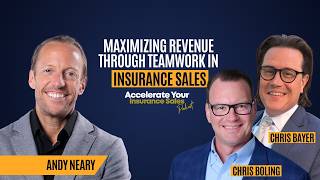
In this Accelerate Your Insurance Sales podcast episode, host Andy Neary interviews Chris Bowling and Chris Byer of CB Squared (now part of Gallagher). The conversation explores how the two agents merged their books and adopted a true team‑selling model, generating over $3.5 million in new revenue in roughly four years. They discuss the complementary skill‑sets that made the partnership work (Bowling’s technical/managerial depth vs. Byer’s hunting and relationship‑building), the challenges of splitting commissions, and the cultural shift required to drop ego and trust each other. The guests also detail how they built a personal brand independent of the agency logo, using a disciplined 52‑week LinkedIn content calendar, client‑focused interviews, and a recurring “Bottom Line Thursday” series powered by an external content team (BYOB). They reflect on the impact of agency acquisitions (Molino → Assured Partners → Gallagher) on resources and how a consistent brand presence helped maintain client confidence through those transitions. Throughout, they stress the importance of consistency, long‑term thinking over quick fame, and using content as an integral part of the sales process rather than a peripheral marketing tactic. The episode ends with rapid‑fire personal questions that humanize the hosts and reinforce the theme that disciplined routines and teamwork drive sustainable growth.
Chapters
Hey, hey, welcome back to the Accelerate Your Insurance Sales podcast. Andy Neary here, CEO and founder of Complete Game Consulting. I'm excited for today's episode. We're bringing back some, some two gentlemen that have been here in the past who have made some tremendous progress since we probably last spoke, and they were already having a lot of success at that time. Chris Bowling, Chris Byer, CB Squared officially now with Gallagher. Welcome aboard, guys, or welcome back, I should say.
Thank you.
Yes, thank you, Andy. Good to see you again this morning.
Well, Chris Byer, I'm gonna go to you right away, cuz literally as we were hitting the countdown button to record this, you made a comment that somebody actually mentioned bringing back the CB Squared brand. Is that true?
That happened just last night at an event. So spouse of one of our coworkers was like, I love what you're doing, but you gotta go back to CB Squared. And I said, well, we'll see what happens. I, we're recording tomorrow. So it was great timing last night.
Well, I hope that is the case cuz let's level set with the people who, who are maybe tuning in for the first time. They, they're not quite sure who you guys are. First and foremost, if you are tuning in, listening or watching, watching, look at the names here. Chris Bolling, B-O-L-L-I-N-G, Chris Byer, B-A-Y-E-R. Go look these guys up on LinkedIn and model what they're doing. So we first connected guys back in 2020. You joined one of the academies I was running, which we'll talk to, talk about just for a little bit. But for a quick level set for the people listening, since you said in the last 3 or 4 years, you guys team sell, so you guys work together. How much business have you sold over the last 3 or 4 years?
Yeah. I mean, we started merging our book. Yeah. Probably 4 years ago now. This may be our 4.5-year mark to work together, but together we've been able to generate over $3.5 million in new revenue combined and have significantly increased our book compared to what we were doing prior to team selling.
Wow. That is one amazing— I want people to hear that again. Over the last 3 or 4 years, $3.5 million of new revenue. It is possible when you do the work and you do it the right way. So bowling. Talk to me about the power of team selling. When you guys made that decision to merge and really come together, what, where do you think that has helped you guys or how do you think that has helped you guys elevate kind of what you are doing from a sales perspective?
Yeah. And it, and it actually came from my mentor retired in our agency and we lost 80% of his clients in the first 6 months because not a single one of his clients were introduced to me or to Chris Byer. And as I started looking to the future, number one, Chris and I have been writing together, selling together since his first day. And I just realized that he has skill sets I don't. I think I have skill sets he does not. And I thought, yes, you know, I wonder if we could team sell together and truly team sell, get egos out of the way, just join our books together. So now we don't really care. That's my client. This is your client. We could probably accomplish two things. Number one, when I do step away, The hope is that all my clients know Chris no different than they know me, and we won't see that loss. But that was really how it started. What I didn't realize is once we joined our books of business, I think we were both fully engaged in how do we grow versus, yeah, let's write this account together or let's write that account together. But it took us a year to really figure out— the selling part was easy, Andy. The hard part was managing the book. You know, literally a client would send an email, we're both responding, and it took us a year to figure out, yeah, okay, Bayer, your skill sets are here, stay here. My skill sets are here, I'm going to stay here. Let us handle that day-to-day stuff. You just hunt, get out, hunt, because that's what he's so freaking good at. And yeah, it's just been, it's been fun. I mean, it's, you know, obviously growth has its challenges, but, you know, 99.5% of the day, it's Fun. It's, it's, that's the reality.
Would you agree with that, Byer? Is, is it, is, did it help that you guys had different skill sets? One being more of a hunter, maybe one being more, uh, really technically sound. I hate to use the word manager, but at the same time, Bowling may like the details more than, more than you do. You like the selling more than he does. Okay. Yeah.
I think that was, that was the key. You know, when I started, you know, almost 10 years ago coming up in April, I just, I set appointments and said, Chris, drive with me because I don't know what we're selling. I don't have no idea what we're doing, but I know how to set appointments. And, you know, I'd come from voluntary benefits space, not anything related to benefit consulting. I mean, very small sliver. And we started to realize even in those early days that Chris knew what a self-funded health plan did. He understood, you know, those questions to ask. And so I learned a lot from him. But yes, we've kind of gravitated to that point where I could certainly handle A to Z with a client, but I'd much rather find those employers that need help and then let us bring a solution and then Chris and our team be there to fulfill that for them for years to come. It's, it's been a great, great merger together.
Yeah. I, I see, I see that a lot. We have several agencies we work with where there is team selling going on. And I always, I, I feel like the best team selling occurs when the people understand what their gift is, what their skillset is, but they have the ability to drop the ego and know they need the other person with the other skillset to help them out.
Yes.
And you guys—
and I think—
I mean, go ahead, Chris.
Yeah, our legacy agency has done a lot of team selling. I mean, we would co-produce many things together, but no one had ever said that. Just the same thing. We're going to split everything 50/50, no matter who's working on it, no matter who brought it in, no matter who wrote it originally. But I think it was that ego aspect. Chris took a big hit to his book. I got a big bump to Merge, and we both said, all right, let's go forward because this is going to double, if not triple. In the next few years. I mean, that trust, say we're both going to put 100% in and not worry about the numbers initially, has paid off tremendously for us.
Yeah, that was a, that was a fun conversation with my wife to say, I got this idea. We're probably going to go back 4 years of what we were making. But I promise you, in— I think I told her within 18 months, I guarantee that we will get back to what we are making, you know, currently today. and then it's gonna be sky's the limit. And she was just like, okay.
Yeah.
And thank you. Sure enough, that's exactly what happened. It only took us 18 months and literally we had doubled our book of business in the first 18 months.
Wow. I, I actually didn't know that part of the story that when you guys made the decision to pair up, you actually took a hit to your books because now you were splitting everything.
Yeah. Wow.
That, that takes, you know what that takes? That, that takes the confidence in yourself. And that I, I wanted, I hope people just heard that. You made the conscious decision to take a step back, but knowing you had the confidence you were gonna make it up. And I think so many people in our industry are afraid to do that. Whether it's going out on their own or going to a new agency, cuz in many cases you're gonna start over. And it's because they don't have that confidence that they'll have the ability to make it up. And I, and something I had to learn over many, you know, the, the 5 or 6 years I've had this business is you will always make more money. Like, you know how to sell insurance, in your case, in my case, sell services, you know how to sell this. You will always make more money. So take that risk. And for you guys, I mean, that was 18 months. Today, think about how, where your books are at today because of team selling. Do you guys think you could be anywhere close to where you are today had you not teamed up?
No, absolutely not. No, not at all.
No.
I mean, it, there's, there's only so much capacity that each of us has in a day. And if we're trying to do the entire spectrum of new business to client retention, you tap out very quickly. And being able to each take a certain aspect of the client journey ourselves, run that, and then be there together to collaborate when we need to, there's no way we could have done that individually.
Yeah, we're at 90, 93 clients right now. I mean, it's just, there's no way one person could have 93 clients and be out consistently prospecting, building your pipeline, And yet, I mean, yes, if you've got a great team behind you, which we do, but you still have calls every day, you still have emails every day that it's a technical question that's going to get elevated to you. And again, Chris is technically as savvy as me, but it just helps that once again, it's trust. I trust whatever response he makes is the right response, vice versa, but freeing each other I like to say staying in our green zone. The green zone is the day flies, flies by, you know. And there's— for my red zone is to have to call people. I, I will, I will delay that. I will procrastinate that. I think the best example is I would typically write about $150,000 per year on my own. That was it. My best year was $330,000, but I knew probably consistently I would force myself enough to call enough people to write $150,000 a year. And you know what? Over time, I think I had my book at about $1.3 million when we joined. So, I mean, it was a decent book. It was providing a decent lifestyle, but I was miserable 25% of the day because I was doing stuff I didn't want to do. So, I was like, this is a no-brainer for me.
I think it's the definition of if you want to go fast, go alone. If you want to go far, go together, right?
Yeah. Well said.
And I think for people, people who are listening, look, look within your organization right now. Is there anybody in your, on your team who you think would be a good, would have the skill sets who that match your skill sets that I guess fill the gap in your skill sets where you could become a very powerful combination? And are you willing to give up the fact that you may not earn everything when it comes to commission and revenue, but at the same time, it's how you're gonna go a lot farther. Now let me repeat this again. These two guys have written over $3.5 million in the last 3 to 4 years when they made the conscious decision to pair up and sell together. That, that is something I want to make sure people don't forget. Now, here is what I am curious about, cuz it's gonna dive into where I want to go today. You guys, when we first connected, buyer, I know you guys were with Molino. Were you with Molino at the time? I can't remember.
Oh yeah.
Yeah.
Okay.
Yeah. Yep.
And then you, and then you became Assured Partners.
Yep.
And now you're Gallagher. So you guys have seen transition through acquisition. Talk to me about the power of building a brand, which you guys have, and how it's helped you, let's call it maybe stay consistent even though you have experienced the acquisition, the change in where you are working. Chris Byer, why don't you take that question?
Yeah, I think when I started with Molino, great, you know, third generation family agency. I was naive enough to say people should work with us because we're the best. And, you know, we would go into meetings and nobody knew the name, nobody knew the name in the market I was calling on. And so, a lot of our success came by asking the right questions and providing ideas that that employer maybe had never seen for their benefit strategy. And that worked very well. And then I remember we had a finalist meeting for a very large employer, a couple thousand lives, the week before we shut down for COVID. We had just merged with Assured Partners, and we had all of the ideas right. And they called and said, "We're not going to go with you guys." And I said, "You know, what was the reason?" "Everything that you said you would do for us, you had to go find somewhere. You had to find the benefits administration. You had to find the actuary. You had to find the underwriter. You had none of that in-house, and the groups we're looking at had that all together." And that was definitely an eye-opening moment to say, "Your ideas are great, but I How do you mesh that in into the client experience quickly, which we saw a huge step forward then with Assured Partners. We had those resources that now our ideas, our thoughts, our engagement with the new client could now be fulfilled in-house. And that's just gone even, even further now with Gallagher. It's the same team, same concept, same questions, just with the deliverables on the back end that maybe we're not doing ourselves are being done for our client that for frees us up to be better advisors.
Do you guys, do you think you have seen a benefit of having brand awareness as those transitions have occurred? You know, obviously it started out as CB Squared, which it's, that's adjusted a little over time, but I see so many producers who work for the big houses and they don't really have a brand. It's, they're just representing the house, the firm, right? And then they hop from one to the next to the next kind of hiding behind that firm's logo. Talk to, talk to us a little bit about, yeah, okay, you guys have seen the increase in resources and capabilities because of these acquisitions, but where has your consistency of brand awareness really helped you guys because you've made the conscientious choice to build a brand? I think that's important for people to recognize.
Chris, you can speak to that a little bit.
I, I, I think you would do a better job.
Well, I, I was gonna lead you to the point of nobody buys.
These guys are so humble. These guys are so humble. They're not even wanting to take the questions here. Bayer, Bayer, why don't you go? Why don't you talk about that?
I mean, Chris, you've said this before, nobody buys our agency brand. You know, nobody cares what logo is on our business card. They, they buy the trusted relationship of an advisor that's going to take them down a path to success. And I think the ability for us to step away from our brand and say— agency brand— and say, this is CB Squared, this is what you get with Chris and Chris, this is the way we're going to engage, this is the way we're going to treat you as a client— being able to put that out on LinkedIn daily, we've built that, I guess, awareness with our prospective clients. They've seen us, they've heard us, they know how we, we talk, they know how we give each other crap all time. I mean, we have fun doing what we do. It doesn't matter the logo because that is not why they hired us. And I go back to that as well. Nobody hired us because I had Molino on my business card, even though I thought they should. They hired us because of our ideas and our approach.
Yeah, yeah.
This is, this is where I'm going to lift Byer up. The reason why our clients don't care what our brand is is because this guy's following up with every prospect every quarter. Doesn't matter, doesn't matter what our brand is. They've gotten to know Chris through consistent prospecting, delivering content to them that's meaningful because he would call them, he would hear something, he'd be like, great, here's an article, boom, send it. So through that, it's not like, what is Chris Byers' email now? Because I think that's changed. They don't care. That's where I think our brand, and I don't think it's our brand, I think it's consistent follow-up, meaningful content when you're doing that follow-up phone call. And you know what, you're probably going to hear, it's not, you know, not the right time. We sold more clients last year that we had been working on for 7 to 8 years that we finally were able to sell. Now, this is where once again the, the, the younger dog teaches the older dog. I would go see somebody, they would be like, no, not right now. Be like, I'll show you, I'm not calling you back ever.
Yeah, take that.
Take that. I'm not going to ever, ever talk to you again. Where, you know, I really think through, through Byers' learning skill before he came to know he was a prospecting machine then, and he just realized no, it's just no today. It doesn't mean no forever.
Yeah.
So yeah, I don't care who, you know, what logo I have behind me or on my card. Yes, I think Gallagher is going to deliver some great, some great tools for us, but we've never sold tools. Here's the idea. And yes, here's the tool we're going to use for that idea.
Yeah. I, I, for, for those that are watching this video, you heard Bolling say younger dog teaching the older dog. Chris Bolling, I'll just say, is older than we all think. And if we could all look like him when he is at his age, we would, we would all be happy, happy people. You have aged gracefully, like fine wine. But you made, you made a really good point there. You made a really good point. It's people buy people. And really what a brand is, brand is a representation of your reputation. And if you consistently show a representation of your reputation, you will build relevancy.
Yes.
And that's really what you guys have mastered. It's not becoming viral with your content. It's not what can we post so the algorithm likes us. It's no, we're just going to consistently show the representation of our reputation. That's all it is.
Yeah.
That's, that's well said.
You said something, Bolling, that I'd love for for you guys to expand on a little bit. You said this is working because Bayer is so dang good at follow-up. So wait, you're, you're telling me that I can't grow a brand and all of a sudden I'm going to magically have all these inbound leads and I don't have to do any prospecting anymore? Bayer, tell me that's not true.
Oh, I wish it were true. I mean, I wish we could, we could just have people picking up the phone and calling us, but that's not the case. I think the The awareness is just that, that people get to know you, get to understand your style, get to understand your personality. So when you do talk to them, you're not trying to build that trust right out the gate. And I think when we first started our LinkedIn posting in late 2021, we went into 3 different meetings that summer of '21 and we had called on the CFO. I had done my thing with them, connected with them all the different ways that I was reaching out. We walked into the conference room, they said, guys, this is CB Squared. You should check out their information on LinkedIn, see what they're posting. And that's when we knew it was starting to work. But again, both of those, both of those now clients didn't call us. I had to be relentless in my follow-up to get them to the point of meeting and taking the time and priority to look at their benefit strategy. Up until yesterday, we had— go ahead, Chris.
No, no, no, go ahead.
I was going to say, up until yesterday, we had one One inbound opportunity through LinkedIn where we had an HR director message us through LinkedIn and say, I need what you're doing. But I had already called on her at her prior employer for years and she was following our content. Yesterday we had that as well. Former client moved to a new organization. He said, I need to meet. We've got challenges with our benefits. And he said, I love what you guys are posting. This is something that I'm not hearing. So again, he emailed us, but I would say that was directly related to what we're putting out there, but that's 2 that I can say were direct related. The rest of it's awareness. And it's—
so 3, 3.5 million in 3 to 4 years of new revenue. Up until yesterday, one of them was a pure inbound lead. But let me ask you this, Bolling, how many of those, how much of that $3.5 million did content help build the credibility and the trust you may have needed to win the business? Not necessarily the inbound lead. Where, where they, where they recognize what you guys were doing because of the consistency of building that brand?
I don't know if I can answer that and feel confident with my answer. I'm going to go back to the reason why we joined your program, and I'm going to say, if I believe in, in what you told me back then, which I wholeheartedly do, then I'd say 100%, which is before they will return a call, before they will ever meet with you, they will look you up and they will determine if you are actually relevant. And if you're not relevant, Why would I meet you? I mean, I can't, I can't remember any one buyer through the sales process say, we're going to go with you because of your LinkedIn profiles, you know, or your content. But I have to believe this, this younger buying generation are absolutely looking at our content and are absolutely saying, hey, what these guys are saying in a meeting, I see videos where they're talking about the same stuff. So this isn't a sales gimmick. This is something they truly believe in.
Yes.
So yes, this episode is brought to you by True Captive Insurance. What if you could take full control of your healthcare strategy without the financial burdens of traditional insurance? At True Captive Insurance, they make that possible. As the only captive in the nation that puts up the majority of collateral on your behalf, they provide financial flexibility from day one, making them an advocating partner for their customer success. True Captive's fully customizable plans and cost-saving strategies ensure ensure you never have to choose between affordability and quality care. It's time to break free from the limitations of conventional insurance. Take the next step today. Visit TrueCaptive.com and discover a smarter way to manage healthcare. That is TrueCaptive.com.
Yeah, so we spend a lot of time sharing— yeah, sharing what we do for our clients. I think that's a big aspect of our content is this is what we're telling our clients today. So anybody out there in LinkedIn land, you can take our ideas and run with it, but you're not going to do it the way we do. You might be able to do it somehow, but you're not going to do it the way we do because this is our approach. This comes back to— this is our brand. This is our, you know, this is our reputation of how we engage with clients. And that was difficult to give away the secrets. But at the same time, you know, if we're ever going to get that employer to consider us, they have to have a valid reason to say there's something different than maybe what they're seeing today. Right.
Yeah.
And you know, we, we, we preach give away the farm, reap the harvest. Right. And which is a hard, which is hard for a lot of people to, I think people in this day and age, producers still believe they have these exclusive ideas nobody else does. And I hate to tell you, there's nothing you have nobody else has anymore. No, but yes. Your ability to show up every day and, and teach what you know to help people solve the problem you own. That's what builds the thought leadership and the credibility. And, you know, I'd be curious with what you guys, 'cause you've done it for so long now. I mean, 5, 5 going on 6 years, I think. When you guys create your content, when you guys sit down to create it, what are you guys thinking about when you plan that content? I mean, you guys do a lot of client interviews, a lot of peer interviews. What are you guys thinking about as far as strategy goes? Byron, why don't you take that?
I think this is, yeah, this is our 3rd year that we have planned out our entire calendar, 52 weeks of content. You know, usually sometime in December we get together with the team and just start So you guys plan the whole year?
Yeah, the whole year.
Wow.
Yeah, those first few years it would be like, oh shoot, we have to record today so that we can have a video to post next week. And it was always a scramble. So when, you know, and we've got a fantastic team with BYOB behind us helping us, you know, create the content from our videos, helping organize it. But when we look at the calendar of the year, we recognize there's certain themed months, you know, it's you know, Mental Health Awareness Month, Colorectal Cancer Awareness Month, things that are going to be relevant to our benefit clients. But we also want to speak to our audience that would, would be our potential client— HR directors, CFOs. So we're trying to mix in every month something related to that month, something related to each of those roles, and how are we making a health plan and benefit program better. And then we love the interview aspect. I mean, when you talk about things We haven't had anything go viral, but our most watched and engaged content is when we invite a client on to interview the client about their business, their history, their family. And we're fortunate. I mean, we're in the Midwest. We've got a lot of 3, 4-generation companies that have huge success, great stories of how they got started. And that's just fun to let that client share their story. And, you know, it's a mix of all of those because we're not on there to say, tell them why you hired us. It's just, let's tell a story and let that client be the spotlight for the week.
Yeah, I think that's a really good point because I see a lot of people who want to leverage interviews because it is a good strategy, right, to bring somebody on up here. But even when we coach some of our own clients, their initial reaction is, how do I make myself look good in this interview? Like, so they'll want to talk to a client about why you hired us and what we did for you. When at the end of the day, you only have one job, make it about them. Let them tell their story and their journey and what's going on in their business. This has nothing to do with you. Bowling, with that said, you know, I'd be curious to get your thoughts because I think what you guys have done so well, and it's something I didn't teach back when you guys were in the academy, but I definitely teach now is this philosophy of act like you're the news channel to your prospects. If you think about the news station today, what do they do? They show up every day regardless of what the news uses, and they share stories and timely, relevant, useful information. Nothing fancy, doesn't have to be viral. Nope. But at the end of the day, your job is to show up and deliver content that your prospects will find valuable. So when you guys look at the people you're interviewing, you know, outside of the topics, what's going through your mind as far as like what we're trying to get out of the content to make sure it's useful for our prospects?
See, but you can talk about Bottom Line Thursday. I think that's A great example.
Yeah. You guys have a theme of Bottom Line Thursday. Talk about that, Chris.
Yeah. So we have a colleague, Brad Johnson, wicked smart, just as technical as you can possibly dream. And Brad built his agency by just being kind of that resource for HR. Is you got a technical benefits question? I'm your guy. Excuse me. So Brad started a newsletter. I mean, what, 20 years ago, probably, right? He's been doing it forever. And it's great content. Again, I swear this guy does nothing but live and breathe insurance, because he's— every night he's reading articles coming out of Kaiser, coming out of all of these, you know, institutions. And when Byron and I were doing this content, we were like, God, let's have Brad on on Thursday, and let's have Bottom Line Thursday where Brad could go go through his newsletter. And so every Thursday we pick 4 topics from his newsletter, we record everything on one day for the whole month, and we just drop something every single Thursday that's coming out of his newsletter. And again, Bayer, we've gotten great responses from this. So now it takes this day off of us. We don't have to create content for that day. Brad loves it because, you know, obviously we are promoting Brad, and we've We've once again team sold with Brad. So now we've got a bunch of clients that, you know, once again, Chris and Brad will go out, figure out who these prospects are. We all show up, we deliver our message, and over time, yeah, we've been able to sell some, sell some clients that I don't think we could have sold individually, but teaming up with Brad made it happen.
That's awesome. Yeah, I think so much of what I'm already taking out of this conversation is— go ahead, keep going, keep going, buyer.
No, I was going to say so much of Brad's—
what I'm taking out of this conversation We got a short time delay here. I think this is why we're running, we're running into each other's thoughts. I'm going to shut up. Chris Byer, you share your thoughts.
So I would say so much of Brad's content is the obscure things that are impacting legislation or random pharmacy updates. I mean, it's the things that, you know, are relevant to prospects. And I would just say when Brad joined Assured Partners, he was a huge competitor of ours, but our most respected competitor. I mean, we could never take a client from him. And as soon as he came on, it was like, let's just take this knowledge and make it better. But I think it's a nice addition to our content schedule of topical monthly things for the ideal buyer. And it's just, here's things that happened this week, last week, things you should pay attention to. And it's just been helpful to get engagement, you know, with our prospective clients. So now I'll be quiet. And it's Andy's turn.
No, I, I, what I was gonna say is I think the biggest takeaways I've, I've grabbed from this conversation today already is number one, the power of team selling. If, if you're willing to drop your ego and, and find a partner within your firm, you guys can go a lot farther together. But I think when it comes to the brand, what you guys have done so well, and I'm gonna ask you guys, uh, a question here about your journey, your content journey. What you guys have done so well is when you went into this, number one, you've been committed. Hands down, you've gotta be committed that this, that you're gonna stay consistent. That is number, that is what you guys have done better than anybody I've seen. Number 2, you go in with the attitude that I'm not expecting this to create overnight wins. And number 3, and I think this is the most important thing I want people to hear. When you go, when you commit to building content, you have to make a conscientious decision. Do I want to do this to become famous or do I want to do this to become financially successful? Those are two very different paths you want to go down. And I see so many people right now in our industry doing it because they think it's somehow creating industry celebrity, which blows me away. But at the end of the day, if you want to be financially successful, which means you actually use content to ultimately build the credibility to write business, do it the way you two guys are doing. And that you guys are a model of this. So here's what I'd love to hear from you guys. And I'll, I'll go to, I'll, I'll go to Bayer here. When you look back, because, Bayer, you had a lot of skepticism when you started 5, 6 years ago.
Yes.
Where would you put your thought process around content today compared to what it probably looked like in 2020, 2021?
I was certainly skeptical because I was not a social media person. So, I mean, that was the first thing, you know, I would, I would add a few things here and there with, you know, Facebook or Instagram for family stuff, but I wasn't somebody that felt I had something valuable enough to share. But then secondarily, my LinkedIn connections were basically industry connections. You know, I was in a role of, of trying to recruit salespeople in the insurance industry. So most of my contacts were insurance people. And I was like, nobody's going to care about what I do for clients because my audience was wrong. So I would say that first couple of years was a lot of repositioning my connections and my following to look at the companies that I'm calling on, to look at the contacts that I need to have see my content and engage with them. But now as I look at it, it's, you know, again, I do less social media than I've ever done. It's just this, this format. It's, it's being able to again share your ideas in a quick snippet so people get to know you. So my hope is when I call them, I email them, I stop by their office and they want to know more, they can always check out a video or I can share that with them. We have a library of 5 years of some really awkward early ones, but we've got 5 years of videos where we can say, here's what we do and how we do it. And, you know, that alone has, has helped because we can refer back to, oh yeah, we've already talked about that. Here's, here's a topic. You know, it's, it's been very helpful.
Yeah. Bolling, I want you to expand on that because I think that's a really relevant point for people to hear. It's one thing to create content and post it on LinkedIn. How are you guys, if you are, how are you guys using the content that you are posting on LinkedIn, maybe on other channels or in other ways to help fuel the sales process. If you're meeting with a prospect, do you guys ever use the content as part of your sales process?
I mean, yeah, the content is our sales process. Yeah. I mean, it's not, it's not in reverse, Andy. It's, these are the things that we learn throughout, you know, the year or the month. And if something is, is relevant and it pops up, obviously we will take a week that we scheduled and say, this is what we're going to do, and we'll just erase it and start something new. I think it's twofold. And you know what, Andy, I cannot agree with you anymore. I don't care about you cold plunging. I don't care about you jumping out of a freaking airplane. Great. Good for you. How does that help your prospective clients believe that you know what the hell you're doing? Other than getting in water and jumping out of a plane. It's cool. Great. Love it.
You do it. You cold plunge.
Yeah, I cold plunge. Doesn't mean I'm going to show my freaking butt on a, you know, on LinkedIn. I mean, nobody wants to see that.
Number one, pretty good for your age, man. I wouldn't overlook that.
Well, thank you. But it's be thoughtful in your content. Be thoughtful of thinking what I post. Is this going to be relevant in today's industry, as we know, this is such a fast-paced, fast-changing industry. Is it relevant? Yeah, but yeah, I mean, what's funny is, no, we don't think about our content and then take it to market. It's what we're doing. It's reverse. What we're doing, how do we share that on LinkedIn and share it consistently? I will tell you, at about the 2-year mark, I was done. I was like, Beyer, dude, I mean, this ain't working. So let's just, let's just save ourselves some time. And he was like, no, let's just keep doing it. Let's keep doing it. And sure enough, now literally it's not a thought. It's in the calendar, it's planned, we've got our content plan, we're going to knock out a whole month within 1 hour. So it's not a big time commitment. And thank God for BYOB because they've got the heavy lifting. We record the videos, I post them to them, and they take care of all the content.
Well, I want you guys to talk about that real quick because I mean, for full transparency, BYOB is our team we use for our clients, same, same people, right? But by bowling, you said something I wanted, I want people to hear. I tell people with content, you're gonna reach a point that you will have the thought one morning that this Neary guy is full of shit.
Yes.
This stuff doesn't work. But then all of a sudden, one day it's gonna click. You're gonna get that comment, that inbound lead, whatever that is. And then you're like, oh, oh, maybe, maybe he's right. And then from there it just takes off. But I want you guys to talk about, now you guys did this from day one. One, which I think is rare, but the power of having somebody else support the content, whether it be editing, posting, how has that helped you guys stay consistent? Fire, why don't you take that question?
We're terrible at it, so we shouldn't try it. I know in the, like, fourth quarter of 2020, I started posting myself one thing a week, a video. I was recording it, trying to come up with, you know, images and wording and all of that stuff, and that was just to get one done. And when Chris and I jumped in and in January together, it's like, we, we have no skill set to create the wording, create the tiles, the— like, we're not going to be successful. So we were fortunate to connect with Nancy and her team, and that's what they do. I mean, it's— it truly takes a recording session, and then each week or every 2 weeks, we're approving the posts that they're building for us based on the content. And that's evolved from just the video to to an infographic, to our Bottom Line Thursday, to a Tuesday newsletter. That has been probably the biggest piece of this because we don't have time nor skillset to do that, and it just wouldn't have happened. No.
Yeah.
That's great.
A couple more questions, then we're going to go to a quick rapid fire so people can get to know you, and then we'll bounce here. Chris Bolen. Yes. I'd love to hear from you. If there's a producer, an agency executive sitting, listening to this or watching this episode, and they're sitting on the sidelines, on whether or not they should do content. Because I tell our team, our biggest challenge with our, our program where we support the content for people, we're really building people help. We've actually transitioned to say, we don't, it's not, we don't do your content, we're building your thought leadership. That's really what this is. You guys have built thought leadership. But for a lot of people, they sit on the sidelines because of the fear of people are gonna judge 'em, the comparison from, uh, their content to others. Chris, have you, if there's somebody out there, Chris Bowling, sitting on the sidelines with those thoughts and those fears right now, what advice would you give them?
I'm going to say one thing, and that is Gallagher, the second largest or third, depends on the year, house in our market. Multiple people at Gallagher have come to Chris and I and said, we love what you're doing, and how can we duplicate that? Because what you're doing, we can see the success, and we want to clone you guys because this is amazing content. So if the third largest house out there is saying, holy crap, this is amazing and we want to try to duplicate it, I'd say you should probably think about it because those people are way smarter than me.
Well said. Well said. Any, any, any additional thoughts, Pyre?
No, I would agree. I mean, the— I guess just it comes back to that as well. We have a great agency brand, huge brand, huge agency brand.
You can tell he's at his home and I like— but there we go. All right.
Welcome.
All right.
I'll say again, we have a huge agency brand, but again, how do you differentiate in a market where everybody has a brand? All right. I'm back. I think.
I hope. I'm going to move on. We're having a little technical difficulty. Chris Byer, we apologize.
That's on me, guys.
You have frozen on us, but this is the power of podcasts and just being real, guys. We run into technical difficulties as we record these things. So Byer, hold tight.
There you go.
Awesome.
All right.
Let's wrap here, guys. I'm going to go in rapid fire so people can get to know CB Squared a little bit behind. Behind the logos. You guys ready? I'm going to ask you some fire questions. I did not prepare you, but we do want to get to know you. So, Chris Bolling, I'm going to start with you. We're going to go— we're going to go bowling and buyer on these. Okay. So just to prepare you guys, bowling and buyer. Question number 1, tell me your morning routine. Chris Bolling. Chris Bolling, tell me your morning routine.
Personally or from a business standpoint?
Personally, before the day starts, what is Chris Bolling doing in the morning? How does Chris get prepared for the day?
Okay, I get up, I cold plunge, I walk on a treadmill, I go upstairs, I throw my 2 tablets in some water, I add some salt, I put some, some, you know, creatine in there, and that's before I even think about what I'm going to do for the day. I do it every single day.
By the way, are you a Gary Brecka guy?
I love Gary Brecka.
I said that's Baja salt. I knew exactly where that was coming from. Chris Byer, what's your morning routine look like?
So I'm up early, coffee, a little bit of time for reading as well. If it works with weather, I'm walking as well, but outside. I don't cold plunge. I do have some vitamins, but I'm also now into a lot of birdwatching. So I sit in my living room and drink coffee and watch the birds in the morning. I've reached that era and CB will give me grief for it. We have a text chain going back and forth with bird memes, but it's, it's, it's calming and it's relaxing and it gets me centered for the day.
So I already love the diet, the, the, the, what do I want to call it? The dichotomy of your brand. Chris Bullen's like, ah, get me in the cold plunge. And then you got buyer watching birds. This is why your team's selling so well. Chris Bullen, you get 1 hour to work out. What are you doing? What's your workout? Chris Bullen.
Cold plunge. Okay. Cold plunge, treadmill with oxygen. And then I usually do weights. I just, I think as I get older, I'm 55. As you get older, you gotta keep your legs strong. You gotta keep your muscles strong. And so I'm, purely dumbbells and usually splits. So I want to get my heart rate up. And then, and then about 3 days a week, then I jump in a sauna and sweat it out and go back into a cold plunge and then start my day.
Let's, let's quickly define splits because I think people might have just gotten the image of you putting your legs up on 2 cinder blocks doing splits when the reality is I have a certain workout regimen.
You know what, that goes back to nobody wants to see that, man. Nobody wants to see that. That's not going to make you famous.
Chris Byer, what does your 60-minute workout routine look like? And you can't say birdwatching.
No, so many injuries, it would be a walk either through the neighborhood out into the country or bike ride as well. Those are my two things that I absolutely love because it's just peaceful. I'm out somewhat in the middle of nowhere when I get out of the neighborhood, so I love that.
That's great, guys. Well, it's been an honor to have you guys back on. If you're tuning in to watch this, you, you hopefully you've stayed with us long enough to work through the Technical difficulties. Thank you. But this is why we do these podcasts. They're just 3 humans having a conversation. But if you get a chance, go make sure to follow these 2 guys on LinkedIn. You guys are a model of how it should be done. You're a model of consistency. I mean what I said. When you decide to do content, you got to pick a path. Do you want to become famous or do you want to become financially successful? And I don't know about you guys, but you've done content now for 5 years and you've written $3.5 million over the last 3 and 4. I don't know. I think something's working. So I really appreciate you guys for taking the time to be here and thank, and thank you for putting in the work every day.
It's our pleasure. Thank you, Andy. Appreciate it.
You've been awesome.
Everybody else put in the work, commit to the content, build that thought leadership. That's what we need today to win business and use these two as a model. If you, if you feel stuck, be good, everybody.
Excellent.
Thank you.
Thanks, Andy.
We'll see you.
More from Andy




If you want producers to succeed faster, help them create a sales message that creates confidence.

Sales isn't a zero-sum game! You can have tough competition and still grab a beer after



Option 1: Meditation, a fast walk, a podcast, and protein. The ultimate morning routine!

How you do one thing is how you do everything. Ill elite producers fuel their body.


Stop living in the gray of maybe! Your job in sales is to get a clear yes or no