The Real Reason Your Agency Isn't Profitable
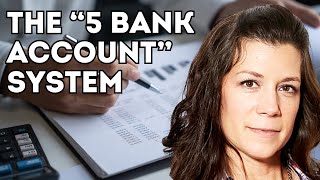
Episode: Andy Neary interviews Alicia (accountant) about implementing the Profit First system to make agencies profitable. Alicia explains common cash-management mistakes (single account), recommends a five-account Profit First setup (Income, Profit, Owner's Pay, Tax, Operating Expense), and gives target allocations by revenue band (example: ≤$250K revenue → Profit 5%, Owner's Pay 50%, Tax 15%, Opex 30%; ~$1M revenue → Profit 15%, Owner's Pay 20%, Tax 15%, Opex 50%). She also covers advanced accounts (payroll, drip accounts), recommends keeping roughly 2–3 months of payroll as a safety net, and describes how to apply Profit First to personal finances. The interview includes Alicia's background, routines, and contact route (alicia.com).
Questions this video answers
Income; Profit; Owner's Pay; Tax; Operating Expense.
Profit 5%; Owner's Pay 50%; Tax 15%; Operating Expense 30%.
Profit 15%; Owner's Pay 20%; Tax 15%; Operating Expense 50%.
Roughly three months of payroll.
On Don Miller's StoryBrand podcast interviewing Mike Michalowicz in 2018.
Chapters
A lot of times people have one bank account and they deposit all of their income, all the sales for their products or services into one account. But then they will also pay bills out of that account. And a lot of times as that balance grows where maybe you get a big commission and then it's got to last for two, three, four months until you get that next commission check, it's really hard to navigate those peaks and valleys when you're using one bank account.
Hey, welcome back to the accelerate your insurance sales podcast. Andy Neary here, CEO and founder of Complete Game Consulting. I am excited for today's guest. I am going to introduce you some to someone that is a key asset to our business that I have leaned on a lot. And as I start to introduce more of these key partners that we leverage in our episodes, I hope you find these episodes to be very valuable. So with that said, Alicia hostess, welcome aboard.
Hello.
Well, it is rare that I use a podcast episode to focus on accounting, but we are going to talk about a concept today that some of the listeners might be familiar with. There are probably a lot who are not, but I will tell you it is a financial concept that has been huge to our business as we have scaled a concept we call profit first. And we'll talk about the concept, the book, all that stuff. But for the folks who don't know Alicia, which is probably most of them given our audience, give us a little bit of your background, you know, all the way, you know, accounting. What led you to start your own firm? Yeah, just a little bit about yourself. Yeah.
Self declared numbers nerd. I've always liked numbers balancing things. Came out of college and went into auditing, worked with one of the big four for a couple years. Did not like to be everybody's enemy because no one likes to be told that I found mistakes and we're doing things wrong. So I pivoted into the tax world and worked for a small accounting firm out of the Twin Cities in Minneapolis and worked there for 13 plus years doing taxes and then just kind of got disenfranchised with everything being after the fact. Most people don't come to the tax accountants. And I mean now it's more, there's more tax advisory. But back in the day it was pretty much you meet with them once a year. We give you the bad news, hey, you owe this money. And you're looking at like, hey, how do I owe this money? There's nothing in my bank account. So I really wanted to be more proactive with my clientele and so kind of pivoted and slowly started out on my own and it's kind of organically grew into a business.
So.
Yeah.
And you're today you're in kind of southwest west Minnesota.
Yep. About 90 miles of U.S. to Minneapolis.
And you know, we've been working with you. How long have we been working with you now? Has it been. It's over a year now, isn't it?
Yes, I think it was a year in June.
Year in June. And. And you have been a big asset to us from the numbers perspective. I brought you on because I got to a point where I'm like, I need somebody to tell me what my numbers mean. Putting that stress on me was something that I probably wasn't handling the right way. And so like I said, you have been a big asset to us. A little bit about you though. Four kids, right?
Correct. Ages 14, 12, 10 and 8.
You spaced them out perfectly.
Yep, yep. Planner.
This isn't a, this isn't a question about accounting or anything like that. It's more an entrepreneurial question. You work from home, correct?
Yes, I did. I actually went and I've been renting an office for like the last 18 months just because I needed to have that. I needed to have that space.
You make it look like a home office. You do a good job of making it look like it's comfortable home. I assume it was home. What, how do you. How are you able to balance running your own business? Because time management, I've come to learn with our clients prospects, a lot of people in the insurance industry, time management is the great equalizer or differentiator and it's the thing that is going to determine your success. Somebody running your own business with four children, how are you able to balance that?
One, very supportive spouse. Two, I finally got a coach in my corner to hold me accountable to changes I wanted to make. And three, just knowing that there's going to be different spots, seasons. Everybody talks about work, life, balance, but sometimes there's balance with work, sometimes there's balance with life. I feel like it's ne just giving myself grace, knowing that there's always going to be a push on one end and then I can come back and it's okay that I might need to push a little bit harder on the business end and then just slowly growing a great team that I trust and can start delegating. Not advocating, but delegating and teaching them the ways, creating Systems and processes SOPs kind of like all the standards that you hear spoken all the time, but actually Trying to take time and implement them. And then with my team, we're really into trying to time block so then we can. So you're not constantly switching. So, like, I went and tried to make certain weeks heavy, client meeting weeks, and then other weeks heavy, just in the weeds, working weeks, so that I can provide the most value to the people I work with.
I don't think we've had this conversation. You brought up your coach. Have the same coach.
Yes, we do.
I had her. I had Christine on a long time ago. It's probably time to bring her back on the podcast. But, yeah, she will hold you accountable.
Yes.
You know we love you. You know, you brought up a good point. You know, one of the best pieces of advice I have ever been given early here as I grow, Complete Game consulting. I still consider myself an infant when it comes to entrepreneurship, but the advice was, hey, if you're going to scale the business, you got to grow horizontally before you grow vertically, which is you got to go find people. You got to put in processes and delegate and find people who could take a lot of work off your plate. So you focus on scaling that business. I'm sure that's probably what, you know, what you were just referencing there. That is a big component of your ability to grow your business. Would you agree with that?
Yes, I would completely agree.
Yeah. So let's talk speaking about scaling, as you grow, you make more money. And what I want to talk to you about today is Profit First. And I read the book. I was going to pull it off my shelf, but I read this book, honestly, years before I ever went out on my own. But it was a book that was recommended me, and I can't remember who or why, but I read it, and it was just a fascinating concept on how to run your finances, both professionally and personally. And I think I started doing it as an individual with my personal finances. But then when I started Complete Game Consulting, Profit first became a huge game changer with the business. And so before we dive into the concepts, the details, the principles, what led you as an accountant to want to. And the books, the author is Mike Michaelowitz.
Yep. Michalowicz. Yep.
What led you, as an accountant to want to gravitate to that model?
Yes. So I can remember it vividly. 2018, listening to Don Miller Storybrand podcast. And he had been interviewing Mike Michalowicz. And it's funny because, like, Mike talks about doing, like, profit first with bank accounts, which we'll get into later. But I was essentially kind of doing profit first, but I was nerding out and just doing it inside spreadsheets or inside the accounting software. So, like, very apparent and transparent for me to know that I've broken out all of my money into different buckets. But then listening to him speak, it was kind of like this light bulb, like, oh, there's an actual system in here that I can present and use with my clients that will give them more visibility, more clarity, because just because I can geek out and love looking at spreadsheets or I'm in their. Their accounting software, this just gave them more visibility into their finances and just made it a lot more apparent on, you know, where our money's going and the buckets we want to be saving for. So, yeah, all the way back to 2018.
Yeah, I would say, you know, that's probably right around the same time I read the book. And you know what? It actually might have been because of the same podcast episode that was definitely following Story Brand at the time. And I probably was listening to an episode he had, McAllowican, which ultimately led me to go get the book. So here's what I would love to do. If you're listening in right now, you have your own business. I think what you're about to hear is going to be game changing if you're not leveraging this. Alicia, would you agree we could even probably segue it towards the end to how you could do the same concept personally? Yep, okay, perfect.
Definitely.
So one of the core principles of profit first, which really I try, I gravitated to, was profit is a habit, not an event. You know, a lot of people in the business world say profit comes last. You know, if we have any money at the end of the month, we get to call that profit. Where does profit first shift that perspective a little bit?
I think profit first shifts that perspective because we have a system around somewhat like baking in profit so it doesn't become an afterthought. Like you mentioned, you know, profit comes last. Even as they're teaching it in accounting, you know, income minus expenses equals profit. But I feel like people go crazy just thinking like, oh, if we can sell more and can contain our expenses, like, fingers crossed, if the gods align, we'll have profit. Whereas, like, with profit first, like, we figure out where our spending needs to be and we take our profit first. So, like, as we'll discuss, like, we allocate our income into different buckets, and one of the first buckets that you'll find out that we allocate is into profit. So then we essentially reverse engineer our spending in our business to make sure that we are profitable.
I love that you work with a lot of business owners and probably some that are just getting introduced to the concept the first time they meet you. Before we dive into the details, we're going to go into literally how to set, you know, what kind of accounts we should be setting up. What do you see as some of the common mistakes business owners are doing when it comes to bank accounts and how they're running their business from a financial perspective?
Yep. A lot of times people have one bank account and they deposit all of their income, all the sales for their products or services into one account, but then they will also pay bills out of that account. And it becomes very hard to look and analyze at that bank balance to see like, hey, in six months, I need to have $15,000 saved for that insurance renewal. Or, you know, in. In three months we have this repair that's coming due or this due in subscription. So it's very hard to break that bank balance down. And a lot of times as that balance grows, like if you get huge influxes of cash where maybe you get a big commission and then it's got to last for two, three, four months until you get that next commission check. It's really hard to navigate those peaks and valleys when you're using one bank account. And I. People tend to overspend when everything's stuck in one account versus when it's broke out.
Yeah, you kind of leave. Yeah. With one account, you leave it up to your own desires to determine how you're going to spread that money out versus having a system. I think that was the big thing for me is when we started incorporating, I was using it. It in a way. And then until I met you. And then we definitely put specific metrics in place. And I think what's really become helpful for me is it almost takes the thinking out of how to divide your money. And I. I think a lot of listeners are going to resonate with what I'm about to say. I can have emotion tied to money, good or bad, and taking the emotion out of spreading out my money, delegating my money has been a game changer because it's just follow the system, don't think about what you want to do. Right.
Yes. Yes.
And so let's. Let's just get to it. If you're listening in right now, this might be a time to grab a pen and a piece of paper and start taking some notes. So let's imagine you've Got a business owner, clean slate, One account. They're running the business on one account, probably one credit card, whatever it is. When setting up profit first, what are the core accounts? Bank accounts they should set up.
Yep. So typically we recommend a five basic accounts to start out with. So your first one would be income, your second one would be profit, third owner's comp, fourth tax, and then your fifth one is operating expense.
And can you again for the sake of being obvious, just walk through each one and its purpose?
Yes. So the income account is an account that will hold all of your deposits. So you want to deposit all of your checks, your merchant account, payments, like anything that you receive money from, that all gets deposited into your income account. Now your profit account will hold transfers. When we allocate from the income account, so what we deem as profit will transfer into there. Then we have the tax account where we'll set money aside for taxes so you don't have to worry about them. And then same with owner's pay because you are essentially the most important person of the business, so you shouldn't be paid last. You should make sure that you take care of yourself and your family. So we allocate money to owners pay and then we have an operating account. So that's where the remaining income goes. And that a lot of times will cover dues and subscriptions, payroll, insurance premiums, like all those different types of daily operating expenses. So those are our main five accounts. Now we can obviously break them out into, and to be more industry specific as we get into it, but for the basic set up, it's those five.
Well, and, and I'm glad you brought that up because one, I want to hear people notice there were two separate accounts, profit and owner pay. It's not, hey, the dollar you have left at the end of the month is your pay. Congratulations.
Yeah.
No, there's a account for profit and an account for paying yourself.
Correct? Correct, yes.
It's going to say, I think there's a lot of pride in people saying how, you know, business owners especially, especially when they're starting from the ground up that grind of I didn't take any money for two years and I didn't, I didn't pay myself for 24 months and I gr. Yeah, great. But you don't have to do it that way.
No, no, you don't, you don't. And I find it creates a lot of stress. It creates a lot of feast or famine when you do that. When I feel like when people don't pay themselves, they may be investing that money back into their business. Right or wrong in the right right or wrong. Things that aren't growing their business the way they thought they were and then even on front with the spouse, with the family, to have that inconsistent income of not being able to bring home a paycheck creates a lot of frustration and takes up even a lot of mental bandwidth. On now how do you manage your personal finances because you haven't been taking home a paycheck.
What are some of the common we'll continue to have a discussion here about the accounts, but we have our five accounts. Yep. What are some of the common misconceptions you see? Business owner, you know, business owners, people use the private first model. What are some of the common misconceptions they have about it?
I think sometimes that if they have profit, they're greedy. And so that's a really big mindset shift that they're overcharging clients or they're not paying their staff enough. But in reality, like you are the business owner, you're the one who created the business. Like this is your reward for taking on that risk, for taking on that stress and just. Prof. That profit account not only rewards you, but it also starts growing as a rainy day fund, a safety net to really set you up for success so you can weather different storms.
Yeah. I think when I think about our listeners, I also realize there's the flip side could be their problem right now. One, they're running the entire business out of one account and instead of dividing it up to cover overhead, they're trying to take as much of it home as they can. Therefore, they're not delegating money to reinvest or potentially hire somebody. And all of a sudden they become the bottleneck they can't grow because they've tried to make it a lifestyle business as quickly as they possibly can and therefore aren't delegating any money to actually expand and grow the business.
Yes. And a lot of times we find that out like as we'll talk about when we do a profit assessment. We sit there and we look at what you're where you're currently spending your money. And it's a lot of times eye opening for people to realize that they think maybe just their paycheck is their owner's comp. But when you start looking at the, you know, the company vehicle or vehicles are running through the company that they really don't need to run that business do like Hulu subscriptions, Netflix subscriptions, you know, the whole family, cell phones like all those things, like when you start adding those up and actually looking at those as owner's compensation, like it's a lot of times very eye opening. And that's the one thing I like about profit first, because it gives you guardrails or guidelines. And yes, we can adjust them because each business, each business is different. But it kind of gives you a framework of where, like how much you should be spending in each of the buckets.
Yeah. And I'm going to ask you here in a minute or two about how, what percentages should people look at? I'm sure every business is a little bit different. We've adjusted ours over time. But going back to the profit assessment, I know that's something you offer when you engage with somebody, even if somebody's listening. Thinking of, okay, a profit assessment, what goes into a profit assessment? What do you, what do you look for specifically?
Yes, so the different things that we look for are essentially the five different buckets and where you're spending your money. So we'll look, we'll look normally through the last 12 months of your expenditures and we'll look at how much you've paid yourself, you know, depending on your entity structure, you know, let's say through paycheck, if you've taken home any sort of shareholder distributions or just profit sharing, you know, that would be, we mark that as profit and calculate that where you should be depending on how much revenue you're bringing in, if you've made any sort of tax payments. Because we want this business, you know, to be able to pay for your tax liability that it creates. So have you paid any taxes? And we figure that out. And then even looking at your operating expenses, you know, everything from dues and subscriptions, meals and entertainment, travel, payroll, calculating all of those different types of things and then essentially looking at them as a percentage of revenue. And then we even look at debt payments like what does that look like? And then let, letting you know, you know, hey, here we're here you are currently with all of your percentages. You know, this is where we want to be. So that's kind of what we look at.
This episode is brought to you by True Captive Insurance. What if you could take full control of your healthcare strategy without the financial burdens of traditional insurance? At True Captive Insurance they make that possible. As the only captive in the nation that puts up the majority of collateral on your behalf. They provide financial flexibility from day one, making them an advocating partner for their customer success. True captives fully customizable plans and cost saving strategies Ensure you never have to choose between affordability and quality care. It's time to break free from the limitations of conventional insurance. Take the next step today. Visit trucaptive.com and discover a smarter way to manage healthcare that is true. Captive.com Imagine you're working with somebody for the first time and of course the percentages are going to be different given seasons. The business, I know we've adjusted ours from time to time. Like our payroll, we adjusted down, we're down a person right now. But if you were just working out with somebody, working with somebody for the first time on profit first with those five accounts, what would be your recommended percentages that you would recommend per bucket?
So one, it will be dependent on the size. Revenue will dictate the percentages that we need to divvy everything up from. But what we first will do is a profit assessment. So we'll essentially look at over the last 12 months what you've historically been somewhat contributing or spending in each of the buckets. So we'll, we'll analyze if you've taken any profit distributions, if you saved any money for taxes, what you've been taking for owner's comp and how much you've been taking or spending and operating expenses. And that will also include credit card and debt payments. And then once we get that, we call those your current allocations because that's where you're currently. And then depending on your revenue size will be how we split things out. So like if you're 250 and under for revenue, essentially we'll do 5% into profit is where our goal would be to get you to. You'll do 50% into owner's pay and the goal would get you to 15% for tax and then 30% for operating expense and then it shifts as you go up.
So like, yeah, let's go like assume the business is, is generating about a million, at least a million dollars in revenue right now.
So a million dollars in revenue profit would be 15. So that's up from the 5% from a $250,000 business. Owner's pay though is down to 20% and we'll talk about shortly why that is. Tax is still 15 and then operating expenses 50%. So at that million dollar range when you see that the profit is up and owner's comp is down. Well there's two reasons for that is because normally by that time you've transitioned from a solopreneur to actually having a team. So because you're taking more of an ownership role Your profit that the profit percentage you get increases because now you have team, you know, to help support you, to help deliver services, to help administratively. So then your, your role in the business goes down a little bit because you have teams. So then that's why owner's pay or owner's comp goes down to 20%. And then that's also why you see your operating expense, because that's where our standard payroll comes out of in the basic accounts goes from 30% to 50% to help cover the payroll for the additional personnel.
As somebody grows, you know, as the business expands and grows, because there are people listening in that are running agencies with multi million dollars of revenue coming in, there might be some, let's call them advanced accounts that get set up as part of profit first. I know when I got started it was some basic accounts. Before I get back, there's a question I do want to ask you about the owner's computer. Are there like, as somebody does grow and continue to scale, are there other accounts I noticed in the, in the core five. I don't think we mentioned payroll.
Correct.
But that can become an account on its own as the, as the company continues to expand. What are some of those other accounts that they might look at as they grow?
Yep. So like you mentioned payroll because it's really nice to have that broke out from your operating expense because a lot of times we can use that as a benchmark and we like to have roughly three months worth of payroll sitting there. So then people can like whether ebbs and flows of income if it comes up or if it comes down, some other ones would be, maybe you land a huge contract for something or an annuity for something and you know, that's six months worth of commission. Well, we might have a drip account where now you're only dripping out a certain percentage over time. So like instead of, let's say you get a $200,000 payment and all of it, instead of it all getting deposited into your or allocated out, you know, maybe you're only doing 50,000, you know what a month and dripping that back out into your business. This helps you from overspending, but also from weathering the storm. So then you can continue to pay your people in those months where you might not have those huge commissions or annuities that, that drop in.
That's one. You know, we aren't leveraging a drip account yet, but we need to, because you were the one who brought that to my attention. You know, we have some clients even on our highest membership level that are paying for it up front, which is, is a good decent five figures. And I think a lot of people make the mistake. The holy cow, we just had a record month because all this cash came in and then they spend it like that. But now, four to five months later, they fail to account for the overhead that continues to consist with that client. And we, that's, you know, you got to drip out that money over the 12 months, not have it all right now because now the work begins for the client. Guess what? You have overhead that's due every month for that client. So that, that to me was a huge piece of advice. Owner comp, you said at the beginning, if they're under a car, 250k, while you said 50%. But as you start to get bigger, million plus. Now it's down to 20. The person listening into that, Michael, what are you crazy? I should be taking almost nothing when I'm starting. Why do we go from 50 to 20 as we grow?
Yes. Well, because as you're smaller, when you're normally 250 under, a lot of times it's yourself or maybe another person. And so you're doing the majority of the work. You're the one who's up at night, you know, getting the sales, doing the work, doing the services, selling the product. And then as you grow, you've developed systems and teams. And so also as you grow, there becomes more overhead. Right. You know, maybe you go from working out of your home to actually having to have an office space for people. So now your operating expense needs to increase because you need to have rent, you know, you need maybe admin people to help service salespeople. So it's as you grow, you take home less. But like in the grand scheme of things, you know, at a million, you know, 20% is still 200,000.
It's a smaller percent of a much bigger number.
Yeah, yes, yes. But then again, you have to look at, you know, between profit and owner's computer. At 1 million, you're still pulling home 35%. And then if you, you know, add in tax on that, you know, you're still like 40, 50% that you are taking home, you know, and running the business off of 50. So.
Well, I think the point there too is don't get focused on the percentages. Get focused on the dollar amount.
Correct, correct.
And I think people would. We see that all the time. We've situations in the insurance industry where an agency decides to adjust commission schedules and it actually might result into a, into a downturn. Of a per. Like, you're no longer getting 40. First year, you're getting 30. And people are like, what? But what they don't realize is they're going to use that 10% to support you more so you can go sell more. And at the end of the day, at 12 months from now, you probably made more money anyways. So don't get focused on the percentages. Get focused on the dollar amount. Now, I'm curious. Are there any situations where profit first isn't a good fit for a company?
The only ones that I have seen are people who are unwilling to change and who don't want to try something new.
Right. Yeah. No, that's a good point. I'll share them my own experience. Alicia, since you really helped me incorporate this, I would say I was probably running a quasi version of profit first when I met you. And now it really is solid, even down to, you know, you provided me with the calculator I use every. Every week. I will tell you, you know, when I. When we set up ours, if people want to. Are interested in how we set ours up, we have the operating the opex account. We have the payroll account. We set up an account for marketing and travel, and then we set up one for taxes owners pay. That's six. And then we set up an income account, seven, which is where all the money comes in. So all the money we make every month comes into the income account. And once a week, and I probably even do it more. I think the recommendation is twice a month. I actually do it every week. You come in and you divide it up based on the percentages. And I will tell you, for me, mentally being able to plug in the total income number that I see every week, it's in my bank account. It's in the income account. I plug that in, and then, you know, the spreadsheet tells me what to delegate. It takes me five minutes, and I don't have to think.
Yep.
And it. It takes the emotion out of the money. And you know what's been a big game changer for me? We'll have huge months or huge weeks. Excuse me? We'll have weeks where barely any money comes in, because it's just a matter of where are we at in the month.
Yep.
Even on those weeks where barely any money comes in, you still divide it up the same way. And when I see those weeks where we only have a few thousand dollars come in, I'm like, no big deal. Still divided up. Next week's gonna be a massive week. You divide it Up. And it just takes that emotion out of that.
Yes.
And I think I wanted to share that because I know there's a lot of people who probably have stories tied to money and running profit. First, as a business owner, one has made us a hell of a lot more efficient with running the business. But two, taking that emotion out of how the business accounts are set up and how we delegate the money. Number one, we have never even come close to having an issue to not making payroll. Number two, that profit account keeps going up every month no matter what's happening. And I will tell you over time, you can stay consistent to it. You're going to be happy with the numbers you see in the account. Here's something I think people would love to hear. What is your recommendation with profit? First, what kind of a safety net should somebody have in, say, payroll or opex, which is going to go towards overhead? It's not just running that thing down to zero every month. What is your advice about what kind of safety net they should have for a rainy day?
Yes, part of it is risk tolerance and then the safety, like cyclicality of, of how their income comes in. But most of my clients like to know that there's three months sitting in the payroll account. And then as far as opex, like, you want to have some cushion in there because again, you don't want it to run down to zero. But you also have to be careful because all of a sudden, if it starts becoming too much of a balance sitting in there, people start spending more. Ooh, we can have this new shiny toy or let's have this, you know, new software and try this and try this. So it's really kind of figuring out what your spending style is and what you're comfortable with and really working the system. But a lot of people, like, you know, two to three months balance and then everything else that there becomes that cushion. So let's say we know like on average we have 20 grand that we spend every month in an opex and we want there to always kind of be a 20 to $30,000 balance. Like if it starts growing, you start questioning like, okay, why is this balance growing? Because we're normally hover around here. Well, did sales increase? Did some our margins increase? You know, you can start looking at some of that and then you're like, oh, we have extra. Well, what? How should we spend it so you don't nickel and dime yourself. Like you actually have strategic plans for when there becomes a cash influx.
Well, and I'll give you a couple scenarios. Where I think this mentality, this model has been game changing for us. One, the emotion, taking emotion out of the money is a big, big piece. Overall, I'm a financially conservative person. I don't take massive risk with money. But at the same time, I hear stories of peers and people who are constantly redlining with debt and all this financial risk. And I will tell you guys, when I look at my bank accounts, I sleep at night because we are running this business with a lot of comfort because we have the money should hit the fan. And you don't start there, you get there. But I tell you, if you run this model and you do it consistently, it's going to be a game changer for your business. And so the other example I'll give, and it happened this year, our business grew, very, grew a lot in 2024. Therefore, I had a big tax bill and though I didn't want to see it, guess what? Easily could have paid it because we had the money set aside. And I think that was one of those aha moments about why this profit first model works is even though I did not like the tax bill I got, I had the money to pay it. I wasn't freaking out going, where is that money going to come from it? We did not spend it on other things.
Yep. You didn't have to pull it out of the payroll account. You didn't have to pull it out of the owner's comp account. It was set aside and you didn't have to. You didn't run your business off of it.
Yep. Now I'm curious. Let's shift real quick. That's all business. Right. We got some people here who don't run their own agency though. They don't run the own the business. How can somebody apply. If somebody said, I love this idea, how do I apply it to personal. What would be your advice? What, what might those accounts look like?
Yeah, so there's different accounts. Like you would have the income account. So the income from your household, whether it's just you or you and a spouse or significant other, like it goes into one and then you look at your different buckets. Mike is actually coming out with a book, I think it's called Money Habits. So he's got his whole strategy around it. For me, I look at it a couple different ways. Like for us, like, I know we have real estate and insurance for our household that comes due. Well, real estate taxes are twice a year and our insurance premium we pay in one lump sum. So I've reverse engineered that out of every paycheck, I have a homeowner's insurance tax account. So I'm just dripping money, every allocation into that so that I know when those big bills come, there's that people have grocery funds. You know, people have school tuition funds because their kids, you know, might be either in college or maybe a private school, but they're allocating a portion of that money out so then they can spend it. So it all is dependent on how your household runs and what makes sense for how you're paying those. But yes, you can definitely run this out of it. It's a lot of fun.
It is. I actually. It sounds. So you said you nerd out on numbers. I kind of do too. I look forward. My routine is I look at the bank accounts on Saturday morning and I, I kind of look forward to it, especially on the good weeks, but I look forward to the delegating because you get to see how the money is being divided up and then you, you basically. You get. You're seeing every account grow.
Yep.
And I think what has been really helpful above and beyond everything else is to your point, if something's off, you will see it quick because of the profit first. If all of a sudden payroll is going where, wait, we used to have 20, 30k in here every month. Now we only have 11. You know, it's time to adjust those percentages. You're not setting aside enough for taxes, you'll know pretty quick when quarterly taxes are due. Right. And I think that's where it's been helpful too, is when you have a gap, you see it pretty quick. And for people who are, who are very tactical, this is literally setting up all these accounts with your bank. Right now, I want to say I have probably 7 or 8 checking slash savings accounts in my bank. So when I go into my dashboard, I see all of those accounts and I see all the money divided up equally.
Yeah, no, it's, It's. It's fun. It gives you a dashboard on how to navigate. Right. Like you said, it. Give. It sounds alarm bells if something's off. It just triggers you to take action in your business and be proactive versus reactionary. So it. I've seen nothing but good things from.
Yeah.
So.
Well, I guess our advice is if you haven't read the book, read it first. Profit first by Mike McCallitz. I'm not even going to try to spell his last name. No. But anyways, yeah, it is amazing. Amazing mode model of running your finances, whether it's business or personally, that I think will be a game changer. Again, I'm going to say it one more time. It takes the emotion out of the money, in my opinion. And because you literally gave me the calculator to use every week, it protects me against me because if I'm left up to my druthers, I might make an emotional decision on where to put money and it's not the right decision. So I love it. Well, let's, let's. With the time left, let's use this space to get to know Alicia a little bit. You mind? This is a tradition I actually started today with the podcast interviews I'm doing today. I'm like, we're gonna start doing this because I'm a big proponent of discipline habits, rituals, routines. So what does Alicia's typical morning routine look like?
It's changed throughout the years, but right now I've found like getting up in the morning and I go meet one of my friends and we go for an hour long walk in the morning. I've noticed like if I get outside, get in nature, get my steps in, like everything goes better because I've taken some time for me to decompress, to release some stress and then also know that I have gotten some sort of physical activity in during the day and then from there come home. By that time, you know, it's time to get the kids up for school, make some breakfast and then we'll drop the kids off. And then my husband and I are lucky enough to co office. So then we normally have a little bit of a power hour. Kind of like talking about what our days, weeks look like. Little Bible study and then off to work we go.
Awesome. Love that. Any interesting podcast or books reading or listening to right now?
I was reading Time's up by Ron Baker and forgetting the other. Oh, the other. Yep, time's up. It's about like diff revenue subscriptions within your business. And then I listened to him speak actually at Profit first uk and he's all about the experience. He thinks the client experience is really the way to go.
That is true. Wow. Experience. All right, you have 60 minutes to get some exercise in. What's your exercise of choice?
Hiking.
Okay.
I love, I love hiking, but I do like what lifting weights. So it would be go if, if I have no place to hike, then it would be going downstairs and pumping some weight.
But if I can get out hearing the weights on an incline, on a treadmill. So it feels like you're hiking.
Yes, I do have her. I do have a rucksack. So there we go, how about this?
You got the afternoon to yourself or to the family? What's. What. What are we doing? If we had the afternoon off?
Reading some books. And then I love. We do bonfires in our backyard, even during the middle of the day. I don't know. For some reason. Yes. My kids love it. We'll put music on and they have little dance parties.
Awesome.
Yeah, it just. It's just. That's the vibe.
Your own little version of Burning Man. I love that.
Exactly.
Last question. Somebody is thinking about operating or implementing profit first, and they would. And they are in need of. Of a bookkeeper or somebody to help them out. Why? Why should they hire you?
Well, thank you for asking.
Put me on the spot.
Yes. Thank you. No, I think what makes us different is, like, we are quality over quantity. That was a huge reason I got out of public accounting, because I just saw, you know, how many more people can we bring in? We really want to get to know you as a business and partner with you and know your business inside and out. So if you're looking for that kind of experience, great. If you just want a cookie cutter and you don't want to interact, I'm not for you.
That's great.
I like to actually meet and know my.
That's. I can. As somebody who works through, I can attest to that. So if somebody was tuning in and said, all right, I need to have a conversation, what is the easiest way to get in touch with you?
Probably going to my website, alicia.com. i think from there you can book a free discovery call where we kind of talk about your pain points and where you want to go and see if we're a good fit.
Awesome. Well, guys, I hope you took a lot away. I wanted to have Alicia on because I am somebody who can stress out from time to time over money, and having her in the business has been a blessing to take that emotion and anxiety out of the money. So, Alicia, I want to thank you. Everybody else, take. Take this to heart. If you've got some financial struggles right now or, you know, you need to be better with your money, I am here to tell you that running profit first for your business or yourself personally is going to be a game changer. Be good. That's all we got for this episode of the accelerate your insurance sales podcast. One of the most valuable things you can do to help us and other new potential listeners find our show is for you to rate the show and leave a review. So as a special bonus for. For you, if you leave us a review. Take a screenshot of your review and send it to me as a DM to my LinkedIn profile. I will send you a free copy of our LinkedIn Diamond Playbook, our proven four step strategy to grow your business on LinkedIn. So go right now, leave us a review, screenshot it, and send me a DM on LinkedIn. Also, please share this podcast with anyone you think would enjoy it. That's it for now.
More from Andy




If you want producers to succeed faster, help them create a sales message that creates confidence.

Sales isn't a zero-sum game! You can have tough competition and still grab a beer after



Option 1: Meditation, a fast walk, a podcast, and protein. The ultimate morning routine!

How you do one thing is how you do everything. Ill elite producers fuel their body.


Stop living in the gray of maybe! Your job in sales is to get a clear yes or no