The State Of The Captive Industry In 2026 | with David Vorhees
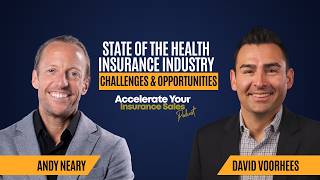
In this Accelerate Your Insurance Sales podcast episode, host Andy Neary (CEO of Complete Game Consulting) interviews David Voorhees, CEO and founder of TruCaptive, to discuss the current landscape of the health‑insurance and medical captive market as of early 2026. They begin by reviewing the fallout from 2024‑25, where poor risk pricing led to high renewal rates, and note that while pandemic‑era effects linger, the primary cost driver now is the rapid introduction of high‑priced therapies. The conversation shifts to common misconceptions about medical captives, emphasizing that captives are not a one‑size‑fits‑all solution and that success depends on disciplined underwriting, individualized cost‑containment, and strong service. Voorhees outlines the psychographic profile of ideal captive buyers: decision‑makers who recognize what they don’t know, are frustrated with traditional pricing, and look beyond spreadsheets to value‑driven solutions. He then details TruCaptive’s unique differentiators, notably its practice of providing the majority of collateral for members, and its bespoke, data‑driven cost‑containment strategies tailored to each employer’s population. The firm’s performance metrics are highlighted – sub‑double‑digit renewal rates for four consecutive years, consistently below the 8% healthcare inflation benchmark. Both hosts stress that service quality, not revenue growth, should be the North Star, warning that chasing profit can erode value. They discuss the importance of storytelling in selling captives, advising advisors to focus on the client’s pain points rather than pitching the product. Finally, they promote an upcoming DFW‑area event on April 16, 2026, at the Renaissance Plano Legacy West, designed to teach advisors both the strategic and narrative aspects of selling captives and self‑funding solutions.
Chapters
Hey, welcome back to the Accelerate Your Insurance Sales podcast. Andy Neary here, CEO and founder of Complete Game Consulting. I am joined today by the one, the only, David Voorhees, CEO and founder of TruCaptive. David, welcome aboard.
Thank you.
You were actually on one of the very first Accelerate Your Insurance Sales podcasts. I had actually just made the name change from Bullpen Sessions to Accelerate. In fact, I think you were episode number 2 or 3, so I'm bringing you back. Truth be told, you're also the podcast sponsor.
That's true.
But we're going to do an episode here on— that's kind of two-part. One, I thought it would be a good idea for you to maybe give a little State of the Union of the medical captive world. And two, you and I have an event coming up that we're doing together in Dallas-Fort Worth on the 16th of April that I think we want to share some information about too. So, so with that, David, you know, we're recording this at literally the last day of the first quarter. What's your take right now on just the state of the health insurance industry? I think when I look back at 2025, I I felt like every producer was just getting their butts kicked with renewals.
Yeah, that's a great question. I'll zoom out and then I'll zoom in. So, you know, the zoom out of the entire industry in terms of health insurance, you know, you hear a lot of the horror stories, the high renewals, things like that. And that is based upon the amount of risk that people are taking and how they are taking it. So for example, You know, one of the things that health insurance doesn't do is they're not healers. We aren't actually helping anyone get better. But what we are doing is insuring people who are having illnesses, chronic diseases, high-cost drugs. And when you don't price those correctly, then the market has to correct to be able to afford the risk that it took in prior sessions. So, you know, the end of '25 was really a result of poor risk being taken in '24. And not pricing it correctly in '25. So, you know, the beatdown in '25 was based on just not pricing the risk correctly. And there's plenty of blame to go around. I mean, we all are trying to win as much business as we can, but you've got to be firm. You've got to be disciplined and tell people what they need to hear, not what they want to hear.
Yeah. Are you— do you think we're still seeing any aftereffects of 2020? I know it's been almost 6 years now since, you know, a lot of carriers gave the pass to employers as a way to help them out in a very tough time. But are we still seeing the aftereffects of that even in maybe in claim activity?
It's possible, but not in the way that you might think it. The real result of 2020 wasn't what we went through. It's what we didn't get done during the time of the pandemic. So people are still dealing with chronic illnesses that they didn't manage or maybe learning about things that they have put off until now. So maybe, maybe in a, in a small manner, but not, not dramatically, not enough to drive the pricing up. I mean, we, we are having therapies emerge every day, new drugs, new commercials for drugs. Fun fact, we're one of two countries that allow pharmaceutical commercials. And so, you know, we're being introduced to things that could help something that we're facing on a, on a daily basis. So that's really what's driving the majority of the cost. Is you're, you know, you're being introduced to new therapies to conditions that, you know, when they first come out, they're, they're expensive.
Yeah. My favorite part of, of pharmacy commercials is the long list of side effects that you can, you may, you may deal with given the, because of the drug. Yet if you take our drug, you will be able to sit in your backyard in a bathtub and look at the sunset.
That's true. That's true. My personal favorite, and I don't need any prescriptions to help this happen. It happens when I walk outside naturally. That my entire community is going to come dance with me. So that's, that's another result, you know, in, in what's— I, I try not to villainize anything because the reality is you can be a villain in any story no matter who you are. And so it just depends on who's taking aim. If you think about those side effects, most of the reason they report those side effects is because of the lawsuits that come from somebody not reporting, you know, itchy skin. Well, I would argue that itchy skin probably isn't anything that you have to be totally concerned about if you're, you know, fixing asthma. You know, I'm an asthma sufferer. I will take itchy skin if I can breathe. But because somewhere down the road somebody had itchy skin, someone got sued. Now, other things like sudden heart stoppage, that's probably something that's really important that you, you know, you talk about difficulty breathing, loss of sight, loss of hearing. These are things that people probably need to know if they're going to take a drug. But how would you like to be the voiceover actor that talks about those? They're going to be really fast, but it's got to sound like it's not, you know, if your heart stops, see a physician. Yeah, that's good advice.
But I don't think you'll be in a position to see a physician because your heart's stopped.
That's right. I know we make light of this, but, you know, the best part is that my just turned 9-year-old son, every time he sees a pharmaceutical commercial, rolls his eyes like, Dad, I don't wanna watch this. I was like, me neither. But you know, we try to find entertainment.
Yeah. Well, let's, let's dive into the captives. You guys are one. I definitely wanna talk about the performance of your captive, cuz I, I wanna say it's very impressive regardless of you being our podcast sponsor. Your results, the results you guys are creating in the medical captive space is pretty dang impressive. But maybe let's start here. You know, we're gonna be doing an event on April 16th. In Plano, Texas. So if you're a DFW area advisor, please keep listening to this. Where do a lot of advisors— what are some of the misconceptions, I guess, maybe people have about medical captives?
Well, there's a joke in the market, right? You've seen one captive, you've seen one captive. Listen, at a high level, all designed equally, right? Create leverage in the market so you can have better pricing and better rate stability over, over a period of time because you're aggregating membership. That should be the basis of all captives. Now, the uniqueness of each captive is the cost containment strategies, the, you know, the contracts, the repricing, all of that stuff. Sure. Yes, that's one captive does it differently than another captive. But at a high level, people are joining captives to create stability and leverage in the market who otherwise wouldn't have it. So you start there. I think really what ends up happening is— and thank you for the kind words— I'm certainly flattered, but every day I'm proud of the efforts that our team puts in. But really, it is a combination of all the parties included. And when I say all the parties included, that goes down to the employee/patient. They have to put belief into an entity, an insurance company being interested in them having financial success and more importantly, health. And largely for decades, insurance has been somewhat detached that patient employee experience, mainly because that wasn't their level of expertise or interest. But really, our success has been predicated based on advisors partnering with us, you know, giving us feedback and information that they normally wouldn't give a carrier because, you know, their job is to provide good value to the customer. And if they can't provide good value to the customer, then that's when they take a phone call of another advisor who's trying to win business. And so for them to be open and honest with us, that helps us deliver better value to their customers. So, you know, while our success is something to, you know, certainly be proud of and shout from the rooftops, I'd love to be able to say it's just us, but it really isn't. It takes a village, and that's a saying for a reason.
You know, I'd love to get your thoughts. Something that I know I'm going to talk about on the 16th. I think a lot of advisors see a captive as a silver bullet, like as a unique strategy they can leverage. And I think for all intents and purposes, it's not a bad idea, but what ends up happening is they quickly become that hammer who sees everything as a nail. And all of a sudden now they're telling everybody you should be in a captive. When you look at the employers who are joining True Captive and having success outside of demographic, size, whatever, what do you think are some of the key psychographics of the buyers that makes them a good fit for captive? So like, who are they? What do they believe? How do they make decisions? I think that's a big piece we often overlook.
It's a, it's a great question. And the answer has somewhat changed in the last 6 years, but largely still very similar is they are buyers that know what they don't know. And they're becoming quickly educated in what they don't know, but they still don't know that. And they're, they're, they're frustrated. They're upset because they're starting to understand that there's a better way. It didn't always have to be this way. And, and that's really probably the most distinguishing characteristic is they know what they don't know and that, that's bothered them enough to start looking at different options. You know, the second piece is, is ones that are willing to look beyond the spreadsheet. I think most people, including advisors and brokers, are tired of the spreadsheet because there's no uniqueness to it. Everybody has a spreadsheet. How do you speak to the value that you bring as an advisor or a captive or a solution when you're on a spreadsheet? You can't. You are simply presenting an offer based on price. It was funny, we were walking through this quote the other day and it came from Glen Gary Glen Ross, but is people who buy on price always buy twice. And that hit me hard. And if you're buying on price, you're gonna buy something else and buy something else. But if you're buying something on value, oftentimes you buy once. And so the buyers are now looking beyond the spreadsheet because they've been there long enough. They've had their rates being purchased. They've made a decision based on price because they were forced to from an economic perspective. So those two things, one, they know what they don't know and they're pissed. And two, they're no longer buying solely on price. Price is always a factor, as it should be. You're buying something that costs money, but that's not what they want to see. They want to see, how are you going to help me make this expense be as efficient as possible while providing the greatest value to my employees?
Yeah, I think likewise, on the flip side, if you're a broker who has placed your value on access to carriers that have a price, you throw on spreadsheets. Those days are done. I mean, that all is going to be done by AI here very soon if it's not already being done. And so you need to bring something different that is valuable to the buyer. And you said something I want you to go in a little deeper with on True Captive. You said if you've seen one captive, you've seen one captive. And I think that is where a lot of advisors go wrong. They say, well, you're a captive. They're not all built the same. Talk a little bit about what makes True Captive a little different than what they might be seeing out there. Personally, I'll just tell you, I think what I love about your captive is not only the unique features of it, but it's the fact you built it and you were a former HR director who used one. So talk a little bit about that, but then also talk about some of the unique features of what you're doing inside the program.
I'll start with the intangible, and the intangible is we're relentless. You know, I think what is defining for TruCaptive is we, we know what it's like to be a patient. We know what it's like to be an employee. We know what it's like to purchase insurance. Your point about my experience in human resources and, and being the buyer for almost 20 years, is we know how frustrating it can be to be any one of those parties I just mentioned. And we take it very seriously that we're providing value and that we're being relentless in finding a resolution and an outcome that's satisfactory. You know, I said this the other day, it's one of my favorite sayings, and I find myself saying at least once a week is the resolution has not yet presented itself, but it will. You know, it's not immediately in front of us going that that's the path to success or that's the path to a result. But what I do know is, is we're taking in enough information information to be able to make a decision. It just may not be the one that's presented itself or that we think is the easiest. So the first part is that intangible is everybody here is relentless in the desire to provide an experience that doesn't exist. You know, that's— I joke sometimes I get pulled in in the 9th inning to close, and I'll always talk about my grandpa. And I joke, I say, my grandpa may not interest you, but the good news is my name's on the door, so I get to present what I want to present. But much of what he taught me and the The value of having morals and integrity are woven through True Captive, and that means something. So that's that first part that I think for the people that want to work with True Captive, that resonates with them. And it doesn't have to resonate with everybody. We aren't for everybody. And you have to be okay with that, right? Whether you're talking about True Captive or you're talking about, you know, being an advisor with a strategy, it's not going to be for everybody, but you have to be okay with that. The second piece is, and this is the part that's that's intimidating in the industry, in the market, and I find it flattering that it is intimidating. We find it is something that's just common in day-to-day is all of our cost constraints, all of our cost containment strategies are unique to each one of our individual members. So there are wonderful cost containment features, some that are homegrown, some that we partner with awesome people out in this market, but they are only highly efficient if they are applied to the correct population and/or person. Other people might apply it carte blanche across their entire block of business, or their entire product captive, what have you. And while that does create efficiency, in itself, it creates inefficiency because you're assuming that something's going to apply to a large body of people. And we know that all people are different. So every single cost containment feature we deploy is unique to the instance that we're deploying it on, whether it be a high-cost drug, whether it be a chronic illness, whether it be an acute illness that you're now negotiating something with the facility. We take that as an opportunity to be individualized, which creates more efficiency and greater efficiency than I would say that, that exists in the market today.
This episode is brought to you by True Captive Insurance. What if you could take full control of your healthcare strategy without the financial burdens of traditional insurance? At True Captive Insurance, they make that possible. As the only captive in the nation that puts up the majority of collateral on your behalf, they provide financial flexibility from day one, making them an advocating partner for their customers success. True Captive's fully customizable plans and cost-saving strategies ensure you never have to choose between affordability and quality care. It's time to break free from the limitations of conventional insurance. Take the next step today. Visit TrueCaptive.com and discover a smarter way to manage healthcare. That is TrueCaptive.com. Talk a little bit about too, I think one of the things that also stands out, if you're willing to speak to this, is the way you handle things like collateral and stuff like that. That I think there's a definitely a differentiator there in how you're approaching that as to maybe other captives, because that can be a piece that often prevents buyers from jumping in. Yeah.
And I, I think that's how we became pretty popular. So we had a successful exit from a business years ago. We decided to take our equity and place it into this program. And our, our purpose of that was to invest in the businesses and their health plan Instead of them giving us money in the form of collateral, we're actually making that investment on their behalf. And what that did was it created alignment with our members. And so I think that made us popular because candidly, that removes one of the larger sales hurdles for captive. Do I think that feature alone makes us really unique or special? Not necessarily, but I do think it's a quality that is not existent in our industry, one. And two, it says a little bit about what our DNA is, is that we're willing to put our money where our mouth is. So that I think probably put us on the map is that we're the only ones in the country to do so. And 6 years later, still the only one to do so. And, and it, it's a, it's a, it's a differentiator.
Yeah. Well, it also makes the path to entry easier. And I think that is one of the things a lot of advisors struggle with who are trying to sell any kind of cost containment strategy is the path to entry seems difficult to the buyer, therefore they don't do it. And so I think you guys are just making the path to yes a little easier for those buyers with that one you know, by making the collateral piece a little more of a not issue.
And I don't blame anybody for this in the industry. Whatever seat you sit in, everybody's been burnt before and everybody's learned to take care of their own. And so that makes you a little bit more rigid and inflexible in relationship to working with other people to provide a better service. And so part of what we do is really trying to quantify and retrain the idea that you can trust and that we are going to show up. We are going to lean in when something isn't working right, because we know that something's going to go wrong. We just don't know what it is. And rather than point fingers at other people, we're going to say, you know what, that's unimportant because the folks that have hired us to do this job don't care about whose fault it is. They care about that there's a resolution. Now, they might care if it happens repeatedly, right? But let's just assume we're having a one-off issue. As long as we resolve it, it's resolved in a way that's beneficial for all. They don't care about who made the mistake. And so training advisors, training carriers, training solution partners that when something happens, you're not, oh, it's their fault, is a little bit too good to be true at times. Very similar to the customers that join our program. The idea that they're not going to have any downside risk sounds too good to be true. Someone's going to help me manage my money and we don't make money off of that sounds too good to be true. So you almost have to teach them that trusting someone is a good thing and it's worth doing versus I've got to just sit in my silo and protect everything I have because I'm going to get into a battle. And if I don't protect mine, then when I get into the battle, I'm going to be left, you know, on the battlefield with, with casualties.
All right. So I'm going to ask you now to take horn, put it to your mouth and toot it.
Okay.
Talk a little bit about the results you guys have been able to get. I know you and I chatted, I think right after the new year or yeah, maybe a month after the new year. And you gave me updates on how the 2025 renewals ended up. And I was pretty dang impressed. So if you don't mind sharing and talk about some of the results you guys are getting.
Yeah, I'm happy to. And again, it's, it's much to the credit of all the parties that participate in, in creating this experience. So, you know, I think the norm has become double-digit renewals for a lot of folks in this industry, and we've averaged sub-double-digit renewals for now 4 years in a row. So we are, we are really passionate about that being something that we can put the flag in the sand and say, you know, we're managing risk in ways that others— and we're seeing results that others aren't because we are disciplined. You know, I think a lot of people in this market, in this industry, are consumed by size and growth. And those things are important to any business, right? You have to grow to be able to afford inflation in itself. But if that is your primary stick by which you measure yourself by, you aren't thinking about all the things that we are in the industry to protect against. So we are very disciplined. We are very wise in the risk that we take and how we take it. And that's what's been able to keep us in the single-digit renewals for the prior 4 years. And if you think about it, 8% is the average inflationary number that healthcare should rise year over year. And we've averaged less than inflation for the prior 4. So, you know, we're doing better than inflation alone, not counting any of those other conditions that occur, high-cost pharmacy, mostly because of our collaborative spirit and our relentless desire to provide a, you know, an experience that doesn't exist in the market.
I also think you just brought up something we don't talk about enough in the industry, and that is, you know, there's a lot of people who I think develop solutions because they want leave a positive impact on the industry. But what happens is, especially when they have early success, revenue becomes the North Star, growth becomes the North Star, and they start to get away from the reason they built this in the first place. And it's at that moment you start to see them make bad decisions and you start to see things start to fall off like service and execution. And before you know it, what started out as a really good idea has started to fall apart simply because the, the person who built it got away from the reason they built it in the first place. I think that your message is clear. Never get away from why you're doing this. And that's one of the things that has made you guys successful. You've never, you've never allowed the, the, the drive to chase more revenue or growth get in the way of what we are trying to accomplish.
Absolutely. And that's, that's really hard. I had the privilege of working for some great leaders. I've also had the privilege of working for people that have made tons of mistakes and I've been able to have a front row seat to those. And one of the major things that, that I was taught is you can't chase revenue. You know, revenue typically is a byproduct of fill in the blank. You know, for us it's service. And if you, if you provide an exemplary service on the front end, if you're disciplined in your underwriting, then the byproduct is revenue. My, my favorite saying, and I say it all the time, this is probably once a day, if not once every other day. If I had 3 seconds or less to tell you who I am, I'm a bleeding heart and a raging capitalist. Love people, love money. And unfortunately, what people think is, is to resonate with the customer, client, or prospect, you've got to want to show them that you save the world. You know, you aren't motivated by money. I'm motivated by helping and saving. Well, that is an important part of it too, but it's okay that you run a business or your product is designed to generate revenue as well. It just shouldn't be your North Star. And it's hard to trust that somebody is going to generate revenue and try to save the world too. And some people have a hard time grasping that, that, you know, if you want to save the world, well, you're going to be a charity and you're not going to be focused on being disciplined and have your margins tight. And vice versa, if you're focused solely on revenue and growth, you're only going to focus on that and to hell with the customer or client. That doesn't have to be true. Once again, you've got to teach people and train people that it's okay to want to make a lot of money. but you also need to want to do something that is going to inherently create something good for your customer. And you're, you're so right by saying, I don't think anyone started a business with the only focus of making money. Listen, you don't start a business to try to lose money. You start a business, try to make money, but you don't go, you know what, I'm going to start a business called making money. And that's what it's going to do. It's, I'm going to start a business that's going to create this experience, or I'm going to build some widget that's going to improve this efficiency and I'm going to make money because of that. And those lines blur. And so you just have to be really focused on that. And it's hard, don't get me wrong, it is really, really hard. But the minute you deviate and the minute you break, it's so much harder to get back on track. So I'm glad you brought that up.
It's a really— I had a mentor who said something very similar. He said there's nothing wrong with profit. No, it's sacrificing your values for the sake of profit where the problems start.
I think that that's a very wise way of looking at it.
Let's dive into the April 16th event. This is my first one with you, so I'm going to play ignorant here because I'm joining for the storytelling, the workshop piece. But talk a little bit about these events that you've been running throughout the last couple of years. Obviously, if you're a DFW, Dallas-Fort Worth area advisor, this is something you should definitely be thinking about. But David, go into a little of the details about what we're going to be doing on the 16th.
So my wife tells me all the time that people don't find insurance as fun as I do. So when I use the term fun, please do keep that into context. The first part of these events are really designed to help people understand what options are in the market in relationship to captive and self-funding. We talk about self-funding, we talk about level funding because I do believe that there's value in those products. While they are competition, they are something that some of our customers need to deploy and we don't want to be so short-sighted that we don't consider those as viable options for customers. So really we walk through captive, Specifically, we'll walk through True Captive and some of the elements that we do that are special and how they might be able to help you win more business, retain more business, provide better value and experience. But the second part is, is we're showing you what to sell and the storytelling is how to sell. You know, how can you use some of these tools, which is where you come in? How can you use some of these tools to help you be a sharper advisor, a more successful advisor, someone that can provide better value because You know, if you think about Warren Buffett and he talks about protective moats and you look at fully insured carriers, largely a lot of their protective moat is the data. You know, they hold that and they're only going to give you what they need to give you. And that makes you less competitive on the market because other people can't do that. If you look at an advisor or specifically look at TruCaptive, we consider our protective moat as service. If we do a good job, if we go above and beyond, if we are always there when you need us, No matter who calls you, no matter who has a better price, you're gonna retain that business more often than you're going to lose it. But if you don't provide good service, if you don't exhaust yourself by learning new tools, new things that are in the market, new ways to resonate with customers, then they'll, they'll take that call and you can lose more business. So it's as much what to sell as much as it is how to sell and how to tell stories.
Well, and I think your point's well, well made there. Sell me any cost containment strategy you want. Even if it creates the desired outcome, if the service isn't there, you're gonna get fired.
100%. No question.
And I think a lot of advisors are missing that point right now 'cause they think it's all on their innovation. And if they can't back it up with the service, none of it matters. And from the storytelling perspective, you know, I think one of the challenges I see, David, is you get a lot, you get an advisor who, who's very interested in medical captives, right? And they do start to see everything as a nail 'cause now they have the hammer. And the way they communicate it is, is very poor. 'Cause it's almost like, hey, you should, you should look at these things called medical captives. Do you want one? That's what they're selling in a roundabout way. When it's stop selling the product, start selling the story of what the buyer's going through today, which makes the captive the obvious solution at the end of that story. And I think that's my big goal from the storytelling piece is like, How do you go out and have this conversation to identify the right buyer psychographically, but at the same time tell the story that makes the captive the obvious choice versus just going out and pitching a product?
Let's talk for just a second about how remarkable it is that advisors can sell something called a captive. That's the worst name we possibly could have come up for in the world. Because when I started TruCaptive and I Googled captive, I thought, what did I get myself into? So that in itself is remarkable. But you're right. It's being able to understand what it is, and you only need to speak to it at a 30,000-foot view. And that's why you partner with someone like TruCaptive that can reinforce what you told them at a high level and explain it in more detail. You know, I think that you don't have to become an expert in the X's and O's and the finer details, but you do need to understand what it is. You do need to understand what value it provides, what downside risks are there, because at the end of the day, you're trying to provide value for your customer. And I think for, for advisors, and I'm sure we'll talk about this in Dallas, is sometimes the customer articulates a desire, want, a need, or unsatisfaction. That's not exactly what they're asking. So if you solve for everything they tell you, oftentimes you're going to miss the boat. It's being able to listen to what they tell you, take all the information in, interpret it, and then provide a solution that is going to be maybe not exactly what they said they wanted, because remember, they only know what they don't know. That doesn't mean they know what they don't know, which is a completely different phase.
Yeah. Let's go into the details before we wrap up. Location, time, who should be there?
That's a great question. I wish I had Morgan on here because she's the one that knows all those things.
I'll help you out. It's April 16th, 12 to 2 Central at the Renaissance Plano Legacy West, which is a phenomenal hotel. Who should be there, David? Outside of, hey, you live in DFW, what kind of employee benefit advisor should get registered?
You know, individuals that are looking for something that's going to help them do better at what they are paid to do. You know, if you want to provide a better service that performs better than what you're doing today, you know, that's something that you should be interested in. If you're newer to the industry, if you've been in the industry for a while, you know, those two things do not make it mutually exclusive. People that are learning for new tools and teachings to help them be better at what they do as much as the X's and O's. And then as much as the storytelling, you're gonna walk away with both of those two, two tools.
Yeah, I agree. I think part strategy, it's a, it's part strategy and part storytelling on how to sell that strategy to win some business. So, yeah, I'm excited, man. We put the link, we'll put the link in the show notes. So if you're an advisor who is in that DFW market, maybe you're coming up from Austin, heck, maybe you love it so much you're gonna fly in. The link in the show notes, the link is in the show notes so you can get registered. So anything anything else, Dave, before we wrap?
No, I'm really excited for it. It can't get here fast enough.
Biggest question I have for you before we wrap up the episode: Kansas City or Kansas basketball, staying or going?
He's staying. Not because I know, it's because I feel. But, you know, I would tell you I think he's got some unfinished business. I think if his health will allow him, he's staying. If something tells him that he does need to, to mind his health, then he won't stay, and he shouldn't. He should, he should prioritize his health. He's done a lot for Kansas. We appreciate everything he's done. So my gut feeling He says we got another year unfinished business and watch out for the Jayhawks next year.
He's a diehard Jayhawk fan, folks, and the only guy I think I know in Kansas City that's a Yankee fan.
That's true too. That is very true. Thank you for outing me. I appreciate it.
Well guys, again, if you are an employee benefit advisor living in around the DFW market, you're not going to want to miss this event April 16th at the Renaissance Plano Legacy West, 12 to 2 Central. The link to register is in the show notes. Go grab it. At a minimum, take this information if you are looking for another strategy, a differentiator for your clients, uh, look no further than TruCap. They're creating amazing results built by somebody who created a solution he, he once had. And that's what I love, the story behind what you've built, David. So David, thank you. Everybody else, be good. And if you're in the DFW market, hopefully we see you on the 16th.
Sounds good. Thanks.
More from Andy




If you want producers to succeed faster, help them create a sales message that creates confidence.

Sales isn't a zero-sum game! You can have tough competition and still grab a beer after



Option 1: Meditation, a fast walk, a podcast, and protein. The ultimate morning routine!

How you do one thing is how you do everything. Ill elite producers fuel their body.


Stop living in the gray of maybe! Your job in sales is to get a clear yes or no