The Story Behind the Self-Funded Sensei with Jason Powers
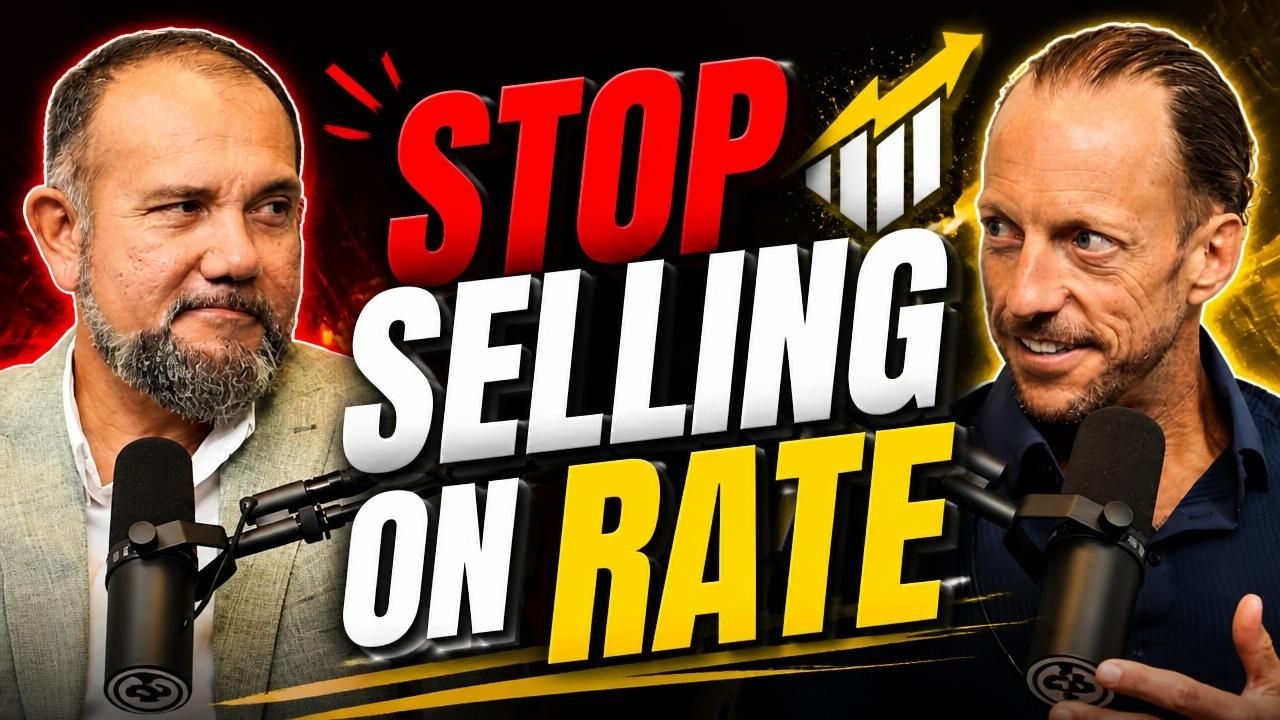
Jason Powers, co-founder of Legacy Brokers, bootstrapped his insurance agency in 2004 sleeping under his desk and won his first client through a Yellow Pages ad. He specializes in self-funded health plans and built Legacy around three pillars: build, protect, preserve. Powers says advisors avoid self-funding due to complexity and fear of losing business on price, but he coaches them through every case with historical trend charts and total-cost analysis.
Chapters
If you show self-funding in a different light, you tell the whole story. It sells itself. You don't have to sell rate. You don't have to sell off the sheet. You just need some way of telling the story.
I always tell producers, yes, a spreadsheet will often be required or a quote.
Sure.
But don't make it the story.
Yeah.
Make it a part of the story.
Yeah. You can't be Starbucks baristas in this business.
Yep. Hey, hey, welcome back to the Accelerate Your Insurance Sales Podcast. Andy Neary here, CEO and founder of Complete Game Consulting. I am excited today. I am joined by Jason Powers, co-founder?
Partner and co-founder.
Yes. Partner and co-founder, Legacy Brokers, just outside of Kansas City. Jason, welcome.
Thank you for having me.
This is gonna be a, uh, We're gonna cover 3 topics today that I think I have never covered in my life. One, how you got your start with Legacy or what is ultimately Legacy today.
Yeah.
That's, that's not anything new. We have people telling their founding story.
Sure.
We are gonna talk about the kind of advisor you serve because I think there's a lot of folks in our community that are that person.
Yeah, for sure.
But then we're gonna get into your heritage.
Yeah, it's a lot of layers to the onion.
What did you reference this as? A Japanese war bride?
Yep.
And that was your grandmother?
Yep.
Yeah, that's going to be a very interesting story and what you're ultimately going to be doing with it, the documentary you're going to be working on, which I think people are going to find fascinating. So where should we start? You told me you're an open book, man.
I'm an open book, man.
I'm transparent. If you're listening in, be careful. Jason might share more than, than we know.
Could, it could happen. There's a lot of layers to this onion.
Why don't we start here with the, I love to start, you know, the how we got into the business.
Yeah.
You know, most of us didn't get in it by design. I didn't. How did you find yourself in the insurance industry?
Man, it's, uh, it's funny. I literally replied to a newspaper, like a classified ad in the newspaper. And the ad was, are you good at math?
Which is true. I'm glad they said that. Yeah.
I mean, look, my, my background, I went to school, I went to K-State for as long as they let me. For a semester pursuing computer engineering is really what I was after. Didn't finish, had some math skills, and that seemed like a great opening to go and explore this new career path. Went into, ended up interviewing with a third-party administrator out of Overland Park, Kansas that's still in existence today, ATA, American Trust Administrators. And my interview's with a guy, I walk in his office, I'm a K-Stater, I walk in his office and he's He's got KU Jayhawk stuff everywhere. And you know the rivalry. I mean, we're like the little brother rivalry.
Yeah, I'm sure the Jayhawks feel like you're the redheaded stepchild.
KU Mizzou is probably a bigger rivalry, but as a K-Stater, we're like, we wanna be part of the conversation. We wanna be part of the controversy, right? So I thought, there's no way this guy's gonna hire me. And throughout the entire interview, he just kept asking me how fast I could type. And I'm showing him completed certificates of this math course and that math course, and he didn't care. How fast can you type? And a couple weeks later, I get the job. And I'm hired in the administration department of a TPA doing self-funding. I don't have any clue what I'm doing. But I'm entering enrollment forms into an eligibility system so that people can get ID cards and have coverage. And I'm bored out of my mind. It's like, this is not what I thought I was signing up for. This has nothing to do with math. Started asking some questions around the office about different documents that I was putting together to send out for signature, plan documents, summary plan descriptions, excess loss policies. And I'm asking questions that nobody can answer. And finally they're like, look, you, you helped deliver the mail around the office. Why don't you just ask the guy that wrote the policy? So I stayed behind and talked to the compliance guy who had signed all the letters about what excess loss reinsurance was. He got up in front of a whiteboard, explained it to me, and I mean, from there, just, I was totally bought and sold into the idea of self-funding and how—
So you've been all on self-funding from day one?
I thought that's how health insurance, all health insurance should be funded.
That's a lucky start. Most don't have that start.
And had a great, great opportunity in that TPA that I remember one day, one day about a year into working there, walked into the lobby, couldn't get past the elevator doors to get into the lobby of the the company, and we had a consulting firm in there letting us all know that they've been brought in to make some efficiencies in the company.
Operational efficiencies.
Yeah, it's kind of the meeting with the Bobs, uh, you know, the Office Space reference there. And, um, uh, they'd let all— they closed all the sales offices, and I had grown to know some of those people in the sales department and So it was kind of a like, oh, crap moment. And they let us know that they closed all the sales offices down and we were all gonna have our time to interview with these consultants. And during my interview, they asked, well, it looks like you got some sales experience. And the only sales experience that I had, Andy, was I did some telemarketing when I was in high school and that was on my resume. And they thought, well, that's enough. Put me in charge of sales for the entire company, like nationwide, and I had to figure out how to position self-funded health plans in a market that really didn't want to do self-funded that small. This is all pre-ACA, back in 2001 to 2004. Really had a successful run there and decided I wanted to jump out and start my own agency, and see, I figured I could do it a little bit better than Yeah, what was being done out there.
And that's a unique start. Like, how many— I, I don't know if I've ever heard somebody say, I came into the industry and the way— because of how I came in, self-funding— I thought health insurance was self-funding.
Yeah, I had to learn fully insured. I had like—
I had to literally do the opposite of what most people do. I had no clue. I didn't know what self-funding was for at least the first 9 to 10 years of my career.
Yeah, I mean, I, I knew a lot of guys out in the industry, a lot of people in the industry that would tell me we were crazy. You're crazy to do self-funded for small groups. We were doing it on 5 employee lives in 35 states.
Which seems to be in vogue today, but you were doing it 20 years ago.
20, yeah, 20-plus years ago. I would get laughed out of the producer's office.
Wow.
So I jumped out, hung a shingle, decided to start producing. My background in computer engineering, I had a— I dreamed up a software program that was gonna change the industry. We were gonna do telephonic interviews which led to individual medical questionnaires, all before AI underwriting came into play. And I was going to take the country by storm.
What year is this?
This is 2005, 2004, 2005, 2006. Failed on the patent. Didn't know why, but my claims were denied. And shortly thereafter, Milliman releases GRX and the rest is history.
Game over.
It's like game over. Easy Apps and FormFire were 2 programs that came out back then. Here in Wisconsin, they had the universal app that was like 22 pages long. That's what my system was designed to kind of do, was be a universal app, but—
There was a, oh shit.
Yeah, man, it was like, man, I invested a lot of time and energy in this process, workflow, and product. And what I really found was I really enjoyed working with other producers. And I could teach, I could really help position whatever programs they were putting in place with a lot of confidence. And so I sold my agency, uh, and then one of my mentors in the, in the business was one of those guys that got walked out in the sales department at ATA back in 2001. He started a general agency, uh, it was called the Agents General Agency. And, uh, I'm like, this is a great opportunity for us to kind of continue his legacy in the self-funded space. And so that's what we've done. We've built Legacy from there.
Yeah. And we're going to talk about Legacy a lot here. I do— I've never had a chance to ask, uh, what are they— if you're from Kansas, they call you a Kansan.
Oh yeah.
Never had a chance to ask a Kansan this.
Okay.
What's a Jayhawk? What's the origin of a Jayhawk? I love the logo for KU, but what is the origin?
It's a fictitious bird, man.
I thought it had nothing— I'm reading a book right now on Civil War.
Yeah.
And they referenced the regiments from Kansas as Jayhawkers. I didn't know if there was a term there or something.
I'm sure there is.
Okay.
As a K-Stater, it's not one that's in the ordinary. I'm saying you're a K-Stater, you just care about the Wildcat. Not one that I can recite right now.
Yeah, yeah, yeah, yeah.
I am paying tuition for one of my kids to go to KU. And so I've got a few Jayhawk pieces in the closet, but yeah.
Well, one story I'd love for you to share, because you shared it this morning at breakfast, and I think it was when you started your, that first agency you were talking about. I think, you know, in our industry, especially with platforms like LinkedIn and, and other social media platforms today, everybody own— everybody gets to see the good parts of, of what we do.
Sure.
But very few times do we show the, here's what I had to do to make it. And I think your story of starting and bootstrapping that first agency is awesome. I mean, would you mind sharing it? Because I want people to hear what you had to do to make this thing a go.
Yeah, I told you I'm an open book. I've actually never said it publicly, but, uh, I've said it in some circles. But it was 2004, um, we had— my wife and I had our third child, and, uh, I decided I was going to start my own agency. So I quit my Nice cushy corporate job at the TPA with a guaranteed salary and vacation and bonuses and cashed in my 401, which wasn't very big, sold the house, rented a space from my mentor who was one of those sales guys that got walked out that day and rented a space in his— the back of his shop, his general agency. Moved my wife and 3 kids 3 hours away to near her parents so that we had someplace to stay. And then I slept under my desk Sunday night through Friday evening, and then I'd drive back 3 hours to spend time with the family every weekend. And we did that for probably a year, Andy.
Wow.
So I got clientele coming in and revenue coming in where I could afford more than just, uh, an office space, where I could afford to Really bring everybody back home.
So talk about how— what you did, how you disguised the fact you weren't living out of your office.
Like, the coolest part about this office space was the upstairs was a dental office and the doc owned the building.
Okay.
He would— he had a gym, like a workout facility down in the basement near— in the same space that this general agency was in that I was renting one of their little rooms in the back. And so in the bathroom, when he designed this building, he put a shower, a little steam room, the whole 9 yards, so that he would go work out in the mornings and then go get cleaned up and go upstairs and do his dentistry. And so when I moved my office into that space and moved my wife back to 3 hours away, I'd leave like everybody else did at 5 o'clock, you know, wave goodbye, drive my car around the block to a grocery store that kind of overlooked the same shopping center. And I'd wait till all the cars left, then I'd come back, unlock the door, go back, roll out my sleeping bag, and hammer away at marketing concepts and, you know, what my call list was going to look like the next day and who I was meeting with and plan out my week. Hell, Andy, I got— I remember one of my first clients called on a Friday at like 5:30 in the evening, and I answered. And my Yellow Page ad in the alphabetical—
For the kids out there that are listening in there, Yellow Pages was a book we used to have where your phone number existed.
My Yellow Page ad was— so my agency name started with an M, so we were in the middle of the, you know, the alphabet.
M is where you always want to be.
Yeah, middle of the alphabet. So I, I answered the phone, and this, this, uh, this poor girl on the other end of the phone was just absolutely shocked she got a hold of anybody on a Friday at 5:30 in the insurance world. So she got dialed all the way through the A through L till she got to us.
Seriously, that's how she landed on you?
So I pick up, and of course I had a block ad, so maybe she didn't have as many to go through. And she proceeds to tell me she's pregnant, she doesn't have insurance, her husband has an LLC, but they don't have insurance. And back then, you could write a group policy on the phone with something like that. And so we wrote the group policy, got them insured, took care of them, their family.
That was your first client?
That was the first client. And that led to a whole, all of their friends who had businesses, which led to their associates who had businesses. And that's how I built my book.
'Cause you were there at 5:30.
'Cause I was there at 5:30 on a Friday.
You know, that reminds me of a story. It has nothing to do with insurance, but I don't, and I don't, I can't validate if it's true, but I heard a guy tell me the story. The attorney who ended up being the attorney for Bill Gates, So Bill Gates's dad, I think, was an attorney.
Yeah.
And when Bill called his dad to say, I'm dropping out of Harvard to start this thing called Microsoft, his dad was pissed, of course.
Sure.
And there was one other attorney in the office that night. And because the guy was there, Bill Gates's dad comes down and says, hey man, I don't know what my son is up to. Can you mentor him and watch over him? And he ended up becoming the attorney for Microsoft, which also gave him shares.
Oh, for sure.
I mean, this guy is probably a billionaire now.
Yeah.
Because he was still in the office.
Yeah. Yeah. That was the first one. It was, and it led to a lot. I mean, that really turned things around for me. And I was, yeah, I didn't know if I made the right decision. I was, cashed all my chips in and was hoping—
What did you do for dinners? What did the typical dinner look like at that time in your life?
I mean, drive, a lot of drive-through stuff. Yeah, a lot of drive-through stuff.
That's betting on yourself though.
Then I would wake up before everybody got there in the morning, 'cause the doc would show up to work out at the same time every morning. So I would wake up before he got there, go get my car, drive back to the grocery store, wait for him to pull up, pull in around the same time and go—
To make it look like you didn't get there before him.
Go work out with him, you know, and then, And I've got access to a sauna and a shower afterwards. It's a great way to start the day. That is awesome. And then go back into my office and start dialing for dollars.
Rinse and repeat?
Yeah. Yeah.
Wow. Now, did you ultimately sell that agency?
Sold, yeah. Sold most of that business that I built on the personal production side. Sold a big chunk of that. Kept probably a handful of really good personal relationships that I didn't feel like it was right for me to hand them off to somebody else, and have maintained a few of those over the years, even after the general agency came into play. If nothing more, to just to feel the same thing that other producers are feeling. Yeah, it's one thing in this business to tell producers, I mean, I hear it all the time, spreadsheets, you shouldn't be doing spreadsheets, and you can't spreadsheet these, you know, these plans. And I I'm one that I understand where people are coming from, but unless you've sat down in front of a decision maker who's demanding to see something side by side to summarize what your recommendation is, you have no business telling people they can't spreadsheet, man.
Yeah. And it goes back to your first gig in the industry where the ad said, you must know math or whatever. You know, that's— I've said this, you know, a lot when it comes to benefits is One of the things you have to be really good at in this business is math numbers. You've got to know numbers. Yeah, because you're right. I mean, we can sit here and call spreadsheets spreadsheets and whatever you want, but at the end of the day, buyers are going to want to see side-by-sides to make a logical decision.
I take the approach that the broker's got to do more than just show bottom line.
But your value has to be above and beyond that. Yes.
Yeah, you got to tell the whole story, and that's that's why you know we try to try to take that approach with. The people that— the agents that we work with is if you show, you know, self-funding in a different light and you tell the whole story, it sells itself. You're not— you don't have to sell rate, you don't have to sell off the sheet. You just need some way of telling the story.
I always tell producers, yes, a spreadsheet will often be required or a quote.
Sure.
But don't make it the story.
Yeah.
Make it a part of the story.
Yeah, you can't be Starbucks baristas in this business. Like, welcome to my insurance agency, here's the menu of options I've got, let me know when you're ready and we'll check you out. You know, it's got to be— you got to take the consultative approach. I think there's more and more of that. You know what's funny about the math thing though? 2 weeks into that job at the TPA, I walked into the break room for coffee and someone who I'd not really not really got to know, was standing there, new to the company, and introduced myself. And she's like, what department are you in? I'm like, oh, I'm in the admin department. You know, I push the mail cart around, I do this, that, and the other thing. I said, what department are you in? She says, actuary. I said, what's an actuary do? She says, well, you gotta be good at math. Ah, okay, I got the wrong job. And to this day, the guy that interviewed me, that Jayhawker, is my business partner, Bob Dill. And to this day, he talks about the fact that he was— he never should have had my resume because if I was applying for the actuary position, it should have gone over to actuary. But HR decided I was a better fit for ad med, which led down the path of where I'm at.
All worked out in the end, right?
Yeah, man. I think things happen for a reason.
Yeah. Well, let's talk about Legacy Brokers. Yeah. Tell us what it is and then we're going to get into the conversation because here's how I view you guys. Okay? At the end of the day, by definition, you're a GA. Yep. Right. Yeah. But I look at you as the GA that is really helping advisors who want to dive into the world of self-funding. But if they're willing to drop the ego and be honest with themselves, they're a little over their skis right now and they could really use not only back office support, but strategy to be a better advisor in the world of self-funding.
Yeah.
So talk to us a little bit about what your mission is at Legacy Brokers to help that kind of advisor.
I like to say, you know, we don't, we don't sell product. We do check the box in the insurance world as a wholesale general agency. So if we're going to be put in a checkbox, that's who we are. But we're so, we're so much more than a typical general agency is. And what I recognized when I was a producer in that space was there were certain qualities I enjoyed from my GA, access to markets, maybe being able to lean on them a little bit with getting some level of confidence in the products that they're distributing. But at the end of the day, they weren't going too much further than just providing proposals for me. And when we set up Legacy Brokers, I said I wanted something that didn't exist in the market today. We fit the box when it's, you know, for what a general agency is and how we earn our fees from overrides and being baked into the cost of goods sold. But our mission is to help producers build a book of business, protect that book of business from other producers walking in with a product that they didn't already know about, and then preserve their way of life. It's all built on those 3 pillars: build, protect, preserve. But we sell trust and confidence. We don't sell product.
I want everybody to hear that. You sell trust and confidence. You don't sell self-funding. Yep.
It's trust and confidence all the way. This business is about relationships. We understand that because I've been on that side of it. I know how valuable it is to have a relationship with a client and how cautious you are about which vendors you plug in because you don't want your client to be a guinea pig for any new programs that are out there or flash-in-the-pan moments in this industry that have ruined agents out there. Yeah, they've ruined businesses.
Well, you and I talked about that offline, just how many products, strategy, white-labeled products come into the business right now in the industry and may have some success for a little bit, but there's always that turning point where the wheels fall off and the broker's the one left picking up the pieces.
Yeah, yeah. So we, we do a lot of that. I I have this saying that kills, kills my calendar, but I don't say no to any meetings. I always take the meeting. And I know on the broker side, it's hard to, it's hard to fend off all those phone calls from all those vendors wanting to come into the market. So I just, I take the guesswork out, I take the call, I take the meeting, I do the vetting, we look at all the things that a producer would want to look at to make sure that if we're going to propose that as a solution in the market, we can stand behind it. We'll never put a proposal out and say, good luck, hope you figure it out. I mean, we're here when the getting is good, and when it's not good, we've got their back. That's our commitment to the producers we work with.
What do you think keeps— I mean, obviously self-funding is much more popular today than it was 10, 15 years ago.
For sure.
What do you think keeps advisors from really dipping their toe in it? I feel like there's still— it's even sometimes more so the veterans than the newer producers in the game, but there's something that's keeping them from it. And, and it could be misalignment, could be, hey, I don't make enough money, or whatever it is, but there's something that's keeping them from really diving into that world.
I don't want to generalize. I think there's a list of reasons. I think one of the top reasons that I see some of the, the more seasoned veterans in our space that don't want to put smaller groups in self-funding. I mean, the larger ones they're completely comfortable with, the jumbo cases, right? But in that $100,000 to $250,000 space, or even $50,000 to $250,000 space, you still have a lot of advisors that don't want to go down that path because it's complicated. It's complicated. You've got to explain the risk and then explain how you protect their risks.
I say, is it a case of if I don't know everything about it, I'm not going to talk about it?
Yeah, I think a lot of it comes down to the relationship ends up being between the account managers and the HR people. In those, in the bigger houses, that the relationship is maintained there. And HR isn't the one writing the checks. They're not the one controlling the purse strings, so they're not making decisions on a financial basis. They're making decisions on what can I administer, what's gonna be easier on my employee base. And so I think that plays a big role in it. I think the advisors I see, the brokers out there— I still call them brokers— I think that the ones that are out there that are having success in that space and self-funding are getting through to the person writing the check. It's a financial conversation, and then it's a financial strategy, but they're telling the whole story. That's where it comes down. If you sell rate, And you commoditize what these custom programs look like, it doesn't— I always say, like, how you win the business is how you're going to lose the business. So if you're winning on rate, you potentially could turn around and lose that on rate in a few years.
Yeah, I think 2 things that are very true. Actually, it was David Voorhees who said this. If you win on price, just remember that buyer always buys twice, which means they're probably going to leave you the next year on a different price. I also have been very passionate as of late telling our clients that, like, listen, your best bet of pushing somebody to a self-funded plan is to go win the AOR first.
Yeah.
And build the trust for a year or so, then make the move. Because if the trust is established and you try self-funding, and let's just say it doesn't work, it's not a fit, the trust is built. They still trust you. But if you win a new piece of business and you're making that change when the trust isn't fully built, if it does not go the way they want, you're gone.
Yeah. Yeah. And I, what's interesting about that, Andy, I, you know, I told you I feel like a lot of what I do is kind of manage everyone else's anxiety.
I'm going to, and I'm going to have you talk about how you interact with of your clients, because I think it's good for people who might be afraid to go down this path. It's good to hear from how you're interacting, but talk about that, how you manage anxieties.
It's, you know, what I found is, because I have been on that side, I have been a producer, I've sat in a meeting where I had to deliver a 30% increase and there's nothing else out there. This is the— in order for you to continue coverage, this is the solution, this is the recommendation. So I've been in that situation. I know how difficult those conversations can be. And, uh, and the producers we work with when they, when they are gearing up for delivering bad news or delivering good news, but, you know, good news doesn't last long. We, we make sure that we walk them through that challenge so when they walk in, they're confident in what they've brought for the solution and they trust that we're going to back them up 100%. So.
Yeah, I, I think you're right. People Buyers remember bad news a lot longer than they remember good news.
Oh, for sure. Yeah, for sure.
That's why they quickly forget that 4% you brought last year, because this year it's 21%.
Yeah, I tell, I tell these, I tell the producers, I mean, show the history, the historical values.
Yep.
You know, don't just walk in with this year compared to next year and the alternatives in the market. Like, open it up and build out Remind them why they chose you, why they, you know, all those years that they had good years were, you know, they were surplus if they're max funding a level-funded plan, or there's, you know, good cash flow because they're paying as they go kind of deal. Remind them of that.
One thing we used to do at the firm I was at here, Berkwell and Associates, is when we would go into our renewals, and primarily the self-funded renewals, we would always on the first page of the renewal have a bar chart. that had the history of their rates all the way back to when we started working with them, and then it would compare it to trend.
Yep.
We did that more as a cover our ass because if we're coming in with unpleasant news, we want you to see the history and say, listen, this sucks.
Yeah.
But you're still ahead of the game.
Yeah.
Compared to where you would've been had you done nothing for the last 5, 6, 7 years.
Yep. Yeah.
That, that showing that history is important.
15, or let's say 10%. I generally tell the brokers out there, like, just chart out 10%. So if they were fully insured when you found them, they were averaging 12, 15, 18% increases for the last 3 years, just show 10. 10 is that trend that most carriers go, well, if I come out at 9.9, you're not going to shop me, right? So show 10. And then you compare that on the self-funded side. And if you're only comparing it, The trend on the premiums, well, the premiums are a small piece of the fixed cost, which is a small piece of the overall max liabilities. So a 15% trend increase on a stop-loss premium doesn't equal a 15% increase on the overall max cost or the premium equivalents. So showing that and then understanding and explaining how claims are impacted by plan design, how they're impacted by the solutions that are built into the program, and what cost can entertainment products are not being used or what solutions are not being used and how you can attack cost, like that just changes the conversation.
Yep.
You get a more, uh, sitting on the same side of the table as your client versus walking in and, you know, here's my menu. Yeah.
It's a spreadsheet of options. Well, and it is to that point, brokers get paid for products, consultants get paid for processes.
Yeah.
And that goes back to what we're saying is don't make the rates your story. That's a product. All you're doing is putting products on a spreadsheet, telling 'em which one do you want? The barista mentality. Which one do you want? A consultant comes in and they may have a spreadsheet, but it's a part of the story they're trying to tell. And I think the difference between a broker and a consultant is a broker is gonna say, which one do you want? A consultant's gonna say, if I were you, this is what I would do.
I have an unpopular opinion.
Hey, points of view that are unpopular are a big part of this show.
They're all brokers, man. We can change—
we just offended about a third of our audience, Jason.
It's totally fine. I am, I am okay. I'm the one, I'm the one screaming that not all level-funded plans are all the same, so quit freaking calling them all level-funded plans, man. They don't— there's no universal definition. So, but they're all brokers, man. They're all brokers at the end of the day, and, uh, that's never really gonna change. Changing the name doesn't change the responsibilities. The responsibilities have been driven by what's changed in the industry, the reforms that have come down, the complications that have ensued because of the reforms. You know, I mean, I spent a lot of time every year going to Washington, DC with NABIP to go just make sure they don't eff it up any more than we've already screwed it up. I mean, I think, I think back to It's another unpopular opinion. I love HSAs, but I think back to what we did as an industry and we said, well, we need consumers to have skin in the game, but we didn't have any transparency in pricing. Like, we had it backwards.
Yep.
We put the onus on the employees to pay more at the counter and we didn't tell them what it was going to cost. Now we're trying to get transparency built in and you see a resurgence of consumer-driven healthcare.
Well, and I think there's also something to be said there too, whether it was HSAs, HRAs when they came, self-funding, RBP, you name it. Too many brokers latch onto it and now they're a hammer and everything's a nail.
Yeah.
What's happening now with ICHRAs? Oh, yeah. You get these people representing ICHRAs and it's the solution no matter what.
Yeah.
No, it's not.
No, it can be the right fix for the right group. Just like self-funded is not the end-all be-all answer. I tell people, just, there's so many brokers out there that are desperate to get in the self-funded game because they do want to break the status quo. They feel like it's a stacked deck, and then, but they don't know where to go. And that's, that's where we— that's what we do.
Let's talk about that because, you know, our audience, if I were to try to break it down to who's listening right now, you're going to have a mix of— you could have that agency owner who doesn't have a big Shop.
Yep.
And maybe they are that owner who's trying to dip in the, dip the toe into self-funding, but they've been hesitant either because they don't have the support or they also know it does require a lot more work. So if they go this path, it may only take 5 or 6 new clients and they're capped because of all the work that goes into it. We'll have producers who are at larger independent or PE-backed houses who might be the only one on the team who really wants to go down that path.
Yeah.
Or we'll have the executives at these agencies who have these producers who are trying to think outside the box.
Yeah.
But I think the thing that holds everybody back is, if I'm not the expert, I don't wanna do it. Talk to us about how you're— you, you talked about managing anxiety. Give us an example, a flavor of what it's like, how you work with some of these guys who have had that same fear, maybe that imposter syndrome, but have jumped in because they have you supporting them.
Yeah, I mean, our top 2 producers, I feel like the reason they have such success is they have put 100% confidence and trust in our team and what we deliver to them. And I spend a lot of time on the phone walking through every single case that they're working. That's the piece I think that kind of differentiates how we're not a typical GA out in that space. Because we do. I mean, I really care. I'm an old Boy Scout. I want to leave this industry better than I found it.
Yep.
Our why internally is meaningful impact. And the way that we get through that is we get through that together. You know, if a broker is wanting to deliver these solutions to their client, but they don't have 100% confidence in what those solutions are and how they work and the process and workflow and what guarantees are out there, what's not guaranteed, Being able to tell the story is what we promote. You know, you got to understand how it works before you go pitch it. And if you just pitch it as a rate on a sheet, you're never going to be successful.
Well, and you even said that, you know, although it can be maybe a little more time-consuming for you, a lot of these guys rely on you as a crutch because they don't know all the answers, right? And that fear of, I don't want to say the wrong thing to One of our top 2 producers, I am his email editor.
Every email that goes out for his clients, he sends it to me to get eyes on it before it goes out because he wants to make sure that he's not putting something in writing that he'll regret later.
Yeah.
Which is— it's a service that doesn't show up on a spreadsheet, doesn't show up on the website under services and capabilities. But that's anxiety management. But that's exactly right.
I think, you know, I think that is a That is it for a lot of advisors is when you decide to go into the world of self-funding, and there are producers in the industry who are savvy experts at it. They know how to do it inside out. But there's a, I would tell you there's a bigger handful of producers who sell a self-funded case and then they hold their breath.
Yeah. You know, I'm an old soccer coach and one thing I hated about soccer as a coach and spectator is you couldn't get timeouts, man, on the sideline. I couldn't call a timeout.
They do in the World Cup now. What's these water breaks?
But I mean, you really couldn't call a timeout.
Yeah.
So I think of it like, you know, the first time, first time I had a kid on the team, on many teams I've coached, first time we ever had a penalty kick. And I'm realizing I can't call a timeout and—
Bring the team over.
Coach him up, right? Like, hey, listen, you're gonna be fine. Just breathe. Find a spot on the net. Don't look at the goalkeeper. Like, couldn't give him any of that stuff, right? What I love about what I do now is, is, man, I can, I can coach them right through that PK. Yeah, I get calls from producers as they're pulling up to the parking lot.
I say that PK is a proposal.
Yeah, yeah, yeah. They're going into pitch, they want to score, they want to walk out and celebrate. And so before they walk in, I get that phone call.
By the way, I know this is blowing up the agenda. Tell— talk to us about your first experience as a soccer coach. Because you told me that you thought it would be easy because soccer is nothing more than basketball with feet. I love that you called it basketball with feet.
I was a basketball kid.
Talk about your first experience, I think coaching what, 4 or 5-year-olds?
Andy, it's sad. I got 4 boys at home. Uh, 2 of them are 6'5 and like 6'5, and I got one that's 6'4, one 6'5. Uh, neither one of them played basketball like past grade school, but, uh, they love soccer. Uh, I was a basketball kid. I hated soccer growing up. It was cold, it was rainy, and there was one toy I never got to touch it. I had girls on my team. Nothing against— I mean, there's some great, uh, women in, in soccer, but I had girls on my team. The other team had all boys. We got, uh, we got—
You got thrashed.
We got— yeah, we got thrashed. I hated it. It was rain— it was October. It was miserable. So never even paid attention to soccer as a kid or an adult. And my first, my oldest comes home like 4 and a half years old, comes home from back-to-school night, and he's got a flyer, bright yellow flyer, soccer signups, coaches, your kids, if you volunteer to coach, your kid plays free. And I'm like, man, I like free. And my kid's asking me to, you know, sign him up for soccer. My wife's like, that could be kind of an interesting way to get connected to the community and Do you know anything about soccer? I'm like, well, it's like basketball with feet. So fast forward to, we assemble a team of ragamuffins.
Which is organized chaos at that point.
It's funny because one of my teams, for 2 of my teams, the name was Chaos actually. So yeah, so we organize a team, get practices going, first week of games comes up and back then, They had young referees being mentored by older referees, even at that 4 and 5 level.
Same thing in baseball, yep.
So we set up, we immediately run our play, we score a goal, and the referee blows off— blows her whistle, and she just couldn't be more than 10 years old, this little girl comes over and she's waving off, no goal, no goal. And I'm like, why is there no goal? I don't understand. And she kind of looks over at the mentor who goes, Coach, you, you can't run a pick and roll. Wait a minute.
Just basketball with feet, right?
Call these little 4 and 5-year-olds in. I'm like, all right, guys, what you guys did, awesome. You executed exactly everything I said. But listen, they're, you know, they're not gonna let us do that anymore. So, uh, so what do you want us to do, Coach? I just want you to run fast and kick, kick hard because I don't know anything about soccer.
The first choreographed pick and roll in soccer history.
Oh yeah, no goal, no goal. Uh, I went on to tell that story to a friend who played semi-pro soccer, invited me to play indoor soccer with him, stuck me in goal. I gave up a lot of goals, but I realized how The game was played. Went on to do some national licensing with U.S. Soccer and spent 20 years coaching at that.
That's funny.
So it was—
I actually have a vision in my head of the pick and roll and what it looks like on a soccer field.
That is just with 4 and 5-year-olds. Just a complete— just an absolute barrel. Barrel. Yeah.
Well, the last thing I want to talk to you about today, and I think it's the one I've been waiting to talk to you about. So if anybody knows your brand on LinkedIn right now, Self-Funded Sensei. Yeah, and they might be going, Sensei, why? Why? And and I think people we talked about it too. Like when you hear the word Sensei, you immediately think of Mr. Miyagi, right?
Yeah.
And if you think about that show, the movie Karate Kid, it was about a kid who wanted to learn karate lessons on life. He had this mentor Miyagi that helped him gain more confidence on the on the in a karate match, right? Well, that's kind of what you're doing with self-funding. But yeah, you also have Japanese heritage.
Yeah.
And you're probably at. Some point in the next year or two, you're going to embark on a trip over to Japan to document your grandmother's history, which is absolutely fascinating. She is a Hiroshima bombing survivor.
Yeah, age of 14.
So just talk about what your mission is with that, because I think when people— when it happens and you do this, I think people are going to be absolutely fascinated by it.
Yeah, yeah. So, so my grandmother, Yoshie, Tomihara was born in Hiroshima. She survived the atomic bombing at age 14. 11 years later, she met and married an American soldier who was stationed over in Japan during the Korean War. She later then moved to the United States, changed her name, changed her religion, changed her citizenship, and raised a family with my grandfather. And we ended up in Fort Knox, Kentucky, which is where I was born. And then my dad, my mom and dad moved us to Kansas. That's where we ended up in Fort Riley. But she stayed by his side. Her family completely disowned her. No more connection with Japan. She became an American, changed her name to Jackie Christina, you know, lived a full life. And then when My grandfather passed away of complications after a stroke. When he passed away, she immediately started to get back in touch with her Japanese heritage and changed her name. She wanted to be called Yoshi again and started to kind of go back down the path of reconnecting with her heritage. And then she passed, I say, a broken heart.
Yeah.
And lonely, like abandoned from her family. So to me, and I told that story to one of those 2 top brokers, and he dubbed me the Self-Funded Sensei after that because of the heritage, but also the work that we do on the self-funded side. I am on a mission to tell my grandmother's story. I heard—
Yeah, tell the story. You're trying to validate whether it's true.
You know, or completely fabricated in my childhood, the story of her survival. But I've verified that there are some people who have survived. There are stories of survival that match sort of this story. But I believe that there was an early warning and she was on a train going over some body of water and the doors on the train opened and the passengers jumped out into whatever that body of water was.
As the city was getting bombed.
As the city was getting bombed, yeah. And that matches to some extent. I found some documentation that matches up to that, but I don't have anything that— any actual counts of my grandmother being part of that.
Yeah.
So I'm on a mission to find our family registry, prove my lineage so that I can get in contact with other family members in the Tomihara family line, and maybe validate anybody that can validate her story Just help kind of close the chapter for me and my family. Just you know, it's one of those those mysteries that we we don't have the answers to that we'd like to like to be able to tell the rest of the story.
Interesting. I was forget what podcast I was listening to where the conversation came up about Hiroshima and Nagasaki, and how after those that survived Japan moved a lot of them to. an island because they thought they were radioactive.
Yeah, almost—
I don't say shunned them, but it's like, as a survivor, it was like, okay, but you're also now tainted in a way with this radioactivity. You can't— we don't want you to be part of— yeah, it was just— it was really interesting as they were talking about that.
Well, and then you had all the stuff going on with people that were, you know, Japanese Americans that were in America.
We talked about that. People forget What it was like to be a Japanese American in the '40s and '50s.
I could not imagine what my grandmother went through raising kids who were half Japanese in that time. And, you know, there's a lot of stuff in our family history that you hear from uncles and, you know, you hear from those around, but just trying to validate some of that stuff and continue telling our story and really Put a closing chapter on it.
So you, the plan is to go over to Japan and document it, video, create a video documentary.
Doing a video documentary just to kind of have it for our family, but we'll see where that ends up depending on the quality of the video, right? And how we put a piece all together and what the storyline ends up being. But nervous, I'd say cautiously optimistic that we'll at least answer some questions about the rest of the family on the Japan side. maybe make some connections to, you know, continue to explore Japan and really bridge that gap in our family.
Well, I also think what's fascinating is you have said, just sharing that story, you've run into a couple colleagues in the industry who also had Japanese— what are they, Japanese war brides?
Yeah, my Ameritas rep, John Ritter, when he heard that story, he said, well, you know, my mom's Japanese and she was a Japanese war bride. And he shows me a picture of his dad and his mom on their wedding day. And then he brought in a special gift that his mother, before she passed, was making these dolls, these Japanese dolls, and she was vision impaired. Here she was making these dolls. And so he brought me these 2 absolutely gorgeous handcrafted Japanese dolls that his mother made that—
Yeah.
I would've never had known his background and his history with that. I had a friend from high school reach out. Her neighbor's mother was also a Japanese war bride, and she, she's got a great story to tell. So I think there's, there's probably a limited amount of time that you can hear some of these stories because my grandmother would have been 95 this year. So there's a limited number of people that I think can really testify to what that was like.
That are still alive. Yeah. Well, man, this has been an awesome conversation. I think if people didn't know much about you 50 minutes ago, they know a hell of a lot about you now. So, gentlemen, which is the point of these shows. No, this was a great conversation, but I don't like to end without getting to know you even more. So sure, I am a man of habits, rituals, and I love to talk, love to learn about others. So I don't prepare you for the lightning round questions.
Okay.
But I'm going to ask you about 4 or 5 questions here. We worked out this morning.
Yeah.
Over here at B Fitness. Morning routine, what does that typically look like for you?
Man, I lounge in bed. You got me up this morning.
First guest on the episode that's ever said, I lounge in bed. Love it.
I do, man. I grab— the first thing I do is I grab my phone. I check what emails have come in overnight. I check the activity on social media feeds because I don't want to waste my time with it during the day, try not to get pulled into it during the day. Go try to comment on my LinkedIn stuff, wish everybody happy birthday on Facebook that's got a birthday coming. And then I read the newswires. I like to think there was a time when that classified ad was in the newspaper.
Yeah.
We used to travel, wake up in the hotel, you get a USA Today. Well, now I get it delivered to my inbox, right? So I'm reading all the newswires from, uh, from NABIP. I'm reading newswires from different, uh, different insurance carriers and different trade organization newswires that are coming in and see what's going on. And, uh, and then I finally, you know, get up and get going. I'm usually about an hour of catching up on all that stuff.
Now, you admitted to me that you don't work out a whole lot, which is—
I play baseball.
But you do that. Okay. What does your typical exercise routine look like? It's not, it's not what people would expect.
Yeah, I, uh, so I mean, I play wood bat hardball baseball, old man backyard game.
Do you mind if we share? You're 50?
Yeah, 50.
Yeah, just still playing hardball.
And there's guys in their 70s.
I know.
That are, that I play against that throw some nasty, nasty pitches. But yeah, I play, play hardball. Um, it's a lot of fun. It's a Sunday rec league. Uh, played sand volleyball with the team there at Legacy. On Sunday nights, used to play. I mean, up until recently, still used to play indoor soccer. Jeez!
Yeah, man, many talents.
Yeah, but I hate I hate running. I hate exercise.
Do you know there's a league here? I don't know if it still exists, but it did for a long time where guys Sunday they play baseball, but they play by the old rules. So they literally play. It's a baseball league where they play as if it's still. In the 1800s, the way the baseball was was first played.
Nice.
Yeah.
This is which we no no bunts. If you if you hit it to the outfield, you automatically get first base. But you don't automatically get second. So if you're if you're on first, you still have to beat the throw to second. But that's a lot of fun, man. You know, taking the bump after all these years and throwing.
Yeah, you're still pitching pitches.
Yeah, they're slow. They're hard to hit because they're slow.
A strike's a strike, man.
But it's a good time. Yeah.
What about, uh, podcasts, books, anything you're reading or listening to lately you recommend?
Uh, I listen to a lot of like true crime murder podcasts.
Uh, what? Okay, so I have to tell you, most of the time I hear that from women.
Uh, I know, I know I'm a girl.
But what, uh, what's the fascination?
I don't know.
You like the story behind the story?
I like the mystery. I like the detective work, the journalistic, investigative journalism. I like that. The first one that really drew me in was Serial.
Okay.
And I feel like that was 2018. It came out over the Thanksgiving weekend. And so, I mean, I binged the entire thing right there in one sitting. But that led me down to, I mean, I always liked Dateline and some of that stuff. And so, It was just a natural progression. And when the podcast scene really started picking up, uh, all the— yeah, all the true crime stuff.
What about if you had an afternoon with yourself, by yourself, no kids, no wife? What are you doing?
Oh man, um, probably doing some woodworking out in my shop.
Oh, you got a shop?
Yeah, yeah. I don't get enough time out there, uh, but I've got some projects that are kind of sitting on the shelf.
I would say, what kind of projects do you they work on?
Like, I'm— I've got some butcher block board that I'm gonna do some cutting boards.
Dude, you should make some Legacy Broker cutting boards for— Maybe.
I mean, you never know, right? If I, if I, if I can master this first batch. I've got, I've got a half of a— half of the shop is a pool house that I got to finish, so I'll probably be out there finishing that and working on—
Pool house water? Pool house—
Pool house water. Yeah.
Okay.
Yeah, dug a hole in the backyard and put a bunch of money in it.
So awesome, man. Well, somebody wanted to reach out. This was, uh, I'm sure somebody's gonna be inspired by this conversation.
Yeah.
How should they, uh, what's the easiest way to get in touch with you?
I'm easy to find on LinkedIn, uh, The Self-Funded Sensei. The, uh, website legacybrokerskc.com. Uh, our team, you know, is, is waiting in the wings to help with the next self-funded, level-funded, or fully insured proposal. I'm one of those guys that still believes that fully insured has a place. So Yeah.
And I'd say, you know, if you're listening in and you are that advisor who is ready to go jump into the world of self-funding, but you still have that hesitancy, or again, I don't know if I've got the capacity, definitely reach out to Legacy Brokers because that's— you guys are— you are the sensei that will help them have success.
We are. And we're patient.
Yeah.
And our whole thing is we'll be side by side or one step behind you. We're never really out front. We don't, we don't do any prospecting for businesses and we don't, we don't present without the agent in the room or on the call.
Yeah. So that's great.
We'll stand behind them or beside them every step of the way.
Nothing makes brokers happier than you making them look good.
Yep. Trust and confidence, baby. That's what we sell.
Jason, thanks for being on the show, man.
Thank you.
Be good, everybody.
Yep.
More from Andy




If you want producers to succeed faster, help them create a sales message that creates confidence.

Sales isn't a zero-sum game! You can have tough competition and still grab a beer after



Option 1: Meditation, a fast walk, a podcast, and protein. The ultimate morning routine!

How you do one thing is how you do everything. Ill elite producers fuel their body.


Stop living in the gray of maybe! Your job in sales is to get a clear yes or no