Using Healthcare To Keep People And Money In The Local Community
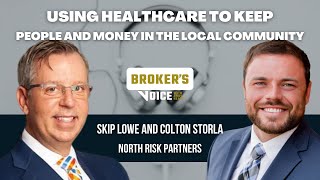
Interview (host Andy Neary) with Skip Lowe and Colton Storla of North Risk Partners about rethinking employer healthcare in rural Iowa. Guests share personal backgrounds and contrast veteran (Skip) and newer-advisor (Colton) perspectives. Core themes: dissatisfaction with traditional carrier-dominated markets, using self-funding and community-owned health plans to keep care dollars and patients local, aligning incentives across employers, hospitals, and insurers, and practical advice for employers to explore alternative financing (self-funding/level-funding/captive-like approaches) and provider partnerships.
Questions this video answers
August 2, 2023
January 1997
Six and a half years
Chapters
Hey. Hey. Welcome back to the Broker's Voice. I'm excited today. I've got two gentlemen from the heartland that are here to join me. I am joined today by Colton Storla and Skip Lowe with North Risk Partners in the great state of Iowa. Gentlemen, welcome to the Broker's Voice.
Glad to be here.
Thanks, Andy.
You bet. We're gonna get this gonna be an opportunity for your audience to get to know you a little bit, but we're also going to throw some golden nuggets at them at the same time. Skip, I'm going to start with you. We're going to go with the elder statesman here.
I know the audience is curious to know this. I know I was when I learned this. Let's let the audience get to know the Skip Lowe before he became a benefits advisor.
Yeah. Well, I would like to call myself a jack of all trades. But, you know, I started off my first job, I worked in a restaurant for four years. Loved it. It was a great way to meet people. And started in the janitorial department, worked my way up to being a wa and then I ran a dry cleaner for a while, and then I started building swimming pools. And then I sold railroad locomotives. And then I got into.
Chemical business, legal chemicals, let's be clear there. But I was working with industrial cleaners and with manufacturers, and then I got this thing with insurance. But behind all of that, the real strings that were attached to my heart were music. And so I was very passionate as a young person. I wanted to be a musician, and I live the rock and roll dream. And so I started off playing when I was the ripe age of 12 years old, saw my first drum set and said, that's what I want to be. And figured I needed to have a responsible gig because I ultimately wanted to get married and have children. So kind of had two worlds in me. And so I ended up being a professional musician. There for a while, you're like, how did you do all that in your 56 years on the planet? But it can be done. People are extraordinary when they're driven by things they love. Then I was a studio musician, so recorded 25 records, played for thousands of people, and still play today. I'm a teacher and launching a music school here in Grinnell, where I live. And so you've got to have things that are in your heart that you're passionate about. And for me, being a musician was a great training ground for being an insurance agent. Like, how can those two tie together? Well, you learn how to stay up all hours of the day to hone your craft in. There's a lot of work that goes into it. It's certainly grace under pressure because you're going to be hit from all angles on questions and it's attention to detail. So I just felt like, you know, insurance was a good segue for me, believe it or not. And I love solving problems and music is the ultimate of problem solving, especially when you're creating it because you're having to come up with all kinds of formulas in your head and being able to put that out there for people to hear. So just had a blessed life and still again pursu my musical dreams not as a professional, but being able to hand down the craft that I've worked so hard as. So that's the quickest story I could come up with, Andy. But that's my background.
I got to tell you, man, for being a former drummer and working in this industry post pandemic, you look sharp today, man.
Yeah, well, as Colton would say, you know, you got to be casket ready in this business because you just never know what's going to be your last.
And I. So I know the audience wants to know this Skip, what's your go to band?
My go to band? Oh, geez, that's, that's a heavy one. But I'm a rush fanatic. You know, I love Neil Parrott. He's ultimate poet scientist and I try to be him all the time.
Awesome. Great guy. Well, Colton, I'm gonna skip, I'm gonna bring it back over to you quick for your, your background because sure, I would say you probably brought, you come from a more traditional approach, right? Being the, the hometown kid from Cedar Rapids, Iowa. But talk about your, your childhood because, well, you know, very similar to mine. You were a multi sport athlete growing up in the hometown. Instead of, instead of whacking drumsticks, you were whacking linebackers. So let's, let's talk about your athletic career here.
Sure, yeah, I've got a short career, but yeah, going back to, you know, being a child and you know, high school, played all the sports from, you know, football, basketball, track, baseball, wrestling, you name it. But my, my main sport was, was football. You know, I was a running back at Marion High School, went on to play at co college.
And really fell into, you know, the love of strength, conditioning, health and wellness. You know, really early on just with my parents, they always, you know, worked hard. Not only, you know, owning a construction business, but they worked hard at the gym. I remember, you know, growing up and going to the gym with them. And you know, I always ask like, when can I go work out with dad? When can I go work out with dad? So now I've always just loved sports and working out, health and fitness, things of that nature.
And I worked a lot of construction just throughout my years, just with my, my parents owning their own business. So they instilled know that, that hard working, you know, work ethic very early on, which trans, you know, transferred over to sports and everything that I did. Then after college, I was on a path to become a college strength conditioning coach. Went to the University of Iowa and trained under Chris Doyle in the football program there. And that was a really good experience, not only professionally, but personally too. It was a grind for that season. But then afterwards I kind of had a come to Jesus moment on, you know, do I want to keep pursuing that? Because it ultimately meant that I had to get more schooling and potentially move, get more experience. And one of my mentors that I had at Coke college actually recommended that I reach out to a gentleman that I knew throughout college, just working odd jobs in construction and things like that. And he was the person that hired me, Greg Dunn. He kind of joked throughout my college years, like, hey, if you keep working this hard for me, you know, just doing odd jobs, you know, you can come work for me, you know, out of college. I was like, yeah, yeah, Greg, whatever. I don't even know what the heck you do.
And then sure enough, I was pushed to, you know, just give it a shot and had lunch with them and asked for a job. And I think within a week or two, got my health and life license and dove in right away. And that now it's six and a half years in the business.
Well, I want to give people a perspective. So you are, I think you're downplaying your athletic career a little bit. Like you were a pretty well known running back in your neck of the woods. Now you stand how tall?
I'm about 5 10, 511 on a good day.
And what was your playing weight?
I was about 195and I think offline.
You told me you had a nickname as, as a running back.
So in high school it was the little tank that was the local news channel. Cone that phrase. I did have seven touchdowns in a game that broke Carrie Bender's record, which he also went to Marion and Coke College and then played for the Buffalo Bills. And I actually know him personally, so it was kind of fun to rub in his face.
That's awesome. That's a Great. This is the stuff people want to know. You know, the thing about our industry is nobody got in it by design. Right. For most people. And I think we're so afraid to talk about what we did before because we don't want people to like, we think it's going to detract from, from our ability to win business. But it's these stories, I think that really let people resonate with us. And this is what I want to talk to you guys about today. You guys are doing a lot of team selling at North Risk Partners, which is great. And what I really love about the concept of what you're doing from above, from looking above is, Skip, you've been in the industry 20 plus years. Colton, you've been in industry six. And to have that different, those, those two different perspectives on our industry right now I think is so important. So, Skip, I'm going to go to you first. Talk to us about, you know, you have been in this industry for quite a while. It would be easy to just say, you know what, I'm going to keep doing the way I always done it. But there was something inside of you said, no, no, no, no. There has got to be a date, different way to do this. There's a big problem here we have to solve. When did that hit you?
Yeah, you're exactly right. You've got two ways to go when you kind of get into the elder statesman wave of life that you mentioned earlier. But, you know, for me, it was probably five years ago and I had desperately tried to put together community owned health plans. I'm going to just rob that statement or that acronym that's out there now. But I'd worked primarily in my business career with promoting providers and healthcare in Iowa. And, you know, my moment of truth was really 5 years ago I started thinking about merging because I was, you know, Swiss army knife here I was dealing with HR and the books and just trying to run a business. And I was, you know, the single producer. And so there's just a lot on my plate and I'm like, I've got so many things that I want to do in my career and solve. And so it's one of those things where I was like dreaming about, you know, are there community owned health plans out there? Are there new ways of doing business? Because I candidly, I felt like a comedian that ran out of material. I mean, people say, oh, you know, Eddie Murphy was hilarious. And yeah, he had some good hits after, you know, he decided to get out of stand up, which he probably Does a little bit, but that's not his forte now. Right. And so I just felt like I climbed every rung of the ladder. We skinning down networks we saw with the aca.
Massive amount of carriers that just got out of the business and some folks we have some great partnerships with and it was just like it was stale. And I'm an artist and so I have this creativity gene that I just like, I've got to get out of this. It's a rut. And a rut is a gray without any ends. And so as I started getting more and more in towards the merger side of things.
I felt that I was compelled because I'm not a technical genius. There's a lot of new things that are out there for ways of communicating. You know, this being, you know, obviously an ideal opportunity here today to talk to you and answer your questions. But I just felt like, you know, I was, you know, the comedian with, without the material that I needed. I was out of the rungs of ladder. And I also felt like I would go into people's offices and just pull that string out of my neck. And I had a talk track. Hey, you know, how are the kids doing? How is your golf game? How is life? How was your vacation? Great. Here is your renewal goodbye. And I just, I'd had enough and I just kind of, you know, said, this is what we're going to do. And it was, you know, a nerve wracking time to merge our business. But, you know, I can fill you in more. I want to get beyond the question you're asking, but you know how Colton and I became affiliated because it was just kind of, you know, one of those magical moments where things came together. It was my, my achy breaky heart, you know, going, what am I going to do? I can't do this anymore. It's just killing me that I don't have any information that I can really share because it's just, it's, it's crazy. And I know you hear brokers all the time, the same story. It's just like I was just done with the same crap.
I think it's good for some veterans to hear that because it's never too late to reinvent yourself. And I, I think one of the good things I see from my position today is we have a lot of people who've been out there for a while doing it, been around for 20 plus years and they're going, I still got some years to go, but I got to do it differently. If I'm Going to have some success. So I think that was great advice for those folks in that position. Now, Colton, you're coming at it from a completely different angle. And what I love about what you have done, it's not like you've been in the industry for six years, but in the business world for 25. No, you're, you're a younger advisor who's been in the business for six years. And what I love about that generation, Jen, you know, Millennial, Gen Z, whatever you want to call it, is they're the first generation that's coming in going, why do we do it this way? And I'd love to have your approach for the younger producers because I think the training in this industry is outdated. It's messed up. What made you come in and go, doesn't make any sense.
Yeah, I mean, definitely on the training side of things, you get, you go into this industry and there's not a, you know, being a Benefits Advisor 101 book, you take your health and life license and then, you know, in some cases you just kind of get the phone book thrown at you to try and drum up business and things of that nature. But we had an older gentleman in the office when I first started that he was retiring. So I took over a handful of his smaller accounts of Blue Cross Blue Shield and then there's some other retirements and just book shifting and selling my own benefits too directly with new clients. And really probably two or three years went by and I'm just like, okay, deductibles when I first got in the business were $500 and now it's 2000 as the best plan. And it was just again, skinny down networks and it just wasn't a sustainable model. Especially here in Iowa, we've got very little choices when it comes to options. You got Blue Cross, you got United, and there was just like a couple level funded plans with all Savers or Aetna or National General at the time. And there just really wasn't any options. I'm like, okay, there's got to be a better way. And I really wasn't getting any education. I started reading, you know, online, you know, Benefits Pro. And then I started, you know, following some of the other advisors that were constantly being, you know, quoted or recognized. And I would start following them on LinkedIn. And then I just started connecting with various people just to have a conversation like, what are you talking about doing? Because I know that there's gotta be a better way of doing this. And I knew it was in the Self funded, you know, realm of things. And I never really self funded at all. So I was glad to have met Skip because he's been self funding for several years and now it's just trying to find various cost containment or point solutions to connect to a self funded plan to ultimately reduce on this frequency and severity of claims of the plan instead of talking about high deductible health plans or HMOs and things like that. Because that just wasn't going to be an end game or a sustainable model like I mentioned.
Yeah. And I give you a lot of credit because I think a lot of advisors come in this industry and expect the training to be handed to them. And you took a different approach, a very similar approach to me which is like, okay, I got to go seek my own answers. I'm gonna have to reach out to people and figure this thing out on my own. And, and I'm glad credit to you to do that at such an early point in your career because I don't think very many would take that time and that effort to do that. So that, that's, that's why you're having the success you're having today. So let's this and I don't want to make you guys give away the secret sauce here, but you guys are in a market that's dominated by very few carriers. Right. And there's a lot of employers out there. We'll call Iowa a rural market. I'm in Wisconsin, but outside of Madison, Milwaukee, Green Bake, Price say the same thing for the if I, if there are employers out there who don't believe they have options, what are your thoughts? Like what needs to go into an effective health insurance plan? I'll let any of you either one answer. It's Colton. You want to go first on that one?
Yeah, I think, you know, first things first is just, you know, convincing the employer that there is a better way because I think the broker community has done such a good job of just conditioning employers in Iowa that it's either this or, you know, you know, Blue Cross, Blue Shield or whatever and that's your only option.
And so just believing that, you know, that there are other options out there and you don't need to just take on, you know, higher deductibles or limited networks. There's, there's a better way. And so that's, you know, foundational. But then, you know, you know, second step is, you know, getting them in that, you know, self funded arrangement. So then they have that, you know, control over their their plan and the transparency to know where their cost drivers are. Because you know, employers just don't know where their costs are, you know, where they lie. As I think.
Forget who mentioned this, but they're like, you know, just felt like we're writing a big check to, you know, said carrier and then not really knowing what the value of that carrier or what they're delivering to their people. You know, are we overpaying? Are we underpaying? Do our employees like our plan, dislike our plan? So, you know, getting them into that self funded arrangement and then that really just opens up the floodgates and really anything's possible.
Yeah, I think you bring up a good point that the first step is not to sell them on the concept. You have to get them to understand what's going on today. Because a lot of employers aren't aware even of. They're not even aware. The problem is, Skip, you know, you said something or I think Colton said something I want to make sure we hit upon. One reason Colton wanted to team up with you is you, you had an expertise in self funding. How long have you been selling self funded health insurance plans?
Yeah, well, I'm, this is a general date, but I believe my first self funded health plan I sold was in January of 1997 and I was scared to death.
That's important. I want, I wanted you to say that because here's why.
Because I was 4 years old.
11 Colton was in pre K. Yeah.
He was using a real bathroom by then. So we're, you know, all good.
The little tank was emerging at age.
Yeah, yeah.
But I think a lot of advisors go out and they, they now want to be disruptive and so they latch on to self funding. Right. Because that's a vehicle to help you do that. But they don't have a good grasp of it and they then go tell everybody they need it, which is a dangerous slope. And I think I wanted people to hear. You've been selling self funding for 25 years.
Yeah.
That's important to know because you've been around the block, you've seen it, you've done it. Not just somebody who has heard about it a week ago and is now out to tell everybody about it. What I would love for you to explain and Colton, I'll bounce it back to you too. But Skip, you used a phrase earlier, community owned health plans. The heck are you talking about?
Sure. Well, it goes back to my early aspirations and was working with the Iowa Medical Society and the Iowa Medical Group Managers association. And so every Every good philosopher says, what if? And I would work painstakingly long hours to try to help these starving hospital administrators figure out a way they could steal business into their front door from their competitors. And so we did it through Steerage, and we launched a program here in Grinnell, where I'm at, in 2005 called One Choice Health. And the concept was that it would be a community health plan where we're supporting the economics and the ecosystem, our community, because if the money stays here, it stays off of Wall street, and people have just a better quality of life. And so this whole idea, again, I had this dream. It just took a lot longer to get there than I thought. And that's what perseverance is all about. Right? But the idea for me was, is to try to figure out I would be a winner as a broker and a consultant if I was to tap into the culture, understand their challenges, because they're all the same. Let's face it. These hospitals are starving for cash. They're starving for people to buy in from the community. A lot of these communities and I were transient. I mean, we've done a wonderful job at draining our youth out of our small towns and put them to shiny colleges, and we've dismantled our manufacturing and turned our farms into giant corporations. And so I was on a mad streak as well as just a cause of how we can make this happen. And so we were successful. And we did bring a large carrier in the state of Iowa that was employer centric as well as provider centric, so we could have all the people at the same side of the table to talk about what our challenges are and how we do solve those. We found that we weren't able to.
Obtain or attract a lot of the smaller employers in these communities. And that was really the missing piece. I could do these on these larger groups if I could get their attention. But self funding was just that avenue to do so and getting able to getting a product that was able to plug into smaller employers, which is now the market is changing drastically, you know, level funding. And back in my day, 25 years ago, self funding worked really well for smaller employers. And then we kind of had a disaster on there. So I really made sure that I was educating myself on what type of contract that they buy, if it's a 2412 or a 1218 and structure it with, you know, ag accommodation or whatever, make sure the terms are there, and making sure that the stop loss carrier was in line with the tpa. That was a pay as we pay type of mentality. So all of this vast work of working with, you know, maybe larger employers and trying to get these community hospitals to buy into that, I had a limited success but we just didn't see what we're seeing now, which is a huge evolution and advancement of these ideas across the country. I'm just grateful to be in the communication age times a billion here. It seems like where we're able to hook up with these people and talk to them and network what has worked for them on these community owned health plans. So now I see the next evolution happening in Iowa and Iowa has historically been conservative as far as the decisions are made. Colton pointed out earlier that the broker community has done a really good job of making sure they stay where they're at. And the providers, I mean, let's face it, I've had conversations with them and I said, hey, we've got this idea. And they've looked at me and said, you know, I'm sorry but the blues are united's earned their right to screw me. You haven't. And so there's that immediate obstacle in their mind. And so it's been a slow gut churning process to now we're at the point where we're actually having success with these things where they are identifying with the fact they're looking around and seeing the shuttered doors, they're seeing with the post pandemic world. The hospitals are broke but it's an exciting time. And I don't know if that really fully engages your question, but that's really how you know, I started in the self funded business was able to go ahead and create these community owned health plans in various spots but they were usually with larger employers. And now we're opening the floodgates where these products are available for the smaller employers.
Yeah, I think what you're, you know, self funding is a vehicle. Right. It's not the destination. It's just a vehicle that lets you do what you really want to do. And I'm going to spin it now to you Colton, to kind of do a part two. You know, Skip talked about fact that small towns get hit by the loss of families and young people who end up moving to the big cities for the more bigger opportunities. And you guys really believe at the crux of creating a strong community is good health care, good health insurance. So Colton, talk to us about how the heck a health insurance plan or health care can actually bring a community together. How does it actually keep dollars in the community?
Yeah, I mean.
Every community has, you know, a health system or health care of some sort, and they've got employers or people, and then you got the insurance piece. And I feel like, you know, years ago they were all just kind of going up against each other. You know, employers were ticked off at health insurance carriers, you know, raising their rates. And then you got the actual insurance side of things. You know, carriers trying to get deeper discounts. And then you got, you know, hospital systems that, you know, want higher reimbursements. And everyone's just kind of working against each other. And then, you know, I just kind of see it as, you know, we all need each other. And so we're kind of taking the approach that let's all sit at the same table and.
Have aligned incentives between all of us and all parties. We can all make a. I'm not against, you know, making a good, you know, reasonable profit, and we all should, but let's, let's make it transparent and let's just, you know, talk about it and, you know, get the deals worked out. Because at the end of the day, you know, we all need each other, like I said.
Well, I think what you're getting at too, Colton, is in these communities, right, you often have not only employers in town, you've got a local hospital.
You have maybe the county seat, you have the town, you have the school district. And they're all struggling to get people to move into town, right? Equals employees. And if they all would work together and work with the local provider, the local hospital to create a, you know, high quality care at a fair price, which allows everybody to control their health insurance costs, they now can offer benefits that attract the people they need instead of losing not only talent, but foot traffic. If you're the hospital to the big cities, right? You guys talked about this a lot. You know, in Iowa, a small town hospital is losing foot traffic to Iowa City and, and Des Moines and everywhere else. And if you can keep that talent, the foot traffic, the money in the community, that's good for everybody. So, Colton, I'll go you. And then you skip. If I'm an Iowa employer listening to this, and I'm like, okay, I'm in. I'm in Grinnell, Iowa, or I'm in Webster City, Iowa. And I'm like, okay, I hear what you're saying, guys, but I don't even know where to start. Or I have been told that, well, Mark, Blue Cross is the only option I should be looking at. And every year I find myself raising deductibles and blah, blah, blah. What advice would you give me Colton, I'll go to you first.
Yeah, I mean, I would just. There's just a lot of innovation that's happening and especially in healthcare and just, you know, healthcare financing, whether that's, you know, self funding, lover funding, you know, the buzzword of captives. Everybody's talking about captive programs now, so there's multiple ways to, you know, self fund. It's just trying to find, you know, as you would say, the guide to educate you on this is what the, you know, the problems are in this healthcare, health insurance, you know, ecosystem. There's a lot of creative solutions that are coming to the marketplace from people that have just simply put their foot down. That said, I've had enough, there's a better way, or even employers that say, I've had enough. This trajectory that we're on, you know, paying more and getting less every year, I've had enough. So let's, you know, try and go direct to, you know, provider relationships. Let's take the insurance out of things. I think some employers think that's only for, you know, Fortune 500 companies, but you know, smaller employers are demanding the transparency and control too. So it's been really fun to just kind of piece everything together. So you really just need to find somebody that understands not only the healthcare system and how that kind of operates from primary care, pharmacy, hospital, advanced imaging, all those kind of cost drivers within a health plan and then taking the insurance side of things and just piecing it all together and you can create a very successful, high performing plan that your employees love.
Love that. Skip, how about you? What would your advice be?
Well, it's going to be a little different approach. That's why we get along so well every day at our office. But I would, I would do the I like to propose a toast moment, you know, ding, ding, ding, ding. And I would stop if I had the opportunity, a room of 5,000 people. And I'd say, I just have a couple things I want to say. And they probably all start shaking their head, not this guy again. But I'd ask them, just raise your hand if you love your health insurance. Out of 5,000 people, how many people are going to raise their hand? And then my second question is going to be, hey guys, don't worry, I'm going to put a little money up here. I got a hundred dollar bill for anyone that knows what their out of pocket maximum is in their health insurance.
More from Andy




If you want producers to succeed faster, help them create a sales message that creates confidence.

Sales isn't a zero-sum game! You can have tough competition and still grab a beer after



Option 1: Meditation, a fast walk, a podcast, and protein. The ultimate morning routine!

How you do one thing is how you do everything. Ill elite producers fuel their body.


Stop living in the gray of maybe! Your job in sales is to get a clear yes or no