Using Resiliency To Reach Your Full Potential with Terrence Ogden
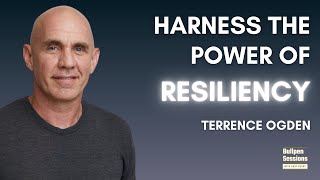
Terrence Ogden recovered from severe drug addiction and founded Project Grit, which uses challenging physical events like rucks and hikes to build resilience. A car ride after rehab and mentorship from Kenny shifted his path toward fitness and sobriety, lessons he now applies to help driven professionals build mental toughness.
Chapters
Hey. Hey. Welcome to the Bullpen Sessions podcast, a podcast for driven insurance professionals who are looking to reach their full potential in their insurance careers. This is the place where we help motivated insurance professionals build the right mindset and tools to create more credibility with their target prospects. I'm your host, Andy Neary, former professional athlete turned insurance advisor. Each week, you will learn tips and strategies to help you execute a clear prospecting game plan every single week. Clarity creates action. When you're clear, you're confident. When you're confident, consistent. When you're consistent, you are unstoppable. All right, let's dive into today's episode. Hey. Hey. Welcome back to Bullpen Sessions podcast. My name is Andy Neary, and this is episode 276. Today I have Terence Ogden joining me. If you are looking for a little inspiration, this is going to be an awesome episode for you. I had a ch chance to meet Terence Ogden in a mastermind group I am a part of, and I wanted to let you hear his story today. Terence is the founder of Project Grit, which is an organization that hosts challenging events like rucks and long hikes to challenge people's mental and physical limitations. But that's not where Terence's story began. Terence's story began as a drug addict who found himself in and out of rehab in prison, never looking to improve himself. Until one day he had a meeting with fate as he was getting into a car, leaving his last day of rehab. And I can't wait for you to hear his story of how he has come overcome one challenge after another to remain sober for well over 20 years. And what he is doing today as the founder of Project Grit to help men and women challenge mediocrity, embrace difficulty, and unleash the power of teamwork. I wanted all of my insurance producers to hear this episode today because to win in the insurance business, you have to do hard things every single day. Because it we are in an industry where it is easy to get complacent, where it is easy to think we can go it alone. But man, Terence's story and what he's doing with Project Grit and behind his annual races, the immortal 32 ruck and the top of Texas eight peak challenge. You are just gonna love this guy's story. So is one you want to listen to when you have time on the car or on the treadmill, because Terrence's message is both going to inspire but motivate you to avoid complacency. All right, let's dive in. Hey, hey. Terrence Ogden, welcome to the Bullpen Sessions podcast, my friend. How are you doing?
Doing great. Glad to be here.
Well, you and I met at a Brand Builders group event that we're both a part of, and when I heard your story, I wanted to have you on this show. As I shared with you offline, you know, our target audience is. Is insurance professionals, a lot of males, probably between the ages 25, 45. And you said something during our conversation that really resonated with me, and that was we do hard things. That's actually a mantra we live by with complete game consulting. And it really stuck with me. And then you told me your story, and I said, okay, I gotta have this dude on the show. So we'll talk about your current venture today, which is Project Grit, and what you're doing with those rucks and the challenges you do there. But where I really want to start this podcast conversation is more of a background. You know, people get to know Terence today. I'm guessing it's a much different version of a Terence we may have seen 20, 25 years ago.
Absolutely.
So just take us back, okay. To Terrence Ogden, late 90s, early 2000s, and that'll set the stage for, you know, where we are today. And we'll get into the details of Project Grit and what you're doing to help people just basically focus on mental and physical challenges to constantly improve themselves.
Sure. So we'll go back. So my background started.
What got me to where I am today is I was a severe drug addict, and I've been in and out of jails and institutions. The last this was.
Would have been March of 02. I went into a rehab, and I wasn't planning on really getting clean. I wanted to get my. My act back together and get back up doing whatever I was doing. And I was at a rehab, and it wasn't really going well for me there. The mentality there wasn't very helpful. And I remember I told myself, this is. I'm out of here. They asked me not to leave. I left anyways. And I remember walking out of there thinking I was scared. And I got down to the main road and I started hitchhiking back to town, and I didn't have anywhere to go. All I owned was a backpack and a bunch of bad habits. I had probably about a week off of heroin and.
Fresh off of everything, and I started hitchhiking. A car pulled over. It was a young lady, and.
We got in, and she had a 12 pack of booze, beer in the backseat, and she had said, hey, do you know where to score? And he does. And my first. It kind of freaked me out. It was like there was a crossroad put right in front of me. Within minutes, minutes, like, the first opportunity it showed up, and, you know, I hadn't been with a girl in a while, and I was like, yeah, she's pretty, you know, and I could go. And the way I was at that time, I was thinking I was gonna, you know, try to make some money off of her and get what I wanted out of the deal. We started driving, and I'm scheming, planning, and we're going along, and, I don't know, this little voice inside of me was like, if you take this path, we know where it goes. There's a strong chance you're going to either die or end up in prison, and we don't want that. And we're going. And it's like I was taking her to the dope house, and I said, park right here. And I knew that just so happened. The street we were on, there was a club there, and I jumped out of the car, and I went in there, and.
That'S kind of where it started. I'd been in and out of the AA before, and I really didn't want anything to do with it. And at that time, I was at my ropes in, and, you know, I didn't like all the God stuff. I had a real hard time with it at that time. You know, I didn't care about God, and I didn't think God cared about me. I went in, and luckily, I'm jumping forward a little bit. I ran in some guys that I knew were just as bad or worse than me. And there was one guy in particular named Kenny Baker, and he was my mentor. I knew that something was working in his life, and if I did what he did, maybe I could get what he got. So I kind of tagged on with him, and what me and Kenny started doing. Kenny was big into working out. Kenny was big into boxing. So we would go. We would meet pretty much every day, lift weights, beat the crap out of each other, throw a steak on the grill.
And that's where, like, it was hard for me to adjust to that and everything. And that's where it started. And me and Kenny, from then on, we started a backyard boxing club, and we brought a bunch of guys in, and then we started doing, like, obstacle races. We ran a lot. And I'd say about six years after that, Kenny got esophageal cancer and died. And I was kind of Crushed because that was my community. And.
When he passed away, I was like, you know, I gotta keep this going. And I started getting into doing. I hated running. And in that time of my life, if there was something I hated to do, I told myself, I need to do more of that. For some reason, I hate it. We're gonna smash that and we're gonna. We're gonna attack that and see what it is. And I started running. And like I said, I hated running and never really ran. I started doing 5Ks, 10Ks half marathons. Marathons. And I got to where I was doing 50k ultra distance marathons and trail runs. And I did that for a while. And I had.
Kind of got burned out on the whole running deal. And I got introduced to rucking. This would have been like, I'd ruck before. That would have been like 2014 maybe. And I was like, okay, this is more my speed. I can, I can slap a bunch of weight on my back and get after it, you know, and.
From there, you know, it's like my whole thing is always like. The thing that, that helped me so much in my recovery was it was multifaceted. It was like physical fitness. Trying to, like, read more. Adopting spirituality into my life and, and learning how to deal with emotions. My whole life, I really only knew two emotions. I'm gonna. I'm gonna. I'm gonna eff it or I'm gonna fight it, you know, and.
By when I started getting clean, I started talking to guys and I realized that there was a much deeper issue. And. And that actually was the hardest thing for me to do. Getting out of my comfort zone.
Which for me has been critical to my growth.
I want to ask you, if you don't mind, I got some questions for you there, because we probably just covered a span of what, 20 years.
And there's a lot to unpack there. You know, Prior to that car ride leaving the rehab center, you had gone in and out of plenty of prison time. Yeah, rehabs where, like you said, you had no goal of getting better. No, you. You were, you spent, you know, you served enough time in prison just to get back out to keep doing what you were doing.
Right.
What do you think was different about this particular car ride on this particular day where you made that decision? You said in the past I didn't believe in AA groups that screw them. What made you walk in and say, I need help?
I think deep down inside I knew that I'm gonna die. You know, I knew that, that I've been in and out of all this, so much. And I knew what. Like, I remember. Okay, I'll go back. Probably about three months before I got clean. I had. I had done a little deal, and I got popped. And I was holding a substantial amount. It wasn't too much, but it was enough to keep me away for a while. And I remember I was happy. I was excited because I knew that I would be safe when I was locked up. As fucked up as that sounds, I knew that I was away from all the. All the. The crap that I got, and I was excited about it. And I was like, okay, I'm gonna go in here. I'm gonna make the best of steel. I'm gonna. I'm gonna get everything out of this experience that I can. And after about two weeks, the charges were dropped, and they let me out. And I'd love to tell you that I went and got clean after that, but the first thing I did when I got out was went and got high. And it was by three months later.
I saw a friend of mine out, and I hadn't seen for a while. He had a cute girl with him, and he looked real good. And I'm like, hey, man, let's go hook up. Let's go party. Blah, blah, blah. And he was like, nah, I've decided that.
I want to get clean. And I remember I went and got high that night, and all I could think about was Henry. That was the guy's name, how good he was doing. I was 31 years old at the time, and it's like, this dude's winning and I'm losing. Something's got to give. And then I started trying to get into the rehab, and I was like, I just. I need to clean my act up and then get my head screwed on straight and then get back after it. And a funny little story that I remember the night before. I finally found a rehab that would take me in, because kicking heroin is a really bad. It's an ordeal. And I had a ride the next morning. We were. We were in this. It was an abandoned house with a candle. And that was the last night I got high. And we woke up in the morning, he had a flat tire in his truck. And I was pretty resourceful at that time, and I. So he didn't have a spare, so I went and found a truck just like his and took their spare, put it on his truck, and he took me to rehab. And that's how. That was the beginning of my rehab stint. And that's just where I was in Life. And when I stepped in, at getting out of that car, getting in that car, it was like some voice inside of me said, you have two choices here, death or life. And I chose life.
You know, I think my version of what life is like in a prison is often through the lens of a movie or something you see on tv. But what you said about a prisoner's mentality, I remember watching the movie Shawshank Redemption. Right. And he talks about how when prisoners get out, sometimes the safety of the prison is actually where they want to be.
Yeah.
And it was interesting you said that. And, you know, it was also interesting that you just said how you actually relied on resourcefulness to get to rehab.
Yeah.
Where so many prisoners or. Or people with addictions rely on resourcefulness to break away.
Yeah.
And that was very interesting. And I'm glad people are listening to this, because I think whether it's drugs, alcohol, sex, you name it, I mean, a lot of people have addictions and that a lot of people don't know about. Right. And a lot of people are good at hiding addictions. And that's probably true in our industry, the insurance industry. And so, you know, your vision or your picture of what you had when you got in that car, leaving the rehab for the final time of, dude, you've got two choices, death or life. Which path do you want to take? And you obviously made the right choice. I think that's pretty impactful. I hope a lot of people heard that the right way. Now, I got a second question with this. So you. You take the right path. Meet Kenny, who becomes a mentor of yours. And then Kenny, unfortunately succumbs to cancer. When you lost your mentor, were there any fears that you would regress because the guy that had helped you get clean or stay clean was no longer there?
Absolutely. I was mean. I had a pretty good foundation in recovery at that time, and. But of course, I was like, man, now that I lost my. My confidant, you know what's going to happen now? And.
That I've always been the type, if I'm afraid of something, I try to go tackle it. And.
That the fear of losing Kenny was. I mean, I felt alone again. You know, I felt like there wasn't. I didn't have that. That. That dude that I could just. He was, hey, he's the kind of guy that would be like, I got a body in my trunk. He'd be like, listen, where are we going to go bury it? You know, he was that guy. And I still have those in my life. Today, everybody needs a guy like that. And.
But I. Yeah, well, there was a lot of fear in that because I didn't know what was going to happen, you know, But I believe, for me, I believe that, like, the path is already written. I just got to make the choices along the way, you know, and, yeah.
I think you've been, you know, it's interesting. And I keep going back, probably a step back before you got in the car, leaving the rehab, even going to rehab, all the challenges God put in your way that a lot of people wouldn't see as a challenge. Number one, you get a flat tire on your way to rehab. That would have been your chance to say, well, screw it, I'm not going. You get in the car, and within minutes of leaving the rehab, you're presented another challenge. And now God has thrown a really big challenge in front of you, which is your one mentor that you relied on to really make sure you stay clean is no longer there. What are you going to do? And.
I hope one thing you're proud of, if you're not, it's you. It's obvious since that day, you've made a lot of good decisions.
And what I want to talk about is, you know, you just said something, and this is going to set the precipice of our conversation here, which is if I see something hard, I just go lean into it. And that's really. You know, today you live outside of San Antonio, Texas, right.
Right in between Austin and San Antonio.
And you're a cabinet maker.
Yeah.
You also are the founder of Project Grit, which we're going to talk about. And before we get into the.
Foundation of Project Grit, you talked about how you and Kenny started a boxing club, you started rucking. What impact. When you started leaning into those activities.
How did you see yourself change so physically?
I started putting on more muscle and I started wanting to eat right, and I started.
I just. I kind of got off on that whole, like, by pushing myself. The way that it made me feel, I mean, it's. It's like I've done a lot of drugs. I mean, a lot of drugs. And nothing is. Is for me, is as great of a feeling is when I. Hi, it's.
Andy Neary, and thank you for listening to the Bullpen Sessions podcast. Did you know the ideas shared on this show are things that we actually specialize in helping you implement? If you're an insurance professional and you want to turn your credibility into consistent client acquisition, visit completegameconsulting.com and schedule a free strategy call again. That's completegame consulting.com to request your free strategy call. All right, let's jump back into today's podcast episode.
I overcome an obstacle that I have always thought I'd never be able to do, or.
The challenge that that comes with that. And overcoming that is just. There's. There's. Well, there is something that feels good, and that's taking another man through that and seeing them experience what you experience, that's the next level thing. But having that experience, to know that. That I'm capable of doing a hell of a lot more than I think I can. Society says I can because statistically, I should not be here. I should not have the things that I have in life. And I'm not saying that.
I don't know. You know, I mean, I'm extremely grateful for where I am in life, and I busted my ass to get where I am. It didn't just come handed to me, you know, and all of that, by doing those challenging things, I've learned that about myself, that I can overcome whatever comes in front of me. And if I fail, and failure is always part of it, if I fail. What do you do when you fail? You get off your ass, do it again until you accomplish that goal.
You know, I love that. You know, now, I think that's a great.
More from Andy




If you want producers to succeed faster, help them create a sales message that creates confidence.

Sales isn't a zero-sum game! You can have tough competition and still grab a beer after



Option 1: Meditation, a fast walk, a podcast, and protein. The ultimate morning routine!

How you do one thing is how you do everything. Ill elite producers fuel their body.


Stop living in the gray of maybe! Your job in sales is to get a clear yes or no