What Are You Willing To Fight For with Dylan Slattery | The Broker's Voice
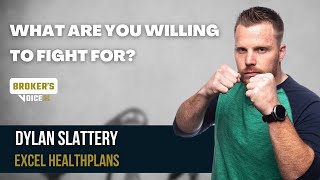
Interview between host Andy Neary and Dylan Slattery (chief growth officer at Excel Health Plans). Dylan recounts his childhood in Iowa, two melanoma diagnoses in his early 20s (surgery at Mayo Clinic, recurrence with metastases to liver, lung, neck, and spine), intensive ICU care, and eventual remission (last treatment January 2017). He explains how those experiences motivated his entry into the health benefits space and describes Excel Health Plans’ small-to-mid-market focus (plans for ~5–200 lives) including features like disappearing deductibles, an oncology network, and bundled low-cost imaging/medication options to reduce member cost and plan spend.
Questions this video answers
31
January 2017
Melanoma (first diagnosed at age 22)
Less than 10% chance of surviving (as stated in the interview)
Mayo Clinic; University of Iowa Hospitals & Clinics
Chapters
Said an error occurred. Hold on. There we go. All right. Welcome to the Broker's Voice. We are here every Wednesday at 10am Mountain, 12pm Eastern. I'm excited. I was technically going to have this gentleman on next week. However, due to a postponement, we have moved Dylan up a week. I'm excited for this week's episode mainly because when we do the Broker's Voice, we're often keeping it business specifically. But today we will talk a little business at the end. But. But this is going to be about one's personal story, story and personal journey, which, if you're tuning in right now, this is going to be extremely powerful. So let me introduce the man who's joined us today. I've got Dylan Slattery with Excel Health Plans. He is the chief Growth Officer at Excel Health Plan. So, Dylan, welcome to the Broker's Voice. Man.
Hey, we're both sports guys. Sometimes you got to call an audible and just roll with the punches, right?
Exactly. Life is about audibles, especially these days. Well, Dylan, a lot of people in the industry probably know who you are today working with Excel. You were with script sourcing prior to that. But before we even get into the. The health insurance side of things, I want you, you know, for the folks who don't know, I think your story and your journey is freaking powerful, man. And it's really going to put a lot of perspective in people's lives. If, if you, if people saw the thumbnail I put up yesterday, I know you said that was the. Didn't expect that photo, but I, I thought the photo of you like that was the most appropriate. And I put the title on this episode of what are you, you know, what are you fighting for? Are you willing to fight the fight? And let's go back to your journey. Take us back to your early 20s. You had played some juco baseball in Iowa and transferred to uni, Northern Iowa, and that's kind of where your life changed.
Yeah, 100%. You know, I grew up in a small town, Northeast Iowa, Midwest guy like yourself, and didn't face a whole lot of adversity. I had, you know, my mom's the youngest of 12, so we had just a solid rock, a foundation and family surrounding us, and, you know, just kind of checked all the boxes. I was an Eagle Scout, played four sports, went into college, did what I thought I was supposed to be doing, and quickly realized that I was kind of heading down a path that didn't feel like it was mine. But, you know, you kind of do things for other people sometimes. And. And then all of a sudden you find yourself where you almost just feel lost and there's kind of like an internal conflict. And. And my story really kind of brought that to life. So When I was 22, I was diagnosed with melanoma for the first time. I had a mole on my neck that started changing in color and the size and the, the border was not symmetrical. And so it checked all the boxes. There's like the ABCDs of melanoma. And it literally checked everyone. And so I went and had surgery up at Mayo Clinic at 22 years of age. And they were concerned that it was deep enough that it had started to spread to the lymphatic system. So I actually have a scar that runs from the top of my ear down to the middle of my neck. Unfortunately, it came back clean. And so they sewed me back shut, told me I was good to go. And then a year and a half later, I woke up to go to an Iowa football game. Iowa. Iowa State. And we were out the night before with friends, pretty late. Only slept maybe six hours. And just in that six hour time frame, I woke up with a golf ball sized lump that just showed up overnight. And so I knew it was back, but I didn't really want to send anybody into panic mode that day. Just wanted everybody to have a good time, but they couldn't figure out why I couldn't talk correctly. I was like slurring my words because I couldn't open my mouth on the right side of my face. And so I knew it was back. I just didn't know how bad it was. And then went back up to Mayo Clinic. They did a bunch of tests. The worst of it was getting an 18 gauge needle shoved into my stomach and into my liver where they pulled a chunk of the tumor out. So they found out that I had tumors in my liver, lung, neck, and three tumors in my spine. And pretty much told me that I had less than 10% chance of surviving at 23 years old.
Dude, what's going through your head at that age? I mean, you know, 23, you know, and we're that age. 40 years old seems ancient, right? And here you are at 23 getting a diagnosis that you have a 10 chance of living.
I hate to go there, but what's going through your head at that point?
Yeah.
A lot of things. First and foremost, I felt like being the oldest of four boys, I had to be the strong one in the family. My parents instantly broke down when we got that news. And so throughout most of the process, I felt like I needed to be the strong one for everybody around me. So that was the first thing. It didn't really hit me until. Until I had to go into the ICU for four weeks and had a few close calls. Woke up one night with like six or eight doctors around me, and one was holding paddles ready for me to, you know, for me to flat line so that they could use them on me. And so it was. It was pretty intense and.
Not anything I would wish on anybody. But what I'll tell you is this. My dad actually passed away a month before I was born. He took his own life to suicide. And in between my two diagnosis, I was in a car accident with a high school classmate of mine that I ended up doing a CPR on until she passed away. And that combined with me feeling like I was going down the wrong path at school and stuff, cancer, in a way, gave me something to fight for at a time when I felt like life may be not worth fighting for.
Dude, I. I have a couple questions that come out of just that statement alone, and I want to make sure I put them in the appropriate order. You know, the first thought. I grew up with a very. What I would call average, normal childhood, you know, and we hear these stories of people who've come from rock bottom to rise up. And I always looked at my life and I'm like, dude, my life was easy. Like, I was average. I was like the definition of the average kid in an average American family. And hearing that story, what you've gone through, not just your own battle, but losing a friend in a car accident, losing your father. I gotta believe you look at some challenges today and just kind of chuckle.
Yeah.
Most people see as adversity today, for you, no pun intended, with a sports analogy, is just another day at the park.
Yeah, I've actually used this similar analogy. Being from Iowa, obviously, wrestling is huge. And Dan Gable used to say, you know, once you've wrestled, everything in life is easy. And it's. It's like once you've battled cancer, everything in life is easy.
That's awesome.
Or easy, you know.
Oh, easy, Absolutely. Absolutely. And. And. And, you know, cancer has impacted so many lives today. If it's not you directly, you probably know somebody within your immediate family and. And having. Being somebody who hasn't had to go on, go through it myself, man, your story, like I said when I first met you, I think we met over the phone. It was just really, really inspiring. We had the tie with baseball, but at the same time, knowing that what you battled, it was. It was freaking inspirational, man. Here's the healthcare story. Healthcare side of the question I want to ask. You lived in north central Iowa, northeastern Iowa. What impact did having the proximity to the Mayo Clinic have for you? Because the Mayo Clinic was just north of you in Rochester, Minnesota. Was that a big player in this, in. In your survival?
I'm going to throw you a curve ball here you probably didn't see coming. So I had the surgery done at Mayo. It was fine.
But when it came back, went back up to Mayo, because that's where I had already had the existing relationship with.
And the outlook that I got from Mayo was, here's an experimental trial, it's probably not going to work, and you're going to be toast is the vibe that I got from them, because. And the other thing that I really hated about it was the time when I went. I was 22 years old with a mole on my neck, and I'll say forced me into a wheelchair and pushed me around the facility. And I'm like, I'm 20 with a mole on my neck. I can walk around. Like, don't dehumanize me. But the same thing kind of happened when I went back, and they also just wouldn't look at me as one being. They're like, we can talk about these tumors in your liver or your lung, but we can't address the tumors in your neck because we're not an ENT or an expert in the whatever, you know, like, they were just giving me the runaround, and it's like, yeah, but I'm one person, so you can either talk to me as a person or a collection of body parts. And so I chose to get a second opinion at the University of Iowa Hospitals and Clinics, you know, famous for the children's hospital right there across from the stadium. And so even though I ended up taking the exact same experimental trial that was initially offered to me at Mayo, the outlook was like, here's our best option, and we're going to give it all we have, rather than, here's an option, but you're probably going to die. So, like, the outlook from the nurses and the staff to me made all the difference, and I think it makes all the difference in life. Like, you always talk about the people you surround yourself with, but in that case, like, I'm a big John Gordon fan, and he. He has a book called the Energy Boss, and I was like, full. That was my mantra. Like, if you didn't think I was Beating cancer. You were dead to me. I, I didn't engage with people who didn't think that I could beat it.
That's awesome, man. And, you know, you, you brought for me being a sports guy, that, that famous, you know, what do they do after the first quarter at Iowa football games with the children's hospital right there? The, the wave. Is it after the first quarter, I believe. Yeah. That has to be pretty special for somebody like you who experienced that hospital firsthand.
Yeah, I was right next door, so I was in the ICU of the regular hospital, not the children's hospital, which is kind of a whole different thing.
Adolescents, you know, those folks from 18 to 29 kind of end up in a space where they don't belong anywhere because they don't belong in a children's hospital and they don't belong. I mean, I would sit in the lobby where I was the youngest person by two or three times.
How old, how old are you? Right, how old are you now, Dylan?
31.
31. Okay. So this was not all that long ago. We're talking about eight, nine years ago. Looking back now, here you are.
Go ahead.
I did my last treatment. I did my last treatment in January 2017, so.
2017, okay. So we're, we're not, we're not all that far removed. And here you are at 31. You're a survivor. Freaking amazing. Looking back now, again, although it's not all that far back.
It's hard to hear this when it's cancer, but everything happens for a reason. Everything teaches you a lesson in life. When you look back just five, six, seven years ago, what would you say? Cancer, that fight you've had with cancer, what has it taught you and how has it impacted who you are today at age 31?
Yeah, I mean, the, the lessons are pretty endless as far as, like goal setting and things like that.
When you get broken down to that level where you're like a 23 year old baby, pretty much like making it to the bathroom is a win.
Yeah.
It really forces you to appreciate the small things because like I said, you literally get everything taken away from you. The number of like, bachelor parties that I missed from my friends because I was in the hospital or things like that.
Yeah.
It just makes you appreciate life in a different way.
Oh, hell yeah, man. I'll tell you, I'll tell you what, dude. You know, I, I'm hearing your story and I reflect on my week, day to day, you know, week to week stuff, and I. Anybody listening to this, same, same goes for you complaining about the Q4 season, complaining about, you know, I have too many renewals this week. Dude, you got men and women. You got nothing to complain about. Like, be happy you have a to do list. You made me think of something. Dylan A friend of mine said this to me a couple weeks ago. He asked me how things were going and I said, man, I'm busy. We're overwhelmed right now. We're growing. It's all good, but we just feel overwhelmed. He goes, dude, be thankful you got a to do list.
And that is so true. We often want to complain about the length of our to do list, especially for advisors at this time of the year. Be freaking thankful you got a to do list.
And you are just a shining inspiration. So let's twist it now. Let's move it over to here. You are, you are in the health insurance industry and you have been for a couple years.
I loved what you just said. How the Mayo Clinic I should say love, but just very telling how the Mayo Clinic treated you. Instead of one human being, you were a basically a set of parts and organs. How is that what drove you? Your experience obviously drove you to get into this industry. Share that story how did you end up in the health insurance industry?
It was kind of an accident, actually, Andy. I was, I was doing motivational speaking and umpire baseball games, actually. And.
Through my treatments I was working in Iowa in the 401k space. And so I did a couple odd jobs and through that process moved out to Colorado.
Met Mike Patton. Mike Patton introduced me to Gary Becker, who was looking for a sales rep. So I.
Gary didn't want to interview me because I didn't have any benefits experience. And then actually Mike sent him a video of me speaking to the Iowa basketball team a couple years back. There's some videos online where like Luca Garza was in the room, Connor McCaffrey, Joe Wiese camp. Like, some guys that are in the NBA.
Still stay in touch with with them and Fran, obviously you know what they've gone through with Patrick being a cancer survivor, super important for them. And so.
Gary saw the video and was like, all right, I'll give this kid a shot. And basically what I told him was like, look, I went back to the baseball. It's like, know what your strengths are, right? And so I told him, I was like, I. I don't know what I don't know, but I know how to talk to people and build relationships and so I can learn anything you want to teach me. And I would look at that as A strength, because I don't have any of the bad habits. I've not been in the insurance industry 30 years old, which I think works more against you these days than it works for you. And so I'm like, I'm a blank slate, Gary. You can teach me whatever you want me to know, you can mold me into whatever you need me to be, and I can figure the rest out. So that was enough to win me the job. And then when I was working for script sourcing, I realized that like two things kept occurring. I would run into consultants that either didn't know how to self fund or level fund without a carrier being involved, in which case my conversation was over. Not because of anything had to do with me or script sourcing, but because they didn't know how to make the other pieces work together. And then the other, you know, guys and gals that I was running into were doing the unbundling and, and some of the creative things on their, you know, more mid to large market clients, but they weren't bringing them downstream into the, into the small space. And so, you know, being from Iowa, where the average employer is like 11, 12 lives, it's like, how do we impact the industry? We got to bring it down to, you know, the mom and pop shops, the small businesses of the world who are actually the ones that are hurting the most by these rising costs. And so it's like, because it's interesting, my, my mom is the CFO at the bank that I was on the health plan, and at the height of it, I was worth a million and a half dollars a year, you know, from my treatments, because they were experimental. I was going every three weeks for infusions. So it's like I've seen both sides of it where, yes, it saved my life, Big Pharma saved my life. I also kind of hate them, but it's like, you know, it's a love hate relationship. And then my mom is the ones, you know, effectively stroking the check, you know, through the process of me going through those treatments and the impact that it had on the bank's renewal. So all of it kind of came together.
Yeah. And you gave me a couple things. You know, you talk about one going back to you, Gary, hiring you, even though you didn't have industry experience. I couldn't agree with you more. I mean, product can be taught, but if you've got an ability to develop relationships and maintain a good, build trust, have people build trust in you, we could teach you the product. And I couldn't agree with you more. I think a lot of people in our industry, agencies especially, want to hire all these veterans. And yeah, that comes with knowledge, but the challenge is it can also come with bad habits. To your point, and I say this often, and I know it comes with pushback. There's a lot of advisors out there right now trying to sell the status quo as a way to win business, when if you look at how they operate, it is the definition of status quo. And so I wholeheartedly agree with you and here's why. I know you've been successful as well. You came in even though you did not get in the industry by, by design. You come in with a powerful why.
And I want you to talk about that. Even though you didn't get in the industry by design. Knowing your past and your experience, how does that help shape what you're doing today for Excel health plans?
Yeah, I mean, you know, to, to what you said before about, you know, consultants complaining about Q4 Rush and, you know, people trying to get ID cards out, it's like, think about that cancer patient who's going to have to go in for his infusion in January and it's going to be a headache and a half if he doesn't have his ID card because you know, he's going to get run around at the front desk like it's.
It'S small problems, it's first world problems. And you know, just in terms of like my own experience and how it's played out for me, one of my scans that I went in for, they wouldn't approve. I was on a United plan at the time and they wouldn't approve the PET CT scan that I had had all the way through my cancer journey. It was actually for my five year scan, which is a big deal in the space Considering the five year survival rate on melanoma, stage four melanoma is less than 15%. Like, was really looking forward to getting some confidence and certainty in that scan and then it came back that they wouldn't approve it. And I was just like, what in the hell? And so they would only approve a full body CT scan. And then the insurance company went ahead and paid $11,500 for that scan. When it's like you could go work through Green Imaging or Assist Health and you can get that Same scan for 250 to $500 and make it free to the member, it's like, that's what we're doing.
You know, we're putting money in the back of the pockets, you know, back in the pockets of the employees who need it most. We're, you know, we're creating a scenario where members don't have to think about their finances because, like, I've been on the receiving end. I've gotten those gas cards in the mail, you know, to say, hey, use this to help.
Alleviate your. Your burden. Because we know you have to drive down to Iowa City every three weeks for infusions or, like, you know, the loadable cards to help pay for parking while you're in the hospital, meals, all of that. Like, the world doesn't stop when you're sick. I still had three younger brothers in school. I still had two parents that were trying to work, even though my mom stayed with me in the ICU for all four weeks. She slept in a windowsill.
But I think it's just super powerful. You know, it's like the. I posted this yesterday, but I was watching Stuart Scott speak live while I had stage four cancer, while I was going through treatments. And, like, that speech just crushed me because, you know, he said, when you die, you don't lose to cancer. You beat cancer by how you live, why you live in the manner in which you live. And so for me, you know, it kind of created it where it was like, that's always our biggest fear, Right? It's like, dying. What. What else is there to be afraid of? And so the way he framed it up completely changed my mindset, because now it's like, I'm living with house money, and the only way that I can lose is if I don't live my life the way that I was intended to live.
Yeah. I mean, that's such good perspective, man. Adam Zevian left a message that you're a relentless fighter, face tremendous adversity, and overcame it. Absolutely. And that perspective you have right now, you know, as Stuart Scott used to say, cool as the other side of the pillow. Right. It's. Last night, I happened to have the Texas Illinois basketball game on More, more, more as background noise. Anything else? But I'll tell you, when Jimmy V's speech came on, Jimmy Valvano, I stopped everything I was doing, and I came over to the TV and watched it, because that even though that's been 30 years since he gave that speech, it's still inspiring today. So.
Let'S quickly talk about now that, you know, with Excel health plans. Let's talk a little bit. We'll spend the last couple minutes on Excel health plans. What is it? Who are you guys trying to serve? What are you guys doing? I know Mike Patton started the company and you guys are really out to serve a niche market that really has, has had a gap when it comes to health insurance. Let's, here's your chance. Let's talk about Excel and what you guys are doing.
Yeah, so basically that those two kind of two prongs that I had identified earlier, those are the people that we're serving in terms of the brokers, but in terms of employers, it's yet we can go down to five employee lives. I think it works great in that five to 200 space, especially if you're coming over from fully insured and don't have access to a lot of data, which most of them don't. And so what we've done is kind of put all the pieces together to create an off the shelf or a plug and play type option where it has the disappearing deductible in there, which it's funny how like all my life experience came together in this, in that.
The two things that I was studying in college were economics and education. So I was either going to be a high school baseball coach and social studies teacher or go into business like my mom. And so, you know, economics is all about incentives and driving decision making. And so when you make something free for somebody, it changes their behavior. And so inside of our health plan, you know, Whether it's imaging, MRIs, you know labs.
1200 plus medications, we even have an oncology network in there where members in their time and need can kind of use two pathways. So you have the network and it functions how it always has. Or if free is meaningful to you and high quality, you have this other subset of options that you can take advantage of because we know it's going to be lower cost or no cost to the member and then drive savings for the health plan on the back end.
That's awesome. You know, I'm going to actually do this as we're speaking before I forget, I'm going to put your email up here as well if somebody wants to reach out. If you're an advisor watching this and you want to reach out and one, learn more about Dylan and what he's doing, or two, learn more about Excel health plans. I've got his email here on the screen so you can shoot him a message when I think of what you're doing.
Question that I have for you as far as the subject matter expertise goes, you know, you've stated that Excel is a health plan really built to help that smaller mid size market. What do you think they're lacking the Most right now, Dylan. You know, I think there's been this belief in the small group market. It is what it is. Here are your options. Pick one. Let's go put it away for another 10 months. What do you think is missing for those smaller businesses in America when it comes to health insurance?
I think what's missing is somebody to go to bat for them because they've been so brainwashed. And usually this isn't true for all those markets, but usually those states that are dominated with small businesses are also dominated by the blues. And so it's like if that's the only thing you, you've ever seen and everywhere you go, whether it's the state baseball tournament or, you know, this, that or the other thing, like all you see is the blues. The blues, the blues. Or maybe this health system that's local to wherever you're playing at. Like, it's always, it's always the big players in healthcare. So it's, I think, having those creative consultants that are really there, and this is what I would say there too is if you're a benefit consultant, it's your job to do what's in the best interest of the client, not get bullied by the client. Because if you're there and providing value, like, you shouldn't be just getting pushed around by them. You kind of have to push back and say, hey, like, I know this is what you guys have been doing for 30 years, but there's a better way. And I've seen this work, you know, plenty of times before you, this isn't a new concept.
And it's, it'll work for you too, because, you know, sales is all about a transfer of certainty. And if you can't provide that certainty as a benefit consultant, you're never going to get them to move. You're never going to make the sale. You're, you know, you're going to stay in that status quo land that we've been talking about.
No, I just had that conversation with a client this morning about too many advisors let themselves get run over by their clients for the sake of revenue. And that's true. It's. You let yourself get bullied by whatever the client tells you to do because you just want to maintain that revenue they're paying you versus stepping out and challenging them and so saying no. I think this is the best route for you to go. And I know maybe you, you're not in total agreement, but let me show you why it's in your best interest.
Yeah. And here's what I'LL tell you is how I know it works is because I told Mike when we built this thing, we're going to limit the options and we're not going to deviate from them unless we absolutely have to. Which you only have to if it's a massive client, you know, multiple hundreds of lives. It's like, here's our nine plan options. You can pick three of them. They are what they are. And what happens when you tell them no, okay, we'll choose this one. You know, it's like, now they know you won't do it and they're just going to choose the next best one. So it's like simply telling somebody no. It's like setting boundaries in a relationship. If you can tell somebody no, they actually, it actually strengthens that bond. It doesn't weaken it. I feel like so many consultants are just scared to death that the next broker is going to walk in the door and say, oh, yeah, I can do that for you. And. And then all of a sudden that's going to be out the door. But it's like if you can control what you can control and really treat that as relationship driven, not all else is equal when the next consultant walks through the door. So they're not just. If you sell on the dollars, you're going to lose by the dollars. So if you can, you know, develop a relationship, it's going to be much more sticky than just, oh, we're buying cost. And the lowest option is always going to win regardless of who's presenting it.
Spot on, man. You're 100% correct. Last two questions before I let you. I'll let you go number one. If somebody wanted to reach out to you besides your email address, by the way, you want to reach out to Dylan for Excel health plan information or to hire him as a keynote speaker because he does a lot of keynote speaking. Where else can they come. Where else can they learn about you besides shooting you an email?
Yeah, you can learn about me at. I have a speaking page called stage four onstage.com or, you know, you can reach out to me through my cell phone. 563-608-4059. I'm pretty old school. I like to shake hands and look people in the eye. But then sometimes the next best thing is a phone call. So you can call or text me anytime.
Awesome. Last question.
Yeah, if there's an advisor listening and they're, they're just struggling with business right now. They're kind of, they're kind of in that woe is me. State of mind, knowing what you've been through, what advice would you give that advisor?
You know, sometimes you got to swim upstream where the fishing is a little bit better. But, you know, swimming upstream can mean going against grain, going against what the rest of the industry is doing, going against what's comfortable. And if you want to reap the rewards of, you know, greener pastures or, or better fishing, to use the example, it's like, like you got to put the work in to get to, to get to that place where, you know, maybe the, the leads are coming to you or you're, you're seen as that subject matter expert where people are bringing you in on opportunities that you otherwise wouldn't have access to. I think it's definitely starts with a willingness to do things differently, think outside the box and not be afraid to be yourself.
Awesome. Well, Dylan, I want to thank you for your time for coming on today. I know it was short notice. Again, we had to call the audible and bring you up a week. So I thank you for your flexibility. If you're listening in one, I hope his story inspired the hell out of you. And again, I hope if you're feeling down right now or feeling bad about your situation, you and I alike have nothing to complain complain about. Just wake up and be happy. You have a to do list. Dylan, thank you. One more time.
Absolutely. Andy, you know, I always say, you know, in a world that's filled with cancer, you can choose to go out and be a cure. So whatever that looks like in your life, go out and be a cure for somebody.
This fourth quarter.
I'm gonna end it there with a mic drop. I've got nothing else to say. Everybody else have a great day. Dylan, thank you. This was awesome.
Thanks, Andy.
More from Andy




If you want producers to succeed faster, help them create a sales message that creates confidence.

Sales isn't a zero-sum game! You can have tough competition and still grab a beer after



Option 1: Meditation, a fast walk, a podcast, and protein. The ultimate morning routine!

How you do one thing is how you do everything. Ill elite producers fuel their body.


Stop living in the gray of maybe! Your job in sales is to get a clear yes or no