Who Are the Mentors Changing Your Life? [Major League Mindset Episode 4]
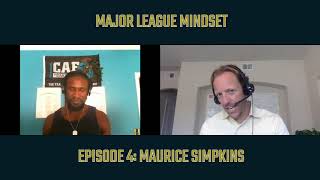
Andy Neary talks with Maurice Simpkins about the mentors who shaped his path from arena football to the NFL and into IT consulting. Simpkins credits his grandfather and IT director Barb Gill as key influences who taught him perseverance and preparation.
Chapters
Welcome back to Major League Mindset. This is episode four. I am overly excited to have Maurice Simpkins on today. If you don't know who he is, you are about to hear one of the craziest stories of how an individual got his way, earned his way to spend time in the NFL. Maurice spent time with the Rock River Raptors back in 2008, the Green Bay Blizzard in 2010, two professional arena football leagues, and then found himself playing with the Green Bay packers and the St. Louis Rams. I'm super excited to have him. Maurice, welcome. How you doing?
I'm doing well. Thank you, Andy, for having me. Thank you very much.
Awesome. Well, more importantly, Maurice, you are also the founder of AM Simpkins, an ERP consulting firm. So why don't you start by telling us a little bit about your business today?
Okay. Yeah. A.m. simpkins and Associates is a higher education focused consulting firm. We maintainly do or mainly do work working with the Ellucian colleague, ERP performing the works of integrations development, but providing all of the consulting needs within the world of higher education, IT administration.
Awesome. And so you focus on higher education specifically?
Yes, sir. That's the main area that we work on. Again, you know, stories from my grandfather. He told me that, you know, working in education or working somewhere within the funeral system would be a great way to make sure that I had a funneled path of guaranteed work in front of me.
All right, let's go. Let's start right there. Let's start with your grandpa. You know, he's been a big mentor in your life, and people right now may have just heard what you said about working in the funeral services and. Gone, huh? Take us back to your childhood, and you had a lot of graveside chats with your grandpa, and you can explain why that is. But I want you to hone in on that one specific story. That day, that hot day in South Carolina when you were digging a grave for your grandpa. Why don't you take us there?
Yeah. So I originally started, you know, digging graves with my grandfather when I was about 11, but this had happened when I was around 10th, 11th grade. So it's probably 15, 16 years old or so, but my grandfather takes me out and we're out, and we're in the area that kind of like I call sand land, kind of. It's not a very hard area. The dirt's not too hard. And we're going out and we're. There we go, we set up the tents and everything. And I've noticed that the guy who usually Brings the tractor in. Mr. Stanley is yet to arrive. And so, you know, after we have the tent set up, we rope it off, we get ready to just take the top layer of soil off, what most people call sod, Take the first layer of dirt off so we can get to the dirt. And Raphael looks around, said, well, Mr. Stanley's not here. I'm gonna get in the truck and go find him. You start digging until he gets back, until we get back. And then you will see what happens. Have Stanley come and help us finish it out. And my grandfather was gone for about three hours, probably longer. I mean, as a kid, it seemed like forever in a day. It probably was longer than three hours, truthfully, because I literally dug this entire grave. I started. I mean, I did mentally what he told me to do. You started wanting to work your way around, but I dug out the entire side of it. And I was probably 3/4 away done. And my grandfather and one of his friends pulled back up and they got. They pull up in the truck and the guy looks over, so on the passenger side and looks over to me, and I'm about, you know, well over, waist deep into the grave. He says, andrew, which was my grandfather's name. He says, I think that boy spot got the whole dug. Grandfather kind of smiles and drives on straight to the shade tree. That was all he did. I mean, sat there, got out of the truck, sat on the back of the truck. The guy brought me a little snack. I just had, you know, Coca Cola, some crackers and a sandwich type of thing. I eat that. And then I look and he's gone. He's walking back over to where my grandfather's at, and they're sitting on the back of the truck, legs swinging. I'm sitting here with this shovel in my hand. So I was like, I guess Mr. Stanley gonna be here sometime soon. I keep digging them, looking around, and before I know it, I'm like, literally, the grave is what I would call a done grave. It's where if we were digging with a shot, with a tractor, with the backhoe, the backhoe would now pull out and we would jump down in by hand and do it. So we're about at that point when my grandfather and his friend walked back up and they got their little spade shovels, which they're little flat shovel to kind of edge the grave out. And my grandfather looks at me and I look up at them with this strange look on your face, like, now you come and I'm done. He hands me the shovel. He says, you Want to do this too? And I'm like, yeah, I might as well. So I get the shovel and I'm doing it. He's kind of showing me how to do it. It's my first time ever doing it by myself. And it's. The ground is softer, so to cave in a little easier. You had a different technique with doing it. I do that. Pack it all down and never really, you know, thought about what I had just done. I just was doing what I was told to do, what I knew to do. And like I said, we was on the way home, and my grandfather looked at me and he kind of. And he looked at me like. I mean, my granddad didn't really say. He didn't have, like, these Dr. Clouds type, you know, talk to you moments. But he would give you this look when you knew he was gonna say something to you. He was like, don't ever say what you can't do. I was like, what you talking about, granite? He said, you just dig that hole by yourself. I said, yeah. He said, a couple days ago, I was like, oh, come on, granddad. Here you go. Because a couple, few days prior to that, I had made a statement that said I would never dig a grave out in this hot heat by myself. I said, that's slavery type things. That's not what people do today. And what my grandfather was trying to get me to understand was doing that out there wasn't slavery type things. It was about having mental fortitude. And when I was there, there were some times when I wanted to just put the shovel down and say, I'm gonna sit here and wait for them. And even when my grandfather showed back up, I kind of was in between. Do I take a rest with them and they're gonna come join me or. I know my grandfather, he expects me to continue to work type of thing. So I did it. And I. From that, you know, that lesson, he kind of showed me that it's a mental thing you're going into, whatever it is. Don't let what you see, you know, get you down or beat you before you actually get out there and make it happen. Because mentally, if you can take yourself and have yourself prepared, then you know, you're well ahead of the game. And I did that in everything in life. I did that in football, watching film. I was the kid who was doing tendency charts with Excel in high school. That was. That was me. You know, I did it in business the same way. And so that mentality has really permeated through all the phases of My life, be it sports, professions or, or even just, you know, family life, the likes.
That's awesome, Ray. So let's start with that mindset, because I feel like that mindset then led you to a very, very successful high school football career in South Carolina, which gave you the chance to play football at Coastal Carolina, where you were a linebacker. But if you folks watching this video were to look at Maurice's LinkedIn profile, you'll notice something really interesting. Maurice graduated from coastal Carolina in 2006. He didn't sign with the Green Bay packers until 2010. So, Maurice, let's go back to that four year journey. It wasn't all paved. The way wasn't paved for you to NFL stardom. You had to learn how to be both an athlete and a businessman at the same time. And there was one person I think you mentioned had a really big impact on your four year journey from playing with the Rock River Raptors to getting a chance to play with the Green Bay Packers. So tell us a little bit about Ms. Barb Gill.
Yeah, so, you know, one of my. I graduated again in 2006 and I touted myself pretty heavily. I was a football player, but I really, really touted on my 2 degrees here. As you can see, I had a computer science degree and a business management degree. And I was like, okay, I'll find the job of my dreams where I want to work. And what I have been more fortunate to do was to find the bosses of my or the directors of my dreams. Because every IT director I've worked under has been absolutely perfect. They're the type of people that I mimic my life after to the point of where my most recent IT director I'm actually trying to hire as the vice president of my consulting firm. What Ms. Barb did for me was set the bar very high. And she did that by, you know, I started working there out of school, and again, I didn't have very much. I was a college graduate with very little. And so I made it work, going back and forth to work with, you know, with the little means that I had. And one day one of my friends who had played running back with me at Coastal Carolina called me and gave me an opportunity to say, hey, let's go play arena football in Illinois. And I was like, wow, that sounds like a plan. I would want to play ball. It wasn't much money, but it was something I wanted to do. But I had the commitment of working at that moment. And so I had to formulate, you know, get the gusto up to go in and talk to Ms. Barb Gill, who I had so much respect for. And I sat her down, I was talking to her, and I was like, you know, football is my dream. You know, I love computers. I love. I really love what I do. I love this job, but football is my dream. And, you know, she talked to me about some things, about life and, you know, talk to me. So. Well, you told me that, you know, computers were your dream as well. And I said, well, they are, but, you know, football is, like, right now, and in front of me. And she really coached me through some things. And, you know, that conversation ended, and I went away feeling like, oh, my goodness, how is she going to accept it? I don't know. But, like, a couple days later, she calls me into her office, and we're sitting there, we're having a conversation, and she says, maurice, I hear you. You're pretty good at football. You know, I asked my son, I asked my husband, a couple guys said, yeah, you had a pretty good career at Coastal, and I guess so. People are calling for you to play. You must be pretty good. She says, but I want to let you know you're pretty good at what you do here, too, and I don't see a reason why you have to leave if you're going to go play football. And I was like, ma'. Am. I was like, but it's in Illinois, and we're in MYRTLE BEACH, S.C. that's not gonna happen like that. And she's like, well, let me. Let me talk for a second. And she's. As she's talking, she starts pulling out. This laptop is IBM ThinkPad. And she's opening. I got chills. She's opening the zipper to a laptop bag. She slides the laptop inside the bag, and she's just talking to me about life and things. Then she looks at me and she says, well, Maurice, why can't you live both of your dreams? She's like, why can't you be a football player and a computer program? And I was like, well, Ms. Barb, I mean, I don't. I don't know why I can't. She says, well, you're gonna have to tell me that you can't because you're not leaving in. The company was called Builders First Source because you're not leaving Builders First Source. You're gonna take this computer with you. She did. She stops as. You have Internet connection? I said, yes, ma'. Am. Have any connection anywhere I go. She's, well, you're gonna take this computer with you, you're going to connect to Internet connection. You're going to continue your responsibilities every day. She says. Now, I do recognize that Chicago is on a different time zone than we are, so you're going to have to be understanding of that. And I was like, yes, ma'. Am. She had all of this planned out because she wanted what was best for me. And so not only did that show me how to be an employee, but in my. The days when I became a director and had teams working underneath me, that was one of the very first things I said to everyone on my team, like, what are your dreams? I am here to help you facilitate your dreams coming true. Because that's what Ms. Barb did for me. And she was, in her eyes, nothing more than an IT director to me. But in my eyes, you know, she really inspired me to say, I can be that student athlete for life. I can. I've been a student athlete all my life anyway, since I played Little league football at seven. I can now go into my professional career and be a student athlete or professional athletic athlete and not just be in the world of athletics, but be a professional in it and the world of business and combine that with the world of football.
Oh, that is so awesome. In the lesson she taught you about the. Yes. And of life. Right. You can't have this or that. How about this and that? And that ability to expand your mind to not only chase your dream, but ultimately chase what you're doing today, which is that successful business we know as AM Simpkins. I mean, I don't think you would. Would you agree you probably wouldn't be where you are without that ability to continue being a programmer even while you are pursuing your dreams of professional football.
That is true.
Yeah. And so let's. Let's now you had a four year journey in professional Arena Football League and even had a gap in between playing for the Rock River Raptors and the Green Bay Blizzard. Take it to 2010. The Green Bay Blizzard season had just ended.
Okay.
And walk us through, walk the audience through the day you got that call.
And what lesson you Learned in your 2010 season. Spending time both with the Green Bay packers and the St. Louis Rams.
Okay. So it was, you know, the end of the season with the Blizzard ended somewhere around June. And since I was working as a consultant and I worked from a computer, I could work from anywhere in the world. That's what I tell the kids when I talk. And you know, working for anywhere in the world for me was Green Bay, Wisconsin, because I continued to Train, and I would continue to work out, try to get better. So I would wake up in the morning and set my setup on my computer, and then I would go to workout, and I would train for four or five, sometimes six hours. I would have done BB House of Speed with Mr. Scotty Smith and BJ and they transformed me, getting me really, really fast and building out my ability to be faster. But every day when I would leave, I would shoot home. And I probably wouldn't leave anymore for the rest of the day because I would go into my house and I would pull up the computer, and that's what I did. It was fun for me. It. It was my life. And that's what I was doing on the morning of August 10, 2010, when I got a call from Elliot Wolf, who, at that time, we had had some interaction. I had sent him YouTube videos of every week when I. When I made great plays. Every week of my game film, I would send it to him. And Elliot reached out and gave me a call and said, it's about 9:45. He said, hey, Maurice, what are you doing? And I'm literally sitting at my computer writing a program for a school out in Colorado, I think. And he says, I was like, well, I'm working. Like, what's going on? He says, well, are you in Green Bay? And I said, yeah. And for me, that statement was a lot, because my computer, my IT world, is what allowed me to remain in Green Bay. Because most of the players, at the end of the season, you know, it's, you know, arena ball, they leave, you know, minor leagues, you're gone after a season, there's no more place to stay. Yeah, but I was able to do that because I had a job. I was able to pay my own way and have a life there. And so I was like, yes, I am. He says, well, you know, we've had some linebackers go down, and we're bringing some guys in this morning. If. If you're available, then, you know, I think this is a perfect opportunity for you to at least say that you gave it up, that you gave it all. You got me. I mean, you can't. You can't tell me that I didn't give you opportunity. That's kind of how he was, you know, talking. We joked back and forth a little bit. I say, sure thing, man. I mean, cool. Yeah, I'm ready, because. All right, you may be here at 10:30. And I was 45 minutes. I'm like, I'm literally sitting here writing a program. He's like, Well, I mean, 10:30, we'll see you then. Told me to call him when I got there. He'd bring me in the gate and that was that. I got over there. I called my mom, of course, and calls people. I got over there and I worked. You know, they brought me in. And in that moment, I was a little starstruck. You know, it's your dream to play in the NFL, and then you walk into one of the most, you know, historic NFL franchises of all time, and, you know, you're in the locker room and you walk in and you walk past the super bowl trophies and your sitting there and you got all these. The greats in the pictures, and you're. You're just, you know, your bubbles and your agenda just going crazy inside of you. And then they take us over across to the practice field. And I'm still all nervous because, you know, when I was in the locker room, all these guys had like, NFL paraphernalia. Like, one guy had just came from the Patriots, was coming off an injury. Another guy was like, yeah, I spent a few years in the NFL. I was like. And I realized out of the four guys who were working out, I was the only guy who did not have enough of experience before that day. The only guy. And the only thing that kind of, you know, kind of kept me grounded at that. That specific moment, because I got to be a little timid, was, I mean, everything I've ever really, truly, truly, truly put my all into has in some way shape or form come true. I'm a blessed individual to say that in my life, every dream I've set for myself has come true. I can't say that it's because I have, you know, this relentless work ethic to say that anything I'm going to go for, I'm going to go at it. But that's just how I was. And so that kept me a little calm. But then when I got to the NFL, you know, over to the Green Bay packers practice field, and you see everything and you're in the green and gold and, you know, and you're there and you're like, wow, this. I'm on the field, you know, I'm about to work out, and then, you know, Coach Kevin Green comes in, and I'm from South Carolina. You know, I was. I was young when the Green, when the Carolina Panthers came to town and Coach Green was a staple as a linebacker there. So I idolized. I grew up as a safety, as a high. I didn't want to play Linebacker I was, I was. I thought I was too small to play linebacker. I thought I was a safety. But when I became a linebacker, I watched a lot of his film. I watched a lot of how he played and a lot of his antics, you know, a lot of his energy. And I tried to take that into my game as a linebacker. And so I'm standing there and it was almost like the reverse of like a starstruck moment, because when he walked in and started talking to me, it's like I snapped out of that. Oh my God. I was like, oh, it's time to play football. Like, this is Kevin Green snapping his fingers in front of me and saying, are you ready to go? Are you ready to go? There was nothing else to do but go out and perform. And so I went out, I performed with everything I had. Literally everything I had. I ran the fastest 40 I had ever ran in my life. The fastest 3 cone drill I ever ran in my life. I had a out of body experience. And at the end of that, you know, they told us, okay, we'll let you guys know something, you guys can, you know, go on home. And I got in my car and I drove back to my house and no joke, I opened my computer back up, call my mom. I said, they didn't sign me, so I must have gone sign one other guys. I called one a couple of my friends. I said, man, I heard nothing back. So what you gonna do? I said, work. What you mean? I wouldn't finna do. I got my computer on my lap. I got my computer started back working and it was a couple Hours later, Reggie McKenzie, who ended up going out to the Raiders, and Reggie was a fraternity brother of mine and he gave me a call, he said, hey, you know, young man, I just want to talk to you about your demeanor. He really gave me a lot of compliments on how I carried myself when I came in. And you know, and it really, really, to me, it was, it wasn't really accommodation on myself. It was more of my upbringing. Like I could hear him saying, you, we see a good guy in you. And he was saying, you know, telling me some things about myself. And he said, you know, we actually wanted made the decision to think that you thought that you were the best player earlier today. But Ted Thompson was on. Was out on a scouting visit and was. We weren't able to get in touch with him. So we've been able to confirm with him. And I just want to let you know that you'll be the newest member of the Green Bay Packers. And I was like, oh, my gosh. Like, oh, my gosh. The second time I never. And this is really the second time I never set my computer down. This was. And this was what was funny. I never shut my computer down that second time. And I called everyone. I called, like, you know, I called the people I was working with, the consulting firm I was working with, and I call everyone else. I say, hey, you know, I just got signed to the Packers. Like, it's for real. I am on the team. I got to be at Lambeau at 12:30 because they're going to fit me out and do like a news conference. And, like, I'm a Green Bay Packer. And everyone was like, what? Oh, wow.
Wow.
And I just left my house, you know, just literally left, got ready, got all my stuff together, went dry, drove by my homeboy's house, tell them, man, I'm about to be a Packer. Come to practice today. Come to practice today. Come to practice. And the whole. All the arena guys who were still there, they all came out and, you know, came to practice with me and everything. And that, you know, that whole experience as a day was just something for me, you know, as a whole. And I went to practice that evening and in that first practice, and I've been a part of some great, great, great football teams. I played for some great coaches, and again, I've been blessed with some great IT directors. So I seen structure, I seen productivity, I seen a lot of things. But the regiment of discipline and the way with which it was an understood culture in Green Bay was something that was leaps and bounds ahead of anything I'd ever seen, to the point of where in our very first football practice, after our first practice, I called my mom and told her. I said, mom, the Green Bay packers are going to win the super bowl this year. My mom, being a Steelers fan, wasn't really hearing it, but I was like, hey, we're going to win the super bowl this year. That's. I mean, it was just that good. And later on in the year, I get released and I find myself in St. Louis. And the structure and the culture in St. Louis was completely different than the structure and the culture in Green Bay. And you could see the difference in Green Bay, you know, packers being a Super bowl winning team in the 2010 season, and, you know, the team of the St. Louis Rams missing out on the playoffs. So for me, I was able to see what worked, even in the industry that I didn't find. I didn't see myself in for a very long time or something that I thought I would really be a great in. I've actually gotten to the point where I was satisfied with being a computer programmer who told stories about his time playing football.
And that's such a huge identity shift a lot of former professional athletes can't make right. And it's so what that key message I took from that story was not only your persistence man four year journey through professional arena league football to thinking your career was over computer programming. And here you are getting the chance to play with the Green Bay packers. And unfortunately that year you split time with the packers and the Rams didn't get to win the super bowl with the Packers. But such an important lesson for sales teams out there to know that ironically, wasn't it interesting that the packers were one of the most prepared teams you had ever been a part of and they won the super bowl that year. Wow. Preparation equals success. So let's finish up with this, Maurice. Here you are running a successful business. A.m. simpkins, if you were to give one or two pieces of advice to a young sales professional, knowing what you went through as a professional athlete to now running a successful consulting business, what would those one or two pieces of advice be?
For me, the number one thing is going to be taking the cerebral side of yourself and applying it to everything that you do in the sales world. So like for me, for instance, I was a linebacker and I wasn't the fastest, I wasn't the biggest, I wasn't the strongest. But I had, you know, crazy work ethic and I was intelligent enough to look at football from a different side. I looked at the tendencies and I watched film. So I would sit down with film and I would sit down with film and I would not only just watch the film of the team, but I would watch the specific player who was going to be blocking me or the specific player I was going to go against so I could see how I fit into beating that player. And I took that approach all the way through the NFL until the point of where I watched film relentlessly. Whether I was on the practice squad watching film against our team to make them better, or getting ready to prepare for the team, watching film, understanding tendencies, knowing things about people in the business world, it has translated for me as a one to one directly. I can't ask for a more perfect setup because I now if I'm going to, you know, if I reach out to a higher education executive, be a CIO or president or someone like that, I have before I get on the Phone with them or send that send button on the email. I have researched them as if they were, they're starting running back on the opposing team. I know all of their tendencies. I know when they lean left, when they lean right. I may know their kids names, I may know their vacation home locations. Like I go out and I try to find everything I can about them because I may be having a conversation and we may just start with something like, hey, yeah, you know the weather, so and so, so and so. But I might have looked up their location, their campus on Google Earth in South Hall. Man, this campus is beautiful in this time of the fall and the leaves are falling. And so when they bring up the weather question about how's the weather, I say, yes, it's okay. You know, Atlanta's not too pretty in the fall time. But I'm sure your campus is just blaming with gorgeousness, with all the flowers and all of the, you know, the leaves falling right now and making, making it a beautiful scene. And then that they're like, wow, you know, then at that moment they've gone from, okay, this is a sales guy, to okay, this is a conversation. And then from a phone, this is a conversation, you start talking a little bit more. And if you know what you're talking about, then you can talk to get them to that point where, okay, this is a comfortable conversation. And once I can get, for me, when I get a client to that point of comfortable conversation, they usually start to ask me about football. And they'll say, well, how did you mix football and it. That's when I know I've gotten them to a comfortable conversation. And from that point, my only other goal is to get them to a continued conversation, for them to say, man, we got to continue, we got to talk again. If I say, if they can say that within our first call, then I know that I am. I have done what I needed to do in that call. So that's really how I use the cerebral side of being a linebacker with how I attack the business.
Here's what you're saying, Maurice. If you're in sales today, especially with social media, you have no excuse to not be prepared. I mean, there is so much you can find about people today and do research on folks and the companies you're going to be meeting with that there is no way you should have the excuse of not being prepared when you walk into a sales meeting. Guys, if you're out there watching this video, I hope you were taking notes today. I mean, this thing could have easily been 60 minutes. But Maurice, his story, his journey, his career is all about preparation, having the mindset of never giving up, knowing who you are and doing your homework. If you're in sales right now, you need every single one of those things if you want to be successful today. And to top it off, Maurice, we was a programmer and a professional football player at the same time. You know how productive you had to be to do both effectively. So, Maurice, last thing, last question for you is if somebody watching this day wants to reach out to you, how can they best get ahold of you?
They could reach out to me via email. My email is M. Simpkins MSA Consulting, spelled M S I M P K I n s@amsaconsulting.com or they could find us on our on our website at www.amsa-consulting.com or follow my nonprofit Andrew Simpkins Innovation foundation@theAsifoundations.com as well.
Awesome, Maurice. Thanks for your time, man. I really appreciate this. This is one of the best interviews I have done and probably will do. So thank you for your time. Folks. If you're out there listening, remember, if you're in sales, you're struggling with where you are today. You are always just one mindset. Shift away from greatness. That's it. This is all for week four. Episode four. Stay tuned. We'll see you next week.
More from Andy




If you want producers to succeed faster, help them create a sales message that creates confidence.

Sales isn't a zero-sum game! You can have tough competition and still grab a beer after



Option 1: Meditation, a fast walk, a podcast, and protein. The ultimate morning routine!

How you do one thing is how you do everything. Ill elite producers fuel their body.


Stop living in the gray of maybe! Your job in sales is to get a clear yes or no