Why Former Athletes Make Elite Producers with Hunter Kinchen
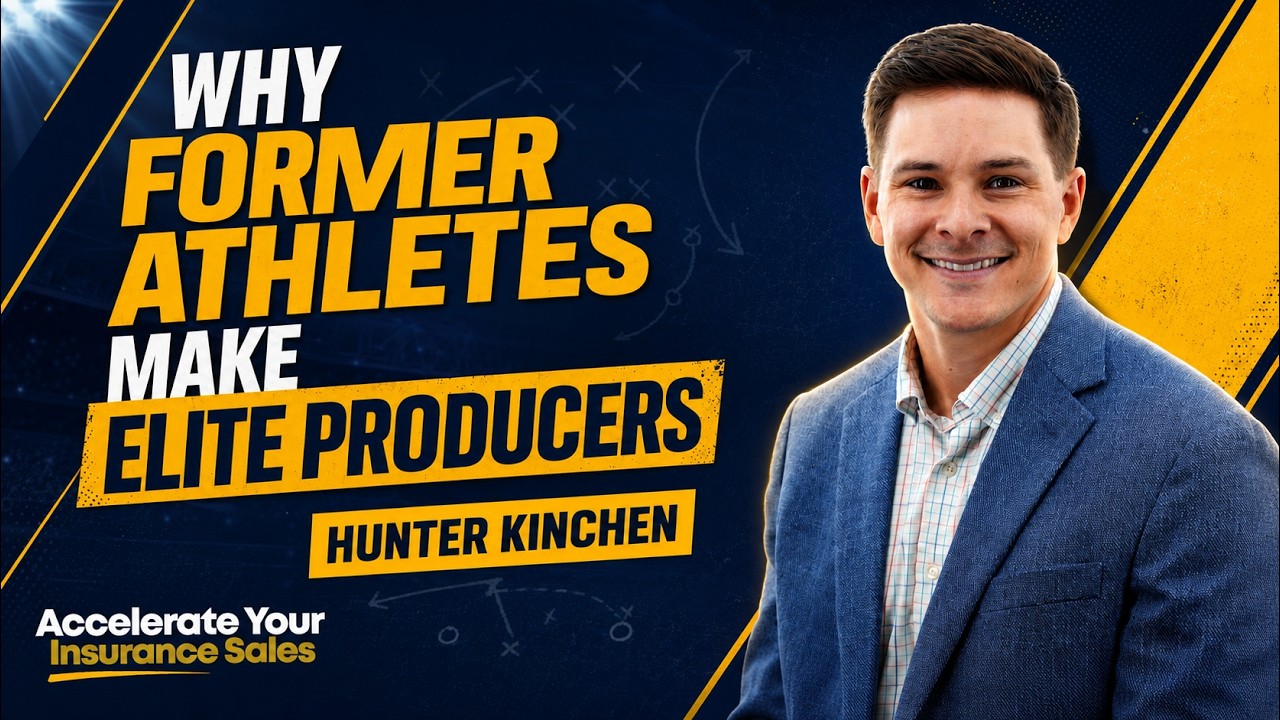
Hunter Kinchen, a former LSU football player turned vice president at Higginbotham, explains how the athlete mindset—preparation, feedback loops, relentless drive—translates to selling insurance. He transitioned from coaching to benefits sales after a State Farm agent suggested it, and now emphasizes that agencies should hire for integrity and character over sales experience, traits that are hard to teach.
Chapters
I think you can teach somebody to sell insurance. I think you can teach them the technical side of the business. I think you can teach them how to service accounts, but you can't teach them how to have integrity, how to do what they say they're going to do, how to follow through. You can't teach that. That's things that are ingrained in who you are as a person.
Hey, hey, welcome back to the Accelerate Your Insurance Sales podcast. Andy Neary here, CEO and founder of Complete Game Consulting, where we help you sell insurance with confidence and conviction. I'm excited today. I am joined by Hunter Kinchin with Higginbotham. Hunter brings 10 years of experience in the employee benefits industry where he focuses on helping organizations design and implement strategic long-term benefit solutions. In his role as vice president, he manages a portfolio of clients partnering with growth-oriented employers to develop self-funded and captive programs that improve plan performance, manage costs, and align with broader business objectives. I'm excited to have you here. Have you on today, uh, Hunter, not only because of what you do in the embedded fit space, but we're going to talk a lot of sports today. So welcome aboard, man.
Yeah, man, happy to be here. Appreciate you having me.
You bet. Well, let's start— let's, let's— we'll get to the insurance stuff here. You know, whenever I get a chance to have a former athlete on the podcast, I always kind of nerd out because I love to talk like athlete mindset. And with you, it's going to be really fun because you come from a bloodline of athletes. You know, growing up in Louisiana, you played football at LSU, which we'll talk about. You have a father who played in the NFL for 12 years, also played at LSU. Let's just, let's dive right into, to that, Hunter, is, you know, growing up with a father who spent 12 years in the NFL. And if you're an NFL football fan, Brian Kinchin was Hunter's father, played wide receiver in the NFL. What did excellence look like in your household?
Yeah, my dad played and executed at a very high level in his career, and so expectations on us as kids was, was to do the same in a lot of areas of our life. Um, I had one older brother who was 2 years older than me, and then, and then 2 younger brothers. Um, and yeah, we all, we all played sports at various times, but yeah, there was always Um, you know, my dad was always, when it came to sports especially, was always focusing on the fundamentals. Um, you know, he would talk about doing the little things the right way. And, um, you know, it wasn't always about how fast you were, how high you could jump, um, you know, but it was about, you know, when you, when you go to catch a pass, are you gonna, are you gonna catch it with your hands and not with your body? Um, because that's what's going to produce long-term results, you can replicate that. And so he would kind of drill those things into us, just doing the fundamental things, the little things the right way. And that was just not just in sports, but carried across a lot of things. You know, having a dad in the NFL, we were still as kids, like we would cut the grass. Like that was part of our jobs as, you know, being in the household, obviously with my dad being gone sometimes that, you know, we would have to take that over and kind of be the men in the household in some ways.
So what was, you know, I think about, you know, if you had a dad, it's one thing to have a dad who's a professional athlete, right? But playing a skill position like wide receiver, so immediately you think tremendous athlete. Like, this— being a kid in that house, probably more in the offseason than, than the regular season, What lessons, or is there a lesson like your dad taught you more through his actions than his words? I think when we think about having a parent like that, it's the lessons they teach you, you know, through their words. Did you learn a lot just watching how he applied, how he, his, how do I say this, I'm saying this wrong way, his actions towards how he got himself ready for an NFL season?
Yeah, so Small correction, my dad was a tight end, um, so he was a— yeah, he was a skill position, but obviously like spent a lot of time in the trenches as well. And so, um, my dad was— yeah, from, from an action standpoint, you know, he was, he was always getting up, showing up, and, and that was a big thing for us is like he would, you know, in the NFL you got to show up for the job, you got to be there on time, you gotta you know, do the little things right. And a conversation that we had a lot and we heard him have a lot with other people is that in the NFL, there's always somebody behind you that's waiting to take your job. Every day you show up, there's somebody waiting to take your job. And so he knew that if he wasn't executing on what he was, what his responsibilities were in producing the results, that there was somebody sitting right behind him ready to fill in and slot in, and they could replace him in a heartbeat. And so I think that, that idea, that mentality, you know, that, that sticks with you. And so, you know, obviously from, from team to team, you always know that there's another guy waiting behind you. So if you're not producing, so just, yeah, producing the results and doing the work, not just on game day, but showing up for practice and executing in practice. Making sure he had an understanding of the offensive schemes and the game plan for that week and, you know, playing his role in the organization to help the team be successful. So my dad wasn't, you know, you'll never find him on like the most yards, most catches, most touchdowns list or anything like that. But he knew the role that he had to play on the team and he showed up and played that role.
Yeah, I actually, you know, I nerd out about stats. And so when I was getting ready for the show, I looked up some stats. He had some good years. I mean, with Cleveland and Baltimore, he had some really productive years.
Yeah, he had— I think Cleveland was probably a couple of his best seasons. Um, but yeah, he did— he— yeah, he did, uh, had some good seasons, had a few, uh, you know, big plays and some big games.
So yeah, I, you know, having a chance to play professional sports for a very small sample of time, you definitely, even in the minor leagues, you know, when I was in baseball, you feel the business side of sports, which is to your point.
Yeah.
Every day there's somebody behind you trying to take your job.
Yeah.
And if you don't show up, it's really easy for that person, you know, there's somebody who wants to take you down. And it's a weird feeling because it's a teammate. But at the same time, like I said, like you said, it's that, you know, every day I don't care how good you are, there is that pressure that somebody there to take your job.
Yeah.
And, and I'm curious, as a young athlete growing up in the Kinchin household, because your dad was an athlete like that and a well-known professional athlete, did you feel the pressure at all to perform because of that?
A large part of my life, um, from like when I started playing football in 5th and 6th grade all the way through 8th grade, my dad was actually my coach. So, um, yeah, so there was, there was obviously pressure, um, you know, not just to play a sport but to be good and compete and, um, you know, obviously be a good contributor to the team. And I would say I think most of those years I was, I was like a pretty prominent position. I think I played quarterback most of those seasons, um, just because that was the guy that was in control of the offense and making the decisions. And so, and we also had, I would say, maybe the most complicated middle school offense of any team ever. I had a wristband of like 100 plays, and it was all these— I can't remember all the names of them, but yeah, we probably had the most complicated offense of any middle school team.
Um, was your dad responsible for that complication?
Yes, for sure. Yeah, and I mean, it was, it was simple schemes, but it was, um, you know, we brought a lot of, a lot of different aspects to football that you probably don't get exposed to at that early of a level. Yeah, so, um, but it was— I, I understood it. I mean, obviously I had my dad kind of drilling that into my head from an early age, so Yeah, it made sense and we had some success, a lot of success because of it, so.
Yeah, yeah. Well, you know, I had a father who was a head coach, you know, of my baseball team in high school.
Yeah.
Not to the, you know, degree of an athlete as your father, but having that father as a coach, I think the lessons I learned from playing for him, in high school, I still— there's a lot of lessons there I still apply today, 30 years later. And so I think anytime you get a chance to play for— I'll say this— play for your father, as long as the father is not using it as an opportunity to, to make sure their child plays, because unfortunately I think that happens with coaching these days. But having a father who does have that skill, that level of knowledge, is so impactful on your life for sure. Um, Now you ended up playing wide receiver in high school, correct?
I think early high school I was running back, eventually transitioned into a wide receiver role. Um, okay, yeah, more of a slot wide receiver. Um, we ran an interesting offense in high school called the wing T.
We ran that in high school as well.
Yeah, very, very old school. Um, yeah, wide receiver doesn't get a ton of action in those sort of offenses, so I had to take advantage of the opportunities that I had.
So this episode is brought to you by True Captive Insurance. What if you could take full control of your healthcare strategy without the financial burdens of traditional insurance? At True Captive Insurance, they make that possible. As the only captive in the nation that puts up the majority of collateral on your behalf, they provide financial flexibility from day one, making them an advocating partner for their customer success. True Captive's Fully customizable plans and cost-saving strategies ensure you never have to choose between affordability and quality care. It's time to break free from the limitations of conventional insurance. Take the next step today. Visit TrueCaptive.com and discover a smarter way to manage healthcare. That is TrueCaptive.com. We, uh, you ended up— so you end up, you end up walking on at LSU, right?
Yeah.
Here's what I would love to learn, man, and doing some background research, you have two brothers, right? McCain and Austin.
That's right.
Did I read all three of you? So you came to LSU as a wide receiver, but if I read correctly, you transitioned into a long snapper, as were your brothers.
Yeah. Yeah. So my older brother Austin was— we were actually at LSU at the same time.
Andy Neary.
Okay. He was a linebacker and, you know, deep snapping was kind of like a, you know, some, some people now have, I'd say it's more common now, have just a deep snapper role. But in a lot of cases, you know, you'd have a dual role guy. You'd have somebody that's a linebacker that also plays deep snapper. Most often you'd probably see a center that plays deep snapper or something like that. Um, I was a wide receiver playing deep snapper, so probably not exactly the ideal build for an SEC football team. But, um, but yeah, so it was, it was kind of a dual role. Um, I would say, yeah, probably towards the end of my career in college, I was gravitating more towards long snapping because I knew that was probably my best opportunity to get on the field. Um, but yeah, my, and my younger brother as well, he actually ended up playing at Northwestern State, um, in Natchitoches here in Louisiana, but he was a deep snapper as well. Um, so yeah, we— it was something my dad taught all of us to do. And, um, just, yeah, it was easy, easy skill to learn when your dad's done it at a really high level.
So was your dad— had your dad done some long snapping?
Yeah, yeah, he was. So he was a tight end, um, and at some point during his career in the NFL picked up deep snapping.
Um, okay.
You know, he'll, he'll tell you that's He thinks a lot of the reason why he was able to play as long as he did is because he had that dual role. Um, and so it was a lot easier to keep a deep— a tight end on the roster that was also your deep snapper than it was just to keep a tight end on the roster.
So I've heard other guys say that, that played in the NFL, like a wide receiver who also is a very good special teams guy. It is a great way to ensure you have a job, that you bring more value than just that one position. I equate long snapping to a left-handed setup guy in baseball. So the left-hander that comes in to face the lefties, you do that one thing well, you can have a career, a long career at the professional level.
Yeah, it's, yeah, it's an interesting position. And, you know, it's typically a position that doesn't get noticed unless they do something wrong. So that's always the, that's always bad side of it is, you know, you throw perfect snaps every game, everybody's like, oh, the kicker's making all of his field goals, you know, it's great. They're never talking about how great the snap was.
But yeah, no one ever says, wow, that snap was perfect.
Yeah, yeah, it usually— if, if they are saying that, it's usually a former deep snapper or somebody that was a part of a special teams unit.
Yeah. Well, I got two questions about Planet LSC that I'd love to know, and then we're going to move on kind of from the transition into the business world and then what you're doing today. You played in— I don't, I don't even want to say arguably— you played in the best football conference in college football.
Yeah, agreed.
How did playing at the— in the SEC shape your approach to like preparation? When you're playing at the highest level, how does that impact your preparation, your focus, your performance? Because you, I mean, you look at some of the schedules today in the SEC, it is a gauntlet. Uh, you don't have any days off, right?
Yeah, it's, I mean, it's, it's different. I mean, I would say I was fortunate even in high school to have, um, a strength and conditioning coach that had experienced, uh, Tim Jorgensen had experience at the NFL level and then transitioning from that over to LSU where Our strength and conditioning coach Tommy Moffett just did an incredible job preparing us and getting us ready for the season. And it doesn't start when the season starts. You know, I graduated high school in May, started summer training in May. So I mean, there's— you kind of roll right into it. You start summer school, you start training with the team, like, The expectation is that you're part of that summer training program and that the preparation for the season starts in the summer. So, you know, I would say, yeah, it shaped my approach to preparation by just helping me understand that preparation doesn't start when the game starts. It doesn't start when the season starts. It starts long before that. And so, you know, getting yourself ready and making sure that your body is ready, you're conditioned well, you've got the tools that you need to be able to be successful in the game. And perform in the game. You know, it's, it's not just a— it's not a short window. It's something that you have to think through and do long before you're ready.
Yeah, I would love your perspective because you said your strength and conditioning coach in high school had SEC experience. So I'm sure that— NFL experience. And I'm sure that greatly helped. So I'd be curious when you got to LSU and you started that off offseason training, you know, the work off the field.
Were you—
did you feel like you went into LSU ready for that, or was there still a little bit of a culture shock where you're like, oh man, this is, this is preparation at a new level? Because I think a lot of guys in college, no matter what sport you play, men and women, the ones that fizzle out, you know, you can get away with talent alone in high school. There's a lot of people that can just show up and dominate because of talent. But when you get to the collegiate level, if you're not putting in the work off the field, I don't think you can succeed.
Yeah, no, I agree. Yeah, the transition was— it was, it was a little bit of a wake-up call. There were certain aspects of it that were like, man, I did not know this was the level of intensity. But in terms of the, the summer training and the workouts, I guess I probably had a little bit of a cheat code because my brother was already at LSU.. And so going into summer, I was like, in the spring I was like, hey, what do I need to be doing now to make sure that I'm ready when I come in over the summer? Because I, you know, we had conditioning tests and, you know, max out days and stuff like that, that I was like, hey, I want to be, I want to be ready for those. And because I don't want to be the guy that's dragging everybody else down, because a lot of our conditioning tests were, hey, if there's one guy that's not making his times or there's one guy that's lagging behind, the rest of the team is going to suffer. And I was I'm not gonna be that guy. So I would say I had a little bit of a lead-in with some preparation. I had kind of a program that was, hey, going in, this is how you should prepare, what you should be doing. So I was doing that stuff a little bit early. But yeah, there was definitely some aspects that were a wake-up call. We had this thing in the spring that was called Fourth Quarter. It was kind of a part of our spring training program that was, it was very intense and we did it at early mornings. And yeah, there's still mornings where I wake up and I jolt up out of bed and I'm like, "I miss workouts." So it sticks with you.
Do you want to hear something funny? I still have dreams to this day that, and I don't know why I have them, but I'm still playing college baseball and I'm always late for a game.
Yeah.
And I don't know why, but I have them routinely where it's like I can't get to the game and I'm supposed to pitch and I'm late and I'm like, so that, that jolt of like, I'm late for practice, I'm late for workouts. I feel it, man. I still have dreams about that.
Yeah, I have those dreams too. I usually also don't have the equipment I need. Like, yeah, I don't have my jersey or something like that.
Where's my glove?
Yeah, yeah.
Yeah. One last question I wanted to ask you, you know, I thought there's actually a really important lesson in what you just said, where, you know, you had the fortunate opportunity that you, you got, you had those assets of surrounding yourself with your father and your older brother who kind of gave you the cheat code a little bit. But I think the lesson there is putting yourself in rooms with people who are where you want to go. Um, that is a cheat code to help you get to that next level. Right. You came in with, a level of knowledge of what it was going to take because your brother was there and he was already kind of telling you, hey man, this is what it's going to take to succeed here. So I think that's a good lesson for others to hear is who— you may not have a father or a brother, but who is that? Who are those people you can put yourself around that are going to— who are where you want to go that can start to help you get that cheat code to make sure you can play at the next level? Great lesson. Here's my last question. I'd love to know because again, I'm— I love college athletics. What was it like running out of the tunnel on a Saturday night game in Death Valley?
Yeah, it's pretty, it's pretty incredible experience. Um, I'm, I'm of the opinion that there's no, there's no better experience for college football than Saturday night in Death Valley. Um, so yeah, it's, it's pretty incredible. It's hard to describe. Um, but yeah, we've got the, uh, I'm not sure if you're familiar, we've got, we've got the Wind Bar, um, that everybody hits when we walk out as we go into the stadium. And actually, uh, one of my clients gave me one and I have it above my door to my office.
So that's cool.
Yeah, it's, it's, it's a really cool experience. I mean, there's nothing like it, um, you know, 100-plus thousand fans, um, just geared up, ready to go, um, ready for some football. I mean, just especially those kind of those early games where it's like, man, we've had this drought of just no college football and now it's finally here. Those are just— it's, it's an incredible experience. And they've, they've even leveled up the stadium now. We've got the whole like strobe light deal, the LED lights and all that stuff. So yes, it's probably even more crazy now than it was then.
So I got to know, man, do you still hit that when you walk out your office door?
Absolutely.
Of course. I knew, I knew you'd say yes. What years? What years were you at LSU? What years were you at LSU?
Yeah, '10, '10 through '12.
So you might have actually been there. Was Les Miles a coach there at all when you were there?
He was my coach. Yeah.
Okay. The most disappointing college experience I've ever had watching a game was at LSU. Here's why. We, we went to LSU to watch you guys watch LSU play Arkansas because we wanted to see Brett Beilema, our former coach at Wisconsin. Get his ass kicked. That's what we wanted to see. And this was literally the game that I think was kind of the downfall of Les Miles.
You got—
we, we come into the same night game Saturday night. I think LSU ends up winning like 31-nothing. That stadium was quiet the entire game. We were like, oh my God, I think we used Arkansas.
So they, they've changed the schedule since, but we used to play Arkansas like they usually were like our last game, the last regular season game. Um, I don't remember, I don't know which season that was, but I think it might have been actually '13 or '14 maybe. Okay. Yeah, yeah, because there were, there were a couple seasons in that 10 to 14 years that were quite disappointing. Yeah. Um, but yeah, my, the season, the season, my last season was, um We actually were 13-0 going into the national championship to play, um, what we were supposed to play, Oklahoma State. And we actually got— that was back in the BCS era where they just picked two teams.
Yep.
And so having to play Alabama, Nick Saban for the second time, and, uh, it's tough to relive, but that did not go well for us.
So yeah, were you part of the— no, I don't— we're gonna get to business here, guys. Sorry, I'm nerding about sports with, with Hunter right now. But were you there for the game? I still remember watching this game on TV. Alabama LSU, 6-3. Um, I feel like that was 2011, I think.
Yeah, 9-6.
And 9-6.
Yeah, yeah, yeah, yeah, yeah, yeah. That was a, that was a crazy game.
I don't think I've ever seen as many 3-and-outs as I saw in that game.
Yeah, it was a— that was back then. Defenses were just Yeah, those two defenses were unbelievable. Yeah, yeah, we had, we had some absolute studs on our defense that year.
Yeah, the, the, the speed of the SEC defenses back in the day was just too, too, too crazy to describe. Um, well, hey man, it's been fun talking sports. Let's talk business a little.
Um, yeah, yeah, what—
I'm intrigued. So college career is over. What, uh, what led you to getting into the insurance business?
Yeah, so I was actually, um, I was coaching and teaching at a local private school here, um, pretty shortly after college. I was coaching most sports— football, basketball, and tennis. And one of my basketball players, his dad was, uh, was a State Farm agent. And I was, you know, the coaching side I loved, but the teaching side I didn't love so much. And so I was just trying to figure out what I was going to do. And so he was like, hey, I think, you know, based on your background, you know, people you know, contacts and stuff, I think you could have a good transition in the insurance space. You know, talk to me about how relational it was and stuff like that. And so I was like, sure, we'll give it a shot. So I started studying and got my licenses and stuff and ended up doing like the personal line side with State Farm. Type place for about 2 years and then a couple of years later transitioned over to the good side of insurance, as I like to refer to it, the commercial side, which is where I started doing employee benefits. So, yeah, it was relationships that got me in the business.
So, I'm curious your perspective because I had a very similar journey. I started with Federated, so another captive. 8 insurance company like State Farm, right? And then made the transition over, over to the independent side and also gravitated to benefits. I sold both for a while but gravitated to benefits. And I think the reason I really did is, number one, I was into health and wellness, uh, but two, I just love the educational aspect of benefits. I'd be curious what led you to gravitate towards employee benefits.
Yeah, I, I don't really know that there's a great reason, but From what I can remember, when I went in to interview with the agency that I was looking at getting on with, I kind of went in with a blank slate. I didn't really know what I would gravitate towards. And the folks that interviewed me thought that I would be a better fit for the benefits space. And from what I was told is that, you know, there's a lot of women that work in the HR space and they think, you know, a young attractive guy coming in to sell them benefits, you could have success with. And I was like, whatever works, I guess.
Where do I sign up?
So, um, yeah, I don't, I don't know if that's a great reason, but that's what I was told. So that's funny.
Well, I would be curious to know this. So it's interesting you bring up a really good point because you still, you're in Baton Rouge still today, right?
Yeah, correct.
So because you played football at LSU, you know, today you're at Higginbotham, right, having a very successful career in employee benefits. But being a former LSU football player in a town like Baton Rouge, does that help you open doors?
Um, it's— so it does. I would say for me, it's, it's interesting because a lot of, a lot more people around here know recognize my last name for my dad and for my uncle, who were both in the NFL and both played at LSU. And so I would say there's a lot of recognition because of that, which, you know, I reap the benefits of. And then obviously, yeah, there's certainly people that I have my own relationships with. And yeah, it's definitely a door opener for sure. It's a conversation starter at the very least.
Yeah. Okay. You know, it's interesting. Keep going, I apologize.
Yeah, no, it's okay. You walk— a lot of times you walk into a business owner's office or a CFO's office and there's an LSU helmet or an LSU jersey on the wall or something, and so you're just like, all right, well, I've got a good conversation starter.
Yeah, it's funny, we, we've done some work with an agency over in Georgia, um, who has two very well-known former Georgia quarterbacks working for him now.
Okay.
And the sales growth chief growth officer was telling me he went on a meeting with one of them and they arrive at this business. This proves the point that your past can open doors, but it doesn't mean you're going to win business.
Right.
They walk into the business and no lie, the entrance into the building has red and black balloons, Georgia Bulldog balloons. They come in and literally the business has set up like a luncheon to meet this guy. Because they're all diehard Georgia fans.
Wow.
So they're like, okay, weird, but whatever. I think he probably signed some autographs. And then I'm not kidding, the chief sales officer looks to the CEO and they said, hey, should we go in your office and talk insurance? And the guy's like, oh, I'm good. I got a broker. I'm not interested. And so it was literally like the name got him in the door. They had no interest in actually doing insurance with them. So The point being, just because you're a recognized name in your market doesn't mean you're going to win the business either. It may open the door, but it doesn't mean you're going to win the business. That's pretty crazy. Yeah, it's a funny story. Well, you do— playing, you know, you've had a lot of— like I said, you've had a lot of success early on in your career. This might be an obvious question, but being a former high-level athlete, where do you think that has helped you in your sales career?
Yeah, I think there's a lot, there's a lot of things with athletics, obviously collegiate athletics, that translate over to success in a sales or performance-based role. It's similar in some ways that, yeah, you put in the preparation, you put in the work on the front end, you know, for a meeting or presentation or whatever it might be in that, you know, that can produce results. And so obviously how well you prepare is how you're going to perform. So that translation obviously works well, but it's, it's somewhat different. And I have this conversation with some of my, the guys that I work with, uh, that I mentor as well. It's like, just because like in, in practice or in a football setting, you practice for the week, you get prepared for the game that's coming up on Saturday. And then you produce results. You either win or lose on Saturday, so you know whether the preparation you put in is going to produce the results in a week's time. So there's somewhat of a short feedback loop. With sales, it's a little different because you don't have— with, especially with, with benefits, the sales cycle could be years. And so you don't always know if the work or the preparation or the investments that you're making are going to produce results. And so it's, it's a little bit different because you don't have— you have such a longer feedback loop. It's a little bit different. So you have to— yeah, I guess experience is really the best teacher. So you kind of have to learn some of that. And I would say that's probably one of the most challenging transitions for somebody in this space is that coming over, it's— you want to, you want to produce results and like you have that innate desire, that internal drive to be successful and perform. And it's not always you come in, you talk to somebody, you close business, boom. It doesn't happen like that sometimes. Sometimes it takes years to really get to the point where you're successful.
Yeah, I, I would agree. I mean, in sports, you can't— you couldn't just show up for the game on Saturday and know how to snap, long snap, right? It's, it's all the work, all the long— all those boring long snaps you put in practice, the game film you watch, the the, the, the hours spent in the weight room. Selling insurance is no different. You can't just show up to a discovery meeting and think you're going to hit it out of the park because you know more about insurance than your prospect.
Yep.
And I think one thing that really separates former athletes from others is that drive to constantly want to get better. You know, we are an industry that, let's be honest, rewards mediocrity. You can be mediocre and make good money. I mean, that was me for the first half of my insurance career. You can be very mediocre but make a good living. And I think that the people who really succeed are the ones who just, they don't, they don't ever take the foot off the gas. They just, they hit a spot and there's like, what's next? What's next? And they're always looking to compete with themselves.
Yeah. And I think I would, I would totally agree with you. And I talk about that sometimes. It's like, there's some people that, that don't have the ability to take their foot off the gas. It's just not in them. And then there's some people that are totally comfortable just pulling their foot off the gas and you know, they're, they're good where they are. How was—
you brought up mentorship, and you know, when you growing up, you had the, the, the, the access to your father, your uncle. By the way, what was your uncle's name?
Todd.
Todd Kinchin. Okay. Uh, you had access to your uncle, your brother, so you had mentors that allowed you to really understand what it took to play football at the next level. When you got into the insurance industry, Andy Neary, did you have access to those same kind of mentors?
Yeah, I think some, some really good advice that I got early on, um, was I was somewhat of a pest to some of the more experienced producers in our office because I was just— I wanted to learn and soak up and get as much experience as I could from other people. And so I would just be like, hey, do you have any meetings I can come sit on you with? I can sit on with you? Do you have calls I can sit on? Um, I would reach out to carriers and say, hey, can I— could we talk about your products? Could we go to lunch? Stuff like that. I was just constantly trying to get in front of people and see if I could just learn from them. And so I would say I had, yeah, a lot of our more experienced producers were very generous enough to let me learn from them and kind of gain some of their knowledge or gain some of their experience by just watching them work, watching them meet with their clients. Watching the renewal process, watching them host open enrollment meetings, stuff like that. I got to learn from a lot of those guys early on. And then, yeah, I had a, a really great boss when I first started out that just believed in me and invested in me and spent a lot of time answering probably stupid questions that I had about little things and whether I could or couldn't do this and, you know, what it would, what it would take to get in front of this person and that person. And she was just great to bear with me, I guess I could say, as I was kind of learning the business.
Yeah, I'd be, I'd be curious your take, you know, and I think about what separates— so what separates a young producer in this industry who's successful from one who struggles? I think you identified two things right there. It's be coachable, seek mentors. What's your opinion on that? What do you think separates a young producer who comes in the industry and has some early success versus a young producer who comes in and struggles for years before they figure it out?
Yeah, I think, um, I think a lot of people put, put expectations, um, over their first 6 months, put a lot of expectations over their first or their early years, um, and I think sometimes those expectations can be crushing and they can they can keep you from, from having success. Because I think prospects feel desperation, and when you're going into meetings and you're having meetings from, from a desperate standpoint, I think that comes across. And I think people don't want to buy or don't want to work with people like that. And so I would say, yeah, just there can be a lot of expectations early on that can be crushing for, for younger producers and I think along with that, I guess in a similar vein, is they expect immediate success. They expect immediate turnaround. Like, you know, you're not always going to be the first person. You know, you might have a, an uncle, a brother, a cousin that owns a business, and you think you're just going to come in and call them and it's like, hey, easy, done, we'll work with you. But that's not the case. You know, this is a very personal industry. You're dealing with people, you're dealing with their, their health issues, you're dealing with their employees. You know, that's not something that a 1-month-old producer is, is going to immediately get somebody's trust on. So you got to prove longevity, you got to prove that you're in it for the long haul. And I think, um, yeah, just showing up and being consistent is what, is what does that.
Yeah, I think, um, Showing up confident you can help people but not have that desperation they can smell. Yeah, I think you're spot on. You have to set real expectations for yourself. There is no overnight success in this industry, but your ability to put the work in off the field and then show up with confidence, but know, hey, they already have insurance, they already have a broker, and the odds they like them are pretty high. Yeah, this is going to take a while. And so just come in confidently and be patient, and, and success will eventually find its way to you.
Yeah, it's, it's a unique— yeah, it's a unique sale. Um, I think, and I think this is something I talk about with a lot of the guys that I work with as well, is anytime they hire— most of the time when they hire you, they're firing someone else. And that's not always an easy decision for somebody to make.
Most people are people pleasers. They have a hard time firing people. What would you say— I'm going to flip it and let's, let's direct a, a, a statement or a message to agency leaders.
Sure.
What would you say, or what should agency leaders look for today to recruit young talent? In your opinion, what should they be looking for?
Yeah, and I think, I think this is something that we do really well at Higginbotham, um, and something I've seen with some of the guys that we've hired here recently is, yeah, I mean, sales success, previous sales success, and all that stuff is important, but Something that we look at, um, is, you know, we're looking at the, the intangibles, things that you can't teach somebody— integrity, character, um, you know, what do other people think about them, what's, what's the general consensus about who they are as a person. Are they, are they somebody that shows up for their clients, for their family, um, you know, what kind of person are they outside of the office, um, you know, we're looking at a lot of those intangible things because I think you can teach somebody to sell insurance. I think you can teach them the technical side of the business. I think you can teach them how to service accounts, but you can't teach them how to have integrity, how to do what they say they're going to do, how to follow through. You can't, you can't teach that. That's things that are ingrained in who you are as a person. And so I think you have to look for those things. And, you know, it's probably easier said than done, and it's probably better done by somebody that knows the local market and that knows the reputation of these people within the market. And so I think that's something we do really well at Higgemauthen. Um, it's something we've been fortunate to be able to find some of these guys that have those things and help them learn the insurance side.
It's a really good point, man. I think what you said is recruit the intangibles, right? I think a lot of agencies try to go recruit the talent that already exists, meaning I need somebody with some sales experience, some insurance sales experience. So you end up going hiring somebody at a very expensive price, but if they don't have the intangibles, you're going to end up wasting a lot of money. And I think that point— your point's well made. Recruit the— it's the same thing in sports, man, right? You want to find those guys with intangibles that you can't teach, right? You hear about it in sports a lot, the speed. That guy, that I can teach that guy to catch a ball, I can teach that guy to hit a pitch, but I can't teach that speed. Um, and I think those intangibles are really important. Last question, we're going to get a little— we're going to get into a little round, a little lightning round to know Hunter a little bit, if you're cool with it. So if an agency owner said— Hunter, if an agency owner said, hey man, I can't find good talent anymore, I can't find good young talent anymore, What would you say to him or her?
Well, I'd say, tell me what defines talent for you. Um, and then first of all, you know, talent looks different. Um, if you're defining talent as just somebody that's a good salesperson, or if you're defining talent as somebody that has those intangibles that we talked about, because I think you could define it either way. Um, but I would probably say you're not looking in the right place, um, because there's, there's plenty of talent out there. There's plenty of people that, you know, are doing those intangibles that we talked about and could probably come over and slot in and just, and be a good fit. But they might not be, you know, they might not be working in the insurance space right now, or they might be, um, somebody that, you know, is fresh out of college. You mean it, it just, it's hard to say that going to find somebody in the insurance business that's currently doing like— that's, that's a tough sell. It's tough to pull somebody away from an agent or lift somebody out of an agency. Um, but I think, yeah, you got to be willing to, to explore other avenues and look at other industries that could potentially translate over into insurance. And then, you know, you got to be willing to make investments. In those people. I think that's probably something that is, is lost, is that, is that investment, that personal investment. Um, you know, people are— you gotta have producers that are willing to invest in your younger talent and help them grow up and be success— or come up and be successful. Um, so if you can't find them, then go make them. So go find people that are— have the intangibles find your producers that will invest in them. And I think, again, not, not to give a Higginbotham commercial, but I think this is also something we do really well, is we have, um, we have a program at Higginbotham where our successful producers invest and mentor a group of younger producers and help them, um, you know, with pipeline health and, uh, strategizing deals and meetings. That's— there's, there's an individual that's assigned to each new producer that comes into our program. And they have a person that they can go to. That's, that's automatically built in. It's not something they have to go out of their way and ask for. It's something that we put in place for them so that they have that resource.
So yeah, I think that was a great answer, man. I think the theme of this episode today is, is the looking for the intangibles. You know, when I look at why did a guy like you have success on the football field, even your father, your brothers, your uncle, and why are you having success in the insurance industry? It's because you have the intangibles. And if you're an agency leader looking to hire young talent today, what should you be looking for? Look for the intangibles. And, and if you're saying young talent is hard to find, you're looking at the wrong things. And I love how you said that. If you can't find them, make them. And I do. I think we put so much emphasis on this industry and one's knowledge of insurance, right? But don't spend enough time going, I'm looking for people who have the intangibles. I can teach them the insurance. I'm going to look for people who have the intangibles. Yeah, well said. Well, hey, man, we're going to wrap here with a little lightning round to get to know Hunter Kitchen. You cool with that?
Yeah. Yeah, let's do it.
I am a man of intangibles, discipline, habit, rituals. One of my favorite is my morning routine, man. I look at my morning routine just like I looked at getting ready to, you know, start a game on the mound. What is your more— what does your morning routine look like right now?
Yeah, most days I'm in the gym at 5:15. I get up for— I have 4 kids, so I get up, hit the gym before the family wakes up, come back, I'll usually spend a few minutes reading the Bible or studying the Word, and then I'll get the coffee made, get the breakfast made, get the kids up. And then, yeah, we're typically— most days I'm bringing my, my two oldest daughters to school and my wife's taking the, the younger two boys to school where she also works part-time. So yeah, that's pretty much the morning routine there. Um, I'm an early, early morning gym person. I'm, I don't work out every day, but some days I run. So, but that's always a morning thing for me. I like to start.
So good mix of, uh, good mix of weights and cardio, which, which actually is my next question. You've got 60 minutes to work out. What's your, what's your go-to workout of choice?
So I, I currently work out at a, a fitness place called F45, which is, yep. Um, The 45 is a 45-minute, um, it's almost like a HIIT workout, essentially weights, um, high-intensity cardio, core work, stuff like that. So probably some sort of a mix of those things.
Awesome. So 45 minutes in and out, you can be home in time for your family to wake up.
Yeah.
Love that. What about this? Probably this probably is few and far between for yourself, given you've got 4 children. If you had an afternoon to yourself, And why everybody else is on there, everybody else, why you got, you know, what's your wife's name by the way?
Lauren.
Lauren. Lauren's got the kids. What are you doing that afternoon if you've had, you've had an entire afternoon to yourself?
Um, it's a good question. I like, I like to play tennis. Um, tennis is something that my wife and I both do in the afternoons. So, um, yeah, I might be try and find a hitting partner. Um, depending on what time it is, I might try to squeeze in 9 holes.
Okay.
Yeah. Or, um, yeah, I don't know, I could also, I could also get down with like a, a grill out, drinking some bourbon with the boys.
So a mixture. You're, you're a hybrid athlete when it comes to hobbies. I love that.
Yeah.
What about, uh, last question, books or podcasts? Any books you've read lately, podcasts you've listened to that you recommend?
Books I'm reading right now. So I'm listening to one. I'm more of an audiobook person, so I'm doing one right now by— I think it's Sahil Bloom— Five Types of Wealth. Yep. Yep. Listening to that one. I've been enjoying it. I'm just a few chapters in, but it's been good so far. And then let's see, um, I also finished another book by Cody Sanchez called Main Street Millionaire, um, just in the last several months. So those would be two I'm reading right now. Um, and then one book that I've really enjoyed just from a sales perspective, um, was Never Split the Difference by Chris Voss. Yeah, yeah.
Former CIA guy right now.
Yeah, just an incredible perspective, um, very, very unique experience, and just, I think, a lot of great applications for the business world and just negotiations and conversations in general.
So yeah, I, I've come, I've come to realize when I read, if it's a self-help, if it's, if it's a fiction book, I love reading it. If it's a self-help I'm better if I'm listening to it. Yeah, I just don't digest self-help books as much if I'm reading. I gotta listen. But, but a fiction I can read all day long.
So a lot of the time you'll get the author too that's, that's reading it. Like, I use Audible, so that a lot of the time you get the author. So that's, that's helpful too. So you get things.
And that's why the greatest, the greatest audiobook in my opinion ever created is Greenlights with Matthew McConaughey, because he reads it. Yeah, dude, listen to that guy's voice all day long. Well, Hunter, man, it's been an honor, uh, to have you on. You love the fact, you know, I love having you in the industry. You've had a lot of success early in your career. I think people are going to love your story. If somebody was inspired here and wanted to reach out and connect with you, what's the easiest way to do that?
Yeah, email. Um, I'm not shy about, about my cell number either. Um, So yeah, I mean, email is probably the best way to start. I think, I think my email's on my LinkedIn page, and, um, you know, I think my cell number might be on there too. I'm not really sure, but, um, it's pretty easy to get in touch with me.
Awesome. Yeah, Hunter Kitchen, Higginbotham. Check them out on LinkedIn. Hunter, you're awesome, man. Um, thank you for taking the time to do this.
Yeah, man, appreciate it. It was good. Enjoy it.
If you're tuning in, I hope you took a lot of notes today. This is a, this is a guy who's been in the industry for, for a little bit here and had a ton of success. And there's a lot of lessons to be, be learned here. Be coachable, find mentors, put yourself in rooms with people who are where you want to go. And it's the intangibles. You have the intangibles to, to succeed, which is self-accountability, discipline, that strive to become the best version of yourself every single day. It's the work you put in off the field when no one is watching that will dictate how much success you have on it. Be good, everybody.
More from Andy




If you want producers to succeed faster, help them create a sales message that creates confidence.

Sales isn't a zero-sum game! You can have tough competition and still grab a beer after



Option 1: Meditation, a fast walk, a podcast, and protein. The ultimate morning routine!

How you do one thing is how you do everything. Ill elite producers fuel their body.


Stop living in the gray of maybe! Your job in sales is to get a clear yes or no