Why This Top Producer Still Makes 40 Cold Calls A Day | with Micah Salas
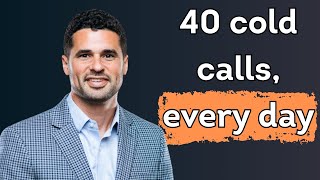
Micah Salas, an insurance producer, makes 40 cold calls a day and gets 4 to 5 conversations from them. He credits volume, simple scripts that sound like him, and niching in construction. Since 2018 he's also built a LinkedIn presence with video content and a book called The Business Insurance Playbook.
Chapters
My main thing is be authentic, but also keep your person in mind that you want to talk to. That's like, literally the main thing is, hey, who do I want to help with this? And, and that's, that's what kind of guides everything, right? Are people going to find this informative or helpful? And that's the most of it.
Hey. Hey. Welcome back to the accelerate your insurance sales podcast. Andy Neary here. I got to tell you, this one is a long time coming. I'm excited for, for today's guests. He's a guy, he's a gentleman in the industry that I've been watching from afar with. Quite impressed for quite some time, especially with what he does with content. He's an author of a book which we'll talk about. Micah Salas, welcome to the show, man.
Hey, thanks, man. Happy to be here. Happy Friday.
Yeah, you too. No, this is, this is gonna be a good episode. I. For the folks that, that have no clue about this, I do want to talk. It's interesting. You live in Austin and, and we live in Wisconsin, but we also spent nine years in Colorado. But despite both of our journeys, what people don't know is we actually went to rival high schools in Wisconsin, 12 miles apart and weren't there at the same time. But it was a pretty, it was quite the hatred back in the day. It was a, it was a definitely tense rivalry. In fact, you said coming on the show, you know, just thinking about o' Connor walk makes my blood boil.
Yeah. Tell people, though, if you don't mind, give your perspective. You're a little younger than I am, but give your. Give your perspective of what that rivalry. I would say Watertown definitely hated Oconom walk. What was that rivalry like back in the day?
Oh, man, it was, it was kind of everything that ESPN pushes out there. If you're watching college football, right? Like the classic Michigan, Ohio State rivalry, except like you said, we're 10, 10, 12 miles apart. And so it was funny because it, I played football and basketball and all the. So leading up to those games, the coaches would. And they would, you know, be alumni, right. So they're telling their stories about people throwing rocks at the bus and, you know, and, and for the football games specifically, there would be a huge tailgate. And, you know, this was in 2002-4 when I was there, right. And man, it was, it was awesome. And just the, like at the basketball games, I mean, just 2,000 plus people that ever, you know, you couldn't get a ticket in there was standing Room only.
Oh, yeah.
And it was. It was awesome. It was just.
Yeah. I was telling you offline, you know, we played in the old Watertown gym up until my senior year, and it's that traditional, classic old high school gym with the upper deck on one side, the stand, the fans are right on top of you. Oh, yeah. It was a hard place to play. I was just talking to my dad, who is a longtime baseball coach at Oconomowoc, about back in the 80s, when the football team would go over to Watertown, the coach would make them put their helmets on in the bus as it came towards the field because people would be throwing things at the bus. Yeah. Yeah.
And, you know, it's funny because we. So, coming from the Watertown perspective, we were the country folk, right? We were. We were the less than. At least that's what we thought you saw us as. And I think it's pretty true because my family grew up in oconomwalk, and my cousins and stuff, and I. Yeah, you guys were more metropolitan. We were more.
Well, I played high school or I played college ball with a couple Watertown guys, Charlie Herchin. And he would even say, in college, like, yeah, we thought you were the rich assholes, you know, because there's a lot of old money in o', Connor, and. Yeah. Oh, yeah. Now, we feel the same way about Arrowhead, so.
Yeah. Always moves. Yeah. A couple miles closer to the city.
Yeah. Well. Well, let's talk. Let's talk about your journey, man. I'm sure a lot of people who listen know of you because they see your content, but. But for the few out there who may not know who Micah Salas is, how the heck did you get. You find your way? Because most of us didn't get in here by design. How did you find your way to the insurance industry?
Yeah, I was. I was kind of pulled into it out of. Out of necessity. I went to Whitewater, a Division 3 school, was recruited by a direct carrier, Federated Insurance, and went all the way down to the finish line, man. And their interview process was intense. Like, they met your girlfriend, they take you, you're flying up there. It's probably seven, eight interviews. Well, at the last minute, I decided to take a government. A government job as a claims adjuster. Because, again, I let. As a kid, I hated the idea of selling, even though I was pretty good at, like, relating to people. And I let that fear get the best of me, man. And honestly, that's what it came down to. I was just like, nah, this is more Comfortable, I'm going to take the government job, going to do that. And I had to call the guy who was recruiting me and he was pissed. And I just said, sorry man, I'm taking this other role. And did that for about three months. Hated it. Hated my life. Was looking to leave after about three weeks of being there. And then I got into some a sales. My first sales job out of college. I finally said, okay, I'm just going to do it. My brother was at a finance company, loved it. But that was in 2008. Market went kaboom. Literally like 30 days after I got hired and we were all let go like three months in. So I was unemployed six months out of college and then kind of was working for a little. Got a job at a manufacturer, was doing fine, did some sales there. Started us it was, we were selling toys. So I was selling toys, but I was making nothing. I was broke. I literally, I think I bounced a couple checks and then when we, and then I reached. And then out of the blue the guy from Federated reached out and he's like, hey man, you want to talk again? I was like, yes, we go get a coffee and he's like I was just surprised he wanted to talk to me because he was pissed.
By the way. Not, not to cut you off, but I don't know if we even talked about. I actually started my career at Federated. Oh, I was let go. I, I should say I, I had the get off the pot in 2007 because I sucked at selling life insurance. Who was the guy who recruited you?
Jack West.
He was my last district manager. All right.
Oh.
And as you know, he's a pretty competitive, he's really cool guy.
College wrestler.
Yeah, yeah, yeah. Competitive.
Yep.
And did so. So we're in Ocon Walk. That's where I was working in Okanawak. Living in Milwaukee for a little toy manufacturer and making nothing but doing a ton of good stuff for the company. And we sit down at a coffee shop, at a Starbucks. He sits there and opens the brochures like, hey, we've raised our starting pay. It used to be 36,000, now was 72 grand. And I did, my eyes were like, oh my God. Cuz I was making 35, 37 grand out of college. I was poor, I, you know, just using my credit card, just not, not doing great, you know. And that's all I needed to hear. And so like people joke like how'd you get into insurance? I say for the money. And I, I, that's like, 100. The truth, if I'm.
That's almost got in, man, is the Selling the dream. Yeah.
And. And so I don't think I'd still be here, though, 14 years later if it was just that for sure. But. But that was what got me. And I was like, dude, okay, so.
So I gotta ask you this. I gotta ask you this. This might be one of the most hilarious moments on this podcast. So you. You took the job.
Correct.
Which territory did you take?
Okay, so this is probably ultimately why I left as well. I took the job under the premise of my wife is my fiance at the time or girlfriend. We're in Milwaukee, right. So we wanted to live in Milwaukee. And I knew the Milwaukee district had, like, eight different areas. Well, I wanted. There was one area I didn't want anyways, and that was Fond du Lac, which is about an hour north of Milwaukee.
Yeah, yeah, yeah.
And we didn't want to live there. Whatever. And not a bad place place. I just didn't want to be there. Well, so I take the job. I go to training. Well, actually, it's funny. I take the job. They make you sign up for life insurance, which I get it. Whatever. My check bounced. Dude.
What?
I.
What?
I signed the check to pay for the life insurance, which. I still have that policy today, though. It's like a whole life policy. It's nothing. It's just. I just keep it. So let's go up to. Trading for a year was great. The foundation was, like, really paramount to my success on the PNC side. I learned a lot on health life. I get out. Did great. On PNC life, I was like, like you. I would do. I would miss the goal by maybe 20. I just didn't love it. I didn't have that passion for it, man. And.
And then that combined with. I was in the field for about two years, and we were driving to Milwaukee every weekend, and they wouldn't let me. They had zero. They were so rigid. They wouldn't let me move out of my territory. I just wanted to live, like, halfway, like, 30 minutes south, like, nope, you have to live.
So did you end up getting the Fond du Lac territory?
So then I. Yeah, so I get the Fondlife territory. That was the first, like.
Yeah.
So my manager calls. He's like, hey, there's the territory opened in this. He's like, you got to take it. I was like, do I have to? He's like, yeah, you kind of have to. And I'm like, God. So it's just a bad, you know, from the start, it was like, oh, man, I made the most of it. I. I left there on my own terms, basically. What happened? After two years, we were gonna. We were just like, we gotta move. And instead of going to Milwaukee, we're just like, let's go someplace warm. And so then we. My sister was in Houston. I just started. I opened AM Best, started looking for agencies and that's how I eventually got into like the agency side. Moved all the way across the country down to Texas in 2014. Exactly 11 years ago. So, yeah, man.
The journey, the reason I asked, because I was looking, I was thinking of the time frame. I'm like, am I the guy you replaced in my territory? Because I. I had the southern WAU county territory.
Okay, Yeah, I know.
That's why I asked, like, what territory? I'm like, maybe you were the guy Jack hired to replace me.
That's funny. Yeah, I, I would have been. He was probably recruiting me when you were there, because I was in 08 for sure.
Well, that's. That's an awesome story, man. Yeah, federated. You know, it's funny. Great training, right? Yeah. I actually did the career hire. So it was the two week training, not the nine months.
Okay.
But yeah, amazing training. They actually had a good health insurance product back in the day. And anyways, you have fond memories. Well, you ended up going down to Texas working for. You ultimately ended up at MMA Marshmallow. Right? And biggest, biggest firm in the world, essentially. This episode is brought to you by Trucaptive Insurance. What if you could take full control of your healthcare strategy without the financial burdens of traditional insurance? At True Captive Insurance, they make that possible as the only captive in the nation that puts up the majority of collateral on your behalf. They provide financial flexibility from day one, making them an advocating partner for their customers. Success. True Captives fully customizable plans and cost saving strategies ensure you never have to choose between affordability and quality care. It's time to break free from the limitations of conventional insurance.
Take the next step. Today, visit truecaptive.com and discover a smarter way to manage health care. That is truecaptive.com what I would love to hear because you said it offline and I think this is important. I asked you, you're at Christensen Group today. Their headquarters is in the Twin Cities, but you're down in Austin. And I said, well, how the heck does Christiansen Group have an office in the Twin Cities in Austin? And then you shared the story, which I'd love for you to share because here's What I'd love for people to hear, that was a big decision for you to leave MMA and then go to work for a firm that honestly had no brand awareness in Texas. What was that?
Oh, man, it was scary. Very scary. So what happened? I get a call out of the blue from my brother in law. He's like, hey, I'm talking to this guy. And your name came up. Would you be open to taking a call? Sure. I always take a call. I had always taken calls from recruiters in the past. Take the call, put together an offer, it looks really good. And I was like, man, this is kind of. This would be exciting. But then I got scared, got cold feet. My wife had just given birth to our daughter three months prior. She wasn't working. I had a over a million dollar book. I was happy. Like everyone liked me. I liked them for the most part. There was of course, things that I thought I would do differently if I could start over. And this was my opportunity right in front of me. And I was just like, I just can't do it. There was that fear thing again. Kind of like, you know, get the best of me. And then so I say no and four months pass or whatever and I just kind of was getting that itch. Another guy at our agency had left and started his own thing. And then I was like, man, I should reach back out to Christensen. I really liked what they had to say. I liked just. It felt more like a better fit for me and where I wanted to go. And I knew I was like 36 at the time and I was like, if it's now or never, it's kind of deal. Because I, I already kind of thought I was in too deep. You know, leaving a book is really tough. And so anyways, I just, I got the approval. My wife had the buy in. I felt that peace about it. And then we did it. And I will say this though, I was really excited about it. It felt great. There was a lot of things that scared me. Zero brand awareness, zero presence, zero relationships. Like nothing, right? I was employee one.
What gets you, you're all excited that first month, but month number two, man, or three, or if you ever have like a slow seat in insurance, you know, it can kind of be like this. Then your mind starts to freaking play with you, right? And you're like, oh my God. So I have pretty bad anxiety about a month after. It just, I mean, I didn't have any, didn't have any regrets, but you just feel that like pressure and it was tough. There were Some tough, tough days. But.
Well, it probably felt like even though you worked for somebody else, in a way, it was like you were your own little entrepreneur down there, I'm sure.
Oh, absolutely. I feel like you're. Yeah. They did as best as they could to support. Right. But you kind of take for granted when you're at a bigger agency. You have so many people. It's the people around you that like, oh, if I. If this problem comes up or a client has a question on this, that's who I go to. And I was talking with a buddy about this the other day. When you go from a really large firm to a smaller firm, which I'm a big. I'm a fan of for some people. But I think it's got to be a personal decision. Right. Where your strengths play. But it definitely exposes. If you have weaknesses or insecurities, it will expose them, which I think can be turned into a really solid opportunity to grow and get better. And so I've had to do way more learning and researching on things, like when I get questions from clients and stuff that in the past, I would have maybe just like, I'll just talk to so and so. Well, no, now you got to kind of take that on yourself a little bit, you know, from a knowledge standpoint. So it's been good. But.
Well, and I would say from. From watching from afar, I would have to say the decision panned out. Right. Not only like you said, Christensen now has 14 employees in the Austin market. You guys are a top 100 agency. And, yeah, I mean, obviously, things have gone extremely well. You know, my. Without knowing the details, I think I gotta believe one of the things that really helped you grow that market when you had zero brand awareness is your philosophy around marketing. And this is what caught my attention when I first saw your LinkedIn profile years ago.
It was the fact you wrote a book.
For whatever reason, when I saw that. That you wrote the business insurance playbook. Right.
Yeah.
Like, this guy gets it. Why? What was the premise behind writing that book? What was your goal? What was your mission? How are you using it?
Yeah, man. So actually, the ideas. I wasn't originally thinking about writing a book, but I had done. Started doing video content on LinkedIn in about 2018.
Right.
And I saw. It's funny. You started doing that back then. No one was doing it.
Right. And I started in 18 as well. And people looked at me like I was an idiot. Yeah.
People at the office kind of joke around with you playfully, you know, like. But they. You could Tell they were kind of making fun of you a little bit too. So I didn't care, you know. And, and also I started, it started back then, man, you put out video content and it, it spread it everywhere because no one was doing anything. It was like a land grab for real estate, right? Like digital real estate.
That.
And then I also. Everything I did back then and this was just naturally I did it like I was talking to my brother in law who would own a business, a construction business, right? That was like literally my frame of how I put it out there. So if you look at you go back to all my old content. 90% is speaking to who I want to talk to, right? It's not like about insurance in general necessarily. It's more like, hey, how to buy insurance, right? Fast forward 2020. I've been doing the content and then I did a series. I was trying to do some YouTube channels, which I failed at miserably, but I put a series up on LinkedIn and on YouTube about I think five steps to beating a hard market. And, and then so that actually got some attention from some podcasters or whatever. And then I thought, well, what if I could make this into like a little speech or something, right? Like a presentation for four buyers, right? Or prospects. And so that was the first thought I had. And then I, I kind of took that and I had a presentation to like a small group in, in Houston. A chapter, I can't remember what it was like a safety association went really well. And then I got home and kind of had that outline that, you know, that framework. And then I was like, man, I was just sitting around one Chris the following Christmas and I was like, what if I made this into a book? And literally I wrote the book and it was. Took me like a day, like probably four, four to six hours. I, I wrote it all out because I was like, oh, because you know how you get in the flow. Like you're in the zone, like flow state. I just sat down, it was like boom, boom, boom, boom. And that was it. And then I kind of just did research. Okay, what's the next steps? I reached out to a guy who had written a book on work comp and I just picked his brain and he said, yeah. And so linked up with like an editor and they made it, they kind of restructured some things to make it better sounding, I guess and all that. But yeah, that was, that's kind of how it came to be. And then my, my vision with it was like, hey, this, this is going to be A great door opener, a differentiator. It's a very, like I said, man, my true, true nature is I don't really love selling like, but I do like helping people, genuinely speaking. And I, and I, I'm not just saying that to say it. And I, I like educating. Right. Like I think teaching people stuff that they don't know feels, feels good for.
Me and well, and I want you to expand on something you shared offline. But there's one insight I want people to hear. I loved when you started doing video in 2018, same year I started, I actually attended a Tony Robbins seminar where Gary Vespo. Yeah. And it was there I heard him say you need to be a media company. I'm like, ah, I'm going in on video and. But you said my first videos were all from the perspective I'm going to teach my brother in law. Like he owns, like he owns a construction company. Yep, that's exactly what you should be doing. Like that. I just, I loved hearing that. Now I'd love for you to just share something because you offline you said most people don't realize you were actually a really shy kid. So was I. I'm still a very big time introvert.
Sure. Yeah, me too.
What advice would you give because you put yourself out there, right. As an introvert. What advice do you, would you give somebody? Because we have a lot of people in the industry, I believe we have a lot of producers who are actually introverts and they don't want to be salesy. Therefore unfortunately they're not putting themselves out there. What advice would you give somebody like that?
Oh man, there's so much you could say. But.
You know, I think one of the, a couple things that helped me.
Is.
It'S kind of getting past the own, your own fear in your head of like what people think, you know. And there was a quote by like, is it by Eleanor Roosevelt or something? Like people would stop caring so much about what others thought if they realized how seldom they do. Right. And I think that's so true. It's like it's all in your own mind. Right. And so for me, honestly, being, being from a small town, I was so scared to talk in front of. I'd be nervous for days or weeks if I knew a presentation was coming up. In high school.
Right.
I couldn't even for, for tackle football in eighth grade. My family was not the most well to do. So we had to raise money to pay for that. It was a big expense for us. I had to sell Two subscriptions of Sports Illustrated. I couldn't do it.
I could.
I didn't even try, dude. Zero effort. Not even. Like, I tried and failed and a coach had to step in and he sold them for me, like, and so that's how like, much fear I had. And, and I don't know where that comes from. I mean, I could probably see a psychologist to talk about that, but.
Yeah, so, so that's, that's the level of like introvertness I kind of had. And I always, like, I'm a conversationalist. I like talking to people, you know, I'm not awkwardness or convert, conversationally speaking. Just I don't want to get up, you know, put myself out there. And so, yeah, it's just, I think when I went to college, it was like getting out of the small town, I think helped me a lot. And so some of that fear about just speaking in public, like, I love speech in college, never had any fear. And then it kind of just kept growing, right? And then you get older and older and I just think it's that. I just think it's going internally and, and.
For me it's kind of like noticing those feelings coming up every, every part of life, whether it's fear of speaking in public, fear of making a cold call, fear putting a video up. Notice that uncomfortable feeling coming up, dude, and just asking, where's this coming from? Right? And then just not trying to distract yourself or make it go away by going and exercising or going on your phone, but actually dealing with it right then and there and letting it pass through and realize, okay, it's just a. Just to do. You start to do that on these little things and then the bigger things come up and man, it just, it's like a spiritual practice almost, honestly.
And it's putting in reps, right? The more reps put in, the easier it gets. And I'm actually going to want, you know, you to talk about your philosophy and approach to cold calling because I know you are one who does it very well. But before we dive in, you know what I would love to hear from you is I think something we call it exponential awareness when you look at how you leverage your time. Prospecting. Yep. Keep doing the calls, the emails, the networking. But if you're not building brand awareness today, grabbing attention, it can be very hard to win business. And you know, you've been doing it for seven years now. Written, wrote a book, social media content as when you, when you approach LinkedIn. This is what I love for you to hear Love for people to hear. What is your approach to LinkedIn when you. Let's start with content. If you taught somebody today how to create content for LinkedIn, what would be your advice?
My main thing is be authentic but also keep your person in mind that you want to talk to. That's like literally the main thing is, hey, who do I want to help with this? And, and that's, that's what kind of guides everything, right? Are people going to find this informative or helpful? And that's the most of it. I would say. I've kind of changed a little bit though because I used to be hell bent on you have to be 100% content only educational for a prospect. And this is kind of where I'm kind of conflicted internally because it's like you could put things up about your kids or whatever and, and I think it's important for people to kind of know who you really are in today's day and age. Just, it's just where LinkedIn's going, right? And I think if we get so rigid like I can never do any of that stuff then might lose some of its just joy out of doing it. But also I think you're missing out on some, some real relationships and people that will start following you because of that stuff. And so that's probably where I'm, I'm weak at. But I know I, I do it, I have integrated it more. Where I used to just be hell bent, everything's insurance now. It's like, okay, I'll share a personal story. I'll do that from time to time. It's not, I don't think that's what people know me for, but it's also there. And you know, because I, ironically enough when I post stuff like that, that's when the CEO clicks like they never do have the insurance stuff. But guess what happens? I go to a meeting, hey, I saw your videos and the guys never liked any of my stuff, you know, and everyone has that story, I think.
Who post content well and I think your point is well made. You know, I use the analogy of baking a cake. Educational content is the flour, the batter, the eggs. You got to have it to bake the cake. Yeah, the personal stories are the frosting, the icing, the candles, the things that make it look and taste pretty. And you got to use it today because there's a lot of people in our industry that say, gosh, LinkedIn looks like Facebook now. Well, you've got to use personal stories once in a while. Let people get to know you, because that's how you can walk in with likability. Yeah, yeah, but you still, you can't ignore. I think the mistake people make is they get the likes and the comments from that and then that's all they do.
Correct.
Yeah. You still have to have the educational content to build credibility. What are you, what's your philosophy about consistency? You know, I've heard you say you got to dedicate time every day to using LinkedIn. What's your weekly strategy to LinkedIn look like today? Because here's the challenge we get. I think people.
People see the content piece of LinkedIn and then they think they can go create a bunch of content and somehow gonna magically create sales opportunities and they forget to do the daily work of the other they things like connections and dms to actually create activity. What's your philosophy around that?
Yeah, so I, I try to, Michael, is, hey, put out. Put out something four to five days a week, Monday through Friday. That's what I try to do from a. Putting it out there. And then.
What I try to do is just connect and.
Engage with content that is only done by construction people. Right. It's hard though, because I, Starting in this, you get so many. The way the algorithm was, I got so many insurance followers. Right. So it's like so many of that is where my engagement's coming from. And I know how the algorithm works. So I, I try not to engage as much with, with the insurance content. Honestly, I just, I just don't. I see it, but I really try to look for like the contractors that, that I follow and I just like their stuff. Comment dm if, you know, if I feel like it's appropriate. And that's really the strategy there. But the content, this might shock you or people listening. I don't create any of my content pre. Which, this is not good advice, but it is all created spur of the moment.
So by the way, I can tell that. And that's. I think that's a good thing.
Yeah. Yeah. And I know even when it comes to writing a post, I know I could sit there and think on it for an hour and probably make it sound better, come up with a better hook. But it's like, okay, this is, this is a part of my whole plan. Right. And as you alluded to, cold calling is kind of a huge part. But I know this is a part as well. But I just don't spend hours and hours on it and. But yeah, that's kind of my, that's kind of my Plan. It's just real stories. A lot of it comes from what.
I love about that philosophy, though. When you said, I kind of do things on the spur of the moment. I call those present case studies. There's a book out there called they ask, you Answer, written guy Marcus Sheridan.
Yep.
And his whole philosophy is if you create content around the questions and the objections you often hear from prospects and clients, that's going to be great content. And that's what you're doing. Like, when I watch from your video content, I can tell it's that that video is based off of a conversation you had with a client an hour ago. Maybe.
Yeah.
They asked a question. Or you. You just reviewed their renewal and you're saying, hey, here's what I saw. Here's what's going on in the renewal. That is the kind of content prospects want to see because it gives them a feel for what it's like to work with you.
That's a great point. I don't really even think of that. But, yeah, no, I think it's. You can't get more authentic than authentic. Right. Like.
Well, I love about your videos, maika, is I can tell sometimes you're walking around holding the camera, the phone in your hand.
Yeah.
I think people get so caught up in the quality. Yeah. It's got to look pretty. My background's got to be great. I got to have the right captions. Don't misspell a caption. You're like, dude, just had a conversation with one of my clients. That's the best content.
Yeah, yeah, yeah. No, that's what. And. And as more and more stuff gets curated and cleaner, the more and more the raw, crappy, crappy content from a technical standpoint stands out.
You know, you also have a philosophy. If I, if I studied you, correct that, you know, you are a big believer, though, when you're going to use in any form of prospecting, social media or any other channels, stay tight to what you know.
And you have a niche in construction. Yep. I think we have this tendency in the industry that we want to talk about a lot of things in hopes that one of these things sticks with somebody. Where you have a belief. I like, I do. Go. No, no, go narrow. Get a very. Have a very specific niche, you know best and stay in your lane. What would be your advice to somebody? Because I think a lot of people have that fear. But if I niche too much, I'm going to lose out on opportunity. Yeah.
Relevant fear. And I would say that right from the jump is if you niche and an opportunity comes in that, that you don't specialize in doesn't mean you have to walk away from it. I think that's what people like assume. It's like, no, go to someone else in your agency who does. Maybe you split with them. Maybe you learn from someone. You could run it with it yourself if it's easy enough. So, So I think that's a common misconception or fear people have, but it's not really something you got to worry about. But the upside far outweighs the downside. Or.
I think it's mainly the way you talk. Like everything you do.
Prospects sense that. Right. You're in a meeting with them. They just, you just casually talk about their equipment, their whatever, like whatever industry you're in. Right. And that's, it's hard to put like.
Words on that or whatever around that, but that's the value of niching. It's just like you, your whole aura, your energy, everything, like, just kind of reeks of that niche to the, the prospects that you're meeting with. Right. I've got so many times, like I can tell you work with other contractors. I, you know, I'd ask the simplest question. It's nothing like too in depth, but you also, the one thing on the PNC side, it's a little bit different on EB I think is not only do, you know, like the coverages and all that stuff, which I think anyone can learn and the lingo, but then also the markets.
Right.
So you can go in there and quickly identify. Like, I can go meet with a prospect and I know instantly, like, if their agents doing a good job or a bad job based on, when I see those policies really quickly, I know if the rates look in line and, and that's kind of invaluable. And that speeds up your whole filter process too. You know when to walk away from prospects. Right. And just say, hey, you're in a good spot. I really can't help you if you're happy and you just kind of did some due diligence. So there's so much upside to it.
Yeah. And I, I, I tell our clients, if you've ever, if anybody ever accuses you of talking about the same stuff all the time. That's how you know you're doing your job. Because that's how you build thought leadership.
Absolutely. They say, don't try to be the.
Jack of all trades, be the jack of one niche that you dominate.
Oh, yeah. Well, and you listen, if you listen to anyone in any category, whether it's insurance, sales, spirituality. You notice with any teacher, it's like the same five or, you know, four to five reoccurring themes, and it comes back to that every time. Or, you know, you have the one topic and you tell it 20 different ways. And, yes, I think the best do that.
Well, I'd love to talk to you a little bit, man, about cold calling. And I. I often get accused of saying, cold calling's dead. My point is, it's not dead. It's just not as easy as it used to be. And you have had a lot of success with cold calling as an introvert? Because I think what I see today is a lot of prospect or producers trying to avoid it at all cost, especially if they're an introvert. As an introvert, how did you get yourself to really come to be comfortable with cold calling and actually thrive on it?
Yeah, so a couple. There was a couple things. One is mindset, man. For me, it's. This is funny. I had a. It started this in 2014. I had a little stickier note, and I just wrote, idgaf, right? I don't give a F. And I had. For me, that's what I needed. I needed that little reminder to just tell myself, hey, this CEO I'm calling is a human being, and put on their pants. You know, they drink beer, they. They fart, they do whatever. They do all that stuff that any other human does, and it's like, sometimes we just lose sight of that. Or I do especially is, like, this. You build this fear in your mind. And so that was one thing. Just kind of working on the whole mindset thing and just kind of realizing, like, who cares? Like, who really cares? This person. The worst case scenario is I get chewed out, which is super rare when that even happens. So there were some mindset tricks around that that really helped me a ton of. But then my scripting was huge for me, right? So I was trying to do. I was trying to do everything the experts would say, technically, this is the way you should do the script. Open this way and say, hey, I help contractors do this. And this. Would you be open 15 minutes? And I was like, it just didn't feel like me. And so what I ultimately did, dude, I stripped down everything, and I went like, what feels like me? Where I. And the reason I like this approach is because then it removed the fear of calling, because, like, okay, all I'm doing is calling someone to see if I can help them and if I can just keep that front of my, like, all I'm trying to do is see if I can help this person. Someone out there needs help today. I'm just trying to find those people. Yeah, that was the mindset that I had to hold on to.
And it does.
Doesn't mean I never felt cold call reluctance or whatever, but it really helped me a lot. And then when I would get. And then what helped was just being comfortable on the phone was just literally a super simple script. Like, so simple that any sales trader would probably choke on their lunch if they heard it. Because, like, this is terrible. But guess what? It worked, you know, because I think what happened is I had more confidence when I was talking to people. And you convey that through the phone. And I think tonality is such a big thing on cold calling and, and, and kind of adapting to. You almost read people through the phone, like, their energy, like, what's their voice sound like? And I basically am pretty good at kind of morphing to wherever, whatever the situation is. But again, having a super simple script allows me to do that because I'm not trying to say anything crazy. And so I think mirroring, kind of talking like, the prospects I'm calling and adapting and then having a super simple script were the main things that really helped me.
Yeah, I like that. You know, I think, I think a lot of people will say, this is the script you should use. And then they try to apply that script to everybody on their team where, to your point, you have to build a script to that person's personality so that they're more comfortable making the dials.
Yep. And what's better, maybe you adjust the script right once you get more comfortable, 100%.
Now, here's what I would love to hear, because I'm sure you've made plenty of dials in your career. We get a lot of people who are, you know, told to listen to our podcast. They're newer to the industry. I think a piece about calling that people miss in any prospecting activity is the volume. You know, I heard, you know, Alex. Do you know who Alex Hormozi is? Yeah. Yep. Okay. So I heard him. He used this analogy one time when he was trying to grow his gym. He had a mentor say, cool, here's what I want you to do. Print a bunch of flyers off. Go put them on windshields. Spend the day just putting flyers for your gym on the windshield. So he does. Spends the whole day. One person replies. So he tells his mentor the strategy was stupid, and the mentor is like, well, how many, how many Flyers did you put out there? He's like 300, man. He goes, we don't start counting until we put 5,000 out there. What is your philosophy? I think what happens in our industry is people cold call, but let's be honest, they make 10 to 15 dials a week.
Yeah, it's not enough.
What is? Yeah, I was just going to say, what's your philosophy for somebody who thinks they're struggling with cold calling when it's probably really a volume issue?
Yeah, man. It's kind of like, I think this is where, you know, in the 90s there was a lot of stigmas that, that came around from sales and cold calling and all that stuff. And so I think like, you know, sales is a numbers game. And so people now like, no, no, it's not. It's, it's, it's a quality. Right. Over quantity. And yes, that's there, there is an element of truth to that where it's gone. You want to have a good quality call and call it good quality prospect. But there's still a quantity element to it. Right? There's still the numbers game. As much as you want to deny it. Not you, but people in general. And, and I always say more is more, more is still more, you know, so it's like what I. When I've coached younger producers and we start looking at numbers or guys, a lot of times what I find the ones, especially if you have no book, no network.
My magic number I've come to is 40 calls a day, so which is about 200 a week. That's what I've come to after keeping my own metrics because I've worked them and they. It leads to essentially, let's just call it four to five conversations a day, about 20 conversations a week with decision makers. And I just know that I'll should get one to two meetings. And then also what people don't talk enough is all those warm top of funnel stuff that maybe the timing was off or whatever they say, call me back. That's, that's, you know, that's the sweet spot right there. All those people. And so that's another five or six where it's like, then you're building your warm list and then. And then you're making warmer calls. Right, because you're calling those. And so if you do that for the first couple months now, you're starting to call back all those warm people. It's a little bit different of a call that it's when it's pure cold and then you get into gear two or three, and these people kind of start to remember you a little bit sometimes. And so it's a little bit different. Or you can reference, hey, we spoke last year and timing was off and that's how you open the call. And it's not even feeling like a real, like a true, true cold call. But yeah, to your point, I mean, I think 10 to 15 a week is just. Wouldn't be enough if cold calling is your main strategy. I'll also say this. We can get so bogged down thinking more is more, and you can burn yourself out on the other side of it, too. So, like, that's where it's like, yeah, I can go, especially year one or two when you have zero clients, you could go try to make 100 calls a day. But I also think you're going to burn yourself out and you're going to kind of lose some of the balance in life. I think that's important with being a producer. You still gotta, you know, you got. You want to educate yourself, right. You want to understand what's going on in the industry. You want to, you want to do networking, you want to do social media, there's other things to do. And so that's where this 40 number has just worked really well for me. And then also it's probably two to three hours a day. That's it. And the rest of the day I can do whatever the heck I want to do.
Well, I think something you've done phenomenally well as well, though, is for the last seven years, you've been building brand awareness. And I think when you mix the activity like a call while building brand awareness over time, it makes your calling more effective. And if you've got that buyer that says, hey, man, interested, not now. Well, guess what? Cool. You've got a bunch of content you could use to probably warm that person up to who you are and what you do. And by the time you call back again there, it's a lot warmer than it was. Yep. And. And so, yeah, I love your philosophy around that, man. You're. You know what I would love for you to do as we kind of bring this to a wrap, is now we're going to put your thought leader cap on. Not, not for construction, but marketing and sales because you do a great job.
What would you tell a producer today? Because, you know, when I got in the industry. Oh, two, just for you, it was really like, all right, take a suspect, make them a prospect as quickly as you can, throw a bunch of quotes at them, and Then if you're competitive, you might win one or two. Nowadays it is a lot about you got to build some awareness first. So if you were, and you don't need to give anything away you don't want, but if you were teaching producers today how to go build a book, what would be your advice? Given the noise we have, the amount of brokers in the market today, what, what would be your advice to them?
I still think the best teacher is experience. And so getting out there, you have to get in front of prospects and get meetings and get opportunities. And so.
My advice to people is.
Find your core base of what you're going to do, right? If I've seen guys do extremely well and all they do is drop ins, right? All they do, they stay with the X federated guys, they stay with that model on the agency side and they kill it. I'm talking like half a million a year of revenue, right? In first year, right? So good numbers from these guys who just do drop ins. But I don't like to do drop ins. I think it's inefficient. So I do the phones. I know people who just kill it at networking. But one thing I would say as a younger producer, find your, find your baseline or like you said with the cake analogy, find your, your batter and all that stuff. But then what I would say is different than like 2002 is you have a great resource like LinkedIn or YouTube or any social media or newsletters. You can do both. You have time to do both at the same time. That's like the main thing I would say to people is like, don't feel like you have to get silent. Like, I can only be a cold caller, I can only be a networker, I can only be LinkedIn guy. You have the time in your schedule, if you're organized to do them and do them all well, in my opinion. And so like, I think they should be running side by side because I do think the buyer profile, more and more people are going on LinkedIn. They have since 2018. There's people who kill it with LinkedIn. I've done okay with it, but I know people you've had on your show kill it with LinkedIn. And so you have the time. That's all I would say.
It's like, like diversify, I'd say, you know, what's made you so successful though is regardless of writing a book, regardless of starting your content journey seven years ago, the dials you put in, the networking you're doing, you've been Showing up every day, every year. Yeah. I will tell you, I wish, I wish more producers could hear that, that you want to win. In the insurance industry, there's no magic bullet. It's consistency and the ability to show up every day, even on the days it feels like you're making no progress. Yep.
Delayed gratification. If you don't have that skill or if you haven't had that ingrained as you as a kid, it's going to be a very tough industry. But if you have that and like behind you, you know, you have the word consistent there. Persistent patient. That's awesome. That's what it takes. I mean, there is no magic skill. Magic. Magic bullet for sure.
Well, hey, man, it's been an honor to have you. Like I said, I've been watching from afar for quite a while and impressed with the work you do. So if you are an advisor who is tuning in and you haven't at least followed Mike on LinkedIn, make sure you go do that right now. Because one, he puts out great content, but he's a model for how to do it the right way. Maika, if somebody did want to reach out, whether it's just to learn more about you or hey, heck, I could use your help with some mentoring or sales coaching. What's the easiest way to get a hold of you?
Yeah, best way is just go to my LinkedIn page. You can shoot me a DM. Although the DM or the inbox on LinkedIn kind of stinks, in my opinion, so I kind of lose track of some of those. But I try to see most of them. But then I also have my email, I have my cell phone, I think on my LinkedIn profile.
So quick tip. We are in the process of investigating a tool called kondos.com k o n d o s.com it turns your LinkedIn inbox to an email inbox.
That's cool.
Check it out. We're checking it out right now because you just said that. I agree the LinkedIn DM inbox is terrible. But this is a tool that literally just turns your LinkedIn DM inbox into an email inbox. You can schedule things, you can filter things. We're checking it out right now.
Oh, awesome. Thanks for that, man. Yeah, I'll definitely check that out because it's a nightmare.
Well, Micah, thank you again, man. It was an awesome conversation. If you're tuning in, this is a guy you should model yourself of off of. He's been doing this the right way for seven years, so keep up. The. Great work, man.
Hey, appreciate it, Andy.
Yep. Everybody else be good. That's all we got for this episode of the Accelerate your insurance sales podcast. One of the most valuable things you can do to help us and other new potential listeners find our show is for you to rate the show and leave a review. So as a special bonus for you, if you leave us a review, take a screenshot of your review and send it to me as a DM to my LinkedIn profile. I will send you a free copy of our LinkedIn Diamond Playbook, our proven four step strategy to grow your business on LinkedIn. So go right now, leave us a review, screenshot it, and send me a DM on LinkedIn. Also link please share this podcast with anyone you think would enjoy it. That's it for now.
More from Andy




If you want producers to succeed faster, help them create a sales message that creates confidence.

Sales isn't a zero-sum game! You can have tough competition and still grab a beer after



Option 1: Meditation, a fast walk, a podcast, and protein. The ultimate morning routine!

How you do one thing is how you do everything. Ill elite producers fuel their body.


Stop living in the gray of maybe! Your job in sales is to get a clear yes or no