Why Top Brokers Give Their "Secret Sauce" Away for Free
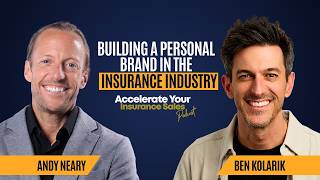
In this live episode of the Accelerate Your Insurance Sales podcast, host Andy Neary (CEO of Complete Game Consulting) talks with brand strategist Ben Kolarczyk of Brand Builders Group about why personal branding is essential for insurance professionals. The conversation covers Ben’s unconventional background in music, the power of storytelling, and Brand Builders’ Brand DNA framework (seven ingredients, starting with defining a core target audience). They cite a PhD‑led study showing 74% of Americans spend more with people who have a strong personal brand and argue that a brand is a trust‑building differentiator in a commoditized industry. The hosts differentiate three marketing models—free (social content), paid (advertising), and “get‑paid” (being paid to present to ideal prospects) — and explain how speaking engagements can both generate revenue and serve as recruiting tools. They stress the need for a clear opinion and a “stake‑in‑the‑ground” moment, warning against trying to please everyone. Practical weekly actions are outlined: outreach to strangers, nurturing referrals, and consistent LinkedIn presence. The episode also touches on the importance of data‑driven decision‑making, the current “trust recession,” and personal habits that support high performance. Finally, they promote Brand Builders Group’s services, their New York Times bestseller Wealthy and Well‑Known, and offer free strategy calls.
Chapters
Welcome back to the Accelerate Your Insurance Sales podcast. Andy Neary here, CEO and founder of Complete Game Consulting. I'm excited for this one. We get to do this one in person.
Yeah. Ben Kolarczyk is here with me.
Ben is my brand strategist at Brand Builders Group, which is an organization that I am a partner of that helps me amplify my brand. And we're gonna use today's podcast to just talk about the importance of building a brand in the insurance industry. And I really wanted to have you on back in December when I ran a series of episodes where I was introducing people to my coaches in my life.
Yeah.
And I knew we had an opportunity to do this live.
Yeah.
So since we're both here in Arizona.
Yeah. During springtime.
During springtime where it's gonna be what, 104 on Thursday?
Yeah.
So much for spring. I thought we'd have an awesome conversation about this.
Yeah.
So now warning to those that are listening, I'm dealing with sinuses. Ben's dealing with sinuses. It's sinus season in Arizona, so If we sound a little froggy or groggily, we apologize. Well, Ben, welcome to the show.
Thank you. Thank you so much for having me. It's good to be with your audience and your team that watches you.
So let's, before we dive into the importance of building a brand, let's walk through your journey a little bit.
Mm-hmm.
You know, you and I have worked together now for 3 years.
Yeah, almost 4. Is it almost 4?
I think I joined Brand Builders Group in November of '22. Yeah, I believe so. Yep. It would be coming up on 4.
What?
Before Ben the brand strategist, what was— where was your career before you came aboard?
Uh, so my, my trajectory, my journey has been a little bit different. So I am one of 6 kids. I'm a middle child, so that's why I bring— my daughter says I bring middle child energy to everything. So in case you're getting that vibe, that's why. My family is predominantly military though. So my dad was a Naval Academy graduate. My brother was an Air Force Academy graduate. My sister was a Coast Guard Academy graduate. And so obviously I went into music. So at age 10, I went to a concert. I saw somebody on stage in Louisville, Kentucky. I was like, that's what I'm gonna do. And everyone's like, oh, that's cute. And I was like, no, I'm, I'm really gonna do that. Uh, and so actually at age 10, it started me on a trajectory to start singing, playing, writing music. And I'll fast forward, at age 19, I signed a record deal with Warner Brothers Music. It was me and another guy. Yeah, yep. So I Went full bore into music writing, started to get paid when I was about 16 years old playing guitar. Taught myself guitar, partnered with another guy, uh, who was originally actually from Phoenix. So we met in Nashville, started a group together, traveled the world, put music out. I was involved with a lot of really large churches as well. So I was doing both on the road. After we got off the road, I started working with some really large organizations leading music programs there. And really, after doing that for like 25 years, which is crazy to say, I came to a place where I was like, man, I feel like I have done everything I've wanted to do in this space. Now I want to be challenged outside of this space, and I want to be in rooms that I've never been in before. I want to be challenged by people that I've never been challenged before. And wouldn't you know it, somebody reached out to me on LinkedIn, of all places. And you might be saying like, wow, your LinkedIn must have been really good. No, it wasn't. It was actually horrible. I've never filled out an application or resume ever in my life. But we had some common friends at Brand Builders Group from my time in Nashville. We are based in Nashville. They reached out, asked if I'd be interested in a brand strategist position. So had some conversations with the founders, Rory and AJ, and they brought me on board and that was kind of the beginning of the journey.
Yeah. Well, and if those, for those who don't know, Rory and AJ started the company. I mean, they, they've helped build brands for some very recognizable names. Lewis Howes, Ed Mylett.
Yeah.
Some people, Eric Thomas, people that you, a lot of people probably are familiar with who they are. So I am curious, okay, what was the, what concert was it at age 10 that got you go, I'm going into music?
So, so it's kind of crazy. So there's a guy named Stephen Curtis Chapman. He had this song in like the '90s and my mom had gotten free tickets through some— I don't even know what it was, but I went there, I saw everything that was happening. I saw the room and I was like, that's what I want to do. I already knew that I liked music and liked singing, but that was like— I think many of us have certain things in our lives where like, I want to do that. I think I was just stubborn enough to like— when most people were like, oh, that's cute that you want to do that, there's no way. I was like, well, I'll tell you, I would—
as a guy who loves speaking on stages, when you're at a concert and you think about musicians, they can literally come out on stage and say, say, "How's it going tonight, Boston?" Like, they can say whatever they want and the crowd will go absolutely— I wish people would do that when I was speaking.
I know. Well, you know, we'll get to that point. We'll get to that point. The standing ovations. I've seen you speak, man. People at the end of it, the crescendo.
That is the one thing I think we all strive for speaking is the standing ovation. I'm curious though, knowing that's your background. Yeah. And knowing what you do today.
Yeah.
You know, you're also a songwriter. Yep. So, which is a lot of storytelling.
Yeah.
You think that plays into what you do today? Because absolutely. When you think about brand building, it is a lot of storytelling.
Yeah, absolutely. I, I would say storytelling is really the theme. Yes. As a songwriter, being able to identify the stories in all of our lives, and really that's what personal branding is. It is your reputation at scale and it's drawing out the themes and the threads of your life. To use ultimately in your thought leadership. And I know we're going to talk about that for a little bit, but absolutely. And storytelling is what drives sales, drives revenue. Like, I mean, I could go for a long, long time, but it's so funny. One of my first events with Brand Builders, I told you I wanted to be in rooms that I had never been in before. And so much so that we work with— you mentioned Lewis Howes, Ed Mylett, a lot in the personal development space as well. And so I was in my first kind of event happening in Nashville and somebody was talking about Mel Robbins and I said, gosh, he sounds amazing. And it was like, well, it's a she. So that kind of showed the disparity, you know, the learning curve that I had, but also validation of like, this is a room I want to be in and I can draw from my experience and I do use that. It's just like the ability to craft narratives and stories that I've been doing since I was 10 years old. I can now call out and people like you to say like, That's an origin story. This origin story now connects to this story that you will tell the people that will ultimately, yes, bring more people into your network and, and wanna do business with you. But absolutely storytelling is like one of the highest and best uses of what I do.
Well, and I think that's actually a good segue into the conversation 'cause you and I preceded this recording with a coaching session.
Yeah.
We just got to do it live this time. And I told you that I, when I think about what we do so well at Complete Game consulting is we have an ability to take an insurance professional's brand, pair it with their ideal buyer. Yeah. And craft a sales message that gets ideal prospects to say, tell me more.
Yeah.
And it's a very unique skillset, but I think it is what has allowed us to grow because it is a, it is that ability to help a producer build a brand in an industry that is very commoditized.
Yeah.
And so let's just start there. You know, the insurance industry, for example, is one that I still would say it's on the early side of understanding what a brand is and why it's important. But let's just talk about the basics. Why is having a personal brand important today?
There's so much that goes into it. I'm so glad you asked. When we first started Brand Builders Group, which has now been just about 8 years, Lewis Howes was our first client. He's our client zero.
Yeah, you started on a podcast and it like— because it just is like, that's your business.
Yeah, it did. Like, we were having a very similar, you know, coaching relationship. He was at a unique inflection point in his brand and business. Rory and AJ at the same time were just kind of starting. They were able to come alongside him, offer a lot of the same guidance that we've been working on together. And that was when he was like, you know, this is your new business, right? And they're like, it is. And slowly over time, yes. And then Lewis has been so kind to our business. He credits so much of his success to us. And likewise, we can, we can attribute that as well. But yeah, that's, I mean, that's been a really, really important piece of our business partnering with individuals. But back to a personal brand and why that is so important. We actually started at the beginning to, we commissioned a PhD-led weighted to the US Census, a trends in personal brand study because we didn't just wanna say, hey, we're starting a business, personal branding sounds cool. We, we actually commissioned this study to be like, what are, what is the data telling us? And we found. This is really important. Over 74% of Americans will spend more money with people who have a personal brand. If you are in charge of an organization and you do not have an influential personal brand, you are sabotaging your business. Let me just let that sit for a second. The data is saying people will spend more. Actually, I just have it pulled up. 74% of all Americans say they are more likely to trust someone who has an established personal brand. Okay, so how do I do that? Well, the reality is everyone has a brand. The question is, are you influencing it or are you letting it passively operate on its own? And so what we've been able to do is come alongside people who recognize this kind of stat and said, okay, if I want my business to grow, people don't do business with nameless, faceless organizations. They do business with people. So I should proactively influence my brand. And so we come alongside, give a strategy to that, help develop copy that moves people, like make sure that, you know, those assets are there to like encourage people to know you, like you, trust you. And then obviously you do this a lot within your industry. You're leveraging your brand and authority that you have to help other people do that for themselves.
Yeah, I would love your take. So what would you say to an agency executive or sales leader who hears that and says, then my people don't need a brand. I just need them to go sell some insurance. Our logo should do the job. I think we hear that a lot in the insurance industry still yet today that they believe their logo is what sells. Yeah. But let's talk about why, why is it important to the buyer? We've got the statistics. Why is it important to the buyer? Even though you represent a big entity. That you as a sales professional have a brand?
I mean, there's, there's so much that goes into it. But again, like, yes, a name can get you into the door. Say I work for Google. Oh, Ben works for Google. I— Google gets me there, but it's my brand and that trust factor that you and I have that ultimately moves the sale forward. And if you don't know how to pitch personally and have a presentation personally, that's where high trust happens. There's a lot of talk right now. It's like we're in a trust recession.
Yep.
And it really is true. So how do I, how do I overcome that objection really of trust that develops through relationship? And it's not through cold DMs, it's to like over time, and we were just talking about this on social media, it's one piece of the equation. So some people have, you know, don't wanna be on social media. It's but one small piece. And actually I don't need millions of followers to make millions of dollars. Yeah, we know that, but I just need a couple mechanisms that build trust. Social media is a small part. In-person presentations are a part of that. And the, the compounding interest of reminding people who I am and the fact that I'm not here to tell you what I do. And this is really important, like you said, in commoditized industries, real estate, insurance, so many, it's like they're a dime a dozen. What is the differentiator? It's the person.
Yep.
It is the person, which is the differentiator. And that's why we need to know who you are, less about what you do and more about who you are. And everything revolves around that. That's when you start having people attracted to you, not having to hunt them down and be like, oh my gosh, I gotta DM and do all of this outreach. It's like slowly but surely this compounds and you'll have more people attracted coming to you out of the woodwork. And then people are like, wow. That's amazing. That's just, you're an overnight success. It's like, well, I have intentionally built this over the last 2, 3, 4 years. But yes, slowly but surely people are coming into my DMs and they're asking me, what do you do? Can you tell me more? And that's really the power because—
I guess where we're seeing a shift right now is as more agencies do recognize it, the executives are under, are starting to realize that their brand needs to be represented online or out there.
Yeah.
Because that ultimately can become a recruiting weapon. Absolutely. It's not just to talk about the history of the agency and how many years you've been around. It's no, no, no. CEO, COO, growth, chief growth officer. All of you should have brand representation out there because if I'm your next great hire and I see that, you've already sold me and I haven't even applied yet. Yeah.
Yeah. I mean, your personal brand is a recruiting tool. It's a retention tool. It is a revenue tool. Like there is no stopping, but you have to build it intentionally. It's not just like I throw anything out there. You really do have to organize what your thought leadership is. What is your flag? You know, what, what are you putting, willing to have conviction and put a flag stake in the ground about? People are attracted to that. Here's the other side. It will dispel some people and that's okay. So many of us wanna meet everybody and we, we can't. If you're trying to speak to everybody, you end up speaking to nobody.
That's the part I think some of our clients even have a hard time understanding. It's building a brand allows it, makes it easier to people to resonate with you. Yeah. And decide if they wanna do business with you. But likewise, it makes it easier for people to recognize they don't wanna do business with you. And that's okay.
That's okay. And we forget that about marketing. You're like, Ultimately to sales, like marketing, really, we just need people off the fence.
Yep.
We just need a decision.
Oh, maybes.
They always say maybes suck. Yeah. I know I'm not gonna be for everybody and my people pleasing side needs to say that often, but once I get over that, it's like, okay, there's 8 billion people in the world or whatever. Like there's plenty of people for certain segments. I don't need to reach everybody. The fact is, if I could reach the, 1,500 contacts on my phone, that would 10x my business. And most of us are ignoring the people just right here. We're trying to speak to strangers on the internet.
Yep.
Because we feel like that's what we're supposed to do as opposed to digging in, letting the people in our network around us know who we are, what we stand for, and allow that to either attract some of them, dispel others, and that's okay because this is our stake in the ground moment. And people will, your values, everything you love and don't love. These are markers of your personal brand that will move your business forward. And actually, you wanna work with the people that are ready to make a decision. We don't want fence sitters.
Well, and you bring up a really good point. When I look at the top insurance advisors who have decided to go in on building a brand to create thought leadership, number one, they have an opinion.
Yeah.
I think that's the first key is you have an opinion and you're willing to stand, you claim your stake. Yeah. That means not everybody's gonna like it.
Yeah.
It's okay. 'Cause I see too many people who are kind of wishy-washy in their opinion. Yeah. Because they make a statement today and then tomorrow they go, oh, they said, oh crap, there's a whole, whole segment of people who don't like that. Yeah. So then tomorrow they try to make a post to offset and they don't understand that's actually hurting their brand. I mean, you're trying to people please through your brand versus this is my opinion and I'm standing on it.
That hurts your brand and your business because I don't know where you stand or what you stand for. And I know this is the work that you do that helps so much of the audience that you're speaking to. To, it's like you help craft that messaging, which is going to be unique to them. And that is everything that will ultimately accelerate their insurance sales business. But you have to be willing, and that is the work that most people avoid. But the more they avoid that, the more they will avoid and slow down their growth. But if they lean into what you are teaching and preaching, and like we talk about this every month, the more and more people that are partnering with you to accelerate their insurance businesses is powerful because they're following this brand that you are helping them to build.
Yeah. If you, if you are trying to be for everybody, you'll never be able to build a brand.
Yeah.
And that's just, that's just impossible. That's why, you know, in the insurance industry, if you're trying to appease to everybody because you hung a sign on a shingle and said, we sell insurance, very hard to stand out. Yeah. These days. But if you build a brand, have an opinion, stand on that opinion, it's gonna make it very easy for the right people to do business with you. Let's dive in some of the actual, you know, exercises or frameworks that have really helped me with my time with, with Brand Builders Group. I think at the core of what you guys do, brand DNA, what in your, in your, with your work you guys do, what are at the core, what are some of the core pillars of building and designing a personal brand?
Yeah, it's a great question. And again, this is the, what we like to say is this is the work most people don't do. I wish we could say build it and they will come. Unfortunately, some of our clients think that, and that made for a great movie. It's a horrible strategy when actually building a brand or a business.
Yep.
And so what we really like to do is dive into the core elements of what makes a brand successful. How do I develop that stake in the ground moment? And this is what we did originally with Lewis Howes, and now we've helped thousands of people across all segments and industries, uh, to develop their unique thought leadership and their stake in the ground moment. Ultimately, we develop in brand DNA, and we talk about this in a book that we released just this past year called Wealthy and Well Known, the, we really talk about the 7 ingredients of your brand DNA, and it's unique to everyone. You have your own brand DNA. I have mine. Each of your listeners should be adopting something like that. The first is the most important, and that is your who. Marketing calls it ICP. We call it a core target audience. Again, if you try to speak to everyone, you will speak to no one. And so the most important question you can ask is, who am I powerfully positioned to serve. Oftentimes we find that there's signals and signs in your life to say, oh, I overcame this thing 5 years ago, 10 years ago. And that's why we say you were most powerfully positioned to serve the person you once were. And so we do an exercise to kind of help people establish who that could be. From there, once you have that who, that really influences everything. One of the ways I like to say is your who determines your how. This is why when people are like, do I need to be on all the platforms? I'm like, no. Where is the person you're powerfully positioned to serve? Where are they doing business? You've really helped your clients figure out how LinkedIn is a big tool for that. Why? Because most of the clients you serve, that is where they are living, working, doing business is on LinkedIn. Now, yes, sure, they have Instagram and all these other places, but you found a lot of like momentum there, and I think a lot of your clients and listeners Would agree with that. So whoever you are, you need to find out who I'm powerfully positioned to serve. Where do they show up? In life, online, in all of the different places. And then I just want to be there and remind them who I am, not necessarily what I do, but who I am, what I stand for, the problem that I solve. And that's the next question. Once you figured out the person you're powerfully positioned to serve, that opens up, okay, they are dealing with a problem in their life. And we know that people pay for solutions to their problems. Oftentimes we come with our processes and our solutions without having really helped the people we serve understand that we know the problem that they're facing. Once we do that, most people are like, you must obviously have the solution, which we do. And that's why it's so important to have problem-first marketing is what we would say. We go into some of the elements, but does that help as you start to, because I think one of the things.
I want people to hear though, you know, when we help people build the brand, we also talk about what is the problem you're gonna own for the market?
Yeah.
What is your intellectual property? Yeah. That you teach? Yeah. That's gonna help them solve the problem you wanna own. Yeah. And we were talking about this in the coaching session.
Mm-hmm.
I believe our core framework is the exercise we teach that helps people uncover the brand, the ideal client. Yeah. And turning all of that into a clear sales message. Yeah. You and I were also talking about, cool, what you're gonna do is you're gonna take that and you're gonna give it away for free.
Yeah.
Yeah. Right. Because if you take what you do best, build an entire marketing and sales strategy around it, but at the same time have the willingness to just give it away.
Yeah.
That is what is going to help you find the best and most ideal buyers. And I, I see because that goes against, people are hearing me say this right now and they're saying, wait a second, you want me to teach everything I know for free? Yeah. Yeah. Because that's how people build trust. We, you said it earlier, we're in a trust recession right now.
Yeah.
People don't trust people. People are skeptical of everything right now.
Yeah.
If you wanna stand out, be the one that teaches them the most.
Yeah. I don't know why I thought of this. I'm thinking of the Lord of the Rings, like my precious, you know, like we all have our process and if we've developed, and this is a big component, I think you help your clients develop their thought leadership, as do we with our clients. Once you get that, then people are like, oh, gotta protect it. I can't, like, I can't give that away. Nobody else has ever talked about it. I'm trying to know. But we know that people don't pay for information. How do I know this? I can go to YouTube and learn how to figure out how to build my own house today. Guess who's not going to build his own house? This guy. I'm going to pay some— well, actually, I'm going to go to the bank. I'm going to ask for money and have somebody else do that. People pay for organization and application. Yep. Save your best for first. Yep. You're so right. Like we safeguard and we protect this thing like, oh, maybe, and honestly what we're doing is making it so hard for people to engage with us. What if we just, we do need to organize our thought leadership and then we give it away in bite-sized portions. Yep. Over time people are like, you're not gatekeeping this? Like, no, no, no. Here it is. Yep. But we also know that people are gonna need help implementing it into their lives and their business. And you're right, you break through because it's like, wow, who is this person giving this? That was really valuable. It's like, good. I, I hope everything I do for you is really valuable. And over time that builds trust and people are like, actually, now that you've done that, I realize I can't do it myself. Could you help me do this? It's like, of course we can. And we always lead with that value-first, service-based, uh, trust. And it's amazing how that grows. Brands and businesses.
Well, and, and I, it reminds me of a conversation I had with a client, former client about a year or two ago. This episode is brought to you by True Captive Insurance. What if you could take full control of your healthcare strategy without the financial burdens of traditional insurance? At True Captive Insurance, they make that possible. As the only captive in the nation that puts up the majority of collateral on your behalf, they provide financial flexibility from day one, making them an advocating partner for their customer success. True Captive's fully customizable plans and cost-saving strategies ensure you never have to choose between affordability and quality care. It's time to break free from the limitations of conventional insurance. Take the next step today. Visit truecaptive.com and discover a smarter way to manage healthcare. That is truecaptive.com. He was looking to sign up for our LinkedIn seminar, and he said to me flat out on call? Can't I just go watch your LinkedIn content or your YouTube content and learn? And because you teach it all for free, I said, yeah, yeah, but are you gonna do it? Yeah, signed up the next day. That's because you're right, everything you need to grow your business today is out there for free. Yeah. The question is, are you gonna have enough commitment and conviction to go do it yourself? And I'd say for most, the answer is no.
And what I love just watching you, like, not only is like you give everything away for free, but you have high-level people that are accelerating their brands and their business. You're also live, you're living it out yourself. You're not just like, hey, you know, do what I say, don't do what I do. Like you are living this out. And I think that also builds trust and like, I see it working for Andy and wait, he's now helped these other sales leaders and offices do this. I think that's why you're experiencing the growth that you're having.
Well, and I think something, you know, in our industry, with the insurance industry, these buyers are making the decision between, do I need this or not? Yeah. No, no, no. They're buying something they already have to have and already working with somebody. So it's a unique sale where they're buying a product they already have and we're trying to displace a broker they already work with. Yeah. And so the fear has always been, well, if I share too much, they'll just make their broker smarter. They'll just give it to their broker.
Yeah.
And my reply is, if they're willing to take all of your hard work and give it to their broker to make their broker better, I've got bad news for you. They're never hiring you.
Yeah.
Which is actually good news.
Yeah.
So let it go.
Yep.
Yep.
That's good.
Go share the free stuff with the people who will reward you because of the work. And there are plenty of them out there. Yeah.
This also brings up for me, I think so many of us, we are solving problems that don't exist yet. You know, it's such fear-based. And so I, I love that, that heart too. It's, it's abundance mindset, call it what you will. It's just like, man, I'm so confident in my ability to work hard to deliver value to people. That in itself is a differentiator. And if somebody's gonna take it, okay, more power to you. But like just having that service-based mindset is, is really huge.
Yeah, I agree. Let's go to another, there's another framework that I wanted to go through, 'cause I think it's one of 'em that ha has had a really big impact on me. And I can't remember if it's in High Traffic Strategies, but the concept of the difference between free marketing, get paid marketing, and get paid marketing.
Yep.
That was a big for me. Walk us through that. What, what is the, what are each of those and how are they different?
Yeah, so I think we're all enamored. We, we know that people are buying ads and growing their businesses. I'm not saying that's false because it's very true. We have a lot of examples out there. Unfortunately, and this, this goes back to something we talk in Brand DNA within our, our membership and, and the work that we do is we see a lot of people doing a lot of things. We see The Rock and it's like, he's an actor, he's a wrestler, he's, he's got a tequila brand. He's on all the places, all the platforms. I should do that too. But what happens is that dilutes us and we're trying to be all things to all people and we haven't. Cut through the noise in one thing. And that's a big part of our initial stage is to say, okay, diluted focus equals diluted results. How can we stay focused? Amazon got big selling everything by what? Selling books. Gary Vee got big. Now he's talking about, but how he got started was a YouTube channel talking about wine. We have so many of these examples, but we forget so easily. So a, a big part is staying accountable. But yes, this even applies in free advertising. We're getting paid for that. So we, we actually love forced growth or paid advertising, but most of us try to go to that way too early. We don't have the systems in place to support. So then we have what we call lead leakage. I can throw money at something and get the attention of people, but if I don't have the systems or, or the, the, the business model to drive people through, It's like throwing money out the window. So we are very pro-ad forced growth strategy, but only after you have data to support it. How does that happen? By going out organic growth, seeing what works, seeing what doesn't, having a track record. We actually went from zero to eight figures at Brand Builders Group in about the span of five years with zero ad spend. And people are like, what? What we did is we had a strategy. We worked that strategy. Now that we have proof of concept over 5 years of data points, knowing that when people have a sales call, X amount of percentage will convert based on this lead magnet X. We now have data to support, oh, because what is ad spend? And Alex Hormozi did this. He went from, I, I forget what the numbers are, 2021, he had like some really small amount of followers and everything, and now he's in the millions of followers, millions of dollars. Through that, he spent $4 million one year on ad spend. The only reason he can do that is he had proof of concept before that says, when I put $5 in, I get $10 out. Most people, however, jump the gun and say like, oh, I should do what Alex Hormozi did, but they don't have the data points for 2 years, 3 years, 4 years to prove that when I put $5 in, I get $10 back. Once you have that, That's when we say yes, high traffic strategies, forced growth. You can put ad spend because you, you know what the conversion rates are. You know what each click costs.
Yeah.
Most people, entrepreneurs especially, they're just like, I think I should buy Facebook ads. Like, why?
'Cause somebody told me.
'Cause somebody told you. So we, again, strategy is so important. You have strategy. It's not just if you build it, they will come. Do you have proven strategies and systems? And growth that then confirm the next step. Now the, the double dip is what you were talking about, which is like, man, could I possibly get paid to lead generate? And we say yes. The best way to drive revenue to your business is through referrals and presentations. And presentations, we, we, a podcast, this is a presentation. Getting up in front of people and talking about the stories of your life and the story, the origin stories of your business. That it's high trust and it's high conversion. When you are really good, like you are in person, cuz I've seen and heard you in front of people, you can now use that ability and the strategy and the things that we put together. You are so in demand and so good at communicating. Now I want to pay you $10,000, $15,000 to speak to my association or my organization because you are providing immense value. On the back end of that, guess what? You're also gonna say, by the way, If this is resonating with you and you want to take that deeper step, we would love to have a conversation. What would it look like for you to accelerate your insurance sales? We should have a conversation. And then you're gonna have a segment of those people. Now you've been paid to present, you convert them to your business. This is how it's, I mean, I could go on for days.
Well, no, I, I think it's a concept that most in the insurance industry haven't wrapped their arms around yet. So free con— free. Free marketing would be social media content, email content, all the stuff you're doing today. Paid marketing is what they're really used to. But I would argue most of them are literally throwing money away because what they do is they go sponsor the hole at the local Rotary golf outing and have 2 people sit behind a booth at the hole thinking that's somehow gonna generate business. Like you said, marketing is to go, when I put a dollar in, am I gonna get $2, $3, $4, $5 back? Right? The get paid, sorry sinuses, the get paid is the one I don't think they could actually wrap their heads around. And it was one of my biggest ahas back in '17, '18 where I was going to keynote, I was keynoting at CHRM conferences. Mm-hmm. Getting paid $2,500, $5,000.
Yeah.
To talk to my prospects. They were paying me to prospect. Right. That's the get paid. I think a lot of people just don't understand when you build a brand and you become a thought leader, that's the opportunity you have.
And I would even say like, even before you get to that level, some people think like, oh my gosh, $5,000. Like there's some good money, but we even recommend even before you get to that place, the possibility of speaking to a room full of your ideal prospects for free. Free. In one sense is like, well, gosh, that's free. But what happens if a room of 50, you convert 10 to 15 people and the value of that, you've now, look, no longer are you speaking for free. You've now converted that room. Sometimes people forget, wait, that means $30,000 in revenue. Yes. Congratulations. You just got paid $30,000 to speak. So that is where we lead people first and foremost. As you get better as a communicator, which we have a framework to help people move audiences emotionally, have clear calls to actions, et cetera. But when you do that, yes, that's the holy grail. It's like you can double—
but to your point, even speaking for free, a pros— a, an organization is putting your prospects in the room.
Yeah.
With your, uh, with, and you have their undivided attention.
Yeah. I, and I think that is one of the most underrated things because I think people want to either be, if I'm not in a room full of 5,000 people on a huge stage, what's the point? And you are missing your ideal client 10 at a time, 20 at a time. And those people will actually probably radically change your business more than a room of 5,000.
Yep. I think the, the, the biggest takeaway I want the listeners to have from this episode is it does require a, a brand is important today.
Yeah.
You have to stand out. Brand is the only way you can build thought leadership. And once you have a clear brand and a clear sales message that aligns with your brand, you have 3 objectives every week. You've gotta reach out to people who don't know you. You've got to reach out to people who know you and like you and can send you business referrals and COIs. And you got to get more people to know who you are using platforms like LinkedIn. It's that simple. You want to build a lot of thought leadership. That is how you got to do it. So if somebody's listening in right now, Ben, let's imagine it's a sales leader or a producer and they're like, okay, you've convinced me, but I don't even know where to start. What would be, what would be your advice to have somebody who is saying, I know I need to get differentiate myself. I have no idea how to get started. Yeah.
Well, I'd say call you.
Yeah.
I mean, truly to see the, the lives and the businesses that you and your team have transformed is, is really, and there's a lot of similarity, right? In what we are doing with personal brands. But I think the specificity that you have to sales leaders within the insurance space, that's why I would almost even say like, talk to Andy, not tomorrow, not next week, today. Because when's the best time to plant a tree? 20 years ago or today? And yes, there's a lot of sexy words like brand and I should, and maybe there's still cloudiness or haziness around that, but that is the differentiator. You can listen to Gary Vee, all the signs are there, and the more that you kick the can down the road, the more likely you are sabotaging your business for the future. So that's, that's the really weighty thing. And then the other thing is just, I, I think the reason is you, you not only provide the services and the framework to build out that sales messaging, you provide the accountability and the support because I, I said this on LinkedIn recently, most of us don't need to know more. We need to do more with what we know. Even myself, I coach people like you all the time. It wasn't until a year and a half ago I said, man, I should probably practice what I preach and be on LinkedIn. Is it the holy grail? No, but that is a place where I can be, where people can know me, learn from me, begin to trust me. And then the other piece is I just have to stay consistent. And guess what happened 6 months into it? Slowly people started reaching out to me. Wow, that's crazy. Yes, because we know what to do, we just don't do it. And partnering with a coach, somebody who's walked through this, who will hold you accountable, because we all know, like, If we all were left our own devices, like I, I should go to the gym more, but I need a coach to, to make sure I do that, to follow through. So following a, a trusted, proven person who knows the framework and will hold you accountable to it, and then your business will thank you. I don't know if it's gonna be in 6 months or a year, but it will happen when you do the work.
That is a horse building thought leadership doesn't mean ROI next week.
Yep.
It's, it's a long-term vision. To build that thought leadership that will create those inbound opportunities down the road. Yeah. But don't expect it to happen overnight.
This, and this is something I'm passionate about with the personal brand. There is no shelf life to a personal brand. And in a world where everybody is running to tips, tricks, hacks, shortcuts, silver bullets that don't really exist, the people that have staying power have the long view in mind. That's why I love doing this. The personal brand has no shelf life. We are building something that is timeless, that doesn't fizzle out based on an algorithm. Like, as long as you are here on this earth, you've still got breath in your lungs, you have impact to make in, in your community, in your business. That's why I love this work. Did you do a building?
We have a lot of people, I think, that are, that are starting to do what we do in a way. But I, I look at their, their framework and it is built off of al— of an algorithm liking you or not. And that has a very short shelf life. So brand sits above any, you know, anything that happens on LinkedIn, any algorithm adjustments, shifts. Having a solid personal brand will outlast all of it.
Yeah. I mean, it's just the truth because otherwise, yeah, we do get freaked out if our whole life and business is subject to somebody else. I, I don't really have authority or control over that. Yes, there's methods that shift and change, but my core messaging thought leadership, that's not going anywhere. And I, oh, and I can, yes, as things pivot, I don't know if, you know, LinkedIn or Instagram or any of these, these are channels that I use, but change the channel tomorrow and I will still be saying the same thing.
Yeah. Talk to us a little bit about, before we wrap up, Brand Builders Group. Yeah. You know, it's been, you guys have been a huge help to me, helping us, you know, I, I run a business where my brand does drive the growth. And you guys have given me a lot of clarity on what I need to focus on to help drive that growth. So for the folks listening in that this is the first time they've heard of Brand Builders Group.
Yeah.
Give us a little detail on what you guys do and who you help.
Yeah, we like to say we work with experts, and while probably a lot of your listeners and viewers fall into that category, I do love what you're building because I think there, again, there's a real specificity to that. There's some similarities and overlap in building a brand. And we really do believe in helping experts. A lot of times that's authors, coaches, speakers, owners of businesses, leaders, because we know that again, based on the data that we had in our—
for personal brand, I went all Andy Neary without having to do that. I'm so sorry, listeners.
No, it's all good, man. People don't think like Phoenix has sinuses, but it's, it's a real thing for like, we've hit the magic time of that. But we do come alongside experts to help build and monetize their personal brand. Again, not for 6 months. but really to power this next season of life. Many of the people that we work with have experienced different levels of success, former athletes like yourself, business owners who realize, okay, there's a second mountain to climb and I need to know what the engine is that will power that second mountain journey. We believe it's the personal brand. We've got the data to prove it. We see where everything is going. And so the people that are jumping onto that now will be ahead of the curve. They will have a head start. And it's not just based on, again, back to algorithm. So we do help experts really establish who they are meant to serve, who they're powerfully positioned to serve. We'll create that thought leadership and then look for the best ways to optimize and exploit in the best way the expression of that personal brand. This is why we have so many bestselling authors and speakers who use their message to impact the world. We call 'em mission-driven messengers because We know that yes, mission is the most important, but reputation precedes revenue. And we know that trust precedes transaction. So we are building those things and then the money, the transactions, the revenue always follow.
If somebody's listening and wants to learn more, what are the best ways to get in touch with you guys?
Well, obviously I'd, I'd love to like share. So as you're, as a strategic partner, Andy's got a specific link, but we would love to offer a free strategy call to those that are interested to, to kind of go deeper. We just came out with a book recently. It's a New York Times bestseller called Wealthy and Well-Known.
Yeah, great read.
Yeah, great read. And so we're even offering to give free audiobook downloads to those who are interested. And maybe that's just a primer, but again, there's a specific link that's specific to you that we'd love to share.
I was gonna say, AJ hosts a podcast called Wealthy and Well-Known.
That's right.
So go check out the Wealthy and Well-Known podcast as well. AJ and Rory made. All right, we're gonna wrap the lightning round. You weren't prepared for this. So we're gonna get to know Ben a little bit. I'm a big believer of habits, discipline, rituals. Okay. So I'd love to know a little bit more about what you do outside the lines. Uh, so let's start with what is the ideal morning routine for Ben?
Ooh, ideal morning routine is no social media or news for at least the first 30 minutes.
Okay.
At least if not an hour. It's so quick. I just feel like we put so much into our brains that like we're, it, it's easy to do that. And so really like starting with the cleanse, I'm trying to be more intentional with hydration and water. So it's as simple as like sunlight, water, and not filling my mind with like unnecessary stresses, anxieties that I have no control over. So email can be a part of that. So even safeguarding a little bit of time, call it quiet time, call it like, we just got a new puppy, so it's not very quiet these days. Yeah.
Baby back.
I got a baby back in the house. But I will say water and, and, and not filling our minds with so many stresses and anxiety. The, the more I can push that an hour or 90 minutes into my day, the better off I'll be.
You got an hour, you're gonna implement some fit, by the way, morning sunshine. That is something people, it's a, it's a very overrated part of good morning. Yeah. The, the nap, the benefits of getting morning sunlight on your face.
Yeah.
If you have an hour to get in any kind of exercise, what are you doing?
Push-ups.
Really?
Yeah. Just like I will, so, so I go through different seasons of like push-up challenges. I'm a pretty lean guy and I do so much work from home. That seems, that's consistently one of the things I feel like, which is like, I mean, we've got, we get a little push-up thing, we've got rollers, we've got a little yoga studio in our, in our main bedroom. But push-ups I feel like are the thing that move the needle the most for me. It doesn't require anything but me and where I'm at. You see how I was just between between coaching calls? Very rarely do I, do I, if I have an hour though, like again, sometimes I do 100 pushup a day challenges. I'll do that once a year typically. And so it's like I, I need to get through that. I can do that, you know, 10 at a time.
Yeah.
But pushups for me is just like, it gets the blood pumping. It's good for me. I see dividends as a lean guy pretty quickly. So it's like, yeah.
You have an afternoon to yourself. What are you doing?
Gosh, I don't even know. The last time I had an afternoon to myself. I would probably though, one of the reasons we live in Phoenix is the sunshine and it is amazing, especially in a virtual world. The more I can see the sun.
Yeah.
Just get powered up by that. Take a walk. This, I feel like I'm 80 years old saying all these things, but I think the more we do this, we realize there's such value in quiet, in a walk. I know AJ, who is one of the co-founders, a walk will change everything. Yeah. Even if there's stresses, anxiety, a walk will change so much. Just to clear your mind and think through that, see some sunshine, get the blood flowing. So if I have an hour, trying to take a walk, see a little bit of sunshine is huge. It's amazing how that changes your mental—
I've had my AJ start to put in that walk break after my last coaching call, between my last coaching call, that's good, what I would call CEO time. Yeah. Just to force me to get out, take a walk, and then come back and start working on something else. Because if you go right from a call to start working on something else, Yeah. You're rarely upset with.
That's really good.
Love that. And, and okay, so last one, podcast, books, anything you're reading, reading lately that you recommend?
Oh gosh.
So you can't, you can't recommend Wealthy and Wild.
I can't. Shoot. So I am currently, I will say—
What you're doing with Chris.
So yes, I'm working with an incredible athlete, Chris Pronger, who's coming out with a book.
You're an NHL fan. You should know the name Chris Pronger.
Yeah, that's right. So he's a defenseman, 2-time gold medalist, Stanley Cup winner. And so some of the work been— he, he launches a book in April of 2026, uh, depending on when you listen or watch this episode. So would encourage you to read that. So that's been a big effort. I will say, for my own education, I am really absorbing as much as I can around AI, as many of us are. But The AI-Driven Leader is a book that I really recommend. Jeff Woods has been really influential, also contributed to The One Thing. Yes, yes. And so I think that's really helped shape, how I'm viewing it, how I'm engaging with AI. I can't know all of the things, but I'm just trying to be like, until it's proven differently, I just wanna be aware of this thing and how I engage with it. And I'm trying to, I tell people, play with AI for at least an hour a day. So many people are concerned about like, what prompt are you using? I'm like, just, you're not gonna break it. You're not gonna break AI. Just play with it, try it. Sometimes that's the lowest barrier of entry that will actually unlock something. So I haven't gotten into vibe coding yet, but you know, I'm just trying to absorb as much 'cause I think that will help me be a better leader, a better executor and support for, for clients as well.
Yeah, I, I agree. But I will say that the problem from the AI-driven leader context role is, is, is epic when it comes to how to create a dialogue with, uh, with AI.
Yep.
Well, Ben, it's been awesome, man. Dude, you're awesome.
Thanks. This was—
Great conversation. If you, I hope today I convinced you why you need to have a brand. I know hearing me every day bark it in my content probably sounds like dad talking to you. So I thought I'd bring in the coach to tell you it's necessary as well. But maybe today was that breakthrough you needed to hear. So it's getting to be a noisier world in the insurance industry and a personal brand allows you to step above the noise and then create that differentiator. So we are transitioning from a transactional business to transformational. It is going to require industry experts. Hopefully you would make that decision to, to become one as well. Be good.
More from Andy




If you want producers to succeed faster, help them create a sales message that creates confidence.

Sales isn't a zero-sum game! You can have tough competition and still grab a beer after



Option 1: Meditation, a fast walk, a podcast, and protein. The ultimate morning routine!

How you do one thing is how you do everything. Ill elite producers fuel their body.


Stop living in the gray of maybe! Your job in sales is to get a clear yes or no