Why Volunteer Fire Departments Need This Insurance!
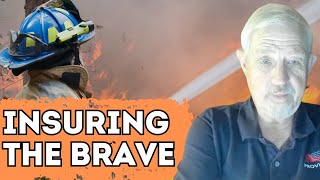
Ed Mann, former Pennsylvania State Fire Commissioner, explains why volunteer fire departments need specialized insurance. Provident Agency has insured firefighters since 1928 and now offers accident and health coverage with lifetime income replacement, a confidential assistance program for first responders, and FirePlus property coverage with guaranteed replacement cost.
Questions this video answers
1902
1928
FirePlus
Station 1902
Fire Rescue One (owned by Lexapol)
Chapters
Employment practices, liability insurance. A lot of volunteer fire departments don't think they need to have it. But at the end of the day, we're seeing more and more claims being filed for, you know, wrongful termination, even in a volunteer fire department. So that EPLI insurance is very important for our clients.
Hey. Hey. Welcome back to the Broker's Voice. I'm actually really excited this one. Today I'm joined by Ed Mann, director, director of trainer and education, training and education for Provident Agency. You're also the former fire Commissioner for the state of Pennsylvania, and. And Ed, welcome to the show.
Thank you. I. I'm looking forward to it.
Yeah. I. I was telling you offline, doing these interviews as part of the Broker's Voice series, it's been, it's been kind of fun. I. I didn't intend to run into a lot of these industry partners that I was unaware of that are doing some unique things. And this episode is going to be no different. I think you guys, what you're doing at Provident is really cool, really unique. So I'm sure there's some advisors listening in that are going to definitely know more, a lot more about you in 30 minutes than they. They did just five minutes ago. But let's start here. Ed, you know, you are the director of training and education at Providence, former State Fire Commission commissioner. Go back to the early days. What's inspired you to get into the career of firefighting?
So I grew up in a small town in central Pennsylvania. The little town of Belfont had two volunteer fire companies. They still do today. My dad was a volunteer at the Undyne Fire Company, and we lived about four doors up the street from the fire station. And every time there was a call, we would run down the street and stand on the corner to watch the fire trucks leave. So I never really got over that excitement. And the other fire company in town was the Logan Fire Company. And I started hanging out at both fire stations when I was 14. And I was fortunate that the fire chiefs let me set in on classes and start some education.
But you had to be 21 to join the Undyne Fire Company and only 18 to join the Logan Fire Company. So I joined the Logan Fire Company. They had red fire trucks. The Undynes had blue fire trucks. I had an uncle that harassed me terribly because I joined the fire company with red fire trucks, because my entire immediate family were lifelong volunteers with the Undynes. And it just carried over. I never got over the excitement of chasing fire trucks from a kid.
I lived with. My grandparents, when I was a teenager and the fire chief, the Logan Fire Company, lived two doors down the street. So when there was a fire call in the middle of the night, I'd run down and jump in his car and ride with him to emergencies and stuff. So I. That's. That's how it all got started. It started when I was a kid, and I've just never outgrown it.
That's awesome. You know, I have to admit, you know, I'm working in my office here, and even when I look out the window, we're. We're just off a pretty main. Main drag here in the town we live in. When you see the fire trucks go by, there's always that natural inclination of, like, I want to. I want to know what's going on. And that's cool, though, because I do a lot of keynote speaking, and I'll ask the audience at the beginning what their childhood dream was, because most people didn't, you know, don't get into insurance by design. So I use that as a way to engage the audience. And I always say, maybe some of you was to become a firefighter, and you actually lived out your childhood dream. In many ways, that's pretty cool.
And, you know, when it.
Ultimately, I ended up going into the Air Force as a firefighter. I had a guaranteed job in the air Force in 1977, went in as a firefighter, and made a career out of it in the military. Wow.
Well, thank you for your service, first and foremost.
Thank you. You were worth it.
And if you. If you get it, if you get a chance to watch the video, you got to see Ed's background. You've got all your helmets, your firefighting helmets behind you. It's actually a really cool backdrop for. For what we're doing today. You also were the state fire commissioner.
Yes.
In the state of Pennsylvania, I think, 15 years. And you spread across four governors, I believe, which is.
Yes.
Pretty impressive. What are some. What were some of the highlights of that role, being in the. In such a high position within the industry in the state of Pennsylvania.
So.
The thing I enjoyed most about it was. Was getting out to meet firefighters. And. And Pennsylvania is a very large state with a lot of fire departments spread out over 67 counties and. And getting out and meeting with the people, meeting with firefighters, hearing what was on their mind. The state fire academy is located in my backyard, and that was one of my responsibilities. When they had live fire training there, I would go there on a Friday and I would call up my therapy. It Got me away from Harrisburg. It got me away from the politicians. And I would actually go into the burn buildings with the students, and the students would come out on the bleachers and say, you know, I need a picture with you. Because no one at home's going to believe that the state fire commissioner was in a burn building with me. But what I found was, was buying being able to sit on a bleacher and a job, sweat and a pair of jeans, and be dirty and smelly just like they were. They were going to tell me the truth. If I asked them what was on your mind or what we needed to do different, they would be honest with me because I was one of them at that particular moment.
You know, the. The downside was, is, you know, we dealt with line of duty deaths, which always kind of what. They always broke my heart.
Our office got intimately involved with the fire departments when there was a line of duty desk to help them honor the individual who died and to support the family and support the fire department. And I always made it a point to either get to the funeral or the viewing and be able to meet with the family when I could.
And that was. That was a part of the job that I didn't care for.
At times dealing with. We have 253 members of the General Assembly.
They're always trying to tell you you don't know what you're doing, and you're trying to convince them that you do. So I learned an awful lot about politics. And the one thing I learned about that was, is that being honest and truthful would eventually you would rise to the top. You may agitate somebody, somebody didn't like you because you were truthful with them, but ultimately it would surface to the top that you were right.
And I always tried to be that way.
Yeah, it's good.
You know, my political handler used to get agitated at me because I was sometimes too, too truthful and maybe too short in my answers. But that's the way I was and that's the way I am still today.
Well, it's a good lesson in life. The truth always wins at the end of the day. And so. That's a good point. Now, okay, so what led you. Let's talk about Provident then. So what led you to make the jump from years of public service to becoming the director of education and training at an insurance company?
Well, it was actually, it wasn't by choice. In January of 2015, we got a new governor in Pennsylvania. And on the 15th of January of 2015, I got a telephone call from one of his campaign people saying, the governor elects. Appreciates everything you've done. But. And I knew what was next. It was. We decided to go a different way. So I was looking for work. So I sent a mass email out to everybody to let them know that as of January 20th at noon would be my last day. And.
At one o' clock that afternoon, my wife and I went and met with two of the CEOs, two of the executives with Provident, and had a luncheon. And they agreed that. And I agreed that we would go. I'd go to work for them. They wait. They wanted me to wait till February to go to Pittsburgh and meet the CEO who was on vacation at the time. I went to Pittsburgh, and the CEO at the time, Barry Ballier, said, so you want to work for me? And I said, I do. And he said. He offered me a wage. I told him I needed a little more money. He said, no problem. I said, damn, I should ask for more. And that's how it all got started. It wasn't by choice. I loved what I was doing as the fire commissioner. And I'll be honest with you, the first year I was out of the office.
One, I was kind of hurt by the way it went down, you know, but look, when you're a political appointee, you got to expect that.
Yeah.
But looking back on it now, Andy, and all truthfulness, it was probably one of the best things that happened to me because I certainly did not have all that pressure on me anymore. I was able to enjoy weekends without telephone calls about things that were going wrong somewhere. So looking back on it, it was actually a good thing.
So.
I'd also label it a hell of an acquisition for Providence to get the former state fire commissioner as its director of education and training.
The biggest challenge I had making the transition, to be honest with you, was is you have to have pre education in order to get a license. So my first license was for accident and sickness or accidental. When you're going into a classroom with people in early 20s and they've already, you know, you've already paid the people for the training, the guy that's teaching doesn't care whether you show up on time or anything. And these kids are walking into the classroom late, they're leaving, they're taking cell phone calls. And I'd come home at the end of the day and complain to my wife. She said, ed, it's not your class.
Do what you have to do. So that was the toughest thing. At 56, going back and having to learn all the things I needed to learn in order to get a license.
Yeah.
And then like a year later proven it decided to get into the property and casualty line and I found myself back in school again so I could to get a license for property and casualty.
Well, let's, let's go there because this is where I really want to dive in. You know, before when you and I met, quite frankly, I. I didn't know Providence existed. I didn't realize there was a carrier with the niche we're going to discuss. So that's why I was excited to do this. I think Providence history goes Back to the 20s, 1928. Talk a bit, a little bit about the, the start of Providence and, and kind of where it is today and who it is today.
Okay. So Provident actually got Its start in 1902 as a privately owned insurance company in the Pittsburgh area. And in 1928 the owners of the company saw an issue, especially with volunteer firefighters. When they got hurt doing something for the volunteer fire company and couldn't work at their full time job. They had no kind of coverage, there was no insurance. So they created these, started to work and created through different carriers, created these insurance programs, these customized insurance programs. So individuals not only had death benefit if something happened to them, but there was income protection and there were other protections built into the policies. And it's just expand. Originally everything was pretty much west of the Susquehanna river in Pennsylvania and eventually it moved throughout Pennsylvania. And now we're doing business across the United States.
And we depend on a network of brokers. We only have like 38 full time employees. So obviously we're in your own business across the United States. So we depend on a network of brokers to help us with our product, to meet with clients. And we have some really super superstar brokers and then we have some that are, you know, they're comfortable and trying to do everything by email and they don't want to make appointments with clients, which frustrates me at times, but it's what you have to deal with.
Well, but you said you guys also over, over the years have gravitated and into the property and casualty space. So right today you serve both employee benefit advisors and commercial insurance advisors. So let's talk about some of the products that you offer. I think one of your main products on the property casualty side is Fireplus.
Right.
Talk to us a little bit about that.
Okay. So FirePlus is the name of our insurance program for property and casualty. That's the name or the moniker that was used. So we're dealing primarily with fire departments and EMS organizations. And the, you know, when you. Property and casualty insurance for a fire department or for an emergency service has to be a little different than the property and casualty insurance for a homeowner. So, you know, we have, you know, like guaranteed replacement cost on a building. So regardless of, you know, the cost to replace that building, we're going to pay for it.
You know, especially given today with the inflation, the way it is on the auto side, you know, non owned auto. If you're using your privately owned vehicle to do business on behalf of the fire department and you're involved in an accident, you file a claim with us. Now you're not filing that claim against your own insurance, which means your premiums are going to go up. And other than the deductible we take care of.
And.
Some of the other folks in this niche, you have to file a claim with your own insurance company and then they reimburse you. Well, with ours, you file it with our insurance and now you're protected. Like when I was a volunteer fire chief, I used my private land vehicle to respond to calls. So at any time I could have been involved in an accident, the vehicle was damaged, I didn't have to worry about filing a claim against my own insurance.
Employment practices, liability insurance, and a lot of volunteer fire departments don't think they need to have it. But at the end of the day, we're seeing more and more claims being filed for, you know, wrongful termination, even in a volunteer fire department.
Wow.
Sexual harassment, you know, those types of claims. So that, that EPLI insurance is very important for our, our clients.
And the other nice thing is because we're still a privately owned company, it kind of makes it easy for us because our managers have a direct line with the carriers. So we can pivot a little faster maybe than some others because we don't have to deal with the bureaucracy of a major corporation.
Yeah.
Which allows us to, to be able to customize some things even a little more than others might be able to.
Yeah, no, that's, you know, again, didn't know much about provident going into the conversation here, but I've got to believe there's advisors out there, you know, who, who have opportunities with ems, voluntary fire departments, things like that, from a commercial standpoint that could really stand to use this. Now, commercial is your newest product per se.
Right.
You guys were built on the accident and the health. Talk a little bit about some of the. I don't Want to call them unique, but you know, some of the accident and health programs you guys have, like lifetime disability, family expense benefits, wellness programs, where do you find your clients? What do you find they find most valuable when it comes to those benefits?
So what I found is, is and I always like to go out and meet with clients face to face. When it's time for a renewal, I want to sit down and review all their coverages with them because I find a lot of, even the officers don't know at times what the coverages are. And the income replacement benefit is one that when you explain to the client, hey, look, if workers comp says no to your claim and Your benefit is $1,000 a week and it's a compensable claim, we're going to pay you $1,000 a week. If workers compensation says yes and you're at 66 and 2/3% of your wage, we're going to pay you the difference to make you whole. And a lot of our clients go, wow, I had no idea you could do that with this insurance. The other thing that they really like is that our standard.
Proposal, if you will, standard policies, it's a lifetime benefit. If you want a five year benefit or a ten year benefit, which basically means at the end of five years, if you're still partially disabled or totally disabled, there's no longer any benefit. Or if you get the 10 year, at the end of 10, there's no longer that benefit. If you have a lifetime benefit, we're going to continue to pay you for a lifetime.
And that's a big one, the dependent death benefit. So for every dependent you have, there's benefit that we pay, you know, besides the death benefit to the spouse, there's a death benefit for the dependents. But the big one is the income protection. Especially when you tell them that it's, you know, it's lifetime.
Lifetime's huge.
And the one thing that I find is a lot of times is that when you go out and meet with clients, they may only have 250 or $300 a week in income protection. When you explain to them if workers comp says no, you only got $300 a week in income, can you live on that? And obviously most of them, the answer is absolutely not.
So that one's pretty important. The other thing I really like about our accident health is if you're an accident health client, you and your immediate family members have access to our first responder assistance program, which means you pick the telephone up, it's completely confidential, you call an 800 number and you're able to talk to a clinician that can help you. Even if you know, beyond mental health, you're having financial issues, they're able to direct you to get some assistance. If you're having problems finding care for an elderly parent, they're able to direct you. So it's basically an employee as a stripped down version of an employee assistance program. And I can tell you from someone who has personally used our first response or assistance program, it works and it works very well.
And the reason it's so important to me is.
Year after year, the last several years, suicides for first responders have outpaced line of duty deaths.
Wow.
And so we're really, you know, I have a laser focus on that and so does our company. That's why we have the first responder assistance program.
Yeah, no, I was, I'm glad, I was hoping you would bring that up because if you had not, I was going to ask you about it, that I would say in the line of duty. I meant some kind of mental health employee assistance type program is, is a must. And so I, I just actually, you know, the more I hear you and talk about it, the more I just love what you guys have built over the years. You know, even when I look at beyond the coverage, what you guys are doing that I admire. One, you have a podcast, I believe it's called 1902 Station 1902. And you guys also have Fire Plus Academy, which has hundreds of online courses. Now I believe, I gotta believe for the academy are the end users the EMS and the voluntary fire departments.
Right. So let's back up just a sec. Let's talk about the podcast.
Yeah, tell me, tell me what you guys talk about on the podcast.
I'm interested. Station 1902. Obviously we came up with the name because proven it was founded in 1902.
Yep.
A lot of people, it's like, where'd you come up with Station 19?
That's what I was going to ask before you said 1902. Yeah.
So the, the, so what I do is I find subject matter experts and that might be dealing with mental health, it might be dealing with lithium ion batteries, alternative fuels for vehicles, you name it. And I come up with a list of questions, I send it to the individual and we record a podcast. So it's all audio and then we use that same individual then. So, so for example, when I do a podcast with you, say at the end of October, we're going to do a webinar with you at the End of November. So your, what, Your podcast goes live at the beginning of November, and then the last week in November, I actually do a webinar with you, which is live, and the individual is able to actually train you on something. So they use a PowerPoint, they share a PowerPoint, whatever the case might be. And we've done a range of topics from how our policies work to our first responder assistance program to alternative energy. I actually even hosted a webinar with people from Europe, from.
Young lady from Switzerland and a gentleman from. From England on a product that they developed to deal with lithium ion battery fires.
Wow.
We typically get, on a webinar, we'll get anywhere from five to 600 people that register. And then typically we get about a little more than 50% of them that actually show up the night for the live training. The one thing we found with the webinars is, is a lot of people will. They'll use it as a training night, and they might have 15 or 20 people gathered in a training room and they bring it up live, and then they use it for training for their department. And then we issue a certificate at the end of it. It all goes out by email. So.
They'Ve worked really well for us. Get a lot of. We've had people from the Philippines.
And Qatar on our webinars. And, and Hawaii. We don't have any clients in Hawaii. I keep telling the boss, hey, we need to get some clients and business in Hawaii and I want to be the one.
I need to do some business travel. Yeah.
So, and, and so that's the podcast webinar piece of it.
Yeah.
Our FirePlus training academy, we're partnered with Fire Rescue One, which is actually owned by a company called Lexapol. You may be familiar with Lexapol. And our property and casualty clients have access to that system free of charge.
And they have access to those. So the way it typically works is as a fire department, they're advised, hey, you're a PNC client now. You have access to the Fire Plus Academy. I'll get an email, I'll verify they're a client. I reach out to Fire Rescue, they send a welcome email to the administrator. They fill out a spreadsheet, they get an email with their temporary user ID and password.
The training officer or the fire chief becomes the administrator so they can assign classes to individuals. And all of the full course EMS classes are approved nationally for continuing education.
Wow.
So if you've got EMTs, paramedics, because there's always that continuing ed education requirement they're able to use the full length courses for continuing education.
Yeah, that's great. Well, I'm going to ask you to give me, I'm going to ask you to give me an obvious question then so or excuse me, an obvious answer to an obvious question.
You guys survey very specific market. You know we get a lot of advisors who tune into this these episodes.
Dare I ask you to state the obvious describe in detail quick who is the ideal fit for your insurance programs?
Volunteer fire departments, career fire departments, combination fire departments where you have volunteers and career ems, emergency medical services. Whether they're all career volunteer. I mean there are still a lot of volunteer ambulance services in even here across Pennsylvania and across the country. We've just recently we're now offering our programs to law enforcement.
Which is relatively new. And one of the nice things about the law enforcement piece is is that so for example a lot of states have what they call heart and lung. So an individual goes into the heart and lung program required by law and the municipality has to continue to pay them. Well one of the things that they can do with this program is with the accident health program is that income protection can be provided to the municipality to reimburse them for that wage that they're paying the individual while they're off work.
So that's a benefit to the municipality if the individual goes gets moved into workers comp and there's you know a difference between the wages and what workers comps paying them. We can pay the individual the difference to make them whole.
That's great.
Just like we do with fire department. So if you're involved emergency services we can find something that'll that'll work for.
You, that'll support you. So if a broker is tuning in and says huh, I got some opportunities I guess I didn't even think about or was aware of what are the most appropriate ways to get in touch with you or provident to start a conversation.
So when, whenever you send this out, if you if someone wants to send me an email@emanprovident ins.com and that's 2.
Ends e man with 2 ends 2n.
I can get it sent to the appropriate people or you can send an email to Provident info and we can.
Answer it that way and that's provident info@providentins.com right? Perfect.
And we're able to, to to.
And we get a lot of stuff that way. You know I.
And sometimes they're really, you know they don't even have anything to do with our insurance coverage. It's hey, can you provide me with a standard operating procedure for something?
Yeah.
So the any of those ways at all awesome or you know, it's been.
An honor to have you. Ed 1 Again, thank you for your service in the military. The service you've done in Public Service Provident is a lucky organization to have a guy like you with as much history and experience you have leading their, their education and training efforts. I'm sure there are going to be advisors who tune into this and.
Realize, hey, I had opportunities I didn't even know existed and now I've got a carrier that I didn't know existed possibly that can serve this market. So thank you for taking the time to do this.
Well, thank you for the invitation. I certainly appreciate it.
If you're an advisor out there listening in, whether you sell benefits or commercial, you've got ems, voluntary career fire department opportunities that you might be overlooking. This is why I wanted to have that on. This is an organization, an insurance company that serves that specific market. So this could be an opportunity that helps you set you apart in the market. Be good.
More from Andy




If you want producers to succeed faster, help them create a sales message that creates confidence.

Sales isn't a zero-sum game! You can have tough competition and still grab a beer after



Option 1: Meditation, a fast walk, a podcast, and protein. The ultimate morning routine!

How you do one thing is how you do everything. Ill elite producers fuel their body.


Stop living in the gray of maybe! Your job in sales is to get a clear yes or no