Annuity Rates on the Rise! | 7 Figure Annuity Sales Podcast | Ep. 198
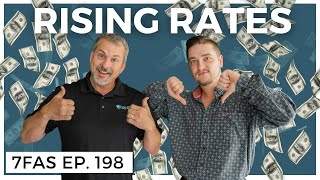
Chad Owen and Caleb North warn agents not to sell annuities based on illustrated returns that apply today's high rates to the last 10 years of strong market performance. Focus instead on guaranteed income, worst-case scenarios, and the company's rate history at renewal.
Chapters
In this episode, we're going to be talking about increasing annuity rates and what to look for.
Hey, everyone, it's Chad Owen, the annuity sales coach, owner of Retirement Realized Financial Retirement Realized Agents Academy. This is my sidekick, Caleb north. And I'll tell you, be sure and go to YouTube, like Subscribe all that good stuff, ring the bell, make comments, all that. Because what we're trying to do is we're really trying to build our annuity page on YouTube because you guys know me by now. I mean, some. What is this? We're, we're like 100 something almost working close to 200 episodes. Got to be. And my thing is always to try and help people get better and better. I mean, our podcast, whether it's Spotify or Libsyn or all those are doing crazy, but we haven't really done a great job at building our YouTube channel.
Well, and we have the editing team put in some funny Easter eggs in that too.
Oh, interesting.
They add the kind of some, some humor moments to the videos that are not.
That you cannot do in a podcast. That is true. That is true. But do not watch it while you're driving.
Yeah, that's true. That's our disclaimer.
So, Caleb, post with the most.
Yes.
What are we talking?
Well, we've got annuity rates up, we've got interest rates up. You know, we've got some annuity rev. There's products out there that we're looking at, at rates on index strategies, and they're a lot of them are higher than we've ever seen on certain strategies.
Higher than you've ever seen.
Fair enough.
Now, I've been in this business a lot longer, so as I'm sure you can tell, I sold my first annuity to T. Rex. Yeah.
It didn't last that long. The dumb comment wiped everything out.
But I mean, it's. It really is nothing. I mean, it doesn't mean anything anymore. To have low or volatility control indexes with over 100% par rates on annual point to point strategies, that's like become a normal thing almost, right? So annuity rates are up and if.
You'Re not, then find one that does. But make sure it's a good index because we also got to be careful. There's a lot of these indices that you look at and you, if you study the actual core of the index, you're gonna go, what the heck? How is this one created? You know, and the new indexes, I don't have a problem with that. I have somebody well, why do you use brand new indexes that are only been around four or five, six, seven years? Do you know how many mutual funds are new and how many they got rid of? 2007-2009. You have to adapt a modern market and I'm not knocking them changing mutual funds and get rid of some of the dogs, same like you get rid of some of the dog bonds. I mean, but you have to adapt at the times.
Yeah, it's true. It's very true. So and rates are up across all fixed products?
Yes.
I mean you've got higher par rates, you've got higher caps, you've got lower spreads, you've got higher migrates, you've got higher fixed account rates and FIAs. I mean everything across the board is higher. So what you have right now is these high rates on the illustration. The way that illustrations function is that it applies the current high rates to the indices over the last 10 years. It does not show you what the rates were over the last 10 years.
Right.
So we're in this season where the market is down, interest rates are up and annuity rates are up. And so they're creating these high annuity rates. You back, you back.
High historical back testing rate.
Exactly. Because you back. But the market was a gold mine over the last 10 years. Yeah. I mean just absurd. I think the, what was it? The S&P 500 total return last 10 year average is over 13% per year. There's the average total on the total.
Return until the next two years happen. But anyway, right.
Then you're really. But the point in that is you have a remarkably high performing market over the last 10 years with. And we're on the brink of this correction, so to speak. Right. Where things are starting to look how a lot of people have anticipated they should be looking for a little while now.
The lemmings are at the edge of the cliff just as we speak and.
Annuity rates are high. So you, you cast those high annuity rates on these illustrations over the last 10 years when most of that time period annuity rates weren't actually as high as they are.
Do you know, do you know what the story of the lemming is?
I don't.
You don't? So they say they'll say something along line, don't be a lemming.
Okay?
Because what happens, and I think this is in Ireland or Scotland or some sort of some Viking type territory, there's a little creature called a lemming. And what happens, and I don't know why, but These lemmings every 1, 2, 3, 5 years, one of them starts to run over the edge of the cliff. And they all follow. They all follow over the edge of.
The cliff, it seems like.
So you got to Google lemmings and you can see what the stories behind it. Don't be a lemming. Because we see people do that right now. You, you know, we got all these things that are going on right now. We have all these super high historical rates and they're all jumping to these new products that have these high rates, are being a lemming. Because the reality is we need to understand the true purpose of why we present indexed annuities, the number one focal point. And I think you're going to know the answers. What is the number one thing I focus on? On the indexes. Like when I present it to a client, I present the illustration to the client. Yeah. What's the number one thing I look.
At the worst case scenario.
Worst case scenario. Every time it's like, what is the guaranteed. If the index did Nothing, it made zero for the next 35 years. What is the worst case scenario for your income? Because here's the reality. The chances of an index actually making 9% or 6% or 7% over the next 10 years is pretty slim. Can it happen? Absolutely, it can. But is that something you would ever want to lead with? No, always, Always, always. Worst case scenario if your money did nothing. That's why I love having indexed annuities that have guaranteed income riders on top of stacked growth for potential index growth. But I know, for example, we use one right now that has a small bonus of 5%, but as a 4% minimum guarantee on the income base plus index growth for the next 10 years. That's the worst case scenario is your income growth of 4% compounded for the next 10 years. If you have anything in the next 10 years that had a remotely good year, you just see the numbers go very, very well. So I would. That's why this product, once again, is something that I just, it just can't be beat. And because I don't want to ever go to a client and go, hey, you know what? For 10 years you made zero. But we're trying to be like, I just went up against another age. They're trying to say their product is better, but they put them into a product that has no guaranteed income at all other than annuitization, trying to say they could provide income for life. They put the wrong dollar amount and they put a single life payout for a married couple.
I thought you said it was an income.
You're correct. They did a single life payout on the one I was presenting.
Okay, I see what you're saying.
So they totally excluded the wife. And I'm like, what are you doing? Number one, wrong dollar amount only single life payout. And you try to do an illustration on the one I did, which they didn't even know the right indices to pick. But the point was, is then they used a indexed annuity that had no income rider and made an implication of this is how much I'd provide. You can't. If income is the primary concern, do you want to plan for living and plan for dying? If it's a plan for living, then you have to have an income plan. So that's the focal point of having an income rider. But using a historical rate, trying to present this as man, you know what, over the last 10 years, this is what it did. That does not mean it's going to do that for the next 10 years.
Well, and that's, that's exactly what I'm trying to communicate with the idea of. You've got crazy high annuity rates right now that get applied to the index strategies over a historically great 10 year period. So you have illustrated rates that are astronomically high and remarkably unlikely to actually occur. Yeah, it makes illustrations look really, really, really good. It's probably not going to be in actual.
A lot of markets that market that way. There's a lot of people, they do, they just. Their email blast is we have an index that made 13% over the past 10 years. What you know, or even 7 or 8%, they don't tell you that there's. I do think 7%. Yeah, exactly. I do think 6 to 7% can be probable. Yeah, I really do. Because the way they built the indexes nowadays, they can do that. Because if you have two years of zero, which if you're doing true management with your client and you're going, hey, now, when we, right now we're going to put everything into the fixed account, which makes 3%, you have to give me a call in 11 months and we're going to revisit what's going on right now. If I think the market's going down or it's going to stay flat, then we'll do the fixed account again. If we think it's going to go up, then we'll move in one of the indices. Now I make this crystal clear. I'm not trying to predict what the market is. And I use this example of one of My own annuities that I own. And I said I missed the timing on that. I did very well the year before. Then it started to tank, thinking I'd stay in the index and I instead of going to the fixed account, I know high likelihood for the next year I'm going to be making zero on the index. So I don't know the market but I can tell you off of the three different companies I own with annuities and the index strategies. I don't always get it right and I tell them that. But that's also why I present the worst case scenario of your index did nothing for the next 10 years.
Yeah, no, you're exactly right.
It's exactly why you can't sell. Like we already said and I have in my notes, don't sell on the non guaranteed portion of the illustration. Focus on the guarantees. There are products out there that I'm sure you can probably think of by the way that I'm describing these where you have basically no guaranteed roll up rate. A lot of times you have really fat bonuses on the front end and the only way the income has the potential to increase is based on index performance. And they a lot of times will apply a multiplier to that performance to try to create that. Here's the problem that I foresee with those types of products right now is that we are on the tail end of again a phenomenal last 10 years. And that's what the illustrations are looking at. And now you apply these crazy high annuity rates, par rates, cap rates, low spreads to the last 10 years of index actual performance and you have an income illustration that looks like, like you.
Get a pet unicorn at the end of your retirement.
And the odds of that happening again because we have higher rates right now than we have over. Well and I, I'm saying over the last 10 years, really I'm thinking short term over say the last three years. Annuity rates are higher than they'. Okay, before that I'm sure we're still doing better than we were, but the market was good back then. You're rarely going to see because these interest rates are affecting the annuity rates. Right. So you're rarely going to interest rates affect the market. So you're rarely going to see crazy high again, rarely crazy high market returns. At the same time you have crazy high annuity rates.
Well and if you think about this, let's think of the logic. I just told you what I tell my clients probably go into for the next year, which is what the fixed account. So what does it matter what the participation rate?
It really doesn't.
It doesn't. And then if we look at, if we think the market's going down for the next couple of years, which once again we don't know, but let's say we think it is, then what does it matter participation rates?
It really doesn't.
It just affects the way they look at fixed rates. Now what I am very picky about is making sure that the indexed annuity I use has quite, quite a few different index strategy options as well as a good fixed rate. So I'm not big on caps, haven't been for many, many years. I just, I don't think caps, honestly, especially when we see the crazy ups and the crazy downs. What good is a 5 or 6% cap when the market went up 14%, you know, so now granted, on the volatility control indexes, you're not gonna see generally a 20 or 30% gain, but you could see 12, 13, 14% gain. You could see those. Absolutely. But you have to look at participation rates and spreads I think are probably your best bet if you're going to use index strategies. But once again, the cap, the participation rate, the spread, none of that matters when the market's going down. But what would matter when you have an additional fee that's on added on top of the index strategy and the market's. Because in the market's going down because now they made zero. But let's say they have one and a half percent fee taken out of that, then your indexed annuity can go backwards when the market falls because you made zero and you had the fee on top of it. So that's another reason why I'm not real big on fees built into an index. Plus, we sound too much like a broker and that's just something I don't think is a good idea.
Well, there's. Yeah, I mean generally people are moving away from, A lot of times they're moving away from places where they had high fees.
Think about it. If you have an income rider and you have a 1, let's say a 1% fee and then you have a 1% income rider fee, 2% right there. You sound like a broker.
You sound like it.
I can't lose money when the account value drops, but it still can be 2% less.
It's true. The other thing you've got to bear in mind is you can have clients in the same year, sometimes even in the same month that when you look at point to points, do drastically different their returns right I mean, think about the clients that purchased an annuity in January of this year.
Yeah. It's funny, I just had a client call me and goes, you know what? The S and p is up 6%. This was a little while ago. How come I only got zero? Well, because it was a volatility control index and they move it around in there. So you got zero or I think it was 1%. They got 1 or 1.5%. And now if we had that same conversation where we're down a considerable amount, he's going to be loving that zero.
Oh yeah, yeah. So if you have a client, let's just, let's just take January of this year where at that point, I mean, the S and P itself was up, it was 16% higher than it is right now. Okay, so we're down 16% as of as a couple weeks ago. Yeah. When we're recording this.
Yeah.
The difference of the starting point in the index index strategies for the clients sold in January versus the clients sold now is dramatically different. So in one year, when allocate reallocation statements come around, you're going to see January clients, their returns probably going to be looking different than the people sold now because the people sold now have a lower starting point. So you got to understand those. The annual point.
Well, unless your point the January to even now, if it's still down in a year, it's still zero, still zero. Which is why my number one way I present an illustration is I highlight all over the place.
Right.
Guaranteed values, guaranteed return, which is zero plus whatever the income can actually grow at.
Right.
So that's why I'm a huge fan of having that combination. I'm going to say it again. I love having a guaranteed income growth for the next 10 years. As far as the income rollup rate versus nothing with a higher potential of having a quote unquote higher index growth when I can have the income stacked on top of the index growth.
You need to bear in mind that what you see on the non guaranteed, the hypothetical part of the illustration is going to be almost certainly look better than what it probably will in actuality. So if you're selling from that place, I'm just, I think logically you're going to end up with frustrated clients.
Well, that's like I said, you know, you know, when I pick indexed annuities, I try and pick something that doesn't have the worst performance ever was one and a half percent and the best performance ever was 15%.
Too much.
I try and keep it within a 2% spread from the high to the low. And then of course I got to pick companies with very high rate integrity. How long and they live. So your existing, let's say I sold a client four years ago. Are the rates the same? And I can honestly say with most of the companies I use that has been the case. They're not only some of them are even higher. Yeah. And you know, but even their movements, they're not high increases, but they're not high decreases. Right. So it's very important that we understand rate integrity. And most people will not talk to you about that. They're just going to tell you what the current gaps participation rate spreads are. But they don't say, well, for existing clients we screwed them over. Right. You know, we just, I and there are some companies out there that they are known to have very high first year retake rates and then once that two year anniversary state comes out, they're in their second year. You're going, I don't want to talk to these people. Yeah. And fortunately I've never had to have that conversation before where it was a huge drop like that.
That's good.
So.
Well, I do have just two more things. I figured you would that in this, in this time seem like minor things but they're actually bigger things. So when the market is down to me it's even more important to focus on renewals and to focus on guarantees.
Yep.
Because especially right now when we do have back tested illustrations that look incredible. You need, you don't. Don't. I'm beating a dead horse again. We talked about that episodes ago. That horse is dead. But don't just look at the non guaranteed and think that that's going to duplicate because it probably will not.
And even the worst case scenario, who knows, right? I mean we're in uncharted territory. Really. We are. It's, you know, strange environment and I actually think we're like I've said this many times, we are in the golden age of annuities. Because even when the markets do fall and interest rates continue to go up, that's going to make our fixed rates really well.
Yeah. So fixed rates are good and again par rates are high which makes the illustrations look really, really good. But if the market's down, like you.
Said, that doesn't sound like Donald Trump. It's going to be huge. It's going to be huge. Okay. What else do you have anything else, Dad?
I don't think so.
But to say it again, thank God. I mean, whoops. What? Sorry. Not. Sorry.
Guarantees are huge right now.
Huge. Huge.
Even though the index allocations on illustrations look amazing. Focus on the guarantees and make sure that you are looking at renewal rates.
Yes. You want a huge year. Huge. It's going to be huge. It's going to be outstanding. Huge. For the best. Okay. Appreciate you guys. Time. You have a great day. And of course, happy selling.
Sam.










