How to Be the Expert in This Industry | 7 Figure Annuity Sales Podcast | Ep. 133
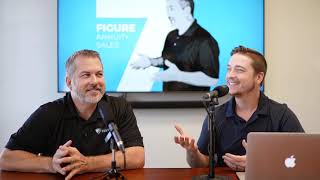
Chad Owen and Kris discuss becoming an annuity sales expert. They stress avoiding product pushing in favor of client solutions, investing heavily in leads, and building professional branding through email and websites. High performance requires sacrifice and constant learning.
Chapters
Hello, everyone. Chad Owen with the Seven Figure Annuities Sales podcast.
Nailed it.
Boy, that was a tough one. I can sell annuities, but that doesn't mean I can open a podcast correctly. When you see what my days are usually like, you'd understand. I was like, how does this guy even speak at times? I don't know. I don't even know what I'm talking about.
Ping pong, isn't it?
It's like having 25 kids. You don't know which one you're talking to at the time. So, anyway. Anyway. So what are we talking about today?
Yeah, well, that's great. I want to talk about setting yourself apart, being an industry expert. What do you do? What would you recommend agents do? I want to start just kind of this snowball of becoming an industry expert. How you do that and how you set yourself apart.
Well, number one, don't be a product pusher.
Okay?
That's number one. Make sure you're all about the solution. Not about the commission, not about the trip, not. Well, actually, not a lot of companies do trips anymore, so that doesn't matter. And we're in the middle of a pandemic, so quote unquote.
But, you know, make sure you're not a product pusher. I see that all the time. You know, you have these people that are career agents that they only know about one or two companies. And I, and I hear people. Well, Chad, you sell a lot of one company. Yeah, I sell a lot of one company. When it's the best company, when it changes, it's now another company. When it's an older person, it's a different company. When it, I mean, what are the situation? It's whoever's the best for the time. And sometimes you have companies that literally are the best, you know, they're the best income, the best index. But man, I am not loyal to any company in particular.
Clients.
Oh, all the time. What? My software, I mean, I just compare everything in one shot and whoever's the best, that's who I'm going to use. As long as I read the fine print, the disclosures, and I make sure the product does what it says it's going to do. Because a lot of times I get solicitations from people that are trying to get me to sell their products. And I'm telling you the product does not work how they say it's going to work. So I'm a stickler on making sure that product does exactly what it says it does. Absolutely.
Well, in the reality, too. Is in your case, when you're talking about selling a lot of one particular product or one particular company, when you come across majority of your clients where their situations are very, very, very similar and the differences are the minutia, then of course, whatever is the best for one is going to translate over.
But right now, between age 50 and age 80, it's number one in most situations.
Right.
But that doesn't mean that's the only company I've written this year. And if they change their situation, then I would switch companies. Absolutely. I've been using one company consistently, and don't ask me which one it is, because if you're not part of our, you know, we just don't recommend products. That's. You talk to your marketer and ask them what's the best for the situation. And if you have good marketers, good marketing organization, they're going to have everybody, and they're going to help you pick which one's the best.
Right.
But that being said, you know, I've had one for quite a while that's been number one. But, man, I mean, I think last year I ended up writing seven different annuity companies, 12 different products. So, I mean, it was. It just was different. Right. I mean, one was simply a guy that I could have fit everything to one company, but he wanted to be at the 250,000, so he wanted it in four companies no matter what. And because an agent before me that he met with said, oh, this has a state guarantee fund, which once again, as an agent, you know, we're never supposed to sell that way. We're never supposed to mention the state guarantee fund as a selling tool.
Right.
But that agent did. So once he asked me, well, what about state guarantee fund and 250,000? I said, okay, well, we can split into four companies. And so we did it. And so, I mean, it just depends. Don't. Product funnel.
Yeah, absolutely. No. And that's. That's the case in point right there. Don't be a product pusher. I love it. And I was going to ask this question, and I feel like that is probably a solid answer to this question, but what are you doing that other agents should do? Or what are you not doing that other agents shouldn't do? Something along those lines. And product pushing is.
But once again, I talk about this on so many podcasts about being willing to put money into your business. Absolutely. Being willing to put time in your business. I remember when I was getting started in the mortgage protection business, the guy that was trying to recruit Me, picked me up, we went to lunch and he drove me to this golf course and there's all these guys on the golf course. And he said, chad, you want to know who's out on that golf course? And I'm like, okay, because those are insurance agents. They have tons of freedom. And I'm like, wow, that stinks. Because the reality is, yeah, everybody who follows me knows I have plenty of freedom. I get to do a lot of things because I do a lot of things to be able to do a lot of things. But I would not say that while you can spend your time on the golf course and you can make all this money and just golf all the time, which. That was the implication.
Right.
When I was in the mortgage protection business, man, I was running five days a week and making calls even on Saturday morning. And my days would start at 7:00 in the morning. A lot of times I'd get home because mortgage protection, I'd run appointments at 9 o' clock at night. So sometimes I wasn't getting home till midnight. Sure. And then I'd go home and go to bed and rinse, repeat, and start over. So, you know, if you're going to, if you're, if you talk about what you need to do, willing to be able to put in the sacrifice. You know, I think of these companies or these guys are now billionaires. And I don't know, I mean, a lot of them, I don't like their thought process or their beliefs or their principles and what they're willing to sacrifice. Because a lot of them, I've talked to some very wealthy people and they're on their third marriage. You know, they don't. That's not their. They are married to their job. But all of them have had to sacrifice something to get to where they are. And I'm not saying whether you sacrifice what you're sacrificing is good or bad. I'm just saying they all sacrifice something to get there. So don't think in this business you can just cruise. That's good.
I still study all the time.
Right.
I still learn about new products. I still can. Why I may continue education coming up again in April. So, I mean, I, I am always trying to learn. I never get comfortable with where I am. I've learned in my life, whenever I get comfortable, I'm in trouble because, I mean, something's going to come along that's going to give me discomfort. And I think it's a good thing. I think when you get comfortable, you put your guard Down. And I mean, even when I'm in Disney World, I'm watching out for that crazy lady with a stroller, running with the three kids. And then it's going to come in and take my entire family out. You know, I got to throw the stick at make this. No, I'm.
Briar.
Don't take long, does it?
No, it doesn't.
I love what you said, though. You said regardless of what you end up deciding to do, you're going to sacrifice something. You take a vacation, you're sacrificing potential deals, man.
That's what. It's funny you just said that, because I just talked to someone today about that. I said, you know, when I take a vacation, honestly, my first thought is not how much it cost, it's how much business I'm gonna miss out on when I'm gone. It's not, you know, and we do. We actually stay at nicer places now. Before it was whatever the cheapest thing was that didn't have bed bugs in it, you know? You know, I didn't care. I mean, we're on a road trip. That one looks like nobody died in there. I think we're gonna check that one out. But now we stay in nicer places. But I'm not thinking about the cost of the trip. I'm going to. Gonna be gone for a week. Well, if I average, you know, two, two and a half million a month, that means, I mean, the week I came back, I wrote what, a little over a million, right? And then the weekend, January, I wrote 1.7 million, right? You.
You had two. Two weeks, over a million dollars on.
Each side of your vacation.
Long vacation. It's like, what would that middle week have been, right?
I don't know.
But that's the reality. It is a sacrifice. You go on the vacation, you miss out on potential deals. You.
You stay in, don't go on the vacation, you sac.
Exactly. There's sacrifice both ways. You buy leads. What is the sacrifice? Whatever you're spending on leads up front. You don't buy leads. What are you sacrificing time? Because you're going to have to just spend more and more and more. If you go like little bit by little bit to try and build up because you don't want to spend the money on leads up front, then it's like, okay, now you're just going to end up that much further down the timeline of. So there's always a given.
Take someone, say, one time and someone very wise in this industry, and I respect and admire. It's actually my brother.
Oh, it was me.
No, it was not you. No, I said respect and admire. You just admire.
Deal.
Kris, you do have a really good wife, which is my daughter.
Well, we know what the good.
He said the most expensive lead is the one you don't buy.
That's true.
Because it's not about the cost of the lead. It's about the cost of missed opportunity.
Absolutely.
I was like, dang. You know, that's really wise because the lead costs 300 bucks.
Right.
What about the miss sale you could have got?
Right.
So, yeah, I think you got it. I mean, there's consequences in every little thing we do, both good and bad. Absolutely everything has a consequence. So.
Well, and here's. Here's. The reality is you're gonna spend 300 or more, $300,000 or more on leads this year. And I keep talking about it, and you love it when I bring those up. Every episode, I just keep talking about it. Every webinar we do, I just keep talking about it. The reality is, you're going to end up spending that much money on leads this year. But what are you going to end.
Up one and a half times more than the first house I bought.
That's pretty. Pretty good. Talk about some growth.
You know, actually more than. I think the first house I bought was 170,000 or something. Okay, so. Okay.
It's almost. Yeah, almost. I mean, you're.
Yeah, yeah.
You're doing good, though. But you're going to end up writing, what, 30 million?
So when you think about 27, because I will beat last year.
That's true.
Yes, it's true.
But the reality is, would you spend $300,000 on leads to write $10 million in annuity premium?
Yeah. Because 1% commission. I'm good to go. 1%.
But the reality is, it's like those numbers seem big and they seem crazy and they seem huge. But it's like, well, what are you going to end up producing with? I mean, 300,000 in leads. How many. How many hundreds of leads are you going to end up with? This? You're probably close to a thousand.
Well, you know, I bought this house. This was. We're building a house, and my builder unwisely let me have his bobcat. So I was like, oh, I could go out there and skid, stir, and dig. And so the house is built, and I'm out there trying to do some landscaping, and I look in the front of my house, and I go, hmm, I want to build a pond. Right there.
Right.
So I started digging with a bobcat. With a bob. Bobcat schizzer. You can dig a lot really quick. So I ended up with a pond that was 50ft long, 25ft wide. And I. My wife comes home now, remember, she was out shopping. She comes home, she sees this big hole in the ground, and she sees this big mound of dirt where the waterfall is going to go. In my head, I envisioned what I was going to do. Now, the reality, if I had a shovel to do that, number one, I wouldn't even dug the first hole. But because of the tool I had in front of me, I was willing to do that. And when you think about that, the leads and the quality of leads we have can often allow us to dig quicker, faster, but we got to be willing to spend more. So that's what I look at, and I think that was your question. I'm still trying to remember, because now I'm thinking, my koi pond, where I built the bridge and I used to sit on it, and I'd just let the water run under my feet.
And you told your kids the koi had teeth so they wouldn't go.
Did they not drown? Nobody drowned it in that pond. Okay. Four kids with. If I never would. Told them they had teeth, they guaranteed would have been out there with a hook and they would try to catch the fish. And I probably had someone falling. None of them did that.
My wife thought koi had fish. No.
22. No.
We were in Hawaii when she realized that koi didn't have fish.
Okay. So what are. One of my greatest accomplishments in life? Let my daughter believe that koi had teeth till age 22.
Yeah.
Yes.
And she tried to convince me that they did. So not only did she just believe you, but she was perpetuating that idea.
What we will say to protect our.
I'm telling you, it's good you said something interesting there. And I'm trying to think back to it. You were talking about your pond and digging, all that, and you know what you would do because of the tool that you had in front of you. Right. And the thought that came to mind is an agent that believes that their success is riding on them and not the lead spends the money on leads. But it's tough for an agent that is stuck in this mindset of it's all about the quality of the lead. It's all about how good is this lead to spend money on the leads? Because their confidence isn't in them. It's in who's on the other line.
Absolutely. I mean I had a client last year that I wrote 4 million with that they met with an agent a few months before that and they wrote 30,000.
Right.
Why did that agent get a $30,000 deal and I got a $4 million deal each from the same lead?
Right.
Is because the mindset behind it. I wanted to find a solution to the problem. I didn't just want to walk out with a deal.
Right.
And it's. And I still, I mean, fortunately the index they're in is actually looks like it's doing really well this year. So we maybe some more. They have 20, $25 million total. So they wanted to do more, but they wanted to see how the first one does.
Yeah, absolutely. Well, I want to get back real quick next minute or so back to the idea of setting yourself apart and what you can do. I know one of the things, I don't know that we've ever talked about this on podcast, but it's a real good practical. I love practicals. And so this is a real good practical. But tell me, what are your thoughts on Gmail and Yahoo and Hotmail email accounts?
Now we have talked about a million times over my $500,000 to you with your Yahoo email, your Gmail. I mean, why that's. I mean, come on, if you have a legitimate business, your email needs to be your company name. That's just what it is. Okay. And I mean that very seriously, but very sarcastically because the reality is I see so many agents that have something. Something@gmail.com. yeah, I'm going to turn over my $400,000 to you.
Right? That's a challenge.
You need a website. And you know what, it's funny because we actually do that. We build, we do branding. The guy that does this is top notch. Happens to be. Well, yeah, I would say he built.
Yours and within a week of Chad having his, he got a deal from his website.
That is true. And the funny thing is is he also rebranded retirement realize which I fought like a kicking, screaming child the entire way and still to this day I like the other one better with the eagle, but. Yes, but I still like the other one better. But I mean it's. I like dinosaurs too, but they're extinct. So I have to realize you've got a modern. I got to move on, you know, and so I mean if I could have my way, we would have that all shiny, kind of metallic looking, nice like armor kind of graduated or whatever it's called. Gradient. Gradient, I think. But it's Yeah, I would be old school, guaranteed. But you know what? It was better to move on. I had to trust someone else's expertise versus my own.
That's the key.
And that is. And so once again, when. When you're talking the whole quality of the lead, it's not the quality of the lead, it's the quality of the agent.
So good.
Who's the expert? Who's the one that's going to tell them that logo is so old that you need to move on to something different. And really the logo is only three or four years old. But I knew he was more of an expert in this area than I was. So you have people that have been in this stocks for decades. But. And they're in the same lead. They're in a lead. So are you going to help them know that that isn't necessarily the best way to reach safety and security? Yeah. So it has very little to do with the lead.
Absolutely.
Oh, yeah. Boy, we went all over the place there.
We did.
Remember, Koi have teeth, kids. Okay, we'll talk to you later. Happy selling.










