Market Budgeting is a MUST for Success | 7 Figure Annuity Sales Podcast | Ep. 175
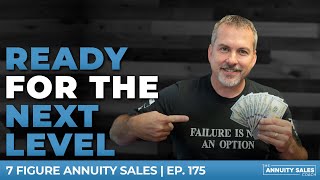
Podcast episode (Chad Owen with Sam) about managing marketing expenses and lead mindset in annuity sales. Key messages: treat leads as fuel/opportunities rather than burdens; budget for paid leads (rule-of-thumb ~1% of written-production goal); be persistent in calling and follow-up; track lead-to-appointment and close rates; use drip marketing (paid systems ~ $200–$250/month) which can produce outsized long-term returns; single large deals can cover a year (or more) of lead costs. Episode mixes practical tips with personal anecdotes about early-career struggle and discipline.
Questions this video answers
Approximately 1% of your written-production goal.
About $100,000.
Approximately $200–$250 per month.
He estimates roughly $2 million to $5 million per year from that drip system.
About $1,200 for four internet leads that were the same person.
Chapters
Today we're going to talk about what to expect with your marketing expenses.
Hey, everyone. Welcome back to this week's podcast. I am Chad Owen. As you know, hopefully you clicked on the button and we don't know who this is over here. He's brand new to our team.
We always have a name for him. Actually, we did have someone that did a drawing of him in his super suit and his caterpillar mustache. And the thing is, is they almost got disqualified because they made him way too muscular. And it's not too close. Realistic.
I mean, too close to the real deal. It is hard to tell if that was a drawing or if I was just.
When we're talking about this, when they look at that and then they go, yeah, it's just too close. I mean, come on. This isn't real. Yeah. As you guys know or may, you may not know if you're brand new, this is my son in love sometimes. And so sometimes it's sudden. I kind of like them.
You know, maybe sometimes it's based on the legal. The legal obligation, the law.
There is no law right now. I am the law. Okay. As you know, I still have my failure is not an option shirt. And actually on the back of it, it's, I have the mind of Christ. Perfect love cast out fear. And I always forget it when I'm weak. He's strong, but there's. Oh, man. I can do all things through Christ who strengthens me. Thank you. So perfect love casts out fear. I have the mind of Christ, and I can do all things through Christ who strengthens me. And the reason why I say this, because I'm telling you, we get tired at times.
Oh, yeah.
Very tired. So he needs to strengthen me. And I have the mind of Christ. There's so many things I don't know about, so I need him to help me. And then perfect love casts out fear. I'm not afraid of anything, honestly. It doesn't mean I don't have fearful situations come in front of me. I just choose to not let fear infiltrate me. Something's on the outside of me, doesn't need to get on the inside of me. And so, I mean, if you're in water and something gets on the inside of you there, you're drowning, you're dead. So a fear can do the exact same thing.
Yeah.
It can cause you to suffocate. And I'm telling you, in this business, whether you're brand new to it or you've been doing it for 20 years, there are times where fear Will try and get in you. And the one that allows fear to get inside of them, allow all this outside news and stuff to just crush them. And of course, I think. Are we at Christmas? I think we're close to Christmas, aren't we? We're somewhere. No, we passed Christmas. So. Man, this is what happens when time gets ahead.
I should have. I should have. Golly. I should have wore my Christmas sweater. I'm so upset. I got a sweater. Yeah, Chad's wife got me a sweater. Yep. And your mother in law. Yes, she is. And it was an awesome ugly Christmas sweater and it had a big chicken.
That ugly. It's a chicken.
It's got a chicken and a hat on. It's actually pretty sweater.
I'm not saying to wear it, but you know, when you have that right there, I mean with. Compared to what he's wearing right now, that's actually a dress up.
Yeah. You know, Well, I mean anything.
Especially when wear that dumb tiger cheetah shirt. No, do not wear that.
Oh, yeah. Anyway, okay, so what to expect from marketing?
We're eventually going to get to our topic, but.
Yeah, so this topic, Chad, I wanted to talk about today because I've recently had conversations with age agents where there's a lot of frustration around the idea of marketing expenses. There's a lot of frustration with lead expenditures and whatnot. And the reason I want to address it is because I sense that it's very, very easy for agents to get a lead. And instantly they're thinking about the cost of that lead. And they get on the phone and.
They'Re like, maybe you should say, oh, look at the opportunity that I have in front of me. Right. Anyway, okay.
And they get on the phone and they don't get an answer and then they call them back and they never get in contact with that person.
They're so frustrated. They only frustrated two or three times on the entire lead. They're that frustrated.
I want to assume they called a lot of. They just never.
That's a bad assumption. I mean, as someone, as you guys know, and I don't mean to interrupt, but I do, you know, as someone who used to get B and C leads all the time that they said these were worked by people in the last six months or worked in the past year to two years and I find out there's only one or two left messages on them. I know most people don't do that. They don't. They wonder why, Chad, how come you can write 27, 28, 30 million, 25 million whatever it is a year, how can you do it? Because every week I am making my calls. If I'm not on vacation, I am making my calls. I don't book appointments on a Monday. I don't do family dinners on a Monday unless it's after my calls. I mean, I make sure that is my calling time.
And.
And I had an agent I just talked to is a big producer, but he goes, so how often do you call? I'm going Monday from 9 to 8, 9 from 9 to 10am and Monday from about 5:30, about 5 to 7:30. It's like, that's all you make calls. I am busy. So I. That's all I can make calls now if you're not super busy. Like, he. He's not real busy. But I'm telling this dude still writes a really good volume. It's impressive. But he makes calls every single day, Monday through Friday, so. And sometimes Saturday morning. I mean, that's why he's in his. I think he's in his early 30s and this dude's nailing it out of the park.
Yeah.
Where's he going to be in a year, two years, five years, 10 years? He's gonna be doing great. So. Yeah.
Well. And so that's what I want to try and alleviate is the mindset of counting every single lead and the cost that's associated with it and the frustration. Frustration that gets bought into when every single lead doesn't pan out into a deal or you have, you know, three out of 10 that you can't get in contact with and now you're thinking about the 900 bucks that you spent. Yeah, four out of ten, whatever it is, you know, and so you start thinking about what was spend on the lead rather than what could have. Well, I guess you probably are thinking about what could have been made, but what you are working on actively with other people from the same source. So you brought up a great point yesterday when I was talking to you about this idea. And what you said was, they've got to get the idea that leads and marketing, whatever that looks like for you is fuel, like gasoline or diesel is fuel to your vehicle.
You know, I rarely do. I. I mean, if you're totally strapped for money, I can see somebody doing this. They're very deliberate when they get in the car. I don't drive this distance because I need to watch how much gas. Gas I'm spending. But then they'll spend $8 on a cup of coffee. But that's a whole nother thing, you know. You've got to be deliberate with your money. You've got to be deliberate with what you're doing. And when I drive from point A to point B, rarely. I mean, especially now, but even in the days where we're really strapped, I didn't go, oh, my gosh, that just cost me $2 in gas to drive from home to work. No, I have to get to work. I have to do my job right. And the only way I do that is if I. Well, for the first six months we were married, I actually rode the bus.
Yeah.
You know, I mean, it's. We lived in Las Vegas and actually Oahu, and I rode the bus and. Or rode my bike. But, you know, I mean, the reality is now that I have. I had a car then I was like, okay, I know it costs money for gas, but I've got to get to work. You have to have leads, plain and simple. I have never seen anybody in this business write more than 5 million a year that. That hasn't had any leads that they've had to pay for in one way or another. Well, my leads are supplied for me. Yeah, I know. That's why you lose a percent or 2% of your commission. You know, don't tell me they're paid for. They're not. You're losing that. But any big producer in this industry ever, they have had to spend approximately 1% of their goal in leads.
Yeah.
Period. If you can't do it, that. Don't be in this business.
And when you say 1% of your goal, you're talking about written production.
Yeah. So if you want to do 10 million, you have to. What, 100,000 is going to be your. Your actual expense. And I know it's hard in the beginning, but I got free leads. Oh, wait a second. I only got 55% of street for my leads. So I still had a huge cost because the mortgage protection company, I only got 55%. And it's still that same way to this day when you're brand new.
Right.
Some even take 60% on top of their override, like with their overrides. And so 60, 60% of street to supply you leads. Which cost is greater?
Oh, it's lost.
Absolutely. I mean, but if you're in. The other thing I look at, too, is when you're. I don't know why this is. If you have to pay for your own leads, you're more motivated usually to make calls. Usually. But, I mean, I remember a lead. I had four Internet leads, all the same person. Cost me twelve hundred dollars for that one lead. And I could have done one of two things. Oh, my gosh, I want a refund. I could have, I could have gotten, you know, one person. I could. I just got charged four times for the same lead. Instead, I looked at this way. That person is incredibly motivated. They went to four different websites and they filled out the form.
Yep.
Number two, I am the expert in this area, so I know I'm going to be best to help them. Number three, no other agents getting that lead.
Yeah.
And so I looked at that right away, man. Yeah, $1,200 was a lot for that lead. And honestly, I know I've closed a couple of those before, but I know there's some that they literally just wanted information and they had no one, they had no money. I'm getting ready to retire in two years. How much money? None. I'm just trying to prepare for retirement. You have no money.
Right.
You're going to retire. Yeah. But, yeah, you can't look at a lead as a burden. It's an opportunity. And if you, if you want to do 3, 4, 5, 6, 10, 15, 20 million, you're gonna have to spend money on leads.
Yeah. And I don't, I don't think it's wrong to try to find the most efficient leads that you can.
You know what's efficient? What shows up in front of me.
That's. Well, it's true.
Because I have some leads that, you know, this, you track my numbers. This one lead source, I'm going, man, I'm just not getting anything on this lead source. And then I just had this year a $3 million deal, Internet lead source, that was not doing good.
Sure.
But what would have happened? I mean, three million dollar deal, you know what that pays? How many years worth of leads did I just pay for without one deal?
Right. So next year, if it ends up.
Being a year's worth of leads without one deal. Not quite.
And so everything else beyond that is. Is in that cover all your lead sources.
Yes.
Right.
So, yeah, what I, one deal, calculation wise, covered almost my entire lead budget for the entire year.
Yeah, but that's, and that's the problem with the con. Like the idea that you just keep looking at the individual lead and the cost of that individual lead, and then when it. That individual lead doesn't pan out, you think you wasted this money. But is like, how many other deals did you get off of that same lead source? That what you made on that so far and away covers the cost of those other leads? That you never got in contact with. There is not.
You never know when you're. If you have a good, effective drip system. That's true. Then two or three, four years later, they could reach back out to you because you put their phone number, you put their email address in there, and they're just getting these drips every two weeks.
Yeah.
And you never know when that's going to come back. I'll give you a tip. One of the drip systems I use runs me about $200 a month.
Okay.
200, 250, something like that. I know people that canceled their drip system because it's $250 a month. Like, the number I get off of that drip system is probably.
2 to 5 million a year.
Okay.
Just from the drip system. And why is that such a big range? Well, that, you know, I got a deal that was $2 million alone from a lead that was years old. I mean. And then you also don't know as well, when are they going to refer to someone, hey, you need to. You need to go and inquire to this guy and find out information for your retirement. It's a referral you didn't even know about from a lead you never sold that they knew someone that needed help.
Yeah, but this is why it's so important that agents track their numbers, too. I've had conversations with agents that are frustrated about their marketing and their lead expenditure. And then when you ask them, well, how many leads have you actually gotten in? Okay. How many have you actually set appointments with? How many? Like, what are your actual percentages here? Why? I don't actually know. So what you're doing is, Mr. Agent, you're looking at the five leads in a row that didn't ever answer the phone, and now you're upset at the lead, but you don't look at the fact that you've had a 40% appointment rate and you've written $2 million off. Like, you see what I mean?
So it's.
It's constantly looking at the negative. And if you look for the negative, you'll find it. So that's what we're trying to do with this podcast is hopefully inspire you to really, obviously, one, take control and take inventory, I guess, so to speak. Keep track of your numbers and how these leads systems and sources and marketing systems are working for you. But then also not just focus on the things that don't go right. Help each person as if it's an opportunity for things to go very, very well.
Correct.
I mean, that's. That's really. That's really what it boils down to. And we hear it too much. I say too much. I get it. I, you know, I think it's probably more. You and I are in a different boat. I mean, I think it's easy for somebody to think, oh, well, you know. Yeah, if Chad's, you know, writing 25, 28 million a year in annuity premium, of course he's not going to be worried about lead expenditure, right?
Yeah. But as $170,000 in credit card debt, we had major medical issues for multiple people, people in our family at the time. I know what it's like to struggle, and I know what it's like to be nervous. I know what it's like to pay for leads when you don't see things coming in because you're trying to learn the business. And I know what it's like to watch credit card bills come in and they keep getting higher and higher and higher and you're going, this is hopeless. But if you keep pressing forward and I didn't have a mentor when I first got into the mortgage protection and annuity business, about two, three years, about three years into it, four years into it, I got a really good mentor that still to this day, I talk to every once in a while. But you know what? I know what that's like. And you cannot give up.
I would also say with that, if you're currently in a season where you're feeling like your marketing expenditures, your lead expenditures are just. You feel like you're spending way too much and not seeing enough yield. My encouragement would be, rather than considering this an opportunity to get mad at lead companies or frustrated with lead companies, consider. Consider it an opportunity to examine your process and grow and get better. I mean, Chad, I know not everybody is obviously you. Nobody is you except you. But you did produce record levels of mortgage protection, life insurance off of BNC leads. You've done similar types of things before. On the annuity side, you've written almost $6 million just off of life insurance leads, but you wrote $6 million in annuity premium off of it. So you've had your fair share of subpar, by most people's standards leads. I still do and you still do.
I mean, but it's an opportunity for improvement. Three to four leads you're never getting in touch with. Then there's a bunch that you get in touch with that you just can't get them to commit to anything. So I still have subpar leads. I just did an air quote. Yikes. That's not coming to the light. Yeah, that's. No, I'm not. I mean, yes, I am. Yeah. I'm not going to the dark. Leave me. You're the dark. Okay. But, yeah, it's important to not get discouraged. If anything, you get out of this, don't get discouraged. Keep pressing forward. Failure is not an option. You want to make sure you're pressing forward. You stick with it. Remember, it takes most businesses five to seven years just to get into the block.
Yeah.
And so it's. You just got to make sure you're budging that aside and make sure you're setting money aside. If you do get a sale, make sure you're setting money. You pay, obviously, your charities. If that's your thing first. That's my thing is I want to make sure I got that covered first, and then I have my budgeting for my leads and everything, so. Yep. This should be good.
It should be good. I think we should just go ahead next week and do an episode about failure is not an option.
I think we should. And I will wear my shirt again.
There you go.
Okay, guys, you have a great day, and happy selling.
Sam.










