Why Information Verification is Crucial | 7 Figure Annuity Sales Podcast | Ep. 228
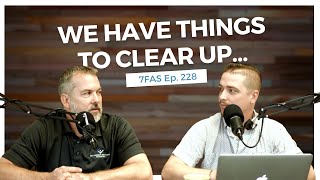
Chad Owen and Caleb North explain why annuity agents must verify every detail before presenting to clients. Unverified illustrations, wrong birthdates, and misspelled names have cost agents sales and confused clients. Know your products well enough to catch errors from software and marketers.
Chapters
On this week's episode, we're going to talk about the importance of agents verifying the information they're giving.
Hello, everyone. Welcome back to this week's episode. I am Chad Owen, owner of the Retirement Realized Financial, and this is Caleb north, sidekick, AKA.
Birdman.
What's funny was I was thinking bird dog.
Bird dog? No, it's go, sheep dog. You want to be the sheep dog? I don't want a bird dog. It just sits there and points. How boring is that? And then retrieves something that's, I'd rather be a sheep dog. You can be a bird dog. I'll be a sheep dog. Rooster, you'll be a chihuahua. Call me Rooster. Yep. Okay, so we got a good topic.
This. Well, this is one that you gave me, Chad, I mean, several weeks ago at this point.
Something that's lost me millions of dollars in sales.
Yes. And it's. Yeah. And. And created, I'm sure, millions of opportunities for frustration. 100% like, oh, man. Okay, so you came up with this idea, agent responsibility of verifying information. And I've got some notes here of what I think about it. But I'm curious to you, why is this so important?
And why are we specifying what do we mean by agent verification?
Yeah, that's a good point.
Because the reality comes into. There's newspaper articles, like, if you are in our academy, you know that every newspaper article or magazine article or e document that we have or we have vetted to make sure, number one, the information's correct. Number two, it's not. This is why an annuity is good. And then you read four pages later. So when you're thinking of annuity, get a variable annuity. Yeah, I mean, you got to make sure all your information is accurate. And fortunately, we do have some really good agents out there that also will let us know, hey, did you see this down there? For whatever reason or human, we missed something. And I love it when somebody helps us with that. But, you know, we could sit there or an insurance company call a marketer, and they tell me, this is what your illustration does. And I don't verify the illustration or this is what the product does. And then I find out, no, the product doesn't do that. So I am verifying any piece of information I get, whether it's a publication, whether it's my marketer, whether it's an insurance company. I am always verifying that the information is correct. And when I said that I've lost millions of dollars in sales, there were two multi plus million dollar Sales that I went to run on and I was in between appointments. So I had somebody email me the illustration and I presented it to them in the appointment for the first time. I did not open up the illustration and make sure the information was accurate on it. So in other words, date of birth was messed up, name was misspelled. There were some. For example, the one that really got me messed up, the client was doing.
Income for life. And I could not, for the life of me opening this illustration in front of this guy, figure out why the death benefit was depleting so fast. And I'm just sitting here trying to go, you know, I'm trying to be very professional. And I just said, you know, it's really odd though, why this death benefits depleting so fast. But I will get to the bottom now figure that out for you. Well, I get back in the office because normally, you know how I am, I don't like to ever not have the information for a client when I'm there. Yeah, the person that ran the illustration for me included the RMDs at age 70 on top of the income that.
Was coming out of this, the full.
RMD amount, 4 RMD amount plus the income that was coming out. So that made the money disappear really quick. And I wasn't sitting there going, God is draw amount. Why are there two columns for drawing? Like, for whatever reason, my brain just was not picking it up. Why was in the appointment? Part of it's because we had to meet at a library and I'm not good in public locations. I don't like meeting public locations. Now if it was a actual room inside the library, it's fine. But it was a table outside of the library. Yeah.
Not ideal.
Yeah, it wasn't ideal at all. So my brain was already not processing things properly. But then when I get back to the office and it was already too late, I lost it. I mean, when he saw that, he's like, there's no way I'm getting this said just the, the value depletes because I think he was actually already 70 or 69 or he was already almost 70. So it showed income plus the RMD coming out just killed it. Another time was when I did an illustration. Somebody sent it to me, it was for $2 million. And I go to the house and it was the wrong illustration. I said, hey, I want you to send me the product. Because I was moving to the next appointment. I said, I want you to send me the best company for this situation. So I go through it and I'M presenting it. And this guy goes, hey, I got. I don't know how you're saying yours is the best. I have an illustration from so and so right here. That is a better product. Sure enough, I open up that illustration. It is the better product. And because I did. Now, this was probably 12 years ago, 13, actually longer than that. This probably 14 years ago because we. We were. We weren't with. That was the last time we actually let that organization go. Because I. He said, well, this is the best one we have.
Yeah, number one, typical.
Not true. Because they did carry this other company, really, but they primarily focused on this other company because they were actually partially owned by this other company. That. And so they said that this was the best product. And I ate crow the entire time. I said, I'm so sorry. I called my marketer. They're supposed to provide us with the best product. It wasn't. And the worst thing about this is there's even a product that's better than both of them that I didn't know about. Because at that time, 14 years ago, I couldn't repeat off the top of my head the top different companies per age, per what it's doing, what state they're in. I mean, now you call me from any state, I can generally tell you the product's gonna be best not only off of my state, but what state you're calling me from. So, yep, that cost me a lot of money.
I want to pipe in here real quick because I didn't verify it's. Yes, that is. That is fair. And that's good of you to own the responsibility that you have for the recommendations that you're taking to the client.
Standing in front of a judge, you can never say, well, the insurance company sent me this while my marketer sent me that. The judge is going to go, you are the agent. You are the expert. You are the one there. You should have verified.
Yeah, I agree. And I will say, because I know we have marketers at IMO offices that listen to the podcast. Please, for the love of all things good, do not just send out what product your IMO is pushing. I mean, good golly almighty, I had a conversation with a guy who's not even an agent today, but he's, you know, he's in the tech side of our business and had a whole conversation about the way that I make product recommendations and I've made product recommendations as the VP of Agent development at retirement. Realize financial an IMO marketer that has sent business elsewhere because an agent happened to have a contract with another IMO that they had for years and years and years and that happened to have the best product for their client. And it's like, I will do that all day long if that's what that gets the client the best.
Certain companies, we will not or cannot. Why, I wouldn't say cannot anymore. We. We can get anybody we want anywhere. But the thing is, you're telling me there was a software development company that said that their quoting system was flawless.
Not, not, not necessarily flawless. No. But when I was explaining the way that I do it, there was ways to essentially limit what people could see on there. And I was explaining that the way that I do it is I want to look at everything holistically, not just the products that I have available at retirement realized financial. Because if there's a situation where something out there is actually better than what I've got, then I want to get that carrier and I want to get that product and I want to make that available to our agents simultaneously. If I can't get that in time, I want to tell the agent so that they can make sure they're presenting the best thing to their client. Because at the end of the day, that's what matters the most.
Software will never replace the agent. Period. Never. I know all these developers I love. I mean, there have been some software programs that I use that have made my job so much easier. But one of the ones I use primarily says right on there, please verify any information with the actual insurance company's illustration. Because you go and punch in one little number and one little number doesn't get hit. And it could change that. And it wasn't intentional. It was an accident. So you always verify any information that's given to you from an insurance company, a marketer, or anybody. Like I said, a newspaper. Age myself when I do that. Not like I ever sat down and I'm going to read the newspaper today. That is just not my personality. If they had the newspaper on audiobook, I might have done that. And I could pick what topic I want to talk about, maybe do it that way. But you cannot ever take. I mean, let's put it this way. You have to take full responsibility for any misrepresentation.
Yeah.
You cannot blame it on anybody else because you're supposed to make sure you've already went through everything.
I talk with agents all the time. I say, you know, the IMO agent relationship should be a partnership.
It is. Right.
I think the problem, though, is that a lot of times it doesn't get viewed by the marketing organization as a partnership. The agent probably wants it to be, but then the IMO looks at them as a means to an end, and the agent's looking vice versa. Right.
I mean, insurance agent sits there, well, I want you to feed me every lead that literally wants me to show up. And they have a pen in their hand to write the application. I mean, some of the stuff I hear from agents, expectations and leads, I'm just like, what are you thinking? This is hard work. You know, I think. And I don't remember the exact number, but it was pretty darn close to 40 million last year in rent production. And I take responsibility for every bit of that. The reason why is because it is hard work to know what companies are available. This is not just showing up and writing it. I remember one time I was doing the ride along, and the agent was riding with me, and we had 13 appointments. We sat on one.
Oh, that's a bummer.
And fortunately, it was a $300,000 one. Sit one close. Never met with a 300,000. And the guy. And I'm thinking, oh, my gosh, this stunk so bad because they block out Monday, Tuesday, Wednesday, and they usually go back Thursday. They blocked out that entire time. Why? They're writing appointments, which is already a crazy amount of pressure on me because I don't want to be for a waste. So I apologize profusely. I said, I am so sorry that you. We had 13 appointments and we only sat on one.
They all cancel.
And they're like, well, illness, canceling, whatever. And they're like, are you kidding me? And I'm like, no, I'm sorry. And they go, this just shows me how difficult you really have it. I thought you went to every appointment and people literally had their statements laid out and they were ready to sign. I'm like, what made you think that? Well, because at that time, I was writing 25 million. You write 25 million a year. I thought it was just lay downs. And they go, I just realized, you just like us.
I'm like, it's the same leads.
What the heck are you thinking? Yeah, you know, it's. I mean, I have weeks. Just this morning, I made calls. I actually got two appointments out of maybe 10 leads. That is not that common.
Yeah.
Sometimes I'll go through 50 leads and not get in touch with anybody. Sometimes I'll go through 10 and you can tell because I'm getting tired. Why am I yawning?
Wow.
I don't ever yawn. Okay. But I'm Tired because it's hard work. That was the stage. That was the fake tear.
Yeah. Yeah.
So that was. That's why that wasn't real. Yawn. I will not admit to that.
How. What? Okay, let me ask you this. Oh, sorry. Were you still on a train of thought?
Was I on a train of thought?
Maybe.
See, now I got sidetracked because the oxygen flooded into my brain. What was I just talking about?
Your. Your ride alongs, your leads. Sometimes you get, you know, you got.
2 out of 10, sometimes you get 0 out of 10, sometimes I get 0. But the reality is, is even when I'm calling through 60 leads, I can get one really good one. Sure. But then there's a time where I went and I had 10 leads that came in and I scheduled eight appointments. I was done for the week because I already had a appointment. So I'm like, well, what do I do now? I also don't generally book that far out. I might book two weeks out, but I don't book three weeks out. But go ahead.
I was going to ask what's worse, a yawn or an. When you're on the phone with a client.
Oh, definitely yawn. Definitely yawn.
Because I know how you feel about ums and uhs and buts.
Ums and uhs and buts. Yeah. But I. Now if I'm with it at an appointment and I, I. This is so rare, but I have yawned it before, and I say, hey, I'm sorry. It gets tiring trying to figure out which product is best, making sure I work long hours. I've earned these dark circles under my eyes, and it's always as a laugh and a chuckle. And I appreciate that.
Yep. So verify your product recommendations. Imo, sends you something over. And this is actually something that I do a little bit differently when I do case design. Chad. Now, granted, you know your, Your situations. You were going from appointment to appointment. You probably didn't have time to get on the phone with your marketer and review things. I try to make a point.
I still should have stopped a little.
Sure.
And done it.
That's. That's fair. I try to make a point when I'm. When I'm recommending a product to an agent, especially if it's the first time they've ever presented the. To actually get on the phone with them and explain to them why I find that product to be best for their client situation so that they can then go and articulate that to their client. Now, obviously, you. You go. You sell it a time or Two, you know, the product, it, you know that doesn't have to happen anymore.
The illustration software. Don't have your marketer run your illustration. That's fair. Because I've been in appointments. This just happened a couple weeks ago. I had the illustration with me. The situation changed, the circumstance change versus differently than what we said on the phone. I had to change product and the dollar amount in the appointment, in the appointment. So I just pulled it. I said, oh no. I literally said like this, said, no big deal, let me open up my computer, pull up my software and let's see who can be the best product. Now I knew already. I said, I know which product is the best based off of what you just told me, but let me just verify that. And I go on pulled up, boom.
It is done deal.
Yeah, that's good. So yeah, but if I relied on my marker, I'd be picking up, hey, Bob, can you please run an illustration for me? If one of my pet peeves in running appointments is when I have an agent that meets with a client and then they say, well, let me go back to the office and get the numbers put together and come up with a plan, I will eat your lunch if you're the agent before me. Because I'll say, that's funny. I could tell you right now the top five products off the top of my head for your situation. So that person actually has to, number one, go back. They need to research to see what's best or they need to go back to daddy and ask him which one's the best because they don't know. I said, do you really want someone with your retirement that can't tell you off the top of the head who the best product is?
Done deal.
Done deal.
Easy.
Yep.
There's a couple of other things too. So obviously as you're trying to grow in your expertise, you're trying to grow in your knowledge, you're going to be researching things, you're going to be reading things online, you're going to be interacting in your front of forums or on social media with other agents and advisors. All of that stuff is stuff you need to verify.
Absolutely. I mean, our industry gets hit from all different directions. So you need to make sure what's legal, what's not right. Don't call yourself a fiduciary. If you're not fiduciary and you're using non qualified money, I answer this way, I'm not a fiduciary. But when I do non qualify or qualifies, excuse me, when I Do qualified funds. I have to act as a fiduciary, and that's how it's worded. I'm not a fiduciary, but I have to act as a fiduciary.
So the biggest way or means by which you can verify this information. We're talking all about verification. Well, how do you do that? Number one, if it's dealing with product or carrier things, go straight to the company. Get it from them. Look, make sure it's in writing.
They know what they're doing.
Well, yeah, I mean, don't just call a company and ask them a question and take that as gospel, but look at it like, look at the illustration. Don't take a third party software illustration as gospel because it can be wrong. There's, there's a margin of human error that can take place in those things. If you're dealing with, you know, regulatory things, go get it from the regulators. You're dealing with Social Security things, get it from SSA.gov.
We are in the area of information. We can get pretty much anything we want, anytime we want, wherever we want, at any hour of the day. I mean, there's been plenty of times I went back home after a long day and opened up my computer because I had to find out and make sure something was the way I thought it was from a regulatory standpoint.
Right, but you went to the regulator.
I had to, yeah.
Yeah, because you're not just going to pull up some random Google search in some random website that had a blog on this thing and take that as the end all be all. That might be a great place to start and get some information. But then go and verify that with the authority. On that topic.
I was just gonna say something very snarky, but then I realized I probably shouldn't mention anybody's name. So my filter went on. See, that's what happens. You see, that's what it looks like when my filter. I know you don't see it that often. No, but that was my filter kicking on.
Wow.
I'm not gonna say it. Okay. But. Okay, that's a wrap for today. Back to this. Just make it real simple. Verify anything you're gonna tell the client before you present it as gospel. In other words, make sure that what the insurance company, what the illustration, what the regular, make sure everything's how it needs to be, especially for your particular state. So I hope this helps you. You have a great day. And of course, happy selling.
Sam.










