Breaking Free From The Immigrant Mold She Grew Up With
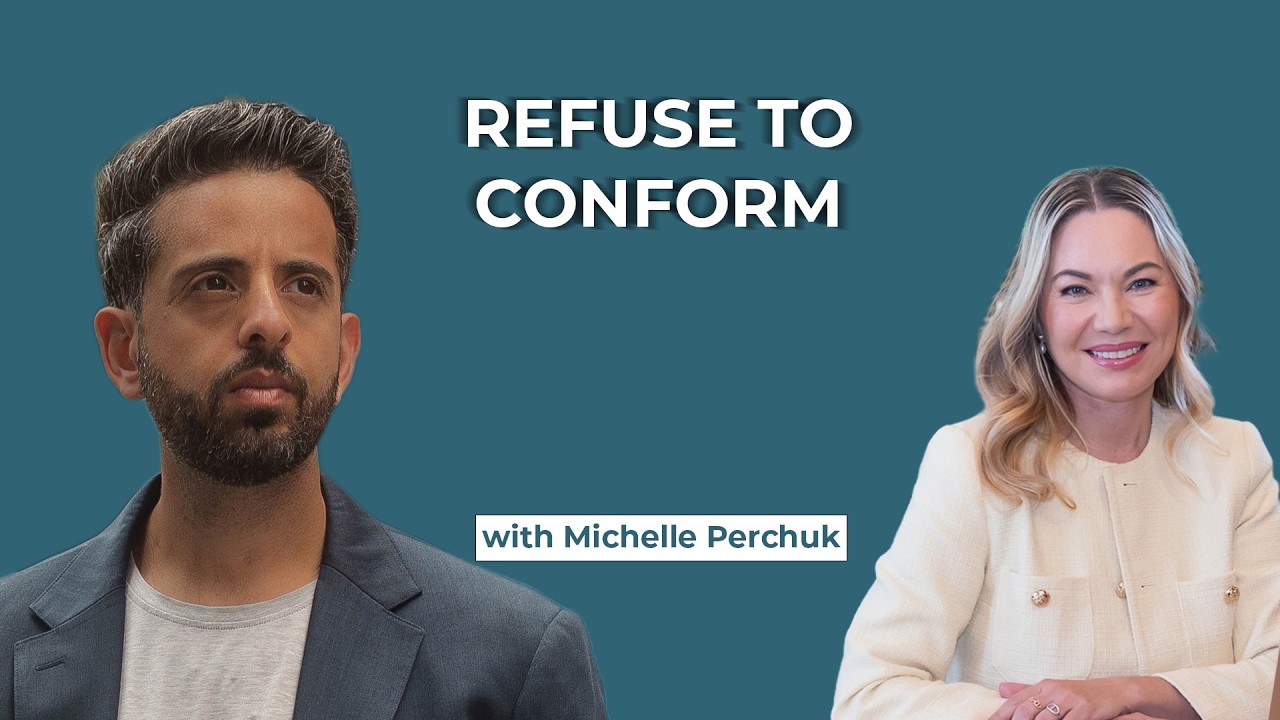
In this Mile 40 Podcast episode, host Bishoy Tadros interviews career strategist and MTV Coaching founder Michelle Perchuk. Michelle shares her journey from immigrating from Ukraine to Brooklyn at age 7, through a traditional Eastern‑European upbringing, a full‑ride to NYU, and early work in the Garment District that she describes as a "triple MBA." She recounts pivotal career moves that led her into tech staffing, her experiences of 9/11, the 2008 recession, and Hurricane Sandy, and how each crisis forced her to reinvent herself. Michelle explains why she left corporate recruiting to start MTV Coaching, her philosophy of non‑conformity, core values as "roots," and the importance of visualizing and recalibrating personal and professional goals. She also discusses mentorship, marriage, parenting, and how the COVID‑19 pandemic reshaped her coaching practice and expanded her reach via media like Forbes. Throughout, she emphasizes turning challenges into lessons, seeking mentors, and helping others reframe setbacks as opportunities.
Chapters
Just because everyone is standing on this line doesn't mean that I have to stand here as well. I want to stand in another line. And what will that look like? And let me seek out people that could tell me what it feels like to stand in this other line. And let me get curious and let me do the research. I'm a nonconformist. I cannot conform to a pattern or a cage that someone chooses to put me in. As a matter of fact, I refuse to conform even to my old patterns of thinking. I'm constantly breaking down my old patterns. I'm continuing to evolve, but I remain true to my core values. I always look at my core values as the roots that keep the tree in the ground. If the roots are not strong and they're not embedded into the ground, the first hurricane comes along, boom, the tree flies away. And those core values, They keep you solid even when there's uncertainty ahead.
Welcome to the Mile 40 Podcast. I'm your host, Bishoy Tadros, the author of Break Barriers and Audacious. And I invite you to join me as I engage with guests to discuss those bounce-back moments that we encounter on our personal journeys. Mile 40 is a forum to learn about how athletes, professionals, and leaders of all backgrounds Stare down moments in life where the only option is to rise up. The Mile 40 Podcast strives to remind listeners that the comeback is always greater than the setback. Welcome back to the Mile 40 Podcast. Thank you all for continuing to tune in. If you haven't already, please be sure to hit subscribe. If you're listening on Spotify, Apple Podcasts, YouTube, check out the show notes, pick up a copy of Break Barriers or Audacious. Today I have Michelle Perchuk. She's a career strategist and the founder of MTV Coaching. Michelle, thank you for joining me today.
Thank you for having me. Super excited to be here.
Of course. Of course. Let's make sure we just kind of quickly give the audience a little bit of background, cuz every time I saw MTV Coaching, yes, I can't help but think of MTV.
Yes.
So let's just make sure we get that outta the way early.
Yes.
Tell people what MTV Coaching is.
So it's a happy accident.
Yeah.
Uh, because when I wrote my book, Swimming in a Talent Pool, my kids told me, mom, you need an Instagram presence. I'm like, so what, how do I come up with the handle? They're like, let us take care of it. They came up with Michelle the Visionary.
Huh.
Oh. And I couldn't go on with that, you know? Yeah. So we just abbreviated and it was a happy accident.
Wow. Okay. And how old is MTV Coaching?
MTV Coaching was formed 2017.
2017. Okay. All right. Now let's kind of walk backwards a little bit and give the lay of the land of who you are personally. Where are you from?
I was born in Ukraine.
Okay.
And I came to New York when I was 7 years old.
Okay. What brought you to New York?
My family. My parents were young. They wanted more opportunities for themselves, more opportunities for me, education for me. And they were brave souls, just packed everything up into suitcases and left.
Did you have any siblings?
No, I'm an only child.
Only child. Okay. What did your parents do?
So my dad passed. He was a carpenter. My mom is a bookkeeper.
So your dad passed once you moved to the States?
Many years after, but he—
Many years after?
Yeah, he passed when I was 27.
Got it. Okay. And he was a carpenter and she was a bookkeeper?
Yes.
And you, where in New York were you?
Brooklyn.
You were in Brooklyn?
Yes.
Talk to me a little about your upbringing.
Very traditional, uh, very much based on Eastern European values. Work hard, get the calluses. If you work hard, Success is inevitable. And don't stress yourself too much because you're a woman and just find yourself something to do which will not be too much.
How did you— when it came to assimilation for them and when it came to them adjusting to life over here, talk to me about some of the things that you picked up on. With regards to how they navigated the early period?
So the early period, their navigation, I was still fairly young, so I couldn't understand. I didn't have the wisdom that I have now. But honestly, they did not do very well with assimilating. They lived in— they chose to live in an area where everyone was Russian-speaking. They chose to be with friends Yeah. Who were like them. They really chose the hard truth of that they were immigrants, and they were afraid to take chances because it was the unknown. They chose the comfortable, crappy reality versus being brave and stepping out of that world and trying something new because that was scary for them.
I can relate to you on that level. I'm an immigrant as well. And my parents immigrated when I was young. And I'm Egyptian. And the first thing they do is they find the Egyptian community. And it's interesting because I look at you and I think about myself. And in a way, we are doing the opposite of what our parents did. We're essentially, you know, we are— we pushed beyond the boundary to say there could be something on the other side here. But talk to me now a little bit about your own assimilation, right? At what point did you realize, I need to go beyond what's familiar?
So honestly, that transformation started through reading books, and not the classics like my mom wanted me to read, but really to read books that were very progressive. And that probably started during my teens. Was putting together vision boards and scrapbooks about a life that I dreamed about that I didn't even think could be possible. And I remember I had a friend in junior high school that saw my— her mom saw my scrapbooks. She grabbed them and ran to show her husband and said, Barry, look at this kid. She's going places. And I didn't really understand what she meant by that, but I created this world for myself First in my mind. And then these happy accidents started showing up. I went to a reputable high school, which you had to apply for. It wasn't my zone high school, Edward R. Murrow. I was accepted to Stuyvesant, but my mom said, you're not going to school on the train.
Wow.
And I was fortunate enough to get a full ride to NYU. By the time I got to NYU, I already knew that I was on the bridge, that I was crossing that bridge into my new reality. I worked in the Garment Center all through college. So I worked full-time, a 40-hour week, and went to school for 18 credits.
Wow.
I was a communication major. I did very, very well through my college years financially. And I realized that there's no way I'm going back to Brooklyn. I'm not going back to that mentality. Now, there's nothing wrong with Brooklyn. There are beautiful spots. But to me, Brooklyn is more of a metaphysical space.
Yeah.
It was really kind of a cage that kept me in this immigrant mentality. And I am very proud and grateful that I was able to do that. specifically for what I'm able to pass down to my kids.
It's interesting. Again, from a relational perspective, I think about where I grew up the same exact way. And there's nothing wrong with Brooklyn, and there's nothing wrong with where I grew up on Long Island. But I think about it similarly with regards to what it represents. And I think about it in the sense that going back there might erase everything that I've done to get out of there. And, um, I, I think that's an important concept to kind of think about. And also, as I'm hearing you speak, a couple of things stand out. You know, when you think about those vision boards and you think about the ability to envision and visualize, right? The first step is visualizing. And a lot of people skip that step. You know, they talk about it without actually being able to visualize it in advance. And in my experience and experience a lot of the guests that have been on the show, It always starts with a vision, right? That vision is your North Star. And there might be, you know, some bumps along the way. It may not look— the path is not— you're not going to know the path. It's not going to look exactly as you saw it. But the, the endpoint ultimately is the goal. And as I'm hearing you speak, it sounds like academics was really an anchor for you. Was there anything besides academics that kind of, you know, laid the foundation?
So academics was a solid foundation. Many of my friends who actually never made it to college, after I graduated, they would make NYU my middle name. So they would say, oh, this is Michelle, she went to NYU. 'Cause you know what? In the immigrant community, your school defines you.
Your school and then your career.
When I reflect on it, I enjoyed my time at NYU, but I wasn't there long enough on campus because I was always running to work. I needed to work because I had to financially support myself, and I had to help my parents, honestly. The real education that I got, an MBA and a PhD in business, was in the Garment Center, carrying the patterns, Working with the Korean contractors, taking orders from the department stores, packing up the boxes, running that business months at a time by myself in a showroom when my boss would travel the world. And if I made a mistake, it was on me. She would subtract it from my salary. That was a triple MBA and a PhD, probably from MIT. All combined into one.
What were your parents thinking? You know, obviously, and you, you made it clear, hard work was instilled in you early on. Um, but as you were kind of going through the motion, uh, what was your relationship with them as it was— you were blossoming, right? Like you were making it happen before their eyes and they saw you working hard. They saw you apply. They saw it pay off, getting that full ride to NYU. Is it a matter of You know, well, this is what we expect because she put in the hard work, or is it a matter of celebrating your small wins along the way?
Honestly, they didn't know. Like, if you put a bottle of Dom Pérignon in front of a Native American, they're not going to know. They honestly did not know. One thing I knew is that they loved me. And no matter what mistakes I made, I knew I could come home and I will never be judged. And I always knew that I had that security, but I never took that security. I never took that insurance policy. My dad was a creative. He was a painter. He was a carpenter. He could build a house from scratch. As I look back on my life, I really became the woman that my father wanted me to become. My mom, plays it safe. She wanted me to have a comfortable life, married well, having the children, having the education, maybe having a job, maybe not, depending on how well my husband did. That's what she wanted for me. But she recently admitted to me that she's very proud of me that I broke the mold.
That was beautiful. Just hearing you say that is beautiful. I think that that's a very beautiful moment I'm a father of 2 girls, and you think about that and you always just want the best for your children. And more often than not, in a lot of relationships, especially parental relationships, you can't help but notice the difference between the 2 parents, for better or for worse. They both have good qualities. They both have qualities that perhaps that you want to make sure that you divert from. But Seeing that, hearing that recognition from your mother and identifying it now that your father has passed is really, really special. Talk to me about your relationship with your dad, especially in your older years before he passed.
So I really didn't get much time with him. I was 27 when he passed, and he got sick when I was 25. So they gave him 6 months. And he actually wound up living extra 3 years.
Wow.
He looked at me like you would look at a caterpillar. You know it's inevitable that it will come a butterfly. But he wasn't fortunate enough to see it. I'm sure he sees it from where he is. But I just didn't have this time with him. I didn't have an opportunity to show him what I've become. And if I could have only had an extra year or even one small conversation with him, even now. I— as a child, I didn't have much of a relationship with him. He was always working, especially when we came to the United States. But the few moments, the glimmers of what he spoke to me about and how he behaved as a dad of a girl was incredible. He was cool. He was fashionable. He had long hair. He looked exactly like that musician, Yanni.
Ah.
He knew all the trends. He knew— What was— he knew what was modern. He knew all the latest music. He knew all the latest dances. He was like the coolest dad, 'cause all the dads had like the beer bellies, and he was in perfect shape. He looked, at 57 when he passed, he looked 40. So, I think that this longevity and this kind of Joie de vivre. I got that from him.
That's beautiful.
Thank you.
With a lot of immigrants in general, especially, you know, when we think about our generation, for the longest time, you know, in our upbringing, it's the voice of our parents in our head saying, this is what the expectation is. This is what you have to do. But at some point, we have to take ownership of it. And kind of break the mold, similar to what your mom called out you eventually did. Talk to me about when you took the pen and started to write your own story.
When I realized that my parents are good people, and the universe chose them to be my parents, but the universe may not have chosen for them to be my mentors. And probably at the age of 14 to 16, I had this inner push to go look for mentors that would help me be good at life. My parents were not good at life.
Define good at life. Relationships, business, academic? What are you thinking about?
Living a full life, a healthy life, a prosperous life. They just were, but they really were not present. And I started realizing that they love me and they want the best for me, but they are not necessarily equipped with the tools of a new life that we have in the United States. And the tools that they gave me are not gonna get me far. So I remember the moment where I, when I was 14 years old, And I was looking for an after-school job. I'm still prob— no.
So you're just barely allowed to work at 14?
Yeah. First year of high school.
Yeah.
And there was a very fashionable boutique in my neighborhood, and the owner was Italian, and she had the most beautiful clothes. Like, probably now if I would see it, I would think that not much of it, but at that time, it, to me, it was just so beautiful. And I practiced for weeks to have the courage to go and ask her for an after-school job. And one day, I had enough courage. Her name was Rose, and she hired me.
Wow.
So I would walk from school, and I would work from 3:00 to 8:00 on Thursday because that was her late evening. And I would work all day Saturday. And I did everything in the store. And spending time with her, she had 3 sons. She didn't have a daughter. And she had light hair, and I had light hair. And a lot of people asked, oh, Rose, is this your daughter? And she actually showed me what life can possibly be. And I attached myself to her way of thinking.
Mm-hmm.
And I learned so much. And my mother, at times, was kind of a little jealous. But I knew I had to learn from this woman. She was independent. She ran a business. She went to Italy to buy the clothing for the shop. She operated money. And I knew that my mom was a wonderful mother and a lovely lady, but she didn't have those skills.
Yeah. That— I love that on so many levels. And, you know, a lot of 14-year-olds here in the States, I experienced it myself, would have gone for the fast food restaurant or the lifeguarding job.
Yes.
And similarly to you, I had a situation where I had to think outside the box and do something that other people weren't doing. And It says something about your foundation, you know, as you know, now you're a career strategist. Now it's, you know, you're what you're doing. It says something about how you approached it to begin with. You thought about it in a way where you realized you couldn't do it like everybody else.
Yes.
And that's an important frame of mind, not just in that moment, but something to carry with you because it's very tempting once you're You know, back in the workplace to then do as everybody else does, right? So talk to me a little bit about how that theme of thinking outside the box carried on with you.
So I was always very curious and I always said to myself, for as long as I could remember myself thinking, 'cause when you're a baby, you don't remember yourself thinking, but at one point you hear your thoughts. I started thinking that this There are other ways to look at this. Just because everyone is standing on this line doesn't mean that I have to stand here as well. I want to stand in another line. And what will that look like? And let me seek out people that could tell me what it feels like to stand in this other line. And let me get curious, and let me do the research. I'm a nonconformist. I cannot conform to a pattern or a cage that someone chooses to put me in. As a matter of fact, I refuse to conform even to my old patterns of thinking. I'm constantly breaking down my old patterns.
I love it. I love it. I'm the same. I love it. I mean, that's the thing is once you start to see the potential of standing in the other line, There's no looking back. Like, there's no, there's no looking back after that, even though the majority's in the other line. Uh, but it takes strong will, takes determination, it takes potentially being outcasted, it takes, you know, answering a lot of questions.
Mm-hmm.
But you're fighting for something that's worth it in the long run. You see the big picture.
Right.
You're not thinking about the immediate win. You're looking about the big picture. We're gonna go into your career a little bit more, but one other question I wanna ask with regards to family life is your foundation for building relationships, personal relationships, right? And you talked about the relationship you've had with your mother and father. You talked about noticing early on that there were certain elements of, you know, their own limitations in terms of what they could teach you out into the world. Uh, and the truth of the matter is, and we've all experienced it, is that once we get to an age where we're starting to build our own personal relationships, whether they're social, whether they're romantic, so on and so forth, you know, our only playbook really is our parents, right? Like our, our, our first playbook is our parents. You know, they're the ones that teach us how to work, you know, in a relationship. So talk to me a little bit about your own personal life with regards to navigating relationships and, you know, how you, uh, learned ultimately to get to the place where you are today?
So as I think about how I want to answer that question, I want to say that I realized at some point, specifically in my personal relationships and my work relationships, in choosing my romantic relationship— I'm married for 25 years. I would like to say that you can't just wing it. You really need to be present, and you really need to know what you're doing. And a lot of people say, I'm a giver by nature. I've been giving, giving, giving to my relationship. That's lovely. But at one point, you realize that you have sacrificed your own identity.
Mm-hmm.
And you gave too much. So with relationship building of any kind of relationship, you need to have a barometer that asks you and shows you, how is this working out for you? And you need to listen to that inner dialogue. You know, you know in your gut that certain things are not working out for you. You just live maybe in an illusion that they do, or maybe it's something that got passed down to you from your family and from your heritage. But you know in your gut when some things are not going well. And I knew that at one point. That's when I left my corporate career behind. I knew that with certain friendships. And I get to still be in the prime of my life, and I teach people.
Mm-hmm.
How to do that, how to listen to your inner dialogue and be aligned with it.
I want to take it one step further, because I do feel like, specifically in, let's call it romantic relationships, marriage, there's a recalibration that happens once you have kids. Right? Because the give and take When it's just you and your partner is one thing. The give and take, once there's kids, all of a sudden there can be an imbalance. And you think about those, you know, early years when you're the mother, right? And then all of a sudden you need to kind of figure it out again, you know? And it seems like you had a vision for the fact that there's gonna be these situations where you need to recalibrate along the way. And I think a good takeaway for the listeners Whether they are, you know, going down the path of having kids or they are going through different phases of their life, to think about how to approach those, those moments where you need to recalibrate.
I love that word recalibrate, but I'd like to expand on that a little bit more. You need to sit down with your partner and talk about it and ask each other, what are your expectations of this? And how do you think this is all going to work out? And let's make sure we're on the same page. I never did that in my marriage. We are both from the same background. We both stepped into forming a family, decided to have a child. There was another child from a previous marriage on my husband's side. We just decided To go for it. But— and it all worked out. But I wish that I had the tools that at the moment that I decided that I wanted to become a mother and he wanted to become a father again, that we would have sat down and said, here will be your role, this will be your role, we're gonna get a nanny, we're gonna do this, to have some kind of a plan. It all worked out. My husband is a very patient individual, and he kind of lets me do what I think is right. But I wish we would have gamed it out. Like, what is it going to look like? How are you going to continue your career? Do you feel that you will be the main caregiver, and you will have to manage the nanny? How do you feel about all of that? Because I want to ask you these questions because I don't want that to get in the way of our relationship and our marriage. It's almost gaming it out. You know, I met somebody by accident last November that used this term, and I didn't understand exactly what it meant. But actually, I've been doing it my whole life. It's visualizing the outcome, and it's manifesting What I want my life to be. And I wish that when I became a parent, that I had an opportunity to sit down and put together a plan with my spouse and game it out.
That's fair. But I guess the question is, now you're reflecting on 25 years, you didn't have the opportunity that you say you wish you wanted. How did you handle it when you got to points of friction? You're here. You've made it. Like, you've made it. You made it through, right? But I think it's important for the audience to know what components allowed you to get to this side because it's not— you're still with your family, right? Yes, yes, yes. And so, you know, unfortunately, life is not as mapped out as we'd like it to be, right? And if I went back to the young girl in the Garment District and asked her how she anticipated the next 20 years to play out, I'm pretty sure she'd say, Not— it didn't happen exactly as I had it scripted.
Yeah. Yeah.
But again, that's the point of visualization.
Sure.
The end vision. The end vision probably may have been a happy relationship, maybe a child, you know, maybe living comfortably financially. That's fair. But how and the where is not necessarily as black and white. So I think about, you know, the perseverance, the patience, and the perspective it takes to navigate You know, the winding road, which is really at the crux of what the show is all about. Talk to me a little bit about that.
So the way I did it— and now that you're asking me this question, I'm kind of thinking, what did you actually do? It's being true to my core values. So I always knew what my core values were— integrity, honesty, Loyalty, being true to myself, living a full life, helping people. The list can go on and on and on. Through the relationship, through my life, I have been true to myself. I have been true to my core values. The fact that I know what my core values are already put put me in a class of my own. And I think that that's why I made it. And my transformation is continuing. I think that I'm really only beginning. I'm an empty nester now. And our son is in college, third year. And I'm continuing to evolve, but I remain true to my core values. I always look at my core values as the roots that keep the tree in the ground. If the roots are not strong and they're not embedded into the ground, the first hurricane comes along, boom, the tree flies away.
Yeah.
And those core values, they keep you solid even when there's uncertainty ahead. When you leave that home or that immigrant mentality or the immigrant community, There, you have a lot of fears. There's a lot of uncertainty out there.
It gets tested. Your core values will get tested.
Exactly. But it is— you hold your core values like you hold your core during Pilates.
Okay.
Because that's what keeps you from falling apart when you're faced with uncertainty.
Yeah. Yeah. That, that's very well said. And in the context of a family, your core values are everything, right? Because it's what holds the family together. Thank you. Thank you for opening up about all that. I think that gives us a very good, you know, insight into who you are as an individual. Now, going back to the Garment District, when you were at NYU, what did you major in?
Communications and public relations.
And what did you want to be when you grew up?
I did not know.
Okay.
So I started NYU in a 5-year physical therapy program. So I was supposed to— I was a STEM kid. I was supposed to become a doctor of physical therapy. But in my first year, I realized 2 things. I didn't want to work with people that were going through an illness or or some kind of accident. And I didn't want to crawl around on the floor in leggings and a t-shirt. I wanted to go to an office and wear a beautiful suit and high heels.
Sure.
And that sounds a little vain, but you know what? When that inner voice spoke to me, I listened to it. And I went right to the dean and I said, listen, I appreciate the scholarship. I want to be here. But if you make me into a physical therapist, it will be a great mistake. Would've I wound up being a probably good PT and gone into sports medicine and all of that? Probably. But in the moment, I needed to do something different. And she said to me, well, your scholarship is into this school. NYU's made up of 9 different schools. So we have—
Which one?
Various majors you could transfer to: nursing, teaching, PT, and communications. I said, communications, I'll take it.
Done.
Came home, told my dad, said, dad, I changed my major.
And he said, what's communications?
He goes, what are they gonna teach you, how to talk? You've been talking since you're 7 months old.
Yep.
That was his response.
Typical immigrant response to a communications major. Yep.
They actually were upset that I graduated, which was the best day in their lives, and I didn't have a profession. I didn't have a profession.
How did that sit up here?
It was uncomfortable. I was lost and stuck. And that actually fueled what I do now because I remember, and I actually posted on Instagram a couple of years ago, A photo of me in the cap and gown, you know, in the purple, standing there in front of Bobst Library, like, looking really confused, like, what am I doing next? I honestly didn't know. I didn't know how I was going to continue making a living. The Garment Center gig was good. It paid me great money, but I didn't have benefits. I wasn't an executive. I wanted to be an executive. And I was stuck. I was answering ads in New York Magazine. I mean, a New York Times, and it wasn't going anywhere.
Yeah, yeah. I, I, I want to pause really quick. The, the realization that you wanted to be in business attire in an office— I, I had a very similar situation when I was younger too. And it's funny because now, like, in my— I'm 39.
Okay.
Only not too long ago did I realize I want to be able to wear whatever I want to wear. Uh, and it's funny, like, when you get When you have those awakenings inside about how you want to show up and how that vision of how you want to show up then fuels the steps that you take, right? And, you know, it's very well known, it's, you know, dress for the job that you want, right? And, um, I think that's an important moment just to call out because I think a lot of people maybe hesitate to follow that voice in their head and again go back to just the comfort zone of, well, this job pays well. Being a physical therapist pays well and it's stable. So talk to me now. You've graduated. You had this moment, which I completely understand. What were your first steps to, you know, going to a place where you got to wear the attire you wanna wear?
So I used the work in the showroom as a launchpad. Basically, I had the creativity, the freedom to be as creative as I wanted. As long as I did the sales for the month, she let me do anything I want. I made a decision to participate in a trade show at the Javits Center to just get more accounts and make our collection visible. And the gentleman that sold me the show space actually wound up being a confidant and a good friend. His name was Stuart. And I confided in him that I don't wanna be here forever. I think that I want to do bigger and better things. And when the opportunity arose, he brought me to be on his team, to work for a trade show company, a salary, benefits, and so forth. I wind up staying with him and his posse for a while. And that's how I got into tech because one of the decisions that the trade show company made was actually to put together conferences for technology executives. Not to date myself, but this is when Microsoft first got on the radar for everyone, Lotus Notes, Sun Microsystems. A lot of these companies don't exist anymore. And I remember when my boss came back from Seattle with a coffee mug that said Starbucks. We're like, what is that? Is that even coming to New York? So I was catapulted into this world of executives and going to these amazing places like Scottsdale, Arizona, put together a conference for 150 people that would golf together and— I was in awe of this world. I met some people at the conference that said to me, what are you wasting your time selling conferences? You have to go into consulting. And I'm like, no, no, no, I don't want consulting. I want full-time benefits. You know, there was that dialogue. They're like, no, no, you don't understand. There's a whole industry, management consulting, staff augmentation.
Sure.
talent acquisition, this is where we think— and they were maybe a few years older than me at that time— we'll make an introduction when we— these were executives from Time Magazine.
Sure.
And when I got back home, some introductions were made, and I wind up working in a large technology staffing company that provided Tech staff for banking and financial services in New York.
Contract work?
Contract work, consulting, outsourcing, and so forth. At that time, everything was Y2K. My God, everybody thought that the world is going to end. But it didn't. But I caught that trend of the first dot-com bust. and how these tech executives were making money, and how miracles happened just in front of my eyes. And I wind up having an incredible career in that space. I watched the aftermath of 9/11.
I was going to ask you about that. Talk to me about that. Where were you on 9/11?
So I was actually supposed to be in World Financial Center. That day, I had a consultant start. It was a Tuesday. It's my mom's birthday, and I was supposed to be there escorting him for his first job. My client called me and said, Michelle, my wife is taking me to Hawaii. Can you start next week? And I'm like, come on, Chris, how can you do this to me? How will I tell my boss? He's like, it is what it is.
So I—
had to cancel meeting my consultant down there and reschedule for the following week, which got me out of the area. Because I was going to be coming by train into World Trade, coming outside, and meeting him at 8:45 across the street at the atrium.
8:45.
Correct. My mom, who worked at 26 Broadway, I told her, Mom, it's your birthday. Stay home. So we were safe from being in that.
She stayed home?
She stayed home.
Was that common? You know, if you were to call your mom and say, stay home today?
Well, I told her, it's your birthday. Why are you gonna go to work? Stay home.
Wow.
And she listened to me.
Yeah. I was gonna say the list— the part where she listened to you, is that common?
It is common.
Okay.
Um, and she listened to me.
Yeah.
And she continues to listen to me.
Mm-hmm.
But that was absolutely insane. We had just gotten married, and we moved out of Brooklyn very quickly because we wanted our home to be on the mainland. We had— my husband and I had this thing that we can't be on an island because if something happens, they'll shut down the roads to the island. We moved to Fort Lee, New Jersey from Brooklyn. I worked at One Penn Plaza. You're too young to remember, but on top of the 9/11 craziness, we also had the anthrax scares.
I remember that.
So we were evacuated from our building on an average—
That's right. They got the first delivery, right? Yeah.
3 times a week, walking down 33 flights of stairs.
I do remember that. Yeah.
Wow. I had a great career. I had great clients. But I knew that I wanted something more. And a headhunter called me and said, Michelle, there's this other company that knows about you. They want to hire you. And my first question was, what floor are they on? They were on the 3rd floor.
Okay, that's manageable.
So that was manageable. But with that company, that was actually the pinnacle of my career in staffing. Lehman Brothers was one of my clients. I obviously lost everything with the recession when that happened.
2008, yep.
And talk about uncertainty, like no one knew what was gonna happen. The lessons are priceless.
Absolutely. I wanted to ask, being a female leader throughout that period, now you're talking from the '90s through, let's call it, well, 2008.
2008, yes.
Talk to me a little bit about how many other females you saw and Perhaps if you realized early on that, that you move differently. I mean, like, again, I think it goes back to the immigrant mindset. Like, you know, like you didn't have anything to lose by bringing your full authentic self and just, you know, bulldozing forward regardless of what anybody thought about what your potential was. So talk to me a little bit about that.
So, I had a mindset that I need to do whatever it takes. And now that I reflect on it, I realize that that may have not been the right approach because you can't bulldozer through life. You need to kind of stop, refuel, and keep going.
Yeah.
The mistake that I made in that first chapter of my career, 'cause 2 other, I'm in my 3rd chapter now, The mistake I made in my corporate career chapter is that I thought that I can get everything done through grit, hard work. If everybody left at 5:00, I would stay till 7:30. I would overpromise. I would overdeliver. I would please my clients to a point where the cost was very high. And that was expected.
Mm-hmm.
kind of women in their late 20s who were climbing up the ladder.
Yeah.
And when the recession happened, I mean, I often say to people, make the decision before someone makes a decision for you. That decision was made for me. I kind of lost my entire book of business. And I had to rebuild. And I said to myself, if I'm going to rebuild, I'm rebuilding for myself. And as a matter of fact, there is data that during recessions we have the largest amount of small businesses founded.
Hey, Mile 40 fam. If you're someone who's used to performing at a high level, you probably don't need more advice. You need some clarity. And that's what Mile 40 is all about. Conversations that slow things down enough to make sense of the noise. If these episodes sometimes feel a little therapeutic, that's not an accident. It's not by coincidence. Talking things out tends to do that, especially when the people on the mic are being honest. Coaching is similar to that. It's more personal. It's a space to talk, think, and get clear on the milestones that matter, and to also remove the obstacles that quietly slow down your progress. Outside the podcast, that's the work that I do. If that sounds useful, I'd love for you to reach out. For Mile 40 listeners, I'm offering 40% off your first session. All you need to do is email bishoy@bishoytadros.com with the subject line, My Comeback Story. All right, back to the episode. Yeah, 'cause it's the biggest opportunity point at that point. So one thing that is important to call out now, there had to have been a moving target around your definition of success versus happiness. Because it, it probably was early on where success equaled happiness. And then as time evolved, you probably realized success doesn't necessarily equate to happiness. So it sounds to me like once you kind of took charge post-recession, it became a little bit more about happiness.
So I will paint one picture for you. Sure. That the listeners can probably relate to. I was very successful in my corporate career, more successful than I ever imagined.
Sure.
And there came a point where I said, if I'm so successful and I'm true to my core values and I'm true to who I really am, why do I have 2 phones? Why do I have my phone and why do I have a corporate BlackBerry? Something doesn't feel right. I need to fuse these 2 identities because I am heading down the road of having an identity crisis. I don't know who I am. When people would ask me in social circles what I did, I was not able to articulate to someone what I did for a living. I could say, I made a lot of money. I had the title. I have these awesome clients, and I take people out to Michelin-star restaurants. But I couldn't explain what was my mission and why I woke up every day for my commute and leaving my baby. I couldn't explain. When I parted with all of that, specifically the paycheck, and went into this area of uncertainty, and started a business with a business partner, I realized that I'm not making any money. We don't know how we're going to pay the rent, but we're so happy. And that happiness of owning the business together worked for a while because I caught this tailwind. That— and I made a point to actually talk to you about that today, the difference between tailwinds and headwinds.
Mm-hmm.
So I caught this tailwind of companies coming out of recession, rehiring again, questioning, should we pay Manpower 30% finder's fee, or do we get to work with Michelle again? We remember her, and she's going to take care of us in the same way, but for less. And the business just started flooding in. But we had headwinds, and we were immature in the business. This was a first business for myself and for my business partner. And we rode the tailwind, but the first headwind that came broke the company.
What was that headwind?
Hurricane Sandy.
Wow. Never would've thought.
Hurricane Sandy.
How did Hurricane Sandy impact you?
We had a huge client with 60% of our billables in Jersey City.
Okay.
And that client moved all of their operations up to Boston. They were owned by Verisk Analytics and they had a huge presence in Boston and they're like, we're shutting down this building here. We don't need your consultants. 20 people gone like that. Second headwind. ICE— not ice, the immigration, the other ICE— buys New York Stock Exchange. And there's no need for people on the floor. There's going to be electronic trading now. We don't need that many consultants. Everybody's moving to Atlanta. That was the next hit. And we just— we couldn't. I just— I was the face of the company. I just couldn't. The loss of growth for 6 years, I had 6 months to regrow that, and it was impossible. That was like 2012? '16. '16. So I got out of the consulting and recruitment business forever, wrote a book. It was my divorce from that industry, and I never want to have anything to do with recruiting ever again.
I had my first job outta college was I recruited for a year.
Oh, who did you work for?
Markham Search.
Okay, I know them.
For a year.
Okay.
We could talk about it offline.
Okay.
But I learned very quickly. It is to your point, and you were speaking about the garment district, but working in recruiting especially, Back then, this was 2010 for me, you will gain an MBA pretty quickly, you know, when you work in that industry. I don't even know what it's like now. I can't even imagine what it's like right now, to be honest. It's a much, you know, with, you know, AI and everything going on, it's a whole different landscape right now. Um, but it was a quick, quick MBA, uh, for me, uh, during that one year. Um, the book.
Yes.
Uh, I remember writing my first book, and I remember despite the fact that I had thoughts about writing a book, I didn't know what I was doing. I tell this story all the time. I Googled how to write a book because I had no idea what I was doing.
Okay.
Uh, I always felt like I had something to say, but I didn't know how to say it. And, um, as you're going through the book writing process the first time, you're constantly questioning whether or not anyone cares, number one. Number 2, whether or not like you've earned the right to even put it on paper. You have to get to a point, in my opinion, where you're okay if no one buys this book, or you're okay that maybe just one person may buy it and that one person might be impacted by it. Um, talk to me a little bit about, um, your own mindset. And I, you know, I'm not suggesting it was the same for you, but talk to me a little bit about like your confidence level as you were writing it. How much you questioned your own authority. Despite the fact that you had success, there's still something to be said about putting yourself out there on paper.
So when I decided to write a book, that was the first moment in my life that I made the decision based on helping the world. I didn't happen to the book. The book happened to me. When I made a decision to get out of the recruitment business, we needed to sell something, dissolve something. I was heading into a dark forest of uncertainty. My identity was recruitment. I had no idea what I wanted to do. So I decided that I'm going to survey leaders in technology and ask them some questions that would help me make my decision and would legitimize the decision that I'm making to divorce from this part of my professional life. I sent out probably close to 600 requests to CIOs and CTOs of major companies. 33 responded and—
5%.
Yeah. And actually allowed me to interview them.
OK.
I interviewed the CIO of New York Times on Christmas Day. He gave me this ridiculous appointment, and I'm like, Nick, no problem. I'm skiing.
I'll take it.
I'll take it. Okay? He thought I wasn't gonna show up, but I did. But one of the most significant interviews took place also midnight because the gentleman was traveling in the East. And he said to me, before I give you this interview, he was an important guy, I want you to make me a promise. That you will write the book, because a lot of people say they're going to write the book and they never do. You're going to finish the book, and you're going to bring me a copy. At that time, he was the CIO of the city of Palo Alto.
Oh, wow.
So I brought him the book. And we actually wind up being friends. And we are good friends now. But the book catapulted me into a world of where I have knowledge. I have the understanding of the inner workings of an industry. And I will stand in the square and scream from the top of my lungs because I want to help people. And for the first moment in my professional life, I made a decision to be an advocate for a population that needs help. For many years, I was the advocate.
Voiceless.
Yeah, I was the advocate for the corporations. They don't need to know how to hire people.
Yeah, they don't need an advocate.
Yeah, it's the job seekers who are inferior in this whole process. And since I knew what happens on the other side of the hiring table, This mission is bigger than me. Now I understand why I went through the garment center, the 9/11, Hurricane Sandy, all of these things. Now I understand why I'm here. It's because I decided to give and not ask for anything in return.
As you were saying that, I'm interested for your take on that period During COVID where all of a sudden the power was in the hands of the employees. Like, I'll never forget that period as someone who's been in the corporate world now for a couple decades myself, working across finance, working in tech. There was something really incredible about that period where you started to see the power in the hands of the employees. It's no longer there, but even that brief stint, and again, someone who had a small stint in recruiting, I saw it. And I said, wow, this is incredible. How can we hold onto this? Because the system doesn't want us to have this kind of power. What was going on through your head as that was happening?
So, at that time, I was very busy with the acceleration. I was in the bottom of the hockey stick. Now I'm like, you know. But I was on the bottom where I needed to implement certain systems Because once again, I visualized what this business could become. So I was very busy recording my course called The Da Vinci Career Coach because I found that people with one profession needed to evolve like Da Vinci and become different professions, have various transferable skills.
Yeah.
So I was busy recording the course from home, writing the content, creating the course with people that I hired to help me do that. I was implementing systems, financial systems, delivery systems of my coaching business. And honestly, I had no time to listen to the news. I mean, I was worried. My husband's a pharmacist, so he's almost like a first responder. I was worried. My son was home. We had the best time together.
Yeah.
You know, he— Changed his study habits, he went from like a 10 to 100 in 6 months because he was home and he had me to kind of help him. And my business just became something that I am super proud of today. And I was helping people through uncertainty. I was that guiding light in the dark forest. It wasn't about me.
Yeah.
It was about helping people get a job that they could do from home so they could feed their family. Yeah.
I mean, there's something to be said about when purpose takes charge as opposed to salary, income, all the external validation. When purpose is driving, to your point, there's a whole other ballgame. And you may not see those external validating benefits right away. But long-term, there's a lot of peace.
Yeah. Yeah.
And there's something to be said about that.
Yeah. And the world was quiet.
Yeah.
The world was quiet. Nature started taking over. I started enjoying more time in nature. We had more birds than ever before because nobody was really driving.
Because no one was out driving, no pollution.
There was some kind of calmness in me, even though so much was happening.
Even though the world was breaking down.
And there is the power of the pause, of where you just need to stop and listen to who you really are inside. A lot of people were freaking out.
Yeah.
I wasn't freaking out. So the pandemic allowed me to reach an audience That I could never imagine. Because when I founded my coaching business, I had an office at 3 Columbus Circle. I was doing this physically in a shared office space. The pandemic forced me to have a home office, and the interaction with the clients was now on Zoom. So I started working on presence on camera. How do I want to articulate certain things? What is the natural way of speaking? Will I be understood? I mean, I'm told that I have an accent. I don't really think much about it, but I started speaking to people around the world. I was approached by Forbes magazine to write articles to help to empower job seekers. Writing for Forbes opened up my business to an international audience. I formed relationships with people that I've never met in person. I ran a business group with professionals from all kind of walks of life, you know, the corporate photographer, the accountant, the estate attorney, and we all exchanged information and clients. So I kind of formed this collaborative circle. From my guest bedroom.
Wow! I mean, like, I was looking at the clock, and I have so many questions I could still ask. But I— there are a couple of things that I want to make sure—
Yes.
I ask you before we wrap things up.
Mm-hmm.
Did you ever romanticize being in New York? Like, I know you were young when you immigrated here, and I'm sure over time you started to realize the potential of being in New York. And there's a reason your parents probably even moved to New York to begin with. So talk to me a little bit about that. Was it something you romanticized growing up? Did you want to be a star in New York in your own right?
No.
No?
No. I wanted to feel great about who I am. I never dreamed about that penthouse. Yeah. I always wanted to have a beautiful office where everything was white. And I actually had that at 3 Columbus Circle in the same building as Bravo. So I used to see all the Housewives of New York. There you go. I had that.
We had a Summer House star on the show. Oh, okay.
So there you go. But I never romanticized— if I romanticized about anything, It's, who am I going to be? Who am I? And I know who I am, but this is not the final destination.
Oof, goosebumps. What question did you anticipate me asking you today that perhaps I haven't touched on so far?
I thought that maybe you would ask me about why I decided to have a coaching business. Why did I decide to listen to people's problems all day long?
Well, it seems to me that you saw what you needed to see in the corporate world, and you saw the leverage that the employer had. And then you got to a point where you realized you were one of the few people with the insight to help the employee or to help, again, be a voice for, at times, the voiceless. And so, thankfully, I think we addressed it, but if there's more, answer it. If there's more to it.
There's another layer underneath that. And I don't look at their problems. I have people complaining to me, I got laid off. I didn't get the bonus I wanted. I mean, I talk with high-level tech executives, people that make Yeah. A lot. And their problems are actually a pleasure for me to solve. They're not my problems. It is a pleasure for me to solve their problems. And I always tell them, just because you're telling me these things, in my book, they're not problems. You added that label. And this is when they become a client. In that moment, they realize that they're adding meaning to something that is actually meaningless. Just because you were laid off doesn't mean that you are a bad person, you're not knowledgeable. It's just what it is. The company has decided to cut 5% of their staff. It's not about you, but people take it personally. People take it personally when they're given feedback. When jobs are lost because of AI. It's all about how you choose to see the world. If you choose to see the world through a very grim lens because you're adding all these patterns from your immigrant upbringing, from your trauma and all of that, then you cannot see clearly. And Very often, you need someone who's an outsider to really open up these perspectives for you. And that's actually what a coach does, because when a person is inside the jar, they cannot see the label on the outside.
Yeah. You know, it's interesting. I was listening to a podcast, and they referenced a study that was done with college kids a long time ago. And what they did was they first asked the college kids about their happiness, And then they asked them about the status of their relationships. And when they asked it in that order, there was no correlation. But then when they asked about, you know, the status of their relationships and then their happiness, all of a sudden there was a tie to, you know, how happy they were. And I think, you know, you translate that beyond college, and a lot of times that just goes to how is work, how is happiness? How is happiness? How is work? And I think a lot of times that, you know, we're all guilty of associating the two, especially because it's where we spend most of our time. And there's something to be said about being able to compartmentalize that and then speaking to someone like yourself who's going to, you know, help not only break it down, but help, you know, remind us of who we are and what our purpose is. Um, and Michelle, I just wanna say like, first of all, thank you. Thank you for—
Oh, you're welcome. Thank you for inviting me.
For this wonderful, wonderful conversation. Um, the, the final question I have for you is you've navigated a lot over the last couple of decades and you talk about not just your career, but your personal life. And you talk about the early stages in your life as an only child and, and your parents putting the pieces together. You talk about having to ultimately take the pen and start writing, you know, your own chapters. And now, you know, your son, right? Your son is in college, 3 years in, and you've watched his journey as well. Talk to me a little bit about your own relationship with navigating through the hurdles, the unexpected hurdles that life has thrown at you and how you've evolved, how you've built strength and How now you're passing that down?
So if you are going to look at a challenge in a certain way and you add meaning to it that this is going to be hard, guess what? It's going to be hard. I know challenges are inevitable. As we go through life, we have different challenges. The challenge I had at 29 is definitely not the challenge that I have now. Life keeps evolving, but it's how we choose to label our challenges. I choose to label them as keep them coming, because challenges are disguised as lessons. Last year was a good year. I had a lot of challenges. As a person, as a businessperson, as a woman. And I turned each one of those challenges into a lesson. And I am sitting here, and I will say that last year, I lived a year, but in that year, I lived a life. And that is how I want to continue living my life. I don't look at challenges as— Negative. I look at them as opportunities for me to learn. And if I feel that I did not learn enough from that challenge, then that's where I recruit a mentor. That's where I recruit someone that could be my sounding board.
Yeah.
And it is not ChatGPT. It's another human being.
ChatGPT will tell you what you wanna hear.
Yeah. Uh, it's another human being. that probably doesn't have a problem hurting my feelings. Yeah. So I don't talk to my friends about this stuff. I talk to my coach because a coach that doesn't have a coach is not a real coach.
Yeah. Thank you. Oh my God, the insight is invaluable. I mean, it's so true. There is no growth inside your comfort zone. And if you're not okay being uncomfortable, you're not going to grow. And that ability to reframe, that ability to take a step back, and that ability or that knowledge and that foresight to know you need someone who is going to not only shoot you straight but also call you out on your own BS, I think is something that, you know, we can't go without saying. So Michelle, thank you. Thank you for coming on. Thank you for the time. I've really, really enjoyed this conversation.
Me too, so much. It's more than I I expected.
Awesome. Thank you. Thank you for listening today. If you enjoyed this episode of the Mile 40 Podcast, go ahead, subscribe, leave a review, and share the word. Thank you for being a part of the Mile 40 family, and let's unite in showing the world that comebacks are always greater than setbacks.
More from Michelle

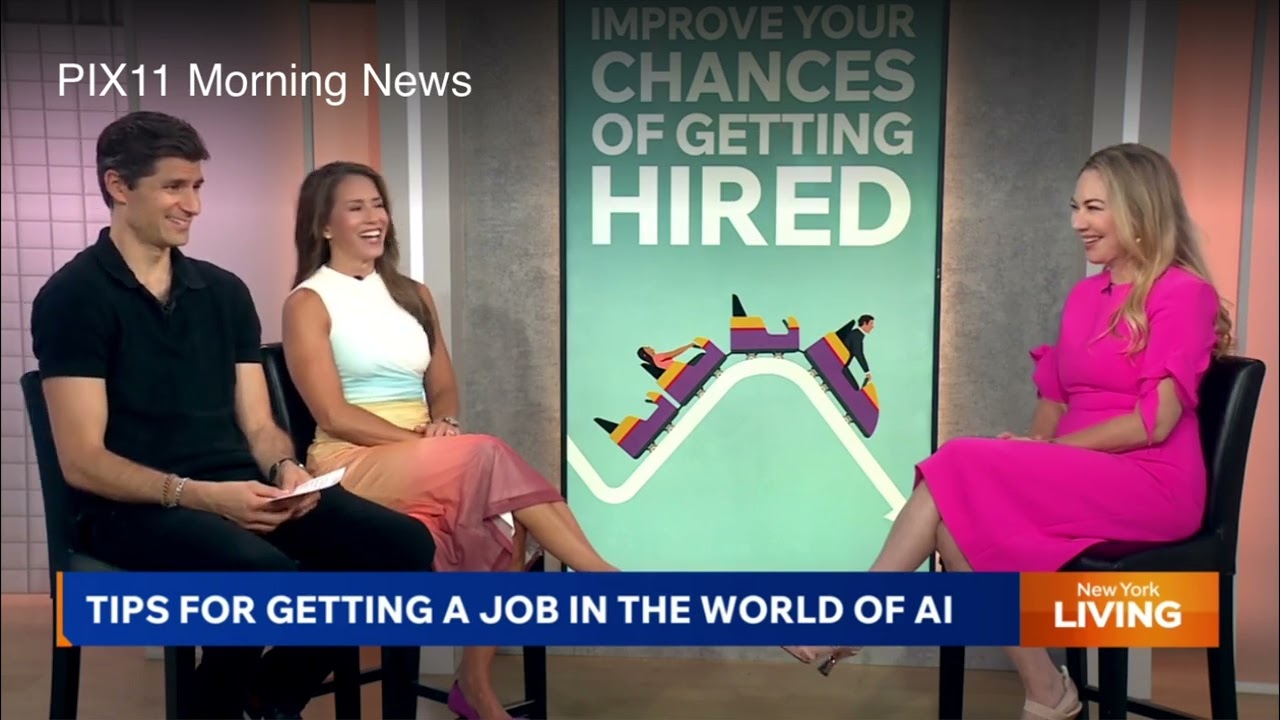
ABC7 Eyewitness News Mornings @10 segment ("A.I. Job Scams," 7 On Your Side with Nina Pineda).

Executive Career Coaching Success Story | David Auslander’s MTV Coaching Testimonial

Networking, AI & Landing Your Dream Job with a Former Wall Street Headhunter | S1 E17
Why Executive Career Coaching Works | Stephen Bush’s MTV Coaching Testimonial
Executive Career Coaching Testimonial: Stephen Bush’s Experience with MTV Coaching