Functional strength combines three things: mobility and stability to prevent injury, strength that transfers to real movements like jumping and lifting, and coordination and power to move smoothly as you age. The shift is from asking how much you can lift to how well you can move.
Chapters
Functional strength is today's main point. So a lot of people are strong, trust me, I get this. And strength alone, you know what I'm saying, it doesn't make you a better athlete per se. It doesn't make you like, oh, you're the greatest athlete. No, because if that was the case, every Olympic lifter would be the greatest athlete out there. Let's be real, they, they're pretty strong and they lift some heavy-ass weight, you feel me? Nah, nah, nah, nah, nah, nah, nah. But that's the thing though, a lot of people can bench heavy, they can squat heavy, they can even curl heavy, but that strength, you know what I'm saying, that's not necessarily functional strength. Yes, they're strong, but that strength doesn't transfer into real-world movements. I'm talking about spinning, turning, cutting, because in real life, we don't necessarily move in a straight line all the time, you know what I'm saying? We turn, we go lateral movement, we turn to the side, we rotate, you know, all things of that nature. Functionality is really the missing piece a lot of people are missing. Like, I kid you not. It's also what helps older individuals move well too, as well. Especially if you have a strong core, you know what I'm saying? You live strong and you obviously move strong, as I like to say. Functionality means training your body in really different planes of motion. I'm talking about left, right, you know, sideways, all that, you feel me? And it's not only for athletes, it's also for people who don't really play sports as well too. It's for everyone, I kid you not. Functional strength is super important. It doesn't matter how How you wanna go about it. You just need that, you feel me? And there are 3 pillars to functional, like functional strength. Number one is obviously mobility and stability. Let me go ahead and write that down here, right here. Simply paste that. Mobility and stability, that is super important. And I kid you not, a lot of people don't like training mobility simply because it's boring. I get it. Hey, look, it's fine, but you need mobility and stability. Like, I kid you not, like you just— You cannot— you just need mobility and stability, like literally, because all that strength with no greater foundation is pretty much pointless. Like literally, you know what I'm saying? Athlete needs it. An athlete needs it to be mobile and obviously stable. Your shoulders, your hips, I'm talking about even your ankles, you know what I'm saying? When you sprint, you jump, you rotate without breaking form at all. That is literally mobility and stability. It locks those joints in place without stress. Simple as that, you feel me? Easier said than done, you feel me? But you need literally mobility and stability. How would one go about training mobility and stability? Well, one of the best ways to really go about it is with a kettlebell, obviously, you know, by being unbalanced in a sense, because by you being unbalanced, you're training your, uh, you're training your body to be able to, what's it called, keep posture in a sense, you know what I'm saying? Your core. You train, you train your mobility and stability by also strengthening your core. How would you go about strengthening your core? Simple. Kettlebell workouts are pretty good. You can do kettlebell bear planks, or you can do kettlebell isometric planks with it. You hold it for about 20 to 30 seconds. Those are pretty good as well. Mobility and stability are just super important, literally, even in older individuals as well. Like, I kid you not, you need the same mobility that keep, you know, because without it, you pretty much get stiff. Yes. You will get stiff if you don't use it at all. That's how you lose things when you stop using it. Obviously, when you stop training for something, you obviously lose it because your body is not familiarized with it as much as it was before. You get what I'm saying? And the excuse a lot of people make to not train mobility and stability when they're in the gym, they go ahead and say things like, nah, I don't really need mobility. You know what I'm saying? I just really want to be strong. I'm saying, but here's the thing though, I want you to lock in and peep game. The truth is, without mobility and stability, your strength, you know, will collapse when it matters. Let's be real. Because if you're lifting 200, 300 pounds, you feel me, all right, let's say, all right, cool, let's go, let's go above and beyond. If you're lifting 400, 500 pounds, right, you need a stable foundation. If your balance is off, AKA your stability, you're cooked. You're literally cooked. You will fall down. Not only that, if your balance is off, your joints will obviously snap. You know what I'm saying? And you want to avoid that as much as possible. That is why I talk about bulletproofing the body in general. You know what I'm saying? That obviously helps with that. That's functional strength in itself. All that falls under functional strength. I kid you not. Now, number 2 is strength that transfers from the gym into real life. Yes, that is functional strength right there. If you were just strong in the gym, you're pretty much just strong. That's strength, but it's not necessarily functional. Functionality in a sense, you feel me? And athletes, yes, they need functional strength because it's what allows them to explode from cuts. I'm talking about jump up, side to side, move lateral, move laterally quick and all that, you know, side shuffles and all that, rotate quick. And they also use it to really resist and avoid opponents as well too, you know what I'm saying? And also land safely from your high jumps or just, you know, different type of jumps. You need literally, literal strength that transfers from the gym To the real life, to real life. Because I like to think of the gym as a means to an end in a sense. Yes, you need the gym, trust me, you need it. But it's kind of like a means to an end, of course, because what you train in the gym, you must be able to perform it outside of the gym, you know what I'm saying? Because if you're only lifting, let's say you're only doing, you're only doing what's it called, uh, dumbbell press and all that, yes, you need that strength, but you have to make sure it can transfer into, you know, your sports or, you know, just specific things you do in real life. A good example is you lift heavy dumbbells, right? If you play football, if you're a defensive— if you're a defensive back— I'm not the best on football, I'm just giving a good example. If you lift football, you can— you have the upper body strength to stop your opponent, literally, you know what I'm saying? Because you're strong right there. And you, when you move that, when you move that heavy weight, you go do clap push-ups, plyometrics, that adds an element of explosiveness to it. We can call it— we call that contrast training in a sense, you feel me? We'll definitely talk about that in later videos, of course. But number 2, strength that transfers from the gym into real life. Literally, I kid you not. And older individuals, they also use this to climb stairs. Like, literally, you need that. I mean, you know, I know it sounds crazy, but, you know, but they're older, so obviously, you know, their body is obviously breaking down. But that's fine. They still need the strength that transfers from the gym into real life because that plays a big role. Literally, lift bags, Simply get up from the floor, you know, simple things like that. That is functional strength. I kid you not, you know what I'm saying? And believe it or not, right, the psychology connection to that with the human beings is that we literally crave numbers. I'm talking about PRs. We crave that, you feel me? We crave that weight lifted. It stimulates, it stimulates what's it called? What's the word I'm looking for? It's like when you do something that's very difficult, It spiked your testosterone up because that was effort right there. You actually tried, you feel me? And human beings, we crave that. But you must understand that the real fulfillment comes from when the strength shows up outside the gym. And, you know what I'm saying, that's what I mean about strength that transfers. All what you're doing in the gym, you want to make sure it actually can help you into real life. It aids you and all that. It assists you. It's an asset to you and not a liability. Because if you only lift in slow concentric and eccentric ways and all that, You obviously will build slow-twitch muscle fibers. Common sense right there, you feel me? And if that's the only thing you want, then cool. But if you want strength that transfers, functional strength, yes, this is super important. I kid you not. This is more than just regular strength right here, gentlemen. Number 3 will be your coordination and power, your overall edge. Yes, athletes, they literally need the coordination to chain different movements together, and I mean smoothly too as well. We're talking about sprinting into a jump, we're talking about catching into a throw, and of course power efficiently. And I kid you not, they need that. But not only athletes, of course, obviously older individuals need this as well. You connect movements, like I said, you know what I'm saying? It's very, very important to be able to do so. It's super important to be able to do so. That's why coordination and power play a big role regardless of who you are. Even older individuals as well, they literally need the coordination to prevent falls. Move efficiently, and of course, and react quickly when life demands it. That's what I always say. Yes, because life does not move in a straight line all the time. You will have to turn, twist, you know, do several things, is what I like to say. So why not train to— why not train for, you know, those outcomes, is what I like to say. Why not train for those possibilities instead of just training in a straight line and just getting overall strength, which kind of limits you? Train for kind of all, you feel me? Train for all. And also, people will use excuses as to why should I train coordination, you know, power and all that. It's kind of boring and all that, blah, blah, blah. Here's the thing, I want you to peep game. Lock in and understand. People will say, I don't need to be explosive at my age. Like, what does that mean? I don't get that, you feel me? They will say, I don't need this, you know, it's not necessarily the best for me right now. But you gotta understand, power declines faster than strength. You know, this is a common sense thing. Yes, your power would decline faster than your strength at your age, like literally, especially when you get older, you know what I'm saying? If you're not obviously stimulating the body still, your power would decline fast. Like, you know, it will literally decline faster than your strength. And losing it is one of the biggest— like, one of the biggest— I don't want to say mistakes, but it's one of the biggest downfalls you would kind of make in the In a sense. And you're gonna— I don't want to say you're gonna regret it in a sense, but you know, around that, around that line sort of things, you know, you don't really want to lose, you know, your power and all that, you feel me? And as an older adult, you know, you struggle with independence, you know what I'm saying? You're gonna— you're really gonna struggle with that, especially if you don't have anyone looking out for you. So it is important to not neglect, no, what's it called, refuse those things. I get it. It's boring when training it. Cool, understandable. But it is super beneficial to you in the long run. Power, coordination, and your overall edge. It gives you, it gives you an advantage over a lot of things, even as you get older. You must understand that, literally. By listing all 3 pillars, I really want this to stick into your head, you know what I'm saying? By letting you know that functionality is really the bridge between lifting weights And living a strong, healthy, balanced life. I kid you not, you know what I'm saying? It literally is the bridge. It connects it together because with it you can do so many things that you cannot do with just strength alone. Like, think about that. All the things I've mentioned, you can do with— you can do because you're functional, you know, you have functional strength, not just strength alone. You don't move stiffly, you know what I'm saying? You're able to move fluidly and smooth because you have functional strength. You have the balance, you have the mobility and stability. You have the coordination and power, and of course you have the strength that transfers into real-life movements. Yes, that's super important to have. I kid you not. And it is also important to know that at the end of the day, you just don't want muscles. Yes, muscles look good, but you just don't want muscles, you know what I'm saying? You want a body that's mobile, strong, coordinated, and powerful as well. That's functional. I kid you not. That's literally the definition of functional right there. You know, you want what keeps you athletic at your age. Yes, point blank, you want that, you feel me? So you should obviously train for that. Train how you want to perform is what I like to say. Last piece of advice, when you think of lifting weights or just training, right, don't just ask the simple question of, yo, how much can you lift? How much can they lift? You know what I'm saying? That is so surface level. Like I said, the question you want— you really want to ask to know Is, yo, how well can I move? How well can they move? How well can we move? You feel me? That's a very important thing to know and to want to be able to do. Like I said, strength is cool, but it's more of a straight line, you know what I'm saying? But when you add functionality to it, functional strength, wow, you're opening up different doors right here, you know what I'm saying? So I want you to keep that in mind. And like I said, train smart, you know what I'm saying? Lift weights, but Train smart. It's not only about how heavy you can lift. Train smart. Discipline, ladies and gentlemen. And appreciate for watching. Subscribe, like, you know what I'm saying? Take care.
More from Daniel
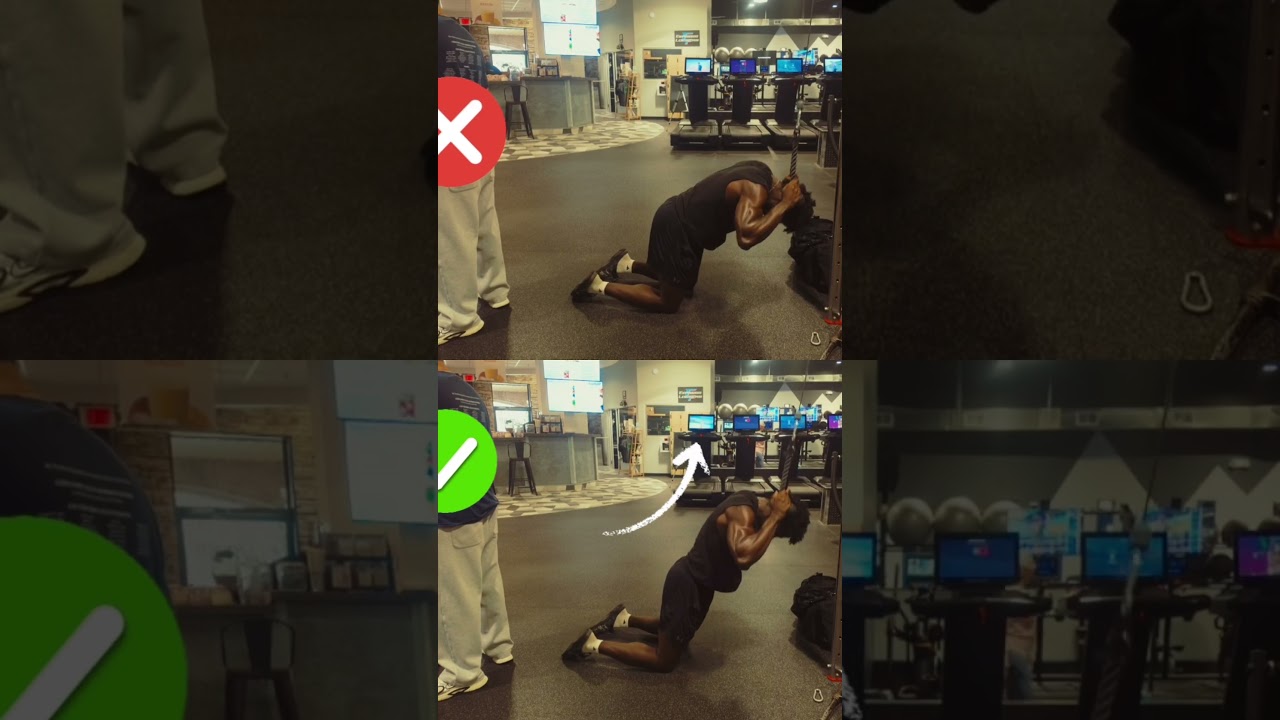
Underrated Core exercise! #youtubeshorts #foryou #motivation #foryou #fyp #basedfasho

Bulletproof your knees! #youtubeshorts #foryou #motivation #foryou #fyp #basedfasho
Never break this rule! #youtubeshorts #foryou #motivation #strongabs #athlete #basedfasho

Knee exercises! #youtubeshorts #strongabs #foryou #motivation #athlete #basedfasho