Why Lifting weights only is Slowing you down!

Barbell training alone builds strength but neglects proprioception, fast-twitch fibers, and connective tissue adaptation. You need lateral movement, plyometrics, sprinting, and reactive drills to stay functional as you age. The presenter uses an engine-suspension-steering analogy: strength means nothing without movement variety and reflexes.
Chapters
There's a moment that happens in almost every man or woman's life who's been lifting. Yes, they're strong, they look the part. Well, all of a sudden their kids ask them, can we play tag and all that. They try to jump over something or catch themselves on the icy sidewalk, and guess what happens? Yeah, their body doesn't just respond the way it used to or they expected to. Not because they're weak, that's not why, but because they forgot how to move. By the end of this video, you will understand what the problem is, What the research is saying and how you can go about fixing this, ladies and gentlemen. Let's start with something that really doesn't add up to me. Oh, a lot of people too as well. You notice a lot of y'all can bench, you know, you can literally deadlift 300, 400 pounds, but you still gas out chasing your kids around the yard for at least 5 minutes, which is kind of weird to me and kind of insane when you think about it. A lot of y'all can bench plate 2 plates, you know what I'm saying, still throw your back out picking up laundry baskets because You bent the wrong way? Nah, that cannot be, literally. And it's not because you lifted something heavy. That's strange, right? You're not strong. Nah, I'm just playing around. You're strong as hell. But shouldn't strength cover this though? Yeah, strength should literally cover this. Here's the uncomfortable answer and truth a lot of y'all are ignoring. Strength and movement competency are 2 different systems. Yes, movement variety, as I've spoken about it many, many times. You can build one without touching the other. And most people, yeah, in their training sessions in the gym, they really just lift weights, man. I get it, you want to look good, but there's a price to only just looking good and not being functional nor capable. Trust me on that, ladies and gentlemen. So let's talk about what the other one actually is, you feel me, and why losing it is quietly aging you faster than your training age suggests. To understand why, we need to look at what a barbell actually teaches your body, and more importantly, what it doesn't, because that's super important as well. A barbell moves in one plane. I'm not dissing this because I lift weights too, trust me on this. It moves up, down, maybe a hinge sometimes, especially if you're doing triple extension, things like power cleans and all that, or just cleans in general. The path is fixed. Yes, you know, the loaded— the load is predictable as well too, and your nervous system, it literally knows exactly what's coming on every rep. Unfortunately, right? That's not criticism at all, like I said, of lifting, but it's why it builds strength so efficiently. Predictability is what allows progressive overload. Remind yourself of that. Do not forget that. But here's where it gets funny though. Your life isn't predictable at all. You know, your kids cut left without warning. You step off a curb you didn't see. You know what I'm saying? You reach sideways and you twist to catch something falling off the shelf. You know what I'm saying? Pretty athletic and quick reflexes too, as well. None of that is sagittal plane at all. It's a fixed path movement. And here's where the science gets super interesting, ladies and gentlemen. Researchers studying aging populations have found that the decline in what is called multidirectional movement competency and reactive balance, it literally predicts functional decline and the fall risk more strongly than raw strength loss ever does. Read that again. It's not a strength problem. It's a movement variety issue. Yes, you can be strong and still be very fragile. Unfortunately, those aren't opposites. They're separate variables, literally. And you're only training one of them, you're not only— you're not solving half the problem, you know what I'm saying? You gotta train the full thing. Yes, lift weights, but also move too as well. So what exactly is breaking down when this happens? Excuse me, ladies and gentlemen, my voice is cracking up. So let's look at 3 systems specifically, starting with one that most people really haven't heard of or really just ignore, unfortunately. And I will do my best not to bore you. Bore you all, honestly, you feel me? I like to crack a little jokes here and there to make the topic fun, of course, and very educational as well too, you feel me? Number 1 will be the system called proprioception. This is your body's sense of where it is in space, in a sense, like without looking, of course. It's how, you know, we tend to catch ourselves some stumbles, you know, falls. Our brain even, you know, it just registers it real quickly, like I'm falling, then we just catch ourselves. Real reactive time, you feel me? And studies published in the journal, like Journal of Aging and Physical Activity, it shows that proprioceptive training, single leg work, which is unilateral training of course, balance challenges, unstable surfaces, preserve our joint position in a sense where just straight line lifting simply doesn't touch at all, unfortunately. Our ankles, knees, and hips are literally full of mechanoreceptors that need a variety of stimulus to stay sharp, ladies and gentlemen. A barbell squat done the same way every time, it barely adds anything of dumb on— like, it just doesn't, you feel me? That should be quite common sense, you feel me? But like I said, this is not a diss because a lot of people get this confused. This is why someone can have strong knees and still feel very unstable stepping on uneven ground, like, you know what I'm saying? If you're not used to it, your body will shake and move as well. Number 2 will be our fast-twitch muscle fibers. Yes, your reactive power, ladies and gentlemen. Muscle research on sarcopenia, much of it of how McMaster University shows something very, very specific, meaning our type 2 muscle fibers, the ones responsible for explosiveness, reactive movement, they literally decline a lot faster with age, you know what I'm saying, than the type 1 fibers, you know, which, you know, the slow twitch in a sense. And they decline even faster with disuse. What do I mean by this? Here's the catch. Slow, controlled lifting, you know, only— it only reinforces Type 1 dominance, which is if you're only lifting slow, guess what? You're gonna get the results you're looking for, which will be slow activity and slow responses. It's not building the fibers you need to react, the fibers that fire. I'm talking about like, you know, that explosive movement, you feel me? Like backflips, just running fast when you catch yourself from a stumble or anything like that, or react to your kid just randomly throwing a ball at you. To, you know, to your face, especially getting faceplant right there. You don't want that. So those need things like throwing, jumping, sprinting, rotational power work, and all that. Things I've literally spoken about many, many times on the channel, you know what I'm saying? You got to, you got to use it. You know, if you don't use it, you lose it. Like I've mentioned again too, as well. And this isn't a cliché thing to say. It's facts. If you're training for something, if you do not use it, you will lose it, unfortunately. So it's literally what the muscle bypass shows. Number three, which is probably the most important one on this list, which a lot of people just kind of ignore because it's not a muscle that shows outside in a sense. Would you know that will be connective tissue under a variable load? What do I mean by this? Our tendons and ligaments—they just—they—they just don't adapt to how much stress they experience. That's not a thing. You know what I'm saying? It's cool, but that's not really how they adapt. They adapt to the type of stress. You know, a well-known—and I mean a well-known review on tendon adaption by Magnesium. I hope I'm pronouncing his name right. And Kadri found that the tendons respond specifically to the loading patterns they're exposed to. Controlled axial loading, like a squat or deadlift, it builds stiffness in the direction, you know what I'm saying? It does very little to prepare you for, you know, tissue multidirectional things, like when you're moving side to side, unilateral training, you know, lateral movement, variable speed stress as well, the kind of, you know, you get from sport play or really unexpected lateral movements, as I just mentioned right there. This is exactly part of why a strong lifter, quote unquote, yeah, can still roll an ankle playing pickup basketball or soccer at any given moment. Just really just light jog. Or better yet, you know, uh, not better yet, but you know, a worst case scenario, just stepping wrongly walking, literally, because they've been away from years of lateral movement. The tendon was never asked to do that job at all. They just lifted weights. You feel me? So if strength doesn't cover this, what's the right way to think about it or go about it? Let me tell you, think of strength training as the engine, movement variety as the suspension, and the steering, the reflexes. You know what I'm saying? So you need both. Like I said, like I said many times, and even at the beginning of the video, a Ferrari engine is literally bottled in a car with no suspension. It doesn't make you fast. It just means you crash with more force, unfortunately. And that's not good. Really not good, ladies and gentlemen. And like I said, this is exactly why so many strong men and women in their 30s and 40s They feel athletic in the gym. Yes, that's cool and all. And they feel decades older everywhere else. You ask them to run, you know, sprint fast or jump high, they got all types of excuses. You know what I'm saying? They've built the engine, you know what I'm saying? But they never touched the chassis. And the chassis is what you actually live in. You don't need to literally just overhaul your training. What you need is to lay it in. You need structure. You need a program that works. You know what I'm talking about? One that guarantees you the results. You know, the quick, quick, quick fixes you can do— well, I shouldn't say quick fixes, but things you can obviously do to help you with this would be lateral and rotational movement. Lateral bounce, rotational med ball throws, and cable wood chops, or just, you know, just cable chops as people call it. Reactive work, ladder drills like you see when you saw me doing right there, reaction ball, or you can do bandits like I'm doing right there. Crawling patterns matter a lot too. Bear crawls, they're pretty good too for you as well. Single leg or unilateral training is super important. Single leg RDLs, balance work, single leg hops, or just bounding as well. Like I said, these are good for you. Let's not forget conditioning, or just play-based conditioning. I'm talking about sprints, jump rope, swimming, and actual sports. Yes, play sports sometimes. There's nothing wrong with that. That literally keeps you young, de-ages you. Trust me on that. The goal isn't to become a crazy gymnast. No, no, no. Or gymnast in general. It's to make sure your nervous system still recognizes unpredictable movements As familiar, not forgotten, ladies and gentlemen. All 4, and 2 as well. That's super important. And it all really comes down to the fact that strength gets you through your 30s, we get that, but movement variety is what gets you through your 60s and up, you know what I'm saying? It's still doing the things you actually love. I'm talking about hiking, golf, you know, if you play that. I find golf boring, but if you play that, that's fun, you know what I'm saying? Nothing wrong with that. Pick up basketball, soccer, getting on the floor with your grandkids and all the good stuff, you feel me? I'm talking about getting back to what you used to be Doing, like busting their ass, all that, you know what I'm saying? Very competitive. So it's the difference between, you know, just being the dad who plays tag and, you know, it means it, and the dad who just watches from the lawn chair, wishes he could do it, you know what I'm saying? But his knees stop him, his ankles hurt, you know, they don't move the way anymore they used to. So yeah, the gap doesn't just close on its own. It closes because you decided to change that, ladies and gentlemen. So today, train for it. Trust me on that, you know what I'm saying? Definitely go out there and literally try to fix that pain or problem you have. And of course, like I said, I offer training too. So if you do need help, I'm literally right here. You know, feel free to either DM me on Instagram or really just, you know, book an appointment in the link in the bio. And I will actually show you some testimonial from one of my clients right here. Super great dude. I kid you not, man. Personality is great. Work ethic is amazing. And he's disciplined. He was able to fit his, you know, his joint pain problem literally in an amount of 3 months just working with me. So here you go right here. Y'all should look at him right here, man. Just really amazing testimonial, for real, for real.
Doing the 3 phases of the program, you know, like, how is that, you know, you know, somewhat benefiting you, brother? You feel me? Like, how is that, you know, benefiting you, man? Like, how have you found it to your liking in a sense?
I think the plan is damn near perfect.
Like I said, it's very detailed. And before I even started the plan, you know, you know the problems with my knee.
Respect.
But now from phase 1 to phase 3, it's like I'm a totally different person.
Respect.
Knee's getting stronger. I'm jumping higher, I'm more explosive, I'm stronger, I'm lean.
Okay.
No, no dirty bulking shit. Like, the diet is on point.
Yes sir.
Like, like I said, I wish I met you like 3 years earlier in college. Ain't that respect, brother?
Respect. Like, but like, but like, like I said, we, we always gonna work on that, you feel me? I mean, you're already doing great progress, and this is, like I said, it's phase 3, you know what I'm saying? You got literally, you got 2 more phases left after this, you feel me? 4 and 5, you know what I'm saying? So, you know, you're doing solid. This is, uh, no, no, not 4 and 5, my bad, 5 and 6. Yeah, so yeah, 2 more phases, you feel me? So, you know, you're doing solid, bro. That's just good work right there. And
More from Daniel
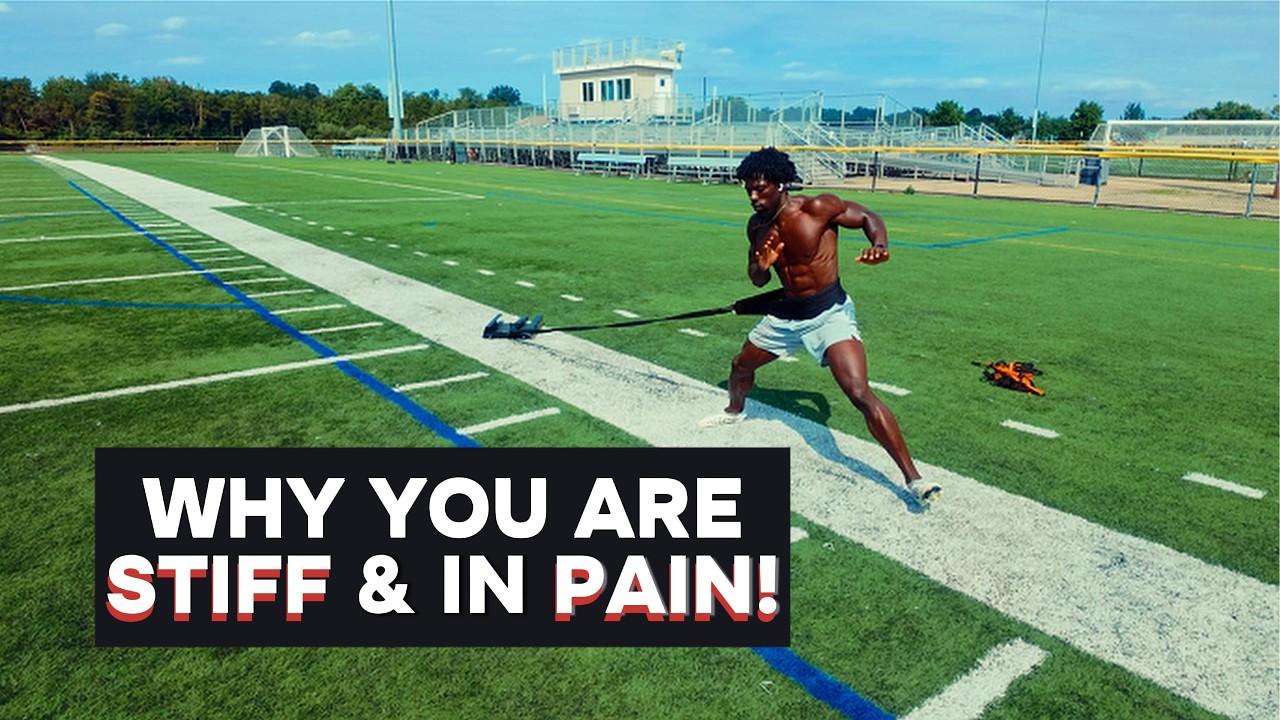
Underrated Core exercise! #youtubeshorts #foryou #motivation #foryou #fyp #basedfasho

Bulletproof your knees! #youtubeshorts #foryou #motivation #foryou #fyp #basedfasho
Never break this rule! #youtubeshorts #foryou #motivation #strongabs #athlete #basedfasho
Knee exercises! #youtubeshorts #strongabs #foryou #motivation #athlete #basedfasho