$100M Meta Ads Playbook 🔥 Hernan Vazquez on AI‑Driven Facebook Ads, Low‑Ticket Funnels & Scaling
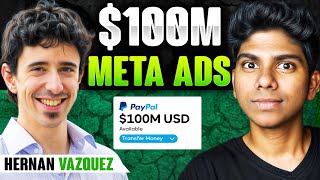
In this episode of the Nikhil Sai Show, host Nikhil Sai interviews Hernan Vazquez, founder and CEO of ScaleDriven, a media‑buying agency that has managed over $100 million in Meta ad spend and generated $250 million in client revenue. The conversation traces Hernan’s personal journey from early SEO work and first Facebook ads in 2012 to building a full‑stack agency. They discuss the evolution of the Meta advertising ecosystem – from interest‑based targeting, through the introduction of the purchase event, the disruption caused by iOS 14, and the current AI‑driven “Advantage” targeting that makes audience discovery less critical. The focus has shifted to creative volume and rapid testing, with Hernan running hundreds of ads weekly and using a 20‑80 rule (≈20 % of creatives deliver results). They explore how agencies must evolve from pure campaign management to strategic partners that handle offer design, funnel architecture, tracking, and copy/creative production. Hernan outlines a low‑ticket/self‑liquidating offer validation framework for warm and cold audiences, emphasizes the importance of updating funnel math, and describes his workflow leveraging AI tools such as Claude for copy, ChatGPT/DALL‑E for images, and Canva for quick assets. Scaling is presented as an “ad scaling ladder” where spend is increased incrementally while monitoring funnel performance, rather than simply pouring money into ads. Practical advice is shared on daily routines, creative refresh cadence, partnership selection, and a “ship it” mindset. The episode concludes with Hernan’s goals for 2025, his community resources, and actionable takeaways for marketers and agency owners.
Chapters
What's going on? What's going on, everybody who's actually listening to this podcast right now? First of all, guys, welcome back to another episode of the Nikhil Sai Show, which is hosted by me, the Nikhil Sai. And guess what's going on today? If you are somebody who's a business owner and you're thinking about running ads on Facebook, this is probably the podcast you want to stick around. Have you ever seen all these top influencers like Grant Cardone, Frank Kern, Tony Robbins, Agora Publishing, Patrick Bet-David, Dan Fleshman, Dean Graziosi, and Many more iconic brands like even Lionel Messi. Have you ever thought like, how can I see their ads when I'm scrolling on Facebook and Instagram? Probably there is a media buyer behind these brands who's actually running it. Today, the guy who's jumping on our show has run well over $100 million in advertising spend, generating over $250 million in results for his clients. And let's not waste any time and actually let's welcome the founder and CEO of ScaleDriven, Hernan. Hey Hernan.
Hey man, how you doing? I'm excited to be here. Thank you for having me.
Yeah, I'm doing good. Just for the context, guys, Hernan is a well-respected media buyer and advertising agency in the marketing space, especially in the digital products. He's spoken at events, does keynotes, and very good guy. And I personally work with him on a couple of projects. Before I get into a little bit more technical questions about AI marketing and advertising and Meta and all this cool stuff, Hernan, give us some background about yourself. It's been like you started, I think, in 2012. I was probably in like 3rd grade or something when you started Facebook ads. So walk us through the journey. How was it like? And give us some context of who Hernan is and how did he end up building this massive company?
Yeah, dude. Yeah, I've been in the digital marketing world for the past, wow, now 15 years, maybe 15, 16 years. So it's been a while. I started when I was 20-something. I'm 37. So yeah, so around that, you know, 21, 22, so around that. You know, at the beginning I had, like in my past life, you could say, right? I'm fresh out of college. I had a good degree. You know, I went to school, I had good grades, like I'm not a drop-off or dropout or anything like that. But, you know, and I was always able to get good jobs. Like I was, you know, fresh out of high school, you know, I started teaching English to other people and then I got hired pretty fast to work for big companies. And that was never an issue for me. And at some point, you know, I finished my university, my bachelor's bachelor's degree, which was in communication, and I was working for this big, big company in Argentina. Great salary, super comfortable, super near from my home when I was living. Amazing company, you know, super good people and everything. But then I realized, hey, if I stay here for the next like 10, 15 years, right, what could I be aiming towards or for? And, or, and if I do this on my own, like, if I— and I didn't know what I wanted to do— so if I do this on my own What could the results be? Right. And then for me, it was pretty apparent, pretty evident, which is like, hey, I need to make this decision now. If I'm going on my own, if I'm going to be independent and entrepreneur. And, uh, so, so I made that decision. My parents got really surprised, right? Because it was like middle-class, you should go to school, get a job or whatnot. So they got really surprised, but they, they supported me. This was, mind you, this was 15 years ago. So I was spent, I quit my job without a net. Right? And then I would spend hours and hours trying to figure out what I wanted to do. And I would spend a ton of time in the forums. Like back in the day was like Black Hat World and Black Hat Forum and all those places to, you know, to learn to make money online basically. And I would spend a lot of time in my mom's garage. And this wasn't when people used to work from home, you know, when you were working from home in your pajamas, it was like you were playing all day. You're playing video games all day, you know? So anyways, long story short, I started learning about SEO. That's how I cut my teeth. You know, I jumped out of this job. I started learning about SEO. I started ranking my own websites and started making a little bit of money on affiliate. And then I, um, I got my first couple clients in Argentina and then I got together with this group and we started like teaching other SEOs how to do SEO, right? And, uh, and at that point, you know, since we started like teaching other SEOs how to do SEO and how to build agencies, how to get clients and all that stuff, then we launched our first course with it. you know, a couple of other, other people. And then we realized that, okay, now we have this digital course teaching SEOs how to do SEO. Uh, we should promote it. And that was 2012 when I just launched, uh, you know, my first Facebook ad because I was part of this business that needed promotion. And I was like, okay, I'm going to start toying with Facebook ads. And when I discovered the power of direct response paid advertising, I never went back. So I never looked back. I went ahead and went all in. In paid advertising, and that has been my bread and butter for however many years. And that helped me and led me to help other entrepreneurs and catch the eye of some, some of the big names that you mentioned throughout my career. But it's, it was all built on the back of learning how to direct eyeballs and how to buy traffic so that I could send it basically anywhere I needed it to be. Does that make sense?
Yeah, it does. And that's a really brief intro and appreciate you walking us through the weeds. And I think that's the real skill. Like once you know how to convert that massive traffic that you can buy into profitable dollars behind the scenes, I think it's game over. Like, that's the scale, you know, every business owner dreams of. Now, there's different phases of Facebook ads, right? Like, there's— I actually saw this interview with Mark Zuckerberg recently, you know, on the— on like a very prestigious stage. He was speaking, you know, in San Francisco, and he was talking about, hey guys, in future, a business owner would come on the platform, he would explain the Meta AI, on what the objective is and does he want sales and how much is he willing to pay and the Meta AI would do the rest of the job. I was like, wow, that's exciting. But back of my mind I'm like, holy moly, like I know 1,000 marketers who are basically like their businesses are gone. Like so many people are getting disrupted. There was a time where like interest-based targeting was the whole thing. Like find those like golden nuggets, you know, like find that right targeting, right? And now it's all creative. So walk us through different stages of Facebook Meta algorithm overall. You've been so, so, you know, so much into the weeds here. So walk us through what do you see right now, which is working the best and how it used to be compared to what is happening right now?
Yeah, no, I love that question. And I saw that, by the way, I saw that interview and I think that, you know, he was kind of being hyperbolic. I believe that at some point it's going to be like that. It's like a business owner is just going to go to a platform. She's going to say, hey, just buy media for me and boom. And there you have it. And we're getting closer and closer to that. But I think we have a way at this amount of time to go to refine that and find the real, because it's not about it's never about the ads, right? Like ads, it's generally, you know, people like to say that, oh, I need more leads. I need more clicks. I need to run better ads. And what I, what I found out is that throughout my career, it's all about the offer. It's all about what you're selling. It's all about how you're positioning that, you know, how you differentiate from your competitors. So ads are just that, you know, it's just a tiny portion of the whole thing. And, uh, to, to, to go to your, to, to your point about how things have been changing, especially over the past, I want to say probably a couple of years is that, you know, we used to run these lead magnet campaigns, right? Like that, that's the— I remember vividly that that's the first type of campaign that I used to run was like lead magnets campaign. So we would run ads to get a lead, you know, a phone number, an email, something like that. And we will run ads to a PDF or a guide or something like that. And we will get leads for maybe 50 cents, you know, 20 cents in the US. We're talking, we're talking that, uh, you know, 20 cents, 50 cents. So that, that's, when back in the day when the Pixel was just starting out and there was a lot of things that you couldn't really track with the Pixel, but we would get like 20-cent leads, 50-cent leads, right? And those people are really responsive. They will buy your stuff and whatnot. And then of course, more and more people started jumping into the platform and then the platform got more sophisticated. And then one of the biggest, one of the biggest changes I remember was the rollout of the purchase event. So now the Pixel could actually start learning who your buyers were. So we all jumped into that, right? So that was a big kind of a an earth-shaking thing that nobody else was doing, not even Google, that Facebook was able to learn who your buyers were. And then another big change was iOS 14. I remember that I was marketing director for a company. This was, you know, right in the middle or a little bit after, before the pandemic. And I was marketing director for a company. We were spending around $3 million a month in ads, right? And, uh, and right in the middle of iOS 14. So iOS 14 hit. And then all of a sudden, all of that amazing data that the pixel was giving us, it was gone. We couldn't track, the pixel couldn't learn. So we had to kind of scramble and they had a development team that allowed their solution to talk to the Facebook pixel and bypass all of these privacy stuff. And then a bunch of tools came up like Hiros and AnyTrack. A lot of tools were born out of that need. And especially over the, I want to say over the past, you know, 18 months to a year, things have changed dramatically. As you said, we kind of have— we had to adapt as an agency, as a media buyer myself, and training my team as to how we buy media on behalf of our clients. The biggest shift has been what you said, it was all about finding that obscure interest that nobody else was targeting, right? That was the key. If you found— if you find that pocket, of people that nobody else was targeting. And I remember that there were these tools that will allow you to target Facebook groups, for example, right? Or these tools that will allow you to uncover more interests. And for a long time, we used a lot of— we still do, but we use a lot of third-party data sources, data that comes from Equifax, TransUnion, credit reporting agencies, you know? So we were trying to find people that nobody else could target. And that was the game for a while. But what's happening right now, especially over the past 12 months, is that the Facebook Pixel has become so good, especially, you know, with AI and machine learning and the acceleration of that side of things, that targeting is not really a thing anymore. You know, you and I can target the same people in the platform. You can give it to Facebook and Facebook will figure it out, right? There's even some campaigns that are called Advantage Shopping campaigns where you just basically give all the reins to Facebook and they figure out targeting for you.
Mm.
But now if you think about it, since you and I are basically targeting the same people and we have the same capabilities and a, and a small, you know, e-commerce store with maybe $100 a day in ad spend or, uh, you know, or a med spa in a small city with $50 a day in ad spend, they could, they have the same targeting capabilities that the big Fortune 500 companies that are spending millions and millions of dollars a day, right, on ads. Then what's next? What's the next frontier? And that's where creatives come to play. That's where what we're noticing is that there's a shift between targeting, right? Trying to find that amazing audience to letting Facebook figure it out for the targeting, but coming up with better ads and more ads, like more volume of creatives. That's where that has been one of the biggest shifts. And that has allowed us to keep campaigns performing, and being stable for a long time, if that makes sense. Makes sense.
Yeah, it totally does. Like media buying is going from this technical detail of like trying to find like the best targeting or best interest to target to actually becoming a more creative person where you're coming up with different hooks and ad angles to hit the same audience in a different manner. That's really, really insightful. How do you see media buying as a service changing and evolving? Because There used to be the time where media agencies would charge $5,000-$10,000 a month to just manage the targeting and, you know, manage the campaigns, and the client would do the whole creative work. Just campaign management was the big, big thing that they're paying for. And now it's the opposite. Like, now you have to work with the client to get the best creatives. Where do you see this evolving with what we talked about Mark Zuckerberg's keynote when he's talking about the AI handling the whole thing? How do you see this evolving like 5 years from now if you have to project? How do you envision a media buying agency on a day-to-day basis?
Yeah, no, that's a good question. There's a couple things, right? The first thing is that throughout my entire history of buying ads on Meta, right? There's been a steady increase in pricing, right? So there's been a steady increase in pricing. You know, back in the day, again, back when I started running ads, you know, you could get $0.20 leads, $0.50 leads, you know, started going up to $1 lead, $2 lead. That's fine, right? Like, who cares if you're getting, leads for $1, $2, and they are not opening your emails, or they're not showing up to your webinar, and they're not like, you know, banging on your door to come to your stuff, like, or they're not watching your VSL, or they're not showing up to the call, like, who cares, right? Because it's like, all right, fine, yeah, $2 leads, $20 booked appointments, that's fine. But now things have changed, right? Now we're paying $10 leads, $12 leads, $15 leads, same targeting, right? Same demographic, same everything. We're paying you know, $200 per qualified booked appointment, $250, $300. So now things starting to change. So the math have changed dramatically. And a lot of business owners, they're struggling right now with advertising because they haven't really updated the math on their ecosystem, on their offers, on their funnels, right? They haven't really like paid attention to that. So I think that, you know, agencies, to your point, I think that agencies need to become more like a strategic partner, not that much about, oh yeah, you should just give me the funnels, give me the ads, and then I'll run the ads, and then I'll report you back like once a week or once a month or whatever. No, they need to help you with the strategy behind, okay, where are we sending traffic to, right? Because it doesn't matter how good of a media buyer I am, how good your creatives are, if we're sending traffic to a brick wall, nothing's gonna work, right? So I think that there's this shift between, you know, the agency, the ad agency, to a more strategic approach, becoming a full-stack agency. And of course, there's these, these ad agency, these heavily analytical, data matters a lot, right? But there's a shift, especially with AI tools, to a much more creative approach. So one of the things that we're doing is to basically take over, like we take over everything that has to do with ads, copy, creatives, you know, all of everything has to do with tracking. So we take over that part too, because it's an essential part of what we do. So I think that there's this evolution of becoming more like a strategic or full stack partner instead of just like, oh yeah, I'll push some button and run some ads because like literally anyone can do that. So what's your strategic advantage if you cannot advise your customer, your client into how to, you know, do better with their math, like how to extract more revenue out of the leads and clicks that are coming through the ads, if that makes sense.
I agree. And I think it used to be like you just push a bunch of buttons and you make good ROI because the CPMs were low, but now it's changing. You're just pushing buttons doesn't mean you make money back. You know, you have to be in the trenches finding out what customer pains and add that into your ad angles to get better CPMs and click-through rates. Now give us a mini masterclass because you've been, especially in the last few months, I've observed you are, I was kind of funnel hacking you a bit and I saw your ad library and I saw 700 ads active. I was like, holy moly, like this guy is really testing, like testing, testing. So what is your ad creation thesis right now? Because the creative is the 100% focus. So how do you come up with angles? What's your thesis? Because there is so many angles you you could create an ad, and I'm assuming you are image heavy right now in, in the world of so many reels and junk content, you know, with short-form videos and whatnot. I think you're going more on reels. So walk us through, like, what's your thought process in creating an ad that actually wins?
Yeah, no, I love that. And I did, by the way, for the record, I didn't know that I had 400+ or 700+ active creatives right now, you know. I did, I didn't know. And by the way, I— okay, okay, cool. I will, I will after the call. I didn't know that, but, uh, but that's cool. So I'm gonna take a speech and I'm telling, hey, you need to best creatives, but that's cool. But, you know, I just launched new ads every week. So, but then, you know, compared to somebody like Russell Brunson or compared to somebody like Dean Graziosi, they're coming up with something now, my— that they launch those ads in a week, you know. So every week they're launching 700 new creatives. Uh, so anyways, the point is, I think the following is that I think you nailed it. There's a lot of junk content. I think that there's a lot of, you know, faceless offers running around. There's a lot of AI-generated like garbage with reels and remakes and all stuff. And it's just the fact that something is generated with AI, whether it is a creative or an image or copy, it doesn't mean that it has to be bad. In fact, you know, I, I, if you, if you do it right, you can come up with really good stuff using AI that really matters. And it just helps you with volume because volume, it's what really matters. You know, it would, it's what really matters. You know, generally speaking. Out of 100 ads that we launch, right, out of 100 ads that we launch, whether it's for ourselves or for clients, we will find that 20% of those ads will bring us some sort of result, right? So, so out of 100 ads, we have this 20-80 rule. That means that 20% of those ads will actually bring us leads, buyer sales appointments within our desired KPI, right? So however much we want to pay for that. Now, 1 out of 100, so 20% would be good ads and they will run for a little bit. Maybe they will run for a week, for 2 weeks, for 3 weeks, for a month, and then eventually they will fizzle out. They will die out. I was doing a workshop today and I said this, I said that every time you launch a new ad on Facebook, Facebook stamps an expiration date on it. right? So every time a new ad goes live on the platform, they will come and boom and put an expiration date on it. Now, we don't know the expiration date. It could be a week from now, it could be 2 weeks from now, 2 months from now. But there's 1 ad out of 100 that we call a golden ad. And those golden ads are ads that you could run for a long time. You know, those ads that they get a ton of social proof. I remember that I wrote an ad for Dan Henry which was the first million-dollar ad that I, that I actually wrote for somebody. And it was just a long-form, you know, it's just kind of a long-form article that we just posted on his page with a picture of him and his wife at the time with a link to the landing page. And that ad was so helpful. It's indexed on Google, by the way. You know, that ad was so helpful that it got a ton of comments, a ton of shares, a ton of action and whatnot. And it got a ton of leads and sales out of that ad. And that's what I would call a golden ad. So no matter what you do, those are ads that are really hard to beat, you know, and you will run them forever and you're going to get bored of them. So we're always in the search of those golden ads, but they come out of volume. Like there's no other way around it. If you see like the big dogs, how the big dogs are scaling, it doesn't matter what kind of niche you're in, you will realize that you are not testing enough creatives. No matter when you're seeing this, no matter how many creatives you're launching right now, you're not testing enough creatives, you know? So to stay ahead of the curve, to avoid like running behind that stamp, that expiration date that Facebook will put on your ads, what I like to do is to have a rhythm of launching new ads, whether I need them or not, or every Monday, sorry, every Monday I will be launching new ads. So I just jokingly post on my Facebook, hey, it's Monday, refresh your creatives, because that's what I do. Right? And that's what I tell my clients to do, like get on a rhythm with your team. Like every, I don't know, every Wednesday you come up with new concepts, every Friday they give them to you, every Monday your media buying team launch them. So you get on a rhythm of launching new creatives every single week, and that allows you to keep your campaigns performing for a long time. Does that make sense?
Yeah, it does, it does. I mean, this is so crucial because We underestimate, like, there used to be times where there is not a lot of advertisers on the platform, so it was so easy for your brand to just cut through the noise and share the message. Now we have the same amount of eyeballs, but now there is a million more brands trying to advertise, so the real estate is getting crowded and the buying cycles have changed. Recently, what I have observed is the people who used to just run a VSL funnel and get an appointment for $100, and, you know, 30% of them would be ready to buy and like 20% of them would actually end up paying in full, like all of that stats. And it used to just work flawlessly and they used to just double the money on a weekly basis on a campaign. It's no longer the same that buying decisions have— they're now taking a longer time, you know, and the follow-up needs to be more vigorous. Now from your perspective, what are the winning attributes you would give to the clients you work with who had the best returns? What are they doing after the media buying is done? Yes, they're doing the creative testing, they're getting the best clicks and leads coming in. What's foolproof way for a business to say like, okay, even though I might not be making my money back right now, here is my system, my playbook to get it back.
What would that look like? No, I love that question. And, and there, I would say there's two things. There's two main things. And this is something that I can, I am, I am going all in and I'm helping my clients and advising my clients on do more of, which is, you know, the time or you can still do that. You can still run a VSL ad. You will get instead of $100 calls, you are going to get $300 calls. Your, your sales cycles are going to get longer, right? So that's happening and they're not as profitable as they used to be, as fast as they used to be, but they're still profitable, you know? So there's a couple of things that you need to have in mind. The first thing is to take a step back, right? Take a step back because again, the math, you need to update the math and that might be coming up with more better offers or a deeper funnel, right? Like a wider funnel, like offer them more stuff on the backend. You know, I once heard Russell said that the only person that he kept on buying from was Dan Kennedy. The reason why is because Dan Kennedy kept on selling him stuff, you know, when everyone else stopped, Dan Kennedy kept on selling him stuff, right? So that's why Russell kept on buying from Dan Kennedy. So the lifetime value of a customer for Dan Kennedy was infinite. Right? It was so high. So he could pay whatever he wanted to acquire a customer. So that's the one thing, right? So follow-up needs to be there, of course, more follow-up for longer periods of time. I think that adding value needs to be, you know, front and center because with all of the AI happening, right? With all of the AI explosion of content, again, there's a lot of garbage content. So there's like this trust recession where people don't really know who to trust and they're basically going to trust whoever helps them. Right? And that's kind of a principle that Frank Kern taught me back in the day, which is like, hey dude, what if we help them right now and we demonstrate that we can help them by actually helping them right now, and they will want to buy your stuff, right? So I think that that still works, especially right now. So, but, but that's only like half of the equation. The other thing that I'd like to really look into is how we— how do we make the math work in a better way? If this funnel funnel, right? Like if this VSL funnel was perform— was giving you, I don't know, a 3x ROI in 30 days or 60 days, what can we put in front of that funnel so that you can liquidate your ad spend faster? And that's the secret. That's one of the things that I'm really into. I was seeing Anik Singhal a couple weeks ago. You know, he kind of— I, uh, he and I kind of talk the same language here, which is the revival of the low-ticket offer. You know, like we're in a trust recession right now. So it's harder to have somebody, a stranger from the internet to come in and give you $5,000, right? You're asking for marriage right away. Right. And you will be put in jail if you do that on the street, right? Like everyone you, everyone you meet, you ask for marriage. So why don't you ask for coffee first? And the coffee used to be the lead magnet, right? The coffee used to be the lead magnet, but now with $20, $15, $20, $25 leads, it doesn't make sense to keep on doing that coffee. Instead, just charge for your, for the stuff that you used to give away for free. So there's this revival of the low ticket offer, which I think it makes so much sense. The big dogs have been doing it for a while. When I worked as marketing director for Grant Cardone, they had like 7 or 10 book funnels running at any given time, giving them hundreds of buyers, thousands of leads every single day. So it's a playbook that has been around forever. So I think that that's the other thing that people need to start doing more of.
Yeah, I like that. I mean, I think it's a good market sophistication. The BS people were giving away for free is no longer valuable. So now you have to find the best stuff and create an offer around it and actually have people pay for it. And this is a much difficult problem to solve. And you're actually validating your whole business when you're doing that, you will come to the realization that all your assumptions were not true and the market will tell you what's good and what's not. You can't just come up with a PDF mockup and say, yeah, this is valid at $97. No, it's not. People won't buy it.
Right.
So give us, yeah, give us, give us the offer playbook. You have launched, and now I'm assuming you're consulting a lot of people who are running self-liquidating offers. What is the playbook to come up with an offer that could actually liquidate itself? Because it's easy to put an offer and promote, and it's easy to lose money as well, because self-liquidating offers, if you don't know the finesse of making it profitable, it could get tricky, right? So I'm curious, what's the playbook to create a winning offer when it comes to a slow funnel?
Yeah, that's, that's, that's a good point. And by the way, I did, I did a full workshop on low-ticket offers and acquisition offers that was like 2 hours long, because there's, there's a decent amount of moving parts. I'm happy to give it to you so that you can give it to your audience, you know, for for free. That was a paid workshop, but happy to give it to you, which breaks down everything, you know, the different steps, the ads, the funnel, like the metrics and everything. Here's like the TL;DR, you know, 30,000-foot overview of a low-ticket offer. The first thing, you nailed it in the head with what you just said, which is we need to validate an offer because entrepreneurs, including myself, I did this too. We wake up with an amazing idea that will change the world, tomorrow, right? And then we, we spend all of this time, you know, coming up with the logo and coming up with this idea, and we spend all of this money and all of these resources. And then when we turn around and we try to sell it, nobody wants it, right? So this is something that I learned from the big dogs as well, is that they validate first and they build later, right? Validate first and build later. Now, how do you validate? Well, there's two frameworks to validate an offer, a low-ticket offer that will work. With advertising, with paid, specifically with paid cold advertising, right? So people that do not know who you are, they haven't heard about you, the offer needs to be sexy enough so that they will give you $3, $5, $7, $27, right? So that's the main key of this offer. So we need to think, how do we make it work to cold traffic? And here it is, there's two ways of doing this. Number one, if you have an audience already, if you have a list, if you have a following on Instagram, on YouTube, TikTok, whatever, you basically tell them, hey, I'm thinking of doing this thing. You don't do this thing, right? You're not— you're thinking about doing this thing. And I'm going to charge whatever, $7 for it. Would you guys want it? And then if you have enough people saying yes to that, and you will see me do this on Facebook all the time, right? If you get enough, enough response to that offer, you just put together a simple Google Doc or a simple landing page, right? With a really simple explanation of that offer, you send it to them, and then you should get at least 15% conversion rate on that landing page. What do I mean? I mean that if you get 100 clicks or 100 visitors to that landing page, you need to get at least the bare minimum 15 sales, ideally 20. So 15 to 20%. Why? Because when we launch the same offer to cold audiences, again, this is your warm audience, when we launch the same offer to cold audiences, our conversion rate, it's gonna drop. It's gonna go way down. So even if we cut that in half, we still have a viable front-end offer, right? Front-end offers from cold traffic need to convert between 5 to 10%. So out of 100 clicks that you get, you should be getting at least 5 front-end buyers once you launch to cold traffic, right? So that's option 1. Option 1 is validate with your warm audience. But what if you don't have a warm audience, right? What if you want to validate with your cold audience? Well, the process is similar. The process is similar. You come up with the offer idea, you put together the landing page, you say, hey, this is a pre-launch, right? And then what you do is the exact same thing. You put together a simple landing page, you put together really simple ads, text-heavy ads like I like to do. Go funnel hack me and check the ads that I like to run on my Facebook Ads Library if you want. So, uh, so you run really simple, ugly— I call them ugly ads, right? To your landing page. Now, for warm audience you have, or for your audience, you want like super high conversion rates. For cold audience, you want to be around that 3% conversion rate mark, 3 to 4% conversion rate mark. Then you make your funnel better, then you make your landing page pretty, then you make your ads better because the logic is if you can get it to convert 3 to 4% with ugly ads to an ugly landing page, And once you add testimonials and a guarantee and an FAQ and a VSL and all of those things, and you run better ads, your conversion rate will go up. So that's the way that I like to test these offers, both for warm and cold. And I've done both and they both work. They increase the likelihood of your front-end offer to work.
Does that make sense? Yeah, it totally makes sense. I'm curious right now with AI popping up, have you got tools in place to test faster? Like walk us through your workflow of creating ads. And I've seen this ad creation platform. I'm not sure if you got your hands on it. I'm using Icon right now, icon.com, and it has decent interesting features as well, especially UGC creators that looks very much like a real influencer to run like UGC ads and whatnot. I'm curious what kind of tools you have tested from an advertising perspective that you're using on a daily basis.
Yeah, that's a great question. So the number one thing that I like to do for these steps, right? For the ads and the copy and the, even the offer brainstorming, I like to use Claude. So I put together a Claude project where I feed my voice to it. I feed my emails, my social media posts, you know, I have a monthly newsletter that I give to it, right? So it can learn how to write like me. And then we'll basically talk about stuff like, hey, I want to put together this offer that will address these pain points. That will help me sell from cold traffic? What ideas do you have that I can sell for under $50? What ideas do you have? And it will give me some really good ideas for front-end offers, right? And then I just test them in order. And then I ask Claude, okay, Claude, that's awesome. Give me a landing page or landing page copy, right, that will answer these 3 questions. Here's what I got. Here's what it will do for you. Here's how to get it. I learned that from Frank Kern, by the way. So those are the 3 questions that the landing page needs to answer. Here's what I got. Here's what it will do for you. Here's how to get it. So then Claude will put together a really simple copy, and then I just grab it, put it on my funnel builder, ClickFunnels, or whatever it is that you're using. Boom, I put it there, and now I have my landing page. For my ads, I am using a lot of— so I'm using two things right now. I use Canva, you know, Canva for simple ugly ads, but then I've been using a lot of ChatGPT. So ChatGPT can put together really cool images now. With the new DALL-E, I don't know what version it is right now, but the latest DALL-E version is doing a really good job. It did, it wasn't viable before because I like to use text-heavy ads, right? So text-heavy image ads, but the text would look weird and now it doesn't. Now it does an amazing job. So I have my prompt that I actually asked ChatGPT, hey ChatGPT, if I were to ask you this thing, if I were to ask you to create direct response ads that are, you know, stop, they, they're thumb stopping, they will do this, the direct response, they'll sell a low ticket offer. These are some examples. What would be your prompt? And guess what? It gave me the prompt. I fed it back to it. And all of a sudden I'm creating ads with ChatGPT. So that's kind of my process right now. So I use, I use Claude for pretty much all of my content right now, emails, social media posts, and then I use ChatGPT for my image generation. I actually got recommended Icon today, but I wasn't able today specifically, I wasn't able to test it out. But I know that there's a lot of, a lot of good tools out there. I just need to make the time to test them out, if that makes sense.
Oh yeah. I mean, there's a lot going on in the AI space. You kind of feel the FOMO of like every new tool coming in and you're like, oh my God. Yeah. Yeah. I'm trying to distance myself so I stay focused on what we have to do instead of just trying new things. That's for sure. So appreciate you walking us through. You work with a lot of top influencers, like the big dogs, like you're naming them, right? I'm curious if you have to share big insights of spending over 9 figures in ad spend and working with all these top influencers. What has been like your biggest learning curve that you want other people to understand, which are misconceptions people usually have when they're running their ads?
So the first thing is that advertising gets better through time. I see a lot of advertisers. So when somebody asks me, a typical question that I get is how much money should I spend? What should my daily budget should be? What should my daily budget be? And what I always tell them is, listen, I would rather you, especially at the beginning when you don't have a proven offer, maybe you have a brand new ad account, brand new pixel, like you don't know what's going to work. Especially at the beginning. I would rather you spend money or invest money rather for a long time, because one of the things that I've learned is that these guys, whether they're selling something or they have something new, or even if it's just content like this type of content, like video content, written content, they do not stop advertising. Doesn't matter who's in charge, doesn't matter what the economy does, doesn't matter who's, you know, in office. What's happening in the world, they do not stop advertising because advertising gets better through time on two fronts. Number one, the Facebook Pixel gets smarter, but also because of human nature, like we need to see your face, we need to see your brand as human beings to trust you, right? This is ingrained in our brain. So we need a lot of exposure to a lot of content pieces to actually make a purchase decision, even if it's a small one. So I always tell this, especially to the small business owners, like, you know, just set a budget, Set a budget, daily budget that you're comfortable with spending without any return. Is that like $10 a day? Is that $20 a day? Is that $5 a day? You can do a lot of damage. You can get a lot of reach if you run, for example, engagement ads with pieces of content at $5 a day. I think Dennis Yu talks about this, the $1 a day campaign, then Laurel Portier. I just had a workshop with her today and she's awesome, and we were talking about that, right? Really low investment ads that last for a long time that will get you a lot of traction. And then the other thing is that understanding that, you know, that now the sales cycles are longer, just because a, for example, a low ticket funnel is not liquidating right away, it doesn't mean that it doesn't work. It just means that it's taking longer and the cost to advertise is higher, right? So that's the other thing. And then the third thing that I would say is that especially on Meta. Google has this, but not that much. It's a much more stable platform once you get it going. Meta, it's really volatile. Yeah. So if you're making decisions on— and I see this, you know, I see this at all levels, you know, people like running around like a chicken with their head cut off because they had a bad week, right? Or a bad couple days on ads and their CPA went up, right? Or they were paying $20, now they're paying— oh my God, let's close shop, let's go home. And you need to take a step back. And I also tell these to the media buyers that I train, it's like, take a step back, you know, account for volatility. Meta, it is a volatile platform. So some weeks will be great, some weeks won't, some months will be great, some months won't. As long as you keep it steady with advertising, ideally you would have 1 or 2 or 3 acquisition funnels running. They will always feed you leads. You will never have a lead problem.
If that makes sense. Yeah, I love that. I think every marketing could be profitable if you're giving it enough time and you keep optimizing the campaign. That's really thoughtful. Appreciate you sharing that. As a media buyer who is coming up with 700 creatives a week, I'm just exaggerating at this point, what's your daily routine like, Hernan?
So daily routine, I open the Ads Manager, I optimize the campaigns, and I pray. I pray to the ROI gods, you know, I might sacrifice a goat or something. No, I'm kidding. But yeah, I do that. So all of that, I pray to Zuckerberg. I have a little altar with Zuckerberg's picture. I'm just kidding. But no, what I do is, you know, I'm on the Ads Manager every day. You know, when it's funny because I say this half jokingly, it's like when in doubt, refresh creatives. And that's what I do. Like today I posted, hey, your Your CPMs went up, refresh creatives. Your tummy hurts, just refresh creatives, you know? So yeah, your tummy hurts, you know, I don't know, you're depressed, you're bored, just refresh creatives. No, but that's what I'm doing. And that's why, you know, I came up with these frameworks, which is ChatGPT and then some Canva ads, because I'm not a creative person, but I do believe and I do see that we need a lot of volume. So you need to come to peace with the fact that you will need a lot of ads, right? So my daily routine is that I do check the ads every single day, depending on how much money we're spending on an account. Maybe I would check it twice a day, right? Because the more you spend, the more you can make decisions. But then every 3 days or so, I like to refresh creatives every, every week for some accounts. On some other accounts, I was spending more every couple days. But that's, that's basically what I do. And then I try to add value as much as possible to, you know, my community and to people that I work with. And then I create content as well. For my own stuff. So that's, that's my, my routine in a nutshell.
Sure. Yeah. I hope the Zuckerberg God takes care of all of us who is running ads and gives us better ROI. Now here's the biggest problem with Meta ads. I mean, every advertising in general, you run ads with a new offer, new funnel, bam, you're getting the sale. Now you're excited, you're doubling your money, you want to scale. You found that winner finally, you know, you found the path and you start spending more money. And you know, your ROAS breaks, your funnel breaks, you know, the attention, like the conversions won't happen and you know, the click-through rates doesn't stick anymore. So it gets difficult as you scale. What has been, I mean, you're somebody who spent over 9 figures in ad spend. What has been the best playbook from a media buying standpoint to scale a campaign effectively without cracking and breaking the whole objective of keeping the CPS down?
Yeah, no, I love that question. And you know, it's been changing as well as the platform has been changing, right? We used to scale, like we're trying to target more audiences, but now it's just like launching more creatives to the same audiences over and over and over again. That's how we scale these days. But there was something that has always been true, which is the more you scale your campaigns, when you go from $50 a day to $200 a day, when you go from $200 to $500 a day, when you go from $500 to $1,000 or $2,000 a day, the same thing happens, which is your cost to acquire a customer will go up because now you're targeting colder and colder and colder audiences. Mayda harvest the lowest hanging fruit first, right? So that's what's happened. That's why you launch a campaign, you get amazing costs and you're saying, great, I'm going to go buy matching Lamborghinis for me and my spouse and whatnot. But, and then you realize that your cost to acquire a customer is starting to go up as you scale and stuff doesn't work anymore. So I call this the ad scaling ladder or the ladder of ad scaling, right? So what I like to do is I like to launch a campaign, right? At, let's say, $100 a day. And then I like to launch a campaign and then I will see how the ads perform, but more importantly, how my funnel performs. Do I need to tweak anything on the funnel? Do I need to split test to increase conversion rates? Are people like going through all of the steps? Are people like buying that front-end offer, buying the upsells, right? And if everything is green and I'm making money on that front end and I'm profitable, then I'm going to scale it to the next threshold, which might be $300 a day. And then I wait for a little bit and then I do the same thing. I assess what my cost to acquire a customer now is, what my AOV looks like. And if we're green, we keep on scaling. Whenever we find a bottleneck, because every funnel will have a ceiling where the math, the economic doesn't work anymore. Because now you're paying a lot of money to get the same results. So throwing more money at the problem generally is not the answer. You want to optimize, right? You get to a point when you're like, okay, now we're stable, we want to optimize. And that's generally— it's not the ad's fault, it's the funnel, it's the follow-up, it's the conversion, right? How effective you are on the phones, how many offers, how many opportunities you're giving them to buy from you. And that generally has nothing to do with the ads. And then once you unlock more scale then you can bump up the ad spend as well. That's why campaigns like, they launch, they're great, they scale, they crash and they burn because they're not taking a look at what's happening after the click. Does that make sense?
Yeah, yeah, it totally does. That's really helpful understanding the psychology on how that's actually done. If you could actually go back and talk to the 20-year-old yourself, you know, who might be considering entrepreneurship, who might be still in that, you know, golden handcuffs with the job, what would the number one suggestion you would give yourself? That's a good question.
So I guess that I would tell him, go ahead and take the leap. You're thinking the right way. Do the— like, pick one thing and go all in, because you can become world-class at something if you give it enough time and if you practice it for long enough. So pick one thing and go all in. I think that I would have reached highest levels of success in my career as it is right now if I would have focused in one or a couple of things, right? So once I realized, hey, well, paid ads, like really mastering the platform, I've been coming, trying to become world-class at that. It's going to give me a lot of a higher edge or a better edge than trying to master everything, right? I still like, of course, I know about email deliverability because you have to know, but I'm not an expert at that. So I would rather like surround myself with people that know more than me. I know about CRO. I can tell you what things to change on your ads too, or on your funnel to make it convert better. But I'm not a CRO expert. A guy today asked me about Reddit ads. Do you do Reddit ads? And I'm like, I don't know anything about Reddit ads. And I don't want to learn that. You know, I would rather like stick to what I'm doing, right? Stick to what I'm doing and get ahead of the curve when it comes to, you know, mastering the platform for years to come. So just pick one thing, pick one line and go all in. Yeah, I love that.
That's, that's really helpful because I do believe many young folks love the shiny object and trying to do too many things at a time. It's good to try and get the taste of it, but if you really want to be exceptional, like, pick one and just run with it. And just pick the right vehicle because it does matter a lot. Because I do see a bunch of people catching and holding on to sinking ships. It's AI time, so you gotta evolve. Uh, what's your life's biggest achievements and next big goals you have?
So right now, so one of the, one of the biggest things, one of the biggest things that happened by the end of this year, sorry, by the end of last year, beginning of this year is that I sold my big agency to my partner. So that was a big shift. I had, you know, a relatively big agency, 45-something employees, you know, we were, we were doing really well, but then I realized that that was not the vehicle that I wanted to be in long-term. Right. So I sold it to my partner and then I, what I really enjoy is the is like helping people, putting out information, and most importantly, documenting what I'm doing, like building in public, right? So building in public, I think it's really, it's really valuable for business owners, right? And so I'm doing more of that. So, you know, I'm just like coming up with new front-end low-ticket offers for me, you know, I have 3, 4 right now, and I'm coming up with a lot more, you know, coming up. My goal is to get 10 low-ticket offers by the end of this year, like all promoting my products, all like going all out. You know, so we're scaling the ads over there. I'm also growing a couple of communities. I have my newsletter, I have my, my higher, you know, level community and whatnot. So my goal would be to completely cut those out, right? And then just work with maybe 5 clients, like on a one-on-one basis. You know, I do consulting, I do run ads for, for some people as well, but that's, that's the goal for this year is to max out my communities and then, and keep on helping people, keep on, delivering value to the marketplace as much as possible.
Love that, Hernan. So excited for the goals you have and happy to support in any way possible. If you have to look back and spot that one big mistake in your entrepreneurship journey and say, hey, don't do this, you could save yourself from this. What would that be like?
I think picking, picking better, better partners. That would be a thing. You know, I was especially partners that have really similar skill sets. Right, that I have. So when you're picking a partner for a business, whatever the business might be, you definitely need somebody that, that it's better at those things that you're not good at. And I have— I made a mistake several times actually to pick partners where we were really similar at things, and then there was no, no added value, right? And then, you know, I don't know, because I, generally speaking, I liked media buyers and I liked marketers, right? So I want to do business with them. But then I realized that, well, the reason why I like you is because we have the same skill set. We speak the same language. I might need to talk to a coder, right? That I might not necessarily understand a word that he's saying, right? But he's a technical co-founder, right? Or an operations guy that will bore me to death with what he's saying. But, you know, that's one of the things that I've seen in terms of the biggest mistakes or some of the biggest mistakes that I've made is going in and going in bed with the wrong partnerships.
Yeah, I love that. I mean, it's true that 90% of businesses who start go out of business in the first 5 years, and the biggest reason, 70% probability, is because the partners are not aligned. And I'm glad you're talking about it. And that's actually the truth of entrepreneurship. It's really tough. People think it's shiny and easy and everybody can do it, but there's a lot that goes into making a business successful. What inspires you, Hernan? I mean, you've scaled campaigns, you launch your own businesses, you're offers, you have clients and whatnot. What excites you to wake up and showing up for your business and doing what you do every day?
That's, that's a great question. I, I like to, I like to be in the room with smart people, you know. That's one of the things that I really like to do. So I still like, you know, looking to, you know, follow, follow like the big influencers, how they're doing things, right? Like understanding the mechanics of how they do what they do, why they do it, how is it possible to 10x or 100x the success that you're getting? I think that that's really exciting to me. Like, you know, people that, people that challenge you to think bigger, right? Those are the, those are the conversations, and those are the people that I really enjoy hanging out with, you know. And I try to give back to the community as much as possible. But those are the things that are really exciting, is that, you know, I made some really good friends, and now I have access to some circles that I am— wow, they are like crushing it. I want to, I know what they're doing, you know. So that's, that's one of the things that really excite me.
Makes sense. Love that. If somebody's listening to the podcast so far and they're like, yeah, you know, Hernan is pretty cool, I would like him to consult me or work with me, how do they find you? How do they stay in touch?
Yeah, so Hernan Vazquez in all socials. I think the social platform that I'm the most active is on Facebook, on my Facebook timeline, right? So if you send me a friend request or you want to follow there, that's one of the, I think my favorite network. I'm talking like a boomer right now, you know, Facebook being my favorite network instead of TikTok or something like that. But, uh, but anyways, um, no, so that's that. I'm having a lot of fun there and I, you know, curated a good circle of people that, that I have fun. Uh, so Hernan Vazquez in all socials. And then, you know, I have a community on school. It's called High Ticket Marketing. I take it on info marketing. I can send you a link there as well. It's free. You can come hang out. There's a bunch of resources there, and then you can pick your own adventure. I have low-ticket offers, I have mid-ticket offers, I have my consulting. So you can basically pick and choose whatever suits you.
Love that. Appreciate the opportunity for our audience to work with you. Any last words to conclude the whole show today? What's your biggest advice for people who are listening?
Yeah, I would say shipping is more important than anything else. Like, get your stuff out there and get eyeballs on it. The market will validate how amazing your offer is or not. The market will validate, right? So all of that time that you are quote unquote not wasting, but you're investing into making the right logo or making this thing or all of those things, you could be spending into thinking about new ways to coming out with the, to the market with new ideas, right? So ship it because something will click.
Yeah. I love that. Keep it ugly, keep it in front of many people and see if people buy. I love that. Guys, hopefully you enjoyed the podcast session. That was a really insightful episode from somebody who spent over 9 figures in advertising spend and managed a lot of Meta ads. Really tactical advice right there. So if you'd really like to scale your Meta ads campaign and worried about how you can validate, we got the whole playbook on this episode. So hopefully you enjoyed it. Share this episode with other friends and marketers and agency owners. The media buying is going to change forever and it's already doing. So I'm excited for you guys to get access to the best information and best people like Hernan. And I'll be back with another amazing guest on the podcast show. So please subscribe and stay tuned. Thanks, Hernan, for jumping on. And guys, there will be links in description to connect with Hernan and also access to his workshop. Thank you so much once again.
Bye-bye.
More from Nikhil










BURNED $1.5M in his 17years online #digitalmarketing #entrepreneur #onlinebusiness
