AI-Powered Webinars in MINUTES! 🚀 How WebinarKit Scales 20,000+ Businesses
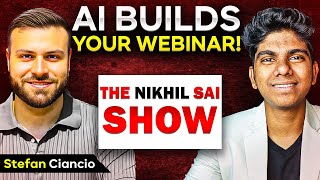
Stefan, founder of WebinarKit, serves 20,000+ businesses with automated webinars. His data shows automated webinars get roughly 50% higher long-term engagement than live ones, though live events convert better per attendee. WebinarKit's AI roadmap includes push-button script generation, AI slide decks, and AI chat answering.
Chapters
What's going on? What's going on everybody who's actually listening to this podcast right now? First of all guys, welcome back to another episode of the Nikhil Sai Show, which is hosted by me, the Nikhil Sai. And guess what's going on today? I'm back with another amazing, incredible guest. I mean, today's guest has a very broad perspective on webinars. So if you're somebody who loves one-to-many sales, this is going to be a presentation that you want to stick on and a podcast you have to listen to. Okay. The founder who is actually jumping on today has built a webinar platform. It's called WebinarKit. And he's supporting 18,000 business owners with this platform to allow them to run their webinars, you know, live and automated and help them scale. And if you know anything about selling SaaS or selling high ticket or even courses and coaching, webinars is a primary mode because there is only so many hours you have in the day. You can't take so many sales calls and sales calls are unpredictable. You know, like the quality can go down and the cost can go high. And anybody who's seen, like, if you have heard the Russell Brunson ClickFunnels story, he scaled ClickFunnels through webinars. And there are many other SaaS companies that blew up, even courses, coaching, and whatnot. So I believe webinars is one of the incredible ways to scale. And that's why one of my good friends, Anik, you know, he runs a board of experts type of summit, mainly about webinars and digital selling. And he indirectly introduced me to the guest who is hopping on today. And this is going to be an exciting situation because there is a lot that's been changing. Those good old days, 2017 where you could run a webinar and be profitable and get to X, those are changing and the platform and the way customers are buying are changing. And that's why I'm bringing the industry experts who are having the right insights for you to scale your one-to-many sales. So let's not waste any time. And actually let's welcome the founder of WebinarKit, Stefan. Hey Stefan.
Hey, thanks for having me. Really appreciate it.
Yeah, absolutely. Grateful to have you and super stoked to know what's happening in the webinar space. And you have a lot of data. You look at a lot of stuff. When you're helping your customers and whatnot. Before we get into the meat of like webinars and all of this good jazz about automated versus live and all this cool stuff, tell us a little bit about your journey, Stefan. Like, how did you end up building WebinarKit? What was your journey like? And why did you choose to do this?
Yeah, absolutely. So you could say I started as an entrepreneur kind of young. When I was about 13 or 14 years old, I used to build websites for baseball players. I'm sorry, I used to build websites where I collected autographs from baseball players and I wrote letters to them, got their autographs and posted it on my website. I ended up selling a lot of these autographs that I got, but I also created the ebook for hobbyists on how to actually get autographs from baseball players, the addresses and all of that. And I sold that online. So I was doing internet marketing before I even knew what it was. That was around 13 or 14 years old. And then when I was, in, when I graduated and I got a job in mechanical engineering and I was just super unfulfilled working a 9 to 5. I, you know, everyone around me was miserable. They, you know, they lived for the weekend and then every Monday everyone couldn't wait for Friday. And I was like, this is no way to live life. This is horrible. You know? So I ended up saying to myself, I'm like, no, I want to go back to doing something with business. I always dreamt of having like my own business. So I ended up getting into selling stuff at that coworker of mine actually mentioned that they sold stuff that they used to get at garage sales and made a profit online. So I got super interested in that idea. So I started doing some reselling. I would go on Facebook Marketplace and haggle with soccer moms to get their kids' old video games, and I would sell it online and I would do— yeah, it was fun. And then I, you know, I made some good money doing that. But I eventually came across a video on YouTube that was about how to make money publishing Kindle ebooks. And that appealed to me at the time because I hated having to constantly buy all this inventory and keep it in my little apartment in Danbury, Connecticut. And, you know, going on my lunch break to go to the post office was like, if I could build a digital product and sell it over and over again, that's so much better than selling physical products. So I ended up buying this course. I think it was called Kindle Money Mastery. And it was about how to like grow your business by making money by publishing Kindle ebooks. So I started making money doing that and I was able to make more money doing that than I was making from my physical products business. So that really appealed to me until one day, and this is all while I'm still working at my engineering firm. So until one day I realized that the guy who's selling the course on Kindle ebooks is making good money doing the Kindle ebooks but he's making a lot more money selling the information. That's when my lightbulb moment was that I need to learn how to sell some sort of information online. Now at the time one of my side businesses businesses was a blog where I basically monetized it with AdWords, some dropshipping, and I was getting traffic to that through Pinterest. And I said, oh my God, I have the perfect topic for a course. I'm going to launch a course on Pinterest marketing. It was a pretty new topic at the time. So I launched a course on Pinterest marketing. I started promoting it. I used affiliates to get people to promote it and I did extremely well with that. One thing led to another, ended up leaving my job in September 2005 to pursue my dream of working for myself. So it's been actually now over 10 years, almost 10 years, I believe, actually almost 11 years, 10 or 11 years since I left my job. And, you know, basically since doing the low ticket courses, I eventually upped the price of that Pinterest program and I sold it via webinar. And eventually I realized the power of webinars and how much they actually help for growing any type of business. My course turned into a full-blown— I had a coaching and agency service on the back end of the course. Webinars were the acquisition method for everything. So everything was running through a webinar for Pinterest. Eventually in 2019, a friend of mine who was a software developer said all these, cause I was running a lot of automated webinars as well. And for those of you who don't know what an automated webinar is, it's just literally a live webinar, but it runs multiple times a day. They still work in 2025. And I'll talk a little bit about that, but essentially he was, you know, we were talking about how bad the platforms out there for automated webinars were and how much like they didn't even really automatically play the video. Many of them were just glorified video players where if you sign up for a video to be for a show or whatever, for a seminar at 2:00 PM and you show up, you still have to press play. So I'm like, how is that a simulated live presentation? If you have to press play, that's just like a video. So I ended up, we ended up building our own platform and, uh, you know, we launched it in January 2020 called WebinarKit. And I said, this is what I want to focus the rest of my time on. So I shut everything else down. I focused, I've been focusing entirely on WebinarKit. Since 2020. We've had over 20,000 people use the tool since then, which is really, really cool. And as of especially lately, the last couple months, we've been heading really towards AI. So we're still constantly evolving things. And, you know, in my opinion, we're very much just getting started, especially with all the features we're dropping. But yeah, that's kind of been my evolution.
Yeah, that's, that's pretty cool. I mean, quite an interesting journey about how you were doing your own thing, you know, at a small scale to getting like freedom basically, you know, doing your own business for the last decade and now actually getting into webinars in the last 5 years and building a platform that supports 20,000 people, you know, tried your platform. That's incredible. AI is changing a lot, right? Like earlier there used to be like this big wall in between of somebody having an idea to execution. They needed to learn something. So getting access to information is where the courses, the webinars and all this stuff makes sense. Like you are interested, you are searching that, then you find an ad related to it, then you would go into the webinar and then you end up buying. Now with AI coming into the consumer's hand, right, the, the value intrinsic— again, there is value of experience that still works. The value of I don't know how to do something is gone dramatically down because you could just ask ChatGPT or any other AI model and it will basically give you 80% of the steps close enough, right? So how do you see the info space, education space people who are selling through webinars is changing. Like, what do you think is working in webinars at 2025?
Yeah, absolutely. So I think at the end of the day, attention spans are only continuously dropping. Short form has basically transformed the entire landscape, right? TikTok, Reels, YouTube Shorts, like even the long-form video platforms ended up building out a Shorts because they realized where things were going. So I think the attention spans are down. If you think you're going to scale a business with an hour and a half webinar only, maybe in a few cases it'll work, but most times That's not gonna work. It's working now is generally speaking, you could still have webinars that have a significant, uh, timeframe to them, you know, 45 minutes, even longer. Uh, messaging as always is gonna be extremely important, but really these days a webinar is still something that should 100% be part of your strategy, but more than ever, it's important to pair it with other things. So what does that mean? It means taking your webinar and breaking it up into a bunch of little clips and, and sharing those clips across social media with your audience. Break up those clips and you do a bunch of follow-ups to the people who registered for your webinar with those little clips. SMS, email are very important. You need to go omnichannel and basically take the message from your webinar and break it into different formats. It could turn into a blog post, it could turn into a bunch of YouTube Shorts, Instagram Reels, TikToks, and continuously following up with your prospects. You need to think that, like, I think a lot of people, like you said, back in the day used to be able to run a webinar and just make a ton of money up front and you didn't do any follow-up. These days, the name of the game is definitely following up and marketing love languages. So taking what the winning message was, having it in a webinar format, having it in a short format, blog post format, VSL format, whatever format you want. You want to be omnichannel and you want to be spreading your message across these various things. So that's so important these days with webinars, you know, but more than ever webinars still work. They're going to continue to work, but you might have a harder time getting as many people live. You might have a harder time getting as many people to pay attention during the webinar, right? Doesn't mean they don't work anymore. The numbers are just, there's a tail off compared to before, right? And all of that attention has gone to other places. So that's why I'm saying continue to do your webinars, but build the ecosystem around the webinar that's going to support its success.
Makes a lot of sense. That's a quite insightful observation there. So you have to basically, a webinar works because there's a piece of content that's being consumed and that leads them to make a decision. So you basically want to dissect that same piece. If they can't watch 90 minutes or 3 hours, dissect that and give that same information on email follow-ups, on videos, on content and blog posts and podcasts, like any which way possible. As long as they're consuming that information, that will prompt them to make a decision. Quite an interesting insight. Now I'm curious, there is a lot of questions about webinars, right? Like I see, like you said, people who are opting into stuff and buying that significantly went down. So the cost of acquisition is high. So I see this rise of like low-ticket offers. Like people are selling front-end webinars. Basically it's a webinar, but then it's not like live or simulated. It's like a video piece. Like, hey, just grab my workshop or whatever, right? So do you recommend like still running like free webinars in the front end? Or do you recommend doing like paid webinars, indirectly paid paywall consumption of the content, which will lead them to conversion? Which one do you recommend at scale?
Yeah. So it's an interesting observation that you had. And yeah, I'm noticing a lot more people who are running low ticket these days, especially converting on high ticket is becoming much harder. Right back in the day, you just run ads to a video sales letter, book a call, and a lot of people were cleaning up. Now that's not so easy, you know, and a lot of people are building low ticket funnels because they need to recoup their ad spend and build trust and collect leads, you know, get the buyer leads upfront. I think that at the end of the day, I'm not ever going to be someone who believes that something's going to be a one-size-fits-all. So I think at the end of the day, there are still people running ads to webinars or VSLs that are still making a ton of money. That said, I think it all comes down to testing. So like for us, we've been running ads direct to sales page as well as the direct to a free webinar for a very long time. And we're still profitable on that. That said, it's getting more expensive for sure. So we are going to, we are building out a low-ticket workshop funnel that we're going to be adding into mix. But at the end of the day, if you look at, for example, even ClickFunnels, you mentioned, right? They always had multiple front ends into their main offer. So like one of the front ends was a book funnel. One of them was a, was a free webinar. One of them was a, was a challenge, challenge, right? And some were paid and some were free. So at the end of the day, I think it's less about should I do a paid or should I do a free, but maybe building a few different low ticket funnels or free or book or whatever, having a few different entry points, for lack of a better word, into your funnel. For people to get to your main offering, right? And I think if you can get into that mindset of like, for example, we have direct to sales page, we have direct to coupon, we have direct to free webinar, free demo, and then we also have, we're adding in now the paid workshop. So we're, we're building, and we have our book funnel that we're building as well, because we just had a bestselling book on Amazon. So we want to turn that into a book funnel. So now the point is we're going to have 4 to 5 entry points into our main offering. And I think that's how people need to start thinking is like, what is my main offering and how do I get people from, you know, instead of just going direct to my main offering, what is the middle ground step that I can add that's going to help me A, convert that person faster, or, and B, if I can recoup some ad spend along the way, those are, those, that's the middle piece that people need to be considering.
Hmm, makes a lot of sense. Now I'm curious on your take on this multi-day events. Like there's a lot of people who do like 3-day workshops or like, challenges they call it, or like summits, like however they structure it, but it's typically like a 3-day event. Now I've seen a lot of raise of those back in the day, like especially 2021, 2022. When do you think a business should pick, should they run like a VSL versus webinar versus a 3-day summit? Like how do you make that decision? Is it on the price point or the nature of the business? Or I'm curious, what have you seen behind the scenes which is working the best? For which type of offers?
Well, what I would say is that it's interesting you mentioned the 3-day events, cuz like back in the day, 5-day events were even more popular, right? But I think that's that whole attention span thing that we were talking about. So to answer your question, I think at the end of the day, the way I see it is what stage are you at with what you're selling? So for example, if you are already profitable and you know, you're profitable with like say word of mouth and like maybe an organic audience and your offer's selling extremely well, I think that you could start one layer up with like a simple VSL or automated webinar where like you're gonna be just kind of, cuz at that point, if you already tapped, you know, if you already know that your offer's proven to convert, you need to tap the low-hanging fruit first, in my opinion, right? So, so those one-day events, right? Like a video sales letter or like, let's say an automated webinar. I call them one-day events, but like those are going to work especially well on warm leads or people who are solution aware, right? As you start going on the outer layer, So you know that you want to scale, right? But like maybe your audience is not going to automatically— maybe your problem-aware audience, the people who are aware that they need help, but they're not quite ready to buy it, right? They're pretty far along. They're not pretty very far along on your conveyor belt yet to buy from you yet, right? Even a one-day webinar might not convert them. So as you tap that lower-hanging fruit, you know, for example, people who may convert from a one-day event, I think then you move to like the 3-day event where you're like, okay, I need more nurture. I need more education. I need, I need more trust and authority building. Then you move to a 3-day event. I think 3-day events are probably better for your coldest audiences to scale the fastest. So, you know, depending on where you're at, that could be a good gauge or a good meter to go by in terms of like which event you want to launch. To be honest with you, we don't do a lot of 3 to 5-day events. We do a lot more 1-day and, you know, direct-to-sales page. And I think that's because we've generally been tapping our more solution-aware audience, right? At minimum, most of the people in my ecosystem already know what a webinar or sales presentation is, right? But if I wanted to go super cold, right? If I wanted to go for the person who just wants to sell more and they don't even know what a webinar is, right? I would probably be looking at a 3-day event because that would be— I would need more time to like really educate and nurture those people. On what they need to do, you know?
Makes a lot of sense. That's pretty insightful. I recently had this raging question in my mind because we were testing a couple of different things with webinars. And I posted this in like a well-known online community. And I got like super controversial views on like, should I do like a live webinar versus like automated webinar? Like, hey, automated has high show-up rate, but nobody buys in the end. Then live webinars is like, you know, the show-up rate sucks, but you could actually convert because you engage with people. And you have data. Like you have seen 20,000 people running webinars on the platform. Automated, semi-automated, all that stuff. I'm curious, where do you see different types of webinars actually working? When somebody should do live, when do you think somebody should automate the webinar, and what is like the cost difference, like from a conversion standpoint, which one wins in the longer run?
Yeah, so I think that it's important to know there's a lot of nuance and a lot of like, you know, it's not so straightforward, but like what I can do is share some information from our stuff we've looked at with our platform. So first thing I would say is that general rule of thumb, right? And again, there's a million ways to do things, right? So I'm not telling telling anyone that they have to do things this way, but generally speaking, if you're brand new to webinars, I recommend getting on and doing them live until you've kind of hit some sort of product market fit. You kind of know the general messaging that's going to attract the people on, and you kind of know the general messaging that's going to convert people. Now, if you can get that far, I think you're at a stage where now you've kind of flushed it all out. You could start automating and doing automated webinars to scale, but I think if you're new, you should be running at minimum your first few webinars live because, you know, you're going to figure out faster and you're going to actually connect with people, which, as you know, when you're starting a business, the number one thing you should be doing is, is building connections and connecting with your potential customer. Just hear them out on their pain points, what they're looking for. And a webinar is a great way to connect with people in, you know, a one-to-many fashion, obviously. And doing that live, especially if you're new, is going to give you a lot of insights and a lot of information that when you do take it automated, you've kind of already flushed out a lot of the bugs from when you do it live. So I would say start live and then when you flushed everything out and you've got a pretty well-oiled machine, move to automated.
Makes sense. Now if you have to, again, this is very dynamic, like it's not standard, like you mentioned, it's not binary, like this is the standard. But if you have to mention, like, is it like better to do live consistently, like once a week, or is it good to like just run like everyday automated, then do once a month live, or like what's the conversion difference you have observed? Between live and automated?
Yeah, so I think it's important to point out we still do a combination of automated and live webinars, but I would say that you should always have an automated webinar always available running on your website somewhere people could just opt in and view the training automatically. That's low-hanging fruit, right? You're collecting leads, you're teaching leads. Maybe they don't buy from you that moment, but you're warming your leads at all times. So you should definitely be having at minimum an automated webinar visible in your funnel and running 24/7. That's like a no, no, no question on that. You should be doing that. Now on top of that, I would also recommend running a live webinar at least once a month. When it comes to statistics, something interesting that we observed with WebinarKit is after studying a bunch of webinars, we now have to remember the stats off the top of my head, but generally speaking, what we found was the automated webinars had a much higher attendance rate. So the registration rate was lower, but the attendance rate was higher.
Hmm.
Essentially, you know what, I kind of want to pull this up right now because I don't remember off the top of my head. So let me pull it up real quick. I will tell you the specifics, but generally speaking, we found that automated webinars have higher longevity than live webinars.
Hmm.
That's a very, very important conversation piece, I would say.
Now, while you look up those stats, I have a follow-up question. I've seen a raise of pretending to be live webinars, meaning you register, it creates a Zoom event, then you jump on the Zoom. You know, the Zoom is stimulated, it works similar, and it's kind of giving that impression that it is actually live. The chat is typically disabled, but the links are sent on the time and stuff like that. And have you, have you tested any of those stimulated events? Like, does WebinarKit function with those integrations as of now?
To be honest with you, we're not like huge fans of like, I guess for lack of a better term, making something seem like it's not. So for example, I don't like the idea of pretending that this is a live event. So when it comes to automated events, essentially I believe that most people already realize it's an automated event. So, you know, I don't think you need to say like make it seem like it's live. I think just let the event play. You don't need to mention whether it's live or automated. Let people kind of assume or figure it out for themselves. You're not lying by running an automated event. You're just running an automated event, right? So I'm not a big fan though of making the automated event look live. We do have some features inside WebinarKit, for example, that, and we have people who are always trying to get us to like make it seem like, you know, sit attendees and all of this. And I'm not a big fan of that. It's not really my philosophy. I think that there is power in having the ability to simulate chats. So for example, our chat simulator What I do is I make a persona, and that persona guides you along the automated webinar. So I call him Mr. Chatty. But when you start your automated webinar, it immediately starts with, hey, I'm Mr. Chatty, and I'm going to be guiding you so you don't miss anything important. And at important pieces throughout the webinar, Mr. Chatty will ask a question or say, hey, this is a note worth noting down, or he'll say something fun. And people start getting excited about seeing this AI persona, and it keeps the engagement higher. Now, one of the other things we added recently is the AI chat responses. So now if you ask a question, in addition to Mr. Chatty or whoever you're your AI persona is, you can add in someone who's gonna respond to the questions, like an AI to respond to the questions. Because with automated webinars, it's always interesting to me that like you could have had someone who was ready to buy and they ask a question with an automated webinar in the chat and no one answers it. And it's like, yeah, maybe they would've bought if they just had some attention to them. So, so, you know, I ended up, I ended up, you know, building that into WebinarKit. So now you essentially, can program it. So now none of the questions will be missed, right? You're always getting someone to follow up. So between an AI, between a persona, a chat persona, like simulated person, and then an AI answering, that's as far as I go when it comes to automated webinars. Again, I don't know why we have to make it so black and white with, well, let's make it automated versus live. No, it's just information being consumed. You know, if it's simulated live, fine. Don't, you don't have to pretend anything. Just run it simulated live and add your AI persona and your, and your AI chat responses and kind of call it a day, you know?
Makes sense. Makes sense. Appreciate that insight. Now you're building cool stuff with WebinarKit and AI a lot these days. And I kind of saw like you were teasing a little bit, I think like a few days ago, talking about how the script and the deck and everything will be built by WebinarKit in minutes. Can you talk a little bit about that? Like what are you building behind the scenes?
Absolutely. And before I do that, I want to answer your question on the data. So I can't find the full statistics of data, but the bottom line was that automated webinars in our studying got 50% higher attendee rates that actually consume the info over the long run. So what does that mean? Again, it kind of goes back to what I was saying earlier, that automated webinar is low-hanging fruit. Automated webinar should be running 24/7. If we didn't have an automated webinar running right now, if you go to our website, GetWebinar.com, and you go to the bottom left-hand corner, there is a widget that if you click that widget, that automated demo is playing 24/7. You pick a time, we have just-in-time options, we have times throughout the day and we have multiple different options for you to view that webinar. Again, that has to be running 24/7. On top of that, run your activation events, right? Run weekly or monthly activation events to kind of build on that, right? Like, we, again, it comes down to omnichannel, right? Direct to sales page, some people consume information from the sales page, some people prefer the webinar, some people prefer a low-ticket workshop, some people prefer a book. So we have created the multiple different entry points into the main product through different consumption methods. So, but that said, I think that back to that whole point that you were making about automated or live, it's both, you know, but your automated will win out in the long run in terms of attendees. That's for sure.
Yeah. I love that insight. I mean, the fact that 50% more show up rate consuming your data or like the teachings you're teaching, I think that's incredibly valuable in a longer run. And especially if it's automated, the business owner can create the best webinar possible after a bunch of live tests and stimulate it and like, no longer have to do it actively. And I think if he could create an audience who are watching and not buying, then he could reactivate them with a live event every now and then and have a lot significant higher closing rate because they already saw the value. They haven't made a decision yet, but now this live event could be where they ask their questions or feel engaged and actually buy. I could see how it could play out. Now back to my question about AI with WebinarKit. So what is that tease you're talking about? Where you could build the slide decks and the presentations and script everything in minutes. That's exciting to know.
Yeah, yeah, I would love to talk about it. So to give you some context and some backstory, I've been creating webinars for many years now. As I mentioned, I started running them when I had my coaching and course building— my coaching and course business for Pinterest. So I've been running webinars for a while now, and I even had a Pinterest software at one point. I was running webinars for that. I got quite good at them, right? I don't claim to be the greatest in the world at running webinars, but I was dangerous. I was good, you know, at the time when I was running webinars. But what I noticed, as I told you, is that I've always been a fan of creating solutions to make webinars easier. So the first thing that I did was create WebinarKit to make running those automated webinars so much easier, right? And actually make them automated. Obviously with the age of AI, especially in the last few months, I saw all these solutions coming out, right? I saw a lot of script builders, right? There's some of the top webinar names in the industry are building script builders, and that's great. Yeah. There's a ton of value there. But I always said to myself, I'm like, well, what about the slides? And there hasn't really been, to my knowledge, I've seen some solutions, but like Gamma, for example, right? It's good. It's amazing for what it is. I built my little tip for your audience on webinars. Take your webinar slide deck, upload it to ChatGPT, get a PDF, say, hey, I want a PDF version of my webinar to put into Canva. I'm sorry, Gamma. Put it into Gamma and get your PDF version and run that as a DM ad. As a retargeting, put a DM out, out there and say, hey, if you missed, if you didn't get a chance to see my, to see my webinar, no one's got time for a 60-minute presentation anymore. We get it. Grab our PDF by DMing us. So now you're getting people into the DMs and you're giving them that. Our ROI is very positive on those ads.
Interesting.
So yeah, so look, that also ties into my narrative from before that, like it's not just about the webinar anymore. You got to get them through the door with the webinar and then do a bunch of other stuff. But anyway. Gamma's great for like that, but their slide decks are not built to convert, right? They're just generic slide decks. And I've seen some other solutions out there on like building a webinar for conversions, but like they take a long time. They're not really— they're not actually push button. So I said to myself, I want to do the scripting because we've got our own amazing results with webinars. Like I said, maybe I'm not number one at webinars, but I was one of the best at the time. And I know webinars extremely well. I sell with webinars. I practice what I preach. I'm like, I want to take our proven framework right? Because we run a platform, we've seen what works not only for ourselves but for our customers, which is a very unique perspective, right? Because a lot of the webinar experts out there, they're not running a platform with 20,000 users, so their insights are powerful, but they might not be privy to some of the stuff behind the scenes that we are, right? So I created all the templates and everything of what's working with webinars, and we programmed that into WebinarKit to build our own script. And when I say it's push-button, I'm talking as of like right now, you could upload a URL for your website, think of the average person, right? Does the average person want to go watch 15 hours of How to Convert Like a Master on a webinar and then spend 3 months building a webinar? I've done that. It takes me sometimes months. Sure.
Yeah, it's horrible.
Yeah, it's horrible, right? Yeah, it's so bad. So I was like, no, no, no. And also, I'm not— you and me are not like— we're not the average person, right? We're not. Like, we're obsessed with it. We want to do it. Maybe some of the people in our audience care about that too. But at the end of the day, I can guarantee whoever's watching right now, your number one thing you want to do is sell more, right? You don't necessarily want to become the savant of webinars, right? So if I can help you sell more without needing to become the savant of webinars, that's amazing in my opinion. So if you're selling something, imagine being able to take your website, paste the link, and within minutes you have the script for your webinar, but then you move to another button and within minutes again, you have the slide deck. Yeah, I'm talking slide decks built to sell, not only just for, for the scripting, right? Because again, there's a few script builders popping up from some very reputable people, but it's just a script builder. You still got to go to a designer or sit there putting the slides together yourself. We built the push-button slide builder, and I think that's such an important distinction to make. This is not a gamma. This is a sales presentation builder, and it's super easy to use. And because I know I like easy, so I've been kind of heading the charge with the team on that. But anyway, the other cool thing I wanna mention is now that those two features are already live, right? Like URL to, to sales presentation, but you can either do URL, you can enter some inputs. You could even, uh, we have AI built into WebinarKit for when you build your actual webinar funnel. So, um, you could even just take your product description. So like whatever you put in for like your product that you, that the AI that it uses as the guide for as you build your like webinar registration and all that stuff through the funnel, it now applies to the script builder. So you can just go in there. There's three ways basically to get your, your webinar sales presentation. It's URL to script, it's your product uploaded, information uploaded already, or just manually entering the info. So super easy, anyone can do this, you don't have to be an expert. And then for this slide builder, just pulls that script. So those are both live. Now quickly, I want to talk about two other things. We're building in AI voice, and I think that's going to be a game changer because we're going to allow some stock voices in there. So that way, let's say you want to create your webinar in a different language, maybe. Or maybe you want to, you know, wow, that's incredible. Yeah. But like how many people don't want to record their webinar, right? Maybe they don't like their accent or maybe they're just scared. So imagine being able to press a button and have like your whole webinar presentation voice out there. That's kind of where we're heading, right? The AI webinar is like agents. So it's going to build the entire webinar for you. And after that, we want to be able to put it all together. So take your script, your slide presentation, your AI voice, and then put it into WebinarKit. To run it because right now at this point we have, I believe we're the first webinar software to actually focus on it this way, but like step 1 creation, which is gonna be creating your actual, your conversion mechanism, which is your sales presentation. Step 2 running it, which is gonna be inside WebinarKit, the automated or live webinar that you're actually running. And step 3 automated selling, which is already live inside of WebinarKit, which is our AI chat selling tools. So again, we talked about this earlier, right? You don't wanna leave people hanging. So the AI will help field objections, answer questions, and get those sales directly from there. So we're looking at it from a whole ecosystem of anyone who's never done anything online but wants to sell more. They could come in, tell us a little bit about their product, get a high-converting webinar ready to go in minutes, upload that webinar into WebinarKit to run as an automated or live webinar, and then have the AI close the deals on the backend for them. That's where we're heading with the whole thing, and a lot of that is already live, like we said.
Yeah, that's so cool. Like if we could get webinar registrations and if the AI could call the people who stay till the end and handle objections and close on AI call, like that's going to be game over. Like that is so exciting technology that you could build because—
The call will be interesting. Right now we definitely don't have that right now. So let's not oversell, but the chat is there, right? And you know, there are other tools that we bundle with. So like we have an amazing integration we built with HighLevel. So right now, like, you can pass your data into HighLevel if you want to do all the extra stuff on the backend. We have like a special connection with them. But regardless of that, yeah, we want to make it like not only the— because everyone's been so focused on the running of the conversion mechanisms, right? Like sales pages, webinars, and then the following up. But where has the creation been? Where has the AI creation been? And that's kind of where we're the first step. Building the assets that actually work. So that's kind of where we're moving now with the front end of WebinarKit, which is not only run your webinar, but create your webinar slide deck.
Yeah, makes sense. I mean, at least the vision is exciting to see like what kind of direction this is all moving. That's so cool. Now, like you mentioned, there is no like industry standard, like finalized numbers, but if somebody is looking at like hard stats, like saying, hey, should I even run my webinar? If yes, what should I aim? For a live webinar versus what should I aim for automated webinar? What kind of stats they should expect? Like from registrations to show up to closing on a live side and on the automated side, the stimulation side.
[Speaker] Yeah, to be honest with you, it's very industry specific. In the internet marketing industry, the numbers are continuously going down just because like that's pretty much a lot of people are doing. But it's really tough to say because I've had webinars that have had an extremely low registration rate, but an extremely high conversion rate. But I've had webinars with an extremely high registration rate, but an extremely low conversion rate. So I think your question is more— I look at it a little differently. I'm like, how do I make it flow? How do I make the congruence between the registration page, the thank you page, the actual presentation itself? So I try to focus, I guess, on more of— I know it sounds bad these days. I feel like I've become less of a statistician and more of a figure, like, how do I make it How do I make the whole thing flow? And the numbers kind of come from there, but I focus on the story. And this might be helpful for some of your audience, right? Maybe some of us don't want to focus on, or some of your audience don't want to necessarily focus on these statistics. But like when I, for example, when I started with Facebook ads, I was obsessed with the numbers. I was like, what's the click-through rate? What does Facebook say about the quality of the ad? Like, is this a good click-through rate? And I'm not saying there's not value there. And I think that you have to know your numbers. Of course, right? You need to know your numbers. But at the end of the day, I realized that the number one thing that's going to matter is building an irresistible offer. And then when I started running my Facebook ads through that lens of like, is this something that would make me buy? That's all I asked myself. Would I be excited about this? You know what? Everything else became secondary. The targeting, the specific messaging, long-form, short-form creatives, all secondary. The biggest thing was the message. And as long as you do that again, you spread that message across different types of creatives, different price look, you know, long form, short form, whatever, you're going to get a nice return. I guess I would be considered the Chad media buyer. I don't know if you've seen that meme. There's like that meme of like the two media buyers, the Chad media buyer, and then the one who's like super focused on the numbers. And the guy who's on the numbers is like building everything and he's got like a 1.46 ROAS. And then the Chad media buyer just like runs it and lets Facebook figure it out and he gets like a 3x ROAS. I'm kind of like the Chad media buyer at the end of the day.
Yeah.
So, you know, and again, like not knocking anyone who loves numbers, but like, if, if you want me, if you, while I have a lot of data on webinars, what a lot of what I'll also preach is don't, don't stress yourself out on that to start, right? Focus on building something amazing and focus on getting that message out there. That's the starting point, I think, for most people.
I love it. I love it. I think, I think as an artist, like when you're running your business, the focus should be on the craft and making the presentation great, like you said. Let it flow smoothly and the conversions would basically follow. Sounds like that's, that's kind of what I've heard from what you're suggesting. That, that makes a lot of sense. I have a different set of questions for you. Outside of WebinarKit, what other tools are you using on a daily basis to manage your clients, your productivity, your business and whatnot?
Yeah. So for broadcasts, I love Campaign Refinery. It's a smaller known tool, but the deliverability is second to none. If you want a good email deliverability platform, Campaign Refinery, shout out to Trevor. I think actually Trevor or Travis, sorry, Travis. He's not gonna like me for that, but Travis has been amazing. He's talked to too many people, but Travis Ketchum is his name. He runs Campaign Refinery and he's always helpful generally with anything I need. If you want a proven to convert email platform, I'm talking like I get 50 to 60% opens regularly on my emails. Jeez.
So that's unheard of, especially at scale. That's cool.
Yeah, it's a great platform. Platform. It auto-cleans your list. It's got all the bells and whistles. It's simple. You don't need anything crazy. You know, I don't even see myself ever going to anything else at this point. But outside of that, we use HighLevel. We love HighLevel. We have our integration with them. We've been on the podcast a couple times. Amazing integration with WebinarKit. We also have our white label integration. So you can take the white labeled version of WebinarKit and combine it with HighLevel, which is obviously a white label. So we have some powerful integrations with HighLevel. We use it in our business as well for certain follow-ups and things beyond our webinars. What else do we use? I'm using Gmask. Gmass for something new that I'm testing. Gmass is a cold outreach tool. And I contact a lot of YouTube channel creators and it actually works really well just sending cold outreach to about 75 to 100 YouTube channel creators every day that could end up being an affiliate for WebinarKit or promoting it on their channel. And that hits, that gets a couple of hits a day. So I think that's a low-hanging fruit that a lot of people should be doing. Trying to think what else. LiveCart we use for a lot of our our checkouts and stuff like that. So that's just been kind of like an easy one for us. We, you know, we know there's more sophisticated tools out there, but it's just easy and it just kind of gets the job done. And we paid for it once and don't have to pay for it again. So, you know, there's something to be said about that. Yeah. And what else? That's all that comes to mind for now. I use Trello for productivity. It's a very simple project management software. You can move stuff from one board to the other. I'm a big fan of it. It's super simple. Use Slack to manage the team. So we have the team on Slack. Yeah, I'm a pretty minimalist at the end of the day.
Yep, pretty simple tool stack. Appreciate you walking us through. Walk us through an average day of Stefan. Like, when do you wake up? What do you do? When do you sleep? Like, give us like an overview of what's your day looking like on a daily basis.
Yeah, so I live in New York City and, you know, I Generally wake up, I like to get a workout in, and then I'll usually work majority of the day either from a WeWork or coffee shop. I like to kind of be out and about. Because I live in the city, it's easy to find friends to meet for lunch or dinner. So I'm generally, you know, I like to do a lot of my meals with friends. And essentially outside of that, you know, I like to travel a lot. So often I was actually recently in Dubai for a few weeks and then I was in Brazil So I still travel a decent amount. But at one point I was traveling 50% of the time. So I was, you know, spending months in different places.
Oh yeah.
It was a lot of fun. And I think that at this point though, I spend a little bit more time in New York City and just kind of staying in flow. Especially I mentioned a lot of the AI features that we're releasing. I'm super excited about them. So I'm just like, we're really focused on making us the best tool for the average person to get started with AI selling.
Super cool. I mean, I was in New York. I had I think I actually underestimated the amount of founders in New York. There is a very cool entrepreneurial community in New York, and I was hanging out with them, and we kind of done some cool rituals like cold plunges and all that stuff. And it's great, like meeting amazing founders. I was in WeWork connecting with amazing people there. Yeah, traveling a lot. Tell me, like, my name was jet lag for some time in my brother's phone because I was, I was in a dozen countries in 6 months. So he was like, I'm calling you jet lag now because you never pick up my phone. I was like, yeah, I have a flight every now and then. So it's fun. Let's, let's, let's Let's go back to the 20-year-old yourself, right? Like the young Stefan, you know, who's got a couple of entrepreneur success and a little gigs here and there. If you could go back and talk to him and give one big suggestion, what would that be?
It's a good question. I would say focus sooner, like focus on like, you know, getting out there sooner, building one, focusing on one thing sooner. Because, you know, I started more on the marketing side before I had, you know, I was selling my own products. But I was kind of a little bit all over the place, like trying multiple different things. And I would say get focused on one thing sooner and just focus on that one thing. And another thing I would say is start building your personal brand because now more than ever, I think people have realized the power of the personal brand. And yeah, if you, you know, like think about the people who started forever ago, right? Like Russell Brunson, Tai Lopez, like they have their personal brand and they have a following for life. They have people who, no matter what they sell, they're going to have people are going to buy from them. And that's something I realized early on as well, is like, once people know, like, and trust you, if you switch from being the guy who does Kindle publishing to the guy who does webinars to the guy who does faceless AI video channels, your audience, or at least a percentage of them, they're going to follow you. And I think so those would be the two things. Focus on like one brand, but also build your personal brand at the same time. Don't, don't, you know, I think that anyone who started building their personal brand 10 years ago is so far ahead at this point. You know, so that would be probably my advice to myself. And that, and probably quit your job sooner, start building your business in college. Don't build it while you're working.
Yeah, that's a big one. That's really a big one. You kind of need that courage to make that move. I talk to incredible people who have a lot going on on the business side, but they're still scared about quitting what's happening with their job and whatnot because they kind of like that stability. And it is what it is. It's a personal choice. But yeah, that's a pretty cool advice. Thank you so much for sharing that incredible advice. Advice for young people who are listening. I mean, we have seen like a proof that personal brands really have big payoff. Like we talk about MrBeast, like he's become a billionaire just building YouTube channel. That's kind of insane, right? Like it's pretty cool. Now if you look back and you have to mention your biggest achievement so far, what would that be?
You know, it's hard to say. A lot of me still says quitting my job and working for myself was my biggest achievement because that felt amazing. But at the same time, building a true SaaS company and taking it fully recurring all of that, I think both of those feel like really huge accomplishments for me. But I think there's something sentimental about that, that moment. Like it was truly my dream to work for myself and never work for anyone else. So being able to just remember that I actually did that and I was actually able to go to my boss's office and put my 2 weeks in, there's something special about that. There's something, especially, you know, I had a pretty typical story. A lot of people didn't think I was gonna build anything meaningful, especially because I worked with engineers and engineers are very logical people who don't like risk. And, uh, you know, they generally think they're much smarter than everyone else. So when you tell them you're gonna go quit your job for some fantasy, they don't, they don't understand it. So just being able to say I did that and, and, you know, only looking forward at the amazing things coming up in the future was very powerful for me. So I would say maybe that's probably number one. I would say business.
I love that.
Yeah, it's simple, but like it, it really was my biggest accomplishment, you know?
Yeah, sure. I mean, I have a mechanical engineering diploma, so I kind of know like the background of being a mechanical engineer and trying to do some new stuff and how people think about you and they're like, yeah, they don't understand half of what we're talking. So it's kind of hard to get advice or direction and especially when people around you don't support you, like having that courage to still do it with fear, I think that's an incredible move. Pretty cool. What's like a big vision you have, like next big goal that you want to achieve with WebinarKit or personally? Like what's your aim right now? What's your focus?
Well, if I'm being honest, like right now the main focus is really bringing WebinarKit to be the forefront of the AI revolution for selling. I'm very passionate about that. And I would say that in, you know, I won't lie to you, at some point entertaining the idea of a big software exit appeals to me because, you know, I feel like if once we build it to the point where it's really, really big and it's in motion and everything is there, you know, handing it off to someone who can and take it and even make it even better is really appealing to me. That said, like, I think a big software exit will be another really amazing accomplishment in life that appeals to me, you know, just watching something that you build and being able to take it to the point where somebody else wants to buy it. I don't know, it just, I think I would be very proud of that.
Yeah, yeah, I love that. I mean, there's only two ways for a business, right? Like you, I mean, there's a third way, which is keeping it as a legacy business Then the other option, best option is selling. I think one of the people in the HighLevel community between you and me, it's like Matt, he just sold ZappyChat to Closebot. If you have seen the latest news. So it's quite interesting. Like companies are buying other companies with similar user base. And I do believe like if you build a product, some PE firm would come and buy you, you integrate in their CRM or maybe some other webinar player who might be like, hey, they have good user base, let's just buy. Could totally happen. I root for you for that outcome. Super excited for that.
Thank you.
If you have to look at the mistakes you've made and be like, that one, I want to save everybody from making that big one mistake, right? What would that be like?
You know, I think it ties back to what I said before. I have some founder friends who are still— haven't really found their one thing yet. They're dabbling here and there. They're changing their business model every 2 weeks. They're saying, oh, I'm going to get into this. This is the hot new thing. But they're not consistent with one thing. And like, the reason I think we're doing so well and we're going to continue to do well is we're building one thing. We're focused on one thing. And I think that when I started focusing on one thing is where things really started to take off for me. If you're always shiny object syndroming and finding and looking around and you're trying all these different things, you know, and I used to do that, right? And I think to some degree I still have that, right? We're opportunists in this industry. So like, we're always looking for like something, a new opportunity, right?
We get—
we have like rose-colored glasses for new opportunities. So we see it and we're like, oh, that would be really cool. What I always have to bring myself back to, no, focus on what you're building. It's going to be much harder for you to start from scratch on anything new that you do instead of just focusing on what's in front of you, which is already in motion and already doing extremely well. So I think that's my biggest advice is don't spread yourself too thin. Focus on really building one thing. Hmm.
I love that. That's such a big thing. It's so simple. Like, you kind of feel like, yeah, I've heard that before, focus. But putting it in practice and actually saying no to so many other things which feels tempting and exciting and sticking to one thing, that's a big one. That's probably one of the reasons, you know, I see like that's a common trait between every successful entrepreneur I've interviewed. They were focused. I've never achieved— I've never seen somebody who achieved something incredible who was not focusing on that thing that they were trying to achieve. They were just zoned in with that one task. So I could see a bright future for WebinarKid for sure. What inspires you, Stefan? Like, what is the reason you wake up, you get excited, and you start working and you know, working towards this one big goal you have?
You know, it's gonna sound so stereotypical again, but I just love the freedom. Like, I, I can't stand the idea of going to a 9 to 5 and feeling like I have 2 days a week to be happy. That never appealed to me. Like, I've been able to travel the world. I've been to 25, 30 countries at this point. I've been able to live in other countries. I make a lot more than I would have if I was working a day job. I'm building something like that's my own. I just— I'm driven by the freedom to build and the freedom to live life on my terms. And financially, you know, I'm an explorer by nature. I love to see and do new things. Like, just being able to say I'm gonna go to Dubai for 3 weeks and, and see my friends, right? Because they, you know, my friends who live over there, I'm like, if I was working a day job, I would be like, no, you know, I gotta check with my boss. Maybe I can only get 2 weeks, 1 week. And then I have, when I get back, I have this feeling in my stomach of having to go to a day job. And, and it's just, I can never go back to So I'm driven by the power of the freedom to, to work wherever I want. And you know, that it's just allows you to live life a way that most of civilization wishes they could have lived, you know, over the, you know, whole course of human civilization. We're living in the best time, the most opportunities. And I think that it, you know, I just love that I'm able to fully take advantage of that.
Sure. I love that. Next time when you're in Dubai, make sure to hit me up. We'll definitely hang out. That's pretty cool.
Definitely will. Same thing for you in New York.
Oh, I'm definitely coming to New York. I've got a bunch of buddies. You know, like when I was in New York last time, I had pretty fun. Like that's a city of like just cool people. Like it's a very dynamic, like a very different— like I've been in Phoenix, I've been in the West, like California, I said. I've been in the like South, like Texas and stuff. Then I've also been in like Ohio and like other states. But I felt like New York has like the most diverse people and like super aspirational. Like it just keeps moving. Like nobody can stop the city. I just love the energy of New York. So Definitely hitting you up when I'm back in New York.
Please do.
That was a cool podcast, Stephen. If you have to invite our audience to find more about WebinarKit, how do they get in touch? What's the best place for them to find out about your platform to sign up?
Yeah, real simple. Just getwebinarkit.com. You can also find me on Facebook. I'm pretty accessible. Shoot me a friend request. You know, maybe comment on something so I see it. Because I do get a lot of requests, I don't always accept everyone. So, but if you mention something like, hey, I saw you on the podcast. Let's connect.
Yeah, love that. Thank you so much for once again sharing your wisdom and your expertise of already running a successful company with a lot of data behind and having people get the time back, just like how you got your time back with building your business. You're giving— that's what I see. You're helping 20,000 founders don't have to sit in front of the computer to do their live webinars. That's, that's how I see the impact you're building. It's so exciting to see and support you in any way possible. And any last words you have for people who are staying till the end? Any last words of wisdom you would like to leave them with?
Keep going, focus on one thing, leverage AI. That's my final word for the day.
Appreciate that. Thank you so much, Stefan, once again for jumping on. Guys, hopefully you enjoyed the podcast. Share this with every friend or business owner who is doing webinars or considering one, or even does sales, because I believe anybody who's doing sales, that's one-on-one. Webinar is nothing but sales at one-to-many. I believe everybody should be running one webinar, especially in an automated format, just like Stefan mentioned. And I'm excited to see how AI and webinars are going to combine and how WebinarKit can lead the wave. And thank you so much for jumping on. Consider subscribing. I'll be back with another amazing guest just like Stefan. Bye-bye.
More from Nikhil










BURNED $1.5M in his 17years online #digitalmarketing #entrepreneur #onlinebusiness
