Brain‑Fuelled Success: Dr Christine Sauer on Holistic Mental Health & Entrepreneur Growth
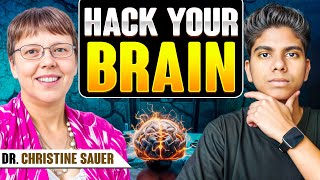
In this episode of The Nikhil Sai Show, host Nikhil Sai interviews Dr Christine Sauer, a physician‑turned brain and mental health coach. Dr Sauer shares her personal journey from a painful marriage and suicide attempts in Germany to rebuilding her life in Canada as a holistic health entrepreneur. She outlines a five‑dimensional model of health (physical, mental/emotional, social, spiritual/purpose, financial) and stresses the importance of reading classic self‑development books, finding mentors, and setting "dumb" goals rather than rigid SMART goals. The conversation covers stress management—reframing anger as usable energy—, nutrition and supplement strategies (high‑quality multivitamin, vitamin D + K2, omega‑3 index, magnesium, gut restoration), and the role of intermittent/ancestral fasting. Dr Sauer also details her entrepreneurship toolkit (CRMs like HubSpot/ActiveCampaign, ClickFunnels, email marketing, paid ads, AI video tools) and her daily “anti‑routine” of task blocks, caregiving duties, and leveraging ADHD for creativity. She reflects on major mistakes (bankruptcy, deleting her email list) and offers advice for aspiring entrepreneurs: start early, fail forward, seek feedback, and maintain balance across the five health dimensions. The episode ends with her vision of climbing the "mountain of life" and a call to listeners to contact her via docchristine.com.
Chapters
What exactly is listening to this podcast right now? First of all, guys, welcome back to another episode of The Nikhil Sai Show, which is hosted by me, The Nikhil Sai. And guess what's going on today? We're back with another amazing guest on this podcast. We are thrilled to have a doc who specialized in holistic brain health and mental wellness, blending her extensive medical expertise with innovation approaches to health and entrepreneurship. Born and trained in Germany and now based in Canada, this doctor has transformed her personal challenges into a mission to educate and inspire others. And her work has created great, great, great, you know, learnings for many people to get better in holistic health and wellness. Now let's talk about how the future of health coaching will transform. And let's talk with Dr. Christine Sauer. Hey, Doctor.
Hey, thanks, Nick. Just call me Christine. That's perfectly fine.
Christine, appreciate you jumping on time. And this is going to be very exciting.
Absolutely.
So, Christine, I would love to know all the expertise you have in terms of mental well-being, entrepreneurship, and how we could create better self-image to be successful in life. But before we get to the juicy stuff, I believe it's great to have some context of who we are having on the episode, especially for the people who don't know you yet. So I would love an introduction, a quick backstory of what prompted you to get to where you are.
Hmm, that's a good story. And I was born and raised in Germany. I was the daughter of supposedly scientists, and I learned that is the classic definition of poor dad, right? I had a poor dad. He was rich in knowledge but didn't teach me anything about entrepreneurship. So I became a physician. I was a nerd, so it was pretty simple for me to achieve that, but I wasn't happy. Now, if you are not happy and you don't know what you want, you cannot be successful. So I did what my parents expected me to do. I had children and married a man that I really didn't love. So from there, that went downhill. And I love my kids, of course, I have grandkids by now. But my ex-husband, at some point, he had mental health issues, severe issues that he didn't resolve. And I, stupid me, young people often think they can fix other people and it's a mistake. You cannot fix anybody else. Focus on your own brain, your own health, and the rest will follow. That's just a little nugget. Now, that said, my ex-husband committed suicide. I was close to committing suicide myself. And I was given medication that very often, and I feel bad for people that are exposed to them, takes your motivation away, takes your creativity away, takes your zest of life, the sparkle, as I say, away. So I was just existing but not thriving. And at some point, I got angry. And I love Dr. Amen. He says, don't get sad, get mad, much better attitude, get angry and educate yourself, go against the mainstream and do what works for you. And for me, I said, what can I do? I didn't get a license in Canada where I now landed. So I reinvented myself as a brain and mental health coach because I happen to know a lot of things. I have learned a lot of things. And over the years, I found how to grow an online wellness business with the help of a lot of people. And much too late, I discovered that marketing and sales is essential, and that should be a subject in elementary school. I mean, yes, teach the kids to learn to read, teach them basic math, and then teach them the sales, how to make money. And help other people and also achieve a good result for you. And that is totally neglected. And I love what you do with the funnels, because obviously in the digital world, and also in more and more in the regular world, funnels are the way to go.
Yeah, you're absolutely right. And it's so interesting how you have created your reality instead of accepting it. And I believe it's probably the most crucial step in your life. So I personally know many people who are entrepreneurs and who want to be entrepreneurs, and they're stuck with these issues of self-image, meaning they want to do something, but they're so turned down by many people around them who created limiting belief systems, and they can't really break the, break the box. Like, if you look at my personal network of people where I come from, my average friend is broke, ended up in jail, or dead. And that's a scary situation to look at overall. And I was able to successfully break the chain and, you know, build my own business and move to Dubai at a very young age and whatnot. But I'm curious, and thanks to the many self-learnings I've had, you know, with books and mentors and whatnot, I'm curious, what do you believe if somebody is listening to this podcast and they're having that self-image issue, where do you think they should start? How do they realize and diagnose themselves and really accept that and move forward? How would, how would somebody take that approach?
I think the most important part is start with reading, of course. Read the classics. Stephen Covey's 7 Habits of Highly Successful People. It's a timeless Classic, very good book. I didn't know about it until I was in my 50s. How stupid of my parents not to expose me to that content. And I would teach that to my grandkids now. Well, if they read it. Now the other thing is, if you feel stuck and you think you can't do it, well, you're right. That's obvious. When you think you can't, or whether you think you can or you can't, you're right. So the first thing is pick a mentor. Pick someone that you can look up to, that you admire. And I now reach out actually to young entrepreneurs in the wellness field that are looking for a mentor that lifts them up, that tells them, yeah, you can do it, just keep on dodging up. It's not easy. It is hard to be an entrepreneur. Not everybody has the skills and the pizzazz to break through and make millions in the first few years. That is a mixture between lottery winnings, being very smart and doing the right things in a systematic, strategic way. Now I deal mostly with people that struggled, older women that come from the corporate world and they try to transfer skills that they learned in corporate world, which is mostly drinking coffee, uh, to the entrepreneurship world. And it just doesn't work. They need a mentor teaching them the basics. And younger people, I love teaching students the basic skills of personal growth and living.
Yeah. Totally. So I'm, I'm kind of curious, especially in entrepreneurship, how much of entrepreneurship success comes from having a well-maintained mental well-being. Because now we see this, this message of grinding your way out or just giving it all and just losing yourself in the process and whatnot. You know, that's kind of what I've done when I'm trying to build two different companies as well. And I've had different breakdowns when I'm trying to do that. And I don't think anybody should go to that extent. So I'm kind of curious, what's your approach when you're trying to execute something in, in entrepreneurship?
No, that's a very good, uh, good question because the truth is you need both. You need to work hard, but you also have to have a clearly cut strategy that will— has a good chance of being successful. And you have to have a point where you see how do you measure your success. Is success just working hard? Well, you can run in circles. That's not being successful. So you have to have goals. You have to have clear goals And I hate the SMART goals because obviously they don't work. Just look at the weight loss world. It doesn't work. SMART goals never work. You need dumb goals. And I learned that from Brendon Burchard, who was one of my mentors and is a famous life coach. And he started with a dumb goal and they do work because you get the vision first and then you break it down in what lights you up, what excites you, because because in business you have so many setbacks. You need to be so mentally resilient. Most people that grow up in a sheltered environment will not be successful because they give up when the first obstacle comes their way. They say, oh my God, that's so hard. Let's get a job. Yeah, you get paid $15 an hour. Great. And that's a grind. That's really grind.
Love that answer. I'm curious, Christine, when, when you are in your early entrepreneurship, especially coming from that comeback of, you know, you struggling with your own self, you know, having, you know, a bad marriage and whatnot. And, you know, and so in that situation, what was the journey like for you to going from there to actually building a successful digital business and now leading many people to come into this business and help your clients and whatnot? I'm curious, how was the journey like? And if you could walk us through the story behind the scenes.
Obviously not a problem. Once when I emerged from my a mental fog caused by the medication and I decided to do something about it and take my life and my success in my own hands instead of being the victim of circumstances, which is a big mistake. I decided, first is a decision to make it work. And I said, well, let's do a digital business. So I took business coaching courses. Like many people, I didn't really do the work at the time. I didn't know what I was doing. I thought it was easy and it was very hard. So I spent way too much money on things that didn't give me a result. And at that point, my brain was not in a state that I could truly be very strategic. So I made one decision, I went bankrupt, I ended up bankrupt. So for a moment, I thought, oh, just throw away the computers and the cell phones and just go to bed and do nothing all day like many people do. But that's not me. I can't just sit around and do nothing. My— I want to have something purposeful to do. I want to give back. I know so many things that is of use and benefit to the younger generation, and that deep urge to share has always transpired me, that purpose. That is what gets me up every morning. And I've now then finally reconsidered, retrained, taking other courses, taking more, and At some point it took off and I said, yeah, that is working. And the thing is, many people these days scatter around and I did that too. I thought, okay, I can do this, I can do this and I can do that too. I can do all aspects of health. Yeah, sorry, you can't do everything at once and can do it right too. You have to start at some little area, especially in the digital world. And since COVID it has been much worse.
Yeah. I love that. I think, yeah, the specificity of, you know, your business and solving a real-world problem is probably the most important thing. And I believe you are probably solving one of the toughest problems on the planet, which doesn't really have a lot of support infrastructure yet, which is mental health and brain health. And I believe with your core expertise, you have articulated it well and created an audience for it. I've seen many people who are, including myself, many times find— we find ourselves in that discomfort with our own selves, right? Like you can call it stress, you can call it anxiety. Most people have that discomfort overall with themselves. And this definitely results in obviously bad decisions, number one, you know, bad strategy when you're thinking about something, and not well-maintained relationships. Because when you're stressed, you don't respond to people the way you want, and then you regret how you respond. So what are the first few steps if somebody is feeling stress or workload, for them to digest that the right way and not let that stress because you can't, you can't just make it vanish. But I believe you need to learn how to handle it. So I'm curious, how can somebody pave that wave overall and use that stress to their advantage?
Stress management is very important. And actually, there's a very good book, it's called The Upside of Stress, because the right amount of stress can energize us. Emotions are here to guide our actions. And there's no negative emotions, stress and frustration and rejection can be transferred in in something positive and give you the energy, especially when you got angry. Excellent energy generator. It's nothing bad about getting angry. What's bad is when you lash out and use it in a way that's destructive to yourself and others. But anger itself is a very healthy emotion. And many people think, as a mindset thing, that it's bad. No, it's not bad. It's, it depends how you Express it. And many people think, oh no, no, you can't be mad, you have to be nice. Yeah, okay, sometimes it doesn't depend on the situation. And honestly, I can be really mad and still come out as nice. So you need to learn to become an actor, but know that you do some acting.
I think that self-awareness is probably the most important. Piece of the puzzle when it comes to stress management, because it's not how you feel, it's how you respond.
Absolutely. And I mean, there's many techniques that you can use. Sorry. Yeah. And long-acting, unrelenting stress can destroy your learning centers in the temporal lobes. And it's not healthy. You have to have a balance of stress and relaxation. Now that doesn't mean that you have to go on an island and do nothing all day. Because for me, there's working relaxation. When I do repetitive tasks, that is very relaxing. Cooking in the kitchen, oh my God, that is relaxation. And then I go on a sales call, now that can be stressful. You have to be really focused. And that change is what makes it interesting, fun in a way, and with anxiety, that's a very good thing too. Fear and anxiety. The same emotion in the brain as excitement. It depends how you label it. Now, when you have a speech and you said, oh my God, I'm afraid I make a mistake, I'm afraid I got stuck, you will get stuck. But then you think to yourself, I'm excited that I have the opportunity to share what I learned with others. You will probably do a better job as if you go there completely calm and say, I want to share what I learned today with my audience, right?
Yeah, totally with you there. I think, yeah, the feelings are— you can't avoid them. It's just about how— but there is a lot of buzz, especially with this anti-aging, longevity, uh, and, you know, stress management and all of this, you know, brain fog thingies are becoming real-world problems. And more and more people are being aware right now, especially with the amount of sugar we are intaking and the lousiness we actually feel. I'm curious on your simple, simplified supplement list that any entrepreneur or business owner could be consuming to keep themselves active? What do you recommend? Like, I don't know, like fish oil, vitamin— like there's a lot of buzz here, but I'm curious on your personal take on what would you recommend to most people who are listening regardless of the health conditions they have?
Most people say they do not have a liver disease or kidney disease because that makes it difficult. I recommend a high-quality multivitamin mineral supplement, number one, from most of all people, it's proven to be effective. If— test your vitamin D level. If it's not in the optimal range, and normal is not the same as optimal. I think most people don't know that. Most doctors say, oh, it's all normal. That doesn't mean you're healthy. You're just as sick as most people. That's normal, right? You're just as sick as most people. That's what they call normal. Normal is sitting on the dryer or sitting in Illinois. It's a construct. Not anything important. For us, it's important. Are we healthy? Are we feeling great most of the time? How do we sleep? How do we feel? Do we have the energy, the mental, physical, social energy to go about our day? Can we focus on things? And a good multivitamin mineral supplement plus fish oil— test your omega-3 index to make sure you're not overdosing. Same with vitamin D and K2. Don't just take vitamin D. It's not good. It gives you kidney stones. Take vitamin D3 together with K2s that will transfer the calcium into your teeth and your bones where they belong and not deposited in the arteries. That's why you might read studies, oh, don't take vitamin D, it gives you arteriosclerosis and heart attacks. Well, if you just take vitamin D, that's not how we are supposed to live. It has to be in harmony. I wrote a few blog posts about the nutrient symphony. That's really what it is. It's like an orchestra. Everything has to fit together. And for my clients, I do customized supplement strategies so they can actually sometimes not eat optimally and still thrive.
Interesting. Overall, so yeah, I think this is totally right, especially from a supplement standpoint. You know, not using it the right way could definitely distract the body. So I'm just looking at a short video and then buying it in impulse and trying to consume it, it might be not the best thing to do. Like you're saying, consulting with somebody, knowing your body structure, and taking the required supplementation which you lack could actually help. So appreciate you sharing that stack, Christine.
And always talk with a specialist. Most people, at least in North America, are magnesium deficient. It is not in the stuff that they fertilize the soil with anymore, so it's missing. There's a lot of nutrients, trace minerals missing, and people get cramps. They take some chemicals, they get depressed because they can't digest it. There we go with the gut health, gut brain, just working on my gut restoration protocol to help people restore their gut again from scratch. Because if you just take a probiotic, it won't do the trick.
Yeah, I love that. So you got to maintain that consistency in your action. I'm kind of curious if you would mind elaborating a little bit on the 5 dimensions, uh, in the holistic health and life coaching space. Like, how like I would want everybody to kind of see that unknown and understand the 5 dimensions you have, Dr. Christine. So please elaborate on that a little bit and share some wisdom.
Yeah, I love to talk about the 5 dimensions of health, mental health, brain health, whatever, because most people only see 4 of them. There's, of course, physical health, very important. If our body is sick and ill, it's not healthy. Then there's mental and emotional health. How do we think about ourselves? How do we feel about others? How easy can we get offended? There's no way you can offend me. How are our boundaries? Very important topic. And there's social health. How do we get along with others? Do we hate the whole world? Do we start— do we start arguments? Are we tending to be argumentative and say, oh, and somebody tells you something? Oh, no, no, no. Before we even consider it. I mean, they may not tell you the true things. It's important to use your own diligence to consider it. That's number 3. Then there's, of course, spiritual health. And with spiritual health, I don't just mean a connection with God, the universe, or a higher power, which I think is important, but also a purpose. What do you think is your purpose here on Earth? Why are you here? Why are you on this Earth? I mean, there's 8 billion others on this planet. Why you? What's special? Think about it. That's a big question for many people. And then of course, financial health, because if you have nothing and are hungry, all the nice talk about mindset is worthless to you. You want a piece of bread to eat. You know, Maslow's pyramid of needs. Of course, you need food first, you need drink first, but then come the higher functions of our brain and power. And in our Western world, most people have enough to eat. Interesting. That's the 5 dimensions. Physical, social, spiritual, and financial.
Yeah, I think balance between all of them is really crucial to, to maintain that optimal performance, and neglecting one or the other can definitely, you know, cost us a lot in terms of mental peace and whatnot. This— when you're talking about especially that element of food and hunger, and now we are overeating, this brings back to me to an interesting question I have, especially because you talk about weight loss and, you know, nutrition and a lot of other things as well. So I'm kind of curious. I've seen these videos, especially in the short-form content I've been watching, where many doctors and medical researchers were talking about doing a 16-hour diet, uh, and that would basically, uh, help our body to cure itself. And only eating in 8-hour window, like an intermediate fasting type of thing. And then trying to do water fast, uh, as frequently as possible, like once in a month or, you know, once every quarter. With like a 72-hour water fast could help, you know, production of stem cells. I'm kind of curious on your take on this topic and if you believe in this type of technology of dieting in a specific manner for better health. I'm curious, how would you respond to that?
Now, I personally, obviously having lost 150 pounds 16 years ago and kept it off till now, I know a thing or two about diets and what not to do and what to do. I teach it. I have weight loss programs. My favorite method to lose weight fast— yes, intermittent fasting works great, but only to a point, because if you don't switch it up, the body turns down the thermostat and you get tired, sluggish, and you don't lose any more weight. So the important thing is to live a little bit more like our ancestors 10,000 years ago. Now, how did they eat? When did they eat? What did they do? You can answer that question. Let me challenge you. 10,000 years ago, our ancestors, on what did they do?
They were evolution hunters. They would hunt maybe once every now and then, and they would not eat so frequently, 3, 4 meals a day, like what we're doing in the entire world right now. That's probably not how we used to eat. Zero sugar, most likely. So, you know, no added sugar.
Because they had honey or sweet fruit, they would gorge on it. They would eat what they could. They would basically eat with the seasons, of course, what's available. And when they had food, they would eat it. And when they didn't have food, they wouldn't eat. And nobody was thinking a big thing about it. Because it wasn't called fasting, which is a negative term. Oh my God, are you fasting? That's so terrible. No, it's just a natural way. It's just not eating. What's the big deal? The body is made to not eat for longer periods of time without having any negative side effects. Pure water fasting in our world is, in my books, not ideal because you're missing essential nutrients. When I teach people to fast properly, it's of course switched up. If they want to do a water fast, yes, but please eat nutrients with it. I prefer broth because it has salt. We need a lot of salt. Most people think salt is bad for you. There's only 20% of the people that have high blood pressure, blood pressure that are sensitive to salt. The rest of us can eat what they want. And there's people that need extra salt. Once in my family, one of my ancestors ate a pound of salt a week and he was 98 years old and healthy and had no high blood pressure. So it's not generalizable. If science tells you, oh, eat less of that, it does not necessarily apply to you. It's an average that they found and it can be determined sometimes by industry standards. And not by the truth. It doesn't have to apply to yourself as an individual.
Yeah, yeah, I completely— I think that's where like talking to a relevant person who has core expertise and guiding and getting that mentorship from somebody who has expertise could really come in place. Christine, can you walk us through like what tools do you use on a daily basis to manage your business, to manage your productivity? Give us like the tool stack which you daily use to run your business successfully.
Of course you need a CRM and there are several CRMs on the market that are good. And classic one of course is HubSpot, ActiveCampaign. ClickFunnels is a favorite, favorite one because it has funnels and many email marketing systems. You need a way to send out mass emails these days. Yeah, social media schedule is helpful, although Neil Patel, my mentor in digital marketing, He says the ROI of social media posting is miserable. 2.3%. That's miserable. Sorry, folks. Do email marketing, do paid ads. Since I started paid ads, finally my business takes off. Make good landing pages, get good sales copy. I use tools like AI, of course. I love AI videos. Sadly, to my own dismay, the AI videos do better than my own. So, okay. You have to bury a little bit of your personal importance, meaning, and say, okay, others can do things better than me. Let them do it. And even if it's AI, let them do a nice video that people want to see. Let my dog roll in the snow and get 1,000 views in one day. Fine. He's cuter and smarter than I. I have a video about that on my YouTube. It was a lot of fun.
Yeah, that's definitely awesome. I think, yeah, you're pretty smart when it comes to adapting to the market and, you know, accepting the change and you're running with it.
Yeah, don't do what you think you want to do. Ask your market what they want you to give to them, what transformation they desire. Many people think, oh, I can do a course about that and that, and then they build the course, spend weeks on building the course, and then nobody buys it, and they are very, very disappointed. They spent 6 months building that great course. And it's a billboard in the desert. Yeah, I like to find—
I know a dozen people who have done that. So I'm laughing for myself. So I think crucial feedback is very important.
I started like that. I had a great product. And it was like a billboard in the desert. Nobody could see it because there was no traffic to it. So you have to combine it. It's like with the health, you have to have all the dimensions in place. And even the best funnel— and I know you build funnels and all kinds of cool stuff, they don't work if there's nobody looking at the funnel.
Absolutely. Yeah. Like a car without the gas is useless. And same with the funnel. Funnel without traffic is absolutely useless. Yeah. Christine, I would love to know if you can walk me through your daily routine. You know, I'm curious. You're getting younger as you age, which is interesting, and you're building businesses. So I'm curious on like what daily routine you follow on a daily basis to get more stuff done.
That's a very good question because my daily routine is an anti-routine. I don't have it. I have task blocks, of course, on my calendar. Uh, I use an electronic calendar where I have what I want to do and appointments on my calendar. Now I have 2 days a week that are scheduled for meetings and sometimes I switch it up and then I have a meeting some other time. And in the morning, I mean, I live with 2 men. I'm the caregiver and a dog. So there's tasks in the household that I'm expected to help them with. And one of them is bedridden. And so I help them and I help with the dog. When the dog barks, what do I do? I stop what I'm doing in building cool landing pages, put the computer aside and go walk the dog. You know, I do what's necessary. And I happen to be fortunate to be having some ADHD, which is a great tool to be more creative and be able to switch between tasks easier than other people. So as an entrepreneur, it's a gift to be ADHD. So don't take pills for that. Use it, become an entrepreneur, much better use of your brainpower.
I love that. I think, you know, most things which are good for entrepreneurship are labeled very uniquely. And I believe taking advantage of what you have is the number one rule of entrepreneurship. And Christine, if you could go back in time, and talk to 20-year-old yourself, Christine is young, who is just learning the world and whatnot. If you could talk to her, what would be the number one suggestion you would give yourself?
I would tell myself, kick that stupid man you're with to the curb. You can raise your children by yourself and do what you always wanted to do. And it will be okay. If it had come out better, I don't know. But I would have had a much bigger business much earlier. And I can only recommend if your parents have been the, you know, rich dad, poor dad, poor dad, not poor money dad, but poor in training and helping you to become entrepreneurial. Start your business early and learn to fail forward. Marshall Goldsmith said that the principle of failing forward, nothing better for kids than to fail forward. I teach on Outschool. I I teach sometimes entrepreneurship podcasting. Hey, just do it and see. And if it fails, so what? You learn something from it. Go on. If you didn't spend your fortune on it, what's the thing? Fall down, get back up. That's what kids do when they learn to walk. As an entrepreneur, it's no different.
I love that perspective, especially.
Get out of your comfort zone and do something scary that doesn't kill you. Now, I don't mean jump off a cliff. That is scary. But that can kill you. Don't do that. But if you start a business and you don't spend all kinds of money, and it's easier than ever to start a business, do it. See what happens. Learn from it. Fall on your face. Brendan Butchart started first, when he started his first business, he got bankrupt. He restarted it on the bedroom of his girlfriend with a laptop. He's a multi-billionaire now.
Yeah, exactly.
So if you're young, it takes on average 22 years to become a millionaire.
It's so insightful.
So I have another 15 years to go.
You have another 15 years to go. That's the spirit you gotta have. So Christine, I think this is so, so, so crucial. Yeah, it's never too late and it's never too fast, uh, I believe, in when it comes to building businesses. And I'm lucky enough to build a business from very young age. Because like you're saying, if you build a business, it teaches you a lot of skills, starting from sales, fulfillment, marketing, operations, client management, team building. Oh my God, HR, financing, hahaha, tax. You know, all of that skills.
Yeah, it creates personal growth. It forces you to grow as a person, and that's a good thing.
Yeah, I agree. I completely agree. Uh, I'm curious if you could look back at your career and if you could point out to that one mistake which most people will might commit, and you want to save them from that? What would that be? What would that one mistake be, which you would like to share with others?
Yeah, what I did at some point, I was so frustrated that I went bankrupt, I deleted the whole email list. And then 3 months later, I started back up and I said, oh, I deleted the whole email list. And I deleted the whole email list. And it was all gone. And I had to start over again. And so Nick is gone. Let's see if he comes back. There he is.
Yes. Can you hear me okay?
Yes, I can.
Yeah, I'm sorry, Christine.
I was here, you went. I don't know what happened.
Something just popped out and I don't know, I'm not sure if it's my memory or what happened with my internet. But yeah, can you confirm to where you actually heard the question?
I feel that the internet these days in Canada— yeah, the internet in Canada I feel is getting worse and worse.
And we are in 2024 and if the internet is getting worse, I mean Something to take note of. Uh, so, uh, Christine, I'm curious, uh, have you answered that question? Or I believe the best thing to do is I will ask that question again and we can go from there. My team will edit the required part. Okay, perfect. Okay, awesome. So Dr. Christine, can you share what was one of the biggest mistakes you have made in your career, uh, which you would like to share with all of our audience so that they can avoid making the same mistake and learn from it.
Yeah, at some point after I went bankrupt, I was ready to give up and throw it all out and just sit down and just maybe write books or something. And I deleted my email list, my customer list and everything, and it was gone. And 3 months later, I said, no, I'm not somebody just sitting home and listening to books or writing books. I want to talk to people, I want to help them and share what I know. So I started back over at the beginning, it would have been nice to have the still available.
But hey, you got to control your emotions, especially in your downfall. Appreciate that. And what inspires you, if I can ask you, Christine? Like, what inspires you to get started, do this podcast, write those books, you know, like do everything you're doing in your business and coach your clients and attract more people? What's like the vision you have for the future?
That's a good question. My vision is I see life as like like walking uphill on a mountain. I made a video, 7 Steps to Climb the Mountain of Life. Most people just run around the bottom, don't know what they're doing. You want to climb the mountain of life, there are steps to it, and you have to have the goal in sight. You know, the— in Germany, on the higher mountains, there's a cross on top, and when you climb the mountain, you see the cross, you said, that's where the summit is, that's where I want to get. You have to start somewhere, but you have to way and goal and the direction where you want to go. And then you have to doggedly get there. And every morning I know my purpose. I have my vision board or my anchor image right here beside the computer. It's on my about page on my website, docristine.com. And I know what I want for myself. And most of it is personal growth. I want to use every little sparkle, every little moment of this life as long as I still have it. I don't want to waste it and let other people blow out my light early. I want to use it to the benefit of myself, of others, and maybe even society at large. And that's exactly every morning when I get up, you know, the Maui habit. I don't know if you heard about it in the Tiny Habits book. Put your feet on the floor, stretch your legs, and say, it's going to be a great day. And it will be. The day has no choice. It has to be good because your brain is like a car. What you focus, it will happen. If you focus on the obstacles with the car, you'll hit it every time. And when you focus on what you don't want, that's what the brain thinks you do want and gets you there. So that's why people end up depressed and sad. They said, oh, I'm afraid I'll be poor. Well, the brain only hears poor and takes you there. Yeah, that's, that's brain science, actually. It's neuroscience. Nicole wrote a really good book about it, I Know What I Want, Why Don't I Do It? I know, good book. It's funny too.
Appreciate you sharing that. I think it's definitely great to have a vision like yours where you're trying to really change the world and make the world a better place. If somebody is looking at this podcast and they need some help, might be in their weight loss journey, might be in them becoming a successful, you know, coach like you, or maybe about the stress management, how can they get in touch with you?
The easiest place to start is my website, docchristine.com. And from there you can go anywhere. You find me on social media, you can Google me, there's something gonna pop up about me. Some of it is unfortunate, it's not that nice, but you find a link where you can find me. I'm on, of course, on YouTube and find some videos. If you like what you see, hey, click on it and meet me and book a call and we'll go from there.
Awesome, awesome, Christine. Appreciate you jumping on and thank you so much for sharing a lot of knowledge in your domain and inspiring us to show the potential of humans when they decide to change their life, they really can, and giving us some insights on how we can manage our stress and make our lives better overall. Any last words for us to conclude the whole session for today?
Yes, when something goes wrong, have fun. You, for example, you see behind me that green background there where my green screen comes through, it wasn't supposed to be, but it is. So just laugh about it. What's the big deal? Oh my God, I disappear in the background. Isn't that funny? I could say, oh my God, it's terrible. I don't look as good as— oh no, enjoy it. Have fun. It's, it's a technology. It doesn't always work the way you hoped it would.
So things don't go always the way you want. So if it doesn't go the way you want, still have fun. I think that's a great, great, wonderful message. Appreciate you jumping on, Dr. Christine. And guys, hope you enjoyed the podcast so far. Please share it with other entrepreneurs who will need some help. Stress management stuff, the supplements that we talked about, and many other inspiring stories which Christine was sharing. And I'll be back with another amazing guest just like this. And stay tuned for the Nikhil Sai Show, and I'll catch you guys again. Thanks for jumping on, Christine. Have a good day.
Bye, you too.
More from Nikhil










BURNED $1.5M in his 17years online #digitalmarketing #entrepreneur #onlinebusiness
