Cracking the Code: Insider Secrets to Building 7-Figure Businesses from Scratch 99
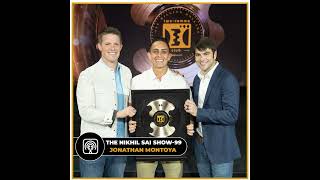
Jonathan Montoya, founder of Passive Income Lifestyles, walks through his path from failed side-hustles to affiliate marketing success. He built an "Affiliate Stacking Ecosystem" that bundles complementary products, uses short-form content to drive traffic to YouTube and email lists, and emphasizes a 5-10 year vision over quick schemes.
Chapters
What's going on? What's going on everyone who's actually listening to this podcast right now? First of all guys, welcome to the Dheen Eagle Sai Show, which is hosted by me, Dheen Eagle Sai. And guess what's going on today? We are back with another amazing 2 Comma Club interview. So guys, this is going to be a crazy podcast in case if you're somebody like who likes affiliate marketing, who wants to build a lifestyle business where you can actually travel, have your own time, have your own rules for your life. It's going to be a crazy, crazy journey. So So the guest who is actually joining us today, right, he actually have helped thousands of people get started in affiliate marketing by saying goodbye to the 9-to-5. And basically he joined a job and within 9 months he also left that. So basically it's a passion for him to show people how to get their freedom and time back, right? And I mean, I'm personally into his community and I've seen hundreds of people posting screenshots of thousands of dollars of commission just like that every day, all days. I was like, wow, this is pretty crazy. This is insane, right? And especially like not spending hundreds of thousands of on advertising, it's just like using organic traffic, simple as that, right? Like growing social media and leveraging social media and organic traffic basically is main methodology. So guy who's actually joining on this podcast today will show you how you can unlock the real potential of freedom by actually perceiving affiliate marketing and start your own affiliate marketing journey so that potentially if you choose to, you can quit your 9-to-5 and Be a full-time affiliate marketer. So guys, this guy has scaled his own affiliate marketing journey to the next level. He has done millions of dollars in affiliate commission and is going to reveal the exact secrets and step-by-steps and his journey on how he has done it. So let's not waste any time and actually let's welcome Jonathan on this podcast, founder at Passive Income Lifestyles. Hey Jonathan!
Hey, what's up Nikhil? Thank you so much for having me on, brother. Super excited, uh, for this podcast.
Absolutely, John. Thank you so much for joining us today, brother. So yeah, we are pretty excited. Once again, thank you so much for joining on time. You're traveling, we kind of risked a bunch of time, but finally we are here. I'm pretty excited for this. So Jonathan, I have given a pretty overview, but I would really love to dig deep and have a like overview of your backstory. Like how did you get started? Where did you come from? How did you get into affiliate marketing?
Yeah man, thank you. So basically man, uh, I'm gonna start back when I was in elementary school. I kind of always had this entrepreneurial, like, itch, right? So I always, I always liked selling stuff. I always got this, like, high from selling things. So when I was in third grade, I was the guy selling gum, you know, like I would, I would buy a bunch of, bunch of gum from Costco or Sam's Club and then I would bring it in my little cubby and people would come to me. I'd sell them gum, you know, I'd sell, I think, $0.25 or whatever. And I kept doing this all through elementary school. School, um, you know, I sold CDs and I sold, you know, candy bars. Middle school, I was selling, uh, I want to say DVDs. So man, every— I'll throw my whole school— like, I was always selling something. High school, we did, uh, I had like this taffy business and all this stuff. So I always had this entrepreneurial, uh, itch, okay? But then after, um, like high school, you know, I got into college and, um, I kind of forgot about that, right? I was so focused on college, you know, I was actually going to be an electrical engineer that I just forgot about that, right? So I was like, you know, I was focusing on school. Basically, you know, I went through the whole, I got my bachelor's in electrical engineering, I got my degree. After that, I got a job in electrical engineering, which was awesome. You know, I was happy I got that job. You know, after, after a few years in working that job, I was like, man, I don't, I don't like this job. Like, I don't like a job at all. So like, I started, I started looking into other side hustles. You know, I looked into eBay dropshipping. I started some MLMs. We did Amazon FBA. My wife helped me create an e-commerce store. Like, we literally tried almost every side hustle that you can think of. Now, this was while I was working my 9-to-5 job as an engineer. At this point, I was sick and tired of that job, and I was like, okay, I got to get out of this job. You know, this is not something I want to do for the rest of my life. Okay. So I was looking for other things. Now, unfortunately, I failed a lot of things and, and that was when I kind of found affiliate marketing. Now, this was like 4 or 5 years in failing in different business models, but I found affiliate marketing in May of 2019. That's kind of when I started that journey. Since then, I, I knew that this was the business model for me, so I went all in with that business model. I learned the right way. I was building up my, my business and brand. And basically, long story short, I started in May of 2019 and I quit my job in March of 2020, right, right before the pandemic, which was kind of crazy. I quit my job, I think, 2 weeks right before everything was shut down. But yeah, man, that's kind of a little bit about my story.
Wow, that's pretty interesting. I mean, it's really tough to see people who kind of have that itch of being an entrepreneur from very young age, but it can really prove the drive you actually have from a very young age. So we really encourage people who kind of see themselves that, okay, I have some entrepreneur spirit, they really need to try that thing because so many people just feel stuck that, okay, I'm just here. They just don't pull the trigger on, you know, taking some action on what they really want to do, right? So yeah, that's pretty interesting, brother. Thank you so much for sharing a quick backstory. Let's get to the next question, right? So here's the thing, affiliate marketing, especially after pandemic, like everybody is an affiliate marketing person. Everybody started to jump into affiliate marketing, right? So what did you do different, like, which actually, like, like, where did you, like, really crack the code of affiliate marketing? Where was that, like, aha moment, like, okay, this is how it works?
Yeah, so the biggest thing for me was, um, I was able to stack multiple products on each other. Now, I did it in a way that wasn't— what do you call it? There's a lot of affiliates that will just promote a bunch of random products, and I don't want to be that guy. I wanted to be the guy that was gonna help people get a result. Okay, so, um, I call it the affiliate stacking ecosystem. This is kind of my own framework, but basically the way it works is, um, you know, we have one core result for my target audience, right? So I'm going to give you a good example here. So, um, let's just give you— let's just say someone's going— they, they buy a brand new house, right? And, um, they need a bunch of— they, they need a bunch of things for that house. They need a TV, they need furniture, They need, uh, you know, apparel or— I'm sorry, uh, you know, pictures, all this stuff for their brand new house, right? These are multiple things that they need. So, you know, as the affiliate, I'm going to be providing that, uh, you know, that solution for that customer, right? Oh, here's an affiliate link for this TV. Here's an affiliate link, you know, for this furniture. Here's, here's affiliate link for, for this and that, right? For your bathroom, whatever it is, right? So that's just an example, um, that kind of makes sense, right? For me Uh, obviously I teach people how to leave their 9-to-5 job with affiliate marketing. So I do teach affiliate marketing. So with that, right, the core result is helping someone leave their 9-to-5 job. Now I'm gonna, I'm gonna recommend the tools that they need to do that, right? Maybe they need this software, maybe they need, uh, this tool, maybe they need, uh, this course, right? So I stack multiple products on each other, not only It helps me make more money, but it helps the customer get to their main result, right? So that's, that's the game changer for me. And that's what's helped a lot of my students out in any niche, right? Even with health and fitness, right? Because you can, you know, their, their main core result is losing weight. Maybe you have, um, a, a course on how to lose weight, then you have supplements, then you have, um, you know, meal prep services. But you as the affiliate you know, are going to make commissions on all those. So that, that was the game changer for me, is building that affiliate stacking ecosystem.
Yeah, I mean, yeah, that was really enlightening basically because so many affiliate marketers, right, they just look at that one product like, hey, I'm gonna sell this one course, I'm gonna go all in. Great, you're going all in, but without a continuity, you cannot scale, you cannot make so much more commission. I believe everybody would agree, like, it's gonna cost you so much less to sell the existing customer than trying to convince a brand new one, right? So when you stack everything they might need in the journey, you're going be making much more, triple, quadruple your income basically by just offering something else they might need in the future. Right. I think that's a beautiful strategy.
Yeah. And the thing is, is like, I didn't want to come off as that affiliate that just promoted products that really didn't help everything.
Yeah.
You know what I mean? So like, you know, there's a lot of people that'll teach, hey, just go find random products on ClickBank and promote it. Right. So I wanted to be I wanted to actually provide value for the people I was, I was helping, right? I had the main core result for them and, you know, I figured, okay, how can I get them to that path? And that was like, okay, I had to give them products and services that I believed in. So that, that was the game changer for me. I think as well as like thinking of the customer's end goal instead of like just how can I make extra money? So that was, that was.
You're just trying to help yourself and you're just showing the pathway that how you made it, so it becomes an easy process for them. That's really beautiful. So yeah, Jonathan, let's get to the next question, right? I mean, in affiliate marketing, you know, you would agree like this is the most key part. Of course you need like some funnels and processes and systems in place, but really coming down to the boiling point, like how do you bring traffic and leads and what actual process you follow to nurture them continuously? Because it's not just about getting that lead, it's really about like how you maintain the relationship with that lead as well. So can you walk me through like your strategies of generating getting traffic?
Yeah, that's a, that's such a good question. And, and you're right, like, not all traffic is the same, right? Like, the traffic that we bring in is, is very, very strategic. So the way I do it now is, uh, and this is kind of the way we've always done it, is we'll, we'll do some short-form traffic. So like Instagram Reels, TikTok. Um, the reason why is because right now it's just, it's really easy to to start getting people to your links very quickly. Now, the only problem with short-form traffic is, you know, they're only seeing a few seconds, you know, 10, 20, 30 seconds of your business and brand. So typically that's not going to be the best lead. So what I like to do is I like to bring those leads, um, into my YouTube ecosystem. Okay, so now they could start, uh, watching my YouTube channel where I give them 20, 30, 40-minute trainings for free, obviously, right? And they're going through that, but now they're learning my story. They're, they're getting some value. They're understanding, like, uh, the, the, the results I'm getting my students, right? So, uh, think of it like this, right? So it's almost like a traffic funnel, right? We, we use Instagram Shorts or Instagram Reels, TikTok, and I try to get them to my YouTube channel from there. Then I get them into my funnels where I, where I, uh, then, um, build my email list. And the email list is the biggest goal for me, like If I can build that list, I can have a thriving business for the rest of my life. So we go from short-form video to long-form video to email list, and then of course, then to our main core offer. So that's typically how we bring leads in. And most of the time it's mostly organic. Now, if we do paid ads, I'll kind of do the same structure. We'll go from like a paid ad to some of my free long-form content typically. Because for me, I'm always in it for the long term. So, you know, I'm not just going to go, hey, go, go to my link and buy. I'm like, hey, go, go watch this free video on YouTube, right? So my goal is like, maybe I won't get the sale right away, but I'm going to build that long-term business and brand, and that person is going to follow me for a long, long time. So that's kind of how I nurture my leads.
Yeah, yeah, I genuinely believe that. I mean, one of the huge mistakes, like, I believe newbie affiliate marketers do is they just want to do like that direct response marketing, like buy now or just get out, right? They just want to do that one-time thing every time. But you're trying to build like an ecosystem, like an attention ecosystem on your business, that you can have this compounding effect of people trusting you. Because as, as it says, like, people don't just trust you by seeing your name for the first time. They just need some time to trust you and some value to see a valid reason for, right, to, for them to like buy, purchase the products you're recommending, right? Because affiliate marketing is all about you referring something else, and when they don't trust you genuinely, they won't use your products or services you're recommending at all, right?
Yeah, no, absolutely. I mean, it's all about building that trust, right? Um, and it's, it's sending them to content where you're telling your story and resonating with, with your audience. Uh, one thing I did leave out actually was, um, we actually get them— once they're in our email list, we'll invite them to our Facebook group as well, because then I could build that relationship even more, um, you know, in a different way than maybe YouTube or TikTok. A Facebook group, you can really kind of really community—
yeah, it's a community, right?
So they you could see your students' results, your own results, and it's just a different feel, right? So I try to get—
you're building your own omnichannel.
Exactly. That's exactly what it is. So yeah, man, that's kind of the process and it's worked amazing.
It's really awesome.
Yeah.
Yeah. I mean, this is a long-term game. So any affiliate marketer who's just shorting, like, you know, planning for the quarter, plan for 3 years from now. That's how you can build the ecosystem, which you can see in Jonathan's business because It's not easy. It's not, you know, it's not something which could be done in a week or month's time, but it is definitely worth it if you really perceive it. Because you're going to be on YouTube, Facebook, Instagram, Reels, TikTok, everywhere. Imagine that situation, how much compounding it's going to give you. Let's get to the next question, brother. And this is going to be a little emotional. We just want to like uncover this thing, like what life lessons did you learn after like you went through like tough times in your life, especially like you after becoming an engineer into a job, transitioning into affiliate marketing? I don't think it's a one-way go, like you started affiliate marketing, it's a boom. I don't think that's a, you know, that's a realistic situation. So what did you learn basically in your tough times?
Yeah, well, okay, so I'm going to actually go back to when I started affiliate marketing. So actually, so as I mentioned, I was doing all these side hustles. One of the last ones I did was, it was like forex trading. And at the time I just didn't have my mindset right. So I was basically putting a ton of cash that I really didn't have into these trading, these trading things. And basically, long story short, I ended up losing a ton of money. I was negative like $1,200 in the bank. And this was in May of 2019. So this is right before that. And right then I was like, you know what, I need to really figure out, like, I need to stop doing things for the short term, right? At this time, I kept just trying to get rich, right? I was just trying to get out of my job as fast as possible instead of building a long-term business. So that's when I shifted my mindset and I was like, okay, from, from here on out, whatever I do, I'm gonna do this for the long term and stop trying to get rich very quickly. Uh, because I think, you know, a lot of entrepreneurs have been there, right? It's like they're trying to get rich quick, quickly, especially with crypto and, and all these things, right? Because you know, you see all these people making a ton of money, but it's not, it's not really realistic, you know. So like you have to, you have to look at it as a long term. So that was one of the biggest lessons I learned was looking at your business in a long term way and focus on like the next 5, 10 years, right? Instead of figuring out, okay, how can I make $1,000 this week? And that's it, right? How can you build this business that's going to last you a very, very long time? And I learned that the hard way, but I'm happy I learned that, right? Because now, you know, I think my business now has really grown and we've been able to, you know, obviously I was able to quit my job and build a 7-figure business, but it's because of that life lesson I learned right before I started my affiliate business.
Yeah, I think that's a really deep lesson. Like, people need to realize, like, when you start looking at things in a longer-term perspective, everything changes. Your opinion on things completely change, right? The way you want to perceive things completely changes. The way you sound completely change your story, your message, your offer. Everything changes basically. And I think that's really powerful because that's when your authenticity really like be like— you be, you be yourself. That's when you can be yourself because you can't play under a dark shade for years and years and that's not realistic. That's never happened, right? So yeah, love that. Thank you so much for sharing that. Let's get to the next question, brother. Yep. So what programs like do you suggest for someone who wants to get into affiliate marketing right now?
Um, I mean, it depends, right? So, you know, you got your low-ticket programs. Uh, you know, I, I'm gonna give you a plug here, right? So there's my program, which is the 3-Day Challenge. Um, basically teach someone how to build an affiliate business in 3 days. I give people all the, um, the resources to get started with it, the websites, the funnels that I use. Um, you know, the 3-Day Challenge is a good one. Uh, Legendary Marketer is one that I also went through. It's like a 15-day type challenge. And these are all low-ticket challenges, you know, $7. Um, these are all great, you know, great places to start, right? If you're brand new, you're just getting started, it's going to give you the foundationals, right? Like, how does it all work, right? Like, this is step by step, how do we get started? Uh, the nice thing about affiliate marketing is you really don't need much to get started, right? You just need basically a product, right? A proven product, and then and then customers to that product. That's it, right? So, you know, you can learn these in these basic programs. Um, those are the two that I would say is a good start to get started with. Um, and, um, yeah, man.
Yep. Thank you so much. So guys, whoever wants to like get your hands like into affiliate marketing, you can pretty much check out Jonathan and you can easily find the links. And I will be also dropping them in the conversations, you know, in the description below. So you can check that out. So yep, I would like to get to the next question, Jonathan. Like, what was the turning point in terms of business? Like, where did you really see like, okay, you're into affiliate marketing, you're making this much, a little money, a little money here and there. And once you started like see the skyrocket growth and what key components have like resulted, you know, that kind of effect overall?
Yeah, I love that question, man. 'Cause you know, with affiliate marketing, you can only get so far, right? So because you're promoting someone else's product. Now the game changer for me was learning how to build like business SOPs, infrastructures, um, and, and building out my team, actually, that was huge. Because for a long— for the longest time, I was just a one-man show, which was, you know, it was okay because I was working a job. I was, um, you know, with affiliate marketing, I was promoting someone else's products. So, you know, I really didn't need a team. Um, but it was— the turning point for me was building out the team because, you know, I I was posting videos and I was managing my Facebook group and I was posting content on Instagram, TikTok. You know, after a certain time, like, I have to focus my time on the thing that's going to make me the most money, the income-producing activities, instead of doing the things that, um, you know, I can have someone else do and they're even better at, right? So I had to, I had to figure out how to start hiring out people, um, that were better than me at that job, right? So like, uh, a YouTube manager, um, a YouTube editor, a support team, uh, even like, uh, I have like a closer, a DM closer. Like, I have all these people that can actually help me build my business, and I could focus on the things that make me more money. So that was the game changer for me and how we got from— how we went from 6 figures to 7 figures. I don't think I could have got to 7 figures by myself because you know, there's people that are better than me at doing these other jobs, right? Me as an entrepreneur, I'm the visionary. I'm the one that, you know, I'm the one that gets the team to, to see the vision, right, to the next step, right? So that was the game changer for me, was building that team out.
Yeah, yeah, I can definitely see. I mean, I think this is, this is a breakthrough for most of the affiliate marketers. They just get on the pedestal of them doing everything, and they just can't surpass that just because they're doing everything themselves. And, and you realize that, okay, I can delegate the repeated piece of work to somebody who is much better than me in that area, you can get so much time back, which you can of course invest in the right places to get the best outcomes. Love that, Jonathan. Appreciate you mentioning that. That was a really big game changer. That was a jump for a lot of affiliate marketers. Let's get to the next question. What type of tools you use to manage your projects for your productivity, basically?
Um, like the tools I use in the business or productivity?
Yep, yep. Like basically like all the tools and softwares you use to run your operations and business overall?
Yeah, I mean, it's pretty simple. I mean, we use, um, you know, we use a funnel builder called ClickFunnels. Uh, you know, that's obviously how we, how we got the 2 Comma Award there. So we use that. We have all our memberships in there, our funnels, our sales automated funnels, webinars. So we use ClickFunnels. As far as email autoresponder, we use GetResponse. Um, it's just the one I've always used. It's the one I recommend to to my students as well. It's affiliate friendly. Um, as far as, uh, project management, we use Asana. So that's like when I started building out my team, um, we use Asana to, you know, delegate certain projects, certain tasks. Um, this is something that it really helps organize, um, you know, basically your team out because it's like, hey, you need to do this, and then it keeps people accountable, right? The whole team can see what people are doing. And, um, this is a, it was a game changer tool for us because now we could use that and be more efficient, right? I'm not, I don't always have to be, you know, messaging my team, hey, we need to do this, we need to do this. Now we could just put it in that, um, in that project management, uh, software and everyone knows what to do. So as far as, uh, other tools, I'm trying to think here. Uh, so we use TubeBuddy, uh, for our YouTube channel. This is basically how we, you know, how we get our videos ranked, uh, very high. Um, other than that, man, we, we don't use too much. We're, we're pretty light on, on the software. I mean, there might be some other softwares you use, but, you know, those are the main tools that we'll use. Um, there's actually one more, it's called First Promoter. That's what I use for my affiliates that, um, you know, obviously I have my program now, so they use that too. I use that to track sales and stuff like that. So yeah, those are the main softwares that we use. We don't use a ton. We're pretty simple, but it gets the job done. Yeah.
Yeah. Yeah. I mean, you don't need a lot of software because it's just going to create more operational hiccups, I believe. Right. And you just need to use where it is mandatory. Love that. Thank you so much for giving us your tech stack. Let's get to the next question, bro. Like, you actually run your business, travel, have fun, and still maintain your body very well. Like, how does your daily routine look like for your success? What do you do on a daily basis?
Yeah, I appreciate that, man. Yeah. The biggest thing for me is, I mean, health is one of the biggest things for sure, right? But as far as my daily routine, like, I'll get up and I just had, I just had 2 kids, you know, I have a 2-year-old and I have a 1-year-old. So it's crazy, right? They're, once they're up, it's kind of hard to work. So what I do is I actually get up at, I get up at around 4:00, 4:30 AM. And I really focus on the income-producing activities, right? So now, obviously, I have a team that can do do, you know, a lot of these tasks, but I'm focusing on, um, you know, creating content. That's the thing that is driving the needle forward. So creating YouTube videos, creating TikToks, um, writing emails, right? These are the things that are income-producing activities. Um, you know, new offers— if we have new offers coming out, we'll be focused on that. Um, so usually from 4:30 AM when I wake up, uh, to around Around 10 AM. That's, that's my, that's my time. Usually the kids are asleep, um, the family's asleep, you know, they're, they're kind of doing their thing, you know, and I can get a ton of work done in that time if I'm focused. Usually, usually I can be very focused during that time. Um, now typically when family wakes up around 10 AM or, you know, whatever, we have breakfast together, hang out for a bit, um, and then usually around noon I'll go to the gym, right? 1, 2 hours. Typically, I'm pretty good with that, man. Like, I will go 5, 6 days a week because for me, it's not only something that's going to help with stress, but, you know, if I, if I have a good workout, like, I actually get more energy. And that's if I don't get a good workout, like, if there's days I'm missing, I start noticing that my energy is going lower. So people will say I have a ton of energy. Even though I get a lot, you know, maybe 6 hours of sleep. And that's because, I think, because of, of my gym routine. So typically, uh, around then, uh, you know, I'll get back home around 2, have some lunch with the family. Um, now most the time I will come back and depending on the day, I might call it a day, or if it's like a really busy season, uh, you know, I'll continue working from about 2 to around 5 or 6. Okay. Um, if not, I'll just take the day off, hang out with the kids. And then evening time, 6 PM, that's total— that's completely family time. So, um, yeah, that's pretty much my routine, man. But my main work is done at 4 AM, like pretty much 4 to 10 AM.
So yeah, yeah, you really need to find that sweet spot where you're like most active and you have nobody else to disturb or talk to. That's when you can get the most work done. I believe collaboration is good for like getting like things done, but I don't think it's for creativity. Like creativity comes when you're all alone, right? I believe you can get the most work done when you're all alone. That's, that's definitely a beautiful routine, brother. Thank you so much for sharing. Let's get to the next part. Uh, like let's say hypothetically somebody is just getting started, or a 20-year-old, you need to give him a good advice. What would that suggestion look like?
Uh, start with affiliate marketing or entrepreneurship in general.
That's awesome, brother. Let's get to the next question. You're the biggest achievement so far.
No, I'm sorry, I wanted to answer that question correctly. Um, for that question, are you talking about, um, like to get started with affiliate marketing or entrepreneurship?
Like, like if you, if you find, let's say you are talking to a 19, 20-year-old Jonathan, what would be like in a moment suggestion? Like, hey Jonathan, do this, you'll be successful. What would that suggestion look like really?
Yeah. So I mean, if we're just talking about entrepreneurship in general, like I would say, hey, Quick, quick, going to college and build and build high income skills. That's going to be the thing that's going to, that's going to be the game changer for you. So building a high ticket skill is, is everything, right? Even in the job force, right? Like people don't hire you based on your degree. Like honestly, a degree is not really valuable anymore unless you're a doctor.
Yeah.
Like people are going to hire you because of the skills that you provide, right? The people that I hired on my team, I hired them because of a certain skill that they had. Now, there are certain skills that are going to pay a lot more, right? So things like copywriting, content creation, email marketing, right? These are skills that are very highly paid skills, right? Sales, obviously, closers. So start looking at those high-ticket skills and how can you learn those, right? Not only for your own business, but even if you're 18, 19 years old and you maybe don't have the funds to start a business, learn these high-ticket skills, find somebody that needs those high-ticket skills, work for them, make a ton of money, then you could start your business, right? If I were to do it all over again and I was 18, 19 years old, that's what I would do. I would learn these high-ticket skills, um, you know, maybe work for somebody until I was able to, uh, make enough money to then start my own business, right? That's what I would focus on and just focus on high-ticket skills and that's the game changer right there.
Yeah, absolutely. I mean, that is completely true, Jonathan. I think, you know, everybody needs to realize that they're getting paid on their skill set, you know, even they're running a business, even they're in a job. It's really about what skills they actually provide to the marketplace, because market is where you make money. When it's a job, a business is making money off your skills and they're paying you. Even if it's your own business, your skills, you need to utilize them in your own business and make money, right? So really, skill set is the, is the overall point. Let's get to the next question. Your life's biggest achievement so far and any next bigger goals?
Oh, that's a good question. Um, life's biggest achievements, you know what, um, for me it was, it was actually hitting the 2 comma, man. Like, that was, that was something like when I started my entrepreneurship journey, I was like, there's no way I could hit that. Like, it just seemed like, like just something I could never do, right? So So it was a game changer for me because I feel like when I started this journey, my confidence wasn't there. Just obviously I had failed at a lot of businesses. So, you know, I knew I was going to do it for the long term, but I was like, you know what, I just got to make enough to quit my job, right? I never thought I could build a 7-figure business. So yeah, man, that's been a game changer for me. I think that was one of the biggest things I've ever accomplished. And it's been a blessing for sure. As far as next goal is, is getting to the 8-figure mark, you know, not only income-wise, right? But if I'm able to get to that mark, I know we could help a lot more people because, you know, at the end of the day, my main goal is to help people achieve financial and time freedom just like me, right? That there's a lot of people that are stuck at their 9-to-5 jobs, and my main goal is to help them get out of their jobs as well. Now we've helped hundreds of people already get out of their jobs, but I know if we, if we build an 8-figure business, that's just going to be so much more people that we impact, right? So 10, yes, I want to get that 8-figure mark, but at the end of the day, the goal is to help people get out of the, out of their jobs as well, right? So yeah, man, that would be the biggest thing is, um, not only get to the 2,x, but You know, there's a, there's a certain number that I've been thinking about since pretty much I started is helping 10,000 people leave their 9 to 5 jobs. So, yeah, man, that would be impactful. Big number. It's a big number. So, you know, it's, it's not going to happen overnight. It's not going to happen, I don't think, in the next year or two. But we're working to that. And that's kind of like, like, again, like, if I can think of, if I, if I can figure out, you know, the game plan, right? And I can eventually help 10,000 people leave their 9-to-5 job, but I gotta look at the main goal and then figure out how I can help them get there. So that's the main goal for me, man, for the next—
kudos to you, man, really love it. I'm excited for this. I'm looking forward. I'm just hoping so many more people will be joining your journey and, you know, get themselves successful.
Absolutely.
Yeah, I mean, I can just see the impact. If 10,000 people are quitting their job, indirectly 50,000 people are making a passive income. You know, learning from you on how to kickstart the affiliate journey. That was pretty impactful. Let's get to the next question. I mean, as entrepreneurs, we never consider the mistakes as mistakes because it's always a learning curve when you're moving forward, right? But if you just look back and say, oh, I could have done something better in that situation, what do you think like is the biggest mistake in your life so far in terms of business mainly?
Um, yeah, I think the biggest mistake is, is not focusing Cause, uh, you know, like I think a lot of people get sidetracked in this. I see this with my students all the time. They'll start a, you know, maybe affiliate business, you know, a couple weeks later, a month later, they're already doing something else. And, you know, I've been guilty of this myself. Obviously I've done a lot of side hustles. Um, but I learned very quickly that if you're not focused on something and you're not consistent with it, you're not going to see success. So, um, focus is so huge, right? Like, if you, if you can focus on one thing and get really good at that thing, you're going to see the results that you want. Um, the only reason you're going to fail at this business model is you're not focused. Like, that's literally it. Because, um, even traffic, right? Maybe you're focused on, uh, YouTube, and then you're focused on, on blogging, and then you're focused on, on something else, right? Like, get really good at one thing focus yourself on one thing and then move on to the next thing, right? So, um, that's something that's really important, right? Not only with, you know, with a business model, but with every aspect of the business, right? Get good at that one thing and then you'll start seeing results. And I did this, uh, I, I did this a lot in my affiliate journey as well. I was trying to do a bunch of things and I was like, you need to focus on, on one thing. And then finally I switched my mind. So I'm like, okay, I'm going to focus on YouTube, get really, really, really good at YouTube, and then I'll start looking at these other, you know, traffic sources, you know. So that, that's the, that's the game changer for, for me. Or that was one of the biggest mistakes, is not focusing on one thing.
True. Yeah, that was spot on, brother. Appreciate you mentioning that. I believe like for every beginner who started to see a dollar, that's when they were like, I figured this out, let me do something else. Exactly right. And that's the biggest mistake ever, period, right? You just need to be focused. The breakthrough is Focus.
Yeah, focus is so huge, man, because people get sidetracked, they get the shiny object syndrome, and they see the next opportunity and, you know, they, they move on, right? So it's really important that you understand, uh, or that you stay focused with that.
Absolutely. Let's get to the next question. I mean, as entrepreneurs, right, we are driven, like we are driven with something, right? So like, what actually motivates you? What inspires you? And who are the people who helped you throughout this journey?
Yeah, great question. So it's kind of funny. So the main thing that still drives me is, is, well, when I first started, it was trying to leave my job. Like, I really was sick and tired of working it. Like, I just, I didn't want to be there. So my main thing at the time was like, okay, how can I get out of this job? Right? And then now, yes, I want to get to a certain mark. But one of the main things that like, I never want to do again is work a 9 to 5 job. So like I have a ton of momentum from leaving my job and I don't want to lose that, right? Because I don't want to go back to working a 9 to 5. So one of the main things that drives me is that is literally thinking that if I were to kind of let up, take the, take my foot off the gas, you know, then I'm going to have to go back to the 9 to 5. If, you know, something crazy happened. I know that'll never happen. but in my mindset, I'm always thinking like, okay, I gotta stay ahead of the curve. I gotta be able to, I gotta be able to continue that momentum. So I never ever have to even think about going back. So as far as the key person, key people that have helped me, early in my journey, I've worked with Joshua Elder, Anik Singhal. These are some of the people I've worked with. Legendary marketer, David Sharpe. Worked with some of these mentors. Josue Pena was someone that helped me with DM closing. One thing I did do early in my journey is I would hire mentors and coaches and I would buy several courses, right, to help me get to where I wanted to be. So those are some of the names of the people that helped me get to where I wanted to be. I mean, there's been so many people that have helped me and some have made a huge difference, some have made a little difference, but but everything has helped me get to where I need to be.
Absolutely, brother. I appreciate you mentioning that. So that was pretty insane, Jonathan. Appreciate you really walking us through your journey of actually being an engineer, being stuck in a job, to actually making through your life and being a successful affiliate marketer, and really having the vision to change over 10,000 people's lives by helping them quit their jobs by pursuing affiliate marketing. Really love that. So if somebody who actually watches this podcast wants to learn more or get started to work with you, where they can actually find you?
Yeah, man. So, you know, I have several things that people can get started with. As I mentioned, I have a 3-day challenge that basically helps people get started. The foundationals, I give them all my funnels and resources to get started. So that one is www.jonathanmontoyalive.com/3day. I could probably send you that link if you want, but that, that's the place I would recommend to get started. And then honestly, just my socials. My YouTube channel is Passive Income Lifestyles. Let's see, I have my Instagram, Jonathan_Montoya24, and I'm pretty active in pretty almost all of the socials, Facebook, Jonathan Montoya. So yeah, man, they could reach out. YouTube is where you can find me and get a ton of free content. I have almost 1,000 videos on there.
Wow.
Yeah, it was— it's crazy, man. So I would do a video almost every single day when I was starting my affiliate journey and working a 9-to-5 job. So, um, yeah, so right now we have almost 1,000 videos on there.
So yeah, that's awesome. So guys, you'll have all the links Jonathan just gave you in the description, so make sure to check that out. So if, if you need more help in kickstarting your affiliate marketing journey, Jonathan is the best guy. So you can probably consider joining his programs and basic training so you can get some free value out of that. So yeah, that was beautiful, Jonathan. Any last word before we conclude? The podcast for today.
Um, yeah, man, I mean, if, if you, if you guys are out there and you're, you're wanting to quit your 9-to-5 job, um, or you just want to start affiliate marketing to make extra money, pay off debt, the biggest thing you gotta figure, you gotta realize is, um, don't just do it to make commission, right? Like, don't, don't just find random products and, and try to promote those things. Like, try to find something that you truly believe in and think about the customer you're helping and how can you help them get what they want, right? That, that's the game changer if you want to be successful in this game. You know, I see a lot of people that just promote random products and maybe they see some commission success, but at the end of the day, they're not building that long-term business and brand. So look at the long term, and that's going to be, that's going to be the game changer for you because now you're focusing on people's results instead of focusing on your income. Now if you focus on people's results, your income will naturally go up. Okay, so you can do that, you'll be successful with this.
So yeah, man, absolutely. Jonathan, once again, thank you so much for this amazing opportunity. Was definitely a pleasure having you on our podcast. We definitely got tons of value. So everybody, don't let this podcast be another information overwhelming. Rather, take notes from this and watch Jonathan's YouTube channel and get started in your journey, in your own affiliate marketing journey, and, you know, try break through your own journey and get some success. So stay tuned, guys. I'll be back with another amazing 2 Comma Club winner just like Jonathan. Till that day, this is me, Nikhil Sai, and Jonathan Montoya signing off for today. Peace.
Thank you so much. Have a good one.
I appreciate you.
More from Nikhil










BURNED $1.5M in his 17years online #digitalmarketing #entrepreneur #onlinebusiness
