From 16-Year-Old Hustler to HighLevel’s Support King: Beant Singh’s Untold Journey | Nikhil Sai Show
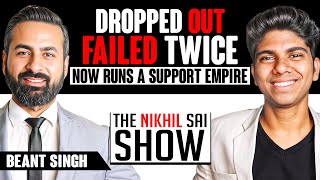
Beant Singh started a security-camera business at 16, failed at restaurants and billboards, then built Extendly, a white-label support service for HighLevel users. He explains how he acquired first customers through personal networks and event booths, why agencies pay for his certified agents and AI bot, and what he learned from each failed venture.
Chapters
What's going on? What's going on, everybody who's actually listening to this podcast right now? First of all, guys, welcome back to another episode of The Nikhil Sai Show, which is hosted by me, The Nikhil Sai. And guess what's going on today? We're back with another trailblazing entrepreneur. Today's story is going to be quite unique. I mean, you've heard my story a million times. I went from like a dropout kid at 19, but this guy started when he was 16, which is more interesting. 16 years old who started a business, got into a very unique business, which we'll explain in a minute. To building huge support teams for that business and then coming online and trying to figure out a few other businesses. And he stuck with a very interesting software and built one of the number one, like one of the top support solutions for that company. I'm so stoked and we had so much fun dancing on Punjabi music behind the scenes when we met at a summit. We were at a HighLevel Summit 2024. I'm excited to interview today the CEO of Extendly. They run a 24/7 white label support agency. Let's welcome Byan Singh. Hey, Beyond.
Hey, Nick. Thank you for having me here. I'm excited to be here.
Yeah, we are stoked. And I've had a great relationship with you and good connection. We had, if you remember, the tour of the baseball stadium. And then we had some, I mean, you guys really know how to throw parties. I should say that you guys done some fun stuff at the HighLevel Summit and dancing on Punjabi music and whatnot. So like, I mean, almost everybody in the HighLevel space, they kind of know you in some shape or form. They've heard you like Extendly is one of those companies that Every HighLevel user have heard at least a few times. So how did you get here? Like, yes, like Extendly is a successful company. You have a lot of employees, great clients. It's all good now. But I'm curious, what's the journey? Like at 16, you started your first business. I'm pretty sure there was a whole journey. We wanted to cover that, but I was like, hey, I want my audience to know. So let's do a podcast. If you remember, that was my pitch when I met you physically. So here we are. Walk us through your journey beyond.
Yeah, absolutely. I mean, I, like you said, I got my start at the age of 16 with a security camera company. Which I still own today. It's been going on for 20-some years now and it's a successful company, but it wasn't like that. It wasn't, you know, I was very inexperienced at the age of 16. You think you know the world, but when you really get into it, then that's when you realize there's a lot to learn. I don't know everything and maybe I need guidance. I'm going to make a lot of mistakes, fall on my face a few times and get up and keep going. My journey's been in a similar manner as well. When I got started with the security company, my father was excited that I was able to launch a business myself. He referred me to his friends that he knew that were in the business so I could get a few customers going there. And then it started to take off from there. And I was in the business doing everything by myself before I was able to hire my first team member that worked alongside me. And then something tragic happened. At the age of 19, my father ended up passing away in a car accident. And I thought I, you know, I was gonna be able to take control of the situation and continue going on. But, you know, failures started to come along there. I had gotten into the restaurant business 'cause that was something my father was building at the time before he passed away. So, you know, being his son, I wanted to finish off one of his dreams that he was building. And the reason he was building the restaurant is because he used to tell me back in the days when he was young, he had failed in restaurants. So for him it was sort of a, you know, a comeback moment that I'm gonna, now that I'm experiencing My father was an entrepreneur himself as well. So for it was his way of coming back and saying, okay, you know, I got this, I did it, and now I'm going to move forward. Unfortunately, he passed away. So I took over and I did not know anything about restaurants at that time. You know, I hired a manager, someone who could manage, but we failed in that business as well. Right around the time I had, because my business was doing well, I had bought into a marketing company and there was that concept was very new at the time. We had sort of like digital billboards inside salons, gyms, this, that, and the other, you know, the big screen TVs installed and advertisements would be running on that.
Yeah.
So that was the concept there, but it was very new back then. And that also failed there as well.
This was back in what timeline?
This is around 2005. 5, 2008, uh, arena, uh, there. And, and there was an economic downturn, uh, as well happening, uh, during the 2008, uh, real estate crash. But, you know, that, that's not, that's not, that's not any excuse for my reasons of failing. I just was not good enough in business and did not know what I was doing, and that was the reason why I failed. But then took those failures and learned from them, went back to my security company full-time, and then spent, you know, 10+ years working every single position that I could in my, my business there, being the sales guy, being the billing person, being the installer, being the person who would go visit customers to do site surveys, then being tech support, everything from A to Z. I was there, I did it with my own hands, and that's how I learned the business to start becoming successful at it. Then I was able to delegate those positions eventually to other team members that we hired to, uh, to bring on. The company started, started to grow and today it's doing really well as well. But during that time, I'm going to fast forward to the COVID area. I had been wanting to launch a marketing company for sort of, you know, getting back into the items that I had failed in similar, like similarly like my dad. And wanted to get into the restaurant business as well. Both of these opportunities sort of came around the same time. Someone I knew was franchising, selling their restaurant. Me and my business partner, we bought into, into the restaurant business at that time. And knock on wood, but those are going great. Today we're up to 8 pizza locations. They're pizza restaurants.
Oh, wow. There in California.
Yeah.
Yeah. Yeah.
And then the security— I'm sorry, the marketing company sort of took on around the same time as well. And that's how, through that marketing company, is how I got to know about HighLevel. And once I found out about HighLevel, found out this tool, started playing with it, was involved in the community, spotted a gap that was there, which then— I won't bore you with the entire story, but which then ended up becoming Extendly. And that's how Extendly became a support company in the HighLevel space and The rest is history. Now things are great so far and we're looking to continue moving forward.
Yeah, interesting. I mean, one thing I've seen like throughout your journey I've observed is like innovation and not taking like loss. Like you're losing for the moment, but you're taking those learnings and using them, you know, throughout your future, which is quite interesting. I'm curious from an entrepreneur standpoint, what was your way to learn new things? What was your playbook to acquire new skills and keep the momentum and, you know, keep the inspiration for you to keep moving forward when you don't see the light in the end of the tunnel? But you're like, I gotta push through. Like, what was the main inspiration for learning and what's your playbook to learn new skills?
Yeah, I mean, a lot of it is reading books. I, you know, I like to read a lot of books or listen to a lot of books rather, um, whenever I'm driving, especially on long drives or something like that, right? I pick up a book that I listen to. And then also watching other entrepreneurs who have been through those paths that I was struggling with and watching and learning from their experiences, talking to people, getting advice from them, and just overall looking at people that have gone through that path, cuz they've already made those mistakes, gone, and they've successfully moved forward from those challenges that they had. That leaves a thing or two for you to learn from them so that you can make those changes. It may not be exact, it may not apply exactly to you as it was in their situation, but the concept in general stays the same where you can take a piece of learning from there to apply it to your own situation and come out of it yourself.
I, I agree. I think like, You taking that inspiration from different entrepreneurs at different times, that changes the framework you use to solve your problems on a daily basis. And I think that skill itself is really valuable. And give us like a rough explanation of like the business extended itself. Like how does, what does it actually do? How does it provide value in the market? Why does a lot of high-level entrepreneurs love your company? And I've heard like great things about your satisfaction course, and you know, the faster response rates and whatnot. I'm curious, like, if you need to break down the Extendly business model in simple terms, how would you describe it?
Yeah, so Extendly is essentially a 24/7 white label tech support company. White label in the sense that we become, we plug in to your high-level SaaS. So white label of high level, you're running a high-level SaaS under your own brand. You're a software company. You need to provide tech support. We have a software along with live agents that plug right into your agency. You get a little help center widget installed inside your HighLevel where your customers can reach out via chat, schedule Zooms, open up tickets, right? Engage with our software and our agents as well. And our agents are highly trained. All of them are certified by HighLevel as well. And they're able to answer questions that are particular to the HighLevel instance. And whether it may be, how do I connect a domain? How do I I can't connect my calendar or my appointments are not coming through my calendar.
I'm not—
I can't send out reminders. I need, you know, A2P approved, whatever the case may be. Our team's able to take care of those type of issues without them needing to be trained. Normally you spend a lot of time bringing on a team member, training them on HighLevel, and HighLevel is a massive platform for anyone to get trained overnight. And this is literally a flip on a flip of a button. You have a a fully trained team that's there to take chats and questions from your customers 24/7 around the clock and for a fraction of the cost that you would normally spend.
Interesting. I'm kind of curious on like why did you go from in 2020 when the COVID time hit, you like buying into the idea of starting a marketing agency into mode like going all in with Extently where you're now supporting marketing agencies. How did that transition even happen? From, hey, I want to use HighLevel for my business, maybe sell SaaS or marketing services to now like, nah, I would help these people, you know, run support better because I know that.
Yeah. So it's, that was an interesting shift how it happened. Essentially it was an opportunity or a gap. There's a million different ways you can make money with HighLevel and white label SaaS is one of the most common ones that people choose to go for. Right. And we've done white label SaaS as well. So not a stranger. To that side of it. But the gap that I noticed was that if there's, if there's a way you can fulfill this, instead of going out and shoveling gold yourself, why not sell everything that comes in the way for someone who's going to be digging gold, and be able to provide them a service that solves their problems. And this happens to be a place that fit my opportunity line as well. What's the word?
I'm—
it's escaping my mind right now. But what I wanted to do for businesses, I myself struggled and went through a lot of failures myself. And I really always wished that, you know, wish there was someone there to help me, guide me, teach me so I could succeed faster, right? That figure for me would have been my father because he was an entrepreneur. If he was just there, had not passed away, he would've done all of that for me. Now, and growing up, I always, even after getting married, I always talked to my wife about, you know, one day I wanna do this where we can help other people become successful in their businesses, so on and so forth. And Extently ended up and is becoming exactly that today. And I'm enjoying that because we're able to support agencies build a better business for themselves. And then we have sort of a two-tier function because Now we're also providing tech support to the businesses that agencies are selling to. So we're responsible for them as well, for helping them become successful utilizing their platform and also helping agencies become successful being able to sell. And we've sort of dove further into even providing help on the sales and prospecting coaching side through partnerships with companies like Prospecting on Demand with Alex Shulinsky. Although that's not even our core business. Our core business is providing tech support to companies, right? But we saw it necessary to be able to help folks, help agencies, give them a pathway, give them mentorship to be able to succeed in their businesses. For me, the result is very simple. If they are successful, if my customers are successful, then we will automatically be successful. So we always take that approach in the business. Let's make sure our customers are successful. We'll be taken care of.
Yeah, I like that. I mean, I kind of see how this whole thing plays out as a ripple effect. Like you actually helping a SaaS company or high-level SaaS, you know, agency go from zero to, you know, a few hundred users. And obviously they need tech support and there you come, you know, with Extendly overall. And if a newbie high-level agency guy is watching or somebody who already has an active agency is watching, when you work with I'm assuming hundreds, if not thousands of agencies throughout Xently. What have you seen as the most common playbook to actually help an agency to add an additional 100 SaaS users in the next few months, hopefully? What do you think the actionable steps they need to take in 2025 right now to be able to be like, oh, this is a playbook I can run and get the next 100 users?
Yeah, so it's different for every person. Some folks that I've gone and met, they're really good in sales and they have no, they you know, they don't need any help on how to get customers. And then there's the other group of people that are really good at tech, uh, but they're very shy, uh, or uncomfortable to be able to go out and sell. So depending on where you're starting, my first piece of advice always is go reach out to your personal network, right? You may think you— there's people in your cell phone, the numbers you have saved, and they don't own businesses, but start asking. Start asking, ask them, hey, do you know anybody who owns a business? Can you recommend me someone, refer me to someone, right? And you'll be able to get your first 5, 10, 15 customers just through your own personal network. And that's enough for you to— and the reason why that's important is because you need to gain confidence yourself within the platform with your own abilities to be able to speak to the customer, be able to tell them what the features are and how it's going to benefit their business, and then actually be able to implement it for them. Them. If you can't implement it and those initial customers can't see the value, then, and you're trying to scale when you haven't even shown the value to the initial customers, you're, you're, you're going to likely fail. It's not the good path to— not the correct path to, uh, to take. Um, reach out to the network, go out to your own community, go out to the Chamber of Commerce, go to local businesses, talk to them, walk in and, and, uh, speak to them there and get your first 15 15, 20 customers. You can go onto Facebook or LinkedIn, uh, areas, groups and whatnot, right? Get your first 15, 20 customers through that way. Then you can start looking at some of the scaling opportunities like Facebook ads, Google ads, sponsoring events, things of that nature. But it's not, it's not until you've got your first 10, 15, 20 customers taken care of and you've gotten that confidence in yourself that before you're able to scale. Once that's done, then rest, your first 5 customers are probably the hardest one. And the first one being the extremely hardest one for you to be able to get.
Yeah, I love that. I mean, you basically simplified it. So just, we have, we know that person who can be our customer. We just feel that we are feeling inside as, do I want to sell this guy? But then reality, if you start providing to the loved ones, you know, or the friends and family, you know, That's when really it starts to compound and now they'll give you feedback. You can implement, you can learn, and then you can go online. Yeah.
And you know what? The benefit of talking to those people that you already know is that you're not going to be nervous as much as you are going to be, especially if it's your first sales call with a stranger, right? And they'll cut you a lot of slack as well. And you can be very honest with them and let them know that, hey, you know me, I'm not a sales guy, this and that, but I've, you know, put together this cool software. And I just want you to try it. I want you to be my first customer. And they're not going to take offense to that. You doing that to a stranger, they'll say, no, no, I'll spend my money somewhere else.
I don't trust you.
I don't want to be your guinea pig. Right.
I agree.
Yeah.
I think that's definitely an interesting— and this is something quite interesting. When I was at the summit, I mean, I've seen booths like doing well and stuff, but I've seen your booth like almost having like most foot football. Like, I've seen, like, there were just enormous amount of people all day, especially when I'm going to the event, walking out, I'm looking at externally, I'm like, holy moly, there's just a lot of people standing here. So if you have to break down the playbook of how to make an offline booth successful, because there's a lot of people who go to events, networking events specifically. I'm assuming you're doing the same, which you do, which is trying to sell at an event, but now we have a location. So give us a playbook of how you close business or deals when you're at a booth. Or when you're at an offline event or when you're with a bunch of entrepreneurs where you're shaking hands, how would that look like?
Yeah, so I mean, the first one for there is to make your booth be very attractive where it grabs attention. Once you've grabbed attention, then someone's going to be more curious to at least come up and ask you what's going on, right? Now, we also have the, the brand on our side, we've been in the, in the space for, for some time and we're able to leverage that, the reputation that we already have that also just brings people in directly to us as well. But the main goal is make your booth as attractive as possibly can, make it as fun as you possibly can. And then, and then have something super attractive, whether we always do a giveaway, we always do games at our booths as well, where people can win. We let people opt in. So for example, at the 2024 booth, we gave away to 3 people a 5-day vacation on a cruise there. And so those type of things allow us to attract people into our booth, have conversations with our team, get them to opt in so that we can market. Your goal may not always be to sell them something right then and there. It is to educate them. You want your customers to make a knowledgeable decision after they've been educated on what is a product that you buy. Because if they're buying out of FOMO, fear of missing out, 'This was a great offer. I'm gonna miss out.' They'll likely churn as well.
Yeah.
And we've had that experience. We've gone that route as well. And we've seen that also the effect. It's just not worth it. The better opportunity is to take the few steps that are necessary to help them educate, help them make a knowledgeable decision, because when they're making a purchasing decision, they're likely to stick around much longer because they've done their due diligence. They know the problem that your product or offer or service is gonna solve. And now they're able to buy with confidence and that's what you want.
That makes a lot of sense. And I really like the fact that as a service, which is recurring, you are focusing more on retention. I'm sure you've had that, those phases where you just see like a bunch of people signing up and then next month you see like, oh, nobody's like actually sticking. What's the problem, right? So what are like few things that you have seen when you are running Extendly that really has been like a big game changer or learning lessons to keep retention high? Because I'm assuming the same retention principles could be applied to a SaaS agency or even just a marketing agency in general or any service-based business or software business. I believe the same retention strategies apply. So would love to learn more about what you've seen working well from a retention playbook standpoint.
Yeah, I think retention starts before the sale is made, in my opinion.
Interesting.
You wanna first filter and make sure that, like what we were just talking about, and people are making a knowledgeable, confident decision to be able to buy your product, right? If it's a right fit, then they should be buying your product and they've understood that it solves a problem for them. If your marketing and messaging and positioning is not fitting what your product does, then there's that disconnect and that's where maybe you'll be able to make a lot of sales, but you're not gonna be able to keep a lot of customers. Right? So your marketing, messaging, positioning, all that's got to match your avatar. And that's where your retention first starts. But now after the sale, it is making sure you're delivering on your promise, right? After the sale has been made, I always have this saying where I, where I tell people that you're— it's not your sales team that's making you money. It's your fulfillment team. It's your service team thereafter. Your job starts after the sale has been made. It's not finished once the sale was made, right? And that's very, very true in service business. Very, very true in the SaaS model business because we, we want those customers to stay with us for months and years to come. It's not a one-time product that they've bought and now we're done with them, right? So the mindset is somewhat different. And then we've got our customer success, the onboarding team, all of those play a big role in making sure that your, the customer that you brought on they've signed up successfully, they've gotten set up, they've been onboarded, and they know how to use the product or the service that they've just purchased from you. And they're getting a quick win out of that. And as long as you're able to deliver on some of those principles, you'll be able to reduce your immediate churn. Then you take a look at what is, what is my long-term churn? Where are most people churning? You talk to your customers, figure out why they're churning. We're doing that on a regular basis as well. We're always trying to map out, okay, where's the highest percentage of our churn? Every business has churn, right?
Yeah.
Now we're glad we've got low churn because of our service, but every business still has churn. And then you try to plot out, okay, let's, what can we do to solve those problems for them? And one of the, hence why the, the initiatives we've taken on more of the front end where we want to educate folks so they can get customers. We want to educate folks so that they can get a lot more customers. We want to give them the strategies, the marketing playbooks so that they can continue to bring on customers because what happens when they get customers, they continue to stay our client because they'll need support.
Wow. That's a big learning. Yeah. I really liked that. I'm assuming like Extendly is a little like a more than average complicated business looking at the amount of people we need to run, especially the support staff, the client success managers, it could be, and the whole system. And you are that young kid, you know, a few years ago who actually started with that grit of let me figure out this camera thing. And now you have this huge support company. What was the learning curve to like learn operations and team expectations and handling the whole shebang? And I believe like as an entrepreneur myself, consulted over thousands of companies, I'm like, that's the toughest part for me. Like operations, setting expectations, having people perform like I want them to. Having first of all, find the talent, train the talent, maintain the talent, right? Like onboard the talent. There's just so many things, right? So I'm curious, how did you crack that code when you're building Extend?
I don't, I don't think there was any code cracking going on. It was just a lot of failures and learning from mistakes there and relying on past experience to be able to, I don't think there was any big silver bullets that like, oh my God, I know exactly how to do this. Everything was like, oh my God, how do we figure this out now?
So if you can go back and give the 2021 or 2020 version of Beyond who is just about to think like being in the group is like, maybe I should start a company to help other people. People support, right? If you could go back and give a few learnings and say, hey, these things are going to save you a lot of time, money, energy, you know, follow these principles. What would that be like?
Yeah. One of the number one, my, my motto or my go-to tactic is that I'm very hands-on. I believe in delegation to the fullest as well. But the right type of delegation. Sometimes you can delegate too early and fail. And I've, and I've done exactly that and I've seen the effect of of failing by delegating too early on the restaurant example that I gave you earlier than the other marketing company example I gave you there. In both of those situations, that's exactly what happened, right? I delegated too fast and failed. So then when I went back to my security company and I was hands-on with everything, and now that's just kind of stuck with me. So with Extendly, everything I did from the start was very hands-on. I was involved in almost every position. I was our first agent who was taking chats from customers. I was the first customer success person who was onboarding customers. I was a salesperson who was having those sales conversations, right? I was— I've been in almost every single one of our positions that we have. And now then that delegation process, because you've been in those positions, you understand how they work. You know those expectations of what they are and what someone else you're placing in there, the type of personality they need to have, the work ethic they need to have. To be able to take on and move forward with. That's what, that's what I would say has really, really helped me make sure we're able to be successful by delegating through, through successful teams and team building.
Interesting. Okay, that makes a lot of sense. And I think there's always a lot to learn. I think delegation by failure is probably one of the most common reasons I hear when I ask an entrepreneur saying, hey, You had that idea. That was pretty smart. Why didn't you do it? Then they say, oh, I've given it to my CEO and you know what, she's so slow. I'm like, that's actually a very good reason for you to fail. And I think that's good that you pointed out. I'm kind of curious in terms of your business, you have your sister helping you out. You have your wife coming into your business and helping out. So like, I'm curious, like how do you manage this balance between like your work and life and having family in the business? Most people like struggle with that balance of like having family or friends, close friends helping in the business. How do you manage that situation in your business?
Yeah, I mean, we're all in very separate and different departments so that there's not a lot of conflict in that terms. Sometimes there is, sometimes there's, you know, back and forth going on and moments get heated and all of that as well. But, you know, in terms of balancing the family life and the work life, I've definitely got my wife to thank for that. She's just an amazing partner who helps me stay intact. If it wasn't because of her, I don't think I would have been nearly as successful to whatever success I've reached today. So I'm glad to have her in my life and thankful for her partnership in both life and work.
I'm curious about the vision of Extendly. Like, I mean, you've started this, I'm assuming from what I've seen, it was like a surprise business. You didn't sign up for HighLevel thinking, yeah, I'll build a support company for this tool. You never really assumed that so far. So I'm curious, like, where do you see the business? So you didn't really have a plan to start. Where do you see the business like 5 years from now, 10 years from now, 15 years from now? Like, are you planning to sell or raise or merge? Or like, do you have any plans to have HighLevel acquire you or have a 10-year goal for you with Xten?
Yeah, I mean, you know, there's, there's no big master plans out there. It's literally take it by the day and see how things come and make sure the biggest thing is that making sure that your customers are successful. That's the one big thing we look forward to every single day, and that's what all of our conversations are about. And in terms of, you know, the business, the financial side of it itself, if the opportunity is right and the acquisition makes sense, whether it's us acquiring another company or another company acquiring us, you know, we're definitely open to those, but we'll take it by day for now.
One step at a time. Okay, interesting. I'm assuming like from a support business standpoint, and I mean, this is a very interesting space. There is like hundreds of thousands, if not millions of jobs on the same role. When you look at the new and newer GPTs coming in and the AI models coming in, it almost feels like, holy moly, like it's going to change everything. Like we might not need a text support agent anymore. Like the AIs are getting so good. So I'm curious, like where do you see the future of support and how are you incorporating AI into Extendly?
Overall? Yeah, yeah. So we already have AI. We have a support AI bot that handles all level 1 support requests from our customers, and that's responsible for somewhere around 40% to 60%, depending on the day, of responses that it puts out instead of our live agents taking on those chats. Which is one of the biggest reasons why our company has the fastest response times and the highest customer satisfaction, because we allow the AI to answer all of the easy questions that are there from newer users. And then the complicated and more advanced ones, we have agents available because they're now not occupied by answering easy, basic questions there, right? And then, and customers, agency owners really appreciate that because if they couldn't get an answer from the AI, it got escalated to a live agent. A live agent was able to jump on almost immediately or within the under a minute or so on an average and was able to start assisting them with their question that they had and essentially resulting in more solutions for customers faster. But AI in itself isn't necessarily replacing departments and departments. Now it certainly can, but it's more helpful to businesses just in the example that I gave you for our own business. It hasn't replaced our entire support team department, right? Now, does it have the capability? Yes, we can definitely reduce costs by replacing more agents and having the bot get better and better. And at that time, we'll pass those savings forward to our customers as well. But it's making our service much faster. It's making our response times much faster. It's improving our satisfaction ratings with our customers. And customers are happier because they are receiving the responses, even to the complex items, much faster because now they have access to a live person who can help them as well.
Oh, I like that. That's quite an interesting usage of AI. And I'm genuinely curious about how do you actually go about thinking— there's a lot of people who are like selling SaaS versus affiliate, and I could see both the awards behind you. You have your SaaS award. And you have your affiliate. What's your take on if somebody's getting started and they're like unsure, like if they should just affiliate HighLevel or if they should build like a full-blown SaaS agency or a marketing agency, where do you see the highest scope for like an average Joe who's listening to this podcast?
I think, I think focus is extremely important. So, you know, for me in the HighLevel space, I've got, you know, 3 potential forks of the way we can generate revenue. The affiliate income being one of them, Extendly being the major one that that we focus on, and then the SaaS play as well, right? Um, we've— I've decided to put majority of my focus on Extendly itself, just growing that business. I— if I put more focus on the affiliate side, we do great on the affiliate side. If I put a lot more focus on the, uh, the SaaS side, we'd build a great company on the SaaS side of things as well. But it's, it's very, very difficult to do multiples at once there, so Putting your focus in one particular item, whether it's affiliate or SaaS, whichever one you put it in, you'll do phenomenal. But if you try to, you know, if you try to step on both boats, you won't land on any of them, right? You'll fall through. Secure one of them first before you go on to the other side. There's obviously, there's multiple different ways in terms of an opportunity within high level.
That makes sense. And when you're running a people-intensive business where you have like a lot of people, real people doing activities on a daily basis, it's really important to have that intuition and ability to find talent and recruit them, right? And I'm assuming you've done a great job and that's why you're able to build this company at this scale. What are— what's your playbook to hire good talent? How do you do that?
Yeah, I think culture is extremely important first before you even start to hire additional talent, establishing a culture baseline. Here, and I'm, uh, I'm very proud and happy to say that we've got a great culture. The team's done a great job, uh, continue to promote that culture, be supportive of one another. And then when you start to hire for talent, you start to look for those pieces to fit in within your organization, right? Because once you bring in a bad person, even if you've got great culture, they'll turn, or, or to them at least, it'll feel that it's a terrible culture because it didn't fit in their personality, their values, their way, right? So it's important to look for people that are going to be able to fit in the way you are running your organization. And have, you know, our team does a great job at filtering through the different personalities that come on so that they can ensure they're gonna be a great fit within our company and they're going to be able to help us progress forward.
Sure. That's, that's a quite interesting aspect. I'm kind of curious if you have to paint a picture of where you see HighLevel and Extendly, like how do you do that? Like, because HighLevel has been moving so fast, like I was too skeptic when I first of all saw that website. I'm like, okay, like this is just a little too much. Like you're giving me my own SaaS company at this price. That doesn't make sense. Right. And then it's it's proving everybody wrong and, you know, staying in that space and building great products. Envision a future and project. Where do you see HighLevel in the next 3-5 years and how do you look at externally supporting that growth for HighLevel?
Yeah, I know. I think HighLevel's going to continue on, on the trajectory they're on. They're going to continue building the software. It's already an all-in-one platform and it'll continue to incorporate more and more and become the single go-to software service provider out there for businesses. And I think it'll be in majority of these small business businesses as an application that's being utilized, whether it's in a white label format or directly in HighLevel, whatever the, you know, the avenue there may be. And for us, that's a huge enough market for us to be tagging along and providing the support because HighLevel isn't an easy software in terms of where a small business owner can sign up themselves and figure out the whole thing on their own and get a good ROI or good use out of the software themselves, right? They need a marketer, they need a coach, they need someone to be able to assist and run that platform for them and set it up for them. And that's where the, the SaaS agencies come into a perfect play because these are equipped with the knowledge to be able to set up the local businesses with the right automations and funnels and what, you know, whatever else may, may there be to ensure they're automating the functions of the business and getting the best use out of it for them. And as long as those folks are there, Extendly will always have a place to support them and support the, support the small business end user there as well. And that's the model of HighLevel. And HighLevel is doubling down on that with their SaaSpreneur events that they're putting up. Around the world. So we're excited to be on this journey with them.
Yeah, I'm really excited as well. That's so interesting perspective on where you see the trajectory of HighLevel overall. And I'm curious on what's your playbook because when you're running so many, like so many clients and so many people at a time, there's always constant fires, right? Like how do you respond? Like what's your playbook about like go-to problem solving? Like how do you look at it? Like how do you decide if you should take on or you should delegate? Because you already had that issue. Like if I just delegate too much, like things fall apart, like, you know, I'm not giving my input. So I'm curious, like, what's your problem-solving framework right now from all the experience you've had as an entrepreneur for double decades so far?
Yeah, I'm, you know, that's where I would say I'm lucky to have an amazing team on our side. But the idea is to empower your leadership team, your department managers, your directors, to be able to take on the responsibility to solve those problems themselves. And then let them, give them an open door to come to you as well should they have a need, right? One thing is true on our side is that we take care of our team members really, really well. We generally say that, hey, our team members are more important than our customers, right? So treat them well and they'll automatically treat your customers well as well. If you've got unhappy team members, you've got unhappy customers. If you've got happy team members, you've got happy customers, right? So your team members are essentially your customers because they're the ones who are in there doing the day-to-day. And if they're happy, meaning less fires are happening, and when a fire does happen, everyone is more engaged, more involved to help find a solution to that and solve it. And they're more interested because they're taking accountability themselves. So knock on wood, luckily these days, there used to be a lot of fires that would come up to me back in the day, but now these days there's very, very few that I have to handle. And that's because the culture and the team just doing a phenomenal job at what they do.
Oh, I'm glad to know. That's really relieving to know, especially looking at the size of the business. And I think it's really important for, as an entrepreneur, to have that creative space. If you're just constantly dealing with fires, you will really lose that vision element of it. I mean, at least I feel that personally. So that's quite interesting that team is what you need to be creating that supporting environment. Let's get a little nerdy. I have a bunch of questions which we can cover in the next 15 minutes. So we'll keep it interestingly for that 3-minute time for each question. So walk us through like the tools you use to manage your clients, your personal productivity, your projects, your team. What's like the tech stack look like to run Extendly?
Yes, there's, there's a ton of them that we are involved in. So we've got something called Kumospace that is our virtual office because we're a remote company. So that's our virtual office space where we can connect with everybody, see each other, team members on video and all of that as well. And it feels like you're in a physical office there. Slack to communicate. We would die without Slack if Slack wasn't there. Obviously HighLevel for customer communication, management of the customers there as well. ClickUp for tasks and Project Management, and then several other tools as necessary. Zoom, of course, for meetings.
Sure. Okay, that's quite interesting. And walk us through like an average day of Beyond. Like, what's your daily routine look like? I know you have kids, so it might get tricky. You travel a lot. But if you have an ideal day, how would you choose to live that day?
Yeah, so, you know, get up in the morning, say hello to your wife, kids get up, and they get them ready for school, both of us. And then once they're off to school, have a cup of coffee and, you know, take a look at some of the notifications from overnight and see if there's, uh, if there's anything urgent that needs addressing. I usually take a look at my calendar, um, right after. And right around 9 o'clock, my day gets, uh, day gets, uh, started, uh, with meetings. And whether they're team meetings or customer meetings, whatever the case may be, uh, there, uh, you know, grab an hour, 45 minutes or so for lunch, uh, if I can. And sometimes, um, sometimes you gotta skip that, uh, there. Yeah, yeah, try to, uh, try to do that. Uh, then right around, uh, 5 or 6 clock, you know, official clock off from work, but then it moves over to your mobile phone thereafter. During the weekdays, there's literally no switching off. It's just then, you know, I get— we get a couple of hours with the kids once they're down to bed. Um, you know, have a conversation or two with my wife. We, on a perfect day, we'll watch a show or so together, and then anything else that may be pending that I need to take care of that night, I'll, uh, take care of it after 10, 11 o'clock. Work for a couple of hours, then go to bed and wake up next day, repeat the same thing again.
Yeah, I love that. And guys, this is what it takes to run a real successful business. All that Instagram photos, that's a piece of it. And I love that one.
That's only for Saturdays and Sundays.
Yeah, you're right, that's only for Saturdays and Sundays. Agree. Yeah, completely, totally. If you could, if you could point out, and if you could just go back in time, right, and talk to the the 20-year-old yourself, the young Bian who's excited, he's in his business for a few years now. And if you need to share one of the biggest learning lessons, what would that be? What would you share with that younger yourself?
Hey, that's— now you're making me think, because I have never thought about that before. But I think one of the things I would share is, is be more cautious because I was, I was not. And, and don't be overconfident, because that's what I was back in, back when I was 16 and 19, 20, 21, 22 or so. So, you know, being more cautious would've allowed me to, you know, find out some of those mistakes that I made early on and maybe not make them. And the overconfidence part also kind of, you know, delegating too early and just thinking you're gonna be able to do this and you're not gonna need to learn the, the, uh, the business yourself. Learning is the key. That's my— that's— that would be my biggest, uh, biggest, uh, uh, piece of advice that I would share with myself, that learn, learn, learn, learn. Don't stop learning. Although I, um, I had to drop out of college, but, uh, learning has never stopped for me. Learning, uh, should always be there. So everyone's situations are different, you know, whether you've got formal education or not, that doesn't matter. There's plenty of different ways to learn. YouTube's a huge way to learn these nowadays, right? Books, mentorship, coaching programs, whatever there may be. Whatever your best way to learn is, spend the time to learn and actually take action thereafter.
I love that. That's so powerful. And let's double down on your dropout story. Like, you're, you know, an Indian descent, so like, it's really hard, especially from a family standpoint, status standpoint, to be like, yeah, I dropped out. It's kind of not cool, at least from my family. They were like totally not cool with me dropping out. And especially when you're in California, you're in that, you know, the American dream of getting a degree and making a lot of money and buying a house. Like if you're just dropping out, you're basically putting a like brick wall in front of everybody's projection of your life. So how was it like? Go back to that moment for a second and tell us a little bit story of what happened there.
Yeah, I don't think any Indian parent is gonna be excited to hear the news that, hey, I'm deciding to drop out of that. For me, it was, it was no way.
Weapons nearby.
Exactly. For me, it was, uh, it was more situational. When I first started, uh, college, um, I had gotten into a really bad car accident, so I was— took a semester off there, and I started college the second semester. I guess it just wasn't meant for it. I wasn't meant for it. But second— started college second semester, then that's when my dad had the car accident and he passed away. Then I dropped out again. And then for the third time, I tried going back in a year or so later again, and now I was just fed up and done with it. I was just not, and I said, you know what, screw, screw this. I'm just going to go at it myself and see what I can do. And then, and then it just kind of happened.
Makes sense. Interesting. If you can share so far, like what's like the biggest achievement you believe so far and what's the next goal for Extendly?
I think there's, there's a lot more to go right now and there's a lot more to learn there as well. I don't think there's a big achievement that I can personally pinpoint to just yet. I mean, it's a journey, you know, where we are today is an achievement in itself there. Being able to build a brand like Xtendly and the recognition and the reputation it has within the community, I think that's an achievement there as well. But I think there's that road for me and our team is much, much further along. Strong for us to rest anytime soon. So I'm excited for it. You know, it's, it's a long journey. We're gonna, we're gonna continue gunning for it and, and see how it goes. Uh, there's, there's a lot more lives to change. Sure.
Yeah, totally. And if you could spot like one big mistake that you have done and be like, here you go, save your life with this mistake and you don't repeat this. If you could spot that, what would that look like?
Yeah, that would be, that would be the learning part that, that I've mentioned. Uh, and, and we're delegating to Anyone who's trying to start a business, I would say be hands-on in the beginning and learn, and learn your business inside out. Learn every part of your business, the departments of your business, everything that it takes to make your customer stick with you and be successful with you. Learn all of those items and you can thank me later. They're going to serve you really, really well if you want a long-lasting business for the long term.
I agree. I think that's a powerful thing.
In.
I hear too many stories of, yeah, I'm starting this new business. I'm like, okay, but then they're like, yeah, he will be running it. I'm like, the work needs doing, and if you're putting the capital, make sure you could also support the operations of it at least, right? So that's, that's really a big one for sure. And what inspires you beyond, like, what keeps you motivated to, to succeed? What keeps you— what gets you excited to show up every day?
It's, it's being able to assist and help other people and, uh, and change lives. There's countless number of people, um, that you can touch, and, uh, sometimes just by a small little thing, they would have a huge impact, uh, on their lives. And, um, and I think there's a lot more good that's needed in the world as well. And I, I just want to be able to do my part being on the right side and hopefully motivate folks, inspire folks. That will be a ripple effect where they and motivate others as well. I, I have a lot more inspiration to be done to myself as well. There's a lot more that I'm still learning myself as well. So that's, that's my big goal, like, you know, is help as many people as I can, um, and hopefully that'll turn into a ripple effect where they are helping a lot more people.
I love that. That's, that's actually the whole idea of this podcast, which is like really sharing the inspiration and the possibility of it is possible. And when nothing seems possible, you still make it happen. And that's the idea of sharing the stories and learnings. And thank you so much for so much inspiration you have shared on this show. And if somebody is the young GHL agency, they're just getting started, or maybe they're at scale, you know, they have a few hundred customers, they have their own internal teams, or maybe they're using some other people right now for support, you know, if they're looking for help, how do they get in touch with you? How can somebody connect with you?
Yeah, so I mean, they could find us on getxently.com. I'm available on Facebook as well. Just look up my name, hopefully you'll find me. Shoot me a message on Messenger, happy to connect. But yeah, those are, those are some of the ways to connect.
Any last words you want to share to the audience who are listening so far to conclude the podcast for today?
Sure, you know, one thing I'll say is there's, there's no really shortcuts that are sustainable for business, right? Yeah, there may be some, but they all require hard work and dedication. Put in the hard work and dedication. That's your biggest shortcut you will have that'll serve you down the long road that we all have in front of us. That's the only shortcut that there is. Put in the hard work and the dedication that's required.
I love that.
You'll save a lot of hours and stress for yourself.
I love that. I think that's so powerful because I know entrepreneurs, they know what they need to do, they just don't do it because they're looking for the shortcut. I'm like, there's no, like, the hard way is the only way. Like, you just need, like, the work what needs doing. And I'm so glad you, you ended that, uh, with that line. And guys, hopefully you enjoyed the podcast and story of Mr. Bhyan Singh from Extendly. Today I'll be back with another amazing entrepreneur just like him. Thank you so much for tuning in to The Nikhil Sai Show. If you still haven't, make sure to share this podcast with your friends who you want to inspire. And I'll be back with another episode. Once again, this is Nikhil Sai with Bhyan Singh for today. Bye.
Sounds good.
More from Nikhil










BURNED $1.5M in his 17years online #digitalmarketing #entrepreneur #onlinebusiness
