From $50K Student Fund ➡ $1 Million in 30 Days 💰Safe‑Options Blueprint for Retirees
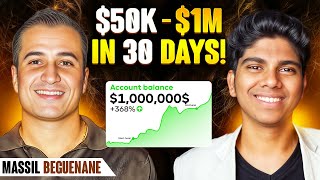
Masih Beghnan built a $1 million options-trading education business in 30 days by teaching retirees how to use options to limit downside risk. He started with a $50K student investment fund in university, then partnered with hedge-fund manager Patrick Serezna to scale through niche positioning and a lean tech stack.
Chapters
What's going on? What's going on, everybody who's actually listening to this podcast? First of all, guys, welcome back to another episode of The Nikhil Sai Show, which is hosted by me, The Nikhil Sai. And guess what's going on today? I'm back with another amazing entrepreneur story. This one is a pretty close friend of mine. We actually met at Funnel Hacking Live and he interviewed me, funny enough. And here I am interviewing back, uh, him on my show, which is going to be quite an exciting journey. It's an inspiring journey. I mean, would you believe that one call could change your life? Imagine starting just with a dream, but able to turn that into a hustling business, acquiring sponsorships, and then building an investment club. That's what the guest on our show has done. He's a relentless entrepreneur, strategist, and risk management expert. Let's not wait anymore. And actually, let's welcome Masal Beghnan. Hey, Masal, how are you, brother?
Hello, everybody. How are you doing, Nikhil? Nice to see you again.
Yeah, super, super good to connect you once again on the show. And I would love to talk a little bit more about your business expertise and how you help other people grow their investment portfolio and whatnot, and how you built your business from ground up to generating millions of dollars in revenue. Before that, give us some context. Who is Masih? What was his childhood like? Why did he choose to become an entrepreneur? Give us some context.
For sure, for sure. So I mean, growing up in Canada, I was born here. I always saw people being successful in business, whether it was through my family friends, my parents' friends that they would bring home, or family that connect with a lot of people. My parents have a lot of friends and they always brought really, really interesting people at the house in various fields. And I always saw these successful people in different fields and it always made me want to do more. The problem I guess that I had, and I think a lot of people have when they're young, they just have no idea what to do. They don't know what industry to get in, how to start, what's good, what's bad. And at the end of the day, it's just the problem of being young and ignorant. You just don't know what field to go in. But one day I remember there was my dad's friend that came and he lived in Geneva, Switzerland. And he told me this thing about, you know, finance, investing in the world. And he started telling me about the jobs. And I'm not gonna lie, he showed me pictures of his house and the car, and I was like, okay, that's, that looks pretty interesting. So obviously he had a pretty cool lifestyle back in Switzerland. And this is the first time that I heard somebody talk about banking in the investing world. And from that day, I was in grade 11, so that would've made me like 15, 16 years old. I told myself, I want to go into finance. I like mathematics, I'm good at it. And that was really the first spark that got me started. And I applied to universities and got into the best Canada for it. And that's kind of how the journey started.
Makes sense. So getting a degree from prestigious Canadian university is one thing, but then entrepreneurship is a completely different ball game. So how was it like to start your journey as an entrepreneur, getting sponsorship to be able to do that, organizing those little events? So give us a little backstory of like what exactly went into going from that college, you know, kid trying to graduate to actually starting a business and, you know, getting it from ground up, right?
So going to school, like everything started at university in my third year. I, well, I'm a pretty good student, you know, I like to learn, I'm curious, and I also get pretty good grades. Don't get me wrong, I was not top of my class, but I was pretty decent. But why I'm saying this is I always did everything that I thought I had to do to get the best opportunity, get the best job. And from the first year of my university, I was getting placed into these like, sought-after high finance jobs. So work on the sales and trading desk, on the investment desk, on the risk management side of things, working for the biggest at the time, Canadian banks in the world. So these, these are the banks like Bank of Montreal, TD Bank, or TD Ameritrade as the Americans know it, and RBC, Royal Bank of Canada. But I remember every job that I had was in an office, in a building, 11th floor, 50th floor, whatever it was. But at the end of the day, it was just a cubicle. And I remember just not liking it. And I was thinking, going through university, how, like, when does the real excitement happen? When am I gonna get really, really excited about a job? And After doing that for 2, 3 summers, I realized, well, you know what, maybe getting a job at a big firm, the biggest bank, the best job wasn't the way to go. And I was lucky enough probably to realize that, or maybe just smart enough to realize that early on. So I decided, okay, like what could I do to get the job that I want? And I remember thinking, if, 'cause I remember thinking in a big organization with 10,000, 50,000, 100,000 plus employees, you're just a number, right? You're just a cog in the wheel and need to do your job and that's it. That's it. And then I was thinking, all right, if I don't want to be that, if I do want to bring value and if I want my work to have real impact, I have to find a small company. I have to find a company where I'm one of 5, one of 10, one of 50, whatever that small company is and truly make a difference within that. So then I became really focused on doing that. Now the problem that I had is how do I find a company like that? How do I prove value? Well, at the same time, you know, when you're looking back, you can always kind of see how the story ties up together. But I remember getting really interested in investing. So at the time I was in third year university, there was the crypto bull market in 2017, 2018 where everybody was talking about Bitcoin going to like, you know, went from $400 to $1,000 to $5,000 to $18,000. And it was just accelerating and accelerating as more people were talking about it. And this was my first experience where I actually made a decent amount of money investing. I had tried investing in the stock market, tried investing in futures, currencies, and honestly lost money every single step of the way until crypto cryptocurrency came around and I became really interested. And I remember that sparked a real interest in my life. So I was like, you know what? One thing that my university's missing right now is a student-led investment club. So for people that don't know what that is, is most business school, most prestigious business schools will have a student-managed investment fund where students get together, they get to manage a real pool of money and invest that on behalf of the students. And typically that exists to, for students to kind of bring up their skills, learn about investments, how to manage a pool of investment, and then hopefully, you know, get a job from there. So I decided to be the first person to kind of launch that venture.
Hmm.
I don't know if you want me to go through it right now or just kind of explain you how my journey was doing that.
Yeah, that was pretty cool. Understanding that even when you're in college, you could really make big initiatives and like really get into, you know, discover the entrepreneur side of your business. So makes sense. So in early, you kind of found that, you know, Bitcoin boom, and you know, you found your passion for investment. How did you turn that into like a real business after college? And you know, you have a business where you work with people in the retirement space and, you know, who actually want to grow their wealth, and you build a successful service around. So walk us through, how did you go from that college investment club to building a real business outside college?
Right. Well, I'll tell you a lot. Interestingly enough, when I started this, I thought it was gonna be a very easy breeze, like it was gonna be easy to do this stuff. And I was lucky enough to go through that experience of building something from the ground up because I was able to transfer that to a real business. And I'll get to that in a second. So first thing before I get into it, I'll tell you how this club kind of started. I first went to the Department of Management, the business school, to ask for money to fund the actual investment, right? Opening the trading account and all that stuff. And they honestly laughed me out of the room. They said, oh, a lot of people have tried that before. It's never going to work. Don't even, it's like almost saying don't even try without saying it. And knowing me, I took that as a challenge. I was like, oh yeah, really? Nobody's done it before? Let me prove you wrong. I left that summer and all I did was focus on getting funding, open a trading account and do all of these different things to be able to make my dream a reality. So that involved me going to 30+ finance offices until a Canadian bank gave me $50,000 to start the fund. From that point on, I had to open a trading account because the trading account had to be open under a real name. So either mine, which I would've been liable for taxes. So I didn't want to do that as a broke university student. So instead I went and incorporated the business as a non-for-profit and called it, you know, University of Toronto Capital Management. And then put all the money in it, opened, and then asked my friends to became the leaders of the club. And we launched and we're actually very successful because we never had something like it in the business school. And I showed how there was something missing because it was, really big interest. And then when we started the year, the school came back and said, hey, hey, how did you do this? How did you start all that? It almost came out as a surprise. And I was like, well, you were the first one that I asked to help me with this. And you guys said no. And once the school kind of started prying into how I started, how I did this, how did I open the accounts? I told them I incorporated the business. Big problem. I didn't know at the time I was a student. You can imagine incorporating a business called University of Toronto without them knowing is a big problem. And I'm managing their money while managing money under it. So then like they put like sticks in my and said you can't manage it this way and all that stuff. And they actually tried to shut down the club and I told them no, look at the interest that I got. Look at the number of students that are coming to my events versus department-led events, which honestly weren't as just, they had a hard time getting students to come. And I showed real hunger in the business program. And because I put it that way, they told me, hey, look, we'll give you a solution. If you find somebody that's going to take ownership of the money and they're going to open a trading account under their name, you're able to run this. So finally, I just went to a finance professor and said, hey, do you know anybody that would do this for us? And lo and behold, he had a friend called Patrick Serezna, who was a hedge fund manager at the time, managed investments. And I told him this exact same story. You know, I give him a bit of a longer version and he just kind of laughed and he was like, you know what? I really like what you did there, Misael. You know, you're a hustler. I really love what you did. I'm going to help you out. And that person today was the person that actually hired me out of university. And Patrick Serezna today is my boss, my leader, my mentor, and actually now business partner, which which I can get into here in a second. What I want to say is every single step of opening that student club was met with hardship, was met with hurdles, and I overcome one of them one at a time. And the point of my story is you'll find this in business all the time. And I was lucky enough to see it early on before even starting a real business. You know, this was more of a student group thing, but the same things transferred. I had to overcome problems and I didn't even know the problems existed until I got there. And that's kind of what business is. Every time you think you're solving Solving a problem, another problem comes and you need to solve for that one. And that's how you know that you're growing, right? And I was able to transfer all of that in the business that we're building today. And I'm sure we'll get to that here in a second.
Makes sense. That's pretty impressive how you went from like trying to figuring it out to actually finding a mentor who has previous experience in hedge funds who is willing to support your vision and now he's your business partner. So I think that is in itself is a skill to find a mentor to have them mentor you and convert that relationship into a business and a long-term business engagement where now you're partners. So give us a mini masterclass on how do you actually network? How do you actually find right partners and mentors and connections that can get you faster results in your life?
[Speaker] For sure, for sure. I always say like in life, no matter what you do, I mean, I feel like a lot of people do things because it benefits them. And at the end of the day, you shouldn't be doing anything unless it benefits you in a certain way. But if you have a chance to do something bigger and benefit you in some sense, you should do it. Opportunities are like, you know, doors that you may not know existed, but once you do things, these doors will start to show up in front of you and they might be very obvious at the time, but if you didn't do certain things, you didn't, you know, go through a certain amount of steps, that door would've never showed up in front of you and you would've never had that opportunity. So for example, starting that business club, although it was a way for me to potentially get a good job, that's kind of how I saw it at the beginning, but it was also to do something bigger, was to help the future generation at the university get really high, you know, finance jobs. I didn't have the opportunity because the club just started, but everybody behind me got to have that opportunity. And the point is of your networking is if you have a chance to do something that's bigger than yourself, always do it because these opportunities are going to open up in front of you. It's going to put you in circles, in conversations, in rooms that you may not have access to unless you did it. And that's what you need to do. Another example of that is when I joined the company, when Patrick hired me, I was only hired to do, you know, financial research and also trading some of our investment portfolios. And that's all I ever did. So I worked on the finance investing side, trading side for quite some time. But then when I saw the other business partner that was doing more of the sales and the marketing and the lead generation aspect of the whole business, I was like, hey, I want to learn that too. And one thing I would say to all your viewers, especially if they're young, is if you can put yourself in situation to learn more, to have a bigger picture of business and acquiring skills when you're young, that's the best thing you're gonna do to yourself because you're gonna be, you're gonna have a good overarching theme of how a business runs from operations to project management, to the tech stack, to the delivery, to the sales, to the marketing. If you can have even a little bit of all of that, you'll be able to transfer that skill anywhere in life. I think it's being in the right rooms, being hungry to learn and you know, being patient at the end of the day. Skills take time to build.
Now being young and doing finance are like, it's an interesting combination. Let's just put it that way. So I, I'm assuming like gray hair definitely helps when, especially when you're doing that investments and you're talking to clients and whatnot. So walk us through like, how did you build relationships and actually be able to secure new accounts and, you know, build a successful business even with like not a lot of like 30 years of track history, for example, right? Like people usually have that in finance and that's kind of what's the badge, you know, of validation? Like, yeah, I've been in, you know, investment deployment for like 25 years with Chase. So you're like, okay, I'm competing with that guy. It's kind of difficult, right? So how did you get through that?
Really good question, honestly. And I get that all the time, right? It's like I have to go through the years to be able to prove myself. But I think it was a two-way street when it comes to our business because obviously we were in the money management side and then we I pretty much started a different arm of the company that was purely educational, which is the part of the company that I became owner in. And it was a two-way street. It was that I was learning from Patrick, you know, so much over the years. And once I was ready, I started to show up on, you know, the podcast, the content, started interviewing for him, interviewing other people. And it was the fact, sorry, that I was already in proximity close to a market leader in his field that gave me the credit, right? So at the end of the day, if you're young, you need to find somebody that's ahead of you and be as close as possible as you can to them. Because no matter what, yes, you're never going to be good at the beginning. I was horrible at the beginning. I didn't know what to talk about. I was like going to CNBC and Bloomberg and highlighting article and be like, hey, like this is what happened and this is what we're talking about. But that was the only way I knew to provide value at the time. But now I can truly like set up, you know, investment strategies, like go from plan A to plan Z exactly how to build a trade plan, thinking about, you know, investment ideas, building a trading thesis, simulating it, and then putting on the trade. I can do that process, but it wasn't by accident. I didn't learn it like this. It took years for me to build that skillset and being in close proximity. And after people heard me so many times, you know, on different webinars and different calls and different podcasts, I just became a subject matter expert myself. Although I'm still nowhere close to where Patrick is and people know that, but they still respect my voice today a lot more than they did in the past. So yes, you have to wait a little bit. And I actually always have a very long-term view when I build things. And if to me, if in 10 years I can be where Patrick is, well, I'm already ahead than him by 15 years. Right. And, and that's how you got to see it at the end of the day. Yeah.
I love that. I think, I think the right mentors appreciate that the students do surpass them in a longer run. I have had pleasure working with a bunch of mentors who do want me to surpass them very quickly and they're happy about it as well. So great to have that type of mentors. Now walk us through every investment company typically has like investment thesis, like they believe in few values, they believe in few things, and they kind of have like few pillars they like to deploy capital and manage risk and whatnot. I'm curious for you, Masal, you know, you've been doing this pretty heavily with your clients from an education standpoint. So walk us through what's your investment thesis when you are actually looking at capital that needs to deploy and why is it better compared to the traditional, you know, 401k or like some other traditional opportunities investing in bonds and government funds and whatnot. Why is it better? Walk us through the difference and, you know, your investment thesis.
Yeah, for sure. I mean, I'll say this about investing. You always fall into two buckets. One of them is, well, I'll say this. Everybody wants to invest and if they don't want, then they should invest. And then you fall after that, you fall into two buckets. So you fall into people that want to manage their own money or the people that don't even want to care about that. So then in the first bucket, you'll fall into the money management side where you give your money to an investment fund or you put it into something very passive like, like a government bond or a yielding product, something that's going to give you some type of return. So at least you keep up with inflation and hopefully make more than that. Otherwise you're losing purchasing power over time. And then there's the bucket of people that want to self-invest for themselves. We found from running our business that people want to do that for two reasons. One is they know that they think they can beat the market. And number two is actually out of pure interest. And over years of actually trying to find our avatar and niche, niching down to a certain amount of people, we realized that retirees for us was the most interesting. Why is that? Well, retirees end up typically retiring with large sums of money and it's typically their nest egg they're going to live off of the enough for the rest of their life and hopefully have enough to give back to their kids and their grandkids. And the second thing that we found with retirees is they get bored. Yes, they can enjoy retirement for 5 years, but after 5 years they're like, what the hell am I doing? I need to figure out something. And those people typically find another business that they're building or helping out, or they end up investing. And why is investing such an interesting place to be is because it touches everything. It touches everything from economics to politics to new technology to anything that if you want to be at the forefront of something, you'll find it in finance and investing. And for that reason, people come for the interest portion and it also offers them a benefit, which is hopefully grow their investment portfolio. Now I say this because I'll tell you why people even want to invest for themselves at the end of the day. Once we found that, all we need to do is teach them the investment process, how to think about it, how to not be stupid about your investment. And this is kind of the question that you asked me. And when it comes to investment process, I can already tell you there's thousands, tens of thousands, 10,000 different ways to invest, and every single person is going to be different. But there is clear rules that everybody needs to follow, and there's one overarching rule that we teach all of our students, and that thing that everybody should know is if you can manage your risk in the market, the profits will take care of themselves. Because at the end of the day, and this is why you always hear people say, you know, investing is just a probability game, it's just smart gambling— it kind of is gambling. Some people truly invest like it's gambling. And should never do that. But if you can manage your risk, even gambling, you can make large sums of money because you let yourself— because think about it, when you have an investment portfolio, when you have money, you can always lose 100%, but you can make money to infinity, which means that as long as you don't lose 100%, you have a chance to make money till infinity. Does that make sense? Just don't let yourself go down to zero. Unfortunately, a lot of people let themselves go down to zero. So the bottom portion here is the risk management aspect. And what we focus on specifically is options investing. And I won't go too much into the detail, but for anybody that doesn't know options, they're just derivative products. They're contracts that are overlaid, you know, they're overlaid on top of a stock and you can use this derivative product to actually limit your risk. So lose really small if you're wrong about a trade thesis, but win really big if you're right. So if I can tell you here, I'll put, I'll give you a dollar. and there's a chance that you might lose 10 cents, but there's also a chance that you double your money every time. Well, you take your chances with that coin.
Mm-hmm.
Yeah. So it's kind of like, this is the process that we teach. And then now that I've set this, your trade thesis to be risk minimizing. So the opportunity to the upside is there, but the downside is really small. Now all I need to teach you is how can we improve the probability of success?
Mm-hmm.
Because I've already taught you the risk management. Now, how can I improve the probability of success? And this is where the art of investing really is. It's how to improve the probability of success. It's whether it— if it's fundamental research that gives you an edge, then go do that. If it's looking at specific trade data, technical analysis, or whatever it is improves your edge, then go do that. But I'll tell you something right now, there's no investor in this world that has 100% hit rate on their investments. Nobody is right 100% of the time. And as long as you can shift the probabilities for you, You will be successful investing in the long term. And, and that's the process that we teach. We don't force people to trade a certain way cuz everybody's different, but we can teach you the number one rule, which is manage your risk properly and the profits will take care of themselves. And that's kind of how we teach our process at the company.
Sure. Makes sense. Yeah, I think any investment, it kind of comes down to risk management and it's beautiful how you have articulated it. Let's go to a different set of questions. Maso, walk us through the typical tools you use on a daily basis to manage your project, your clients, your personal productivity.
Yeah. In terms of tools, like obviously we span through a couple different things, but we actually were in the process of almost rebuilding the foundation of our business. We've grown a bit as a mom-and-pop type of business. What do I mean by that is everybody in the business was kind of like family and friends until actually I joined. I was the first hire that was kind of outside the family. And since then we've grown the business quite drastically and, you know, we've almost like tripled their numbers since, since I joined. And when we went from, call it a family business to an actual business where you're hiring people outside of the family, you have to do certain things to be able to grow properly. And this is build proper processes, think about the structure from the ground up. How is communication happening in the company? How are projects being driven forward and all that stuff? And we're kind of like facing this wall right now. And so for the first time in the company, we really looked at all of our tech stack, like What's everything that we own to run our business and see if we can streamline those processes. So one thing that I really like to use is this notion of every task that you do, should you keep it, should you delegate it, and should you automate it? So the first thing that we did was almost get everybody at the table and go through every single process that we have to deliver our product, everything from marketing to acquiring to the sales process, to the delivering and the customer success, and of course the operations. And once we came to all that, we asked ourselves 3 big questions. One is, what are the top 3 things that I'm good at, that I want to do, and I'm the only one that can do in the company? Once you figure out those 3 things, everything else that fell below it was either delegated or automated. And then we're able to really restructure a business to either give it to the right person or automate the process if it was possible. And by doing that, we're able to actually reduce our tech stack by half and offer a streamlined business. Now, to your question about what type of resources are we using, we're we were using ClickFunnels for a while to run our sales and marketing and funnel strategy. We were, and also as a, a bit of a CRM tool that we're currently using. We're also using Zoom and Mailchimp for, you know, marketing emails. So because we're on the trading side, we get on daily webinars, tell people that the market, every single thing, we notify people obviously through Mailchimp. We also use a tech tool, so we built a risk management tool for our trading. We use GlideApps for that. GlideApps is a zero-code platform where everything is very tight. Like the best way to explain this is a Shopify, for example, instead of going and coding your whole website from the ground up, you use Shopify to have all of these different icons and things you can slide in to make it easy to build the website, right? They've made it the easiest platform to build a website. Same idea, but for a, for, you know, a tool that can actually help you manage your trades and your risk. Sure. And when it comes to, to our tech stack, it really comes down to all of these things. Obviously we use other tools, but we're actually trying to bring that down to even less amount of resources, making it easier to run business.
Makes sense. If you could go back and give a suggestion to the 20-year-old yourself who is young, who is, you know, excited about building a business, what would that suggestion be like?
If I was to go back to the 20-year-old self, I would honestly say just, you know, don't be scared to try things. You're going to be failing a lot. Like you always actually said in our interview, you had this notion of falling forward, which I really liked. No matter if you're going to fall, you're going to learn from it, and you're going to look back at what you thought might've been a huge mistake actually as one, maybe possibly the biggest opportunity that you ever had. And it kind of goes back to that notion of opening those doors that you might not have known were there. It's, you know, it's creating those opportunities for you. So trying different things, being curious, learning, talking to everybody about your ideas, putting yourself in the right room will open all of these different opportunities. If I had to go back, it would just be like, yeah, don't be scared, be confident and keep trying at the end of the day.
Sure. Makes sense. What's your life's biggest achievements and your next big goals?
My life's biggest achievement I would say was creating our niche down product of the business. So when I saw you at ClickFunnels, you saw that we won another Two Comma Club Award for the second service that we created. And what I really learned from that whole process was that the service that we initially had, our base product or the business that I joined had too, had too much going on. It had, it had 4 different strategies. Customers were kind of like confused as to what strategy to follow. And I think the business kind of fell into the fallacy of more is more. And we kind of went back and thought of like, how could less actually be more? And for that reason, we spun out one strategy and we created a specific, very niche down customer avatar for it. And we said, if everything, if we were to Hux that service, what would it look like? So we took out that, that different strategy. We built a tool around it. We built a community around it. We bought the education around it, built, yeah, like everything, every discussion that was happening, all the learning education was around this one way of doing things. And because we did that, we were able to really niche down to who, what type of investor would interest that type of strategy. By doing that, able to 10x our prices, actually 10 to 20x our prices. And because of that, Just in the first month of onboarding people, we onboarded 70 people from, 75 people from the first month of launching the program. And we made that a million-dollar business. It took probably, from what I remember, it took like 3 or 4 years for our first service to get to a million. It took us 3 months of preparation and 1-month launch to get to a million. And what that really taught me is the power of niching down. Nitching down, focusing on the customer and focusing on one avatar. So one product, one service, one avatar, and charge the premium price that it deserves. And you, you know, you'll make millions just by doing that.
Yeah.
And I think that was the greatest achievement because I saw that change and that business start from the ground up. And then I got, you know, my two Karma Club Award over that. So I would say that was my biggest achievement up to date. And going forward, honestly, it's building the rest of that business. We are missing a base level product for it. We have a bit of a, like, like I said, when you fix a problem, there's always a problem coming up. We have a problem with a lead flow just because it's a complicated strategy to implement and you need to have a certain amount of knowledge, skills, and just options to be able to do it. So we're trying to fix the education part of it. Like what's the middle ground that gets people interested enough and learning enough that they want to get more? And that's kind of like what we're doing and we're hoping to make that business, you know, a $10 million business by next year. And that's really what I'm looking forward to.
Makes sense. Yeah, that's pretty awesome. And I hope you hit the $10 million goal. And I'm curious, what inspires you every day to wake up, get to work, handle the sales, clients, fulfillment, do these workshops and whatnot? What's the primary motivation for you to do the work required?
I got to say honestly, like what excites me the most is just to, to just build at the end of the day, offer value to other people, helping the people around me, showing that that success is possible and it can be done quickly if you're working on the right things and if you're working on yourself and proving that to the people around me and giving back and helping in any way I can. I, you know, I'm doing what I can right now, but I know I can do a lot more in the future is really what drives me. Hearing from customers that, you know, we've changed their lives, we've changed their family's life. Like some of the best stories that I hear that keeps me going from customer journeys is they've been able to reconnect with their kids. These are people that brought their kids to learn with us and now they have like a common ground that they can talk about, right? They could have gone 5, 10 years without really speaking about anything. And now that they're both interested in this like investing trading thing, they can both like, they have like something to share, talk about every single time. And I think just changing people's life in that way when it comes to on a personal level, on a relationship level, whether it's on a personal side or for a client side, is what really keeps me going. And honestly, meeting people like you and learning from from the best, from business leaders in different fields, like just keeping my brain hungry and wanting to learn more. It's honestly the only thing I could ever ask for.
Sure. Yeah. Love that. Like it said, network is a net worth. So yeah, that's really good. If you could save us from one big mistake that you made that you want all of us to learn and not repeat, what would that mistake be?
I would say when you're learning something new, when you're doing something that you've never done before, don't be scared of like asking for help. Like there's one thing that this is a story of, I was put on a project to build actually the risk management tool that I was talking to you about. And I didn't get much direction from the business leaders. And sometimes, you know, I was overconfident. I thought I was smarter than I thought. And I went to build it on my own without ever building a tech tool in my life. I didn't understand what project was going to be thrown my way. And I ran into deadlines really quickly and I realized I built a bit of a monster. The tool was slow. It didn't need to do. I was trying to put in too many features at the same time, not knowing that I was slowing down the utilization of the app. And I didn't know the mistake took place until like a month before the deadline. And funny enough, it's almost like I didn't want to blame myself, but I got mad at my business leaders for not giving me enough direction, but that was my fault. I was overconfident from the beginning and I put myself in a situation that I thought I knew better. I thought I knew more and I could do it all on my own. but even then I didn't ask for help. So I think that when you get put on a project, it's good to be confident. It's good to want to take the lead, but if you're going to take lead on something you've never done before, you got to go find the right resources. You got to be able to get the help that you want because you might be hurting yourself in the long run if you don't. So that's one thing that I would say is always look, always try and find a leader or somebody else that's walked that path before and give you the advice before you just launch and run into problems.
Yeah, yeah. It's, it's so easy and better to learn from other people's mistakes. You just don't have the resources to get, get hurt a lot, especially when you're coming up from ground zero. So appreciate that advice. If somebody is listening to this podcast and they want to connect with you to get some additional help or maybe invest alongside you or learn investing from you, what's the best place to connect with you, Masal?
For sure. So honestly, the best way is just my public Instagram page. You have my name here on the side screen. They see that, right?
Mm-hmm.
Yeah. So msil.begurnan, just put a dot here between my name and my last name. You'll find me on Instagram. You'll also find me on LinkedIn if you prefer connecting. Sorry, if you prefer connecting on there. Otherwise, if you're interested in trading, yeah, hit me up. I'll definitely give you a 14-day free trial to our membership. That'll be Big Picture Trading. We do daily analysis of the market on there. And yeah, if you're really interested in learning what options are about, honestly think that we're the number one place here in the market. So we'd love to have you.
Perfect. Perfect. Any last words for people who are listening to conclude the show for today?
Yeah, for sure. I mean, look guys, if for anybody listening, you're already doing the right thing. You're not here because you don't want to do something, you don't want to change your life. So you just got to keep hustling, finding what you love to do, finding a market that wants to do this because I'll tell you one thing. And from going to all of these events, like the ClickFunnels events that we do, I literally hear some ideas that almost sound ridiculous. I'm like, how is this person making money in this industry? It almost sounds not real. But what that taught me was that if you are interested in whatever idea that you have, even though it might sound ridiculous, there's, with this world, with this interconnected world with social media and the internet and everything, like there's going to be 100, 500, 1,000, probably 10,000, probably even more people that have the exact same, the exact same interest as you. And if you can be good at it and put your own twist to it where the product is almost like, you know, yours, your energy. You'll find you just need to go and find those people that connect with you and you'll build a successful business doing that and you'll be happy doing it. You'll have fun doing it and you'll want to wake up every day and actually deliver to your customers. Because at the end of the day, you got to get paid. You can't do stuff for free.
Yeah, that's so true. Appreciate that, Muscle. And guys, hopefully you enjoyed the show for today. And if you did enjoy the episode, please make sure to share this with your friends. Who want to build a successful business and who would like to scale and do investing and whatnot. I'm excited for you guys to stay tuned because I'll be coming back with another amazing guest just like Musal. Thank you so much for jumping on once again. I'll be here with another guest soon. Bye-bye. Awesome.
My pleasure, man.
More from Nikhil










BURNED $1.5M in his 17years online #digitalmarketing #entrepreneur #onlinebusiness
