From A Busy Photographer To Doing Over $2M Every Year As An Education Company | The Nikhil Sai Sh...
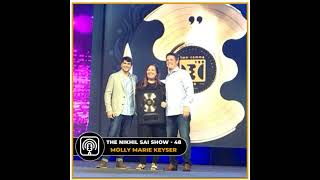
Molly Kaiser went from a college-dropout photographer to building a $2 million-per-year education company. She explains how to validate and sell a course before it's finished, scale through webinars and automated funnels, and why you don't need to be a top expert or have a huge audience to start.
Chapters
What's going on? What's going on, everyone who's listening to this podcast right now? Welcome to The Nikhil Sai Show, which is hosted by me, The Nikhil Sai. And guess what's going on today? We are back with another amazing 2 Comma Club interview. And guess who is the actual guest joining today's podcast? She is crazy when it comes to helping people turn the knowledge into profitable online course. She's one of the well-known professional when it comes to ClickFunnels community. She was in the audience when it comes to Funnel Hacking Live. Then the next year, she climbed the stage hitting the 2K club. That's a crazy story, right? She now actually runs an educational company which does over $2 million per year, and she has already done over $7 million in online sales. And she has a mission to help everyone possible to turn the knowledge into profitable course. She has been in all the publications you can imagine of, like Entrepreneur and stuff like that. So let's not waste any time, and actually, let's welcome Molly Kaiser, CEO at Profitable Courses.
Hey Molly, thank you, Nikhil. Nice to, nice to be here. Thanks for having me.
Absolutely. We are very excited for you, Molly. Thank you so much for hopping on time today.
Awesome. Excited to chat.
Absolutely. Molly, your journey is crazy, right? We would love to hear and listen to your backstory. Like, how did all of this craziness started?
Yeah, so it actually started as me dropping out of college. I had 81 cents my name and I decided I was going to be a photographer. So I hit the ground running. I started out with free VistaPrint business cards and I knocked on doors. And before I knew it, a few years in, I had built a multi-six-figure-a-year photography studio. And that's when other people started asking me, you know, how did you do this? How did you grow the studio? How did you get all these clients and that? And so I started— I coached a couple of people on how to do it, and I realized I was quickly repeating myself. And I also realized I wanted, there was a lot more people that wanted my help. So I decided to just take that exact same knowledge and put it into a course. So whether you're a coach or a service-based business owner, or you just have achieved something throughout your life, that's part of your story, you can create that into a course. So I actually taught that course for over 6 years and we grew it to $2 million a year in sales. And then other people started asking me how I did this, how I created a course, how I sold people into the course. And I felt like it was a really great time to sort of climb my own corporate ladder, so to speak. And I really have always loved marketing and business actually more than the actual photography aspect of it. So now I help people, service-based business owners, coaches, turn their knowledge into their own online course.
Wow, wow, wow, that's just amazing. That's just, just amazing, right? Like, coming from a different background, being a college dropout, you made it to the top, right? And the best part is you're impacting other people now. Literally, you're actually helping someone else who has an expertise turn their knowledge into profitable course. That's amazing. And Molly, when it comes to the courses, right, a lot of people struggle with the number one thing, which is idea. Like, what kind of course should I create? Like, what should I actually create? Or How can I add value to someone else by creating a course? So as you're the expert here, would you like to tell us more about like how to get, actually get an idea which can turn and can be created as a course, which can be actually creating a bigger impact, just like what happened to you?
Yeah, for sure. I think a lot of people, or first of all, it's normal to struggle with what to create your course on. So I just wanna say that, but also I think some of us, many of us maybe think we, aren't expert enough or we're not worthy of having a course or why would I become like the expert teacher on this thing. And so what I want to start off by saying is just know that, you know, you might not be the ultimate know-all everything in the whole world and it becomes very hard for anyone to achieve that, right? But as long as you know, you know, 10, 20, 30% more than who you're teaching, that's enough knowledge for you to actually become a course creator. So one example I like to give before we dive into how to find your topic is let's say that you, let's say you're a 30-something who really likes plants and other people seem to kill their houseplants all the time. Well, you wouldn't necessarily say that you're like a plant expert or a gardening expert, right? But somebody who kills their houseplants would buy your course because you can teach them how to keep their houseplants alive. So I just want to start out by saying like, you don't have to be the ultimate know-everything expert. And also people ask, you know, I always think, how does one become quote unquote an expert? Like, that's sort of a title that no one really gives you, right? You have to just sort of go with it. And the more lives you can help through your course, then I guess you can start to feel more like an expert, so to speak. But how to find your course topic, what I tell people to do is just to start out making lists. So list out things that you enjoy, doing. List out things that you enjoy learning about. List out things that people ask you questions on that you like, enjoy helping people with. And also think about your story. So when you listen to my story, you know, my course idea sort of flowed from what I was already doing. So maybe, you know, maybe you're somebody— I'm just going to list out some of my students, for example. Maybe you're somebody who has a personal chef business and now you want to teach others how to have a personal chef business. Or maybe you have a cleaning company. Now you want to teach other people how to have a cleaning company. Or maybe you just really like learning about breathwork and yoga and you want to help teach people the way that you've learned it or the way that you've experienced it. You don't have to have a business making money idea. It can be as easy as teaching people how to make really cool wall art for their walls. For people that are not artists, you know what I mean?
Yeah.
So yeah, start out with a list. And then the second thing I want to share is research those different items that you've come up with. And what you want to look for is you actually want to look for courses out there, out there that already exist, that are already making a profit. It's actually better for you to choose an idea that already exists and is already profitable because that is showing you that there's a market. And that those people are willing to spend money on it and that there's room for you in that market. So you, I think a lot of people think if, if it's already been done, there's no room for me, but it's actually the other way around. If it's already been done, it's just proven that there is room for it. Um, and you actually don't want a completely 100% unique idea because that would mean that you're the pioneer. And for those of you that know ClickFunnels, Russell Brunson, he says in his book, you know, the pioneers are the ones with the arrows in their back. So you actually don't want to have a completely unique idea. So Start out with lists, research them, and then you'll find your profitable course idea.
Absolutely. Like, you literally cleared a lot of myths, like I should be like the expert in the industry before I create a course. But guess what? You don't need to, right? You just need to know a little bit better than someone else, and you should be able to, yeah, turn that passion and just give that value to the other people. That's, that's beautiful. That's beautiful, Molly. Really love the value you actually dropped here. And I think that's something really all course creators should admit That they should be actually going around an existing marketplace and create their own brand in the market to actually be super profitable, just like everyone else who's actually trying to do it. That's amazing. And Molly, specifically industries like, hey, start creating a course and it's going to take you 6 months to create it, and then, you know, 3 months to learn Facebook ads, 5 months to create a funnel, then 10 months to launch it. Like, it's a crazy timeline, right? But when it comes to you specifically, you teach people on how to monetize this from day 1. Like, that's just Amazing. That's like a dream come true for most course creators, right? So would you like to tell us more about like how to actually monetize while building the course? Just like what you said.
Yeah.
Oh, okay.
This is my absolute favorite thing to talk about. So I'm really glad that you asked me about this. So I would say traditionally people like to do what's called a course launch. So if you've started researching about courses, maybe you've heard about this method. Essentially a launch is sort of like what Nikhil just said. Like you You have to, you know, build a following for a few months, then you have to spend months building your course, then you have to spend months learning Facebook ads, months learning funnels. I mean, it's literally years before maybe you've made any money. I've had several, I mean, countless amounts of people come to me and say, look, I spent 2 years building up my course and they've never sold anyone in. That is why I do what I do. I don't want people to just build a course because why is the number one reason you're building a course? Obviously money is great, right? But the number one reason you're building a course is to help people. And if you don't you don't have any sales, then you're not helping anyone, right? Ouch. I know that's like hard to hear, but it's the truth. And so what I like to do is I teach a method called kickstarting. Now I have used this method for all of my courses except for the very first one I did. The very first course I did was launching and it bombed. And that's actually how I came up with my kickstart method. If you actually think of the website Kickstarter, essentially what they do is they're having people back their project or back their idea with money so that they now have the funds go and create that and then deliver it to the person. Well, the cool thing with the course is it's not a physical product, so there's not really as much risk involved as with Kickstarter. So what you do with my Kickstarter course method, which I do— I have a free training on it, I can mention it later— but basically what I do is I have you come up with your idea, and then we come up with your offer and your price, and then you actually are able to already start selling it to people. Now people are thinking Oh my God, Molly, I cannot sell someone something that doesn't exist. Like, that's a scam. I can't do that, right? Well, here's the thing. It's not actually a scam because what you're going to do is you're going to say, okay, this is the course idea. This is the result you're going to get. Here's the offer. Here's the price. Let's say, let's say it's, I don't know. Well, let's just say it's 2 weeks. Let's say it's August 1st. I don't know. I'm just making up a date here. What you're going to say to those people is, okay, well, the you know, if you pay me today, you're going to be enrolled in the course. There's only X amount of spots, you know, you want to have scarcity and urgency, but the course itself starts on, I don't know, August 20th, August 30th, whatever date you choose, you want to pick a date in the future. And what that's going to do is that's going to give you enough time to start to plan out like the first week of what you're going to teach. So you're actually going to be teaching the first round of your course live. So you're going to get a bunch of people in a Facebook group. You're going to teach them everything live. And this way you're going to be able to get money up front and you're going to be able to teach people live, which they're going to get access to you. They're going to love that. And you're going to actually build a much better course because of you teaching your first round live, because you'll be getting questions and feedback in real time from your students. So you're getting the money up front, you're getting testimonials, you're getting feedback, you're getting everything you need to then go and actually build like the, the automated course, if you will.
Yeah. Wow, wow, that's a literally a step-by-step action plan on how to actually turn literally someone's passion into a beta course, make money first, then build a course and actually scale it. Like, in a nutshell, Molly, thank you so much for amazing, amazing golden nuggets. Like, it was really valuable, and I think this is going to really help people who have that drive of creating a course but always resisted themselves, like, ah, It's going to take too much time. Now guess what? You don't need to waste your time. Just go and sell first, make money, then just repeat it by creating a beta course. That's awesome, Molly. You literally nailed it. Now the question comes to this. You can see like in 2021, it's literally like a kind of oversaturated market is what everyone calls when it comes to especially digital courses only, right? But now you guys and your community has been scaling through the roof when it comes to the scaling with courses. That's Beautiful, right? So how to actually scale a course once you actually create a course, just like what you did, to over 7 figures and beyond?
Yeah, totally. So first thing I would say is I've definitely had those thoughts where I've let my mindset hold me back and I've thought, oh, it's too saturated, or maybe I've hit the top of the potential clients. And I'm here to tell you that that is absolutely just a mindset issue. It's a false belief. It's absolutely not real. In fact, the course the courses sector, like online education, is going to hit $365 billion by 2025. So, and I mean, right now I think it's at $125 billion. Obviously, you know, go ahead and Google it to get like the exact numbers. I'm just going off my best memory. But my point is it's going to like more than triple. And there's just so much room for online education. I mean, online education, it's like this is where everything is moving, even Even like regular traditional schools, like everything. So, okay, just want to say that. Now, how to scale a course? Great question. So once you kickstart your course, most of my students on average, they make $3,000 in their first 30 days. We've had some students make 40 grand in 2 months. It really depends. But what you want to do is get at least a few thousand dollars in sales from your kickstart so that you can go, wow, cool. Okay, I've proven that this thing works. This is a great thing. And Now that I've said that, I do need to say that if your first kickstart doesn't work, it doesn't necessarily mean your idea is bad. You might need to tweak something, do it again. Anyways, um, side note there. So once you have your kickstart and you have people in and they've paid you and you've taught the course live, then what you want to do is actually go in, make notes. What can I make better? What do people have questions on that they weren't clear about? And then go ahead and actually create your final course. And then you can upload that into any course software. I use Kajabi as my course software, but you're more than welcome to use any course software that you want. And then once you have your course actually in there, I tell people what I like, what I like people to start with is actually teaching a webinar live consistently until they have consistent sales. And again, for anyone listening to this who's a ClickFunnels Russell Brunson fan, This is exactly what he preaches about. This is how he started ClickFunnels actually is he said he did a webinar 3 times a week live every week for like years until, and he said it took like 1 or 2 years until, you know, they got the webinar going really, really well. I think the thing is most people, they want to just snap their fingers and have a passive income course funnel, but it doesn't work that way. If it did, everyone would be millionaires and have passive income course funnels if it was that easy, right? Now I'm not saying it's not possible. It absolutely is possible. But what you want to do first is create a webinar, which I call a live lesson, because I teach people to actually give and teach on their, on their webinars. So you want to create a live lesson. And then what you want to do is say, okay, I'm going to give this live lesson weekly or monthly. And then once you have it converting consistently, which it takes a while, you know, you might need to get more leads, you might need to get better leads, you might need to Fix your show up rate. You might need to fix the, tweak the offer. Like, you know, there's little things you're gonna tweak along the way. That's part of how it works. And then once you have it going consistently, then you can think about putting it into an automated webinar funnel. But even just doing the, you know, doing a live webinar every single month, that's gonna get you consistent sales where you're not gonna need a large team. You're not gonna need a sales team. Like it's, it's really going to be pretty automated other than you showing up live and actually delivering the webinar itself.
Wow, that's awesome. So now literally you just mentioned on how to validate your offer, doing it over and over so that the actual course creator gets perfection on the sales pitch. Now it becomes more like a refined marketing statement, right? And it becomes so easier for all the potential prospects to purchase. That's amazingly mentioned, Molly. Really love it. Love the value you're actually dropping here. And Molly, like, as you're already into the course industry and you already know there are like head-breaking myths in industry which are, you know, roaming around, right? So we would love to hear like what are the myths about, especially when it comes to online course industry.
There's so many. Um, I mean, the first myth I did mention already, but that would be that people think they need to be a quote-unquote expert before they can have a course. Um, and again, I would just say Who is the person that dubs people experts? Like there's not some fairy going around that's just like, you're an expert, you're an expert. You know, like that's, that's not a thing you need to wait for because it's not a thing that exists. Another thing that I would say, another myth is that you need to have a big audience before you can have a course. I actually teach my students, I mean, if you already have an audience, that's fine and that's, you know, you'll grow maybe even faster. That's great. But I teach how people can grow organically with no ad spend from zero. So you don't actually need to have a big following first. In fact, most people that have followings, it might not be the right following that aligns with their course. I'm going to teach you how to build a following with no ad spend, you know, $0, organic only for your course. So what I did was, like I said, I've done my Kickstart Method many times, which is why I teach it. But the most recent time I did it was in April of 2020. And I was able to go from 0 followers for this idea. Nobody knew who I was. So my star power for whatever course I had before meant nothing. Okay. I went from 0 to 200 people in a Facebook group in 2 days. And then within 30 days I had made just under $20,000 in sales from just those 200 people. So you don't actually need a lot of people. You just need good qualified people. You want me to share more myths, or is that good?
Yeah, that's, that's great. That's great. I think this is really something especially online course creators should pay attention to because they just try to play this numbers game, like, hey, how much am I spending? How much people am I reaching? But it's not the number, it's the quality of the audience who are actually paying attention to you, right? Like, that's amazing that you actually made $120 grand just from 200 people. I think this is something every course creator need to pay attention to and start implementing quality audience attraction in their business, just like what you mentioned, organically first. That's beautiful. And Molly, you've been in the industry and helping people build their own courses, right? And there is kind of difference between creating coaching program. There is a lot of buzz going around right now, more about coaching programs and stuff like that. But I would love to hear your thoughts on like, what is the main difference between like creating a course versus creating a coaching program? Like, which one do you think is the best one?
I love this question, and I have been talking about this a lot lately actually. Um, So just so everyone knows my background, so I've done courses, obviously. I mean, I would hope nobody would be teaching it if they had never done it. But I've done courses, I've done memberships, I've done high-ticket coaching, I've done a lot of the models. And it's because I have now learned that you don't need to do all the models. You should do one thing really well. But that was what I had learned from that journey. But in somebody who's had a high-ticket coaching program, I actually had courses, then I had a high-ticket, and now I'm actually back to courses. And I want to tell you guys why. So I'm not saying high-ticket coaching is bad. It's not. But there are pros and cons to both sides of it. So with high-ticket coaching, you can have really great— or you can have higher margins, I should say, depending on what you're selling your course for. If you're selling it for $6,000, $10,000, $20,000, whatever it is. However, you know, it's going to be harder to get those leads. And also, it— you have to eventually manage a sales team. And so, like I said, there's pros and cons to both. You have to kind of ask yourself what fits your lifestyle better. So for me personally, I've learned that I don't love my full-time job being only managing people all day long. Like, that's not what I love to do. And when I had my high-ticket course, that's pretty much all I did all day long was just manage people. Whereas with my course, I have it automated through an AutoWebinar funnel. I have so much free time. You can look at my calendar. I have nothing scheduled. All I had this week was this podcast. And I'm pretty sure we just scheduled it a few days ago because I had that much free time. And so I'm very happy. With my high-ticket coaching, I was working all the time. I wasn't doing a lot of the things that I— I didn't have a lot of hobbies. I was managing people all the time. Now that with my course on auto, it's like I'm hiking every day. I'm going to trivia night with my friends after this podcast. It really depends on what kind of life you want. If you just want a ton of money, which by the way, no judgment, go for it. You can make a lot of money with high-ticket, but you're going to have to really dedicate your life to it. If you want still a lot of money, but maybe not as much money, but you want freedom in your life, then a course is definitely going to give you more of that freedom. Those are the two things that I've seen from me personally doing both.
Wow, that's amazing. I think this can really clear a lot of confusion, especially people who are trying to choose between both of them. Right. I think that's beautifully articulated. Now it literally clears everyone's mind on what they should choose based on the personality and the lifestyle. Which they want to continue for their life, which is amazing. And Molly, you get a lot of stuff done, right? And you have so much free time right now. You're enjoying your life, having a prosperous, wonderful day every day, right? And getting on this type of podcast, managing your clients and selling your courses, creating amazing content on your YouTube channel. You're doing great. We would love to know more about like, how do you actually manage your time for productivity? Like, do you use any kind of tools to do this? Oh yeah.
Yeah, this is a great question. So I told you guys that I started out as a photographer and when I was a photographer, I didn't, you know, this, when I had just started my first business, I didn't really know anything about productivity. So I would actually just write my to-do list on a whiteboard every day. Like I had no idea what I was doing. If that's you, that's totally cool. I mean, it's better to at least have a to-do list than nothing, right? But that's how I just wanna show you guys, like you can start with anything. You know, I started just with a whiteboard. Probably with Post-it notes just telling myself what to do. Now I use a tool called Trello and I use a system. Oh my gosh, I can't think of his name right now. Anyways, the Trello system that I use, it's one that I have kind of tweaked over the years. James Friel, that's the name I was trying to think of. James Friel has this really great Trello system and we kind of use like a variation of his Trello system. He also teaches or did teach through ClickFunnels. But basically what we do is we have like a planning cadence. So every month, you know, we'll do our monthly plans, we'll come up with them, we'll put them into Trello. We're like, okay, these are the main projects we're going to do. Then we break down what, what things need to happen for those projects to happen. And we actually have something called an SOP, which stands for standard operating procedure. It's basically a fancy word for a checklist. We have a checklist for every project or everything that we want to do. And if we don't have one, we create one before we go ahead and assign any tasks. So for example, we come up with the projects. Let's say one of the projects is we're going to kickstart a new course or we're going to do a challenge promotion to promote our course or whatever that is. Well, we would go and find that checklist, that SOP, and it has literally every single task already in it of what we need to do. And then we just automatically it just sort of loads it into Trello and then we assign it to the person with the date. It really only takes us maybe 1 hour to assign everything for the whole month. And then my husband and I each have our— so my husband and I own the business together. We each have our own morning routine. We each have our own night routine. And then we kind of have like set work hours, but they definitely are more flexible now that we have an automated course because we just have so much free time. Like we'll take, we have Friday night date nights that we do every Friday, but sometimes we'll do them during the day if we want to go hiking or something. But long-winded answer is that we use Trello.
Wow, that's, that's beautiful. I think this can really help a lot of, especially people who are into online business, that they crumble over tasks and they don't really have these SOPs. And now you literally lay down how to create those SOPs as a basic checklist and assign. And I think that's going to really give you the leverage of trackability of what your team is doing or what your VA is doing. To get stuff done, and that's going to help you to progress at a faster rate. That's awesome, that's awesome, Molly. And yes, I really observed that you are a really freedom kind of person. I would love to know if you have a daily routine. Like, if yes, how does that look like?
Yeah, I do. Um, I literally have it laminated on my bathroom mirror. Uh, my husband and I are very into routine and checklist, and I was not this way, okay? I just want to remind you guys, I was an artist. I still am an artist. In fact, I did— I don't know if anyone's seen the video, but I did a lot of the paintings that are on my wall here.
Wow, they look beautiful.
Thank you. Artists are not typically known to be like extremely systemized, organized people. I used to be very unorganized. I used to like just have tons of stuff everywhere. Um, and now I try to be like really minimalistic. I try to live by, um, lists and just, I don't know, I feel like there's actually more freedom in my life now that I have it systemized, which doesn't sound like it makes sense, but it does when, when you know, you know, oh, every Wednesday is family dinner night. Every Thursday is trivia friend night. Every Friday is date night. And then you have your work schedule set. It's like it creates so much freedom in your life because you're not constantly thinking, what am I going to do this week?
What are—
like, we have our meals planned out. When you're not thinking, what am I going to eat for lunch tomorrow? What am I— you know, that takes up a lot of time, all those thoughts. So as far as my morning routine goes, I don't have it in front of me, but to the best of my knowledge, I like to wake up, walk my dog, um, do— I usually do yoga at night, but do some kind of like workout or hike or something like that. I meditate, I journal just to get things out of my head. As an entrepreneur, I think we hold a lot of ideas in our head, and it's really good just to journal and get all those out. I also use a daily planner. I use the Full Focus Planner by Michael Hyatt. I really am obsessed with that planner. I do something that I learned from Sam Ovens called Plan Tomorrow Today. And basically what I do is every day before the, the workday ends, I look ahead at what I have on my to-do list and I, and I figure out down to every 30 minutes what I'm going to do during that next day. That way when I come to work, I'm not thinking about what I'm going to do. I'm ready to actually execute it. So I'll have that nice morning routine where I'm going for a walk, I'm having a good breakfast, I'm meditating, I'm journaling, and then I'm ready to get to work.
Wow, that's beautiful. You made it really simple. No complex stuff. That's awesome. I think this can really help a lot of people to craft their own routines as well. There are a lot more key takeaways. That's awesome, Molly. And Molly, you started and you dropped out. You've been a photographer, then creative course creator, now impacting thousands of people to create their own passive income stream. By creating online courses, which is amazing. Now, if there is an opportunity to go and talk to 20-year-old you or someone who's just getting started in the industry, what will be your number one suggestion to them?
Oh, that's a hard one. Only one suggestion. Um, because I can only pick one thing, I would say the biggest thing that has impacted me is to not overthink it to pick what it is you want to do and stick with it until it is successful. The majority of people that try something, or I should say this, the amount of people that opportunity hop is very high. And I think that that is why most people aren't successful is because they're opportunity hopping when really the success lies in seeing something through and not quitting, not stopping until it's actually successful. So, you know, let's say you're like, oh, I want to be a photographer, or I want to start a course, or whatever it is you want to do. Um, you know, everything you're going to do, it's going to have bumps, it's going to be difficult, there's going to be challenges, there's going to be ups, there's going to be downs. When you hit your first down, or your second down, or your third down, or your 5,000th down, it doesn't mean you should quit that thing and go on to something different. It means that you should you know, keep seeing that thing through. Now obviously there are times where it is right to quit something, but I would say the majority of the time, um, if you are struggling with being successful, I would say it's because you're most likely focusing on too many things. Um, and like, let's say you're trying to get 3 different offers working or 3 different businesses working. Really, you need to just get one thing working first. I know there's a saying out there where it's like the average millionaire has 7 streams of revenue. That's probably true, but those of you that are struggling with this probably aren't millionaires yet, so you shouldn't be focusing on that yet. You should be focusing on one consistent stream of revenue.
Yeah, you nailed it, Molly. I love it. That's amazing. I think this should be really on point for everyone who's watching this. Just like you guys, You guys really need to admit that you jump on from one to another just in weeks. You try this new email marketing thing and you jump to some Facebook group stuff and you try LinkedIn, then you try this new course and a coaching program and try to create your own agency. Like stop doing it. Like just what Molly mentioned.
I do have to add one more thing too is the reason that I, maybe this advice feels harsh, but the reason I'm so harsh and serious about it is because actually Russell Brunson's the one who came to me and was like, Molly, you have way too many offers. You need to just do one offer. And when we focused from— we really had like 100 offers. When we went down to just one offer, we went from zero to $2 million in 2 years. So it's like, that's why I just believe in that advice so much.
Way to go. Yeah, yeah, definitely, right? Success leaves clues, and you actually followed what's working, which is only doing one thing at a time, right? And yeah, I think that's beautiful. That's a good— a lot of people You should admit this and try not to build 7 different businesses while you're actually at $0, a couple of thousand dollars, or so. Build a consistent $5,000 to $6,000 income. That's when you need to think of diversifying your attention. Otherwise, it's going to be going all over and you'll be crumbling down very soon if you do that. Hopefully, let's not try for that. But yeah, that's awesome, Molly. Thank you so much. And, uh, would you like to mention— you have done so many stuff, right? So would you like to mention life's biggest achievement so far and any next bigger goals Ooh, biggest achievements.
Well, I'm really proud of my marriage. I know that's not like a money achievement, but I'm very, very proud of that. Proud of my family and friend connections and all that. I would say definitely proud of getting my 2 Kama Club awards, I guess. I do technically only have one that got mailed to me, but I don't know, that's pretty cool achievement. I would say building, you know, building a business with employees and learning how to, like, even though maybe management isn't my favorite thing in the whole world, like, it's, it's a cool achievement to know that you are employing people and helping people, you know, give, provide them with a job that they enjoy and that helps provide for their family. As far as bigger goal, next goals, I would say, well, one of my achievements used to be that we would travel. We've been to 26 countries in the last 10 years, which was pretty fun. But, you know, because of COVID and everything, we, it's kind of put a delay on our traveling. So I would say one of our next biggest goals is to be able to start traveling again. And then also just to continue to grow our profitable courses program. To keep scaling it, to keep helping students, and to just keep living a life in alignment, um, business-wise and personally. Because I've definitely been on both sides of that, where maybe I wasn't working enough and also where I was working far too much. Um, it's really nice when your business model can align with what you want personally so that you can build a life, um, that you enjoy and you have freedom to do the things that you enjoy, um, in addition to work.
Wow, wow, wow, that's awesome. That's really inspirational. Way to go. You should travel over 100 countries. We're excited to see that complete featuring. We would love to do that. That's awesome, Molly. Really, really love the vibe here. Let's get to the next question, Molly. I think this is going to be amazing. So what was the biggest mistake in your life, especially in terms of business?
Oh my God, so many mistakes. This, this question is like hilarious to me just because, like, it's not— it's a great question, but just a lot of mistakes. Oh my goodness, my biggest mistake. I definitely should have thought of this one beforehand, but I would say one mistake would be, um, you know you've made a lot of mistakes if you're having a problem thinking of one. Um, I would say when it comes to the biggest thing with like managing a team and all of that, um, the biggest mistake is I think And I've definitely made this mistake also. I'm sure other people have as well. But when sometimes maybe you think like something's not working because it's an employee, maybe you think they're not doing it right, or like let's say you assign them to a marketing project and it's not getting done right. And so you think, oh, this employee doesn't know what they're doing, they're fired, right? Well, usually it's not actually the employee. It's usually the standard operating procedure that you came up with that isn't good enough, or the training wasn't good enough, or the management isn't good enough. It's not usually the actual person. So I would say that's definitely a mistake that I've made when I was first hiring people and learning, and I didn't understand that. And it's a big mistake because managing and hiring people is a really big responsibility. So I would say that that definitely is something that I've learned is to be Yeah, not only slow to hire, but also slow and have a lot of patience in training. When it comes to courses though, I will say the biggest mistake that I've made is launching using the traditional launch method instead of like kickstarting or doing a beta program because launching, it just takes so much time and so much money up front and it's usually not profitable, at least with your first launch. So I definitely would say that that would be My biggest mistake, and then also my biggest course mistake.
Wow, that's, that's beautiful. That's great. I think this is something all entrepreneurs go through, right? They don't— they hire a new employee, they don't train them well, they keep on assigning tasks, and they say, oh, this guy's unproductive, or this guy isn't getting stuff done. And you think, like, should I hire him, fire him, should I try some new one? But that's most of the time, 90% of the time, it's you who didn't train them well or who didn't give them the good guidelines on how to get the stuff done. That's awesome. I think This is a key learning for everyone who is watching this, and they should start implementing these SOPs in their business so that they can actually track what things are getting done and what things are not. That's awesome. And Molly, such a cool personality. You, you are a rock star when it comes to helping people create online courses. So where can our audience find you mentoring?
Yeah, definitely. I would love to share with you guys my free class. It's on demand. You can watch it anytime. Just go to profitablecourses.com/class. So profitablecourses.com/class. Um, and if you want to check out more, you can just go to profitablecourses.com. That's my website. It also has a link to the class. And, uh, I'm on YouTube, Instagram, a bunch of different stuff. I would, I would absolutely love to connect with you. I'm not somebody who is like too big that I won't respond to your messages. I pride myself in like responding to messages and really connecting with people that follow me. So I would love to connect with you.
Awesome, awesome. I'll definitely add the description, uh, the links to all the things which you just mentioned in the description. So just make sure to check that out and make sure to check the free class. You will love it. You will exactly learn the step-by-step guidance, just like what Molly mentioned here, from actually having a passion or having an idea to actually creating a profitable course and making a passive income out of it. That's awesome, Molly. Thank you so much for the opportunity. And any last word before we conclude the entire podcast session for today?
I just want to say thank you, Nikhil, for having me on your show. You're a very, very good host. So I just have to say that, like, great questions. I'm just really honored to be here. So thank you very much. My last words would be that I just want to give you guys some encouragement. Like, honestly, if I can leave you with anything, it would be like, you can do anything that you want to do. So if you want to do high-ticket coaching, if you want to do a course, if, you know, whatever it is you want to do, you can absolutely absolutely make that happen. Um, and, you know, whatever it is you're at right now in your life, if you're in a job that you're not happy with, or you're doing trading your time for money and you're not happy with that, um, it's not too late. No matter your age, no matter where you're at in life, you absolutely can, um, shift to, you know, have your business or your career, whatever, fit the personal life that you want. Um, I'm somebody who made a really hard leap to do that, and I am extremely happy that I did it. It was very difficult but, um, very, very worth it. So I want to leave you with that encouragement that you can absolutely do it. And if you do want help or support with your course and getting it kickstarted, I'd be more than happy to help you.
Absolutely, Molly. Thank you so much for those amazing learnings, and I'm really glad that we actually connected on this podcast today. And I think this is something really, really everyone should actually hear too. So guys, make sure to check this out, release in this take down literally every single thing Molly mentioned. She literally gave you like an action plan on how to take your passion and turn it into a profitable course. If you need more help, check out her website. That's going to be definitely well worth to check. And again, Molly, thank you so much for this amazing opportunity. Thanks for investing your time on this quick podcast and dropping amazing golden nuggets for all the listeners here. I really appreciate that. And hopefully, guys, everyone who listened to the podcast so far, make sure to check out, uh, the link in the description so that you can actually get into the free masterclass. And hopefully you enjoy the podcast session for today and stay tuned for the next interview, guys. This is me, Dheenikil Sai, and Molly signing off for today. Peace. Bye-bye, Molly.
Bye. Thank you.
Have a great day.
More from Nikhil










BURNED $1.5M in his 17years online #digitalmarketing #entrepreneur #onlinebusiness
