From a Programmer to Self Made Millionaire By 21 who built 7 Companies ft.Alexa | The Nikhil Sai ...
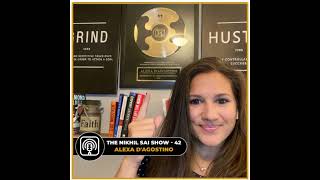
Alexa became a millionaire by 21 after building and exiting seven companies, then earned five degrees including a PhD. She discusses data-driven marketing for enterprise clients, three common mistakes founders make, and why relationship building and hiring a coach early matter for scaling businesses.
Chapters
What's going on? What's going on everyone? First of all, welcome to The Nikhil Sai Show, which is hosted by me, The Nikhil Sai. And guess what's going on today? We are back with another amazing 2Karma Club interview. And guess who is the guest on today's podcast? She's crazy that she started her journey when she was 18, and then later in 2014 she sold her first company making millions and became a millionaire by 21, which is crazy. Not just that, she built 5 companies and made exits amazingly, building fortunes. And she has been a contributor at Forbes and Entrepreneur, which is freaking crazy, and also published in major journals like the Wall Street Journal, Fox News, CBS, USA Today, you name it. She's been in this industry for 15 years, experiencing the technology, marketing, communication, and sales, and has 5 degrees including a PhD, which is crazy. She started her career as a programmer, now turned into a data-driven content marketing executive helping businesses scale. She has been helping enterprise-level companies work with over 500 brands, which is freaking crazy, as I mentioned, right? So guess who is coming on the podcast today? So let's not waste any time and welcome the doctor of marketing, who is Alexa, CEO at Marketing by Modifications. Hey, Alexa.
Hello, thank you. What an intro.
Absolutely. I was just blown away by looking at your stuff, by the way. So I'm pretty glad that we connected on this quick podcast today. Glad to have you.
Yeah, thanks for having me. I'm happy to be here.
Absolutely, Alexa. And Alexa, like, a crazy journey started when you were 18 and became a millionaire at 21. Like, a quick turnaround and helping businesses at enterprise level, which is crazy. So Alexa, would you mind please starting with your backstory and tell us how did you get started and how things turned out for you?
Yeah, yeah, so my family's from Cuba, so they came to America, and when they came here, they couldn't even speak the language, so they had no choice but to be entrepreneurs. So everybody in my family's an entrepreneur. My mom, my sister, my dad, my grandparents, my aunt, like everybody's entrepreneurs. So I grew up seeing entrepreneurship. So I started my first business at 8 selling ice cream. By 12, I had started real estate. Reselling books at the bookstore in like elementary school or middle school. I would buy the most popular books, buy them out, and then resell them. I used to get into a lot of trouble, but I was always, you know, as a kid, always an entrepreneur. And so at 18, I started my first business, which was a web and application development business and grew it to 7 figures by 21. By 24, it was an 8-figure company. And as much as I loved it and I loved doing marketing and web development, what I is as my company grew, my clients grew, and what I realized really at that time was it wasn't my passion. My passion was really startups and not-for-profit. That was really my two loves because I love philanthropy. So I had an opportunity to sell, so I sold my company in 2014 and I went to go get my PhD to teach. I entered higher education and, and helped a few organizations in marketing and restructuring their sales and marketing team, and I've done consulting and have done a lot of coaching, business coaching since. So, um, and the rest is history.
So absolutely, and a long way ahead, right? That's, that's pretty exciting, Alexa. Thank you so much for a quick intro. And Alexa, one of the things which I observed in you, which is not quite common when it comes to business and especially entrepreneurship and stuff like that, right? People have this misconception of like, hey, you don't need degrees and stuff like that, right? But you have 5 degrees including a PhD, which is crazy. So we would love to know like what kind of impact like this traditional education is impacting on your business. We would love to hear that.
I, I'm obsessed with higher education, why I went into it for almost 8 years, because I think there's power in getting a solid foundation of education. Do I think you need it? No. Do I think an undergraduate degree is really important? Absolutely. And not so much for the hard skills, but the soft skills that you learn. You learn how to communicate, you learn how to present, you learn how to write. And you— the biggest, most important thing to me is your collaboration with everyone else, right? So I think especially a liberal arts degree is very, very important. I was fortunate to have worked in higher ed, and that's a big reason why I have so many degrees. But for me, I think education is very, very important. But do you need it to excel? Absolutely not. I'm just a big believer in it and just kept going back because I kept gaining so much knowledge out of every degree that I had.
So Wow, wow, that, that's pretty interesting and was really on point. Like, people just need to remove that misconception that, hey, if you want to really be an entrepreneur, just quit your school. But hell no, don't do that. First of all, build right foundations, and then it might— the education might help you along the way, which is freaking amazing. So Alexa, let's get into the next question. Like, how can technology and data impact marketing when it comes to enterprise-level companies?
It's— it is so important. And so for me, coming from a programming background, um it is a must, right? Because at the end of the day, there's almost sometimes too much data out there, right? So you have to really understand how technology and data work because you can get very confused and overwhelmed and not use it at all. But at the end of the day, customers are leaving little hints everywhere of what they're, what they're looking for. And we have access to so much data that you could really tailor your message and tailor your marketing leveraging technology to be able to do that. And then the technology piece and why that's important is because at the end of the day, you need to be working on your business, not in your business. And in order to do that, you need to be able to automate through technology. So I think that technology and data are so impactful and sometimes we don't leverage it enough.
Yeah, that's, that's really true. Like we see huge companies who have so much data, but they don't really understand the nuances what's the customer requirement, and they miss it. And then we see companies bombing off, right? So you need to pay attention and take the feedback and feed forward it so that you have a sustainable long-term business along with your customers, which is freaking amazing. Thank you so much for that quick answer, Alexa. So let's get to the next 3 questions. You've been consulting with high-level companies, right, like including Apple, which was crazy. So we would love to know like 3 major mistakes, marketing mistakes especially, which most brands make.
Yeah. So I would say the first is not leveraging personal brands. The last, I would say 5 years in particular, personal brands have become a really important part of every business from a small startup all the way up to enterprise. And if you look at, for instance, Elon Musk versus Tesla, go look at Elon Musk's followers versus Tesla's. He has like 10 times the amount of followers, right? So sometimes people don't take the personal brand serious. And so I know for me, even when I was working at organizations, I always worked on my personal brand because it's so important to have your own brand, your own voice, your own message, and you take that with you everywhere. But at the end of the day, building personal brands in your organization will help propel your organization. And I've been asked the question of, well, aren't you worried building the personal brands of people within your organization? And to me, that's a scared CEO. A scared CEO that thinks like that is somebody that is scared somebody's going to leave If somebody gets a great opportunity because of how you built them up, then that's fantastic. But if you're not keeping your people, that's a whole other problem. So to me, building the personal brands of your people and your organization is how you're going to propel your organization forward and keeping them interested in staying in your organization with their personal brand is another story, but is also an important factor here.
Yeah. That's, that's, that's freaking amazing, Alexa. And I believe that's going to compound, right? Once you really have like all of your team having their own personal brand around your company, and that's just going to compound at a different level, which is freaking amazing. So let's get into the next quick question, Alexa. You've been getting clients who are at a different stage, like not like usual small digital agencies, right? So would you mind giving us your two cents on approaching and serving enterprise-level clients?
Yeah, so I mean, approaching clients in general, right, is different depending on every client. It's not even like, you know, doing small business or entrepreneurs or enterprise or solopreneurs, right? Every client is different. And so one of the most important pieces to me is the onboarding piece. And so sometimes we think getting the client, we're done, it's the end of the rope. But honestly, what I think is it's just beginning. And the onboarding piece of bringing a new client on is just as important, if not more important than the actual sale. Because onboarding them in the beginning and making sure the expectations are clear, making sure that everybody has the assets they need, making making sure the next steps and everybody is clear on how to communicate. 'Cause some of the biggest projects that are gonna fail are because you don't know how to communicate to one another, right? And you don't understand and are on the same page of the expectations of the project, right? So the onboarding piece is so, so important to make sure everybody's on the same page. So in my opinion, how I have built my organizations in the past, is through networking and through referrals. And it was very much through people being happy with my service and then referring me to other people. And it's a snowball effect if you do it well, but you have to onboard that client appropriately to even have a good project to begin with.
True, true, Alexa. And I think that's one of the main problems in most agencies or media companies, marketing companies we see, right? Like when you're actually acquiring a client, you need to know like, where they are at right now and they want to go, right? That's when you can actually build a journey and help them to achieve that. But most people don't even understand where they want to go, so there's no way these guys can help them to go there. So it's end up bombing off, right? That's a really great experience which you shared here. Thank you so much for that. And Alexa, this is very like amazing for me. Like, I've never seen someone at your age especially who built and exited 5 companies. Like, how was the experience while building and exiting like this 5 companies throughout the journey?
Yeah, so to date I've built 7 companies, 5 are sold. Of the 5, 4 were, I was majority owner, 1 I was minority owner. You know, I think for me the most important piece is to have a goal in mind, right? Of where you wanna be. Because in my experience of building these companies, I've made a lot of mistakes. Sometimes I sold prematurely, sometimes I held out too long and then lost interest of buyers. So you've got to really learn through experience. And, you know, I think for me, the experience was at times stressful because entrepreneurship is stressful, but at times really rewarding, right? There's times where I celebrated a win of an exit before I had contracts signed and then it fell through, right? So you don't want to get too excited before the win, but you also want to stay humble throughout the process. And build relationships. I— people always ask, how did you do this? Relationships. That's it. Everything in my success has been relationships.
True. So yeah, like, I think that's the number one key feature which who entrepreneur needs. Like, once they learn how to build real relationship, I think that's going to compound and help, like, with all the solutions required and all the learnings they can leverage from experienced people better than them so that they can shortcut the learning curve, which is freaking awesome. And Alexa, like Like, like, while you're building a company, it almost feels like you're actually building a child. Like, that's like an emotional thing which, you know, entrepreneurs have while they're building the companies, right? And you have been exiting so many companies. Like, like, what's your take on this specifically, talking about like people who think about like their companies as their child? And like, what is your take on that part?
Do you— can you repeat that last piece? That last—
yeah, I was just asking a lot, a lot of entrepreneurs, especially when they're building companies They think that they're literally like their child, right? So while they're actually exiting, like they have a different psychology. So what do you think about that? Like, what's your take on that?
Yeah, it really is because you have to nurture it, right? And you have to care for it and you have to be thinking about it all the time. And, and that's the thing. That's why entrepreneurship isn't for everybody, right? And I think when I sold my business in 2014 and entered higher ed, that was a large part of why I did it because I was exhausted. It was 5 straight years, almost 6 years, essentially, of working nonstop. It was all day, every day, and it was exhausting. And, you know, sometimes I think back, I'm like, oh, that was kind of like a cop-out in a way. But for me, I learned a lot through that experience, right? And I learned that you deserve to do what you love and that you're passionate. My passion is teaching and coaching and giving back in higher education and helping build organizations. That's my passion and my love. And I learned that through that experience. But if you want to grow grow a company, uh, to 7, 8, 9 figures, absolutely have to treat it like a kid, like, like your baby.
Yeah, true. Like, that's, that's, that's pretty amazing, Alexa. Like, if they don't have that type of love and relationship with your company, you cannot grow it in a real impactfulness. That's, that's pretty awesome. So let's get to the next quick question, Alexa. You're doing so much stuff, uh, started when you were 18 until now, and helping hundreds of companies, managing big, big teams and managing high-level marketing budgets and all. So I wonder, like, what kind of tools and systems and processes you you use inside your business to manage project clients, coaching, consulting, and your productivity overall?
Yeah. So the tools right now that are really important is having a CRM, and there's a lot of them out there— Salesforce, Monday, so many different tools out there. So you've got to really assess what's best for you. I love Monday personally because it really allows you to customize. I really do like Salesforce too. Salesforce is good because you can customize it, but it's expensive. So I would not recommend unless it's like an enterprise-level client. I think scheduling is incredibly important and having like some sort of scheduling app like Calendly or Acuity or one of those tools. ClickFunnels. I mean, clearly, I, you know, there's so many different tools out there, but I think ClickFunnels is incredibly important. Having some sort of technology to create groups is really, really important as well.
Wow, that's, that's pretty amazing. Thank you so much for the quick list on the top-notch tools you've been using in your business. That, that's really helpful. So Alexa, let's get into your routine. Like, you've been building so many companies and trying to do it successfully with your full potential, right? So I would love to hear more about like your daily routine for all the success you have been achieving. So do you have any—
I have a very set routine. It's so important to set— have a very set routine and schedule because Otherwise it's really difficult for you to get done what you gotta get done. And having a productive day is very important. And part of my routine is making sure I'm eating healthy and I'm working out. Really important, but also making sure I spend time with my family and do things that I love. Because if you work 20 hours a day and you don't actually have fun doing other things, then you're just going to hate entrepreneurship, right? So, um, absolutely. It's very, very important.
Yeah, that's, that's pretty exciting. And we see people implode, like when they don't have any breaks in between or like not a clear goal on what they're working on, right? That's, that's pretty amazing. That's exciting, Alexa. So let's get to the next question. I know you're not too old right now, but what would be a suggestion to a 20-year-old you or someone who's just getting started in business?
Get a coach sooner. I, I, I think if I could speak to myself when I was 20, I would hire a coach to help me because I probably would have made different decisions. I don't regret my decisions, but I definitely would have hired a coach.
Wow, that's, that's really important, right? You want someone to handhold you, uh, who has way more knowledge and experience than you in business. That's really important. So let's get into the next quick question, Alexa. Like, you— what's your life's biggest achievement so far and any next bigger goals along the journey?
Uh, I would say my PhD was a really major accomplishment. I, I've mentioned several times I love higher ed and I love education, um, so I was really proud of that. And it is really hard. And before I said, uh, nobody's gonna call me me doctor. After I was done, after 4 or 5 years of my life, I said, everybody call me doctor because that was really hard. Bigger goal, I just want to make an impact in the world. I love mentoring. It is one of my most passionate things. I mentor high school, college kids, and it is something I am really passionate about. It is why I started coaching because I was mentoring kids and it is honestly one of my biggest passions in life. So I want to continue to make that impact.
Wow, that's, that's really exciting. Like, you're impacting people and like especially kids who are in their higher education. Like, you're showing them what's possible through your story, which is freaking amazing, Alexa. That's inspirational. Thank you so much for that. We hope you reach 10 million students pretty soon, uh, through your journey. That's exciting.
Thank you.
So let's get into the next quick question, Alexa. Like, what's, what's the biggest mistake in your life? You've been doing a lot of stuff, right? So excited to hear this.
Biggest mistake. I mean, I would go back to not hiring a coach soon enough. I don't like saying mistakes only because to me you learn from your mistakes, right? So I like calling them challenges that you learn from, right? I think at the end of the day, understanding that your network is your net worth. I didn't understand that until later in life. I didn't understand until later in life how important how important leadership is in your team. So I wouldn't call them mistakes, I would call them learnings on you need to be a good leader and you need to cherish your network.
Wow, that's really important. Thank you so much, Alexa. It's just on point, right? It's just like golden nuggets dropping off immediately. That's amazing. So Alexa, like, do you have any main people inspiration for your success and any key people involved in the journey?
Yeah, I mean, I've had a lot of mentors and amazing coaches in my life, but I would say right now my biggest inspiration is my, my 1-year-old daughter. So she, she lights me up and she's the one that keeps me moving.
Wow, that's exciting. Happy mom. That's, that's amazing. We hope—
thank you—
great along the way. That's, that's pretty amazing. Alexa, you're just like that quick golden nugget who's dropping off amazing value over all the quick 19 minutes which you have done so far. So where can our audience find you mentoring?
Yeah, so you can go to, uh, passion2ceo.com, uh, or follow me at Marketing by Modification, and you can catch my content there. Um, and I'm happy to, uh, share more knowledge to anyone that wants help.
Wow, that's, that's really exciting. Thank you so much. So guys, make sure to check out her Instagram. It's Mindset, uh, to Marketing, which is pretty amazing. Uh, so yeah, Alexa, This is amazing, quick, gold, gold valuable session, which was amazing. It was on point. So any last word before we conclude the whole entire podcast session today?
Believe in yourself. Be passionate about what you do. And you, when you combine your skill set with passion, it is an explosive combination to create an amazing organization. So that's it. Just be passionate and love what you do. It's so important. Life is too short.
So That's, that's amazing. That's really, really amazing, Alexa. Thank you so much. First of all, thank you so much for this amazing opportunity, Alexa, and we're definitely looking forward to have you once again. And, uh, hope you guys enjoyed today's podcast session. If you need any more help, make sure to reach out to Alexa on her Instagram and check out to passion2ceo.com so that you can actually get more help from Alexa. And hope you enjoyed the podcast today. Stay tuned for the next podcast session, guys. Thanks, Alexa. Have a great day. Peace.
More from Nikhil










BURNED $1.5M in his 17years online #digitalmarketing #entrepreneur #onlinebusiness
