From A Young Underpaid Clerk To A Millionaire CEO Before Turning 30 | The Nikhil Sai Show 36
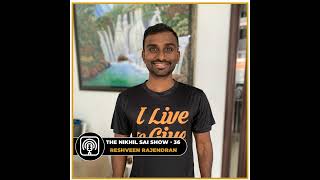
In this episode of The Nikhil Sai Show, host Nikhil Sai interviews Rashveen Rajendran, CEO of Team Resh, author of The Six‑Pack Investor, and a 2‑Comma Club member. Rashveen shares his dramatic personal backstory – a stroke at 18 that ended his dream of joining the military, leading him to discover investing through Robert Kiyosaki’s Rich Dad Poor Dad. He built a three‑figure portfolio, grew it through side‑hustles, and achieved financial freedom by age 23, eventually speaking alongside Kiyosaki and other financial gurus. The conversation moves into his investment philosophy: treat every stock as a business, prioritize scalability, and understand management and margins. He highlights post‑COVID high‑growth sectors such as technology, e‑commerce, digital payments, and streaming platforms (PayPal, Disney+, Amazon Prime, Sea Limited). Rashveen differentiates long‑term vision (30‑40‑year horizons, compound growth) from short‑term cash‑flow tactics (options, rental‑style income). He expresses strong belief in cryptocurrency as the future of decentralized money, while acknowledging volatility. Productivity habits are discussed – weekly journaling, visualization, daily meditation, quick body‑weight workouts, and a focus on incremental weekly wins. He stresses the importance of continuous learning, mentorship across mindset, business, and fitness, and warns against common financial‑management mistakes like cash‑flow leakage. Rashveen’s broader purpose is to build the world’s largest community of givers, encouraging members to donate millions to charitable causes. Personal milestones such as becoming a father are woven in, illustrating how long‑term thinking shifts to planning wealth for his child. The episode concludes with practical advice for listeners on investing safely, seeking mentors, and following Rashveen’s platforms.
Chapters
What's going on everyone? This is me, the Nikhil Sai, back again with another episode of The Nikhil Sai Show. And guess what's going on today? We have another 2 Comma Club interview. And first of all, everyone who's listening to this podcast, welcome to The Nikhil Sai Show where we interview top entrepreneurs to help you understand how business functions and how you can start implementing these amazing brainstorming strategies in your business and help you achieve the scale you deserve. So, and guess who is on the podcast today? We are having an amazing, amazing, amazing guest. And you will love this podcast if you are someone who wants to learn investment strategies. So this guy is a CEO of Team Resh, and also he's a full-time investor, international speaker, author, at the same time director of Buffett Online School. Buffett Online School, which is crazy. He started building his investment portfolio when he was 18, by the way, which is amazing, crazy, right? And also he achieved his financial dream or financial freedom at age of 23. which is literally like a dream come true for a lot of people. So if you're someone who is stuck, this podcast is going to be a killer in your life for sure. He's spoken along with a lot of financial gurus like Robert Kiyosaki, Brian Tracy, Les Brown, and Mayor Buffett, which is amazing, right? And also he is an author of his best-selling book, The Six-Pack Investor. So let's not waste any time and welcome the Six-Pack Investor, Rashveen Rajendran, CEO of Team Resh.
Hey man, it's great to have you. It's great to be speaking on your podcast. I can't wait to be able to share some actionable strategies, all of that with you, man. Let's do it.
Absolutely, guys. Thank you for being on time, by the way. We really appreciate your time. So guys, here you go with the Six Pack Investor. So Resh, we would love to hear your journey, man, like from all the way in India to actually being in multiple countries and teaching people how they can achieve financial freedom, which is crazy. So Resh, can you please start with your backstory? Like, how did all this crazy journey started?
Hey, I'm from Singapore, by the way, right? So I'm, I was born and raised in Singapore. Um, you know, my grandparents are from India, right? So my roots, I'm Indian. So, uh, yeah, man, so that's basically, that's basically who I am. I born and raised in Singapore. I was, you know, brought down this education system in Singapore. And, you know, just like you, man, uh, you know, the entire rat race was what I was conditioned to, right? To work really hard, study really hard, get a good degree, go out and work for somebody else. And that's what I was told was the formula for success. But I knew there was something different. I knew that I wanted something different myself, right? Um, but actually what happened was when I was 18 years old, I actually wanted to become a military officer. That was my dream, right? So I said, you know what, I want to serve my country. I want to become a military officer. That's basically what I wanted to do. Unfortunately, you know, the day when I actually enlisted for the army, right, so I shaved my hairball, I was ready to enlist in the army, but on the day that I enlisted for army, I actually had a very, very, very serious medical condition. Um, you know, I, I still remember I was in camp, I collapsed in the middle of camp, and I actually, at 18 years old, I actually had a stroke. You know, at 18 years old, I had a stroke, and basically I had, um, a blood vessel burst on the right side of my brain, and, you know, I lost sensation, the whole left side of my body. And I guess there was one way in which God told me that, hey, maybe the army is not for you, right? Maybe I want you to do something else. It was very, very devastating for me. And the reason was because, you know, my only dream back then was to be a military officer. That's all I wanted to do. That's all I wanted to become. I was also— I was representing Singapore in weightlifting, and even that got taken away, right? So all my dreams, everything got dashed when I was 18. and I didn't know what to do in my life. Maybe some of you listening to this podcast are at that point in your life where you don't know what you want to do, right? Where everything that you wanted to do was taken away from you and you are purposeless. You don't know what to move on with. And that was exactly me. So I sat down and one day I was— it was very painful, by the way, right? Like, I was in the hospital for nearly a month. Right, it took a whole lot of process because I had to learn to move my hands again. I learned to, you know, move properly again. I lost everything, right? Um, so eventually what happened was, uh, I started picking up books, started reading books, and yeah, I picked up this book by Robert Kiyosaki, right? Robert Kiyosaki. And I started reading. And can you guess the book?
Rich Dad Poor Dad, by the way.
Yeah, yeah, yes, I get it. I picked up Rich Dad Poor Dad and, you know, I started reading. I was like, hey, this is an interesting concept. Right, I started going for different seminars, right? I started exposing myself to different seminars that were in Singapore, attending different seminars. And one day I saw a newspaper article, right, with Robert Kiyosaki coming to Singapore. I was like, whoa, this guy, I read about him in, in, uh, on his books and stuff, I have to go. So I put down the money, I think it was $100 or something, and I went, I bought the ticket, and I went to go and listen to him. And I was mesmerized, these speakers on stage talking about investing, talking about financial freedom, e-commerce, in, you know, all business and all that. And I was like, what is this world? What is this world, right? This world existed. I didn't know the world existed. I knew that, you know, you go to university, right? I only knew that you write a resume and you get a job. That's all I knew, right? But this was a whole new world. And I decided to take a leap. I decided to, you know, take a leap of faith. And I decided to learn about investing first. I was like, hey, you know, I think this investing thing sounds interesting. I want to go and learn about the stock market. I'll go and about what it means to actually invest your money and all that. And that's what I did, man. I started doing that, I started learning the skills of investing. And long story cut short, I got better and better and better at it. I started growing my portfolio. I didn't have a lot of money. I started with about a 3-figure sum and I started growing that every month. I started doing different side hustles. I put literally all of my income into investing and started growing that pot. And eventually I grew my portfolio a significant sum. I started sharing about how I did it. I started sharing about investment strategies, and I built a company. I built a company, and I got so good at it, I was invited all over the world to speak. And in 2016, I had the dream come true where I spoke beside Robert Kiyosaki. He was right beside me, and we did that in Japan. And it was really a dream, right? From being on the ground listening to Robert Kiyosaki to right now being beside him and actually speaking alongside him about financial strategy, right? So that was a dream come true. And, you know, thank God for that journey, man. It's been an incredible ride.
Absolutely. Absolutely love your journey. Like, I think that's so transformational where you're actually being stuck and, you know, in the bottom of your life, and then you actually started, picked a book, and then in the end you actually spoke with him on the stage. Which is literally like a dream come true, which is amazing. And I hope that story really inspires a lot of our podcast listeners. So when something which you wanted to do doesn't happen in life, that doesn't mean end. Just like the Resh pivoted, right? You can also do that in your life. So don't get stuck. You need to learn how you can unstuck and pivot your business and learn something else which actually makes you happy. And you can see the man on how happy he is on this podcast because he loves that. He loves the investment opportunities and all cool stuff, right? So Resh, I believe a lot of investment stuff has this myth that you need a lot of money to invest, but as an investor, you know that it's not 100% true. So would you like to share the fundamental thought process of how investor thinks, like how investment mentality looks like for you?
Okay, so you know, Warren Buffett said this thing which is very, very interesting. When you are a better businessman, you're a better investor. As a better investor, you become a better businessman. Investing is all about— number one thing you must understand is when you're investing into a stock, you're investing into a business. If you don't understand business, you won't be very good at investing. So you got to understand a business. What makes a business work? What makes a business have high profit margins? Who are the management behind the business? So, you know, I don't like— some people like to gamble with it. You know, you're buying in today, out tomorrow, in and out. No, that's not the way. right? When you truly understand, you know, entrepreneurs behind the business, when I speak to you, I know about, you know, your motivations, your, your drive, your power, your energy, and I actually understand your business model. Can your business model really scale, right? Are you running an agency which you're only limited to X income? Are you creating a business model which can really truly scale to a billion people, right? What kind of business do I want to invest in, right? So those are the questions I'm asking as an investor. And from there I pick out businesses which are most importantly scalable, right? Which are most importantly scalable and can reach— it doesn't matter demographic, it's not just stuck in one country, you can reach billions of people around the world. These are the characteristics I'm looking for. But ultimately what I'm looking for is understanding the actual business, how it runs.
Yeah, absolutely. And I think that's the main problem when it comes to the investment space, that these guys look for some quick a strategy to make money, but that doesn't work. You really need to understand the core essence of investment, and you need to make sure that the stock you're buying or the company you invest in or whatever you're doing with your money is literally bulletproof. All right, as Warren Buffett says, the number one rule is never lose money, right? Number two rule is make sure that you never forget the rule number one, which is amazing, right? So let's get to the next quick question. Like, as you are already helping all of your students help achieve their financial freedom in their business especially with this different economy after Corona, uh, which is going crazy, by the way. So what do you think is the best investment opportunities in 2021 right now?
So, you know, Nikhil, one thing that I want to share with you, and you would have realized this being in India, you'd have realized this, yeah, you'd have realized this tremendously, is that the technology space is literally booming, right? See, we all, we all knew the technology has been growing tremendously But as a result of COVID as a result of all these new spending habits, spending patterns, right, they have shifted like 5 times faster. Let me give you an example, right? So PayPal CEO Dan Shrimmer, he actually said that PayPal's growth, right, what they usually see happening in 5 years happened in 1 year last year. Wow. Crazy, right? So 5 years of— I mean, we're talking about a mature company, not talking about a small company. PayPal is a huge company. Yeah. And you're saying that 5 years of growth is happening in 1 year. Can you imagine that? And the reason why is because, you know, people are shopping online, people are, you know, doing more payments digitally, and it's really, really booming like crazy. So, you know, see, there are some industries, right, there's some companies, for example, which just have a work from home, just that period of time where they're making a lot of money, then they won't make money. But there are some companies where structurally things are changing. Structurally things are changing. Let me give you an example. See, in India, let me give you an example in India where I think many of the listeners will be able to relate and understand as well. See, back in the day, a lot of people, they loved going to cinemas, and I'm sure people still love going to cinemas. But right now, right, going on to Amazon Prime, right, going on to Amazon Prime to watch a Hindi movie, for example, going on to Netflix, that has become a norm. Yeah, that has become, that has become something that is like you must have, right? Now everybody, you know, the growth in Amazon Prime in India last year, it was literally like this. Everybody started subscribing to Amazon Prime, am I right?
True, I've seen that happening in my own space.
Yeah, you own space. Everybody else is getting onto Amazon Prime.
Why?
Because, you know, they're signing huge deals with, you know, with Bollywood, signing massive deals. All these major, major movies are coming out on Amazon Prime, right? Like, you know, for your listeners who are listening who are in the Western world, right? Talk about this plus, right? Disney Plus, you know, the Disney Plus with WandaVision, with all the Marvel series, they're not even releasing these movies in the theaters. Right now they're releasing on Disney Plus, and you have to get Disney Plus. And the growth in Disney Plus on Hotstar in India has been insane, has been literally going up to the roof, right? So if you ask me what are some excellent investment opportunities, these are what you want to look out for, right? Like, these are the things that are growing tremendously, and you know, they're still scratching the surface, man. They've gone up a lot already, but still there's so much more room to grow, a lot of good sustainable growth to actually come. Right, so, uh, you know, I mentioned a few companies. If you could catch me, I mentioned Disney, right? I mentioned Disney. I mentioned about Amazon, for example, right? In Singapore, the fastest growing, fastest growing, um, you know, shopping, uh, company, right? Uh, it's actually something called Sea Limited, right? Sea Limited. Um, it actually is the fastest growing e-commerce app in Southeast Asia, and they're expanding through the roof, right? So that's another company to actually look, to actually look out for.
Amazing, amazing. Thank you so much for the valuable information, Rish. I think that would really give a good clarity for all of the people who is listening to the podcast right now. So now you can just dive in, and these principles is what you need to understand, not just the stock or the company we're talking about, because these exact strategies which Rish has mentioned can help you to analyze any time, at any particular time. You can be like, okay, like, what is the current market situation and what business can be having the expansion right now and where should I invest? I think that would make an easier decision for you without any trouble.
Absolutely, absolutely. There's so many other, you know, just beyond just e-commerce and payments and all that stuff, there's so many other industries. You know, in fact, Nikhil, I want to share with you something, right? You will see more wealth being generated in the next 10 years than the last 100 years combined, right?
Wow, that's a big statement.
It's, it's a very true statement, right? It's a very true statement. You know, it's, it's very easy to see, right? Like, you know, last time when you talk about billionaires, you talk about the Rockefellers, talk about Warren Buffett, everybody was in their 90s or 80s or whatever, right? But right now you see all these billionaires popping up who are in their 20s. Yeah.
Yes.
You're gonna be the next one, right? You know, you're gonna be the next one. Maybe.
Let's hope for the one.
Why, why is that happening? And the reason why that's happening is because of the massive growth in digital technology, right? Things are becoming so much, much faster, right? Right now we're able to do an interview, a podcast with thousands of listeners all over the world just because of internet connection, right? So things are being compressed, things are becoming faster and faster and faster, right? Like, you know, right now, like, Jeff Bezos' wealth is what, $200 billion? Very soon we're gonna have trillionaires. Billionaires gonna be normal. Right, yeah, to be, you know, to be a millionaire, that's the minimum standard, right? But you've got to be a billionaire if you want to be separate. You got to be a billionaire, or, you know, right now the elite will be trillionaires. Elon Musk, give him 5 years, he'll be a trillionaire.
True, 100%. Yeah, and I think that's so important. Like, if you really understand, as you just mentioned, Resh, the world is completely being on a straight line right now. It's being a superconductor that something happens in America right now and it passes to Japan within just few hours. If not a few minutes, by the way. Yeah, just like the— all the information is being so quickly passed to every single person. It's not like old demographic, new dem— like everyone is literally consuming the content at a faster rate and news is spreading like crazy. So I definitely believe that will be so true. We can see a huge economy difference. So let's get into the next question, Resh. I think this would be so interesting as you're on a relevant topic. Uh, so how will the pandemic impact the economy? So it's just like a pre-frame to the next question. We just discussed about.
Okay, so, you know, very interesting, Nikhil, right? Like, unfortunately— okay, I'm gonna give a context of like India, right? The— because of the pandemic, because of the pandemic, because of the lockdowns and everything, the poverty rate has risen incredibly, right?
Yeah.
But the rich have become so much richer, it's crazy. It is, right?
I see that.
The rich are becoming so much more, you know, so much more wealthy, right? You think about the pandemic, but you look at the Indian markets, is shooting up through the roof. The Nifty is at all-time highs right now. It's like, what is happening? People are begging on the streets, but everything else is increasing. Like, what? Let me just share with you something. Money is never lost. People are saying, "Oh, lost money," and all that. Money is never lost. Money is just transferred. Money goes from one hand to another hand. It goes from the left hand to the right hand. Some industries will be made obsolete and some industries will thrive through the roof, right? Let me give you an example. Right now, one industry that is becoming like, you know, not say obsolete, but, you know, suffering so much is your travel, right? So, you know, if you're depending on tourism, right, and many places in India, for example, Goa and all, you know, if they're depending on just tourism, oh man, you're going to be really, really, really badly affected, right? But there are some other industries which are growing through the roof right? Like literally, like Infosys, right? Companies like that which are just— companies especially, yeah, Biocon and all that. No, they are just going through the roof. Cybersecurity companies. So money is being shifted. So in the end of the day, um, as an investor, you want to be putting your money in industries which are really booming as a result of the pandemic, right? As a business person, you want to be placing yourself and learning skills that will make you relevant in the industries that are booming. Yeah, so like to give you an example, like in Singapore, you know, dude, I— once the borders open, there's so much demand, so much demand for great coders, right? For people who can write code, for people who can actually develop programs. So in India, there's so much talent who can actually do that. But you know, they're offering increasing pay, you know, crazy. Like this is, this is for people who want to be salaried workers or whatever. But you know, there's so much demand for people who are— who can be coders and stuff, because everything is going online and people are— yeah, that's exactly what's happening, man. So this is how the pandemic has affected it. Things are changing very, very fast, very, very quickly. And if you don't upskill, you don't change yourself, you don't learn new skills, you'll be made obsolete as well. So hey man, you know, many people are affected, but it's a great time to relearn, learn new things, and get better.
Absolutely, Rasha. I think that's a great positive message, and it really can help our audience who are listening to this podcast to gain more clarity on how the economy will be after this pandemic. That's really amazing, Resh. So let's get into the next trendy question. This is actually on demand. So this is amazing question, by the way. So Resh, as a financial, uh, you know, educator, people who teach a lot of people, what is your opinion on crypto, Bitcoin, and the future of all of this Bitcoin stuff? I mean the, the blockchain technology.
All right, so, um, for me personally, I think that this is the future, right? Cryptocurrency, how it's actually structured and created, is truly, truly, truly going to be the future. There's no denying it. The reason why, very simply, is because fiat currency, fiat currency, which is your dollars, for example, your Indian rupees, they're all rigged. What gives you the trust in the Indian rupee? What gives you the trust in the US dollar, Singapore dollar? It's just a face, it's just a trust in the system. But that can immediately just be gone just like that, right? What gives it— what gives it the value, right? So we've seen many countries, even with, um, in India as well, you're— it's in— I don't know if you're seeing— most of your listeners might know about how, um, demonetization happened as well, right? A couple of years.
That was a crazy situation.
Yeah, exactly, right? With demonetization and, you know, getting rid of notes and all these— all these nonsense. And countries like Venezuela where just overnight your currency is worth nothing at all. So there are a lot of flaws with how fiat currency works, and there is a need, there is a real need for something that is decentralized, something that is not centralized or controlled by a government. However, there's resistance because right now, obviously, the Federal Reserve, all of them, they control currency. There's a lot of resistance, but eventually you know, the entire world is going to be made for the people, if you get what I mean, right? Let me try to explain in a simple way, okay? Um, you know, recently, recently, if you are aware of the stock market, you know, any listeners aware of stock market, you know about, you know, this rise of meme stocks and GameStop, for example, you know, happening like crazy. It's happening crazy. All these guys are pumping up, and you know, the entire idea behind it is that people are gathering together using the power of social media, using the power of, you know, groups and all that to go against the big guys. You know, back in the day, it was the big guys who controlled the small guys. And you know, if you are a small fry, you're just fried by the big boys. But right now, the small boys are getting together to say screw you, right? Like, let's go against, you know, exactly what's happening, man, right? So you've got to understand that right now, because of the power of social media, because of the power of you know, one video you should take on your phone, right? I'm telling you something, you know what's more powerful than a gun?
It's a piece of content.
Your handphone, man, right? And switching on the camera, I'm telling you, that's 100 times more powerful than a gun, right? You take a gun, you shoot somebody, you go to jail. You use a handphone, you take a video, you put it up, right?
It's going to change the whole economy or whatever.
Absolutely, man, right? Elon Musk takes out the phone, Pipes in something on Twitter and the entire economy moves. It's ridiculous.
Absolutely, it is definitely ridiculous and something to learn from that.
For sure, for sure. It's the power of influence and having a following, right? But yeah, so coming to that, right? So, you know, what do I believe in? I believe that, hey, in terms of how it is structured, how it's created, the entire idea behind Bitcoin, if you actually read into it, it is really truly the future. I'm talking about long term, right? Right now, a lot of people speculate on it, you know, they try to go in, go out and all that. But if you're truly a believer and you understand technology behind, I'm telling you, there's a lot of potential, right? And what they're doing in terms of technology, a lot of these coins, a lot of these projects have real use cases where they're really using technology for the betterment of humankind. And if you're looking at these projects, they have massive, massive potential to grow. And yes, it's just that I wish that more people took time to actually learn and actually understand about these, right? Because if you truly understand, you'll actually know where the future of this is going to be. Yeah, and then like I mentioned, right, put your money where growth is happening and you'll see your money grow, right? Right now, unfortunately or fortunately, there's a lot of volatility. It depends on how you look at it, right? If you are a guy who's fortunate, you love volatility. Why? Because it gives you good prices to go and buy, right? But if you are like a trader, it can be a little bit scary. But if you are, if you're looking at it long term, man, it's fantastic, man, seriously.
Wow, that's amazing. That's beautifully articulated, Resh. We love the answer, by the way, and I hope that gave us all of our viewers and podcast listeners a clear understanding of how Bitcoin is going to transform the world very soon. And Resh, let's get to the next question, by the way. So what do you, what is, what do you think is the best strategies when it comes to like people should invest in a short-term goal or long-term goal? Like, can you please differentiate the strategies which you use in your business?
Okay, so let me just share with you something. Right. One thing that I never ever ever believe in telling somebody is this is the only way. There are million and one ways to make money, right? If somebody tells me that they want to do it through a job, I'm like, sure, right? I'm not going to tell them that it doesn't work, right? You know, whatever floats your boat, right? Some people are just not meant for creating and building business. Some people maybe might thrive by working with somebody else, right? So in terms of short-term versus long-term, you know, I really truly believe in looking at things more of a long-term perspective. I don't like to be in and out of the markets. But I'm not going to say that being very short-term minded is not going to work. But how I actually structure it very importantly is that you must have a base. You must invest— see, the most successful investors in the world, they don't invest with— they don't start a business with a mindset of what's going to happen tomorrow. They think about, hey, where am I going to be and where is this going to be? What's this idea going to do in 30 years' time, right? They're thinking 30 years, 40 years, and then they're building the steps, the short-term steps today. Do you see what I'm saying, right? And if you're with these entrepreneurs, you want to invest in them not for what they'll create tomorrow, but what— for what they will actually build in the next 10 years, 20 years.
Absolutely.
If you read, um, you know, you've read— you've read Steve Jobs' biography, for example, right? Like, that dude had vision, right? He had vision for the next 20 years, right? You read about Jeff Bezos, you read his book, his biography. I read his book as well. What's the book's name? I can't remember the book's name. But anyways, right, Jeff Bezos' book as well, right? When you read his book, back in 1991, he already knew what he wanted to actually achieve 20 years' time. You know, right now it's a lot clearer, but back then he already had this vision of creating this massive e-commerce store beyond just books. So, you know, if you actually understand it and you're willing to let your money compound together, then why not, right? So in investing, I love it because, um, you know, you might not be as brilliant as these guys, but why not put your money with these guys, right? Yeah, exactly. You love Elon Musk, you know, he's going to go to Mars. He already has said, by the way, you know, Nikhil, just to share, I know you're a huge Elon Musk fan. Right, Elon Musk, you know, obviously his company SpaceX has gone to Mars already, and he has said, right, when SpaceX, uh, in the, in the, in the shareholders letter, he actually said his goal is by 2050 he wants to build a city on Mars, colonization of Mars, which is crazy.
Yeah, I'm waiting for it.
Yeah, exactly. He wants to build a city on Mars, and he said hopefully he can die in Mars, right? So hey man, you know, he's He's gonna bring a whole population there with him, and he's gonna grow it like crazy, right? Teslas all over the world, people going crazy, right? And, um, yeah, so again, if you do believe in the man, then invest with the man for the long term. So, uh, that's how I look at it, right? So I look at entrepreneurs to see, hey, who— what are the technologies? Who are the entrepreneurs who I can get behind, who I can actually invest with for the long term? That's number one. So that's what I do. But of course, I actually also implement short-term strategies to generate income for myself as well. So in the investing world, you can use multiple instruments like options, for example, where you can generate short-term returns on a monthly basis where you can actually pull out cash flow. So just like in property, let me just give you this analogy. If any one of you are listening, if you're property investors, you'll know that in the short term, you can get rental. The rental is that income that comes in every month. But let me just share with you, the real money in property is always made in the buying and selling of it after some time, right? After, you know, 5 years, 10 years, the property value doubles, triples. That's where the real money is made.
Exactly.
Yeah, the rental income is great, but that's the, you know, small— yeah, that's the small money, right? That's the small money, the cash flow. So just like that in stock investing as well, the big money is made in the buying, holding, and waiting of good companies. All right, the, the, the, the small money, you know, again, for everybody the definition can be a little bit different, but for the average man, the small money can be made in the trading, for example, in using different instruments, pull out income. But yeah, I use a variety of both as well, but I understand that true wealth comes in the long term.
True, absolutely, Raja. And I think that's a great, great, great brief and amazing answer. That was just a valuable Can I share with you one thing?
Can I show you one thing? Right, so, uh, yeah, I'm very, very blessed. I just became a father, right? So I just, I just became a father.
Yes, so happy for you, man. So happy. Glad to hear that. Congratulations on becoming a father.
Absolutely, right? So that's, uh, just happened 2 months ago, right? So right now when I look at my son, I'm like, hey man, you know, I want to pass you a portfolio of stocks when you are 18 years old. right? And suddenly now I'm thinking like 18 years' time, right? So I'm not thinking about tomorrow's returns. I'm thinking about, hey, what companies can I buy for him which I can pass on to him in 20 years' time, right? In 20 years' time. So, man, so then suddenly everything changes because if you're thinking for yourself, you're thinking about tomorrow, you know, oh, what's my returns next month? But we're thinking long term, then, you know, you're like, okay, cool, right? Whatever Bitcoin drops, 10%, 20%, doesn't matter, right? Because in, uh, in 15 years' time, 20 years' time, that's going to look like, you know, nothing.
Exactly, exactly.
So when you invest with that kind of mindset, that kind of like time frame, and things become a lot easier.
Exactly. And yeah, I think that's amazing analogy, Resh. I think that would get more clarity and vision perspective that whenever you're investing or putting money on something, you should be thinking about the long term. And I see a lot of problem happening in the market, which is like people just look for tomorrow's profit. They just want cash tomorrow. I just want to make invest money today, I want to make profit tomorrow. But that's not sustainable. When you look at companies who believe in impact, vision, and changing people's life, that's where the real money is, right? And when you find a company who is doing early in the stage, go dump in cash and you will see amazing returns down the line, which is amazing. So that's awesome, Resh. We, we definitely appreciate all of the information. Let's get to the next question, brother. So you're doing a lot of crazy stuff. You're doing this crazy travel, speaking on stages, writing books. Helping people, giving mentorships, and a lot of other stuff. Like, we wonder, how do you manage all of your day for productivity, all of your clients' projects for productivity?
Okay, so you want some productivity hacks. Okay, that's great, right? So one of the things that I— one of the things that I like to do, right, which is very, very important to me, uh, and I think everybody can actually implement, it's just some simple steps. Um, it's the process of journaling, right? The process of journaling. What I do is, every start of the week, let's say for example, today is Monday. On Sunday, I sit down and I journal. What are my goals for this week? Again, yes, I do have long-term goals. What do I want to achieve in the long term, for example? But in the short term, what am I going to do? What is the one goal that I actually have for this one week? It's important because if you're going to be achieving your short-term goals, then that will lead to compounding wins to actually help you towards your long-term goal. You see what I'm saying, right? So asking myself, okay, cool, for this week, what is— what are my goals? What are— what are things that I want to accomplish? And then I'm writing down, okay, this week, this is what I'm going to be working on, right? I want to have, you know, let's say for example, I want to do, uh, 10, you know, 10 sales calls. I want to actually structure— I want to actually build out for my team to actually build out another 2 or 3 previews, for example. Okay, these are the things that I want to work on for this week. So that's what I actually talk about on Sunday, and I get that in focus. And throughout the week, I make sure that these things are implemented, right? And yeah, uh, for me, I like to take the stress off by just telling myself that, hey, uh, you know, instead of rushing and getting, you know, deadlines done and everything, I keep it easy, right? Why? Because the most important thing is that I'm moving one step ahead every day. If I'm moving every day, if I'm doing one productive thing every day to add value to my clients, to add value to my audience, then, hey, great, I'm moving one step forward. What's the one thing that you can actually be doing? So structure out, and again, small wins lead to bigger wins. So again, there's this very, very famous quote: most people overestimate what they can do in 1 year, and they underestimate what they can do in 10 years. There's this very, very interesting quote, and it's true. People set huge goals for, you know, by this year I want to earn $10 million, and then they fall short and they feel like shit. But hey, if you, if you, if you again zoom out, right, like what I mentioned with regards to my kid, right, if you zoom out and again you're taking the good steps every single time to inculcate good habits, to really build out, uh, the plan for the future, then hey, you're gonna go very, very, very far. So that's what I do, uh, which really, really helps me, man.
Absolutely. I think that can really help our audience, including me as well. I would love to start using that simple hack which you just mentioned in my exact business right now. And I believe like what you mentioned is so beautiful that you need to understand where you want to go, and then you cut them into chunks and keep them chopped and just distribute to your team, and they get it done. So you don't need to be in that overwhelmed stage or stressed stage of don't know what's going on, right? And that's so beautifully mentioned, Resh. And let's get to the next quick question, brother. So again, we would love to learn more about your daily routine for success, like how, uh, how you are already getting this lot of stuff done in a very short period of time and maintaining the work-life balance and having a great family, enjoying time with them, same time building a business and scaling it to the roof, helping your clients do the right investments. So I would love to learn more about your daily routine.
Wow, you know, the daily routine changes a lot once you're a new father. It changes so much. New father, it was different when I was single. So, but okay, I'm gonna give the daily routine for a new father, right? Since I'm a new father, it's very different. Yeah, it's different. You know, I've seen— I'm sure maybe you won't understand because you don't have a child, right? But, you know, One of the things that when you have a baby is that you got to wake up throughout the night and do feeds and all that stuff. But anyways, it's a blessing, right? It's really, really truly a blessing. But one of the things that I love to do that I try to get in as much as possible is when I wake up, when I wake up, when I properly do wake up, I like to get some time to meditate, to actually just focus on, okay, cool, what are my goals for the day? What do I envision myself? How do I envision my day to be? Very, very, very important for me to actually do, right? So again, starting your mind and visualizing. So the power of visualization is super, super important, right? Like, you know, you got to visualize how do you want your body to look like? How do you want to— how do you want your business to look like? How do you want your career to look like? So visualizing that day, okay, cool. Today I'm gonna— what are you gonna be doing, right? How are you gonna be exercising? What— who are you gonna be meeting? What are the meetings going to have? What are the sales closing going to do, right? So visualize success, right? So I wake up and I spend some time really visualizing success, right? Of course, that's what I do. And I also, after that, I spend time spiritually as well, right? It's very, very, very important to me, right, to get down, uh, you know, my values spiritually. I spend some time doing that, my quiet time. And then very, very importantly, after brushing my teeth and whatever, is to get a sweat in. right? Gotta get a sweat in, a simple workout, whatever, not 30 minutes, just doing a bodyweight workout at home, really, really getting that workout in. So getting that sweat going, get a quick shower, and then I get to work, right? Have a good breakfast and get to work. So that's, that's the morning, you know, that's the morning habit. That's what I actually do. And in the evenings, if I don't have meetings like tonight, then I'll be spending some good quality time with my son. With my wife, making sure I prioritize family as well, because family is very, very important. Sometimes we can get lost in the hustle and then we don't focus on what's important. But in the end of the day, what are you working for? You're working for your family. And what's the point of earning money for your fam— earning money, but then in the end having no time for your family? There's no point in that at all. So scheduling some time to make sure I take time off for the son, to make sure I have time for the wife, And, uh, that's what I do. Super important.
Wow, that's, that's amazing, Raj. Glad to know the routine you follow, and that really inspires me, excites me, by the way. And let's get to the next quick question, bro. So what will be your suggestion? I know you're super young yet, but yeah, suggestion to someone who is just getting started right now in the industry, or the 20-year-old you.
Wow, if I could, if I could talk to the 20-year-old me If I could talk to the 20-year-old me, I would actually say this. I think one of the most important things is to really, really continuously learn. Continuously learn, experience and learn different things. Learn different things. It's super, super important to go and find mentors. And get mentors in different areas of your life. So what do I mean? Not just in— if you— again, there are different ways to get access to mentors, right? But again, some of the top people I know, they hire mentors for mindset, they hire mentors for their business, they hire mentors for their fitness, for example, right? And yeah, if you are in the position— if you are in the position to do so, then do it. Why? Because you want to be performing at your peak levels in every area. Right, so Nikhil, like, if you never experienced that, like, try, try that, man. Like a mindset coach or whatever, not— and man, you, you will see tangible differences in everything. So that's what I want to say, because, you know, all these little tweaks will really make a huge difference, right? And yeah, so learn, learn, keep learning new skills, explore new things, right? It's the time to try and to fail and to fail forward, most importantly, but to keep trying and learning and Never stop believing in yourself. And most importantly, find people who can really shortcut your journey to success. The whole idea behind mentors is that there are people right now who achieve things that you haven't achieved yet. Go to them, find out what works, what doesn't work, and, you know, avoid their mistakes.
Simple as that.
Yeah, right. Avoid their mistakes. Very, very important, right? So like, what they have done wrong, like, don't do it, right? Of course you make your own mistakes as well, but when you learn from your mentors, you'll get to avoid the dark pitfalls.
Exactly, exactly. And we can easily have like a blueprint or action plan of what to do as we know someone who have already done it. We are speaking to someone who already in the place where you want to be. So I think that can really fast-track our success rate. And I would love to definitely try that, hiring different mentors in my personal life, because I definitely need, uh, some kind of help with the motivation stuff, right? So let's get into the next week question, brother. Let's talk about your life's biggest achievement so far and any next bigger goals. I know your crazy achievements, by the way.
Yeah, yeah, uh, you know, I, I like to think that, I like to think that everything is, um, you know, my biggest achievement, dude, is becoming a father, right? Right now, after, you know, you get it, it's a huge, huge, huge achievement, you know, uh, becoming a father. I'm very, very happy that I get happy for you. Yeah, I'm very happy that I get to procreate and all that. Yeah, that's, that's one of the things that I, I, I love, um, my son. I've, I've managed to win two, two comma club awards with two different companies, uh, in my lifetime. That's another financial thing that I actually managed to do, right? I, I, I have assets over, over what, in the multi-millions at the age of what, 26, right? So that's something that I actually managed to do. All right, but again, again, bro, you know, Nikhil, I just want to share that all these achievements are just a byproduct, right? It's just a byproduct. Having, you know, making a lot of money is a byproduct of you adding value to the world, right? Having a great body, a six-pack, for example, it's a, it's a, it's a habit of you. It's a result of you putting in the work, you know, going in the kitchen, eating good food, eating clean food, exercising every day. It's just a byproduct. And when, when you, when you become a master of these habits and, you know, you keep mastering these small little things every single day then hey, guess what? Uh, you get these achievements. But I always like to look at how can I just keep improving myself. And when you keep improving yourself, then guess what? You'll actually have bigger achievements all along the way. But I think the most important thing is to never lose, uh, sight of what's truly important. And that may be different for everybody, but for me, it's making sure that you're always there for the people who love you the most.
Absolutely, absolutely, Resh. We would love to hear your next bigger goals as well. So what are your next bigger goals for the vision?
Sure, sure, sure. Okay, so in terms of my next bigger goal, so one of the things which I, which I really, uh, one of the goals of my company, right, one of my, my vision is to create the largest community of givers in the world, right? Largest community of givers in the world. That's, that's a vision of mine, right? So I really believe in the power of giving because it is only giving that we receive. That's something that I really, really truly believe. And you know, beyond just inspiring people, so In my industry, I'm teaching people what stocks to buy to make money, for example, right? But I want to be able to inspire people to give, to come together to create, to give, to build schools, to build hospitals, to do things that really change humanity, right? So I want to be able to tangibly help, you know, more and more people give away millions of dollars, right? So, you know, I have this award in my company where actually I want people to actually give away a million dollars, right, to worthy causes.
Wow.
And inspire, I don't know, man, at least 100 people to give away a million dollars to causes that they believe in, right? So I want to do that for my community, to teach the ordinary man how they can make enough money. So I want them to— I want to teach them to make more so they can give more.
Absolutely, bro. And I think that's a beautiful vision that's so purposeful, impactful.
Yeah, the, the secret in living is in giving. I mean, you know, the secret in living is the, the beauty in living is in giving. So we want to learn how to give. We want to learn how to give bigger, give better, right? And to really not just, you know, throw money, but to also be involved in causes that really help people, you know, right? So that's, that's what I want to do. That's what I want to inspire people to do as well. And I think that will be— they'll give life purpose and meaning.
Absolutely. So giving back is not just about donating some money to random people, but giving them opportunity, giving them the skill set, giving them the exact mindset they require in at the point of time, or the right suggestion, right? And that's so beautiful.
I would have never ever said this. I would have never said this, uh, when I was younger, right? Because when I was 20, I was 21, all if you ask me, the goal would have been, oh dude, I want to make $200,000, I want to make a million dollars, for example. But what I realized was that, dude, making money is great, don't get me wrong, right? Like, okay, aiming to get the 2 Comma Club X award is great, but would it really bring me that fulfillment? Not really, right?
Not 100%.
Yeah, no, not 100%, because, you know, when you ask me how much joy did I get when I saw— when I got the award, the joy lasted for one day, right? Right, Russell Brunson. I was like, yes, okay, okay, down you go. All right, what's next?
What's next?
Yeah, so I guess, I guess it's about creating impact, right? So I always ask myself this one question. The question I ask myself is, you know, the day when I leave the world, um, what have I created? What have I done for the world that the world will remember me for?
Yeah, I think this is a great question to ask themselves, every single person who is listening to this podcast.
Yeah, you know, like Steve Jobs, for example. You look at the iPhone, people carry an iPhone around everywhere, and you know, you can see that, hey, you know, I left behind this company Apple, which is an amazing company. People all use my phones, and you know, I left this impact. I created a dent in the universe.
Yes, he did, right?
Absolutely. So the question is, you know, what can you create that people remember you for, right, long after you, after you go. So that's something that, uh, you know, I want to be able to create and do.
Absolutely, right? I think that's so beautifully articulated, by the way. I really enjoyed this conversation. It feels like I'm talking to like an old friend of mine. That's really the way conversation is moving, and I really enjoy to do that. And I think that's so important that you need to understand what will be your purpose after you leave this planet. People should be thinking of you and feel positive and get inspired by your story. I think that, that could really change the thought process of how we take action on in our business or in our life or whatever. So, Resh, let's get to the next quick question, brother. What was the biggest mistake in your life so far?
Dude, I've made so many mistakes in my life, man. I've made a lot of mistakes in my life. Um, okay, can you ask me like, uh, okay Do me a favor, can you ask me like in which area?
I think that that would be great. Yeah, in business.
In business, what was the biggest mistake that I've actually made? Okay, uh, one of the things that— one of the big mistakes that I made in starting my business was financial management, right? Financial management. So one of the things that I want to share with you is this, um, a lot of people, they get into business because they're good at doing something. Right? Uh, maybe let's say for example you're really, really good at designing websites and then you decide to create a business, right? But a lot of times a lot of these artists who are very good at one particular skill, they don't understand, you know, finances and how to actually run a business, cash flow, right? Cash flow. So for me, one of the biggest mistakes that I made, and this is a big mistake that a lot of businessmen make It's not just about how much money you can make, man. It's not just about how much revenue you can actually generate, right? So I was obsessed about, oh, you know, oh yeah, sure, I can always make money, can always make money. But you know, there's no point making all that money if all the money is leaking. You know, if all the money is leaking, if there are holes where, where, you know, money is going out like crazy from taxes, or money is going out, you know, from things that you don't even know of, right? Like software they're invested in that you don't even use. And you're not checking on your finances. So one of the things that is very, very, very important is that you've got to understand cash flow. Got to understand every nook and cranny of where your money is coming in, where your money is going out. You got to obsess over it, you got to learn about it, right? And not just to leave it to somebody else to do. So this wasn't my strength. So I was like, okay, cool. I'll just let somebody else go and do it, handle it. And then I didn't bother to really look and understand. And I think that's a very big mistake a lot of people do, right? So, you know, in financial— I teach about financial education, and, you know, even your own business, you've got to understand, man, because, you know, a lot of times, and many, many entrepreneurs, they're like, oh wow, I closed this deal, and then their CFO comes to them, tell them that, oh, do you know that you have nothing in your bank account? They're like, what?
Yeah, I see that.
It happens to a lot of people. You read stories and you, you'll hear a lot of these things. And this is one of the biggest mistakes that I made, which is not understanding my own financials and making these mistakes, right? So, um, yeah, but again, we live and we learn and we get better over time. So you've got to understand numbers, man.
Absolutely, absolutely, Roshan. I think that, that's really popping me a lot of ideas on my cash flow business right now because I remember myself paying a lot of subscriptions which I never used in months. So I definitely believe— not at a big extent, by the way, but you know, even though there is like We need to remember the day we were actually thinking of spending one extra dollar on something and you went back. And if you remember that, that's going to change the whole game of how you're spending right now when you have some cash flow in your hand, right? So I think that can really help. That, that's amazing, like, that really was a hard hit on me. So I definitely need to go back and check, check my bank statement for third— for at least 2 hours right after this session. That would be amazing.
You have to, because, you know, I want to share with you something, right? Like, you know Sometimes you think, uh, it doesn't matter, it's only $7, right?
True.
Yeah, this is only— it's only another $19 a month, it's only another $100. But hey man, the $100 is going to accumulate to $1,000, $1,000 is going to give you $10,000, right? All matters, right? And as an investor, every dollar saved is a dollar that you could actually invest, right? Exactly.
Yeah.
When you, when you look at things in their perspective, then every, every penny counts. And when you have that mindset and you do things that way, then things will change, man.
Exactly, exactly. I definitely agree on that point, and that's so important. Like, I genuinely believe 90% of business owners who are even having a big cash flow have all of these leakages down the line that they don't even realize. They don't have right reservoirs to have a great cash flow or save money or invest somewhere else. They just let that money flow out without even realizing, and once it's gone, you can never get that back again. Right? So that's the main problem. That's amazing, Resh. That, that was so, so amazing. So let's get to the next question, Resh. So your main inspiration for your success and key people involved in your journey?
Wow, wow, this is, this is a loaded question, man. There's so many people I think, you know, my main inspiration for success, um, I, I would love to say that my main inspiration of success are my parents right? Then my mom and my dad, you know, they're not entrepreneurs, uh, they're not entrepreneurs, but they have very, very— they have a very, very big heart. You know, my mother, she taught me about spirituality, right? So that's a very, very big part of me, right? So I'm a Christian believer. So, you know, I— you know, she always told me to go back to the word, to always understand spiritually, to always, uh, thank God for everything that we have in life, right? And I think it gives you— it gives me perspective to do the right things in life, right? So that's one of the things that I, I really, really thank God for every day. These are my parents, right? And, uh, you know, my dad, he always inspires me as a leader in his own company. Um, you know, as a leader, he leads people with love, right? I've seen how, um, his people who are under his charge, you know, they look up to him, they respect him, and they give him like honor and respect, right? And that's because he truly, truly loves them. And both my parents are givers, right? They always give, they always love to bless people. And that's something that I saw growing up, and it's something that I want to inculcate in my life as well, to give back, to love, and to give without, you know, asking for anything back in return, right? So that's something that I, I, I really took away from my parents. I really love them for that. And yeah, so, you know, for me personally, as much as I really admire, um, you know, your business greats and all that, um, interestingly, a lot of them don't have their lives together, you know. They have divorces and their lives are messed up. And you read about it and they're like, oh, they take drugs and whatever. And I'm like, you know, in the end of the day, um, I want to just be me. I want to be able to, um, you know, I want to be able to leave an impact in the world. One day when I leave the world, I want to say that, hey, you know, I made a difference. That's what I want to do. And I want to lead a good life and lead my family and most importantly be a role model for my son.
Absolutely, absolutely.
I think that's, that's the, that's the, that's the most important thing. And interestingly, uh, if you ask me who's the key person involved, and the reason the person who actually, uh, influenced me to think that way is my own mentor, right? My own mentor, his name is Sean, uh, and, uh, you know, he's a great guy, great investor as well, and, you know, made multi, multi millions in his 30s. But yeah, you wouldn't be able to tell, right? Lives a very, very simple life and you know, loves his family, spends a lot of time with his family, and that's all he wants to do, right? And you know, when I saw that, I was like, man, I want to be like that, right? Not about the flashy cars and the pimped-out houses and whatever. It's about creating impact, you know, being able to, you know, provide jobs for people, being able to give a good income for my children. And yeah, man, that's, that's, that's basically, um, my inspirations for success.
Wow, Roshan, that's so beautiful. And as you just mentioned, it's not about the Lambo you're driving or the shiny object you're showcasing on the camera. It's about how much wealth you really have, right? And it's not that you're showcasing it, but it's just right there, right? And if you see the lifestyle of billionaires, they spend way less than people who make millions. We are definitely sure about that, right? They spend way lesser than what these millionaires spend day to day, right? Which is amazing. That, that's definitely something people need to pay attention to. So, Roshan, you are one of the most beautiful, amazing person, and great expert when it comes to the opportunities about investment. And so our audience would love to connect with you. So where can our audience find you mentoring?
Okay, so they can find me in a few places. The first place they can find me is on Instagram. You know, you can look, look up, look me up at Six Pack Investor, or you can actually look up, look me up on Facebook as well at Rashveen Rajendran.
Wow, that's awesome! And I would love to drop your link on in the podcast description as well. So you can actually go to teamresh.com/go and you can actually connect with Resh. And his team. I think they can definitely help you in your business to invest in the right areas and make sure that you actually manage your wealth in the right process. So I think that was just on point, my friend. I, I couldn't describe how this podcast went on. It was on point. It was sweet, it was short, and it was just on point. So any last words before we conclude the whole session today?
Amen. You know, um, I— guys, most importantly, if you're gonna be following me on investing you know, learn to invest safe, think big, think big, but most importantly, invest safe and grow quickly as well, right? And the next thing is this: hey man, make sure you follow Nikhil as well, right? This guy is going to be popping, it's going to be huge, right? So make sure you follow him on his journey, uh, and hey man, you know, whatever business is going to be doing, make sure you invest in him, it's going to be great.
Thank you, thank you so much, Rish. I think that was so kind of you, man. And again, Rish, Thank you for this amazing, amazing opportunity. Thanks for taking out 1 hour of your time and investing on this podcast, which can actually add a lot of value in our viewers' time and in our listeners' real life. That's so impactful. You created a lot of impact in our listeners. That's amazing. That's exciting as well, brother. So thank you so much again for hopping on this quick interview, brother. And everyone who actually listened to this podcast, hope you enjoyed the session today. Go connect with Resh at teamresh.com/go. I think that's it for today, guys, and stay tuned for the next interview. And thank you so much, Russ. Have a great day.
Peace.
More from Nikhil










BURNED $1.5M in his 17years online #digitalmarketing #entrepreneur #onlinebusiness
