From Burnout to Automated Millions: Winter’s Webinar Funnel That Prints Buyers | Nikhil X Winter
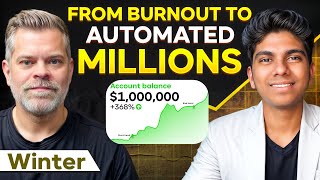
In this interview, Nikhil Sai hosts Wynter Wolko, founder and CEO of Aevent, a platform that automates webinars using Zoom to create "stimuli" webinars that feel live while allowing the host to walk away. The conversation covers why webinars remain essential for high‑ticket sales in 2025, the origins of Aevent (born from Wynter’s personal pain points with live webinars), and the core features that drive higher attendance and conversion: collecting phone numbers, omnichannel reminders (SMS, MMS, WhatsApp, calendar invites), real‑time re‑engagement messages, and automated encore sessions for non‑attendees. They discuss a playbook for structuring webinars—pre‑webinar indoctrination series, segmented post‑webinar follow‑up (attendee duration‑based segments, replay sequencing, micro‑video assets), and hybrid live‑automated formats that let hosts add live Q&A at any point. The role of AI is explored, from using large language models to generate copy and support content, to accelerating integration development and QA testing. Wynter shares personal lessons about skepticism, keeping business entities separate, and the importance of perseverance. The episode ends with a special one‑month free offer for listeners and practical advice on getting started with Aevent.
Chapters
Webinars don't work anymore. Now, how would you answer to those critics?
Most definitely, even more so now than before.
On a webinar for buyers.
Exactly. You're holding a webinar for buyers. Over the last 6, 7 years, a lot of marketers have implemented the just-in-time style because for a while that worked, especially during COVID That worked. People were looking for anything to do.
What do you believe have contributed to highest show-up rates?
60% is you're not collecting the phone field and doing something with phones.
Do that. Exactly. Yeah, that's crazy.
10 minutes before the call to action. Send out an SMS to anyone that already left.
Now what do you do with these people?
An encore the next day. All non-attendees automatically get enrolled to a new Zoom event.
What's going on? What's going on everybody who's actually tuning into this podcast? First of all guys, welcome back to another episode of The Nikhil Sai Show, which is hosted by me, the Nikhil Sai. And guess what's going on today? I'm back with another amazing entrepreneurial guest. The guest who's actually joining us today has built an incredible, incredible webinar platform. I mean, most of your favorite influencers and my favorite influencers are probably using this. All the industry experts. I'm not talking about the same old boring web pages where you can automate your webinars on somewhere you could just refresh and it goes away. No, I'm talking about a platform that can sync with Zoom and make it like stimuli, god-level, you know, stimulation where you can completely walk away from the webinar as a business owner and the webinar would still produce the same result. I was fascinated by the technology and the results it can deliver. And that's why I'm actually bringing on the guest or the creator of the platform called Aevent. Let's not waste any time and let's welcome— this platform is focused on webinar automation and creating digital events on scale. Let's welcome the founder and CEO of this company, Wynter Wolko. Hey, Wynter.
Hey, Nick. Thanks for having me, buddy.
Yeah. Good to see you. So stoked to dive into all the webinar stuff here. Now I want you to tell me, first of all, why have you built this platform? What was the reason? I mean, I know your background a little bit. I would love you to reintroduce yourself, but talk to me about, you know, you were this affiliate marketing guy already been in the digital marketing space for so long. Why have you even decided that, okay, I want to build a SaaS and build an event?
It didn't start out that way. So my, my brief backstory, I started online marketing in 2007. Someone taught me list building, right? And those were the Wild West days. I think, Nick, how old are you? Right? Like that was a long time ago.
Yeah. I was probably not even speaking. Like I was so young back then.
So, so yeah, someone taught me list building 2007. 2007 to 2015, I focused on low ticket space, business opportunity, affiliate marketing. And I generated about $30 million in the low ticket space. So I was having success, right? right? But I wasn't in love with it. I did high ticket. I did my first webinar, right? And I absolutely fell in love, right? Everyone loves high ticket. There's a lot of reasons why, uh, less work, more, more reward, so to speak. Um, so I was doing it through GoToWebinar. I was doing it live, uh, like anyone out there, I was doing it once a week, right? Uh, finding my, my, my presentation, refining my pitch, all that stuff. And then I tried to automate it. Now this was clear back in 2015. So I tried to automate with every webinar and I watched my conversions going right now before I learned list building, Intel network engineer prior to that high school dropout. So I was born with a keyboard in my hand more or less, right? And I challenged myself, how do I maintain my conversion value without doing it live? At that point, I was recently married. You know, I was in a different country every week with my new bride. And I was finding myself doing my webinar at bad hours, bad internet. You know, literally like Southeast Asia standing up with a Wi-Fi antenna trying to like talk, you know, just, just some situations. One time I did one from a Bangkok hospital, right? It was really difficult. We know that pain. If you've ever done a live webinar, you know that pain. So I challenge myself, let me try to automate GoToWebinar, right? This was back in 2015. Zoom was maybe even in its infancy, much like you yourself were, Nick, right? GoToWebinar. So let me automate GoToWebinar. So that's where it was born. I was born to automate my webinar, to maintain the conversions that I did live, but in the like-live environment, right? So Aevent, in my opinion, does the truest of a like-live. We've heard the liked-vocalise before, but like you said, a lot of times a liked-vocalise is a video on a page that looks like a webinar, right? And it's styled like a webinar. So that's where it was born really. It was born out of the need for my info business. At that stage, you know, I started using it, joint venturing with it, showing other folks in the industry, other big players, if you will. And they're like, hey, can you build that for me? And I'm like, no, I don't work for people anymore. Sorry. But I really like what I'm doing here. Right? I'm more passionate about this. Right? And I learned at that stage, 2013 and '14, I lost both my parents. I learned that money doesn't bring happiness. I learned that you can be crushing it financially and still just be a pit drum of a hard time. And so then I followed that passion. Right? Like I realized like, hey, I'm more passionate about doing this. I'm staying up late at night working on this type of stuff. Refining it, coming up with ideas where my info business, although it's generating me multi-millions, it's like the 4-hour workweek. I push it in if I have to. Right. So that's my long answer to kind of how the, how it was born.
Yeah. That's, that's quite interesting. I mean, it is born from the need you already had yourself. I mean, I can totally relate. I was in Vietnam a few weeks ago and I had to do like a live workshop and I can only imagine how many juggles I've done, like lighting and internet and laptop and like everything. I'm like, Oh my God, I've done this workshop before. I wish I would just click a button and automate that. It had an interactive Q&A session. That was a big part of the workshop, so I couldn't automate that piece. But let's get into it, right? Like in terms of webinars, right? Big notion, like CPMs are so high, click cost is so high, like webinars don't work anymore. Now, how would you answer to those critics right now? I mean, you are behind the scenes looking at the data of all these top influencers who are crushing it with digital events and webinars. First of all, can you set some agenda? Like, is it worth it to try webinars in 2025 and beyond? What do you think?
Most definitely, even more so now than before. I mean, back in 2015, right? When I was doing that with GoToWebinar, do you think my average lead, my average registrant even had GoToWebinar installed, right? Like today, Zoom, we support GoToWebinar with Aevent, but today Zoom is a household name. You know, if your parents are still alive, Nick, or your grandparents, they probably have Zoom installed on their phone.
Yeah.
Right? So right there, That makes it worth it in the sense that it's a common environment that people are used to in 2025 meeting with, right? Then the upside with Zoom, everyone has it installed. It's not on a web-based browser where when they get that SMS, the DM, the WhatsApp Messenger, if they're watching a video on a page, a webinar, they're no longer watching it, right? Inside Zoom, you've all answered a message when you're on a Zoom call, right? You're still audibly hearing it. Maybe you're seeing it up in the corner. So there's all those upside effects, but unless you're doing a call funnel, webinars is the next best way to close high-ticket sales, right? It's still today easily the best way to close high-ticket sales at volume because you can work with one-to-many. Right now, a lot of folks today are hurting with their webinar because they're using a solution that's maybe a web-based just-in-time platform. They're running their webinar every 10 or 15 minutes, right? So a lead hits the page at 12:15 and In 2025, one, if you're wanting it to feel live, does that actually feel live anymore? It's 12:15, maybe in the morning, right? Plus the lead is like lounged out on the couch, 12:15 in the morning, they're flipping through channels, they're happening to stumble into your webinar. There's no engagement, no attachment, no preconceived, I want to attend. I don't know what you're gonna share with me, anything, right? I just happen to bounce in. Over the last 6, 7 years, a lot of marketers have implemented the just-in-time style. Because for a while that worked, especially during COVID that worked. People were looking for anything to do. So of course a webinar starting now works, right? In 2025, making an event out of your webinar has better conversion value. Guarantee you will see less attendees. But Nick, are you, are you holding a webinar for attendees? Are you holding a webinar for buyers? Right?
You're holding a webinar for buyers. I don't want just views. If that was the goal, I would make content on YouTube. Why would I do promote, spend money on ads to do a workshop or webinar to get viewers. That's not my goal. My goal is to attract buyers.
Exactly, exactly. So let's pretend, I mean, you know, maybe some folks are listening here right now, then they're doing their live webinar once a week. Well, that's exhausting. Let's not do that, right? We've all done that webinar where it's like, what's the best me? That one was the best me, man. If I could rinse and repeat the webinar I did last night every single week, I would retire. We've all had that, right? Because we've all had the bad webinars. Where the dog barks, the internet goes out, the phone, the fire, the whatever, the hack, right? And they're like soul-crushing webinars. So a lot of what A-Event does is introduces that, allow that to be the best you, but still in the same conversion vehicle that you're doing when it's live, right? So that's a lot of the uptick with using Zoom paired with everything else that we do. But then back to the attendance, right? Like most folks I talk to today, the pain point is attendance. Their pain point is attendance. My attendance is down. So they're focusing on the short term right now. Most marketers focus on the short term, not the long term, right? My attendance is down. My conversion value is down. My just-in-time webinar is not converting anymore. But hey, when I do it once a week, gosh, I get 10% attendance because I only send emails. But that 10% attendance, my conversion value is tripled. You know what I mean? Maybe they're dripping out content in the days leading up to intensely in that content, opening loops, opening stories, you know, making a want in which your webinar is about to satiate and fulfill on. That's where we have users that are coming on and seeing maybe a 0.6% registration to conversion. And with Zoom and Aevent, they're seeing a 2.2%, 2.4%, same presentation, 4% conversion value because they're stretching it out. They're making an event out of it. They're using omnichannel messaging and then behavioral segmentation. Right? So that's a whole other topic to talk about. But after the event, most people today are doing what they've been doing forever. If you didn't buy, you're getting this follow-up.
Yeah, the same old.
But if we look at other sales, yeah, if we look at other sales situations in the world, that doesn't work. You know what I mean? Like if I'm a car salesman, you come to my car lot, you kick a tire, maybe I get your first name, you leave. Versus you come on my car lot, we test drive 5 cars, we pre-approve you with some financing, I give you and your, your family or whatever, some popcorn, some drinks. Well, I'm still a salesperson. I'm going to talk to you very differently, right? We all know that. But that's what people are doing in webinars in 2025. They're closing that person in that situation, speaking the same way. But in the car salesman situation, I'm a salesperson. My mannerism's gonna be different. My energy's gonna be different. The way I say, the way I conduct myself is gonna be very different, right? If I've just studied NLP or anything like that, I'm gonna use certain aspects of NLP to help close that sale. But we need to do that with web— we need to do that with webinars today, right? We really need to segment down and speak more intelligent.
Yeah, I agreed. 100%. I think they're just putting a presentation and saying the 3 secrets. Like, I feel like people are matured and like they no longer just fall for that. And there has to be more, like you're saying, an experience. Now, if you have to, because you have the experience of looking at all the top influencers, you yourself have done millions of dollars worth of webinars. I'm curious if you had to curate a million-dollar webinar formula, right? Like think about it as a playbook. What do you think are the winning things here? What are the things that like, hey, don't do this and do this type of checklist, if you have any.
So today I would say one, before you dive too deep in, you know, don't, don't go and automate your webinar. We're kind of talking about automation. We're kind of not, but you need to get your webinar converting, right? So you need a converting offer, converting webinar. That's a whole conversation on its own, but let's take a step back from that and assume that we have a converting offer and maybe we've been running that converting offer on EverWebinar or another just-in-time platform for a while. And we've seen our conversions over the last year or two go down, right? Well, that converting offer can still be used. Now let's step back. Let's run that converting offer maybe once a day instead of every 5 minutes. Let's add an indoctrination series to it. So maybe it's a 2-day or 3-day drip. Let's, instead of allowing the lead to register for the webinar today, even if it's happening today, when you hit that registration page, you are showing 2 days away and take that lead through that indoctrination series drip. Now, some marketers to some extent have done that in the sense that they elongate it so they get a more procure lead that shows up, but in that drip, provide value. You know what I mean? You'll experience webinars and marketers sending out an SMS reminder 48 hours before. And what does it say? Don't forget about my webinar in 48 hours. Okay. I won't, you know, but if you provide value or ideally like a video and the omnichannel, and, you know, instead of just sending an email, you're sending an animated GIF message, maybe it's through WhatsApp, maybe it's through Twilio. And it's a couple, maybe pictures of the content piece that you just released and you're, Sending that as a picture message 48 hours before and it's like, hey, I just launched this, check it out here, click, blah, blah, blah, right? That's accomplishing the same thing. It's reminding them, but it's providing so much more value. So laying out a good indoctrination series. And then post-event, what are folks doing post-event? Again, most are doing attendee/non-attendee. Those folks that are using Zoom, they're doing either you bought or you didn't buy, right? Or they're themselves or their team members are downloading the attendance report from Zoom, painstakingly going to HighLevel, ActiveCampaign, Keep, whatever, and literally hand tagging, right? Tons of people do that type of stuff.
Yeah, it's crazy.
And that's just painful. And most people aren't. And then, you know, if you're doing their live presentation, you're worried about going up to the presentation, you're sending out the manual messages, you do the presentation. Oh my gosh, it's done. And now I need to send out the replay. I need to do this. I need to do that. I need to segment. Yeah, yeah, yeah. Right. So the long answer there on the tail side is don't do any of that. Let Aevent do all the automation, follow up with them where it creates like a one-on-one type of sequence. Right. It's not a one-to-blanket. Most marketers, as I call it, is a one-to-blanket. It's a blanket message. Everyone gets the same message.
Yeah.
At a macro, at, and when we're, we're, we're spending thousands or hundreds of thousands or whatever a day or a week or month, we're gonna see conversion value there, but you'll see better conversion value niching that down and then having a proper follow-up. Right. And then you can take your non-attendees and maybe you have an automated encore the next day. So it's held again inside Zoom for all those non-attendees. Right. There's a lot of ways where you can really extend the funnel. And make it instead of just an event with a 3-day replay, you can extend it to a 10-day sliced up sequence.
Makes sense. Appreciate that. I mean, I could really see some important steps which every webinar creator has to fix, especially the follow-up sequences and leading with value in the automations. Now, this pain of doing live webinars has always been there, right? Like, oh, my show up rate will tank. My people are registering, they don't show up. Like I'm losing a lot of money right now. I know there are some capabilities in your app which automatically invites people, you know, on their calendar events. So that way we know like it's right there on their Google account or, you know, you know, Apple calendar, which whenever they're using, right? More than that, what do you believe have contributed to highest show up rates in doing stimuli webinars? Is there any other steps do you recommend? Or is there any things that you have seen working really well to increase the show up rate? That's the biggest— every time I talk to somebody who is doing live workshops, I ask them like, hey, sorry, somebody doing webinars, I ask them, say, hey, why don't you do live? The biggest pain point is, Nick, like 20% people show up, 10% people show up. I'm losing 80% of registrations. If I do stimuli, 50% show up immediately, they watch it, but you know, they don't see the conversion data. But I'm curious, what would you do to improve the show rate?
All kinds of stuff, right? Like the lowest hanging fruit for, and most marketers are doing this today, I'd say about 60% is if you're not collecting the phone field and doing something with phones, do that. It's a no brainer, right? It's 2025. It's not 2015. In 2015, I wanted to send picture messages, right? 2025, we better be sending picture messages, right? So collect the phone number. Yes, you're going to, it's lower, going to lower your conversion, your registration rate a little bit, but I promise it's worth it. Add that phone field to the registration, collect the phone number. Do it on the second, you know, a two-stepper if you want, if you're worried about that. And then use that phone number, right? So like a pain point of when I led to developing this was every webinar at the time, I could send one SMS 10 minutes before. But as a marketer, if I'm gonna ask for a phone number, dude, I wanna do a lot more than that one SMS 10 minutes before. Like, that's silly, right? I wanna send a picture message 10 minutes into it. That's a FOMO invoker. Hey, if you're not on here, you're missing out, right? Join us now. It's an animated GIF. It's, you know, playing on those types of elements. So. SMS, MMS, there's some fun integrations we have. Let's pretend you get a picture from me and I'm standing at a whiteboard. I'm pointing at the whiteboard and it looks handwritten. Hey Nick, we're starting soon, right? You've probably experienced that, right?
Yeah.
Sent as a picture message. 2025, I don't think the average lead is like, oh my gosh, Winter wrote my name on the whiteboard. But they're still like, hey, that got my attention. You know, a lot more than that subject line or maybe that SMS reminder saying I go live.
Better than join my webinar now.
Exactly. Exactly. Ringless voicemail, depending on the age of your avatar, right? Like I'm 44. I don't listen to voicemail. In my mind, anyone older than me listens to voicemail. Anyone younger doesn't, you know, I bet if you have voicemail, you don't even have it hooked up.
I don't even—
it's my imagination, right? But for the leads that are like older 40s, 50s, 60s, they still listen to voicemail, right? Send out— send a ringless reminder 10 minutes before. Hey, this winter I'm going live with my event. I'm about to send you your personalized join link. I just want to make sure you show up soon. Right? Those different omnichannel is what really increases attendance.
Nice.
Yes, the Google, the Google Calendar auto reminder these days, all of our smart devices, they import that and remind us even if we say, don't say yes rather, right? If we say no, it's not going to remind us. But if you don't say yes and you never open it, it's still going to remind you, right? I have one of those screens at my, at my sink and I've seen it actually pop up on the, you know, a reminder on there from a webinar that I had registered for, right? So that helps increase the attendance. Just, Keeping in frame, but again, increasing attendance is that indoctrination series. So you, as you said, someone's doing it live, they don't like doing it live because the attendance is so low. Well, why is the attendance low? Do they have an indoctrination series? Is someone registering for a webinar on Monday and the webinar is on Thursday and am I not getting anything until Thursday? Well, I mean, gosh, I mean, I don't know what I'm doing after this, this, this call today, Nick, you know what I mean? Like that's, that's the average roll-up and that's the average that most folks are doing. So today someone's wrapping GoHighLevel around Zoom. Maybe they're wrapping Zapier, Make, and Pabbly, one of those tools around Zoom to help increase attendance, hopefully, but they're still underutilizing it and it's super fragile. Then post-event, they're not doing anything. But yeah, really just the omnichannel to increase the attendance. WhatsApp internationally, I don't know of any other platform that supports WhatsApp. We support a number of different WhatsApp integrations.
WhatsApp is big outside America. I was surprised to see how low WhatsApp usage is in the US, but worldwide it's the big follow-up. And every time we do any kind of live or stimuli workshops, even if it's automated, WhatsApp really pushes a lot of traffic. That really helps to understand the pre-webinar sequence. Now, this is a constant pain I'm hearing. As we fix the pre-webinar, the post-webinar is getting more like skeptic, right? Like people have matured, they've seen this webinar so many times and they've gone those and paid that $997, $1997 price points. And you know, they're not responding as much in the post-follow-up sequences. They really don't, they're not scared about the scarcity we create on the workshops anymore or on the webinars anymore. So I'm curious what somebody has to do in 2025 to get the best out of the attendees that are showing up. Like you talk about the encore or something else which is actually producing more results beyond webinars. Like one of my friends, for example, He runs a big operation, does like 3,000 registrations, 3,000 show-ups every week. That's like 12,000 registrations every week. And he has to fix this problem, build like a 20-people sales team. I don't want to do that. I don't like the complexity of building that big of a sales team just to call and follow up with my show-ups. I'm curious, what do you believe is the best sequence post-workshop or post-webinar?
For the initial webinar, is that what you're saying? No, post-webinar for the attendee or non-attendee?
Yes, somebody who showed up. Let's talk about both because I believe if we have like a 70% no-show rate, that's also a big opportunity which we could tap into that we already paid for. Like we already paid for the leads already. Why don't we get the best? Let's talk about the show-ups first and let's talk about the no-shows next.
Awesome. The show-ups. Well, post-event, I mean, most people right now again are sending everyone to a replay. That's whether they're on for 5 minutes or they saw the call to action, they didn't buy, they visited the checkout page, right? We need to speak more intelligently to them. So I hear you and I'm also the same way. I don't like running a big team. My team at AAVN is as small as I can allow it to be or for us to survive, just because I, that, that, that's, it's easier that way. I'm not like, let me have a, a 100-person sales team. Right. Let me speak more intelligent and let me use automation. Let me use some level of AI and just what we have going on today so that we can accomplish that of a 10-person team. Right. So number 1, look at your webinar. Everyone's webinar is different. Look at your webinar and create 4 or 5 different segments. Segments, right? And what I mean by that is like someone that attended maybe 1 to less than 20 minutes, uh, in the first 20 minutes versus 20 to 40 versus 40 to 60, create these different segments. And then for the ones that didn't attend much, yes, they need to review a replay, right? But use messaging that entices them to view that replay. Most marketers, all to almost all today, post-event, hey, here's my replay. It comes out on Friday.
Go check it out. Offering clients 24 hours. Yeah.
You know, so, so again, like I talked before with the indoctrination series, why, right? Like that less than 20 minutes, you have a lot of opportunity to remind them of this is why you registered. You missed out. This is all the good shit you missed out on. Click on through, make sure you check out the 3-minute mark, you know, drop a couple seeds, whatnot in the message. Don't just say, hey, there's a replay. Obviously there's a replay. Like you said, our audience knows there's a replay and they know it's coming down in 36 hours and they know that it's probably not, right? That 20 to 40, same thing, you know, segment them out so that you're speaking more intelligently to them. Now, the best teams that I have seen do that, of course, are like, we have Tony Robbins on the platform, right? They'll go in with a webinar and they'll do like 27 segments, right? But I mean, that's a mammoth team, of course, right? But the idea is you don't have to do 27 segments. That's absurd. But niche it down to where at least you're speaking to that person that was obviously engaged. They heard the call to action. Maybe they visited out at the checkout page. They didn't sign up. Speak to them directly. right? Send that person a different segment than the person that bounced 20 minutes before. Person that bounced 20 minutes before, dude, you need to go check out our replay, Nick, so that you learn about that story where, right? And help start closing a loop, right? I mean, if you're doing good storytelling throughout your webinar, like most of us do, there's some open loops that could use to be pulled back in. There's a lot of opportunity value there, right? And we're still maybe getting them back to the replay, the card banner. Maybe we're getting them to an order recap, a bonus. Stacking type of page, but we're speaking more directly to them so that it, for us as consumers, it makes us feel like it is more a one-to-one conversation than a one-to-many, right? I'm gonna respond if I get something that I feel like is more speaking to, to, to the journey where I am at, as opposed to, hey, go check out the replay. The cart abandoner doesn't need to see a replay. They really don't. You know, the person that was engaged for an hour saw the call to action. They don't need a replay. You know, you're, you're underserving them. So there's a lot of opportunity value there, right? Avent also offers some stuff. Since we're talking to that engaged audience, I mentioned the FOMO invoker, right? 10 minutes in, send out the non-attendee to all non-attendees. Hey, if you're not on here, you're missing out, right? Animated GIF that helps. 10 minutes before the call to action, send out an SMS to anyone that already left, right? Because we know people come on and life comes up and they have to leave. No marketers do this. Avent allows you to do this. Again, what I'm saying is like, let's say someone joins And then they have to leave before the 35-minute mark and the 42-minute mark is the call to action. So at the 35-minute mark, Avent looks and says, hey, anyone that has already left, send them this targeted text. Hey, get back on. I'm about to share X, Y, Z. Right now, every people leave for a reason. Some people have a fire come up on an emergency and other people just get distracted, have to go to the bathroom. At a macro, that's going to get them back on, right? So that's another way that we can serve our attendees better. And like that type of trigger there, no one's doing it. I call it free fruit. Right. It's not even low-hanging fruit. That's just free fruit sitting on the ground.
Exactly. Yeah. That's crazy.
Post-event, don't just go to a replay again. Go ahead.
Go ahead. I love that. And I've never heard, heard about what you've done this before. Like transparently speaking, we have done so many workshops, but I never thought about let's track who is actually leaving the workshop 10 minutes before the pitch and get them back. Because I can only imagine even if 10% of people who joined, who left, came back, I mean, that can really increase the amount of cash collected dramatically. I mean, that could be a profit breaking point. Like that could actually get those ads profitable. That could actually get those, you know, like not have many abandoned carts as we actually typically have. That's pretty crazy. Now what do you do with the non-attendees? That's an interesting piece. 70, 80% people register, they don't show up for the live. Now what do you do with these people?
So an encore the next day or 2 days later, right? And by an encore, what I mean is all non-attendees automatically get enrolled to a new Zoom event. And they get an email from Zoom, hey, you're registered for our encore on Saturday at 10:00 AM. You know, maybe do a different, slightly different hours. And at the macro view, what we see on the platform, let's say you have 1,000 registrants. Let's say you have 400 attend to your live session, whether it's live or not, regardless. That encore session is gonna get anywhere from 30 to 60 people attending. Because you're automatically inviting them. There's no, there's no micro-commitment, right? You're automatically signing them up. So again, if you had 400 to 10 live, you'll get 30 to 60 attending this encore the next day. But that encore environment converts at a higher rate than a video on a page. Again, why, why aren't we just sending them around video page? Well, we know all the reasons. We know why it's a webinar, so on and so forth. Right. So have an encore that next day. And then depending on the, you know, your flow, your funnel, one of two different ways, like go to a replay then. There's a number of different ways to do a replay. We support a replay in a just-in-time environment. So you can still like do webinar to just-in-time replay. There's all kinds of types of way to do that or, you know, extend your funnel in the sense that take your non-attendees and this isn't my method. This is my friend Onyx's method, but he's calling it extend the funnel. Take your non-attendees, take your webinar. So maybe you have an encore the next day or 2 days later and then take and create different assets out of your webinar, create maybe 3 or 4 or 5 micro videos, right? And then share that with the audience, the non-attendee audience over the next week, then hold another encore as a closeout. So you can really like take it from maybe a 3-day series or a 5-day series to like a, into a 12-day thing. And you'll close a lot more value there by all those different methods as opposed to just here's the replay, right? 3-day access.
Yeah, I like that. I mean, I've seen that playbook that Anik was laying out and it was so clear. I mean, the big idea that you're sharing in the webinar, same could be chunked into 5 different video series and sent through sequences and that could really help in conversions. That's pretty helpful. Now you kind of touched a little bit about like the NN Clay, you know, make.com type of situation. Now how can a webinar entrepreneur, somebody who is doing digital events, can use AI to their advantage? What key functionalities you see are being used? Anything you personally recommend saying, hey, you gotta do this, like this is a free fruit or the low-hanging fruit, so-called.
So I'm a little slow with AI, and I say that in the sense that I'm very nerdy, super technological. I'm slow with AI in the sense of building a lot of trust with AI, right? And by building trust, what I mean is, like, our number one requested thing that we haven't built yet is, okay, you have your Zoom, we're running it for you, cool, let's have AI handle all engagement. I don't trust it enough, right? I don't trust enough in the sense that our users of Grant Cardone, Tony Robbins, Dean Grazie, blah, blah, blah, blah, blah, all use the platform. I don't trust enough not to say something absurd to your viewer, right? So I'd like to implement it there. Right now within our business where I find the most use of AI are a couple different areas, uh, and it's not necessarily for webinars. This may be applicable and then I'll dive back into the webinar side. But one, like for my support staff, right? Like our first level of support. I, we still do human support, uh, 24 hours a day, Monday through Friday, less than 2-minute reply time. You won't find that anywhere else. Like next level of, you know, is, is AI support. Where I found the most value, Nick, and, and I told this to someone yesterday and they, They loved it. So I'll share this here is for me, I've never been a content copy person. I've been online for nearly 20 years. I've always hired a content or copy person. What I've done is the last 2 and a half years, I've recorded every single Avent call I've had, whether it be a sales call, a support call, a call with a friend. I've recorded that. I've fed all those transcripts to AI. Now I have the best content copywriter in the world for Avent, right? So if you haven't done that within your business, that can be really just valuable there to help, whether it's through team training, this, that, or the other, right? Back to webinars, right now it's helpful with our users run into, okay, great. I can do omnichannel, but what do I create? What messaging should I use? Right? So we have AI installed in Aevent in aspects to help you create that additional messaging and the thought series around it. Right? So we do have that set up to assist there because there's not that, that trust factor, right? Like you're going to review it, hopefully, right? You as a user are going to review what it wrote. Then it's not just writing stuff to random strangers on the internet.
Makes sense. Now I'm curious, there's some functionalities where I've heard like post-webinar that there is like these outbound callers and like AI calling agents to chat with people. Have you tested some of that or is that something do you even recommend or is it too early? How do you see like AI agents playing in the webinar game 2026 and beyond? How do you see this?
I mean, I have definitely had people, you know, use Make Zapier connected to some other third-party tool like an AI dialer right there. My opinion is how I am with with it as a consumer, right? I've gotten a couple AI calls where I answer and I'm curious what it is. And for a consumer, it's still a little slow. Yeah. So maybe it's just 'cause me, I'm a super nerd and I know what's going on in the industry. I'm like, no, that took too long. You're AI, right? And the average, the average Susan out there isn't gonna catch that. Right. But in, in my opinion, there still needs to be a little bit more work. You know, and then there's, there's like, like I said, with our support, we keep human support. 'Cause I do believe that there will be a want to deal with humans again, so to speak, right? Now, someone contradicted me the other day, and I have to agree with them. They said that's only gonna be the case until you can tell the difference.
Yeah, that's a great point.
Once you can't tell the difference, it won't matter. And that is very true. That goes for my support team. That goes for an AI dialer, you know what I mean? Like, right now, if we're in the know, we can tell the difference. Once we can't tell the difference, it'll be like my copywriter, my GPT copywriter. This thing writes dynamite copy.
Yeah, yeah. I think it's the AI, like research and development is going so crazy fast. I mean, I've watched a series about 2027 AI, about how the future of AI is going to look. And that was kind of scary, honestly, because the difference is almost nonexistent. In 2026, we'll probably see the AGI, so-called. It's insane. I have a question regarding the interactive. Sessions, right? Like I, for example, I love, you know, to automate my webinars and workshops, but the problem is like I deal with high-paying clients who are typically having a $20,000, $30,000 ticket value. Now I like doing this live because I can interact with them, answer their questions, you know, take their notes, understand their business a little bit in that interaction. So, you know, me and my team can follow up later on and convert into high-paying clients. Now how can like this hybrid model where Yes, there is a 1-hour session, which is like, it could be automated, but I have an interactive piece. How do you deal with this type of situation? I'm pretty sure you've gone with this situation when somebody is doing a multi-day event or a challenge. How do you deal with this type of situations when you want an interactive session also has a content which has automated?
We have just that. We call it hybrid. The long and the short is you get a play and pause button, right? Like really keep it simple. You get to play a pause button, which allows you to go live and not live with an event. Maybe you do a brief introduction. Hey everyone, welcome to the blah, blah, blah today. Okay, let me share my screen right now. Your presentation starts, then you come on and do a Q&A or a close. Or like you mentioned, maybe we'll have a 5-day workshop where the first 4 and a half days are automated. It's just that very last call to action piece is live. Or maybe it's a multi-speaker event, some speakers live, some speakers automated. Today Zoom has Simulive where they automate the Zoom experience similar to we do, kind of. But they don't allow any of that and they don't allow it in the omnichannel around it as well. So really the hybrid idea there is, yeah, as an example, when this was first created for myself, the hybrid was so that my business model was joint ventures, right? So let's say every week I'm doing a cross-promotion. I'm promoting your webinar, you're promoting mine. And let's say I have one coming up with Nick in 2 weeks and Nick is sending me X amount of registrations that I'm used to. Awesome. I'm not going to do it all live because the best me I want to show up, which is my recording. But I also know even if I'm having a horrible hair day, a live Q&A and close is gonna, is gonna stomp out the best me.
Yeah.
Right. And that's where the hybrid was really born was for that. Right. Like I don't want to be the best me every single time I have a big webinar. But gosh, even if I just come on with my voice and I dial in and I just voice it in and handle Q&A that way, I'm gonna convert better. Right. So we offer different stages, different levels of allowing you to just come on and and do your live engagement, live thing, and then let the system take it back over again. And that definitely helps conversion though.
I like that. So even if I have messy hair and I'm on the beach in Bali, I could just dial it and be like, hey guys, my camera is turned off, but I'm here for any questions. And then boom, boom, boom, knock off all the questions and say, yeah, you're ready to go sign up. That's pretty cool. That was really helpful.
Exactly, exactly. So I'm about to roll out a new, test here with Aevent. I'll share this with you just because it kind of involves what you're speaking of. A lot of our funnel here at Aevent has been like either a signup or a demo flow, a live demo flow, right? And live demos are difficult and people don't show these days just like they don't with webinars regardless of how many channels of communication. Yeah. Yeah. Yeah. So what we're actually doing is automating our live demos and then we have a Slack to Zoom integration. So our live demos are running every half an hour. And if there's a live viewer on there that's asking questions, we can reply. My team can reply from within Slack. And it goes back to the viewer within Zoom. And then eventually in my mind, we haven't gone there yet, but let's say the lead is qualified enough. Well, then you just bounce on live and close the lead, right? Maybe you're not trying to make the demo look live. Maybe you are. I don't really care. But the idea here is for the salesperson that's getting stuttered up all the time at demos, run it more frequently, pipe the information through to Slack so you know what's going on in that live Zoom. Gosh, you could have a team member or two just readily available around the clock to go in and close calls if it makes sense. You know what I mean? So that's a new trial that I'm literally rolling out this week for an event in our funnel just to try it. But I believe in 2025, people don't want to wait for a demo, right? People want to experience it now. So I'm calling it Experience It Live. Like, that's our— that is the experience event for an event. People want to see how an event works. Well, what better way to show them than run it through? But also, let's get rid of that waiting for a demo. Here's, here's an upfront demo in the Zoom delivery vehicle, Slack integration, so we can always be responding, aware of what's going on. You know, you get User joined, user left, those types of announcements. So you can literally have a pulse on now your automated demo room. I don't even know what I'm calling it yet.
Yeah, I love this. I mean, I kind of remember the previous conversation we had and we kind of talked about this saying, hey, like, can we experience, like, have them experience a platform and then, like, become a client? I totally see this because I could see my best sales rep saving his time instead of just jumping on random unqualified demos and reserve it to the best quality appointments. And qualified people through these automated demos. I could totally see how it would play, and this could really change the high-tech game if it could serve the functionality. I could totally see it working because people are impatient. Like, they don't want to wait for an appointment to come up and schedule it because you don't have availability, I don't have availability. 15 minutes, 20 minutes, let's go live. Let me see it. If it's cool, I'll ask some questions, and boom, you jump in, answer, let's sign up, or, you know, you're not—
Exactly, exactly. And because people book demos all the time, they don't see what's beyond the demo. Yeah, what's beyond the booking page.
Yeah.
You know what I mean? And like with this solution, well, there is no beyond the demo because they book it and they get loaded into Zoom. It literally just launches Zoom. Boom. You're now in the demo. Right? So it's, it's, it's like a just-in-time demo.
Yeah.
I don't know.
I totally liked the idea. I mean, if customers are engaging with it and actually responding, I think it would be a big hit. I'm stoked. And now let's get into the next set of conversation and I have a bunch of questions. Tell us about, I mean, you're kind of using AI, but I'm kind of curious. Talk to us about all the tools you use. To manage your personal productivity and AI in your day-to-day life?
Honestly, as I mentioned, I was a little like slow with AI. And that's kind of because like I'm super nerd and I'm a little concerned with like the long term, like you even said the 2010, but what about like I have a 9-month-old, what about when he's an adult? So AI hasn't come into a lot of areas of my life. I use it in a couple different areas. One, I have, what is this guy called? This little voice recorder, right? So I got a lot of functions.
Yeah.
Yeah. What it would, Plod. Applaud, right? I go to a lot of functions. This is cool because I'm not a room sitter. I dropped out of high school because I couldn't sit in a room. So what I've been doing this year, what I've been doing this year is I find like the speaker in the room and this guy's magnetic and I just slap it on the back and I go interact and I go network with people, right? But I don't lose what's shared in the room. And then I come back and I feed it to one of my AI LLMs and I say, tell me what's applicable to my business that was shared in this transcript, right? So now I'm not only not sitting in a room, for 7 hours to not amass any information, but I'm getting it just in really bite-sized chunks. So that's one area that I've implemented. Another area that I've implemented, really, as I've mentioned before, is 3,200, 3,400 pages of calls transcripts that we've had with our leads, with our users, with our demos. And then I've taken that information and created about 6 different GPT projects, which are for me and the team to use, whether it be from like a skillful response to to, you know, billing late type of information or writing copy for a page or helping our level 1 support. You know, I've actually said, hey, this is your level 2 support. Don't escalate that to another human until you've taken it through that GPT. So that doesn't really answer you in the personal life side, right? In the personal life side, I could probably play with it a little bit more. I've created a children's book for my, some of my, for my sons, you know, like an animated book. I had it write it and create it and I just printed it and bound it. Yeah.
That's insane. I mean, the functionality it can do is, you know, crazier than that, but that's pretty cool in how you're using it. Walk us through your average day, Vinter. Like, talk about your daily success routine. Like, if you have one, I'm curious, how does that look like? What's your average day?
Honestly, I don't. I mean, presently today, right? Summertime. I have a 10-month-old, a 4-year-old, and a 6-year-old. So my average day really depends on what's going on with them, right? And that's why I have this online business, right? Like, that's why I built it this way. But I work a lot, right? I love work. I'm passionate about working. So my average day, wake up, look at what's on the schedule, right? Review any fires with my team. We have 24-hour round-the-clock developers and support and stuff. So see if there's anything that they need my input on, any of the project managers do. And then as much as possible, I don't do a lot of calls. I find that calls don't always produce the best use of my time, right? So I try to block my days to where I have call days and then I have production days. And production days is where I'm actually still producing stuff for an event, you know, whether it be new integration ideas, you know, I'm still the architect, if you will. I have several project managers that do the day-to-day, but I'm still the architect. I'm still working on that or working on new features or still doing call demos and onboarding calls with the team as well. So I keep like a hands-on approach to what's happening in the market with technology, with webinars and so on. Right. So I do probably 4 or 5 calls a week that like that. But that's allowed me to, in my opinion, help keep the platform going to the next level, if you will. You know what I mean? Here are the needs, here are the pain points, here are the— or so many ideas have come from our user base, right? Our user base is, you know, mid-level 6, easy 7 or 8-figure businesses. So they have so many ideas. So Aevent's a very deep onion in that sense, because our user base has been the names that I've dropped already, right? And they have lots of wants.
Nice. Now I'm curious, are you using any AI at all in product development? Like I know there is CLIs, like a lot of like coding assisting tool, WinCert, Cursor, you know, Cloud Code. Like there has been a lot of like development side is the first, which I never thought that AI could code, but now. Looking at that's crushing it on that side. Are you using any AI in the development side as of now or no?
My team does some to a degree, not vibe coding, you know what I mean? We're, we're 8-year production here. We have 12 different environments and millions of lines of code. So no vibe coding going on, but my team does implement for me to tell you what types I would have to get on a call and ask them, you know, what they're actually using. But I do know, for example, like I just see the productivity increase.
Hmm.
One area I really wanna take for the platform I haven't yet is a lot of our USP is all the, you know, 65 integrations today that we support. Right now it takes us 4 to 7 days to create a new integration. It's not too bad.
Mm-hmm.
But if we have 65 examples, why can't AI now create that 70 or 80%? So that's why I'm gonna stick the team on next, next month so that we can start iterating out additional integrations at a quicker pace because we have those 65 examples, right? I don't think AI is that 100%, right? That goes back to us believing it's AI and not AI, like once it's to that 100%, it's a different world. I'm not looking for, I don't look, you know, vibe codings, like do you anticipate it's going to do 95% of it or 100%? I, I mean, it depends on how, you know, how simple your app is. Aevent's very complex, right? If you're like a bookmark checking tool or something, it's going to be a lot different then. So yeah, so the team uses it to help accelerate and then we use, we use it for like QA, if you will. So like it can analyze codes and run. instruction sets and stuff. Mm-hmm. So anytime that the team fixes a bug, an issue, so on and so forth, they set up an automated test that uses a level of AI so that in now any future commits happen, it always runs that test, right? Yeah. So now it, that they've been doing that for a number of years, there's thousands of tests run every time they make a new code change and stuff. And that's a level of AI that's making that all happen.
Makes sense. And this is an interesting question I ask to every entrepreneur who jumps on. What has been the biggest mistake that you made in your business career that you would want to save all of us from?
Hmm. Be more skeptical, I guess, right? Like people always get burned. I've been burned for probably north of $1.5 million in my 17 years online. So be more skeptical and less trusting.
Interesting though.
Pretty simple, pretty simple. But you know, that like, that would be my number one mistake, right? At one point I was AWeber's biggest affiliate. I made the accident of intertwining two different businesses, two different launch businesses, and one caused the other one for me to lose all my AWeber accounts and lose my monthly paycheck from AWeber. And it was like, this was in 2011 and they were paying me $35,000, $40,000 a month and I was their biggest affiliate. But because they chose to get rid of this one launch that I had with another partner, they closed any accounts associated with me. So don't put all your eggs in one basket. You know, like that, like diversify. You know, if you have two AWeber accounts, don't let them be interconnected in some way, you know, something like that. Like, you know, we frequently as entrepreneurs will do a project with Nick and a project with Joe and a project. Keep those legal entities separate, keep their operations separate because that can bite you in the butt. I've been bit in the butt more ways than one that way. So that may be a little bit better than just don't trust, you know, but yeah, Be mindful of keeping eggs separate because one broken egg can spoil a whole batch, even if they're not the same owner, if you will. Right.
That's very valuable. I'm pretty sure listeners would save themselves from some mistakes that they're about to make or already making. Now they could see and separate their eggs and keep them in different baskets. Now, uh, Venter, looks like you built an incredible platform. If somebody is interested to get their hands on it or try it themselves or figure it out with Aevent, how do they do it? Where do they find out? How would they get in touch with you or the team to help them set up and automate their webinars?
Well, I think we agreed to do a special 1 month free for anyone that's watching through this, right?
Yeah, that would be fun.
Aevent.com/nik. We'll just set it up that way unless you want to use a different, a different line on it. But yeah, we, we, we don't, we don't offer any months frees. We don't offer any trials or anything. But for your listeners here, we can do a 1 month free. So /Nick, was that good?
Yeah, that's perfect. Yeah.
So yeah, just aevent.com/nick and you'll hit on a special page there and it'll have the first month free.
That's awesome. I mean, this is an interesting platform. I'm glad you're giving away a month free to the listeners and guys, hopefully you get opportunity on their offer and get your hands, you know, get your hands a little dirty. I'm assuming it's a very simple setup for you to move your existing webinars into automated ones. If you already have one, which is crushing it. But yeah, I'm stoked to explore what this can do and see more, like the demo stuff. Like I'm, I'm interested in something you're building there. So there's definitely more opportunities in the high ticket space. We could leverage and do more with, with you. Now, any last words you would like to share to everybody who's listening? Maybe a word of wisdom, a conclusion that you would like to share.
I mean, we're here for a reason and that's to be entrepreneurs. So perseverance is the number one thing. Right. The perseverance that I've had here behind Aevent, I've seen both my parents die. I've owed IRS, you know, multi-seven figures in debt, so on. And there could have been easier ways out. But the belief in your passion, the belief in what you're doing and really persevering. And I know that sounds very like normal, but there are days where it's hard to persevere.
It is.
Believe in yourself, believe in your mission, believe in what you're doing. I've learned firsthand that passion far outweighs multi-seven figures in the bank. You know what I mean? Like do what you love. Money, money doesn't bring happiness, right? But believe in yourself and persevere.
Yeah. There's only, there's only some level of income that can make you happy. And beyond that, like, it's all the same. Like you already can buy everything you want unless you're trying to flex with crazy cars and yachts, you know, it's, it's all the same thing. Yeah. That's, that's, that's very deep advice. I really appreciate you sharing that because yes, like it's, it's perseverance. It's about just showing up when you don't want to. And if I look at the most common trait I see with all my amazing guests like yourself is that they show up even if they feel like, or they don't, right? Like you might not be like 100% energized every day, but you know, you still show up at your best. So appreciate you sharing that advice. And guys, hopefully you enjoyed the podcast. It was a really powerful session for webinar nerds. They would love it if you're already running a digital event and, you know, workshop and stuff like that. And this would totally be a game changer because we kind of talked about very important aspects of building encore on the post-follow-up and what to do with no-shows and what to do with, you know, pre-webinar follow-up sequences and everything about how you could automate your webinar and stuff. It's a very actionable podcast you've listened to, so please put into action and get your 1-month trial. You know, check out aiven.com or aiven.com/net for 1-month free trial. And we're excited to serve you, and hopefully you enjoy this podcast. Tune in, I'll be back with another amazing guests just like Winter on the next episode of The Nikhil Saish Show. Winter, thank you so much for joining us today.
More from Nikhil










BURNED $1.5M in his 17years online #digitalmarketing #entrepreneur #onlinebusiness
