From Failed Founder to SaaS Growth Genius: Matt Deseno Startup Truths | Nikhil Sai Show
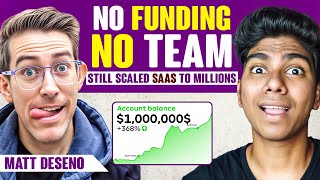
Matt Deseno built HL Pro Tools and ZappyChat from a failed agency into a $10 million ARR SaaS business by focusing on low-ticket, high-volume products and direct outreach instead of paid ads. He credits HighLevel's platform, a team equity model, and obsessive attention to retention metrics with the growth.
Chapters
What's going on? What's going on everybody? Welcome back to another episode of The Nikhil Sai Show, which is hosted by me, The Nikhil Sai. And guess what's going on today? We're back with another amazing guest. This time the guest is quite unique and different compared to the typical ClickFunnels entrepreneurs we actually bring in. And this time we are bringing an entrepreneur who's actually a visionary, and he's founder of multiple companies and products. And his journey is very unique in its own sense and has a lot of ups and downs that I would love to talk about the journey overall. And we actually met at a HighLevel summit when I was speaking there. We met, we shook hands, and then we actually spoke to each other and had a real conversation and became friends when we were behind the scenes in the backstage room before we get the awards at Funnel Hacking Live. I'm excited to introduce none other than Matt D'Azzeno. Hey, Matt.
Hey, thanks for having me.
Appreciate you, brother. Excited to talk to you. It's so easy. I mean, everybody in the HighLevel community, they know you as the support guy, like the HL Pro Tools is like the go-to in the, in the HighLevel space. At least people who actually have higher number of SaaS accounts, I've seen them repeatedly use your name overall. But I would love to get behind the scenes into like your actual journey. Like who is Matt? Like how did he become the founder of HL Pro Tools, ZappyChat, and all these cool startups, SaaS Awards, ClickFunnels Awards, Affiliate Awards. I saw you speaking at the Affiliate Day as well when we were at HighLevel Summit. So show us behind the scenes, like what went into your journey in the first place before you get here.
Yeah. Yeah. I love it. Uh, I mean, if I go way back, it started in, uh, 8th grade. I had a teacher who taught programming and so I kind of geeked out and, and started to fall in love with the world of, uh, languages and, uh, programming and coding into, you know, I was 18, 19, 20. I was freelancing. Uh, I would just, um, do, it's like side hustle projects kind of a thing. But when you're that age, like, I don't have, I don't have a job or anything.
Mm-hmm.
I. Graduated, actually I went to university. The school that I was at had a horrible computer science program. So I was like, this is— I was like, I remember going in like the first week and I was like, they are teaching stuff that's ancient. And I was like, they were just so behind the times. This was 2007 for me when I was starting university there. And so I ended up, I ended up with a degree in Spanish of all things. So I spent some time living abroad, studying abroad. I spent so much time in like Latin America that I was like, I have a Spanish degree. And it was just because I took the class, like I, I, I was in Argentina and I, I took classes. They were like business classes or econ classes, but it's taught in Spanish cuz the university there. And so it counted as like it, it's an econ credit, but it also counted for like a Spanish degree. So I came back, I was like, I have a Spanish degree. So yeah, that's, that's, so kick it off freelancing. And I was just started like an agency, marketing agency, just like, actually it wasn't marketing agency, I was design and developing. I didn't really do the design. I like hired out, contracted the design. I was just a developer.
Okay.
And so for the first 4 years— this was back in— this was 2012. So 2011, I graduated, still side hustling. It was 2012 technically when I started the business. I was like, I should make this a real thing. I was dating a girl at the time and she went to study abroad. That girl's now my wife, but like she went to go study abroad and I was like, what am I going to do with all my time? It's like, well, I should turn this like side hustle into a business. And so I registered it as a business and that's when I started. But I was just I was kind of fortunate in timing— or not timing, location. So my school was Pepperdine, it's in Malibu, and I— there was just like high, high-end clients right there. So I would get clients like surfing or going to like the grocery store or just like being around. I was living with like 5 roommates in a condo, you know what I mean? Like trying to live as cheaply as possible, but you're next to these mansions and, and very wealthy folks. I kind of got into this space of, they were health and wellness businesses. There was a number of business owners who were there and they kind of had brands in the, um, you know, national brands in the health space and, um, started doing Shopify sites. Um, but anywho, so kept on doing that and it was, I got married in 2014, uh, bought our first house in 2015. And this, this is where one of the first kind of corrections for me is we were job shopping. They'd come in, we'd bid the project, you'd have the job, and then it was done. There's nothing afterwards. And I couldn't explain why, but I remember in the last few months of 2015, we just bought this house, we're spending all this money, and we were not taking on new businesses. Everyone I was talking to, they're like, "Great, we'll start in the new year. We'll start in January, start in January." So for October, November, December, I got no money coming in. And I had a small team, and so we had obligations there, and I basically hit a cash flow crisis. I remember in December. And, you know, it's like end of the year, people, holidays, buying gifts and stuff. And I'd go to my wife and be like, we are, we're, we're broke, we have no money. And I literally got down to like, um, I kept, you know, you had to like reserve some cash, like pay like the mortgage and stuff like that. But yeah, I, it was all on credit cards. I was just like, we just have to be on credit cards because I have no money. Like, I think it's gonna come in January. And it was, it's shouldn't be a big deal, but for me it was like traumatizing. Like, I had never been in debt. I had never had that. I guess I had the house that I bought on loan, but I never carried credit card debt. I never carried like that kind of consumer debt. And so to not be able to pay it off and have to live on it, like a switch flipped. And my wife is very— we balance each other out. Like, I'm the risky entrepreneur, she's like the very safe planner, you know. And so this idea that like I was already risky in the sense of like her Her dad was like an engineer, her mom was like a doctor. It was like that kind of space, like very predictable kind of careers kind of a thing. And I was like this, you know, just like seemed very risky, like an entrepreneur, you know, do your own business kind of thing. And I felt like I'd failed. I felt like, you know, I totally whiffed. And so the big shift there was that's when I, that's when I realized I was like, I want to sell something that people want yesterday, not something that it's like nice to have in the future. Because all what we were doing, they were kind of like improvement things, you know, slightly, slightly better and good to do stuff. Yeah. I think people are surprised by this too, cause it's like, so 2016, I'm like, I gotta learn marketing. And so in hindsight, people are like, oh Matt, you know so much. And a lot of it's cause I fell in the ClickFunnels world. So I was like, just started studying from Russell. I remember we were like, we were like, we should build landing pages. Started in that, uh, signed up for LeadPages. I think that still exists.
Yeah.
That's, yeah, it was like a, whole— it was so limiting. I was like, is there like a more flexible version of this? And someone was like, ClickFunnels. So fell into ClickFunnels and my mind just like exploded of like— and so that was like so much of my early like marketing education was just learning from Russell. Yeah. And I, uh, so we started doing marketing. We're— we, you know, I started doing marketing and focusing on recurring revenue. So everything we did, like immediately it's like, I will sacrifice the upfront sometimes cash or higher ticket or stuff like that if I could get stable recurring revenue. And so for a season it was really tight, but I was like, I'm going to choose to be tight for the stability and the security in the future there. So like, I, yeah, just totally changed my mindset. So I would take— we started doing lease-to-own websites, which were basically just like higher retainers on websites, but now they're anchored to a property. And so these are established businesses, but we had sold websites up to $300,000 for a website. Which sometimes blows people's minds. But like, this is LA, Santa Monica, Malibu, and they were— this was— it's— and you're like, Matt, how did you come to this price? I asked people what their budget was. I just kept on asking them what their budget was. Like, that was it. And I, I was just like this young kid who's just like, I'll do— you know, it's like if someone— I remind folks, if you go to like a car dealership and they're like, you know, like, let me help, let me show you a car, you have to have some constraint. And it's not weird to be like, what's your budget? Because if you tell me your budget is $50,000, I'm not going to show you a $300,000 car. be silly.
Yeah.
But if you tell me your budget is $300,000, I'm not gonna show you a $30,000 car. That would also be silly, right? Both of you get you from A to B, but people come with expectations and budgets there. So that's when I kind of learned that you could just say, what's, what's your budget? All I will work within your budget. And so that's how we, that's how we ended up.
Yeah. That's, that's a pretty insane takeaways I had from your story, which is having recurring revenue and taking that initial revenue hit for sustainability. And right time, right place, being able to be in Malibu and having those conversations and then being price flexible, not being afraid to charge what you're actually worth according to their budgets. Now, what was the first million-dollar business? What was the first Two Comma Club business you brought in? Is that the marketing agency or like—
Yeah, the first Two Comma Club was the marketing agency. That was the first time I like, we had a funnel, like even like, you know, did that. Now to be fair, the first version of it, it was, it was an application funnel. Like we still like took it in. Um, they were higher ticket retainers. It was, it was the marketing agency. It was not, I wouldn't say the funnel sold them. The funnel was like, it was a lead gen, lead gen application funnel was more of the style there, which is common for every application.
Yeah.
Yeah. Very common that we were just a service as opposed to like coaching or anything like that. So we were service application-based funnels is the first one we did there. And, um, yeah, we ran that until we actually ran it until 2020, but the big, the next big shift there was in 2018. So accidentally I was kind of a big Shopify affiliate. So Shopify back in the day, you just build a site and deploy it. And they're like, you're an affiliate. I didn't even, I wasn't trying to be an affiliate. I was just trying to build the site. And they had a thing where it's like, you build it this way when you're building it, you don't have to, the client doesn't pay. They don't start paying until it literally goes live. And so I was like accidentally a Shopify affiliate. And I was like, well, this is cool. But so I stopped doing Shopify sites in 2016. So when we kind of went into that space, it's so weird in hindsight. Like we had all these e-com clients, but I was learning marketing that people were saying, Hey, if you try to do marketing for like e-com, it's actually a lot harder. You should do marketing for like local businesses. And I was like, okay, I don't know what I'm doing. So I'm like, I'll, I'll trust your advice here. In hindsight, I probably should have like, I should have just doubled down on the clients that we have. But so we got like hard pivoted, find a new process, getting clients to local. But so I, I wasn't doing any more Shopify stuff, but I had the commission coming in. And, uh, one day it was like October, it was the fall of 2018. Um, all of a sudden it just didn't come. And I was like, what happened here? And so they had redrawn the lines around their commission structure and, uh, I no longer qualified. So it was, it was a steep hit. I forget, ah man, what's the math on it? It was almost $100,000 a year to me to do nothing that disappears. And like in the moment I thought, oh, this is my retirement. This is good. Like this is going to be solid. You know, it's like, ah, and then it disappeared. I was like, in my mind for a second, I was like, affiliate marketing is a scam. Like it's a trick because the businesses, if they get big enough, that's what happened to Shopify is they go public, they sell their shares. Now the owners are thousands of people who own the stock and they ask them all, who wants to keep on paying the affiliates? And everyone's like, boo, screw the affiliates. And so they just like cut out the affiliates, you know? And it's the, and it's the people, the people voted to stop paying me. I was like, oh man, what a bummer. But so then I was like, okay, I gotta, I gotta own this thing. I got whatever we refer to. I was like, I wanna own the thing because we found so many times it's like, why did the client show up on Shopify? Well, because I told them to go with Shopify. They didn't care. They could have gone WordPress or whatever else.
Yeah.
We'll go and so when we were doing that as an agency, we, we had started doing that for more other, other things. We were affiliating these other brands for different pieces that we need, right? If they're like, oh, I need Zapier, go sign up for Zapier, kind of a thing. Use our affiliate link. So then I was like, oh, we gotta own the software. Like, we're doing this, doing this wrong.
Yeah.
Because ultimately they're gonna cut us out. Oh. Or like they'd stop paying for our service. They keep the software. So that was when, that's what led me to HighLevel. So it was December. I tried a couple, like immediately I was like trying to find this thing. We started building something. I was like, I'm gonna just build this thing just for two-way text messaging. Imagine this back in the day, that was a big deal.
It is.
We had, we had text automations, but they'd only go one way. So you'd send like an appointment reminder of like, hey, you know, your appointment's coming up. And if the client replied back, like, I'm not gonna make it. I don't know. It just goes into the ether. And so we had evolved into kind of a performance-based, uh, agency pay-per-show sort of thing. And so it mattered to us if the appointment showed, cause we were running the ads, we built the funnels, we, you know, set up the nurture sequences, all that to, to get them to show up. And so, yeah. And so January of 2019 signed up with HighLevel. I think we were one of the first.
That's like a newborn baby back then.
Oh, it was super baby. So, um, but it did, it had the two-way text messaging. That was like it. That was like, oh, They literally launched it in December of 2018. I joined the Facebook group. There was less than 100 people in the Facebook group, like their GHL official group. Now there's 100,000. And so the 100 folks, there I am. And I'm like, this is great. But there was like one, there was a couple critical things we needed. They didn't have custom values. So your contact had like name, email, phone number, but I wanted to like create dynamic sequences where it'd be like, you know, um, Hey, you know, whatever. Like if we take on the form that they're having like back pain, it's like, why are you having knee pain or back pain or stuff like that? I wanted to make my nurture be like, hey, you got the appointment coming up. Um, you know, I see here you're suffering with some back pain. I think we've got some great solutions for you. Right. And it just swaps it out. So then you're like, ah, I see here you're suffering from knee pain. They didn't have that ability. They didn't have what we now call custom fields. So I went back to HighLevel and they're like, well, we got this ideas board. to Sean and he was like, just post it. I was like, posted it. No one, there's only 100 people in there. Like no one cared about, I was like, please guys, how are we going to do? So they let me pay them. I really, in hindsight, they just made this up. So they let me start paying them $5,000 a month and they'll just build out whatever we wanted. So, so I, I like invented the like premium subscription. They don't do this anymore. They stopped doing it because it made like a point, it gets silly. But so we pushed through custom fields, uh, changes in the calendar, the funnel builder. And so there was a number of things where I was like, This is what we want. This would be great. So, and that's what we did. So we launched a white label version of HighLevel. They didn't even have like SaaS mode, but like that's why I did it. I was like, I can own time.
Yeah.
You can own this. HighLevel was charging $297 a month. Like that was the biggest plan they had, $300. And we connected our Twilio account, our Mailgun account. Like you just, we just owned all the pieces. That's, that's how you had to do it. Assembled it all together and we just launched it to our client base. So we had a few, you know, a few hundred folks to turn into subscribers. I was like, great, I have, I have this SaaS business. And so the first, in that regard, the first two comma club, uh, that I did that was like payment on a funnel.
Hmm.
It's weird to think about, but back in the day when I signed up for HighLevel, I signed up on a ClickFunnels funnel. Like they were running on a ClickFunnels funnel. That's how I bought it. That's how you had to buy it. And so when I was selling white label of HighLevel, I sold it on a ClickFunnels funnel. And so that was the, um, yeah, the first piece in that. A year later was COVID. That was meaningful for us because, um, I'm based in California. Local businesses got shut down. Shut down. And we were performance-based. Just, we were performance-based and we did something in hindsight. So we did like net 30, net 60 terms. They didn't have to pay us for a month or 2 months later. So it made it easy to get clients on because imagine I'm saying like, I'll literally grow your business and then I'll send you an invoice and you might have 30 more days to pay me. So we'd work in January, send an invoice on February 1st and it was due on March 1st. So it was very easy for them because I thought like, if I can make you $30 grand in January, even if I invoice you $15 grand to do that, if they were a recurring business, I'd be like, you should make more money from having the customer. And like, I, I, I charge you a percentage of the front end there. Which worked out great for us up until this point, because what happened is they all got shut down and started stiffing the invoices. But that was for work past due, you know what I mean? So imagine, like, so I get it. So it's like the work we did in February when everything was great, invoice hit on March 1st, it was due on April 1st. And they're saying like, well, we're, we're not even, we're not open. We're not sure we're going to be open. And I'm like, but this is, I, I'd already paid the team. We were running ads, all this sort of stuff on it. And so Um, yeah, I had, it was, I think it was just in a crisis zone. I had more folks go out of business, you know, they just paused their businesses. Uh, but I got stiffed for a lot of money. And the hard part was I was sitting there and they would not pay our $10,000 invoice, but they kept on paying their $200 and they didn't know. So we kept them as separate brands. So we ran our brand like, like we did, like we just affiliated our own brand. Right. So imagine What, you know, where I used to say like, sign up for Skippy. Oh, I said like, sign up for Dewey is what we call our thing. So like, sign up for Dewey. That's it. So, but I could see they're paying for the software over here and they're stiffing me for the service over here. And for the service, we did like ACH invoices like this. This was credit card on file. And I so badly wanted to be like, charge them now.
Yeah.
Oh my gosh. But it clicked again. I was like, I want the bundle of many sticks. I would prefer. A lot of low-ticket customers where it feels like they're paying for a utility, right? Like your power bill, you don't, you don't, you can't, you don't even think about changing it. You don't even think about like not paying it. You're like, this just keeps the lights on. It's like, I'm going to keep paying it. So that was the, the, the, um, we looked at things that we were doing and we started just fragmenting it, uh, like breaking it off into its own potential brands.
Mm-hmm.
Um, in the marketplace. So that was the birth of HL Pro Tools and ZappyChat. So we were doing, we had created, uh, this is crazy. I think this is 2018, 2019, 2020. We were using AI via Google's Dialogflow to book appointments. Now this is like totally common space, but it was not common space back then. And so we launched ZappyChat. It's hard for people to believe in 2020, and it was an AI booking solution. So it could do the conversational appointment booking.
Oh yeah.
Via messaging.
I think the first one I've heard was ZappyChat as well. And back then, like, there was no ChatGPT. It was called like Playground and stuff.
Like, no, yeah, exactly. It was like, even, even when we, uh, yeah, we used Dialogflow and even when we started to incorporate OpenAI's model, there was like DaVinci. Like, there wasn't ChatGPT. It was all pre, you know, pre all this stuff.
Yeah.
And so, yeah. So, and then HL Pro Tools, the original vision was we had built some like cool little add-ons into it. And I had it as a bonus that we would run support. So it was literally, it was like, hey, subscribe to the tools. And as a bonus, we'll, we'll run support. And immediately I was like, oh, this is backwards. Everyone, like, they want the support, especially for folks that have customers. They're like, oh, this is great. You'll run 24/7 chat support. Because for me, I was already at the team that was running support for our customers. Yeah. But you just find like, if I have someone sitting there, I'm paying them for $2 an hour. We might have like one person chat during that time, you know, so you're just paying for the time. So I was like, oh, what if I could have them do the exact same thing? Yeah, just more. So it's kind of the concept there was, you know, sell your sawdust. And if you think about like woodworking, um, so there are companies like if you mill wood or whatever, when you're cutting trees to make planks, you end up having sawdust. It's a, it's the byproduct of what you do, but it's interesting because not a lot of people will compete in producing sawdust because you should really create planks of wood. You know what I mean? It was like the accident. It was so high cost 'cause we had a whole domestic team or US-based, we're doing this thing. It's like no one else is gonna start up and be like, I wanna make this. It just wouldn't make sense as a standalone company. So we were able to launch with the aftereffect of what we had essentially are.
And what timeframe are you talking when you started like HL Pro Tools service?
Yeah, it was July of 2020. We're coming up on the 5-year anniversary.
Wow, that's pretty cool. 5 years journey. That's pretty awesome. Congrats. So, so you started the service piece and what happened from there? Like how did it blow up in the, in the HighLevel space?
I don't know if I'd say it blew up. I mean, maybe people say it's all like, it's all in retrospect. We were just like steadfast, kept it going. There was, I mean, I made it through that year with like PPP loans and, and just hustle. Oh yeah. It was not an immediate overnight, but, but it, um, it just stacked.
Like that was a 5-year overnight.
It's a 5-year overnight, but I'll say. I don't know if I've been super public about our numbers there, but like, you know, people— that's fine. I think it's good for people to know. It's like, you know, we, we, we got businesses doing, you know, because we're recurring businesses. And so, you know, we've been able to cross, you know, $10 million a year. And it's not like that happens immediately. The trick, the trick, if you will, is keep being good and like have something people would like keep buying. Cause I see a lot of folks, they struggle because they get and lose customers. Like that's all, that's always like the struggle.
Yeah.
Yeah. The churn and burn. And so it's like, turns out if you don't churn and burn, you just get and keep. Um, and you're not gonna be perfect, but even if just like the bar's so low, but like do focus on that, focus on being good and, and delivering something that people like would want to keep on buying. And then it sort of, I don't wanna say accidentally happens, but it's just like, you don't have to, you, you're not like super trying. Like we, we did not run ads for ourselves, which is crazy for the first 3 years. We've only been running ads for ourselves for 2 years. So for 3 years it was just word of mouth. That's, you know, and so, and then it's just been a lot of learning process there because I'll tell you, like the difference of because we're so team heavy too, I feel like we're team heavy, we're low ticket. And so I feel like we have the complexity of like a $50 or $100 million a year business, you know, so, so we, we have more complexity than we should. And so when I talk to folks, it's like we got good friends in some of the masterminds and they're like, oh yeah, we resonate. But they're like, they're doing like $90 million. It's like, The difference between, like at that point, it's like, just raise your prices. Like that's honestly the secret. I could keep the same business model, just raise my prices. But the weird thing there is I've really wanted it to be, I just resonate, I don't know if you're familiar with the brand Arizona Iced Tea?
Mm-hmm.
Are you familiar with this? They're just like a, it's an iced tea drink. It's a drink, it's a can.
They have the same price, you know?
Same price for, they're 99 cents. Everyone else is, it's actually, it's like cheaper. Their iced tea is cheaper than if you go to the gas station, you get their, Arizona iced tea is cheaper than if you buy a bottle of water. And someone asked him about it and he's like, you know, there's two ways you can kind of compete there. And I really just like passing off efficiencies and I've weirdly benefited or I just get like a personal satisfaction when it's, when people find and experience a disproportionate amount of value. And so that's where it's like, I know I could be more aggressive with, with our prices and just cater even more premium and, and probably grow Faster, sooner, but I'm like, I, I, if it takes us whatever, I don't know if it takes us twice as long, but, but there's a huge loyal base, you know, it's kind of the approach.
I think you're playing the volume game. You want to keep them forever for a long time.
That's right. Yeah. It's like, it's, it's a volume play. And I think the key thing for me is like, there's your reputation is the one thing that like stays with you. And so, um, it's very difficult to start to have thousands of customers. And so you realize a good proxy for this is to just be inherently like lower ticket.
Yeah. So the expectations are lower as well. They don't—
Expectations are kind of lower. And so if I'm like, oh my gosh, even for the lowest paying customers, like I'm, I'm very certain you're gonna get 10x the value. It's great. Cause then even as you have mistakes in the growth journey, you're like, well, yeah, it was like a little bit of miss— it's like when, you know, like this happens a lot in tech products where like we have that kind of relationship where you're like, Oh, they, I mean, HighLevel does this all the time, right? You're like, oh, they had a bug or something didn't work. But you're like, but man, it's so much cheaper than if I were to like go and get all these other things. So because of that value arrangement, you give a lot more grace. And I'll say growing a business is hard. Entrepreneurship is hard. And there is, when you're bootstrapping, if we haven't taken funding, we're not like have a ton of investors that kind of like gloss it over, you know, you'd be like, you know, Uber, whatever these like companies where they just raise a ton of capital and do it. Yeah. They can do a more polished version from the start. Even they are going to make issues. When you're bootstrapped, it's even harder. And so it's kind of a gift there if you can have a big mass of customers who experience it like huge disproportionate amount of value.
Yeah. It's interesting that you say that you have like a little complex business and I agree. I mean, I'm looking at what you guys are running. So you have your HL Pro Tools service side of the business, then you have all of the technology and the, you know, assets you're building continuously and updating for your clients who are using HL Pro Tools. Then you have ZappyChat as a product on the side, then you have your SaaS business and you do affiliate. How do you even handle all these things which are going on and talent acquisition operations? And I'm assuming the higher ticket people who want to buy, you know, at the premium price, they're still talking to you if I'm not mistaken.
Yeah, yeah, yeah. We still serve some high profile clients and, and, um, and they're obviously higher ticket, um, because that's what they're looking for, looking for a premium service there. And so I, I think the trick for me has been I don't— I'm— I've never had a problem with, like, letting go, if that makes sense. So I— the ism, I says, like, you know, deficit creates opportunity. And usually you think of, like, deficit as, like, it's lacking, something's missing, right? So my own definite deficits, um, there's things that I'm not good at, or I can't do, or I'm limited in. So it's like your limitations— maybe it's a better way of saying it— your limitations create opportunity for other people to fill the gaps and people in your business. This is weird. Your business will only grow as much as you do.
Yeah.
So hard. And so where people can stall is they will focus on trying to grow one of their limitations as opposed to creating a support system around them. So they get to take what might be a level 9 skill and grow that to level 10, as opposed to spending their energy taking a level 3 skill to a level 4. And so that's what I've been able to do is I really have been able to insulate myself with people, appropriately motivating people. Like I've got 4 big goals right here on my monitor. And it's like one of them is, uh, I share this one a lot, but I want to raise kind and confident human beings who want to spend time with me when they no longer have to. So for my kids, that's like a big target there is like I want to raise kids who want to spend time with me. That are kind and confident in the world. The other one next to that is I want to help 5,000 people be financially free. And truly, I believe one piece of that and a big chunk is my team. And so I think for them, and so there's appropriate alignment. I think people would be surprised with how little that I take out of the— I'd say out of the business, because I've chosen to put appropriately motivated A-players around me. You know what I mean? And so it's like feeding the business. I could have a bigger chunk of a smaller pie, and I'd rather have a sliver of a huge pie where there's multiple people who are focused every day on growing that, sustaining that, delivering that beyond me. You know, for HL Pro Tools, I don't think we've been super public about this. Like, we actually distributed ownership of the company to the entire team. Yeah, we just gifted. So it's, it's called like an ESOP, right? Yeah, essentially. We just gifted them stock in the thing because I was like, for this to be good, I need all of us to act like owners. And I could try and like, I don't know, brainwash you into thinking you're an owner. I could just make you an owner. And so, uh, two things happen. People that are not motivated, they didn't want to be owners. They, they self-select out. And then the other folks that are like, I want ownership. I want to treat this like it's my business. I want to treat our, our guests and our customers like they are, like the buck stops with me. And so I was able to recreate that by literally just being like, Here you go, guys. And so that's pretty awesome.
I've seen HighLevel promoting their like eSaaS kind of option to affiliates. I was like, wow, that's so cool. That's a nice strategy. You know, it won't be any Shopify moves anymore with affiliates.
I've appreciated their commitment. They're doing it different and they really set a good standard there.
So like, I kind of have a mixed feeling. I would love to know your opinion when it comes to like the SaaS side of the, you know, HighLevel business versus the affiliate. Like I've seen most people who tried scaling their SaaS, end up being super affiliates and like winning all the, the crazy awards in the affiliate side while doing SaaS. I would love to see like, where do you see the vision of HighLevel and what do you recommend if somebody's getting started with the HighLevel? Like, you think it's better to just build a SaaS side or is it just better to be like, hey, I'm an affiliate and just build that side of the business?
I'd say know yourself and your skillset and don't feel judged by that, right? So I'll, I'll create a different parallel. If you ask someone like, what's more valuable, buying or investing into apartment complexes or buying and investing in single-family homes? Like the apartment complexes, no doubt. You know what I mean? This is why there's syndications, the Doors. It is a more valuable thing, but it's way more complex.
Yeah.
You know what I mean? And so like, actually, I'll tell you, this is a story. It's like me as an investor, I've taken a lot of money and put it into real estate now. And so I've done some syndications and I've done some single-family real estate, and I almost prefer the single-family real estate because it's so simple. And I'm like, I get it. I'm a real estate dummy. I fully understand. It's like I bought the house, some person wants to rent the house, they pay the rent, and like, that's it, you know? And on the like apartment complex, you're like, you have managers, you've got all these crazy lines of credit, all sorts of companies, improvements, all the sort of stuff, right? But like, no one's debating— maybe some people debate, but I think it's pretty clear the multifamily mass real estate is the more valuable skill to have, but it's, it is a skill and it's more complex. And so I'm okay saying I don't have the skill, I'm gonna play the easier game here and I might not have the crazy returns that someone else does, but like, it's fine. So I'd say the same thing. Owning a SaaS brand is a way more, it's just way more valuable. It's a sellable asset. You cannot sell your affiliate portfolio. I mean, you can try, but basically you selling your affiliate portfolio is a red flag to any investor.
Yeah.
So think of all the things you could do, just equate it to like things you could grow. If you own something that other people want to buy, is that probably more valuable, right? Yeah, it is. So that's what we're just saying, like which one of these venues is more valuable? It's like, ah, it's not really debated. If you could grow a brand that's facilitated by a software and the value that it brings, that is a sellable asset that multiple people want to buy. But it is more complicated. It is way more difficult. It's just a harder skill to run and manage. And so like, so we had, over the course of time now. So now I've been able to invest into a number of different brands and we can— this one we're public with. So we, we bought— there was somebody in the high-level space kind of early on and they'd grown the brand in the chiropractic industry. They had a partner who was a chiropractor who wasn't very involved and he was just there from day one and it was no offense to him. He would say he was a deadbeat partner. And so we bought him out because we were like, we can help you grow this thing. We understand this process. You can go way bigger than you are and you're in the industry. This is really good. And so we bought out his partner. So then we had, uh, um, you know, still a minority share, but like almost, you know, we were significant partner there and, um, grew it. And then we just sold it this last September for multiple 7 figures. No, no one's even if I have, um, even if I'm getting $1 million a year in affiliate commissions, no one's going to pay me $4 million for that.
Yeah. Mm-hmm.
If I was getting $1 million a year in the SaaS business, if I was getting $1 million a year in the SaaS business, they would actually pay me like $10 million for that. That's what's really about— no, I'm saying, I'm saying profit. Cause both of those, when you're in the affiliate side of it, let's say you got the commissions coming on. It's easy. It's light. I don't have to do it. I can have $1 million a year. But if you wanted to go sell that, I don't think you could even sell it for 4. I think, I think you maybe get, honestly, I think you maybe get like a 2X multiple on it because it's a red flag. They're like, Why? This is guaranteed to happen forever. Why are you selling it?
Yeah.
And so if you go out there and look at like people who are selling affiliate accounts, usually it's 1x because they think it's like, you know, something they don't. Million dollars a year affiliate, that'll— you could sell it for $1 million. Million dollars a year, like bottom line profit of a SaaS brand, you can sell it for 10. And so, um, yeah, there's no question. And you look at your, your bigger players, there's a reason why the biggest players are using it as a, uh, under their own brand.
Hmm.
But I'll say there's complexity, there's skill involved. Like one of our, probably one of our bigger clients is, and they, they've spoken about it, so I feel okay saying it. So it's Tony Robbins and Dean Graziosi for mastermind.com.
Mm-hmm.
And they run a huge operation and it's all on top of HighLevel. It's sub-accounts into HighLevel. Like that's how they deliver.
Yeah.
Thing there. Um, you know, you, you'd look and say like they, this is also, they're at a scale and level where it's like if they were affiliates, the high level would be 40%, which is great. They own their own brand and I'd say they net like 80%.
Wow.
So like double what they make or could make, right? And then a sellable asset. So even if you don't wanna sell, let's say you're like, I've, I've got it, I don't wanna sell it. You could take, You can take loans out against it, right? Which is just like you would with like that. The banks do not love loans against affiliate. They just like, won't, they basically treat it like, like a job. Even if you're like, no, no, I've got this thing. They're like, that's no, no, no. That's like, if you have a business, MRR, very different. Like they don't treat it like a job. They treat it like an asset. So in the same way there, so that's what I'd say. People are complex. I don't think it's, doesn't have to be either or. I think just be real with yourself or your skill level. And I'll say I did it. It's the same thing. I did it accidentally. I did not think I was gonna be an affiliate. That was not, that was not the playbook at all. And so I'll say that's the benefit too. Gonna be like, think of the skills that stack here. If you just focus on delivering tons of value, getting good at, it's kind of the communication part of it, the marketing piece of it.
Mm-hmm.
Like I win affiliate contests now, not because I was like, I'm gonna be an affiliate, but it's because I have a very high engagement, a high read rate on my emails. Like I just focus on delivering so much value. And so now if I tell someone like, hey, this is kind of a cool thing, maybe you wanna check it out. People are like, oh, I trust Matt. Let me, let me see what It's there and try to really be discerning of like, is this gonna bring value to the other person? If so, if they're gonna thank me for introing them to it, then like, yeah, I feel good about that.
That's the best way to affiliate.
It's the best way to, it's the best way to do it. And the interesting thing, if you want, you can do that for yourself as well. Yeah.
So I love that.
There's, uh, um, that's, that's what we found as well is there's a lot of interesting, if you're good at that and you can build an audience, you can pretend like your own brand is, is an affiliate.
Yeah. I love that. I mean, ultimately like, Building your own MRR under your business is probably the highest value add. But it's interesting to see all the top influencers in the HighLevel space also are biggest affiliates for running a SaaS business and affiliates. I was interested to ask about that. Now, quick question. You are the nerdy coder guy, you know, who turned into an entrepreneur and marketer overall. And we talked behind the scenes when we were at FHL about like AI and how you're using it. I'm kind of curious on how are you guys incorporating AI into your company and where do you see this evolving? In the support side? And a lot of people, I'm assuming hundreds of thousands of people in the world are support agents right now. And how do you see that transitioning in the next few years?
Yeah, it's going to be interesting. I mean, it's the disruption's already happening and every piece there is going to bring a big shift. Because I'm so committed to the people side of it, this has been interesting. I look through the lens of where is the, is there going to be value in inefficiency? So if you think about this, there are people who you can get the, the cheapest made product stamped out of a factory, and then you can get like the hand whittled version of it, the hand carved version of that same thing. And people will intentionally pay more for an inefficient method, if that makes sense.
Mm-hmm.
And so the interesting thing is I think there's potentially still space there. What will happen is people will need to raise their skill. So that's what we focus on for our team is like, hey, if you're gonna have a future here, odds are the majority of frontline text-based communication is gonna be AI. It's gonna be good enough that that's gonna be it. However, there probably will still be people that want to interface with another human being. I—
interesting.
Yeah, I know. Like people might say, no, it's never gonna happen. But you'd be like, how many people sell, how many people pay for university every year and they learn things that are for free on YouTube? Yeah.
Millions, if not billions.
Yeah. This is like a billion-dollar industry and you're, and, and so if we're here saying like, oh, no one's ever gonna want to pay to talk to a human. Everyone's just gonna be fine talking to AI, I'd be like, then universities should already be gone.
Yeah.
Like, it just shouldn't even be a thing. Cuz all that knowledge, it's out there on YouTube. And so the fact that like, there's already these, call it, it's predictably irrational. There's certain things that as humans, we are predictably irrational. We make decisions that we shouldn't make for preferences we really shouldn't have. But the reality is we have them. And so in the same way, I mean, you just look at like, yeah, so you can pick all the things apart for us. I think we're still invested heavily into making things as efficient as possible. So there's, there is probably going to be a divide there. So it's like the cost of a version of like taking care of folks will be lower level for like check the box. There is something that can support them. And then I think it'll just raise the bar for people that are good at communicating. And then the test will be, is there a material connect? And I think for certain client clients, there will be.
Have you talked about that?
That's quite interesting. Well, this is the service industry. Everyone that provides a service to somebody else, they're like, why would you ever pay for that service? But to somebody else, they're like, I definitely would. Right. So it's like, I paid off someone to do the lawn and the garden. And other people are like, why would you ever pay someone? You can do it yourself. It's like, well, yeah, I can, but I just like, don't want to. So it'll probably become more of like managed support is what we move into is so it's, it's not helping you. You're not going to a human to say, How do I do this? You're going to a human to say, can you just do this? And, um, and there's high level's an interesting space too. We, we face this all the time and, and are like, anybody who says I've got an AI solution for high level, uh, this is why right now they struggle cuz it's moving so quickly. Imagine. And so AI has all the information that ever was and was out there.
Mm-hmm.
And so its ability to give you incorrect answers because it's just a 2-month-old answer or a 2-year-old answer, right? Yeah. If you have something that doesn't change a lot, AI's really great. These are like, if you're trying to learn a framework that's been 10 years, 20 years old, it's like, oh, it's great. You can do that cuz it hasn't changed in years. When you're on a platform where it's like, it changes weekly. Yeah. It changes weekly. And the people that make the changes don't start with, here's the lesson of how to use it. Sometimes they don't even know. They're like, we released it. Let's see how people use it.
Yeah.
And so in that space, you're like, there is still this gap where there's at least humans involved with translating changes, uh, the actual information into something AI could then use to repeat the answer. But that nuance, which we face on a daily, is like, people are like, I just saw this new thing come up. And the reality is there's sometimes there's no documentation for it. Well, how's AI supposed to help them if there's no documentation for it? Like, so, so that's what we're focusing on is the skills that are uniquely human and probably gonna be catering to folks that want just human support, but AI is just going to be a huge leverage there for just buying a ton of time back.
Interesting. And what's like the vision for you? Because you as a leader have a very interesting perspective on building companies, which I don't usually see a lot. I mean, I've encountered a lot of entrepreneurs and they usually have this profit first, get cash out of the business, build assets, and that's your net worth. Like that's what your main thing is. And this is a cash cow business. You just withdraw, right? You milk as much as possible. But the other way around, you know, you're building this heavy service-based business, people-oriented business, which again, a lot of people are not seeing it from the same lens. Like, oh, AI is coming and why do you have 5,000 people vision, you know, to be on your team? I'm kind of curious, what's the vision, ultimate vision, like 10 years down the line, the 15th anniversary of H3 Pro Tools? Where do you see the company? Do you want to sell or like, do you still like to keep running it?
We've always been Yeah, we've always been open to it. I actually think, you know, if I was— I think, I think HighLevel should buy us and I think we should become the implementation arm for HighLevel because they're sitting there with folks that would love— like, they'd be like, can you just do it for me? And HighLevel's like, no, we don't do that. And they say, you know, go out in the marketplace. And so at some point, not right now, builders build, but buyers buy. And so at some point, HighLevel will sell enough of their shares that there will be people there and they'll say, why don't we have a services, like department? And they'll be like, oh, okay, we can go build, build one. And they'd be like, yeah, that sounds fun. Let's like hire people that have never used HighLevel and then like train them on how to go and do this thing. And so we'll be over here saying like, even we've said it for their support, like even their own support, they constantly struggle with this because it's a cost center for them. And so if all I have to do is say, even if it's break even, Right. Imagine they're a company and they're like, wow, we could spend whatever, X million dollars hiring people to set up this department. And it will cost them negative X million dollars. If I could say, hey, for negative, for X million dollars, you can have the department and it makes X million dollars.
Yeah.
It's like to them, they're like, oh, we could be negative X million dollars or zero. And so all I have to do is be like, it's zero instead of negative X million dollars. And so I think that's— we'll see. There's no guarantee to anything there, but I think it would be a win-win for everybody involved. And, and my— I designed and orchestrated so the people on the team, they're the ones doing that, that are really like creating positive, incredible experiences, would have a life-changing experience if that were to happen. And I— it is something interesting. I mean, my encouragement to everybody, one thing I did is I shifted a lot of my digital funds into real estate. You can do whatever. But I just picked something boring that I thought like, this is not crazy. Like right now there's a ton of uncertainty and I feel like great because what I did is I got to the point where like we can, I can cash flow my life, um, from things that are not digitally connected. So the economy goes like crazy unless like, I don't even know what happened. Like there'd have to be a surplus of houses that, that would be it. Like, yeah, for, for me to be, for me to be affected because I have a ton of tenants that technically pay under market rate on houses that are paid in full in cash. And that money pays for a manager and then pays for my life. And so as long as I can be disciplined to like live beneath like what I make over there, everything else is just an awesome fun game. And so then, then I'm driven by what is the story I'm going to tell to my grandkids when I'm 80 years old.
Yeah.
And I would love, I would love it so much if, if this was like a fun season was like, hey, we got this cool, awesome team. We focus on solving great problems, just trying to be a better version of ourselves every single day. And on that team, the company got bought and all these people's lives were changed. Yeah.
I love that story.
For folks on the team, like, even if you've got a portion of this, imagine, you know, big teams would split up over, but like, it would pace out to, it'd be hundreds of thousands of dollars to each person on the team.
Each person. Yeah.
I can see that. That's like, it's like a rich relative dying inheritance kind of thing. You know what I mean? And, uh, I know it's weird, but it's like, if that happened, man, that, that's like a chapter I'd want in my book. Yeah.
Have you prompted a seed? Sean, if you're watching, maybe.
Have what?
Have you, have you talked to the founders with the vision you have with the hedge fund?
They, they know, but I like, and I'm not, I'm not rushing anything. I'm not rushing anything. Like I am saying builders build and buyers buy. Yeah. Right now I love it. They are builders building and I'm like, I'm like, go build, build, build, build. It's great. I love it. So that's anything I can do to support sending more people in the ecosystem, like making it stable, easier for people to succeed. I love that all. It may not be— who knows how many years. Right now they have enough investors that like there's kind of a playbook that those investors run by. Latest investor, they're going to want to get some sort of cash return in at least 5 years. So in at least 5 years, HighLevel is either going to run another round or go public or, you know, and at that point then the company will be controlled by buyers. The majority of owners will be buyers. Buyers are very much, like I said, the buyers are then going to say like, what can we buy? Like, what can we buy to keep growing? Yeah, that's exactly right. And so, yeah, they're phenomenal founders doing incredible work and we're just stoked to be along for the ride. But yeah, it will probably be the next generation of controlling interest. That will be when those conversations will materialize.
So yeah, sure. And Matt, so Matt, before we close down, I have one quick question. Everything around you're doing is all about people. And I mean, I've seen that live with myself and you, the team you have is incredible around you. I'm kind of curious, how do you find the right people and weed the wrong people out? Because especially when you have that empathy, it's kind of hard to see like underperformers and have that, oh, I don't want to fire them, give them another chance kind of situation. So how do you do that exactly? Well, how, like give us a people skill masterclass.
Oh man, okay. But okay, so this is the interesting thing. Is it is— I still insulate even that in me. So you're right that like me alone could not do it. I'm just not wired that way. I get taken advantage— it's weird to say I get taken advantage of, but I let myself— I don't even mind being taken advantage of. Isn't that weird? It's like I would prefer, um, it's probably like some childhood trauma programmed into me where I'm like, I don't even mind it. And I still, uh, You know, it's like, can irk me a little bit, but what I've done is insulated myself. So I think one of the most important skills as an entrepreneur is self-awareness. Just know yourself. There's so many great kind of like personality profiles. Russell's big on this, like just all of these sort of assessments and know yourself, which is really helpful because then I can see my gaps, the areas that I'm lacking in. One of those you're talking about is like, I'm not the shrewd perfectionist that drives performance.
I'm not.
So what do I do? I hire shrewd perfectionists that drive performance around me. And so, uh, yeah, it'd be, it's like, if you just think of the more you know yourself, the more you know where you do not excel. And then it's like, like to your point, I think it's, it was a shift in a growth period there of like, just, just be humble along, along the process there. And like, for me, that's, this is kind of like a life goal is I want to grow in humility as I get older. And, um, so it's like the more, the more I do, the more I know, the more I realize I don't know. And so if you can come from that perspective, ask other people, like, yeah, wise people would say, hey, you need a culture of excellence. You need to be high performing. You need to continue to challenge yourself to be elite. I was programmed. I wasn't programmed, but like I had a thought. So one of the other things, one of the other little, I don't know, these are literally Post-it notes. Now this is like, this is right. There's that Post-it note. Oh, literally just Post-it notes. So one of these, is the, um, I have a six-pack in 25 years. I just hit 365 days a year. It's actually, I'm at 367 days. It's been over a year of just tracking what I eat. I track what I eat and I, and I walk and I can tell you right now I have a six-pack and I've never in my life, never in my life had a six-pack. So as I keep on growing, you're like, there are, um, a lot of wisdom there, like to do this and do it well and to have an impactful company, you got to You gotta create a winning culture. It's okay if I know myself, I'm not a natural. It's like weird. I'm not a super competitive person. I'm not like a born athlete or anything like that. Um, but I intentionally hire and surround myself with people that are, and they drive it home so, so well. I'll say like December of this year, this is kind of crazy to think about, but December of this last, this last December I had had, um, so we had our third child in November. At the same month, weeks prior, my father-in-law passed away suddenly, literally just walked in the door and fell down dead. And it was super traumatic. Thank you. But it was, I was in like a kind of depressive state. It's been a weird, like, especially in a zone, like you're processing so much grief. I was not present. I couldn't, I could not show up. I know a lot of folks that like, because the business relies so much on you, you're like, if that happens, it's fine. Like things take a hit. I had the opposite effect. I had like the biggest returns in everything across the board in the season when I was feeling the lowest, felt the weak. I was not showing up. I, I was not posting on social media like I was used to. I had cultivated a discipline of like just being public, posting daily stories, all sorts of stuff. I did nothing. It cut. I still actually haven't gotten back to it. Like I stopped the podcast. I saw everyone's like, I just, I was not in a space where I was like, I'm not in the right space to publish right now. And there's no doubt I admire, like, there's great— you can push through that. That was my instinct. I was like, I'm gonna push through. And then I realized, like, I just need to sit in this. I need to process this because it's okay. It's the full spectrum of life. Like, this only happens once. For me, it felt like it was a father to me, and to, like, lose, uh, you know, a father, it's like, that's a big— it's a big thing. It's a big loss. Um, the weird thing to sit back and be like, like, I made more money than I've ever made in any realization ever when I did the least. And it is crazy. It is just ridiculous and crazy. Um, it's counterintuitive to people though, because we will count the cost of putting that support around us, and what's hard for us to kind of quantify is the opportunity cost of not having that support around us. You know what I mean?
That's a deep one.
Like, we multiple people. I should champion this more, but I like, you know, multiple people paid multiple six figures a year. And, um, yeah, so we're, we're not like a big, we're not a big organization that underpays. It's like, I continue to push, like, if I could pay premium, like, I will. And I want to, I want the highest performers to have the highest payment. Like, that's it. Like, that's how you can attract those kinds of people that are great talent, like they're going to, they're going to be high cost, but it's like, Is it high cost? Is it high cost when I can fade away and all of a sudden everything gets better? Now it's silly, you know what I mean? And so, yeah, in the moment you gotta like pay for what you can afford in that season. But I am a huge advocate of reinvesting into who, not how, to, to resolve and strengthen your weaknesses, those gaps. And, uh, and that's kind of— that's, that's a cop-out answer to like, how do I do this? It's like, even that I've been able to—
I love that. I mean, there is no way I think the size of the business and the complexity would run without the team, like A-players you actually have, because then it's up, like, I mean, yeah, I would burn out in like 3 seconds looking into your company. Like before you want to open a file, I'm like, ah, you know? But yeah, like walk us through like an average day right now. Like, I mean, I've seen you speaking on stages, you know, you show up for these type of podcasts and you, you know, you go and you network with people, you're in masterminds already and you're having a six-pack, which is a pretty big, accomplished, how are you even managing? And you have kids.
Yeah. So, yeah, you know, so my schedule right now is interesting. Um, it kind of changes season to season. I've had this kind of rhythm before, especially when we have like a newborn. This is typically what I'll do. So I'll, I'll wake up early and just go straight to work. That's right now. My ideal season, if you ask me, like what I was doing in August, it's different than what I'm doing now because we got a newborn, right? So like right now, I'll, I just wake up, 5:30 and probably start connecting with people at like 6:00. And it's all internal. It's all team stuff. If people need me or there's regular, like there are certain folks that still report to me. So I'm like, I still, um, will meet with them for, you know, once a week kind of a thing. And, uh, that's until 7:30, 7:30 to, uh, 1:30. I'm getting my boys up, getting them ready for school, take them to school. And then I do whatever in that middle gap there. Like, we have a 3-year-old, so he's not in school, but he just hangs out with me. So we go to brunch or do whatever. Today, uh, we did some manual labor. I was cleaning out a shed. But like, it's so funny too, because I thought— this is the thought that I had— I was like, man, I could hire someone easily to do this. Like, this is— it almost feels like silly to do it because my wife will say like, oh, it's great, we're saving money. I was like, this is like nonsense. I could make so much more money doing something else in life. But what, like, you come back to it now, it's like for a 3-year-old, he loves it. Like construction, hammers, all that sort of stuff, manual labor. And I'm like, you know, this is good. I want to be able to teach my kids how to like swing a hammer still and do stuff like that. So we did some— I was cleaning out a shed and we kind of have property, a little kind of farmy. So but like, that's what we like. It's like, oh, we can plant vegetables and like we've got fruit trees and chickens, the whole sort of thing there. The manual labor. Uh, I— the, uh, weekly— we run on EOS, which is Entrepreneurial Operating System. That's kind of like our organizational structure there. And so, um, I still attend the, um, two, two of those. Call them L10s, like, I don't— Leadership 10. I don't know what it stands for, but, um, so the marketing one, do that meeting, and I got this podcast, and then I'll go work out after this.
That's it. Yeah, that's pretty cool. And anything else you would like to say to for folks from HighLevel who are actually listening to the podcast who are trying to get their first 100 SaaS users or trying to grow their business and whatnot as an advice before we close down?
Yeah, I think if I were to give you— if you could focus on the smallest predictable action to get you to success, like right now, like what did I do? I just tracked what I ate. I didn't even have like a plan. Yeah, I started tracking. What gets measured gets managed. So at first I was tracking and I was like, gosh darn it, I mean a lot. And then it's like, well, how— if I wanna lose weight, I'll just Budget less. And then some days I would cheat. I cheat at least once a week, but I track it. I track it. I hold myself accountable. So it's like, if I have a day where it's like, I'm supposed to be on 1,600 calories and I have 2,300 calories, let— I look that in the face and be like, yep, I cheated yesterday. And so what happens naturally, you are like programmed to like kind of adjust the next day. So find that small, those sort of like actions and habits you can hold to. So if you're growing, like, Do people even know you exist? I, I just say like DM, you could just DM businesses on Instagram around you.
Mm-hmm.
I've done this. I, I did, if anybody wants, it's 5-Day SaaS Accelerator. I did a whole challenge where I just did this and I was like, you can grow, think about this, you can grow past 100 subscribers in a year just by DMing. Like I think it was like 3, 3 businesses on Instagram around you, local businesses around you. I gave you the script and everything if you want it, but it's not rocket science. To get there. It's accountability and it's like the discipline to actually do it. And I think my biggest encouragement is— my biggest encouragement is when you look at— when you acknowledge where you're at, what the gaps are, what the deficit is, it's just be honest with yourself. Like, that's the key, is be honest with yourself. Because then if you ask questions, you're curious, you just reach out to— people are super generous by and large. And it's, it's when you don't have like a spirit of humility, that's where people struggle kind of by themselves. And I mean, you get out there and then it's just like the small actions. I think like it's the concept of chop wood, carry water. If you live in the wilderness, like I actually love like camping, stuff like that. Like that's actually what you need to survive. You can, if you can get fresh water and heat, you can live for a long time. Just those two things. You can stay warm, just chop wood to like have a fire and water. Like those are the bare essentials. And your business has the same thing there. It's like, do people know you exist? And you don't have to jump to paying ads. You just gotta DM somebody. You could get creative with delivering value out there. But, um, yeah, just, just the, Little things there. And then I actually, to your point, if you want to try out and be an affiliate first, just to prove to yourself that you can get someone to buy, I think that's a totally great skill to stack because it won't even feel like selling. You'll just be like, hey, this'll help your business for free. I'll set this up for you to help your business. And then for free is like use the affiliate link. Now you're only gonna make $38 a month, like just to show and build your credentials and build your confidence in yourself. They're like, oh, this, this is worthwhile. The next time you do it, if you say, Hey, this'll help your business. And now you pay $97 as opposed to— you make $97 as opposed to $38. Cause you just put 'em under you, do the exact same process there. So that's, I don't know if that's—
I like that. Yeah, that's, that's pretty insightful and yeah, it's very actionable. Appreciate the advice. And guys, hope you enjoyed the podcast today. And if you did like the podcast, please share it with other high levelers. And Matt has given some insightful actionable steps anybody can take who's running a SaaS business. Affiliate business or any business in general, because he has very insightful ideas about how we could actually scale. And Matt, thank you so much for sharing your wisdom and giving us your time today, and we hope to have you again in the future.
Yeah, thanks for having me.
Bye-bye. And guys, if you still haven't checked out HL Pro Tools, I'll make sure to add my affiliate link in the description. Go check it out. I'll see you guys around.
Bye.
Thanks.
More from Nikhil










BURNED $1.5M in his 17years online #digitalmarketing #entrepreneur #onlinebusiness
