From Selling Pensions Offline to Building 3 Million Dollar Businesses ft. Mark Knight | The Nikhi...
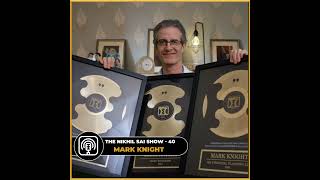
In this episode of The Nikhil Sai Show, host Nikhil Sai interviews Mark Knight, CEO of MK Financial Planning and a three‑time Two Comma Club award winner. Mark recounts his 30‑year career, beginning with selling pensions to bus drivers and evolving into a serial entrepreneur who has built multiple 7‑figure businesses using ClickFunnels. He shares the mindset required for entrepreneurial success—openness, continuous learning, sharing knowledge, and the ability to pivot—while warning against ego, closed‑mindedness, and staying in a comfort zone. Mark explains how to position for high‑ticket offers by mastering a niche, leveraging awards, and crafting clear messaging. He outlines a wealth‑building strategy that emphasizes deep research, testing, seizing opportunities, and investing in a business coach. The conversation dives into the concrete steps he took to scale to seven figures: three years of funnel study, using Russell Brunson’s Perfect Webinar script, reinvesting profits into ads, and focusing on organic marketing. Common pitfalls for financial advisors and other entrepreneurs are identified, such as hoarding resources, analysis paralysis, and avoiding problems. Mark’s productivity system is deliberately simple—Google Suite, phone reminders, a $7/month Less Annoying CRM, and heavy delegation. He describes his daily routine of stretching, reading, task‑listing, and delegating. Advice for newcomers includes picking a niche, immersing in ClickFunnels, and starting early. Mark reflects on his biggest achievements (family, financial freedom) and future goal of helping the funnel community, admits his biggest mistake was delaying the start of his financial‑advice firm, and credits mentors like Frank Kern, Russell Brunson, and his first business coach. He promotes a free Facebook group for advisors and a broader community where he shares tips.
Chapters
What's going on? What's going on everyone? Welcome back to another episode of The Nikhil Sai Show, which is hosted by me, The Nikhil Sai. And guess what's going on today? We are back with another amazing interview. Today we have another 2 Comma Club Award winner. It's going to be another great podcast, so make sure to stick around. And guess who's the, who's the actual guest hopping on the podcast today? This guy is crazy when it comes to financial advising. He's been a financial advisor from almost 16 years. That's where expertise comes from, right? And he started working at a job at different financial institutions, now actually built more than 3 7-figure businesses helping financial advisors, built his own financial firm at a different stage as well. So yeah, let's not waste any time and welcome Mark Knight, CEO at MK Financial Planning. Hey Mark!
Hi Nikhil!
Glad to see you on time, brother. Thank you so much for taking out time today and hopping on this podcast.
No worries, thanks for having me.
Absolutely, Mark. Like, like, your journey is so crazy. Like, you know, started at a different stage, now helping advisors to make good money, helping multiple people, dozens of people make six figures. Like, the impact, the level of impact you're creating on this planet is just amazing. It's truly inspiring. So, Mark, we would love to hear your backstory. Like, how did all of this craziness started?
Um, actually, I've been a financial advisor for almost 30 years, but I've owned my own company for 16. Um, when I first started as a financial advisor, um, I kind of— I know now, I didn't know then, but funnels are all about, uh, sharing your, your niche with your target market and, um, ideal clients. And believe it or not, the first job I got in an insurance company, my target market were bus drivers. And so my funnel was the buses. I used to sit on buses all day and drive around and just have journeys with the bus drivers, talking about, talking to them about their pensions.
Wow, that's just amazing. So yeah, it's like 30 years of experience in financial advising space. That's a real expertise, brother. We would love to hear more about that in a second. So let's get into the next question, Mark. So again, you've been into this industry from decades actually, right? So like you have seen all type of entrepreneurs, business owners, financial advisors who have different type of mindset. And with your core expertise, you understand like what it takes to be a successful entrepreneurs at a mindset standpoint, right? So we would love to learn from you like what do you think is the mindset to be to be a successful entrepreneur, like the mindset shift they need to actually grow a business?
Um, I think, uh, you need to have a few, um, a few things. You need to be open-minded to ideas and suggestions out there. I think you need to be ready to learn as well, and I think that comes hand in hand with being open-minded. You know, there's so many times I've sat down with my colleagues and other financial advisors and I've said 'Um, this— try doing it this way, how does that sound?' And they say, 'Well, I always do it like that.' And they don't always do it like that, because if they always did it like that, they would have the same kind of success that I've had. So, uh, the minute that you close your mind to something, you're not going to scale and grow. Um, the other things I've learned is that you need to be ready to share what you've got. It's no good hoarding it and keeping it all to yourself. And the world changes, it's really dynamic, so you need to be able to pivot and move with the things that are being thrown at you. Those are my key, those are my key mindset to success attributes, I think.
Yeah, that's, that's amazing. That's amazing, Mark. Like, we really see like a lot of people who have that closed mindset. Yeah, you know what, I've done that, and But if they have really done that, they wouldn't be the situation to listen to us or, you know, to talk to us, right? They would be in a different situation. And I really admit the way you're actually articulating the, the need to pivot the businesses because like it became like a pre-COVID to post-COVID situation. Like the, the business, the way businesses function is just night and day, right? And if you cannot pivot your business in a different model, you're gonna be crashing out. That's just amazing, brother. So, and again, Mark, like, we see a lot of financial advisors in this space and any business owners in general, like, they really have that, that really like a burden or, you know, like a mindset issue to actually start charging premium, right? But the way to actually create a higher level impact and to deliver higher level results is like when you really start charging high premiums, premium for your products and services, right? So would you like to tell us more about like how someone like a business owner or a financial advisor can start positioning to charge high ticket for the products and services?
Yeah, I think, um, I think you need to understand, uh, your niche and understand how to make, uh, somebody go from one step of that niche and marketing to the end goal. Uh, being able to listen to people as well is pretty good. I think, um, from my point of view, I'm I'm positioned quite strongly as the only financial advisor to, I think, have had— well, you know, I've got 3 awards, so, uh, 3 Two Comma Club Awards. So that's, that's pretty strong, the fact that I've been able to replicate the success using different, um, models. Um, and so I, I think, I think that's key. I think that's, that's really important.
Yeah, absolutely. Once you really understand who they are serving, now they can actually start with the exact audience and use the right messaging, and the messaging is the key for positioning. That's really great, Mark. Thank you so much for the kind answers. So let's get into the next question, Mark. So as you are into this financial advisor space from a long time, like, you kind of know what 99% of the usual day-to-day people don't know, which is the strategy to build a real wealth. Would you like to talk like in a brief way, like, what is the strategy to build a real wealth? Because you've seen people who make 6-figure years but in the end they don't even have a couple thousand bucks in the bank account, right? Like they really just blew it up that way. So would you like to tell us a strategy to build some real wealth?
Yeah, I think, um, obviously to do most of the things in, in marketing you need to spend time to understand what it is you're doing. So I think when I started off my own financial advice company in 2005, I paid for a nice, bright, sparkly new website to be built for me, thinking that as soon as I press the trigger and press go, that I'd get lots of clients coming into me. But the website was my ego. It was all about me. It wasn't about what I could do for the clients. And I didn't get any calls soon, so I sat there for about a week, I think, and realized that it wasn't working. You know, I even paid some money to Google Ads. I had Google Ads coming to, you know, paying for Google Ads to come to my normal website. It just failed. It failed big time at the first hurdle. So I then sat down and spent 3 months researching How do you— how to get online marketing to work to get clients to come to you? Because I didn't want to pick up the phone and cold call. I didn't want to go out and get— do networking was my worst nightmare. I didn't want to go and try and get referrals from clients that I was getting because that's just cringeworthy. It didn't work very well. So There were loads of people out there who were doing online marketing back then. This was the early stages of online marketing where you had like a one-page website that probably took you 20 minutes to read to get to the bottom, to the offer, that type of thing. So 3 months researching that, and I had to think about the risk side of it. So could I afford 3 months of not getting any business in? To study something to get to the end result. So that was my risk analysis with that. And I realized actually that I thought, you know, I've got savings behind me. If this works in 3 months' time, I'm going to be able to replenish those savings quite quickly. The other thing I think is really important is to spot opportunities and not just spot them, but also grab them and run with them because for a long time I've thought there's 3 things that you can do when opportunities come your way. One is that you can see it as an opportunity, grab it and embrace it and work with it. You can spot the opportunity and just watch it fly past you and just ignore it, not take it, or you can just miss it. So the opportunity comes to you, you don't even see it as an opportunity, and it just goes. I don't know which one of those two last ones are the worst ones, but spotting opportunities and grabbing them, that's always worked well for me, let's put it that way.
Yeah.
And I think the final thing for me, Nick Hill, was the day I realized I needed a business coach. Was the day. It was like a light pinging off in my head. I got the business coach, and within months, we were working on a plan for me to sell up my company and pivot and start coaching other people to get the same kind of impact that I've had in my life with other people.
Wow.
So that's— yeah, that's strategies to building real wealth.
Absolutely, Mark. And yeah, like, people really need to admit, right? Like, they really need to admit what's going on. And they definitely have that self-ego as an entrepreneur that they just want to showcase themselves as a business. But it's more about showcasing what you can do to your clients, because that— like, nobody really cares who we are until we can help them, actually, right? So we really need to come from that standpoint. And I absolutely agree on the point being which you said is having a real coach who can actually help you There's a lot of noise in the world with the overload of information. We get into this analysis paralysis, like we do 100 different things at a time, put a lot of things on the table which may not work in the end. But if we have like a coach, I think they can help us to craft an action plan to help us scale in a predictable way, saving thousands, if not hundreds of thousands of dollars into costly mistakes. That's awesome, Mark. Thank you so much for amazing story. So let's get into the next question, Mark. Like, I wonder I really wonder, I really admit, like, how did you actually scale multiple businesses to over 7 figures? Like, how did you actually do it? Like, people are struggling to make— like, they're stuck at the level where they're actually struggling to make a consistent 5-figure business, but you have built multiple 7-figure businesses. So we would like to learn what it actually takes to build that real businesses.
Yeah, really good, really good question. Um, what I would say is that For me, it was all about, um, it's a bit like an art, like a craft, and to be good at doing something, you need to understand it and practice it and keep going at it. And so, you know, I go into the ClickFunnels, uh, ClickFunnels official, uh, Facebook page, and I see lots of people who aren't prepared to put that kind of effort in, and they're looking for you know, the pill, the pill, the magic pill that will give them the answer to all of that. There is, there is not a magic pill out there. There's hard work, study, and effort. And when you put these things together, I think, I think it works well. So the things that worked for me, I already told you that in the first, in the first real 3 months of my business, I didn't do very much except study the art of marketing to get clients to come to me. And then this was like, this was full-time, Monday through to Sunday. Most days I was doing it, studying what I could do. And there's so much stuff out there that it's easy to immerse yourself. And there still is so much stuff out there. So what I didn't say was when I employed my business coach, he asked me what is it I wanted to do with him. And I said jokingly, I just want to work 2 days a week. And he said, okay, fine, let's do that. So I was kind of shocked that he, as a business coach, he thought that he could work it so that I only worked 2 days a week. In a business that employed 20 staff. It didn't make a lot of sense. But for 2 years we spent doing that. And it was during that time I thought, actually, and we'd also laid out plans for my eventual sale of the company as well. And I knew that after that I wanted to start coaching and helping other people, financial advisors, you know, and other people in different niches as well. Get success. So I thought, what better way than to create as many 2 Comma Club Awards as possible? That will give me some credibility, at least within the funnel world. And so I spent 3 years immersed again on the 3 days a week I wasn't working, immersed in how to create funnels, proper funnels. The websites I was using previously weren't really funnels, they were one-page sites. So they were, I call them pretend funnels. I think I get away with that phrase maybe. Yeah.
Yeah.
So I just spent 3 years studying how to create funnels and I went to Funnel Hacking Live. I interviewed over 50 Two Comma Club Award winners. I did the Wonderful On Away Challenge several times, and I think the final piece of the jigsaw actually was when I took Russell Brunson's Perfect Webinar Script and turned it into a 10 to 12 minute VSL. I went up and I got 2 of my awards on the back of that. So that's what I did. Study was my first thing. The next thing, of course, is test and measure. So whatever you do, you need to test and measure to see whether it's working. And if it's not working, you need to tweak it until you get it as close to perfect as possible. I wouldn't say anything is perfect. And then I also used the money that I was making, at least some of it, to generate adverts, reinvest in the marketing to test and measure. And then finally, now I know I do a lot of organic marketing. Probably if I was going to start from scratch, organic marketing would be the way to go.
Absolutely, Mark. I think that's really like a blueprint for people who are actually starting a business, right? And the way you articulated the story on how you have pivoted multiple businesses, and people really admitted, like, I've— like, we see common business owners to work like— they think they work like hell, right? They'd be like, oh, I work 18 hours a day. But I'm like, oh, are you measuring what you're working on? Are you checking out the output, right? But they didn't— they didn't really see like what's coming out of their work, right? And that's just really like an amazing, amazing lesson to the people who are actually wanting to scale their business. And you literally like explain how did you do it. That's pretty awesome, Mark. Thank you so much for golden nuggets. So let's get to the next question, Mark. See a lot of not just financial advisors, but business owners making common silly mistakes which they don't even admit themselves. Main problem is ego, right? Would you like to mention like the most common mistakes made by financial advisors and other business owners while they're working on their company, growing it, marketing, finance and all.
Yeah, yeah, uh, so I work a lot with financial advisors and I've, I've been around financial advisors for a long time, but in the last 3 years of my research, uh, I came outside of the financial advisor world quite, quite a lot. So I did see the same, the exact same things across the spectrum. So it's not— so my comments now aren't just about financial advisors, it's, it's just what I saw out there. Ego is a big thing, and that's kind of hand in hand with being closed-minded as well, thinking I know it all. Many people don't know it all. Being in your comfort zone, I think, was also a big problem for me. I think that's why I knew I needed to get a business coach in the first place, because I was so comfortable. Cruising along. And although I didn't at that point in time, I still worked 5 days a week, but I took off as much time as I wanted and I didn't go in till 10:00 in the morning and I probably left at about 4:00 in the afternoon. So I was just cruising. And I think comfort zone is a big issue for a lot of people. Not understanding how to deal with problems as well was something I noticed quite a lot. And so to give you an example, a lot of people I talk to, they're just solopreneurs, let's call them that. It's just them in their business. They're happy where they are with the income that they've got. They're happy with the level of clients that they've got. And so they're in their comfort zone, and they know that if they push to come outside of that comfort zone, there's gonna be some problems that they need to overcome. So maybe they need to employ some staff, maybe they need to do some advertising, and it's just things that they, it's problems that they don't know how to solve, and they don't know how to find out how to solve. I heard somebody say, I can't remember who it was, but I think it might have been Dan Henry said something like, the more problems you overcome, the more likely you'll become a millionaire, that type of thing. So I welcome problems and I don't see them as problems. I always see them as solutions. But most people don't do that. And I think the minute that you do that, you will start moving forward. So welcome your problems, I think. The other thing I noticed as well, Nikhil, was that a lot of people hoard what they've got instead of spending out. So, so my last business coach cost me $25,000. US dollars. The one before that cost me $50,000 US dollars, and the one before that probably cost me about £100,000, £150,000. So I could have kept that money myself and I could have made slow progress, but I decided to pay that money out to get fast progress. And, you know, so I've made multiple millions of pounds on the back of spending out $200,000 on coaching. So would I do that again? Yes, I think I probably would do it again.
Yeah, absolutely.
Yes, I think those are the common mistakes that I see.
Absolutely, Mark, and this literally can resonate with like almost everyone in the market, right? Like literally, and just like they need to pick a right coach and they need to invest, right? And again, like we really see like especially small business owners when they make some chunk of it, they'd be like, oh, I want to buy a nice car, I don't want to spend it, I want to buy a nice home, I don't want to spend it because they are in a scarcity mindset. Still, they're making money, but they are in the scarcity mindset that, okay, what if this doesn't work? But, you know, really investing on something which makes them worry about it, which, which will push them to work on and make more progress. And the coach will actually push them to do that, which is freaking awesome. Mark, thank you so much for amazing learnings. And that's just going to help people to understand where they are at and what mistakes they're commonly doing and probably help them pivot. Definitely makes a lot more sense, Mark. Thank you so much for amazing stuff. So Mark, like, you are running multiple 7-figure businesses. Like, you have so many clients, projects, things you need to work on in person, and your family. Like, you have definitely 100 different things to do every day, and you're a productive man, by the way, because we see that happening day in, day out, right? So we'd love to learn more about, like, what tools you use to manage your productivity, managing your clients and projects and family and everything.
So I might surprise you a little bit. The first thing is I have my phone. Where is that? I have lots of reminders on it set so many times. I've had to silence the phone now because I know that at some point in time a reminder is going to go off to tell me to do something. I try to keep everything in my life as simple as possible because I think we can overcomplicate things very much. So in terms of me coaching people, I tend to use the, the products that are the, the inside Google. The— I don't know if you have Google G Suite. G Suite, put my teeth in properly. Um, but there's lots of things in there like, uh, similar to Word and Excel and things. So I, I create things using that And I have a basic CRM. There's a CRM called, I don't know if you've come across it, Less Annoying CRM. Less Annoying CRM. It's about $7 a month. Yeah, it is. It's so funny. And when I was looking for a CRM, first of all, it came up quite a lot because they advertise a lot and I ignored it. I kept ignoring it because it just sounded so Terrible. But, um, I ran, um, a multi-million pound business on the back of it, and it costs $7 a month. It's crazy.
Yeah, it is, it is. Like, it's delivering great value for just very low investments, which is freaking awesome. So yeah, hopefully people learn like what kind of systems used in the backend so that they can actually using— like, again, guys, in the end it comes to Comes down to simplicity. We see people who are following crazy stuff, using 100 different tools to do tasks. Doesn't work out, right? Look at what Mark is doing. Like, he's just running multiple businesses through basic Google Sheets and reminders. That's it. No crazy stuff. That's awesome, Mark. And, and again, we would love to learn like your daily routines for your success. Like, do you personally have any routines, kind of what you follow day to day?
So my routines now are different to my routines years ago, be different to a routine of a 20-something person, I'm sure. But so I do think I take things much, much kind of slower now than I did when I first started my business. And I realized quite quickly that to be able to to work the way that I wanted to work. I just needed to delegate as much work as possible. So the first thing I do when I get up is I do some stretching. You have to do that as you get a bit older. I do a little bit of reading. And then when I start working, I write down all of the tasks I need to do that day or coming up. And then I look to see which one of those I can delegate to other people to do. So some days I end up not having anything else to do because I've delegated everything out to other people.
Wow.
Those are my ideal days, and those are the days then I can get on and do interviews with people like yourself or just do, just do some recording, some new video content.
That's pretty—
I spend a lot of my time doing, um, video content as well.
Oh yeah, definitely. We see the amazing value you're providing multiple places in your group and stuff like that. That's pretty awesome, Mark. And again, guys, this is just a dream coming true. If you look at what's happening with Mark, again, that's just hard work. It's not going to happen in the step 1. He's in the step 100, so he has built right systems and processes in his business so that Mark can delegate most of his tasks to his team. And you know, once you really figure that out, that emptiness of an entrepreneur, just like what you're doing, will help you craft ideas and business plans for impacting hundreds of thousands of people in the coming days, right? Like, this is very different from the emptiness of people who watch Netflix, right? Definitely something to admit on. Pretty amazing stuff, Mark. Definitely learn a lot of stuff here. So let's get to the next big question, Mark. You've been doing business from a long time into this, at least financial advising space, for almost 30 years, which is freaking great. So what would be a suggestion to a 20-year-old you or someone who is just getting started right now in 2021?
Um, well, so my son is 22 and he started with me, uh, working on marketing and stuff when he was about 17 or 18. So kind of I've already helped him a little bit. He's still working on his niche, but whilst he's doing that, he's got a job with a a funnel marketing company. So he's still part-time in uni as well, university. So he's, he's doing really, really well.
Um, glad to hear that.
Yeah, so I would say, um, I'd say start, start looking at the niche that you want to work in, um, things that feel special to you you can then share that special with other people, um, and immerse yourself. And I'm going to say immerse yourself in ClickFunnels. Now, there's lots of software out there, um, for different types of— to make funnels. But, uh, you have to remember, I spent 3 years research, full-on research in terms of, uh, marketing and funnels. And the one company which consistently came up with goodness for me to consume was ClickFunnels. And so now I, uh, you know, I see lots of people every now and again saying ClickFunnels costs too much, or, uh, this product is cheaper, or this product does everything else well. ClickFunnels made me a multi-millionaire. And so if it's done that for me and it's done it for loads of other people, then I don't care if I can get a slightly less costing product elsewhere. ClickFunnels has got so much education, it's like a university in itself. So choose some niches that you want to work in, um, immerse yourself in those and learning those, and absorb yourself in ClickFunnels, ClickFunnels University. Maybe Russell Brunson will see this and he'll create ClickFunnels University if he hasn't already done it.
Yeah, like you actually have this cool thing called FunnelFlix, by the way. Like, it's similar to Netflix for entrepreneurs. So they have pretty robust courses they have sold for thousands of dollars earlier. They have pumped up all the content and, you know, given it access for free to ClickFunnels users. It's just an amazing software. And yeah, we see a lot of people claim, right, hey, the software is much cheaper and has 100 different options than ClickFunnels, but who needs that? Right, like don't complicate it. Like you just need this basic software. And again, it's costly for people who don't make money or who don't understand business, but it's definitely like— I can bet on this, but at least 50,000 people will pay even $500 for the same software monthly. No doubt on that part, right? Just because of the community and the type of person Russell Brunson is. It's just a crazy place to be in the software community. That's freaking awesome, Mark. Thank you so much. For amazing suggestions. Hope, hope that really helps people to get more clarity on the needs they need to work on and the kind of tools they need to be looking at. Definitely understandable. So let's get to the next question, Mark. What are your life's biggest achievements so far and any next bigger goals in the coming times?
Um, so I, yeah, obviously my biggest achievements are my wife and my children. So I mean, that goes without saying. In terms of, in terms of work, living in a space now where I don't have to worry about money, in itself is an amazing achievement from a kid who grew up on one of the, next to one of the roughest council estates in the UK. I would never have anticipated the fact that I'm sitting here talking to you about millions of pounds worth of funnel activity. It's just crazy. I think my next goal actually is not so much about me, it's about the impact that I'm going to have on others, my children. And funnels have helped me with everything I've got. I want to help the funnel community get more by offering them the kind of support that I've had as well. Maybe help as many people get as much success as they want to get. You know, some people don't want to get— some people don't want or don't need to get a 2 Comma Club Award. They want to get £500 or dollars a month, or £10,000 or £1,000. It doesn't matter. You just— if you have a goal, you just need to, um, understand how funnels can help you reach that goal. And I can help people do that.
Wow, definitely, definitely, Mark. We see that happening all over, over and over with your clients. That's definitely something people need to consider. And yeah, definitely, like, like, funnel is not just like a software or a tool which you are using here. Funnel is just like a concept, right? Like, don't confuse your customer. Give them clear call to action. Be very focused on your messaging. That's what a funnel is. And take them to a sales process online without confusing them. I think people definitely admit it and implement that in their business. That's awesome, Mark. Let's get to the next question. What was your biggest mistake in life so far? You've been in business from freaking long time. So I would love to hear what kind of mistakes you have done.
So I, I started my financial advisor firm in 2005, but in 1998 I left a company. I was, I was a financial advisor in a bank. I left the bank to set up a company all about will writing and trusts and inheritance and things like that. And I remember my boss said to me at the time, well, I don't understand why you're doing that. I don't understand why you don't set up a financial advisor company. And it was the furthest thought from my mind. I just couldn't understand why I would want to do that. So, um, so my niche then was, uh, will writing and making wills for people. Um, and, uh, my funnel— let's put it, uh, the funnel I was using was the payslips for the local authorities. So you'd get your payslip, you'd be able to see how much money you'd made that month, and then there'd be my little advert that said, would you like to make a will or something like that? The problem was my— so my biggest mistake actually was not creating my financial advice firm at that point in time, knowing 'Cause although I didn't think about niches and marketing and all that kind of thing, I clearly understood what I was doing because of the success that I've had. I just wish that I'd done what I did 5 or 6 or 7 years earlier because then I could have started this journey I'm on now much, you know, 5 or 6 years ago.
Yeah, true. You would be much more ahead in the business, right? People definitely admit on what they're doing definitely to make sure that everything goes well in their business. Great story, Mark. Thank you so much. Amazing. So let's get to the next quick question. We have a few more questions here. So Mark, what are your main inspirations for success so far and any key people involved in your journey?
Um, so I think I have to put a large part of my success down to my first business coach that I got. Um, he actually— because I'd been running my company for, at that point, about 11 years, I didn't know how to stop doing that. Well, I knew that there were options, like I could sell it or I could retire and put somebody in my place. But I also didn't feel I could do that. And so he helped me and he gave me permission that I needed to allow me to go on and sell that company and then helped me follow my new desire to coach and help others. But earlier on in my journey, it was the likes— there were people like Frank Kern, Russell Brunson, you know, these were all the people with the long-form sales letters on marketing. So they were my inspiration, I think, on how I managed to click— sorry, start my 3-month lack of clients and start getting clients at the beginning.
Wow, that's definitely amazing, amazing. Hope that people really create a lot more impact just like, uh, happen in your life. That's really crazy, Mark. And Mark, you're an amazing person helping people just achieve their financial goals, building out the right funnels in their business. So where can our audience find your mentoring, like where they can actually start working with you or learn from you?
Yeah, so I've got a Facebook group that I, I've got that's just for, uh, financial advisors. But today, um, I set up a new group for anybody else outside of the financial advisor industry, um, who want to come in. And I'll share my, um, as, as I share my tips with the financial advisors, if I think it works in, in the Worldwide Community. I'll, I'll put, I'll put those tips and tricks in there. So okay if I share that link with the audience after?
Yeah, definitely. I'm actually going to drop the link collected from you and drop the link in the description of the podcast so people can join. So guys, it's a free community with Mark Knight who have built multiple 7-figure businesses, helping you with the right knowledge so that you can shortcut your way reach your goal without confusing yourself and without getting information overwhelmed. So definitely recommend to join Mark throughout the journey in the Facebook groups. I'm gonna add the link in the description, so make sure to check that out. Thank you so much, Mark, for that opportunity for our audience to join. Let them join your group. And pretty amazing stuff, Mark. Really enjoyed the conversation. Any last words before we conclude the whole podcast session?
No, I really appreciate, um, your time today having me on your show, and I've watched a few episodes, so Really like your suits as well. They're really good.
Thank you, thank you. That's a great compliment, by the way, Mark. Really, really thank you so much for this amazing opportunity, Mark. Really enjoyed talking to you. And, uh, that's really amazing, like the golden nuggets you have given. And hopefully people who are listening to this podcast take notes, really listen again. There is an action plan in it on how you can take your business from point A to point B without getting information overload. Make sure to join Mark's group You'll definitely learn a lot of stuff. And Mark, thank you so much for amazing opportunity once again. And hopefully everyone watch this podcast enjoyed the interview today, and we're excited to have you once again once you have that X Award.
Yes, thank you very much, Nikhil.
Absolutely. Thank you. Have a, have a great day. Bye, Mark.
Bye.
More from Nikhil










BURNED $1.5M in his 17years online #digitalmarketing #entrepreneur #onlinebusiness
