From US Army to SaaS Millionaire | The Untold Story of Dakota Routh | Nikhil Sai #digitalmarketing
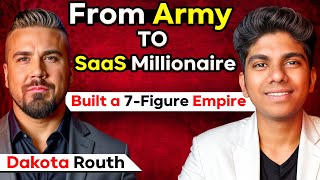
In this episode of The Nikhil Sai Show, host Nikhil Sai interviews veteran entrepreneur Dakota Routh, the founder of Agency Support for HighLevel. The conversation traces Dakota’s path from a U.S. Army counter‑narcotics team, through a successful career in gym sales (24 Hour Fitness, Gold’s Gym VP, boot‑camp owner), to a clothing line and a social‑media agency that led him to discover the HighLevel platform in 2020. He recounts early SaaS struggles—mistaking HighLevel for a solution rather than a tool, painful onboarding, and the costly trial‑and‑error that taught him to beta‑test onboarding and support services. Dakota shares a repeatable acquisition playbook: reverse‑engineer the biggest client problem, focus on a single solution, and avoid shiny‑object distraction. He identifies AI and automation as the most marketable HighLevel‑based offers, and describes his guerrilla marketing approach targeting auto dealers when budgets are tight. Retention is framed around listening to clients, expanding service menus, and building stickiness. A detailed sales framework—"9 steps to a close"—covers intent statements, discovery questions, and tailored pitches. Operationally, Dakota explains how his 70‑person company is organized into departments with SOPs, the importance of rapid hiring/firing, and the knowledge‑base stack (Freshworks for public docs, ClickUp and Google Workspace internally). He also reflects on personal growth, motivation, and the supportive role of his wife Christina. The interview ends with practical contact information for agencies seeking white‑label support.
Chapters
Remember, HighLevel's a tool. It's not the solution. And when we started our SaaS company, we struggled with how to sell HighLevel. We thought of HighLevel as a solution, and that was a mistake. My sales career actually started right when I joined the Army.
How did you go from the gym guy working with Hormozy and growing like EFTs?
I think, I think God kind of opens doors and closes doors for us. They think, well, I don't want to spend any money. That's not good business sense at all.
What would be your best mode of acquisition or marketing?
Imagine you were building a gym and you told the public, I'm not going to build a gym until I have enough members paying me.
What do you think are the best retention strategies?
You know, we all have different learning styles. We all have different traits that we're good at, not so good at. A lot of people miss the real benefit of behind AI. They, they think selling is telling.
What's going on? What's going on? What is actually tuning in today? First of all, guys, welcome back to another episode of The Nikhil Sai Show, which is hosted by me, The Nikhil Sai. And guess what's going on today? I'm back with another amazing guest. This guest is personally close to my heart because we've been friends for a long time and we met multiple times in Vegas and multiple other events. And he's a speaker, international entrepreneur, and I mean, he's been the top 1% small business advertiser back in 2010. Where I was in 2010? Let's not even talk about that. So he's a multiple Gold SaaS Premier Award winner from HighLevel. He won 2 Kama Club generating over $1 million, and now he's helping hundreds of agencies in the HighLevel space to actually grow their business and not be frustrated with support issues and client fulfillment. And he's had some amazing transformations. Many people I know are actually using his services, and he is also an ex-US Army veteran. And let's not waste any time. Actually, let's welcome the visionary founder of Agency Support for HighLevel. Let's welcome Mr. Dakota Ruth. Hey, Dakota.
Hello, sir. You just gave me goosebumps, man. That's a great introduction. Thank you.
You know what? Great stories create great introduction. So you have such an incredible story. I know we have some crazy stuff to share. Before that, 25 years being in marketing and sales industry. Whoa. I know your gym background. We had that story, you know, fireside back chat, uh, you know, when we were in Vegas. And, uh, stop— give us like a quick rundown of your story. What was your entrepreneur journey like? What it took to come here, right?
Oh wow, it's gonna be a long story. Um, it's funny, um, you say that because I was actually just, um, talking about this with a, a mentor of mine, um, the other day. You know, I didn't realize until probably 10 years after I started my sales career that, um, my sales career actually started right when I joined the Army. When I was in the Army, I was assigned to a counter-narcotics team. We called it drug suppression team. So as part of our training, we would interview people about, you know, why they tested positive for, you know, drugs or whatever, and, you know, where they're buying their drugs, things of that nature. I didn't view it as sales back then. A lot of the same techniques that we used to get people to open up and get people to be truthful are the same techniques that we use today. We just, we weren't calling them sales back then. But, you know, when I, when I first got into like real sales, I took a job as a personal trainer and I was like, well, I have abs so I could probably teach people how to have abs and this will be fun. What I didn't realize is that didn't matter how educated or knowledgeable you were at being a trainer, if you didn't know how to sell and get a client, it was irrelevant because I have people to train, right? And they have to buy from you. So for me, um, I had a hard time making that mental switch. So I decided to go actually out of personal training into sales, a sales role within the same organization, in the hopes of getting more education on how to be better at sales. And it just kind of clicked from there. Um, it just— from that point, it was like, okay, now that all this is starting to make sense and starting to come together, um, and I never really looked back.
And tell me about your gym career. And like, we see all the Hermosi books behind, and you have a similar PT start, uh, back in the day. And So give me like a little sneak peek on your, you know, fitness journey of building gyms and working with Hermosi back in the day before Gym Launch. And like, give us like a sneak peek of that.
Yeah. So, so I, I started in the gym business working for a little company called 24 Hour Fitness as a trainer and then moved into sales. I did really, really well. Eventually got recruited by Gold's Gym and worked my way up and became the national vice president of sales for Gold's Gym. And in 2008, I don't know what you were doing back then, but the economy in the US started to kind of fall apart very quickly. And so I decided to do what most people weren't doing. Everybody else was losing their jobs. I didn't lose my job. I decided to quit my job. I wanted to do something that was, you know, more closer to my heart, give me more freedom with my family, things of that nature. And I was at the time working my whole life away, it felt like. I was making really, really good money, but I didn't have a lot to show for it because I couldn't take a vacation. You know, they were— vacations were nonexistent. Couldn't go on a long weekend, you know, couldn't spend extra time with the kids. And that's the kind of thing that I wanted to do. So I quit my job, moved out of town, and then I started a fitness boot camp in a parking lot because I've been working. Because I'd been working for Gold's Gym, I had a non-compete, which means I'd always wanted to do this like boot camp thing. This is back in 2008. The boot camps were like the thing to do, but I couldn't because of my non-compete. So I was like, you know what, I'm gonna do a boot camp. And so we found a parking lot. It was a middle school. We decided to launch it at 5:30 in the morning, literally no equipment, just cars in a parking lot. We sent out mailers, had a whole bunch of people sign up. It went really, really well. And then to speed the story up for you, a friend of mine at the time had a gym in town that was not performing very well, and it was getting worse because the economy was crashing very quickly around us, and asked me to come in and help him fix it. So I had a bunch of time, all hands. Only thing I was doing was teaching that 5:30 in the morning class. So I went in and I was like, all right, I'll help you. And quickly figured out he didn't have any traffic in his gym. So we put together a game plan, got him a bunch of traffic. At the end of 30 days, I was like, "Okay, here we go. Your gym's ready." And that's when he asked me, he's like, "Do you want to buy it?" I was like, "No, I don't want to buy your gym. I don't want to buy your gym. It's losing money." But he made me a deal I couldn't really turn down. Like, all the equipment was paid for and he gave me a killer deal. I negotiated it down even further. I ended up only paying $25,000 for this gym. And all the equipment was paid for. So it was less than 2 years old. So in my mind, I'm like, okay, if it doesn't work out, I'll just sell the equipment. It worked out really well, actually. We started doing— from a membership perspective, we started doing really, really well. Like, we eventually grew to 5 locations. We added tanning salons to our locations, a subscription, and like, we called it EFT back then. I think now they call it MRR, right? From an EFT or MRR perspective, our membership base was growing. But wasn't— what wasn't growing was our personal training department. So it was a little bit broken, our whole process. Like, we had some training clients, but it wasn't like a high revenue-producing area of our business. And we stumbled across Alex and Rosie. This is 2010, about, yeah, 2010, roughly. We, and so we ended up hiring Alex. In fact, he writes about us in his first book, which, which are the offers.
Yeah.
So he writes about us in that first book and then he calls and he cancels on us. I said, what? And I think in the book he tells a story is like he charged us like $5,000, $7,000, but I don't remember that. I thought it was like closer to $15,000 or $20,000, but and then we, um, he— we used his program virtually to fix our training department. Um, um, I mean, he's a talented guy, everybody knows that now, but, um, he was even talented back then, um, to be able to help us fix what was, what was already broken. Um, and it just got us back on track.
Makes a lot of sense. How did you go from this gym guy working with Hormozy and growing like EFTs and stuff, and, you know, the whole gym side, to saying, okay, let's get nerdy with HighLevel and actually build a support agency after that. That's a funny transition. How did you do that?
Yeah, well, I think God kind of opens doors and closes doors for us all. And over time, whether it's working in the gym industry, we had a clothing line at one time where we were selling clothes online that did really, really well. And then eventually started a social media management company. Which is how we found HighLevel back in 2020. And so we started our SaaS company first. And when we started our SaaS company, we struggled with how to sell HighLevel. We didn't think of HighLevel as the tool. We thought of HighLevel as the solution. And that was a mistake. So we spent a good 6 or 7 months trying to figure out how to sell it. And then when we sold it, we still figured out, okay, this part is broken and we don't know how to onboard. And we had to hire somebody to onboard and that didn't work out. Out. And then so we had to bring an internal and we ended up having all these things that we just had to figure out on our own. And it cost us a lot of money, a lot of time, a lot of clients and so forth. So what happened was for, we were in the HighLevel space for probably about 3 and a half years at that point. And we were doing our own onboarding and really doing really well with it. And over time you become friends with other agency owners, you know, like, you know, how I met you and other people. And so one or two of them came to us and asked if I would start doing their onboarding for them. And I was like, no, I'm not set up to do that. Like, well, can you be? And so I was like, I guess I could, but I don't know how broken the system is going to be because we're not white labeled. So what I did is I ran a beta test with them for 90 days. And I basically said, okay, I'll do your onboarding. But I need to know what's broken, what doesn't work, what needs to be fixed, what could be better, things of that nature, because this is going to be a learning thing for us. Like we had the onboarding process down, but not the white label process. And so at the end of the 90 days, both of those, those clients loved it and then asked us if we could do support. At the time, we weren't even doing our own support. I was like, so I was like, no, I can't do your support. And then one of them says, well, can't you? You already have a team for it. Like, okay, I guess I can. I didn't think about it like that. Right. So they gave me the idea to start offering support. So we did the same thing. We're like, okay, we got to look and see what that's going to look like. Like, how do we talk to clients with a widget? How do we have a ticketing system? All that kind of jazz. So same thing, we beta tested it with those people to see how it went. We weren't 24/7 back then. And it went really well. We had really good results. We never really hard launched where we ran like promotion, like, hey, we're going to launch to the public. We just kind of soft launched. And it just skyrocketed. Like, wow, it took off so fast. Most of our clients were coming in from referrals or affiliates, and it just— now we have 400-ish agencies that we support, thousands of sub-accounts that we support. I mean, the number just keeps growing.
Yeah, it's totally awesome. Interesting. This is where like the power of creating solutions already exists, like really, really reveals. You didn't have to do like a Hermosi launch or like some crazy offer. Like they were bleeding neck problems. You just solved them and they were happy to, you know, pay you to do so. And that's That's quite interesting. So now let's talk to the most common high-level user, you know, the agency guy who's listening and he's like, how did Dakota hit like 3 SaaSpreneur Awards and he's now helping all the people, right? If you were to start a SaaS business in 2026 and you have to recreate your journey of getting your first 100 users, what would be your fastest playbook?
Ooh, you know, it's interesting you say this because we're actually starting another agency right now, um, and we're putting this myth this method into play exactly as I'm about to explain.
Spill the beans. Yeah, yeah. Let's go.
So a couple of things. Number one, often agency owners, especially new ones that are being introduced into HighLevel, they get clouded by the shiny object in the room, right? You ever notice that like Clydesdale horses and so forth, they have blinders on the sides of their eyes?
Horse blinders, yeah.
And they're designed to keep them from being distracted. And an agency owner really should do the same thing. So my suggestion for a brand new agency owner who's trying to get into HighLevel and be successful is reverse engineer the biggest problem that you think you can solve. And remember, HighLevel is a tool. It's not the solution. You're the, you're the solution, right? So for example, If I were approaching restaurants, for, for example, what is the biggest problem most restaurants have? Getting people to come back into their restaurant or getting them to come in in the first place, right? So one of those two scenarios, both of them involve leads, both of them involve getting customers and so forth. So if I were to reverse engineer that, how would I solve that for them? Can I, can I solve it by, by bringing, having a loyalty program of some sort that brings their customers back into the restaurant? And then if that's the answer, then that's That's the solution I'm going to put together. And I'm not going to put together any other solution outside of that. Like I'm not going to build websites. I'm not going to manage social media. I'm not going to set up AI. I'm not going to do any of that. I'm going to focus on finding that one solution that I can solve. And I'm going to become the best at solving that one solution. Like how when we launched support and we introduced the white label version eventually, we started with onboarding only. Look, we're going to do onboarding. That's what we did. And then when people loved it, they're like, we love it. We want more. Can you do support? Right? Your customers will start to ask you for, start to tell you, excuse me, what additional services they need help with. But I wouldn't focus on those things until you've become the best at solving that one problem.
Makes a lot of sense. So I completely agree. HighLevel is like a building blocks thing and you try to sell the whole thing at once, you're only getting yourself into a crazier problem by doing so. But I see like how a specific solution can totally be a game changer. Now, HighLevel have so many features. I mean, just in the level of where you spoke, uh, congratulations by the way, uh, they launched 400 more features or something like that and they're still rolling out. I still see like new updates coming in. So if you have to pick one solution that has the most demand in your mind, uh, what would that solution be? What would the offer be, right? Like HighLevel as a platform has so many features. What would be— what do you think is the $100 million offer for a new SaaSpreneur to say, okay, this is what I'm gonna sell which has the demand and I can solve a problem with I think there's two that are close side by side.
You know, obviously, the biggest one that people are noticing nowadays is AI. When it comes to AI, I think a lot of people miss the real benefit behind AI. They're trying to solve one AI solution when AI can solve multiple solutions. And then the other would be automation. So imagine you have a business that is marketing. They understand the benefits of marketing. They're sending out mailers. They have ads on Facebook and Google. They're posting on YouTube. So they get it. They're just not getting the results that they want. But from the leads. And typically what happens is when you have a company that's marketing, there's usually a breakdown in how those leads are handled. So a lead comes in. What happens? Does it go into a CRM? Does an automation kick in to nurture that lead and book them into an appointment? Or are you relying exclusively on human beings to pick up the phone every day and call them, like, to remind them and so forth, right? Which, if that's the case, um, then there's a big breakdown in this, in the system. So, um, so I would, I would say it's either going to be automation or AI, one of those two.
Hmm, interesting, interesting. Yeah, that totally makes a lot of sense. Now, one of the most common problems I see with new HighLevel users is they don't have a marketing budget. Like, they can't run ads. Like, they feel they can't show their face. Like, ideally they don't want to post content, you know, which is kind of very controversial in my opinion. I'm curious, if you would have to start, like, let's say the new brand you're launching as an agency, what would be your best mode of acquisition or marketing? What's, what's that look like in your mind?
So, um, this is a great question. Um, new agencies make a lot of mistakes, right? One of the mistakes they make is that they think, well, I don't want to spend any money until I'm making money. But that's not business. Um, that's not good business sense at all. Like, imagine you were building a gym and you told the public, I'm not going to build the gym until I have enough members paying me to build it, right? I'm not buying dumbbells until we have more people paying us more money, right? That just method doesn't work. So either they need to have an existing audience, maybe they're a coach or a course creator or something of that nature, and they already have an audience that they can market to, or they need to put some sort of marketing out there. Now, there's many different forms of marketing, right? It doesn't have to— you don't have to run Facebook ads or Google ads. You can do what we call guerrilla marketing. Guerrilla marketing is picking up the phone and calling people or doing cold outreach and contacting businesses and so forth. All have their pros and cons, right? Like, obviously, the colder the lead, the harder you have to work to get that lead to be interested in your services. The warmer the lead, the less you have to work to get them interested in your services. So, but usually warmer leads cost more money. So when you have an agency who's like, I don't want to spend any money. Okay, cool. You don't want to spend any money. You either, one, need to have an audience that you you can market to right here, right now, and then somebody needs to go market to them. Or two, you need to get off your chair and go talk to as many businesses as you can to let them know what your services are and be able to offer them offers. So for us with this specific new agency, we're going to be targeting automobile dealers. So dealerships. So we're going to do the guerrilla marketing style. We're going right to them to talk to them, um, and, um, and get them interested in our service and show them kind of a demo of how it works and, uh, and then get them signed up.
Interesting, interesting. I actually own multiple auto stores, uh, you know, worldwide. Yeah, yeah, I do, I do. I, I make my income online and then I put it in like real businesses that create record revenue. So that's interesting. You're solving something for the automobile now. Uh, So I'm curious, you work with a lot of these award-winning SaaSpreneurs who have hundreds if not thousands of SaaS users, right? And there is a decent amount of people who sign up for HighLevel, and I've seen behind the scenes stats like 80% of them quit in the first 90 days for whatever reason, right? I'm curious what works the best, like what's been the learning curve? Like, oh, these are the 5 things that everybody's doing really, really well to be able to like be successful and get as many SaaS users as possible compared to the 80% of them who actually quit within the first 90 days.
Um, I honestly think it's one thing. And you actually just, you answered it in your own question. 80% of them quit. That's the problem right there is that though, if they're quitting, they're giving up. I don't think people go into HighLevel because they have intentions of giving up or they have intentions of quitting. Some people are just built different. Different. Like you and I are built different. Like when we hit a brick wall, we don't fall down and lay on the ground and go, oh my gosh, there's a brick wall there, right? We go, okay, I hit a brick wall. Why did I hit that brick wall? Can I knock the wall down or do I need to walk around it, right? Or climb over the top of it? We find a way to get around the wall or dig a hole or dig a hole and go under it, whatever it may be, right? And oftentimes though, But those 80% of the people, they're like, that wall is too thick. It's not worth it. You know, I'm just going to go back to my 9 to 5.
Yeah. Like the reason I started the podcast was, you know, you have one of those awards, the 2 Comma Clubs, right? So I was like this young kid back in India living in like one room with family of 4 making $300. I saw these people and the award that represents $1 million and I was like, how can I talk to them? Yeah, exactly. I was like, but then I see the hourly rate. It's like, oh, it's $3,000 an hour, $1,000 an hour for consulting. I was like, I got no money, let me do something sneaky. And I started this podcast. I was inviting them and I've done 200 interviews at this point and became one of them in the process. So now there's always this feeling of, oh, they know something that I don't, right? Like when a beginner GoHello entrepreneur sees like a platinum award winner or a gold award winner or a diamond award winner, they look at me like, that guy knows something that I don't, right? So, but it's so funny that it's just not quitting and then just being consistent at it, right? Right now I'm curious, I see many agencies, like I think the ones who are successfully having a lot of SaaS accounts have cracked retention, not just the HighLevel, because there's 100,000 of them actively competing to win same business, but it's actually something to keep value on top of HighLevel that's keeping the customer with them instead of going after, you know, a different SaaS product or going directly to HighLevel, you know. So what do you think are the best retention strategies? What do you think is working the best to keep the clients active if you have to give a masterclass or a playbook on retention?
Oh, um, I think one of the biggest mistakes that people make when trying to grow their business and retain their clients is not listening to their clients. So, um, what happens is, you know, we all have different learning styles, right? We all have different traits that we're good at and not so good at. And often what we try to do is we try to mold our clients into what we're good at and what we want them to do and so forth. Meaning that we I've seen agencies that will create an onboarding process that would work for them, but doesn't work for their client, right? So, what I would suggest is that they listen to what their clients are telling them, right? Listen to the complaints, listen to the praises, listen to the questions that your clients are asking on your demo. All of these are going to be clues on how you can tailor your programs to better suit them. So for example, you heard me say that you should start with one solution and solve that one solution, become the best at it. And I, and that's, and that's still true. But if along the way, half of your clients are like, do you also offer this? Do you also offer this product or this service? And maybe the answer is no. No, I don't. So you find a temporary solution like, okay, I'm going to refer you to Joe Smith over here. Hopefully you'll get an affiliate or something for referring them. But then in the back of your mind, you should be figuring out like, how do I not have to refer them to Joe Smith? Like, can I bring this service or this product internal and so forth? And the more products and services that you can provide to your clients, the more sticky they're going to be, right? Because there's going to be hiccups. There's going to be times where you mess up, your, your staff messes up, the client messes up, and other client messes up, whatever it may be, right? And there needs to be other reasons for that client to want to stay 'Hey, can I stay with you?' And so forth. So listen to them, listen to what your clients are asking for, and then start offering those services.
I think that's so simple, but it's so profound. Like, we know it, we just don't do it. And I think doing is what gets the result, knowing doesn't. So that's a really powerful reminder. Thank you so much for sharing that. Now, my question is about the sales pitch. Like, you are a very experienced salesperson. You've been in the game for so long. So you are like, 'Hey, we're going to pick up and call these auto dealers and selling them SaaS.' You know, you got the game right there. There. I'm curious if, like, many people are like not that extra— like, I was super nerdy when I got started. I barely speak English. Like, my first sales call was 7 minutes, and that guy hung up on me because he couldn't understand what I was saying. But I had to push through and like, you know, learn English to be able to speak. And then I got my accent changed from like the regular Indian accent to actually speaking where people can understand, right?
I can't believe you just did that.
No, like, I could totally speak Indian English, and when I do that, like, people go bonkers because they usually listen to me, you So anyway, back to my question, which is if you have to pitch somebody, right, there's so many features, and yes, you're picking a specific solution, how would you pitch it? What's the best way? Like, like, do you offer a free trial? Do you ask an onboarding fee up front, or do you charge high ticket? Like, there's so many confusions on the sales pitch and the pricing. What would you do? I'm curious.
Um, so years ago when we were in the gym industry, um, we created, um, uh, like an SOP or a framework, steps we call them, to taking a tour from the time that the tour came in the front door to the time that they walked out the front door. Did the same thing for what we call TIs or telephone inquiries where somebody would pick up the phone and go, hey, how much is your gym membership?
Right?
I mean, oftentimes the front desk would be like, it's $29.99 on a $199 enrollment. And they're like, yeah, no. And they hang up. So what we did is we started creating steps or frameworks to handle those TIs, right? Like when a call comes in, here's a script that we ask them and that kind nothing. And all of my sales demos are handled the exact same way. So I have— we've developed what we call the 9 steps to a close. And then part of that 9 steps is number 1, doing some sort of greeting or introduction. Hi, I'm Dakota. I live in this place. Where are you from? You're just doing some warm opening up. And then we go into what we call an intent statement. An intent statement basically tells the person on the other end, the person who's receiving the demo or discovery call, that here's what we're going to be doing. We're going to go through these things. I'm going to ask you some questions. You'll have the ability to ask questions and so forth. Does that make sense? And you get them to buy into it. That way they're not like, well, hey, I got to leave in 5 minutes, right?
And so forth.
So, and then from intent, we go into discovery questions. And this is the piece that I think a lot of people miss. This, right? Um, they, they think selling is telling, um, and that's not the case. The best salesmen on the planet ask the right questions, because how I, how I perceive my solution in my head might be different than the way you perceive the solution you're looking for in your head. But the only way I'm going to know what you're, what you're looking for exactly is by asking discovery questions. So I'll start out by asking, like, what, what problem are we trying solve? Like, how is that affecting you right now? The fact that you haven't solved it, like, what is that? How is that hurting your business? How is it not helping your business? Things of that nature. And you're gathering all this information, taking notes, hopefully, so that way you know how to tailor your sales approach to them, right? And then when you're going in and you're finally doing your pitch, which is typically done near the end of the 9 steps, then your pitch is tailored exclusively around the problems that they already told you that they had and they need to solve. Health, right? So if the problem is I'm not getting enough leads, and am I going to pitch them on, you know, having somebody who's going to make social media content for them? No, I'm going to pitch them on getting leads, but that might include us helping them with social media or either organically or paid. But my whole pitch is going to be getting them leads, getting them leads, getting them leads. And then here are the things that come with getting them leads. When you, when you, when you set it up that way, um, and you show the person in front of you that you're genuinely interested in helping them and you're listening to them, um, number one, it becomes easier for you to solve that problem because now you can have a very clear idea of what the problem is and how the solution is going to end up being. Number two, the person in front of you is actually going to start trusting that you know what you're talking about and that you can actually help them solve that problem.
Makes a lot of sense. That's a very nice masterclass right there on how to sell. I think that's so true. People always think about like I have this feature, I want to sell it, but it's more about like, yeah, the feature can solve the problem, but you just selling the feature won't get them excited to sign up with you. You got to understand what they want to buy and craft, package it the way where they understand it and say like, oh yeah, this is exactly the problem the feature is solving, and then they would be interested. That totally makes sense. Now you are a growing company and you have like decent-sized team, let's put it that way. You could fill like a whole floor. Now, how important it is to like build operational expertise? Because I didn't think many companies are actually getting good at operationalizing, sanitizing processes, and following SOPs and putting people in order. Like, I've built massive teams and it's not fun, at least to me. And I've seen operators like you who actually do this like blitzscaling, and I'm like, wow. So I'm curious, give us a little master class on, uh, building teams and operations.
Well, number one, we call them systems. Needs to be a system in place to handle when B happens, what is supposed to take place, who's going to hit, who's going to resolve A, right? When B happens, who steps in and that kind of thing. So within our organization, we have multiple departments. We have a creative department and the creative department, they handle graphics, video edits, websites, funnels, you know, creative type things. We have a support department. We have a ticketing department. We have a premium department. We even have an onboarding department. Within each department, they all have their own SOPs. They all have their own systems in place and processes to handle specific things when they come up. When, when— so like, for example, we launched about 60 days ago a new service called Premium, and it's done for you. And one of the biggest challenges is that We needed to make sure we had the right team members in place to handle those tickets and a process in place to handle like who gets prioritized. If we have 20 tickets come in in 1 hour, how do we know which tickets to handle first?
Right?
So what you do is you just, you have to empower your team to help you. You as the leader, you're, you're at the top and you're looking down and going, okay, where's my biggest weaknesses? And so forth. And it's almost like playing chess, right? You have to move pieces around like, okay, this person's really strong over here. Can I take them and put them over here and have them create the same systems in this department and so forth? So you need to, one, be able to move those pieces around accordingly, to be able to empower your team to make those changes and those processes in place because you're not going to be able to identify I have a team of over 70 now, and there's no way that I can be in all the places at one time and see all the things that are going on. So we empower the team to make those decisions. Like, you have to make the right hires, right? So that you're hiring the right people. When you notice that you've made a wrong hire, you need to fire them as fast as you hired them, okay? Because you're going to make mistakes. So you need to fire as fast as you hire. And then you need to empower your team to be able to step in and help you grow. You should all have the same vision. Like my team knows that our vision is one team, one dream, right? Like we're all in this together. We win together, we lose together, right? Nobody is, not one single person is better than the other, including myself. So they know that, hey, they can go, hey Dakota, we have a kink in our armor over here that this system is broken. Can we make this change? And they know that we're going to be supportive of that if it's going to make our company stronger.
Makes a lot of sense. That's, that's a beautifully explained way to build systems. I'm curious, this is just a curious question from my side, which is like, there's so many ways to create a knowledge base, right? Like people use Notion, they use ClickUp, they use sometimes a different knowledge base. How do you create like a company brain? What are you guys doing like to be able to create systems and hierarchy and say if this happens then this, this role should do this and here is the SOP for it? How did you build that?
Um, trial and error.
Where do you store that though? Like, do you have any specific tool that you guys use or you're just on basic Google Docs or like how do you guys function?
We use several tools. So like if it's just a simple informational knowledge base, we use a software called Freshworks that allows us to create a public-facing knowledge base that's more so designed for like our clients and that kind of thing. Internally, we use a combination of ClickUp and Google Documents or Google Workspace, I should say. We've got hundreds of terabytes of data storage and basically just create— in fact, this morning I saw the team was working on creating a new employee handbook simply because they've discovered, okay, look, we're seeing this trend with new hires that are coming on and let's just get ahead of it. So let's update our employee handbook and add it. And they did that using Google Docs.
Wow. And you don't even have to make the decision of create a new handbook. And they just decided like, okay, we're a growing team and we have to give a handbook. And they just did it. That's nice leadership. That's interesting right there. Now let's go through a different set of questions. I'm curious, what's your daily routine like? Like supporting almost close to 400 agencies and having a team of 70 and also running SaaS businesses, 3 of them, and now you're building the 4th one and doing podcasts like this. I'm curious, what's like your average day? Do you sleep?
I do sleep, yeah. Um, I'm usually up between 5 and 5:30 in the morning, um, and then I'll have, uh, my morning celery juice. I drink a celery juice every single day. Um, then I go to the gym, um, and I'm at the gym until— I'm usually home by about 7, and then at 7 I'll start getting ready for work. Work. I start my day at 8 o'clock officially. I almost always have my first hour blocked out on my calendar to get caught up on emails, things that might be more pressing that need me, things of that nature. And then throughout the day, I have various appointments that I take. I usually try to block off a couple of hours a day, whether it's in the middle of the day or at the end of the day, so that I can focus on just like personal growth and relaxing. Sometimes that is just sitting outside next to my pool, enjoying the sun, reading a part of a book I'm working on or something of that nature. Like right now I'm reading Gary Vee's marketing book. And so, you know, I chip away at that a couple of hours each day.
Interesting, interesting. Wow. I mean, the good thing is you built it. A very strong team, sounds like. And that's why you don't have to be taking care of the fires unless it's like very SOS, it doesn't come to you. That's quite fascinating to see how you build it. Now, if you could go back and talk to the 20-year-old version of Dakota and you have to give him a suggestion, what would that be?
Don't go out as much. So, this is interesting because I believe that we're all a collection of our experiences, right? So, like the decisions I make today, would I still have made them today if I hadn't gone through what I went through when I was in the Army at 20 years old? You know?
Less likely.
So, I mean, other than, you know, the standard, you know, like I would, hey, buy some Amazon, buy Google, you know, things like that. Bitcoin. Buy more Bitcoin. And things of that nature. I would probably just tell myself to focus on my personal growth sooner. Early on, you know, I was in, when I was in the Army, you know, I was in the Army going to college, but, you know, like focusing on like fitness and being healthy, not so much focusing on education and growing my mind. And I think that's probably the one thing that I would go go back and tell myself is that focus more on growing your mind than your body.
Makes, makes a lot of sense. And if you have to point us back to the biggest mistake you've made from a business standpoint and have us save from that so we don't repeat that, what would that be?
Oh, there's a lot, man.
Um, there's a cheat book.
Remember, um, you know, we're all a com— we're all a collection of our experiences and our choices, right? So So if I had to sum up some of my biggest mistakes, they would, they would all in some way, shape, or form probably relate to not firing somebody sooner than I should have. There's been times where I've even had executive level employees that worked for me that I trusted were doing the right thing. Maybe I wasn't very good at following up. And researching whether they were doing the right thing. And then you find out 6 months, a year later that you've had the wrong person in place this whole time. And I was really early on in my career, I was really hesitant to let go of those people where now it's like I'm a big believer that if I have one person that's a cancer or one person that's wrong, it will affect the other 70 that are in place.
I agree. I think like there's a strong saying, which is like Chain is only as strong as its weakest link. So like that one bad apple is just enough to, you know, rot in the whole, you know, fruit basket, right?
So very true. Yeah, very true.
Yeah, it's pretty, pretty awesome. Uh, what inspires you, Dakota? I mean, you've been in the game for 25 years and you're still showing up, helping these agencies, building teams, and creating SOPs. And of course you're having fun while you're doing it, but I'm curious, like, what's your motivation though?
What's interesting is, is my motivation over the years has changed. If you were to ask me that question at 25 years old, I'd be like, money, money, money, money, money, money, right? And over time, you know, like my, all my values have changed. My beliefs have changed. And just like how I view business in general has changed. Now, like money is a, for us, money is a byproduct of solving other people's problems. And I get more joy out of seeing somebody who just came into HighLevel. They don't even have a HighLevel account and they're out there selling their first deal and you're walking them through how to get their HighLevel account. And then 6 months later, you know, because they've been working with you and you've been working with them, they have 15 clients that are paying them monthly, right? We have a student student who sold his first deal before he even had his, his HighLevel account. And that same student— wow— that same student closed a $40,000 a month MRR client, multiple locations. It's 40— it was a 40-location deal, $1,000 a month, and all of that in 9 months. And this person was working a 9-to-5 you know, and living possibly paycheck to paycheck. And now they have the freedom to spend more time with their family, to travel, to, you know, take a weekend off and so forth. That right there, like hearing those stories, man, that does something for you. And that's what motivates me, right? Is to, if I can help other people do those things, knowing the freedom that I have, like if I don't want to go to work today, I can be like, yeah, I'm going to take the day off.
Out.
Um, I'd have to have somebody cancel my appointments, but I could do it if I wanted to. And to give people the— that same freedom, give people the freedom of spending more time with their families, their children, their wives, and growing their lives in that aspect— that's what motivates me.
Such a, such a profound thing. And I think like you're creating like such a great business. There are many businesses that don't have like all the elements you have, which is like you are winning as a company, you're winning winning with your employees and your customers are winning, which is the agencies, and the clients who are using actually the software are also winning. It's like a, you know, quadruple win, uh, you know, whenever you're doing so. That's, that's really impactful. I, I really, I really like, uh, what you're doing in that sense. Uh, now I would definitely like to ask this question because I've seen you work as a power couple dynamic. I've seen Christina helping you so much, and we were, you know, she's such an amazing, beautiful woman who's also like very supportive to you. I've seen Tell us, like, how does that impact your business? Like, how important it is to have the right person beside you?
Well, Christina is a rock. I couldn't do what I do without her, you know, and I think she probably feels the same about, about me. You know, we have our moments, you know, because we work so closely, you know, when actually when you're working closely, you have disagreements and so forth. We don't take our disagreements personal. We've learned to just talk through any challenges we might have. For us, it works because she's the polar opposite of me when it comes to like our business relationship. I'm more of an, believe it or not, I'm more of an introvert. Like if I go to a crowded room, I'm the guy who's in the corners like watching everything. If somebody talks to me, I'm talking to them, but I'm not the guy who's going to go up and be like, hi, hi. Hi, hi, hi, hi, hi, hi, right? And my wife is. So where we complement each other is I know that if I can get momentum and talk to somebody, then I can hold a conversation with them forever. So I oftentimes will take her to environments where I want to talk to more people. Like, hey, go do your Christina thing and drag me along with it. And I want to talk to people. People, right? And she's literally out there like the life of the party, and people are talking to her, and it works out.
Interesting, interesting. I like that. I like that dynamic. Now, if somebody's listening to you and they're like, you know what, I have my HighLevel account, I actually need some help to learn, uh, how to do the SaaS game, how to get one of those, you know, gold awards behind you, or maybe at least not lose their clients by creating support systems. Or maybe the new service you have, which is like having their clients use your done-for-you team to, to do stuff inside HighLevel because small businesses don't want to do anything by themselves. They want— and I'm glad you guys are doing that. How would they get in touch? Where would they find you? And how does that work?
I mean, there's multiple ways to reach out. You can reach out to us through our website. You can find me on Facebook. If you go through our website and you are talking to one of our team members and and you wanna talk to me, they'll often just put you in contact with me through email or through text or some sort. But you can also find me on Facebook.
Right. So guys, I'll be linking few links below. And if you would like to get white label support for your agency, make sure to check out Dakota. And any last word before we conclude the whole podcast today?
Yeah. What are you doing in April?
More from Nikhil










BURNED $1.5M in his 17years online #digitalmarketing #entrepreneur #onlinebusiness
