From Waiting Tables in his 40s to Making Millions Online | ft.Bob Dorris | TNS 39
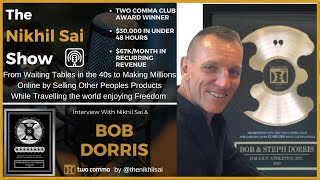
Bob Dorris went from waiting tables in his 40s to making over $4 million as an affiliate marketer. He built his success on four pillars: audience, authority, irresistible offers, and sales skills. Most affiliates fail by selling products instead of themselves and neglecting to build real authority first.
Chapters
How would you like to learn the secrets of two Kama Club Award winners on how they have built successful online businesses from almost nowhere to now running multiple 7 and 8-figure businesses by following the simple fundamentals of life? And let's see how they have used the powerful funnel systems, processes, automation, and social media to help their business grow at a different pace. Let's dive into their journey to grasp the strategy, mindset, action plan of how they have done it from almost nowhere to the way up to 7 figures. We are going to uncover and pick their brains of the top performing entrepreneurs on this show, how they have done it and how you can do it too. You are listening to D Nikhil Sai, the host, and welcome to the Nikhil Sai Show. What's going on? What's going on everyone? Welcome back to another episode of the Nikhil Sai Show which is hosted by me, the Nikhil Sai. And guess what's going on today? We are back with another amazing 2 Comma Club interview. Guess who is the actual person hopping on this quick podcast. This is the one of the go-to guys when it comes to learning affiliate marketing. He had sold over $4 million in online revenue in multiple businesses, built a membership site from almost zero to now making $60,000 recurring revenue. He made almost $20,000 in sales within just 2 days of launching it, not just once but twice. Again, to mention again, he is a 2Kama Club Award winner, one of the craziest guys in the game, and The best part is they are a cool couple who travel all over the world and still make their living, living a laptop lifestyle through a freedom business model. Again, let's not waste any time and let's welcome Bob Dorris, @bobdorrisconsulting CEO. Hey Bob.
Hey, good to see you.
Absolutely.
Happy to be here.
Thanks Bob. Absolutely. Thanks for being on time, by the way, Bob. So super excited to have you on the show, the affiliate marketing guy. Absolutely, Bob. So Bob, like, our, our audience are freaking excited because see, like, who don't want to do affiliate marketing? Because it's just a freedom business where you have almost no risk involved, right? You don't need to take care of supports, you don't need to take care of anything. You just build it the right way and it works for you, right? So Bob, we would love to hear your story. Like, how did all of this crazy journey started? Like, how did you get started?
Okay, how I got started online, it has been a really crazy journey. Um, So I started many, many years ago and just getting, you know, getting into affiliate marketing itself was, or getting in online itself was huge. I started, let me tell you a little bit of scary backstory, all right? I worked in as many careers as you can imagine. I, and I failed at so many careers. I want, I'm saying this to hopefully inspire some of you who are frustrated, thinking, oh, I could never do it. I failed and failed and failed. I had all sorts of businesses, all sorts of careers. I was a coder. I worked in the medical field, everything. I failed everything. When I was 40, this will almost make you cry. When I was in my 40s, I was waiting tables. I was a waiter. I was working restaurants in my 40s. I had a wife, I had kids, and I could— I failed it. I was failing at everything. Okay? Sometimes, people just aren't meant to work for other people, which is, that's me, right? And, you know, there's— personally, I tried everything. It wasn't until I went online that I finally started having success with anything I did. All right? The way I got online was I'd always dreamed of of being able to work from my computer. I mean, for me, you know, back then it was like, oh, only the luckiest people get to do it. I was, you know, I used to hear about these developers, these programmers who sometimes their bosses would let them work from home a couple of days. And I thought, wow, that's incredible. Well, I took a stab at it one day and I created an ebook cover for a book that I didn't write. The book didn't exist, but I put the ebook cover on eBay. And it was, I'm a martial artist, I trained martial arts my whole life. So I put this ebook cover on eBay and just to see if people would buy it. And a day later, somebody tried to buy it for about $30. And I went, oh, there's money here. If I had, if I wrote that book, somebody would give me money. Right? Yeah. So that was my first stab at it. And then after that, I went into, I tried, I'm trained in oriental medicine. I'm a doctor of oriental medicine.
Wow.
Right? Yeah. And I, but I had trouble making a living at that. But I tried with that online. I tried, my next attempt was trying to sell Chinese herbs online through a website. I built out a crazy 70-page website, a huge website, took me a year and a half to build it out, tried to sell herbs. And my mistake, people started buying them, but my mistake here was I would buy these herbs for bottles of herbs for about $3 or $4 and sell them for about $7 or $8, which is really what, you know, you can buy them for that online.
Yeah.
Yeah. So I'd make $3 or $4 profit. So no, that doesn't work. But I did, I learned that people would buy again. But I also learned that you have to sell something that has, is expensive if you want to make money.
Yeah.
So after that, my next attempt was I found a product that was being underserved, that a manufacturer was marketing it and didn't, didn't— or he manufactured making it but didn't sell it well, didn't market it. And I contacted him, said, hey, if I could sell this thing, will you ship them for me? Sure. I tacked $200 onto it. I didn't know what I was doing. No idea. I knew nothing about internet marketing. and I just took a stab and I started making sales. So sometimes you just have to jump in and get going.
Amazing, amazing, amazing, Bob. That's really exciting. And you know the best part of the complete story? You started to sell it before you create it, right? Like, that's something people need to learn, right? Like, a lot of people that do the stuff, first of all, they build out the entire course or the entire program, or they create the whole curriculum first. Then try to monetize it, but you reverse engineered it and you first of all sold it, you monetized it in the first place, you checked if the people are going to pay for it and then you started working on it, which is—
Yes, you are. Clearly you understand in your marketing you have to do that. Do not build something and then try to sell it. Sell it, then build it.
Yeah, absolutely. Yeah, I think that that completely makes sense. Like once you understand your audience demand, then the process of creating a product becomes 100 times easier. So that's crazy, Bob. And we would love to learn more about like why you are an affiliate marketing guy, like why affiliate marketing is your go-to choice of business. See, like you've been into 100 different businesses, why you're sticking to affiliate marketing especially. We would love to hear the backstory on this.
Okay, one of the things, after I had, uh, had quite a bit of success online, I decided I'm going to go into coaching, teaching other people, working with other people, because I've proven it. I know how to make money online. And I know how to help other people make money online. I just do, right? So I had years of doing that. So, but when I went into coaching, the thing about coaching and consulting, which was, you know, I thought this was going to be great. The thing is you have to, there's two parts to that business. One, there is the getting clients part, right? And two, there's the fulfillment, the coaching the clients part. That is a lot of work. To do either one really well takes a lot of time. Trying to do them both, you know, is— it can be— it's out of control. All right.
Yeah, true.
So at a certain— and I also realized I don't necessarily enjoy the coaching part as much as I thought I would. So I decided, let me choose one or the other. So I chose the marketing part of it. Okay. So let me get the, get the, do the marketing to get the clients, right? But instead of selling my services, sell somebody else's services. But here's the thing. If you want me to expand on that a little bit.
Yeah.
The key here is to be really good. You want a brand as an affiliate marketer. You've got a brand. You really want to brand yourself. This is, Well, we, you're, we'll probably talk about the biggest mistake affiliate marketers make, but I can go into that right now. So let's, let's talk about that. The biggest problem I see affiliate marketers making is that they are selling, they, they basically, they sell the, they sell the product instead of marketing themselves. There's a huge, huge difference there.
True.
So, you know, if as an affiliate marketer you need to build your own brand, build yourself out as the authority— you're an affiliate, you're not selling your stuff, but you kind of are. You sell somebody else's stuff, but you combine it with you.
Yeah, that makes sense. Yeah, I think— yeah, it does, it does, 100%. And I see Like a lot of affiliate marketers, like they hide behind the screen and try to monetize on things which actually don't work at the moment, right? And that's the main problem. But when we actually see the way you are turning all into business, it's 100% different. That's great, that's great, Bob. And again, I love the way you actually run your business completely online, traveling around the world. Like how are you freaking managing to do it? But that's really exciting.
That's really exciting. Yes. So, as evidence that I am doing that, my wife and I spent the first 3 months of this year traveling while running our business. We spent December— no, January in Dominican Republic, surfing, wing foiling, kite surfing, all that. And then we spent February and March traveling Mexico. Mostly in Playa del Carmen, hanging out at the beach there. You know, it was a great time. So when you do— when you— that's another reason to do affiliate marketing. We have no fulfillment to do, right? So, you know, everything we do is just done from my laptop. Our whole business fits in my backpack.
Yeah, crazy. Absolutely. So that's what's really allowing you to enjoy your time and have time for the things which you deserve, right? And we see a lot of people, they go the other way. Like they are into the business, actually, they're doing all things themselves, fixing pieces here and there. But in the end, they look back and be like, oh, I haven't fixed my entire life. But you really turned it out in a different procedure.
That's awesome. Yeah, I think what people forget is the reason they get into this business is because they want the freedom, they want the flexibility that, they have, there's two parts to it. There's the time flexibility, so you can work whenever and wherever you want. I'll give you an example of my brother and his wife called me last week and said, "Hey, we're coming down." Absolutely, come on down. I didn't have to say, "Oh no, you have to come down in a couple weeks." No, you can come down. I can stop marketing today. I can take 3, 4, 5 days off if I want to and go right back to it. And I really haven't missed a beat. So you've got time flexibility and location flexibility. So I could come and visit you, Nikhil, and today, and I could keep working. You can't ask for more than that. And if you do this right, you're also making sales. I believe I made some money last night while I was sleeping. So, you know, you're making sales, you know, when you're not online. What more can you ask for? You know, to me, I think it's a great, great model. I really do.
Absolutely. Like, you know, you are good at marketing. Like, we completely see that. And now your goal is to just find a genuine product which has a demand, and you just monetize on it without worrying about the fulfillment or support or anything crazy in the fulfillment process. You just let the product owner do that.
Yeah, except it goes a little bit beyond finding a product that has demand. And this is, this is where smarter, higher-level affiliate marketers are going. It's not about the product. As I kind of alluded to this earlier, it's not about the product. It's about you. It's about the offer you create. I don't sell products. I make offers.
Okay?
That's the big, big mistake I see everybody making. And people, you know, people message me all the time and say, so Bob, what do you sell? What product do you sell? They don't understand. It's not a product. It's an offer. Okay? Two different things. Let's say that, you know, some of the offers— okay, I'm a Two Comma Club winner. I'll give you an example of how I make an offer. All right? So, let's say I'm selling an affiliate product or affiliate course. I will vet the best program I can find, right? Something I— so, I have some that I recommend for people depending on their unique situation. If they want to be a coach, then there's a product, an affiliate program I recommend for them that is great. It's really, really good. If they want to be a high-ticket affiliate marketer, there's another one I recommend for them. All right, but that's— but why buy from me if I— right? So the thing is, I don't sell them that. I sell them a, a hybrid offer of, listen, if you, if you want to work with me you can't, you can't afford me. I'm a Two Comma Club winner, right? I charge a lot of money per hour, so you probably can't afford to work with me. So what I'm gonna recommend for you— now this is, this is an example of an offer I would make— what I recommend for you is that you take this affiliate, you do this affiliate program that's going to teach you the nuts and bolts. So I don't have to teach you how to optimize your profile, I don't have to teach you how to get engagement. You know, that's stuff that you're going to pay me $200, $300 an hour to teach you? No. You know, so do this course. It's a great course, right? Do this, and then I'm going to teach you my 2 comma club secrets, the things that work for me. I'm going to show you my resources, the, my strategies, uh, you know, the spreadsheets I use. I'm going to give you the stuff that took me years, but I can give that to you in a very short period of time, an hour or two, right? And that's what's going to work. It's going to work with the course that they're going to give you everything you need, but the how-tos, and I'm gonna give you this stuff that puts it on steroids. And then, you know, so that is an offer. And I combine it with, you know, with scarcity, fear of missing out, right? You can only get in today at this price. You can get in tomorrow, but you're only gonna get this deal from me today. So you do that type of thing. That's just an example, but you do that and you sell offers, you build offers. No matter what you sell, you create offers around it. The example I use, I hope I'm not talking too much, but I get excited about this.
No, this is super exciting. Yeah.
Okay. The, the, the best example is let's say you want, you know, the program is, let's, let's compare the program to broccoli, the affiliate product to broccoli, right? Well, your, your potential customer may or may not want their broccoli, just like your children don't want to eat broccoli, right? So you try giving, you try Steaming the broccoli. We like this. No, no. You try boiling the broccoli. No. You try, you know, breading it. No, no. You smother it with cheese. Yes, I want it smothered in cheese. Right. So you have to— you find different ways to wrap that offer in things until you find it wrapped in cheese, wrapped in the offer that they want. That they will finally take. So that's really how you do affiliate marketing, is you don't sell the product, you create offers. You do that with everything you sell.
Yeah, wow, wow, that's, that's just life-changing, uh, advice for affiliate marketers especially, right? Like, we see 99% of the market running around the top products which are being sold at a higher scale and try to sell to the same existing audience over and over through different emails and just trying to change the hooks and stuff like that. But But right now you're completely changing the offer and making it so irresistible that it makes them stupid if they don't buy from you, right? So they just dive in and buy. Absolutely.
Yeah. And you'll find sometimes people will go, you know, for example with me, they might go, I just want Bob's 2 comma secrets, you know, I just want how he runs his business. I'll buy the damn thing so I can learn that, right? They just buy from, you know, other— when I work in other niches, they'll buy for the bonuses I stack on, not the main offer. Same thing.
That's just crazy, right? Like, that's really, really crazy. And now you're positioning yourself at a different standpoint that you're making the actual product sitting at a different stage so that you can make more sales immediately by increasing the offer scarcity, which is freaking awesome. So Bob, that's just a roadmap. Amazingly. Yeah.
So, and that goes back to, that goes back to, you know, when I said, talked about selling yourself, you know, not selling a product, branding yourself, building yourself up. You have to brand yourself so they want to work with you, right? So they want to get a half hour of your time, right?
Absolutely, Bob. And this is the main reason, like, most people just get back the curtains, they don't see the strategy work out, and they just try to sell the damn thing over and over. but they just see the cost per acquisition freaking goes up because you're not creating that trust, showcasing yourself as a person who's recommending it, right? Because I see a lot of affiliate marketers just being behind the scenes, never even let their name out, right? They do figures, but yeah, not at the level you're doing it, right? So that's the ninja difference. That's the main difference between people who do social affiliate marketing to the level you are actually doing it.
Yeah. And when they're hiding themselves, You know, the reality, people buy, you know this, people don't buy for rational reasons. They buy for emotion. So they have to, you know, if you brand yourself, you show people your life, your lifestyle. For example, now everybody who's watching this knows I just spent 3 months traveling. So they want to have that lifestyle. You'll see a lot of my branding, I am hanging out on the beach. You know, living— I'm living life, which is true, I am. But I show that to people, and when they're buying, it's because they want to get a piece of that. It's not that they're, you know, that's what— that's what they're buying. So you can't hide, like you're saying, you can't hide behind posts on Facebook and stuff. You got to put yourself out there and show people what, what, you know, what it's done for you. And if they You know, they join you, they'll have the same thing.
Absolutely, Bob. And I think that's, that really applies for almost every business we're talking here. If they really imply that emotions in their sales process, I think that's just going to skyrocket their business sales, especially at a different stage. That's, that's freaking awesome, Bob. Thank you so much for that amazing advice. So again, we already covered a little bit of this question, but I would love to hear some more inputs. Like, what do you think are the top 3 reasons most affiliate marketers fail? Because, you know, it became like Again, this is not something which is happening for real, but a lot of people claim that affiliate marketing is saturated, it's not working anymore. So what do you think is the top 3 reasons most people fail in affiliate marketing?
Okay, it's, um, it would be what I discovered, you know, they— that they are, they are selling the product, right? They're not selling and making an offer. They are not selling the life that the people will get. They're not selling them their dreams. They're selling a product, right? They aren't branding themselves, right? They're just selling the product. They fall into the affiliate marketers. I'd say network marketing, affiliate marketing are kind of the same thing, a little bit different, but pretty similar. So another thing that they do, big, big mistake, is they fall prey to the idea that all you have to do is just, you just get the people and send them to us and we'll close the sale for you. No, no. You have to learn how to sell yourself. You have to understand sales. Right? So that idea that it's easy money, you just do the front part, you just gather the people and just send traffic to us and we'll close. No. People are— there's one network program out there where they, they tell you that same thing and they even say, we will, you know, you can buy, buy traffic from us, you can buy traffic from us, we'll send people to your, to you and you turn around and send them back to us, right? And, and people are falling for it. I mean, I just talked to somebody the other day and, and she said that, uh, uh, that he's getting sales but he's breaking even after what he's spending to drive the traffic to the offer. So think about that, you know, these network— the network marketing companies getting people to spend their risk, their money to drive the sales. And when the sales happen, then the network marketing company gets the money, but the marketer is breaking even at best.
Yeah, it doesn't make any sense to do it over again.
Just crazy people are doing that. So yeah, that's a big reason, uh, hiding you, as you said, hiding. Uh, we can go take a look at anybody's profile on, uh, on Facebook, you know, and If they're failing, one of the things you'll see is that they are not out there. They're doing the same old, same old everybody else is doing. They are writing stories, nice stories, or maybe educational material. Oh, I'll come back to this in a second. This is good. But you're not seeing them. All you see of them is their name up at the top of the post. And that's the only reason you would know it was them. You gotta put your pictures out there. You gotta be on video. You have to take a stand. You have to be somebody that they go, oh, I remember this person, right? You have to do that. You have to become a bit of a celebrity. All right.
Yeah.
I'll give you an example on becoming a celebrity. I do in another niche I worked in. I worked in the self-defense niche for quite a while. And my wife one day came to me and said, hey, Bob, I was taking a shower. She knocks on the door and says, Bob, You've got a fan here. Like, what are you talking about? I go outside and there is a guy standing at the door, said, Bob, I just want to meet you. I'm vacationing here in town. I really want to meet you. He was a guy on my mailing list, one of thousands of people on my mailing list. I had no idea who this guy was. He thought we were best of friends because he's on my mailing list and he's reading my, you know, all my— all the stories I tell and everything. To him, I was a celebrity. You know, he showed up at my front door and just wanted to meet me in person. Right.
That's crazy. And that's like the celebrity status you're talking about. Like, that's what he says.
Yes. I've had my wife. My wife does a lot of customer service for that business. She'll jump. She'll go be on the phone, go, hey, Bob, you know, or be talking to the guy. And the guy, somebody will say, is that Bob in the background? Oh, tell Bob I said hi. Or, you know, like, like I know them. Or once in a while they'll, uh, you know, I'll get on the phone with them, you know, to give them a little bit of advice how to use the product, whatever. And they get giddy. You can tell they're like, they're like, oh, Bob, you know, it's like they get so excited they're talking to me. I'm just a guy. I'm nothing special. But because I created a brand. I put myself out there. I became somewhat of a celebrity in their eyes. They will listen to me. They will do what I say.
Right? Absolutely. Absolutely, Bob. I think that's, that's just on point while we're talking about the reason most people fail is they are not putting themselves out. Simple as that. Correct. They're not making crazy offers just like doing— that's, that's just amazing, Bob. So much amazing value. We would love to hear more about that. So Bob, let's get into the next question. And again, we missed a thing which you are going to cover in the upcoming question. Would you like to tell more about like the roadmap you actually built a 7-figure affiliate marketing business for your own?
Okay, the roadmap. When I started, I don't want— I think I want to tell— talk about how I did it because I don't recommend anybody does the way I did it. I started before anybody knew what they were doing. So you don't, you don't want to follow how I did it. You want to— here's what you want to follow. So in retrospect, I can look back and go, oh, here's what I did, right? Here's what worked. Here's what I know, you know, 80% of what I did didn't work. 20% of what I did worked very well. So here is the 20% you need to do. There are 4. Count 4 things you need to do if you want to be successful. And I'm going to talk— I, I'm assuming most of the people here are doing organic social media marketing. If not, then these— yeah, if not, this still applies across the board. But this is really— I'm, I'm gonna explain this in terms of organic social media marketing. The first thing you have to do to have a successful business generally is have an audience. Okay? So sounds kind of obvious, but if you're not thinking in terms of building and growing your audience on a daily basis, you need to start doing that now. All right? Otherwise, you don't have people listening to your message, listening to your offers. So, you know, if you're doing organic social media, you know, it should be, You know, building an audience on your profile on Facebook, maybe building them on Twitter, building a group. So that's a second place where your audience is going to hear your message, driving them to your mailing list. So you now have 3 places where when you speak, you got people listening to you, right? And by the time they get on your mailing list, now you really own that audience. You can't lose them. That's a pretty nice, nice place to be. So just a little tip, you should be driving people, thinking of driving people that direction. If you do it right, you can take them from Facebook and put them on a list, pretty much everybody you engage with. So number 1, audience. Number 2, authority. So you can have this audience, but if they see you as just like them or you're just another one of those people out there posting posting stuff on Facebook, then you don't have authority. So you want authority— means really to me, authority means that when you speak, they listen. They're going, hey, Bob seems to really know his stuff. I trust Bob. Bob has been— he's got experience. He's been down the road. He can shortcut things for me. I can tell because I, you know, I listen to Bob enough. So if Bob puts an offer out there, I'm going to seriously consider that offer. I'm not just going to blow it off. I'm going to listen to Bob because Bob is an authority. So 1, audience. 2, authority. 3, we covered a bit, but making offers. You have to learn how to create offers, right? An offer, you know, There's just ways of making things compelling. You just have to learn how to make whatever you sell compelling. When they hear it, they go, yeah, I gotta jump on this or I'm gonna miss out, right? Yeah. So, and that, that's way beyond going, well, geez, I'm in this program, or I have this, you know, this opportunity, you might want to try it too. No, you know, it's nothing. That you gotta, you gotta create offers that they go, 'Oh boy, I got, you know, this sounds really good. It's an incredible value. If I, you know, if I don't jump on it today, I might never get the chance to do this again,' right? You have to go to that level. And so that's, that is, and this applies to affiliate marketing. Again, people think when they're an affiliate, well, they're selling the product. Nope, it's not the product. It is, you should actually be able to create an offer and then make the products almost interchangeable. For example, if I would sell Easy1Up today, that, you know, that's an affiliate network program. Well, I could remove Easy1Up and I could put in Legendary Marketer or SAA or any, anything else, and it's just a piece of that offer, right? So you got to get good at creating offers. So 1, audience. 2, authority. 3, get good in creating offers. And then 4, get good at putting this offer in front of these people and having them buy it. That's sales. Audience, authority, offer, and sales. And sales can be anything from— it doesn't have to be— a lot of people get intimidated by this. They think, oh, I've got to become that sleazy car salesman or the vacuum salesman. I don't want to get rejected, right? Which, you know, even for me, that was a big thing early on, being rejected. No, there's a lot of ways of doing sales, you know, using empathy, just diagnosing, listening to people and going, hey, you know, I agree, you got, you know, I understand what your problem is and I may have a solution here for you if you want to hear about it. You know, it's just there's a lot of ways of doing sales, but you have to learn these ways. It might involve having scripts that you follow, you know, lots of different techniques, but you have to get good at it. If you get good at those 4 things, there is no reason you should not have success. And I actually did a post on this recently. That if you're failing, you can diagnose the reason you're failing by running through that. You're either not building an audience. If you are, then you don't have authority with those audience. If you do, your offers aren't good enough. And if our offers are good, you're just not getting them. You're not selling it appropriately. It's one of those four all the time.
Oh, wow, wow, wow. Just mind-blowing, amazing brainstorming, bro. I think that's just life-changing. Like, I think this doesn't only imply for affiliate marketing. Technically, this is a fundamental for every business you talk about, right? The fundamentals is just amazing. Now we can just think about like, okay, if you're not doing well in your business, which of the piece— 4 missing pieces are actually not working? And we just fix that first thing, right? And it's just gonna turn around. Amazing, amazing. Well, thank you so much for a brief answer. We just did on point. That's really exciting. So let's get into the next quick question, Bob. And again, there's a lot of people who are going to, you know, running around this low-ticket affiliate offers, but I see you're a huge fan of high-ticket affiliate marketing. So would you like to talk more about like how to do high-ticket affiliate marketing?
How to do it? Okay, well, basically what I just taught, what I just explained is how you do high-ticket affiliate marketing. Um, you want to brand yourself. First of all, you have to gather people, right? So if you're using social media, which social media is a great way to go, Facebook is really good. There's techniques to do, uh, you can use LinkedIn to do the same thing. You have to brand yourself. You never make your— let's say if you're using Facebook, if you're, if you're an affiliate marketer, you understand building a your profile on Facebook, you never make it about the product you sell. You always, you know, you want to position yourself as an authority, right? And as somebody that people are going to reach out to to ask for advice. Yeah. So positioning yourself as an authority, getting the audience together, and that involves, you know, just basically on Facebook or LinkedIn connecting, connecting with lots and lots and lots of people, right? And you then, you have, when you connect with them, now they're going to see your message through both your profile. They're going to see it through Messenger, which if you're not spending time in Messenger, start spending time in Messenger. A lot, a lot, a lot of time in Messenger, okay? Messenger is networking on steroids. All right, so brand yourself, spend a lot of time in Messenger, you know, you know, working Messenger. When you're in Messenger, you're working the algorithm, you're, uh, you know, so Facebook is going to show these people more and more of your content. Put out good content. Uh, here is a little tip on, on this. I— one thing I see people doing wrong when they're doing network marketing is, or affiliate marketing and using social media is they are, they're focused on content. Well, here's the thing. If you read a piece of content and they're giving good tips and I'd give tips, you know, educational sometimes. But how many, how many times have you read an educational piece and went, well, it was good and I remember who it was. I remember it. No, it all kind of blends together. All right. When you tell stories, that changes everything. I did an experiment. I talked to people in Messenger and I said, so, you know, tell me some educational piece you've read, you know, something you've learned from a post and who wrote it.
Nope.
They can never remember. Right? So when you do that, you're just blending in with everybody else. I said, okay, tell me about one of the stories I wrote that you recall. And they'll go, oh, I remember the time you were talking about Mike Tyson, the guy you were training, you know, and then the time you, Bob, you're a martial artist. When you were boxing, you got into the ring and this happened, or you got in a fight with this guy. I tell those types of stories. I somehow turn them into marketing lessons. I don't know how I do that, but I do. Or, you know, or this thing that you, me and my wife did, my wife and I did, you know. So they remember these stories. So you have to be telling a lot of stories, personal stories, things that they're gonna recall. For some reason, we are programmed to remember stories. It's just the way, you know, I think it's a tribal thing. It's the way lessons are passed down from generation to generation through stories, right? You remember your parents' stories from when they were children, they told you, right? So you have to be good at telling stories and people will remember you from doing that. They can be stupid stories, but people will remember you.
So, absolutely.
So you're doing that. So you're, you know, you're building an audience, you're making people remember you, you're creating authority. You also have to put out some content that makes people know you're an authority, or at least do it somehow through your profile in some way. They go— for me, all I have to do is flash my Two Comma Club Award and people go, oh, Bob's an authority, right? So you have to, you have to do something to show your authority. Um, and then again, you go, you know, you choose, you choose something you're going to sell. You know, if anybody here wants to know what, you know, a good program, a good affiliate program, reach out to me through Messenger. I'll tell you a good affiliate program to sell. But you choose something that is really good, that you feel good about. I talked to somebody yesterday who said, she said, um, She's selling this thing, but she says, but, you know, I can't make money with it, so how am I supposed to sell to anybody else because, you know, it's not even working for me? Well, then you don't sell it. It just means it's a bad program. Don't sell it. Find something that you go, this program is really freaking good. You know, if somebody applies themselves, they should make money, right? So you have to find a program like that, right? Then you learn to build You create offers around that thing, right? Build out your own offer. You can build offers which include giving people, you know, WhatsApp support, right? I'm gonna give you 30 days or 60 days of WhatsApp support. You can contact me 24/7, 24/6, and I'll answer every question you've got. So I'm not gonna leave you hanging. And you know, so you do that, you build out a really nice offer, and then you learn to do things, you learn how to sell it, you learn how to use scripts, you learn psychology. Uh, you may learn how to do launches of your offer. Launches, I think, are something network marketers overlook. Uh, as I— as you mentioned at the beginning, I've twice made over $20,000 in 48 hours. Twice. And both times were a launch. And affiliate marketers think they can't launch something because their offer— because the product that they sell is always available, right? So let's say here, here's my product and this is always available. So how do I launch this? Well, I create an offer of my services I'm going to give you and all these resources and everything else I'm going to give. But this is only available— this thing I'm giving you is only available for 24 hours, right?
Yeah.
You follow anybody's launch process, I can teach you launch processes. You can follow Jeff Walker, uh, you know, you can learn how to do launches anywhere. You know, basically just build up the excitement until people are chomping at the bit and just ready to go the moment you make it available. So that is how I would recommend doing affiliate high ticket affiliate marketing.
Wow, wow, Bob, that, that's just mind-blowing, amazing golden nuggets to every single person who is listening to this. I think like you, you didn't let a piece missing here. I think that's just wonderful. You fixed out every single thing that even a beginner person who is just interested in making money can actually take key learnings from this podcast and implement it himself by building out the audience offers, positioning himself as authority, and actually selling it. That's freaking awesome, Bob. So excited, so excited. So let's get into the next question, brother. Now let's go into different type of questions. Like, like, you are a 7-figure business owner managing your laptop lifestyle, traveling around the world, having time with your family. I wonder, like, how do you manage your stuff even though you're affiliate marketing God? Ton of things on the plate, right? So any kind of tools you use personally to manage your projects, your personal productivity on a day-to-day basis?
Okay, uh, yeah, controlling, managing your life is really important. Um, I can tell you some of the things that I do to keep me, keep my head in the game. That's probably the most important thing I can tell you. There, I can give you some, some tools. There's a, uh, some great, uh Social media, CRM tools like ChatSilo is excellent. I have a couple other ones, I can't remember the names of them. So I have a handful of tools that I use, but those, you can find those anywhere and they vary, slight differences. Tracking, I do a lot of tracking. I have spreadsheets I use. So I will track how many people you know, how many friends I had in a day, how many I have sent in, how many accepted my initial contact with them, have I sent an initial message, have I followed up with them, how many people am I adding to a group, all those types of things. Because at the end of the day, and then how many sales, how many, you know, sales conversations I get into, how many sales did I make. After a certain period of time, after you've done that long enough, you can go, okay, I made 10 sales and I added, I, you know, added 1,000 people as friends, right? Something like that, right? So, you know, oh, you know, if, as long as you have everything systematized and guys, if you're not following systems, you have to follow systems. Don't do goals, use systems. I could talk on that forever, but I won't bore you with it right now. But if you have systems in place, then you know, that for every 1,000 people you add, you're going to get 10 sales. You want to make more money? Add another 1,000 people. Add, you know, 1,500 people this month. Add 2,000. It becomes very formulaic when you do that, and that can only be done with tracking. Okay, true.
Absolutely.
So, uh, that's that, you know, systems, making sure you have a system in place for everything you do. The biggest thing I do, as I said, is Monitoring myself, keeping my head in the game. Two parts to that. One, I go to bed personally by 10 o'clock every night. I go to, you know, when the time changes, I'm gonna go to bed by 9 o'clock. I have to be fresh. I have to feel good. I have to exercise every day. If you're not exercising every day, you know, remember that your business is, it's just an extension of you. It's, you think of yourself like a high-performance athlete. How well you are performing is how well your business is gonna perform. Period. End of story. Right? If you're getting your head bogged down with, for example, news, you know, yes, should you be aware of what's going on in the world? You should. Is it killing your business if you're aware of what's happening minute to minute? It is. Right? I have apps on, I have blocked news, you know, CNN, MSNBC, I have them blocked on my phone. So, I'm not going and looking at those because if I, they're not, I'm going to look at them, right? And each time I look at the news, you know, during the whole Donald Trump era, right? You know, everybody's spending half their day thinking about Donald Trump. Well, it means you're not focused on your business. And whatever you think about consciously, if you have problems in your mind like, uh-oh, what's going to happen to the world? Your brain is behind the scenes processing these problems. It's just how we work. So your problems that you have, that you think about should be, how can I close more sales today? And then your brain is processing that behind the scenes, right? So, whatever you think about is where your brain is going to go and be finding solutions for you, but your subconscious is. So, you have to be very careful about what you let yourself think about. So, I exercise every day because again, you are a high, you are, see your business as being, or your business as an extension of you, and you have to be a high-performance athlete in your business. I wake up every morning, 6 o'clock, and I am meditating. I meditate for 45 minutes every single morning. Oh, every morning, right? If I wake up and there's other things going through my head— and you should think about this yourself— if you wake up and you find other things going through your head that aren't business related, you got to clear them out of there. So every morning, wake up, meditate. There's a tool— if you want a tool, there's a tool that I think is very good. It's called the M-Wave.
Wow.
And what it does is it measures the— I don't want to get into tech stuff here too much, but basically, it tells you how well your brain is performing. It literally gives you feedback. You can see it on a graph, how well your brain is performing, if your brain is coherent or not. And I can tell you, when I start to meditate, the graph is all over the place. It looks like a jumbled mess, right? After I've been meditating for 5, 10, 15 minutes, you can see the brainwaves start smoothing out. It means my brain is performing more coherently. And this is true for every one of us. So when you, if you just open up your computer, wake up, roll out of bed, eat breakfast, and sit down at your computer, you're not, you're probably working at about 5% of your potential. So that is one thing I do. And then before I sit down, I don't want to freak people out and make you think I'm nuts. Maybe I'm a little bit nuts. But most times before I sit down at my computer, I, again, meditate for about 5 minutes. I will use usually an app or something right on my computer. Message me, I can share that with you if you want to know specifics. There's an app associated with the EmWave. But I make sure that my head is very clear, that I am coherent, and that I am in the zone. I don't know if people understand what being in the zone is, but ask any pro athlete, Michael Jordan, you know, any good athlete, they will tell you that they are in the zone when they're on the court, that things are just flowing. It's almost effortless to them, effortless to them. Well, before I sit down and message people, I don't want to be going, "Oh, geez, I don't want to talk to this person. What if they reject me?" All that. No, I want to be in the zone. I'll be like ready to go, amped up like I just drank 10 cups of coffee, really ready to go and have my mind really in there. And I will work You know, I will stop if I get out of that. I'm going to lose the zone. I stop, walk away. I maybe go meditate for 5-10 minutes again, get myself back in the zone. So I am performing at 100% instead of 5 or 10%, and I just do that all day long. Crazy, right?
Yeah, that's just transformational. That's just transformational again and again. Wow, Bob, this is so Freaking amazing. And again, like, coming back to the point, like, all of business owners, they wind themselves with their business 24/7, babbling around 100 different things happening in the world, see zero productivity happening. But you just letting that 5 minutes make your brain stable and get on work, right? Just like a train getting on steroids to get his work done. That's freaking awesome. That's, that's so amazing, Bob. Thank you so much for amazing value. So let's get down to the next question. What will be your suggestion to a 20-year-old you or someone who's just getting started? After working on 100 different businesses and finding success?
My recommendation would be don't do it the way I did. You can shave a lot of time off if you take my advice and not do what I did. So, well, it depends on what their goal is. If their goal is to make money online, you know, I can be very, very specific here. And this is gonna sound like I'm pitching myself, but I would say contact me. I'm gonna tell you what program to do and I'll work with you. Well—
Awesome.
Having said that, the reason I would say that is because if you try to figure it out yourself, you're trying to reinvent the wheel. You know, so if it's not me, find somebody who you really, really trust, you think is really good, who resonates with you. To help you get there. Because otherwise, you're going to try a lot of stuff. You're going to end up working with people, you know, working with somebody, maybe somebody else to say, "Hey, I'll coach you," and they have no more experience than you do. So, you know, try to take the shortcuts. Try to, you know, find somebody— you got to trust the person. So find somebody that you really believe in, you think can help you get there, or at least a program that you can purchase that, you know, these people have— there's people like me who've worked through all the problems, right? We, you know, I've been up since 6 o'clock this morning working on a business, right? I have learned things since 6 o'clock this morning, right? So if you're 20 years old, you want to, you want to shortcut the process. I personally, I, you know, I paid a guy $10,000 to coach me. It was a lot of money. But based on what I learned from him, I built a business up to $60,000 a month recurring revenue. I never could have. Yeah, I never could have done that without this guy. And part of it was what he was, you know, what he was teaching me. And part of it was just me having access to him and seeing how this guy lived his life, how he was very very driven. You know, he would have, he would have a goal and he goes, I'm not going to cut my hair until I have reached this goal. His hair was down to his waist, you know, and he just like, you know, he would do things to drive himself, you know, so, you know, to make sure he, you know, he just didn't goof off. So this guy, he did, he worked on his wedding night. He didn't take holidays off. I don't recommend doing that. But I got some behind-the-scenes insight into the mind of somebody who was very, very successful. So, when you find somebody that resonates with you, you can really shortcut things a lot. That and number 2, just, you know, learn what focus means because focus, the power of focus is incredible. If you've heard this story before, I don't want to, you know, bore anybody who knows this story because it may be a little trite, but Warren Buffett and Bill Gates knew each other when they were very young. I think it was Bill Gates' dad asked them, said, "Hey guys, you know, what do you think is the most important thing to be successful?" And they were just, they were basically kids. Both of them wrote, they wrote down on separate piece of paper, both of them wrote the word focus. Focus means you cut, not just focus when you're working, but your whole life. You cut the garbage out. You get rid of anything that distracts your, your processing, your mental processing power away from moving your business forward. You get rid of doing the dishes. If you're successful and you can hire somebody to do your dishes, you get rid of that. I, my wife and I don't go shop. We don't go to the grocery store anymore. Our time is too valuable. We, exactly, we have our groceries delivered, right? I don't, you know, I don't let people call me and waste my time during the middle of the day. You know, you know, that distracts. You have to really learn what focus means and get rid of all the garbage in your life that is distracting you. So more of your energy. If you have 100 units of energy, let's say, you know, so you're getting 80, 90 units of that energy going to moving your business forward. And less and less. You know, I'm wearing a black shirt. I wear this black shirt almost every day. I don't want to have to decide what shirt I'm going to wear in the morning. Right. So that is focus. So learn focus. That's what I would do.
Yeah, Bob, that's really amazing because see, like in 2021, we see business owners who are watching Netflix and watching news on a mobile phone, having 100 different tabs open on their laptop, trying to build their business. But guess what? It's not gonna work that way.
It's not gonna happen.
Yeah, absolutely, Bob. And I think you were just on point with the focus thing, and we— they need to start really understanding where their attention is going because that's going to really determine their success level, which is freaking awesome. Yes, thank you so much. Thank you so much, Bob. And let's get to the next question. We have a couple of more questions here. So, your biggest achievement so far and any next bigger goals in your life?
My biggest achievement? Well, uh, short of raising nice, wonderful kids and meeting a wonderful woman, um, I would say online. Just the fact that I've sold— I've gone from literally in my 40s being, you know, working in restaurants, uh, to having sold $4 million of revenue online. To me, that's a pretty, pretty big thing.
That's a robust transformation.
Yeah. And that the real achievement there is not even the money. It's that I transformed myself. Because back then, I can tell my thinking was not right. My self-esteem was not there. You know, I was a mess. And, you know, I had terrible scarcity mindset, you know, from having failed in businesses before. Before I was younger. And when I was younger, I thought that, you know, I had convinced myself I could never be a success. I had just convinced myself. It was terrible. And this is a real thing for a lot of people. So I would say the biggest transfer, you know, my biggest success is having gone from that person to being a person who, I don't know if I sound confident, but I am confident. I feel extremely confident, right?
You are.
So having made that type of transformation, I would say, is my biggest success. Wow. For sure.
And any next bigger goal?
My next bigger goals, um, we're always trying to move our business forward. My goals are to automate even more of what I do. I'm testing out new systems with my social media marketing. I love testing out new systems. So that is my, probably my biggest goal. You know, it's getting more and more systems in my business. I used to be a goals thinker, and goals are terrible.
I don't know.
Yeah, if you're chasing goals, it means you're rarely hitting goals, right?
Yeah.
Your goal is, I want to be a millionaire, or I want to make $1 million a year. How often are you doing that? So you're getting this feeling of failing, failing, failing every day. Whereas if you are a systems person, you can implement your systems. At the end of the day, you go, I implemented my system, I won today, right? So it gives you repeated wins, which is really important. So one of my things right now is that I'm working on is just becoming more and more and more systems-driven. That is probably possibly my current big goal. That and to spend even more time traveling while working.
Absolutely. Well, and I'm definitely sure we've seen businesses skyrocket just like you're doing in your business once they install ClearSystem, because that really becomes a measurable KPI to predictably grow their business, even though, even if they are not looking at that. Pretty crazy stuff. Let's get into the next quick question, Bob. Like, what was your biggest mistake so far in life? 20th.
Uh, biggest mistake. This one, a lot of people might disagree with this, but my biggest mistake business-wise was following my passion, right? You hear all the time, oh, you have to be passionate about what you about what you do. So when I was very young, you know, I was a musician in my 20s, teens and 20s and early 30s, right? So I wanted to really hit it in the music business. So I followed, I practiced guitar every, bass guitar, I practiced every day, right? No, it made me broke. I ended up broke that way, right? It was terrible. I'm also a martial artist and I used, you know, I used to train 3, 4 hours a day and got really, really good at it, thinking that somehow if I just keep practicing, that the gods are going to smile on me and they're going to rain money down on me, right? Well, no, it doesn't work that way. I got very good at self-defense, but nobody wanted to pay me to defend myself. Right?
Wow, that's real.
So, and the things I got passionate about were, I realized, you know, at one point I was doing programming, right? And I thought, oh, I'm going to hate programming. I'm sitting in a cubicle all day. Turns out that at the end of the day, I didn't want to go home because, hey, this is getting kind of cool. And then once I, you know, I worked in the survival niche, I made a lot of money in the survival niche online. I don't, care about the survival niche. As a matter of fact, I hate the survival niche. I'm not a survivalist whatsoever. I don't like those people. I'm not them at all. Right? But once I started succeeding in it and making money, I became passionate about doing it. So, you know, that common advice that, oh, make sure you do something you're passionate about, it hurt me. So be very careful. Try to find a blend of things that you, you know, you like, but realize that once you start having success, you can become passionate about it. And if you think, oh, I'm not this type of person, right? So I don't want to do that. You can change who you are. You literally can change who you are.
Yeah.
Change what you, you know, affirmations, meditation, hypnosis, you can change who you are. So, you know, don't follow, you know, your passions because when you're 15 years old you realize you thought you liked skateboarding, so I have to make a living at skateboarding, you know. Change that.
That's, that's, that's 100% real, Bob. I think that that's really important for people, right? Especially we see these people with a fixed mindset that they have an unsteady passion which may not be able to monetize, and they really stick to that hoping that they would make money or make a comfortable living. That's just not true, right? You need to be looking at a hybrid model where you can actually monetize your passion or get passionate on what you're monetizing on. Simple as that. That's freaking awesome.
Yeah, get passionate about what you're monetizing on. Just do it. You can do it. I'm a little side note, I'm, I'm kind of doing a thing on the side where, uh, um, starting into a little bit of watch trading, you know, uh, just as something to do in my evenings. Yeah, I could care less about watches. I tell you, after I trade my first few and made some money, I'm gonna love watches, right?
There you go.
You can just— it works that way. You— it works that way.
Absolutely. I definitely agree on that point, Bob. So let's get into the next quick question. Like, any— like, your main inspiration for all the success you achieved and any key people involved in your journey?
Ah, yeah. Key people involved in the journey. Well, there was a mentor I hired, actually, a fellow I hired for $10,000 who had a deep impact on me. Not that he was necessarily the greatest coach in the world, but just watching how he lived his life and his intensity, that was very important. Strangely, you know, besides family, you know, my parents who were great impact, great, great, great. I'm one of those lucky guys who had parents that were just amazing. But, you know, I mentioned I do martial arts. I met a guy when I was 18 years old who had physical skills that were just jaw-dropping, just jaw-dropping. And something about him, you know, I'm 63 years old right now. At 63 years old, I still train martial arts. And the reason I still train it is because he made such an impression on me at 18 years old. He was that good. And he was that good of an instructor. Basically, he was that good at motivating me that, you know, something in my head just made me go, I want to be like this guy. I want to be as disciplined, as focused as he is. He was just not just a master at martial arts. It was kung fu at the time, right? This is way back in the '70s. But at presenting himself in a way that made you want to emulate and you want to be like him. He was just that sharp at doing that. So that, that played out through my whole life until to this day at 63 years old. I feel like if I don't do my best or I don't practice, I don't train, I would feel like I was disappointing him. You know, that's what a good coach can do. That's what a good coach can do to you, right? He has no idea that I even— that he had that impact on me. But it's, you know, So, you know, finding somebody like that that can impact you and then impacting other people like that, that's powerful stuff.
Wow, wow, wow. That's really interesting. And the kind of impact now you actually had with your mentors, people really need to understand that and they need to really look for the right mentor which can fit in and make that perfect sense in their life. It could be really transformational.
Yes. And if you are a mentor, for crying out loud, try to have that impact on other people. Try to really do something.
Yeah, like they just need to strive to create that level of impact we're talking about here. I think that's going to really make them sleep well at night, right? So that's just going to make them so comfortable and create more impactfulness in their life. That's freaking amazing feeling to have. Even if there's a billion dollars in the bank, that wouldn't make them feel happy. But if you are really seeing people who are working with us transforming their lives in a positive way, I think that's a way better feeling. Nonetheless, right? That's freaking awesome.
That's bigger, bigger than the money.
100%. Like, you are a cool guy, like, who makes money, helps genuinely a lot of people, transforming thousands of lives, traveling the world and living the dream. Like, where can our audience find you mentoring, bro?
Well, reach out to me. Uh, actually, you can go to— the easiest way to find me is bobdoris.com. That's B-O-B-D-O-R-R-I-S.com, or you can find me on Facebook at facebook.com/bob.doris1.
Would be amazing to drop your profile links in the description so that everyone who actually listened to this podcast can actually contact Bob, right? Again, people who actually claim that they're not being successful He was actually waiting on restaurant at 40 years, and now he's done over $4 million and never quit. And again, if you need any help, just contact this cool guy. He's going to help you with amazing value and make you great offers which you cannot resist and actually transform your life at a different stage. That's freaking awesome, Bob. Thank you so much. And any last word before we conclude the whole podcast session today, Bob?
Boy, I talked a lot. I don't think you want any more words from me.
No, no, no. If it was just transformation, we would love to hear on and on, over and over.
Well, okay, the biggest things, you know, that just off the top of my head, learn to control your head, learn to control your mind, right? That is huge. It is your mind. Your business is gonna be extension of your mind, extension of you. You've got to improve yourself. Okay, that's one huge, huge thing you can do. Two, Everything, go back and watch this podcast again. Do these things I'm talking about. Master those 4 steps, building an audience, learning how to build authority, learning how to create offers, learning how to sell those offers. Dig deep on each of those. You can either dig deep on them yourself or I can recommend a program that shows you specifically how to do them. Search out people that you trust. To, to take you there, to help mentor you. Okay. Those are probably the biggest things I can, I can recommend. If you do those things, that covers 99% of the game. Oh, and learn focus. You know, when you learn focus, you know, you really shouldn't fail if you do these things.
If you get the probability of you succeeding will dramatically increase once you follow what just was insisted on this podcast session. So make sure to re-listen it and actually implement this. Thank you so much again, Bob. Again, Bob, thank you so much for this amazing opportunity and taking out your valuable time and actually teaching all of our students or people who are actually listening to this podcast very clearly on how you have done the stuff which you are doing currently, which is freaking awesome. So hopefully, guys, you actually learned a lot of stuff from Bob. Make sure to contact him on Facebook. I'm actually going to drop a link of his Facebook profile in the description, and Yeah, and stay tuned for the next interview, guys. Thank you so much, Bob, for being on time. Peace.
Thank you, it was a blast.
Have a great day. Really enjoyed the podcast. All right, bye-bye. Peace out.
More from Nikhil










BURNED $1.5M in his 17years online #digitalmarketing #entrepreneur #onlinebusiness
