Get clients by wishing them on Birthdays on autopilot and scale - ft. Allen Kotlyar | TNS 27
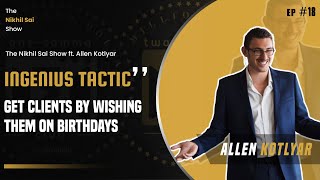
In this 45‑minute live episode of the Internet Entrepreneur’s Freedom Show, host Nikhil Sai interviews Alan Kotlyar, CEO of Birthday Assistant and a five‑time Two‑Comma Club award winner. Alan shares his journey from door‑to‑door sales rep to digital‑marketing agency founder, detailing how he built award‑winning funnels that generated $5 million in sales. The conversation covers lead‑generation tactics (organic, referral, and paid traffic), the strategic use of Facebook birthday messages via the Birthday Assistant app, and the importance of relationship‑based outreach. Alan explains how to scale a business to seven figures by optimizing three pillars – lead acquisition, operational systems, and sales – and stresses the need for delegation, SOPs, team roles, and accurate hourly‑rate and scope management. He provides a step‑by‑step blueprint for launching a digital‑marketing agency: personal branding, securing the first clients (often for free), building case studies, leveraging Facebook groups, creating recurring billing, and using project‑management tools. Throughout, Alan emphasizes mindset, persistence, and continuous learning, recommending repeated review of training material. The episode ends with a live demo of the Birthday Assistant tool and how birthday outreach can be automated to nurture prospects.
Chapters
We are live, we are live, internet entrepreneurs, we are live again. Welcome to the Internet Entrepreneur's Freedom Show, which is hosted by me, the Nikhil Sai. And guess what, actually we are a little bit late because of some tech issues, but yeah, no worries, you're finally here with another 2 Comma Club Award winner. Guess what, right now we are having the digital marketing expert who is not just one time, not two times, but five times 2 Comma Club Award winner. So let's not waste any time and welcome Alan Cutler, CEO at Birthday Assistant. Hey, Alan.
Hey, guys. Thanks so much for waiting for me. Luckily, the train didn't leave. I'll make it worth your while with all the marketing tips that I'm going to be covering today. So thanks for having me on the show.
Absolutely. We are glad to have you, Alan. And finally, we had a tech issue fixed up, but yeah, we made it finally. So guys, Alan with us for 45 minutes from now. So if you have any questions regarding digital marketing, scaling business online, leveraging automations and traffic strategies, please make sure to post a comment so that we can answer. And everyone who's watching the interview right now, thank you for joining and comment if you have any questions. Please like the post and share the post for value and put #live if you're watching this live and #replay if you're watching replay. So Ellen, let's not waste any time. I'm super excited to have you on. Like, please tell us your backstory. Like, how did it all get started?
Well, it all started when I was a sales rep, uh, going door-to-door selling TV, phone, and internet services in the snow in Seattle. And if you imagine, one of the biggest fears that people have is door-to-door sales or sales in general. And I was, uh, having to go to each house in the apartment complex and actually sell TV, phone, and internet services and making pitches by knocking on their doors like, hey, is your internet slow? Do you want to upgrade your internet? And as a sales rep, I got over this fear of rejection very quickly after getting the door slammed on my face. But I realized as I continued that career and eventually grew a team, built out a community, started developing, uh, training modules for door-to-door sales and recruiting individuals and going out to different territories, that there was a big difference between actually just being able to sell well and having the marketing to support the sale. Oftentimes as a sales rep, the promotion would change without me knowing. So, our team effectively be able to do, keep the sales going. So, I really learned a lot about marketing and sales as I grew in the position. And what I did is I eventually transitioned to handling marketing. For clients, helping them both on the sales end, improving their operations, helping them with better recruiting and training. And then they said, Alan, well, we, we have the sales reps, but we don't have enough leads. So I had to learn how to generate leads. I had to learn how to generate website that actually converted and actually made people money instead of looking pretty. And then I started moving into further in my career, actually how to now optimize the lead, how to get them for cheaper. How to be able to get better leads, and then how to actually handle the leads, how to set up the CRM system and the automated follow-ups and the funnels and all the things necessary so that way you can actually get a break-even funnel. So that's what I teach my clients now. We have a lot of digital marketing mastermind course on Facebook and also my new software, Birthday Assistant, that is going to revolutionize the ability to reach out to people on Facebook on their birthday and do consistent follow-up so that way you can make a relationship with the customers in your brand. So it's been a little journey. As, uh, you can see, uh, won the Two Comma Club Award. We actually received 5 of these awards on stage for a funnel that we designed that did $5 million in sales in a year and a half, over 100,000 emails. Running cold Facebook ads for our clients that actually sold over 40 properties in the turnkey real estate space. So these are all investment properties that already have a renter, already cash flowing, and we built an audience of people that were investors using Facebook ads and using my funnel that I'm going to share the strategy with the listeners today of exactly how we were able to generate over $5 million in sales using cold Facebook ads. So really excited.
Super excited. And that's a golden nugget right there. So I'm even excited to get onto the actual stage right there. And it's amazing, Alan, like listening to all your story, like being a sales rep to somewhere right now hitting 5 2-comma clubs on stage in just a very short period of time, like 1.5 years is super quick. And right now maybe you're just aiming for the 10x, I guess. So it's an amazing journey.
So what's interesting is how quickly success can come after years of persistence. Yeah, right. It's not really about how fast we got the award. It's about who I had to become so that way we can do that. It's who I had to become so that way I can join a team who was expert at other things, right? I'm not an expert at Facebook ads, but I'm an expert at building funnels that convert. Right, so you got to really ask yourself, maybe you're not succeeding right now, but who are you becoming so eventually down the road you can joint venture, or you can have a partner, or somebody invites you onto a project. So that way everything you're doing right now is setting you up for bigger success in the future.
Makes a lot of sense. And people don't get it, like they don't have the consistency and the persistent level to be successful. They make real quick quits But you can see how quickly their life changed within just a year. So let's get into the next question, Alan. We would love to see the whole funnel system you got and all the CRM. I'm excited to have that on. It's going to be amazingly valuable. So what do you think is the best traffic source to generate leads for clients, especially as you're doing with real estate?
I think it comes down to, do you have budget? If you have no budget, you got to go organic. Right? You got to join groups. You got to become an expert in your field. You have to do interviews like this. You got to build relationships. A lot of people don't understand Facebook isn't about, hey, come on my podcast, or hey, buy my product. It's actually like this interview, right? Like it's a real life thing. You know, things happen in business. We're both running companies. Successful people are busy. How do you adapt? How do you build relationships? How do you show you care? Right? And one of the best ways is to send them a message on their birthday. We all know that, right? And sometimes when we're teaching people with the Birthday Assistant app not to actually make a pitch on the first go, right? Get into a flow of conversation, see what you can do to support them, help them build their business, do a promotion for them. And that's really one of the best ways if you don't have money, is organic traffic, building a Facebook group, Building an audience, building an email list, um, eventually cultivating your email list, tagging your email list, segmenting the contacts, um, and figuring out where people are and moving them along. So if you currently have a marketing system, you currently have a current client list, then what you need to do is actually work on what I call referral marketing strategies. That's probably your second best place to get leads, is sending a survey out to your list, and then after they're done with the survey, saying, hey, do you know anybody who can use my services? Or sending out an email to your list saying, hey, we have a new referral program, 10% off your next purchase if you refer somebody, right? Starting an affiliate marketing system— huge things you can do to use your current list, your current audience, your current friends to get big results online without having to spend money. And then I would say thirdly, the best traffic sources. And the best traffic source is the source that works for you, right? There's people that like podcasting, there's people that like doing PPC ads, there's people that like, um, you know, going on other people's stages and talking. You need to identify what works for you what you like doing and figure out how to implement all of it in your marketing strategy, but focus on 1 or 2 strategies that you consistently do day in, day out. Um, and then fourthly, I would say, uh, Facebook ads, Instagram ads, LinkedIn ads, Amazon ads, Google PPC ads, Google Shopping ads, um, Ad Expresso if you got the budget. And you— and I'm talking maybe starting $15, $25 a day, you know, it doesn't have to be $100 a day. You know, we've seen great success with starting budgets. And once you have this type of money, um, even if you start slow, you can actually ramp up and find people that are targeted. So Facebook and all the other ad platforms are great because they can actually get you the targeted audience that wants your products and has shown interest online. And when you can, and when you can combine that with a winning funnel, now you got a money press. Now you got something, you put $1 in and it produces $3. I mean, that's 21% conversion rates on my opt-in pages, and this is from cold traffic. So once you actually get higher conversion rates once people are actually warmer audiences. So oftentimes when people say, what's the best traffic source? Different traffic sources are required for different places in the funnel for different clients. Different offers are required for different places in the funnel that the client left off. So if you're not doing retargeting campaigns based off of where they left in the funnel, you're leaving money on the table. You have to have offers taking them from not even knowing you to opting in to— let's say if they left the page before the survey, you don't retarget them to come back for the appointment page, you retarget them to come back for the survey. So these are all little nuances that I show in my course, uh, how to do effective social media outreach and how to build an effective funnel. and that my students implement and are seeing great results.
Amazing, amazing. That's one of the best answers I've ever seen. It's so in detail. I love it, actually. I really, really love it. And it's a lot of takeaway for me especially, and I believe a lot of people who are watching it learning a lot of new stuff, especially today. And let's get into the next question, Alan. Like, super excited to see the screen right there. So how to scale up a business to 7-figure level? Like, you're saying that you scale, you got 5 2-comma clubs. For one business in just 1.5-year time frame. That's amazing. So how did you do that? Like, how to scale up a business to that level, 7-figure level?
I think most importantly, people shouldn't be impressed with these awards, right? People should not be impressed with total amount of sales. What they should really be looking at is the total profit per deal.
Agreed.
Yeah, right. So like, even though we won I have 5 awards, right? It doesn't mean I have $5 million in the bank.
I agree.
Right? So oftentimes when we see people and they're like, oh, I've done $1 million in sales. Okay, well, it cost them $1.5 million to get there. You know?
That's a great one.
What you want to do is you want to ask, what did you learn?
And profit.
More than what you gained financially, what did you learn? No, right? Because for you to scale a business to 7 figures, what you need to do is become the entrepreneur that can handle that.
Agreed.
Yeah, you would have the mindset and the determination and the skill set and the ability to deal with the day-in, day-out struggles, which isn't easy, right? You know, there's, there's days that I was up 3 o'clock in the morning consistently, 10 days in a row, you know. And it's funny because you ask, how do you scale it? The answer is, just like a Ferrari, you have to tune every element, every gear, every knob, every widget, every lever, every wording, right? Like, the reason why we love Ferraris and Bentleys and all these expensive cars— did you know it's over a year for them to develop one Bentley from the manufacturer floor to when you're driving it, right? That's why you can charge $250,000 when it's new because there's a guy, literally his whole job is to machine the little knob that comes out of the front of the car, right? So your job in your business is to take that approach, is to identify where your weak spots are 1 to 10 in the business, and then evaluating what you're doing good, 1 to 10. And then bring people into your organization or get the skills yourself to take that from a 1 to a 2 to a 3 to a 4 to a 5, and then eventually a 10. And trust me, you'll never get to a 10 because there's always something you need to improve. So to scale your business appropriately, you need people around you who support your weak areas. Right? So if I would say, hey, I would handle the funnel and also sales and also Facebook ads, then that would actually determine and make me less powerful to focus on honing all of the knobs and all of the levers and all of the tools needed in the technology to make it effective. So you have to learn how to delegate. So I highly suggest people that want to build their business to the 7-figure level, they want to get the 2 Common Club, you need a couple people on your team, okay? You need an ads guy, somebody who loves Facebook marketing, like somebody who's into ads, figuring out what your cost per acquisition is. These are people that actually can get started and for very little money, start getting you leads, right? But now they're gonna handle the ad, they're gonna have to handle the title, the image, the description, they're gonna handle different audiences, they're gonna create different ad sets. And that in itself may seem like not too much to the average person that says, oh, I can set up a Facebook ad. Yeah, you can set it up, but can you effectively monitor it? Can you effectively— can you actually effectively optimize it? No, you can't. You actually honestly spend 40 hours a week just in Facebook Manager. And trust me, we have people on the team that do, right?
Wow.
So You need somebody who master— who's, who's good at Facebook ads. And if you're not good at it, you can learn it, you can do it, and you can grow the business to the point where you can now hire somebody. Um, so definitely that is an option. The— so you need somebody who handles the ads. Ads are perfect. So the system that we teach goes leads, okay, you need leads, right? You need somehow traffic source Somebody who controls the faucet that turns on the water, and now you got water going into your, your funnel. Okay, like you got leads coming in, leads coming in for $1, leads coming in $5, $10. The reason why you want somebody to manage your leads and be on top of it— and you can do it yourself at a certain level, but to really grow to 7 figures, you need somebody on top of the lead and the media buying. Because what's going to happen is your cost per lead is going to change every day. Your cost per ad set is going to change every day. Your cost per avenue from Facebook to LinkedIn to Instagram is going to change. And if somebody's not on top of it, what will happen is you will burn all of your budget for the day on the wrong ads in the wrong place.
I agree.
That's a whole different conversation we got to talk about later. Um, but let's talk about what do you need to scale. Okay, so you need ads, you need, you you need leads. The second thing you need to scale is actually having a systematic way to process these leads. You need a way that you can actually take those leads and turn them into a sale. And the way that you do that is you actually have what's called a funnel system. Now, a lot of people are thinking, oh, well, I've heard about funnels. This is not just like a an opt-in or, uh, you know, a page with some logos on it. Oh, I, I even forgot to turn off the ClickFunnels little banner thing on the bottom. I, I have a mojicard with ClickFunnels at the top in the, the favicon, you know, like, no, crazy, bro, that's not a funnel. That, that is a page that your 2-year-old went on to ClickFunnels and designed something. That is not a funnel. Now it is better than a lot of people, right? Most people don't even have that. So your job when you're in a race is to make sure when you're racing with like, you know, Ferraris, you're— you got the best engine. But when you're working with, you know, uh, other people in the space who don't even have anything, you're way ahead. So you need— you need something that's going to take these leads and turn like grapes into wine, right? You need, you need a manufacturing process. You need a systematic way that every time the wine comes out the same at the end of the manufacturing rope, right? So that means you need to have the proper funnels, right? How do you— you got to think about how do I take somebody from cold to warm to eventually buying and then eventually refer? So that means you need opt-in page, right, that gets them into email list. That means you need to have an upsell or a downsell page, right? That means you need to have a membership site that gets them back to review the content. That means you have to have, um, that means that you need to have also, uh, you know, uh, automated systems that push the information into your CRM, um, that automatically lets you build tagging systems so you could do segmentation and custom offers. You need to have a phone system, you need to have an auto dialer system, you need to have an email marketing system, uh, affiliate marketing system, and a calendar appointment system. Um, all the internal softwares that run an operation in a business, all of those tools and resources to help you take one lead and actually do the most possible with it. So leads and operation. Okay, so very important, two steps: leads, operations, the system. Okay, and the last one is you're gonna need somebody on your team that likes sales and likes marketing and is the face of the company, right? Somebody who interacts with clients, somebody who deals with customers, somebody who closes the big deals. You need all three pieces of those. And so what happens is when I come in and consult with clients is they have one of these three areas either very built up or very low. Some may be amazing at sales, but they have terrible lead generation and they have a terrible system of processing. Some people have high processing but low sales and low leads. Very rarely do I see all that are in three unison. And the only way that you can scale to 7 figures or have a larger organization is by having the right key members of your team in each of those 3 areas, and growing them and doing it over time. And then the real answer on top of that is once you have those areas laid out, is constant optimization, consistent A/B testing. Working on the, the systems of the business, training your people to be better sales reps, providing them with better technology and resources, better understanding, better trainings, everything possible that you need to do to make each lead more profitable and close more people so that way you— it takes 10 leads to close one deal, you go now to 5 leads to close one deal. Guess what? You just did 100% improvement in your business. That's what we do here, uh, as digital marketing consultants. And the people listening in the line is we find those little leverage points, we find those little things that make all the difference, and the clients think they know or haven't done or wish they thought of. We figure out those things. And we implement change, right? We find problems, we find, we find a problem, and then we identify the problem, and then we come up with a suggestion, and then we implement the suggestion, and then we monitor it. Sometimes it helps, sometimes it doesn't. Sometimes it makes it worse, honestly. Sometimes it makes it much better. So our job is to really look at all these things and be able to put it together in a concise, implementable, and profitable improvement to a business. And if you look at every single step of your business, everything that the client has to do to eventually purchase from you, and you write it down and you think about who are they in touch with, how you can improve that relationship, how you can make the process go faster, while still keeping the quality, that's how you scale up a business to 7 figures.
Absolutely. That was one of the briefest answers. Absolutely. I love it. Like, you are covering so little things that really make sense and touch the right point right there. And, uh, yeah, like, a lot of people do that mistake. They are not good at everything. Absolutely. And the delegation is one of the main process, especially when you're working as an agency. Because you can't manage everything and anything. There should be people who will be supporting you and, you know, give you that level of push and give you that level of results for your client. And I believe like this is the main thing happening out there. A lot of people don't take the accountability of managing things and, you know, optimizing certain parts. But that's what you're doing, and I love it. I love it when I see it. But, and it's so detailed. I, I definitely appreciate that. And let's get into the next question, Alan. Like Do you think starting an agency is good at the current situation? If yes, like how to do it in the right way?
Good question. I mean, you can start an agency in, um, several different ways. I mean, you can start an agency in article writing, uh, producing content on social media, doing funnels, um, podcasting, joint venturing, you know, JV brokering. It could be anything. Agency just means you have a business. Yeah, more than anything else, deeper than that, more like a digital marketing agency.
Like, do you think creating a digital marketing agency is good because of the saturation? Like, a lot of people claim that market is already saturated with these gurus out there. So what's your opinion on that?
Like, how, how many plumbers are there in a town, right? Some sink is gonna break, right? How many construction people are there? Like, oversaturation means you don't know how to market.
It's a single line answer.
Yeah, nobody can outsell you, right? Nobody can be you. Nobody can rep your brand like you can. What people forget is before there was all this government stimulus money, if you didn't make it in the Great Depression in the 1920s, you starved. Your kids starved, but that was where the best businesses grew, right? Like Campbell's Soup, right, started in the Great Depression. Henry Ford, Great Depression, right? Yeah, because it requires you to get innovative, it requires you to do something new, and it requires you to like say, hey, I'm not making enough money on my day job, I got to take care of my family, right? And I don't know if you've been following here in the States, but A lot of people are not doing so hot because they've been waiting for handouts. So if you're thinking about starting a digital agency or you're thinking about starting any business, my personal belief is you have nights and weekends. If you're watching Netflix or you're goofing off, getting drunk at the bar, and you're wondering why your bank account isn't where it needs to be, you're doing it wrong. Trust me, I love going out, having a great time. More than anybody, right? A lot of my friends, we have a great time together, but it wasn't always like that. You know how many years— I mean, I've been in the marketing game, you know, for close— I mean, 8 years in sales and marketing. Uh, I did ClickFunnels certification maybe 3, 3 years ago. You know, it took 3 years for me— uh, maybe 4 years now. Um, it took 3 years before I did the 2 Comma Club. I took the certification, I paid 3 grand, I was at the first one ever, uh, you know, and I have a background in digital marketing. I mean, like, I've been project manager, you know, working with overseas team of 5 developers, handling website launches, being, you know, uh, involved with every aspect of the build from actually designing the funnel myself to implementing Infusionsoft and the CRM systems and the email marketing systems and the tagging. So like, I'm a technician, I get my hands in there and do it. Even with all of that, for those that are looking to start an agency, you can still do it, okay? Because they cannot be you. You bring your own special sauce. You bring all of the experiences that you gain throughout your life and your projects and your clients to the pro— to the campaign. And that's really your uniqueness. So anybody that says it's overrated or oversaturated, they just have not figured out how do you become the answer. As if somebody was having a heart attack walking down the road and you're waving a sign that says, hey, cures for heart attacks. Like, your offer Your product needs to match their needs to that level. So what you need to do is figure out first what gets you passionate much more than is it a good idea versus isn't a good idea. What makes you happy, right? You know, like when I was invited to this podcast, I'm not much of a morning person, but I said like, you know what, I'll do it because this makes me happy. Like, This is like me drinking a cup of coffee, right? Because it, it gets me going. Like, I love talking about it.
I appreciate that.
I've experienced it from the bottoms and the frustration and pulling out my hair to also having success. So if I can help any entrepreneur shortcut that, that, that fulfills me. So first you got to find out what fulfills you, what, what it gets you motivated, like what gets you out of bed like without a worry. You know, if you're like not motivated, the best thing to do is get motivated with something that, that moves you forward. And oftentimes people that are working are depressed because they're not working on their own dream. They're not working on their own business, right? So no matter what, start something, right? It could be any type of business, is my opinion. You know, you cannot rely on handouts from the government or handouts from your boss because you never know when both of those people stop. So you got to be in control of your own paycheck. You got to be your own economy. You have to have something that is yours. So all multimillionaires have what's called a printing press. They have a patent, or they have a technology, or an invention, or a business, or a firm that they started that they sold and they still get royalties on. They have something. In perpetuity, forever. So your job is to move from the doer position into the manager position so you know how to run the business, and then eventually to the owner position. So no matter what job you're in right now, don't look at it as the last thing you ever do. Look at it as a— the thing that's going to be the, the bridge to help you learn what you need to learn so that way you can be a manager, so then you can learn how to run the business, so that you can become a boss, right? And when you become a boss, guess who's your boss? The customer, right? And when everybody's like, you know, the boss is getting paid all this money, it's so unfair, but you're not realizing he's coming out for your, your paychecks, he's handling payroll, he's handling taxes, he's handling advertising, he's handling rent, all of that. So yeah, some people are better as employees. It just suits them better. They don't have this real entrepreneurial fire. Now, some believe that you're born with it, and some believe it can be developed, right? I honestly believe that it can be developed, right?
Me too.
Yeah, anything else, right? We all come out not speaking any language, not being able to, to walk or talk. So like inherent, right? Maybe background and family and upbringing has a factor to play, I agree, but we can— we can all overcome that. There's hundreds and thousands of entrepreneurs that have worse scenarios than you in your upbringing who've made it successful. So, so true. So you have to identify if you're— if you want to run a business, right? So let's say you want to run a business, you want to change your life, You want to take control of the reins. You actually want to make money. So what can you do, right? You can start a pizza shop, right? Clothing store. You can start a magazine, anything. Okay.
Yeah.
You write down all of your ideas, all of your passions, right? All of the things that you would eventually want to do. And you ask yourself, okay, what, what resources do I have? What connections do I have in that industry? What skill sets do I have that can teach me how to do this or get better at it? And then you narrow down, right? So let's just say you narrow it down and agency is the one because sometimes it is agency, sometimes it's not, right? Um, so let's say agency, like I'm really good at social media posts. Everybody tells me, Alan, uh, you know, you should start a social media post. So hey, help me out with my post. The way to start an agency is people ask you, hey, help me out. Right? So the best way to start an agency is start your own agency and do the marketing on yourself. Right?
Yeah, that's the best thing.
Run ads for yourself. Actually set up the marketing systems for your own business. Right? Once you start doing this, right, you're going to start applying it and seeing that it works. Um, second, find a relative, find a friend, find somebody that will give you your first deal, right? Third, get your Facebook on in, in line. That means a better Facebook cover. That means the featured icon needs to be improved. That means stop posting photos about your cat and your dog as your main thing on your Facebook. Like, if I'm a client, I'm gonna research you and I'm gonna think that you own a veterinarian shop versus running an online business. Like, you should be posting client successes. You should be posting stats of how many people joined your group. You should be posting interviews, right? Think about it as a business profile, not just as something for friends on Facebook.
Fun, yeah.
So, so you got to get all of that in line. You got to get your branding of you proper, right? That means professional photos. That means cleaning up your Facebook. That means cleaning up your, your, uh, image, adding descriptions, taking them to a group, launching a group, building out your, your community, uh, you know, fixing your local business page, get— buying your own domain. You know, alan cutler.com, uh, buying an agency domain, having a company email, you know, all of those self-branding things. You want to do everything possible to take away any resistance or fear of people doing business with you. I mean, if people are liking this, I need to see some comments, uh, on the, on the chat. Like, let's get some hearts and some love up here. Like, I'm dropping the knowledge for you guys. Okay. So yeah, Let's, uh, so let's continue.
If you have any questions, guys, yeah, just post to them.
Yeah, is this helpful so far?
Yeah, it is amazingly. Yeah, it is blowing up my mind actually. Like the tiny little things which you're pumping in here, like it's so amazing and it really makes a lot of sense logically. If like, I'm not sure how many people are getting this, but it's so clear for every single person. Like someone who just has an idea to start an agency or to start a business They really analyze themselves that if they really want to do it or not, and they can evaluate themselves and get to a decision by just taking your action plan and implement it right there. And it's amazing.
Okay, so let's, let's keep on going. I got a lot more to give you guys. Okay, so you're starting agency, you gotta get your branding together, right? So you get that means go like hot, like all this stuff you can decide to hire professionals or you can do it with your cell phone. I've seen business, multi-million dollar businesses built with an iPhone, right? You just—
I make excuses.
Yeah, you just have to do it, you know. You just have to do it day in, day out, day in, day out. And even if it takes you 5 years, wouldn't it be worth it because it's yours? Like, how many other opportunities can come up from there? How many other friendships? How many other businesses, right? Like, as you get better and better and better, you know, you get invited to do things like this. Like, this, this is, this is fun for me, you know. Yeah, let's see, it's a Saturday over here. Like, I'm taking time away from, like, cuddling in bed with my girlfriend to come do with you guys.
Um, we appreciate that.
So, so you, you're working on your branding, right? They're very important. And you have, you have to ask yourself, who do I want to become known as, right? Do I want to be known as the funnel guy? Do I want to be known as the social media gal? Do I want to be known as the article person? Like, when— what is your name synonymous with, right? So when we think Nike, we think sports and athleticism, right? When we think like Ferrari, we think fast and beautiful cars, right? So like, you got to Like down the line, who do you want to be known as? Like, do you want, like, do you want to be known as like the funnel guy, the SEO guy, or the article gal? Overall, you got to have a direction you want to like hone your agency in, right? So because you can be a digital marketing agency and do everything to everybody, but that has not really been the best strategy that I've seen.
I agree. Oh yeah.
Funnels, right? I do digital marketing, but I'm known as like, if you want to get a membership site up and running fast and you want to be able to take your existing audience and leverage your experience to make money, go see Alan and set up a funnel, right? So you got to ask yourself, what is the result you want to be giving and how are you going to deliver that? And the way you're going to deliver that is through your agency. So your agency will have partners in, let's say, graphic design or websites or coding, right? So you'll have partners, right? So you need to think of yourself more as like, what slot are you gonna fill in the overall campaign? Okay, some businesses will need an overall campaign. They'll need everything. They'll need the website, the infrastructure, they'll need the sales, they'll need the phone system, they'll need the website, they'll need all of this, right? What you do when you're starting your agency is you figure out, okay, what is the one thing I can do that will make the biggest impact for the client? What is the one thing that if I push this further, right, if I did this implementation, this one strategy, it would push the needle and it would make the biggest success? So when you're starting out Uh, you want to have— you want to start doing work for free. Unfortunately, you got to find people that are willing to give you a shot. Like, you know, you see something wrong with their profile on the internet, or you see that they can do better social media, and you have to, you have to outreach to them. But send them, hey, email— sending them email, hey, saw what you were doing, been following the brand for a while, I'm just starting my agency, would love to be able to give you 5, uh, social media posts completely for free. Uh, like, give me a shout out, let me know. Like, sending hundreds, hundreds of these out. That's what— how I started. Like, you know, I was sending messages, uh, on Facebook. Another key strategy is taking your phone, your phone book, and exporting it to Excel and categorizing it. Figuring out what emails you have, where are these people from, how did you meet them, are they entrepreneurs? Maybe they know somebody, maybe they're married to an entrepreneur, maybe they have friends that are entrepreneurs, right? Reaching out to them and saying, hey, how you doing? Shooting the shit a little bit, talking with them a little bit, and then they're gonna ask you, so what are you up to? And you say, oh, I started this new agency, I'm helping clients. You know, by the way, do you know anybody? Oh yeah, let me, let me refer you. So like taking your existing network, so like there's people that you know, there's people that they know, and there's people that those people know. So you got to think about who's in your circle of influence, right? Who can do a favor, as I like to say. You know, you should be out here doing favors for everybody for the day that you need it, you can get it. So you got to figure out who do you know, who do they know, who could use the service. Right? So you want to land your first 3 people. Now, your first 3 people build the foundation of your business, and these ones you're going to do the work for free, right? You're going to build what's called a case study. You're going to build an actual understanding of, like, they started at 0 clients and now they're at 100 clients, or they normally were doing, um, 50 to 100 engagements and now they're doing 500 engagements. You got to track. Yeah, you got to track it and you have to build a case study, right? So you build 3 case studies with those 3 case studies, right? You now you have marketing ammunition to go out and talk to other people, say, hey, I want to work with you. Yeah, I've worked in that industry. I've worked with a roofer. Here's a case study just for roofers. Or, hey, you know, here's, here's a case study specifically for that. So once you're done with those campaigns that you did for free, guess what? You ask them, Hey, since it works so well for you, uh, who else do you know? Who else do you have referrals? Okay, so that's how you start with your first couple clients.
Pretty simple. Yeah.
Other things that has really helped when you're first starting your agency is get involved in Facebook groups, right? Join the ClickFunnels group, join the, the software that you use group, you know, join job boards for freelancers. You know, there's tons of them out there for copywriters, designers, uh, exactly, yeah, communities for professionals just like yourself that support each other, but also job— join job boards and be able to bid on these projects. Get involved in the community, answer questions, and when you show your technical knowledge and you show up consistently in a group every single day then it shows that you are actually one of the active members. And when new members come back on board, what happens is they'll see you as one of the top people to come to when they have a project. So they might say, hey, you know, how many times have I seen funnel that say, hey, looking for a funnel designer, message me, right? That's a deal. Message that guy, right? So yeah, to help you out, what, what's the problem? Put it in the board, right? Make sure to tag them if it doesn't show up, and then send them a message, and then send them another message a couple days later. Follow up with them, right?
Don't—
like, run this like a business.
Agreed. Yeah, and that's right, there is the exact strategy to acquire your first client, guys. Like, I'm not sure how many people are getting it, but this is goal. Like, Alan is exactly showing the process of how you can start your digital agency and get your first client leveraging organic traffic and your personal referrals and having that simple nuances things which helps you to acquire your first clients and build out the case studies. Yeah, go ahead.
So huge. I mean, like, like Jay-Z said, like, I'm a businessman. Like, you're a businessman. Like, business gal. Like, you are a business. You are an economy. I can't stress this enough. Like, like, you are the economy based off of what you're getting off of the market. And the way you get more off the market is you become more valuable. People pay for value. So if you are in a group and somebody says, hey, I need somebody to help me with social media, and you've now developed, you know, once, like, so what are they going to ask you? Who have you worked with before? Can you send me examples? What are the results? What is the pricing, right? Guess what? I already have a pricing sheet put together. Boom, sent to you. You want to see my client testimonials and results? You want to see case studies? Boom, sent to you. When you start this business, you don't have all those tools and resources together. You put them together, you make them better every day, and you're saying, I don't have time to do this. Well, guess what? You do. You have nights and you have weekends, okay? You have nights.
It's about priority.
Before you transition on nights and weekends, I cannot tell you how many times my friends have said, hey, let's go to the movies, or hey, let's go to brunch. Or, hey, let's go hang out. Do you think it's I enjoy, or— I mean, probably the same as you say, I can't, I have to work on my business. It's a baby. I need to feed my baby. I need to give it the best food possible, and I need to pay attention to it. I need to improve it. I need to teach it. I need to grow it into an adult, you know, that eventually productive, like And it could happen the first year, it could happen the first week, it could happen the first— however it takes.
Yeah, it's about being consistent right there in the business. Yeah, I agree.
So consistent. So, so you're starting an agency, right? You're getting— let's say you get your first couple underneath your belt. Now, now you got some experience that you put it on your website, you put the case studies. Guys, don't be super fancy at the beginning. Just need to be.
Yeah.
Just get it done. Honestly, all you need is a page. Like, if you go to alan cutler.com/bookacall, is your website with a calendar on it.
That's right, there is a 7-figure funnel. You don't need crazy stuff. That's just you asking people to book a call with you right there.
Yeah, thank you. And then you get it, then, then you add a blog section, right? Then you add a client section. Then you add video section training, right? See, the problem for so long in the industry, and where I got stuck for years, was I was like, I need to build all of this at once, and then I'll be ready to present the world to me. Like, I need a beautiful website, I need to hire a photographer, I need to build a WordPress website, I need 20 articles in there before I tell anybody about it. Because if they go and there's only one article, they're gonna think like, I don't do it. Like, no, you don't need any of that. What you need is to out-approach your competition. You need to out-sell the people that are talking and not doing. You need to send out more targeted messages that makes sense, that show you did research, that show that you actually read the post and you acknowledge something that they said in the post, and reach out to them like a sales rep. So oftentimes when starting an agency, we got people that are great writers, great, you know, content providers, great, uh, SEO people, but they're not sales people. And they're like, Alan, I hate doing sales. I don't want to do it. Can I hire somebody? You can, but they're not going to care about it as much as you. And you are this— you are the face of your business. So eventually what you want to do is you need to build skill sets in each 3 areas, right? You need to build some skill sets in Facebook ads and lead generation and traffic. You need to build some skills in funnel design, the tech all of the operations, the system work, and you need to build some skill sets in sales and marketing no matter what. You cannot be zeros at that, right? You might have much more experience in sales and be terrible at tech, and you can outsource it, right? So no matter what, I would suggest everybody who's starting agency to take some type of sales training course to learn how to attract clients, how to be able to do proper outreach, And that's what we teach in our 3-part course that I'll explain at the end of how to actually get clients. So, so, so pretty much at this point you have a couple clients, right? You're active in the groups, you're giving out free advice, you're doing everything possible just to build a rep, to build a name, right? It's not really about the money at this point. So you're still working your day job, right? Do not quit your day job. The moment you have a client, right? You should—
it's not gonna work right away.
When you have enough contracts to cover your monthly expenses and some, okay? Not just when you meet it, but when it has to be above it, okay? And then what you want to do is you want to be able to get people on automatic recurring billing. So the question is, now that somebody's interested, they've seen some stuff, you've done some free things, How are you going to charge them, right? Are you going to send them a PayPal link? No. You're going to sign up for Stripe, okay? You're going to have a page where they can enter their credit card, and you're going to put that client on recurring monthly billing. You're not going to send them an invoice. You're not going to give them 15 days, 30 days. You're going to say, okay, great, let me go ahead and get your, your credit card, and And you put them into the CRM system, you put them into Stripe, you send them to a page where they sign up for a package, and now their credit card's on file. You bill that credit card every month or every time you do a project. Okay, now as you're growing your business, now you're gonna say, okay, well, they want a website. I don't do websites. Okay, well, guess what? You go find somebody in another group and say, hey, does anybody do websites? You interview, you find out if they're good, you take a look at their examples, you can negotiate a price, you don't have to take the price off the top like every time. You go to freelancer, you go all the different places like Upwork, oDesk, freelancer.com, Fiverr, guru.com, all these places, and you fill in the missing team members of your NBA team, right? You want to go to championship, you got to have a team. Right? So you bring all those people on board, um, you figure out what's left for you, right? Oftentimes when you're building a business, there's what's called the margin, right? After you pay out everybody, you get a little bit off the top. So your job eventually is to be a project manager where you have the teams running and you're literally just managing the operations and making sure that deliverabilities are happening. So as you can scale, you'll, you'll build in the what's called SOPs, which is standard operating procedures. How do you do certain things in the business so that way you can build a culture, you can start doing training, you can actually know predictability that this job is going to be done the same way every single time, like McDonald's does when they're making a hamburger. And you build SOPs, right? So then you eventually will build out a sales team. right? Some people build out commission-only sales teams. Some people have sales team on retainer plus commission. Some people are just commission, some are just salary, etc. So you figure out what's right for you when you figure out what's the lifetime value, right? And what's the profit of each client. But the only way you can figure out what their closing ratio is going to be and how to actually close them is for you as the CEO of your business is to do sales yourself at the beginning. You need to close people yourself. You need to think about what are the rebuttals they're going to face, what is the training that they're going to have to have. You have to put this all together so that way you can effectively train somebody to do that job to a certain level, let them run with it. So, uh, sales is huge, huge, huge when growing and scaling your agency. Let's see, what else do you guys know? Um, You need it. You need a bookkeeping software, right? Uh, QuickBooks, Quicken, um, uh, Asana, Harvest. There's a bunch of them out there. You need to be able to track your expenses. You need to actually know how much it's costing you to do this project, not only in time, which we're going to talk—
nobody talks about this thing, Adam. I, I definitely admit it, nobody really talks about this. But this is so interesting. You're going to that little nuances, like who are really running an agency? Now actually you're mapping out the whole step from scratching off an agency to topping it off to the 7-figure level. Yeah, we love it. Go on.
Yeah, I mean, because think about this, I've had to figure this all out myself from trial and error, right? I've listened to 100 podcasts and none of them give you what you need. I'm like, can I have my hour back please? I've gone through courses that I was ashamed I ever bought. My job here is just to not preach at you guys, but show you what I figured out. And hopefully it does something for you and you hear it at the right time.
It does. Yeah, it does. It does a lot of stuff to me personally right now. Yeah, I need to rewatch this thing. Yeah, for sure.
Oh yeah, so let's, let's chat about that. So, okay, so the biggest problem when I started my agency was I was working like 40 hours on, let's say, a funnel and getting paid something that was like 20 hours, right? So, so at the beginning, your skill set and what you get paid are not going to be aligned, right? You have, you have to get better. How are you gonna get better? You have, you have to take on clients. You have to, you have to like start somewhere. Like if you saw the first design I made versus the funnels I make now, day and night different. Day and night. Agreed.
Yeah.
It's like you're a painter, you know, you're gonna start with stick figures and eventually go to the Mona Lisa, right? But it takes that time, right? So you gotta, you gotta, you gotta see this as like your craft. Right? It's not a job, not a business. Like, no, it's like, it's you. Like, you are copywriting. What do you need to do to get educated? What do you have to invest by learning from people that are doing it? Who do you have to hire as a coach, as a mentor, to take you next level? Like, like, that's the seriousness I'm talking about. And it's not only serious for your family and the people related to you and your income. The reason why it's important is because who are you in— who are you impacting as an entrepreneur? You know, you're impacting the, the clients of your agency, and you're impacting their family and their well-being and their success. So when they're on vacation enjoying time with their kids You got to realize you were part of that. You helped make their business to a certain point where they can take that vacation and make that memory. So there's a lot riding on your shoulders as an agency. That's why this space is not right for everybody, right? Some people can't handle the stress. Some people can't handle organizing people and deliverabilities and criticism. And when somebody says, I don't like your design, saying, okay, well, let me redo it. Right? Some people don't know how to prospect properly so that way they get the ideal clients, and that's all things that we teach. Um, so to answer your question, how do— so what we're doing at this point, so you, you need some type of project management software. You need something like Asana, monday.com, um, you know, there's a ton of other ones out there that I've used. I personally like Asana, Trilio, Um, it's free, but Asana is great, right? So what it does is it helps you track and make lists and priorities. And what you're going to do is say like, what needs to get done today? What needs to get done tomorrow? What needs to get done this week? What has been done? For every department of your business, from the graphics team down to the, the, the SEO team. Like, SEO team needs to know what keywords they're going after, when, What articles are going to be written, uh, when those articles are going to be scheduled, who's responsible for what article, who's responsible for doing this, the research. So what we do is we create an SOP, which is standard operating procedure. Every time we get a new client, we know because we've been doing this for a while, what is our 1, 2, 3, 4, 5, 6, 7, 8, 9, 10, down to 100 steps that has to happen every time. Like We know automatically we have to get passwords. We know automatically we have to set up their local business. We know automatically that we have to set up their on-page keywords, right? So break down your process, break down your system. What do you do first? What do you do next? What do you do after that? What do you do all the way to the bottom? So you create these SOPs, you train your people on how to do the system properly. And what you do is as you continue to grow, you refine this and you get it better. So when you originally asked, is the space too complicated? Is it too full? Well, no, because nobody is doing it in the same order. Nobody's stirring the sauce in the way that you're stirring your secret sauce. Like, that's you.
Exactly.
Yeah. When somebody says like, oh, other person costs less than you. Well, they're not me. Sorry. Like, they are like, I do it different. Like, you can go with them. And oftentimes I tell them to, like, when you're starting, don't be afraid to lose clients. You're like, but Alan, I have no clients, so how can I lose them? But then what you do is you, you pretend like you have clients, right? So you don't like, even though you're trying to get every every business out there and you're trying to like get them to want to work with you, um, you don't have to work with them. You have to remember that you are the thing that they're missing.
We need to make them feel that way. That's how to exactly attract them the right way.
So, so what you do at this point in the business when you're trying to scale is you have you know, your team going, you have your SOPs going. What you want to figure out when you're running an agency is what is your time worth? Okay? So this comes into, I mean, you mind if I give them this advanced stuff? I mean, I'm not losing anybody, right?
Yeah, you're not. There are a lot of people still watching this. Yeah, absolutely. People are sticking to it and I personally love it. Yeah. And we have a couple of questions to cover as well.
Good. I'm giving you guys some of the advanced stuff. Nobody's taught this, right? This is stuff I learned. right? This I teach about in my mastermind group. Um, so you want to figure out what is your earning per hour. Nobody's talking about this in the agency world.
No one, literally. Yeah, even I don't know my earning per hour. Not a lot of people do. Yeah.
So here, while, while I explain this, I want you to pull out your calculator, okay? And I want you to do a couple calculations and I'll explain it and I'll come back to you, okay? If you try to make a million dollars a year, right, what do you got to do? You got to divide that by 12, right? Then you got to divide each month by 4. Mm-hmm. Each week by 7 or 5. Then you have to divide 5 by 40. Right? That is how much per hour it takes for you to make a million. Change that number to 250. Change that number to 100. Change that number to 60, 50, whatever you're at right now with your job. Your job is to replace that income with your agency. So when you look back at it, what you got to realize is that oftentimes, if you do not keep an eye on how many hours you're spending on a project, you're working less than the fry cook at the restaurant.
Yeah.
Which is okay, because the fry cook is never going to own that restaurant, most likely. But you own something, right? You have an asset, you get better. It's something that's going to produce a value over and over and over again for you, right? Um, so the goal in the overall system is to identify per project how many hours are going to each level of the campaign. So when, when I got started, right, we weren't thinking about any of all this. We were saying, okay, yeah, we'll do a website. Yeah, we'll get you leads. Oh yeah, so we're working all night and day, right? We're setting up the ads, we're optimizing everything, we're gonna go. And then my partners and I, we were thinking like, have we actually sat down and thought how many man hours we're spending for the retainer, right? And the only way to take on more clients— but if we took on more clients, we can't do that because we don't identify with how many hours it took to make a funnel, right? We didn't identify how many hours it took to set up the email marketing system. We didn't. So what we eventually learned to do is when we do a bid is we'll say— well, they would say, why would I pay you $5,000 to $10,000 to set this all up for me? I can hire somebody for $600. Well, the question is One, their qualification. Second, here's the list of everything that needs to be done, right? Phase 1, Phase 2, Phase 3. In Phase 1, we have to set up the email system, we have to set up the CRM system, we have to set up your phone system, we have to set up the ad system. Well, guess what? Ad system on average takes 25 hours. CRM it takes 20 hours. So you're estimating, right? So the only way for you to estimate is for you to track. So this is exactly where you need to have a time tracking software that actually tracks how much time you're spending and how much time your employees are spending, and then rate that back to their hourly amount and rate that back to payroll and rate that back to the project being profitable or not profitable. Yeah, happens in agency life is project scope. And if the scope changes from the bid that you originally put in, you need to charge more money. So oftentimes people are like, well, you know, like, they're just not happy with it, I'm just gonna work harder, I'm gonna put in another design, I'm gonna write another article. Well, guess what, like, you need to be ready for project scope. You need to be ready for, um, revisions in your initial bid. So what I do is when I break out the project, I say, okay, like, phase 1 is going to be this, this is all the things they need. Phase 2 is what they're going to need. Phase 3, this is what they're going to need. And then I break up all the individual things in there, and I give them an estimated amount of hours based off of an hourly rate And that is how I put together the bid to be X amount of dollars, right? So depending on how big of a project they have, that's what you're gonna, you're gonna put in the bid, right? So if they need just a basic website, it's going to be a different bid and different line items with different hours versus larger project that's going to be like for a bigger client. So you need to lay out this bid, and you need to send it to them with hours. So that way, once you track your hours, if something happens or they come back and say, oh, I need you to re-scrap the whole thing, you're like, look, here's my tracking software. I already spent 15 of the 20 hours. I can reallocate the 5 hours, but if you want me to start over or do something completely different that's not in the initial bid, I need to charge you my scope rate.
Wow. Yeah, that makes a lot of sense to adjust, right?
So then like I add another 5 hours, add another 10 hours, add another 20 hours. So this lesson right here probably saved the people listening years of frustration.
I agree. Yeah, a lot of people don't even look at that. They just give unlimited revisions and keep on working for days, like even weekends. But they never do the math of how much they're getting paid for every single hour for the effort they're putting back. And I've seen a lot of cases where they do all the work, when the work is 90% done, the client says, change it out completely. And these guys don't charge anything, they just do it for free again and again, again and again. And I think the scope which you just mentioned, it's going to change their life and turn around 180 degrees right there.
I know it did for us in our agency because oftentimes what we realize is like, We don't need 5 clients, we need 3 clients. Yeah, like, because when you have 5 clients, you're, you're doing subpar work, right? And then they drop off, and then you gotta start again. You gotta prospect all this, right? So I think that's very important when growing and starting your agency. You got to keep an eye on the numbers, right? You got it. Like, are people checking in on time to the daily meetings? Are they checking out on the— like, are they checking in and they're checking out? Like a 15-minute stand-up meeting. What's working? What's not working? What are you working on today? What's been the challenges? Everybody does their go-around and then you get to work, right? First thing in the morning, then last at night. How did today go? What's the progress? Update the percentages on the Asana or the board. You know, you gotta, gotta stay in consistent communication. Like, set up a Slack channel with your partners and set up a Slack channel per client and per division. Send people messages all the time. You know, like if somebody doesn't show up for the daily meeting, call them and send them the link. Like, don't just like say, oh, they didn't show up. Like, make sure you're— all your team members are ready for roll call. Yeah, you're running a team. Like, you are the captain, you're the CEO of your business. Run it like a CEO. So that comes into team meeting. You got to think about culture, right? Like everybody wants to work with someone they like, right? So you got to figure out how to motivate and inspire and get people excited. Because that's what's going to really get them going. Instead of just doing a job, you got to paint the vision of why they want to be on your team. Versus being anywhere else. So that comes in. Um, I know, I know we only have so much time on this live. Uh, how much more?
Yeah, we can just probably finish up in 15 more minutes. I think that would be cool. And I really love the whole information. And like, right there, Alan did explain how to start an agency from scratch to building up SOPs, having the systems, building the case studies, and Laying it all down right there. So if you didn't get it, just rewatch it. You're going to relearn a lot of stuff again and again. I definitely recommend that. So let's get into the next question, Alan. Like, can you give us a—
on that topic there, right? When you said rewatch it, relearn it, some of the biggest improvements in my business came when I watched a recording for the 5th time.
That's right there, the purpose. You need to rewatch this again and again so you learn every single time a new thing from the same information you watched previously. So that right there is the key.
I mean, like, you know, like, I'm a big fan of all the books, but I mean, like, when I first got DotCom Secrets, I read it and I was like, this is awesome. A year later, I read it And there was things that I was like, did they add this in? Is this a different part?
Right? That's your physical—
you're a different person. Every day, you're a different person. Like, like, you can review the same material 20 times and pick up something different because today you're different. You heard it different. Like, it actually resonated with you in a different way. So when you're going through trainings like this, don't just listen to it one time through. Like, your comprehension rate is going to be like 10%. There's so much value to unpack here, right? There's one of pausing it and taking notes. There's one of listening to it one way through and then implementing it. But really, what you need to do is you need to learn this material so well you can teach it. By having it in such a written-down format that you actually take action, which is more than anything else. So, uh, for people that are watching this show, at the end of all my podcasts, I do an action guide. So for you guys that are part of the Digital Marketing Mastermind, and we'll give you the links to join, uh, it's a free one that we're doing for people that I'm on their podcast and for the members of their community, um, we'll give you that guide and show notes to make it easier to understand. But you got to really dissect this as if it was— Hey, it was a good tip. We're getting some love. Love it.
Yeah.
You know, you got to dissect this like it's a PhD homework assignment.
I get it. Yeah, absolutely. I agree.
So let's go on to the next question.
Yeah, Alan, like, we would love to hear about your birthday assistant. Like, how can this amazing tool can help any agency owner to get more clients. So can you give us like a quick 3 to 5 minute intro on this part?
Yeah, is there a way I can share my screen?
Yeah, you can, absolutely. You're open for that. Just share your screen right there. You have option in the center.
Yeah, okay, great. One second, let me, let me share my screen right now. And, uh, while I'm doing that, if you guys have any questions here in the chat, uh, make sure to drop it so that way I can chat.
Yeah. Are you able to share your screen?
Yeah, I think so. Here we are. Okay, great. You guys see my screen now?
Yeah.
Okay, cool. So let me know, you can, you can see it, right? Okay, so, you know, we were just talking about prospecting. Right? How to start your agency, how to be able to reach out to people that it's their birthday, right? We want to reach out to people that are starting their, their business. We want to reach out to people that are leaving comments in the groups and reach out to them. So one of the biggest things that I did when I was starting my business is I built personal connections with people, right? Helping them with projects Answering questions, supporting them, leaving likes, giving them hearts, give— doing thumbs up, doing everything possible to make them know that I exist and that I'm visible in their world, right? Once you do that, Facebook starts— Facebook's algorithm is going to automatically move you further and further into their feed so that way whenever you post something, you actually are able to get their attention. So, here's an example of what a proper Facebook header looks like, right? Click here, get my free trainings. They click here, they, they go to a Bitly link to get your access to your VIP group, or they go somewhere off of your main page to actually going to somewhere you control, such as a group, which I really love to do. So as you can see, like, here's examples of all the interviews I've been doing. Here's me talking about client success I had, popping some bottles. Yeah, you know, like, here, here's, here's this guy. Look, he wants to join the Digital Marketing Mastermind group. And I know this guy, it's me. Uh, you know, like, talking about, like, uh how many percentages of the group has been increased, like talking about free guides that you're giving out. You know, this guy, this guy, I got done with the podcast, I said, hey, for people that are part of the Digital Marketing Mastermind, grab my free guide on how I do social media outreach, watch this. Okay, 40 comments so far.
Okay, amazing. Yeah.
Right, I want it. Okay, great, I'll send it to you. Thanks, I appreciate it. Hey, I want it. Join the group above. Okay, cool, I'll join the group. Yeah, I want it. Okay, well, are you part of the mastermind? Join the mastermind, right? You see what I'm doing here is, yeah, I want it. Yeah, I want it. Interested.
Absolutely.
Yeah, count me in. Count me in. Count me in. Count me in. Yes, yes, yes, yes. So your goal is to take to post in groups, get, get active, get attraction, get people to like you. And automatically what people do all the time is then they go to your Facebook and they add you as a friend, right? They're probably gonna go through your thing here and be like, hell yeah, I want the new social media outreach guide, give it to me. And then you say, okay, great, go ahead and join my group. So now we're transitioning them from one place in Facebook to another one. So now, like, you control more of the Facebook audience as a group because you can run it. So here, uh, let's give you an example. So they're, they're like, okay, um, I want this guide and I have to join the group. So now they go to join the group. Okay, so this is private only. I literally only launched this group maybe 2 weeks ago and we're at like 93 members. So, so here in the group, I share all of the best content, right? I share, um, all of the things that people really want to know. I, I get personal, right? Uh, sometimes when I'm barbecuing, I just go live and I talk to my people, you know. Um, you want to create it, you want to create a platform, you want to create an audience, right? So when people come in to the group They're required to actually answer 3 questions. And I'll show you here. Let's see if I have anybody. Here we go. Right. So here's some people. So what they have to ask is, what's your email address? Right? What's the biggest thing that's holding you back? What's you want to do to get the most out of this group? So with questions, I'm automatically adding these emails to my email list. And that— and so by building a Facebook audience and moving them into a group, I'm actually capturing their email address so I can put them in the CRM and put them into automated follow-up. So important. So when you're building your agency, you want to start collecting emails and having people go to a certain page just like this where it's like lead generation strategies for businesses in Ohio, or, um, roofing marketing strategies, you know, things like that. So you want to make your group very niche-related.
Yeah, yeah, it's not like a general topic.
You can have, you can have hundreds of groups, it doesn't matter, right? So your goal is to build this group, provide content and then people will start adding their friends to the group. And the content is just gonna just build, build, and build. So what you can see is that a normal post that I did, I reshared this from my Facebook page, which got audience. I reshared it to my group, and now it's being seen a second time by people that are members. So what I figured out was how
More from Nikhil










BURNED $1.5M in his 17years online #digitalmarketing #entrepreneur #onlinebusiness
