He Built a $100M Affiliate Empire & Now Owns JVZoo | Simon Harries on Product Launch Secrets
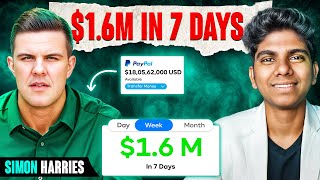
Simon Harries built a $100 million affiliate empire and now co-owns JVZoo. He launched a $1.6 million product through the platform and explains why affiliates have become the most effective acquisition channel in 2025, plus how to structure recurring commissions to keep them motivated.
Chapters
What's going on? What's going on, everybody? It's actually tuning in today's podcast. First of all, guys, welcome back to another episode of The Nikhil Sai Show, which is hosted by me, The Nikhil Sai. And guess what's going on today? We're back with another amazing guest. This is going to be quite an interesting podcast, especially if you're somebody who's interested in learning how to build and launch successful products, create affiliate networks, and scale your digital presence and build partnerships that are long-lasting this is a podcast you really want to tune in. And I started my humble beginnings with affiliate marketing, so I'm excited to share the learnings I've had and excited to pick the brain of one of the smartest people I know in the affiliate marketing space, and also is a co-owner of one of the most well-known affiliate platforms called JVZoo. He's founder at The Launch Express, also co-founder at VitaStreet, and founder at the Domination Newsletter.
Thank you so much. Thanks for having me on. How you doing?
I'm doing great. Energetic and excited to have you on. If you remember, we briefly met at, I think, in Beverly Hills at Tai Lopez's mastermind. And if anybody doesn't know, Tai Lopez is one of the most known internet marketers. He created the SMMA boom back in the day. So, there was this private invite-only mastermind I was a part of and I met Simon there through other connections I've had. It was a good chat. It was so fun and I'm glad we are doing this podcast right now.
Yeah, dude, it's great to connect and I'm so glad we stayed in touch since that day. You know, Tai's a good friend of mine, known Tai for over 10 years and he put a good crowd on that day. I know I came in, I think I flew in about 3 hours before I had to jump on stage there with Tai and speak at the mastermind. But It was, it's good to connect and it's, you know, like I said, I tell people all the time, it's like if you get an invite to go somewhere, even if it's a 14, 15-hour flight, you know, you came all the way, all the way over, you're probably on an 18-hour flight or you were breaking it up some form like, and you know, the relationships you built there, you know, probably going to make you net, you know, 7 figures easily over the next couple of years.
Absolutely. So I would love to jam with you on like the, the affiliate marketing and the strategies and digital tactics and whatnot. But before that, walk us through the journey of Simon. Like how did you become a co-owner of JVZoo? What was your journey like before JVZoo? What's your, how did you discover entrepreneurship? Give us a quick backstory of what was your journey so we have more context.
Yeah, so I went to university in the UK. I'm born and raised in the Welsh Valleys, if anyone knows where that is in the UK. I went to university, you know, and basically we started, my first business was basically nightclubs. We basically, Monday to Friday was like the quiet nights for these nightclubs. And we realized that if we put cheap, cheap drink prices out and, you know, brought the students, there was a lot of money to be made. So we actually started a promotion company, which we did for like 3 years. Through that journey, we actually built up one of the biggest pub crawl brands in Europe called, it's called Carnage, believe it or not, where basically you buy it like you pay £12 at the time for a t-shirt. And then you get all these drink discounts in like 5 or 6 different bars and you end up in a club. That became a huge thing in the UK. Massive. We owned the rights to a lot of the west of the UK. And then after that, I realized I didn't want to be 45 years old and be standing on, you know, door of a nightclub at 2 o'clock on a Tuesday night. So I started, you know, basically looking at, you know, ways to make money online, just like anyone else, just like You kind of find out about making money online when you spend time online. I ended up working for a gentleman called Alex Jeffreys. That's kind of what started it. I went for a job interview, got a job with Alex, and he kind of just taught me the ropes. It was a coaching business doing— dude, there were some months they were doing $6 million a month whilst I was there. And my first job was honestly just locking and loading emails. I copywrite and write an email, send it to me, I'd put it in the system, send it out, and then I would do all the data around it. So it was like a really good position to be in to learn copy, marketing, what we were promoting. I got really— not at the time, obviously at the time I did not realize what I was being exposed to. And then I ended up becoming the affiliate manager at Alex's shop for a couple of years. And then I went and opened my own affiliate management agency. So I was helping product owners, people who had successful ads, people who were just looking to get started. And I would take their product ideas and basically help them launch it. And I started using JVZoo for that. And yeah, like one of our first launches that we did is a guy called Luke McGuire, business partner of mine still to this day, nearly 10 years on. It was called Instamate. We launched it and it did $1.6 million in a week, all through affiliate traffic, all affiliate traffic. And that was kind of the changing point for me. You know, we'd done a lot of launches before, $100K weeks, $200K, like, but that one was just product fit, market fit. And that really kind of just exploded me into the space, made a bit of a name for ourselves. And then we grew that. And then recently, fast forward a few years, we were in that cycle. I developed an agency using ads and affiliates that helped companies raise money to grow their companies. That, that company basically got bought out and then I went ahead and acquired, you know, basically an equal share in JVZoo alongside Laura Castleman and Chad. And that's the story. And the reason I kind of went into that flow was I kind of see the writing on the wall. You know, you think about TikTok shop and you're thinking about a lot of the YouTube videos like these people are watching. You see brand deals, you see affiliate links and I kind of, you know, saw like cost of advertising going up through that kind of things. I saw a lot of account shutdowns, you know, funny story today. It's May 8th, lost 4 Google accounts on Sunday night. We were down, we've been down for 4 days. We get to our rep, our rep finally gets back and it was a mistake. You know what I mean? You know, luckily we have affiliate programs that kept us moving on those businesses, but we went from spending basically, you know, we would've spent somewhere between $25,000 and $30,000 by now this week and we've spent zero.
Yeah.
You know, like that's, that was kind of what I saw, the writing on the wall. So, you know, I kind of acquired, you know, a percentage of JVZoo and I want to just grow that and give a different sales channel to people who are doing really well with ads, but also give opportunities on that side of stuff.
Makes a lot of sense. And when did you become a part owner of JVZoo? That's quite an interesting journey, by the way.
Yeah, no, yeah, so that was June of last year. So June of last year. So I've been there 11 months.
Yeah, wow, that's really cool. 11 months. It's quite fascinating to see you find your own income generation machine on the platform and then coming back after a few years and saying, you know what? I'm going to be a co-owner. How about that?
Yeah, I know. I mean, people ask me all the time, it's like, you know, do you sell? I don't know if anyone out there watched Play with JVZoo, but JVZoo, ever since day one, when you make a sale on JVZoo as a vendor or as a as an affiliate, there's this email that comes through and it says, cha-ching, you just earned X amount of money, right? If, if you told me, you know, 2 minutes after receiving my first cha-ching that one day I would own the platform that sent me the email, I think you would be crazy. Like, I wouldn't, you know what I mean? Like, I mean, as much as I believe in myself, as much as I feel I can do anything, I mean, it still sounds kind of sounds wild, but it's It's a definition of, you know, and I hear it all the time, it's like a lot of us overestimate what we can achieve in a year, but completely underestimate what we can achieve in 5 or 10. And like my story is like the definition of like being aware of what you could generally achieve if you just give yourself a little time.
[Speaker] I love that. I mean, I love the focus of you just having that determination and hitting at it. And I'm glad that, you know, now you're a co-owner of JVZoo platform. That's so exciting because, Funny enough, like my journey has started with affiliate marketing as well. So in 2019, back in the day, like I had all this JVZoo and ClickBank accounts, you know, trying to promote some products. And I think it's a pretty good thing from the sense like I had no marketing experience whatsoever to getting into affiliate marketing was a big relief for me because now I don't have to worry about creating a product because there was already a product that's proven. All I have to do is promote. And that taught me a lot about marketing, social media, advertising, content creation, whatnot. And those skills compounded over a period of time where I made millions of dollars, you know, using those same skills and the same principles. But if I would be one of those business owners who say, I want to start a business, but I don't have a perfect product, I would not want to start until I have it. I would never be here because I just picked the product from JVZoo and ClickBank and got those cha-chang emails. And you just got a commission emails. Here we are. I think it's definitely a good roadmap. So yeah, you nailed it.
Yeah, perfectly right.
So that's what I recommend. If somebody's listening and you don't have a business, you don't need to have a business to make money. Just go sell somebody else's proven product and make money. You know how many millions of dollars my partners have made by promoting our services and how much money we made by selling somebody else's products and services? It's just insane if you're missing out. On the opportunity of exchanging traffic, leads, and sales and conversions and whatnot. We'll talk a bit more about this. Simon, you're the brain here of like, you're the affiliate marketing god from my perspective. Walk us through what's the best playbook for affiliate marketing in 2025 and beyond.
Perfect. Yeah, great question. So there's two sides of affiliate marketing, right? You're either a product owner that needs traffic or you're an affiliate that needs something to sell. So on the something to sell side of things, you know, the biggest thing there is to look product-market fit, right? One of the biggest things that I did when I started affiliate marketing was I didn't really focus on the products— the product I was promoting. I was really focusing— and we've all heard this, and I don't want to be, you know, I'm not going to beat anyone's head around it— it's like understanding the niche that you want to go after, right? You know, if you go on to ClickBank, you'll see a lot of weight loss stuff. If you go on to Digistore, you'll see a lot of diabetes stuff and maybe some other things. JVZoo is very software, info product, biz op. There's you kind of, you know, even Amazon is one of the biggest affiliate networks in the world. So, you know, if you want to go into e-com, even though they don't pay as much as maybe other platforms, you know, you can promote anything on Amazon and make 5 to 10%, you know, sometimes less commission on those things. So I always built my list towards a niche, like a specific niche. I was all about biz op. I realized young that like you can make money online. So I wanted to teach, you know, give people access to other ways to make money online. So I always push biz op stuff, affiliate marketing courses, write a book course, anything like that. That was my niche. So I developed my list, or I developed my lead magnet, my lead generation stuff around that, making money online. It's not the easiest niche, I'll be upfront.
Like, it's not—
there's a lot of competition there, and a lot of people in that niche are already marketers, so they kind of tell what you're doing. There's a lot of different stuff that you can do, like right now we have lists, or I have a list that's like, all I'm doing is building local businesses. So I'm looking for dentists, lawyers, coffee shop owners, and all I do, I just sell software to them. I sell software to them that makes their marketing, their job, their processes a lot easier. I at least, I'll also even sell insurance to them all through affiliate marketing, right? So what I did is I focused on building a list, you know, because if I was like, okay, I'm going to be an affiliate for an insurance offer, all my marketing is going to be around insurance. right? So when the insurance kind of, you know, the insurance offer dies, I haven't done anything to help these people. They just see me as the insurance brand. But if I'm, you know, like, let's use the local businesses, talking about how I can help them generate more revenue, marketing, then I'm sending them tools, but then I can say, hey, I can actually save you money on your insurance, which is still a way to help them make more money or keep more money. By then showing themselves. If they use tools that they liked that I've recommended, they're probably gonna like the insurance. So you can run across more verticals when you're really just niching in or you're picking an audience you want to serve. So that's like, if you're on affiliate, that's really, really key on that side of stuff. You know, one of the best ones you can do is probably really focus on newbies, like people who are searching that how to make money online, make my first dollar, you know, you can give them low-level gratifications with PDFs and gather that stuff, and then you can sell them kind of anything up the chain on that. So that's like the first key. Like, I mean, you know, I don't want to— I could go through 100 different things, but that's the first thing. If you're listening or, you know, on this podcast or watching this right now, that's what you need to do. You need to figure out like, okay, who am I going to serve and go from there? And don't worry. And like, Akhil, you kind of nailed this. Like, You don't need to worry about what you're gonna teach them because you're gonna sell other people's stuff. That's the key. You're going to sell other people's stuff, so you don't need to be an expert. You literally just say, okay, I went ahead and bought X, Y, and Z PLR, or I bought this software. I'm gonna generate some lead gen pieces, and I'm just gonna say, hey, like, I'm gonna make an ad for a dentist and make an ad for a lawyer and make an ad for a window cleaner and say, I'm gonna help you get more clients.
Mm-hmm.
You come in, they enter their email address, and then you redirect them to a product that's telling them that they can get more clients. Like, you don't even need to produce. Like, I didn't— my lead magnet was always a video that will help you generate more clients. And the video was just the VSL for the offer that I was getting the commission on. So I used a bridge page that said, enter your email and I'll give you— and the video was good. Like, you know, it was like a webinar or like a long VSL that kind of give them the bones of what they were selling. So there was value in it, but really they were pitching an offer at the end. And I built a massive list just doing that. And then I segmented my list, people who buy, people who didn't buy, and then I would just send them different offers and then I would send them free stuff and I would give them bonuses. And then, you know, sometimes I would just send them general information, but most of the time I was always selling to this list. But that's it. That's it. Like, find the audience, Pick the person and you're good to go from there.
Makes sense. I mean, I love that. It's easy to complicate. It's hard to simplify. And that's what you've done.
Yeah, 100%. So many people think they got to develop PDFs or have really good emails and this stuff. It's like, no, no, no. Like look at a product. If that works for dentists, that works for your audience or this works and you can do it that way, then that's it. Like that's all it is. Like you don't need to develop anything. You write some emails.
Yeah. Makes sense. Now that's the, that's the side of the affiliate. And now they know like who's listening to this podcast now on Okay, I got to pick a product, just build a brand around my name or my company about the products, the type of products we want to promote and build a list and keep adding value and then promote the video sales letter. And one of the things I want to mention, if you want to learn direct response marketing, watch Affiliate VSLs. They write probably the best VSLs I've ever heard. Like when I kind of get, you know, get like writer's block when I'm working on a project and I need some marketing inspiration, Guess what I do? I just go out to a platform like JVZoo and then just pick a VSL of the trending product and then listen. And then I see, wow, that angle is pretty good. Can I hit my clients with similar, you know, pain point or similar analogy? And then it just, you know, keeps my marketing copy going. Now the other question I have, Simon, is if somebody is the product owner, and because this is something, right? Like it always feels like maybe there is some magic that needs to happen for me to be a product owner. Otherwise I will fail as an affiliate product owner, right? What's the playbook for the product side on finding a product market fit, being able to have a successful affiliate launch and attracting the affiliates and walk us through that side of the business where most of the business owners who are listening might want to be like, maybe I should try JVZoo, maybe I should try affiliate marketplaces and list my products and what?
Yeah, I think with the product market fit is, and you know, I'm just assuming here people have a product idea or a product developed, right? And they're trying to see if their product is a fit for affiliates, for JVZoo, for whoever, ClickBank, whatever. I think the one thing you have to do as a product owner, and this is what I run into a lot when speaking to people, is people built their product to serve one particular person. Most of the time, that person was them. Like, most of the best products, I'd like— they build a product to solve a problem that they had. After that, they know that their product can serve other people, but they generally keep looking for people who are though, like business owners like they are or whatever. But the truth is, and you know this, the product will serve a wide market. You just have to speak specifically to that market, right? So if you have a software or an info product or even a supplement that can serve something, you, the chances are you just need to write a different angle. Like my perfect example is, you know, I use, you know, most people know who Salesforce and HubSpot are. If you actually— this is always good— if you actually go to SimilarWeb and put in HubSpot, you, and you have a space, you can see like all the organic, like another kind of like the, the ads that they run on all the different keywords. It's insane, right? Like, so HubSpot will have a homepage for local business owners And they might even have a landing page that specifically talks to coffee shop owners. Then on the other side, they have a landing page that will serve huge corporations, like, you know, like a company that makes this, right? Like company that makes this, they're massive, Joby. They'll actually have a whole different sales page that just talks to what their problems, but the product is the same. It doesn't matter if they're onboarding 300 users or 3 people from the coffee shop, they serve them with the same product, but they just show how— they just talk to the problem specifically. And that's exactly what happens on JVZoo. So for example, you know, we had a product that basically, it was a social media product that basically helped you. It was before ManyChat, and we basically developed, like, it's called Inboxer, and we basically developed it to do all the auto-replies if someone commented on your ad or all that. And we built it right before ManyChat was like— ManyChat was still there, but it wasn't like officially Facebook and all that stuff. This was, you know, 2017. And, you know, when we launched on JVZoo, we made it a make money opportunity. We made it a biz-op opportunity. Hey, you could, you could one, use this to run your own ads and build your audience using Messenger, or you could sell this as a service to local businesses and run like coupon ads. We built all that out. And we did like $800K that week and it was a full business opportunity. Then 2 weeks later we completely changed it into a SaaS page and we targeted enterprise-level people. We sold the same product that we sold for $27, $47 to, you know, people in the biz op space. And then we repackaged it up and we sold it for $700 a month to enterprise-level companies. So and all we did was look who was running Facebook ads at scale. And then we retargeted those businesses or those head office zip codes and we run them to more of a SaaS-based page and it just had different language. We just spoke directly to them, you know what I mean? Like, hey, like your customers need, you know, to be able to talk to you through social, but you can't manage that. You don't need to go, you know, we built this bot, automated, automated this. Hey, when someone comments on your ad, asking a question, like you should be able to reach out with them with a bot. Like, and it was huge and it basically like was the same product the whole time. So what I tell people about product owners is look at your product, take some time, hire a consultant, someone outside of the company can look at your product and then look at the market and say, okay, you can serve local businesses. This product would be perfect for influencers potentially that want to, you know, scale their audience. This can work for people who want to come in and make money. This can work for agencies and they can bolt that on as an extra. So there's a lot that can be done that way. So that's the first thing that I look at. And then believe it or not, you know, each of those bases, even the ones I talk about, local marketers, they all have affiliates. They all have an affiliate base. Like for example, if you wanted to get into the local marketing, you probably would approach me as an affiliate because I have a huge local marketing list of lawyers, dentists, window cleaners, car shops, like dealerships, whatever you have. But I also have a make money online list too, you know what I mean? And then obviously JVZoo on top. So that's the key there is realizing, okay, what sells good on JVZoo? Does my, can I tune my product's marketing to deliver what's doing well on the platform?
I love that. I think not many business owners think like that. They just believe when they're building their product that this is the ICP and that's the only person I can sell to. But like you mentioned, when new product, let's say an iPhone 16 came out, it's not, Yeah, like they think about the CEO, you know, who actually runs a successful company and the phone is functional, but then think about the average mom and pop who can use. So it has multifunctional and that the ads cater to wide range of audience. So I think that's a big takeaway for anybody who's actively marketing themselves. If you could just figure out different ICPs that you can promote your product to and like really hit that marketing piece right, the same product could be sold for a way lower CPA and much higher scalability and market. And I think that's affiliate marketing in a playbook. Now, the big question is, this is a hard pill to swallow for many affiliate marketers I know, which is the rising ad cost. The good old days of 2018, 2019, run Facebook ads, get cheap clicks and get buyers on pennies and dollars, it used to work super fine. It's not anymore. It's kind of getting expensive. The clicks are not that, and I am assuming this might be a misconception from my side, but happy to correct myself. That a lot of buyers are getting more sophisticated. They bought a lot of offers and now they're like not into buying them anymore because they kind of see the pattern. What do you recommend right now from a traffic standpoint? And is that fatigue true or is it just a misconception?
I would say it's 100% true. Like things are more expensive through that. But on the flip side, what I've seen, and I've got so much data in JVZoo to back this up, is that the lifetime value of a customer, I know we use the word lifetime, but what the customer now spends a year with the brand that they pick is actually up. This brand hopping that we saw probably a lot through COVID a year before is, you know, it's kind of down. Like a lot of people are settling into their brands now. You know, I call it the Pepsi-Cola phase, you know, Pepsi versus Coke. You know, when it first came out, a lot of people would just flip between both, right? Which, wherever was cheapest on the shelf. Yeah. No, it's not like that anymore. A lot of people are very, very brand specific on that side of stuff, you know, and that goes for their products too. Now, regarding the ad cost, agree. I think, I think for me, it's, it's, it's come full circle. Someone who's been, you know, in the game a bit longer than you, not because you didn't start soon, it's just because you weren't probably born yet. You know what I mean? Like you were a lot younger than I am. We, We— I'm seeing based on how I'm running stuff is that buyers, getting buyers is very expensive, but getting leads is cheaper than ever. And what I'm finding is, you know, a lot of people talk about it. I learned this from Frank Kern years ago. There's like 3 pools of people, people who know nothing about your product, which is the biggest one, people who kind of know about your product, and then people who are like ready to buy your product in the tiniest. What I'm seeing is is the pool of people who, who could buy your product is just getting bigger. So there is more of a— there's a lot of people like right now we're running financial newsletters, right? Like 2018, we talk about the good old days. We could run direct to a sales, like a VSL, and sell a $2,000 product straight from ads, right? Yeah. 2019, 2020, 2021 crushes, right? Now what we're seeing is we actually have to bring the lead in We have to educate them, then we have to sell them something of less value, you know, not less value, like of less cost, high value, and then lead them up the ladder. What does that do? It increases the cycle, right? It increases the cycle, you know, the buyer cycle. But what it does is at the end of the cycle, you've actually made more money. Now, what this does is it squeezes out the people who don't have enough capital, right? But this is where affiliate marketing comes in. Most affiliates are already doing the lead gen and the email marketing trust bit. They're already doing this 4 or 5 weeks worth of work. So when they go and promote your product, they're already at the stage to buy. So then you're just paying them when they make a sale. That's the beautiful thing. So what I'm telling people now is, it doesn't matter if you're a big corporation, if you're starting a new product, you want to get into, you want to launch using affiliates and relationships and then reinvest the money that you make into the 4 weeks of building your own audience through there and you'll make more money. And that's what we're seeing. You 100%, the cost of a buyer and the conversion of a buyer when you're running by like purchase targeting stuff or, you know, purchase conversion events is up. Now there is an audience, there's plenty of people out there who are crushing because their product's very, very unique. Or, you know, there's low competition, there's still people who are doing well that would completely disagree with us. That's why I say with the affiliate stuff, if you're a product owner and you're seeing those hardships, build an affiliate program. Let— and I'll tell you, all the affiliates I know, they're the best media buyers. They're the best media buyers and they're best email writers. And they can— oh wow, the way that— and they have— and they really automate it all because all they're doing 'Cause all affiliates do, just think of it like this, all affiliates are an acquisition department. All they do is clicks, leads, clicks, leads. Most business owners need to do clicks, leads, conversions, funnels, aftercare. It's really difficult to build a big business where you can think, but think of your affiliates as your acquisition team. Now one thing a lot of people don't know is a lot of affiliates run ads, but they also run SEO. So for a brand, one of the best things you can have is when someone searches your brand is have a bunch of blogs and reviews and YouTube videos of people reviewing and recommending your products. Affiliates do that because they want to make commissions. You're literally building your own reputation marketing free. Yeah. Yeah. Only payment. So like you go and search some of the biggest products on JVZoo for 3, 4 pages, there's just affiliate reviews, blog posts, all saying how great the product is. But if you went and, you know, put in like Apple iPhone review, 5 was the top 5 articles on Apple iPhone review are all negative reviews because they don't get paid by Apple. So they just, they just generate the clicks, right? And they know negativity makes more clicks. But if you're paying someone, they know positivity makes more sales. So they always push the positivity. That's so, that's why I tell people all the time with the affiliate stuff and the ads is you can There's a lot you can do to get that going.
Makes sense. That makes a lot of sense. Appreciate you sharing that advice. So you're right. It's not that people are not buying, it's just that they're buying in a longer time horizon. So the one who has patience and the one who's trying to build a longevity brand, they're trying to stay in the market, you can win. But the good old days of setting up a new ad account and spending $10K today and making $20K back, that's kind of where it's getting trickier. But I think it's good from a sense of like the quick weed makers are like just flushed out and the real people who are in here for business are still here.
Just a shakeup.
Exactly. Yeah. I like that. So the next question I have is, as you're one of the most popular, well-known affiliate platforms, I'm assuming you have a lot of data and insights on like what keeps affiliates active. I've seen a bunch of business owners who have partnerships and they create different affiliate groups, but the struggle to have them keep promoting the products. What do you recommend like from an affiliate engagement cycle on like how do you keep them active? How do you keep them motivated and how do you keep them pushing your products every time?
Yeah, the key is payouts, right? The people who I see struggle, they're running half of their products, you know, out on commissions and then they're selling the customers higher ticket stuff down the line and not paying the affiliate out. I get it. Business numbers are business numbers. But I'll tell you this, we watch people in JVZoo, and we've done this myself. Like, one of the reasons, like, if I drop a product or Luke drops a product or Justin drops a product, guys I work with, everyone jumps on. Two reasons. One, we always have recurring commissions in our product lineup. Every month, every year, we have like buckets full of commissions hit again. But also, in a funnel, we'll always put 4 or 5 backend high tickets into the funnel. Now, on JVZoo you can lock after the first sale is made the affiliate to that customer. So when someone— say you sell something on the phone or you sell something on a webinar down the line and it's in that funnel, you can't automatically pay that person out. So for example, we'll run a launch, we'll do 4,000-5,000 brand new customers, and the average order value say is $160, $80 to the affiliate. Then 2 weeks later we run a backend webinar selling what, about $2,000 packages. We'll normally give 30 to 40% away to whoever drove us that customer. And then when those customers that buy $2,000 packages want to buy the $5K, $10K, $20K, we'll then pay up to 30%. Sometimes it's 10, sometimes it's 20, but up to 30% depending on how much fulfillment and cost there are. And that's why, like, if you ever go into JVZoo and go to the top sellers, you'll see the same 5 or 6 top products in there every day because these are the ones that basically like, like I know affiliates will, I know affiliates that have only promoted us in January and they have us on like every 90 days they'll repromote us. We've paid them more in the last 20 days than we did when they promoted in January because their high tickets are maturing. So when, so when they're looking to something to promote, they're like, dude, we just made like $45,000 off those boys. We haven't hit them since January. We should hit them again. And then they'll flood us again with 600 to, you know, 900 new customers, leads, like customers, and the cycle starts again. You know, every business is different, but I'll tell you, if you want to build an evergreen affiliate thing, lock people in for lifetime, like build a business, and even if it's 5%, like even if like that's all you can give, right? I'll tell you like, and also having your products on a network, it's a network effect. Like, we speak— there's a big launch that's happening on, you know, you guys will know of it. It happens every time this year, you know, big company over in Arizona. Their biggest thing is like, we're kind of stuck on our affiliate growth. We don't get enough of the smaller people. The biggest reason why is they're not on a network. They're not, you know, they're not somewhere where people come on a stickiness. They're not part of a platform like Facebook or, you know, like it's Amazon. It's like, that's what they need to be. So having those numbers get put through a platform that shows the numbers, you'll have this organic effect of affiliates coming in, then you're paying them every month, paying them when they're not even expecting it. It's just going to blow up. And that's really the secret to continuous support, regular month on month from people.
Makes sense. That's pretty insightful. And I think that's probably one of the most common reasons why businesses who try to build affiliate networks fail because they're unable to show that momentum with income generated for the affiliates. And I do remember being this young college punk on phone trying to sell some affiliate products, seeing that green commission mark and getting that email saying, Cha-Chang, and you go like, whoa, you know, I can't stop doing this anymore, right? You just get into the same mode of doing it. And I think, yeah, that's a nice way to put it. And I love the fact that the longevity of thinking about how do we give contribution to the affiliates who brought the lead even on a backend sale. I think that is just free money to affiliates, which is more valuable to them. They just think, wow, I didn't even work for this and they gave me, and they just are more hammering. Now they increase their ad budget. So even though they lose money in the front end, which they know they don't make back in the front end affiliate commission, they'll still lose it. I've seen people doing this, by the way.
Yeah, it's one of the reasons MLMs became so popular, right? Is that like I recruit someone, they recruit someone, they recruit someone, and I'm still getting paid down the chain, right? Now, like, I don't endorse MLMs. I'm not saying it's a bad business model. I'm just saying like there's a reason why people are highly attracted to it because they do one bit of work by recruiting one person and then they get all this extra on award. So like if you acquire a customer for me, you know, that's your customer for life and you'll get in a slice. Like I'm not going to cut you out the deal as this customer goes down my chain, you know, and I think like that's the big deal. Like you, it's called passive income. That's what they want. Give it to them.
Yeah. Yeah. That's the exact word most affiliate marketers use. I kind of agree, but it's kind of, you know, it's kind of interesting. Some people have different perspective. Now I would love to take you through a different set of questions, Simon. What kind of tools are you using on a daily basis to manage your clients, your personal productivity, your projects?
So Slack is definitely a big one for us. Slack is just a communication channel that we need 100%. We love ClickUp. ClickUp is a great project management tool that makes it fun and very visually pleasing, especially for someone who needs to check in on products and projects on a regular basis. Using a bunch of AI tools. I think ChatGPT is like one of my best friends. We use a lot of apps on top of that stuff. I use it for booking all my travel, all my flights, taking all my notes. I find it very, very difficult to read long emails. So if you ever email me, you'll see that there's a reply that basically says if this email was longer than 3 sentences, do not expect a reply. So if someone does, so if there is a long email I need to use, like read, I'll actually put it into chat and say, summarize this in 5 lines or less and give me a good response to it. Sometimes it'll tell me I need to read the whole email. Sometimes it'll say, here's a response, but you should probably read this section. That's a huge lifesaver. Like I try and tell people all the time, if you're an entrepreneur, don't waste time like reading long Facebook messages, Slacks, like do not do it. Just have it all summarized. That's, those are my main, that's my main day-to-day At the end of the day, like I'm a networker, so a lot like AI can't replace me calling someone and making deals happen or onboarding someone or making someone feel welcome. So there's a lot of, there's a, I don't use it as much as like maybe my CTO does or maybe Laura, our CEO does because I'm a lot on the phone and like doing things like this. So those are my tools. Those are my kind of day-to-day setups. WhatsApp is my best friend and that's really it.
Makes sense. Walk us through. An average day of yours? When do you wake up? What do you do? How do you— how does an average day look like?
So yeah, like pretty, pretty normal, honestly. Like, I spent 700 hours on a flight last year, so week to week it kind of looks a little different. Yeah, I was like in Dubai 7 times, went to Australia twice. So there's a lot of hours on a plane. It was just 100 hours just getting to Australia. So that's nuts. But yeah, day to day normally looks to me as I kind of wake up, alarm goes off 5:30, 6 o'clock, try to move some, so get up. Electrolytes, gym, answering a lot of WhatsApps and Slacks, quick replies on my phone, and then prioritizing messages for when I need to be in the office. I do that a lot as I'm in the gym in between sets. I have a strict timer, so like I put the phone down as I need to hit weights. Like, not everyone— I'm not— everyone recommends that, but I— it helps my productivity in the day. Try to get to the office early. If I'm home, probably doing the school run, taking the kiddo to school, and then head into the office. In the office till about 5, 6 o'clock. Day to day looks at meetings. Tuesdays are all board meetings for our companies, so that's very, very high intense, a lot away from the laptop. And then travel. Honestly, dude, like, I try to catch early morning flights. A little tip for people: don't, don't get the mid, midday flights or the late flights. They're always the ones that get delayed and canceled. Always try to catch an early flight. Oh, uh, you actually buy a lot of time back. Trust me, it's like the craziest thing. And if you kind of— if there's a group of you, if there's a if you're in the US flying and there's like 4 or 5 of you that's like very close and can share, always take a private. If you can take a private, 4 or 5 of you, honestly, if you're only going 2 hours, just get it. Like, just not having to be in the airport 2 hours before and being able to take off when you want is massive. It's not worth— like, I'm not at the level where it's worth it if I'm on my own, but if it's 4 or 5 of you going to one place, it's 100% worth it. So that's really it. Those are like kind of my day-to-day looks on that. If I'm at the hotel, I'm trying to stay kind of regimented to that. You know, most, if I'm traveling, I have meetings set during office hours. And then maybe my day's a little bit longer when I'm traveling to catch up with work. You know, it's like when you're traveling, like you go back to the hotel room, you've got 3 or 4 hours of catch up. But sometimes I find those are my most productive hours.
Makes sense. Pretty, pretty appreciated. Thanks for walking us through. If you could go back, Simon, and talk to the 20-year-old yourself who is just throwing parties and, you know, like trying, trying to make money and whatnot, what would be the number one suggestion you would give yourself?
That's a good one. I mean, I've been pretty lucky. I think luck has hit me a lot on the right side. I think the biggest thing for me is honestly just do it the same. Like, do it the same, man. Like, I mean, of course there's little things, like there's little specific moments I wish I took a little bit more time or I said no to something. But honestly, looking back, I think the biggest thing for me is just, yeah, like I'm a very, I'm a big risk taker. I take crazy amounts of risks. Like, you know, I bought JVZoo. Like that's a big paycheck. Like there wasn't, you know, I kind of Elon Musk into it. Like I was like, hey, like I bought a company. I don't really have much left. Like, so I'm a pretty big risk taker when it comes to that side of things. I think my biggest thing too is probably just get on a plane more, like go and meet people. The biggest deals that have ever happened to me is just going face to face. Like, I mean, sleep is important, but like when you're trying to get stuff done, it's overrated. I think you can get a lot of stuff done if you keep moving and get, get into places, you know, like, you know, when we met at Tides, like I wasn't coming. Like, I like— and then Ty called me the Wednesday and was like, yo, bro, you should come out, like, do me this all. I'm like, yeah, dude, I'll be there, no sweat. I was like, but I could only get a flight the Friday morning. Like, I don't land— like, I leave the East Coast at 5 AM, but I won't be there till 11. He's like, it's all good, dude, you're not on until 1, so you'll be fine. And I just said yes to that stuff. I think that's a big one. And then I think one thing I would say, like, just one thing I would say is like Hey Simon, a lot of people will waste your time, but you have to get through the wasted meetings to find the goal and don't be frustrated by the wasted time. I think that's like the one thing I've got. There's a lot of times where I've been frustrated or I'm like, that guy just wasted my time. Why did I? I think there's plenty of calls where I thought this guy was gonna waste my time and it's turned into what it has been today. I think just saying, yo bro, like it's good. Like all the calls, all the meetings, all the places you went, like All the ones that were just duds, that's where all the gold is. Like all the gold comes from just you saying yes to meetings.
Makes sense. I like that. Now that's actually so true and it's really, it's really, I mean, this is something I've seen after working with a lot of service-based business owners and people who had a lot of meetings. They do struggle with differentiating the quality of the meeting and finding the right one. So you've done so many, right? And you kind of see a playbook on like, this is how winners speak and this is how losers waste your time. If you would have to give advice on like how to find that out, what would that look like?
Yeah, the biggest one for me I've realized is when people want to cut straight to the deal, they're like, hey, let's talk, let's get down to it, is normally the one that's going to waste your time. Honestly, like, you know, like honestly, like most of my meetings, if it's a 30-minute meeting, is we're shooting the shit for 25 minutes and then we're spending 5 minutes realizing we don't have enough time and we're setting up the next meeting. Like, honest to God, like, that's— if someone can't shoot the shit with you, it's someone you probably don't want to be in business with. Or like, unless it's like very something specific, like you need an attorney to do X, Y, and Z, or you need an accountant to do X, Y, and Z, unless it's like those people, the meeting should be more about trying to feel out, especially if it's a partnership. Like, if I'm going to partner with a payment processor, right, we process hundreds of millions a month at JVZoo, and we want processing partners. If I feel I can't build a relationship with someone who I potentially might have to call at 2 o'clock in the morning because there's a payment issue, right? That's chances I don't want to do business with that person, right? Same way when I recruit affiliates, right? If I feel I can't build a relationship with an affiliate, I don't really want him promoting my product because he's the one that's going to be the one up my ass a little bit demanding things like, okay, you know, oh my God, why did this customer get refunded? Why did like No, dude, this is business. Like, I need things to be enjoyable. So that's my biggest thing, dude. I think the biggest one is like, if you feel you can't build rapport with someone and they want to cut to the chase too quick and you don't feel comfortable, it's okay. Finish the meeting politely and then say, hey, I'll reach out to you to set up the next steps and just walk away from it. And then, and if you don't feel comfortable declining it on a call, like, I'll just tell someone straight away, like, hey, we ain't doing business. I don't feel like this is a good fit. I don't know what it is. We're just not going to do it. A lot of time people just email. I tell people just go ahead and email them and you should be fine. So yeah, that's how you fill the meetings out. If you feel like, like honestly, it's okay to start to talk about the weather, but you should see where that goes. Like, hey, what do you do? How's the kids? What's the plans for the weekend? Like, oh, you play golf? Shit, I play golf. Okay. Oh, you go to the UFC? I love the UFC. Like you've got to see how you build rapport with people. And that's, that's the key, dude. That is the magic.
I love that. I think for any big partnerships and successful sales I've seen so far, the knack, or I would say that the biggest denominator comes into how you build trust because there's a cheesy way of talking about Ohio and the weather in it or the other way around where you're genuinely connecting with something relatable, right? So I think that skill is a very valuable skill and I appreciate you talking a bit about how to create that intuition around finding the right partners and whatnot. Now, Simon, why don't you save us from the mistake that you probably made that we can avoid? So tell us, tell us a big mistake that you made that we don't want to do.
Yeah, I think, I think one of the biggest mistakes I ever did was a friend of mine basically got bought out of one of his businesses. A lot was going on, very traumatic time. And I was like, hey dude, let's, let's start something. Let's start something together. I see you're coming out of that one. Let's do something together. And it didn't work out and actually ruined our friendship. We haven't been as close as we might have. And we had to kind of get over this bridge. I don't think we'll ever be as close as we once were. And it was like, it was like, the best way I can describe it is like someone getting a divorce and the next week getting married. Like, that, that isn't going to work out. And I think that was one of the biggest things for me was not— he was eager to get on and prove that what happened, you know, was not an issue and get into the business. I was scaling up a business. It stole a lot of my attention from my other business and it kind of, kind of put us on a bit of a down year and You know, when stuff goes down, it's hard to pull the brakes and bring it back up. And I think that was the biggest one for me. That was one of the biggest decisions is— That's pretty hard to do someone a favor when it wasn't 100% right.
Yeah. I mean, world is ruthless. So, you know, if you're trying to be the captain, trying to save, you know, you can end up in tricky situation. I am guilty of the times you're talking about in my own business where I'm trying to like not let somebody down who's already trying to drown by themself and trying to pull them up. You know, you just go with them.
Yeah, yeah, they pull you the other way. Yeah, like, I think, I think a lot of it, you sometimes you just have to be selfish and you just have to go, I'm gonna ride the wave. I think that's been, you know, you probably have to— you've probably, you, you— I know you've done this because you're successful. People have come to you and say, hey, they got like, these people screwed me, my, like, my whole thing's right, can you help me save it? I don't have much budget. You're like, oh dude, I feel so bad, these guys are so nice. And you do something at a discount and it just— and then they blame you to make it. And it's like, dude, and really you knew it was like an understandable— yeah, you believe in yourself. And I've seen it, I've seen too— I did it, I see too many people do it. I think that's the big thing is if it's already a bad situation, chances are you're not going to make it any better.
Yeah. Oh my God, I love that quote. Yeah, that was so right. Because again, the thing is the one who is in a bad situation needs to wake up to reality and fix it by themselves and ask help while they're fixing it, but not try to find a hand that can fix it. And I think that's a misexpectation. People who are in that low situation They just expect to work with you and then you're going to change their life, which is not anything close to the truth. You can only support if somebody's trying. So appreciate you sharing that. That's pretty damn good advice. And what inspires you? What excites you, Simon? What's the reason you wake up and get to work and, you know, do what you do?
Yeah, it's a good question. I think for me it's as simple as the word progress. You know, Tony Robbins puts it right, like, if it ain't growing, it's dying. I think that's the biggest thing for me is like, let's, let's grow stuff, let's make progress. How beautiful— it doesn't matter how beautiful, ugly that, that it is. That, that's what motivates me, being, you know, something that was better today. And it doesn't always work. Like, dude, something— it doesn't always work. Uh, but that definitely motivates me for sure, selfishly, to, you know, I want to build something and disappear into the sunset, you know, as quickly as possible too. I want to go and live a lifestyle that, you know, we see the big big ballers play. Like, you know, what does Jeff Bezos do every day, dude? Like, I see more pictures of him on a yacht than anything else. He's putting rockets in space. He's— him and Elon doing some fun shit. Like, you know, Elon's like, even in the US government, it's a game to him, dude. He enjoys that stuff.
Yeah.
And he gets to choose that, right? Like, if he didn't have the money or didn't have the success that he had, like, he couldn't go and work in the US government for $175,000. Like, yeah, he's just not doing it, you know? So I think for me is it's the progress. It's getting to a point where, you know, like I can say no to everything I want, but also say yes to everything, even if it doesn't pay me. Like if that's going and fixing the UK government, like Elon is, like I want to be in a position to say, yeah, you can pay me £90,000 a year. It doesn't matter. Like I'm, I've got free time. I think that's the biggest thing for me to do. That's what motivates me is just progress on all stages. And you're just moving. You just got to keep moving. And that's it.
I love that. I love that. And I think that's so true. The world doesn't have place for people who are not trying to win. And you got to claim your spot. You got to claim your spot, claim your power, and get into those situations and, you know, control and do as much good as possible. And I think that's pretty damn good advice. If somebody is listening, Simon, and they probably want to connect with you or maybe sign up for one of your platforms and start promoting, where do you recommend? What is the first step for them?
Yeah, I think the biggest thing is, can we talk about it? It's like if you head over to JVZoo.com, sign up there, I email out every day there. I think just like you said, you know, even when you need a little bit of inspiration, you go ahead over there and you watch a VSL or something and you get that. I think, I think one of the biggest things I'd say to people is go ahead over to JVZoo.com and just go and look what's on the platform, play around, see what's there, like affiliate dashboard, seller's dashboard, and just immerse yourself with what's going on and now you have AI. If you see things in the like CPC, if you don't know what CPC is or what EPC is like, okay, I know what CPC is. What's EPC? Well, earnings per click. Have AI just ask it. Like ask it because like, you know, we only ask questions about things that we see that we don't understand. So what I love about chat is before I would be embarrassed, maybe potentially not to ask for help. Now I've got the sidekick. That I can just fire. Like, someone texted me the other day some like crazy acronym. Like, it was nuts. Like, it was a marketing one. I was like, dude, I've been doing this 12 years. Like, do I just ask him what that means? I was like, maybe not. It's a bit of a big play. I don't want to look like I— they were onboarding JVZoo. I was like, okay. And it was just another way of like talking about a landing page. Like, it was just like a different— and I was like, fuck. It was like EC. It was like, what about the EC page? I'm like, What the fuck is an EC page? And it was an email capture page. And I was like, oh, like, and like chat figured it out. Like just me saying like, hey, this is the message I got sent. What do you think it is? And it's like, oh, some people relate to a landing page as an email capture page. I'm like, EC? And I'm like, yeah, we can get the email. And I type back just to make sure like, hey, yeah, we can get the email capture page listed. And he's like, okay, great. And I was like, wow. Like, you know, back in the day, I would just be like, I'll pretend like I know what it means, you know? Dude, even like way back when people were like top of funnel, middle funnel, bottom of funnel, like dude, I didn't know what that meant when people started using it. Like that was like a whole new thing that happened in like 2020. Like I was like, dude, like what do you, I'm talking about like cold, we just did cold, warm, hot. That's what it used to be. Now it's like top of funnel, middle funnel, bottom funnel. I'm like, what the fuck does that mean?
I agree. And I think this is a wild, wild time to be alive and you know, to have the super intelligent in your hands, you know, a few messages away. And yeah, I remember those days when you're like so confused and stressing about what to write, but now you could just tell the project details to ChatGPT and give it the best VSL references and it would just spit out exactly like the, you know, reference you want. And now you don't have writer block anymore and whatnot. So that was beautiful. Thank you so much, Simon. Any last words before we conclude the podcast for today?
No, I think for me this was enjoyable. Thank you for the great questions. You know, like I said to anyone out there, you know, like progress is key. Uh, just keep waking up, keep moving. Like nothing's gonna change if you don't get up and change it, and it's not gonna be perfect. I'll just say this too, and I want everyone to understand this. I think it helped me when I realized it was a lot of my wins came like in one big go. Like I would work the whole year and kind of do okay or kind of not good, and then everything would happen for me in one big goal. Like, you know, like if you go and ask most of the big most of the really, really, really rich guys— you ask Tai, you ask— when you ask them when was the most money they ever made, they'll say they made most of their money in one month, and that's the month that they sold their company out. Or that's the— so there's this big event that happens that where they make most of the money then, and they progress on. So like, just so you guys know, like, the most money I ever made was when I sold my company out. That was like 20 times more than I'd ever made in a month before, you know what I mean? Like, so that— I'm just saying to you, like, Progress sometimes doesn't feel like progress, but then the door just opens. You know what I mean? Like, that's kind of it. So keep grinding, keep going into it. Your wins will come all at the same time. You just have to put the building blocks together. And sometimes it feels like you're losing, but you're not. It's all about progress.
Yeah, I love that. And that's such good advice. And thank you so much, Simon, for once again jumping on and appreciate you sharing. All the knowledge you've gained through, you know, years and decades of affiliate marketing and building platforms and now being a co-owner of it. I'm stoked to meet you in person again when I'm back in America. And I'm excited that this podcast is going to add a lot of value for many business owners because this was a power-packed, valuable podcast. Like anybody who wants to build an affiliate network or anybody who wants to actually launch their own product or struggling with traffic, we kind of covered a 360 perspective or like a mini marketing masterclass, as I would like to call. So appreciate you jumping on one more time. And guys, if you enjoyed the podcast, share this with your friends, and I'll be back with another amazing guest just like Simon. Thanks for jumping on once again, Simon.
Thank you.
More from Nikhil










BURNED $1.5M in his 17years online #digitalmarketing #entrepreneur #onlinebusiness
