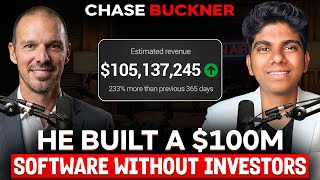
Chase Buckner, Director of Product Marketing at HighLevel, explains how the software company built a $100M business while staying bootstrapped and profitable from day one. HighLevel grew through podcasts and affiliate partnerships rather than paid ads, and now employs 1,200+ people. Buckner emphasizes rapid MVP releases and a culture that treats the product like a skateboard you build to ride.
Chapters
HighLevel, what's happening and what's going on in the industry? Where do you see this moving forward?
I like to introduce myself as a failed agency owner or failed agency CEO.
What actually prompted you to join these guys and what was like the vision?
I jumped at the opportunity because I knew that HighLevel was going to be the, the tool that every agency and every marketer wanted.
What was it like to join HighLevel and what was the journey like once you actually started booking?
From day one, we've been profitable and it's been really cool journey to be a part. We want to build a great company and we want to be able to pay people well and give people benefits.
So walk us through the playbook of marketing a software profitably when you're ready for it and moving forward.
The key to like hopscotching growth is to find audiences of your potential customers that already exist.
What would be the number one advice you would give yourself?
Kid, that voice that you hear, like, it's a good one.
What's going on? What's going on, everybody who's actually listening to this podcast right now? First of all, guys, welcome back to another episode of The Nikhil Sai Show, which is hosted by me, Nikhil Sai. And guess what's going on today? We're back with another amazing guest. The guest is actually jumping on is a very interesting dynamic. I mean, we have seen a lot of entrepreneurs, you know, who actually come up and build business from scratch. And we are talking about a true journey where you have built a software company from an idea to a true vision where it's impacting millions of people. And this is probably one of the most buzzed around marketing keywords, and we use it a lot personally in our own company. Most of our clients signed up for it through us overall, so that's a great opportunity for our business for additional revenue and whatnot. And this is not just stopping with us. Last time when I checked, they had over 30,000 agencies working with them and 3+ million users actively using their software. That just boggles my mind, and I'm privileged to say that I'm actually also invited as a speaker for the event, which is going to happen very soon. I'm talking about none other than The HighLevel Summit, and today we have Director of Product Marketing, Mr. Chase Buckner from HighLevel. Hey Chase.
Hey, how's it going?
Going great. Good to see you here, brother.
I'm happy to be here. I'm excited to chat.
Yeah, absolutely. Chase, we will definitely talk about HighLevel, what's happening and how do you, you know, like take care of marketing and all the product updates and what's going on in the industry. Where do you see this moving forward? All of that good stuff. But before that, talk us through Chase's journey. How did Chase started? What was his childhood like? How did you end up in HighLevel? What was it like for you to actually get to where you are right now?
For sure. So I like to introduce myself as a failed agency owner or failed agency CEO. I was a successful agency COO, and in that agency, we were actually one of the very first HighLevel customers. And so when we found the product, I spent about a month just sort of building out SOPs for our team so that we could start onboarding our clients into HighLevel moving forward. And during that process, I was working pretty closely with Varun and Sean. You know, through that process, it was kind of like, hey, all of our customers are going to want these types of things that you're creating. Would you consider joining the team? And so I jumped at the opportunity because I knew that HighLevel was going to be the tool that every agency and every marketer wanted. So yeah, my journey to HighLevel, and it's been everything I imagined it would be, to be honest, since that day.
Yeah, I mean, the ride of HighLevel is very, very exciting and interesting, and I'm happy to be a part of the ride as well. I mean, one of the things, I don't know how these leaders have done it. I mean, I've seen a lot of tech founders and they're kind of a little bit arrogant and, you know, like they're always talking about the funding or the next investor round or like number of users and all of that stuff. But like, I mean, I've interviewed all the 3 co-founders of HighLevel and these guys are grounded. Like they are sticking to the ground, making sure like, like I see Sean making videos every day with the product updates. He responds in Facebook group. Varun is very well connected with me. He takes direct feedback on the product if I ever give it. And Robin, you know, does the same thing. And it's so exceptional. Not just that, I want to add here, here's something which is very interesting. I have actually been to an event around software in Bangalore when I was in India. Now I'm in Dubai where I actually met, you know, high-level developers. I'm talking about one of the first developers you guys had. I'm talking about Nikunj and, you know, I was gonna say, was it Nikunj? Yeah, it was Nikunj. Yeah, it was Nikunj. Oh my God. The passion I've seen in him talking about high-level. And now I realize like, wow, this is what it takes to build a company where you're product-focused. I mean, he was talking as if it was his baby. Like, he was like, yeah, I was the first, like, The first lines of CRM code is written by me. I was like, wow, like this is what it takes to build an exceptional team. So tell me like what actually prompted you to join these guys and what was like the vision like, what was your thought process? So failed agency, you're good at operation, but why did you even decide to come to this route of like, you know, getting into the role which you are in right now?
Yeah, so it was pretty interesting, right? Because I think agencies that get to like the 7-figure mark like we did, we were doing about $88,000 a month I think when I left. The team at the agency. I think a pretty classic part of that journey is you get to a point with your clients where you're like, we can only hit a certain level of results because we are using so many different tools and tying them together. If we could have a tool where this was all in one place, we could take things even further. Should we build that tool? And I think a lot of agencies ask themselves that, that, that question at some point.
Yeah.
And we were, we were primarily a WordPress shop, so we built thousands of WordPress sites for clients over the years and our dev team were all WordPress devs and they were smart and humble enough to say, we are not full stack developers. You guys have no idea what you're talking about building this all-in-one marketing tool. It's gonna cost a fortune. And you know, we don't have the expertise to do that. This is a bad idea. And so luckily we heeded their advice and we did not do that, but we went out looking for a tool, right? Like surely somebody has to be working on this. And, um, we actually did find a tool. That sort of the same premise of HighLevel. And so we actually set it up for a couple of clients and it was very buggy. It wasn't working very well. And I was like, I don't know if this is a good idea. I don't know if we can fully invest in this. The guy who was building it was having an event in Miami. So I was like, Matt, who's my partner at the agency, let me fly up to Miami. Talk to these guys, see who they are, see what their vision is, and, and try to get an idea of like whether or not this is a smart bet. So I went there, quickly realized that they were in over their heads. They had no idea what they were doing. They'd never built software before. They were not engineers. Mm-hmm. The guy was like a real estate guy, you know, it was just red flags left and right. So I went back and I was like, Matt, we gotta pull out of this software. This is not gonna be what we'd hoped. But I met an agency owner at that event. And I kept in touch with him and then he, he told me, hey, we're going to try this thing called HighLevel. And I was like, what's that? He connected me and I was like, oh my gosh, the founders are engineers. And then Robin entered the picture as a third founder and he was an agency owner. So I was like, okay, the three founders are two engineers and an agency owner. Now we're talking. And, um, that's really where my confidence came in because I was like, okay, this is the team. Like you said, these guys are really down to earth and humble. And I know their premise is going to be what every marketer like me wants and needs. So this is going to be a rocket ship. And so, yeah, it was a no-brainer for me when I got the opportunity to join the team.
Yeah, for sure. That is definitely inspiring, right? I mean, when you see like true vision and you want to have that vision achieved so badly, you can't stop yourself from contributing to it, right? And that's what exactly happened here. Chase, that is so nice to actually know. Kind of walk us through, how was the first initial working experience? I know these guys were basically scraping from nothing. So this company, if I'm not mistaken, is still bootstrapped overall. So what was it like? How skeptical were you? I believe you already were in a comfortable situation in your agency, especially from income level. What was it like to join HighLevel and what was the journey like once you actually started working with them overall?
It was awesome, to be honest, and it was really a breath of fresh air because again, I think you nailed it when you said a lot of, most startups are in that mindset of what do I need to do to get to the point to raise money? And then how do I raise another round? And then how do I raise another round? And then how do we IPO?
Especially software. Yeah.
Especially software. Sean and Robin and Varun were the opposite. They were like, we want to build a great company and we want to be able to pay people well and give people benefits and build something that we're all proud of. Something that actually makes money, like a real business. And so from day one, we've been profitable. It's been a really cool journey to be a part of because in the beginning, when I got hired, I was like, look guys, you can just tell me where I'll be of most use and that's what I'll do. And so I've built and been a part of several different teams over the past 5 years. I mean, in the early days, I used to do, I used to do the onboarding every day for an hour. I would onboard. Whoever had signed up that day or that week.
Wow.
And, but when I then moved into the role of marketing, when we first formed the marketing team officially, I was reporting directly to Sean and it was just so cool to see Sean didn't care about anything that's like traditional marketing stuff. It was like, I don't want to talk about paid ads. I don't want to talk about any of that stuff. We're going to grow. Through the only proven way, which is recommendations and affiliates. And so that's where we spent all of our time. So we basically, I created our podcast because we both agreed that the easiest yes to get is when you ask somebody to be on your podcast, right? We're all super, we're all super vain and it feels great to be invited onto somebody's show. And so literally all Sean and I did for 2 years was invite people on our show and then try to get on their show. And we did, I think, 100 webinars that first year or podcasts. And then we did 200 the second year. And we just kept doing that, building this network of people where we could get in front of them, show them what we were doing. And then they would see the vision, fall in love with it, become an affiliate. And it just was this really organic growth. I mean, there was paid money in the affiliate channel, obviously, but it's very different than the way most companies are built. And when we talk to other people, they can't even comprehend it.
Right.
And it just seems like such hard work that they wouldn't be willing to do. And yeah, it's the truth, right? It's just hard work of outreach. Can we do a webinar together? We'd love to have you on our show. By the way, can we show you what we're up to? And it was just hundreds and hundreds of those conversations. That created the growth.
Yeah. What a hustle, brother. That is so, so, so interesting. I mean, the traditional software, like, people who are listening, they might already know, which is raise money, know your lifetime value, make sure that your CAC is closer to lifetime value, and then just like pump it. It's all that.
And that's all just a big, you know, I'll never forget when I first joined at Sean, we were, we were having a chat and he was like, Uh, we were talking about some other big softwares at the time or whatever, and he's like, Chase, you know that none of them make money, right? And I was like, what? And he was like, 99% of software don't actually make money, right? They just raise money and then they burn it through ads and sales teams until they can hopefully get enough traction or users to raise more money. And when I realized that and saw the truth of that, it's crazy. I mean, it's crazy.
It is.
The entire industry is just like this subsidized mess, really.
It's a fugazi. Yeah. Yeah. And it is valued at one of the highest multiples in the market and even in the public market. And that was like, you know, the PE doesn't exist, but they still get crazy values. And I'm like, what? You can add AI to your name and get 20x?
Yeah, exactly.
You can call your company software and get 20x.
It's been really amazing to be a part of a team that has built a company to the size that we're at. Bootstrapped profitably. You know, it's, you know, we like to, we're not just a unicorn. We're a, I forget what they call it, like a centaur or something where it's like you're, you do a certain amount of revenue, but you're also profitable. And there are only like, I don't know, like 50 companies in the world or whatever that meet the criteria.
Yeah. Yeah. I mean, there's all sorts of crazy names in the startup, especially SaaS startup ecosystem. We can't keep up with the new names coming up, but a unicorn is like a definitely buzzword overall. I think you're more of a profit company, billion-dollar profitable company. That's very rare in the software industry.
Exactly.
Yeah. Love that hustle. I mean, it's so astonishing to see what you guys have achieved and following the first rule of entrepreneurship, using what you have. You have the passion for the product and you could build the product and that's what you've done. You talked about it, you built it, you talked about it, you built it by taking feedback. I mean, there is feedback you guys have, the loop in HighLevel ecosystem. I love that overall. I've never seen that type of feedback loop. Like I could mention Sean, like, hey, this is what I need. And he's like, great, added it. I'm like, what? Like, how is that even possible? Same with Nikhil. Like, hey, can you get this payments thing? He's like, yep, added it. I'm like, whoa. And it's live in 3 weeks. And they tell me like, hey, it's live now. You could go. I'm like, what?
In 3 weeks?
I couldn't get my own internal team to do something in 3 weeks. Like, how are you guys even able to comprehend? So, okay, let's talk about this, Chase. I'm curious. Last time when I talked, You guys have like, I don't know, 200+ developers. Isn't that like a mega developing team? How big are you guys right now? And how do you maintain culture in such a big developing team? And you know, like I hired developers and I tried to build a software company. I lost half a million dollars doing it. And I know the pain of it, you know, especially when you're not a technical founder, it's just crazy. So I'm curious, how do you guys manage that?
Yeah. So I think in total we're like over, I think we're like 1,200, 1,300 employees somewhere around there, I think. And a couple hundred of them are developers. Yeah, that's crazy. So it's awesome, right? But what we're building is, is an all-in-one tool, right? So we're really, when you think about it, 10, 15, 20 software companies in one. And so to really achieve that goal, you, you need a lot of engineers. So, you know, the product set is kind of divvied out around sort of 7 areas and each of those areas is basically its own software team and But it, it has been amazing to see how that team has grown and, um, and the culture that it's grown in and under. And, you know, all the credit to Varun and Sean and Robin. You should see, it's so cool. So basically every morning at like, I'm in Mountain Time and so like 7:00 AM and 8:00 AM typically, um, we have protocols. And each call is a different product team and they're talking about, you know, what they're releasing and what they're going to start working on and all that stuff. A lot of the conversations get passionate, I would say, right? But I have never in 5 years heard anybody cross a line. We can have heated conversations and disagree with each other and this and that, but like the culture is so strong. I've never heard anybody disrespect someone. I've never heard anybody say anything inappropriate to somebody else. Like there's such a mutual level of respect on this team, which is crazy because the, the people in this room are so smart. Right. And so, but yet like me, I'm not an engineer. I have the freedom to ask questions that, you know, some of them are probably like, oh my gosh, dude, like that's so dumb. But like nobody would say that, right? They're like, oh, we totally understand where you're coming from, but it, this is actually the way that it works and da da da da. So it's just really, it's been really impressive and a blessing, honestly, to be around such smart but humble and grounded professional people. It's really been incredible.
Yeah, I mean, like, yeah, I think after 20 people, like maintaining that culture in the roots of the company is very tough. Like you gotta have like consistent efforts and, you know, reminding people why they're doing what they're doing to kind of get that effort. I believe the leaders of the company, including yourself, you know, who are involved in the company day-to-day operations, are doing such a good job to maintain that ethos between the company. And I believe that translates in your customer success, that translates in your marketing, that translates in the community you guys have built. It's just nuts. I love this overall. Yeah. I'm curious, Chase, if you could walk us through how was the journey like? I mean, you're taking a product which, I mean, you know, I mean, back in 2020, 2019, you were just like getting into the actual hands of agency owners who would probably refer you and get you more customers in the future. But there was definitely like few things which weren't that great, you know, like the product wasn't to the point where it is right now and whatnot. Like I actually looked at it, I was like, wow, sounds like amazing, but doesn't look like I could use it today kind of situation is how I actually missed out on the opportunity of getting early on HighLevel. So I wasn't on board immediately once I see it. So I'm curious, What was it like to push it? Walk us through the different challenges you have had to push the market and get the feedback, and what was it like in the initial journey?
Yeah, great question. It's been awesome for me, right? Because I come from our Prime avatar base, right? Like, I am our Prime avatar customer. And so it was, you know, I've always sort of thought of part of my role is to be the voice of our customer, of that avatar. So it's given me the freedom to be very vocal when I see something that's wrong or not the way that I would want to use it if I were still running an agency, which has been so much fun, right? Because, because we build for marketers and agencies and because you can white label HighLevel, there are certain things that our customers want that's a little bit different the way it's done in most other softwares, right? And so oftentimes a team would be getting ready to go build something and they're just mapping it to the way that, you know, it already exists in the market. And then I get the opportunity to jump in and be like, whoa, wait, that's— they sell directly to the end customer. We don't, we sell to agencies and agencies want it actually a little bit different. They want it like this. And so those moments have been really fun to be a part of because that's what separates us from those other softwares. Right. And so there's been a lot of really cool moments like that over the past couple of years. And, uh, And it's, it's fun to be able to say like, you know, no, no, no, no, no, trust me. Like, you know, when was the last time any of you actually used the system to send an email? Like we do it every day. Like, trust me, this is the way it should work.
Interesting.
It's great. And, and we literally use the product every day, right? So it's, um, when something new rolls out, we, we use it immediately and we know immediately what we got right and what we got wrong. And then we also have the ideas board, like you mentioned. So. Everything, not everything, most things in the roadmap come from what gets voted up to the top of that area in the, in the ideas board. So I haven't seen many other companies do it like that either. And it's pretty awesome. Like you said, if, you know, once something gets a couple hundred votes and it becomes the next thing, you can expect to see it in 3 to 5 weeks, right? And, uh, or at least the first version of it. And, uh, so yeah, it's been pretty cool to, to see you guys are playing a very smart game, Chase.
I mean, it's like you cannot go wrong. Like, you're not spending crazy on customer acquisition, you're hiring the best talented developers, and you're keeping your ears to the ground and listening to what people want and building accordingly. And yes, there are gaps every time, just like any other company, but you're working towards it and you're making it better and better. So no reason, like, why would you, like, you know, It's obvious why you're on the top of the chain right now. So happy to kind of see where you guys are heading towards. So where do you kind of see the HighLevel movement moving forward? I mean, when I asked this question, I got different responses from different founders. You know, like Sean was talking about like, hey, this would be like the OS for marketing. Like, you know, like we are not even in the software business. We are like creating this operating system, you know, basically for all the agencies to build. Where do you see this overall? Ultimately, in the long run.
You know, it's so hard to say, right? Because we are building in a couple of different directions. To Sean's point, it's really cool that pretty much everything that we launch launches with an API as well. So it has in a way become an OS that people build on top of, which is amazing. And the app marketplace has really spun up over the past couple of months. Which is incredible. So now in-app, you can discover add-ons that were built by third-party folks from the community. And then next, that will open up for the website and the funnel builder so that those builders can start building apps or let's say plugins for the website builder. And once that happens, it's basically like a WordPress ecosystem, right? For the builders. And so I do agree with Sean. I think that it will, for a lot of folks, become an OS or maybe like a headless sort of CRM marketing platform, which is amazing. But at the same time, we're also going to keep pushing to literally be a world-class marketing CRM. And I think, for example, the custom objects rolling out is, is sort of the last missing piece if you're going to compare the CRM side of HighLevel to like a HubSpot or a Salesforce. And so that's going to roll out any day. And as that evolves and becomes mature, I think, you know, there's nothing that you won't really be able to do in HighLevel at that point.
Yeah, yeah, I'm stoked for it. You guys have built a very interesting infrastructure, one of the smartest infrastructures I have seen, especially when it comes to the building blocks of the software itself. And I was talking to like, you know, Nasa, Naranasamy, and, you know, Nico and a lot of other— whenever I need something, they're like, hey, you know, Here's the documentation, here's the API, let's get your developer into Slack, let's go. I was like, that's stuff, I like it. And you guys are building something really, really incredible. I mean, I can vouch for it because I've been seeing how it actually transformed from the version which I got in my hands to what it is right now. Like yesterday, Sean, given another update where the frontend is 25% more faster now. And I was like, whoa, finally I can wait less time on the CRM. That's pretty cool. So, you know, a lot more things definitely happening in the go.
I mean, honestly, I'm always in awe. I honestly think we got in a way so lucky because again, I'm not an engineer, right? But over the past couple of years, we've hired some amazing engineers, right? We're now taking them from big companies. These are world-class devs. And still every now and then when I'm hanging out with the devs, I ask them like, well, who's the best engineer, right? And the answer is still unanimously Varun. So in a way, somehow we got lucky that one of our co-founders is literally one of the best devs in the world. Uh, yeah, I just, every day I'm like, man, it's just crazy. Like, I don't know, because, you know, Sean is the first to admit he's the opposite. He's like, I'm not even allowed to touch the code anymore. Like, I'm not a very good engineer. Um, but somehow Varun is. And, and so I think, again, we're just super, super lucky the way that it all worked out.
Yeah, yeah. I mean, I've had a conversation with him. Varun was an incredible guy, like very technical, straight to the point, no fluff. Like he is building something exceptional and he completely believes in it. And I think that's, that is a different type of conviction you have when you believe in what you're building. Most software developers are overpaid and under-passionate about building the product they're building. And that's why we see a lot of bugs and a lot of development cycles and a lot more resources going into the waste. But As the leader is standing in the front line and fixing the product every day, I think that definitely motivates a lot of people to keep doing. Definitely. Chase, walk us through a few strategies which can actually work for software companies to go the untraditional, like not very traditional route to actually acquire customers. I mean, you're giving away the playbook a little bit, which is talking to partners, getting them to do affiliate. You talk about your product on that podcast and doing a podcast swap and whatnot, but what else? I believe podcast swaps can definitely get you a momentum, you know, to go from 0 to 1. But now you guys have like, what, millions of users, you know, using the platform. So I assume there is something else which we haven't seen. So walk us through the playbook of marketing a software profitably in 2024 and moving forward.
I mean, I think I'll double down on the first answer. No matter what your business is, the key to like hopscotching growth is to find audiences of your potential customers that already exist and get in front of those audiences. Right? So people that run Facebook groups in your industry, people that run podcasts in your industry, these folks already have the reach that you're trying to get. So you need to figure out how to get in front of that leader and, and do something together so that they're willing to put you in front of their audience. And again, for us, the easiest way to do that is for you to create your own show and invite them on because they're going to say yes. And then after you're done recording, we would typically chit-chat and, you know, say, we, we, we would love to, um, do something with you in front of your audience. Right. And at that point you kind of have to, otherwise you're a jerk, right? Because we brought you on our show, like you're not gonna bring us on your show. And, um, and that works really, really well and it can work for anybody in any industry, right? Like there are podcasts about everything. There are YouTube channels about everything. Like you just gotta, Somehow, you know, provide value to the person running that so that they're willing to, um, co-market something with you. And so I think that still holds true as the tried and true tactic that we've proven that takes a lot of time and effort, but it works. I think aside from that, it's passion. I think having people like me on this team that comes from the customer base that really loves the product. Um, it just shines through everything that we do, right? When I come and, and do a podcast with you, I just naturally gush about the product 'cause I use it every day. I love it. Um, and so I think it's about finding those sort of evangelists within your community, trying to hire them. If you can't hire them, create some sort of incentivization for them, like, uh, like an affiliate program or whatever. Um, but you gotta get passionate people out there telling your story because when, when it's just you, it doesn't really resonate, right? It's like, of course you're going to say it's the greatest thing ever. It's your product or whatever. So, I mean, that's kind of like what we've always done is just focused on getting in front of other communities, but then also focus on making as much noise as we can about the product and what it does and why we love it. And, um, and that's pretty much it. I mean, honestly, if you saw our ad spend, you'd probably be shocked at how little we spend in ads for, you know, the amount of revenue that we make.
You do retargeting only, right?
Pretty much. I mean, yeah, we don't really spend a ton of money on ads. We let our affiliates bid on our ad terms. So they basically buy ads on our behalf. And I guess that's another key piece of advice is to like price your products high enough to have margin for affiliates. And I think that's a, that's a situation that a lot of folks that look at us and go, let's do that. And then they're like, oh, we can't, there's not enough margin. To cut other people in on this and you're sort of screwed from the get-go. So, yeah, if I were starting again today, I would say make sure you price your product high enough to be able to pay margin to promoters and then try to find those groups.
Yeah, absolutely. Wonderful advice. And I think this is a smart playbook instead of just going nuts on advertising spend and hoping that the free trial is, you know, converting to paid customers and hopefully it doesn't live. This is a much smarter playbook because you're leading with education and transformation. Information before you get them to work with you, which is pretty smart. I love that. And I would love to go through like a sequence of questions. But before that, I am curious, what do you love about HighLevel? I mean, you have worked in different stuff, obviously ran your own agency and got into the operations and whatnot. And agency is a different hassle. And now in HighLevel, what keeps you motivated? What keeps you excited? Oh, why do you show up?
It's, it's when you can get yourself in a position where you know you're not the smartest person in the room. Um, that's very exciting and motivating, to be honest, for me, because a lot to learn.
Yeah.
Yeah. You know, there's that like expression, if you feel like you're the smartest person in the room, you need to find another room or whatever.
Right.
And, and that just. Every day I know that I'm going to learn something from my colleagues. And the other part is, again, going back to the culture that Sean and Robin and Varun have built, which is the permission to fail. And there is no standard of perfection, right? Like the, we have this mantra, it's called the skateboard mentality, basically where most Software companies spend a lot of time building something to where they think it's as good as it can be, and then they put it out, right? They release it. Whereas we're the opposite. As soon as we can give you the, the, the least functioning variation of that thing, the MVP of it, we're gonna put it out. And then, uh, we call that a skateboard. And then we let the community tell us, okay, does this need to turn into a bicycle? Does it need to become a motorcycle? Or does this need to be built out into like a Ferrari? And, and I'll tell you, and I've been surprised over the years, I would say 7 times out of 10, it never has to go past a, a motorcycle. Um, because the truth is most softwares, 80% of their users only use 20% of the features, right? And so, uh, it's proven to be a very smart mantra. Uh, the flip side of that is you are moving very quickly, often too quickly for the team, right?
right?
So a lot of times things roll out and there's not even a help doc for it yet. And, um, and that can put the support team in a tough spot. And so there's a balance to play that game, but I think net-net, it's, it's proven to be, um, a very smart way to go because it's so exciting, right? Like our customers literally see 5 new things, 10 new things roll out every day. Yeah. And it's like, yeah, there's no support doc yet, but like, go play with it and let us know what you think. Um, and that type of environment is really fun to be a part of, right? Where you have that freedom to— we kind of say, what do we call it, like, um, just always be taking directionally correct imperfect action. And, um, we all sort of operate under that mentality. It's like, okay, I'm not 100% sure this is right, but I think it's accurately right, and I'm just gonna do something and we'll see if that was a good idea or not. But it's way better than sitting here and just like planning and thinking and strategizing. It's like, no, no, no, let's just go do something and see if it works. And so it's fun to be a part of that.
I love that, Chase. I mean, this is very, very, very like not traditional. Like people need, like, I want to just stress out, like I've seen, I've worked with, I've worked closely with multiple software companies and they want to build a Boeing first before they do a test trial if it flies. Like they want to build the entire infrastructure first, but you guys are opposite. Like, hey, let's just build a skateboard and let's see if it moves from point A to point B and let's see if we even want to build more resources. So very smart resource allocation and I think customer obsession is the ultimate key for you to be able to achieve that. That's so nice. Let's get to the next question. Chase, walk us through the typical tools do you use on a daily basis? I mean, obviously high level, but other than that, what other tools do you use on a daily basis to manage your projects, your personal productivity, your team and whatnot?
Yeah, so we use ClickUp for project management. And, um, that's one area that HighLevel hasn't gone into yet, but, um, you'll probably see us start building those types of stuff in, um, 2025.
I heard Sean saying this, like, when we were last time, like, hey, you have everything other than project management. They were like, you know, we might, you know, we'll probably get there.
I would imagine we'll get there around, like, Q1 of next year. But I use the app I probably use the absolute most is called Jumpshare. It's just basically like a, um, a screenshot screen recording app where like, as soon as you take the screenshot, it pops up and you can annotate it. And then when you hit save, it goes into your clipboard. So you can just paste a link, um, to the screenshot. And so, uh, I use that 100 times a day, right? When I'm like, you know, hey, we need more padding on this, like, and then I just throw it in Slack. So I use Jumpshare like literally 100 times a day. Um, the other app that I really liked and I use more and more is called Descript. Um, I don't know if you use that. It's a video editing app where you edit the text to edit the video. And, um, it's really impressive and they keep making it better and better.
It saves a lot of time. Yeah.
And so I use, um, Descript more and more for sure. And yeah, I would say those are the two apps that I use. The most, no doubt.
Okay. Yep, totally. And I'm just curious, how do you—
I use Photoshop a lot, I would say, as well.
Wow. You design the graphics most of the time?
No, no, no, no, no. But I know enough to be dangerous. And so I know enough to get a lot of small things done, right? Like resizing images and, you know, downscaling them and stuff like that. It just, as a marketer, I would say Being able, being proficient in Photoshop has really served me well over the years because it saves so much time not having to rely on a graphic designer, somebody else. You can just go get it done yourself.
Yeah, like if you're having a 2-hour latency to getting an image done and you just have 10 things to be done, that's just like a whole day wasted, you know, you're just waiting on something to happen. So I think that's very important and good control overall. I mean, at least a basic one. So let's walk through your average day, Chase. Walk us through, like, when do you wake up? When do you sleep? What do you do in between?
Sure. I typically wake up— well, I love to surf. So if there are going to be waves, I'll get up at 5 in the morning and I hit the road by 5:30 and I'm in the water around 5:45 and I'll surf for like an hour, an hour and a half, and then I get out. If I don't surf, then I take our kids to school. at 7 and, uh, at 7 o'clock usually starts the first product call. So I'll hop on that and then there's usually another product call right after that. Um, and by that point I'm home and I'll probably like take a shower, come back and start going through email and Slack. So my favorite part of the day is when I first hop into Slack, we have our release channel, our release notes channel, which is the new features or updates that have rolled out. that day. So that's like Christmas every morning. You get to see what's new, right? And you go through it and you're like, oh my gosh, this is finally live. And then you get dopamine.
Yeah.
Yeah. It's definitely like a half an hour of like crazy dopamine hits. And then, and then yeah, the first 2 hours from there are usually like going through Slack and answering conversations, following up on conversations and all of that. And then going through email and stuff. Stuff. And then it's, you know, team meetings, one-on-ones, podcasts like this, webinars and stuff like that. And, um, you know, just trying to— we're— our team's getting bigger and bigger. And so, you know, my job is sort of to do less myself and then just make sure that everybody has what they need to do what they need to do. Um, which is actually a bit of a transition to me because you have probably seen a lot of the content I've created over the years. And so I, you know, I'm trying to do my best to transition away from like doing it all myself to building a team of folks that do it. And so that's been like the newest part of my journey is really kind of trying to focus on making that transition.
Interesting. Yeah. I mean, I can imagine you might be feeling like, oh, I'm doing less because I'm delegating too much. But, you know, we have that go-do-it approach, right? Like, you know, you just flip things over, get things done, and, you know, you hit the record button, do the podcast and whatnot. Now you got to use a team. And I couldn't imagine, I couldn't fathom having 200 employees working on a single software company. That just sounds like a robust—
Me either, you know, I don't, I don't come from a big corporation world and I never imagined that we would become a big corporation. So it's been a learning experience for sure of having, you know, to go from being able to just go do it yourself to like, no, actually, you know, you'd You'd most help the company if you could build 10 people that could do this, right? And then just give them what they need to do it at scale. So it's been really a crazy journey, right?
And, uh, it's, uh, you're breaking all the, all the normal rules of building a software company. Hire expensive developers, create your prototype and make sure it is perfect before you launch. You know, raise money, spend a lot of on ads, you know, don't go organic. It doesn't work. You're just doing the opposite.
Exactly. I love that.
And you're still winning. That's what surprises me. And you're continuing to do that with a good streak. I love that. So, okay, let's talk about this. Chase, if you could go back and talk to 20-year-old yourself, you know, who's probably getting started in career and whatnot, what would be the number one advice you would give yourself?
Um, good question. Okay, so 20-year-old me, you know, I would probably just tell myself You got this. 'Cause so I went to college to be an English teacher actually. So when I graduated, I taught high school English for about 2 years and I just had this like burning feeling inside that I wasn't ready to commit the next 30 years of my life to that career. And so I went on a road trip with a friend and we were gonna drive across the country and then from California to Costa Rica. And on that trip, I had to figure out how to make money along the way, and that's when I started online marketing. I got into the, the field then. Long story short, we got down to Puerto Vallarta in Mexico. My charger broke, I couldn't unplug my computer, and so I was like, I gotta order a new charger and when it gets here, we can keep going. Well, it took 6 weeks for the thing to arrive, and by that point we had fallen in love with Puerto Vallarta. So we ended up spending the rest of our 6-month trip there. And at the very end of that trip, I met my wife and I've been here ever since. And part of me was, felt like I was sacrificing opportunity by leaving the US, right? I had friends that went to San Francisco and did really well out there. And I kind of thought, man, like maybe I made, you know, did I make the right decision and this and that? But I just sort of followed my gut and then look at what played out, right? Not only, um, do I work for a wildly successful SaaS company, I get to do it from the beach in Mexico, right? I didn't have to go to San Francisco to make it happen. So I would tell my 20-year-old self, like, you know, hey kid, that voice that you hear, like, it's a good one. Keep following it.
You got this. You got this. I mean, it's interesting, you know, when were you like actually into surfing? I mean, you sound like you surf a lot. I mean, that's on Instagram as well. So I'm I'm curious, how was the passion? How did you get passionate about it? And do you do like those big wave surfing? Like I've seen those like the horrific 30 feet. That sounds like I'm scared to think about that.
I'm scared of that as well. Yeah. No, every year. So I grew up outside of Philadelphia and every year my grandmother used to take our whole family on a trip every summer to Ocean City, New Jersey. And, you know, I just loved the water and sort of taught myself to surf on a boogie board. And then when I was like 15 or 16, my, my great-grandmother died and my dad got a little bit of money from the inheritance and he used that to buy a very modest little shack at the beach. And I'll never forget, actually, it was so cool. We were at the dinner table, my brother and I, and my parents were like, hey, we need to ask you guys how you would feel about something. And we're like, what? And they're like, as you know, your great-grandmother passed away and blah, blah, blah. And we have this opportunity to buy a house at the beach and it's in pretty rough shape. So, you know, we're going to have to spend a lot of time down there fixing it up. But like, what do you guys think? Would you be okay with that? And my brother and I were looking at each other like, what? Of course, this is amazing. We're going to have a house at the beach. Like, this is crazy. And so, uh, yeah, I was like 15, I think, when that happened. And, uh, so I got to go to the beach a lot and, um, I think I got my first official surfboard when I was like 15. And yeah, it's just been something that I've, I've loved my whole life and, and I'm just so happy that I followed my heart and it took me to a place where, you know, I can, I can go to surf every morning that there's waves and still, you know, go to work and have a great career.
Yeah, I love that. You know, right time, right place. Lucky to see you here. That was definitely interesting. And if you could point out what would be like the biggest achievements you believe that happened in your career and what is like the goal for you, the ultimate goal you're trying to achieve?
Man, that's a great question and a tough one for me to answer. I think it's funny because I, you know, I can't speak for Sean and Robin and Varun, but they strike me as the same type of people. Like when we, when we started, none of us really cared about titles. You know, none of us cared about any of that stuff. And we were all just like, let's go build something great.
Like guys in the garage, right?
Yeah, that really was like what it felt like. And yeah, as we grew, you know, we had to get a human resources department and we had to create titles and all that kind of stuff. And it does become important. At a certain scale, I would say.
Yeah.
But I've never really had those types of goals. Like, I want to be the director of a billion-dollar software company. I think my goals have more been around, could I actually stay in Mexico, right? Or am I going to have to make my family— so weird when that happens. You know, I think earlier in my life it was like, am I going to have to force my family to move to the United States even though they might not want to because it'll be best for my career? So when I got to the point when I realized, no, I, we, we don't have to move if we don't want to. That was a really important milestone. You know, being able to have kids and feel confident and comfortable. I, a really great moment in my life was when, which was so funny. My wife's dream car was a minivan and the day that I was able to buy her, her minivan was a really cool day in my life. So it's things like that, I think, that have been, um, most important milestones in my life. And I'll give you one more that I'm stealing from, uh, a guy named Matt DeSino, who's a, a big part of our community at HighLevel. And I was at an event and he was talking about this type of stuff and he's like, my goal is to raise children that still wanna hang out with me when they no longer have to. I think he says kind, well-adjusted kids that want to hang out with me when they no longer have to. And I always thought that was a really great goal. And I've sort of adopted that as well as a, um, something to always shoot for. You know, my oldest son is like, he's 11 now, he'll be a teenager before we know it. And, uh, if he still wants to hang out with me when he's 16, I'll feel like I'm doing a pretty good job.
I mean, that's probably like the biggest goal for most fathers, you know, to, to be around the children and Luckily it happens to few and doesn't happen to most. And, you know, I hope the best happens for you as well. So I'm stoked. If you could share one biggest mistake you have done overall, which we all can probably avoid and save that mistake for ourselves, what would that be?
Ooh, good question. I don't know if it was a mistake. It was just a lesson that I learned at some point along the way. And I think I might answer two of your questions in one. I think you mentioned that you, you like to ask people about books. When I was running the agency with Matt, um, I didn't know myself and my role. I did, I hadn't spent enough time thinking that through. And then I read that book called Rocket Fuel, which is somewhere on my shelf over there. And you know, the EOS method of like visionary integrator and that book really solidified a lot of things for me. And I was like, I'm an integrator and we actually have this dynamic, Matt, because you are a visionary salesperson, CEO type. And, um, there are actually some boundaries here that this book really maps out very clearly and it actually empowers the integrator to make the final decision. And that was a really important moment for me because it gave me the confidence to speak strongly about the things that I thought were correct and the way things should actually work and the decisions that we were making. And so, um, I wish I'd found that book earlier in my career. And I think a lot of solo entrepreneurs haven't figured out who they are, right? I think there are a lot of integrators trying to build a company on their own when really they need to find a visionary to partner with. And the faster that they can do that, the more success they're going to have. That's something that I talk about a lot when I give talks these days is to figure out who you are as fast as possible, because the quicker you do, the quicker you'll realize what your strengths are and what you should be looking for in a partner or an important hire for your business.
Yeah. Yeah. And I think everybody learns this the hard way. At least most of the people I actually spoken to, you know, who are multi-level multimillionaire entrepreneurs and whatnot, they realize this lately overall. You know, I have been the visionary all my life and, you know, I was always struggling, you know, I'm so messy, how can I get things to make actually like into actions? And that's when I thought about, oh, we should build a team who is sophisticated enough to take things and do it. And I shouldn't try to do everything myself. And yeah, it was definitely a game changer. Appreciate you sharing that advice.
Well, and that's a big, that is a big mistake, right? So when I, when I said way back in the beginning that I introduced myself as a failed agency CEO, that's true because that agency, me and my partner were both operators. So you don't want to found a business with the same as you because that's a recipe for disaster. So that is a, that is a lesson that I learned the hard way for sure.
Great. And now you have a team who has a clear vision. The founders have absolutely a clear vision here and you got to just supplement there, you know, with your marketing skillset and the enthusiasm you bring to the table. So I'm stoked for that overall.
Yeah.
Like what inspires you, Chase? Like why do you wake up every day? What makes you get up and get to work? What's your motivation to live the life?
To live my life is, you know, to just keep doing what I'm doing. I think I feel pretty good about where I'm at, you know, living at the beach and all of that. What drives me to wake up and hop on the computer is honestly the tool. I, I'm in, you know, HighLevel is, it is the Swiss Army knife for any marketer and any business. And so I just get super excited every day to make it better and better because, you know, someday I'll retire and then I'll build a new business and it'll all be built on HighLevel. So I feel like I'm, I'm literally like putting time in to benefit my future and everybody else's future along the way. So it's, it's a pretty rewarding thing to get to do.
I love that. That's beautifully answered. And I'm curious, the ultimate vision for HighLevel, again, you can just make this answer up. It doesn't need to be perfect. Where do you see this? Are you trying to disrupt the enterprise CRM companies as well in the next 10 years? Is that like the aim, or are you trying to be in the SMB segment or like the small company segment and be the go-to marketing tool? Like, where do you see this tool playing out in the next 10 years?
Yeah, for sure. We don't have any plans to compete at the enterprise level. We love small businesses, local businesses, and that's really where we want to play. And we want to be the best tool, the best platform, the best OS for that market. 10 years is a long time, especially in tech. So, you know, software.
Yeah.
You don't know what the future holds. I think it would be pretty cool for us to go public at some point. Like I think, I just think that would be a rewarding moment for a lot of the team members to see.
All the hard work.
Yeah, but I think the next 3, 5 years is just going to be business as usual, right? Like we're just going to keep chugging, keep building a better product. And it's hard to really forecast past that.
Yeah, it is. I mean, especially in tech, I can imagine how difficult it is, you know. Definitely. Now any last one before we conclude the whole show?
No, thanks for having me. I think, you know, hopefully if you are a marketer, if you're just getting started, you know, I think, and you haven't checked out HighLevel, give it a try, right? I think you'll just be amazed at all the tools at your disposal. You really have all the tools that you need to make money, build a living, build your own business. Be your own boss by helping other businesses, right? And I think that's why I love what we do, right? We serve agencies who then serve their community, the businesses in their community. It's been a pleasure for me to personally be able, like my brother-in-law just opened a bar that's like a taco cantina type of thing in Guadalajara. You know, over the weekend I built their website in like an hour. And it's just so cool to be able to do that and how pumped they were. Right. And they're so excited that I built it and had it live, you know, and it's just like, yeah, with HighLevel, that's like a breeze. And so it's just really fun. And I hope everybody else is enjoying it as well.
Yeah. I mean, I can vouch for it too. Like when we used to build marketing systems back in '21 or 2020, especially before HighLevel was like our thing. It was a million tools to be used and 2,000-3,000 monthly recurring revenue on like, sorry, recurring payments to all these crazy softwares. And then we had all these logins and complications and the tech would break, the zaps would fail. It was just nuts. And now life is so easy. So, you know, life is so easy with HighLevel. I can definitely vouch for it. So thank you so much for being a part of building this amazing tool. And if somebody wants to get started, they should probably just go check out highlevel.com. To just get their free trial on it. Other than that, Chase, thank you so much for jumping on. It was a pleasure having you on the show. And thank you so much for sharing a lot of stories behind the scenes and all the journey you've gone through through HighLevel and how you are actually integrating your expertise into this company and building probably one of the most valuable software companies we'll ever see in the next 20 years. I'm calling it. So I'm stoked overall. And guys, hope you enjoyed a lot from this podcast episode. And if you want to try HighLevel, go to just highlevel.com and sign up for it and join their Facebook group. HighLevel has an amazing community. You post a question, they respond in minutes, which is kind of surprising to me most of the times. And you'll see Chase a lot making content, being in the community, and Sean, of course, obviously. And I hope you guys enjoyed this podcast. There's a lot of learnings from this podcast. So don't just, just be a motivational talk. Take a few actionable steps like signing up for HighLevel or building your first website or launching your first automation campaign. Or, you know, doing things which Chase was talking about, like building a good culture in the team and being product first instead of revenue first and that type of things. And go execute because information excites you, action gives you the result. So I hope this podcast inspired you to do the next, and I will be back with another amazing guest just like Chase on this show. So subscribe and share this with your friends. Thank you, Chase, for jumping on once again.
Thanks so much for having us. See everyone.
Yeah, absolutely. Have a good one.
Bye-bye.
More from Nikhil










BURNED $1.5M in his 17years online #digitalmarketing #entrepreneur #onlinebusiness
