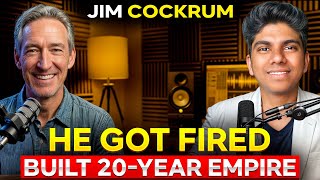
Jim Cockrum was fired from Microsoft, then spent 20 years building an Amazon coaching empire that now serves tens of thousands of sellers. He warns against private-label products as a first venture and dropshipping, and emphasizes relationship-building and genuine care for community members over quick wins.
Chapters
Can you walk us through in a nutshell what happened?
I've been doing e-commerce for over 20 years.
What was the journey like? How did you get initial success?
You could take little risks, you could try things, you could experiment.
What do you believe is still relevant today?
The basic principles that I keep going back to over and over and over is you've got to be willing to always learn.
What do you believe are one of the biggest reasons or the most common reasons you have seen e-commerce businesses fail?
They launch a private label product as their first attempt. That's a mistake.
Anything you'd like to add on top of what you— what we just spoke?
You're earning trust is the hardest part of the journey, and if you do that part right, the rest is easy.
Which makes a program successful or a course success.
One, succeed yourself legitimately.
Your life's biggest achievement, what would that be? And what is your next big goal?
Is that community and the momentum that will survive long after I'm gone.
What's going on? What's going on, everybody who's actually listening to this podcast right now? First of all, guys, welcome back to another episode of The Nikhil Sai Show, which is hosted by me, Nikhil Sai. And guess what's going on today? We are back with another amazing guest. I mean, this story is going to be interesting. I mean, we are talking about somebody who's been multiple decades into e-commerce. So we are talking about someone who actually started with eBay in the early days to now actually creating The Proven Amazon Course. He actually created a very simple and fundamental blueprint to make and build and scale an Amazon business. And we're going to dig deep and actually uncover how he's actually helping hundreds of thousands of people who are on his new email newsletter to learn these tactics and implement. And he also has built a 70,000 people plus community on Facebook to learn the same. So we are actually meeting Mr. Jim Cockrum, who's actually the pioneer in the e-commerce space. Hey, Jim.
Great to be here, Nick. Honored to be invited. Looking forward to learning from you as well today. Always love expanding my network of connections, and you've certainly built some incredible things yourself. I was older than you when I got started, man. So well done. Kudos to you. You're building a beautiful business, my friend.
Yeah, thank you so much, Jim. And, you know, Thank you to my guests who are actually jumping on just like you, who gave me the wisdom required to build a business at a very young age. And I will dedicate it to my knowledge which I've acquired from the people like yourself and the action-taking ability after learning it. For whoever is tuning in, it's not just about what you're learning, it's about what you're doing after you learn the thing required. So let's get in. And Jim, you have a very interesting philosophy which I don't commonly find in the internet business space, at least, you know, like relationship building, the community, and the kind of intentions you have when you actually build real relationships overall, and the discipline you have built for yourself to achieve the goals in the trajectory you have achieved. So we will definitely get into the personal stuff and the business stuff overall. Before that, Jim, if you could give us a quick understanding of who you are as a person, what's your personal story, how was your early childhood like, what prompted you to become an entrepreneur? What was the overall journey? Can you walk us through in a nutshell what happened? You could be as brief as you want.
Absolutely. And I will be brief because you and I both know if we don't serve the listeners well, there's a million other things they could go do. So let me just make this commitment early on in this episode with you, Nick. For those who stick around, I've got some very actionable, life-changing advice, very specific, detailed points I wanna make today as time allows. So this isn't just some guy's story. This is actionable, proven, time-tested. I would argue some of the most fundamental principles you'll ever be exposed to for success in business. And let me back that up. Like you mentioned already, I've been doing e-commerce for over 20 years. I've seen people come and go. I've seen them rise and fall. I've seen models that, that everyone thinks are going to be amazing crumble and turn into nothing. I've noticed the patterns and it's not just me. These are timeless principles of business. Some people think the internet's a little different than real, the real world business. It's not. The same rules apply. My biography, very briefly, I've always been an entrepreneur at heart. Even as a young kid, I remember having yard sales and trying to sell my toys in the front yard, putting a price tag on everything. And, you know, I was one of those kids. I was just always enthralled and enamored and just drawn to e-com— not e-commerce, but but commerce in general, selling things to people. And I realized very quickly, and I think we all need to know this even as e-commerce warriors, is relationships make the world go round. The connections, the people that you know. I would even say if I could ask you one question that most predicts whether you'll be successful 5 years from now or not as an e-commerce or any other business, it would be this. How aggressively are you adding to the list of people who know, like, and trust you on a day-to-day basis? Is— are you being intentional about that? Are you reaching out to people? Are you following up with people? Are you contacting them proactively and saying, hey, let's have a conversation. I want to hear how your business is doing. People who do that do well. People who try to hide behind their keyboards and figure out a system and manipulate the internet in a way that makes them money, those people, this— they do not make it. They flame out. I call them lone wolves. Lone wolves die. So that's a, that's the briefest version of my story. Let me just give you a couple of details. I've been married for 30 years. Just celebrate our 30th anniversary. I've got 5 kids, some of which are older than you, Nick. I've got my first grandson. And yeah, I've been doing e-commerce for over 20 years. The first thing I sold online was a pair of used Nike basketball shoes, actually the original Air Jordans. I sold them to a guy in Singapore 20+ years ago after wearing them and using them and wearing them out pretty good. He still wanted them and paid me $700 for those things over 20 years ago. That tells you how valuable they are now. But that got me hooked. Just the idea of being able to have an international business was a new thing in the late '90s. No one had heard of setting up an international business overnight in your, you know, in your spare bedroom. That became possible in the late '90s and I jumped all in and I've been hitting it hard ever since, learning what I can, surrounding myself with good people. That's enough of my story for now. We can go wherever you'd like next.
Yeah, for sure, for sure, Jim. So I'm curious, what was it like for you in the initial stages? Because I think the biggest bridging point for anybody is from the time you actually start putting in effort to the time you actually get results, the gap and the resilience in between is probably where most people actually give up. And if you put a lot of effort in and you don't get results, you obviously feel unsatisfied and you want to give up overall. And that happens most active entrepreneurs who are also seeing results a dozen times every day. I do not, like, I don't doubt that overall, but I'm curious in your case, how was the early success in terms of, you know, when you were actually starting out with eBay, when you're actually starting the first few e-commerce businesses overall, what was the journey like? How did you get initial success? What was the fundamentals which actually helped you achieve that success overall?
Sure, there's many directions I could go with that question, but I want to, I want to serve the audience as best I possibly can by saying, that one of the ways that the internet has changed the way the world works, and it certainly, I recognized this early on, was the fact that business didn't have to be a huge risk anymore. You didn't have to spend a whole bunch of money and hope it worked out someday. Up until the '90s, 1990s, that's the way business worked. You took a huge risk, spent a lot of money and a lot of time, and hoped it worked out someday. That was business. The way the internet changed things is you could take little risks. You could try things, you could experiment. And that's what I began doing. So at no point did I have a big leap-off point where I'm in, I hope this works out, except I will tell you one story that, you know, it still makes my heart race a little bit to think about. My wife was pregnant with our second son at the time and, you know, 8 months pregnant. And I was working at Microsoft. That was the last real job I had over 20 years ago, selling Microsoft software. Corporate accounts, that sort of thing, licensing. And I was sharing with my boss, who was my friend, that my e-commerce eBay thing was starting to take off and I was having fun on the weekends and we're just shooting the breeze over lunch. I'm like, yeah, it's pretty cool. He said, do you ever see it turning into something bigger than just like a weekend hobby? And I said, man, if it does, you know, I would, you'd be the first to know. And I would tell you that, you know, I might be doing that instead of this. And I would give you plenty of advanced warning. But, but it's for now it's just fun and it's decent money. Well, he came in the next day and fired me. So I got a bit of a shove out the door into e-commerce. And I talked with my wife. I had, we had no insurance. We had a little money in the bank, but she believed in me. And I'm thankful to this day for that. And I said, no turning back. I'm not going to send out resumes. I'm not going to job hunt. I'm going to go all in. I was earning a few extra thousand dollars a month at the time. I went all in. And I started sharing my journey with others very transparently, what worked, what didn't. And that's the foundation of the community we now have. So your, your question was, you know, what it feel like trying to get it going those early days. Don't take unnecessary risks. The days are gone when you have to spend a whole bunch of time and a whole bunch of money and hope it works out someday. Take little risks, wade in nice and slow, build your network of connections, try different things. If something works, stick to it. Keep doubling down on the things that work for you. But we're in such a— I call right now where we're living, you know, here we are recording this in 2024, the greatest time in human history to be alive if you want to launch multiple income streams, because you can do that with experimentation, trial and error, and then just the grit to stick to it and stay with it. It's work. You got to work. But the opportunities are just incredible compared to how the world looked even just, you know, 30, 40 years ago, which is a blink. You know, in history, the world has changed dramatically. There's so much opportunity now and I see it all day, every day. Hopefully that helps answer your question.
It does. It does. And I completely agree with what you mentioned and it does sound scary to be against the wall about you sharing the cool side gig story and then getting fired. I mean, it is, you were on spot then, Jim. I'm glad you actually— Yeah, it was a shock.
We went on to raise 5 kids, homeschooled them, and that's the only income I've had for 22 years is my e-commerce, you know, selling products, services, consulting, coaching, those types of things. We've got the longest running e-commerce coaching program in the world, to my knowledge. Try to find someone else who's got a 21-year-old e-commerce coaching program.
Oh my God, I bet you can't find many. I see many e-commerce gurus coming in and in 30 days later, no longer in the market. And that's what I see at least. And I'm glad you actually stick around and You actually did the right thing. And what I really liked about your story is you didn't take that flight-or-fight approach and got panicked and started applying for jobs or taking desperate— you actually believed in what you're building and, you know, did go all in. So thank you so much for that. If you could summarize e-commerce success into a few components and break down what do you believe is still relevant today, what would that be?
The basic principles that I keep going back to over and over and over is you've got to be willing to always learn. And that sounds cliché, but let me give you a specific example. Nick, even you, you're tempted by this. I can tell you because you're a leader, you've got some authority, you've got an audience. There's a temptation that's sitting on your shoulder every day that you've got to resist. And that temptation is to start thinking that you're too accomplished to ask stupid questions. That's ego. So I come into my office every day thinking, I'm surrounded by people who are smarter than me, who have better ideas than me, and I'm going to ask stupid questions every day. You stop growing when you stop asking stupid questions. So I don't care how big you get. I don't care if you're Elon Musk. If you want to keep growing, you got to ask stupid questions that'll potentially be embarrassing. You want to be asking questions that the new guy who just started yesterday goes, I know the answer to that. I thought you were the expert, right? And that doesn't diminish you as a leader because the world is changing so fast. As soon as the world of e-commerce, as soon as you think you've got it figured out and you've got your opinions and you're the expert in the room because I did these things and you're new and I'm experienced, ego is a killer. So that's rule 1. And rule 2 is relationships. As soon as you think you've got all the right people you'll ever need in your circle and you don't need anyone else and you don't need to expand that, nope. You've plateaued, which means you're going to die soon. Your relationship circle needs to be growing constantly your whole life. We call it the 3 AM rule. You might like this, Nick. The 3 AM rule is tell me the list of people. I want a list of names. And you might do this yourself actually after this podcast is over. Just start writing names on a piece of paper. And this is your 3 AM list. These are the people you could call at 3 in the morning. They would see your name on their phone and pick it up and say, what do you need? I'm there. Anything. Tell me. Now, when you're young, that's a shorter list. As you age, the list should be getting bigger, not smaller. And your net worth will expand at the rate of that network of names of people that know, like, and trust you and have an affinity for you and would be there for you. Those two things mixed with a love of learning, that would be the only third one. Always be learning more. Always be absorbing new information. Always be assuming that you don't know enough to survive another 6 months. You just have to devour new content constantly to stay ahead. So you get, you tackle the ego monster, relationships, and always be learning. You are an unstoppable force in e-commerce with those 3 elements. I don't care what your field is. And those are the 3 elements that I see in the people that survive long term.
Yeah, I love that. I mean, The approach you're giving, you know, is very, very intentional. And I'm glad you're actually talking about the fundamentals. I mean, we could always talk about like, oh, you know, go do this, use this tool to find this product which is trending and upload it and get the supplier. Like, yeah, like that's all good. Like it is trend, it changes. But what you talk about is fundamentals. And I love the fact that if you get your success into your head and if you stop asking questions and if you feel accomplished, That will absolutely destroy the momentum. I won't say it'll kill you, but it'll destroy the momentum. The growth will actually go down.
It's a biblical principle. Pride comes before a fall. What's the ultimate pride? I don't need anyone. I got it. I can get whatever I want whenever I want. I'm as, I'm better than everyone else. I don't need anyone. That's pride.
Yeah.
You're done. And, and you know, you, you watch some of your favorite athletes even, and they start to, they start to look like that. And you can easily, you know, at least for me, I see these, you know, guys that are your age at the peak of their athletic career saying things like, I'm the best. There's ever been. I will always be the greatest. I'm like, get back to me in 15 years. Father Time is undefeated. You will be humbled and you will be wiser and better later.
I agree.
But that pride, it just, it's repulsive. It's repulsive. It drives away the right kind of people. It attracts the wrong kind of people. A pride ego, those are the enemy.
I love that, Jim. I remember a quick story. From Michael Jordan. Like, once he actually been the best player and then he got his PR team, you know, talking on stages and getting all these events and brand deals, he got distracted and his, his actual performance did go down. And then he realized that his success came because of the game. So he told his PR team to just like stop everything, and then he got back. And that's how, you know, he ended up, you know, with Nike and all the ultimate success, you know, created the best track record to be a great athlete. And the thing you talked about, about Elon Musk and, you know, the dummy index is what he calls Elon. He asks absolutely dumb questions. He has like dummy, like tell me anything, like manufacturing is what he does all day. You know, I read his book and, you know, uh, actually let me correct that, I listened to his book, uh, overall and it was pretty fun overall. But he talked about, he asked absolute stupid questions to all of his engineers every day and all of his engineers who are working on a specific component needs to know the dummy index, meaning the absolute fundamental physical components which goes into their department, their product. They couldn't mention if they stuttered, something is wrong. Like, he either gets fired or there needs to be a deep review and, you know, condition overall. So it was pretty helpful. And if you could actually look back into your business career, right, best thing you have done is building great communities overall. I mean, having 100,000+ people on your email list and building an authentic Facebook group of 70,000 people is no joke overall. I'm curious what prompted you, what you believe are the fundamentals which is keeping the community together, because building a community of your size, it's not that easy, at least in this age and day. So I'm curious what worked and what's keeping the community alive right now.
You know, again, it sounds cliché, but there's some really solid truth in some of those things that we hear over and over again, those timeless truths. People don't care how much you know until they know how much you care. We've heard it. Over and over again. So truly caring about, you know, people talk about an email list of names. Those are individuals. And if you can see them and just put yourself into the position where— and I'll do this randomly throughout the day— I'll text a customer randomly, some new subscriber or new student who's bought a course. I'll just send them a quick message and say, hey, I'm free. I'd love to get to know you a little bit. Do you happen to be free for a short phone call? You've got to stand. You can't look at your list as— you can't look at that as a community. It's a group of individual leaders. It's a group of people who could potentially change the way you do business. There's so much power and potential in those individuals, and you've got to see them as such. So you've got to truly care about their circumstance. They've got family challenges, health challenges, money challenges. I can't solve all those things, obviously, but I can care. About the one that I'm talking to right now and make sure that I'm serving them with excellence. You do that enough over a long period of time and you get that reputation of not being the guy who's the smartest in the room. Hey everyone, I'm here. Listen to me. I'm going to talk now. And everyone gets quiet and listens to the words of wisdom from the guru. I've never been that. I show up in our group and say, hey, you know, there's a reason I call myself Silent Jim. I'm doing my job best If I can shut up, disappear, and things get bigger and better. My dad often said, we lost him in 2020, but he said all the time, no one will know the quality of my leadership until I've been gone a while. Then you can measure the quality of my leadership, right? So that's what I'm working on is more of a, I want to be part of a movement. And I think my biggest job is to keep out the clowns, keep out the spammers, keep out the people with an agenda, keep out the people that want to show up day one, hop in the spotlight and sell something. Keep those people out. Bring in the people who say, hey, I'm here to learn. I don't know all there is to know. I bring some experiences to the table. I hear you guys have some good things going on here. I want to learn and grow with you. You attract those kinds of people of humility. President Ronald Reagan once said, you can accomplish a lot with a group of leaders who don't care who gets credit. So that's our leadership team. We don't care who gets credit. We're trying new ideas. We're expanding, experimenting. None of us are too big to fail. And so that's the key is to me, to having a community that sustains. I've actually identified a handful of different kinds of communities you can have, and there's only one worth having. And I won't go into all the different kinds, but one of them, for example, is what I call a train wreck community. A train wreck community is easy to build, but it's a very fickle community. All you got to do is just Make up junk about your competitors. And like, you know, if I wanted to build a train wreck community, I'd just start saying, you know, you know, Nick stole a bunch of money a couple years ago from a bunch of his clients and he's a terrible guy. And I've got all the dirt. I can't tell you everything, but I can just say, don't trust Nick. And if you want to hear the real scoop about the gurus in the industry, man, listen to me. So you just kind of burn relationships and you play the drama game and you play the rumor mill and you talk about lawsuits and other people who are, you You just, all the bad negative news, the stuff they have on, like, you know, you mirror what they do on TV news basically. And you say all the bad, that's a train wreck audience. Those people don't love you. They're there for the adrenaline rush of drama.
Um, spam.
Yeah. They're not going to buy anything from you. They're addicted to drama. That's not the audience you want, right? Or you could be entertaining and funny and flashy and cool. Like the celebrity audience, right? Entertain me. I wish I was you, right?
That's the entertainment, right?
Lifestyle, right? Or you can say, you know what? I want to be part of a community of people who have a similar mission. We're going to develop our own kind of approach to doing things and we're going to hold each other accountable and we're going to have an abundance mindset. We're going to cheer for each other. When someone succeeds, we're going to put them in the spotlight and learn from them. That's a different kind of community. That's the kind you want to build. It takes more time, effort, and energy and humility. And intentionality than the other audiences. But I'll tell you what, man, it's a beautiful thing to have a 3 AM of thousands of people. You could drop me anywhere on the planet and I could send an email out or post on Facebook and say, hey guys, my family's in a rough situation. We're here in the middle of— name the random country, name the random city you've never heard of— does anyone live near here that could possibly put us up for the night? We need some help. I'd have 5 people because I've been serving for so long, and that network has grown, and we've poured our hearts into it for so long, right? So the reward— there's a long tail here, but that reward is paying off big time now. So when you talk about growing a community, you got to care for people, truly care about their results.
I love that. I love that, Jim. I mean, the fact that you're not just treating the email list or your customers as numbers, but actual real people, because that's perfect. The perspective is probably the maker or breaker of any coaching program or course creator I've seen. Oh, we got 1,700 people in the course. I'm like, great. Like how many people you actually had an onboarding call with? I know we don't do that. I'm like, okay, there you go. That's why you have high refund rate.
And how many of them are succeeding? How many of them are succeeding?
That's the question. Like nobody's buying my upsell. I'm like, what's your success rate? Like how quickly they get a win and what's the likeness of them actually winning? We don't track that. And I'm like, exactly. That's why you don't get upsells overall. And yeah, I believe that's the key metric. Any successful business which is staying in, you know, in the business for long run, they absolutely treat their list as real people. And that just changes the perspective. And thank you so much for giving so much wisdom. Now I'm curious if you could talk a little bit about e-commerce businesses in 2024. There is a lot which is changing, obviously, you know, the policies of Amazon, their fees getting bigger and bigger, the quick gigs which used to work earlier are not working very well right now. So I'm curious, is there any specific game plan or advice you have for audience who might be considering to build an Amazon business or has one who's struggling? What do you suggest overall for them as an action plan for them to fix their store, get their unit economics right, and scale their SKUs?
Let me give you some perspective on that question because it's very easy to fall into the trap of saying, well, the fees are higher, there's more competition, it's not as easy as it used to be. The world has changed a lot since we got it started, you know, 7 years ago.
It's easy.
Here's my perspective. When I got onto eBay 20-plus years ago, I remember the first time eBay raised its fee structure for sellers. Do you want to take a guess at what sellers did on average? What the average response was? What, what did sellers do 20 years ago when Amazon raised the fees? I think it was like a 35-cent per transaction fee. What did sellers do? What was the response from the community, do you think?
Complain, I think.
I mean, obviously they lost their minds. They were convinced, game over. It'll never be the same. Customers are going to flee in terror. Sellers are going to shut down their businesses. I can't believe greedy eBay corporate's taking all this money. But you know what happened instead? The opportunity grew. And I can tell you this, over the past 20+ years, I've seen— I counted it up with my partner. I've got the same coaching director for our e-commerce coaching program that I had 20 years ago. His name's Nathan Bailey. Great guy. And I said, Nathan, let's count up how many—
let's—
I said one time, Nathan, let's count up how many major changes we've seen in e-commerce as far as selling physical products. eBay, Amazon, Walmart, Shopify. How many major changes have we seen over the past 20+ years? We stopped counting at 100. I'm talking major policy changes, major fee increases, the game changing in ways that everybody thought, oh, it's over. The number of times I've heard someone say, Arbitrage is dead. Retail. I heard people saying that literally 19, 20 years ago. Arbitrage is dead. Buying stuff from one place and selling it online at a higher price. That's dead. That's saturated. They were saying that 19 years ago. Here's the fact. Okay, let's talk facts now. Every fee that Amazon puts on sellers is paid for by the shoppers. Every fee. The only way Amazon starts to crack as an opportunity is if the shoppers start leaving. If the shoppers start leaving Amazon the way they left eBay, by the way, that's what killed the eBay opportunity. The shoppers left. So if the shoppers start leaving, now you pay attention. The opportunity has changed. As long as the shoppers are there and buying and paying all the fees associated with the Amazon platform, because That's it. You just got to raise your price. No one, none of us like to sell stuff at a loss. Okay, so raise your prices. If the customers stop buying, you're selling the wrong products or you're not marketing them well. It's not an Amazon fee problem. It's your product and your pricing and your marketing problem. Find a better product, find a better price, find a better niche. E-commerce is exploding. Let me just ask you, Nick, you may or may not even know this. You should know this. And this is a number that you're going to really appreciate if you don't know. And I want the listeners to think of a number too. Okay, here's a question for you. It's a quiz. Anyone in e-commerce should know this number. What percentage of retail in the United States, all retail, right? All shopping. What percentage of it's online?
Maybe 40%.
40 is your guess. I've heard as high as 75 and 80%. The number I'm about to share with you should make the hairs on your arms stand up if you understand the point I'm making. All right. Here we are 20 years into e-commerce. The percentage of economic activity that's online compared to traditional retail. Is only about 17%, 17, 18, less than 20%. We're 2 decades into this game and we're at 20%. It's only growing. The US government forecasts that, and that's a US government number. You can go Google it right now, right? You don't have to believe me. US government forecasts that's going to be 30, 35, 40 in your lifetime, 50% probably. Right. The game has not even started yet. That's the point I'm making. So the people who are saying, oh, it's saturated, it's not as easy as it used to be, the fees have gone up, it's terrible. No, more shoppers than ever before are pouring online in greater numbers, buying more. Every fourth quarter we see new records, every Christmas shopping season, new online spending records, and we're still at 20%. Of retail. Half of that, by the way, is Amazon, which is why I love talking about Amazon. Half of that 20% is Amazon in the US.
Holy moly.
My philosophy is, hey, I'm going to go where the eyeballs are and I'm going to figure out a way to get products that people want in front of them. And we've identified, just very briefly, I can cover this and we can go as deep as you'd like, but the system that we've identified, we call it the lowest hanging fruit. It's on online in all of e-commerce. This is the lowest hanging fruit. It's helping Amazon fill the underserved shelf space at its hundreds of warehouses spread out across the United States.
People want to walk us through the system. Yeah.
Okay. So just visualize that. Now, this is a part where visualization is going to help you a lot. I want you to visualize a map of the United States. Okay. In your mind. Now I want you to stick about 200 pins, red pins in that map, just randomly all over. Those are Amazon's warehouses. Okay. Now place yourself as a single mom who has a birthday party tomorrow for her 8-year-old, and she's got everything ready except that one toy that she forgot. And she has a couple hours before bedtime and the party's at noon tomorrow. She has a couple choices. She can get in her car and drive around to every Walmart in the area and every store before they close and hopefully find it because she told her girl, this is what she's going to have. Or she can hop on Amazon and hope that the warehouse near her offers 2 to 4 hour delivery on that toy. And she opens the app and looks for that toy. She's not shopping the entire Amazon catalog at that point and all 200+ warehouses. She's shopping that one warehouse, that one pin near her house. And if they have that toy, She will pay $30 more than retail for it happily for the convenience. Not everyone shops on Amazon that way, but every day millions of people do. Process that we've identified is let's make sure we fill the underserved shelf space at Amazon. So when people say, well, there's already 30 other people selling that same item, I say, well, it's a very popular item. There should be 80 people selling that, not just 30, because Amazon has 200 warehouses and that's a very popular item selling thousands of units a day. and some people are willing to pay a whole lot more than just buy box. So we sell a lot of our products above buy box to people who are more speed sensitive than price sensitive. And that's just one lesson. But if you can keep that visualization in your mind of that map of the US with the pins in it and think people shopping based on speed, not price, it starts to make sense that there's a lot of underserved shelf space at Amazon, even on the most popular items. And that represents huge opportunity.
Yeah, I agree. And I think this perspective will really change how business owners who are running e-commerce think about their company. So now you're just removing the control by pushing it, you know, on somebody like Amazon, just things that feel— you're just not complaining about that anymore. You're just taking out the control to yourself and calling it my offer problem. It's my messaging problem. It's my product problem. And, you know, maybe I just need to change one of those and control what I can control and fix it. I really love the perspective overall. Yeah.
Yeah. I think someone in our, in our Facebook group was complaining a couple of days ago saying Facebook's fees are twice what they used to be 8 years ago. And I said, is there anything that doesn't cost twice as much as it did 8 years ago? Everything costs 2 to 10 times more than it did 8 years ago. Why, why shouldn't Amazon's fees be the same? But customers are still shopping in record-setting numbers all day, every day, paying for the convenience. Of having it on their front porch, in some cases within 2 hours. People are willing to pay for that. Get in there and serve those customers. Sure.
Yeah. Yeah. I love that. I mean, the gas prices have been crazy recently. Anyway, let's talk about this. What do you believe are one of the biggest reasons or the most common reasons you have seen e-commerce businesses fail, especially on Amazon, and what are the remedies to it? So people who are actually listening can be like, That's something I'm struggling with, and here's how I could fix it because Jim told me.
I've actually got a list of the top 15 mistakes, and our philosophy in our community is if you don't do any of these 15 things, you're going to succeed. If you do any of these 15 things as a new seller, you're probably gonna fail. And I think the top of the list— I'm not going to rattle them all off, we don't have time for that. I've actually got a link to it and we could stick it in the show notes. Maybe that would help. People could enjoy, right? It's, it's actually silentgym.com/mistakes. So silentgym.com/mistakes, it takes you to a link in our Facebook group. Okay. And it just is 15. We have a great conversation about it in a podcast episode, but the top mistakes I see people make are they launch a private label product as their first attempt. That's a mistake. Our estimation is at best 5% of the people that try to launch a new product on Amazon's platform as their first attempt at Amazon Only 5% actually ever make any money. The other 95% end up failing and in many cases spending a lot of money doing it. Unfortunate. We call our community a burn unit for people who have been burned by expensive Amazon courses and training and gone private label. That's probably the biggest mistake. Yeah, right. So that's a huge one. People that get into dropshipping, the only people that love dropshipping are the people selling dropshipping courses. Everyone else, once they're into it, it's, it just doesn't work. I mean, once you're experienced at my level, I could probably pull it off. I've been doing this a while. I could get a few key suppliers and, and really track the inventory levels and sell just a few products that I really love. And, and I know that they're not going to sell out before I get my hands on the one I need because a customer just made a purchase. Anyone that's done dropshipping has, has gotten burned eventually. That's a horrible route. Selling liquidations and closeouts and You know, buying pallets of product and trying to sell those on Amazon. Huge, huge, huge mistake. It goes, you know, it's beautiful until Amazon figures out what you're doing and freezes your funds and shuts down your account and holds your inventory and you lost everything you'd ever gained. You know, so that's a huge mistake. And I could talk more about a lot of these. Once you know the rules and once you know how to kind of stay in the lanes, you know, avoid the guardrails and stay on the highway of the opportunity. It's a wide highway, but there are guardrails for a reason. If you ignore those, there's some ways that things can go pretty bad pretty fast. And that's what we train, right? It's not so much that we have groundbreaking new stuff that no one's ever heard of. I think a lot of the value we bring is just talking, especially new sellers, out of doing really stupid things. That sounds great, but no, that doesn't work. Trust us. Here's why. So that's a lot of value we bring is just keeping people from making big mistakes. And yeah, hopefully that helps you out. If you eliminate the mistakes, it's a wide open, you know, go as fast as you want on this highway. There's opportunity everywhere.
Yeah, sure. I mean, I like the formula you're following, which is just created the method of what not to do. So they're just left with what to do basically. And you're just talking about things which they shouldn't be obviously doing. So I'm glad. And that sounds like a very successful coaching model. So let's get back to The next question, which is around coaching overall. So Jim, this is a very, I mean, you are, as you said, probably the most around the market. You stick to your program in the space for the longest period overall, 21 years. I don't think there's any Amazon gurus. Amazon wasn't even a big thing back then. So let's talk about this. There is a ton of bad stuff happening with Amazon coaching and done-for-you stores on Amazon, like I'll build custom done-for-you, this and that, all those crazy offers. And then you have your course overall, obviously, which is crushing it. I mean, you're impacting thousands of people with your courses and whatnot. Where do you see the differentiation is when somebody is building a course or a coaching program? What do you believe are the fundamental elements which makes a program successful or a course successful?
Absolutely happy to answer that. And our coaching program is successful for the same reason that our community is successful. It's because we care about the people who come in the door. And we're going to work with them until they succeed. If, if you invest your time, effort, and energy with us, we're going to take it at least as seriously as you do, right? You're never going to be waiting on us. We're going to be out ahead of you, coaching you, pushing you, sharing what works. And here's something that's unique about our coaching program. To my knowledge, no one else does this because it's really hard. I've got 60 coaches, okay? And they're divided into 3 coaching teams. Everybody in our coaching program has built a beautifully successful business using the strategies we teach, and they're maintaining that business. Coaching is a side thing for them. It's something they do in their spare time. Their full-time gig is doing what we teach. Every one of our coaches is doing what we teach, and that's vital. I call it the 2 steps to massive success in e-commerce. Anyone could do it. 2 steps, 2 simple steps. Step 1, succeed yourself legitimately. I'm not talking about making it up. Back in the day, 15, 18 years ago, there was a guy who had this course. He sold a ton of this course because he was holding up this check that he'd received from Google. It was like this $24,000 check, right? Like, look what Google sent me because I'm an affiliate marketing master. Well, the truth eventually came out that he spent about $40,000 in paid ads. To generate a $24,000 commission check. And he was exposed. His whole kingdom crumbled because he was misleading people about what he, what he'd accomplished. Don't build your house on that sand. That's a house of cards, right? The first time you're exposed for who you really are, it all goes away. So have success yourself. That's step 1. Step 2, tell everybody what you just did. That's it. Share openly what you just did. That's the next step in your growth. When you succeed, don't look at the world as competitors who want what you have. Look at them as potential students who could learn what you've learned. And that's the next step up. So a beautiful coaching program is teach a bunch of people to succeed yourself, teach a bunch of other people to succeed doing what you just did, and turn the leaders and the people who have a good heart, a teacher's heart, turn them into your advocates and trainers. And coaches and content creators, put them on stage at your events. We just had our largest ever event. We had about 800 people registered to, uh, in Orlando, Florida, showed up in Orlando, Florida from 13 countries around the world talking about Amazon, Walmart, e-commerce, and everybody on the stage were students from our community who had succeeded, risen into a leadership role. They now create content for us, with us. They love us. They trust us, respect us, right? We don't have to go out and get strangers. Or popular people off YouTube. We just go out and say, hey, who in our community is doing well right now? What have you learned? Let's put you in the spotlight. Teach us something. That's our community. So that's how you, from my vantage point, that's how you sustain for 20+ years in e-commerce coaching is you know your stuff, you prove you know your stuff, and you surround yourself with people who are doing it and you learn from them and you make them your leaders. That's been our formula. Of course. Sounds good.
Perfect. Yeah, now it started recording again. There was just a technical glitch. This is what happens with Riverside sometimes and kind of frustrates me, but you gotta deal with the online.
No problem.
Sometimes. Yeah. Yep. Overall, Jim, that was beautiful. I mean, I love the fact on how you're basically educating people on what you have achieved, all your learnings, including mistakes, which is probably the most important thing because you want to be transparent about them so that they don't repeat, and you're up-leveling them so successfully that they actually can level up themselves to become a coach. And I believe that's probably a very good inspiration because now a new beginner who comes to the program doesn't talk to some random Filipino guy. He actually talks to somebody who was in the program, achieved the success, and now teaching. Now just your belief system goes up. And with my experience and what I've seen in the coaching industry, 90% of success of your clients depends on their belief on your system. Like if they believe they will be successful, they will. If they don't, then they don't. And that's what you're creating overall with upleveling your community. I love that strategy overall. Let's get to the next sequence of questions. Anything you'd like to add on top of what we just spoke?
No, I don't think so. It's, you know, earning trust is the hardest part of the journey. And if you do that part right, the rest is easy. I'll give you another example of this. I think you'll appreciate this, Nick. I've written a lot of sales letters, a lot of copy for websites, you know, for our events and courses and things. And so I've been asked at times like, Jim, do you have a copywriting course? Like, how do you do it? How do you sell so much to so many people? I mean, we've sold tens of millions of dollars of products over the years, probably $100 million plus of services and consulting. And it's a simple matter of earn the trust first and then the sales letter is simple. It's here's what I have, here's what it does, here's how to get it. Because they'd already trust you. I'm not trying to earn your trust with the sales letter. I've already done that heavy lifting, right? That's just, here's what I've got. Here's what it does. Here's how to get it. And I'm done. So you don't have to make magic copywriting or use the right words or have the right tone. I think of the people that you love, trust, and respect the most in your life right now. Is it because they use the right words, the right tone at the right time, and they sold you on something? Or is it because they cared and they loved you. And that became abundant over time, abundantly obvious. Trust is consistency over time. So the people that you love, trust, and respect the most in your life are the people who have consistently earned that over a period of time. So that's what we do is we earn people's trust over a long period of time in every aspect. I often say if someone comes to me and says, okay, Jim, I met you this morning. You convinced me this afternoon that I really love, trust, and respect who you are. I want to give you a bunch of money so we can do something together. I want you to coach me. I want you to help me. Like, no, no, no, no. You think you know me and trust me and like, you don't have enough information yet. I've got nothing for you. I want you to take your time. Trust is earned over time. And so many of our metrics in e-commerce are today, today, today. I want to convert. I want to pay for an ad. I want someone to click on the ad. I want someone to read my copy that's very compelling and convincing and emotionally drawing. And then I want them to make the purchase today. No. That's not how relationships are built. It's like, you know, you've heard the analogy, you go to a dance and you ask the first girl you see, will you marry me? And she's like, no, are you crazy? So you go to the next girl, will you marry me? No.
What are you, nuts?
Will you marry me? Like a girl who actually says yes to that, you don't want to be married to her. Trust me.
Right?
Same thing with your customers.
You bet.
Right? Same thing with your customers. You want to be surrounded with people who have over time come to love, trust, and respect who you are and what you're about. And that filters not just into your coaching program, but your, your products, your courses, the content you create, right? I encourage people, don't do anything with us till you've listened to 20 or 30 podcast episodes. Get to know us, hang out in our Facebook group for a while, see what people are talking about, get a feel for the community, slow down, take your time. So that's what I wanted to add to what I just said.
Yeah, I think it's great. I mean, Jim, thank you so much. This is probably one of the most important points to build a successful business, which sustains? That's the question. Anybody can build a business because building a business is what, like selling something and making money. Like anybody can sell anything and make money. You know, you could be, you know, boxing anything and you could sell it. But what you said makes sense. And I'm just thinking in model overall, what you just said, the largest companies in the world, if you think about Amazon and Apple, like these companies have been earning that trust and building it and being consistently delivering that trust for over multiple decades. And that's how they sustain the market. And that's how you are in the market as well. I believe this will hopefully inspire a lot of other businesses who are listening to this to think in long term and build that perspective and earn that trust. Because yes, you're right. You don't need a crazy long sales letter with 17 testimonials on it. If they really trust you, they just need a payment link to put in for it. That's all they really need. And I'm glad we talked about this. So let's get to the next series of questions. Walk us through the typical tools you use on a daily basis to manage your personal life, your productivity, your business, your projects. Like, what's the tool stack, you know, you use on a daily basis, the applications?
Sure. I'm still on Gmail, jimcochrane@gmail. That's my personal email. Always has been, probably always will be. We love SNS. Using quite a bit of text these days. Email is my favorite. We use Infusionsoft Keep now, it's called, right? For our customer, for our CRM. We've gotten pretty good at that. Facebook, I still love Facebook for its community building potential. I know there's a lot of alternatives out there, but, you know, especially if your demographic, you want to, you want to appeal to the people who have money. You know, the people who have established their careers and they're still using Facebook. I mean, it's kind of fallen out of favor and there's a lot of other options out there, but to be able to, to launch a group and fill it with people and have them see your content, there's a lot of people, you know, the 30+ crowd, especially they're, they're really using Facebook quite a bit still. So we love Facebook Community, using Messenger in creative ways. What other tools do I use? I, for a lot of my processing still to this day. PayPal, I have one of the oldest PayPal accounts in the world at this point. I signed up for PayPal shortly after they launched because this is before eBay was partnered up with them even. It was a great way to sell things and get paid. So I've had PayPal forever and I like PayPal. Tools-wise, Google Calendar really kind of drives my entire schedule in life and it's got a lot of great features for free. That I just love. A tool I really like is OnceHub or ScheduleOnce. They allow people to get on my calendar, right? Because any given day, like today, I've had 5 or 6 appointments, you know, and you're one of them. And I carved out a period of time, but I just sent you guys a link. I said, here, grab, grab what a time slot that works. Busy people, I don't know how they do it without some kind of calendar software that sends people the, you know, it shows them the gaps in your schedule. And each week I've got my free space and It doesn't allow any given day to get too stacked up or not too many appointments within a week. And it puts a nice half-hour gap between each appointment for me automatically. And I just give people a link when they want to get on my schedule. I love that software. And there's several of them out there like that. But, but I really love the ScheduleOnce software.
Sure.
I think it's called OnceHub now, but there's several like it. Those would be, those would be some of my favorites.
Yeah. Speed. Can you walk us through a typical day, Jim, from the time you wake up to the time you sleep? What happens in between?
Yeah, I call it disciplined distractibility. And here's why I answer that question that way. I read a lot and I hear about people with their specific routines, and that's good. And I have somewhat of a routine. I'm not completely random, but I haven't used an alarm clock in 20-plus years unless, you know, church on Sundays, we set an alarm so we can get up on time as a family, right? But other than that, I kind of wake up whatever my body needs. I get some water, I exercise, I run 5 or 6 days a week. I'm getting in at least an hour of sweating exercise, running, playing basketball. I love basketball. I'm in Indiana. That's basketball center of the world. I could tell you 1,000 stories, but if you like basketball, you'll love Indiana. I'll tell you that. That's where I'm from. So a lot of chances to work up a good sweat, you know, so that's my, typically that gets us up to like 11:00 AM or so, or noon. I never really schedule anything on my calendar official before 11:00 AM to noon or so is about the earliest. And then my brain is firing on all cylinders. I've had a good exercise, got some water in my system. I've had a good meal. I've got my smoothie right here. You know, this is the rest of my smoothie for the day. I'll be finishing that off after we're done talking here. So, so the first half of my day, it's not real disciplined and regimented, but there's a lot of the similar things that happen pretty much every day. Then by noon or so, I'm hopping on calls like this. I'm fighting any fires that have popped up from the previous day. And the reason I say disciplined distractibility, this is where it comes in, is I know what I'm going to do tomorrow. If nothing hops in, it jumps on my schedule, it's either on fire. In a bad way or a good way. A huge opportunity, you know, like let's say Robert Kiyosaki wants to talk to me. Okay, well, I'm going to make some room in my schedule. That's a fire in a good way. A famous author wants to spend some time and bounce an idea off me. All right, cool. Let's talk. So I've got my schedule. I know what I'll be doing unless something bad that needs my attention or really good that needs my attention happens. And I'll pay attention to that, but I'm doing podcast episodes, you know, 2 or 3 a week. Either like appearing on your show or recording them for my own podcast, monitoring the relationship with my leaders, checking in with them on projects. I've got a project board. I can hold it up and show it to you.
You got a physical project board?
Yeah, that's my project board. So I've just got a nice visual, and the color of the pins tells me that, is it a hot project right now? Is it cool? Is it next in line? Right? So I've got a visual I can look at.
That is so—
those are all the things we're gonna launch or do in the next year. And some of them are blue pin, cool, like, yeah, back, and they may never rise up to a yellow or an orange or a red and like, okay, this is what's next. So as my time allows, I'll tackle the red projects, the ones that are like, that's next. But I don't put a lot on my calendar and say, by this date, we will launch this product. Like, no. I'm distracted frequently by opportunities and challenges. So I don't put any unnecessary dates on my calendar, right? If someone wants to force their way into my calendar, they understand it's going to have to be flexible because I may have some things come up. If it's a beautiful day outside, one of those things that can come up is my wife or a couple of my kids might say, hey, let's go to the park. I'm like, cool, let's go. Sounds great. Everything goes, gets pushed back. Everyone reschedules. It's just a, it's a beautiful pace. I've come to appreciate that, um, pace matters, you know, pace matters. And, uh, I don't wanna stress myself out so much with a regimented schedule that I can't be distracted away from when family or an emergency of some kind or an opportunity of some kind draws me into that. Sure.
Yeah. I mean, I could see freedom is the ultimate goal, uh, you are achieving successfully through your schedule. And I like that factor overall. If you could go back, Jim, and talk to 20-year-old yourself, probably in a job selling Microsoft licenses or maybe something else. And if you could give yourself one advice, what would that be?
Buy Bitcoin. Seriously. No, besides just the obvious investment advice, I'm a huge Bitcoin guy, by the way. Besides the obvious, I think it would be, I think I would tell him if I wasn't allowed to give him any unfair advantages. Predicting the future kind of stuff, right? Just some general advice is, you know what? Life is going to be crazier than you're expecting. Like, you know, this office I'm sitting in right now, if you go about 20 feet that way through that wall, 20 feet, uh, on a Tuesday afternoon in 2017, a little storm rolled through and a bolt of lightning hit our roof. I wasn't home. The rest of my family was. And it took us about 20 minutes to realize our house was on fire. And by the time the firemen came and sprayed the roof and put out the fire and the roof collapsed into the house. We had a total loss of all our possessions in 2017. Everything gone, not from fire damage, from smoke and water damage, just destroyed everything. Like you can't prepare for that. Like, hey, you got insurance and you get through it and you're okay. But there's the strain and the stress and the chaos of it. And life is going to throw craziness at you. So I would tell that 20-year-old, You know what? Life's going to be crazier and better than you're thinking. Mind your relationships. It's going to be okay. You know, and for me, you know, keep that close walk with God too. That's been vital. Don't let anything interfere with that. So my walk with God, my relationship with my wife, my relationship with my kids, got to keep those solid and grounded and central and everything. Oh, it's going to be okay, man. The stuff that stresses you out, if I made a list right now as a guy in his mid-fifties of all the things that got me really stressed out and worked up and worried and kept me in bed wondering if I'd have made some big mistakes and is this all worth it? And I listed all that stuff out on a sheet of paper for you. It'd be unfortunately be a pretty big list. And almost none of it happened the way I was worried it was going to happen. It all worked out just fine. It's just fine. Keep loving and trusting people and investing in them. Keep, you know, it's work. It's, there's risk, there's work. but it's going to be okay. It's going to be okay. Those hard lessons that come, you focus on the lesson from that hard event. Instead of focusing on the loss, you focus on the lesson and you move forward better, wiser, a little smarter, slightly slower pace, maybe gratitude for the relationships that, you know, that were exposed. One of the beautiful things about disaster, Nick, I don't know if you can relate to this yet or not. You'll be able to at some point if it hasn't happened to you yet. The beautiful thing about a disaster is it's like this knife through butter that identifies who your friends are and who your friends aren't. It's like, it's a beautiful thing to finally know because you think, you know, but a disaster finally reveals like, oh, these are the people that actually love, trust, and respect me. And those are the people who are just kind of pretending or thought they liked me, but when they got a little rough, they kind of vanished a little bit. Okay, now I know that's a gift. So, you know, there's a beautiful side to tragedy every single time if you can just keep plowing forward and focusing on the people that you love. That's what I would tell that 20-year-old.
I love that perspective. I mean, one thing is you're always seeing good in something wrong. You know, even when there is a disaster happening, you're like, oh, now I know who isn't on my side. And you're just seeing the advantage you have, even when you obviously, you know, got That's something which is pretty bad, which shouldn't happen to anybody, hopefully. But yeah, that was a great learning lesson and appreciate you sharing great advice. Now, I'm curious, we have a few more questions before we wrap up. If you are open to it, what's your biggest mistake in life so that we all can learn from it and avoid?
I think for me, it's going to be a personality-driven thing. But for me, I tend to drift into catastrophizing pretty quick. For me, maybe others don't do this, but for me, when I hear about a change that's coming or something isn't working, I instantly go to, oh no, what if the worst case scenario happens? And this kind of goes back to what I would tell the 20-year-old before. You waste a lot of time worrying about things you can't control. If you're a worrier by nature, compounded over time, the time I've spent wasted, the time I've wasted on worrying and catastrophizing and planning for the worst case, if things, you know, if If all these things happen bad, here's where we'll be. Well, okay. But what if a few good happen along the way? And what if you, instead of focusing on the bad, just focus on opportunity and make a few phone calls to a few friends on those days? That's the days it's really good to, by the way, that, you know, where you feel you guys kind of self kind of drifting into negative territory. Call a few clients, call a few students, call a few partners. What are you working on? How can I help? You know, what, what are you excited about right now? It gets the ball rolling back again in the right direction. And that's how you vote. So the biggest mistake I would say that I've made business-wise would be allowing my brain to spend too much time on what if this really bad thing plays out the way I think it might. You can waste so much time there.
I love that. I think the reason I love that is it is common for most people. And if you could consciously avoid that, that's just going to give you so much time back and you just change your perspective from that pessimistic to actual optimistic personality type, which is what an entrepreneur needs to be. If you're not optimistic, it's going to be rough overall. Do you know, I love that.
I love the optimism. I love that as a word and as a concept. But do you know that you can't choose? Modern psychology will tell us you cannot choose to be optimistic. It's not a choice you make. You'll often hear people say, are you an optimist or a pessimist? And here's the thing, if you're not sure, like, I'm kind of a little above. No, if you're not sure, you are a beaming orb of negativity. You just don't realize it because people who are optimistic know it. It takes a lot of work, but it's not a choice you make. The choice you make is, have you ever heard this lesson before? How to be optimistic? There's a single thing you have to do without it. You can't be optimistic. Do you know what I'm going with this attitude? And you mentioned it earlier. Gratitude is a magic word. It is a magical psychological condition. You can put yourself into a state of gratitude anytime you want, and out of that flows optimism. But without gratitude, it's impossible. Now, you can pretend to be optimistic, but humans are very perceptive, and we can tell when someone's faking it. We can tell when one of our friends is like, oh yeah, I'm fine. I'm fine, man. I'm doing great. Never been better. But they're just wearing this weight. And you can tell.
Yeah.
The way out of that without having to wear a mask is gratitude. And any of us at any given time should be able to just sit down and list off in our mind, write down on a sheet of paper. It's a great way to start your day, by the way. I'm not disciplined enough to do this, but some people do. The things you're grateful for. And it's kind of become cliché, but again, there's so much truth there. If you have gratitude and you carry it with you constantly, you're going to be an optimistic person. And that's the kind of person people want to be around. They want to work with, they want to partner with, they want to do things with, they want to go to events with, they want to take risks with.
All right.
Not pessimists. Pessimists and negative people, like, they just aren't, they don't feel like a safe bet. Like, it's kind of a waste of time. Who wants to be down? Who wants to go hear about all the things that you can complain about in the world today? I don't want to go hang out with that guy. Attitude is a key out. That's the gratitude is a path out.
Yeah, I love that. I think that's a very common observing factor which I see in most successful entrepreneurs, and not just entrepreneurs, but good people in general. You know, they are always having— again, I'm not talking about the gratitude of, you know, like journaling 1,700 things a day. Like, I'm not talking about that woo-woo type of stuff. I'm talking about having real good intention and having that sense of calmness and presence and appreciation for the things you have. That's the gratitude I'm talking about. And I believe it is a key factor for most things which we just talked about, Jim. If you could talk about your life's biggest achievement, what would that be? And what is your next big goal? This is two questions.
Yeah, absolutely. Well, outside of the personal and my walk with God, those things are huge and significant and I could talk about those a lot, but I want to talk about very practical business. Since this is a business podcast. I strive for as a leader, and I feel like I'm on the cusp of having achieved, like if I was, if, you know, if I was taken off this planet tomorrow, you know, I pass away, I'm gone. What remains? That's the measure of a leader. We mentioned that earlier. So one of my greatest accomplishments would be, I think there's something there. There's momentum there. There's community and connections and relationships and businesses. You can't take that away from me. Those things happened and they had a big impact. We've got people in our community who now have household name brands on tens of thousands of store shelves in the United States. And they started off as little sellers selling random things on Amazon 15 years ago, and they've achieved incredible things. And those stories, and when they tell those stories, it'll go back to this community and this guy who got fired by Microsoft and said, hey, I want to do e-commerce. I want to surround myself with people of integrity. I want to surround myself with people who want a community of— we call ourselves business building warriors, right? I want to be part of that. So what's my greatest accomplishment in my career is that community and the momentum that will survive long after I'm gone. That's the accomplishment. What's the next big thing I want to achieve? I'm always looking. I shared with you earlier, Nick, that two steps to success, right? Do it and then teach it. I've done that like 6 times now. Do it, teach it, do it. And now here I am. And you know this, you've seen the people who make money coaching coaches on how to coach coaches, right? Like, oh, those people are everywhere, right? But I'm saying timeout. I've coached over 10,000 people at this point. I've been doing it for 20 years and I'm not teaching anyone these programs. I think that might be my next thing. I've done it. I've done it at scale over an extended period of time. I think I might throw my hat in that ring and teach people the concept. I'm actually working on a book right now. The theme of it and the title is going to be something like How to Lead with Depth in the Shallow Waters of Social Media. So we've got all these shallow relationships, but how do you lead with depth and build real long-term impact and something that's sustainable, that outlives you, that provides financially for your family in ways you could never dream of and also truly serves and builds community? Like, how, what, what are the steps and stages to that? If you gave me an hour, I could, I could tell you it's all up here. We've done it. I can tell you all the ways to mess it up. I can tell you all the ways that work and the things that I've seen and observed over two decades. So I think that's probably my next, in good time. Right now, I love Amazon. I love teaching Amazon. Uh, but I think that's where things are heading.
Yeah, yeah. I mean, we would love it, Jim. I mean, coming from you and looking at the communities and the businesses and the type of ethos you have followed to build a successful business, and I believe you are probably the, as we talked about, you know, the most longevity-oriented coaching program in the space. I think you should teach how you have successfully managed to keep it alive because most coaching programs, I see people changing their coaching offers every quarter. I'm like, that's not how you run your business. You can't change your offer. It just means you're dishonest. You're dumping, you know, the, what you just sold and you're just selling something new. And that's just, we would love to—
Do you want me to tell you the thing that'll take you under? About 18 months in, I've seen coaching programs, I've seen multiple coaching programs crash and burn because of this factor. It takes about 18 months. Now, if you're not good, you're gonna crash and burn, right? If you're good at what you do, that means you're producing successful students. That means you're producing a community of successful students. You can read, you know, this has happened all through history. You can see these stories all through history. This is not a new condition because of the internet. But what happens after you've served? Like, you can look at Jesus and his 12 disciples. Do you remember one of those disciples, what he did? He kind of rebelled against the group, ended up committing suicide. He like, he turned Jesus over to the authorities. Judas, right? You know, you, you look at Greek mythology and you've, you got the betrayer. You've got the person who stabs you in the back. You've got the person that you pour into who ends up trying to kill you. Like that's in so many stories. That's going to happen to you as a leader. It will happen. There's nothing you can do to prevent this except prepare. You're going to have one of those core people that you pour into, you change their life. They love you. They are on stage or talking about you. And suddenly you wake up one day and they are competing against you. Because they think they can go make more money and some friend talked them out of hitching their wagon to you into doing their own thing. How do you respond to that? Your response in that moment is whether you survive or not. I've seen so many guys go down and good people go down hard because they get into a battle instead of saying, yeah, that's my student and they're awesome. And if you're thinking about going into their program, you should go because they are phenomenal human beings. Let other people say negative things about you, but you never say anything publicly negative about anyone else. That's how you survive that moment.
Right?
So that's just one lesson of, you know, 50 that I've learned the hard way. You know, because not every coach that's come through our program is still working with us. Some of them went out and decided to compete with us. And if you were to ask me about any of them today, Nick, do you know what I would say? Some of them stabbed me in the heart on their way out, by the way, between you and me. But you know what I would say about them? And I would mean it from the bottom of my heart. They're a beautiful person who knows what they're talking about. And if you're considering getting into their program, it'd be one of the best investments you've ever made. That's the only thing I'll ever say or think about that person. Wow. You stay above the fray. You stay above. You don't get into the train wreck audience.
Yeah, I like that. I mean, you can't control how they behave, but you can control how you respond. Can't control that.
Nailed it. Beautifully said. I could not possibly say it better myself. And if you use that as your life motto, it will guide you through a lot. So that's, you know, those are the kind of lessons that have allowed us to sustain over a very long period of time.
Love that. You know, a few questions before we sum up. Jim, what inspires you to wake up and get to work? What's your motivation for showing up every day? What's your vision?
You know, as a man who's married and has kids and a wife, and now my kids are growing and they're older and they're doing well on their own. Starting to become more independent, but that driving force, you know, when I got married, I took it very seriously. Like, I am the provider protector of this family, and I don't care if I have to go to a fast food restaurant and make burgers. I will do it to provide for this family. So that's, that's one. That's my, that's my commission from God. Take care of this wife, take care of those kids. I'm driven. I'll do whatever it takes. So that's my driving force. Number one. Next is. I know that what we have and what we teach is so much better than a lot of the mistakes I see people making. And I want to go bring as many people in as I can to learn. You know, I, and I'll be the first to say business takes anything in life worth having. Nick takes blood, sweat, tears, risk, work, sacrifice, endurance, grit, anything worth having.
Yeah.
Right. But if you've got a proven concept and you apply your blood, sweat, tears, risk, work, sacrifice, grit. To that, suddenly you build something beautiful. And I want to help people do that because I know the impact it had on our family, what it allowed us to do and experience, how close my wife and I are after 30 years. You know, we didn't have to get up early in the morning and go our separate ways looking our best and performing all day, coming home tired and getting the tired version of ourselves, you know, 5, 6 days a week. No, we've done life completely differently. I want that for other families. That drives me out of bed. Knowing that that's what we're doing is providing that for as many people as possible. That's powerful, man. That's, uh, that's addictive.
I love that. I mean, that's like your mission and, uh, yeah, that's so true. Thank you so much for sharing that.
I often say bringing dads home, bringing dads home. I don't know what it feels like to be a mom that gets to stay home. I know what it feels like to be a dad that gets to stay home and I want that for as many dads as possible.
Sure. Yeah. I mean, that's a beautiful thing you're able to bless a lot of families with, with your success. And if somebody's listening so far and if they want more help, Jim, how can they find you? Where can they get in touch?
SilentJim.com. It's got our podcast. It's got our Amazon training course on there. It's got our free Facebook group. Yeah, it's got our upcoming live events. Could you go if there's something on the calendar? Yep. That's the best way to do it. And I would say the, the, the good way to get a taste of what we do around here, like I said earlier, go listen to 20 or 30 podcast episodes and get a feel. I'm very proud of this, Nick. If I could just brag for a moment, I look around the landscape of e-commerce podcasts and there's some really good ones out there and I love, I listen to a lot of them, but I think we're the only ones to my knowledge. We're the only one that has hundreds of interviews with our successful students.
Hmm.
Hundreds. I'm coming up on episode number 900 of our podcast. We launched it in 2016. We've had about 6.5 million downloads over the time for a very niche podcast. That's not too bad on iTunes, 6.5 million downloads. And hundreds of those episodes are the students who came into our community completely clueless, completely new to Amazon and e-commerce and built something over time. And then we interviewed them to share their story very transparently, including the blood, sweat, tears, risk, work, sacrifice, but the beautiful story that they've built. And that's what our show is. And that makes for some pretty powerful content. That's some hard marketing to beat right there. Yeah, it's hard. I would not want to be my competitor. Let's put it that way.
God, that's one of the best things ever. I mean, if you could build a business like that, you would never have a bad day in your work time, at least. I love that confidence, Jim. And my God, this has been a wonderful interview, Jim. Probably one of the most insightful, eye-opening, calm, entertaining, with a lot of stories and insightful tactics and actual advice from practical, actionable things which we could do. And the thing I love about your advice is It's not just technical, it's more fundamental, which is what I believe is core to anything. You know, you got to get your fundamentals right. You know, it doesn't matter what you're doing. And the best part is, Jim, even though you are great at building Amazon businesses, given every great business lessons which could be applied to any entrepreneur or even employee who's actually listening to this, to actually be like, you know, like these are a few things like we talked about great traits, thinking processes, you know, building systems, you know, which could actually accelerate growth as a human being, you know, stuff like driving gear and everything, connection building, the 3M list and whatnot. I mean, there's a lot for me to learn. And obviously, I hope our audience loved it. Any last words for you? Sorry, any last words you would like to share for the audience who's actually listening so far?
You know, since I have a chance to talk, I'll always say one last little thing. I always have one last little thing to say. And here it is. Those of us who are trying to build something, who are trying to create something, who are trying to serve happy customers, create transactions and customers that come back and know, like, and trust us. We're a unique kind of people. And I just want to encourage people like that. There's givers in the world and there's takers. We are givers. To be a successful business builder is to be a giver. You've got to sacrifice. You've got to be self-disciplined. You've got to understand what it means to serve. You've got to understand the concept of delayed gratification. So many people do not understand what that is. You've gotta have a lot of really positive character traits to build a successful business. So I just wanna say, hey, you are a business building warrior. If you're trying to build a profitable business, you are a warrior. I love you. I respect you. I think you're doing something beautiful in the world. There's a man named Samuel Johnson from England. He was in the, I believe lived in the 1800s who said something, and this, I'm not gonna say it exactly the way he said it, but I love this quote. Okay. He said, seldom is a man more innocently and positively engaged than when he's in pursuit of profits in his own business. There's very few things you could do in this life that are more virtuous than attempting to serve others through your own business and achieve a profit doing so. The world needs it. We need more people like you. Stick with it. It's a virtuous thing you're doing. And I'll share this to illustrate, because that shocks some people, Nick, when I say it, but here's the truth. Let's just look at this. I've got my pair of reading glasses here. I could pick up any object on my desk here. Just think, I went and bought, I paid maybe $20 for these, right? Tens of thousands of people's lives were positively impacted by that purchase. And if you start going back in time over these glasses, the retailer, the people who work there, The utility company that supplies the electricity for that company, all the people that are employed at those places, the shipping, the materials. There's probably 15 or 20 different companies involved in the raw materials of creating this product.
At least.
If you're the one buying it, you're doing some good. If you're the one part of the process that brings this to the customer, you're doing even more good because you're taking a risk in making that process happen. And so you're the risk taker who's out there making the world a better place. And I'm a huge fan. Be encouraged. What you're doing is virtuous. And there's very few things more virtuous than building a profitable business, providing opportunities for your suppliers, for your customers, right? So be encouraged. You're not taking anything from anyone. One of the most annoying questions I ever hear asked of people who have achieved is, well, now that you've achieved, how are you going to give back? Well, that implies they've been taking the whole time. No, they've been giving the whole time. They've been sacrificing, delaying gratification, serving their team, serving their customers. Whatever they get, man, that's just a small fraction of what they probably deserve based on what they put into this thing. So be encouraged. That's my final word.
Yeah, I love that, Jim. This is so insightful. Where would the society be without the missionary entrepreneurs who are actually trying to give and make a positive difference? We couldn't imagine the world we live in. Without, without the Steve Jobs, Elon Musks, and Bill Gates who have built this. And, you know, many entrepreneurs like yourself and the people in the community and many other beautiful communities like what you have built overall. It's great to have you, Jim, once again. Thank you so much for jumping on and sharing your two decades of experience of fundamental business building 101 masterclass on the Nikhil Sigh Show. And guys, hope you enjoyed the podcast so far. If you did, make sure to comment, share this with friends who might need more advice. Especially if you have some, somebody in your list who builds an Amazon business. Guess what? This is the first podcast they should be listening to. Stay tuned for the podcast. I'll be back with another amazing guest just like Jim on the Unique Insights Show. Thank you so much. Have a good one. That was
More from Nikhil










BURNED $1.5M in his 17years online #digitalmarketing #entrepreneur #onlinebusiness
