He Went Bankrupt at 21, Then Built a $50,000,000 Empire | Nikhil sai X Jaiden Vu | #empiremindset
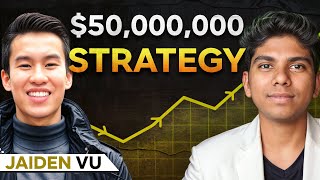
In this episode of The Nikhil Sai Show, host Nikhil Sai interviews entrepreneur Jaiden Vu, a former Michelin‑trained chef who went bankrupt at 21 after opening a restaurant. He pivoted to investment banking, discovered dropshipping in 2015, and built four eight‑figure e‑commerce brands that he later sold for multiples up to 12× EBITDA, generating over $50 million in revenue. Jaiden co‑founded SVO.ai, an AI‑powered commerce platform that automates product research, copywriting, and funnel building. He shares his "survival → impact" mindset, the importance of mastering new skills, leveraging human psychology, and building a sellable business that isn’t a key‑person risk. Jaiden outlines a 2026 dropshipping playbook: use AI tools (ChatGPT‑5, Writesonic), pick high‑performing niches, clone successful funnels, master sales, and learn from mentors. He discusses valuation benchmarks (2‑1 to 5‑1 EBITDA, occasional 12‑1 exits), his daily routine (morning meditation, cold shower, reading, focused work, pickleball), his essential tool stack (Asana, WhatsApp, ChatGPT‑5, Writesonic, Notion), and advice for aspiring founders – surround yourself with people ten times smarter, focus on impact, and treat vision without execution as hallucination. The conversation also touches on mentorship investments, biggest mistakes (bad co‑founder), and how to contact him via Instagram or LinkedIn.
Chapters
I opened up my own restaurant, 6 months later went bankrupt. Can you imagine yourself being that young, going through such a financial defeat? And he's saying that, you know, in life there's like 2 phases you're chasing after. One is survival, and then one is it. It was not 1, 2, or 3, it was 5 different credit cards. Then the 5th one finally got accepted.
AI commerce, you're calling it a new term.
AI meets e-commerce. He taught me this one simple quote, which is follow the money. It's all he taught me.
Trying to pursue dropshipping as model in 2026, what would be your playbook to start and scale and sell a business?
Heavily leverage AI wherever you can, right? The niche that does very well. What's going on?
What's going on, everybody who's actually listening to this podcast right now? First of all, guys, welcome back to another episode of The Nikhil Sai Show, which is hosted by me, The Nikhil Sai. And guess what's going on today? We're back with another amazing podcast guest. This guest is very interesting because I was actually one of the speakers to the event, and I met him in the private speaker ballroom, and we just had a fun chat. And his energy really lit up the room's enthusiasm. And it was really interesting to find these platforms and quite understand the Southeast Asian market is also so big. Trust me, this event was with 3,000 people in one place. It's crazy. Kudos to the team who actually ran the whole event. And I actually met amazing entrepreneurs, and one of them was this guest today on our show. And his name is Jayden, and Jayden Vu, he's originally from Canada. We have Vietnamese as a personal background and currently in Ho Chi Minh. And he's a serial entrepreneur, done over $50 million online, had intensive background, been with Russell Brunson in his Inner Circle and other programs, e-commerce. And he actually sold 4 businesses. We're going to get deep into the roots of how to be a successful entrepreneur in 2025. What's e-commerce? What's the industry where the space is heading and what is his take? If he has to restart his business, what he would do and how did he go from a Michelin chef to actually building a multi, multi-million dollar network to be able to do all of this crazy stuff and now become one of the partial owners and co-founders at Suyo.ai. Let's not waste any time and actually let's welcome our podcast guest today, Jaden Vu.
Hey Nikhil, thanks for having me. I'm super excited to drop some value to your audience and I'm an open book. So anything and everything you want to know, man, I'm game.
Absolutely, brother. I mean, I had a very fascination when I heard your story of like, you know, your journey and whatnot when you were speaking on stage. But for the viewers who don't know you yet, right? Like give us like a rough rundown of your story. Like tell us like a, quick 5-minute version about your backstory on like, how did you go from like this Michelin chef to actually building online businesses to where you are today?
Yeah, 5 minutes. Okay. Usually I do a 1-minute version. Let's see.
Let's aim for 2 minutes. You can go.
I would say like for me, I think I learned at this very young age from one of my old mentors and he was not actually in marketing. He was actually my chef and that's where kind of like my ex-Michelin chef background came in. But he taught me something at a very young age, like 17 years old. And he's saying that, you know, in life there's like two phases you're chasing after. One is survival and then one is impact, right? And that's for like a lot of people. In the very beginning, you're just trying to make a name for yourself. You're just trying to be able to pay bills. You're just trying to be able to get along with your career. And once you get to that point, now it's not about making a lot of money. And I'm sure you can can relate to that there. But when you do find a success, now it's about making an impact. So the reason I'm sharing this is because for me, it was just making money. And I worked at Michelin restaurants starting out was because one, I did have a passion for cooking for sure. But two is I thought at the time fine dining was going to make me a lot of money instead of your typical pubs or casual dining. So I thought if you were at the epitome, the Michelin level, of cooking, you would make more money. So here's my quick timeline. At 16 years old, I fell in love with cooking, had a chance to go over to Europe. So I found myself going over to Paris, working for a 1 Michelin restaurant. And then I worked my way up from dishwasher all the way to prep cook and then cook. And I just pretty much spent the next 5 years all around Europe from Paris to Rome, Venice, Sicily, what else? Verona, et cetera. Working my way up from 1-star to 3-star. And I was like, you know what? I had an epiphany. I'm working with some of the best chefs in the world that, you know, people listening to this, they have some kind of, you know, knowledge with like cooking. Some of the names that I did work with, people probably know because they're very big. So I thought that learning on all these amazing chefs, all these skills I've acquired, I would take it back to Canada, open my own restaurant. That was a mistake. And that was a mistake because I opened up my own restaurant, 6 months later went bankrupt.
Yeah.
So here I am, 21-year-old bankrupt because I made some bad decisions, bad business partner. And that was my first lesson in understanding how to choose the right co-founder, right business partner. It was a hard lesson, especially at 21. Like, can you imagine yourself being that young, going through such a financial defeat, devastation? So that's how it led me to getting out of the F&B, out of the whole chef world, to finding something that can make me quick money. So going back to that first phase, you know, survival. So I found myself trying to find all different ways to make money. I landed a great opportunity in New York, so I left Canada, I went to New York. Where I spent the next 10 years. And the first job I got was actually just in investment banking, but I didn't start out as a broker. I started out as like one of those coffee boys and stuff like that. So worked my way up, and then they finally gave me a desk and I started trading. And that allowed me to get into learning the skills of sales, marketing, you know, persuading people, especially cold calling and dealing with people over the phone that you've never met. And I did very well, paid off most of my debt. Thank God. Now I'm not as bankrupt as anymore. And then I took those skills because I got really tired of what I'm doing. And then I'm sure a lot of us has done this in the moment. I'm sure you've done this as well there, Nick, which is you Google how to make money and how to make money. And then as soon as I Googled that, dropshipping, this term dropshipping popped up and I had no idea what dropshipping was, but I was just like, you know what? I'm not in a tough position anymore. I don't think I'll go back to being a chef or F&B because I don't want to have to be reminded that, you know, that horrible experience I went through. So I was like, you know what, I'm in a good position. I don't have much to lose. I like learning new skills. Let's try dropshipping. And ever since that moment, it wasn't an easy journey, but it was probably one of the best experiences. I stuck with it for the next 7 years and eventually started one dropshipping store, which led to the second one, to the third one, to the fourth one. And eventually I opened up a coaching business teaching people how to do that. And that's how it led me to being a serial entrepreneur and co-founding SVO.AI where it's AI and e-commerce/dropshipping now. So that's kind of like a parallel storyline there of how I got to where I am today.
Interesting. Interesting. I mean, this was, when did you start dropshipping? I know like dropshipping was like the hotcake in like 2018, you know, 2016 times. Like when was the exact year you actually got into dropshipping?
Oh, so if we did 10 years ago, so 2015, very early.
So you were early. Okay. Makes a lot of sense. See, like dropshipping, I think like it's probably one of the toughest business models to run, right? And when I was at your event, like Solution Summit, I heard this word like AI commerce, right? And it's not e-commerce, AI commerce. You're calling it a new term. I'm curious, how would you define, like how do you see dropshipping in 2025 and beyond? As somebody who has generated $50 million online and now you're building this AI commerce platform, what's in your mind? What is this term to an average user who's actually online and listening to this podcast?
Yeah, the first answer I gave is a funny one, which is you can get the replay for my event and watch my 1-hour speech of what I went over in SVO. So I would say that's my funny answer. But for those that don't understand what AI commerce is, and this is the first time you're listening to it and you're like, I have no idea what what this term even means. It's kind of like just AI meets e-commerce. So think of all your traditional ways of how anyone would start e-commerce. So for people that have experience, you understand the struggles. For your audience that don't know e-commerce, you know, I would say it's a lot of work in terms of putting together a website, the marketing, the sales, finding a product, selecting something that works, and seeing results. So I wanted to take the painful experience I had in 2015, like 10 years ago, and I wanted to be able to streamline, simplify, and remove a lot of the painful obstacles anyone would have to go through if they had to do it without AI. So now we're getting into an era where AI is at large for every type of industry, not just e-commerce. But the reason why we built out svio.ai is because we want to be able to take those years of experience that we have to go through manually and build in a system where AI can just take care of most of the, you know, tedious tasks. And now we're calling it e-commerce, where you're able to be able to get into e-commerce with the use of AI that streamlines entire system in the process.
Makes a lot of sense. I mean, I think it's an incredible opportunity to be alive in this timeline of AI basically empowering all industries and specific domains and technology and how people even buy. And I'm excited to see the revolution. And there is expertise in many things, right? Like when you are generating $50 million online in sales for a business or maybe multiple businesses, you can't just be good at one thing. You have to be good at every aspect of the business, right? I'm curious in your perspective, What do you think has been like your superpower? Is it like the funnel aspect or is it like the advertising, the media buying aspect or is it the product and like, you know, the backend of like, you know, managing the shipping and actually finding the best suppliers? Like what was your way to actually be super successful in a dropshipping model or in an e-commerce model? Because most people in e-commerce do struggle to get to the scale you've done. So I'm kind of curious on your e-commerce playbook on what actually led you to achieve that scale?
I would say honestly, it was a lot of the skills that I acquired along the way as a chef, as a, you know, part-time F&B owner before it, you know, failed. And also all the skills that I was able to acquire in the investment banking role. So I would say my superpower is One, I love learning a new skill and two, doubling down on that skill. So when I transitioned from being a chef to someone that's now, you know, cold calling and dealing with persuasions and sales, I never shied away from that. And they're totally two different industries, right? One industry is you put your head down, follow a recipe, and you repeat that day in, day out, you know, 7 days a week. And now I'm transitioning to something where I have to learn a script. I have to learn how to handle objections. I have to learn how to handle people's emotions, and I have to learn how to funnel people conversationally into a yes or getting them to give me their money. So it was a 360 change, but I enjoyed the challenge. And I would say what contributed to a lot of the success that I've been fortunate enough to have from the first company, second, third, fourth, et cetera, for all the 4 exits, is that I love to learn new skills. Nothing holds me back. And I find far too often, because even in 2025, right, AI is not new anymore. There's just more AI. But I find a lot of people, one of the skills that separates the successful from the non-successful is their ability to commit to learning new skills and mastering it. So it's kind of like you, right? You were able to achieve an amazing award at such a young age where no one's been able to do that. And even one of my heroes, that spoke on stage, he's only been able to get 2 of the circles. You got all 4 of the circles, right, of the award, which is amazing, right? And I would say it's because you found a skill, you mastered it, and you continue to master it, and you just rinse and repeat. But most people can't even get across the first stage, which is to find the skill. And the second stage is even harder, which is to master that skill day in, day out. So my superpower is like yours, which is I love learning new things, and I love mastering the same thing. So while I was running this business by myself, it was enjoying being a CEO. It's enjoying being the CEO, is enjoy being the CMO, the sales officer. So I took all of that and I just doubled down on it. So I've been very fortunate to be able to enjoy learning and acquiring new skills.
100%. The one who continues to learn always pursue like next levels of growth in, you know, in business and in personal life in general. That's what has been my observation as well. In terms of building e-commerce businesses and being able to find a trend and make money in that short period is one way of saying it. But you are one of the very few and fortunate few who are smart enough to build brands that you can actually exit, right? Like, and it's very rare to see like actual e-commerce brands or companies that have enough value that an investor or somebody is willing to acquire that business as well and give a successful exit valuation, right? And you've done this 4 times. So if you have to teach yourself, you know, the one who just bankrupted a business and now like too scared to start a business, we have to give him a learning lesson like, hey, this is a playbook to build a business which has value that can actually be bought by somebody else that you could sell and exit and actually make, you know, like a ton of money. What would that acquisition playbook look like? What would that sales playbook look like to build and sell a company?
Yeah, great question. Right from start to exit. So I would say one is find something that makes a lot of money, right? One of my mentors taught me this, and this was actually Grant Cardone, and I'm sure you're familiar with him. He taught me this one simple quote, which is follow the money. That's all he taught me. And what that basically translates into is if you want to make a lot of money, chase what makes a lot of money. And that's what I did in dropshipping. I didn't care about my passion. I didn't care about what looked cool. I didn't care about what was pretty. I cared about what was making a lot of money. You know, it could be like fidget spinners, it can be like dinosaur toys, or it can be like, you know, baby toys. It didn't matter what I sold, but what I did sell made money. So I would say the first step is find something that makes a lot of money. Two is focus on human psychology. Okay. And what I mean by that is if you understand why people do what they do, why they don't do things what they do, why they avoid certain things, why they accept certain things, and just the human wiring, you'll be able to sell anything and everything. You can sell lemonade to a lemonade guy, right? It's because humans are very, very simple people, but we as humans make it very complicated. So I took a lot of time reading books and understanding human psychology, human persuasion, the mind of a man, the mind of a woman. And this was actually partly thanks to Russell Brunson, is that the more time I took to understand what makes people say yes and no, it allowed me to be able to take that, put it into my copywriting, put it into my marketing, put it into the way I sell my script, my funnel, my VSL, whatever it is I put together to showcase to the public. I took all that from a psychological perspective. I'm not saying hooky, trendy things. I'm not saying things that hook people. I'm saying things that I know psychologically will make people go like, ah, I don't know why I'm stopping and reading this, but I am, and this is fun to read. All right, so I'll say the second step is understand human psychology. Third is learn how to leverage human capital. So what I mean by leverage human capital is there's a saying, if you want to go fast, you go alone. You want to go far, you go together. So I feel like we all start out solopreneurs, solo founders, or maybe just 1 or 2 or 3 people, co-founder plus whatever. At some point, we need to be able to teach ourselves how to leverage human capital, right? So you may be good at these things, but some of the things you're not good at, you want to leverage that out. Outsource that out, hire someone to do it so that way you can grow. Because in order to get a great valuation, in order to be attractive to anyone that's willing to invest or buy you out, you have to make it look like you are not the business, that a business is a business. And that leads me to the fourth thing. In order for you to go from start to exit, it has to be treated as a business where you can take a step away and it still runs on its own. Business that needs you to operate all the time, we call this a key man business, meaning you are the only reason this functions. As soon as you remove yourself out, the same way you remove a heart out of a human, it stops, right? That is not a business. It is a human machine. So in order to exit, you have to be able to go back to the third step, which is human capital, right? You want to be able to have such a well-oiled machine where you as a founder don't have to be a CEO that works in the business. You work on the business. But if you took a break, a vacation for 3 or 5 months, you still make the same money whether or not you work in the company. And that's what makes a business attractive to have a good valuation in preparation for an exit.
Hmm, makes sense. Wow, quite an interesting playbook on how we actually lay down building a valuable company that doesn't have key man risk and which is sellable. Now, e-commerce as an industry has been very volatile in terms of like acquisitions, you know, like the trendy products, you know, early on, like the stores could actually be sold at a much higher multiple. And, you know, like at the same time, like some people just put insane valuation looking at the revenue numbers. So in I'm curious, what multiple are you aiming to when you are looking to sell a business? Like if you are aiming for a multiple, what actually increases it? Is it the industry or the product or the cost of acquisition? Like I'm curious on like what actually helps you as a founder to conclude saying, okay, this is the actual value of my business. This is the number I'm willing to— it's personal, but I'm curious from an industry standpoint as an e-commerce business, where do you think it's a fair valuation for you to exit?
Yeah, to be honest, because there's so many different standards across the board and it only grows and grows. So I'm just going to say a bare standard, right? So if you are an e-commerce founder and you wanted to exit, if you're offered at least a 2-to-1, meaning that your current EBITDA, and for anyone that doesn't know what EBITDA stands for, listening to this, it pretty much stands for earnings before interest, tax, and depreciation. So just a fancy word for what are your net margins after all the overhead and the bills and the marketing and labor, right? So that's your net profit. So if you're able to have an EBITDA of 2 times, that's a safe benchmark. Okay, that's worth having a conversation. Do you want to exit at 2 to 1? That's up to you. How much you— how badly do you need to exit? How tired of you, the business? How, how strapped you are for cash. A good mark where it really gives you a good indication or evaluation of your business is you want to aim for a 1 to 5. So that means whatever your net profits are after, you know, all expenses and EBITDA, and you get 1 to 5, that's a good mark. I've been lucky enough to exit 1 to 12.
Jeez. Yeah, you sold some magical rabbits, buddy. That's very cool. That's interesting to see. Selling, I mean, I've seen that kind of multiples on SaaS products or some kind of AI startup app or like an idea, but e-commerce, it's very, very, like, yeah, it's interesting to see that you actually sold it 12 times. Now, I mean, you've been coaching a lot of entrepreneurs in terms of growing and scaling dropshipping brands or even selling them. You have your coaching program at Whatmart. What has been your key observations at e-commerce as an industry? If somebody is trying to pursue dropshipping as a business model in 2026, they want to launch their store. Is it even worth it looking at the ad cost and the CPMs and all this? If they are pursuing it, if you have to do it all again, what would be your playbook to start and scale and sell a business?
Great question. If I were to start again, or for anyone that will want to start dropshipping in 2026, knowing what I know today, is one, and it goes back to why I'm building out SVO.AI, but heavily leverage AI wherever you can, right? And let's just say, you know, you don't know much about AI. The first thing you can start is just ChatGPT, and the easiest prompt that you can ask is, you know, what are some of the best AI tools to help me with marketing? What are some of the best AI tools to help me with copywriting? What are some of the best websites to select dropshipping products? What are some of the best niches in 2026? So I would say that's the first thing, just being able to use AI to kind of give you a leeway because rather than you spending your time doing market research by, you know, manual work, you can just have ChatGPT do that for you. So that's what I'll do. Two is I'll focus more on the niche that does very well. So in e-commerce, the market's always changing, right? Every month, every week, every day. So volumes move quickly, trends go quickly, seasonal products, evergreen products, niches, they change all the time. So being able to select a niche that does well and always have a pipeline of different niches that you're going after is very important. So being able to figure that out. Third thing I would really focus on is modeling. So it's a term that I learned by Russell Brunson. He called it funnel cloning. And how I interpreted that, because at the time I wasn't really using funnels too much, right? Because I was building more of like an e-commerce site. So things like Shopify and Amazon. So how I interpreted his terminology of funnel cloning is I just looked at different Shopify websites or Amazon stores that had high volumes, a lot of traffic. that are well-known brands. So if I opened up a cosmetic brand, I'll look at the top 5 competitors that was making a lot of money, whether it's a store from Kylie Jenner, whether it's a store from someone very, very successful like IT Cosmetics or something from Sephora. So I'll model their layout, I would model their message, I would model their, uh, marketing, I would model their social media. So anything I can clone and model after that helped me. So being able to leverage from people that's already doing it well to kind of give you an easier access point, that's really important. And then the fourth thing is just get really good at sales. You have to get really good at sales, whether you use an AI sales bot, whether you're already good at sales. But the one thing that people shy away from is being good at sales. And I don't mean you have to be like a hard closer. You have to handle objections and stuff like that, but you just need to understand people. Understand what people's problems are, you know, how this actually solves, how immediate people want to solve this problem, how far along their journey is in order for them to get the product, right? So being able to at least commit to learning the sales cycle, the sales process will make all the difference. And you don't have to have 100 closes in your head. You don't have to have 50 different objection handlers in your head or all these fancy techniques of how to get someone to say yes, but just understanding the whole cycle is really important. And the last thing I would say is if you wanted to start a dropshipping business in 2026 is I would just learn from someone, right? And when I say from learn someone, you don't have to pay someone if you don't. Like, I always recommend you should pay for someone so that way you can, you know, you can squeeze the gap between where you are and the success you want by paying someone that is successful, right? Because I'm sure there, Nick, you paid hundreds and thousands of dollars for mentorship. And me too, right? So, but let's just say an average person listening to the show don't have the kind of financial resources to invest into someone. Then what you can do is you can just listen to podcasts like this. I call them digital mentors, but just select 2 or 3 people that is really good at marketing, really good at sales, really good e-commerce, follow their content. Take as different value bites as you can. If they have a podcast, binge it. If they don't have a podcast and they have social media, listen to every single reel or listen to every description and read whatever you can. But always being educated yourself with people that you would rather trade places with. So I would say that would be my playbook.
Oh, I love that. I love that. Like you've simplified how to actually start a business. I mean, I think the principles you've shared, they're not just limited to dropshipping or e-commerce, in my opinion. The same principles could go into any business in general, which I really do appreciate you sharing that. You tapped into a very interesting concept, which is my next question, which is investing in self. I know there's a lot of cliché about these courses and coaching and mentorship and mastermind. There is always this positive-negative talk around this, but I know people We're at the top, we always value it, and we have seen the goods and bads, the both sides. I've heard a crazy story, you shared this with me, about going into taking your credit card and putting it to join crazy investments in other investments and other programs. But share the craziest moment, like why should somebody invest, and tell us the craziest story you have where investment in yourself that turned out to be really profitable for you. How do you see investing in mentors in a nutshell?
Yeah, so I would answer the easier question. How I see investing into mentorship, very important. And I say this with the most sincerity is that the only way to get to where you want faster, right? Whether it's for monetary purposes, whether it's because you just want to live a better life, whatever it is, right? In order to get there is you need knowledge, right? And this knowledge allows you to double down on the skill. And the one thing that's going to make you a lot of money is having a skill so good that people's willing to pay you a lot of money for it. So for me, if I knew I wanted to get good at sales, which at the time I felt like I really need to understand marketing and sales. And actually my first investment was not actually Russell Brunson, it was actually a different person. And before I reveal this person's name, I'll share like the most devastating story, which to your other question is how it turned into a big profit. So rewind, long, long, long time ago, right? And this was like very early on where I was making no money with my first dropshipping store. And this was after I, you know, I did get out of bankruptcy. I didn't have a lot of money. So any money I had, I put it back into, you know, this new venture in dropshipping. I hated calling people on the phone all day. I didn't want to do it anymore. So I came across this guy on YouTube. And, you know, all his content was everywhere talking about sales, how to handle it, what to do, why people say yes, why people say no. And he was just everywhere blowing up on social media. And that, at that time, I didn't realize how important always being in front of people's face every day is critical to being able to be top of mind and having people remember your name. But the other part of it is his content made sense. Was actually valuable. I was like, oh, this is something new. And I don't know any better, especially because I don't know those specific type of sales. I only know cold calling. So some of the stuff made sense to me based on my limited knowledge. And, uh, at one point he was pitching this program and it was only $397 USD. And $397 USD is not a lot of money today, to be honest, right? Yeah. But to me back then, it was a lot of money. It was a lot of money, right? So if you go back like 10 years ago, $397 USD, I don't know what it'd be worth today. I don't know, at least like $50,000 or $60,000 or something. I don't know with depreciation and cost of living, everything. So that kind of money I really didn't have, right? I was just coming out of bankruptcy and I've already invested what I had in the dropshipping and everything. So just to pull out another $397, It was a lot. And the most embarrassing story was it was not 1, 2, or 3, but it was 5 different credit cards. Then the 5th one finally got accepted and approved to buy the program. So imagine that.
Such a story, man.
Yeah, it's crazy. So that $397 went into a direct mentorship with a man named Grant Cardone, and that man changed my life. And he was part of the reason why I was able to build a good dropshipping store that ended up selling for, I can tell you, 100 times more than what I invested.
Wow, freaking awesome, man. I mean, you've been following this pattern of like reinvesting in mentors and scaling and, you know, like, I mean, we go to networking events. I'm sure you've traveled to like, you know, Mastermind in Paradise and like Inner Circle, like other events, right? Tell me one of the craziest stories, like, A moment where you see other person and be like, wow, that guy unlocked a different level for me. Right? Like, I'll give you my story so you understand. Like, I actually met Bill Wan. He's one of the OGs in Inner Circle right now. And he's like the one guy just sitting and doing like a 5-day challenge and printing $100 million. I was like, holy smokes, like this is possible with one product. Like no high ticket, no low ticket, just like one product, $5K, just printing, you know, 9 figures. That was like a big eye-opener for me. I'm curious, what was the moment for you like when you were meeting all these amazing entrepreneurs and what was like the aha you've seen when you invest and meet all these people?
I would say my aha moment was two things. One was a person that I never even knew existed and we weren't in the same group, but I would always see this person around. With his wife, and then there'll be this other person. I'm sure you kind of know where I'm going with this, right? Yeah. And then we, this other person who's from Asia and he's been able to do crazy numbers just through Asia and it's insane. So the first one was this person that I don't have any connection with, but apparently is very close with Russell Brunson. And he did crazy numbers, but he's very low key with him and his wife. and I would never pay any attention. Right. And he was not loud or anything as he is today. I'm sure a lot of you guys would know his name, Alex Hormozi. Right. So I've seen him right before he was Alex Hormozi, but I paid no attention because he was very low key.
Right.
He's not as loud as he is today. So that was eye-opening, was because at the time he was part of what Russell calls the Atlas Club. right? So Atlas is like the highest tier possible. I don't know what they were charging for that at the time, but now it's like $300,000 per year just to be part of the club, right? It's insane. Imagine you paying someone $300,000 USD a year just to, you know, visit, be in the community 3 times. Yeah, right? It's crazy. Um, but for people at that level, that, that's nothing. That's like, uh, that's like a tax write-off. Yeah, the tax write-off. So I didn't meet that gentleman, but I see him and he didn't— I didn't mind him at all. So that was eye-opening to be able to know that him and his wife at the time was just doing crazy numbers, just launching gyms because he's doing something different at the time. Right. Then the second eye-opening thing was my hero. And the first time I got to meet my hero was actually that's at this event. And it's crazy because I got to share the same stage as my hero. And one of the things that made me really— what's the word for when it's like starstruck but not starstruck? I can't think of anything but starstruck was when I finished the stage sitting right there in the front row. I walked down, I was so tired, I was ready to just pass out because it was a 1-hour speech and it was a lot I was thinking and doing. And I walked off the stage, he went up to me and shook my hand and he said, bro, that was a great speech. And I looked up to this man, like since 5 years ago when I first heard of his name and saw him in the room and he was doing crazy numbers and he was the very first few to win the 2CCX, which is for anyone that does $10 million, right? And he did it through Asia alone and his name is Peng Joon. And when I— sorry, go ahead.
Yeah, no, I saw you bought his offer. You were the first customer when he actually presented at your own summit and you were running to get his workbook. I was like, That's actually a star moment. Like, that was like pretty beautiful to see and experience that in your own event.
Yeah, so that was cool. But yeah, so when I saw him, because he's from Malaysia and he was able to pull the crazy numbers he can just in Asia alone building his company, I was like, if he can do it, then I can do it. Because I was lucky enough to be born in Canada and given the the power to be able to market in the US where some other people don't. And if someone in Asia can just do it in Asia alone where the spending power is less and the marketing is a lot harder than it is in America and Canada, then I believe I can do something similar, if not better. So that empowered me to just keep building.
100%. I mean, Peng Joon is such an inspiration. Like, that was the guy I used to learn Facebook ads from, you know, from his free YouTube University back in the day. So I actually met Peng Joon in HighLevel Summit when I was speaking and we had like a really fun chat and then we met in Fun Laughing Live and then your event, fortunately. So a pretty amazing guy. And he is just like Hormozy, like what you said, like very lowkey, doesn't talk much, just like hides in the corner, doesn't like to make a lot of noise. It's insane how you see like these heavy hitters. And now let's go into like a different style of questions and I would love to know, other than SVO.AI, what other tools are you using on a daily basis to run your business, your personal productivity, clients, project coaching? Give us the tool stack that you actually can't live without.
I'll say the first tool stack I have is human capital, right? I have a team of people, but at least for what I'm doing on my end, because I am overseeing a lot of different people, I would say my best friend is Asana. So I do, I handle a lot of different projects and so does my team. So being able to kind of be organized and understand what projects are priority, what tasks need to be labeled out, why are we behind certain things so that way everyone's organized. So I don't have to constantly chase everyone down for certain things. That's all updated automatically. So Asana is really important. I've moved from Slack to WhatsApp groups, and I don't know, WhatsApp has been really good. I really enjoy WhatsApp more than Slack, to be honest. I don't know what it is.
Yeah. Yeah.
All right. So I would say WhatsApp. Third thing is ChatGPT-5. That's been amazing. I don't think I will switch my main AI tool anytime soon. I've tried other things like Gemini. and any other LLMs. I just feel like ChatGPT is always the one I refer back to just because it's so easy to use and the user experience is very friendly. Um, 4 is Writesonic. So Writesonic is an AI tool that I really like to use. It helps me with, uh, direct, uh, response copywriting where I take what's already working, I plug it into Writesonic. Ai, and it spits out something close to it, but in a different theme, in a different objective, in a different call to action. So that's been very helpful for me because I do shoot a lot of different content. I do a lot of different webinars, and I like to be in charge of my own webinars just because it keeps me alive. So I actually reduce the amount of work my team has to do when it comes to webinars because I just love it. So I do my own slides. Yeah, I do my own slides, I do my own script, and I do the entire copywriting for, for the funnel. Um, so I like to switch up the copywriting, which WriteSonic is very helpful for me. And I would say the last tool stack that I really love to use, um, is Notion. So Notion's, uh, yeah, Notion's really helpful for me, um, just being able to update my marketing team. So I like to split that from Asana just because it's more— Asana is more just like one-liner projects and stuff like that. Notion for me is like very detailed graphics, assets, ads, anything I need. So that way my marketing team knows that anything that I need in detail, they go straight to Notion. But in terms of just keeping up to date of this campaign, this webinar, this workshop, they go to Asana.
Yeah, 100%. I mean, like, the marketing ops does need like a very visual representation. And I have one of my buddies who actually calls Notion his second brain. Doesn't matter what he's doing, he just is always typing in Notion, you know, whatever he's observing. And everything is structured according to dates and all the hours, you know, where he's spending and what everything is noted there. Now, I know you're in a different lifestyle right now. You went from like being this New Yorker to actually now in Vietnam. So like, give us like your daily routine right now. Like, how does look like? When are you waking up? What's your day look like? Give us like an average business workday. Like, what does that look like?
Yeah, recently, like even in, uh, before the event, I think it's been similarly the same. Um, so my workday right now is I wake up around 7 AM. I, uh, meditate for, so I actually airplane my mode, uh, airplane my phone, sorry. Um, for the first hour I wake up, so I wouldn't turn it on until like 8 AM. And I call this my golden hour routine. And some people are against it, some people are all for it. I'm all for it because I really love morning routine. I know Alex from Mosey, which I listen to a lot of his podcasts and I look up to. He's like, screw it, just go wake up and do your work, right? So there's people like that who they're against it and I don't judge, right? So for me is I like to have a good morning. So for the first hour, I wake up, meditate 15 minutes, I stretch because I do work out quite often. So stretching in the morning is very important to me. And then I take a quick cold shower, and this just helps me raise my dopamine and wakes me up. I'm a huge dopamine guy, so anything I can do to spike my dopamine, it just gives me a better start on my morning. And then I read. And what I've been reading is the book that I bought from Peng Joon. So I've been reading his Timeless Ad Book. I think I've spent Yeah, I think I spent about 4 hours reading it so far and I'm learning a lot and I love it. It's really cool. Different ad styles, especially back from the 1920s and '30s. Um, and then that will be my first hour. And then after that, I turn on my phone, check what's priority. So my phone has focus mode, so it'll only show me notifications that are very important. So it's like from my C-level, from my managers, but anything below that, it won't pop up on my phone just because of the focus mode that I put on. And then get coffee, call my business partner, one of the co-founders, to make sure everything's okay. And around 8:30, I start heading to the office. And then from 9 to 7, I'm, I'm from the office doing everything I can. And then 7 o'clock is my time playing pickleball. So I don't know if you know what pickleball is, but I'm a huge pickleball fan.
Oh, wow. You play a lot? Interesting.
Yeah. I've been playing for 3 years.
Do you have a physical office in Vietnam right now?
Yeah, we have a physical office.
Wow, wow, that's interesting. I thought the AI Commerce is an AI platform, you know, a digital company. You got like a nice office there. Okay, pretty, pretty cool. And so you're still like, I think it's almost like 10:30 PM for you or 10 PM and you're still working. So what happens after 7 PM after your pickleball? You do podcasting, is that what you do?
No, I think podcasts are more like I scheduled them because of the timing. I was actually hoping the timings will be like 4 o'clock, 5 o'clock Vietnam time, but I guess based on your schedule, it's only—
Yeah, I'm Pacific. I travel a lot too, so like I tried switching my schedules according to where I am, but then I go crazy. I just stick to Pacific regardless of where I'm traveling to and which country I'm in. It doesn't matter if I'm in Africa or Europe or Costa Rica or like all the way in Bali, I'll just stick to like one time zone, like Pacific is my time zone. So, okay, that's pretty cool. Now I would like you to go back if you have a chance to talk to the 20-year-old yourself and you can give him one business advice, what would that be?
If I could go back and talk to the 20-year-old Jaden Tov, what would I say to him? Oh, there's so many, man. I feel like I can write like 100 chapters of what to do.
Write a book and be like, don't be a dummy, Jayden. Like, don't invest in Bitcoin, starting with that and then just going back over.
Yeah, buy Bitcoin, buy Solana, buy Dogecoin, buy Ethereum. That'll be the first thing. Buy GameStop. Hold on to GameStop. Buy Nvidia.
Buy Tesla. What would I tell? Jokes apart, what would be the one suggestion you would give yourself?
Be in rooms of people that are 10 times smarter and making more money than you. One of my favorite— yeah, one of my favorite quotes by Warren Buffett is, if you're the smartest person in the room, you're in the wrong room. You always want to be learning. You never want to be the one that's sharing. And the reason why that is, is As if you're not fully satisfied with where you are today, financially, spiritually, mentally, uh, relationship, whatever it is, then you shouldn't invest all your energy to share what you are not happy with to others. Instead, be a sponge and absorb until you are to the point where you're no longer wanting to trade places with other people. And that'll be my advice.
I love it. I think that's really, really powerful. I think being in network with other entrepreneurs who are way ahead of you can really show it's possible and they're just regular human beings like you. And just like you said, like Peng Joon just shaking your hand after you speak, that just opens up a different level of personality in you. And now you are at a different stage in your life and things you could do after that are just next level overall. I'm curious if you have to point to the biggest mistake that you've done in your business career, what would that be?
Getting in bed with the wrong person. I would say that would be the biggest mistake. And I don't mean in terms romantically, I mean in business. So like I mentioned earlier, right, I came back to Canada. I wanted to take all my expertise throughout Europe because I became very successful at a very young age as a chef in all these fancy and best restaurants around the world that's won multiple awards every year for being best restaurant. I wanted to take that, open up my own restaurant. And I did that partly because I thought I had the right partner. And we had an understanding that he was more of the business side. I was more of the chef side, the menu creation, the food knowledge and everything and running a brigade. And he was more of the operational and everything else that I do not know anything about. So I took a chance on myself and him and it turned out to be the worst mistake of my life because he was partly the reason why I went bankrupt and had to file for bankruptcy. So I would say that would be the biggest mistake, but it's also looking back, it was one of the best mistakes that's happened because it allowed me to take those lessons, improve, and understand what makes people great, what makes a great co-founder, how you structure a deal with a co-founder, and how you select them, right? And one of the best things I realized is that I should never find a co-founder that has the same skills as me or the same strengths. I should always find co-founders that have strengths and weaknesses that I have and vice versa.
Yeah, yeah, I think complementing skills for founders is really important. The business has to, otherwise then you get into like ego mode of like, like, you know, both of you have the same stick to, you know, hit the snake, but nobody does it because You think the other person is doing it and it always messes up. That makes a lot of sense. After an amount of success, there is this mode where you go into business. I've seen a lot of entrepreneurs get stuck in the situation where the lack of motivation kicks in. Like, okay, how much more my life could change? What kind of bigger mansion will I really crave? Or what supercar do I really need? Right? And there's this slow poisoning of revenue stagnation. No motivation to grow the company and whatnot, right? Like in your situation, what kept you inspired to keep showing up, to keep running businesses, to keep reinvesting coaching, mentoring, selling businesses, building them, and continue to do this? How did you keep your dopamine in charge?
Yeah, I actually have 3 reasons why that is. Can I share all 3 reasons?
Yeah, yeah, of course. Yeah, go for it. The more the better.
Yeah, I think this would be very helpful for your audience and anyone listening. So if you find yourself in that stagnation where you feel like you're losing motivation, where you feel like you're doing something over and over and you do see some results, but you don't feel as happy or as excited as you were the very first day when you started, I'll share with you 3 reasons how I've been able to overcome that. And I just want to state for a fact, okay, full disclosure, I've dealt with this all the time, right? I made a lot of money. Got tired, got competent, got complacent. I ran my second business and I got lazy and I didn't care too much. So I've been through this ups and down, this roller coaster. So reason number one is that I learned from great mentors. Goes back to my earlier advice. What I would tell my younger self is that being in a room with people that's 10 times better than you, is from these rooms, I learned that money gets you started, but money doesn't keep you going, right? So how I translate that was that it's good to make money so you can keep things going and operate, but you have to find something more deeper beyond just the money, right? And for me at that time was the problem I was solving and the impact that I was making. So Reason number 2 is what I learned from a non-business mentor, which was my chef at the time, which is what I shared earlier, which is you're always in 2 phases. One is survival and then 2 is impact, right? And most people are always stuck in survival. But when you get to the point where you overcome survival and you make good money and you're financially better off, you're financially free, you get to the point where money doesn't matter anymore. It's more about the impact. What could you do with this money? How can you contribute? How you can help? And I was lucky enough that I understood how I wanted to contribute. And for me at the time was I wanted to add value. And I felt like every business that I built, I added more salary. I helped more families. I helped more people. I solved real customers' problems with my solutions. I wasn't just selling oil to people, you know, and selling like stuff that didn't work. So for me, it was the impact that kept me going, and especially with coaching, right? Whether it was student number 1, student 100, student 1,000, student 10,000, every student was important to me as the first one, not because I was making money off of them, but it was because I was able to take in a new life and, you know, they put their trust into me and I want to be able to change their life. And those testimonials matter a lot to me, and I felt like I was contributing to to society. And then the third reason was that I just have a dream so big I dare to fail. And I learned this in Stephen Bartlett's podcast, The Diary of a CEO. And I can't remember who he interviewed, but it was something about like BHAGs. So it's a terminology, B-H-A-G, big, hairy, audacious goals. And that person that Stephen Bartlett was interviewing was sharing something about You want to have a dream so big that you're willing to fail, but you're willing to never give up. And that's what will keep you going. And I do have a big goal that's so big that I think it will probably take me another 10, 15 years before I can achieve it. And I don't care. I don't care how I get there. I just care more about the journey in order for me to get there. And as long as I enjoy the journey, the destination will come.
Yeah, I love it. I mean, beautifully explained. And thank you so much for sharing. The 3 reasons, or I would say the motivations you as a business owner can hold your ethics to, to keep consistency in business. Because I believe like it really, it will be stuck with a lot of people who are listening. Because I know many entrepreneurs, once they are at that 30K, 50K, 100K mark, they do try to take the foot off the gas and, you know, just try to like enjoy and relax a little bit. But I think it's a good inspiration that you've shared. Now, Somebody's tuning in, Jaden, and they're like, wow, like Jaden is such a smart guy. I want to throw my credit card at him. Like, how do they get in touch? Where do they find you? How do they join your coaching or mentorship or maybe connect with you in some shape or form?
Yeah, great question. So I would say the good news, I don't know if it's good news or bad news, but the good news is I have nothing to sell.
Okay. It's actually bad news for somebody who wants to learn from you, but okay, keep it coming.
Yeah, but the other good news is if you do want to follow my journey, if you want to kind of connect with me more, you can either find me on Instagram or LinkedIn. Those are two platforms I communicate with the most, and you can just shoot me a message. I'll be happy to say, hey, I came from Nikhil's show. I heard you on his podcast. I'll make sure my team don't respond to it. It'll be me responding if you're going to shoot me that message. But please don't try to sell me something. It's like, hey Jaiden, would you like me to create better videos for you? Or I hear that you're looking for a copywriter, you know, blah, blah, blah. If you send me those messages, I would ignore them entirely. Yeah, so it'll be Instagram and LinkedIn, and it's literally just my first and last name, J-A-I-D-E-N-V-U, on LinkedIn and Instagram.
Makes sense. Makes sense. I'll be linking those details in the description as well, guys. So make sure to check out Jaiden. And he's a famous guy, so you can easily find him, at least his username. You could just type it out and find him. Now, this was wonderful, Jaden. Thank you so much for jumping on. Any last words for us to conclude the whole show?
Yeah, actually, yeah. Okay, I'll share something. I'm a huge quotes guy and I love quotes. And I actually shared this one quote when I was on stage at the same event that we both met each other last week. Where I spoke in front of 3,500 people, 3,500. And that quote is, vision without execution is hallucination. So everyone has a dream, everyone has a vision, they have a destination they want to go. But the reason why most people don't get to realize or complete that vision or that goal is because they're lacking execution. And most people rather just skip to the good part. And that's fair. I want to skip to the good part too. I want to go to the high life. I want to go to the best time of my life. But we understand we have to pay our dues. We understand we have to put in the work and more importantly, we have to get paid. And the only way you get paid is you take action and be consistent with the action. So I'll leave that with your audiences. You guys are all capable. It doesn't matter where you're from, whether you're from certain parts of Asia, you're from Canada, America, certain parts of Europe, wherever you in the world, whatever race, color, age, intelligence or school you go to. It doesn't matter what you do, who you are. We all have the same ability to make a lot of money, and we should never compare ourselves to someone else. We should only focus on what we can do better and what we can learn from others and how we can master a skill. Because the only way you're going to get paid is by learning a skill and getting so good at it, you can apply it to your own business or apply it to someone else that's paying you to do that role very well. So vision without execution is hallucination. And just understand, you have the ability to change your life. It's up to you whether or not you want to make a difference.
Yeah, I love it. Love it. It's like the dream body is within you. All you have to do is work hard enough to get it out. And I mean, I love the quote you shared. And thank you so much for dropping a bomb before you leave. Guys, hopefully you really enjoyed the podcast so far. And if you did, make sure to share it with other AI entrepreneurs or e-commerce entrepreneurs that you know, because I'm sure they would love it. And on top of it, if you haven't subscribed to our channel, please, please, please do subscribe. And I would love to bring another amazing guest as we do on this show, D Nikhil Sai. And if you would like Jayden's help, he has nothing to sell you the Hermosi way. Maybe he would just do a book launch someday and, you know, make night figures. God knows when, who does what. But anyways, connect with Jayden and tell him that, you know, you are from D Nikhil Sai Show, and he would show some love and respond to you guys. Hopefully you enjoy the podcast, and I'll be back with another amazing guest. Thank you, Jayden, for joining us today. Bye-bye.
Bye-bye.
More from Nikhil










BURNED $1.5M in his 17years online #digitalmarketing #entrepreneur #onlinebusiness
