How Aleric has produced $100M in revenue for his clients | The Nikhil Sai Show 62
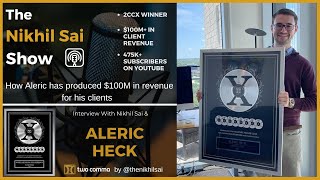
Alaric Heck built AdOutreach into a $100M revenue agency by discovering YouTube ads worked: a $500 campaign generated 11,000 app installs. He created KeywordSearch.com, developed a hook-educate-call-to-action ad framework, and shifted from agency to consulting model, now targeting $36 million annually.
Chapters
How would you like to learn the secrets of two Kama Club Award winners on how they have built successful online businesses from almost nowhere to now running multiple 7 and 8-figure businesses by following the simple fundamentals of life? And let's see how they have used the powerful funnel systems, processes, automation, and social media to help their business grow at a different pace. Let's dive into their journey to grasp the strategy, mindset, action plan of how they have done it from almost nowhere to the way up to 7 figures. We are going to uncover and pick their brains of the top performing entrepreneurs on this show, how they have done it and how you can do it too. You are listening to D Nikhil Sai, the host, and welcome to the Nikhil Sai Show. What's going on? What's going on everyone who's actually listening to this podcast right now? Everyone, welcome to the Nikhil Sai Show which is hosted by me, the Nikhil Sai. And guess what's going on today? We are back with another amazing 2,X winner. This time this is going to be amazing. In case if you are a serious business owner who are looking to scale and you are in this traffic game where you are having unpredictability in your business, this is going to be mind-boggling for you. Just, just make sure to stick around. Now, the actual guest who's actually joining this podcast today is crazy when it comes to YouTube ads. He's generated multiple 8 figures in scale sales. Actually, he's been helping thousands of entrepreneurs build predictability with advertising and getting more traffic through YouTube with his amazing framework. So let's not waste, actually waste any time and actually welcome Alaric Heck. He is the CEO and founder at AdOutreach. Hey, Alaric Heck.
Absolutely. Thank you so much for having me on, Nikhil. I'm so excited to dive in.
Absolutely. And Alaric, by the way, congratulations on being the Inc. 500 CEO. This is just amazing. You are the 87th fastest growing company in America and top 5th company when it comes to the marketing space. Oh my God, like what an accomplishment when at this young age. It was really, I was really happy to see you there, man.
Thank you. Thank you so much. And really it's not just me, it's the whole team. That's why I say, you know, Every time we've got 45 people on our team at Ad Outreach and we just have just such an incredible dream team working together. And so yeah, it's amazing. Thank you so much.
Absolutely, Aleric. That really makes sense. Like if you have real people around you who are contributors in your company, it's going to skyrocket like 4,000% growth, man. Like your company is nuts. So let's go to the next question, brother. This is going to be amazing. So like you have gone from nowhere to actually building these companies and you know, making 8 figures in sales and having all of these awards, speaking at events and whatnot. So would you like to start with like a backstory, like how did all of this crazy journey started?
Uh, it's a great, it's a great question. So I actually started out, uh, over 12 years ago now building a YouTube channel, uh, called AppFind, where I was reviewing mobile apps, technology tutorials. I was basically creating videos about what to do on your iPhone, and it's just something that I love to do. It's kind of a passion project. but all of a sudden I noticed that people were starting to watch. I was getting more and more views. So all of a sudden people were watching my videos where I was talking about the iPhone, I was talking about the best apps. And as more and more people watched those videos, I realized, wait a second, I'm actually, you know, getting people interested, getting people excited about these different apps. I have a power here. And so I started to market and actually have different app developers, you know, pay me for sponsorships. I was doing different videos. The channel grew to over 500,000 subscribers now. And I've got a small team that manages it. But what I really realized about 7 years ago is there was one particular mobile app and it was a social media networking app. They hired us for a promotion. We published the video. They get thousands of downloads. They're like, "This is fantastic. Can you publish the video again tomorrow?" And I said, "Well, wait a second." You know, and they wanted to pay me to publish the same video, the same channel, like the next day. I said, "Hey, that's not actually how this works." "I don't wanna just take more of your money and republish the same video because our viewers have already seen it." They said, "Well, there must be some way to get this video in front of more people." And that's when it clicked. I could run a YouTube ad. This was like 7 years ago now. This was the early stage of YouTube. This was actually before YouTube ads even had lead optimization, right? Where nowadays, you can kind of optimize based on results and things like that. This was back when everything was manual, it was the very early days. And so what I did is I took the video and I ran that as an ad for $500. We got over 11,000 users for their app in just one week.
Oh my God.
They were blown away, the best that they had seen from any promotion. And it's actually kind of funny, they wanted to, they called me up, they had me do a couple more promotions, keep running that. They called me up, they wanted me to like drop out of college, I was in college at the time, fly out to Silicon Valley, go and join them in their company. And, you know, as tempting as that is, I, you know, I wanted to be the king of my own castle instead of the knight in somebody else's. And so I said, you know what, I actually want to build this for myself. But I realized I had something. And so I systematized my YouTube channel. I hired video editors, scriptwriters, uh, even people to take over. You know, I'm no longer the face or voice of the channel. I have, you know, people on my team that do that. I still own the channel, but I now have a team around it. I realized, okay, now that that's systematized, what I want to do is I actually want to build— originally it was YouTube ads for mobile apps. I created what was originally called App Outreach, which drove millions of downloads for different applications. But then I had another epiphany. I realized, wait a second, it doesn't just have to be mobile apps, especially like free mobile apps or mobile apps with in-app purchases or dollar mobile apps, whatever it is. What if you could actually sell products, services, whether it's e-commerce products, coaching, consulting, courses, digital products, whatever it happens to be, right? Anything you can think of, you can sell with a YouTube ad. And that is what I realized. And so we pivoted and that was about 4 years ago. We switched over to YouTube ads in general. We created multiple iterations of our YouTube Ads Workshop, which is our flagship program. Where we train clients in exactly how to set up the best YouTube ads using all the best practices, everything that we have learned about what goes into a high-converting YouTube ad from the video to the targeting, the whole process, and that's what we've been scaling up. And just like you said, even more than our own landing on the Inc. and our own success, I'm even more excited about what we've gotten our clients, which is literally we have gotten our clients over 9 figures worth of revenue collectively. And so it's just absolutely incredible every time I think about that.
Yeah. Absolutely, Aleric. Like the kind of dent you're actually making in the YouTube advertising space, it's just on a different level, right? Like everyone is trying to play here and you are out there here. Like no one is really trying to compete with you, which is just amazing, brother. So, Aleric, you've been killing it in the YouTube space, right? And one of the main things when it comes to YouTube advertising specifically is about doing the right keyword research, right? And we would love to hear the man himself about like, how do you think people actually need to do keyword research on YouTube?
Oh, that's a great question. Keyword research is so, so, so important. It's really important to make sure that you're finding not only the best keywords, but keywords that people are actually searching, that actually have videos, and, you know, that you can run in front of them. It is really important to find keywords that are relevant to your audience. You're reaching people at the right time with the right message, right, to get them to convert. And that's what we want to do. And so what we've done in the past is there's been a wide variety of different ways to find keywords. You can, of course, do manual research on YouTube. There's also some different tools that are mostly Google search tools. You can kind of get some Google keywords and they also sometimes do YouTube. What I realized is, wait a second, I actually wanted to build a better YouTube keyword research tool and that's actually one of the things that we built. We originally built this for ourselves and then our clients wanted it, so we sold it to our clients and actually even people that maybe don't go through our full program, they might start off with our tool, but we created KeywordSearch.com, which is a great URL. I love it. I got that for a song, KeywordSearch.com. I did pay some money for it, but a lot less than it was worth. And, you know, Keywordsearch.com. And so basically what I did is I actually, you know, found one of the top software developers that had been involved in some of the top, you know, SaaS companies in the whole info product marketing space. And, you know, yeah, partnered with him on this project and essentially created the number one YouTube keyword research tool which is just really awesome.
Wow, let's go! Wow, that was really amazing. So guys, in case you're wondering, like, if you want to stop wasting countless hours of time, you know, doing keyword research, just go to his tool keywordsearch.com. It was just amazing. Just make sure to check that out too. And I believe you have some early access for people who are taking action right now.
So yes, and exactly, so for a limited time we're doing the 7-day free trial as well. So if you go and check it out, keywordsearch.com, you can get in, get some keyword research done, see how you like it. And this is also really valuable for organic, you know, for YouTube video and channel growth as well, because you want to find the best keywords that people are actually searching and actually watching. And you can do that research and then have those be the tags that you put on your organic videos, not just what you run as a YouTube ad.
Yeah, true. I think the algorithm is kind of really depends on the keywords you're actually using. Doesn't matter if you're doing it organically or you're pushing traffic to it, right? That's awesome, Aleric. And again, you've seen countless ad campaigns being published. You look you can really read through them and say what's wrong, right, in a YouTube campaign. So we'd love to hear from you, like, what do you think is the most common mistakes people do when it comes to YouTube ads? Like what people do wrong, basically?
Yeah, yeah, that's it. That is a great question. So there's a couple of things. So one is on the video side, and then the other I'll talk about on the actual targeting side. So on the video, the most common mistake is not providing value on the video. So what a lot of people do is they have a hook, and then a call to action. So they hook you, they draw you in, right? They have this kind of punchy hook, and then they say, "Okay, do you want this? You know, here's the hook, go buy my stuff." Like they just have a call to action. They're not providing any value. So that's one of the big mistakes that people make. What we do is we say hook, educate, call to action. A lot of people know the hook and call to action, but what people forget is the educate. So if you look at some of our ads, for instance, we, you know, hook you in by saying YouTube ads beat Facebook ads every time, In this video, I'm gonna show you exactly why YouTube ads beat Facebook ads. And then I actually get into teaching. And I spend a few minutes talking about the benefits of YouTube, diving into why it's more powerful before I have a call to action to go and sign up for my webinar or training.
Wow, that was just on point. So this is a big shift. Every marketer who's trying to create creatives on Facebook, YouTube ads really do, right? That's amazing, Alec. Let's go to the next question, brother. Like you've been this guy who actually started with a YouTube channel, right, grown it, got some sponsorship, then built your app outreach, then shifted into ad outreach, and now you're more on the side of scaling with more like a done-with-you kind of consulting coaching space, right? So I would love to hear, like, from an agency space to actually where you're consulting clients, where you're doing at least 8-figure in revenue, which is just nuts. So we'd love to hear, like, how did you actually have the transition, like, the, the shift from actually being an agency to actually being more like a consulting company and giving better results than what you can do as an agency? Is what Wonders means.
Yeah, exactly. And so that's one of the things that I realized is, wait a second, you know, back when I was an agency, and this was many years ago, and we were running ad campaigns and it was fantastic, but I realized this as I was pulling myself out of those ad campaigns, we bring other people in. It's one of those things where as you grow an agency, there's a couple of key problems. So one is on one side, it's hard to grow the agency itself while maintaining high quality. I always want to have the absolute best, and that's what we have with our programs now. But it's one of those things where if you want to scale quickly, what you need to do is you need to be able to have the infrastructure to be able to do that. It's a lot easier to be able to train people than it is to have people manually in all of these different accounts at the level of standards that I want. But the other side is I realized there's a big problem with the clients that the clients have. Even with great agencies, you know, clients are just renting the knowledge, just renting the ability to run the ads as opposed to actually building it out internally. And so regardless, even if you have the absolute best agency, you're just getting a fraction of their attention, right? Because even the best agencies, they have multiple clients, right? It's not like you only have— I mean, if you have an agency that you're the only client, then they're basically a team member anyway. So, you know, what I really talk about is the best, the best companies have an internal marketing team. They have an internal media buyer, but that media buyer needs to be trained on YouTube ads. And so the best way to do it is to have somebody in your company who eats, sleeps, and breathes your ads, right? And an agency is never going to eat, sleep, and breathe your ads. Now, they'll do their best, and there are great agencies. You know, back when we were an agency, obviously, we were doing the absolute— you know, we were getting fantastic results for our clients, but it's one of those things where, were we spending all of our waking hours focused on that one client? No, because we have multiple clients. And so it's the same thing with other agencies. And then the problem is also if you get some of the lower agencies, That's even worse. So what we found is our clients really want to build this out for themselves. And so we can plug— excuse me— plug this in with them to help them hands-on learn exactly how YouTube ads work and take it and run with it long term.
Yeah, absolutely. So instead of you being like the glue, you can give them solutions so that they can consistently learn from you and consistently optimize. Because as you just mentioned, that was really on point. When you're an agency and trying to get more clients, you should be definitely compromising on the quality of the actual deliverables you're trying to do, right? When it comes to the consulting side, the way you scaled up, it doesn't matter. You can just give the right information and make sure there is an accountability, and that just blows up. That was really awesome, brother.
Yeah, exactly.
And so, let's get to the next question, brother. Now, like any entrepreneur, solopreneur, like everyone starts with this, all like as a solopreneur, right? No one, no one really has like a million dollar funding to start a business, especially as a marketing company, right? So you've been in the face of your business, then right now if you look at outreach, it's more of a real company which is on the, on a real scale, right? It's on a vision right now, and it's not like Alec is the only guy. It's like the entire team, and it becomes the— like, the team became the company, right? So I'd love to hear, like, you got talented people in you, you got the right hires inside your company, and you got the right fits, right? People who are contributors. So I'd love to hear more about, like, what are your key learnings when it comes to hiring the leaders inside your company? Like, how did you do that?
That's a great question. Always, always, always hire for someone who is a, is a fit for your company's culture. Right. And actually somebody who sees the vision and is passionate and excited and there for the mission. Right. You know, ultimately, if you read different books, you look at different things, there's different ways to break this down. And sometimes there's different gradients. But really, there's two types of employees, right? One type of employee are people that are there for a paycheck. And the other type are people that are there for the mission and are there for the vision of what's being built. You want the people that are there for the mission and vision. I will say this, every single time that we have hired someone for skills as opposed to fitting with our company's values, every single time it's ended badly. They've left the company or we've let them go. Or something has happened every single time, even when we thought we found somebody, we learned this lesson, we thought we found somebody else, we said they have these accolades, they're so good over here. Yeah, they're not completely bought in, but they'll get bought in. And then next thing you know, there's some issues, there's some things that happen and, you know, we end up parting ways. And so I think that the reality is, and by the way, I love all people. And so it's tough because I'm like, well, This person could be part of the, you know, could be part of our culture. And one of the reasons that one of the people left is because they're like, your culture's too upbeat, you're too excited, you're too energized, you know, and you like to think, especially if you're like that, that you can actually affect positively other people, right? If you ever, you know, especially if you study mindset, you know, get into personal development, you know, you want to share that with everybody, but not everybody's ready at that point in their life for that. And so you have to go out and find people that match your company's passion, energy, mission, right? That's gonna be different for different companies, by the way, too, because you put somebody else— like, there could be, you know, an accounting firm, it probably might be the opposite. I don't know, because, you know, you might be the odd duck out when you really need to go in and, you know, do all of this work. Obviously, we work with some really incredible accounting firms that are, you know, super super passionate, super excited, but I just use that as an example, not to pick on accountants. But you wanna hire people that fit into your culture, your company's vision and your mission. And every time we've done that, it has been a success. Every time that we have broken that rule, it has turned out bad, literally every time. I ask my team too, every time they say, hey, this person has the skills, but we just aren't as sure about them as a person or as a fit for our company, I say, have we ever hired someone where we've said that and it's turned out great. Never. It hasn't happened once. And that's one of those lessons you read about in books, but then you need to experience it. But hopefully somebody listening to this can hear what I'm saying. There's an allure. It's the siren song of hiring for skills, but it's all about shared values and mission. It's important that they know, like, you don't want to hire somebody for something that they don't have any aptitude for. But every time passion, passion wins out.
Absolutely, that was really on point, and especially considering the way you actually look at people. Because when we look at someone, we just look at their skills and we get attracted and we try to hold them, like, even if they are not right, should be like, oh my God, like, this guy is, this guy is talented. And like, they really interrupt the culture of the company and you really see things like small missing things happening in your company, and that really kind of blows you up at a scale. And I heard this from someone who said like, hey, you should hire some employees who have the same mission, visions, that, that they at least think about your company for 1 hour before they sleep and in the shower. Bathroom, whatnot. So they should be thinking like the CEO, like these are like the mini CEOs of their own branches inside the company, right? That was just on point. Love it. Let's get to the next question, Aleric. So this is, this is going to be amazing. This, this will— this is something I want to personally hear from you. So I would love to know more about like the journey to scale over 8 figures and getting listed as an Inc. 87 company. Like over like 30 million businesses in America, like you're at a different level right now. But yeah, understanding like people can make money as the agency, as a consultancy company, people who are running ads, like there are million other agencies, but you really scaled it through the roof. So we'd love to know more about the journey. Like how was that like to go from here to here?
Yeah, that's, that is a great question. And so honestly, what I have found is the key is different at different stages. And so it's really important not just to listen to what I say is the key to get me to here, is to actually look at the different stages along the way. So at the very beginning of your journey, it's all about finding what's your unique offer, right? How can you sell that to people? How can you get that in front of people? How can you grow, right? Again, whether you're an agency or you have a course or consulting or coaching, or you have some kind of offer or even a product or service or SaaS or whatever it is, what am I selling? And then how can I deliver that to as many people as possible? How can I market to as many people? How can I sell to as many people? How can I give them this incredible value they're gonna love? And so you go out and you find that, And it's all about that area. You wear many hats as an entrepreneur. You bring on a few key people to help you grow. Again, value, mission-oriented people. And you're really focusing on that initial growth. Then once you have that— excuse me— once you have that initial growth, once you have that initial growth there, what you're able to do is you're able to say, okay, now I want to hire some of these key players. So you might hire somebody. In our case, we hired, you know, people for client success, for operations, for sales, for marketing, to kind of put the different components of our business together. Most businesses are going to have kind of those 4 areas. Some might be a little bit different than others depending on what type of business you have. And we put all of those different elements together. And then now we had a lean and mean team. And what it was really about at that point was about the marketing and sales. So your first $100,000, you know, to get to $100,000 a month, is really, that's all about, that's the, you know, you as the entrepreneur going all out, making it happen, wearing a ton of hats, hiring the key people that you want to scale to 7 figures, you know, to scale to $100,000 a month. You got to basically go in, have that passion, bring in key people, and have a great offer. But then to go from $100,000 to let's say, you know, $300,000, $400,000, $500,000 a month, the key is all in marketing and sales. So you have great marketing and sales. That's actually where, you know, one of the things that we come into as well is we help a lot of companies scale, you know, to either that point, right? So they might be at, they might not even be at $100,000. They might be at $20,000, $30,000, $40,000, $50,000 a month. And we say, okay, you just need great marketing to scale to that next level. So obviously present throughout. Same thing with your first $100,000 months. But at this point, it's really more about how hard can I push marketing and sales? And then something happens around that $400,000, $500,000 a month mark, which is where it becomes part of the team, because you as an entrepreneur are not enough. So basically, you as an entrepreneur can push to scale to 7 figures by sheer willpower. To get to $400,000, $500,000 a month, in my experience, but I've talked with other people about this too, to get to that level, you need sheer willpower plus a great strategy, marketing strategy, sales strategy, bringing on some great people. What you need to scale to $1 million a month is you need a great team. That is where the difference is. That is the key. You need to actually start getting executives. So not only do you have people who's a marketing person, a salesperson, an operations person, but they're now the leader of that department. And you have people underneath them that are building out these teams. And so it actually shifts. You know, you can have the best strategy in the world, but if you don't have a good team, you're not going to break that you know, you're not going to scale to that million-dollar mark, right? Because there's going to be things holding you up if you don't have the right team in place. It's not enough for you as the entrepreneur just to push everything forward. So you can push things by yourself to that $100,000 a month. You basically, you know, really— and again, this is not to trivialize, it's a massive, massive, massive achievement. But I, you know, I remember I did all of my phone call sales myself when I crossed the $100,000 a month mark. You know, I was running all the ads myself. I had an operations person, a couple of client success people. You know, maybe 1 or 2 other people here or there, really just kind of pushing it forward. But then to scale from there to, you know, $400,000, $500,000, that's all about the marketing, the strategy, the sales. For us, the key was sales because we had the marketing dialed in with YouTube ads, but then really investing in our sales team, bring on great salespeople, training that. But then from there, it's all about the teams. It's all about, you know, actually having a leader for sales, a leader for marketing, a leader for operations, a leader for client success and fulfillment.
Yeah, wow, thanks. Thank you so much for the elaboration, Alaric. Really nailed it. Like, you really mentioned, like, this is really like a game. It really sounds like, you know, you, you play in the level 1, it's all you, then you kind of level up, you need different guns and different swords. Like, you, you need different tools. It could be the strategy, marketing, then you need team members, kind of. Wow, that, that's, that's really on point. I really love it. And I hope this gave a lot of audience who are actually here into this message that You can do it too. It's all about breaking down what Ellery done, and you should really be doing— be that entrepreneur who can do $100K yourself so that you can validate if you're going to that 8-figure level yourself, right? If you're not pushing yourself to the shell to make that $100K months, then you're not validated to go to that next level because you need that mindset of doing all that yourself. Absolutely, love it. And man, like, you're so awesome. Like, you're managing your time so well when it comes to the client success, you know, managing the teams, making sure that you speak at events, which is nuts, and traveling around and having fun playing golf. What whatnot. So we would love to know more about like what kind of tools you actually use to manage your productivity and clients and projects, whatnot.
That's a, that's a great question. That is a great question. So obviously I love having everything mapped out on Google Calendar. It's kind of the classic Google Calendar view. Now I know some people that journal everything out with all the different timeframes. I'm more of a digital person. It's probably not a surprise to people. So I like to, you know, write things out, you know, even when I journal, I've got a digital journal, you know, which is great. But what I, what I do is I love just to keep track of absolutely everything on Google Calendar. So I know exactly when every single thing is. And then in terms of working with my team, it's all about having Slack dialed in, you know, lots of different Slack channels, but every channel has its place. We have our own SOPs for handling Slack. And really, we just dial in that side of things. And then in terms of how I structure my weeks, because this is something I actually spent— I don't think I've really talked about this on a podcast before. So you guys are getting— Yeah. So how I structure my weeks is actually really, really important. And I encourage everybody to, you know, figure out what's going to work best for you. Now, I'm not saying what I do is going to work best for you, but this could give you some, some insights. So how I like to structure my weeks is I am very particular about the theme of the day. And the reason for that is switching costs, because you could do a bunch of, you know, interviews or you could do a bunch of stuff with your clients or a bunch of stuff with your team. Events, all this other stuff, you know, you have to find time for your own content production, major projects. There's a lot. And so if you're going bouncing back and forth from things, there's a lot of time lost in switching costs. It's very real. You know, it's one of those other things that you read in books and you're like, oh, you know how it— until you start to notice it. You're like, wait a second, there are real switching costs, especially if you're doing this day after day. And so the way that I structure my weeks is I start off Monday. As more of an internal day. So I want to have as many internal meetings as possible, especially the morning is all of our initial internal meetings. And then the afternoon are all of the things that are like for, for the business first. So kind of, you know, internal meetings or, you know, drive stuff forward or have calls that's going to work on the business. So if we're going to invest in something like a new, you know, like getting a new email copywriter or we're going to do an interview for somebody that might join the team or we're going to do you know, having all of that stuff on Mondays, right, I like to do. So that's kicking off the week. Let's get the team dialed in. Let's have all of our team meetings in the morning. Then let's go and let's do all of these other meetings that I need to have. And then, and then from there, and what I like to do is have meetings throughout kind of more of the 9 to 5 period of time. Obviously, before that, I like to work on mindset. So in the morning, I do my morning formula, my morning routine to get ready to go, get dialed in, just get excited for the day, do some journaling if I and read, potentially read and do different things. I always read my like Morning Formula, but if I have extra time, I'll read a few chapters in a book, really just to get ready to go. Then from there, I have 9 to 5, I usually have meetings. So I'm usually on back-to-back meetings all day. And then after that, what I like to do is I like to go and work at like a different location, a coffee shop, or if I'm at my office, I'll come back here, vice versa. But basically go to a location and kind of do, you know, more casual work. That's when, you know, I'll do, I'll do more and I'll do emails in the morning too, but I'll do like end of day emails. I'll do like my to-do, I'll catch up on anything on Slack, you know, I'll go on social media, I'll do different things like that. So really, I like to keep my calls in that 9 to 5 window, right, when I'm in the office. And then I like to, but I like to, of course, I like to have the mornings to work on personal development. Evenings to basically, you know, do everything else, social media catch-up, all that different stuff, all the things that are related to business, but they're not necessarily the meetings that are kind of driving it forward. Then on Tuesdays, what I like to do is I actually leave that completely blank. This is gonna be kind of crazy, but I don't book a single call on Tuesdays because that's my content production and big project day. That's the only day that I reserve to have these major projects, but I with my team. So some people might say, well, why don't you do that on the weekend? Well, I'm not forcing my team to come into the office, you know, on like a Saturday to work on my big projects with me or my videographer to film my videos. And so I need a day when the team is available and we can say we're tackling a big project. So for instance, we made an entire new funnel 2 days ago on Tuesday, like from start to scratch to done, including multiple videos of myself, multiple ads for it, multiple things along those lines. So full production day, you're surprised you set aside one whole day. But I think most entrepreneurs, they make that day on the weekend. And yes, I work on the weekend too, if I get to that. But here's the thing, your team probably doesn't or they don't want to, and it's not gonna be the best productivity for that. So Tuesdays, Wednesday, 'cause I don't wanna make this go too long, but I'll give you, so Wednesday is high level. So I have high level meetings with my team. So I take my executives and say, hey, we're talking high level, what are the big picture things? Mondays, we wanna dive into the weeds. What's all the stuff? What do we need to do? Here's where we're at. Wednesday is let's take that big view. What do we need to do big picture? And then I actually take half the day to really map out and think high level and really, if you've read Road Less Stupid by Keith Cunningham, talks about higher level thinking, asking yourself these critical questions. And I always come up with some really, really good thoughts there. Thursday, this is my call day with external calls. I'll do, we're recording this on a Thursday, I'll record podcasts. Podcast, I'll hop on with other people, I'll network with people, I'll do really any call. When people ask for a call or ask for an interview or do, do something like that, I will stack those on Thursdays. And it's great because I get to hop on a bunch of these types of things. I don't have to do switching costs. I can be in, you know, podcast mode, or I can, you know, be on networking mode and just talking with other people outside of my company.
Wow.
And then Friday's a flex Friday, so that's whatever else we need to do. We have some wrap-up meetings and then, you know, kind of flexible time. And then Saturday, what I like to do is that's when I do kind of more big picture work. So I'll kind of map things out. I love, I love to go to like a coffee shop and just get some work done and just work on my laptop and, you know, and just really kind of visualize some things. And then I like to take at least half the day on Sunday, if not the full day off before the week resets. So that's kind of, that's my week. You kind of heard it here first. And it worked really well for me.
Absolutely. And I really love the fact that like these exact modules you're actually shifting in day to day. These people, like most of the entrepreneurs have them in a single day. They do the meeting, they try to network, they try to do podcasts, they try to have some fun, like they map them. And as you just mentioned, it's costing them a lot of productivity and the stuff which will get done because they are wearing different hats in every different hour, right? And, uh, That was really on point. I think this should be practiced by a million entrepreneurs so that they can see the kind of traditional growth, which, which is just nuts. That was amazing. Uh, and let's get to the next question, brother. You're absolutely young, not too old, but just to mention, if there is an opportunity to talk to a 20-year-old you or someone who's just getting started in this space, what will be your number one suggestion for them?
Yeah, that's a, that is a great question. Honestly, you know what I would say to somebody who's starting off in the space is to really focus on what is it that I do better than anyone else, or what is it that I do that's unique and powerful, and then capitalize on that. And so, and then the other thing that I would say too is to pivot when you see something new that, that fits what you do best. Now, it's kind of hard to explain this, but don't be afraid to pivot, but also don't just go where the wind blows. So don't do what other people do best. That's a big mistake I see entrepreneurs fall into. It's like, wow. It's like, let's take Amazon, for instance. Amazon is super hot. We have a lot of clients that run Amazon stuff. And by the way, people do really well, you know, when they enroll in our client stuff. But we have people that see like, oh, I'm going to go over there and then I'm going to go over here to Shopify and then I'm going to go over here to build a course and then I'm going to go over here because like whatever is hot right now, you know, versus saying, what am I good at? Now, you may be good at identifying incredible products. So Amazon FBA, that's for you. Or you love that, that's, you know, you get passionate about, or you love Amazon, you know, maybe you just love, you know, what they've done and you want to be a part of that. Maybe you are really, really great at helping people with a certain skill, so you could create a course or a coaching program, or you love marketing, so you create an agency. But what you love to do and you're really good at, I would go in on that, but then also find your niche within that area. So for instance, I started out obviously with YouTube channel because I love that. I loved to create videos. I love technology. I created that. Then I found that pivot point to say, okay, wow, YouTube ads. I love this too. And this is even more of an opportunity than what I had before. So start with what you're passionate about, but don't be rigid. Allow yourself to be flexible. Don't just go where the wind blows. Go where your mind and heart take you. but then identify those key opportunities that you can double down on.
Absolutely. So it literally comes down to when you find an efficient process inside your business, just make sure to adapt that and don't cry over the change which is happening. Wow, that was really transformational, brother. Let's get to the next question. Like, this would be great. The lab's biggest achievement so far and any next bigger goals?
Yeah, that is a really, really awesome question. Honestly, I would say that landing in the, you know, the Inc. 5000, number 87, is, is got to be the biggest achievement. I just, you know, I remember, you know, reading the, you know, back when it was like more Inc. 500 lists, I think it's, you know, 5,000 now. But, you know, I remember reading the Inc. 500 and looking at different companies and saying, one day I'm going to be on there. I'm going to build a company that's on there. And just to see that happen is just fantastic. But honestly, I would say it's really about the team. I just absolutely love, like, we have an incredible team that we have built. And that is what I'm so proud of. And we're actually about to move into a brand new office here in downtown Austin, Texas, just in just a couple of weeks. It was really, really exciting. And yeah, so I think that's my biggest accomplishment. And the next big goal that I have that we're scaling towards, obviously we've surpassed those million-dollar months. The next big goal that we're scaling towards is we are looking to get to that $36 million per year, so $3 million a month. And that is the next big goal that we're targeting. So $3 million a month, scaling up to that point. And then from there, we have obviously aspirations of really just growing everything that we're doing here at AdOutreach. We're looking to build a multi-billion dollar collection of businesses. And I think not a lot of people say that, but I think that one thing that really struck me is I used to kind of keep that closer to my chest, right? Not really talk about on podcasts, not really talk about it out there. But I think the thing is, is the things that you speak about and the things that you think about, right? If you read, you know, Think and Grow Rich, right? Becomes a reality. And so I think about, and now I talk about, and I share the vision with my team. So anybody could kind of look at this stuff and look at the Inc. 5000 and look at $1 million a month and say, wow, that you made it. That's, that's it. But what I tell the team is this is just the beginning. This is the new foundation for everything that we can grow from here and what we're gonna build on top of this is gonna be even bigger. And if you're on the team now, you are on the ground floor of where we're going. Exactly.
Absolutely. Wow, what a visionary, man. You're just embedding that real nuances in your team's subconscious so that they believe it. Because if as an entrepreneur, if you can really share the vision and show where you really wanna go, I think other people will really try to contribute and make that reality. right? Because we have people like Elon Musk on this planet who are making the impossible possible by like trying to go on to Mars, which is just nuts. And that was just on point, brother. I think, I think a lot of agencies don't really take the courage of having that vision, like, hey, I'm gonna add a billion, multi-billion dollar as a collective revenue. But you really took the courage because you have a vision, man. I love it. Let's go to the next question, brother. So what was the biggest mistakes, especially in terms of business, so far?
That's a great question. That's a great question. So I think that there's different categories that go into the biggest mistakes. I think things that would actually be categorized as a mistake. So I see everything as a learning lesson, right? So I don't really think about mistakes or failures. I look at, all right, where do we succeed? Where do we win? And then where do we learn? And where we learned, we can actually apply and change what we do in the future to get even better. So there's a few key things, a few key learning lessons, one of which I talked about earlier, which was hiring people, you know, for their skills based on culture fit. That I would say is probably the closest to— I tell my team it's really only a mistake if it happens twice, right? Because then that means you didn't learn from it. So that is— that definitely falls into the mistake category because it happened more than twice, you know, maybe 3 or 4 times that we hired somebody for skill as opposed to fit and values and part of the company culture. And so that, that's probably one of the ones that actually falls into mistake in that we didn't really learn the lesson the first time. But there's been a lot of other things that we've learned lessons about. I think one big thing that I'll share that I've been doing a lot of, you know, work on and thinking about is kind of from a mindset component and a standpoint is to make sure that you are always very clear on what that vision is and where you're going next. And so I think that one thing, even scaling to beyond $1 million a month, you need to make it very clear, okay, what's that next step to get there? And so, or beyond $1 million, okay, now it's $3 million, and then it's gonna be $5 million a month and so on and so forth. So just getting even more clear that that is immediately that next goal that we're looking for and what that entails. And remembering that the things that get you here aren't necessarily gonna get you there. And so, you know, we talked about those different levels where you can use an entrepreneur, then you have your strategy, and then you have your team. And what we're realizing is we tried to brute force with all of that to get to that $2-3 million a month. What we're realizing is the way to get there is actually not just on the back of one offer, you know, with YouTube ads, it's actually expanding what we do. And so, you know, we're now helping people build profitable YouTube channels, right? So build their own, you know, first YouTube channel. We're also helping people. And actually, very soon we're gonna be helping people, you know, get clients using the power of video on YouTube, on Facebook, on Instagram, on TikTok, right, without even spending a dime on ads. And so there's these other areas that we're getting into that I think that the key to go from $1 million to $3 million is actually to have multiple successful offers, not just one.
Yeah, 100%. That was really on point, brother. And yeah, like, I really love the way you actually made it to the top, then you're diversifying your offer stack, which is getting into different situations and serving different areas of clients. Like let's say organically helping people to leverage videos. But a lot of entrepreneurs, especially who try to do a business, they initially start with 10 offers, right? And they wonder why nothing is being sold, right? So yeah, I think that's a great point as well, brother. Let's get to the next question, brother. We have a couple of more here to wrap up. Your main inspiration for success and key people involved in the journey.
That's a great, that's a great question. So honestly, you know, what's really inspired me for success is I like to look at, you know, really the different, I like to pull different things from different people. And so I don't have one person. I think that that would be, you know, counterproductive to say one particular person, because I think that the same way that you're a collection of the different people that you meet, You're also a collection of the different people that you learn from and you're mentored by. So I've definitely had different mentors and different people along the way, you know, that have really shaped who, you know, who I've become, which is really valuable. So I've joined, you know, I've been part of different masterminds, different coaching programs. I've invested in different mentors. And what I've really found is by learning from all of them, I can become the best version of myself. I think that the best path is how can I find people that accentuate different positive points of myself and allow me to become the best version of myself possible? And so that's why I'll say that I'm not necessarily emulating any one person. I'm learning from a variety of different people to become the best Alric that there is, right? The best version of myself.
Absolutely, brother. That was really on point. And I think this is, this is a mindset shift a lot of entrepreneurs need to take because they really need to learn to see good in everything they find, right? Not just pointing some black holes, but understanding what is the key takeaway they can take and make them become the best version of themselves, which is amazing, brother. So yeah, like, what a cool personality, Aleric. This was so on point, so much productive information, amazing golden nuggets about how people can actually leverage marketing and scale to the level where you are right now. It was really on point, brother. So By the way, where can our audience find you mentoring?
Yeah, that is a great question. And so I would absolutely love to help your audience and anybody who's interested in YouTube ads. We have a lot of different valuable resources on YouTube ads. If you go to adoutreach.com, that's A-D-O-U-T-R-E-A-C-H.com, you'll see a variety of our different trainings on YouTube ads, on building a profitable YouTube channel. We also have keywordsearch.com. That's kind of our companion SaaS that I mentioned. That helps you find those keywords, that keyword research on YouTube. And then, you know, if you're interested in some of the other things we're talking about as well, we're actually launching a brand new, you know, like we said, organic, helping people scale videos on organic. And so you'll hear it here first. But if you go to videoclients.com, that's our brand new program that's going to allow you to scale on video. It's actually the first interview that I'm diving into that. So I'm really, really excited about that. So you got the scoop here and you heard it here first. But if you're interested in growing on video, even before you spend money on ads, if you're maybe earlier on your process and you're saying, you're thinking, I have these skills, I have this expertise, but how can I get my first few clients? Then that's going to be a good fit for you as well. And if you already have a business with traction, you're looking to add YouTube ads, then that'll be of course our YouTube Ads Program. So adoutreach.com.
Absolutely. Thank you so much for the amazing opportunity. So make sure guys, in the podcast description, you'll find adoutreach.com, keywords as well as viewyourclients.com. And yeah, this is early opportunity for you to leverage your own video to start getting clients organically. So you don't need to spend a dime on ads to test anything. You will really load out with all the knowledge on how he acquired his first clients, which is just nuts. And brother, what an amazing golden interview, bro. Like, any last word before we conclude the podcast session?
Well, thank you so much, Shaquille. It was so great to be on here, and thank you so much for having me on. Hopefully everybody was able to find this valuable. And the big thing that I'll say is really just encouraging you to go out there. If you're listening to this right now, right, you have it in yourself to build something incredible. And the first step is really to see that and know that and feel that and then be that. Have that faith and conviction in what you can do and what you can build. And then go out there and say, I am going to do this and put that on a sticky note. Put it in front of your computer, right? Write that down. Say it out loud every morning. Here is what I'm going to build. And then that's what you're gonna be able to accomplish. It's so important the way that you train your brain while you're going and taking action. Mindset is so, so, so valuable, and that is the key, right? When combined with great skills, great strategy, great passion, all of that comes together with your mindset to achieve what you're looking to achieve.
Absolutely, Eric. Wow, thank you so much for the kind words, and the way you articulated this was really on point. You can Save it, you achieve it, guys. So everyone who is listening to this podcast, just make sure to start implementing.
Don't learn
More from Nikhil










BURNED $1.5M in his 17years online #digitalmarketing #entrepreneur #onlinebusiness
