How Austin Armstrong Scaled Syllaby.io from $0 to $2M ARR with AI | SaaS + Content Gameplan
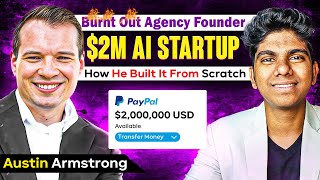
In this episode of The Nikhil Sai Show, host Nikhil Sai interviews Austin Armstrong, the CEO and co‑founder of Syllabi (formerly Syllabi.io), a SaaS platform that automates AI‑generated video creation for content creators, agencies, and real‑estate professionals. Austin recounts his 20‑year journey from a teenage MySpace marketer to a video‑marketing agency founder, the burnout that pushed him out of agency work, and the decision to build a software product. He describes the early MVP built via an overseas development team, the pivotal role of his technical co‑founder, and the bootstrapped investment of roughly $100k to launch the product. The conversation covers Syllabi’s product evolution—from a pre‑AI content‑strategy tool to AI‑avatar and faceless video capabilities—its pricing and market pivots (service‑based businesses at $49/mo to content creators at $25/mo), and the resulting revenue trajectory (initial $88K MRR, a dip to $10K, then a rebound to $160K MRR and $2M ARR). Austin details the growth engine: in‑house Meta ad expertise, a 9,000‑member affiliate program, a vibrant Facebook community, SEO, product‑hunt visibility, public speaking, and newsletters. He explains the product’s feature set (topic research, script generation, AI avatars, faceless videos, custom editor, scheduling, analytics, upcoming character‑consistency, API/white‑label). Funding is largely bootstrapped with $400K raised; a seed round is planned. Austin shares personal branding tactics in an AI‑saturated world, the importance of authenticity, and how he balances creator work (≈40‑50% of his time) with CEO duties. He also lists his daily routine, favorite AI tools (ChatGPT, Claude, HeyGen, Lindy, Manus, GenSpark, Grok, Napkin, NotebookLM, V0), biggest mistake (over‑reliance on personal brand for agency), and advice for young entrepreneurs (find passion, stay consistent). The episode ends with contact information and upcoming AI Marketing World conference.
Chapters
What's going on? What's going on, everybody who's actually listening to this podcast? Once again, guys, welcome back to another episode of The Nikhil Sai Show, which is hosted by me, The Nikhil Sai. And guess what's going on today? I'm back with another amazing marketer. And I mean, you've heard a lot of hype about AI, but you heard a lot of theory, right? You know, like, you know, you know that AI can do stuff, you know, you know, can help you in content creation. It might help you in scripting. You know, you don't know what else can you do. But the guest today is going to break us with the fundamental steps on how we can look at content creation, actually content recreation with AI. I'm excited to get into the weeds of it. And he's an actual lifelong digital marketer, keynote speaker. He's built multiple million-dollar businesses. He's host of podcasts and also he's the CEO of CelebEye. And he's been speaking on very well-known marketing stages. He was recently at the Board of Experts as well by Anik and I'm excited. We are going to talk a lot about AI-powered content creation, AI avatars, and how you could attract clients and build authorities, won a bunch of YouTube plaques and whatnot. So I'm excited to not waste any time and actually introduce to the CEO of sellabuy.io, Mr. Austin Armstrong. Hey Austin.
Nick, thank you so much for having me on. It's great to connect with you. I'm excited to share any wisdom and actionable takeaways for the audience, and we're going to have a fun conversation.
Yeah, absolutely, Austin. And I would love to talk about AI and content creation, and I have many questions about it, trust me. Before we get into that actual stuff, give us some context, Austin. What's been your journey and how did it lead to CelloBi right now? So walk us through your early days of entrepreneurship and tell us why you're doing what you're doing.
Yeah, I'll try and summarize this as quickly as I can so we can get into the good stuff, but I have I've been a social media marketer for more than 20 years. I started when I was 14 years old on MySpace. I got bit by that bug when I was 14 years old. I learned how to grow an organic following on MySpace, and I used that to monetize in several ways. I promoted local bands and t-shirt companies. I was paid to do email lead generation. And I even had an early SaaS platform called Get Ads way back in the day where we helped other people grow on MySpace as well, and they paid a subscription for that. Fast forward to about 11 years ago is really where my professional video marketing and social media marketing career started. I moved out to California. I started as an unpaid intern at a video marketing agency that specialized in the behavioral health space. So doing YouTube, uh, which was really the only platform around that was doing any video marketing 11 years ago, but organic YouTube marketing for drug and alcohol treatment centers, therapists, psychologists, and experts in that field. And I loved it. And I moved my way up from being an unpaid intern to a paid intern to a part-time employee to a full-time employee. My boss was really my mentor and he invested in my growth. Paid for my sales training, paid for me to go to conferences all around the country, one-on-one training with incredible experts. And I just kept learning, kept learning, kept applying, failing along the way, learning from all of those lessons. 6 and a half years ago, I started my first company, which was called Social Tee Pro, which is a social media and video marketing agency as well as SEO. My boss, my business partner, at that. We really had a lot of success with that agency, multiple 7 figures. It's where I really started to grow my personal brand on social media again. And through that process, I always told everyone on our team, this might seem a little cheesy or corny, but we are not just a marketing agency. We are a repeatable system of growth that happens to be in the life stage of being an agency.
Hmm.
We developed these repeatable processes and along the way a lot of my content was very top of funnel, sharing useful websites for business owners and entrepreneurs. And so in around 2022, when DALL-E and Midjourney and the early rumblings of ChatGPT coming out, it was a natural progression in my content strategy to switch from useful websites for business owners and entrepreneurs to useful AI websites for business owners and entrepreneurs. I got in very, very early as far as the marketing component. And so all of that led to me ultimately taking those repeatable processes and starting Syllabi because I'm a pretty big affiliate marketer promoting a lot of AI SaaS tools. I got to a point where I'm like, why am I doing this for 20-30% commissions? When I know that I'm able to drive sales, I should own the software. And so that's where the idea of Syllabi came to be. I started working on Syllabi 3 years ago. We launched it publicly about 2 and a half years ago. It's been an amazing experience, but that's really how I got into AI.
Wow. That's pretty dope. I mean, this is what people miss. They just look at you, Austin, and Syllabi, and they think, oh wow, this is some, like, you know, some interesting AI entrepreneur. Then the reality is you've worked your way up, and that's what I would love to highlight and appreciate you sharing transparently the journey you've gone through and all the different stages you've gone through to get to where you are. Mad respect. I love hearing underdog stories of people who make it up to, you know, big time. And I'm so stoked to know that. And let's talk about it. Why? I mean, you already had a successful marketing agency, right? Like, you know, it's not like you're just trying to figure it out. You already had it, you know? And why even start a SaaS? Why did that even like, was it, why is that even a consideration for you when you're already having a successful business?
The real answer is I got burned out on the agency space. I mean, I worked in marketing agency world for 11 years and it's a grind. I mean, you, and when, especially when you start your own company, you trade one boss for 20 bosses, 30 bosses, and, and every time it's, it's a crazy mental capacity load and shift to go from the deliverables and the ICP and the wants and needs of that individual client to the next individual client to the next individual client, etc. And we had SOPs and I had amazing team members. It wasn't just myself, but I really bared the weight of that because I take pride in the work that I do. And that really was taxing on me for 11 years straight. And as much as I I did enjoy it for a time. I really didn't like it at the end. And so what really started Syllabi honestly was it was a pre-AI software. I mean, we launched January of 2023. This is pre-public ChatGPT. This is pre-OpenAI's API. So we were not even an AI tool at first. We became an AI tool, but I looked at what was the most tedious part and time-consuming part of my job, and that was developing content strategies. I spent a lot of time when we onboarded a new client to do intense research on topics and competitors and what would do really well for our clients. And that was the first part. I wanted to turn that into software as an internal tool, just to, you know, take me from what took 6+ hours of detailed research into a, a tool that took, you know, less than a minute. Now anybody can do this, you know, nobody— it doesn't take 6 hours to do like detailed content research and outline a content strategy anymore thanks to AI. But yeah, I just wanted to develop this as a recurring income stream. It started as just a tool to save me a lot of time. Got to that point pretty quickly, like, oh, this is actually really helpful. We should roll this out to help other people and charge a monthly recurring subscription.
Love that.
And yeah, you know, it was a wind-down period. I learned so many lessons from that agency. Like just a quick important one. It was my first company and I built it around my personal brand because I was growing on social media at that time.
Yeah.
And it is so difficult. It's like impossible to sell a company when it's solely attached to your personal brand. So I didn't sell that company. I had to shut it down because when I stepped away, to focus on Syllabi full-time, even though I had hired managers and people, account managers, everything to run that company. Couldn't figure out sales, couldn't, you know, the whole, everybody just wanted to work with me. And so it was a shift for a year until I just had enough and then ultimately shut it down. It was a huge lift off of, a burden lifted off of my shoulders. Yeah, I just got burned out on agency life, man. And I love SaaS. So fun.
I understand. And I could see that on your face. And this is for people who are listening in and agency is a tough business to run, but it's easy to sell. And so if you're getting started, probably you might consider doing an agency, but if you really want to scale like Austin did, it does make sense to get into software, but you got to have that PMF software term product market fit before you make that transition. And that's a good thing. Austin has launched short form video platform. Before it was even a thing. And now everyone and their dad creates software with Lovable and Bold and all these new tools and calls it AI-driven. I'm like, okay, stop. You know, you gotta, you gotta get some things together before you say that. So I love that. I mean, I believe, uh, Stan, and you might correct me if I'm miscoding it, but I believe that pushing through period of running an agency stacked up all the skills required to start a successful marketing agency, right? Sorry, successful software company. Walk us through. Are you a technical person? Like, can you code? Is that how you were? So how did you even— like, this is the interesting thing for me. Like, how did you even wake up to a day and say like, yeah, I'm gonna start a software company, but I don't write code?
Yeah, it's hard.
Are you funded? Like, do you have like a— do you have like a rich dad who gives you billions of dollars into development? I'm just I'm joking and messing with you at this point.
So I'm as self-made as it gets, man. I'm a first-generation entrepreneur.
Right, right. So that's what I want to dig into. That's what I want to dig into because I want to show this to people that it is possible. You don't have to have bigger pockets or YC funding you. Maybe they might, I don't know, or maybe, maybe some, some, you know, dad's money to build software. So walk us through the journey. What was it like in the initial days? How did you How did you scramble time and energy and money to build this product, you know, which is crushing it right now?
It's a hard journey, man. I'm glad you're asking the tough questions because on the surface it looks— everything looks great, right? That's not the reality at all. So I am not a technical founder. I am the marketer. I am the idea guy, the visionary, the CEO, the public speaker, you know, that type of person. I'm very good in that lane and I am not good at technical. So what we did was we reinvested profits from the agency to start to build this. So, and that wasn't easy either. So I had essentially hired a development team in overseas. I think they were in Italy through Upwork and they spent 6 months. I spent about $15,000 to get an MVP and it was kind of not very good at all. Took them, you know, very, very long time, long sprint cycles to develop this thing. But I think it was very important to get it to this point because even though I ultimately lost that $15,000, it was a visual point that I brought it to my now CTO, who's a good friend of mine. And I've known him for about 8 or 9 years at this point. And he was very early on in machine learning, ML, and AI. He's been doing it for about 8, 8+ years working with big companies like Dell, Genentech, Apple, Pfizer, etc. Just happened to be a really good friend that I knew. He also used to have a marketing agency, so he could speak my language, and he is a brilliant developer and can lead an amazing team. And so I brought this idea to him and he loved it, and it took that MVP to show him how serious that I was about this. And he's so crazy. He spent, he stays up for like a 72-hour Friday to Sunday bender and rebuilds what they built and what they took 6 months to do better. He stays up for 72 hours, builds it better. We then refine over the next month. We build this thing out. I end up investing about $85,000 total from the agency to build this thing up. He quits his consulting stuff to go full-time. We build out a team around it. We launch it. I, uh, and I build in public, built a lot of hype. I've always been a build-in-public person. So like the moment I had the idea, I started posting about it on social media before it was even launched. We launched a landing page to get, uh, to capture emails for early access. We gained over 10,000 emails that way.
Wow.
Save on launch day. To really like prove the concept that people were interested in the idea in general. So day one when we launched, we were profitable and we were generating a lot of revenue and it hasn't been straight up ever since. There's been ups and downs for sure, but that's, that was kind of the origin story. And so now we're up to about 25 people on the team, 2.5 years. Wow. It's pretty amazing journey. Not all up. There's been up and down and up.
I agree. Yeah.
But yeah, that's kind of the origin story. You know, I lost 15 invested my own money into this because I fully believed it. We've raised a little bit from angel investors. We have a very small VC check. But I, yeah, I've never had a startup before. I don't have rich parents. I just am really passionate about what I do. And I've been doing it for 20 years. Yeah, I think anybody, you know, I had bad grades in high school, I almost failed high school. I don't have a college degree. I think anybody can be successful. You just have to be consistent and you have to love what you do and find a passion that you can follow.
Dude, I love that. So you're a dropout, basically. You don't have a degree either?
College dropout. Yeah, I would say college dropout. Sure. I took a couple college classes, but yeah.
Makes sense. Yeah, me too. That's, that's pretty funny. And I love that. Like, I love the way how you have used your agency capital to fund your own software project. And to put in perspective, building software is not easy. It's not like building an agency where you're selling services. You're literally putting all of your labor and all of your marketing dollars into a piece of software that you don't even know if it has any product market fit. And anybody can just come and disrupt, come at a cheaper price and then just let you go from the market. But smart thing you've done is This is my biggest takeaway is having that personal brand. Most software companies, the biggest problem they have is not the product because they are a software company, they can build the product, but it's the ability to market and attract customers. And luckily, thanks to the silver plaques you have behind you, the personal brand you built, you know, kind of gave you that momentum. And that's, that's really cool. So interesting. Walk us through what happened. Like once you launch, you gain the momentum. What was the growing phase like after you like run out with your existing social media hype and the one launch you have done, what was the next stages for, you know, Syllabi to continue to grow and, you know, be on its own track, you know, to hit the new revenue numbers?
Yeah, so yeah, like I was teasing there, it was not all sunshine and whistles. So we had an amazing initial launch. The first 7 months, we got to $88K MRR. Which is fantastic. $83.3 million ARR is what you want. We're at $88K MRR, monthly recurring revenue. Fantastic. We launched with service-based business owners as the target market, a $49 a month starting price point, and our key video production feature of AI avatars. So we were great. 8 months in, we hit an explosion in the AI market, a lot of new startups come out. So a lot of competitors, there's a lot of AI tourism going on. People are not staying loyal to the software. And so we had a 10-month downward spiral from $100K down to about $10K. I think even maybe like—
Wow.
Wow.
That's insane.
Completely cut less than half. We had a lot of data at that point. But we continued to talk to users the entire time. User interviews every single day, listening to the problems, listening to who's actually adopting the platform, what features they like, what features they don't like, what features they want, et cetera. About 9 months ago now, we, 9 or 10 months, we took all of that data and we did a hard pivot and we switched from service-based business owners $49 price point, AI avatars. We switched our messaging and our target market to content creators and new content creators that want to make money online. We cut our price in half to $25 a month, and we switched our core offering from AI avatars to faceless videos. And over the last 10 months, we've now gone from that $38,000-$40,000 to $160,000. MRR, and we're continuing to grow. But it's because we dealt with 10 months of in the trenches shit, everybody pointing fingers at each other. It's your fault. It's your fault. This isn't working. The industry, the industry has moved on. People aren't interested in this offer. You know, this whole thing, just grinding it out, not taking paychecks, dealing with all of that. But we got through it. We pivoted. It worked and now we're in a fantastic growth position. But it won't always probably be that way. We're going to have to continue with that mentality.
100%.
Fortunately, we're in a good position right now. But yeah, it's hard work. Entrepreneurship's hard, man.
It is. It is not for everybody. Yeah, it's definitely not for everybody. But I fundamentally do believe that anyone who does try entrepreneurship will have a much better perspective and much better intuition for their entire life because now they see things differently. And like, I've seen many people who try entrepreneurship and fail, but then they go out and become exceptional employees because they see it from the business owner perspective, shareholder perspective. And I think everybody should give it a try, you know, regardless if it's for them or not. But I think you're war ready, you know, Austin, like, you know, you've gone through those phases. Now you're like ready to just, no matter which tool comes in, like, I'm ready. You know, that's the kind of phase you guys are in. That's exceptional. You have, like, you cut your revenue by half after launch. But now you quadrupled your revenue. That's exceptional growth. Kudos to the hard work you've done. I mean, it's easy to just say, oh, we have done a bunch of user interviews and we got feedback, we fixed the product. Trust me, it's not that easy.
It's not that easy.
Once you start talking to people, now you get anxious, like, what am I building? What's happening? And then you give it to your product team and your product team says, not possible. And now you have to debate with your co-founders on what features and benefits and pricing. Oh my God, I've been there, I've done that. Holy moly, guacamole. It's not easy, but I'm glad you're here, you're sharing the story. So makes sense. So what's been the driving— because that's an exceptional growth, right? Like quadrupling your revenue as a software company in that, at that momentum and like getting to $2 million ARR, it's no joke. I mean, you know, in the right market, you are short-form AI platform. With the right investor or evaluator, maybe like a software, you know, VC firm or something like that, could value you at good, you know, 8 or if not multi-8 figures as well, if you find that, you know, right spot. So I'm curious, you know, you've built tremendous value and that's what you're being rewarded for overall. So walk us through what channelized that growth, what contributed to that growth. Is that you continuing to do organic or have you explored any other growth engines? Walk us through the journey of finding that new revenue.
Yeah. So I think it really comes down to understanding the target audience, their, their ICP, the needs, the desires, the price point that makes sense for them, how you activate those people. So above all else, it's just really knowing who you are trying to reach and the problem that you're trying to solve for them. But aside from that, so we really figured out, um, so one thing that I did is we, we worked with an external um, ad consultant. And she originally ran our ads and she was doing okay. But I took a page out of, uh, um, Alex Hormozi's book. I forget if it was his first or second book, but he said something that was really impactful that stuck with me. And it was, I could pay this company, you know, $10,000 a month, whatever, uh, to run ads for me, or I could pay their $1,000 an hour fee to teach me everything that they know about Facebook ads so that I can do it myself. And that's what we did. So we paid that consultant to train our staff everything that they knew about Meta ads in particular. And that has been a game changer for us because now we can micromanage everything internally. Hmm. So ads have been a fantastic traffic source for us. Second would be our affiliate program for sure. We've spent a lot of time, like I'm an, I'm an SaaS affiliate. So I know what goes into building a good SaaS affiliate program. And so we have like 9,000 affiliates right now. Now, of course, not all 9,000 are activated. Any, you know, anybody can sign up, but we have a lot of affiliates. We have a ridiculous amount of assets that we give to them. We foster a community on our, we have a Facebook group of about 50,000 people. And it's this kind of like cool flywheel of people coming into the Facebook and seeing people celebrating their wins. That's the culture that we've established in that Facebook group of success stories growing on Syllabi and being successful affiliates. Like we have a $1,000 club. There's quite a few people in the $1,000 club. They've earned over $1,000 from being an affiliate with Syllabi. And so they post about that all the time. And so people come into this group. They sign up as an affiliate. We have an amazing community. And then probably third is, is my audience mixed in with other influencer marketing that we do. SEO. I do a lot of amazing podcast interviews like this. I do a lot of public speaking around the world. Directory listings, like we were number one product of the day on Product Hunt.
Wow.
A bunch of products.
Hmm.
A lot of directories. We've done email newsletter sponsorships. We have our own newsletter and I have my own newsletter. That goes out. So just marketing, like, in every asset, multifaceted, omnipresent channel approach, active everywhere, just top of mind.
Makes sense. I could have probably ChatGPT this, but I'm curious, does the word syllabi have any meaning?
Yeah, so the definition of syllabi is, uh, the, uh, it's the, the subjects in a course of learning. The subject matter and course of learning. So the original idea for Syllabi actually was a completely separate startup that I was working on with my wife, which we were building a, um, a course platform for, uh, email courses like Udemy or Skillshare, but all of the courses were delivered via email every day. That was the original Syllabi idea. I thought it was pretty cool, but didn't work out for one reason or the other. But we had the domain, we had the social handles. I looked at the definition and when I came to the idea of Syllabi, which is the original idea was content strategy, right? The subjects, the topics of learning in a course loosely adapted to all of the topics that you would create content around on social media. And I was like, close enough. Got the domain, got the social handles, name works. Let's just roll with that.
Makes sense. Yeah, I love that. I love that approach. Walk us through what's the best use case for Syllabi. I'm sure you have a lot of users, a lot. There must be a lot of stories and a lot of crazy stuff. I'm looking at like, you know, interesting features you have starting from avatars to having the ability to make faceless videos and, you know, voice clones and editor and scheduling options. Like there is definitely a lot of amazing features you have built with. Walk us through few stories that most people can relate on like, oh wow, that's a good use case. I could probably use Syllabi for my business.
Yeah, so we have a lot of marketing agencies that use us to, fill in the bottleneck of their clients not recording content. So one of the biggest issues that I faced, you know, and I'm sure you've faced in many agencies that are listening to this space, like if you do video marketing for clients, even after they've hired you, it is so fricking difficult to get them to actually record content and enough content to stay top of mind constantly across every platform. So we have a lot of agencies that will record one video with their client to record the avatar so they can just crank out content with their client's likeness and motion and voiceover, et cetera, and create content that way as well as faceless content as well. So whatever they're a subject matter expert in or whatever they want to create content around, it's just a great way to, to go from maybe one video a week or several videos a week to multiple videos per day. Because you can combine all of those efforts.
Hmm.
We have a lot of real estate agents that use us as well. We have a successful, very successful mortgage broker and real estate agent on our board of advisors, and we've built out a lot of features. Like recently we rolled out URL to video with image scraping for Redfin and Zillow. And so you can create a house tour video in less than a minute, for instance. Instance. So you put in your listing to sell your house and it takes all of the images and writes a script. It adds motion so it looks like—
that's crazy—
a drone coming through. Uh, it's pretty amazing. I did a demo call today for about 100 real estate agents and they're like, because that's so expensive and takes so much time to do house tours, but now you can completely automate it with software.
Yeah.
And then of course we have a lot of con— like brand new content creators that they just don't want to be on camera for whatever reason. They, they're afraid of judgment. They're afraid of their friends and family making fun of them for starting, but they want to create content. They just can't get out of their own way. And they've been really interested in YouTube automation and faceless YouTube and faceless social media in general. And so it gives all of these people a voice, all of the people that have been learning or interested in creating videos and starting to develop passive income streams, but they couldn't get out of their own way to be on camera for whatever reason. Now they have a tool that helps them. Now they have a tool that automates the entire process, can help them earn money. I mean, every single day I see people in our Facebook group, for instance, share their success wins of like, oh my gosh, I just earned my first dollar online, my first "$15 affiliate commission. I've never made any money online before." And we are thousands of people's first online dollars, first 1,000 YouTube subscribers. That is what's so rewarding for me as well, is inspiring a new generation of content creators that never had an ability to do it before. We help a lot of service-based businesses, but I really am just so passionate about helping new content creators.
Yeah, I love that. And I think that's so special. I mean, making that first dollar online could really break the belief system you've been built into, that, oh, you gotta get a degree or get a job and wait for somebody to pay you hourly, and you gotta just, you know, let them soul suck you and whatnot. And if you just break that norm and make that dollar online, you just see like, holy moly, like, I could just do something by my own and make money. That's— yeah. And I think you're creating a conveyor belt of entrepreneurs like these guys, because I remember myself reposting content on Instagram and trying to get some affiliate sales myself back in 2019 before I started my own business. But those skills, you know what gave me the foundation to start my marketing agency and become successful in my own life. And I think that's what you're building. You're building a conveyor belt of entrepreneurs. They are just about to experience the new income streams. Let's, let's talk about this. Let's, let's face it. Like there is some hype definitely in the AI space. Like back in 2023, Synthesia was big time and 2024, like Agent really like took, you know, their own space in like the AI avatars. And you guys have similar features. Kind of curious, I'm again, these are like the generic platforms that have multiple use cases. You're more specific on like social media, content creation, short form, like make quick content, you know, all of that good stuff. But I'm curious, like how do you see the space of AI video creation evolving and where do you see yourself? Yourself in that spectrum of like AI video creation tools.
Yeah, so you bring up a lot of great points and I also just want to put it out there, we don't just create short-form content, we create short or long-form content. You can create 45-minute-long videos in Sylabi if you want. What? Yeah, yeah, absolutely. You got to get that watch time up to get monetized on YouTube, you know, it's not all about shorts. But yeah, I think as we move into a world of agentic AI, we've really positioned ourself as the video marketing tool that does A to Z. So you brought up a couple of great examples, Synthesia, HeyGen. We often get compared to InVideo as well, which is a faceless video tool, right? Look at what these tools do. They're very powerful and they're exceptional at doing one thing. That's it. They create videos. That's it. HeyGen creates AI avatar videos. That's all it does. It generates scripts and you can do a lot with those videos, but you still have to download them. You have to know what topics you want to create. Same thing within video. There's no before and there's no after. You can't schedule and publish from any of these platforms.
Hmm.
Syllabi is an A to Z workflow tool. It's not really an agent. However, we're getting to a point where we can automate even more of this and, and really become an agent. Wow. Syllabi is the A to Z workflow tool. You can find topics, uh, think of it like keyword research tools, so you can find the best topics with data on Google, on YouTube, on X, on Pinterest, on Bing, whatever. And then generate the script, short or long. Create videos however you want. AI avatars, faceless videos, B-roll videos. We have a custom video editor so you can go in there and edit videos, upload your own content from scratch if you want to use it as a project management tool. And then you can connect with every social media platform. You can schedule and publish it out. You can automate up to 30 days out. You can really automate up to 5 videos a day for 30 days straight. So you can set up an automation for 150 videos. Jeez. You can create thumbnails in Syllabi with AI, and you can even track your analytics in there as well. So it's really an A to Z workflow tool.
Interesting.
Now I see us moving much more into the agentic space as well and being able to connect with other automation tools like Lindy or Make or Zapier or whatever automation tool that you want. We're working on things like white label and an API that you can build on top of us as well. We see ourselves as an eventual engine that you can build on top of Syllabi for whatever that you want. But in general, where does the state of video go in AI over the next couple of years? I mean, there's, there's so many cool things. Runway ML, I don't know if you're familiar with that, is doing amazing things in Hollywood. So their Runway is focusing on film-level video production. They even have their own AI film festival. I think that was cool. So you can create like clips and edit everything together. I love what Sora by OpenAI is doing with their storyboard feature. I think that's brilliant. Where it's a full storyboard that connects scene 1 to scene 2 to scene 3 to scene 4. And so there's a lot of short video generation right now. I was just testing Google VO2 last week, which is inside Gemini, and it's their new AI video generation model, text-to-video. It's really cool.
It is.
There's no audio. It's up to 8-second clips, I believe, and I think it's 720p. MP as well. So it's really cool. But I think longevity and continuity— and so that continuity is another important one. Character consistency is something that we're about to roll out. We're going to be one of the first, if not only, AI tools that has true character consistency. We hired a machine learning expert to really focus on cracking that code. It's very difficult to do. But if you look at like What is video content? It's storytelling, right? The ability to tell coherent stories that hold attention, whether it's online, whether it's for ads, whether it's for organic, whether it's for creating short films, whether it's for creating feature-length films. I think we're going to see a natural progression in that space.
I love that. Yeah, I've got my hands dirty with the VO2 and I was surprised with the quality. And like you said, there are some drawbacks, but for the first year, for the new release they have done, I was like, hmm, this is decent. And I mean, if you use it right, you could really create some, some cool stuff. That's interesting that you built like a whole, like I could see the progression of you. I wouldn't be surprised in like a year or two from now, you would just be like, yeah, we just have one AI interface. Tell AI in a simple audio message and it would do all the job for you. You know, that's kind of the, it's kind of the advantage you guys have. I really like it overall. Interesting. Now, are you guys, you can skip if you don't want to answer, but are you guys trying to raise any money? Are you trying to scale and get to any, any different destination? What's the ambition we are looking at?
Yeah, I, uh, we completed our pre-seed round. We're probably going to open up a seed round in a, in a couple months and, and have that discussion. We can put fuel on the, on the fire of it and, and scale it a lot faster. You know, we're competing with companies like HeyGen and NVIDIA that have raised $50, $100 million. I arguably think that we're better.
Yeah, that's what I'm looking at.
Yeah. And so, you know, I go back and forth on this a lot because when you raise, it's a whole different environment. You have, you know, oftentimes if you raise several million, you have to give away board seats and they will make decisions and breathe down your neck on things that are maybe you don't think is the best for your company and, and the direction of where you want to go. We will raise at least a seed round. We'll probably end up raising a couple million in that round. We haven't, we've only raised $400,000 up to this point. Everything else has been just a good market.
Bootstrapped?
Bootstrapped, very largely bootstrapped. Just building a tool that people like that helps solve problems and great word of mouth and great connections and relationships that I've built over 20 years in marketing. Um, I have very big ambitious goals. I think Syllabi could be a unicorn company. I wouldn't, you know, I'm a capitalist, Nick. I'm sure you are too. Like we're ambitious people. So I wouldn't, as much as I want to help people and this is a tool that helps people, I think this can still be a billion dollar company and help a lot of people. So that's really the ambition for it.
Yeah, 100%. And you know, after learning, again, I know you pretty well, like learning the details of what you're building and how it could ascend into the future. I could totally see you guys being a big company. And as long as you stay relevant, continue to innovate and listen to your customers and make your product better and, you know, like pro AI, which you guys already are, I think this could be, it's gonna, there's gonna be a multi-trillion dollar market for AI agents and video creation with AI agents and whatnot. And I think I could definitely see you guys, you know, growing up in that stage overall. And, uh, I think one, one, one quick pop idea I got, which I would like to share with you is maybe there is, I know it's tough to build in, but maybe there could be like a research platform. I know the AI does it, but like if there is like the, if you have seen like MrBeast tool and like the other vidIQ and other tools, they have like this viral research, you know, where you could just find good topics and maybe you could use their API keys and whatnot if there is an easier way to do it, but that kind of. Tool will also help somebody's creator's block. That's a new word. Like people are trying to create and they're like, I don't know what I want to create. Now they can just find that out. I think that's a cool thing. But yeah, I'm excited for you. Now let's kind of take a little pivot and talk about building personal brands in the times of AI. There is so much. I mean, I'm not talking small multiples. I'm talking gazillion amount of multiples, amount of new video content being pumped into the platform, especially tools like you, thanks to the tools making content creation so easy, how to still continue to build a personal brand? That's a big question. How to still maintain that human connection? How to still build a cult and following of people that will believe in you and listen to your ideology? And how are you managing and maintaining it right now?
Yeah, such a good question. I think as more and more AI content and video content and just content across the board continues to blanket the online space, people are going to want authenticity and real voices to cut through the noise. I think no matter what world that we get to, having a personal brand is still one of the most important things that you can have because it also allows you to pivot from multiple industries. There's so many amazing examples and case studies of that. It's showing up authentically. It's being yourself. It's putting yourself out there with all of your flaws, putting your, your voice out there and not being afraid of trying to reach the right people and sending away the wrong people and showing up consistently every single day. Consistency is even more important now because I just told you I can automate 150 videos for 30 days straight. Across every social media platform. That's what you have to compete with now. So by showing up in some capacity every single day in whatever format, whatever platform that you want, whether it's audio, whether it's video, whether it's written text, whether it's images, whatever your format is, show up consistently as much as you can. Start on whatever platform you feel comfortable with. And then add things to it. You don't have to be omnichannel present, posting 10 times a day every single day. Most people will burn out. Focus on what you can consistently commit to and then build upon that when that becomes your new norm. And so you continue to level up. There's a lot of AI tools that can help enhance that authenticity as well. ChatGPT, Claude, all of these LLMs are fantastic tools that you can train on your voice, on your writing style, on your communication style. For instance, a quick example on Facebook in particular, this text thread style absolutely crushes for me. I reach like 200 million people a month creating these text threads of like, rest in peace PowerPoint, here's 5 AI tools to create perfect presentations every time. and then the comments, it'll be, you know, tool number 1, tool number 2, tool number, et cetera. Well, after doing that for a while, I just downloaded, uh, and put all of those text threads into a text document and I created a GPT task with all of those examples. And so I created this task that every day at 8:00 AM Eastern, it researches new tools and it writes a thread for me. In that format. And so I don't need to do the research anymore. It's still my ideas. It's still my format of content. I can just copy and paste. Sometimes I still create if I, because I like to create, but if I am not feeling creative, I'm feeling burned out, I'm busy that day, I'm traveling for a conference or whatever, I know that I have an automation from AI that I can use to maintain consistency for my brand and my voice. There's so many different ways that you can, you can do that. That's just the first example that came to mind. But being your authentic self, like, don't try to be somebody that you're not. Don't try to be me or Nick or Gary Vee or Grant Cardone or Alex Hormozi because you're not them. You are the best version of you. And that's what you need to lean into. When you are comfortable with who you are, you will attract the right people that liked-vocalize your authentic I love that.
I love that. I think it comes down to, like you're mentioning, your defects is what people are attracted to. If you can't be a perfect person, because nobody likes that perfect person because it's hard to relate. But if you see some defects, they kind of find that relativity factor. Like, yeah, I struggle with content creation. Yeah, I stutter. Like, yeah, I'm nerdy too. Yeah, I have that weird accent. Yeah, I have that same skin color, right? Like, I think those imperfections which stereotype, you know, as a society is what people, you know, do relate to and attract. And I think that's a pretty smart thing. Now, one thing I could see you consistently doing is not burning out your audience, but still promoting it, like still promoting, continuing to grow your user base for Asyllabi, you know, by using your social channels, but not burning it out. And I've seen people who build successful social profiles, like they have 3 million followers. Like when I was in LA, that's a place, like when you're in Hollywood, you just shake hands and you see somebody has 6 million followers. And they're like, oh my God, what, right? I kind of see, yeah, I kind of see, I kind of— so they were like following me and I'm like, I have 600 followers and you have 6 million, like why, why, right? So, you know, I, I don't even have to compare. So it's funny. But anyway, back to my question, what's the best way to monetize? Because social followers are not equal to dollars in the bank. So what's been the best learnings you have had building your social profile? Attracting people and trying to convert them as clients and customers without burning them out?
And for, as far as monetization or as far as like maintaining content without burning people out? Both. Okay. Let's start with content creation and not burning out. So always remember that the only person that sees everything that you post is you. There's so much content out there. Everybody follows everything. So post that sucker again. I repost content constantly, constantly. Okay. So always remember that different styles of content until something works and go deep on that, rinse and repeat. There are seasons of growth and seasons of learning. Right now I'm in a season of growth. It's going to get saturated. Everyone's doing that text thread style now because they caught on because it's working. It's not going to work anymore. Test, test, test until something new works. Do that until it becomes saturated, rinse and repeat.
Hmm.
Give your best information away for free. I have become a— the content that I create has been a resource channel. And so I know even if I promote similar tools or other people or other things, it still creates the interest in what I'm trying to promote. And all boats rise with the tide. So even if I share HeyGen sometime, it only helps me because I don't want to just be the like syllabi, syllabi, syllabi, syllabi every single time, right? Because that's— nobody wants that. It's a social media, social, it's a two-way conversation, right? So creating content in different formats, talking about everything, giving your best information away for free, and just making it really easy to know how to subscribe or buy the offering that you're, that you're selling to them. And then just having really good open dialogue, responding to a bunch of content. But that's, that's really the, just staying like up to date on the latest news trends. Like it's easy to not burn out in AI because every day there's new content that's coming out. So like every day there's something new that I can share that's interesting, a breaking news story, a new tool that I can do a test and a demo on. It's a very exciting time. Now, as far as the monetization component, you got to diversify. You can't put all your eggs in one basket, right? Like these social media platforms, you can make a decent amount of money, but let that be icing on the cake. Like so many— I can't tell you so many people. One of the biggest complaints we get about syllabi is it takes a long time to monetize. Yeah. Otherwise everybody would do it. You know, it takes a long time to get to 1,000 subscribers and 1,000 hours of watch time on YouTube. Right? And then as soon as you monetize, you spend all of this time and you're like, yes, I got it. I'm approved. Day one's here and I made 32 cents. Demoralizing, soul-crushing, right? It takes so much time to build up those streams of income. There's so many better ways to monetize. Let that just be one backend monetization stream that just like pays the bills, pays the mortgage, you know, whatever you want to do.
Right.
I love having businesses that allow me to create content. So I had marketing agency, I have syllabi so I can push everybody there. I do affiliate marketing, so I'm a 6-figure affiliate marketer, so I can promote a lot of tools and build recurring revenue from all of those brand deals and sponsorships with different companies, UGC as well. So creating content for brands that don't necessarily go out to my audience, but they want for their own advertising purposes.
Hmm.
Newsletter is a great way to monetize now. So I love Beehive. You basically get paid to grow your newsletter on Beehive. There's a couple platforms that have a similar functionality. You can sell, you know, you're in the funnel world, Nick, right? You can sell low-ticket offers that upsell to multiple, you know, higher-ticket offers. Private groups, like I have a paid school community, one-on-one coaching and consulting. You can leverage your social media growth to book paid speaking engagements. There's a million different ways that you can monetize online. It's all about diversifying. Back to the beginning of this, just a quick thought here. I think because you mentioned Bolt and Lovable and Manus and GenSpark, there's all of these AI building tools out there now. I think that's the new lead magnet. That's pretty interesting. I think it's going to move and the new low-ticket offer. I think good marketers are gonna move away from the $9 ebook to the $9 a month SaaS tool that leads them into their funnel.
Yeah, I love that. And by the way, we are already doing it. We are already testing out creating tools, like, you know, like the outbound scripts we are creating or the sales script we are creating. We are creating lead magnets, tools, validating them, and then we are pushing traffic. And the good thing is, the CPA is not that bad. Like I was expecting to pay insane amounts, but especially because it doesn't cost me anything and I know the usage of it is pretty limited. I just made it a lifetime deal and it's, you know, it's interesting to see. Now one question I have for you, just a confirmation. You, we are not over time, right? You have extra 15, 20 minutes.
We're good. Perfect.
Yeah.
We're vibing, man.
I love that. So one question I have for you is you have this two different lives technically, which I'm looking at, like one side you have to be creative, you're speaking, you're talking, you're making content, you're presenting yourself, you're building in public. The other side is you're being the entrepreneur, the product guy, the team, like hierarchy and getting things done, operations, like, oh my God, talking to customers. These are like two different things, right? I'm curious what percentage of time of yours goes into the entrepreneurship versus the creator and how do you manage the blend between these two different roles?
Very, very good question. Love the book Buy Back Your Time by Dan Martell, which came out about a year and a half or 2 years ago. And I say that because I, I did a time inventory to really focus on where I'm spending my time, how much time it's taking me, my level of enjoyment on those tasks, and dollar value associated with those tasks. I delegate to my team things that I don't enjoy doing and things that don't make me more money than where I can spend my time wisely. So I think that's an important thing for everybody to do, is a really good practice. Get the book, read the book, but doing a time inventory of just for a week straight from the moment you wake up to the moment you go to sleep. Outline everything you do on a Google Sheet or spreadsheet, whatever you want, and just start time, end time, uh, all day. And then, you know, rate it and, and rank it and put, you know, dollar value, whatever system works for you. You're going to notice some of these trends. So long story short, I said, I would say on a daily basis, I spend about 40 to 50% of my time being a content creator. And creating content myself, probably 30, 40% being the leader, sitting in meetings, making joint venture deals or promotions happen, 10% being a husband and a dog dad, living a personal life. And then the remaining time is like literally just spent traveling, but I'm on my phone working constantly. The vast majority of my time, I would like— well, not vast, but a good— the largest chunk of my time is around content creation and being a marketer because that's where I get the most personal enjoyment and the most ROI on the time. And so I have never been like— I have two business partners. I am not a greedy person. I don't need 100%. I don't want 100%. I would rather have a larger team. I would rather have partners that can focus on the things that I'm not good at that don't bring me enjoyment so that I can stay in my zone of genius.
Yeah. Yeah. I mean, I've been in those conversations where you have to handhold your developers and they come back for a, you know, pay raise without delivering what we discussed and it's horrible.
I don't talk about any of that. Yeah. I, I'm, I don't do any raises. That's not my job. Don't come to me for it. I'm not the person.
Yeah. I love that. I think, I think that's. I believe what you said fundamentally, and I love this, by the way, Austin, because you're getting into the weeds of entrepreneurship and talking the truth. And this is probably what is ignored when you're— when, you know, most people actually speak, we don't share the full picture of it. And like, you're literally sharing the secrets. And this is what I believe entrepreneurs do get stuck with, which is they're just in their own routines, and now they're hit with the task that they don't enjoy, and now they try to find their purpose and stop running their business and find, you know, some mountains to sit around and look and do nothing. I'm like, no, you just lost your drive because— Yeah.
There's a better way.
Yeah, yeah, you gotta preserve the entrepreneur and, you know, keep them focused. I love that. Thank you so much. Now walk us through an average day. Let's get into a different set of questions here for a few minutes. What's like Austin's average day looking like right now?
Well, it's less impressive than you think. I am not a morning person. So I wake up at probably 8:00 AM and, you know, have a little morning routine. I'll get coffee with my wife and go for a walk with the dog. And then I don't take any meetings before 10:00 AM because I don't want to. I'll get into work around, like I might around 9:00 AM, I might do some, some easy morning start work. Like I don't hit my groove until. Like 8, 9, 10 PM. So I'm much more of a night person, um, and I've just come to that realization. Like, you know, many people are wake up at 5 AM and grind. Not that person. A couple hours of meetings or deep work or social media content creation. Lots of, you know, depending on the day, lots of meetings, lots of delegation, sometimes user interviews. You know, lunch is in there. Take a lunch break, you know, take an hour for lunch break unless It's just a meeting-heavy day, lots of podcast interviews or traveling for speaking engagements. Um, more content creation, uh, and meetings and recording content. And then probably, you know, after like 6 PM at dinner and then deep work because nobody else is working from 6 to 11, 6 to 12. And so at night, if I'm not doing a podcast interview with you, uh, I typically will, will do deep work where I can catch up on a lot of things. Um, I like to throw a lot on my plate so that I, I, I have never once in my life felt like I, there's nothing for me to do. There's always like, I always feel like there, I, and I stack this on purpose cuz that, that's just been my motivation style. Like I'm a sink or swim. Type of person, so I constantly overload so that I'm constantly— it's like an ADHD trick and hack. Like, I will procrastinate, but I'll productively procrastinate on another task. And there's a million things that I need to do, and I make myself feel bad about it, and then I get it done. And I ramble, but that's kind of how it is. It's not super structured. I'm not a Type A type of person. I have my list of things that I need to do. I live by— I live and die by my calendar, and I just create as much content as I can, and I am in and out of meetings every day.
Love that. Appreciate that transparent walkthrough. If you have a chance to go back to that 20-year-old yourself, okay, or maybe somebody who's just listening to this podcast right now and they might be in their 20s, they're still thinking what to do in life, what would be the number one suggestion you would give them?
Find your passion and stay consistent with it no matter what. When I was 20, I wanted to be a professional Muay Thai fighter. Believe it or not, I was very active in training in that space. And even though I had been doing social media marketing at the time, there was a gap between when I was doing that on MySpace and before I moved out to California when I was 23, that I didn't really have a purpose. I was just kind of floating through life. My purpose became martial arts. And I hyperfocused on that. So find something that you're really passionate about and just stay consistent with it. Like, after I got back into this, I've been now consistent for 11, 12 years because I'm so passionate about it. But you have to experiment and try and just not give up. Like, it's okay to pivot and maybe, maybe you try something and it's not your thing. But if you really enjoy doing it, even if you don't make a lot of money at first, but you see a future where you can, just stick with it. You might have to eat ramen and you might have to eat shit for quite a few years, but it'll work out as long as you stay consistent with it.
I love that. And I'm so glad you're talking the talk here and walking the walk. I'm so grateful that you actually jumped on.
Thank you for the opportunity.
Tell us, tell us the tool stack. Being the AI tool creator, I'm assuming you're always getting your hands dirty with a lot of AI tools. I can only imagine. So walk us through the most common AI tools or the, your average tool stack that you're using to run your business, your personal productivity, your clients, your projects and whatnot.
Oh gosh, there's so many. I mean, I'm, I'm still a huge ChatGPT fan. I, it's just become a habit. So I use ChatGPT constantly. I use Claude constantly. I use Syllabi constantly. I think I think, you know, you have to use your tool as a founder. v0 is a tool that most, like many people have not heard of. It's like ChatGPT and Figma had a baby. So we're constantly developing product demos and we do user interviews through v0. And if I like want to brainstorm, like if I want to create, like enhance our video editor or something, like I'll just deep dive in v0 for 3 hours and like build a new video editor. And so I love that tool. Recently using some agentic AI like Lindy, and I love Lindy so much. It's like Make, I just, you know, transparently they paid me for a brand deal, which got me on the platform. I'm like, oh, this is actually awesome. And so I love Lindy.
The perks of personal brand.
Yeah, man. You know, like they paid me to be on their platform and now it's like, wow, I actually, I'm paying them back. Because it's, it's so cool. I mean, HeyGen is a fantastic tool as well. I use HeyGen for some avatar videos from time to time. I love playing around with Manus and GenSpark, two agentic AI tools as well. Those are what immediately come to mind. Like, I use Grok too for a whole bunch of things. It's great at image generation. Those are kind of the— I'm constantly experimenting with other tools, but those are probably the ones that I I use like on an almost daily basis.
Makes sense. I mean, the space is moving so fast, I would probably expect you to drop 50 of those and add new 50% to the list, you know, when I speak to you like in 6 months from now or something.
Napkin. Napkin AI is another one that I love. Just, just thought about that too. So Napkin will create like image graphics, infographics on anything that you type in. So it's a really cool visual and it's completely I think, I think I haven't explored it yet.
I'll probably look into Napkin and one more thing you said, like V2 for the Figma and ChatGPT Baby.
I'm gonna, I'm gonna pick those from V0 is awesome. And then NotebookLM is another one that I use as well.
So yeah, NotebookLM. Yeah. I stopped listening to podcasts. Yeah. I stopped listening to podcasts. I just jam it out in 6 minutes audio messages. Like, hey, just give it to me, you know?
Yeah, we'll, we'll, we'll do like ChatGPT deep research on, you know, like churn reduction initiatives or something like that and just do like deep research and we'll get like a 60-page document and I'm not gonna read that. So I feed it into NotebookLM and now I've got a 20-minute podcast and you can speak to the podcast, you can jump in and like a conversation. NotebookLM's been incredible.
That's the other amazing one. Yeah. That's, that's been one of my, yeah, that's one of my favorite ways to acquire new skills and knowledge. And I don't think I can go back ever to asking like a lecturer or a teacher. I would just— yeah, it's hard. I mean, I'm excited. I'm excited to see this new world, which we thought is super futuristic and couldn't happen anytime soon, at least me. But now I could see it coming together. I'm more than excited and beyond. So Austin, save us something here. Talk us through your biggest mistake that you made so that we can save ourselves from doing it again?
I think the biggest mistake that I've made in business was building it solely around my personal brand at the agency because I couldn't sell that business and it became a massive issue. There's been so many lessons, but I think if I were to do it again, if I were to go back 7 years, I would learn to scale the business outside of my own personal brand and just have the personal brand be a part of it, not be the sole driver.
Makes sense. That's a big one actually. Thank you so much for sharing. What inspires you every day to wake up and get to work and who are the key people involved in your journey?
I am so deeply inspired by helping new content creators grow and monetize online. When I log on on social media every morning and, and see new messages and comments that, oh my God, I made my first dollar. Oh my God, I just, I've never had a video get more than 50 views and this one just got 1,000 views and just seeing them light up. That brings me so much enjoyment.
Hmm.
As far as people, my wife is an entrepreneur and startup founder as well. And we just motivate each other. We say, to each other each night. We ask, what are two goals that you want to accomplish tomorrow? And just having that partner that is on the same page as you, and we motivate each other and lift each other up, is so important. I would say my business partners as well, my CTO Anand and Dr. G, who was my boss when I was an unpaid intern, to my business partner at the marketing agency, to my business partner at Syllabi. He's been a huge mentor in my life, and it's been awesome to have him along the journey as we grow and make millions of dollars together. Those are, those are the most important people.
Dude, I love that. I mean, look what you've done. Like, this is so incredible. Like, this is an incredible story. You are like the underdog who went from like not knowing what to do, joining as an intern, to like literally scaling to the stage where you're co-founding companies with your previous boss. That's a flex. That's like a real entrepreneur flex. And I mean, this is the possibility. You claimed your space. That's what I love about your story, Austin. Like, you really did. You're not, you're not just showing up for the sake of showing up and, you know, doing the basic. You're showing up to win. And people who win show up differently. And thank you for sharing your stories of how you showed up to win and how you acted differently to claim your spot. Any last words you would like to share to the audience who are listening?
Just stay consistent. That's the name of the game. Like, get through the shit moments and you will become a next-level person. Entrepreneurship is hard. As we were saying earlier, it's not for everybody. I loved your take that whether you become a lifelong entrepreneur or not, I think everyone should at least try it because I think there's no better way to level up as a person. And I've seen this over and over again, when you get to a moment of overwhelm, if you're able to stay consistent and get through that without burning out, you reach a next level and that becomes your new norm. So just stay consistent.
I love that. Thank you so much, Austin. If somebody wants to try your tool or maybe connect with you and hopefully do some business or become affiliate partners and whatnot, how would they explore? Where would they find you and what's the best way for them to reach out?
Yeah, you can check out syllabi.io. That's S-Y-L-L-A-B-Y dot I-O. If you want to come network and hang out with me in person, I have my own AI marketing conference coming up in October called AI Marketing World. That's AIMarketingWorld.co. I'm a very approachable person. Come up, hang out with me. I will talk your ear off. If you corner me, you'll give me an excuse to talk to you for 2 hours straight about marketing. You can email me austin@syllabi.io as well. I'm very easy to get a hold of.
Yeah, that's the first trait of a successful founder, be reachable. And guys, hopefully you enjoyed the story today and the learnings and the actionable insights. I mean, guess what? It wasn't just a podcast. It was more like a social media marketing masterclass. I mean, Austin talked about how to build a successful personal brand in the crowded times of AI. And not just that, we also covered Many interesting insights of AI video creation, the future of it, the process of building successful SaaS products, the ups and downs of it. And you know, oh my God, like so many learnings, so many intuition building techniques. And I'm so glad we brought Austin in and make sure to subscribe. And here's the small request. Share this with your friends who are also entrepreneurs who might have a business or they want to start a side gig, which is creating content and whatnot. Share this everywhere and anywhere possible. You know, talk to Austin if you need some help. You know, sign up for, you know, Syllabi, and hopefully you will start your own content creation journey and start your personal brand and whatnot. And stay tuned for the Dheenikil Sai Show. I'll be back with another amazing guest just like Austin. Thanks for showing up once again, Austin. Have a good day.
More from Nikhil










BURNED $1.5M in his 17years online #digitalmarketing #entrepreneur #onlinebusiness
