How Ben has scaled his business to 7 figures with funnels | The Nikhil Sai Show 66
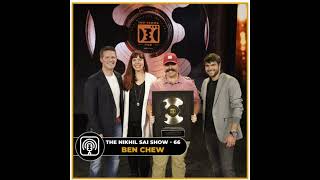
In this episode of The Nikhil Sai Show, host Nikhil Sai interviews Ben Chew, CEO of Illum Aesthetics, about how he grew a brick‑and‑mortar medical spa from a modest health‑club background to a 7‑figure, Two‑Comma‑Club business. Ben recounts his early entrepreneurial experiments with a CrossFit gym, the pivotal mentorship from Alex Charfen and Alex & Layla Hormozi, and the strategic shift into medical aesthetics. He explains how he applied funnel‑building, value‑ladder offers (e.g., discounted Botox), and digital marketing to generate leads, then scaled operations through hiring, automation, and software tools like PatientNow, ClickFunnels, and Twilio. The conversation also covers the importance of self‑care for entrepreneurs, common misconceptions about offline businesses, daily routines centered on communication loops, and the critical role of mentorship. Ben shares his biggest mistakes—avoiding hard conversations with staff and vetting mentors—and his future goals, including pursuing the Two‑Comma‑Club X award and mentoring other aesthetic practitioners. The episode ends with actionable advice for listeners: adopt strong front‑end offers, automate wisely, maintain personal health, and seek experienced mentors.
Chapters
What's going on? What's going on everyone who's actually watching this show right now? First of all guys, welcome to The Nikhil Sai Show which is hosted by me, The Nikhil Sai. And guess what's going on today? We are back with another amazing 2 Comma Club interview. This is going to be crazy guys, so just make sure to stick around. If you are an entrepreneur who are wanting to learn how someone can actually scale a brick-and-mortar business, this is going to be a golden interview for you. So make sure to take a book and pen and start listening to this podcast for sure. Make sure to stick around. So this is going to be a crazy journey for sure. These guys have been in the industry from over 30 years when it comes to the medicine and aesthetics. This is going to be a crazy journey. They're on a brick-and-mortar spa, still they have scaled it to over 7 figures using funnels and leveraging digital marketing inside their business. So we are going to uncover exactly how they have done it on this podcast, so make sure to stick around. So let's not waste any time and actually welcome Ben Chew, CEO at Illum Aesthetics.
Hi there.
Hey Ben, absolutely. I'm pretty excited to have you, Ben. How are you doing?
I'm doing awesome and I am stoked to be here.
Absolutely. Thank you for joining on time, Ben. We're pretty, we're pretty excited to get this rolling. And Ben, as we get started about the kind of journey you've been through to take your business to the next level, we would love to hear before that, like How did you get started? Like, what is the story behind it? Please start with the backstory.
Yeah, so, um, you know, kind of like so many things in life, there's lots of twists and turns in the backstory. So, um, I guess going back to, uh, 2014, my wife was a registered nurse and I owned a CrossFit health club at the time. And, you know, my wife had been in medicine for several years already in both the aesthetics and the regular healthcare, you know, hospital kind of field. And we decided to buy my partner out in the health club in 2014, same year we got married. And we spent the next several years learning a lot of really hard entrepreneurial lessons. About brick-and-mortar businesses that we would eventually apply to our medical spa that we would open up. But fast forward from 2014 to 2017, and I was at a conference called Paleo FX in Austin, Texas, for entrepreneurs that are in kind of the health and functional medicine and I met a guy by the name of Alex Charfen, who is a member of Russell Brunson's inner circle. And he had just released his book, which was new at the time, The Entrepreneurial Personality Type. And he got up on stage and he talked to all of these health professionals about it. And then when he got off stage, nobody went up to talk to him. And I was flabbergasted because I resonated so strongly with everything that he had spoke about that was in his book. So I approached him and started talking to him since nobody else did. And we just, we really hit it off and we developed a rapport and kind of developed a friendship. And he happened to be coaching these two people in his business coaching practice named Alex and Layla Hormozy at the time. And he's like, hey, you need to talk to these two clients and friends of mine. You know, you have a gym, you've been struggling with it for the past several years. And what they do is they help gym owners fill up their health clubs in 30 days or less. And I was like, wow, that, that sounds really amazing. I could certainly go for that. Um, and he, he linked me up with Alex and Layla, and they helped me scale the health club massively, um, over the next year and a half to 2 years. And right around then is when, um, Jen, my wife, decided that she wanted out of the hospital scene and to have her own private practice and that it was going to be in aesthetics. And, you know, because previously she had worked in some different aesthetics practices, um, so she had then also graduated with her nurse practitioner's license at that point. And in Oregon, nurse practitioners are independent practice, just like MDs. They can see patients, prescribe, um, and treat and all of those things. So Another year or so passed and we realized that with everything that we had learned from Alex and Leila, you know, funnels, sales copy, selling skills, that the health club was actually outperforming the medical practice in revenue on a monthly basis. And there's one thing that Russell and Alex have talked about at different times, and it's about your opportunity vehicle. You know, that you can really only make as much money as the vehicle that you are in will allow you. Even if you're an entrepreneur with, you know, an entrepreneur with high-level skills stuck in a low-level vehicle won't be able to do as well as an entrepreneur with just regular skills that's stuck in a high-level vehicle, right? If that makes sense.
100%, yeah.
So 2018, uh, we decided to sell the health club at the end of 2018. I spent all of 2019 learning aesthetics industry personally, because to me it was a healthcare— it was a new industry, all, um, new sets of laws to learn, um, needed to learn about the kind of archetype of the clients that we'd be serving, what their emotional drivers are, what they responded to, all of those things. Um, so I spent all of 2019 basically doing market research, and then 2020 rolled around So we went to Funnel Hacking Live in the beginning of 2020. I think it was, yeah, at the end of February there and had an amazing time. We got to actually meet Tony Robbins, got super inspired. We said, you know, this is the year we've done all of our preparatory work and now we're going to take the medical spa into the 2 Comma Club. And a month later, our, our business was shut down. Because of the shutdowns, because of COVID So we were closed for 2 months. It was a very scary time. We didn't know if we were going, you know, we didn't— like a lot of people, we didn't know what was going to happen, right? You know, is this going to be that we're shut down forever? Or when are we going to be able to open up? Luckily, in Oregon, we were able to open up again after about 2 months, which really only left us with kind of, you know, the back half of the year. But we had made a commitment at Funnel Hacking Live to achieve the 2 Comma Club next year. So we decided that we would pull all of the stops out and do whatever it took to, to make that happen. So we turned on the funnels again, we experimented with a whole bunch of new offers and just really went to town on it. And We took the business that had in 2019 previously only done $400,000 to a $1.3 million practice.
Wow. Wow.
And now we're in 2021. We received our Two Comma Club Award and we are still growing.
Absolutely. You're just on that first phase. As you have said, that level— this is amazing journey, Ben. That's That's absolutely incredible, right? Starting a business, have no clue how to scale, to getting stuck because of COVID to getting through that and surpassing 2K club and achieving your goal and receiving the award on the stage. Man, that's brilliantly done, Ben. I definitely appreciate that. And the best part is like you have people like Alex, both Alex actually, Alex and Rosie, as well as Alex Charfen backing you up. That's awesome. And You know, like you're into this space of actually aesthetics where a lot of people need to realize that self-care, like how important self-care is, right? And a lot of especially entrepreneurs talking about like these guys are like these woozy people who buzz around and start working, but they never take care of themselves, right? And Alex talks, I mean, Alex Sherfen talks a lot about that, like, you know, the entrepreneur personality type and everything, importance of self-care of entrepreneurs. So I would love to hear as, as a person who does this, as you are in the industry existing. So we'd love to hear you on your thoughts on importance of self-care for entrepreneurs.
Yeah, I mean, it's huge, right? Because we are the— without us, there is no business, right? So like entrepreneurs often become— it's kind of cliché to say that we block our own growth, but really we are the linchpins in our businesses. And if you aren't taking care of yourself by whatever means. It doesn't have to mean that you're like going to a medical spa and like getting infusions. It can be simple stuff like, you know, watching your diet and working out regularly and just the basics. But if you're not taking care of yourself, then eventually you are going to either kind of hit your ceiling before you otherwise would, or you're going to fall apart so bad, so badly, physically, mentally, emotionally, due to lack of self-care, that you're actually going to have to be forced to stop paying attention to your business and to take care of yourself because you wind up, you know, in the hospital or something with a heart condition or with diabetes or any number of different things that can and often do happen to entrepreneurs, unfortunately, because they've constantly got, you know, the eye out on the prize out there and they're not necessarily supporting the thing, which is themselves. That's going to get them to the prize.
Yep, absolutely, Ben. Wow, like key information to be, this is a great message which every entrepreneur should be following and making sure that they're actually taking care of themselves as they do when it comes to their business as well. So yeah, and Ben, like when it comes to ClickFunnels space and when it comes to funnels, like most people are just like course creators, Facebook ads, boom, they sell out and make a million dollars. Coaching, sell high ticket, boom, make a million dollars. But when it comes to you, man, like this is crazy. Like brick and mortar still stuck in the COVID but still made it to the 7-figure mark. So we'd love to hear like what are your best lead generation strategies for brick and mortar business? Like how did you actually get to those numbers?
Yeah, so, you know, it is one of those things that is simple in concept but not necessarily easy to execute per se. Literally about really digging into your client avatar. For example, we serve primarily women, right? Where our clients are overwhelmingly women between 25 and 61. And so you have to ask yourself, you know, what is the driving motivators behind why your client might want to work with you, and what could you give them that would pique that interest? In our case, it's that we offer, um, $100 or $50 depending on what level they sign up for to new patients that want to join our membership club, which is a recurring membership every month. And you have to ask yourself, you know, like, why would a woman in these age brackets be interested in Botox? Well, it's not because they're interested in Botox. It's because they are starting to or already are experiencing the signs and symptoms of aging, and this is one way that they know that can alleviate that pain. So this is kind of the beginning of our funnel, right? We bring almost all of our new patients in through a funnel offering them $50 to $100 of free Botox.
Wow.
But we know that because they're also experiencing these signs and symptoms of aging that we have a whole lot of other higher-ticket, uh, treatments and modalities that can serve them at a higher level. And it makes it almost kind of like a dovetail fit to almost instantly walk them up the value ladder into higher and higher-ticket services.
Yep, absolutely. And you know, the best part is, man, like the way you articulated them, like combinedly, like they cannot resist the value ladder you're actually creating with them. So I think that's the best way you're actually getting the most of your client's wishes, which is pretty amazing. And Ben, you've been in the brick-and-mortar business and most people are kind of confused and you can say like have misconceptions about running an offline business. They'd be like, oh, it's not worth it, it costs too much, it's not scalable and stuff like that. Like, can you talk more about like the actual misconceptions when it comes to running an offline business?
Yeah, I think there are probably several to touch on. The, the biggest conception is kind of the, the classic or archetypal, if you build it, they will come. The idea that if you just open up a storefront on the downtown strip, that people are going to be walking by or driving by and they're going to see you and they're just going to show up and then you're going to start selling to them and you're going to make all this money. And that's just really not how it works. If you don't have a, a solid tight front-end offer to start reaching out and offering them and enticing them to come in, um, you're never going to get enough walk-in traffic to get you where you want to go. And I think that at least in the online space, people are kind of cognizant of that, that they need to generate traffic and they need to generate eyeballs on their thing. And brick-and-mortar business owners just kind of assume that that's going to magically happen just because they're there in a physical space.
100%. Yeah, that's absolutely correct. And this is what they usually do. Like most brick-and-mortar business owners, they just use the hope strategy. They hope someone else will walk in with a magical fairy tale. That's never happening. So you need to have a solid market plan, just like what Ben mentioned. Ben, okay, you kind of started to generate leads, you have a good value ladder, you have a funnel, which is amazing, but how did you actually surpass the level of 7 figures? Like, how was the journey while you're running the business, like, in a very short period of time, as you become more business-scaled to the 7-figure level? How was the journey?
Uh, the journey was, uh, man, there's a lot of different ways to, uh, describe it. It was kind of like being on a rocket ship in a sense, um, because I can't remember what music artist said it, but more money, more problems. Also, you know, in, in the brick and mortar, as you're scaling, um, which you quickly run into when you build a good lead magnet and a good funnel and getting leads is no longer the problem that you're facing, or even when— and you're closing them, right? So then making sales is no longer the problem that you're facing. Then you run into throughput problems. Okay, well, how many bodies can we actually move in and out of this building and service in any given day? Which means that the next thing that you need to start getting good at very quickly is hiring and firing and staffing and managing and developing and growing your teams, um, on a lot of different levels. On the provider level for actually fulfilling the services that you're promising, and then also on kind of the, um, logistical and front office and customer service levels as well.
Yeah, absolutely. I think the operations is the key thing as a business you should be focusing on while you're scaling this up. Absolutely insane, Ben. And Ben, we would love to hear more about like getting a lot of stuff done. Obviously when you are managing a brick-and-mortar business, there are a lot more things to take care of, like logistics, operations team, client management, retainers and everything, memberships and all, right? So we'd love to hear more about like what kind of tools do you use to manage your projects and clients for productivity?
We really try to lean as heavily as possible on our software systems, um, and depending on what niche industry you're in, there's going to be different software systems for you. We really lean on a software called PatientNow that handles a large amount of our CRM and our scheduling and our billing and our recurring billing and all of those sort of things. But we also obviously use ClickFunnels and Twilio and other texting mechanisms. And really, it's— I think it is about— well, we just kind of touched a little bit on how as you start to hit these, these different growth levels, you need to start scaling logistically with your teams and your people. What you also need to do is try to scale and develop as much things as possible that can be done without human interaction. I mean, really automate every single thing that can be automated while also preserving the customer and client experience, right? I mean, people wanna feel like they're getting touchpoints from people. They don't wanna feel like they're dealing with a robot or a software system. So you can't completely automate everything, but the more you can automate, the better.
Yeah, absolutely. But I think a lot of entrepreneurs or business owners should especially realize that like automation is the key to scale and management. And just as you mentioned, we need to maintain that balance between the communication we are having with the clientele to make sure that they're not feeling that we're robots or something like that. That's awesome, Ben. I would love to hear more about like your daily routines. Like, do you follow a specific routine in your business? How does that look like?
Um, You know, we really, I would say probably the most routinized things are communication loops and cycles. The morning team huddles that we have, the daily leadership team meetings, you know, weekly, monthly, and quarterly meetings with different sections of the business. Really communication is key and that needs to be built into daily routines probably more than anything else. I mean, obviously there's also the self-care routines. You know, you want to make sure that you're always getting up and doing whatever it is that you do for your self-care, whether that's your workouts and your supplements or whatever else. But then also making sure that you have routines throughout the business as well for yourself and for all of your team members.
Yeah, yeah, absolutely. And those, those key meetings are going to give you like a good grind on what's going on inside your business so that you can make sure that your KPIs are perfect. Awesome, Ben. Thanks for touching them up.
Yeah, and they're also— it's also a really good opportunity, not just for KPIs too, but to develop your people.
Yeah, obviously. Like, when you are actually building a community, like, you need visionaries in your company, and you can only do that while you're interacting with your whole team. That's it.
Absolutely.
Love it. Let's get to the next question, Ben. This is going to be amazing, right? So you've been different in different businesses, you've sold businesses, you kind of went through this learning curve of getting into aesthetics as well. If there's an opportunity to talk to a 20-year-old you or someone who's just getting started, what would be your number one suggestion for them?
Man, you know, the biggest thing for me or a 20-year-old me would've been to meet Alex sooner. I can't stress—
Talking about Sharfen or Harmozi?
Either of them. I can't stress the importance of mentorship and of relationships with people that are further along than you, that are where you want to be, it has this sort of multiplier effect where it squeezes down time or the amount of time that it would otherwise take you to get there. Not only because of the, because of the day in and day out tactics that you learn from them, But your mindset, you learn to think differently than you otherwise would, and you learn to think strategically, uh, more strategically than you otherwise would.
Yeah, 100%. Yeah, absolutely. Like, having the mentor is like the best thing you could ever do, especially when you're starting out and when you're in the phase to have that key learnings, because like opportunity cost is real. We cannot make that mistake someone else already did, so we need to shortcut them. That's awesome, man. Let's get to this next question. Like, your life's biggest achievement so far and any next bigger goals?
Man, my life's biggest achievement was probably marrying my wife, but my second biggest achievement was walking across stage with her and receiving that Two Comma Club Award from Russell. Now we, now our eye is set on the Two Comma Club X Award. And I think we'll do that through a combination of scaling multiple locations, but even more so, teaching other aspiring brick and mortars in the medical aesthetic space how to do what we did.
Wow, absolutely. So that's exciting, and we are excited to see you on stage with the X Award for sure, Ben. I'm excited to see that personally. Let's get to the next question then. This is going to be interesting as well. What was your biggest mistake while you're in the process of building your business?
You know, our, um Our biggest mistakes was probably in avoiding having the hard conversations or the uncomfortable conversations with past key employees. You know, I think that when you're first becoming an entrepreneur and you don't necessarily have— you know, neither of us have business degrees. Or business experience outside of running our own businesses. And there's this desire to want to be liked, to be friends, to not, you know, step on toes. But unfortunately, and this may sound kind of crass, you know, those things don't pay the bills, they don't pay payroll, they don't keep the lights on. And at the end of the day, things need to be kind of frank and just are what they are. And then I guess the other biggest mistake would probably be kind of aligned with one of the best things we did, which was finding mentors. You really got to vet your mentors and make sure that you are working with the right people that have actually really done what you want to do, because I can't tell you how many tens of thousands of dollars we wasted with mentors that didn't move the needle for us before we met the Alexes and the Russells and the Tony Robbins and all of those type of people. So there are good mentors and there are not so good mentors too.
Yeah, you just need to make sure that you trust but you verify. You trust them, absolutely, but you verify. Absolutely, Ben, that was, that was key. And as you just mentioned, it was absolutely insane. Let's get to the next question, Ben. This would be amazing. Inspiration for all the success you've achieved and the key people involved in your journey.
You know, my main inspiration is definitely Alex Hormozy. Um, you know, that he showed me what could be done with the gym and then taught me the, uh, the principles of business that we were then later able to apply to other industries. And I also, you know, he and his wife Layla— Layla's also been a great mentor, and they've just been extremely kind that even after we sold our gym and we're no longer in their fitness space, they continued to maintain a relationship with us and help us along and be friends even past the point when they were no longer our paid mentors.
That's awesome, Ben. Yeah, it's really good to have people who back up when it is really required and kind of give you the strategies and the required inputs. Wow, that's awesome. And Ben, what an amazing journey, brother. You've been killing it in this space and hopefully you'll be hitting that 2CCX. Pretty soon. And this is exciting. Like, a lot of business owners are entrepreneurs who listen to this podcast. They might need your help. They might need to learn how they can actually build their own brick-and-mortar business to a scale when they're struggling. So where can our audience find you mentoring?
Um, well, we are kind of niching down the mentoring that we are doing. So if you are a registered nurse or a nurse practitioner and you want to get into aesthetics you're more than welcome to reach out to me at ben@alumaesthetics.com. If you are in another, you know, niche or industry, I'm more than happy to give you some pointers, um, point you in the right directions, give you good tips and things like that. But we're not going to be offering any programs for people really outside of our niche.
Absolutely, that makes sense. So guys, in case if you are someone who wants to get into the aesthetic industry which is booming to a higher level, make sure to check out Ben. And no matter what, if you're a business owner who needs some inputs on your business and kind of needs a walkthrough, I think Ben will be more than happy for a quick conversation. And Ben, that was very good having you on the show, brother. Any last word before we conclude the entire podcast for today?
Um, you know, the biggest thing is if you're an entrepreneur, and you probably are because you're watching this, uh, just keep going, right? You can't— kind of an old saying— you can't catch a fish if your line isn't in the water. So you just got to keep fishing. You just got to keep going forward. You got to keep looking for the people that can help you. And if you keep going, eventually you will be successful.
Yeah, quitters never win, winners never quit.
Well, exactly.
I really love it. Love it. Again, Ben, thank you so much for this amazing opportunity. It was really great having you on. What a wonderful learning curve throughout the process to have you on, Ben.
Thank you for the invite.
Absolutely, Benny. It's been tremendous. So guys, hopefully who actually stayed tuned so far, make sure to really listen. Like, Ben literally exclusively mentioned how he scaled his business through amazing strategies about getting more customers, building out the right funnels, even in a brick-and-mortar business. So this is going to be an amazing session. Just make sure to really listen to this, literally note down the action plan like the playbook he given away, and start implementing. In case if you need any help, make sure to check out Ben. And stay tuned for the next interview, guys. I'm gonna be coming back with another 2 Comma Club owner very soon. This is me, D Nikhil Sai, and Ben Chu signing off for today. Peace.
Thank you.
More from Nikhil










BURNED $1.5M in his 17years online #digitalmarketing #entrepreneur #onlinebusiness
