How Bill Went From Selling Newspapers Door2Door To Building 9 Figure Company | TNS 41
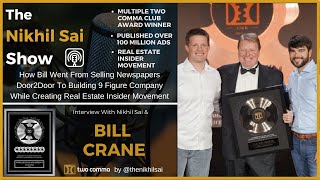
Bill Crane built a nine-figure real estate business starting from selling pine cones and candy bars door-to-door. He shares his high-ticket closing tactics like price anchoring and selling to qualified prospects, plus the automation tools (ClickFunnels, ActiveCampaign, Keap) that scaled his operation.
Chapters
How would you like to learn the secrets of two Kama Club Award winners on how they have built successful online businesses from almost nowhere to now running multiple 7 and 8-figure businesses by following the simple fundamentals of life? And let's see how they have used the powerful funnel systems, processes, automation, and social media to help their business grow at a different pace. Let's dive into their journey to grasp the strategy, mindset, action plan of how they have done it from almost nowhere to the way up to 7 figures. We are going to uncover and pick their brains of the top-performing entrepreneurs on this show, how they have done it, and how you can do it too. You are listening to D Nikhil Sai, the host, and welcome to The Nikhil Sai Show. What's up everyone who is watching this podcast today? Welcome back to The Nikhil Sai Show, which is hosted by me, D Nikhil Sai. And guess what's going on today? We have another, another 2 Comma Club interview. And guess who is the guest on this podcast today? This is one of the craziest guys when it comes to real estate. A gangster, you can call him that way. He's into the industry from almost 1989. Over the past 27 years, he has impacted over a million people with his business. And amazing guy. And he written so much books on lead generation and conversions and the stuff. And the best part is he created a real estate movement, which is called Real Estate Insider Movement. We'll talk about that in a second. It literally changed the way people buy, sell, and leverage real estate completely as the movement goes in. And you know the best part? He has been seen on all the immediate high-level publications like ABC News, Fox Business, and any other crazy thing you can imagine of. And you know the craziest part is he started his entrepreneurship journey when he was 5 years old selling candy bars and newspapers door-to-door. Like, that, that's amazing, right? So yeah, he has so much passion when it comes to marketing. He has helped thousands of businesses and leveraged multiple 8-figure businesses to scale at a dramatic level using marketing systems. So yeah, let's not waste any time and actually welcome Bill Crane, CEO at BillCrane.com, the 2 Comma Coach.
How you doing, brother? Thanks for having me on.
Absolutely. I'm doing great, bro. Thank you so much for asking. Thanks for being on time today, Bill. I appreciate your time.
Oh my God, it's a pleasure to help you, your audience, really. Like, and thanks for exposing me to some new people. That's fantastic because, you know, like I told you before, I'm on a mission to create 1,000 new millionaires. So the more people I'm exposed to, the better.
That's awesome. Let's, let's have a goal of at least having 5 to 10 millionaires from this specific podcast traffic. That would be a great thing to achieve, right? So yeah, Bill, we would love to hear your backstory. Can you please start with the backstory? Like, how did all of this craziness started?
Well, the interesting thing was, you know, in It's almost an old story, right? We hear this all the time. I grew up poor. Okay, and then— but it's true, it's absolutely true. Like, I grew up poor. My dad left when I was, you know, little. I think I was like 4 years old when my dad left. You know, my mom says it's because he was a beep. He says it's because he couldn't deal with her. But whatever the reason is, he left. And me and my little brother and my mom were stuck on our own. You know, she dropped out of high school because she got pregnant when she was 16 years old. She's raising me when she is 17. He leaves basically when she's 20. So here's this 20-year-old girl trying to raise two boys on her own back in the early '70s with no high school education, right? So there was no choice. Like, we were going to be poor. Right? Yeah, I'm sure there's plenty of people in other countries that have it even worse because in America we're, we're spoiled, that's for sure. Even our minimum wage people compared to what's going on in Africa, you know, or Haiti or something like that. But so what really started it for me is my mother, because we are poor, she always made me do things from a really young age to help bring in money. And because I was so young, I had no idea that it wasn't normal. You know, like my mom's telling me to do this. So it's like, okay, that, that sounds cool. So my first memory of sales, I'm 5 years old. My mom decided, I'm taking my boys on a vacation down to Florida. What I didn't know at the time was that, you know, we were broke. And she only had enough gas money to get to Florida. And so she didn't know how we were going to get back. But so I remember her going, uh, like at truck stops and gas stations every time we stopped and asking people for money. You know, they call it panhandling. And then we were at some gas station somewhere along the route, and she saw these humongous pine cones. At least they seemed humongous to me a little boy. Uh, so she gathered them up, put them in the trunk, and then when we went to gas stations, instead of her going and asking people for money, she told me to go up to people and ask them if they want to buy a pine cone. So like, that's literally my first memory of sales, being 5 years old selling pine cones at gas stations and truck stops. And then just all through my childhood, she always had us selling something like I think she invented the thing where kids go door to door and sell candy bars to raise money for the band or whatever.
Wow, that's incredible.
Yeah, I just remember living in an apartment complex and she comes home with all this candy and here I am, a chubby little kid, thinking, oh, you're awesome, Mom. You know, she's like, no, no, no, you can't eat that. I want you to go door to door and ask people if they want to buy a candy bar. And so that's what I did. And, you know, so there was always something, you know, newspapers, you know, I ended up with an 800+ stop newspaper route. And then even in high school, I was selling steak knives door to door. I mean, I can't even imagine someone doing that today, you know, some, you know, high school kids showing up, knocking on your door and then whipping out a steak knife. You're probably going to get shot. Yeah, but yeah, that's how it started. My mom just pushed and pushed for us to do anything we could to help make money to pay the rent and the bills and, and all of that stuff. And, and, you know, for a while I hated it. But, you know, once I got out of, you know, high school or whatever, I really like— I went, I got a job working for a builder. Like, I always just knew real estate was my ticket. Because I walked to school, you know, from the apartment to school was like a mile. But in between there was these amazing, beautiful homes. And I was like, I always ask my mom, how come we don't have a house like that? It's like, well, we can't afford it. And then, you know, I saw all these infomercials back then. It was like Dave Deldotto, Carlton Sheets, you know, talking about how you can buy real estate, no money down. No credit, no problem. And then I was like, Mom, this is awesome. We can afford one. See, you don't need any money. You don't need any credit. We're totally good. So I ended up buying one of those programs in high school, and then I went to work for a builder, and I quickly realized that I'm unemployable. So I worked for that builder for about a year, and I just hated it, you know, like I needed to do my own thing, just, just going there. And, you know, I didn't have to punch a clock, but essentially it was, you know, we're from 7 in the morning till 5 at night on this construction project. And it's like, I don't know, I just didn't feel free. I couldn't do what I wanted. You know, I learned a lot working for the builder. And but eventually what I started doing is like all the homes we were building because it was like a project.
Them.
I started doing side jobs for those people, and I felt fulfilled. I didn't know at the time, but right, it was because I was selling that was the fulfillment, because I just love selling. And, you know, so at a certain point, I was making more money on the side doing like, you know, remodeling someone's basement— or actually not remodeling it because it was unfinished in the first place, right? So just finishing Uh, and so I just realized I have to just do my own thing. So like, it— I was about 19 and I quit, and I've never been employed since. I've been on my own. Uh, and you know, I just don't know if I could take a job. I mean, it would have to be like a 7-figure job or something, which I don't think they're offering, uh, to people without some kind of degree, you know.
Yeah. That's pretty awesome.
So yeah, that's how it all started, man.
Wow, wow, Bill, so incredible. Like a 5-year little salesman, that's where you started. It's freaking amazing. And honestly, like, that's something every parent needs to teach their children from, right? They need to teach them the sales skills. I think that's really, really important, right? Then they don't let these young people be lazy because they have a lot of money in the bank. Never let do that. And I think that, that, that— I think, believe, I believe, Bill, those fundamentals which happen when you're young really crafted the mindset you have right now and the way you look at money is completely shifted around, right? And the best part is, yeah, the best part is your entrepreneur spirit, it never lets you be in a job. You're making more money in your side job than you're on— than your day job, right? It's just crazy. Yeah, that, that's how entrepreneurs really see themselves. Pretty, pretty interesting, Bill. Thank you so much for a quick story. It was really emotional and enjoyed it personally. So many learnings in that. So let's get into the next quick question, Bill.
Sure.
So yeah, you are a market leader when it comes to helping businesses scale, right? And you know wonderful opportunities happening around. So what do you think are the most lucrative market opportunities happening in 2021?
Well, I look at it a little bit different way, and I don't know, I want to make sure I totally understand your question because obviously there's thousands of different types of opportunities. So I think each individual person has to really look with inside themselves and say, you know, What do I do? What, you know, what am I good at? What do I love? Like I always tell people, you know, take a spreadsheet, you know, column A is this is every single thing I know how to do. I mean, even if it's tying my shoes, right? Like I know how to do all of this stuff and maybe there's 100 things. And then column B, how many people don't know how to do that? Like how big is the market? How many people are going to want to pay for that thing? And then column C is how much would they pay, right? And then kind of do some matching. And then whichever thing that is, is some sort of scale to where like, okay, I'm really good at this thing, but no one will pay for it. Okay, well, I'm pretty good at this thing, but everybody wants it and they'll pay a lot of money for it. Then that's the thing you should do. The mistake I see all the time in, in any business and especially online marketing I see it in the forums all the time. You know, I've been in this group for a year and I subscribe to this software and it's not working for me. You know, what niche should I do? Duh, like the thing you're good at. Like, why would you try to do a niche that like you don't know how to do? So like, um, you know, I mean, I teach high ticket sales.
Yeah.
And, and I believe anyone can learn it, but if you're not willing to learn it If you have such a fear of talking to people, uh, and, and it's really going to eat you up inside to try to close them and, and get rejected, well then maybe that's not the thing for you, right? Yeah, you know, so like I just think that people need to really do what they love, uh, because first of all they're going to do it better, they're going to do it more. And one of the things is like you don't necessarily have to be the best in the world. I think you should believe, like, at a certain point when you've got enough experience and you've done it enough, hopefully you're doing something that you believe in your heart that you're best in the world at. But even if you're not, you can outwork your competition, right? So, but you can't outwork your competition if you absolutely hate what you're doing. If you love what you're doing and it doesn't feel like work, Like, you can be above average, maybe not the best in the world, but the guy who's best in the world has a poor work ethic, so you're gonna smoke him, right? Because you're gonna outwork him.
Yeah, absolutely.
So that's the way I look at it. Uh, but, you know, to me, anything high ticket is, you know, it doesn't matter if it's real estate, uh, you know, or coaching, training, selling watches, Like, it's really hard to get rich selling something for $7. You know, it's just— I mean, let's face it, that's tough. Even Apple doesn't do that. Their phones are $1,000, you know. So, you know, sell a lot of expensive thing and you'll do good.
Yeah, that's, that's a great learning curve for everyone who's listening to this, right? And I think people should need to understand that, you know, choosing quality over quantity is one of the important decisions they need to make while they're running a business. And I believe, Bill, what you said is absolutely correct, especially in this community. They look at the market trends and they try to change the niches which they don't even have an idea about, they don't even passionate about, and they just claim that it's not working when they are not even passionate about it. And I think that's what they should look at— what they're really good at, will really people need this kind of products or services, and how much they can pay. Is that a high-ticket thing which I can monetize on? And just go around and try to sell it randomly, and it would definitely work out. That's, that's amazing, Bill. Thank you so much. So let's go to the next quick question, Bill. You create an amazing movement around the real estate business you've been— we would love to hear the story on the real estate insider movement you created around your business. That would be so great.
The movement has to do—
it's—
there's a lot of moving parts to it, but it started out for real estate professionals, right? But then one day I realized, oh my God, like, it can really apply to anyone, like whether you want to be an investor, regular homeowner, whatever. So the, the whole idea is, you know, first of all, um, for the real estate professionals, is it came out of my frustration with the National Association of Realtors. And in the industry is, is really based upon numbers. So like right now there's like 1.5 million realtors just in the US. I don't know what the worldwide number is, but, uh, the average realtor sells like 2 houses a year. So the average realtor really doesn't make any money, right? And because of that, it's like a churn and burn industry, 80% turnover every single year. So I decided like I wanted real estate professionals to be able to make the money that everyone thinks they're making, right? So like, you know, everyone thinks that real estate people are rich and, you know, just go talk to any banker and tell them that you're in real estate and you want to get a loan. And like, they'll laugh at you before you even open your application, right? Because they know that real estate people have the worst credit in the world because they live on commission. They don't pay their bills. They live in a dream world. They crank up their credit cards on all these different trainings that they never follow through on. Because let's face it, like when I first got my real estate license, I'm no different than anyone else. I was convinced that suitcases filled with cash were going to fall out of the sky and it was going to be so easy. Uh, in, in my first year, even though I had a sales background, I only sold 4 houses because there was no training, uh, at my office, and there really wasn't much training in the industry at all. So I, I had to seek it out. Now we have the opposite problem. There's too much training. And there's guys that, you know, they took an online course or they watched a YouTube video last night, and today they're selling it like they're an expert. So you've got the blind leading the blind, uh, and that's a really— that's a huge problem in real estate and in most industries as well.
Yeah, absolutely. Yeah, I think there are a lot of misconceptions happening around every industry, possibly, and most likely in real estate, as you just see, and you're just clearing them off. And Making the path so clear that everyone can see the unseen truth. And as you just mentioned, the blind leading the blind, it's a very dead situation, deadly situation to see. And that, that happens almost every possible way, right? And that your, your movement really is trying to avoid it, which is freaking crazy. And Bill, let's get into the next quick question, by the way. Yeah, this is something I personally want to ask. This is pretty amazing question. So what would you do if you're starting from scratch right now, like ground zero, your action plan to grow from zero to the way up to seven figures, multiple seven figures, the way you are right now? Like a quick 2 to 3 minute action plan. How would you do it?
Well, let's say it's really zero. Like you, you kidnapped me, put me in an airplane and pushed me out with a parachute and clothes. Like, that's it. Well, the first thing I'm going to have to do is start talking to strangers, right? Because I don't even know where I am. But thankfully, I landed in a city somewhere where there's people. And I, I know one thing for sure, every dollar that I'm ever going to earn is in someone else's wallet. So I have to talk to strangers right now. So I'd be talking to them, finding out if they need help with the things that I'm good at, finding out what things they do need help with, and then anything and everything, whatever it is. Um, I'm— if they say, yeah, well, I need help with this, Hopefully that's something I know how to do, or I'm willing to go out and figure it out and solve the problem for them in exchange for some money. So like, that's where we all have to start if we're really starting from zero. Um, I see a lot of people— and by the way, I used to own and publish a direct response newspaper. One of the lessons I learned from that leads right into this question, because too many people throw good money at bad messages. Right? So, advertising or marketing, it's really the same thing. It's part of the same family. The only reason to advertise or market is to create an opportunity to sell. Now, most people advertise or market, in other words, like they'll buy Facebook ads today because they don't want to talk to anyone. And because they don't want to talk to anyone, they don't have any experience selling. And because they don't have any experience selling, they don't have any experience closing. So it's a huge catch-22. If you don't put in the time to get good at sales and closing sales, then why would you spend money to cause people to reach out to you? And then you're— I mean, I've seen some sales calls like The people, they're not idiots, but they come off like idiots because they don't take the time to prepare. You know, sales is probably the highest— it's probably the second highest paying thing in the world. And the number one thing is negotiating. But it's an experiential game, you know, like Tiger Woods. I remember there was some ad a while back probably 10 years ago, and it was like before a Masters, and they captured him, you know, at 4 AM swinging and hitting balls at the golf course. And they said, Tiger, you're the number one golfer in the world. Why are you out here at 4 AM hitting balls? And his response was perfect. He said, I get paid to practice. The game is just for fun. And that's the way we have to think about it. So like, if you want to be good at sales, you, you need to be role-playing, even if it's with yourself, imagining going through the situation. Hopefully you have a friend or a family or a colleague that you can role-play with, and, and ultimately you're practicing on your potential customers. But I would advise to practice on people who aren't potential customers first because that's expensive. Right? Because if you, if you give them a bad impression, like, there's like probably no way you're ever going to overcome that. So that's where I would start, is just get out there and doing it, doing it. I also saw an interview once with Robert Duvall. He's an Academy Award winner, and they asked him, you know, Robert, what if I want to get really good at acting? What do I do? And he said, act. You know, simple as that. It's just simple. And it's the same thing. So if we want to get good at business, then we have to do business. And we don't get to do business unless we sell. So like, get out there and sell. Just talk to people. Like, and even if it's like people, like, instead of going in with fear, like what I tell the people I'm training is Like, like, let's say you don't want to get rejected, but you know you need to practice, you know you need to put in the time. Well, then call on people who you're pretty darn sure don't want what you have, right? Because then you're going to get really obnoxious sometimes responses and objections. I mean, people will tell you what to go do with yourself if you're trying to close them and they don't want what you're selling. So you build that thick skin and that experience, then you shift. Now you're calling on people who you know for a fact want what you have. That's the real magic with high ticket. Like, any super high ticket closer never talks to anyone that they know doesn't want what they have. Like, it's like, I know you want a jet. So I'm calling you and I'm going to sell you a jet. Like, if they want it, it's amazing, you know, when— if you call, it doesn't matter if you call them, email them, whatever. If, if you reach out to them when they want what you have, they're almost like, oh my God, are you spying on me? How did you know I wanted that? You know, uh, it just becomes so much easier.
Exactly.
Yeah.
Wow, wow, wow, Will, that, that's just a real action plan. Way to go, my friend. That, that was just amazing. So everyone It has a real action plan on how you can monetize from almost being no one, like a random person, to actually start making some bucks where you can rinse and repeat the same process over and over, increasing your prices of products and services to make it more quality output. I think that's amazing, amazing. And Bill, you're the king when it comes to high ticket sales. You have trained thousands, if I'm not wrong, tens of thousands of people on high ticket sales. We would love to hear like 5 quick tips on what they should be doing while closing at a higher ticket price point, like 5-figure or more, usually?
Well, the number 1 tip is just raise your price. Like, literally, like, it's funny, like, if, um, you take 2 cars, like, let's say, uh, what, you know, you got one Mercedes that's $50,000 and a different Mercedes, exact same car, that you can get for $40,000, which one's worth more money? Like, obviously, like, people now, they're going to think that the $50,000 one is worth more money. And then what they're going to do is they're going to go to the dealer with the more expensive car and try to get him to sell it for $40,000, you know, instead of going straight to the dealer that's already dropped his pants. So when, when, when you're giving something away, people automatically think, well, if he doesn't even think that it's worth it, then why am I going to think that it's worth it? But when you, when you price your product or service like a piece of fine art, people treat it like a piece of fine art. They automatically think that it's worth more money. Now it's up to you to totally overdeliver even on that. You know, you've all heard the old saying is you know, under-promise and over-deliver. I say over-promise and yet still over-deliver. Like, like, we— our customers should be thinking to themselves, there's— come on, Bill, like, there's no possible way you can do what you just said. Like, there's no way you can. And then when they hire you, they're like, oh my God, like, you gave me so much more, I feel like I ripped you off. Like, I want every one of my customers to feel like they ripped me off by the time they're done with the transaction, even though they paid more for my product or service than anyone else was offering theirs for. That's the way I look at it. So another tip is only sell to people who want what you have. You know, once you've got the experience, like try not to practice on your gold, you know, potential clients, right? Because like, like they say, there's only one chance to make a first impression. So like, if I, if I'm, you know, trying to sell, you know, a $1,000 pen to somebody, you know, I'm gonna try to sell that to someone who only uses pencils, you know, because At the beginning, I want to practice on the people who absolutely don't want what I have because they're going to give me the hardest objections. Then when I go after the people who really want what I have, it's going to seem so easy and pleasurable and fun, and it's going to make me want to do it over and over and over again.
Yeah, absolutely. Wow, that's really incredible. But I think, I think really salespeople, or everyone, especially business owner, like, if you're not a salesperson and you're running a business, that means you're not running a business technically. So I think everyone should actually get this in their head that they should be going out and talking to random strangers who cannot even be your potential customer and try to sell. They give you the hardest objection you cannot even imagine of, and that makes you so much uncomfortable. And when you hear a real objection, that becomes so easy to actually handle it and pretty much close every single time. I think that's amazing. That's wonderful, Bill. Thank you so much.
Yeah, like when I first started in real estate, you know, I was there for like 4 days and I went into the broker's office. I'm like, hey, hey, Ed, you know, like I know how to sell. Or how to sell. You know, I've already got my own construction business, but I want to just do sales full-time. Like, and I started RE/MAX. I'm like, you guys are the biggest and best, when does the training start? And he was like, what training? What training? And I'm like, you got to tell me what to do, man. And he, he went like this. Imagine this is a phone book. Open it up and start calling people. That was my training. Yeah, and I did it. Why? Because the way I was raised, I thought everything my mom told me— well, that's normal. So here's a guy who's successful in real estate, that's what he told me to do. Okay, I guess that must be normal. Um, and so, so I've made over a million cold calls And so, so when I say like call people who like you don't even know who they are or what they want, and that will give you the best experience in your life, it's because I lived it. I'm not just saying it, you know. And then eventually you hear every single thing. What you really learn when you do that is what you should never say again. And eventually you're left with only what works. That's called experience.
Yeah, that's, that's definitely on point, right? Like, once you really start talking to so many random strangers, you understand the complete human psychology of how people respond. Okay, this type— this guy is a type of person who I know will respond to this question in this way, and I can close him, right? And that really wraps up the head, and you learn what to not speak when you're actually trying to sell, and that really makes the day. So that's awesome, Bill. So Bill, I wonder, you have so much stuff going around. You teach people on how to get sales, you are a two-comma coach, you run your movement, you run your company, you run a podcast, you produce content, you be on these interviews like this. Like, how do you really manage all of your day-to-day stuff? Like, what kind of tools and systems you use for your personal project, projectivities, and clients' productivity?
Yeah, tools and systems are key if you want to scale anything. The really neat thing about high ticket is you can be a one-man band and make 7 figures, absolutely, because you're selling really expensive stuff. You know, like if you're selling, uh, consulting for $25,000, $50,000, $100,000, you don't need that many customers to hit 7 figures. So like it really depends on a person's skill set. If you're selling a $1,000 product, then you definitely need some systems, right? And so like, I love ClickFunnels. I've been on that for years. Um, Infusionsoft is good, Salesforce is good. Uh, but what I've actually done, because I subscribed to all those platforms for years, and then so when COVID hit, I kind of stepped back and I'm like, you know, I— because I've been frustrated with like, ClickFunnels is awesome, but it only does this. Infusionsoft is awesome, but oh my God, you need to be a rocket scientist Salesforce, they just have like too many options and, you know, like not— none of them were good at everything. So I decided, and maybe I'm crazy, is to build my own software. And I don't know anything, like not a coder or any of that. So like the first thing I had to do is use my sales skills, right, and start reaching out and going on like GitHub and all these other places. Finding developers and coders is like, you know, here's what I want to do, can you help me? And, you know, I had to go through a lot of— because when you don't know how to do something, you don't know if the person is lying to you, right?
Yeah, 100%. That's a bad problem to have.
Yeah, exactly. So, so I lived through a lot of that, and, and finally I'm, I'm really close to being able to release that onto the public. Uh, so that's cool. But, you know, things like ClickFunnels and Salesforce and ActiveCampaign, uh, there's just tons, tons of really good ones. Um, if somebody wanted a, a simple CRM that they can get into, like, you know, dirt cheap, ActiveCampaign probably has the, the easiest entry point, you know. Uh, and they even have, uh functionality for lead magnets. And, you know, it's not quite a full-blown funnel, but, but it's decent, you know. And if you can get in there for $9 a month, that's a really good place to start, you know. Um, and then if somebody wants to eventually get into ClickFunnels or whatever, and then, you know, pretty soon I'm going to be releasing mine, and of course it's going to be the best of all time. So they should definitely buy that. But, um, so I've got two, uh, for that, you know. One is a CR— we actually— three. So, so I decided Uh, funnels and funnels, websites and membership sites are an awesome thing, right? ClickFunnels does a great job of that. Um, then you've got like ActiveCampaign, which is a pretty good CRM. And then you really need an automated communications hub, which, you know, uh, Infusionsoft does, but you have to be a rocket scientist to figure it out.
It's Confusionsoft.
Yeah, yeah, exactly. So I've decided I want to take all three of those, you know, funnels, websites, membership sites, CRM, and automation— automated communications. Like, what I'm really doing is— what I'm so excited is, is I've always wanted to take my sales processes and automate them as much as possible, uh, for those people who want to scale And also for those people, you know, because like, let's face it, we live in this fantasy world where everyone wants to sell without selling. So I figured if I can automate that process as close to as possible as automating the process, then that would probably be a really big market. So that's what I'm trying to do. And hopefully that'll be ready for public consumption in the next 30 days or so.
Wow, pretty, pretty excited, pretty excited. Well, that's a great announcement. Thank you so much for making that on this podcast. Our audience would love to check that out once you launch it. Please shoot me a link with that. I'll actually add that in the podcast description so that people can check that out. That's pretty amazing. Pretty excited to see the tool though. And I understand that it's really pain when you actually don't see the right product or service which fits your business. And I believe you're tailoring a custom product for your own, which is pretty exciting, right? You are amazing.
I mean, the good news is like Every product's out there and you could stitch it together with Zapier or a couple other things.
Easy.
Yeah, like, uh, then you need a programmer to do that for you. Like, you know, the problem we have in business today is like, you know, technology is supposed to make things easy, but it actually makes things harder because most people— like, if you could— if you say, well, I want to start selling, you know, vacuum cleaners Well, you can walk down the street, knock on the doors, and sell vacuum cleaners. Now try to do the same thing online, and it's infinitely harder. Like, there are so many pieces to the puzzle that it's ridiculous. If you can figure it out, obviously you'll sell a lot more vacuum cleaners than the guy who's doing it door-to-door. Uh, but in reality, technology makes people's lives much more difficult. So I'm trying to take that out of it. Like, make it simple, make it so like, you know, somebody who's really good at a certain thing but doesn't want to become a programmer or a developer can just, you know, purchase the system, put their information in it, put a couple buttons, and done. So that's what I'm going for.
That's, that's really like a dream come true for a lot of non-tech business owners who really want to use simplified system. I think the more tools you use when it comes to business, the messier it gets, and the more people you need as in team to manage all of those crazy softwares, and it gets bigger and worse while you scale it up. So I think your tool can become all-in-one solution, hopefully. Excited to hear that out. But so let's get into the next big question. Would you love mentioning, like, how does your daily routine look like for your success and everything you do day to day? So do you have any routines in person?
Uh, my routine is, you know, I, I usually— I don't get up that early. I get up at like 7 o'clock. You know, I know I've heard all these stories and, uh, you know, if you get up at 4 o'clock and own the day, but the reality is just own your day. Like, I don't care when you get up. Like, uh, if, if you're the type of person that works until 3 in the morning, well then please don't wake up at 4 in the morning. Like, that's not going to be healthy. I can't remember the guy's name, but there was like, uh, some kind of Chinese or Japanese billionaire a few years ago. He, he died at like 43 years old in perfect health because— and they said the only reason was because he got 3 hours of sleep a night for a whole bunch of years, and that was just it. His body said, okay, I'm done, you know. So you just can't do that. You've got to get your rest. Let your body tell you. Like, like, uh, me, sometimes, you know, I'll put in a 24-hour day. Like, like, I, I'll, I'll get up at 7 in the morning and like, I'll just— I'll be into something and I'll just work all through the night. And, you know, at 7:00 in the morning the next day, you know, I'll crash and I might sleep for 12 hours, you know, at that point. But it's like, but, you know, I, I have learned that like if, if I stop the momentum, it's really hard to get it back again. So, so what I tend to do is, you know, like I have a morning routine, like, like I have a swim spa. I use— I don't really swim. I use it for a humongous hot tub, you know? So I get up, I go chill in there for like an hour. It's amazing. I watch, I watch birds and, you know, whatever flying around. And I just— it's kind of— it's like meditation. And, and then I get up and I go after it. I, I want to add like an exercise program because, you know, obviously anyone who's watching this can see I need to lose a few pounds, uh, but I haven't added that yet. It's something that maybe by the next time, uh, we, we do this, maybe I, I can report that to you. But, you know, that's it, man. I just, you know, get up and, uh, do my— I guess you would call it meditative thing, um, in the, in the hot tub, and then I just go to work.
Absolutely. Yeah, that's pretty simple, Bill. And I see a lot of people crazy, you know, day routines and stuff like that, which they are— which, which are not like a perfect fit, right? They're a night person to try to wake up at morning, and they've seen that that doesn't work. And, and I believe you— what you mentioned is really amazing, which is winning the day is important than your daily routine. Like, if you're waking up no matter the time, and if you're getting the day to a win situation, I think that's more than enough. And I agree on the point you mentioned, that momentum. I, I really want to stress on this keyword. I think that's so important, right? When you win every day, I think that momentum keeps on growing. Once you stop that, it's just going to crash down and you cannot fix it. Once again, it really takes a lot of time and effort for sure. Yeah.
And on the flip side, like, like if, if everything's, you know, going okay and it's— it doesn't matter what time it is, it could be 3 o'clock, 5 o'clock, 8, it doesn't matter. Like, if I feel like, uh, You know what, I'm good. Like, then I, then I'll go like do something else, you know. Like, I, I'm— I just kind of let my inspiration dictate what I'm gonna do for the day, uh, and I'll be honest, sometimes I'm not inspired and I'll watch Netflix for 3 hours, you know. You know, I'm not proud of it, but it's like, you know, sometimes you need to marinate.
Exactly.
On, uh, whatever thing is you're working in, and then the answer will come to you.
Yeah, absolutely. Well, that really makes a lot more sense.
Money's calling.
Let's go catch some after a few questions. We do have a few more questions if you have some time.
Yeah, absolutely. As much time as you need.
Absolutely. We love the momentum here.
I think this is like half a pot.
Well, that's, that's awesome. So let's get into the next quick question. Bill, what would be a suggestion to a 20-year-old you or someone who's just getting started in business right now?
Oh man, just don't let anybody tell you no. Um, I've been really good in my life of not listening to people who told me no, but I've got at least a half a dozen memories of, of a thing that I wanted to do before it was a thing, that people told me no and I listened, and those turned into billion-dollar industries, you know. And so it's like, we just never know. Like, when, when you find that divine inspiration and everyone else thinks you're nuts, like, take— like, I've learned that I need to take that as that is the absolute golden thing that I should go after. Like, if all your friends and family are telling you no, you know you're probably on to something. So like, that's got to be the number one thing is like, just be careful who you listen to. You know, if, if it's your friends and family that have absolutely no business experience and they're telling you no, then it's a yes. Then it's just, just go do it. And if you fall on your face, you'll learn from it. But probably that was the golden opportunity that you're going to look back on and say, why didn't I do that? Why did I listen to you? I mean, that's just how it works.
Yeah, yeah. That's one of the worst regrets we'll ever have if we— and I believe never listen to your friends and family. That's, that's just my personal opinions too, right? Because Again, it's not their mistake, it's just that they don't know, right? They're not an expert, right? So how could you expect a great answer or a great suggestion from them? So better not trust them.
The way I look at it is like every time the universe is saying, hey, you know, there's that guy Bill, let's give him this opportunity, and I said no, the universe is like, okay, we'll give it to him. Yeah, you know, you know, that's just how it works.
Don't miss that.
Exactly.
Yeah, that's real true. That's real true, Brady. There are so many people who have billion-dollar ideas that's just procrastinating that, okay, what if this goes wrong? My family is not okay with this. My friends are not okay with this. My colleagues say this is not going to work. And then see same similar person who have the same wavelength and idea booming the business to a billion-dollar valuation in 3 months, 3 years of launching. And it drives crazy and it's a great regret, right? So that, that's just not a great place to be. Pretty amazing stuff, Bill. So let's get to the next question. What are your life's biggest achievements so far and any next bigger goals?
Well, you know, my answer might be different than a lot of people's, uh, in business. Like, my greatest achievement really is my family. You know, I'm, I'm married to my high school sweetheart, and, you know, so we've been together now for Well, we've been married for 28 years, but like, I think we've been together for like 32 years, you know? You know, so, and like now I've got a little 2-year-old grandbaby. Like, that's incredible. Like, that's what gives me joy. Like, everything that I do is really for them, you know? So, I mean, yeah, I've sold thousands and thousands of properties. I've made millions of dollars. Um, but like, I haven't landed on the moon or anything. So, you know, really my greatest achievement is, is the fact that I have an amazing family, uh, you know, an amazing wife, and my kids haven't gotten into any trouble. You know, there's no drugs, alcohol, any of that stuff. Uh, you know, so like, they all have all of their fingers and toes, you know, it's like Uh, you know, and my oldest is, uh, 28. And so, um, you know, he's doing well. He's actually got a government job. Um, and, you know, so like, I mean, that's it, man. Like, uh, you know, some of this, uh, financial stuff that we all shoot for is, uh, it doesn't mean anything. Like, that's not going to be my legacy, you know. It's to help my family get all the things that I believe they're entitled to, right? Yeah, but take it all away, I still have my family. You know, like money— like they say, money doesn't buy happiness. Well, I mean, it buys things that make you happy, that's for sure, you know, but, but, um, you can make it again. You know, like, I can't make my family again. There's no, you know, so money's like so easy to make, it's ridiculous. I don't even consider that, uh, an achievement.
As an achievement. Yeah, true.
Yeah, true.
How about your next bigger goal? Any, any goals in terms of family, business, life, anything financially?
I, I really— I don't know why, even though everything I just said, and I think it's because You know, my youngest kid is 17, right? And now I've got a granddaughter. Um, I actually retired like almost 10 years ago, and when I found out I was gonna have a granddaughter, I came out of retirement, um, and started doing all this other stuff again because I thought, well, I have to bring things forward to the next generation. But for some reason lately, like the last year, I've been thinking like, I, I want to be a billionaire, like I don't know, like, it seems unattainable, but like, it isn't, you know. It's, it's, it's really just a matter of do more of what you've already done and scale it and, uh, maybe, um, say yes to a couple of those opportunities that the universe, uh, puts in my path. That's all it really is. Um, because, you know, I see things That's part of what my movement is, to create 1,000 new millionaires, because I truly believe that, you know, a billion-dollar network, you know, like, of just amazing people can really change the world. It's like a single billionaire, like, probably can't. Um, but I see things like just the other day I saw Richard Branson launch into space. I'm like, well, it's probably the only way I'm, I'm ever going to space is if I become a billionaire.
Yeah.
You know, um, I don't know why, like, it just seems like, uh, if, if you have that much money, you can do anything, anything legal at least, that you'll want to do. You know, like, private jets sounds really cool, uh, you know, versus having to wait, um, you know, in, uh, in the security lines and all that stuff. So there's just a lot of— I think the one cool thing about money is the more you have, the more you make. The more they want to give you.
Absolutely, Bill. I definitely agree. Yeah, that's, that's an amazing answer, by the way, Bill. And, and I believe like money is something really important that everyone needs to have and needs to make over and over, and it gives them a lot more opportunity and options, right? Like if you have, let's say, $2,000 budget, you will look for the mobile phone you want to buy under $2,000. If you have a $10,000 budget, you have 100 more options, right? So that gives you the opportunity to you know, have a bigger vision on what you're going to get in life, for sure. I think that's a really important key that people need to learn while they're starting a business and growing it. So let's get into this question, Bill. I'm really excited to hear this out. What was your biggest mistake in your life?
Oh geez, there's been so many, but my biggest mistake, uh, I— there was a short time when I was separated, uh, you know I just, I had to grow as a person. And so, you know, I just, I was fighting with my wife all the time. I was, I was trying to scale my real estate business and I was, I was doing that thing where I was getting 3 hours of sleep, you know, for probably a year. And I was just trying to force everything. Right. And my wife Although she was very— looking back on it, she was very supportive, but it didn't feel that way to me. Like, she's not an entrepreneur. She's an amazing mother and all that stuff, and— but she's not an entrepreneur, and she wants nothing to do with business. So to me, that felt, you know, not being supportive. To her, it was like, I don't need all this stuff that you're working for. I just want you. Right? But, you know, we went through a period where, like, we didn't communicate that to each other. So I, so I, you know, we got separated, uh, for about 18 months, and that was a huge, um, point of growth for myself, right? Because I was kind of living life like I was a hammer and everyone else is a nail. You know, trying to force everything to happen. And that's when I— during that time, and I was kind of semi-retired, I just, you know, left everything to a manager at the real estate office. And I started looking into things like meditation and Um, you know, I came across a book, I think it was called like Ancient Secrets of the Far East or something like that. Um, and I just started studying all this different stuff and different religions and different things and, and, and soul searching. And I just realized, um, that when we force— we try to force anything, like it doesn't matter what it is, you know, you try to force a sale, that's going to repel. You know, those people you're trying to sell. But if you just allow it— so like, if you just allow things to happen, they will build momentum. Like, you know, if you try to, you know, pushing a boulder up a hill is almost impossible, but you can just tap it and make it roll down the hill, and by the time it gets to the bottom, it's going, you know, at 100 miles an hour or whatever. So, you know, I just learned that You know, my job, and really our job, is to create momentum in everything that we do. And so, like, you know, creating momentum with my kids and with my wife is different than creating momentum in sales and business. And so I had to grow to the point where I could see things from their perspective. Like, they will never see things from my perspective. Perspective, you know, like the— like they won't. So like the choice in that situation is like we have to choose, okay, well, are we going to adapt or are we going to fight? And that's not going to work, you know. So I chose to adapt. And like just going through that, you know, even helped me so much more with sales and marketing and business because being able to see things from my wife's perspective.
Yeah.
Allows me to also see things from a customer's perspective who may not have the exact same vision that I have. And then it empowers me to adjust so that I can help them in the way that they need to be helped.
Wow. Wow. Thank you so much for sharing. And I think that's an incredible story to learn, right? And, and I believe that's going to help a lot of entrepreneurs who are in business and in different relationships. And help them get strong in what they're going through. And I believe a lot of entrepreneurs have this period of, okay, like, you know, my, my, someone who I'm living with is not entrepreneur, especially when it comes to family, friends, and people who marry. Like, it doesn't make sense if you think in a logical perspective, but an emotional standpoint, we need that in human, right? Like, we need that human connection who care for us. It's not just about money and business. It's— we really need someone who take care of, right? And I think I think that's, that's an amazing story, Bill. Thank you so much for sharing. And Bill, we have a couple more questions here and we can wrap up this whole session. So who are your main inspiration for success and any key people involved in your journey?
Um, you know what's interesting about that is I really haven't— like, I don't follow like Elon Musk or, or anyone like that. Um, the only person I really ever followed, and this is probably the worst time in history to mention this, is, is Trump. Like, I actually followed Trump since I was in high school.
Wow.
Uh, and just, you know, the interesting thing about Trump is you can learn a lot from the way he does things. Yeah. You can also learn what not to do from the way he does things, because the interesting thing about him, if you look at the last election cycle we had here is, you know, there's like an old saying in business, you know, what got you here won't get you to where you want to go. And that's true with Trump. If you look at that, the, the strategy that won him the presidency the first time, that he never changed, is what lost him the presidency the second time. Because people were at a place in, in, in history where they wanted this polarizing character to take control of things and fix it. But after 4 years, it started to feel like, well, this guy's obnoxious. You know, we don't want this, you know, dictator, even though in reality his— Trump's bark was far worse than his bite.
Right.
Biden is way, way more of a dictator than Trump ever. However, Biden is a soft talker. You know, he talks like he's your grandpa. Like, like I can watch a Biden speech and I can think that is absolutely lying to me, but it feels so good. You know, Trump can tell you the truth and you're like, Jesus Christ, you don't have to kick my butt, you know, like, you know, it's like just on face every time. Like, his mistake was, uh, getting into his own ego, I think. I'm sure that people who were trying to help him told him you need to tone it down, and he said, no, I don't. It worked for my whole life in business. It won me the presidency. It's going to keep me the presidency. But no, man, people— politics different. People change. People absolutely change. You either give them what they want or you lose. Like, that's the way it works.
Yeah, absolutely. Well, and, and, and the worst part is once they choose you, the decision-making power entirely changes once they really see you in a position in the presidency, right? And, and yeah, that's an incredible person to look at. And definitely a lot more learnings. And, and absolutely what you just mentioned, you learn what not to do as well at the same time while falling. Successful entrepreneurs just like Trump, and that's amazing. And Bill, you're an amazing entrepreneur. We see like crazy stories, high-ticket selling, scaling businesses, building systems and processes. Where can our audience find you mentoring?
Uh, they can go to a couple of places. Go to billcrane.com, or they can go to twocommacoach.com. Uh, and you know, if they go to twocommacoach.com, they're going to see all kinds of success stories on there in video, and they can apply for my help if they want to, or they can go to BillCrane.com, and it's, it's kind of like a bio. It's a hero page, whatever you want to call it. And, you know, if, if they want a free copy of my book, they can just send me an email. So Generating Clients for Life. If they want to pay for a copy, they can go on Amazon, you know. But yeah, just send me an email, bill@billcrane.com, and You know, just put, you know, that I saw you on Nikki's show and I want a copy of your book and we'll send it right over.
So, wow, you know, incredible. Thank you so much, Bill. Appreciate it. And yeah, definitely, I'm going to post BillQuinn.com as well as TwoCommaCoach.com in the comment section as well as description so that people can find it. Amazing. Thank you so much for giving us a chance to— my audience can meet you, by the way. So, Bill, any last word before we conclude the whole podcast session today?
Go after what you want, you know, like don't let anybody tell you no, uh, just, just figure it out, uh, you know, there's obviously coaches and mentors like myself that can help you shortcut the learning curve, you know, and that's awesome, like if you've got the money to invest in that, it's like, you know, it took me what, I'm 50 years old now So it took me my whole life to get where I am today. I can help people get there faster because I've learned through it, have lived through it. That, I mean, that's the only reason to hire a trainer, a coach, or a consultant is to help you get to where you want to go faster. If you can't afford that, then you, you know, the choice is simple. You just go out and you do it. And you might get lucky and you do it right the first time. You probably are going to fall on your face and you're going to have people reject you or slam doors in your face or hang up the phone on you or call you names in languages that you don't speak, you know. But that's what makes you stronger. Like, don't take it personally. Like, all they're really saying is, no, I don't want the thing you're selling, you know. And then that's all they're really saying, you know. So And like, in reality, um, I break everything down to step— into steps. So like, when I, I learned that when I was cold calling to get listings, like, when I first started, I thought for sure, well, the reason I'm calling is to take a listing, right? No, it wasn't the reason I was calling. The reason I was calling, as it turns out, was to find out who wanted to list their house and who didn't, and, you know, take all the names who didn't off the list. And then I'm left with a list of people who might have, like, qualification. Like, that's all it really is to it. So like, don't take anything personally. Decide what you want. There's nothing more powerful than a decision, uh, but indecision will absolutely kill you.
Wow, wow, that, that's a great last sentence. Thank you so much, Bill. I think, I think that people should really understand this, especially the business owners, right? Whenever trying to— whenever you're trying to sell your product and service, They're not hating you, they just don't want your product and service at the point, right? And it's just like, you don't want to down yourself while you're actually getting rejections. It's totally fine. You need to build up the confidence, build a great product and service, and start see if people want to pay for it, and then you scale it up. And again, Bill, thank you so much for this amazing opportunity, and thank you so much for spending almost an hour time with us on this podcast today. We really appreciate it, and the value, the learnings, the, the learning curve you gave us with your 50-year experience which is freaking awesome. And the way you look at things is completely different than a way other entrepreneurs look at things. It's, it's really awesome. And the vibe you maintain, it's just at a different level. Appreciate your time, brother. And, uh, hopefully, guys, thank you. I appreciate it. So hopefully, guys, everyone enjoyed this podcast session. Make sure to check out billcrain.com as well as 2commaCoach.com to contact Bill. Make sure to email him so that you can get a free copy, as you have listened so far. And I think that would be great asset you can actually go through for sure, right? And again, guys, uh, stay tuned for the next interview. And thank you so much, Bill. Have a great day. Peace.
Peace.
More from Nikhil










BURNED $1.5M in his 17years online #digitalmarketing #entrepreneur #onlinebusiness
