How Jeff went from broke jazz musician to $100M in online sales | The Nikhil Sai Show 84
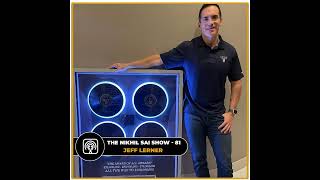
Jeff Lerner went from $500,000 in debt as a struggling pianist to building a $100 million online business. He paid off his debt in 18 months using affiliate marketing, then built ENTRE Institute. He shares five startup mistakes: underpricing, no differentiation, weak personal branding, leaving your job too soon, and skipping skill development.
Chapters
What's going on? What's going on everyone who's actually listening to this podcast right now? First of all guys, welcome to The Nikhil Sai Show, which is hosted by me, The Nikhil Sai. And guess what's going on today? We are back with another amazing 2CCC interview. This is going to be absolutely insane guys, make sure to stick around. If, if you are someone who is in your life where you're struggling and where you think, oh, this is all black days, what's going on? You can I really make this happen? This story is going to inspire you like crazy. I mean, we are talking about someone who has been to rock bottom, complete rock bottom. I mean, we're talking about someone who was making no more than $40,000 in 2008 and beyond, which is crazy. He was a professional piano player and he got injured on his wrist and got out of his business. And he was also involved in different businesses and got into debt of close to half a million dollars. And fast forward today, he is 3 times Inc. 5000 CEO, and he has done over $100 million in sales on his name. Pretty amazing story. Over $50 million in the last 2 years. And the way he built his business online is pretty amazing. And he wanted to share his entire journey and the lessons he actually had. And that's when he started to create the ENTRE Institute. Which is the fastest— I mean, the world's first and fastest institute when it comes to higher learning for entrepreneurs. And especially, this is the most cutting-edge technology and educational platform for entrepreneurs especially. And the best part is ENTRE Institute has over 200,000 people as students, which is just crazy. Again, guys, let's not waste any time, and actually, let's welcome Jeff Lerner CVO, Chief Visionary Officer at ENTRE Institute. Hey, Jeff.
How's it going, Nikhil? So glad to be here, man.
Absolutely, Jeff. We are pretty excited. Thank you for actually joining us today, brother. So, Jeff, I mean, I kind of dived deep, like, a little bit into the backstory. I mean, I was pretty inspired by looking at your stuff. I mean, it's so, so, so motivational, the kind of achievements you had in your life. But again, we would love to hear back from you, Jeff. Can you please start with your backstory? Like, how did all of this crazy journey started in in your life?
Well, gosh, uh, I mean, it took a few decades, so I hope you gotta— I hope you have some, some time. But no, seriously, I'll give you the really condensed version. Um, yep. I, I think I had a, a very early sense, you know, that I think we all have as human beings, like when we're kids, that like, you know, the world doesn't really seem like a perfect fit for me. Like I think, you know, Bob Proctor always says, he's like, human beings are the only species that are born into disharmony with their environment. Like every other species, you're born a penguin, you're supposed to do penguin stuff in an environment that's suitable for penguins, right? And if you're born a bear, unless you're born in a zoo or something, you're meant to do bear stuff in an environment that's suitable for bears. Human beings, like we're all screwed up from day one. Nothing seems to fit, right? We're like in this world but not of this world, right? And so, I just, for whatever reason, I never allowed that feeling to be beaten out of me. I think a lot of human, you know, most of us were born into a world and we're like, this feels off, but yeah, I got to get along. I got to figure out how to fit in and play by the rules and get by. And next thing we know, we're working some job we hate. We're loaded up with student debt. We're getting bossed around by someone we don't respect. And, you know, that's our life. Right? And I just, I could never swallow the pill. I never could swallow the pill. And so, my life was just getting harder and harder and harder and harder because I was trying to, I was in a system where I didn't fit. So finally, I was 16 when I broke up with the world. A lot of people, they have a midlife crisis. I had my midlife crisis when I was 16 years old. And I was like, I can't do this. I don't want to do this. I'm out. I dropped out of high school. I went, I told my parents, I was like, I'm done. Whatever happens, I don't care. I'm not going to spend the rest of my life playing by rules I don't agree with and I didn't sign up for. And so, I became a musician. I started playing piano. I mean, I still have a keyboard like right here. Music is the thing I'm most naturally wired to do. But unfortunately, it doesn't pay very well unless you're one of a very small few. So, I did music for like almost over 10 years. I was a working musician from the time I dropped out of high school until I was about 29 years old. And I started to get arthritis in my hand and I couldn't play gigs anymore. Plus, all through my 20s, I was having this pretty kind of weird experience where, you know, I would play a lot of gigs that were like typical gigs. Like I'd play a wedding or I'd play a nightclub. But every now and then, I got in with this one agency and I would get booked into these really, really high-end private parties. And so, I would play piano at the homes of like billionaires, like billionaire entrepreneurs, legitimate. I mean, the guy that owned the Houston Texans, the football team, I played at his house multiple times. His name is Bob McNair. When he passed away in 2017 with a net worth of $4.2 billion, I was playing at his house back in like 2003, 2005, that range. He was only worth $2 billion back then. Tilman Fertitta, the guy that owns the Rockets and he has that TV show, Billion Dollar Buyer, I used to play gigs at his house. Right? And so I'm playing gigs for these billionaires. Meanwhile, I'm a struggling musician who makes $40,000 a year working, you know, playing 300 or 400 gigs a year plus teaching piano lessons plus trying to go to school even though I dropped out of high school. I I got into college on a music scholarship. And so like my life is hard and I'm playing gigs at these people's houses. And I started talking to them. Like they actually, it's weird. People like talk to their piano player, you know? They'll come over, they'll give me a tip. They'll say, hey, can you play, you know, whatever, Autumn in New York? And I could play it and they'd be like, oh, that's so cool. You can play it. And then suddenly we're best friends. And so I would like talk to billionaires and I would be like playing. I'd be like, so how'd you get, you know, like, how'd you pull this off, man? You got a really nice house. Like, how'd you pay for all this? Right? And they would start telling me their stories. And I realized all the people that have what I want, which is freedom, creativity, fulfillment, they get to spend their time doing what they want. They're always sponsoring good causes. They're always raising money to fight cancer or, you know, defeat diabetes. Like they do good in the world and they have great lives. They're all entrepreneurs. They all started their own businesses and they have everything that I have except they also have money, right? And, um, and so anyway, I just was like, I got to be an entrepreneur. That's the only thing for me other than music, or that's the only thing that could solve all my problems. Um, and so I started starting businesses all through my 20s. I failed at like a dozen businesses because I never had any money and I never— I didn't have any training. I didn't— and, um you know, one thing after another. And I ended up getting, like you said, $500,000 in debt. In 2006, I was 27 years old. I was still working as a piano player. And I was on like my 12th business venture. And I applied for these Small Business Administration bank loans. And in 2006, pretty much literally anybody with a pulse could get a loan. And actually, apparently the pulse was optional because they were actually giving— there were people using dead people's identities to get loans because it was just so crazy back then. That's why we had the whole Great Recession and the bubble burst and all this bad debt in the market. But I got, I got like $400,000 in loans when I was 27-year-old broke piano player who'd never succeeded at business. They gave me all this money to go start these franchise restaurants. And I thought I was gonna, you know, I was like, okay, now I'm legit, I have money. I didn't have money. That doesn't take you very far. And then the Great Recession happened, the economy crashed in 2007, 2008. I closed down my 2 restaurants, and I was like you said, I was $495,000 in debt. I owed about $330,000 to the government because they were federally insured bank loans. And so now I The bank cashes in their insurance policy, and I'm left dealing with the United States Treasury. So I'm basically fighting with the government. I owe them $300,000. I owe all these landlords, you know, I still got 4 years left on 2 5-year leases. That's another $100 grand. I have all these taxes, back taxes with the state of Texas. Just a total disaster. And that's when I went online, much like yourself, and was like, man, I'm going to figure out this digital business thing. You know, I don't want to I don't want to own a store. I don't want to stock products. I don't want to pay for rent and utilities. And I want to go online because it's the only thing I could afford. I had $2,000 left on one credit card against $495,000 in debt. And I bought a $400 course on affiliate marketing. And I started just teaching myself to do it. And, you know, 18 months later, I had paid off that debt. And you know, gosh, that was 2008 was when I started. It's 2021. Like you said, yeah, I've, you know, sold over $100 million in products and services online. Life is very different now.
Yeah, absolutely, Jeff. Thank you so much for like very in-detail introduction. I think that has a lot of passion about what you really want to do right there. And the kind of entrepreneur mindset you have has really made it. That's pretty amazing, brother. And Jeff, Like, one of the things you have really, uh, learned for yourself as you are 16, you know, when back then, right, was like you just made sure that you're not the fit like everyone else in, in this entire ecosystem. And you'd be like, I'm the odd one out, I'm an entrepreneur, let me jump out, right? And a lot of business owners, you know, even though they are running successful businesses, they do like couple of six figures here and there, but they still don't have like— really, they are not on the right pathway. Maybe they're sitting on the wrong thing or they don't discover themselves the right way. So Jeff, I mean, you've been helping over 200,000 people with your wisdom. So can you please share something about like how to discover the true passion within an entrepreneur?
Yeah, I mean, it's, it's always going to be something that derives organically from your life. I don't think passion is like your, your specific zone of genius, as they say. I don't think it's something you're just born with. You know, you're born with talents, but it takes more than talent to, to be great at something. You have to have talent, and you also have to have the passion and the heart and the drive to develop that talent. Mozart wasn't a great musician because he was born with prodigious talent. Mozart was a great musician because he was born with prodigious talent, and from pretty much the day he was born, he worked 12 hours a day to develop it. And even when he became an autonomous adult, he was so in love with it, he kept doing it. It wasn't just because his parents pushed him into it, right? And so, most of us aren't that lucky, right? Like we're not born with a prodigious talent and parents that immediately identify it and push us into that direction. Most of us have to figure it out. But the clues are always there. They're always woven throughout your life. So, what I do with every person that I've ever worked with privately, like when I used to do coaching and when I run a mastermind group, this is where we start everyone is you basically go back through your life and you identify all the moments in your life that were significant and formative in terms of not just that you remember them vividly, but that they left a real emotional impact. You don't just remember what happened, but you remember how it made you feel. And you remember maybe what you learned, right? Or what you took from it. And you weave and you kind of create like a basic, you know, wireframe of your life to say, okay, this happened and this happened and this happened and this happened. And then what we do is we start telling those stories. And this is what I did too. If you go back and look at my content that I started about 3 years ago, this is all I was doing was I was telling these sort of vignettes from my life. And I was always trying to connect them to my core truth or my, this like the elemental, my elemental beliefs about the world. And when you do that enough, you realize, hey, who I am today, the seeds were already there when I was 6 years old. And they were already there when I was— and they were a little more sprouted when I was 12 years old and a little more when I was 20 years old. And you keep going and you realize there's these threads that weave all through your life. And for me, once it got clear on what that thread was, the thread was freedom. From the very earliest age have been fighting for freedom. I fought my preschool teachers for freedom. I mean, I was— it's always just been, I want to do it my way, right? But, and what I, what I realize about myself is the times when I have succeeded at creating freedom for myself are when two things came together. It was when I was bold meaning I took a risk or I was courageous or I did something that, you know, overcame a fear at the time. Maybe it was a fear of judgment. Maybe it was a, you know, a physical fear or whatever. And also, that whatever I was doing, I had a really, really high standard and I committed to doing it really, really well. And I kind of came up with this basic equation for my life that says I can have freedom if I'm willing to be courageous and commit to a standard of excellence. And so, for me, courage plus excellence equals freedom. And that equation of my life, I figured out through telling all these stories. Anybody that does this exercise, and I've done this now with hundreds of people, where you figure out all these little stories from your life and you tell those stories and you try to anchor them to your core truths, you'll find your core equation that drives you. And that you can succeed at anything that aligns with that. So that's my—
yeah, absolutely, Jeff. I think that's a beautiful exercise right there. Now entrepreneurs can really reverse engineer what they have done so far and kind of really determine what seeds they actually have in themselves, and they can discover themselves. Appreciate that, brother. And Jeff, I mean, you have started online, you know, as you just mentioned, in 2009 with affiliate marketing. I mean, would you like to talk a little bit more about like the journey of scaling over 9 figures the way you're actually doing? And I mean, you know, with Ontra Institute, you have done over $50 million in the the past 2 years. I mean, the level of scale right now you are is absolutely crazy. So can you please talk about the journey, like phase where you started to make a little bit of money online to where you're actually doing like at least $3 million a month right now on an average?
Yeah, for sure. Yeah, it's just, you know, I filled out an interview request the other day and it was asking what was my biggest misconception about success. And it's basically my answer to this question. Is I thought success was going to be this thing that you, where you push and you push and you push and you push. And then all of a sudden, the dam breaks and there's this big windfall and now you're successful. Right? But that's not actually how it is. It's more like, it's honestly, it's a lot like bodybuilding or lifting weights or, you know, getting in shape at the gym where like you go in every day and you work hard. And the next day, nothing changed. So, you go back and you work hard again and nothing changed. And then like 3 months later, you notice like, hey, my pants are a little looser. Something changed, but I still don't look that good. But at least it's, you know, I'm starting to feel something happening. And you never actually hit this, you know, people talk about hockey stick growth curves. By the time an entrepreneur I mean, except in maybe a one-off, very rare, you know, what I would just call luck, you know, very rare. In almost every case, by the time a company hits a hockey stick growth curve, the entrepreneur inside that company, they've already become the person that's capable of that level of success. And the hockey stick growth of their business, that's just That's just the economics catching up to who they've become. But the becoming, the becoming is always a slow burn. It's always a slow build. You know, I have a friend who just went to a, he's a professional bodybuilder and he just went to a contest and he didn't, you know, he didn't win, but, you know, he did well. And he was showing me his pictures from last year to this year. And except to the untrained eye, you almost can't even tell a difference. But he's like, dude, I put on like 15 pounds of solid muscle and I came in leaner. But he's already in such good shape, you can't even tell. But he can tell. That's how success works, is it's just this constant slow— you know, you have good days and bad days, but when you measure yourself in months or quarters or years, that's where you can see the progress. But it's like, it's never sexy like people are— people think it's going to be. And so, yeah, I mean, sorry, that was a long answer to your question. But I mean, the same way I was approaching my business when I started in my first month, I think I made $1,100 versus what does it feel like to do, you know, $5 million in a month? I don't really feel like I'm doing anything that different. It's just 12 years later.
Wow. That's pretty, that's pretty awesome, Jeff. So it's all about like the consistency, even if Even if you don't see like a huge difference in your business, you continue to stay, you know, on the course and believe in yourself and just learn and implement and just stay consistent. As you mentioned, it's a long-term game. It's nothing like you will have that hockey curve in a week or a month or a year.
No. Yeah. And this is my biggest frustration about the way entrepreneurship gets talked about online. I mean, the good, the really good entrepreneurs, you can tell because they say the stuff that nobody wants to hear. But unfortunately, there's this massive horde of people online that tell everybody what they want to hear. And usually you can tell that they're probably— whatever success they've had, they've only had it by telling people what they want to hear, not by actually doing it, because that's not really how it works.
Yeah, yeah, yeah. That's, that's the, like, very sad part of what's happening in the online coaching industry. But yeah, hopefully people can really attach to the right people in the industry like you, Jeff. Pretty happy with that. So yeah, let's get to the next question, Jeff. As We already covered like a main mistake most, you know, beginners make. Let's go over like the top 5 mistakes most common businesses need to avoid as they're actually building their business.
Uh, 5 mistakes. So, you know, the first thing, uh, yeah, I, I'll, I'll make this up. I mean, I'm just gonna go, what are the first 5 things that come to my, my head? First thing, you have not, not charging enough money. You know, it's a side effect of what we call imposter syndrome that people think that, oh, I need to start small, I need to start cheap, or I just don't feel comfortable. Like, you'll work whatever you get paid. If you're an ethical person, it creates a certain amount of, you know, like vacuum pressure, right? Like you'll expand to fill the space that was created by the money that you accepted. If you accept $100 from somebody, you're naturally going to give, to do $100 worth of work and you're not going to want to do anymore. Right? And so, take more money and then, and think about this, even if your goal is to say, I'm going to deliver 10 times the value of whatever I get paid. Which I think it should be. If somebody pays you $100, then now you're going to deliver what? $1,000 worth of value, right? But if somebody pays you $1,000, now you're going to deliver $10,000 worth of value. So you're actually going to deliver $9,000 more value to the person that paid you $900 more. Who do you think is going to be happier? The guy that paid $100 or the guy that paid $1,000 and got $10,000? Absolutely, the thousand more money and rise to that, rise to that, uh, that price tag, right? So that's the first thing. Uh, second thing is I think that people get really, really bogged down in the features and benefits of whatever they're doing, and, and they know they, they don't start by answering the only question that really matters, which is what's going to make me stand out? What's going to make me unlike anything else on the market or anyone else on the market? If you don't have that question answered, nothing you do is going to get traction. So, so I think starting there, I think, you know, another related piece of that that I'll go ahead and say is the third mistake for most, for most businesses. I mean, it's different if you're like a funded company and you go through Y Combinator and you've got an app and you've got a team and whatever. But for most of us that are like bootstrap solopreneur startups, if you haven't started investing in your platform that's built around your voice, your character, your message, you haven't— you, you have skipped over the easiest thing you can do to answer the previous question I asked, which is what's going to make this different? Naturally, the only natural advantage that any of us have is ourselves. We're the only thing we have that nobody else has. And so to not build your personal brand in conjunction with your product or service, like, you're, you're skipping over the one thing you could do that would most easily set you apart from everyone else in the market, right? Yeah. So that's, that's the third thing. I think the fourth thing is, uh, people very often tend to be, uh, kind of binary with their time and their identity. Like, Am I an employee or am I going to quit my job and start my business? And they're like, in the startup phase, a lot of times we can be in a hurt— we can be— and I totally get it. It's frustrating to have to serve multiple masters. Like, oh, I got to go to work and then I only work on my business at night. But the statistics are clear. People that take time to launch their business and don't quit their job— and I forget what the exact statistic is, but it's like people that took at least 6 months to start the business while working in their main job, and that, and that took the time to research their business before they launched, have like 800% better success rates than people that quit their job to go start a business.
Wow.
Um, and, and, and that's coming from the guy that like, I live to burn my boats. I live to not be tied to my past. I live to go all in, balls to the wall, like crazy levels of commitment and intensity. But do as I say, not as I do. Like pump the brakes, take your time, don't quit your day job until you're financially solvent. Because for most people, when you quit your job or you go all in on something, unless you're very, very well practiced at going all in on something and managing that psychological pressure, um, a lot of people start to make— they start to think differently. Their neurology changes when they're under that much pressure. And I just don't think people should be jumping in like that. Um, and then I'll say the fifth thing is not knowing what are the fundamental skills that every business has to have that I cannot— I can't— I can't— I cannot just outsource. And I would say that every, you know, there's, you as the founder, you've either got to be really good at direct response marketing. Like you have to understand the basic principles of how to acquire a customer, how to convert them, how behavioral psychology works, how to create a decision, how to use words and images to persuade and drive behavior. You've either got to have that as a core competency or you have to have technology as a core competency. And then whichever one you don't have, I mean, if depending on certain types of business, if it's a technology business, you can actually get away with being a tech, a technologist founder, and you can outsource, you can hire sales and marketing usually through a co-founder, or you're a sales and marketing guy and you can, you can find a technology and or operations co-founder. But if you don't figure out from the get-go how to check all those boxes, you're going to reach a point where you're overwhelmed you're outside of your skill set and probably in, in some trouble.
Yep. Yeah, that was beautiful, Jeff. Thank you so much. Well done, Jeff. Thank you so much. I mean, that was absolutely insane, Jeff. I appreciate you actually going brief into all those 5 main mistakes. A lot of entrepreneurs can relate at least with one of those which are happening in their life currently, so they could possibly look at that and try to shift those gears right now. And Jeff, I mean, the kind of mindset shift you actually have once you start unlocking like a level of business, or as you mentioned, transforming yourself as an entrepreneur, you know, to a different level, is absolutely insane, right? As you just mentioned, you first of all win yourself to become a 9-figure entrepreneur. That's when you run a 9-figure business, right? So can you talk a little bit more about like the mindset shifts you have actually made to be where you are right now? So what kind of mindset difference you see in yourself?
Yeah. I think there are two critical mindset evolutions that have to happen to be a really good entrepreneur. And they probably, one of them usually happens naturally and the other one you kind of have to go seek out. For me, the one that, and it probably happens for most people in reverse order to me. Actually, I don't know that. That's just my guess. But I'll tell you what they are. So, the first one is this idea that I am safer relying on me. Most of us go through life looking for external things that we can attach ourselves to in order to feel secure. And that comes from our origins as a species. We have tribal origins. We grew up in or we evolved in villages and we were hunting. Tigers and farming, like whatever, right? We grew up in roughly tribes of about 150 people. That's kind of the number that we're sociologically wired to group together in. And when you grow up in a tribe of 150 people, you pretty much need to rely on the tribe. The idea of self-reliance wasn't valid for most of human history, right? But that actually changed when the world got so crowded and so connected that our default is tribal. Our default is hyperconnected. We've lost to a large degree the ability to say, you know what? In this world, I'm actually going to lean on me. And I'll be better off not putting my hope in the government, not putting my hope in my employer, not putting my hope in my school or my alumni status or my old fraternity grouping or Like this idea, I mean, it's almost like a little bit of like a radical, you know, prepper libertarian mindset of like, if it is to be, it's up to me. But that is the ethos of the 20th and 21st centuries. That's what changed post-industrial revolution. The idea of self-reliance became a thing, but we're not wired for it. So that's the first shift that has to happen because otherwise you won't block out the noise. You won't block out the doubters. You won't block out your own your own doubts and fears. You just won't be able to commit and stay in it long enough if you haven't overcome that need for approval or for the false sense of security that comes from the validation and the approval of other people. So, that's the first one. The second one is to really, really deeply love and care for human beings. And that may seem to go against the first one. But dependency breeds hostility. When you need people, you can't truly love them. It's only by setting yourself free from this idea that I need other people or I need other groups or organizations in order to be okay that you can actually come back with a heart of service and a spirit of like love and empathy and what we would call the soft skills. Those can only truly, they can only purely come from a place of I don't need. Right? Because otherwise, there's an agenda. Otherwise, there's a conflict of interest. So, for me, the part about relying on myself, that came naturally because I never trusted institutions. But the part about truly loving people from a place of service and selflessness, that didn't come until I was in my mid-30s. And I'd already had some decent success. But I would never have been able to do what I'm doing now if it weren't for— I went to a bunch of therapy. I got married. I adopted my wife's kids. And I started going to therapy to learn how to be a better husband, a better father, a better communicator, and ultimately to heal some stuff that I was carrying around. And the set of soft skills that came from that and my ability to like, you know, to be in a space with a coworker or somebody that I'm you know, that I really want to thrive and to say to them like candidly, like, listen, man, you're not showing up the way you need to, but I believe in what's possible for you. And I'm not here to come down on you. I'm here to invite you to step up into your greatness. And I'm here to lend you some of my belief until you develop your own. And like to completely change those types of conversations that you have to have as an entrepreneur. That's the second mindset evolution is to start approaching what you do from a place of love and service. And entrepreneurship by its nature puts you very often in desperate situations. Like entrepreneurs can very often feel like, oh man, if I don't close this deal or I don't make this work or I don't get this funnel to convert or whatever, I'm going to be screwed. And they get scared and they get reactive and they get defensive. And that takes them out of the place of love and connection where you actually need to learn to operate to be really successful. And so that's the second one. Um, anyway, those are the two. Whichever order they happen in probably doesn't matter.
Yeah, absolutely, Jeff. They were absolutely beautiful. I mean, a lot of entrepreneurs really need these exact mentorships you had because, you know, caring for other people the right way and being supportive to the real ones and actually not boggling on other people for the success and actually taking the responsibility to trust themselves on anything they want to do— I think those are absolute game changers when it comes to a thing which happens between the ears. Beautiful, Jeff. Let's get to the next question, brother. I mean, we would like to, you know, kind of go a little bit into your tech stack, you know, what kind of tools you actually use to manage your clients, your productivity, and the projects, you know, for the maximum level at the scale you are in.
Okay, for sure. So, you know, from a pure technology standpoint, we have really 2 main applications that we lean on, one of which is completely proprietary. We built it from scratch. And that's, you know, that's one of the things about having been in the game as long as I have is, you know, I've spent— I mean, I started in 2008, it's 2021, right? I got 12 years now that I've been figuring out what do I need my tech to do? And, you know, I had an agency for almost 6 years and we had a tech team and I was always building and I was always creating tech. To the point where now, you know, I have a learning management platform that delivers curriculum the way like a, you know, a Teachable or a LearnDash would. It has affiliate tracking the way, you know, like an affiliate plugin would have. It has, you know, membership management like a MemberPress, or only much more sophisticated. It has a commission engine. It has all kinds of crazy stuff, right? Um, it's like, you know, it's got all the, the, the, the postbacks and pixel tracking for, for, um, you know, like, uh, it integrates with Hiros. Hiros is a piece of what we use, but, but a lot of that stuff is native to our platform. So anyway, that's, that's kind of a one-off. I'm not going to tell anybody they, you know, that that's a prescription, um, because you— we wouldn't, we wouldn't license it anyways. But, but what we do use, and if I— and I'll say that, let me maybe answer the question this way. If I was starting over and I didn't have all that Mm-hmm. We developed a platform called EntreSoft, which is software for entrepreneurs. I mean, hence the name EntreSoft. And, uh, we don't— we actually sell— we only sell it to our students. Like, we're not out there competing with ClickFunnels and LeadPages with a public software company. Not yet anyway. But EntreSoft is basically the closest thing I've seen to an all-in-one a technology solution for entrepreneurs that services all the different use cases that digital marketers find themselves in. Like, if you're an affiliate marketer, you can do great work with LeadPages. If you're a course creator, you can do great work with ClickFunnels. If you're an agency owner, you can do great with HighLevel. But what about one thing that works for all of them? It didn't exist, so we built it, and it's called Entrosoft.
Wow.
And then, I'll also, I think it's also important to share how do we get the work done? Because, you know, we're, we have about 140 people on our team and we're completely virtual. So, nobody's in an office together. So, we are very, very good at remote collaboration. And the two main tools that we lean on, literally to the point where we've almost eliminated everything else, are Slack and ClickUp. Um, and ClickUp for project management, you know, I've used Asana, I've used Trello, I've used Basecamp, um, I've used most of the big project management tools, and I think ClickUp clobbers them all. It's, it's got a decent learning curve to it, but when you really get into it, it's, it, I think it's top of the line.
Wow, yeah, that's absolutely intense. So guys, You don't need a bunch of tech stuff.
You all—
all you need is Slack plus ClickUp to actually run a 9-figure business. There you go, it's done. Yeah, that's, that's awesome, Jeff. People try to complicate this so much. They'd be like, oh, you know, to start a business you need like these 2,000 tools with 25 different subscriptions every year. You know, it's crazy. That, that was insane, Jeff. Thank you so much. And Jeff, we would love to learn more about like your daily routine. What kind of routines do you practice? As a high-level entrepreneur these days?
You know, I'm a little extreme. I almost hesitate to answer the question because I'm not saying you have to be like this. But for me, it's the life I choose and I love it. You know, I also, I'm a dad and I have 4 kids and I really, and I like to spend a lot of time with my family. So I make certain sacrifices in how I live to be able to get it all in. So I get up at 3:30 in the morning. I have a standing appointment with a trainer at 4:30. So, that gives me an hour to like, you know, I like— I have my little baggies of vitamins that I have organized and I kind of do my morning routine and whatever. Get my food prepped for the day. I actually prepare all my meals, you know, twice a week. I prepare all my food for the week. So, I just get it organized and I get my nutrition organized. And then, I'm at the gym by 4:30. I work out for an hour. And so then at 5:30, I come here to the office because this is only like 5 minutes from the gym. And I have a piano here and I still play piano for usually about 45 to 60 minutes a day. So then it's about what? 6:30, 6:40. I speed home. You know, I don't speed, but I hustle home. And I usually pick up my daughter by about 6:45, 6:50. Take her to, I usually go get breakfast with her every day at Starbucks. We just go grab coffee and little egg bites or whatever. Then I take her to school. So, now it's 7:30. Then I get home. My other daughter gets up. She's 5. She gets up out of bed at 7:30. So, I get to spend a little time with her. My boys are up. I get to say goodbye to them, see them off to school. And then I usually have calls starting at 8:00. So, at 8:00, I'm in the car driving to the office and we have a morning stand-up call every day from 8:00 to 8:15 that I'm on while I drive to the office. And so, then I'm here by 8:15. To start taking calls and meetings and whatever. And then I usually work all day until about 6:00. And it changes day to day. Like Mondays and Tuesdays, I have leadership and meetings and stuff all day. Wednesdays and Thursdays, I work on creative projects. And Fridays, I'm always in a studio shooting. And usually, I work a half day on Saturdays. But then I'm usually leaving by 6:00 and I'm home by 6:15, 6:30. And I'll spend, you know, that gives me about 4 hours, about an hour or two with the kids and 2 or 3 with my wife. And I'm asleep by 10:30 and I sleep 5 hours a night. And that's my life. And what I found is, you know, people are like, oh, you sleep 5 hours a night. How do you do that? You know, look, when I was a musician, I was absolutely convinced that I would die if I got any less than 9 hours a night of sleep. Like I just thought, oh, I can't do it. But what I've learned is it's not about how long, for me at least, it's not about how long I sleep. It's about how well I sleep. It's about how much good sleep I get. And Dave Asprey talks a lot about this, the founder of Bulletproof and the guy that, you know, is kind of the original biohacker. He talks a lot about, you know, in 8 hours of sleep, you're not actually getting 8 hours of good sleep. There's typically 2 or 3 hours of really critical restorative sleep that you get. So, if you can train your body to get those same 2 or 3 hours in a 5-hour window, what do you need the other 3 hours for? And what I found is the discipline of getting up at the same time every single day, come hell or high water, that more than anything I've ever done forces the body to work backwards and say, okay, we know that he's going to force us out of bed at 3:30. So, we better get all our good sleep in. And it doesn't even really matter if I go to bed at midnight. My body figures out how to get good sleep by 3:30. But that's— that was the game changer for me, was, was getting up at the same time every single day, even on weekends.
Yep, absolutely, Jeff. That was beautiful. Thank you so much for going detailed into your routine, and we appreciate that. And the way you actually sleep, you know, the kind of intense sleep you actually have really matters. Doesn't matter how long you sleep, because people have like 10-hour-long dizzy sleeps, which isn't effective or productive in any way. That's right. That's awesome, Jeff. Let's get to the next question, brother. I mean, you've been like a, you know, a piano player in your 20s, but we would love to— if there's an option to give a suggestion to a 20-year-old yourself or someone who's just getting started, what will be your number one suggestion for them?
Uh, two things. Yeah, one actually would be to get involved in something, something creative. Now creative could be, I mean, you know, Being software development is creative, right? But something where you make things, where you make things that didn't exist before. You know, there's a concept in business. I forget who wrote the article. It was a pretty well-known article that was written like 20 years ago that talked about the difference between the maker's mind and the manager's mind. And most of us in our jobs, we're essentially we're scheduled and we're patterned after managers, right? Like we have meetings, we deal with people, we have a lot of communication responsibilities. And then there's some of us that are makers, like we make stuff, we make software applications, or we make, you know, we make cabinets, or we make, you know, we write jingles for commercials or something. I would recommend that everybody have some element of making things, creating things in their life because the number one concept of business is value, right? It's value creation. But if you haven't built the creation muscle, then you get into business and you don't understand. You say, well, I'm doing all these things. Why isn't it working? And it's like, yeah, but you're not creating any value. So you don't have to have a business to start building the creating muscle, but always be creating something. And then the second thing is, actually, there's probably more than two. But the second thing is to start, gosh, start building your personal brand. I mean, look, you walk into a job interview and they've probably already talked to 100 people that are just as qualified as you. You walk into a sales conversation, you walk into anything. But if you can say, hey, listen, go on YouTube and type in Jeff Lerner and hundreds of videos of just you being you with your unique stuff and things you're passionate about and giving value to the world and standing for something, like stand for something. People are scared to stand for something. But if you stand for something, Stand for nothing, you'll fall for anything, right? Figure out who you are, start putting it out there to the world, stand for something, be of value, and build it in the terms of forward-facing public assets that people can see. And, you know, I don't have to hand out business cards. I don't have to worry about being remembered. I just get people to follow me on Instagram or to check me out on YouTube. And now I have this leg up against all the other knuckleheads handing out their resume. Not that I'm ever handing out resumes, but you know what I mean? Like start that work now. I didn't start it till I was 39. Why? Because I was just silly. I should have started it when I was 20.
Yeah, you would be much bigger right now.
You're doing it, right?
Yep, yep, yep, Jeff. I'm glad that I'm actually doing it. But yeah, I mean, the kind of stuff which is happening right now, we all need to kind of put ourselves out there, even if you're not really comfortable to do anything. It's just the way it is. And yeah, and it's not—
let me say this, it's not about having millions of people see it. It's, it's about already having done the work for that one time when you need one person to see it. That's all it's about. Everyone else is gravy.
Yeah, yeah, yeah, Jeff. I think that, that, that way, the kind of mindset is really important for entrepreneurs. Even if nobody shows up for your content, you still do it because you know how it compounds on a longer-term basis as you're building a YouTube channel, that kind of podcast which is happening right now, it's going to compound to a much higher cost and be ready for it. That's pretty awesome, Jeff. Let's get to the next question, brother. Your life's biggest achievement so far and any next bigger goals?
Honestly, my biggest achievement, I mean, this is going to sound like a cliché, but it's this right here. It's my family.
Yep.
Look, I was probably always wired to be a good entrepreneur. I'm contrarian by nature. I don't like playing by the rules. I'm an only child. I'm an introvert. Like, I'm pretty good at being alone and spending a lot of time working on things. I'm creative by nature because I love creating— first, I used to love creating music. Now, I love creating businesses. Like all those pieces were kind of, they came naturally to me even though I struggled for a long time. But the reason I struggled is because I sucked with people. I just wasn't good at like loving and connecting and caring. And honestly, I was kind of selfish. I was like a pretty self-absorbed person for a really long time. And, you know, I guess the reasons don't matter, but the fact that I have a family that is so deep, like, like we have a really, really wonderful family and we love each other so much and we would die for each other and we are us versus the world and we are a team and we reciprocate and we participate in the, in the functional unit of our family and like we co-op, we're very cooperative and the idea of me as like the, the, you know, one of the center— I mean, my wife is, is amazing, but like just the idea of me as being a really functional part of a super cooperative and loving family, that's the greatest achievement in my life, honestly. And, and it's— there, there's never going to be anything, any greater work I can do than that, except that I want to— and this is why I work so hard— I want to build a legacy that, that, that A, allows that to to perpetuate for multiple generations. And I happen to think in this crazy world that we live in, you could be a billionaire and your family will still be broken in 10 generations.
Yep.
That's true. So you got to build a lot of wealth if you want to create, like if you want to create multi-generational preservation of family legacy. But also at this point, the biggest goal is how many other people can I inspire and inform, if they're interested, to go create their life, to go do what I've done, which is create their best, most fully expressed version of their life? And so, it's not about a single bigger goal. It's just winning that battle one reclaimed soul at a time. I mean, eventually, I would like to inspire a million entrepreneurs to unlock their full potential. But, But, you know, that's not, like I said, it's not something that's going to happen in a hockey stick, you know, offshoot. It's just, you know, you win them one at a time.
It's a bodybuilding thing. Yeah, absolutely, Jeff. And we are excited to see you impact over a million people in ENTRE Institute. This is going to be a crazy journey for sure. Let's get to the next question, but this would be insane to answer. What was the biggest mistake in your life so far, especially in entrepreneurship?
The biggest mistake. It was two things. I'll give two. One was waiting so long to, actually, I'll give three. Sorry. One was waiting so long to become a good person. Like, and I think we know it. I mean, people out there, they're listening to this. Like you really stop and you look in the mirror and you soul search, you know, are you really doing what you're doing in service to others, or is it about what's in it for me? It was about— I'll tell you, for me, it was— there was a lot of what's in it for me for a really long time. And my real breakout success came almost in a moment of insanity where I said, like, I don't, I don't like the way it feels to be selfish anymore. And I don't want to do it anymore because selfishly, I don't like the way it feels. I selfishly like being selfless more. And, and it was, it was getting hooked on that feeling of just, just living from a place of what value can I provide to other people. And, and, but, but I waited almost, you know, I waited 35 years to become even a— to start to become that person, and that's way too long. That's sad. Although that's most of us, sadly. Um, the next thing— actually, you know what, I'm gonna leave it at that. I'm gonna leave it at that.
Yeah, I appreciate that, Jeff. But yeah, it is really true, especially as an entrepreneur. You can really feel that for yourself. And let's get to the next question, Jeff. I think you already answered it, but just a quick recap: your main inspiration for success, like what keeps you moving, and key people involved in your journey.
Oh, my wife for sure. I get emotional when I talk about her. She's just such an amazing human being. She's just— she's got more love in her pinky. Uh, and, and my mom was the same way. There's these— my mom passed away a year ago. There's just these people, you realize that, you realize that they've been placed in your life to show you what's possible. And but the only way you're going to get the message is to take it for granted for a while. And then at a certain point, you're going to be convicted that you took it for granted, and you're going to go, okay, never again. And that's the moment when you truly value and recognize what you have. And it was my mom for a long time, and my wife, and just getting to see what it really, really looks like when people live their life from a place of service to others, that inspires me every day. And all the best entrepreneurs in the world, and I don't mean the richest, I mean the ones that will be remembered by posterity as the best, they're this really interesting blend of egoism, not egotism, but egoism, this experience of the self at the center of the universe, at the center of life, and this defining of our life experience by our own perception. That's basically what egoism is, but coupled with this deep need to serve humanity and in a lot of ways to kind of save— I mean, this sounds this may sound a little arrogant, but to save humanity from itself, to save humans from their lesser nature on the basis of what we see as their potential. And I look at great entrepreneurs that do that. And then when I need a reference point for how is it supposed to feel, I just look at my wife. And that combination, I think, keeps me pointed north every day and doing what I'm supposed to do.
Yeah. Beautiful, Jeff. Yeah. Appreciate that. We are so happy for you, brother. I mean, Jeff, like what an entrepreneur you are with the kind of impact you're actually creating at ENTRE Institute. Where can our audience find you mentoring?
You know, it's kind of the same thing I said. Just honestly go find me on YouTube or Instagram or Facebook or LinkedIn. I actually just launched some TikTok stuff. But I would say, I mean, YouTube is the place where— YouTube and Instagram are the places you can really get to know me the best. And it's just Jeff Lerner Official. I think it's actually on the screen or it was at some point, my handle, Jeff Lerner Official. Unfortunately, there's a guy in California, his name is Jeff Lerner, who's no amount of money seems is he willing to pry that JeffLerner.com or whatever. I don't know. I've tried to get Jeff Lerner, but I'm Jeff Lerner Official and I'm going to make peace with that. But come find me on any of those platforms. And I appreciate anybody's support.
Yeah, absolutely, Jeff. So guys, make sure to check out Jeff on YouTube and Instagram. I'll be putting the links in the description of the podcast. You'll definitely have a good time watching his valuable content for sure. And Jeff, that was an absolutely killer interview. Any last words before we conclude the entire podcast session for today?
Uh, just, you know, I, I, I think that most of us, if we could meet, if we could sit down for 5 minutes with the person that we are capable of becoming, we would never sleep in another day in our life. We would never miss another deadline. We would never miss another workout. We would never break another promise to ourself. If we truly understood what we're capable of and we could just touch it for just a minute, our whole life would change. But given that most of that— that's not happened, that's not possible, right? Like, we can't clone ourselves and meet ourselves, meet a better version of ourselves, we have to make do with creating that concept psychologically. We have to create in our mind, and this concept already exists, by the way. Sigmund Freud called it your ego ideal, and it's at the core of the superego, which is a piece of your personality. But life is this moderation between or it's this tension between kind of our basic instinct, our animal nature, and this sublime notion of who we could possibly be, right? And in between, we have our ego, which is constantly negotiating. Like, yeah, you know, I know I could be that, but man, I'm also really craving a cheeseburger. Or I know I could be that, but man, that chick at that bar, she's pretty hot. And I think I'm going to compromise my morals for a night. Or like, I could be that, but I could be that, but If you could meet that, there would be no more buts. So, really, really spend the time meditating and investing psychological energy into this concept of who you could become. Like Napoleon Hill said, what the mind can conceive and believe, it can achieve. But most of us just don't take the time because nothing's happening. When you're sitting there in the stillness and the silence meditating on who you could possibly be, you're— there's no busyness. So we feel like there's no business, but there is. Take the time.
Wow, Jeff, that was absolutely powerful, actually. I mean, those words are really on point, like when you really find the best version of yourself and if you can meet them, you will never sleep.
Wow.
That was definitely on point, Jeff. Appreciate that. Again, Jeff, thank you for this wonderful opportunity. It was definitely insane having you on this podcast. The kind of wisdom you shared for this long 55 minutes was absolutely insane, brother. And hopefully everyone who actually listened to this podcast, now you know what to do as an entrepreneur. You have the exact game plan, you have the exact toolsets, mindset, everything you actually need to scale up your business right now. If you need more help, make sure to check out Jeff's YouTube channel in the podcast description. And guys, stay tuned for the next interview. I'll be back with another amazing internet entrepreneur like Jeff who who is on the podcast today. This is me, Dheekhil Sai, and Jeff Lerner Official, signing off for today. Peace.
More from Nikhil










BURNED $1.5M in his 17years online #digitalmarketing #entrepreneur #onlinebusiness
