How Joe went from selling sodas to building an 8 figure business | The Nikhil Sai Show 68
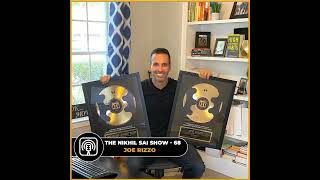
In this episode of The Nikhil Sai Show, host Nikhil Sai interviews Joe Rizzo, a two‑time Two Comma Club winner and co‑founder of tashrizzo.com. Joe recounts his entrepreneurial origins—selling candy and mowing lawns as a kid, launching a mortgage company that grew to 125 employees and ranked among the top five in the nation, and later transitioning into marketing after working with Frank Kern. He explains how he built a B2B lead‑generation engine focused on LinkedIn, using a pay‑per‑performance model, Sales Navigator, and multi‑touchpoint retargeting. The conversation dives into high‑ticket B2B sales, emphasizing reverse‑engineering client outcomes and active listening over scripted pitches. Joe stresses the importance of analytics and KPIs for scaling, sharing how data‑driven decisions replace gut feelings. He describes the personal growth required to scale to eight figures, the need for A‑player culture, and leadership that leads rather than manages. Operationally, he outlines his tech stack—Slack, Asana, SOPs, GoHighLevel, ClickFunnels, Zapier, and remote team coordination. Joe also shares his daily routine (early ‘me time’, planning, thinking hours) and advice for young entrepreneurs: ignore external judgment, find mentors, and act fast. He reflects on a costly mistake with revenue‑share contracts and the necessity of win‑win agreements. Finally, he offers mentorship channels (B2B Marketing Mastery, Agency Mastery groups, YouTube, and his website) and underscores the value of inspiration from family, coaches, and mastermind peers.
Chapters
What's going on? What's going on? Everyone who's actually listening to this podcast right now, first of all, guys, welcome to the Nikhil Sai Show, which is hosted by me, the Nikhil Sai. And guess what's going on today? We are back with another amazing True Karma Club interview. This is going to be amazing story, guys. And, uh, the guy who's joining us today, the journey is going to be crazy. So in case if you are someone who is in B2B industry, who is an agency owner, who is into marketing space, if you're a coach consultant, if you are a recruiting agency or someone who actually wants to create an omnipresence online, make sure to stick around. This podcast is going to be a game changer for you, right? The guy who's actually joining us today is a 2x Two Comma Club Award winner. He's been helping B2B businesses scale through the roof by creating online omnipresence. So let's not waste any time and actually welcome Joe Rizzo, co-founder at tashrizzo.com. Hey, Joe.
Hey, hey, thanks for having me.
Absolutely, Joe. Glad to connect you today. Thanks for joining us today. Joe, I've been looking at your stuff, man, and once I go through all of your stuff, it was really mind-boggling, like the way you're actually helping business and the level of impact you're empowering people to have in their business. It's just tremendous. I would love to know, let's start with like your backstory, like how did all of this craziness started?
Where did you start the journey? I won't make you go way back, but it started with me selling candy in 8th, you know, 6th and 7th grade, I started buying, uh, buying whatever it was, like Blow Pops and soda, and then reselling it at school. That's, that's how I started. Then I was working in the cornfields at age 13, and I had my own lawn mowing business. So that's when I went real way back. My parents always gave me a good push of like, hey, do, you know, do something. If you want something, you got to work for it. And I grew up a military kid, so, um, that's my parents said, hey, you want something, go for it. So they kind of pushed me that way. And then, you know, as I went through college, I just, I always would joke and was about not being employable. I just wasn't, didn't sure what, nothing really fit me of what I want to do. So I wanted to go into business for myself. Eventually started a mortgage company. We grew that really big to about 125 people. We were the number 5 in the nation behind the biggest banks, Wells Fargo, B of A, MetLife, and then our company. So we were— we ended up being really huge in, in one space on the mortgage, on the reverse mortgage side. And, um, and I, I— long story short with that, I, I didn't realize I was in marketing, right? What I eventually learned was everyone's in marketing. You're just in marketing and you specialize in something, right? So I was in marketing, I specialized in mortgages, and the more I started to realize, I was like, man, that there's something to that. So I happened to go through a personal development course and someone I went through was working with, she was a CEO for Frank Kern. And long story short, she reached out and said, hey, do you know anyone that might be good at business development? I'm working with a guy named Frank Kern. I'd never heard of Frank before. I said, you know, I'm gonna be in San Diego this next week, but you know, maybe come down and visit, which led into me actually leaving my company and working directly with Frank Kern. So that's how I, if you want to say, how I got into the marketing side and realized I was in marketing was my opportunity with Frank. And then that year I did work with him on the business development side, learned directly from him how to build funnels, how to look at funnels, how to look at someone's business and overall strategy. So that's my story of how I got into the actual marketing side and, Then from there, I launched a software company with one of my friends who's really into analytics, and we partnered up with the founder of Google Analytics. And, um, yeah, you know, a lot of people don't know that was started in San Diego with Urchin Analytics. And, uh, so launched that company. So worked with Frank while I was launching the software company, and, um, the rest kind of— the rest kind of has stumbled into some stuff. That's how I got started on this journey of marketing, realizing that You know, everything was marketing. You're just, you're not a dentist, you're a marketer who does dentistry, or you're not a chiropractor, you're someone that does marketing. You're a marketer that does, specializes in this. I realized that because if you're not, without that, your businesses fail. I didn't realize that, you know, it's not what they teach you in school, but that's what I was seeing. Like, we needed to get in front of enough people. And so the more, more we did that, we focused. We didn't know they were called lead magnets, but we created them for our our mortgage stuff, like, you know, the dirty secrets, how to avoid this. And so that's the quick scoop on how I got into it. Oh, wow.
Wow, Joe, that's crazy. Like, a lot of different waves and a lot of different stories in internal journey, brother. That's awesome. You know, like growing your mortgage company to one of the top 5 in a special edition, like, that's crazy, Joe. And yeah, working with Frank Kern, all of that stuff, it's awesome, brother. And Joe, like, one of the best things you've been doing is, you know, You've been killing it in the B2B marketing space, right? And one of the main things, like, you know, when it comes to B2B lead generation and everyone kind of talks about like, hey, go to this XYZ subscription, download the leads, like scrap the leads and all of that jazz, right? But you've been like a B2B lead generation expert. So I would love to hear about like, what is the best strategy when it comes to lead generation of B2B businesses? How does that look like for you?
That's a great question. I think a big part of it, when I got into the B2B side, My part of the time was working with recruiters, right, who were in the business space, and then they work in the B2B space, right? Recruiters are going after CEOs. And so really, it was the reverse engineering of who do we need to speak to, who do we need to have the conversations with. And in 2018, we were looking at, and you know, it's great, Facebook is great. Yes, there's 2 billion people, but we don't need all 2 billion. What we need to do on the B2B side was go after people on LinkedIn, right? Like that's where we realized that was kind of our blue ocean was, hey, everyone was going Facebook and Google and, you know, and Instagram and all that. And I still use that. However, getting the start was going through on LinkedIn, researching that and finding who are the top people we need to speak with and how do we start having conversations with that? So the way we got into it in the beginning was we were a pay-per-performance. I was like, look, I'm confident we can do this. But I want to make an offer so good that we make sure that we can get a win first. So we were paid performers. We'd partner up with people and we'd say, look, pay us once we get results. Pay us a small fee and then we'll partner with you on the results. And that's how we got into it, was, you know, the strategy was finding the right people to talk to and then meeting them where they were. I know a lot of people talk about it, uh, whether you're using, you know, tools to find people. Sales Navigator is a great way to find those leaders on LinkedIn and then reaching out and starting a conversation, right? And figuring out what's the best, because if you're not careful, you fall into the friend zone or you get the ignored zone on LinkedIn and you're 10 follow-ups, nothing. If you're too direct, you come across as pitchy on LinkedIn. So it's a matter of finding that right method and messaging that's enough direct that you're reaching out to CEO that doesn't wanna hear your whole life story of who you've done, but hey, can we talk? Can we have a conversation? Is this gonna make sense? So I have found that one of the best places to start has been LinkedIn, then taking it off of the LinkedIn platform and using the multi-touchpoint retargeting from email to Facebook to Google to be kind of be everywhere to the point where they can't ignore you.
Absolutely, Joe. That is a killer answer, by the way. So yeah, like I think a lot of B2B business owners should, realize like if you're going around B2B specialized, like you should be focusing on LinkedIn because it's like that core blue ocean as you have just discussed. That's really awesome, brother. And the way you mentioned like everyone is having that 23 message sequences just to build that relationship and now you're saying, hey, don't waste your time, just go and give them a pay-per-performance option. If they're a good fit, they will reply you back, right? Simple as that. Awesome, Drew.
You have to have an offer that's good enough that's going to catch their attention, right? If you haven't had results, then you shouldn't speak like you can get results. I had to go like, look, it's okay to figure out what you're gonna be good at and what you can do. Once we figured out, we were offering everything, copywriting, websites, landing pages, funnels, and we realized what they needed was one thing. So, you know, you wanna niche down, but you wanna figure out what you're good at before you niche down, or also figure out what's gonna get the client results and what matters, right? I'll go there, I'll sell 'em what they want, but then deliver what they need. But also, if you don't do that, you're going to have— it's going to be incongruent and they're going to feel left out. They have an expectation. So if you're like, oh, sell them what you want and deliver what they need, the problem with that is this is what they wanted over here. So you got to find a way to help them understand, hey, I know you want this, but this is what it sounds like you need and help them understand that and have it be congruent. Otherwise, you won't be aligned and they'll be disappointed even if you deliver them phenomenal results. They will be disappointed, especially on the business-to-business side.
True, true, Joe. Yeah, I think this is, this is something a lot of agency owners especially needs to understand, that you need to not sell just one part of the solution. You need to optimize the entire solution for what you're trying to offer them. That's awesome. Let's get to the next question, brother. You've been partnering up with Google Analytics CEOs and you have built your own SaaS which specializes in analytics and stuff like that, right? So we'd love to know more about like why you're marketing right, as a B2B while you're being like an agency and helping businesses to market and all of that jazz, right? Like how, like what do you think like the importance of analytics come in place? Like how important analytics is when it comes to marketing?
So I think everyone has analytics whether they know it or not, right? We have how many outreaches are we doing? And so I feel like the only, you know, I'm stealing this from somebody else. The only thing that we, if we track something then we can improve it. If we don't track it, there's no way to improve it. Analytics, whether it's website analytics, whether it's analytics for your company, whether it's analytics for your clients, if we don't measure anything, then we don't know what we've improved, right? And so what I found is for those that wanna scale and grow, people always say, I wanna scale, I wanna scale. Well, what are your numbers? How many phone calls are you making? How many outbounds are you making? What do your ads look like? When you don't understand all those pieces and the correct key performance indicators, the KPIs, If you don't measure those and use analytics to grow, you're guessing, right? And then you don't know what works. But when you start tracking your analytics, everything from your paid ads to your organic outreach to everything, you won't know what's getting you the results. And then basically you'll find yourself spinning your wheels. Once you find that right traction, what's working really well, you can put a lot of energy towards that. It doesn't mean you have to ignore the other parts of your business because it could have just been the that you needed to tweak them. There might be a better result inside of your business, but you gotta figure out what's working first, get traction on that, then go with that. Then you can slowly tweak the other parts and figure out, hey, a lot of people assume because they don't use analytics, they assume something wasn't working. Oh, this was the cheapest lead. The cheapest lead doesn't mean the best result, right? I'd rather pay more for a lead if I had to, if that's what gets me the results. People are like, oh, my cost per, click is more here, but if it's getting you better clients, it's worth it, right? I talk about LinkedIn ads, we've done LinkedIn ads, they're more expensive, but they're gonna be more targeted. So it's a matter of understanding your analytics to help grow and knowing your numbers and not, you know, there's plenty of ads that ran like, oh, I don't know if I'm gonna wanna run this ad, I don't know if I like it, but when you look at the numbers, then you can make that decision, right? Like that's when I know, hey, I'll take the emotion out of it, let the numbers do the talking, let the clients do the talking. And then let the numbers tell you, okay, this was a good decision, this isn't, right? And we take away the emotional attachment to this ad is gonna be phenomenal. I know it's gonna crush it. And you know, no, no, we just gotta keep going. And so people get emotional as opposed to using the analytics to help them make that decision.
Yeah, yeah, yeah. True, true, Joe. Like I think a lot of media buyers can relate to this. They have this gut feeling of like, hey, this ad's gonna work and they just keep on pushing and adding more budget even if that's performing low. They just, they just believe that it's gonna work someday and they keep on continuing. And I believe what you mentioned is so key. Like, this is very, very important that as a business owner, you need to know your KPIs and act accordingly and focus on what's important. It's not about trying 100 different things. It's about trying the top 3 things which gets you the most outcome with minimal work. That's awesome, Joe. Thank you so much for that answer. And Joe, one of the main struggles when it comes to B2B is This is a direct trade, like people, you know, pay for solution and they want outcome, right? And you know, when, when, when you look at an agency standpoint or recruiting agency standpoint, right, you are actually selling an outcome, right? And sometimes it's quantifiable, like in, in a different, uh, you know, at a different valuable amount, like when it comes to dollar sign, right? So one of the most common problems people have when it comes to doing B2B sales is they struggle to sell high ticket. So we would love to hear your inputs on how someone can actually sell high ticket when it comes to B2B sales.
Perfect. And I think you mentioned it, right? Like, what's the solution that they want to get? You have to reverse engineer it. And that's why I think it's important, you know, people talk about the riches in the niches, right? And, you know, we worked with recruiters and in the beginning I didn't know anything about them. So I spent money, time understanding what are their problems, what are their concerns. Then I also realized that they had a high ticket on their end, right? So I had to help them understand they're a high ticket. They weren't looking at the commission as high ticket. They're just like, hey, this is what it is, right? So understanding what the ultimate end goal for your client is, is so big when you're selling high ticket. And a lot of people just say, well, just raise your prices and that's how you sell high ticket. Just raise your prices. But it's really understanding not just the value in what you know, but also what's that gonna provide to them, right? So when we take a look at this, it's like, okay, for our clients is having a system in place, but really ultimately what they wanted was to have clients, right? They didn't care about having a system in place. We care as marketers, like I'm gonna put in automation, text messages, you know, landing pages and, you know, Zapier, Zapier, whatever, all the different stuff. And we get excited about that. But then what happens is they get attached to that side too. And they're like, well, I thought I was gonna have all this. Really what they wanted was the solution of getting more clients, right? So when you understand— what it is they want. And if you can deliver that, then you don't have to tell them how. You just help them understand there's gonna be a transformation. I'm gonna put the pieces in place that are gonna help you get that. But I tell people it's active listening, right? So a lot of people think it's the way we do a sales call is how you close somebody. Hardcore closer, one-call close, two-step, you need a setter, all those different pieces. Those become less important from the fact of did you actively listen or are you listening to sell, right? If you're listening to understand the person on the other side, you have a better chance of helping close them because you understand their needs and if they can be a good client, right? A lot of people would come to us, I watched your stuff, I'm ready to go, I'm ready to be a client. Like, whoa, whoa, whoa, we don't even know if you're gonna be a good client. And it really is pulling it back because oftentimes those clients that didn't really listen to the conversation, didn't end up really being indoctrinated. And so then they're like, oh, I thought it was gonna be this because I watched a video, I watched a testimonial. Taking somebody through, understanding them, and really understanding them was how you get a high-ticket sale, in my opinion. Understand them, listening to understand, not listening to respond.
Yeah, absolutely true. I think, I think that was on point. Like, a lot of salespeople just really have this script and they try to wait so the prospect stops so that they can continue to read the script, and they just are not listening actively at all. They just try to have that hardcore script and they try to read that out. And I believe this kind of perspective shift of actually listening actively to see what you can pump in and how you can actually help them will actually allow them to invest high ticket. Because people pay high ticket prices if you can get them high ticket sales. Simple as that, right? You get what you paid for. That's awesome, Joe. So they should package something which can make them good outcome. And Joe, let's get to this next question. We already kind of rounded this around, but I would love to know more in detail, like how a B2B business owner, like someone who's going around B2B space trying to get more projects and clients in, how they can use LinkedIn, especially on leveraging B2B sales organically as we speak?
Yeah, so LinkedIn right now still is a huge opportunity. I will say it's changing. I mean, from 2018 to now it's changing. They've gotten more strict. They've put some new rules in place with how you can outreach. And so there are some different methods and techniques and tactics that people can use, which are great. But one most important thing is being active, right? So if you're on LinkedIn, it's LinkedIn looks at it right now is, are you just using some automation tool to auto-spam people or are you connecting? Are you going in and actually engaging on the platform? They're starting to use their own AI to determine how active somebody is. So no, it doesn't mean you need it. It's just like anything, you need to understand the platform. So going in, liking other people's stuff, commenting, being an active user on LinkedIn. So when people start to look at you, they look at you as a thought leader. LinkedIn is different than all the other platforms in that they're on there for business. So when they see you actively participating on the platform, you're not just commenting to comment, but you become a thought leader. And all of a sudden someone can look you up and they can see, wow, this person actually is adding value in other places. It doesn't mean you have to spend hours and hours on there, but you need to be active on there. You need to be looking at your ideal clients' profiles, commenting on their stuff and spending some time on there. And then also content right now, it is organically still one of the best places you can get picked up so fast because only less than 5% of people are putting out content consistently. Now more and more people are starting to use it, but consistently LinkedIn said less than 5% of users do it consistently week in, week out. So you have an opportunity to be above everybody else from a content standpoint, but people just don't put enough time in to get results. So that's how you can stand out right now is get active on LinkedIn, start publishing on LinkedIn, start reaching out with those decision makers and building those relationships so they start to see you and you start to pop up more and more.
Absolutely, Joe. I think that was definitely a killer answer for a lot of B2B business owners who are trying to generate or scale their business using LinkedIn. Joe, thank you so much for giving those golden nuggets away. And Joe, you've been scaling your, you know, mortgage company and other companies through the roof. Like you're a 2x Two Comma Club winner right now and you have had this experience of scaling businesses to over 8 figures. So, you know, like when you're scaling your business from this multi-six-figure level to eight-figure levels, like that's a different transformation when it comes to your personality and the character traits. And even when it comes to the business, you need to have these A-players coming in, right, in your business who take the leadership position. So we would love to know more about like, how was the journey of actually scaling your own business to over eight figures? Can you give us some inputs on that?
Absolutely. So I think one of the things I've learned is I don't know everything, right? That's the biggest lesson is like, you know, when you think you've arrived, you haven't, right? You've never arrived, whether it's a 7-figure, 8-figure business. And, you know, having a $2 million launch in a week sounds phenomenal, sexy, but then it's like, what's next, right? There's always something. So I think the journey for me was a lot of it was personal growth because the person you are and the person that you're gonna become. Someone said to me once, like about the 2, like, oh, once I have those, then I'll do this, right? Once I have my 2 Comma Club Award, then I'll do this. It's like, no, once you're this, then the two comma clubs will happen. So investing in yourself, investing who you want to become, right? So you have to think about like, you know, who do I need to become in order to be an 8-figure person? What type of leader do I— and you may not even know, but at least thinking about that puts you on that journey, right? Like if I'm not a 6-figure a month business, who do I need to become? And you may not even be right, but go find out what those other 6-figure people have in common, write down their traits. And start saying, okay, who do I need to become in order to do that? I think that's the biggest part. And then finding people that have that drive as well because your company will change as you scale from 0 to 10 people, 10 to 20, and 20 to 100 people is a way different cultural change. And so trying to keep that is not always the easiest thing and you lose touch with some of the people that are on your team when you get to 25, 30, you're not having daily conversations like you do with those first 5 to 10. That's why it's so strong. But how do you find a way to make that culture keep going? And I think a big part of it is I invested in myself. I knew that I needed to grow in order to lead people and not manage people. You don't manage people, you manage time and projects, but you lead people. And once I learned that, it was— I feel like that was the biggest— one of the biggest shifts that allowed us to grow because people in turn want to be leaders themselves. If they lead themselves, then they can lead a team.
Absolutely. Yeah, brother, as you just mentioned, like, leaders lead by example. So you need to be that true leader who kind of shows how to actually manage that kind of, uh, you know, experience in your office and your work environment. That's, that's awesome. So thank you so much for literally laying out the kind of experiences you had while scaling your company. And Joe, let's get to the next question. When it comes to B2B, right, like, there is so much jazz. You have this client, you have this freelancer working on this project, you have this analytics to be gone through, right? Like everything at a time. So how do you manage all of this stuff? Like what kind of tools you actually use to manage your projects, your clients for productivity?
Yeah, so great, great questions. We've tried everything. We've done, we've done Trello board, we've done Asana, we've done different CRMs and, and everything. So I think for us internally, we use, you know, communication for our team is done through, through Slack. We also use Asana or Asana, you know, to actually set up what our, our projects are going to be and, and really make sure that we're clear on those down to the point of like every little detail. We make sure that we have in there so we're not missing parts. And the way we track it is we build— as we build, if we're building something new, we record it and turn it into an SOP in case we need to use it again. Because the biggest mistake is trying to— how did we do that before? And going back, you waste time. So Also, I tell people, you should always try to find a way to replace yourself. So, and that sounds crazy, like, oh wait, someone's gonna take my position? And that's not what I mean. You create the SOPs and you create these procedures to make sure that as we grow, now you can potentially become the leader and teach other people. That's why we create that. So using SOPs, using stuff like Slack and Asana, and then, you know, we're using tools like, GoHighLevel and ClickFunnels, right? We use ClickFunnels on the front, we're using GoHighLevel for our CRM on the backside that allows us to, to use that for client communication, for emails, text messages, and all those different pieces. So those are— I mean, we use probably other tools as well like Zapier, but those are, you know, for, for growing it, I would say Asana and Slack are, are, uh, really big for us to having that communication. We use WhatsApp a little bit as well. We make sure that, hey, in case those are down, we have our backup of WhatsApp. So My team is not all in the US. I have teams in South America, across the seas, that we can all touch just in case those tools go down.
Yeah, absolutely, Joe. Thank you so much for mentioning all of those tools and giving us a checklist of what you're using. I love it, brother. Thanks for the access to your vault. Let's get to the next question, brother. So like, do you kind of have any personal routine? Like, how does your daily routine look like?
Oh, my routine, definitely. Um, and This is a good question because I've heard people say, well, don't get married to it. But, you know, because then like if it doesn't happen, how thrown off are you? Try not to let it allow you to be thrown off. So for me, my routine is, you know, I'm awake 5:30 and then that's my me time. I no longer check my phone or anything between 5:30 and 8:30, right? That's my me time. I'm doing personal, either personal development, meditation, prayer. I kind of have my standard in the morning and sometimes it's a little bit different order, but it's not touching any of that in the morning as I'm going through that. That's, that's a big part for me is getting up, starting that and not rushing into allowing myself to see what problems are there. I get really clear and intentional on my day before my day starts. So I start my day really the night before by making sure that I have everything set up that I need to. The day before, so I don't go to bed thinking, what do I have to do? I'm able to write that down, clear it out. I learned it early on, it's called posting and planning. You post what you did and then you plan for the next day, so when you wake up in the morning, you're pretty clear and then you don't just get pulled into your phone, what do I need to do? What are the fires I gotta put out? Those are gonna happen no matter what, right? As a business owner, especially as you grow, there's gonna be fires that you have to put out, but if you don't plan your day, it'll plan you. And next thing you know, you'll have gone a whole day and go like, What did I get done today? Right? So my most important part is getting my, my me stuff done, making the bed, getting my wins early on in the morning, then I get my kids to school, right? I make sure I spend time with my family. I've got, I've got 3 kids and my wife. So we make sure that we get the kids out, out the door and they're able to start their day, not in a chaotic rush. And then after they're all done and gone, then I start, uh, you know, the rest of the, the business day for me from that point on and have it all planned out. Chunked out timeframes for me, timeframes for work, and thinking time. Every day I've got thinking time scheduled on my calendar to make sure that I'm, you know, I've got an hour dedicated to problems I might not have thought about that I need to solve. And I dedicate an hour every single day, at least, if not more, but at least an hour every single day for thinking time where I'm thinking about problems that I have to deal with or maybe haven't thought of yet.
Wow, that's tremendous, Joe. Thank you so much for giving that away. And especially when you're B2B, like you always have, different thing crumbling down every day. You have 20 people, right? And if you wake up and the first thing you do is check your laptop or your email or your phone, your day is gone. Like, you just keep on rolling on the same thing over and over. I really love the way you actually kind of structure your day, brother. That's, that's tremendous. I think a lot of people, especially who are in B2B space, should actually follow these instructions. So, brother, you've been into business for a long time, right? So if there's an option for you to go and talk to your 20-year-old you or someone who's just getting started, what will be your number one suggestion for them? What would you suggest them?
Is, yeah, I think if I had to go back and let my 20-year-old, I would say stop caring so much what other people think, right? And part of that doesn't mean don't care about people, but you know, it's, you know, I didn't realize it if I went back and looked at myself, like what is everyone going to think as I'm starting a business, right? Like I looked at everything, looked around, and it's one thing to have mentors. That's why it's so important to have mentors would have jumped into finding a mentor sooner. One thing I tell myself is find a mentor because they're gonna help you when other people don't believe in you, right? And finding someone that's done it so you can see it, finding that mentor and really worrying less about what other people think and really standing in conviction of your actions, right? Like, as long as you're doing the best you can and the best for people, then there's gonna be mistakes that happen, but worrying less about what people think about those, right? Do I look silly? Am I doing a Facebook Live? Do I look dumb the way I'm holding it? Who cares? Just get started. And I had that, like I had 40 videos before I did my first Facebook Live and it was like, oh my goodness. I did 200 webinars because that was my way of getting over my camera shyness, right? Like I didn't know how to get over that side. And so just taking action, taking it fast, and the faster you go, you know, the faster you'll get the feedback and results of what you need.
Absolutely, Joe. Fail fast, fail forward, brother. That was really amazing. Amazing. Thank you so much. And I believe like everyone like who's getting started an entrepreneur, like when they're in college or when they're young in the business, they look around them and they're like, oh my God, like, am I the only weird person trying to do this? Like, and they have this fear of judgment, right? So I think everyone needs to get out of that situations and, you know, be bold at what they do and believe in the courage. Absolutely, brother. Let's get to the next question, brother. Your biggest achievement so far and any next bigger goals? I am—
my biggest achievement, you know, I gotta be perfectly honest, it has been been my family. Like, I've got my kids, right? I've got 3 great kids. I'm married to an amazing wife. And like, man, I look at it as like, they're an accomplishment, right? And it's just to see how they are as humans and how they're growing, it's awesome. And I get that they're doing it, but like seeing how they're growing is awesome. So being an example to them has been huge. I've been lucky. I've failed at a lot of things, but like I was able to move away from home at 15 and go play hockey with another family. But in business, I think some of the biggest successes I've had has been the results of our clients, right? When we stopped focusing on what we're doing, we started focusing on our clients, having clients have their best years ever during a pandemic. Was phenomenal, right? Like, um, we were able to help somebody that was potentially in retirement, they needed money for retirement. We helped double the size of their business. Like, that was huge. Those results are the ones— like, I want to see who, who I can help be even bigger than us. Like, that's my next big goal. And I learned that— I did learn that enough early on. There's like, hey, the more people you help, the more you'll receive. But stop looking at it like— stop looking at it from the standpoint of what can I get from that like, I'll just help people because I'm gonna get more. But really care— if you really care, you're helping people achieve a bigger goal than you. It absolutely comes back. But it's when you have an attachment to how it should look, like, well, I helped somebody, now I should get something, right? That then it's almost like giving in such a way that you, you, the way you care and exemplify that, that, that's my, my next biggest goal is to see, you know, who I can help be well above us? Who else can I take to that, you know, the 10x club, right? What clients can we have do way better than us? And that's— it's a neat thing to see. It's almost like raising kids. So I love— love my kids are great examples, but also my clients, seeing their wins is huge.
Absolutely. So beautifully articulated, brother. Yeah, reciprocity works. You should always help people genuinely with integrity, and you can expect nothing back, and you will receive what you have given them for sure. More than what you've given them, actually. But thank you so much for answering that. Let's get to the next question, brother. This would be fun, actually. So what was the biggest mistake, especially in terms of business, so far? What was the mistake you have done?
The biggest thing— I don't remember seeing this one. This is a good one. So, um, you know, biggest mistake we made early on, definitely in the business, was we did do a, a revenue share. So we did a profit share, like, hey, based on results. So to the point where we had about a quarter million dollars in uncollected funds from clients that didn't tell us about the results. You know, not putting those contracts in the right way. We were like, we were getting results and like, hey, how's this going? Like, you still want us to do your marketing yet it's not working. So it was a big mistake because early on we didn't put the right stuff in place to track how those agreements would work, right? We thought we had an ironclad contract, we can look at your books, but there's lots of ways to hide money. And so We were a performance-based company early on and we started taking on more clients thinking like, wow, if we can just get a piece of that. We found close to $250,000 worth of contracts people never told us about that closed and we just—
Oh my God.
Instead of going after them, we decided to part ways, right? Like we knew like, hey, we're gonna take the higher road here and just choose to end the relationship as opposed to going after them. And there's probably people listening going like, I would've gone after it, a quarter million dollars, that's a lot. A lot of time and energy that goes into that. And I knew at that point we needed to change our structure and change how we're doing business to make sure that, that, uh, that it's a win-win, right? It can't be a win-lose in business. Um, a lot of people think that it has to be, um, win-lose, right? In order— if you play sports, I— someone has to lose. But in business, you actually get a win-win. If you win-win, it's, it's phenomenal. Then everyone becomes happy. But yeah, so many people think because they either came from sports, in order to win somebody else has to lose. And so that was one of the biggest mistakes we made was not putting together the right contractor or trying that and not having the right resources in place to really keep us going when we really needed that extra $250,000 at that point.
Yeah, true, true, Joe. I think a lot of B2B business owners can relate that, right? Like a lot of people kind of do this agreements on revenue share, commission, and all of that jazz, but they never have the access on what's going on inside the business. And I believe, like, genuinely speaking, I believe the actual client is the one who's missing the opportunity to continue this relationship while they're making profits with you, right? Fingers crossed for them. Yeah, but let's get to the next question, brother. Yeah, your main inspiration for success and keep people involved in your journey.
So, so, you know, Gosh, inspiration. I feel like I'm inspired again by those around that I keep looking at that are more successful. I used to put a lot of emphasis on like, oh, my kids are my reason why. And someone told me like, don't let that be a reason why, let it be something internally for you. And for me now, it's the example I can be, right? Like, because motivation dies off, but inspiration is something that keeps you going. And so It was neat getting to hear at Funnel Hacking Live, got to hear Tony Robbins talk and people talk about having something and being the best version of yourself and seeing other people. I think because I'm married, I involve my spouse. I think that's very important. If you don't have buy-in from other people, when you need it, when that support's needed, it falls away. I have coaches as well. Those coaches helped me. The people around me, I try to have my 5. I've got a mastermind that I belong to that we help each other because there's times when things are down that you got to fall into the business. Don't become a whiner and look for a solution, but that's it. So having that inspiration to keep going because there's— it doesn't matter. You have bigger problems. Bigger money oftentimes means bigger problems. So having those resources around to stay inspired, to keep getting you up. And to me, it's just to continue to be that best example for my kids so they go after their dreams and go after— but they're part of a reason. But I'm not building this money so they don't do anything. I'm building, you know, my businesses so they see what can be done.
Absolutely. To open the perspective. Absolutely, brother. And as you just mentioned, like, the problems never get smaller. You get stronger so that you can actually see the problems, you know, smaller as you grow, right? Awesome, awesome, Joe. Let's get to the next. Oh my God, this is amazing, brother You kind of really explained a lot of information about particularly talking like B2B businesses and lead generation, all of that jazz. So like, how can someone who actually listened to this podcast can get your mentorship? Like, do you have any options? Where can our audience find you mentoring?
Absolutely. So, you know, they can go to my site, tashfrizzo.com, and there's information there. And also from there, we have our groups, just open up another one depending on, you know, We have B2B Marketing Mastery, which is one of our Facebook groups, and then also Coaching and Agency Mastery, because I believe that there's, there's, if you're a coach and you're an agency, there's different things versus just B2B, right, that you need to have along the way. But if you go to tashrizzo.com, you can go there and we have a lot of the resources. We have resources on our YouTube channel as well under Tash Rizzo, where there's a lot of free information. I always feel like, do your research, right? Make sure that you— there's enough free information out there. It's finding, connecting with somebody that's going to connect with you, right? So whether they look at me as a mentor or find a way to get some of the free information that's out there, I believe there's enough information that we provide that's out there. What we do is we provide the guidance and mentorships to make sure you hit those goals. It's, you know, the information's already there. You can go find it from anyone. From almost everything I said is probably out there. Someone's taught it or teaching it or or reteaching what we've done, and that's happened to us before, but it's finding that right person that's a good fit for you. And, you know, if I resonate with it, great, feel free to reach out at tashrizzo.com, happy to help out.
Absolutely, Joe, thank you so much for that. And guys, if you need any more help, make sure to check out tashrizzo.com, T-A-S-H-R-I-Z-Z-O.com, and you can find more help. And Joe, it was absolutely amazing session, brother. Any last word before we conclude the entire podcast for today?
No, I guess I really appreciate you, your time. Um, you know, anyone that has a chance to work with you should definitely do it. And, uh, just because you're prepared, you prepared me for this conversation, and, uh, just really polite and just everything, everything was, was world-class. And, and, uh, that's my last words is, is keep going, you know, and, uh, and, and don't stop because there's a lot of reasons to stop, but there's more reasons to keep going.
Yeah, absolutely, brother. There is always that light in the end of the tunnel. It's just about constantly keep moving. And Joe, that was so kind, brother. Thank you so much for, uh, you know, inspiring us on this podcast today. Again, thank you so much for this amazing opportunity, brother. It was really great having you on today, and the kind of value you dropped here on this podcast was tremendous. And I hope guys who actually listen to this podcast— like, you literally nailed down, you know, in a step-by-step way on how he have went from actually trying to sell candies to actually growing business to over 8 figures, which is just nuts, guys. So make sure to really listen to this, note down all of the stuff, take notes, Don't let this podcast be another consuming content which you do usually. Make this as an implementable action step. So after this podcast, go and implement. If you need any more help, make sure to reach out to joe@tashrizo.com. And, uh, stay tuned for the next interview, guys. This is me, Dheenikil Sai, and Joe Rizzo signing off for today. Peace.
Thanks.
More from Nikhil










BURNED $1.5M in his 17years online #digitalmarketing #entrepreneur #onlinebusiness
