How Joseph unique methods helped his client make $1M in one day | The Nikhil Sai Show 74
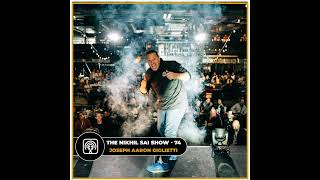
Joseph Marin, CEO of Multiply Inc., explains how his virtual-event system generates $1 million days. He charges $10k+ per ticket, targets 200+ attendees, and hits 20-35% conversion rates by pre-qualifying dream clients through application forms and deposits. His framework uses Zoom, ClickFunnels, and Google Docs to turn webinars into conversational experiences.
Chapters
What's going on? What's going on everyone who's watching this podcast right now? First of all, welcome to The Nikhil Sai Show, which is hosted by me, The Nikhil Sai. And guess what's going on today? We are back with another amazing 2 Comma Club interview. This is going to be crazy, guys. You cannot even expect who's actually coming on this podcast today. You maybe have seen businesses who do 6 figures a year, 7 figure a year, right? But how about doing 7-figure days? How about doing 7-figure days? Let me repeat that. This is going to be crazy. And guess what? You don't have to be thinking about like talking to a million people a day to do that by doing virtually. That's where the craziness starts. So we are having a crazy guest who is a speaker who worked with almost industry experts like Myron Golden and Dan Henry and Traffic and Funnels, everyone you can imagine who are the experts in the industry. He's been helping countless people to do 6 figures, 7 figures a day I'm talking about a day revenue, guys, with 80% net profits. It's, it's going to be crazy. And the best part is you can do all virtual, all virtual. I can promise you on that part. So he has a very unique methodology and system he kind of actually uses to scale virtual events and do 6 figures, 7 figures a day, you know, building out the right audience, getting the right traffic. So again, this is going to be so much exciting, so make sure to stick around. So let's not waste any time and actually welcome Joseph Aaron, who is CEO at Multiply INC. Hey, Joe.
Joseph Marin here. What is up, everybody? Thank you so much for taking your time to listen here today. Today, I'm gonna show you all how we're doing multiple 6 and 7-figure days. You heard that right, using virtual events. And you're gonna have a blast, and I promise you're gonna leave inspired, you're gonna leave shaken to your core, and ready to go to the next level in your life.
Absolutely, absolutely. We are, we are excited to get the value from you, Joe. We are really glad that you actually took out your time and actually hopping on this podcast, Joe. Like, this is freaking amazing, and this is like a real dream come true for a lot of business owners thinking about a 6-figure a day, 7-figure a day, just like that, right? So before we dive into the core content, Joe, we would really appreciate in case if you can start with your backstory, like how did all of this craziness started?
Yeah, and I'd just like to say, Nikhil, thank you so much for having me and honoring me with just being able to share. For us, this started from being broke. So, several years ago, we were on a mission to change the world. In our minds, the way to change the world back then was we were going to help students, like students who were struggling with drug abuse or could potentially struggle with drug abuse in the future, and just kind of stop the problems before they happen by serving these students. So, We went into the most racist, poor, poverty-stricken, struggling area that we could find in North America, right near East St. Louis, Missouri, and we started a nonprofit student movement to inspire those students to bind together and change the world. So it was so heartwarming and moving, and it blew up, Nikhil. It was like kablooie, and there were hundreds and hundreds of students who decided to be a part of the movement. Here's the problem. The more we grew, the more it cost. The more we grew, the more— everybody talks about how they want to change the world, but the reality is the bigger it got and the more people we were serving, the more it cost us. And so we didn't come into it with a lot of money. I didn't know about marketing. I was studying a little bit in business. I was doing a little real estate. But I didn't know, and so what happened is we kept putting our own money into the movement because we cared about it so much. And guess what happened? We went broke. And we went homeless not once, not twice, but 3 times. And when I say homeless, we were a family of 5. My wife, myself, and 3 children, all under the age of 11, were living out of a hotel. And every day I would have to figure out how do I make $55 so that I can pay for my hotel today. If I didn't pay for the hotel, we would sleep on the street. Now, thank God we never had to sleep on the street, but every day it was a new struggle to come up with $55. Can I just say, we've come a long way, baby, right? Not because of who I am, but because of the principles that I'm going to share with you here today, okay? And so what I realized was that money, if you want to change the world, money is still a part of the equation. I didn't make it to happen that way. I didn't create the world the way that it exists. It just is that way. So the first thing I want to encourage your audience to do is stop fighting with the reality of the way that the world works and just work with the world the way that it works. You will have far more success far faster, right? If you start by saying, okay, money's a part of the equation, I wanna change the world, so I'm gonna make a bunch of money so that I can like empower the things that I'm trying to grow on. Can I tell you a secret?
Yeah.
I now know that if I would have continued to grow and that I did not have the capacity as a leader to lead and carry that movement as much as it wanted to be, And the reason I didn't have the capacity, because I had never lifted a weight that heavy. And the journey of entrepreneurship, the journey of being a business owner, is the greatest personal development growth process in existence today. And by growing as an entrepreneur, it has now given me the capacity to carry the weight of launching a movement that's getting bigger and bigger and bigger and bigger. And I'm so excited to share today that at this stage of my journey now, we went from trying to help students in a poverty-stricken town to where our company mission, Multiply Inc., our company mission now is to change the world by multiplying movements that matter. And so we're partnering with high-level influencers, with people who have big dreams and big capacity to fill those dreams with huge audiences And we're helping them. And the first way that we found to help them monetize what they're doing, first thing we show them right out of the gate is how to do a virtual event. Because by doing a virtual event, they can bring a huge truckload of money in all at one time, be serving all a whole bunch of their clients all at one time, and get a whole bunch of new clients all at one time. It is like the greatest thing in 2021 to do is virtual events.
Absolutely. Wow, there you go, Joe. And it's really inspiring, actually, when I hear that you went 3 times homeless. That really was nerve-breaking. And we're glad that you actually are that hard guy who never accept what the life gives you but strives for what you actually want. And you made it. That's really exciting. And I really love the impact you're trying to create, Joe. I really need to salute for that moment. And I'm really excited to see the kind of impact you're going to be creating. And as we're speaking, the number 1 way to move faster, get the impact quicker out there, and get the message fast is to virtually— and because you can reach a million people just tomorrow, just like that, because you're doing it entirely virtually, there is no cost involved, right? So as you're coming to the point where the virtual events are actually getting into the place, and you're the king when it comes to virtual events, so we cannot take advice from anyone else in the world other than you do. So there is a right way to do virtual events and a wrong way, because there is a lot of hype around events, especially when it comes to virtual and this happened before COVID times when it's like, hey, everyone needs to do this virtual events and stuff like that. As you're the grandmaster here, Joe, I would really appreciate in case if you can show us the right way to do a virtual event. Like how does actually a virtual event work?
Yeah, there's one primary thing that everyone does wrong with virtual events. So in, let's see, it was what, probably March or April of 2020 when the world started realizing there was a pandemic. And we had been doing live in-person events for years at that point. And, you know, we were doing those for real estate agents primarily at that time. And we realized that we had an event coming up, but the hotel would literally not let us meet at the hotel. And so we had, you know, it wasn't huge, but 70 or 80 people coming to an event and no place to host it. And so I told my business partner at that time, I said, hey, we should just do it live on Zoom. And he said, on Zoom? Nobody wants to hang out on Zoom for 2 days or 2 and a half days like our event is and like talk about this stuff. There's no way. He's like, remember, like we're selling something at the end of this, but we're not gonna have their attention the full time. And I said, well, you're gonna refund them their money for the tickets anyways, so we might as well give it a try. If we do the whole thing and it's a big flop, No big deal, like you're refunding the money anyway, so we can test it for 2.5 days or we can do nothing. Let's, let's be proactive. Well, he kind of fought with me a little bit and finally was like, okay, let's do it. And so we went ahead and did the event. We were very careful to focus on things like engagement. Everybody talks about engagement and getting people talking in the chat and all that kind of stuff, and that's great. And at the end of that event, what we realized was that we we had more people attend that event than had ever attended a live event because they didn't have to travel. They didn't have to get an airplane. They didn't have to get a hotel. They didn't have to pay for extra food, right? They literally could just sit on their computer in their living room or office or library or wherever they wanted to be and attend the entire event. That was the first realization. The second realization is we made more money in that event than we had ever made in a live event.
Wow.
Because there's more people there. Some people ask, well, is the conversion rate as high? No, it's a little lower at a virtual event, but you have so many more people who are willing to come. Net, net, net, you make way more. Now, here's the big problem that everybody does with events. Here, you ready for it? This is the thing that messes everybody up. Everybody who does virtual events, they think they just need to deliver a bunch of really good content. And so they think, I got, I gotta talk for 2 days. Oh my gosh, that's so much content. And they work, work, work and slave away and all these slideshows together and this and that. Nobody wants to watch your slideshow for 2 days. And it's not the content. So I'm gonna tell you the number 1 overarching rule that we apply to virtual events that make our conversion rates multiple times Most people's conversion rates at virtual events, it's like 8%, maybe 10%. The way I'm gonna show you how to do an event, our conversion rates are 20 to 35%. Normally, our ticket sales are somewhere between $20,000 and $50,000 at the event.
Oh my God, there you go.
So imagine, so for example, when we started doing, when I started doing events with other clients besides that real estate client I mentioned, One that I did with Dan Henry where I, you know, he was already doing an event. Dan's super smart, genius marketer, like he knows this stuff, right? But he had never done one virtually and he kept seeing our numbers because we would do an event, it's like $500,000, another event $600,000, and I'm talking like money in the bank kind of stuff, right? It's like some of them are contract sales, some of money in the bank, right? It just depended on the client. He's like, Joe, "how are you doing this?" I said, "Why don't you just let me do it with you? Like, I'll help you, I'll do the whole thing." And he's like, "Sweet." So we did it together. Dan already had his offer. Dan had 164 people in the room. Is that a big crowd? Not real big, you know?
Easy, yeah.
Right? And 34 people bought a $30K product. $1 million in one day, right? And it's like, huh. Our close rates are on the low side, 20%. Like, we have a bad event, it's 15%, right? But in general, our close rates are 20 to 35%.
Why?
Why are we so much higher than everyone else? How do you do it better and different? Here's your answer. You ready? A virtual event is meant to be— get your pens out, write this down— a transformational experience. And say that again. A transformational experience. I'm not trying to use highfalutin words with you. I'm just trying to tell you two things. It needs to be transformational. What does that mean? It means people come in one way, believing one way, having certain values when they walk in the door, having certain beliefs about what it means to do business or relationships or health, whatever it is you're teaching. They believe one way. But when they leave, they literally leave as a different person. They've experienced so many shifts mentally in their mind and beliefs about what it's going to take to get them from where they are to where they want to be, that when they leave, they think different, they act different, they operate different. Whether they buy or they don't buy, there must be a transformation. And if you're in your car and nobody's with you and you won't look silly, just say transformation. Just say it out loud so it helps you, right? Transformation, because that is the key. It is not just transformation. It is a transformational experience. Experience, OK? What I mean by that is, the way I usually explain this is my dad, I grew up going to church, and here in the U.S. at least, I don't know what you all, depending on who is listening around the world, here in the U.S. There's a lot of times, like, if you go to churches in the US, a lot of times there's like predominantly white or predominantly black churches, and then there's multicultural churches. And so I grew up— now, for those of you can't see me, you're listening, I'm white. Okay. But my dad was the only white minister among about 2,000 black ministers. We were the only white people that were in the church, basically. And if you've ever seen— have you ever seen a Tyler Perry movie?
No, I haven't.
Tyler Perry movies, like, they really accentuate and celebrate Black culture. I love Black culture. It's awesome. Of course, I grew up in a lot of it, right? But nevertheless, in Black church, you ever heard people go, "Amen! Hallelujah!" Like, they go back and forth. When someone talks, someone else talks back. And like, the crowd is always talking back and engaging with the speaker. And so I explain what an event needs to feel like. It shouldn't be I'm talking, you're listening. No, no, it's I'm talking, you're talking, I'm talking, you're talking. And it's like a conversation between the speaker and the audience. And when you have that level of engagement the entire time you're doing the event, what you're doing is helping people experience the conclusions they need to come to. Telling them what to think, you actually take them through the experience of thinking through the process so that they're agreeing with you and they're believing what you're saying and they're ready to go all in on becoming what you're telling them they can become. That's the difference. You got content or transformational experiences, create the transformational experience and it's game over.
Wow, wow, wow. In a nutshell, that was amazing, Joe. You really nailed down on how a virtual event works and how it should be actually done because we've seen people were creating like 2,000 slides on a 2-day event just trying to teach, teach, teach. But guess what? They aren't learning anything because they're not engaging. They're not in a conversation with you on the event. At the same time, they're not getting any transformation out of it because they're the same person who joined the event. They're leaving as the same person, so they're not ready to buy anything you put out as an offer.
Yep. All right, if I want a slide, I just write it down on a piece of paper and lift it up and show the camera. Like, that's how I do slides at virtual events.
Oh wow, so you don't need tech stuff or you don't need to be super fancy when it comes to events. All you need to do is one, make sure that you actually deliver a transformation, and two, make your live virtual event more engaging so that you have more like a conversational event than just like you creating a webinar stuff, because that's already done. You're trying to create an experience. You nailed it, Joe. We are really excited for the next question. This is going to be amazingly valuable. So let's say down the line, a lot of people are already transforming their business into virtual events, right? The number one problem they actually have is, you know, the, the, the fact that Dan Henry closed 34 clients and doing $1 million a day because he had way quality audience. Even that's a small number, 160, 150 people, right? He had way quality audience, right? So one of the main problem most businesses have when it comes to scaling their business to virtual events is they cannot attract the dream audience, right? So we'd love to take your input on how to actually attract dream audience. So how do you actually pull the right people to stay on the event? Let them stick to this. Virtual event right now?
You're gonna love this answer. Okay, is everybody ready for this? What if I told you that attracting your dream audience was going to be easier than ever when you use the right process? Here's what I mean by that. The reason why attracting the dream audience is a frustration for many entrepreneurs is, think about it, what happens when you're trying to get your dream audience? You'll put marketing out and then people will go through your process. They'll probably apply to talk with you and then you have to spend an hour on the phone with someone who's not your dream audience. And everybody's like, and you have what? If you're doing really great, you have 3 or 5 or 8 phone calls a day, but every single person that you talk to that is not your dream audience is just a big fat waste of your time, isn't it? And it's so frustrating and it drains you. And at the end of the day, you're tired. And if you got 6, like, not dream clients in a row, it's just like, oh, my life is terrible. Like, I feel like I just got punched in the face, right? When you do virtual events, right, your marketing goes out. It's kind of like doing— let's say you had 200 people come to your virtual event. Instead of having to do 200 one-on-one phone calls, some of which would be your dream clients and some of which wouldn't, you just do all 200 phone calls at one time. So now the, the not dream clients are no longer a waste of your time. 'Cause you're presenting the same information from the stage, whether they're there or they're not there. It doesn't matter if there's 10,000 people there and 9,000 of them are not good clients. It doesn't matter. It still takes me the same amount of time, Nakil, to do the event. And so it's no waste, it's no time suck, it's no drain. Those people who are at the event self-identify that they're a dream client. You know how? They fill out an application and give you a deposit because they want to buy your thing if you accept them. Like at the event, they literally will give you a deposit and say, I'm in, if you'll let me in, I'm in. And they pay a non-refundable deposit. And then you decide, do I like them or not like them? It's like, no, I don't want them in. Yeah, I want them in. Okay, here's how we collect the remainder of the funds. You know, of course you want to have your copy and your marketing correct so that you're attracting the people who want your results. People who are not dream clients are no longer a time suck on you because you're only, like, you may speak once a month or once a quarter, right? And you're gonna spend those 1 day, 2 days anyways doing the event. So you just do your thing and then they'll self-identify.
Absolutely. Wow, that's beautifully articulated. I think this is really key learning for a lot of high-ticket entrepreneurs who are trying to be that guy who's gonna take 20 sales calls a day and trying to be that yada, yada, yada. And you know, you're not qualified, let's just hang up the phone. They can literally stop doing that and they can combine all of their audience by creating a virtual event and do all the selling in a nutshell. That's amazing, Joe. This is really, really, really exciting. And Joe, like you're expert when it comes to collecting cash because we have seen other events performing, underperforming actually compared to you because you're on a different level. 20 to 30% closing is just amazing, right? So we'd love to hear like when it comes to the value engagement transformation part, it is great. Now people had know how to create a transformational engagement and have that, you know, conversational type of event. But when it comes to the closing part, and as you are the best salesperson on a virtual event, we would love to hear like how to actually close clients virtually, because these high-ticket closers have the phone handling objections kind of experience earlier, right? So this is the first time they're doing it virtually. So I would love to take a note on that.
Fantastic question. A lot of people ask this, that they're like, hey Joe, like, would you come and pitch at my event? Right? And we do that, but the reality is, okay, and are you ready? I'm gonna kind of challenge your thinking a little bit here. You all okay with that?
100%, yeah.
Usually what people think is like all their marketing leads up to the sales call and the sales call is where I close. When you do virtual events, yes, there's a section where I present the offer and that's typically called a pitch, okay? But the reality is the entire event is the pitch. I'm going to say that again. The entire event is the pitch. Now here's what I don't mean by that. I don't mean the whole event you're telling them price and you're going to get this and you're going to get that and all these other things. That's not what I mean. Because it's a transformational experience and I know my ideal client who I want to serve, I can also imagine Like, who is the ideal person who would buy my product or service? Okay, you with me so far? I can imagine who they are walking in the room, and I can imagine who I want them to be when they leave the event. Well, the entire event I will orchestrate to help them make the shifts they need to make mentally in order to become the person they need to become in order to get the result that the event promised. And by the way, when they make the mental shifts about the things they need to change about their thinking or how they operate, when they make those shifts about those beliefs, they're also shifting in the direction of being the kind of person who would purchase the offer at the event. So the event is orchestrated in such a way so that I'm not, I mean, in one respect, I'm not waiting for their objections because I already know what their objections are. I already know what the limiting beliefs are. I already know what those problems are. And so the event content is orchestrated to help them think through that, not in some sort of manipulative way, but literally to get them to think through that belief that they have. Like for example, they may think it's better to buy $27 things than $27,000 things. That may be like, if I could get the same information from a $27 thing or a $27,000 thing, which one's better? right? And some people may believe, oh, the $27, but actually, right, when you look at the research, how many of you go all in, full force, everything you've got, full power, into a $27 product that you buy? How many of you bought a $27 product and forgot about it the next day and see it in your email 2 years later and wonder, why did I never touch that, right? Why? Because the Bible says it this way: where a man's treasure is, that's where his heart is. And so what you invest into, you care about. And so someone who has a $27,000 offer is able to give you so much more time and attention and effort and energy. And the people in the room that you're connecting to when you're buying a $27,000 offer are also much higher level entrepreneurs, leaders, business people. They're more committed, etc. And so not only are the trainers able to serve you more and bring in more infrastructure to serve you but you're in the room with people that you end up doing deals with that you make way more than $27,000 for. And you end up hanging out with the leader and getting to know, like, and trust them, and you start doing deals with them. I have a mentor right now. I paid $60,000 to be my mentor. Now they're a client. We'll probably make a million dollars with them. It's like, wow, right? But, but I've also bought their $27 things. Do you think that their $27 thing would have got me a deal with them? It's like, no, right? And so that, so in an event, I'm working to orchestrate to help people understand there's a different way that the wealthy think than those who are not wealthy. And so taking them through then transitions to help them imagine themselves as a wealthy person and how they would think in that context. If I can start to get them to operate as if they're already wealthy, right? Well, then they're gonna have the thinking and the frequency to understand why it's in their best interest to buy the offer that I have in front of them.
Absolutely, Joe. I think this is transformation. Now, rather than trying to know what their objections are and trying to clear them off on a sales call, you're literally, you know, kind of systemizing the kind of virtual event itself to like make them a different person. Because when they're purchasing, right, they are a different person for what they are because they're choosing to transform themselves. And you're literally delivering that transformation before you pitch them So they're almost like ready. They're just like, hey, where can I swipe my card? And that becomes so easy to close. Joe, that's, that's really, really beautiful. This is transformational, guys. Whoever is listening to this right now, take notes or else you're missing out. I can promise you, you're really, really missing out. This is awesome, Joe. So let's get to the next question, Joe. This is amazing. This is something a lot of people are excited to hear about. $1 million a day, like, like, how the heck that can be possible? Like, like, we would really love to hear, like, how did you actually make that possible in a nutshell? Like that's like a dream income for most of the people for life. And you're helping your clients to achieve that in days, like, which is crazy. So there is some kind of learnings for you that no one ever has in the virtual events industry. So I would love to hear your input on $1 million a day.
Yeah, there's really only 3 numbers you need to think about to have a million dollar day. 3 numbers, okay? The first number is what I mentioned earlier. It's easier to hit a million dollar day if the product that you're selling is a higher number. It's easier to hit $1 million if you're selling something for $10,000 than if you're selling something for $10,000. Okay, and so the first thing that you should ask yourself if you're thinking of doing $1 million a day is, have I decided to provide something truly valuable to the world? I'm gonna say that again. Have you decided to offer something truly valuable to the world? Because if what you offer is truly valuable, in other words, it brings an exceptional amount of value to that person. Well, obviously the price is more, right? Like, if I told you that I could help you do $1 million in one day, and then you said, Joe, how much? And I said $5, you wouldn't believe me, right?
You would be like, I'd be like, you're going nuts.
Most people do a million dollar day, charges $5. Why? It's too valuable in relation to the price. Some of you with your pricing are convincing people that what you have is not valuable. By your pricing, you're admitting to the market that you don't even believe in yourself. You need to charge more, okay? Wow. So, so that's number one. So that's the first number to look at is how much am I charging? In general, if you want to do a million dollar day, unless you have a really, really, really big audience, I would say at a minimum you want to charge $10,000. And if you don't have a $10,000 offer Make one. Decide to be valuable enough that someone would pay you $10,000. Put an offer together that's valuable enough that it's worth $10,000. Eileen and I help people do this, you know, with the offers and so it's supremely important. So that's one metric. You have to have something valuable you're offering the world. The second thing, and by the way, if you wanted to sell a $1,000 thing instead of a $10,000 thing, cool. Just know, if you sell 30 of them, you're gonna make $30,000. Not $300,000, right? True. Okay, so you can still use virtual events for low ticket, but why? You got them for 2 days. They're gonna know you, like you, trust you more than they've ever known or liked or trust you ever before. This is your best chance and highest opportunity to sell your highest ticket thing. Okay, that's number 1. Absolutely.
Yes.
Number you want to think about is how many people can you get in the room? Okay, how, how big of a room? Now You can use paid advertising to fill the room. And in general, if you do paid advertising right, you can get it to about break even. And what I mean by that, Nikhil, is if you spend $100 on advertising and you do it right, you should be able to sell a $100 ticket. So it's not really— maybe it costs you $80 to sell a $100 ticket. I'm gonna be real with you, unless you already have some know, like, and trust in the audience, that's more difficult to do. Just think about it. You're trying to get someone to come and join you for a long period of time and they don't know you. They hear your promise and they want it, but they may not know that you can actually deliver it to them. That's why it's difficult. So there's things that you do to warm those audiences up and stuff like that. But so the second metric to think is how many people do I need in the room? Now, in general, if you have a, say, $25,000 to $30,000 offer or above, 200 people in the room, you're going to do $1 million a day. Unless you mess something up, right? You make some mistakes. That's it. It's not a very big number, is it? It's not like it has to be thousands, right? Now, again, just do the math. That's the second one, is the number of people in the room. The third number you want to think about is your conversion rate. What percentage of people in the— it's just like a sales call, right? It's just like you do math for sales calls. You're like, oh, I'm going to do 50 sales calls this month, and I'm going to sell 20% of them. That means I'm going to sell 10 of my thing. Right, it's the same thing except it all happens in that one sales call, one virtual sales call, right? And so, um, what you're shooting for is 20% at a minimum. Um, like I said, a lot of people only average like 8 to 10%. Um, but if you use the right process, you have a transformational experience, you choreograph the event correctly, 20%. And so, so when I look at those numbers, Nikhil, I'm like, okay, if I, if I have a 200 people I'm going to get to an event and I sell 20% of them, well, that means I'm going to sell 40 of my thing. And then if I have a $25,000 product, 40 times $25,000, there's your million. It's just math. That's all it is. It's just being able to gather the people together to listen for 2 days and create such an amazing experience for them that they're like, I gotta— like 20% of them say, I don't care how much it costs. Hanging out with this guy or this gal is going to change my life. I'm in. I want to be in this network.
So absolutely, Joe, I think that was really transformational. And the way you mentioned like, hey, you need to charge more, I think that's going to really hit a lot of business owners hard. That, hey, whenever you think that you have the value and you're trying to charge less so that you can make more sales, you're decreasing your value as a product owner, right? You really need to think of like, you know, focusing on quality people because they're going to be easy to work with and they're going to the best clients ever. And that's amazing, Joe. You really nailed it. And the numbers makes a lot of sense. I think this is going to really inspire a lot of people and see the vision that, hey, this is something they can do it because they can get 200 people, they can have an offer which they can craft to make a $10,000 offer, and they can actually replicate what you just mentioned. That's really awesome, Joe. And now when it comes to the virtual events and, you know, when it comes to making a million a day, one of the main thing is they should actually see you as an author. Authority and expert in the industry. And they'll be like, if I'm not going to go with this guy, I'm never going to make this happen. Like, you should be having that kind of position, right? And when it comes to this 2021, especially noisy world, everyone is a coach, everyone is an expert, everyone is being like, hey, we make multiple millions and stuff like that. So how you as virtual, uh, you know, event master and your clients are positioning like the go-to guys in the, in, in the niche, how did you do that? Like, how do you do dominating and positioning as an authority when this much competition is actually happening?
I have two answers to that, okay? So how do you establish your authority? I'm going to give you the first answer and it's one word. When you hear it, you're going to go, you're going to kind of hesitate. Here's the word. Joe, how do I position myself as an authority? Answer, care. Care. Care. I gave you 4 words, it would be care a lot. And so leading up to an event, if I want to sell more tickets and be respected and accepted by the people who would be at the event, I'm gonna bring them aboard. They may not even be buying a ticket yet. I probably have some sort of free offer on the upfront. And I am going to— I call it loving on them. I'm going to love them. I don't mean manipulative love. I mean actually care about getting them results in the process before I even tell them about my event. And what happens is when we— like, for example, leads, leads will come in for whatever thing we're helping them get a result on, and we'll have a whole team of people. Their only job is to call them and see how they're doing. See how they can help. There is nothing for them to sell. Love on them. Hey, what is going on? Hey, have you tried this? Oh, what are you struggling with? And usually for a short period of time, say 5, 7 days, we'll love on people like crazy. We'll see how we can help them like crazy, right? And they're like, do you have something to sell? Like, no, like, you know, when this is all over, like, we do have an event coming up. Don't even worry about that. Let me just help you get the results we're talking about right now. And we'll focus on that, and we'll serve and love and love and love and love. And it's like, when you love on people and help them get results in advance, they trust you. It doesn't— yeah, it doesn't matter that Tony Robbins can speak better than me, or that Tony Robbins is a billionaire, or that Tony Robbins has more authority in space, which by the way, I love Tony Robbins. When I'm the person in front of you caring, serving, and giving you results in advance, I have your full attention. There is no one to look at. It doesn't matter if someone's better. They know I work. They know they can access me. They know they can connect with me and my team. And so there's trust and confidence. So everybody's trying to be like, how do I beat Tony Robbins? How do I beat— you don't have to become better. What you can do that they can't do is care more.
Care more. Yeah, you nailed it.
Number one, that's the first answer. And the second answer is Once they come to an event, the stage is your authority. I don't know what it is, I don't understand it, it just is. If you've got the microphone, people see you as the authority. That's why you need to get on a stage, right? Because as soon as you get on stage, boom, the authority is yours.
Absolutely, yeah, yeah. We are used to kind of, you know, while we are being raised and we are like, hey, everyone who speaks on the stage, we need to care for them, we need to listen to them, and That, that psychology is subconsciously built up for us. And I really love the fact, Joe, when you mentioned like care more, like even a beginner who's trying to care more for his clients can actually start charging more because now no one else, let's say even the XYZ person who's expert in the industry cannot care as much. So they don't care if the XYZ person is not the expert because this guy cares for them and they're like, I'm ready to work with him because you care for me. That's really transformational. I think it's going to really help a lot of business owners and think them back. Okay, am I really caring my clients? Am I really taking care of them? I think that's really important for them to ask, right, right questions. That's really awesome, Joe. We really enjoyed the value you actually shared so far. And let's get into some technical questions here. I'm really excited to see how you actually operate. So Joe, you have this big events, amazing clients, million-dollar clients doing crazy stuff, your own events, big level stuff, right? And we would love to know more about like how you're already managing this stuff at a higher level, like what kind of tools management systems you actually use for the most productivity?
I'm a pen and paper guy for the most part. Wow. Right? My team is going to use things. If you're running your own event without a team, let's preface it that way. If you have Google Docs, like you probably have everything you need. When I'm caring for leads, obviously ClickFunnels, I would say. I wouldn't be where I am without Russell Brunson. He's just a great friend to our family. My daughter actually spoke on the stage of ClickFunnels a few years back, so I was super proud of it. But, um, yeah, if it wouldn't have been for his voice in the world and catching his voice, I don't think I would be where I am right now. And so I, I just want to be that voice to other people as well. But yeah, so ClickFunnels is one that I always promote. That's where you're going to sell your tickets, right? Um, so ClickFunnels Google Docs. I mean, you could text people one-to-one in the early stages. Like, for our clients, Nikhil, one of the things that we'll do is, like, when they're first starting, we just tell them, don't even worry about doing some big monster event. Just set up an event for 2 weeks from now. 2 weeks? Yeah, set up an event for 2 weeks, 3 weeks, maximum 4 weeks. Don't push it out any further than that because you don't need a ton of people. We call it a pop-up event, and we teach people pop-up events. And in the pop-up event, it's just like, try and get 30 people there. So I had a client last week, um, no, I'm sorry, it was 2 and a half weeks ago now, they're just running together, uh, 2 and a half ago. And he did a little pop-up event, he had 34 people, did $125,000 in sales.
Boom! 6-figure cash collected.
That's correct. And that was a— he had a 20% close rate. Just under 20%, actually. So it's like the numbers I'm telling you, they just happen again and again and again and again. People trying to— especially in the virtual event space, they're like, what virtual event software do you use? Because there's all these really cool ones with these bells and whistles and networking and this and that. You know what I use? Zoom. Right? Literally just get on a Zoom call. That's it. Like, Stop overcomplicating with all the other stuff. The simple reality and fact is what you need is eyeballs on you, a transformational experience, right? And a phenomenal offer so that at the end they're like, oh my gosh, it'd be great to work with you.
Absolutely. Wow, you nailed it again, Joe. Thank you so much for naming it. And again, guys who are having excuses that you don't have the right softwares or the tools to actually make it happen, guess what? The expert is telling you, you don't need some. You don't need some, don't make excuses. Go for it, guys. That's really awesome, Joe. So let's get to the next question, Joe. A couple of more questions here. So we would love to hear more about like your daily routine for success. Like, do you kind of have any personal routine for yourself?
Yeah, and at least, look, I wouldn't say that I always master my routine. Let's keep it real. It's a struggle sometimes, especially when you have a growing business and you have more team members that are coming to you and you're trying to manage that growth and stuff. It can be difficult. But what I aspire to when I'm working on my daily routine is I model my day the same way, the same way as Genesis chapter 1. So the first page of the biblical story of like how the earth was made, I think is a great framework for how to manage your day as well. Because what are you trying to do? You're trying to create your own world.
Absolutely.
If I'm trying to create my own world, let's look at the stories of how God created the world, right? And the stories. And so I read the story, and what I realize is God begins with a thought or plan in his mind about the world he wants to create. So I begin my day in what we call imagination. And what that is, is I want to imagine what my day is going to be like, and I envision what that's going to be. Okay, now as soon as God decides the world he wants to create and starts creating it, what happens? Well, immediately says the earth that he creates, there's chaos in it. It's dark, it's formless, it's void. And this is the way your life and the world and anything you try and do always operates. Chaos always follows creation. Have you ever noticed that? You try and do something and like, oh my gosh, it's like the whole universe is resisting and working against you, right? It's because chaos always follows creation. So what did God do in the chaos that followed creation? The answer is He spoke. He communicated. And so the next thing that I do in my day, so I literally, I have a, the first section of my day is for imagination. I want to imagine the world that I want to create, think about it, and kind of write down what I envision it to be. Okay, well, that chaos doesn't take over. Now I need to start communicating. Who do I communicate to? Will I do it in order of priority? So the first person I talk to is myself. And that's me writing down what the day needs to look like and getting really clear on that. The next group that I need to talk to is my family and tell them I love them, let them know what's going on today, have that communication there. Out from there, who's my next priority? Some people would say your clients. I would say your employees. Your employees serve your clients. And so I got myself, my family, then I have my client and my employees. Then my clients, not the clients that might be, the clients I already have. I always want to show more love to the people I have than the people I don't have. Just like you should show your wife or girlfriend more love than the potential wife or girlfriend your love, right? If you want to have a good relationship, that's the way that it works, right? So it's like, so myself, and then my family. Thirdly, I want to talk to my clients. Then, excuse me, thirdly my employees, fourthly my clients, and then now I will go out to potential clients. That's who I'm going to talk to next. And then after that is the world, right? But it's in that order. And so I create my communications if I need to send out emails, if I need to do whatever, communicate to the team. So all the communication is happening because when God spoke in, in the story, he would go light here, darkness there. Land here, water there. What was he creating? What was he speaking to? Answer, he was speaking to systems. And so you need to speak to your systems. Like, ClickFunnels, I want you to do this when somebody comes, clickety-clack, right? Salesperson, I want you to do this when you have a phone call. Oh, operations person, I want you to do this. Oh, wife, I want you to do this, right? She may say, I want you to do this. And it's like, oh, okay, right? Et cetera. But you're gonna communicate. So that's the second step. So imagination, then communication. Right? And then the third step is what I call systems, because like I said, that's what God spoke to, was systems. So now I'm going to go into— and my goal every day is have at least one system that I'm creating so that I don't have to do it again. And a system could be setting up a funnel, it could be setting up an ad that's going to be ongoing, it could be setting up, um, it could be training an employee to take over a task that needs to be done. But if I'm making systems every day, I can keep stepping away from the time sucks and stay focused on the high-level CEO stuff that needs to be done. So that's number 3, and that's blocked out. So those 3 things are blocked out. And then the rest of the day, what happens after God creates systems? He creates man. He puts a worker in the garden. And so that's implementation. That's doing the work. Most of us jump into our day and we're doing all the work. The work is the least valuable thing. If you do all that other stuff first, you'll be creating systems that'll do the work for you for life. And you won't get pulled away. And so that's my system for success. It follows the framework of Genesis. Start with imagination, move to communication, then to building systems. And lastly, now there's chaos, people calling on me to do different stuff. Cool. That's when I do the work. But that's last.
Wow. Wow. This is amazing, Joe. Like, you really nailed down on how someone can actually build out systems in a very different way than, you know, people try to technicalities and stuff like that, but you really nailed it with different stories. That's really awesome. And I really believe the priorities really matter when it comes to building a big organization. We should, you know, stay long-term on this business. That's, that's beautiful, Joe. We really love the core fundamentals you follow and following the Genesis rules. That's beautiful, Joe. So let's get to the next question, brother. Again, you're building so much stuff. You're actually getting into the, you know, NGO stuff and building businesses right now. If there is an opportunity to talk to a 20-year-old you or someone who's just getting started, What will be your number one suggestion for them?
Focus on being, not doing. Actually, that's what my shirt says right here. Being is greater than doing. Okay. Because what happened to me is I got stuck at like $20,000 a month at one point, and I was stuck there for about 18 months. And some of you are thinking, $18,000, $20,000 a month, you're not stuck. That's succeeding. Well, with costs and stuff like that, that could— back then, that would have been like maybe $5,000 or $7,000 in my pocket. And so, you know, I was still living in an apartment and struggling to pay the bills with those kinds of numbers here in the US. And I, you know, you'll have to translate this for whatever area of the world that you all are listening to in, but that, that's just kind of a normal salary here in the US. It's not really above average. And so, um, I kept struggling to grow, to hit the number, and I was $20,000, $20,000, $20,000, $20,000, $20,000, and I just kept hitting the same number no matter what I tried. Have you ever been stuck where you kept trying to do different things, but you kept hitting the same number? Like, it's like you couldn't break through. You felt plateaued and you couldn't go to the next level. You guys know what I'm talking about? Okay, that's where I was. And so what I had to do was I had to find a Coach who had already done what I wanted to do and had been successful at teaching other people to get those results as well. I wanted both. And so I found a Coach to do that, and I went through an exercise with them, and I won't share the whole thing, I've got it somewhere, I'll share it with you guys. If you wanna like reach out to me, I'll send you a recording of it or something. But basically what he showed me was that the reason I kept hitting $20,000 months is because I kept making the decisions in the business. And you're thinking, well, aren't you supposed to be the one that makes the decisions in the business? You're the CEO. Well, that was the problem. Because as a $20,000 a month producer, I had beliefs and values and ideas that I thought were supremely important. But my goal was $100,000 per month. My $100,000 per month version of me has different values, goals, and things that he thinks are valuable in that moment. And those are two different people, right? Yeah. And so what I had to do was I had to stop See, $20,000 a month Joe would always make the same decisions about what was important and therefore would always produce $20,000 a month because you always reproduce what you are. Chickens always give birth to chickens and cows always give birth to cows. Humans don't give birth to chickens, thank goodness. That would be weird, right? Yeah. Everything reproduces after its kind. Well, in the same way, you will always produce what you are. And so in order to do things at another level, you must first become a person at a different level. And so what I did, what my coach told me to do, is my coach told me that from— to imagine myself making $100,000 per month, and whenever I had decisions to make, to ask the $100,000 per month version of me what I would do. And so what happened is he said, you're not allowed to make decisions anymore. I'm telling you, this is what I would say to my 20-something self. He said, you're not allowed to make decisions anymore because you'll make decisions like a 20-year-old who's only making $30,000 a year, right? Don't— you're not allowed to. Imagine that you've been making $100,000 a month for a year, and whenever you have a business decision to make about how to spend your time, what to do, what to invest in, what not to invest in, don't ask yourself. Close your eyes and imagine you're talking to that version of you. And so I did that, and Nikhil It was like a battle. Like I literally felt schizophrenic for a few months trying to do that, right? Because every time the $100K per month version of me told me something to do, you know what I did? I was like, I can't do that. It would feel uncomfortable, right? And my coach said, no, Joe, the reason why you feel uncomfortable is 'cause you don't value what he values. And because you aren't who he is, you're not producing what he produces. 'So whatever he tells you is gonna be uncomfortable, just do what he says, be who he be, and you'll have what he has.' And I said, 'Okay, Coach, I'm gonna try it.' So Nikhil, I had to name them. You wanna hear what I named them?
Yeah, I'm excited.
Now there's like angel on one shoulder and devil on another. I ended up naming them Broke Joe and Woke Joe. And so whenever I had a decision to make, I would ask Woke Joe. Now that has nothing to do with politics. That was before the whole political woke thing came about. But it's woke show, so what would I tell my 20-year-old self? I would tell my 20-year-old self to make decisions from the point of view of the woke version of you, not the broke version of you. And this is biblical, like the Bible says, as a man thinks, so is he. And so if you can imagine yourself as that individual, you'd be shocked how much you know about how that person would operate. And when you be like they be, you'll do what they do, and when you do what they do, you'll have what they have.
Absolutely. Wow, Joe, you nailed it with an exercise. I think this is going to really kick up a lot of entrepreneurs to actually start becoming the entrepreneur they want to be, then actually dreaming to be that person, right? So they can actually start implementing this exercise and literally get into action. And we can probably believe they will be getting there within 3 to 6 months if they do it the right way. That's really awesome. We have 3 more questions, Joe. I hope you're okay with the time frame here. So I'm going to the next question, brother. You have so many stuff done, so we would love to hear like your life's biggest achievement so far and any next bigger goals.
You know, that's a tough one because family is supremely important. If you lose your family, then you lost it all, um, and none of it was probably worth it. And that's your first mission, is to be the, the father, the husband, the brother, the son that's loyal and serves and helps and adds value to your family. And so I think right now, I think my biggest accomplishment is having been married for 20 years and have great phenomenal kids who they all are starting their own businesses. They're serving, they're making a difference in the world. And they're not like, they're not leeches on society. Forward-thinking minded in the sense like, how can I add value to the world? Even when they go to school, like I recommend for those of you who are parents to read the book, How to Win Friends and Influence People, right? And teach your children. I find so many children are just like stuck in their video games or whatever, even no matter where they are. But the reality is like, your kids will raise to the level or the standard that you set in the home. And if you teach them to look the waitress in the eye and to remember her name and to treat her with sincerity and respect and make people laugh and connect, like they'll do it. I hear parents all the time, Nikhil, and they're like, oh, my kid's shy. Don't label your kids. Don't tell your kids labels like that. Your voice in their life, I'm sorry, I'm going off here, little soapbox, Nikhil. Your voice in their life It's more, same thing if you've got a girlfriend, a wife, a mom, a dad, don't label them with those names that weaken them. No, call out their strengths, tell them who they are. Like, that's one of the most important things that we can do for the people that we're with. Tell people who they are, tell them about the good things they have, tell them why they're valuable to you and valuable to the world. And the world would be a much better place because when you start telling people who they are, it's amazing. They start operating in the way that you told them they are. And if everyone could aspire to operate to the highest level of how everyone else sees them, oh my goodness, what a beautiful world we'd have. So my greatest success in life right now, I would say, is my family. Hopefully it continues in such a great trend, you know? So doing my best, yeah. Bigger next goals, we wanna change the world as a family. Our mission, as I said, is to change the world by multiplying movements that matter. And so I'm partnering with influencers and connecting with influencers, leaders, entrepreneurs, People who have dreams, they're creators, they wanna make a difference, they wanna change the world, and I'm working together with them so they don't make the same mistake I did, so that they can actually build movements that are growing and expanding, but also be able to monetize them using virtual events and a bunch of other strategies that we use. We're building a network of influencers who are coming together, not only using the strategies we're teaching them, but then partnering with one another Right? So that it's like a multiple on a multiple, and it's this exponential effect that's happening inside of our network as they're each working together and sharing their audience, just doing all the things that you can do. And so the next dream is like, keep fighting to expand our influence to change the world and make the world better together.
Wow, Joe, we really love the vision, and we're excited to see how big an impact you're gonna be creating in the coming years. And I really love the fact you actually nailed down when it comes to the pay renting fact, And I really believe this is a key factor. A lot of parents, not only parents, everyone who is in a different relationship, they should really care about, like, not labeling a person that, hey, you are this XYZ person, but actually come up with their sense, because that's when they strive to become the best version of what you're actually naming, right? Even if they're not good at soccer, you say, hey, you're good at soccer, they start playing soccer well, because it's a subconscious feeding you're doing. I think I really love it, Joe. I really appreciate that. So let's get to the next question, Joe. We have two more questions here. You've been doing so many mistakes so far. I mean, like, not everything you do is, you know, good, right? You're not someone like a god or something like that. So we would love to hear what was the biggest mistake, especially when it comes to the business so far.
Yeah, I, I think, uh, the biggest mistake I ever made was failing the movement that I shared with you before. Now, some of the students who are part of that hear me talking about failing the movement and they are just like, uh, no, you didn't fail the movement, our lives were changed, kind of thing. But The overall vision failed. And the reason the vision failed is because I meant to do so well. I meant to make such a big difference that I thought money is such a side issue and not important. It's not a part of the equation. It almost felt crass and dirty to me to think about the money aspect. But the reality is the way the world was made, the world was made to incentivize adding goodness to other people's lives. We are, just call it fun tickets. We are incentivized with fun tickets when we do good things in the world, okay? And so, and by being willing to receive those fun tickets, I am then able to reinvest into making the goodness that I'm adding to the world better and better and better, because I can add more employees who make it better and creative. I can add more systems that make it more direct and streamlined for the people that I'm serving. Money is just a celebration of goodness and value that's happening in the world. And to ignore it, right? You think it's spiritual, but money is spiritual. And so you shouldn't ignore money. I'm not, you know, whatever, but that was the biggest mistake. I had to learn that I don't love money. I love adding value. I love serving people. I love making a huge difference. Money is just how we count the fun tickets of trade to make that value better and better and better for those we're called to serve. Not understanding that and living in that was the biggest mistake I ever made in my life.
True. Yeah. And we see a lot of entrepreneurs who like, hey, you know, like financials is never a goal. But guess what? Like, if you don't have the money to put, you know, to have the food for your family, like, guess what's gonna happen, right? So you should always have not a crazy goal of making a billion dollars, but at least have enough to provide yourself and your family and the loved ones you care about. I think that's really important as an entrepreneur because people try to fade off the money thing, but some people hype it out, some people never care about it, but you should try to have a balance just like what you're doing. That's, that's really awesome. So let's get to the last question, brother. So you had so many people involved in your journey, so we'd love to hear like what is the main inspiration for all of the success and any key people involved in your journey?
I mean, yeah, uh, my ride or die Melody, right? My wife. Um, It's tough for all of you because there's people in your life and it's sometimes hard to identify which ones are holding you down and which ones are lifting you up. Sometimes the people lifting you up are telling you things you don't want to hear, but they can see it and know if you make that shift, you'll win. Sometimes the people that are holding you down are encouraging you to do things that actually aren't in your best interest. So it's difficult to determine sometimes, right? But when you ask my main inspiration for success, my main inspiration for success is I believe that I was made for a purpose, right? That whole Genesis thing. I believe I was made for a purpose. And that purpose is, first thing is to be fruitful, to produce something valuable with my life. Secondly, to multiply whatever I'm producing. Set it up so more people are experiencing the goodness and the way that I'm making the world better. And some people stop there. They're just like, that's, that's my life. I'm be fruitful, multiply. It's this famous verse in Genesis, but it actually says more. After that it says fill the earth, which means when do I stop multiplying? When do I stop adding goodness? When do I stop serving? And the answer is when everyone on earth has experienced the goodness that he's called you to serve with. That's when you stop. And that's my inspiration. I can't stop. I'm on a mission. Everyone on earth hasn't experienced the goodness that I'm creating. And so that's why I'm on this podcast right now. That's why I'm sharing with the world. That's why I'm doing virtual events. 'Cause I know I can help people multiply movements that matter. I know I can help people make a bigger difference in their life, but I also know the pitfalls that held me back even though I had the best of intentions. So if you're listening to this right now and you wanna change the world, you wanna add value to your family, your friends, your community, your neighborhood, your nation, You want to make the world better? It starts by you becoming who you need to be and recognizing that you were made for a purpose to change the world. Stepping into that, what am I going to produce to make the world better? How am I going to multiply? And how am I going to fill the earth? That's the game. And that's why I'm inspired.
Absolutely. I think that's the entrepreneur kind of mindset, which actually keeps you moving on no matter what, no matter if the earth is getting out, just be like, how can I impact more? Right? That's really awesome. And Joe, like, What a, what a person, what a fireball we actually had on this podcast. Amazing value. You literally nailed down how a business owner can literally transform his mindset to become the best version of themselves. Take the advice from the future them so that they become the future them, which is freaking amazing. And you're so amazing when it comes to the virtual events. Everyone wants to learn from you. So we would learn to more, like, we would, we would be very excited to hear more about how can our audience find you mentoring.
So I'm big on really like serving at the highest level for the people who want to work with me. And so instead of sending you some page or opt-in here or this or that, you guys have heard a bunch about what I do. If you're interested in talking with me, I'd love to just— you can send me an email. I'm gonna give you my email address. Go ahead and write it down right now. Shoot me an email, say, hey, I was listening to the podcast and it was awesome and love to talk with you more. So you can send that to Joe joe@multiplyinc.com. That's multiplyinc.com. That's it. Joe, awesome.
Yeah, and we love the way you are actually very focused on the clients you pick. And hopefully, guys, I'm going to drop his email on the description, so in case if you want to, you can contact him, and I'm sure you'll be having great time. And okay, if you are someone who's aspiring to make a million dollars a day, go hit him up. You can do it. That's really awesome, Joe. And that was really wonderful session, Joe. I really enjoyed the time you are actually on here in this podcast. Any last word before we conclude the entire podcast session today?
Yeah, I'd just like to say you were made to multiply. Being is greater than doing. Step into the fullness of who you were made to be. Step into the potential that you actually have. Imagine who you could be and operate as that version of yourself. And as a man thinketh, so is he. And you will start being who they be, you'll do what they do, and you'll have what they have. Let's go to the next level together. We got a world to change. Thanks for hearing me.
Absolutely. Again, Joe, thank you so much for this amazing opportunity. We are really excited to have you on this podcast, and thank you so much for amazing value. Hopefully, guys, you enjoyed the complete podcast session. This is me, the Nikhil Sai, and Joe on this podcast today. So stay tuned for the next podcast, guys. And in case if you want more help, just make sure to email, uh, Joe. You will love it. Make sure to check out onemilliondollaraday.com. It's a crazy site. You'll really see a lot of crazy stuff about Joe. And again, thank you so much for Joe for making our time today, and we are really excited to have you once again. Peace out, guys, and make sure to re-listen to this and take notes and start implementing, because don't let this podcast be another, you know, inimplementable action plan. He really nailed down everything you need to do to make a million dollars a day, so go do it. No excuses. So have a great day, guys. Stay tuned for the next interview. Bye-bye. Bye-bye, Joe. Thank you so much for your time today.
More from Nikhil










BURNED $1.5M in his 17years online #digitalmarketing #entrepreneur #onlinebusiness
