How Local businesses can grow effectively online with marketing & FB ads - ft. Allie Bloyd | TNS 24
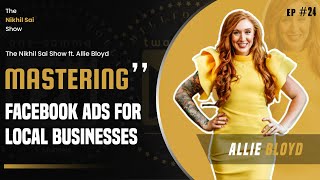
Allie Bloyd, founder of a 7-figure marketing agency, explains how local brick-and-mortar businesses scale with Facebook ads and follow-up systems. She identifies three mistakes: weak online presence, poor follow-up, and unrealistic ROI expectations. Her tech stack centers on HighLevel, Twilio, and Google My Business.
Chapters
We are live, we are live, internet entrepreneurs! Hey guys, hope everyone is doing great. First of all, everyone who's watching this, welcome to Internet Entrepreneur Freedom Show, which is hosted by me, Dean Nikhil Sai. And guess what? I'm excited to tell you that I have another 2 Comma Club Award winner to join the show right now. Super exciting, correct? And guess who is the guest today? She is one of the most well-known digital marketers, especially for local businesses, helped multiple businesses scale their business from brick and mortar to take it online, generate leads, do the right follow-up system, and scale it up to the roof. And she recently is going to release her new book as well. I'm super excited to announce that one of my favorite digital marketers, Ali Blyde, is going to join the show right now. Let's not waste any time and welcome Ali Blyde, who is owner and CEO at Ali Blyde Media. Hey, Ali, hope you're having a great time.
Yeah, thanks for having me.
Absolutely, Ali. Super excited to have you on, Ali, and thank you so much for joining on time. And everyone who's watching the show right now, please make sure to put hashtag live if you're watching this live, hashtag replay if you're watching this on replay. And Ali is with us for almost 30 minutes from now, so if you have any more questions regarding how to use Facebook ads, how to scale a local business, what is the right tools to use to scale a business, please make sure to comment down and I will be super happy to reply your questions. And Ali, let's not waste any time. Super excited. Start with your backstory, like how did all this started?
Yeah, so I have been in marketing essentially for about a decade now. I was actually in school to become a nurse, and so I was, you know, I finished 2 years of college, uh, pre-nursing, and then I realized I did not want to do that. I knew that I could not thrive in a hospital type of environment. It would just crush my soul, essentially. So I took semester off and really just try to figure out what it is I really truly wanted out of life. And I had this idea for a business that was very focused on graphic design. And so I bought some graphic design programs and just started playing with them to try and create what I would need for this little business idea. And through that, I became really passionate about it. And I had always loved marketing. I from the time I was a little girl, I would, you know, make up little jingle, like commercial jingles and things like that. So it's always something I've been interested in, but I really was able to kind of find my own artistic creativity through that. My brother's actually an incredible artist. He is a tattoo artist, he does drawing, and he's always been amazing. And I never really saw myself as like the art person, but this was something that had I never tried it, I never would have found that. And through that, I decided to go back to school for graphic design and marketing. And I think that was probably one of the best decisions of my life, mainly because I was able to really focus on the skills that I needed, something I was passionate about. I went to several different colleges, honestly. And so the college I ended up graduating from was much different than the other colleges I had gone to. It was smaller, small class sizes, hands-on work. We didn't take tests, we just did projects to show the skills. And it really showed me what a massive difference the place you go to get your education can have on your life. But ultimately from there, I ended up getting an internship. They called it an externship where I went to school. And so I did that while I was still in school. I got a job at a publishing company that did local trade magazines. So the audience was local business owners and the magazines they printed were to help these local business owners grow their business or, you know, sales, marketing, management, technology, all of those different things. And I really came to love it. I was, you know, doing just the graphic design and the marketing stuff when I started, but they asked me to help them launch a brand new magazine and it was for jewelry stores. So I started learning how to sell advertising. I did the interviews and the writing. I pretty much did everything for that magazine, and it really showed me first and foremost that I was born to be an entrepreneur, that I needed to have my business at some point or I would never truly be fulfilled. And also just a passion for helping local businesses. And from there, I ended up working as the marketing director for two pretty large home improvement and remodeling companies, and I was able to see things really from a 360 viewpoint, being in-house at a business like that, there's really no experience that you can get as a marketer that would be better than that, in my opinion, because I was able to see the problems my clients faced on a daily basis. I knew them inside and out, and I also had the flexibility to be able to try new things and learn new things and not necessarily be stressed out while I was doing it. So I know there's this big like no 9-to-5 culture in entrepreneurship, which I could never go back to working for anyone else at this point. But working for others in my chosen field was a tremendous leg up for me because I knew a lot more than most marketers did, because I knew more than just the digital side. I knew how the businesses operated internally. I knew a lot about sales at that point. And so it just gave me a different perspective that allowed me to create solutions that actually work for local businesses, um, not just get a lead and then, hey, it's all on you. It's really a start-to-finish type of process. So after that, I worked in those businesses for about 5 years, and I loved it. But, um, the truth is there's only so much money that a logical business owner can ever be able to pay you, and I was not content with that. I also knew that if I didn't start a business, I was I was gonna be very unhappy. I was getting to a point where I was just not feeling like I was living the life I was supposed to live, and I just decided to go for it. And my daughter was about 1 year old at the time, so you would think it would make it more difficult. It wasn't hard to do that with her as a young child at all, and everything's been going really great ever since. It's definitely not a cakewalk. Um, business is never a cakewalk, no matter what anybody tells you. So I've also been a really hard worker. Um, I have worked— my first job, I was like, I worked at Burger King so I could pay for a cell phone. My parents wouldn't buy me one unless I could pay for it myself. And I don't think I've worked less than a 60-hour week my entire life, probably. So I was serving, bartending when I was in college, and great work ethic experience, but also really shows you how to talk to people and how to engage and communicate because that's really what marketing and sales are all about. And so that's kind of it. Yeah, I've been running my own business for 3 years now and I love it. I can't imagine doing anything else besides writing, which we'll talk about when I guess we talk about my book. But yeah, that's really kind of the backstory.
Absolutely, Ali, that's super amazing. Like trying to be a nurse to actually becoming a 7-figure business owner who is helping other local businesses to scale up. That's a great journey. And like, I really see the work ethic and the deep intentions to really level up yourself is what I see in all of your backstory, right? It's always striving to be the best version of yourself and helping other people with you to strive themselves as well. And that's amazing. And Ali, like, you are well-known digital marketing expert helping people with Facebook ads and cool stuff, right? So like, let's get to the next question, which is more related to your specific niche. So like, A lot of people have this misconception on Facebook ads is same for online business, offline business, like everything is same. But like, what do you think in your opinion? Like, what is the main difference between using Facebook ads for local business and an online business?
Yeah, there are a lot of similarities, but definitely pretty stark differences. So the first thing is audiences. Most people don't understand that with a local business, you're simply never going to hit a certain size audience. But that doesn't mean that you have zero targeting options because you want a larger audience. Most of the people that I work with, I've done a lot with like high ticket or higher end products and services. I've done some like lower ticket stuff as well, but they all, you know, everybody wants to reach a higher end person that has more disposable income because that's the person that's going to be able to spend more money with their business. And so a lot of people that I start working with, the ads that they've been running, the targeting has been completely open, like 18 to 65 plus, both genders, no interest, no nothing, uh, really wide radius. And even in a smaller area, you still want to be specific about who you're reaching if that's the only type of person who can really buy from you. So I work with a lot of people in like remodeling, home improvement, and a variety of different industries, but that's one I've worked with for a long time, mainly because of my background. And you know, somebody that's 20 years old is not buying a high-end model. I don't care how much they wanted, it's not feasible for them. And so there's no point in targeting those people with your ads just to have a larger audience size. So that's the first thing, you have to get a bit more creative sometimes with your audiences. And you also have to understand that it's a long game. You can get great short-term results, but any local business, they're actually there to build a relationship with their community. They're not just, hey, if you're interested, here's my stuff, and if you don't buy it in 7 days, I'm moving on. You know, you want to keep showing up. And so that means the content side of it is sometimes it needs to be a bit more strong because you don't just want to put out an ad. You really want to tell a story. You also want to show that you're a part of this community and you want to make sure that because the audiences are small, they're not seeing the same thing every day forever. You have to refresh your ads a bit more frequently. And also the back end is probably the most significant difference. And that's because with e-commerce, the sale is literally happening right there online. If the sale does not happen, it's going to be automations and follow-up campaigns and retargeting that gets them to purchase. And if they don't purchase, they don't purchase. However, with a local business, 9 times out of 10, that's not the case. They need to have some type of conversation with someone before they buy. And it could be that they need someone to physically walk into their location in order to buy. It could be that they need to get them on a call, like a Skype or Zoom call. It could be an in-person appointment, and sometimes it could be like a Messenger-style conversation, but that is not something you really have to deal with quite as much in the e-com space. So the problem is a lot of the marketers that are working with local businesses, they see their job as, you know, bringing in the leads and that's it. And if that's all you do, your clients will not see a return on investment. They're not going to stay with you long term. You're not going to really know what's going wrong and why these leads aren't turning into real paying customers. So the backend, what happens after that lead comes in, is much, much, much more important. And so that's something that I was able to create systems around. And there still is work that has to be done by that local business owner. So it's not something that will ever be totally hands-off for them or their team necessarily. But your job should be to get them as close as humanly possible to that sale and to that sales conversation, and then instruct the clients on how to really take it from there, because a lot of them don't know either. They haven't been traditionally trained in sales, and so they just don't know what they don't know. And so you really have to be a little bit more of a consultant where some of that is concerned. Some things you can do for them, other things you can't, but you can guide them on what they're doing wrong. Things they can do to improve, etc. So I think those are probably the, the main differences. Everything else is fairly similar. You do end up just noticing certain things, but I think it's really kind of a product versus service thing, less than an e-commerce versus local. So yeah, that's, that's kind of my thoughts.
Absolutely. Thank you so much for that. And that will really help a lot of businesses. Who are still struggling with the Facebook ads, especially the local business owners, right? Like they hire agencies, but you know, all the local agencies do is just like pumping in leads. And I just believe that what you just mentioned really makes sense. Like the backend is more important than just getting leads, right? Like there is no perfect backend system which can convert those leads into sales. It doesn't matter even if you have a million leads in your pipeline, doesn't matter, right? Absolutely. And Ali, let's get into the next question. Like Like, what do you think are the 3 main mistakes local businesses make in 2021?
Well, it used to be that nobody was online, and since 2020, a lot more businesses have come online. They've obviously seen the necessity of that, um, but some still are not really where they need to be. And part of it is that they're— they've been hit financially, and so they're kind of forced to figure this out themselves if they don't have the extra budget to hire someone. Um, but making sure that you're absolutely everywhere your customers are online is critical. It doesn't matter if you serve them in a real way, like in person, you still have to remind them about your business. You still have to entice them to visit your business or buy from your business. So you need to be showing up consistently. The other thing is definitely follow-up. We already talked about that. Definitely a really big issue. That's why you as the marketer have to go the extra mile and implement processes and systems that help them as much as possible. And then the other thing I think is not really understanding marketing as a whole, because for so many businesses they have unrealistic expectations about marketing and return on investment. So I really try and dive into this very clearly before getting started with someone to make sure that they understand what's realistic, what's unrealistic, why is this realistic? Etc. And it's mainly that you want to be making more than you're spending on your advertising and your margins have to be taken into account. But at the same time, a marketer cannot control your margins. So if you have really bad margins, that's not the marketer's problem. They're going to do the very best they can. But there are still things you need to do in your own business to make the process work more smoothly. Same thing with sales, just not understanding how important the sales process is to the marketing results. It's all tied together. So just kind of learning more about what is realistic, what's not, what should I be doing to help this person out, or what should I be doing personally if I'm really learning how to do it myself?
Absolutely. And I genuinely believe that those are the main mistakes every business owner really makes right now, right? They don't really have a great sales process in their business and stuff like that. So let's get into the next quick question, like You know, like getting local business, like leads for local business is not that hard. Like they could just put up a Facebook ad and they can just get some leads pumping in within a few hours, right? Like what are the best tools currently available to, you know, do the right follow-up for all the leads they get?
Yeah, so I love HighLevel. That is my favorite backend platform. I've tried just about everything under the sun and it is about as close as you can get to an all-in-one platform. So we spend a lot of time and effort focusing on HighLevel, not just for our clients, but I have a 12-month mentorship and all of my students end up getting on it for them and their clients. So we spend just a ton of time really going through this, creating effective snapshots for all of these different types of local businesses. And Twilio is part of that, which is something else I highly recommend. Agorapulse is great for managing social media if you're going to be doing organic content. Um, but I would say that overall, HighLevel gives us just about everything we need. So it does, you know, 8 to 10, maybe more things that we actually use, um, such as a CRM. So you have to have a CRM, you have to have email autoresponder, text message marketing is crucial, um, tracking for your ads is really, really important. Google My Business and Google Local, that is something that local businesses should really be looking into right now, even running paid ads for those. They're pretty simple and straightforward. So not a ton of time or effort has to go into that, but it's just really something that you can split off a little bit of your budget and focus on, on that side. So yeah, that's what I would say. Check in to HighLevel. And I do have 3 free text message campaigns as one of my freebies right now through one of my snapshots. So if anybody would like that link, I'd be happy to share that afterwards.
Yeah, absolutely. Like, please make sure, like, just give me that link and I'm gonna post that in the comment section so anyone can just pick that free guide. And that will really help. Like, that already done for you, SMS packages, will really help people who are watching this. And that's amazing. Like, HighLevel does really cover a lot of stuff, and most of my clients also do use them, especially for the follow-up systems and basic funnels required. And that's— thank you so much, Ali. That's awesome. Let's get into the next question. Like, you know, it's really easy to increase the average customer spend on, you know, online sales for, like, e-commerce. Like, you can just pump up with another sales video talking about a one-click upsell. You just get them to the next course, next program, next coaching and stuff like that pretty easily. And like, like it's really different. It's a different ball game completely for a local business. Like, what do you think are the best ways to increase the average customer spend for a local business? Because really a lot of local businesses are struggling with this. Yeah.
So the first thing you have to look at is the offer and the offer alone can increase the spend pretty significantly. I have seen this time and time again. And it's mainly because businesses are not thinking about their average customer spend themselves. They're not looking at that as a key metric, and it absolutely is. So bundle offers are a great way to do this. So if you have different products or services that belong together, bundle them together and advertise it. If people need those things together anyway, or they should have them together, it only makes sense. And also doing like a buy 3, get 1 free type of thing, encouraging people to do gifting with some of these items, you know, depending on what it is you're selling. Also doing recurring revenue offers. So like maintenance plans and long-term things that someone can sign up for. And even if it's not a tremendous amount of money, if your average customer stays with you for 5 years, it's going to turn into quite a bit of money over time. So every dollar matters in terms of the average spend. And I think the offer is probably the best way to do that, but also Follow-up, making sure that you're presenting new offers to people who already buy things, making sure that if someone does not buy, that you don't just cut ties. You have to continue to engage them, and reactivation campaigns is a great way to do that. That's something that's actually included in that snapshot. Um, these are awesome for e-commerce but also local businesses, and you can get a ton of new clients and sales from these. And all it is It's presenting a new offer to people who are already on your list. Really not that complicated, but it works and most people just aren't doing that.
Absolutely. And that really makes a lot of sense. Like a lot of business people can actually package all the, all the products they have, services they have, and sell them on a larger scale for the existing customers and the non-buyers as well. And I genuinely believe it can really bump up the conversions dramatically. And Ali, like, I'm really excited to talk about your upcoming book. Can you please tell us about your upcoming book?
I certainly can. So this is my, this is my book. I just got a sweatshirt. So it's called Uncensored America.
That's amazing.
Yeah, it's a poetry book, so it's really different. It's not my, you know, my audience demo at all, but I do think that a lot of people are really going to enjoy it that are in my audience, on my list. And it's something that is super personal to me because I write poetry every day. Anyway. I don't really share it with people. It's just something I've always done. And over the last year, I've just started sharing a little bit more of it, and I got a great response from people. So I decided to publish it, and it's really just more of something I, I wanted to explore for fun. But I think it can be really powerful. I'm very excited for people to read it and get the feedback. It's— it covers a broad range of topics but things that people have difficulty talking about with others a lot of the time, things that are, you know, somewhat controversial. But poetry is something that allows people to explore these things in a new way, a non-threatening way, because it's open to interpretation and it's allowing you to draw your own conclusions. So I'm so excited. It comes out in about 2 weeks on April 9th. And if you guys sign up for the preorder list at uncensoredamerica.com, if you buy the book on the day it comes out and you'll get that opportunity, if you're on that list, you'll get a signed copy, but you'll also get one of my $500 courses for free. So this is something that can really, really help aspiring business owners or local business owners or online business owners. Doesn't really matter, but it's It's a great course and it's all about organic marketing. So it can work for, you know, those who are already spending money on paid ads, but it doesn't technically require a dollar in ad spend to put the plan into action. And it's how I grew my business to several hundred thousand dollars before I ever started using paid ads for myself. And so it definitely works. And so I just want to help people and give them a cool bonus for buying the book and leaving a review. So Very excited about that. I'd love for you guys to get on that list.
Super excited for that, Ali. And thank you so much for the amazing book. And like, I genuinely believe like not a lot of people who are into marketing write poems, right? Like you do that and that's awesome. Yeah, that's really, really awesome. I'm super excited to read your book and hopefully a lot of people who are watching this show can also grab the book and also have the access to Organic Training because I really feel that organic has the potential to take any business to at least 6-figure level. Easily and surpass that. And that's when they need to actually start running ads, because a lot of people do the mistake of first of all running ads, spending money, then blame that it doesn't work, but they're following the wrong sequence. And thank you so much, Ali. And hopefully your book will be doing amazing, and wishing you great success with that. Hopefully you sell more than a million copies for your book. Let's say, bro. Absolutely, absolutely, Ali. So let's get into the next question, Ali, as we have a little time. So what are the main tools? Like you have a lot of stuff on tables, clients, coaching programs, local businesses, your agency stuff, media company, all the cool stuff, even your poetry. Like you have a lot of stuff on the table, right? So like how do you manage all of this stuff and make sure that you're at your productivity level? Can you please explain that? Any tools you use for managing?
Yeah, you know, that's always kind of an evolution in all honesty. I use Slack for my team and for certain types of clients. I also use Voxer to communicate with some of my key team members. We do use Asana. That's mainly more for my team than for me. It's not really, it's not really the best place for me personally to do my, my list and things like that. I've always been just a writer. I write in a notebook and I actually just got this for my birthday last week. It's called the Remarkable Tablet. So it's like a notebook that I can—
amazing.
Yeah. Like, so for me, it's a really good tool because that is how I naturally organize myself. I've— I'm just a list person. I write my list and I do my list and I'm able to just effectively work well that way. Not everybody is like that, but Asana has worked well for my team especially. I've used Trello. I liked that too, but there were some challenges with that. And just the CRM. So for sales and marketing, that's the best way to stay organized on the sales side to make sure that you keep moving forward in the right direction. And then I just use different Google Sheets for different types of things to help keep me organized. But those are the key tools that we're using for project management, organization, productivity, things like that.
Absolutely. Thank you so much for being super transparent and explaining the way you organize yourself. And like, that is the best way, like noting down things and ticking them off. I think that really gives us a sense of doing stuff. Every time you kick off something, you'll be like, hey, I got something done, and you get more excited to do the next work. And that really inspires you to move forward and keep on going, right? Absolutely, Ali. So let's get into the next question, Ali. So like, what will be a suggestion to a 20-year-old you or someone who is just getting started with their business?
The first thing I would say is if you truly think that you want to start a business, just do it. Being young and doing it is actually the very I think that's the best thing you can do because you don't have a lot of financial pressures and, you know, things change in life and you may see it as like being really hard because you're young, but it actually allows you to take more risks because you have very little to lose a lot of the time. You know, most young people, regardless of where they came from, are just kind of broke and trying to figure out life. And it's a great time to do it. I think that there is nothing more rewarding than entrepreneurship, but make sure that you go into something that you're passionate about because that really, really matters. I'm sure I probably could have been a successful nurse or, you know, I wanted to be like a nurse practitioner or something. But at the same time, I would have been miserable. I know I still would have been doing good things, but that's not what my soul needs to feel happy. And being happy and being excited about what you do, if you don't have that, it doesn't matter how much money you make. Money is not going to make you happy. You have to find fulfillment in what you're doing. So yeah, just go for it. But take that time to ask yourself, What, what do I love to do? What have I always loved to do? Because I look back at my life and I can already see, like, I've been writing poetry since I was 5. I was doing those little commercial jingles and all of those things. I've literally been that way my whole life. Nobody ever really encourages young people to pursue those types of things, unfortunately. So you have to be the person that gets to know yourself and say, hey, what am I naturally good at? What am I naturally drawn to? Don't worry about the stuff you're not good at. It doesn't matter. You don't have to go into those things. Focus on really improving your skills and what you already know you love, and you'll go far. And be willing to work hard. It's not easy.
That's one of the best advices I've ever heard. I'm very sure about that, Ali. Thank you so much for that.
Oh, you're welcome.
I'm happy to help somebody. Absolutely. It really shocked me right there, right? So it really will hit a lot more people as well. So let's get to the next question, Ali. What are your life's biggest achievements so far and any bigger goals next?
Yeah, honestly, writing this book is kind of like a dream come true in a lot of ways. I always thought about doing it, but now that I'm doing it, it's super exciting. And being a mom, honestly, I never thought I wanted kids, but being a mom is just the best thing for me. And then we just bought a farm, so I'm gonna be like doing a lot of cool stuff on the farm, and I'm gonna be doing some events and things like that. We'll have like an animal sanctuary type of thing. And that's something I am really, really excited about. So that's kind of my next big goal is, you know, figuring all of that out. And the book coming out is, is definitely something that I've wanted my whole life. So I'm very excited.
Absolutely. We are super excited as well, Allie. We'll definitely look forward to taking a copy of your book, grab that, and also grab your organic course as well. So hopefully— yeah, I'm gonna drop the link in the comment Yes.
Yeah, they can just buy it for the person. I'm sure you're going to love the book too.
Absolutely. Well worth it, 100%. And like, you came so far, like, you know, trying to be a nurse, trying to—
I'm so sorry, I, I, I really have to go. Um, I have this call coming in, it's 11:02, but thank you so much for your time. It's been awesome.
Absolutely. Thank you so much, Ali. We are looking forward. And everyone, hopefully you enjoyed the complete session. Actually, So Ali joined 5 minutes late, so she's super busy right now. She have an important meeting. So hopefully everyone who's watching this enjoy the complete session. So it's, it's, it's completely up for today, guys. So excited for another interview. Please stay tuned, guys, and hopefully you love the interview today. This is Nikhil Sai signing off. Peace out.
More from Nikhil










BURNED $1.5M in his 17years online #digitalmarketing #entrepreneur #onlinebusiness
