How Nick Went From Working At Prison To Building 7 Figure Company | The Nikhil Sai Show 53
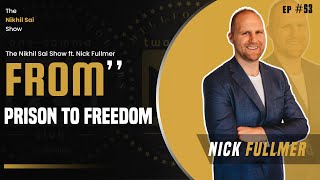
Nick Fullmer went from prison guard to building a seven-figure education business in real estate. He started with wholesaling and surplus-fund recovery on minimal capital, then scaled through aggressive multi-channel marketing and YouTube. He credits focus, mentorship, and avoiding shiny-object syndrome.
Chapters
How would you like to learn the secrets of two Kama Club Award winners on how they have built successful online businesses from almost nowhere to now running multiple 7 and 8-figure businesses by following the simple fundamentals of life? And let's see how they have used the powerful funnel systems, processes, automation, and social media to help their business grow at a different pace. Let's dive into their journey to grasp the strategy, mindset, action plan of how they have done it from almost nowhere to the way up to 7 figures. We are going to uncover and pick their brains of the top performing entrepreneurs on this show, how they have done it and how you can do it too. You are listening to D Nikhil Sai, the host, and welcome to The Nikhil Sai Show. What's going on? What's going on everyone who's listening to this podcast right now? Welcome to The Nikhil Sai Show, which is hosted by me, D Nikhil Sai. And guess what's going on today? We are back with another amazing 2 Karma Club interview. This is going to be crazy, so make sure to stick around. This guy is crazy when it comes to real estate and helping people to make consistent 5-6 figures investing passively in real estate. He's a real estate genius, has been helping thousands of people with his knowledge. So now make sure to pick a pen and paper and start listening to this podcast. Note down the stuff about how you can actually get started in real estate and scale it to the roof. So let's not waste any time and actually welcome Nick Fullmer, CEO of OverAge Syndicate.
Hey Nick, hey, how's it going? Thank you for having me.
Absolutely, pleasure to have you, brother Nick. Glad that you actually joined us on time today. So Nick, this is a pretty crazy journey, brother. We would love to hear how did you actually get started, what is your complete backstory?
Yeah, so I started kind of my journey back in 2014. I, um, got engaged to my now wife and had to make a, uh, a career change. So prior to that, I worked for the U.S. Forest Service. I used to— I was doing janitorial work, and I was like, that's not going to cut it, I need to get a real job. So I became a prison guard at the Utah State Prison. I quickly learned in that job that that's not what I wanted to do for the next 20 to 30 years. It was very rough, you know, 12-hour graveyard shifts, not the best working environment. And the pay was terrible. I think I was making less than $40K a year at that job, which is not a lot here in the U.S. Um, and so I started to look for other avenues to replace my job. Had heard that most millionaires had been made in real estate, so that's the avenue I went down. Started looking up YouTube videos, buying courses, reading books about real estate, and had some success in a few different strategies. I started out wholesaling real estate, then I discovered the strategy that I do today, which is recovering surplus funds from tax sales and foreclosures. And I was also a realtor at one time. So fast forward, I was able to leave my job as a prison guard and focus on what I do today, which is recovering surplus funds. And that quickly turned into a six-figure business. Which then launched me into the education world, the online education, which then turned into another business. And here we are today.
Wow, wow, wow. That's, that's exciting shift, Nick. And I really understand that a lot of people who are stuck in that 9 to 5 is they really don't want to be, right? They need to learn the way how you pivoted and they need to take that learning curve and have that courage that, okay, they can figure out something else. It's time to just move, right? And we love the courage on how you have done it. And buddy, you've been in real estate for a long time, you know, doing wholesaling, even being a realtor, now working with surplus funds and stuff like that. My like main question around the investment space is like, why real estate? Like there are so many investment opportunities, right? Like there's Bitcoin, there is bank FD funds, 911, something like that, like crazy. All of these fund opportunities where you can grow, right? Why real estate is the best opportunity for you?
So for me, I had just heard that most millionaires had made their wealth in real estate, so that was kind of the biggest thing for me. But real estate offers a lot of different benefits when it comes to investing. Not only can you, you can invest for cash flow, you can also get appreciation. The tax benefits are extremely beneficial, especially if you're a business owner. If you have a high-income job or a high-income business and you need to write off a lot of taxes, real estate is a very good vehicle to do that. So just the, um, there are so many pros to real estate that it's— that you just don't get with other asset classes such as crypto or stocks or whatever you have. You know, those are all good and fine. I mean, I invest in other things as well outside of real estate, but real estate just has so many advantages to it, especially if you're a business owner.
Mm-hmm. Absolutely. Yeah, that's really exciting. People need to consider the pros and cons whenever looking at the investment standpoint. Right. And one of the main confusion is, Nick, actually, as you know, You've been coaching a lot of people. So technically, whenever they hear the real estate word, especially someone who's already making good money in their job or business, right, they'd be like, oh, I don't have time in real estate, I don't learn, how can I learn it, right? So what is your take on how someone can actually get started in real estate as a beginner?
Great question. Um, the biggest thing I would say is first figure out what you want. Like, what are— what is your end goal? Is it to be able to have passive income coming in so you can quit your job? Or do you just want to be able to have a side hustle where you can get big checks coming in to supplement your existing job or business? Um, whatever it is, whatever your goal is, first figure that out and then learn different strategies that will take you to where you want to be. Okay, um, as far as getting started, I can share my experience, which is When I started, I didn't really have money to invest, which maybe many people could relate to. Obviously, you need money or you need access to money to buy properties. So I focused on strategies that didn't really need a lot of capital. One of those strategies could be wholesaling, which is what I did. Getting your realtor's license is one way because that also gives you a good foundation, a good education on how real estate works. I think it's beneficial to go through that process for anyone interested in real estate, just for the knowledge alone. Um, and anything— any service-related business in real estate is a great way to start because obviously you don't need to have a lot of capital to do that. So in my business, when I'm helping homeowners recover surplus funds, we're not buying property, we're just performing a service for people So it's a strategy that people can use that doesn't require a lot of upfront capital. You just have to be able to fulfill on your services that you offer to your clients.
Yeah, absolutely. I think that's a key for a lot of people. Whenever they hear this keyword like real estate, they think about that million-dollar property and they'd be like, oh, I don't have a million dollars, and they stop the thoughts right there. They need to be looking at the way you mentioned, the different perspective of how can they start a real estate business. The lowest capital possible with most lucrative nature. That, that's amazing. Thank you so much for that, uh, opportunity to mention here. Let's get in the next question, brother. We would love to hear, as you already covered this stuff, what are the main benefits of investing in real estate? Like, as an investor standpoint, let's say if someone is actually investing in real estate, what are the in-detail benefits they actually have?
So the biggest thing is, it can be one of the biggest reasons I like real estate is it's a high— it can be a high-profit business. Um, meaning, let's say for example, it takes me 10 to 20 hours to do a deal, right, to put a deal together. And if I make $5,000 on that deal, well, what's my hourly rate? You know, it's, it's much better than any job out there, you know. For if I make $10,000, so the amount of time that you invest in a deal the reward is significantly greater in a lot of instances with, with real estate. So that's one reason that I like it, especially in my business. Um, you know, I may spend 10 hours, but if I make $5,000 or $10,000 or whatever, that's a good return of investment for my time. Okay, much better than any job you can find, obviously. Um, and then there's obviously the other ones I've already mentioned. There's, you know, you can invest for cash flow, you can get cash flow coming in, you and get tax savings so you can lower your tax burden so you don't have to pay— give so much of your money away to the government. You can benefit from appreciation. You know, one of my first properties that I bought, uh, we bought it for about $150,000, and I think it was like 2 years later sold it for over $200,000. So that was a good return on that investment. Those are just some of the— some of the pros and benefits of investing in real estate.
Yeah, absolutely. And one thing people really need to consider is a quick turnaround on how quick the money you're investing is doubling down, right? Unlike the stock market, which grows at a 12% year growth or something like that, real estate has huge potential. Like, that's where people nail down it to finding the right property, right? Like, that's definitely the core expertise here.
Yeah. And one thing I'll add too, one of the benefits of real estate is you have the opportunity to get infinite returns. And what do I mean by that? What I mean is, like, for my business, if I'm doing a service for someone, helping them recover surplus funds, and let's say I help them recover $10,000, but I didn't have to pay anything because I'm not buying anything and I didn't have to pay anything. But I get— let's say I just get $3,000 of that $10,000. What's my return? I invested nothing and got $3,000 back. I just invested my time. So that is an infinite return on your investment.
Yeah, that's, that's wonderful, brother. Yeah, I think people really need to look at this opportunity of how they can actually get into surplus funds, but that's really exciting, brother. So one other thing is a lot of investors, especially looking at the investment market, they get confused on like, hey, I don't have the expertise, I don't understand properties, the yearly growth, you know, the cash flow, I don't have time to manage the property, I can't maintain it, like how can I do this and that, right? The buzz around it, right? So I'd love to hear, as a non-expert, like without any expertise of real estate, right? If someone has a fund, a big fund, how they can actually invest and let their money grow on a consistent basis?
Yeah. So how do— that's a great question. There is, you know, there's actually over 50 different ways that you can make money in real estate. If you're looking for something that's more hands-off and you don't have the experience, there are real estate funds out there that you can invest in. They may, they may go— what you do is you give them their money or your money they invest it in maybe an apartment building or a mobile home park. They'll get a return, and then they'll give you— they share a percentage of that return with you, the investor. You can also get into private lending, which, if you have money to lend to people, you can find somebody that's an expert, maybe somebody that has a track record of fixing properties and flipping them for a profit. You can lend them money, um, and In return, they'll give you a percentage every month or maybe a percentage of the deal. There's even platforms out there nowadays, crowdfunding platforms, that you can go and, you know, just Google crowdfunding real estate and you can invest your money in specific projects that you liked and you can earn a return. I'll share one other one with you. There's another one called tax liens where in the US, if somebody doesn't pay their property taxes The county will then offer up tax liens, meaning you pay off those property taxes and then that homeowner has to pay you back your investment plus a certain amount of interest on top of that in order to keep their home. If they don't, you could get their home for pennies on the dollar. And those interest rates, they can vary anywhere from, you know, 5 to 20-30% in some states.
So, oh my God, wow, that's an amazing opportunity, right? Like, literally, that's a great opportunity right there. Wow, that's amazing, Nick. I think this is opening up a lot of opportunities for entrepreneurs, especially who are actually listening to this podcast. So guys, make sure to note every single opportunity down and see which one fits, and you can just go in there, right? And Nick, one of the main problems when someone is actually trying to get in real estate, right, like finding the best deal, right? And as you've been into wholesaling and your property management and different investment strategies to your clients and yourself. We would love to hear what is your take on finding the best deals in the current marketplace.
So finding the best deals really comes down to, um, being able to market and find leads. So like for me, I, I use multiple avenues to market to potential deals, whether it's, uh, reaching out via Facebook, social media, messaging, um just straight up cold calling or sending text messages or email campaigns, um, even just knocking on doors or sending letters to people. Those still work into— those methods still work in today's environment.
Wow.
It's really finding the best deal is basically how good are you at marketing. You know, it goes to the same with if you run any business. Success in any business comes down to two things: how good are you at getting leads and how good at you are at converting those leads into paying customers. And so when it comes to real estate, if you're looking to acquire property, you want to be able to find the most motivated seller, or the person that needs to sell their property at a very quickly, because when you can find those people, they're more willing to sell you at a discount. And that's how you find deals, right? In my business, our leads are we find people that have lost their home to a foreclosure or tax sale, but then somebody bought it and paid more than what was owed to the bank. So there's money left over. That's what we refer to as a surplus. And so our, our deals are just— what we do is we monitor foreclosures and tax sales, see what properties sell for more than what was owed, and then we recover those funds for the previous homeowner and we take a commission on the back end.
Wow, that's an amazing strategy. So there is like little to no capital involved. All you're doing is getting that money back and you're taking a commission on it. That's, that's a beautiful way, and that's amazing, Nick. Thanks for sharing amazing strategies on getting the best deals. Again, comes down to doing the marketing right, guys. So who is listening, if you're struggling to get the best deals in real estate, start marketing yourself the right way, and that should be fun for sure. So Nick, actually being in real estate and making yourself financially free with the real estate to actually helping people to learn real estate and scaling that education business to over 7 figures. So you'd love to hear the entire journey of how you have scaled this.
Yeah, absolutely. Um, I started my online business in 2019, so I haven't been— I haven't been involved in the online space for very long, uh, just a little over 2 years. So what I first started doing is I simply started sharing what I was doing in real estate. I would post videos on YouTube and share the deals that I had done and share kind of some tips and answer questions for people. And that led me to, you know, build an education course to teach people what I was doing. And so if for anyone that's looking to, you know, maybe start an online business, whether it's an education business or something The first thing you need to do is just share what you do, share the results that you've gotten for yourself, or share the results you've gotten for others. And there's many ways to do that. You can start a podcast, you can make YouTube videos. They don't have to be fancy. You can shoot them right on your cell phone. And so that's how I started. So I started posting YouTube videos on my YouTube channel. And then I, I hired a mentor. And took some classes on digital advertising. So how to run Facebook ads, how to run Google ads. And I started doing that about a year ago, a little over a year ago, and that really helped my business. So the YouTube channel, which was my organic traffic, and then my digital ads, my Facebook and YouTube advertising, was my paid traffic. And those things combined is what led me to break that 7-figure mark. So it's really important that I think anyone that wants to do the 7 figures have a combination of organic traffic and paid traffic.
Yeah, that's, that's really amazing. They can— a lot of people get this wrong and they start dumping tens of thousands of dollars into ads and claim that this isn't working. But the problem is, just the way you mentioned, they need to proof of the concept. They need to make the proof of concept with organic, just like the way you saw potential customers looking at your YouTube videos, your post, your content, and you saw that people are craving for it, that's when you actually marketed it with your own money, right? That's amazing. And a lot of things, uh, a lot of things people need to consider is, as you mentioned, launching imperfectly, right? Like not waiting for the fancy camera but shooting the stuff on your phone, right? Which is freaking amazing. That's amazing, Nick. We love the impact you're actually creating on this planet, you know, with your investment, uh, sorry, investment strategy sharing and stuff like that. So I'd love to get to the next question, brother. I would wonder like how you're actually managing your day and time. You have clients to help, you got deals to manage, you got projects you need to manage, that surplus funds and all. So I would love to hear what kind of tools and systems you use to manage your project clients for productivity.
Yeah, so I, I'm a pretty simple person. Um, one of my mentors, his name is Andy Frisella, um, highly recommend his podcast, The MSEO Project. Just really good business advice if you're, if you're someone in business. So that's someone I follow. And I got this concept from him. It's called a power list. And it's simply just, what are the 5 things that you need to do today that are going to move you forward? I'll be honest, I'm not perfect. I don't do it every day. But when I do do it, when I make that list of those 5 key things, and I do those 5 things, um, it makes all the difference. Um, you have to— it causes you to be intentional and really focus on what it is that you need to do, which also causes you to do the important things and not just the things that are getting thrown at your face as a business owner. So that's one thing that I recommend is, is just write down the 5 things that are going to move you forward, the 5 things that are going to where you're working on your business, not in your business, so to speak. And maybe just using a simple calendar like Google Calendars and just putting those 5 things in the calendar and then just crossing them off your list as you go through them.
Wow, simple as that. That's, that's really amazing, Nick. And one thing you really mentioned, I love it, which is all the 5 tasks you're going to do, that should be the vision of your company, not the tasks inside your company. So like working on the business. Be hiring a person or getting that stuff done, delegating. That's, that's really amazing, Nick. And we would love to hear, do you have any kind of routines in your daily life? We would love to hear, do you have any routines?
Um, I should probably have more routines, uh, but I don't have— I try to, I try to read on a daily basis and increase my knowledge, you know, whether that's a business book or— well, you can see there's a ton of books behind me. Um, so reading or listening to a podcast about business, um, That is something that I try to do every day. Um, I'm not— again, I'm not 100% perfect. Some days I miss, but I also try to hit the gym, you know, on the daily basis. I think that's really important as well. I know that when I don't do my workouts, I see a decline in productivity and things like that, as far as clarity as well. But when I do do my workouts, it's the opposite. It's, it's good. So Those are some of the things that I do, try to feed my mind, feed my body, and just get a little better each day.
Wow, that's, that's amazing, Nick. Thank you so much for sharing your routine. Let's get to the next question, brother. So yeah, of course, you actually started as a 9-to-5 job in Utah, as in that prison stuff, right? Right. And you actually pivoted and got into real estate from wholesaling to doing different stuff. And now more about the investment strategies and stuff like that. We would love to hear if there is an opportunity to talk to a 20-year-old you. Or someone who's just getting in business, what will be your number one suggestion for them?
Well, that's a good question. I would say going back, I wish I had gotten started earlier. Meaning when I started looking into real estate and looking into, you know, learning about becoming an entrepreneur, right? I was in my late 20s, you know, like 26, 27. So if I had started 7 years earlier, I just wonder where I— where would I be today, right? So I would say get started earlier, um, you know, learn and just try new things. Because when you're young, like, and you don't have a wife or kids, if you fail, it's not going to affect many other people around you. Like, I think that time is such a an awesome time to, number one, enjoy your life, but also experiment. Try new things, try businesses, try things you're interested in. If they fail, fine, that's cool. You're going to learn along the way of what not to do in the future, which is going to help you be successful in the future. So just get started, whatever it is you want to do. If you want to start an online business, if you want to get in real estate, just start. Learn from somebody that is experienced in where you want to be that will shortcut your time to where you're to achieve your objective and, and also help you to avoid any pitfalls or mistakes. And then just go do, just try stuff, experiment, have fun with it. Don't be afraid to fail, just start, um, because most people don't even start.
Yeah, like, that's amazing, Nick. And wow, I love the point which you just mentioned, which is Even if you start and fail, no problem. 90% of the people never even start, so you're already ahead of them, right? So that's, that's amazing, Nick. So everyone who's listening to this podcast, do not procrastinate. Start doing the stuff no matter what. Even if you don't have the knowledge, it's like, fix it, jump into it, you'll figure out, right? Just like the way Nick did, right? He left his job just so that he can learn real estate. He has no clue. He started reading books and getting into courses just so he can learn, and now see where he is. I said you can do that too, not a big deal. That's amazing, Nick. Let's get to the next question. So what are your life's biggest achievements so far and any next bigger goals?
My biggest achievements, number one would be my family. I have a wonderful wife. She, uh, she's probably one of the keys to my success. Well, she is one of the keys to my success. So my wife, you know, and supporting me. We have two sons together. Um, my family is my biggest achievement. I've done some cool things in business so far, you know, obviously I've created a 7-figure business. That's cool. We'll just continue to grow and scale that. And, you know, it's— I'll say this, I am grateful and proud of the achievement of being able to, to create a business that replaced my job and that allowed me to gain a higher level of freedom But also, not the money is— the money is great, right? But it's what we can do with the money and what we've— I've been able to do. You know, I hope that everybody listening to this has the opportunity to, to write a six-figure check to your charity of choice. Or I hope you have whatever your dream is. I hope that you achieve that. And that's— it's going to cost money, you know, to achieve that dream, right? If you want to travel, Well, it costs money to travel, but I would say that the experiences— investing in experiences with my family, um, I'm most proud of that. And, uh, yeah, I hope that answers the question.
Yeah, it did. That's, that's really awesome, Nick. And I really love the fact that you're empowering people to think bigger, right? And the way they should look at the financial freedom and not stick to not just stick to something which they don't have passion to, right? Like, obviously you have the passion to real estate and you're killing it. So everyone should kind of have that passion and, and that persistence, consistency to stick with that passion and make it a routine. That's awesome. This will be fun. Let's get to the next question. What was your biggest mistakes in life? Maybe like business terms.
In business terms, biggest mistake, um, I think this— I think we all make this mistake. Um, I am a, uh, I'm a bit— well, I won't say victim, but I've suffered from something called shiny object syndrome. And if you're not sure what shiny object syndrome is, it's trying to do multiple things simultaneously, multitasking. Like when I first got started in real estate, I would, I would try a strategy out, I'd make have some success with it, and then I'd see something else, another strategy, and I'd be like, okay, I'm going to try this one now. And I jump from strategy to strategy to strategy, and every time I did that, what I didn't realize was I was starting from zero over and over and over again. I was restarting. So what I tell people is, if you— when you do just learn about some strategies but pick one. Or learn about some businesses that you're interested, but pick one. Focus energy and attention on a single strategy or a single business. Don't try to do multiple businesses at the same time, or don't try to execute multiple real estate strategies at the same time, because what happens is you make a little progress in each one, but it's not progress that's meaningful. And so you need to just pick one and be consistent at it, become an expert in it, and then you will see much more progress than trying to do multiple things at the same time. Does that make sense?
Yeah, yeah, absolutely, brother. I think, I think 95% of business owners just go through this shiny object, right? Even everyone needs to admit this, like once they find something working, they just try to be like, okay, let this be a side, let me try, let me start over from ground zero again and I think that's a big trap. So entrepreneurs who are actually making it big, just like you, they stick to one thing. And these wantrepreneurs who are still trying to figure out, they do 100 different things same time. They try something today, then the next week there's a different plan for them. So that's not going to get them long. So they should be focused on one pathway. And I believe, Nick, to mention, every single thing which they pick has the potential to make 7-figure business. Anything. Even they can make money with selling water bottles, right? Something like that. Obviously, but they don't stay consistent. That's where the problem lies. So guys, if you are not consistent in your business, if you're trying to change pathways day to day, stop doing it. Fix to one thing where you see the success, where is the scalability, and then just go all in. That's, that's amazing, Nick. Thanks for the answer. Let's get to the next question. Your main inspiration for success and any key people involved in the journey.
Main inspiration for success, I would, I have to give credit again to my wife. She is, she's a vision, a visionary. She's she's believed in me more than sometimes I believed in myself. And so if you're lucky to have someone like that, you're extremely blessed. Now, sometimes I know not all— not everyone has that person in their life, so sometimes you have to be that person. You've got to believe in yourself and that you can do it. Um, so she's my biggest inspiration. And honestly, the key— I would say the secret, so to speak— to any success that I've achieved is I have found people that are smarter than me, and I've listened to them and executed on what they told me to do. So that, that's been the key for me. And sometimes that requires an investment. Sometimes you have to pay those people. Sometimes you can just listen to their content, whether it's a podcast or something. But that's the biggest thing that has helped me is finding people smarter than me and just doing what they tell me to do and not changing the process, not adding my own thing into it. Just put the ego aside and just do what they tell you to do and then go from there.
Yeah, absolutely. Like, you, you beautifully articulated it. Like, a lot of people be like, oh, this dude is doing this one, let me recreate and create this new stuff. And you try that for 6 months and you're like, ah, this is not working, his stuff is not working. But guess what? You tweaked it on your own side, you made your own version. That's not going to work anyway, right? So yeah, Nick, I think that's a real key for a lot of people to cut short, not let that own learning curves, failures hit them every time, rather than cut short all of that stuff and go to someone who already seen that because they can sense your journey and say, hey man, don't do this, do this instead, right? So that will be a real hand-holding support. That's really awesome, Nick. We really enjoyed the podcast. We would love to hear where our audience kind of can find your mentoring, because you're giving so much value when it comes to the real estate space and being consistent on the space. So we'd love to hear where our audience can find your mentoring.
Yeah, so you can, uh, I've got some free trainings at overagesyndicate.com. So that's O-V-E-R-A-G-E-S-Y-N-D-I-C-A-T-E, overagesyndicate.com. And I have a lot of free content on YouTube as well. Same, same name for the channel, overagesyndicate.com.
Awesome, brother. So I'll be adding the website link as well as the YouTube channel in the podcast description, guys. So make sure to check out this cool dude. You will be learning a lot about real estate, financial freedom, and how you can start achieving your own success and make that passive income consistently, which is freaking awesome. That's really awesome, Nick. Any last— before we conclude the whole podcast session today, um, any last words of advice?
I would just say if you're a newer business owner Focus on the two main things that I mentioned earlier, I mean, what it is you have and how it can help them, and then offering that thing to your prospects. So get good at marketing and sales and you can have a successful business.
Absolutely. Like, really, really appreciate the advice, brother. Again, Nick, thank you so much for this amazing opportunity. We really enjoyed the time with you on this podcast, and thanks for amazing value. So everyone who's listening to this podcast, make sure to check his YouTube channel as well as oversyndicate.com so that you can actually get into his free trainings. And make sure to follow Nick. And hopefully you enjoy the podcast. Really listen to this, take notes, and start implementing the real estate strategies he breaks down on how you can be successful without getting into shiny object syndrome and making yourself that you're on the track path. That's awesome. So hopefully, guys, you enjoyed the podcast today and stay tuned for the next interview. This is me, the Nikhil Sai, and Nick Fuhrman signing off for today. Bye-bye.
More from Nikhil










BURNED $1.5M in his 17years online #digitalmarketing #entrepreneur #onlinebusiness
