How Rasmus Became #1 Online Coach in Denmark | The Nikhil Sai Show 56
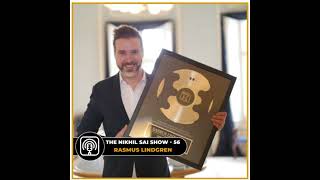
In this episode of The Nikhil Sai Show, host Nikhil Sai interviews Rasmus Lindgren, CEO of Infospray Media and a two‑time Two‑Comma Club winner, to uncover how he transformed from an IT consultant to Denmark’s leading online coach for creators. Rasmus recounts his early consulting business, the wake‑up call of becoming a father, and his pivot to e‑commerce and then to building a niche personal brand in the Danish market. He explains the "4 Ps" framework (Positioning, Prospects/Audience, Products, Promotion) he uses to help coaches, consultants, and lecturers scale from low‑ticket to high‑ticket offers, emphasizing the power of webinars (adapted from Russell Brunson’s Perfect Webinar) and mindset shifts around selling. The conversation covers his transition from low‑ticket courses to $30k‑plus programs, the role of mentors, the importance of being authentic in personal branding, tools he relies on (Simplero, ClickFunnels, Boomerang, Gmail), his family‑first routine, lessons on pricing, scaling ad spend, and his vision for the future of the coaching industry. Rasmus shares advice for young entrepreneurs, highlights his biggest achievements (family, 2‑Comma Club awards, approaching $2 M revenue), and stresses the "passion and profit" mantra.
Chapters
What's going on? What's going on everyone who's listening to this podcast right now? First of all, welcome back to The Nikhil Sai Show, which is hosted by me, the Nikhil Sai. And guess what's going on today? We are back with another amazing Two Comma Club interview. This time we're having a crazy guest on this podcast. This dude is crazy, being a super personal brand in entire Denmark, helping coaches, consultants, lecturers build and scale predictable online business amazingly. He's been in business from 2001. Oh my God, that's a lot of time, right? He's been in IT industry for 15 years and been a freelancer for 13 years. All of that experience, been in the business for a long time and building consistent, predictable, reliable systems inside your business. He's now helping coaches, consultants scale. Today we are having a multiple 2 Comma Club Award winner on this podcast who is successfully scaling his business and helping thousands of coaches impact at a bigger level. So let's not waste any time and actually welcome Rasmus Lindgren, CEO at Infospray Media. Hey Rasmus!
Hey Nikhil, thank you for having me on your show.
Absolutely, brother. We are glad to connect you here, buddy. And Rasmus, like, your journey is so crazy, like starting at 9 to 5 working for someone else, being in the IT field for 15 years and starting your own business. Now living the dream, like freedom lifestyle and helping people to achieve the same thing, which is just amazing. So Rasmus, can you please start the backstory? Like, how did all of this crazy journey started?
Well, I started a consulting company back in 2007, actually. And you probably know what happens when you start your own company. You begin to work a little bit too much, right? I mean, if— because you're passionate about what you're doing and you can feel you're making an impact, and you can also see when you're working more, you're earning more, right? So, I fell down that pathway and had this consulting company and it went pretty well. But then suddenly out of the blue— well, not suddenly out of the blue, I became a father for the first time. You know, I had my first kid in the end of 2009. And, you know, that was kind of a wake-up call for me because, you know, I was working way too much. And I grew up, you know, not under the best circumstances. I had a father who was an alcoholic, and he died when I was 16 years old. So, I never had that role model as a father that I probably wanted to be for my kids. So, I just figured out I don't know how to be a father, and I'm probably not going to figure it out while I'm working in my own business like 60 hours a week, right? So, in the beginning of 2010, I sold my company. So that was kind of at least a new way for me to go because I didn't know what to do. And to be honest, I didn't receive a lot of money from the company that I sold. It wasn't that old. So I had to kind of figure out what should I do next. And that was when I thought, well, I'll do something online because we've heard it all, right? All the rags to riches. And I was like, It's online, the gold is. But I didn't know what to do. So I started an e-commerce website and I just felt that was a lot of hard work. Sorry to say. I know other people have great stories, but the whole thing of sourcing products and finding the suppliers and doing advertising for pretty cheap products, it's just uphill. And then I figured, hmm, Now I know how to build an e-commerce website. Let me build a business that builds e-commerce websites for clients. And also because, as you said, I had been in the IT industry, so I knew a little bit about IT and I knew a little bit about outsourcing as well. So I had this team in Eastern Europe who began building e-commerce websites for my clients. I was like, this is brilliant. I was working, you just in that business, 10 hours a month, something like that. And I was like, this works pretty well. But I have to admit, it wasn't where my heart was at. But people started taking notice here in Denmark. They're like, Rasmus, how come you're never working? And I was like, I do work, right? I'm just not working 40 hours a week. And we had a house in Thailand, so we spent a couple of months each year in Thailand. People are like, how can you just spend months in silence a year and you never work. And I was like, dude, I'm working. I'm just not, you know, doing it in, in the terms that you're classifying as, as work, right? So I was like, that's it. I need to teach other people, you know, to, to basically work less and, and, and live more. That was what I was, you know, that was the fire turned on in me that, you know, work less and live more. Because you didn't have to My initial goal actually wasn't to make millions of dollars. It was just to be able to live on my own terms. Like Timothy Ferriss said in The 4-Hour Workweek, you're building a lifestyle business to support the lifestyle that you really want. So that was kind of my initial goal. And then it just started to take off. First, I was blogging in English. I'm not sure I can say this on your podcast. I hope, or else you can just beep it out. But I had a best domain name ever. It was retiremyass.com. And sorry for that. I've been in some interviews and they had to remove it. But no problem.
That's fine here.
So I was starting blogging. Each week I blogged at least 1,500 words. And I started, I actually wrote a book in English. I started doing an online course. I did online courses in English and informational products. And it was moving slowly but wasn't really moving that fast. And someone told me, you know, Rasmus, how come you're not doing this in Danish? And I said, oh, you know, we only like 5.5 million people. Not many people know about this online stuff and everything. But the idea grew on me. So, you know, at some point I did this online course and it just totally took off, right? And I was like, hmm, maybe it's more fun to be number 1 in a market than being number, you know, 100 and something in a market, right? That was kind of a wake-up call for me. And I just closed down, you know, my blog. I had an email list. I closed down my online programs in English, and then I just started to focus 100% on the Danish market. So, that's kind of the first learning point that I got. You need to be in the top of your market or else you need to niche down, right? And I wasn't completely niched down in the English-speaking market, but in a smaller market like the Danish one, I could immediately go in and be the number one in my market. So, that was kind of my story of how I got started with online programs. Programs, online courses in Danish, and it took off really well. You know, in the first 12 months, I did, you know, multiple six figures. And, and that was, you know, besides, I, I still did a little bit of consulting on the side, right? So this wasn't even my primary business, but I did multiple six figures in the first 12 months. I like— hmm, they were— this was while I was, you know, in Thailand. This was while I was consulting, and I still did a couple of you know, $200,000-$300,000 in the first year. It's like, that went pretty quick, right? So, so that was kind of, you know, that started the whole journey.
Yeah. Wow, Rasmus, that's pretty exciting. And, and we love the fact you actually choose to be an expert in a smaller market, trying to play in the red ocean, because I see the number one mistake most business owners do is they see these key players playing big in these markets and they try to enter the similar market. But guess what? They have an established brand already and it's hard for you to cut through. And I think they should really follow what you just mentioned, which is niching down to a specific expertise so that they become an expert immediately and get that authority. We love that translation.
Oh, sorry. I just had this talk with some of my clients the other day and I was like, you know Tony Robbins? You know his ads? It's like, just like, I'm Tony Robbins. I don't, don't go here. I love Tony Robbins. Okay. I'm Tony Robbins. You know, buy my 4-day event here, you know, $1,000. I was like, he can do it because, you know, he's Tony Robbins. You can't create an ad like that, right? You need a little bit more than that, right? I would, I was, I would wish I could just do an ad, you know, this is my program, I'm Rasmus, $2,000 or something like that. It doesn't work like that, right? We have to struggle a little bit more than that, right? So, so it all comes down to, you know, who you are in your market. And Tony is Tony, and, and I'm just Rasmus, right?
Yeah, yeah, yeah, 100%. Yeah, like you should never copy someone who is in level 100 when you're in level 1. And people do this over and over in their journey where they're trying to shortcut their journey. They'll be like, oh, like what that $100 million guy is doing, I want to copy it when I'm not making a dollar. And I'm like, doesn't make any sense. Like, see what he done when he is making his first dollar and try to replicate that. That might work, right? So yeah, love it, Rasmus. Thank you so much for the quick introduction. It was really helpful. For the people to kind of understand and show the possibility and how someone's life can transform entirely if you just really focus on your core expertise and try to be the number one in the market. And Rasmus, one thing I really love in your company and the side you're actually serving your clients with is actually building a personal brand, right? And a lot of entrepreneurs, especially starting and trying to scale their business, they really forget this thing while they're trying to make, so make more money, trying to grow their business, trying to feed their employees. They forgot about building a real brand because once in a timeframe, let's say the COVID hit, boom, like everyone was just like that, right? So we'd love to hear your opinion on like how to actually build a personal brand.
Well, first off, you know, my company was just me. So I mean, I didn't start with a big team, right? I remember sitting in some guru's event, you know, in the States at one point and he was like, just get your team to do this. And I was like, it's just me, right? I have to do everything in my company, right? So it was one thing. So when you start out, it's kind of just you and it makes more sense just to be a personal brand. Also with the whole social media, of course, it's more personal focused. But in the end, I came from a big corporate company and consulting for big companies. And to be honest, it's really hard to get emotions from this big corporate structure and connect with people. When you see an ad from some big company, it's just more cold, it's more distanced. So when you're using your personal brand, you're closer to your clients. And in the end, people buy from people they like. People don't really buy from companies in the end. Well, some products maybe they do, like milk and stuff like that, but they first and foremost buy from people they like. So that's another lesson. Don't be an asshole in business, right? Because then you don't get any clients. So it makes sense to show who you are and good and bad. There's sometimes when you get awful comments on your Facebook ads. You know, all people who do Facebook ads get one of these two trolls every now and then, right? And I'm, you know, people say, oh, just delete them or block them. No, you know, I go into that because all the other people should see who I am. They should see, you know, what I say, what crap I should, you know, receive just for doing an ad. So I go into that, you know, and show myself and show every other people that this is me and this is not me. For instance, I had someone come up to me after an event we did and they're like, Rasmus, really like you. And a couple really want to work with you, but you swear too often. You swear too much, basically. I was like, so we won't work with you. And I was like, I totally respect that. You can't be everybody's cup of tea. And unfortunately, when I get passionate, I may drop an F-bomb every now and then, right? But I learned from Tony, right? You know, and Sony just called this taboo language. So that's a strategy, right? So, so no, but you know, that's just me and I don't want to, to be anyone else than me. So that's my take on personal brand. You know, be all you can be and some people will love you and some people will hate you, but don't try to be that one in the middle and, and try to please everyone.
Yeah, 100%. And I believe like, as you just mentioned, Rasmus, someone who's trying to sell to everyone and anyone can sell to no one in the end and, you know, will be left behind. For sure, right? And whenever you're trying to do business, that's quite common. Some people will accept what you're giving and some people will reject. That's fine. You just need to move on and just cut through. And that's really interesting, Rasmus. And Rasmus, the next thing is I've seen you impact coaches, consultants, lecturers scale and convert their passion into an online business and scale through high-edge profits, right? Rather than what they're usually making, their 9 to 5. So can you tell us more about like how someone who has some passion can start turning the passion into profit?
We typically work with the 4 Ps. So, and this is tricky, right? Whenever I say 4 Ps, sometimes I put up 5 fingers or 3 fingers. So as a teacher, you should always coordinate what you're saying with your hands. So there are 4 Ps. Luckily we got 4 this time. No, the 4 Ps. And this is actually in Danish, but they translate almost to English. So I just have to look for the words, right? But the first P is positioning. One of my first mentors said basically, you know, the better positioned you are in the market, the higher prices you can take, right? So, so you need to work on your positioning however you want to do that. And we have some, some, some stuff that of course we help our clients with. But basically you need to be— and that is also, you know, what I learned, you know, I need to be number one in a market. So you needed to niche down. So positioning and, and something at least my clients need to hear often is that it's not about, you know, how long of an education you have or what diplomas or degrees you have or anything like that. It comes down to perception, how people perceive you in the market. So a lot of people think, oh, I need to become better before I can do something or before people will buy my stuff. But it's basically about perception. So the second P is all about, we can call that prospects in this case here. In Danish, we call it more like audience. But I've seen so many people have great products and be, you know, we know they can help their clients, you know, their customers, but they don't have an audience. They don't have prospects. They don't know how to attract people. So I usually say you can have the best product since, you know, toilet paper in slices, right? But if you, if you don't have anyone to, to, to sell this to, you know, it doesn't matter. So, so we need prospects. We need to be able to grow an audience. So that's kind of the second piece. And the third P is products. And that is because a lot of our clients, they come from selling their time, hours, and we need to get them to realize that the only way they can scale their income is through products, right? Where you don't sell your time, but you sell products. And here we also say products with an S because we don't only— I love when I can help people create a high-ticket offer. But not all people are ready for high-ticket offers. You know, my first programs was like $30, something like that, right? And it's kind of, you need to build up to that, you know, maybe you don't have the confidence to say, okay, I have a program now for, let's say, let's say $30,000, right? Not all people are prepared to that. So normally what we do with our clients, at least, we kind of try to push them up in price and we start with smaller online programs. And then at some point we help them create maybe a high-ticket offer as well. But we kind of scale it up. And the last P, that is promotion. And that's again, you know, a lot of people can build a product, but not many people like to promote it. Not many people like to sell and promote their product, right? So yeah, you know, half of it is mindset. Getting them to love to sell. And the second part is basically, you know, strategy on how to do that. And of course, there I've learned a lot from Russell Brunson through the time. So, you know, one of my best campaign types or best funnels or what you want to call it has been the webinar, you know, and we do well. We've taken the perfect webinar from Russell Brunson and we adapted a little bit to the Danish market, but like 85% of the way we do webinars is Russell Brunson's The Perfect Webinar, you know, and my first million dollars, right, 90% of that came from The Perfect Webinar. So I mean, that's one of the ways we help our clients, you know, to promote their products and sell their products. So that's the 4 Ps.
Wow, amazing. I really love the 4 Ps strategy, and I really admit the fact you just mentioned here, a lot of people who try to create a product and they don't even like to sell it. They just wish someone will come and buy inquiring themselves. But if you're not promoting it, like how can someone discover that you ever have this or you ever created this, right? That's amazing lessons. I think these 4 Ps can become a pillar for every person who has some passion, wants to create that into a bigger profits. So really love that, Rasmus. And Rasmus, as we have discussing here and came to a point of talking about webinars, how to get offers, you've been helping your clients who have no clue that they can scale up you know, without working more, you're helping them to create high-ticket offers so that they can get, they can live more, which was your goal, vision, right? You're helping that, you know, to achieve that for your clients. So we would love to hear your take on how, if someone has a product or service, how they can actually create a high-ticket offer around it, because a lot of people have misconceptions that they can't charge more.
Well, I just have to say, you know, just remember on a plane, right? You have business class and first class as well. And just because you're on coach doesn't mean that there aren't people up in front who wants to pay more to pay for a better service, to pay for a better product. We all need to get from A to B, but someone is willing to pay 3 or 4 times the price that you paid to sit up front, to get a better service, to get food, to have a better seat and all of that, right? So I think that's the problem with most people when they look at ticket is that they kind of view from their own perspective. And if they haven't bought a high-ticket offer themselves yet, they can't see that anybody else wants to do it. So, you know, my advice would really be to try to actually pay— not me, I don't do stuff in English, so don't pay me, okay? But find, you know, a high-ticket coach. Don't just hire the first and best one, but go out and pay someone $10,000, you know, and get that experience because before you've done it yourself, it's hard for you to do it. I did it myself. I was selling online courses for like $20, $30, $50, right? And then I hired a coach and she was like, Rasmus, you need to do a $3,000 program. And I was like, no, no, no, no, no, no, you don't hear me well enough. I am having a hard time just selling a $50 program. Program. So why would you ever want me to do a $3,000 program? And she's like, Rasmus, you need to do a $3,000 program. I was like, well, I paid you a lot of money, so I probably should do what it is you're asking me to do. And, you know, after her program, I was like, I did my first high-ticket group of people. And you know what, Nikhil? There was like 2 people in the group. And I was like, woo! 2 people paid me $3,000. That is insane, right? Damn. So, but of course, now, now we have, you know, now our price is like $30,000, right? So, and we have more people in the group. But you have to remember, you have to start somewhere, you know. And today, I wouldn't be satisfied if I sat with a group of 2 people who paid me $3,000. I was like, that was really disappointing. But back then, you know, I was like, this is fucking crazy money. So, so you start somewhere. And my advice would be to actually pay someone for high-ticket offer because most people, they don't believe they can do it. And that's because they have the viewpoint from their own buying perspective. So they kind of put their buying perspective over everyone else's buying perspective. Does that make sense?
Yeah, 100%. 100% response. And it really resonates. Like, people really need to admit that they don't know what they don't know, right? And as they have never purchased any high-ticket products, they assume that the potential clients cannot or won't buy high-ticket products. That's just a misconception or insider objection they have themselves. But that's pretty amazing story, Rasmus. It was really mind-boggling. A lot of people can see the possibility right now. And if you do the math, rather than trying to get 100 clients, it's going to cost you more. Now you can have 2 clients who pay you $3,000. That's equal and you have more freedom. That's equal money.
You get better clients. You get better clients. You don't get all that, you don't get that bad clients.
Refunders.
People can pay you like— yeah, you don't get refunders because, you know, they pay like $5,000, something like that. They are more committed, you know. I used to tell people, you know, the more money they pay me, the more results they're getting. Not because, you know, I, you know, I tell them the same thing that's in my book, right? They could just buy my book basically, but it's like $10, right? But, but it's free plus shipping. But, but in the end, you know, they're just more committed. You know, when they've paid me $30,000, you know, they want a return from their money. So they actually do what I tell them to do.
You get their clients 100% response. And that's what really kind of cuts short all of the learning curve. And a lot of people can go all in because they make the commitment that they're doing this big investment. And that's kind of making the way so easy so that you can easily scale up and the clients gets much better when it comes to the quality and the results. That's amazing. And Rossmus, like, we see like you're creating a bigger impact in Danish market when it comes to the coaching industry, and we would love to hear your take on— now everyone is being like a coach and everyone is trying to become a coach and do that successfully. So we'd love to hear your inputs on what do you think the future of coaching industry looks like down the line?
Um, in general, in coaching, what we're seeing is that if we take back what coaching is really meaning, it's, it's mostly, you know, where as a coach you need to help them figure out what is already inside of them. And that is a lengthy process. And also, I often see myself as a mentor more because I'm the one saying, the ground is flat, I expect you to run. Right? So I'm more like the guy who tells them what to do. So if we see the coaching industry, I would more Look, I would more call it the expert industry, maybe like someone like Brendan Burchard is talking about, or at least he did before he went influencer. Because what people are looking for in the end are results, right? And as a coach, it's often about you help them find the right answer, but it's just quicker if you give them the answer, basically. So in the end, it's all about helping them get a result. And sometimes I feel like that is something that has kind of been forgotten. People focus on creating online courses with a lot of training, you know, with hundreds of hours of videos that no one is watching, instead of asking themselves, you know, how little can I supply to my clients so they actually get a result? You know, you can have a 100-hour video course, but no one will see it. You know, I had this discussion with one of my friends. He said, like, I have this idea for an online course, like 17 modules. I was like, you know, you can't tell your friend— when it's your friend, at least you can't tell them, oh, that's a bad idea, right? Because you're a friend, right? So you're trying to make him realize that it's a bad idea. But, you know, after we've been talking about 20 minutes, he still hasn't realized it. And then suddenly he says, oh, stop, stop, stop, stop, Rasmus, I just figured out module number 18. So, so, you know, that's kind of— that, that is kind of what I'm seeing, is that, you know, the more the better. And, you know While we're working more out of, and we're telling our clients to do this as well, less is more. Remember that all our clients, no matter who you are and what you're helping people do, want the results. And instead of focusing on providing them with theory and lengthy videos, see how little can you supply them or how can you support them better. For instance, when you pay us like $30,000, one of the things we're doing is putting an accountability coach on you, one-on-one accountability coach, because That's what they need, basically. You know, it's not— yeah, and this is not, you know, they're not necessarily helping with business strategies or anything like that. It's just like, you know, you know, have you done what we agreed on last week? Okay, what are your excuses? Okay, those are not excuses. Go do it, right? And they— so, you know, so— but that's just our experience that we see results when we put an accountability coach on, on. And we can do that when people pay $30,000. I have, you know, I have a lot enough money so I can pay someone to do that. But if they paid us less, maybe we wouldn't be able to do that, right? So I'm not sure that answers your question about the future of the coaching industry, but I'm seeing a lot of people thinking more is better and we are actually teaching the directly opposite, trying to figure out how can we get results faster and easier for our clients. Does that make sense?
Yeah, 100%. Yeah, it did. Russell, I think that was brilliant. I think a lot of this is like a Facebook bomber for a lot of coaches. Actually, these people are trying to make more risk of law for trying to teach more. As just mentioned, it's like add more value, add more courses, add more modules. But guess what? That's going to overwhelm. You've seen countless coaches creating thousands of hours of content, which has never been watched by even 10 people. And it's just like useless information, piles of piles of information. And even your clients get overwhelmed when they see so much content. And really admit the fact, Rasmus, you just mentioned that You need to keep it simple and straight to the point, trying to get them the fastest results by giving them the, you know, less information. Less is more is the summing answer. So a lot of coaches should actually really look at if they want to do 18 modules or 18-minute crash course which can get them results in 18 days, right? So this is kind of mindset shift they should really have. I think, I think you really kind of gave a direction for all of the coaches to build the future of coaching industry. Rasmus, I really see you did that on this podcast. Thank you for that. So let's get to the next question, brother. And you know, the journey was really crazy, right? You trying to be an expert in the English market, then completely shutting it down, coming to the Danish market and trying to sell these low-ticket courses to now selling these high-ticket programs. So we'd love to hear journey on how actually you scaled up with the transition phase of this low-ticket to actually high-ticket and scaling to multiple 7 figures.
Well, the quick answer is that I was afraid. And I think a lot of people are afraid when they start out. And every time I had to raise my prices, it was because a coach told me to do it or a mentor told me to do it. I have to admit that. Let me just— okay, also, the first 2 Comma Club Award, it took me like 5 years to get it. The second one likes more like 5 months. Okay. But literally, let me just kind of paraphrase a little bit of a coaching call I had with some of my mentors. Okay. And these are people who, you know, their cost is 7 figures to get these mentors. So they're— no, sorry, not 7 figures US dollars, Danish kroner. So it's like, let me just calculate that. It's kind of if you have like $250,000, you can probably buy this mentor. Okay. But that is kind of where we start. Okay. Pretty high-level advice I'm going to give you now. I paid kind of, you know, a quarter million dollars for this advice. Okay. So, okay, this is how it goes. High-level coaching session. They're like, Rasmus, we feel like that you should do a $30,000 offer. And I was like, I have this really, really cool $6,500 offer. But you know, we can raise the price to $10,000. Right? And he was like, Rasmus, no, I think that's a bad idea. I think you should create a $30,000 program. Okay, then I said, uh, maybe, I said, we can sell this $10,000 program first, and then, you know, after the, you know, the summer, and we can start— maybe I can think about doing, you know, figure out what I should sell for $30,000. And it's like No, Rasmus, I think that's a bad plan. I think you should do a $30,000 program. And I was like, okay, I get it. I'm doing a $30,000 program. Are you happy now? I think that sounds like a great plan, he says. Okay, so I have to admit, you know, a lot of people, and our clients included, you know, we are afraid to raise our prices even though we are really good at what we're doing. And so So again, my advice, you know, get someone to kind of, you know, whip you around and tell you what to do. Because as I told you my first story about going from like $50, right, to $3,000, that was also someone who told me to do that. Right. And I was like, no, you need to help me sell my $50 program. She's like, no, you should do a $3,000. So that has been my pattern over and over. Nikhil, I'm sorry to say, you know, I've been afraid to raise my prices. I couldn't see that I could charge higher prices. Right. Apparently. My, my mentors and coaches could see that in me, and I'm happy for that, right? So yeah, that has kind of been my journey to scaling my business. And out of fear.
Yeah, absolutely. I think this is a great learning, and thanks for sharing this quick story. It was just, it was just opening up the new neurons inside the head of every coach who's listening to, and you is watching this podcast. Don't wait for your coach or someone in your business come and tell you to raise your prices. Do it right now. Do it right now because you're losing already if you're not raising. That's, that's amazing story, Rasmus. We really love the fact— and Rasmus, thanks so much for sharing all of your journey. And we're pretty excited to see the way you transform from being that lifestyle person who's selling the courses to actually transitioning into a more high-fledged, you know, full-fledged consulting company, which is amazing. And Rasmus, you have so many high-paying clients, like people paying $30,000, they need attention, right? And you have this product services you're killing it in, in forpre space, you have your media company, you do a lot of stuff, even you are into music industry, which is just amazing. So there are a lot of things together. I would love to know like what kind of tools you use to manage all of your projects and clients for productivity.
Well, we are not using probably a tool. Our main tool for running our business is not that wide known. It was actually started by a Danish guy, but he moved to, I think, New York now and it's kind of incorporated in the US, but it's called Simplero. And that is kind of the one we call— it's email system, our newsletters, and it's automations and it's doing membership sites, all of that, doing the transactions and all that. And then of course we use ClickFunnels, but that is mainly just for pages, for landing pages. It's just because it's a better designer. But everything else is pretty much run out of Simplero and we love that tool and it has killer support. You know, we get answers to our support tickets within like 15 minutes in the weekend. And so I cannot recommend that, that system enough. Disclaimer, I am an affiliate for Simplero. But you know, I was using it and recommending it long before they even got an affiliate program. I kind of stumbled upon their affiliate program by accident. I said, well, I might as well sign up for this as well, right? So, so I cannot recommend that enough. And then of course, we use ClickFunnels, as I said, productivity tools that I love the most, and it's kind of probably low key, but I can't live without my calendar. And inside our email, we have, of course, Gmail corporate accounts, but I'm using something called Boomerang. And I know there's other software packages like this or other plugins. I think it's a plugin for Chrome, something like that. But it enables you to send out an email and get it back. So if I send out an email and people don't reply to me, I get the email back. Email back into my inbox. So if you have a lot of emails out and a lot of things going on in your inbox, this is something that kind of helps me, reminds me if I forgot something, right? So I couldn't live without the Boomerang inside of my Gmail account. I have to admit that is a really nice program. Let me see anything else we use for productivity. A small productivity tip. And that's actually from, of course, if you read The 4-Hour Workweek, that was kind of something from Timothy Ferriss that was kind of something that at least were a shift for me. And he talks about, of course, the Pareto principle, the 80/20 rule, and the Parkinson's law, right? And the Pareto principle just says, of course, 80% of the result comes from 20% of the effort. But that just says that if you're a perfectionist, you're screwed because it's the last couple of percent that takes all the time, right? So don't be a perfectionist. You'll never succeed. And of course, the other one, Parkinson's Law says that your projects kind of expand to the amount of time available. So if you have long deadlines, you of course reach your deadlines, but you're not that productive. So work with short deadlines. So kind of combine those two things, work on the tasks that really move the needle in your projects. And then, you know, set short deadlines. So we also— that's also a good idea why to do webinars, because you can also have the next webinar coming up, the next webinar, you have to fill it, you have to do the presentation, you have to sell. Oh, and then there's the next webinar. Okay, you have to fill it again, right? So all these short deadlines that work really well for me. And that was why maybe the webinar strategy works so well for me, at least.
Yeah, absolutely. Rasmus, we really love the fact you're actually mentioning and giving so much value on this podcast, Rasmus. Really appreciate that, buddy. Thank you so much for mentioning a couple of tools. We really love the excitement here, and you know, a lot of people can actually start using them. Thanks for mentioning with the Boomerang. I think a lot of people need it, including me, so I'm gonna sign up for that after this interview. So first, let's get to the next question, brother. So, uh, as you're actually running like multiple software businesses right now, we would love to hear more about like, do you kind of have any routine inside your business? So can you tell us more about that?
Well, to be honest, you know, my family is the most important thing. And that's just not something I'm saying because every successful business person is saying like, oh, you know, my family and my kids. But in the end, I work 25 to 30 hours per week because of my family. So we have to remember that if you're working like 70 hours per week in your business, oh, family is really important for me. No, your business is probably more important and that's perfectly fine. I'm not to judge you, okay? So my routine is that I get up with my kids and sometimes I get up earlier and kind of do some exercise. I used to run a lot, but I lost too much weight, so I'm trying to gain something again, right? But I do some physical exercise sometimes. And then I get up with my kids and give them breakfast and all of that with them, and I drive them to school. And then I get into work and It kind of depends. Sometimes I do it after school, so I get in after I've driven down. So I get in pretty early and I usually start by listing out the most important tasks for today. I've really tried using different task systems or organizing my work or project management systems, but I always use them for a month and then I kind of drip down. But one habit I've had for a long time is kind of having a physical diary. And then every morning before I open my computer up saying, okay, what is it that's the most important things that I have to accomplish for today? That makes me much more productive. So having a clear vision of what I want to accomplish that day, that helps me at least. And then I kind of get into it. And of course, as I mentioned before, I'm kind of a Tim Ferriss fanboy, right? So I try not to check my email too much or at least do it at certain points during the day. I can't always do that, but your inbox it's other people's agenda. Your inbox is other people's agenda. So, I try not to be in there too much. And then, you know, I usually go, you know, get home early and pick up the kids from school, you know, and I'm also the one cooking dinner. And I'm also the one, you know, spending time with the kids in the evening. I'm the one tucking the kids in to sleep, you know, and I'm not saying that to be a better person or, you know, give some guilt to people. But that was just what I realized because I didn't have the best upbringing myself, and maybe I'm overcompensating, you know, to, to, to give my kids what I didn't have. And that wasn't necessarily money, but it was time and love. Okay. So, so that is kind of my, my, my, my daily routine most of the time.
Appreciate it, Rasmus. Thank you. Thank you. I think that that can really help a lot of people to get more clear on what they should be doing inside their business. And we really love the fact that you're actually having a quick notebook with you, noting down the task and getting and We are also like a lot of people who are listening to this podcast are also kind of very good fans of Tim Ferriss. So we love the 4-Hour Workweek for sure. So let's get to the next question, brother. And you've been in business for a long time, from IT industry to freelancing, now helping coaches, consultants, running multiple businesses, doing 7 figures, stuff like that, right? So what will be number 1 suggestion if there is an opportunity, if you can go and talk to a 20-year-old you, what will be your number 1 suggestion for them? Or someone who's just getting started, what would be your number 1 suggestion?
It's funny, right? Sometimes here in life, stuff happens and you go out of a new direction, right? Something happens. You get a mentor or a teacher in school or a boss in a work and they say something to you. You go out in a different direction. It's funny because the way I started, I had my first company in 2001. Yes, but most of the time I kind of worked up until then and it wasn't until 2007 we had the first bigger company. And the way that started was that someone at my work said, oh, Rasmus, you're really clever. Do you want to start a company with me? And I was like, sure. And the fact is, if he hadn't asked me, would I have my own company today? I don't know. Honestly, I don't know because I was good at IT. You know, I was making a decent salary. I could have just continued, you know, working for the next 40 years in the IT business and I would still make a good salary and have a good job and all of that. But because someone saw something in me, you know, he saw something in me I didn't see myself. So that would be my advice. If someone else sees something in you that you don't see yourself, go all in, you know? Yeah, say yes, say yes.
That's a powerful advice. Yeah, yeah, Rasmus, I think, I think, yeah, like, this is so amazing. I think a lot of people should admit that because coming back to the point, you don't know what you don't know, right? So you never know what's happening inside you, or you never know your best skills, you never know what you're doing wrong. So if someone else is admitting that, appreciate them and go all in. Summing up, that's amazing, buddy. Let's get to the next question, Rasmus. This will be amazing. Your life's biggest achievement so far and any next bigger goals.
I'm sorry to bring up my family, but the fact that I'm at least a decent father, that has been a big deal for me. I'm not perfect. I can still learn a lot of stuff. And I have friends who are really good dads and I'm like, oh, if I could just be half the dad that they are, right? But that is an accomplishment that I've been able to be there for my kids, and at least for me, because I didn't have that. And then my bigger goal next is really because I started this whole business like a lifestyle business. I just wanted to live that life that I wanted to be able to travel, have my kids, all of that. But now I have to admit, I think it's from Russell Brunson. I took this that if you haven't seen this video on entrepreneurs and and having a vacation time because for entrepreneurs, a vacation is really hard, right? And that is because most of us are motivated by momentum, right? So, when nothing is happening like during a vacation period, so that's why we're not doing vacation for ourselves because we enjoy what we're doing, but we're having vacation time for those around us basically. That's why we're doing vacation. But we are motivated by momentum. And to be honest, every time I reach a plateau, I see, okay, where can I go next? Where can I go next? So even though I started out saying this is a lifestyle business, I just need, let's just say, I just need $200,000 a year for instance, then I can live fantastic. It's like, hmm, maybe I can do more, right? Because then if nothing more happens, you kind of get sad and say, oh, maybe I could do it. So I want to grow my business to the next level. And right now, that is where this year we will be at around— we don't reach $2 million. I shouldn't say that out loud because then we don't reach $2 million. But close to $2 million, right? So now I'm thinking, okay, maybe next year $5 million, right? So that is kind of— and I'm sorry, it's not like I want more because I have what I need. To be honest, Nikhil, I have what I need. It's more like I'm doing by momentum. So it's like, oh, I can roll this snowball. Let's see how big it can be. And I I just don't want to stop midway saying, "Oh, this is just a snowball." It can be even bigger, right? So, I think that's it. And, yeah, it's hard for me to admit, but I think that's how a lot of us are motivated, not by the money because most of us has, you know, what we need in our lives, right?
Yeah, 100%. And I think that's what really differentiates an entrepreneur who is kind of satisfied with what they have to the entrepreneurs who are striving for the growth, people like you and people who are actually doing big in life. And I think it's more on the impact side, like how you're actually transforming people's life. Like the upcoming case studies and testimonials you see from your clients coming in, and you see how they're leveling up working with us. That's just going to turn around, and you want to be like, yeah, I want to impact— have this impact in 1,000 extra people coming month. And that would really excite us, right? That's amazing, Russell. So let's get to the next question, brother. I think this would be an amazing question. So I'm pretty curious about this. So what was the mistake— biggest mistakes in your life? Especially in terms of business?
I will totally flip this on you. I'm sorry to say, Nikhil, but we never do mistakes. We never make mistakes in our lives. We only have something we learn and grow from, to be honest. And I have done a lot of stuff that I've learned and grown from. Okay. But the problem is the second that you call it a mistake, you go back and you hit yourself over on your head and say, oh, that was a mistake. That was a mistake. That was a mistake. Right. And that keeps you from seeing what you can learn from it. So, I've had some humbling experiences in my life. But in my business, if you can say something that I learned from that I wouldn't make others to have to learn as much from me, that was about scaling. Because at some point, your business reaches a certain point. And we had an ad spend. We use Facebook ads for some of our business, and I was afraid to scale past $100 a day. And I have no logical arguments for doing that because we were making money, a lot of money, right? We had a really good return on investment. But it's kind of just that was the level that I was at in here and I just couldn't get above. There's no— I could just spend $1,000. We had the money. We can spend $1,000 or even more a day. So, that was one of the things that because I had this idea that I'm just building a lifestyle business. I don't want employees. I just want this small business. My mindset was small for a long time. So therefore, that's why I'm saying it took me like 5 years to get the first award and 5 months to get the next because, you know, my mindset was maybe playing small for a long time. And that is something, you know, that's been a humbling and learning mistake or not mistake, but learning experience for me that I try not to pass on to my clients to say, you know, okay, we keep pushing them to scale. When something goes well, we do more of that, we do more of that, we do more of that. And that is why, you know, my clients' businesses, they typically scale faster than I did, to be honest.
So yeah, yeah, yeah, absolutely. I think, I think, yeah, the power of thinking big really impacts businesses for sure, which you have seen in your journey clearly in a very visionary way. And the fact that you actually hit a 2 Comma Club in 5 years, the next one in 5 months, like literally 10xing and even faster, which is just amazing. And I really, as you just mentioned, buddy, in the beginning of this passion, there are no mistakes. Actually, it's, it's like these are the learning curves you need to actually build a successful business, right? Either you learn— the more you learn, the more you earn. And I believe success won't teach you much because the more success you see, the more success you feel, it just literally boosts up your ego and, you know, make you less open for newer suggestions, right? So people really learn to be grounded. That, that's something I really seen. That's, that's amazing. Let's get to the next question, brother. We have a couple of more here and we'll wrap So your main inspiration for the success and key people involved in your journey?
Well, early on, you know, I was inspired by Brendon Burchard. So I did some of his events in the US and I really liked because he was kind of like me, like an old consultant turned, you know, online marketer. And he was really good on stage and I wanted to be really good on stage. So I kind of, you know, saw him as a mentor. And later on we have someone like, you know, Russell Brunson, of course, who is really good at breaking stuff down into frameworks. And I had, of course, some mentors during the way. And I've worked more one-on-one with Timothy Ferriss. You know, as I mentioned, I read his book in 2008, The 4-Hour Workweek. And but at that point, you know, I started a company, I couldn't tell my partner, say, what about we're just working 4 hours? You know, I couldn't do that before. That was why I sold my business, right? So, so there's been these kind of, you know, pillars that has been inspirational. And yeah, and right now I'm working with these mentors that, you know, I've paid a lot of money for, but they've already, you know, made their, their money's worth with me anyway. So So it's not, it's not that of a problem, right? But you just, you know, keep finding mentors at the right point. You don't have one mentor, one coach through life. You have someone who's right for you right now. And maybe in 1, 2, 3 years you have someone else who is right for you right now.
100%. Yeah. You should be open to that suggestion because the way you grow faster, right? You should be looking at the next big goal and see someone who achieved that and trying to get them as your mentor. That's, that's awesome and inspirational, Rasmus. Wow, what an energy! What a fireball on this podcast today. Like, it was so, so, so exciting, brother. And Rasmus, you're so cool, guy, helping people to build a successful online business through, through a transparent journey of how you have started and scaled your business, which is freaking amazing, brother. So can you tell us more about like where can our audience find you mentoring? I'm not sure if you have something.
They probably can't, or they probably can't because then I would probably have to give them, you know, a Danish course first or sell them a Danish was first, right? Because right now we only have programs in Danish. I'm not sure that will change in the near future. So, you know, I'm not doing this to get clients or anything like that. I mean, if I can provide anything of value, but you know, we have rasmuslingren.dk, but it's all in Danish. And also, I have to admit, I haven't updated the website, you know, in like forever, because that is not how we get clients. We get clients from funnels, right? So, so, you know, I have an old website, you know, or you maybe, oh, you can, you can get my first book, you know, it's called— I can't even remember what it's called. I have to get back and I can't remember that. The Lifestyle Business Rockstar. The Lifestyle Business Rockstar. You can get it on Amazon. But I have to admit, it's not really that good of a book. So, you know, if you want to see how I was years ago when I wrote my first book, and it was my first book, right? I mean, it's not good. It's not— my second book is better, but it's in Danish. So, but if you want to buy my really bad book, you know, you can get The Lifestyle Business Rockstar on Amazon. That's basically about it, I think.
Oh my God, oh my God, what a transparency, man. Like, really, really love the vibe, buddy. And you know, we have seen a lot of people try to sugarcoat when they're running a business, but you're the true man here. Like, that's, that's amazing.
Thank you.
And, and yeah, like, guys, guys, like, make sure to follow this guy no matter if you understand Danish or not, but probably try to learn Danish to, to, to get into Russell's courses. Maybe that's a suggestion. But yeah, like, Russell's Any last thoughts before we conclude the entire podcast session today?
No. I mean, you know, my tagline is passion and profit. You know, for all sakes, you know, do what you're passionate about. Don't think about niches or where the markets are. You know, be passionate, play full out, you know. And, you know, just once you have your passion, know that you probably have to learn how to sell and make a profit, right? So you have a passion, find someone who can help you, you know, turn that into money. So that's it, passion and profit, you know, do what you're passionate about and remember to build the business that supports the lives that you really want, not someone else's life.
So yeah, yeah, 100%, 100%. I think, I think there is no point of having a million dollars when you're not doing what you want to do or when you, when you're not in a place where you want to be, right? Doesn't make any sense. So yeah, like that was really transformational, Rasmus. We really enjoyed the podcast. And again, Rasmus, thank you so much for this amazing opportunity. Was really great to have you on this podcast. Because you were like that fireball giving us value just like that, on and on and on continuously. But it was really cool. Hopefully everyone who listened to this podcast had an entire clear idea of how an IT professional can turn into a million-dollar business person helping other people get similar results. Having a lifestyle business is a key point here, so you can do that too. But if you do it, you can do it too, right? So again, everyone, make sure to really listen to this podcast, taking notes, note down everything, because he literally gave you everything you want with the 4P formulas and all the learning curves he mentioned. Session. And never forget to raise your prices before someone else tells you. And hopefully, guys, you enjoyed the podcast session so far. And stay tuned for the next interviews, guys. I'm gonna come back with another 2 Comma Club owner. So this is me, D Nikhil Sai, and Rasmus Lindgren signing off for today. Peace, buddy. Bye for today.
Thanks.
More from Nikhil










BURNED $1.5M in his 17years online #digitalmarketing #entrepreneur #onlinebusiness
