How Sam Went From 0 To 75 Units In Just 1 Year By Raising Money | The Nikhil Sai Show 37
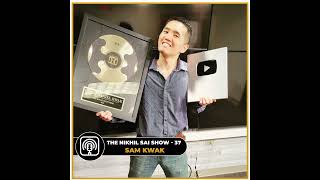
In this episode of The Nikhil Sai Show, Sam Kwok, co‑founder of the Kwok Brothers, shares his journey from immigrating to the United States in 1999 to building a multi‑million‑dollar education and real‑estate business that earned him a Two‑Comma Club award. He recounts his early years in the Army, a brief stint in an energy‑drink MLM, and how reading Rich Dad Poor Dad sparked his interest in real‑estate investing. Sam describes how he leveraged affiliate marketing to fund his education, learned copywriting and email automation, and used those skills to acquire 75 rental units in 2017. He explains the shift from a crowded, “red‑ocean” coaching market to a niche “blue‑ocean” focus on teaching investors how to raise capital, using a detailed avatar ("Alan" from Texas) to craft targeted YouTube content that the platform’s algorithm rewards. He warns against common syndication mistakes such as raising money without solid deals and burning trust, emphasizing patience, relationship‑building, and long‑term persistence as a competitive edge. Sam also outlines his productivity stack (Trello for task management, Infusionsoft/ActiveCampaign for email), mental‑minimalist habits (digital detox, limiting tabs, cold showers, reading, prayer), and his daily routine. Finally, he offers advice to 20‑year‑olds: think ten years ahead, avoid shiny‑object syndrome, find mentors, and prioritize value creation over money, while sharing his personal philosophy of four currencies—money, time, knowledge, relationships—as levers for wealth creation. The conversation ends with a reminder to never quit and a plug for the Kwok Brothers’ YouTube channel.
Chapters
What's going on? What's going on everyone? Welcome back to another episode of The Nikhil Sai Show, which is hosted by me, The Nikhil Sai. And guess what's going on today? We are back with another amazing Two Comma Club interview. And guess who is the guy who is hopping on the show today? This is a crazy story to talk about because being an immigrant, they actually migrated or immigrated to USA in 1999 and started running their business. And actually he was the son of pastor who actually is scaling business massively and helping hundreds, if I'm not wrong, thousands of entrepreneurs build 7-figure businesses right now. They're crazy when it comes to real estate and well-known YouTube stars. These guys have built a following of over 150,000 YouTube subscribers. At the same time, they've been helping thousands, if I'm not wrong, tens of thousands of real estate agents close more deals using their coaching program. And we have the Kwak Brothers right now, and we especially have one of the main Kwak here right now who is joining the show right now. So let's not waste any time. And Welcome Sam Kwok, creative engineer at thekwokbrothers.com. Hey Sam.
Hey, how's it going everybody?
It's going great. Thank you so much for being on time, Sam. Appreciate your time, definitely.
Yes, absolutely.
Yes, and how's the day so far, by the way?
Yeah, doing well. Uh, super awesome. Uh, you know, I'm doing amazing. Uh, never, never more thankful that I'm alive and I have, you know, arms and legs to be, to be able to walk in.
So yeah, absolutely, Sam. That's really exciting. So Sam, like, we would love to hear your story from actually being an immigrant to now running multiple million-dollar businesses. That's crazy story. Would you like to start with your backstory? Like, how did all of this crazy journey started?
Yeah, so I don't know exactly where you want me to start, but yeah, so just like what Nikhil has said, I'm, you know, I'm an immigrant. I've been here since 1999. I don't feel like an immigrant because I've been here pretty much 90% of my life. Um, I moved here when I was 6 or 7, and, um, you know, I do still remember a lot of things that happened, you know, when I was 5 or 6 back in 1999. Um, you know, a lot of the big challenges being language, culture, um, people, food, everything, right? So it's completely upside down. Um, and fast forward And I went through the whole elementary school, middle school, high school here. And at the end of high school, I really didn't know what I wanted to do. I wasn't like a lot of people where, or some people may say, well, I want to get into entrepreneurship or even just the last 10 years, this whole entrepreneurship thing got really, really attracting to a lot of people. But at that time, when I was in high school, not a lot of my friends and peers were getting into business or entrepreneurship. Entrepreneurship in general.
Sure.
So, uh, right after high school, I joined the military. I joined the Army, and, uh, I was in the Army for— well, I was in the Army for 6 years. So what ended up happening is for the first year I did this whole active duty and training thing, and, um, the, the remaining 5 and a half years I've done National Guard, Army Reserve. And, um, while I was doing that, um, I was doing what everyone was doing, going to school, right, going to college. And still, you know, trying to figure out what I wanted to do with my life. So, it was around, I think, when I was 19 years old, someone— I was working out in the gym. I was in the gym, in the college gym, and someone approached me and said, "Hey, I got this business opportunity for you." And at that time, I was kind of in and out of doing business. I was running another business at the time. And someone said, "Hey, I have a business opportunity for you." Well, now I know that's a code word for, "Hey, I want to recruit you to to my MLM. Um, but I didn't know it at the time, right? Um, and back in, like, yeah, around that time, some people know, may know what I'm alluding to, but this, like, energy drink MLM was a big thing. Um, and everyone was joining it, everyone was, was selling this energy drink. I'm not going to say the name because, you know, don't want to necessarily tarnish anyone's reputation. But, um, and I got in, I got involved. I mean, it was, it was a very attractive group of people. Energy-wise and, and just the amount of, um, um, you know, positivity that this group had. Uh, and I'll, I'll give this group great credit because they, they did teach me a lot about personal development, um, gave me a lot of necessary business skills and at least understanding and getting me on the path. Um, and of course, like all MLM stories, I decided to leave, uh, because I wasn't making much money. I mean, I made 20 bucks. And I was very happy with that. The amount of work that I did to earn that $20 was, yeah, it didn't seem like it was worth it. So I left it, I left the company, left, you know, just didn't even bother to say goodbye or anything. 3 or 4 months later, the company actually ended up getting sued by the Federal Trade Commission. So thankfully I was out before, well, long before that, and I wasn't anything big, so they probably wouldn't even have looked at me. So, uh, but in being in that group, um, you know, I got to read this book called Rich Dad Poor Dad. I'm sure a lot of you guys have read it before. A lot of you guys, fans, um, read the book and it, it literally opened a whole entire world to this idea of real estate investing, right? Buying apartment buildings, buying, um, buildings to fix and flip, uh, and really gave me this, this, uh, this, this possibility that I can go and start doing start to do this. But at that time, I was broke, you know, no credit, no money. My dad wasn't Donald Trump, right? I didn't have any rich uncles and family members. And, but I still wanted to get into real estate investing somehow. I wanted to learn how to buy rental properties and really set myself financially free. So I started watching YouTube videos, started reading books, started reading as much materials as I can to get my hands on about real estate investing. And I started attending seminars, bought courses, and bought programs, you know, with credit cards. So I was literally getting into debt buying real estate courses. And then in that journey of learning and taking real estate courses, I met several mentors along the way, really taught me the skills I needed to succeed. And, uh, how was— how I was generating income at the time was, um, I became an affiliate for one of the courses that I was— that I was, uh, that I bought. So I've done— yeah, I started selling courses as an affiliate, started marketing. That's really where I learned how to do marketing, um, putting YouTube content out there, doing email marketing, and learning how to write copy, automation, the whole nine yards. And at the same time, I was doing real estate on the side. So buying apartment buildings, learning how to raise money, doing all kinds of cool tactics. So 2017 was really our year. 2017, we crossed our $100,000 a year mark. We broke 6 figures in our affiliate business. So we were doing 6 figures at the time. And at the same time, we bought over 75 units of rental properties, uh, in one year. So we just went all out, like 2017, just like, we just whooping big. Yeah, yeah. In 2018, that's when we started to notice we were attracting people asking us, hey, teach us how to do that, um, you should, you should give us, um, your secret sauce, right? So at the end of 2018, that's when my brother and I decided, hey, let's stop being affiliates to this company, let's go and start our own company, let's go and start our own education, uh, company, because At the end of the day, we thought, hey, we— there's some areas that we could probably do better, uh, and really focus on to where we can really help people, uh, do the same thing that we did. 2019, we broke away, started our own company, our own business. That year we did, uh, we— so 2018, we did $100— I think we did $250,000, so a quarter million dollars. 2018, uh, 2019, we did $650,000. Last year we did over a million and this year we're on track to do $1.8 million. So, yeah, with just our course business. So, that's not even our real estate, you know, purely our courses and training. So, that, you know, obviously got us to the Two Comma Club last year and we learned a lot along the way. And yeah, man, it's been a journey. I never thought I would be able to cross that mark. You know, 2019, I was like, man, how can I get, get to this whole 2 Comma Club thing. That sounds really cool. And 2020, like, just happened. So, um, yeah, thank God for all the, the knowledge and, and, and experience, the people and, and, um, the mentors that, that came into my life and really planted, um, you know, all the necessary knowledge, wisdom, and experience that I needed to, to, to accomplish that. And also, we have, uh, some great— some of the greatest people working in our team. Uh, that really helped us get there. So yeah, so that's a little bit of background, uh, to, to how, how I made it to this point.
Absolutely. Wow, wow, Sam, that, that's really inspiring, right? Like from all the way to being broke to now actually making $1.8 million in sales this year, which is like, we haven't even entered the second quarter, which is amazing. Crazy, right? That's so inspiring. I think this will help a lot of people who are at the rock bottom to understand like how they can actually be consistent and get to the level where they want to be. That's so interesting, Sam, and you really see the impact what you're making with your coaching business and also in your real estate business. That, that really inspires us day in, day out. So Sam, let's dive into some quick questions on demand with your acquired knowledge. So Sam, as you're helping a lot of real estate businesses right now, the most common trouble you see is qualified lead, right? Like they want to be like cost-effective lead generation systems, right? So what do you think is the best lead generation strategy especially for real estate business in 2021?
Um, oh, it depends. Right. So, um, um, so one thing that I want to clarify is that, uh, we don't— so our, our target niche is not real estate, uh, uh, agents. We're on the kind of the opposite side. So we're, we're targeting real estate, uh, investors. And this market is really— what's that?
Syndication.
Yeah.
Yeah.
So our, our market's kind of challenging because, I wouldn't say challenging. Um, it's very overcrowded with a lot of different real estate courses, a lot of real estate investor gurus, uh, and a lot of content, a lot of noise out there. Um, so there's a lot of— there's, there's definitely a lot of competition. So, um, the, the key here, if you want to succeed, especially in this, um, what I would refer to as, as the, as the bloody ocean, right? So for those who've read the book, uh, Blue Ocean, Bloody Ocean, right? Uh, right now the real estate investing coaching, um coaching industry is definitely bloody. It's very, very red. Um, so to, to make, to turn into a blue ocean or to get into a very, um, a blue ocean, uh, market is you have to start looking at a very specific, uh, strategy or tactic and be the, the, the coach or the expert of that. So last year, um, we tried doing this whole, hey, we're going to teach you how to just invest in real estate, very general knowledge. We were getting into the bloody ocean, the red ocean, and we didn't do well. We weren't getting that much of a qualified lead, but we pivoted and said, you know what, let's go in and get specific and let's teach people how to raise money, which is a very subset skill when it comes to real estate investing. I believe it's a necessary skill, but it's a very subset skill. Now, Because of this, this is such a very niched and specialized area of expertise in real estate investing, and it's usually targeted to people that already know that they want to raise money. You can actually charge high ticket for, for this. So the way that we qualify leads and we get very specific, and we don't make this an accident at all, because what happens is before we get into any niche or we get into any kind of product development phase, we have to first come up with a target avatar. So we go through an avatar development phase. So our avatar actually is— so he's a man, it's a dude. He's a guy named Alan. He's out of Texas. He's already done a real estate deal or two. He's got some cash, but he really wants to scale and grow to where he can do, you know, he can buy 100-unit, 200-unit apartments. And the big struggle is that he's tapped out in credit, he's tapped out with cash, um, and he, and he's got a full-time 9-to-5 job. And his, his wish and his desire is to ultimately go and do full-time into real estate. So that's our target person, right? And everything that we do, our copy, our webinar, our ads, uh, is everything is geared and, and we're talking to Alan, right? We're, we're, we're pretending that Alan is in front of us and saying, "Hey, do you want to break out of your 9-to-5 job, go full-time to raise capital?" or something like that. So that's how you do it. And also you have to say no to the wrong leads. You have to say no to the not qualified people. So if you ever funnel hack us, you'll notice that in our application, it'll say, "If you don't have $10,000, don't apply." 'Cause that, like, we know that if you don't have $10,000, You've probably never done a deal before and you're not stable right now. You probably need something else. So we, we do a lot to disqualify people and know what, what target we want. And we get very specific. And just by doing that, your conversion rate goes up and also the lead quality goes up. In terms of cost for acquisition, you actually, you actually pay less of cost per acquisition because you're not trying to deal with everybody at the same time. So in terms of generating leads, my best lead generation is first figure out who the avatar is, do, you know, publish content, podcast, YouTube videos that are specifically for Alan, you know, for this avatar. And you'll naturally attract those people. And what's really cool about YouTube and we're, you know, we do a lot on YouTube right now, is that the more specific you get in terms of your avatar and who you're talking to, actually Google will help you. Google actually will detect what you're saying on your video. They'll know what keywords you're using and they'll deliver it to the right audience based on what you say, what your message is, and what your audience will typically like. So that's something powerful that you could leverage, and that's Google's algorithm. To help you find the audience you need. And it's probably the best lead generation method, especially if you're starting organic. So that's a little bit of my insight into lead generation.
Wow, Sam, that's really brief and super exciting. Like the golden nuggets you're dropping about the lead generation strategy. Like we are glad that we met Alan, right? And that's it. That's a groundbreaking solution for a lot of business owners who are trying to serve anyone and everyone, right? And as you just mentioned, as it gets more specific on who we are actually targeting, like whose attention are you, you know, deserving, right? I think that's going to decrease their ad cost dramatically. Like, first of all, every business owner, as just Sam mentioned, don't— that— don't do general messaging. Don't try to sell to everyone. Like, don't try to sell all the 3 billion people who are online. Don't do that, right? So if you be specific, the cost goes super down, and you can be more positioned as an expert, as just I mentioned. I think, Sam, that was beautifully mentioned. I couldn't even pick a specific topic because you were just so brief and clear, right? That's So exciting. Thank you so much, Sam. That's a brief answer. Thank you. So let's get to the next question, Sam. I would like to really learn, like, how did you actually acquire over 75+ rental units in just one year? Like, your killer year 2017. Like, how did you freaking do it? Like, that's so exciting because we also specialize in, you know, working with syndicated people who actually raise more capital. Like, this is a crazy business. Like, going from almost zero to 75+ rental units, it's crazy. We would love to hear that quick story.
Yeah. First of all, get into her coaching. No, I'm just kidding. I'll give you a little bit of the secret sauce, right? A little bit of a taste. And by no— like, I'm not trying to promote my coaching right now, but the secret sauce is really, it comes down to understanding. The first thing you have to understand is, like, number one, you have to believe that money is not the only currency in the world. There's actually 4 currencies in the world, right? The first currency being obviously money, right? Money is something you can use to trade for different things. Second thing is, is time. Time's a currency. Okay. Third thing is knowledge. Okay. You could be, if you're an expert, you definitely could attract, you know, a lot of different currencies. And the fourth being relationships. So if you don't have time or if you don't have money, then you can use time to get money. In fact, that's what most people do is they go to work. They trade their hours. They trade their time currency for more money currency. But, and that's what most people do. The wealthy, what they do is they take their money currency and trade it for more time currency because time is more valuable inherently because there's a limited amount of it. The key here to understanding how we went from 0 to 75 units is we took a lot of our time currency and a little bit of money currency and trade it for more knowledge currency. And then in turn, we used our knowledge currency to create more relationship currency because when you become an expert, you just naturally attract people that want to learn and want to partner with you. And so, what we do is as we grow our knowledge currency and as we grow our relationship currency, we're especially finding ourselves with relationships that have a lot of money currency. So what happens is we're going to leverage that relationship and say, hey, listen, let's say we got a guy named John, right? So, hey, John, look, you know, you got money currency, I got time and knowledge currency. Let's do a little partnership where we combine our currencies and let's go make a profit, more profit. Let's go create more currencies. So that's exactly what we did is we went and raised a crap ton of money and started going out buying properties, creating partnerships. And sure, you know, we don't own 100% of these properties, but we own 50, 60, 70%, uh, equity share of these properties. But the profit and the income that we generate from these apartments and these, these real estate properties, uh, we didn't have to put any of our own money in because we were able to leverage the knowledge and relationship currency to create more money, money currency. So, um, so that's a— I hope that can kind of give people a little bit of—
it is. So That's amazing. Yeah.
Yeah. Because money isn't the only currency to leverage. You got to learn how to leverage some of the other currencies. And it's unfortunate because a lot of times people, you know, they, they listen to me say this. I'm like, well, Sam, I don't, I don't want to invest my time in more knowledge. Well, boo-hoo. That's kind of, that's, that's the way it works.
True.
Yeah.
Wow, Sam, that's so beautiful. And the analogy you've been using to explain all the 4 different currencies and how you can change them to actually get to the level where you want to be. I think that's just on point and it can really help. I think this exact strategy can be used not just in real estate or investment space or actually acquiring units. I think this could be used in any point of life, right? I think that's amazing. Absolutely. Yeah, thank you so much, Sam. That, that's just exciting and the answers you're giving just are on point. I really love it, right, that the conversation is going really well, man. Thank you so much. So let's talk about the next question. Sam, so you see a lot of people who are actually doing a lot of stuff wrong, especially in the syndication space, right? So would you like to talk about like what's, what's the most thing which is going wrong, or people, what they're commonly doing wrong in the business right now in 2021, especially in the syndication space?
Yeah, so, um, you know, this includes syndication, also just general raising money, uh, because you don't have to be a syndicator to raise money. Um, but a lot of it is people look at guys like Grant Cardone and look at guys that are some of the top, they're doing this in a big way. And they look at that and say, "Wow, I want to be like him." And they just go out and start raising money without any of the kind of the precept of understanding how it all works. Or at least understanding what makes a good deal. Because a lot of times I've seen over and again, my brother and I have seen this over and over and over again, where people go out and do this and they lose a ton of money and now their reputation is shot and they're pretty much benched. Like they can't come back into this market anymore. So to avoid that, it takes patience to master your craft and really understand, start small. It does help that you have some business acumen. And so the big thing is don't burn trust, right? Don't burn relationships. You know, don't waste people's money and time. Don't go out there and lose people's money. And even if you do, restore and rectify that relationship by making it up and at least paying back your investors, right? At least paying back your people. So the biggest mistake right now is people going out there raising money. And it really doesn't matter if it's for real estate or not. Some people out there raise money for startups, for tech companies. And they go out there and, and they just burn money and, yeah, it was belly flop. And, you know, so learn to build businesses before you go out and start raising money.
Absolutely, Sam. I think that's a golden advice, right? A lot of people, they actually genuinely have— don't have a strategy on how they're gonna— how they're gonna make the next deal profitable or the next startup idea profitable, but they just think like, oh, okay, if I raise a million dollars, this will be '10 million, I'm gonna give back.' But yeah, the whole thing is the product isn't good, right? And it just goes down. Or same with the real estate investment space. I think that's so on point. Thank you so much, Sam. So let's get into the next quick question. When it comes to the space, especially not just in real estate but any other business, the competition is one of the main problem. Because we see right now, because of social media, advertising platforms become so easy to run. Now everyone got understood about how to do automations and ads and funnels and all of this cool stuff, right? So everyone is getting into this top 1% space of how they can use, how they can make most of the marketing right now in 2021, right? So what do you think is the best way to stand out of competition right now in this industry?
This is easy, man. This is pure easy because there's a lot of people right now that are, that are saying, that are marketers and business owners alike. They, you know, they see the success of everyone's, that everyone's having, and they're like, oh my gosh, I'm gonna do this in like less than 1 year. They, they have this really, um, incorrect expectation as far as what, what they can accomplish. So I see this a lot, especially in the ClickFunnels group. I see this a lot of Facebook groups where people are like, oh my gosh, I've been doing this for 3 months and I haven't made a dollar yet. I'm like, dude, you've been, you've been at it for 3 months, like give it some time. So I'm not necessarily worried about competition because naturally there, there, there are enough people out there that think, you know, they're going to make a lot of money in 3 months or they're going to get to the 2 Comma Club in like 2 months. It doesn't work that way. Uh, it takes a lot of work. I've been in this— I've been, I've been an entrepreneur since, um, 2012. I mean, it's been what, like 9 years, 10 years almost?
Yeah, 9 years, you know.
And, and I, like, 2 years ago, I am just now crossing the 2 Comma Club. Like, I, I— yeah, I make it sound really easy, I make it sound really simple, but it take— it's taking a lot of work. Um, so The, the key to this is that it's not whoever's the smartest or whoever has the highest IQ, or, uh, it's not any of that. It's how, how well can you stick to one thing until you succeed and not quit because you're not seeing the results right away. And that is, that is the number one success destroyer right now, is people are expecting success, you know, happen in 2 or 3 years, where sometimes it may take 3 or 4 or 5 years. To get to where you're sustainable and you're profitable. So yeah, like that's, that's probably the number one thing is if you want to stand out, stand, stand apart from your competition, plan on lasting more than your competition. That's it. That's all you have to do is just stick to it, work at it, plan it, just pretend that you're going to, you're going to outlast your competitor and just keep on going because the way that you're going to win is Stay in the game, don't quit. And most likely, if your competitor doesn't have the same grit and, and same fortitude, then they're going to quit, and now you're the only one standing.
So absolutely, absolutely, Sam. I think that was definitely on point. I think this is one of the most crucial advices business owners should really follow right now, because you really mentioned it on point, right? They just need to be making sure that they stick to the same plan without confusing them, without getting into the shiny objects. And if they stick to the same plan, rest of the 90% of the competition is trying different things. So now these guys have more time to work on this specific niche and master this specific skill, and they can just win and stand out of the competition. That's so beautiful, Sam. Yeah. And, uh, yeah, Sam, I think your camera setting has been changed to 4K again because I see a lot of pixels running around. Yeah, please try to fix it for a second.
Yeah, yeah, I don't I haven't changed anything, so let me see here. Um, yeah, I didn't, I didn't change anything, so I don't know what's going on.
Yeah, no problem, no problem. Let's continue with the next question. Yeah, so yes, and that was beautifully answered. So let's get to the next quick question, Sam. So you're getting so many things done at this short time, right? You have only one currency, which is time, which is very limited, and you're using so effectively. So we would love to learn, like, what tools or processes you use in your business to manage all of your projects clients for the most productivity?
Yeah, so I'm a Trello ninja. I love my Trello account, Trello board. So if you don't know what a Trello is, it's a tool where essentially you can kind of organize all the things you're working on. And also like, you know, I have a decent-sized team. You know, we have marketing, sales, and product. And so the way that we manage different tasks and processes is through Trello and, Whatever someone's working on, anything, it's all on Trello and we know who's working on what and what's being completed. We can set due dates and so on. So that's probably the best tool I use to not only delegate but also track, you know, tasks and things that I have to work on. So that's the number one thing I use. As far as email marketing, I use Infusionsoft. It's kind of like ActiveCampaign, really same, you know, You can accomplish the same thing with either tools. Um, but as far as like self-management, um, you know, I do a lot to, um, make sure I don't get over-distracted or overstimulated, you know, and, and I've actually, I got a, I have a free course on how to, how to be really productive.
Wow.
That's great.
We'd love to check that out.
Yeah. It's a simple 45-minute course. So, um, the, the, the number one problem that a lot of people face right now, especially entrepreneurs, if you think you have like ADHD or something, it's actually not, and I'm not a medical professional to say anything like this, but at the end of the day, I don't believe, I don't necessarily want to blame ADHD. The problem that I see a lot of entrepreneurs and non-entrepreneurs as well, and especially why they feel distracted is they're overstimulated. I mean, there's too much things going on, too much happening. Like you're on your Facebook, you're scrolling through your feed or you're on Instagram scrolling through your feed and you're just constantly getting stimulated. So the key here is to purposely, purposely get bored and purposely let your brain kind of recalibrate the way, um, you know, you get stimulated. So, um, so one of the things I do is I purposely, um, delete Facebook, delete Instagram, and, and not get into like looking at feeds or videos. And I'm really careful with my attention and where it goes. So I make sure in order for me to focus really well and to make sure I manage my bandwidth, I'm a mental minimalist. So I try to cancel things if I need to. If I need to do less, I do less. You know, I'm not— I am not a fan of having, you know, 20 different tabs open. So I try to keep only 3 or 4 tabs open at most. And try to focus on one thing at a time. And that's how you create quality, quality work, quality flow. Your work ethic goes up. So that's probably the biggest thing in terms of self-management and time and productivity. But those are some of the things I can share as far as maximizing your time and your effort and your, your thought space.
Absolutely, Sam. I think that was definitely something amazing, the golden nuggets you're dropping. I just absolutely love it, right? And as you just mentioned, multitasking is just a lie. Everyone who is hearing this out, like, if you're thinking that you're a multitasker and doing well, hell no. Actually, it's proven that— if the stats have already mentioned that you will decrease your productivity by over 40% if you're multitasking, right? Don't do it, right? And Sam just stick to the fundamentals, and he's only getting one thing done quickly and making himself bored. And I really love the way you're mentioning How you actually make sure that your attention is in the right place, not getting stimulated with 100 different things which you don't want to attract. I think that, that, that should be definitely something which should be followed by over a billion people right now. Yeah, hope that will happen really soon. So thank you. Thank you so much, Sam. That was really great. Let's get to the next quick question, Sam. We'd love to learn more about your daily routine, like what kind of rituals you follow, when, which time do you wake up and what time you go to sleep. Sleep and how does your daily routine, work time routine, looks like?
Yeah, so I don't really have a quote-unquote routine. Um, usually, and I do have a schedule, right? And so don't get me wrong, I do have a schedule, uh, but I don't necessarily have a quote-unquote routine. Uh, but I guess my, my morning ritual, uh, if, if that's what you're asking, is, you know, I get up, um, the first thing I do is I do a cold shower. So, uh, I jump in for 30 seconds super cold, you know, shocks my system a little bit, but it's really good for you. I mean, there's a lot of health benefits to it, but the first thing it does is I get really focused. It wakes me up immediately. In fact, I used to be a huge coffee drinker. I actually swapped— I don't drink caffeine anymore as much as I do, so I've taken caffeine out of my system. So I do cold shower instead. And because I just like the coffee flavor, I just do decaf. For most part. And I'll do tea. I do a lot of tea. And so, that's what I do. And then next thing is I go into reading. I usually read. I'm reflecting, just thinking about the day necessarily from the perspective of, you know, what's important. And so, I do have a faith background. So, I'm praying as well. You know, I'm praying for how the day will go and who I'll meet and how I'm going to show up you know, how I'm going to present myself. So it's, yeah, I mean, it's very, I don't have a crazy intense, you know, routine. You know, I do work out, I do go to the gym, you know, 3 times a week. You know, I do that right before lunch. So yeah, I don't have a crazy, you know, like 4:00 AM wake-up type of a routine like The Rock, Dwayne Johnson, but no, I keep it simple, right? Set yourself for success. Don't set yourself, Don't set yourself for failure.
Yeah, absolutely. I think that's so beautifully articulated again, Sam. I think it's just about looking at your business and see what works in your business, unlike trying some 3 AM wake-up time or 2 AM sleep times, right? I think that's, that's greatly mentioned. So let's give it the next quick question, Sam. What will be your suggestion to a 20-year-old you or someone who's just getting started right now in business?
Yeah, um, Yeah, it's funny because I got asked that question before, uh, like yesterday. So like business-wise, I'd say, um, yeah, get— stay focused and think big. Um, think 10 years ahead, uh, because a lot of times when you're 20, you're thinking about now, right? You're thinking about how can I make money now, how can I get things done now, like how can I bring the, the pleasures of life right now. But I mean, you— gosh, you're only 20, and I get it, you know, um, 20 20-year-old 50 years ago, you would've done, you know, you were a full-fledged adult, but use your 20s to think about what's ahead 10 years later and commit the next 10 years to really learn and become an expert at something. Because even if you're 30, you know, you still have a long life ahead of you. So, you know, don't try to make money right away. Spend that time learning, get your craft, learn, find a mentor, work for free if you have to, and learn as much as possible and get really dialed in. Shiny object syndrome is probably the most deadliest thing. So avoid shiny object syndrome, focus on one thing. And I mean, it's okay to try different things, but I think you should have done that in high school, right? High school is a great opportunity to try different things, sports, music, business, you know, talk to, chat with different type of people. But by the time I think you're even in your 20s, you really don't know what you want. So, you know, let it be a life canvas, you know, white canvas and find a mentor that you really resonate with and just model after them and focus on just being a good human. You know, don't try to make as money or try to be a millionaire. It's a trap. So yeah, that's pretty much the advice I would give to my 20, your old self.
Wow, wow, Sam, that, that's really, really amazing. That's really amazing. We definitely appreciate that quick answer, and it's just on point, as I mentioned earlier, bro. So let's get to the next quick question, Sam. So what are your life's biggest achievements so far, and any next bigger goals?
Um, what's my next goal? Um, yeah, so the goal is to, uh, I guess I'll talk by My achievement, um, I mean, the big achievement I, I would say is, is getting married and being dad. That's, that's my life's biggest achievement. Yeah, yeah, it's a huge achievement and it's simple. I mean, life should be so— it should be simple, um, and, and the fact that I get to do that is, is, is awesome. Um, what I look forward to is, um, just on my personal life, you know, I want to continue being a good dad, um, you know, it's That's the number one goal. I never— the biggest thing I don't want is, you know, 10 years down the road, I'm ultra successful. And I know, you know, I'm not trying to sound cocky or arrogant in any way, but I know just from my own inhibition, I know I'm going to be successful. That's just the way it is. But, you know, 10 years down the road, I'm ultra successful. But, you know, if my own kids don't know who I am and I don't know who they are and we haven't spent a lot of time. That's one of my biggest things I want to avoid. So the goal is, the vision is to be able to spend as much time with my kids as possible, the family, because at the end of the day, I can sell my business, walk away, and let the business run on its own. But I can't necessarily sell my family and walk away. I'm attached to my family forever. The fact that I get to do that and the business allows for that is tremendous and I want to keep it that way. So my goal necessarily isn't to make $10 million or $100 million. I'm not worried about that because I think it will happen. The goal is to really create a strong bond with the family and that's really the goal. So again, being a good human, that's it. That simple.
Absolutely. Absolutely, Sam. I think this is a real deep message that a lot of entrepreneurs really need to understand in their business time as well, right? They just need to be making sure that they spend enough time with their family as well. So yeah, we have a few more questions to wrap up, Sam. So let's get into the quick question. So what was the biggest mistake so far in your life in terms of business and personal?
Yeah, um, yeah, I'm trying to think one that, uh, really, um, set me back, but I don't, I don't think I have one. I mean, yeah, again, it's going back to when I was early 20s, you know, so I was so focused on now that, you know, I wasn't thinking about 10 years in the future or what would necessarily bring me long-term success. So thinking short-term has definitely, you know, given me some setbacks, but it was a learning moment where I, you know, because I thought that way, now I'm thinking, okay, I really need to think long-term. Even now I gotta stay away from this trap of thinking, you know, months or days. I gotta start thinking about 5 years or 10 years and, what I could do to really grow, not only as a business, but as a person for the next 10 years.
Yeah, absolutely, Sam. I think that would change the complete plan when you just plan for a day and a year or 10 years. The plan would be completely different, right? That's amazing. So yeah, and Sam, your main inspiration for success and any key people involved in your journey, would you like to mention anyone?
Um, I mean, there's a lot, right? There's a lot of people that were involved in, in, in helping me become who I am. Um, Yeah, I can't think. I don't know if I have necessarily a single person in mind. You know, there's so many different people, different authors, different mentors. So yeah, I don't know. It's a common— if I pick one, I'm going to leave out the other. So it's hard to say, but I'll say this. It's not necessarily a person, but it's the principles that I think is common amongst these people. And that is, That is, at the end of the day, it's not about making money. It's about creating value and helping the world and creating impact and equipping people. And all the people that I see as successful and they've been a very positive mentor figure of mine has already focused, has always focused on that is how do I equip other people? How do I create value for other people? How do I support other people first? So, Putting others first before yourself and really thinking about how do I create a movement that's bigger than me? And so that seems to be pretty common amongst all the people that I follow and all the people I consider mentor. And unfortunately, I have had people that I thought were mentors, but they were very selfish. They were very self-oriented, very, you know, I wouldn't say narcissistic, but they were very centered around me. Um, they, they seem cool, right? They have, you know, fancy cars, Lamborghinis, Ferraris, right? But at the end of the day, you know, that can be— that, that can be a trap, and it could be very toxic even to you and, and how you perceive and how you show up to life.
Yeah, true, true, Sam. I think that's a great learning for all of the podcast listeners as well, right? And I think that's so beautiful as well. So I think that's great. You're one of the most beautiful human beings I've ever met.
Thank you.
You've been, you've been delivering and all the friendly answers you've been doing. That's great. So by the way, where can our audience find you mentoring? You're a great guy teaching a lot of important stuff, talking a lot of fundamentals on how this human mindset can work and how they can scale. So where can our audience find you mentoring?
Yeah, so, uh, we're, you know, we're, we're very present on YouTube. So you can go to YouTube, subscribe to our channel, and, and you comment and say, hey, I saw you in Nikhil's podcast, you know, if I see that, I'll say hello and all the resources that you'll ever need from me and what we offer, you can find it on YouTube. It's on our video description section. So yeah, YouTube is our main place. You can go hang out with us, interact with us. We're very attentive to the comment section. So if you do comment, I'll look and I'll know and yeah, we can chat there.
Absolutely, Sam. So everyone go check out the Kwak Brothers YouTube channel and you will love it. There are almost 150,000 subscribers. The content is just on point. Like, you find a lot of financial information, investment opportunity on all the real estate market and everything, which is crazy. And these guys make great content, which is so entertaining. You just— that's, that's what I call entertainment. You love, you love the content, you learn it, and you'd love to share it. That, that's great. Great. And I think that was just an amazing piece of content, Sam, and all the advices really applied to me and all the other podcast listeners. That's so grateful that you actually joined with us today. So any last words before we conclude the whole podcast session today?
Yeah, so the, the big thing is never quit. Um, you know, I truly believe that at the end of the day is if you want to learn or figure out anything, give it enough time and energy and you'll figure it out. Um, you don't have to be the smartest person in the world. You don't have to have the highest IQ. The big thing is perseverance. Never quit, stick to it, and just keep on going. Simple as that. You've heard it before, probably, you know, someone else probably said it, but the fact that people don't do it and don't follow, you know, it's as if you've never heard it at all. So you heard it from me, you heard it from other people, so go do it.
Absolutely, Sam. I think that's another great message, right? So they just listen to it over and over again, but they just don't follow it, right? Yeah, it's so basic, right? And thank you so much. Thank you so much, Sam. Appreciate your time. Thank you so much for being on this podcast. We love the content which you have just provided. And everyone, again, just to mention, go and subscribe to the Kwok Brothers YouTube channel. You will love the content. And again, Sam, thank you so much for being on time and providing amazing content for us and a lot of information for our podcast listeners. And guys, hope you enjoyed this amazing podcast session and look forward for the next podcast session, guys. And Sam, have a great day. Peace.
All right, take care.
More from Nikhil










BURNED $1.5M in his 17years online #digitalmarketing #entrepreneur #onlinebusiness
